Showing Up for Rural America: A Conversation with Chloe Maxmin
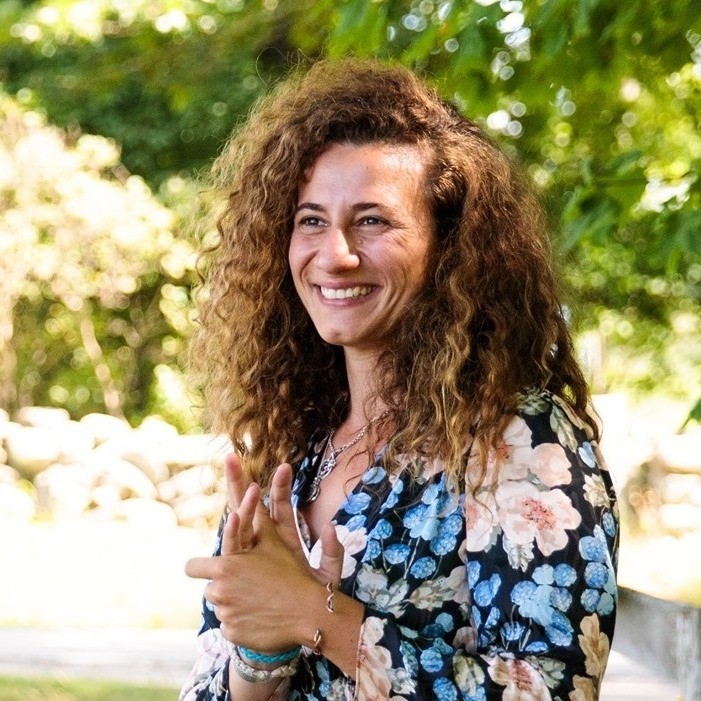
In this conversation, edited and updated, Bioneers Producer Stephanie Welch speaks with Chloe Maxmin. Hailing from rural Maine, Chloe is the Co-Founder of Dirtroad Organizing alongside her best friend, Canyon Woodward. She also runs Begin Again Farm with her partner, Bill Pluecker, growing organic vegetables for her community. Chloe received an honors degree from Harvard College, where she co-founded Divest Harvard. Chloe served in the Maine House of Representatives in 2018 and the Maine State Senate in 2020. She was the youngest woman ever to serve in the Maine Senate and is the co-author (with Canyon) of Dirt Road Revival. (Note: Dirtroad Organizing is a non-partisan organization that focuses on values, not Party. Chloe’s political work does not affect Dirtroad’s non-partisan commitment.)
STEPHANIE: In this political climate, where we’re being told how polarized we are as a country, but there are many issues that a majority of people in the U.S. agree on, such as the need for universal healthcare, a living wage, having clean air, water, and food. Considering your work finding common ground, is it frustrating to hear all the time the refrain, especially in the media, that we can’t come together? How are you feeling about that aspect of our current political climate?
CHLOE: I mean, we are polarized. It’s something I experience in my community, and people who come through our organization, Dirtroad Organizing, are experiencing it, too. The ability to simply have a conversation across party lines is very, very difficult right now, and it takes a lot of intention and thought to make that happen.
But at the same time, I think that the power of finding common ground still exists. We have to carve out the space to make that happen. We’re told a lot of stories that make it hard for people to hear the other side. This has made it both much more difficult to have space for another point of view, and it has also stoked horrible racism, xenophobia, and violence in our country that has made these bridge-building conversations unsafe for many people. At Dirtroad Organizing, our work is about trying to find the space where you can find that moment to reach beyond.
There’s definitely a lot of prejudice and judgment on the left about rural voters that voted for Trump, and that’s a theme that rural voters feel. I feel it as a progressive living in a rural area–a kind of remote disdain from the left about folks in my community. People in my community are good people, and they’re disenfranchised and don’t feel represented, and can’t make ends meet. But in so many spaces that I’m in on the left, it feels like I have to make the case that they should talk to people who voted for Trump.
Of course, some people who voted for Trump are far right extremists that I don’t have space for. But most folks are just trying to find the best way towards a good life for themselves and their families. I hear many folks saying, you know, just trust Trump, it’s all going to work out, he’s going to keep his word. And then I hear other people saying, “I regret voting for him.” I think time will tell, and we’ll see how it shakes out in our elections.
STEPHANIE: I was in Iowa and interviewed small farmers and others who were sick of agribusiness and were organizing locally to advocate for busting up monopolies that are killing their communities. I sat with one farmer who showed me his childhood photo album saying: This used to be a vibrant community, we had dances every Saturday night, farmers could earn a living and pass on the farm to their children. And now everything here is boarded up and the town is dead. These are farmers who got arrested in 2008 protesting the Obama Administration for turning its back on homeowners. The rally I went to included immigrant workers dealing with unfair treatment by the meat packing industry, and local labor unions. One farmer, who happened to be a woman, told me we have got to reinvest in rural America, or this country is doomed. But I don’t see a focus on rural communities as a strong part of the current progressive agenda, do you?
CHLOE: Yeah, I agree. I don’t think it’s represented well at all on the left. It’s a huge challenge. I think it’s one that rural folks feel quite acutely that the left doesn’t quite have the policy solutions that many rural communities need. The issues may be the same, but the approaches that you need in a rural community just look different. It’s complicated.
There’s an amazing book, The Politics of Resentment, focused on rural Wisconsin and how rural folks perceive a lack of support, especially on the policy level, from urban Democratic policymakers. There are many incredible books on this topic that can speak to it better than I can. But it’s a very pervasive feeling among rural folks that they don’t feel represented. The left doesn’t show up in rural communities, especially when they’re campaigning, and so we’ve seen just a systemic disenfranchisement of rural communities’ voices on the left as we’re making this policy. So it’s a circular problem.
You can’t make policy for impacted communities unless you have those impacted communities at the table, and if we’re not actively organizing and investing in what are now conservative rural spaces, then we’re never going to understand that experience and what we need to be integrating into our laws. This is true for all communities that have not historically been central to Democratic law-making.
STEPHANIE: I find that there are still many people who don’t realize that millions who voted for Obama twice voted for Trump the first time, and they’re still wedded to this idea that there are these stagnant voting blocs. Over and over again, when voters are asked what they care about most, they say the same thing: the economy and the cost of living. And when the Democrats don’t deliver to voters and make material differences in people’s lives, they lose. Is that what you’re finding with voters that you talk to in rural areas? Is that an issue for them?
CHLOE: Yeah, based on my own experience and what I hear from the folks that we work with, I don’t think rural folks see their issues reflected in policymaking. And the challenges they face in their lives have gotten worse and worse. There are now many incredible organizations working to address this, and I do think that the tides are turning for the better thanks to this amazing work.
Rural voters are privileged in our American democracy just the way that our Electoral College is set up, the way that our Congress is set up. So rural voices have an outsized influence on our policy at the national and at the state level. So if we’re talking about building durable progressive power that truly does advocate for the rights of everyone, we can’t get there unless we’re actively organizing in rural places.
On the left, I think there’s frustration amongst policymakers that they’re losing ground, and there’s certainly frustration amongst the folks in rural communities. They don’t see themselves reflected in what’s happening with the people that they elect. It definitely feels like a huge mess. So from that perspective, it’s like people needed something different. The politics as usual was not working for rural folks, and, mostly for worse, people saw that reflected in Trump and his campaign. So that’s how I see the reality that we’re living with, people are just desperate to be heard and represented and have their needs met.
I think back to 2018 when I first ran, and talking to so many folks who had voted for Bernie in the 2016 primary and then voted for Trump, and trying to understand what that thread was. I think part of it is that folks felt an authenticity in Bernie, and they felt some form of authenticity in Trump, and that translated. But I think the sense of populism was also a common theme, that they felt like Bernie was trying to advocate for everyone in working class folks, and then they also saw that represented in Trump, and they didn’t see that represented in the Democratic establishment.
STEPHANIE: Let’s talk about your work in rural communities in your neck of the woods. How did you get involved in politics?
CHLOE: I’ve always loved my hometown. And growing up, I knew I didn’t share the same politics with everyone that was part of the village that was raising me, but they were all good people, and we shared our core values.
When I was in high school in 2009, there was no partisan lean amongst rural voters. But then I went off to college, and I met Canyon Woodward, who managed both of my campaigns. Canyon also grew up in a rural red town. And while we were in college, something really interesting was happening in rural America. By 2016, by the time we had graduated, just seven years later, rural voters were swinging to the right by over 16 points. So when we went home after graduation, it really felt like a different world, and that is obviously manifested in 2016 when Trump was elected. My hometown State House district and my hometown State Senate district voted for Trump, and what that policy represented to me felt really at odds with the good-hearted community around me.
So in 2018, I decided to run for State House in my hometown, which had a plus 16 Republican advantage, and Canyon came up to manage the campaign. The work was really just about trying to understand what was happening in rural America and why things went so far one direction so quickly. We ran a campaign that was really based in grassroots organizing and relationship building, and we won. Then in 2020, we ran for the state Senate against the highest ranking Republican in the state, and we won again using the same philosophy of just reaching across differences and building really strong, broad, intentional movements. I served four years in the legislature, and this experience taught us so much about what it means to organize in rural America.
A core part of our campaign was trying to get away from how things had been done, because that obviously wasn’t working well in our districts or in other districts like ours across the country. I don’t think anything we did was that radical, just minor changes to make our campaigns more representative of the communities we were organizing in. I was very lucky that Canyon had the skillset to create our canvassing universe. It’s basically the list of folks that you go and talk to when you, unfortunately, just don’t have the time to knock on every door. We really focused on talking to Republicans and independents because it’s a conservative district.
So many of those conversations were purely about bridging divides and trying to find common ground. It was so shocking how, on a daily basis, we would talk to people who had never been contacted by a Democratic candidate or campaign in their entire voting history. And many people said no candidate had ever come to their door, regardless of political affiliation. It was every day. I mean, it was so wild. I still hear this pattern echoed today with the leaders that come through Dirtroad Organizing, all these years later. They hear the same thing in their rural communities as they are out organizing.
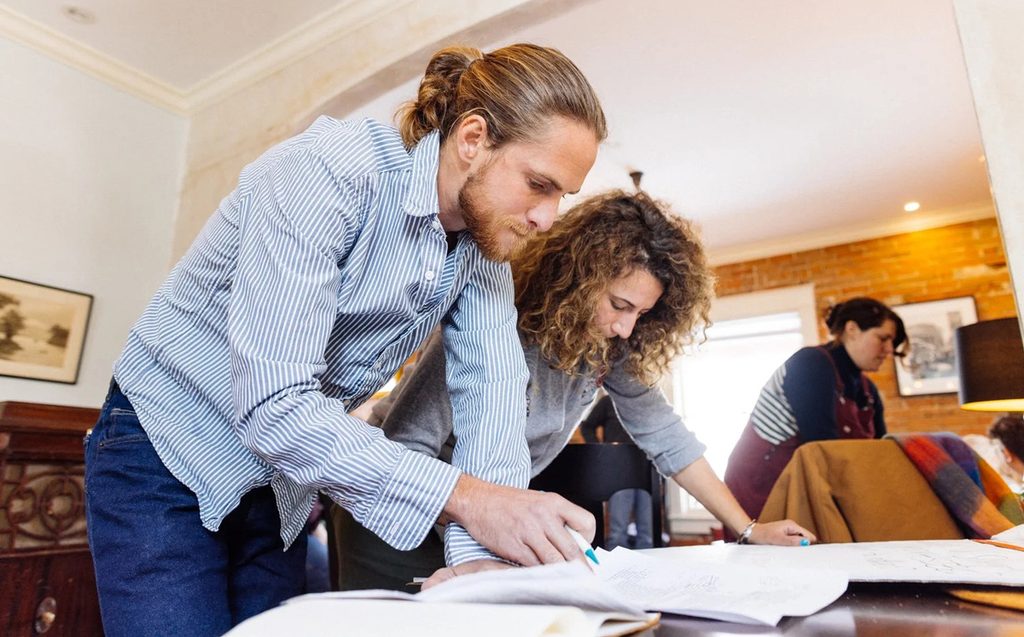
In my mind, it’s like, okay, if this person hasn’t been contacted before, maybe there’s a reason why. You know, maybe they’re too conservative to consider voting for someone like me, but that was not the case at all. These were incredible people with incredible stories who truly just wanted to be heard and represented, and we, as the left, had never shown up to hear their stories. Their stories shaped me; stories that I didn’t see reflected in the left and how we think about policy. So it was just very important to me to talk to folks.
I remember one door in particular. It was a trailer in the middle of the woods, down a very long dirt road. I canvassed by myself, which is not safe or accessible for everyone, but it’s what worked for me, and I could see that a guy lived there, and all the curtains on this trailer were drawn. And, you know, my heart was going a little bit. But I went up and knocked on his door, and we ended up having this really lovely discussion. And he said, “You are the first person to ever come and knock on my door, and people judge what my house looks like, and I can just see them drive away.” And that was so touching to me.
I felt that judgment too when I drove up to the door. But that’s a lesson, you know, not everything is as it seems. And he ended up voting for me. And he kept my palm card on his fridge. It was one of those life-changing moments that challenges how you perceive the world.
STEPHANIE: Were you finding common concerns among the people you talked to?
CHLOE: This was now many years ago, but I was surprised that the biggest thing that I heard was that people just didn’t feel represented. It was like everything had failed folks so much that it wasn’t one particular issue anymore, but just the system in general was failing people. And everyone has very specific examples in their lives of how politics has failed them. It was a sacred priority for me to actually represent my community once I was elected. I didn’t want to go hear stories and then go sponsor bills that weren’t reflective of the issues that I heard, or take votes that weren’t reflective of my community. So that felt very important to me.
I think everything has gotten more and more polarized since then. But my own experience to this day is that this sense of not feeling represented has gotten stronger and stronger and stronger, and everything that we’re experiencing right now is a consequence of people just feeling deeply unrepresented and not seeing the very personal challenges that they have in their lives addressed by the people that they elect.
STEPHANIE: When you were being presented with bills to vote on, or introducing your own legislation, what was your experience working with people who voted for you and those who didn’t vote for you who were still in your district?
CHLOE: It was fascinating, and taught me so much about myself and my community, and the Democratic Party in general. There were times when I didn’t vote with my party because I was representing my community, and there were times when I voted with my party, and maybe it didn’t match up with my community. It’s so hard. I always thought when I was elected it’d be very easy to tell where my community landed on an issue, but, people reach out when they’re fired up about one issue, and it’s very hard to tell what the other side thinks if they’re not as fired up. I knocked on so many doors, so I felt like I had a really good sense of where my community was, but that kind of real-time feedback was tough.
Policymaking is very nuanced. An issue can be black and white, but the bill that the issue is held in can be very complicated. And so there can be one line in a bill that could have huge consequences, but it takes time and energy to communicate that to your constituents. I always viewed it as my job as an elected official – I’m getting paid to do this work, I’m getting paid to go to Augusta and read all of the bills – so I always tried to take the time to explain to people why I voted one way or another. But it’s almost never black and white.
As a constituent before I was elected, I always looked at policymaking and it seemed really black and white to me. And as an elected official, you realize there’s just always more to consider than what it seems. Of course, there are some issues where I do think it’s black and white, but I think in most cases that it’s more complicated.
STEPHANIE: It seems if you’ve built trust, to a certain extent, a lot of people would say, okay, I trust you; I know you’re going to compromise. Were you getting any pushback, including from the Democratic Party in general when you weren’t voting for the bills they were putting forward? Did you feel a lot of pressure?
CHLOE: Most elected officials have felt pressure at one point or another in their service. But, yeah, there’s pressure. There’s pressure, for sure. I think some of that is understandable, and some of it I don’t love. But, you know, that’s part of the experience of being elected, is being able to navigate that and kind of understanding why you’re there.
I was there to represent my community, and that’s what I focused on. As a Democrat representing a conservative community, the way that I navigate the situation is going to be very different from how a Democrat representing a more liberal community is going to navigate it. And since we have more Democrats representing liberal communities than conservative communities, I think it’s just a different dynamic. And that’s okay.
STEPHANIE: Have you thought about being part of another party outside of the Democrats and Republicans?
CHLOE: I’m a bit of a cynic. I think we’re kind of stuck with the two-party system, and I believe in reforming the Democratic Party from the inside out, that’s just my own personal theory of change. But we need all of the theories of change to move forward in this work. There’s so much work going on right now to support pro-democracy Republicans and conservatives that are running for office. I think that’s so important. A lot of Republicans don’t represent some of the social extremism that we’re seeing reflected right now in the larger Republican Party.
I think it’s also important for Independents to run for office. One of my bills was to support independents voting in primaries in Maine to kind of even out the partisanship that we see in party primaries. I really like rank choice voting, which we also are lucky to have in Maine, because that allows Independents to have a fair shot when they’re running for office.
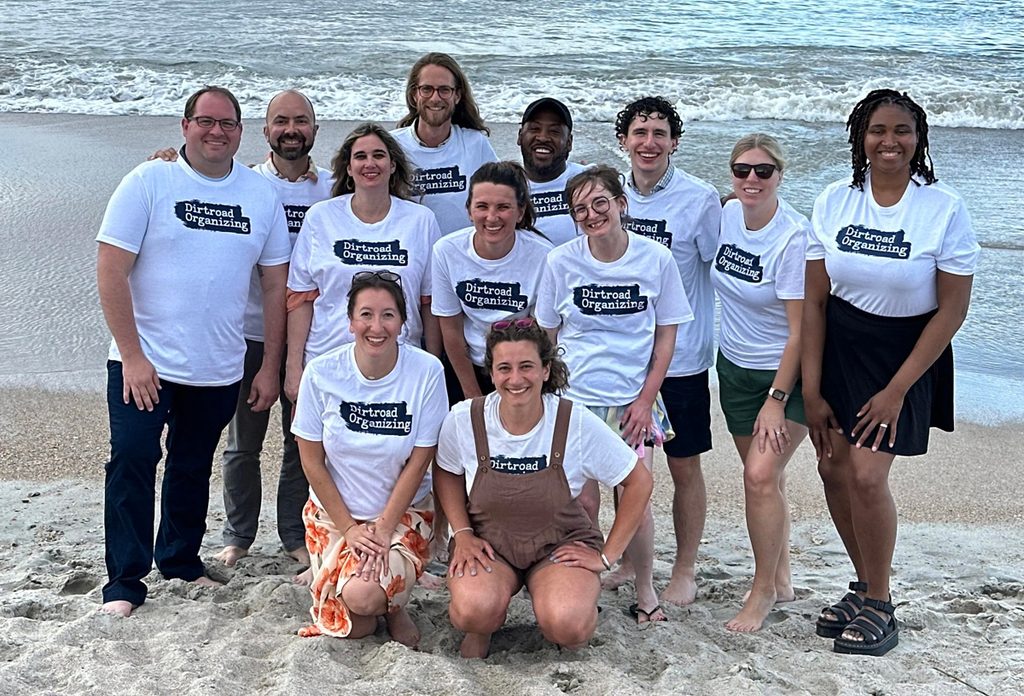
Dirtroad Organizing supports candidates, organizers, and staffers in rural areas across the country. To date, we have over 200 alumni from 39 states. These rural leaders are bringing so much love and empathy and care to the people they live with, and they’re paving a better way forward for all of us. We’re a non-partisan organization, and for me, it’s more about the values that you’re running to represent rather than the party that you’re from. As I chose to run, I wanted to run as a Democrat because I feel like the values of the Democratic Party are supposed to serve rural places well, they’re supposed to serve my community well. But they’re just not. So trying to kind of do some of that translation work, that was the task that I wanted to take on. But it’s not for everybody, and not every community wants that as well.
STEPHANIE: Right, and they abandoned the working class by design. Senator Chuck Schumer said their strategy was to appeal to suburbia and that for every working class Democrat voter they lost, they would get two Centrist Republicans. I don’t think that worked out for them, but it’s no surprise that low-wage workers feel they have no one representing them. The Democratic Party is very low in opinion polls, so maybe it’s a great time to be reforming it.
CHLOE: Yeah, I mean, I think it’s going to be a multi-decade task, probably. We’ve lost folks pretty quickly and have not been super successful at making the case that the Democrats do advocate for working class folks, as you just said. Again, I think this narrative is starting to shift now, which is really exciting to see.
The work of rural organizing is very complicated, and there is so much to unpack in what it means. Rural organizing as a white woman in my Maine hometown is very different from what it looks like in the South. But at the core, I really believe in the power of showing up and having really intentional and authentic face-to-face conversations. I feel like that’s the only way to break down some of the silos and judgments that each party has about each other. In my experience, and what we hear from our folks through Dirtroad Organizing, is when you knock on a door, the first question is: Are you a Democrat or a Republican? And you know, I would always blurt out very quickly, “I’m a Democrat but I’m a good Democrat.” But oftentimes the door gets shut in your face before you can even have a conversation.
So I think that the best way for Democrats to make the case that they do care about working class folks and rural working class folks is that you have to show up at people’s doors, and you have to prove it. You have to show it. And then you have to get elected and you have to actually work on the policies that benefit those rural working class folks in a way that resonates with them, with the messaging and the stories that rural folks will listen to, because it’s a different language in rural America.
Rural America deserves that nuance and attention. We’ve got to show up, and we have to kind of be able to hold that door open long enough to have that conversation, and plant that seed that maybe it’s not such a bad idea to vote for this person. I think that’s very important to do that consistently, not just in every October of an election year, but really showing up and organizing in communities. That’s so important. There are so many rural heroes who are doing this work, day in and day out, year after year–and those folks to me are the ones who are holding our democracy together.
I think it’s also important to have different voices and different representation in office that reflect the reality of rural communities. We also know you don’t get paid to run for office, and in many state legislatures, you don’t get paid a living wage at all to serve. In New Hampshire, you make $100 a year. In New Mexico, you make nothing. When I was in the Maine statehouse, I think it was like $14,000 in our first year, and $10,000 the second year. Most folks who do get elected at the state or local level don’t make enough to survive. So there’s a reason why our politics are skewed to older, retired folks or independently wealthy people, because that’s who it’s accessible to.
There are so many movements right now to rethink how to make politics more accessible, to have campaign finance laws, or to allow folks to pay for childcare if they’re a parent while they’re campaigning to have a living wage while you’re serving. There’s so many pieces to it. Also, if you get elected and you don’t look like the majority of the body that you’re going into, then that’s a very difficult and isolating experience, as well, and you are more likely to get targeted. And that’s very scary. There’s a lot of risk involved as well if you don’t reflect kind of the majority of what our politics look like. So I think that’s a huge part of it.
We also believe, at Dirtroad, that running for local office can still make such a huge difference. So much of our political conversation is at the statewide or national level, and that feels very hard to influence. You know, you’re one vote out of millions if you’re at the state level. At the national level you’re one vote out of hundreds of millions. So it just feels like no matter what you do or who you call, that it doesn’t really have an impact. And I certainly feel that, even though I’m very involved in politics.
But at the state legislative level, at the local level, those bodies have a huge influence over what our communities look like, over the policies that we’re living in every single day. But they’ve been very overlooked, especially by the left. The right has done an incredible job of organizing at the local level, and we’ve seen that, especially at the school board level with all the effort to ban books and really use school boards to influence what our education system looks like.
When you run at the local level, you can win by like five or ten votes. In Maine, we have state legislative races where people win by one vote. So you can see that every vote does make a difference, and it is important that you’re engaged and that you show up. And as the candidate, or as someone in the campaign, every vote truly does matter. It matters how many people we talk to. It matters that we’re reaching beyond the choir, because that’s how we make sure that we’re electing folks that are more representative of the communities.
STEPHANIE: Is it pretty consistent that candidates who have a solid ground game, who are actually talking to people and have support to knock on doors and have the conversations, win?
CHLOE: Not always. We try and encourage folks to look at their campaigning as social movement building, that it’s not about a vehicle that gets one person from being a citizen to an elected official, it’s hopefully part of the journey, and an opportunity to organize in your community and talk to people. You have an excuse to go knock on doors, to make phone calls, to write postcards, to reach out in ways that you just don’t have the social license to at other times of the year. So I think that’s such a big part of it, is that ground game.
Of course, that doesn’t always work, and I think especially in some conservative districts where it’s a steep hill to climb, you know? So we work with people who build incredible ground games, and it doesn’t quite get them to the finish line, but at the same time, winning isn’t always winning. They’ve been building movements, building volunteer infrastructures, creating a dialogue in their community where that dialogue wasn’t there before, and it looked very different than it was before they ran. So thinking about it that way is important.
STEPHANIE: A movement definitely emerged with the Bernie campaigns. There was momentum and excitement, and a lot of organizing. They relied on small donations, which inspired a lot of people. And then he just handed everything over to the Democrats, including my email, which really makes me mad because I cannot get off their lists. But, you know, the air was really let out of that tire, so to speak.
CHLOE: Yeah, I think that’s a theme for the Democrats, just universally, that we build movements and then we can’t quite sustain them. And I think there are examples of movements that have done amazing jobs at sustaining very large movements over many cycles, and I think that’s pretty cool. But oftentimes, we do that organizing and then we’re burned out, we’re tired, we’re exhausted, we’re bummed, and it’s very hard to keep that organizing going. It’s like this boom or bust cycle of electioneering that has also impacted communities because they see people coming to their doors and all of this energy being invested for this year, and then it’s gone. It doesn’t make anyone feel good if you just kind of flit in when someone needs you. You want to be shown that it’s important that you’re there all the time.
There are so many organizations that are doing year-round organizing across the country in every single state and at the national level, focused on doing this ground work in a way that bridges cycles, and that isn’t just tied to one candidate and one election. I feel like that’s such an important model as well. I mean it’s hard work. And we work with so many folks who put themselves on the line. They put their lives on hold. They don’t get to see their families and their friends and their loved ones because they’re campaigning. And they build these really beautiful movements, and then, you know, organizing in conservative districts, you don’t win, and that’s so hard.
So part of our work – and we’re in these coalitions – is to support those people who did that incredible movement-building work, to support them if they want to run again, to support the movements that they built if they don’t want to run again. But just trying to think of it all more holistically and what it takes to organize in rural spaces. But as we started this conversation with the level of polarization and othering right now is at a very scary and dangerous level. And so to us, it makes it even more important to be able to do this work of bridging differences in rural America.
STEPHANIE: Yeah, I do feel there’s a kind of hopelessness. But I also feel that these experiences of making connections is key to despair. My cousin, who sadly passed away recently, was a trucker who worked all the time and dealt with a lot of stress and frustration. We grew up in Kentucky. And we went back and forth online politically, disagreeing on this and that, and after a while he said, “You know, Cous, I think you might have a point. I think a lot of what I’m putting out there is just a bunch of BS, and I don’t really mean it.” He was just caught up in the drama and didn’t have time to do a lot of research. We found a lot of things we agreed on. So I hope people become more open to having conversations with others who they might even perceive to be extreme. And just dig a little bit. You know?
CHLOE: Yeah, definitely, definitely. I feel so inspired by the stories that we hear from the folks we work with, how they’re still finding common ground. You know, I hear over and over again, and it’s something that we talk about in our trainings as well – How do we want to show up in communities? How can we show up in ways that are authentic, that resonate, no matter what political party people are from? How can we really run on values that show that we’re all connected and are all facing so many of the same struggles? We might be facing them in different ways, and some of us are experiencing some struggles more acutely than others, but we are all in the same boat.
In 2024, Dirtroad Organizing had 37 folks on the ballot all across rural America, and over 50 percent either won their seats or outperformed past cycles, and even in districts where Trump made huge gains, these folks were outperforming when they were running at the local level. We had one guy, David Arends, who ran in a very conservative district in northern Montana. He made his ballot competitive for the first time in over a decade, and he outperformed that district by nine points because he just literally went and talked to everybody. This year, we have over 70 Dirtroad alumni on the ballot. These folks are incredible leaders who deeply care about their communities and are out there, right now, organizing for a better future for all of us. Again, we’re a non-partisan organization. Many of our candidates gain ground because they run authentic grassroots values-based campaigns that are really focused on representing their community. So that, to me, that’s a sign that that’s where it’s at. That’s where our hope is.
But running for office, working on campaigns, rural organizing in general is tough work. It’s tough work. And it can be really lonely and isolating, even though I think it’s the most important thing that we can be doing right now. So everything that we do is about trying to bring more resources and attention to the stories of what this organizing actually looks like. Dirtroad Organizing actually just launched a story telling program to uplift the incredible work of our alumni. It’s called HomeGrown, and you can find us on Substack.
- Dirtroad Organizing website
- Homegrown Substack by Dirtroad Organizing
- 2020 Bioneers Online Keynote from Chloe as State Senator