Building a Durable Super Majority for Economic and Political Democracy
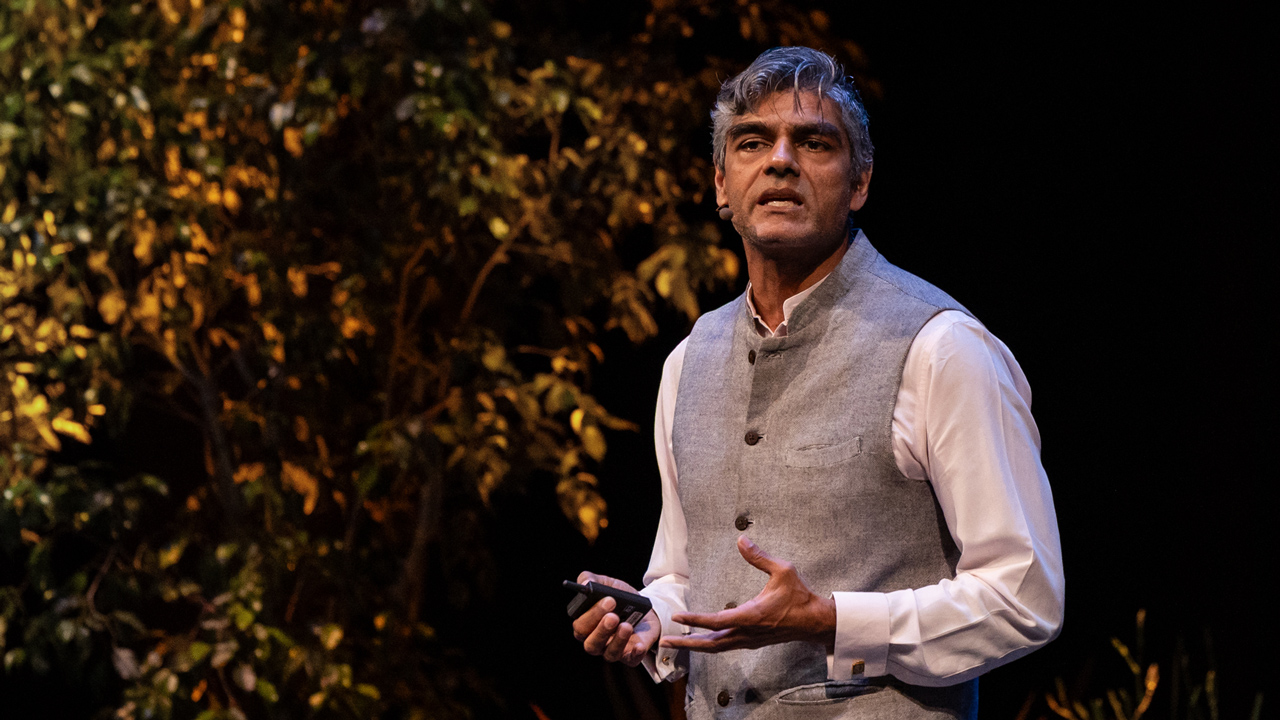
Manuel Pastor, Ph.D., Distinguished Professor of Sociology and American Studies & Ethnicity at the University of Southern California, currently directs the Equity Research Institute at USC. The inaugural holder of the Turpanjian Chair in Civil Society and Social Change at USC, Pastor’s research has generally focused on issues of the economic, environmental and social conditions facing low-income urban communities – and the social movements seeking to change those realities. He has won countless awards for his scholarship and advocacy and is the author or co-author of many books, including: Just Growth; Solidarity Economics; and, most recently (with Chris Benner), Charging Forward: Lithium Valley, Electric Vehicles, and a Just Future. (usc.edu)
Bioneers’ senior producer J.P. Harpignies spoke to Manuel Pastor this past September 14th. This is an edited version of the transcript of that conversation.
JP HARPIGNIES: Manuel, thank you so much for doing this. We really appreciate it. We were trying to think about what we could possibly add to the conversation before the midterm elections in this incredibly challenging political period, and as we were perusing our extensive networks of brilliant allies and friends, you were the first name that popped up since no one has done as much research and deep thinking as you have over the decades about social movement strategies, and you combine the passion of an activist with the rigor of a scholar, so we were eager to hear your thoughts about current realities.
My first question for you is this: We are obviously in an intensively regressive, reactionary period, both here and in many parts of the world, and much of the progress that we have accomplished over decades, if not centuries, on human rights issues and on the environment are being rolled back in a way that’s frankly shocking, even to the most cynical among us. And this is an oversimplification, but there are two over-arching tendencies that I perceive in our milieus at the moment politically. One tendency says that the historical imperative in this moment is to build as broad an anti-authoritarian movement as possible, similar to what Péter Magyar did in Hungary recently to get rid of Orbán. They say we’re in a sort of early 1930s moment, and so nothing’s more important than to build a coalition that goes from the sane center-right all the way to the far left.
Other people say that progressives should actually push for far more radical perspectives because there’s an opening now due to the sort of intense populist reactivity that seems so widespread in populations around the world. So where do you stand on those? Do you think that’s a false dichotomy – the large coalition vs pushing for more radical policies? Or do you have some miraculous third way that you could offer us?
MANUEL PASTOR: I often say that Americans seem to have difficulty holding two ideas in their heads at the same time. I think the way that we reconcile this is that we do want to build a broad front, but we want to make sure that it doesn’t become a mushy middle, so it needs to have progressive anchors that give it principles, that give it fighting spirit, that give it strategy to be able to move ahead.
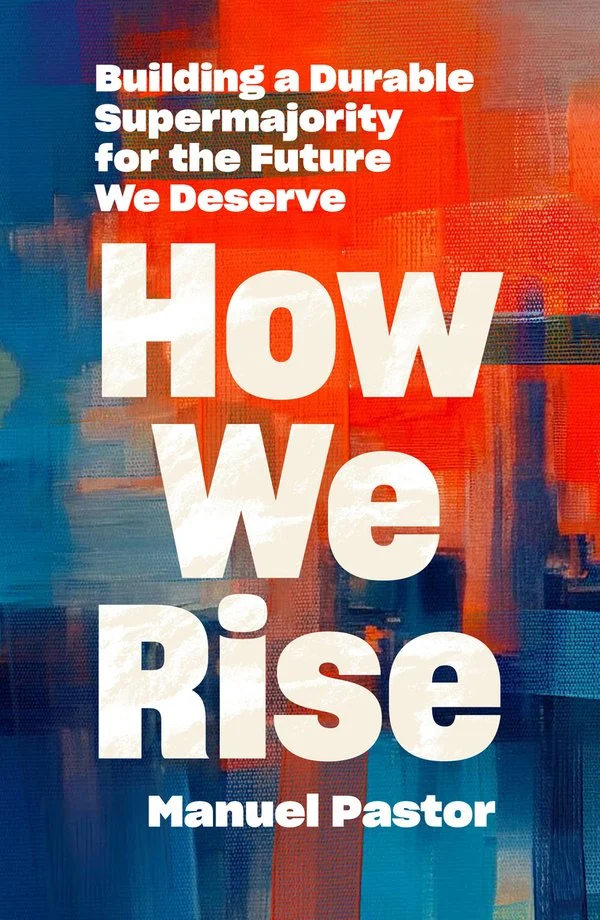
I have been thinking about these things. I have a book coming out next year called How We Rise: Building a Durable Super Majority for the Future We Deserve that argues that what we need is a multi-racial, multi-class, multi-sector, durable super majority for economic and political democracy. Let me spell that out and then come back to your question.
Multi-racial is obvious, that’s who we’re becoming in America, but that’s also been the Achilles’ heel of progressive movements, because the deployment of race and racism has been used to divide us. Multi-class, because while we often romanticize the working class – and I come from that milieu, not just as a person but in terms of my own politics – middle-class and professional people need to be part of this movement. And also, with artificial intelligence, there’s a new precarious proletariat made up of professionals who are about to find that they’re about as replaceable as others have been in the past. Multi-sector, because we need to get the scientists who are upset about climate science being ignored, the faith leaders who are shocked by the disposability of humanity built into the anti-immigrant movement, and many others. Durable, because we’re at a moment in which we need to form a coalition that is as strong as the New Deal coalition, which persisted for decades, was; and the Civil Rights coalition, which was eventually weakened but was broad and strong for a long time.
Too often we on the left have thought that if I we could get 50% plus one of the voters, that would be enough to take us over the top, but if you want durable change, you need 60 percent or two-thirds. You need a social majority, in part because some people are going to bail on such issues as trans rights because they don’t understand that’s an issue about fundamental dignity.
Economic and political democracy, because there’s a great political scientist, Joan C. Williams, who co-authored a book called Outclassed, and she just did a poll. She asked people to take 30 issues and rank them in terms of order of importance. College-educated, left-leaning folks ranked saving democracy as number two, but it was number 19 for working class people, because democracy has not been delivering on the economy, on material goods, so saving a system that doesn’t deliver is not really all that appealing for them, so we need to have both economic and political democracy, in tandem. In order to get there, we need as broad a front as possible, but it needs to have progressive anchors that are continually pushing so that it’s not a meaningless broad front, but one that builds on what we have in common and continually pushes us to action.
So, I do think it’s a false dichotomy, and I think that what we need to seek is not the lowest common denominator but the highest common ground. What is it that we don’t quite agree on that we need to push ourselves to agree on rather than just the easy things?
JP: Just as a follow-up to that, isn’t it a little bit tricky? Because precisely, some of these issues that have proven divisive or that the right has used to peel away support for progressive economic policies are third-rails that are really difficult to get working class people or especially white working-class people to come on board with. How do you finesse that? If you’re going to push for the highest octave on all of these fronts, how do you avoid many people peeling away because they don’t support this or that particular position?
We’ve had those kinds of cleavages for a long time. For example, there are many people in the African-American community who are more conservative and religious on social issues while being very progressive on economic issues.
MANUEL: That’s also true in the Latino community, as we saw during the last Trump election. I think that first, finessing shouldn’t mean trying to fool people, and it shouldn’t mean thinking that they are deluded and voting against their interests, so what is wrong with them? I think it’s a little bit more trying to understand how to talk about things.
Right after this election of Trump, I got persuaded to present some research we’ve worked on in Orange County, a place that has long been purple but that is not known for Bay Area-like progressive leanings. It was an equity profile on racial justice issues, and the people who were sponsoring it, the grant-makers’ group there, were very concerned about alienating people, about how local people were going to react, etc. I started the event by saying that equity is fundamentally about opportunity, dignity, and community.
People want to have the ability to work hard and get ahead. They want to be deeply respected for who they are and what they do, and they want to be able to exist in community. That describes the aspirations of racial minorities. It describes the aspirations of rural people who sometimes feel that they are not awarded dignity or respect. It describes trans people who want the opportunity to live their lives, who want to have their choices accepted with dignity and want to be part of a bigger community. I think when you appeal to those broad values instead of trying to say it’s really just all about the economy, I think you build coalitions that are more lasting.
Similarly, after the raids here in Los Angeles (which are still ongoing, just a bit quieter) in that intense period last summer, I was asked to provide data to immigrant rights activists, and to speak to philanthropy and social justice groups, but I also took the opportunity to forge an alliance with some business groups that realized that the raids were deeply unsettling for economic stability. Most dramatically, I accepted an invitation to speak to the L.A. Rotary Club. Now, interestingly, one person resigned as a result of my appearance, but a lot of others realized, oh my gosh, this is interesting that about a fifth of L.A. County residents are either undocumented themselves or part of a mixed status family; and, wow, I hadn’t realized that about nearly three-quarters of undocumented Angelinos have been in the country for more than a decade; I didn’t realize that more than a third of our frontline construction workers are unauthorized, and I know that we’re not coming back from the fires without them. I think it’s important to take that opportunity to try to find what we do have in common and treat people with respect.
We’re not going to pull over everyone to our point of view, but we should not be applying litmus tests around language and perspectives. We should be trying to figure out if you can be in with us on opportunity, dignity, and community.
JP: Let’s talk a little bit more about immigration, because obviously that’s one of your domains of expertise, a subject you’ve worked on for a lifetime. It’s really a fundamental issue of our times because it’s been driving so much of the rise of hard right parties throughout the world. We’ve had the rise of the AfD in Germany, the Front National in France, Nigel Farage’s party in the UK, the xenophobic “March and March” campaign in South Africa, the anti-Rohingya forces in Myanmar, and of course the Republicans here, so it’s not just a U.S. problem. It’s been this sort of giant third rail. Even the Spanish government has been under heavy pressure because of what happened recently in Ceuta.
My question is this: Is the left making, to some degree, a similar error to what occurred when there was enormous right-wing backlash over the law-and-order issue going back into the ‘70s, and the more recent iteration of that with the whole Defund the Police brouhaha. It seems that the issue of immigration has been very successfully used to tap into the rage of the white working class in the U.S. and Europe, and beyond those regions not just white people since, as I mentioned, we find it all over the world in such places as South Africa, India, and Myanmar, to mention only a few.
A lot of this is a very old playbook of demonizing “the other” by authoritarian forces and by capital, and it’s also obviously blowback from centuries of imperialism and capitalism, but clearly this issue is giving the extreme right a lot of fuel. Has the left failed to find a viable, effective strategy to counter that? Is there a politically realistic effective way to push for humane immigration policies that could be supported by majorities, that don’t create openings for the far right? I realize that if you had an easy answer, you’d be extremely rich and famous; this is a problem from hell, but still, if there’s anyone who can help us see the light on this, I think it’s you, Manuel.
MANUEL: I’ve definitely thought a lot about this. I think you’re right that what the right and capital and these tech titans who are trying to steer us to a new authoritarian order have effectively done is persuade people to blame their situation on those by their side rather than on those above them, who are the ones actually helping cause the situation, so the question is: How do you inoculate against that? I don’t think you can do it by ignoring it, by ignoring the need to talk about xenophobia and racism and challenge people’s conceptions and attitudes, nor by ignoring the fact that sometimes lots of immigration can cause real strains on a society.
I think one of the things that happened during ‘22 and ‘23, when in the post COVID era there was a very big backlog of people coming across the border, it really looked disorderly. The Biden administration tried to make it a little bit more orderly, but roughly two-and-a-half to three million unauthorized immigrants often received fairly quick asylum and crossed the border into the United States. Even undocumented immigrants who’d been here for a long time were asking: “Who are these new people and why are they immediately getting help when I’ve been here for 20 years and nobody helped me?” I think sometimes the left has a sort of honesty problem. We’re sort of willing to call out the other side for the ways in which they run away from the facts—the fact that immigrants contribute a lot to our society, the fact that people do make progress over time, the fact that immigrants actually unionize at a higher rate than the native born and are great allies for the labor movement, etc. We’re willing to call out the right for stuff they say that’s untrue, but we’re sometimes reluctant to admit that, for example, a lot of people crossed the border in a very short period. How can we make that process more orderly? How can we make it so that there are resources for communities to be able to more successfully integrate newcomers? I think that could help.
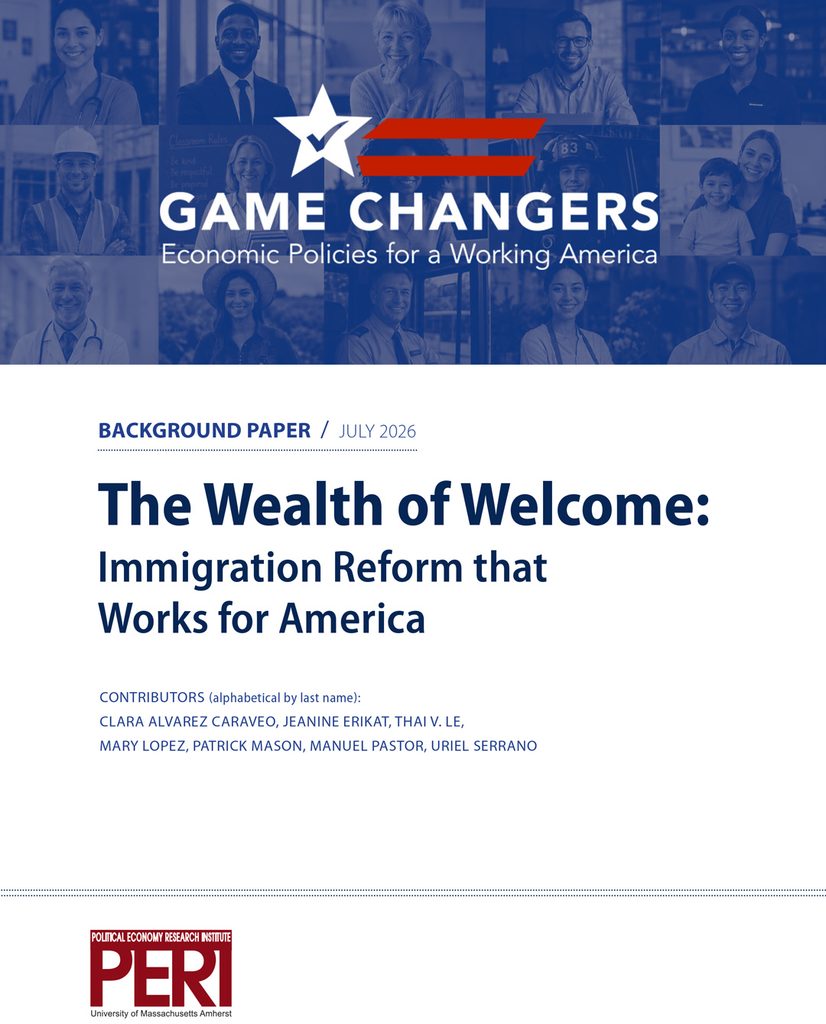
We just finished a report called “The Wealth of Welcome.” It’s kind of a play on both the idea of the warmth of welcome and the wealth of nations that argues for comprehensive immigration reform that would create paths to citizenship for the vast bulk of those who are currently here who are unauthorized and would regularize labor flows to bring people in, and then would take the hundreds of billions of dollars that have been devoted to ICE and instead repurpose them to communities so that they could speed up the integration of immigrants and make sure that we have investments in community building. That sort of three-part program – regularize who’s here, create orderly flows for the future, and divert money away from enforcement into integration – that’s the kind of thing we ought to be arguing for.
JP: Another issue that people affiliated with Bioneers really care about is obviously the environment and ecosystem health, and another really difficult political situation at the moment is that as we’re seeing climate change bear down in a way that even the most pessimistic prognostications didn’t predict 20 years ago or so. We in the environmental movement had always thought that when people would be directly affected by fires and floods and hurricanes, then they would come around, so it’s been disconcerting to see a world in which the evidence is off the charts with wildfires everywhere and hundred-year floods happening every three or four years in many places. What would it take to awaken people? Do you have any thoughts on that? Even with the L.A. fires, fires in boreal forests that had been extremely rare happening yearly on immense scales, and what just happened in Nepal, it doesn’t seem to register for voters here, even in this election. When people ask voters how they rank the environment, it comes up something like 20th. Do you have any insight on what could possibly turn this around?
MANUEL: You’re asking me all the easy questions today, JP.
JP: Yeah, can you please solve all the problems of the world in 20 minutes, Manuel?
MANUEL: How do we turn around authoritarianism? Can we make immigration work? And how do we solve climate change? After I answer these, I think I will run for president….
It is disconcerting. I do think that one of the things that’s going on is that the environmental disparities portion of this still plays a role, so that people who are more privileged and have more power and should be doing something about this are often feeling that it isn’t happening to them…unless they were unlucky enough to live in the Palisades….
It has been striking that from something that actually was discussed three or four years ago, it’s gotten much worse, but it’s hardly being discussed in the body politic. Instead, it’s all about affordability, which by the way plays a role, because one of the ways to become affordable is to move away from fossil fuels, to move away from the high insurance costs that come from these disasters, to move away from the expensive fiscal spending that’s going to need to take place as we try to repair from all of this climate damage. I mean, I do think we can think about addressing climate change as a long-term affordability issue in ways that definitely make sense.

I’m optimistic by nature. I think people who are into Bioneers are often also optimistic by nature. They come to the conferences and/or listen to the podcasts hoping to find tools they can take away to help change the world. I think we can fight this moment of authoritarianism. I’m convinced that we can build a broad front that has a progressive anchor. I’m convinced that we can weaken the power of fossil fuel and the tech titans; that we can shift to speaking about our economy vs the economy. I am optimistic that we can challenge the disease of personal racism, which is inflicted upon us by structures that want to allocate privilege and obscure the truth of who really holds power.
But I also think it behooves us to be realistic about the world we are likely to inherit after this Trump era is over (and I hope it will be). It’s a world that will be in ashes. There will be immigrant lives and families that have been shattered. There will be a planet a little bit warmer and a lot riskier. There will be artificial intelligence that has not been held back. There will be a shift of income away from workers to those on top. We will have an even bigger government debt and fiscal deficit, constraining what it is that government can deliver even in a moment when it absolutely needs to deliver.
We need to be sober as we think about the next world we’re trying to build, but hopeful as we remember earlier examples, such as what got built after the Civil War, that too brief attempt at Reconstruction that emerged in the ashes of a South that had burned down, or, in many ways, had burned itself down by its attachment to white supremacy; or of the New Deal that started in the Great Depression and provided some degree of stability, not for everyone – many people of color were written out of the details of the New Deal – but in which government was willing to intervene and created an era in which wages rose at the bottom, middle and top, in which Social Security got expanded, and in which we finally got to Medicare and Medicaid, not for all, but somewhere in that direction. That all emerged out of a Great Depression in which a quarter of the people lost their jobs, in which fascism was a real possibility here and a real reality in Europe, in which a world war got waged about our future.
So, I ask those who are watching or listening or reading to have hope, to dig deep for the strength that we need in this moment to come together, to build that big tent and continually push it further and further left, but also understand that the world we’ll be inheriting will be one that will be in ashes, and we will need to be thinking about not just the world we want but how it is we actually rebuild.
JP: Thank you so much, Manuel. Words of wisdom. We really appreciate it. Just what we needed to hear.
MANUEL: Thank you, JP. Thank you, Bioneers.