Nature-Based Solutions: Hope With an Action Plan
Human activity has disrupted the innate capacity of Earth’s natural systems to create a stable, healthy climate and atmosphere. The solutions are hiding in plain sight, inherent in the web of biological diversity that creates the conditions conducive to life. In this episode from our Nature’s Genius Series, Wade Crowfoot, California Secretary for Natural Resources, describes how the world’s fourth largest economy is putting natural systems at the center of its bold policies and practices to help restore the biosphere and, in turn, sustain the long-term habitability of planet Earth for human civilization.
This is an episode of Nature’s Genius, a Bioneers podcast series exploring how the sentient symphony of life holds the solutions we need to balance human civilization with living systems. Visit the series page to learn more.
Featuring
Wade Crowfoot, California’s Natural Resources Secretary since 2019, leads efforts to conserve California’s environment and natural resources, overseeing an agency charged with stewarding the state’s forests, natural lands, rivers, water supplies, coasts, wildlife and biodiversity, as well as helping oversee its world-leading clean energy transition.
Credits
- Executive Producer: Kenny Ausubel
- Written by: Kenny Ausubel and Cathy Edwards
- Senior Producer and Station Relations: Stephanie Welch
- Associate Producer and Program Engineer: Emily Harris
- Host and Consulting Producer: Neil Harvey
- Production Assistance: Mika Anami
- Graphic Design: Megan Howe
- Interview conducted by Teo Grossman and recorded at KPFA studios by Mike Kohn and Rod Akil
Resources
Wade Crowfoot – California’s Leadership in Nature-Based Solutions: Building Climate Resilience Through Ecosystem Restoration | Bioneers 2025 Keynote
Pathways to 30×30 Progress Report
Global Safety Net App – launched by One Earth and the Nature Data Lab in collaboration with an int’l group of scientists and conservation organizations
Subscribe to the Bioneers: Revolution from The Heart of Nature podcast







Transcript
Neil Harvey (Host): As the climate emergency deconstructs human civilization faster than a lobbyist can buy a politician, societies are being forced to find real solutions.
Until fairly recently, virtually all the solutions applied to address climate change have focused on scaling technology, such as renewable energy, which would lower our reliance on burning fossil fuels. Although these approaches are crucial, by themselves they’re insufficient. We’ve also got to achieve significant carbon drawdown because the amount of CO2 in the atmosphere is already in the red zone, exceeding viable planetary boundaries.
This technology-centric approach also ignores the clear data that the large-scale human destruction of ecosystems over the past 12,000 years, including by agriculture, has released massive amounts of atmospheric CO2. Some estimates range as high as one third to half. Human activity has disrupted the innate capacity of Earth’s natural systems to create a stable, healthy climate and atmosphere.
The solution hiding in plain sight is to restore the capacity of Earth’s natural systems to heal themselves and sequester the carbon back where it belongs. It’s the intricate web of biological diversity that creates the very conditions conducive to life that all life depends upon, including us wayward humans.
Nature knows how to do everything we need to do, but without mining the past or mortgaging the future. Enter nature-based solutions.
As Secretary of the California Natural Resources Agency, Wade Crowfoot is responsible for identifying nature-based solutions and putting them into State policy. He spoke at a Bioneers conference.
Wade Crowfoot (WC): California is one of the world’s biodiversity hotspots – scientists say one of 36 hotspots in the world. We have more endemic species in California than almost any place on Earth—40 percent of our plant species in California only grow in California.
But we also rely on our nature and our natural systems. Our natural systems are what keeps us together and alive. We talk about ecosystems and sometimes we think ‘eco’ means environment, that’s just fish and wildlife. ‘Eco’ is the Greek translation of home. These are our home systems. So those watersheds that we’re working to protect are providing our water, and when those watersheds burn up in catastrophic wildlife like they have over the past decade, that is a huge threat to our life as humans in California. So, yes, we’re protecting nature for biodiversity; yes, we’re protecting nature for non-human life; but we’re also protecting nature for ourselves.
And that’s really been the Aha moment in the last decade, where across the world, scientists have told us that, yes, attacking climate change is about solar energy and electric vehicles, and building efficiency, but it’s also about protecting and restoring nature.
I want to tell you something encouraging, and I think it’s important to have encouragement at this time—I call it hope with an action plan—and the fact is nature is finding its way centrally into the work of governments, not only in California, across the United States and across the world. And big things are happening.
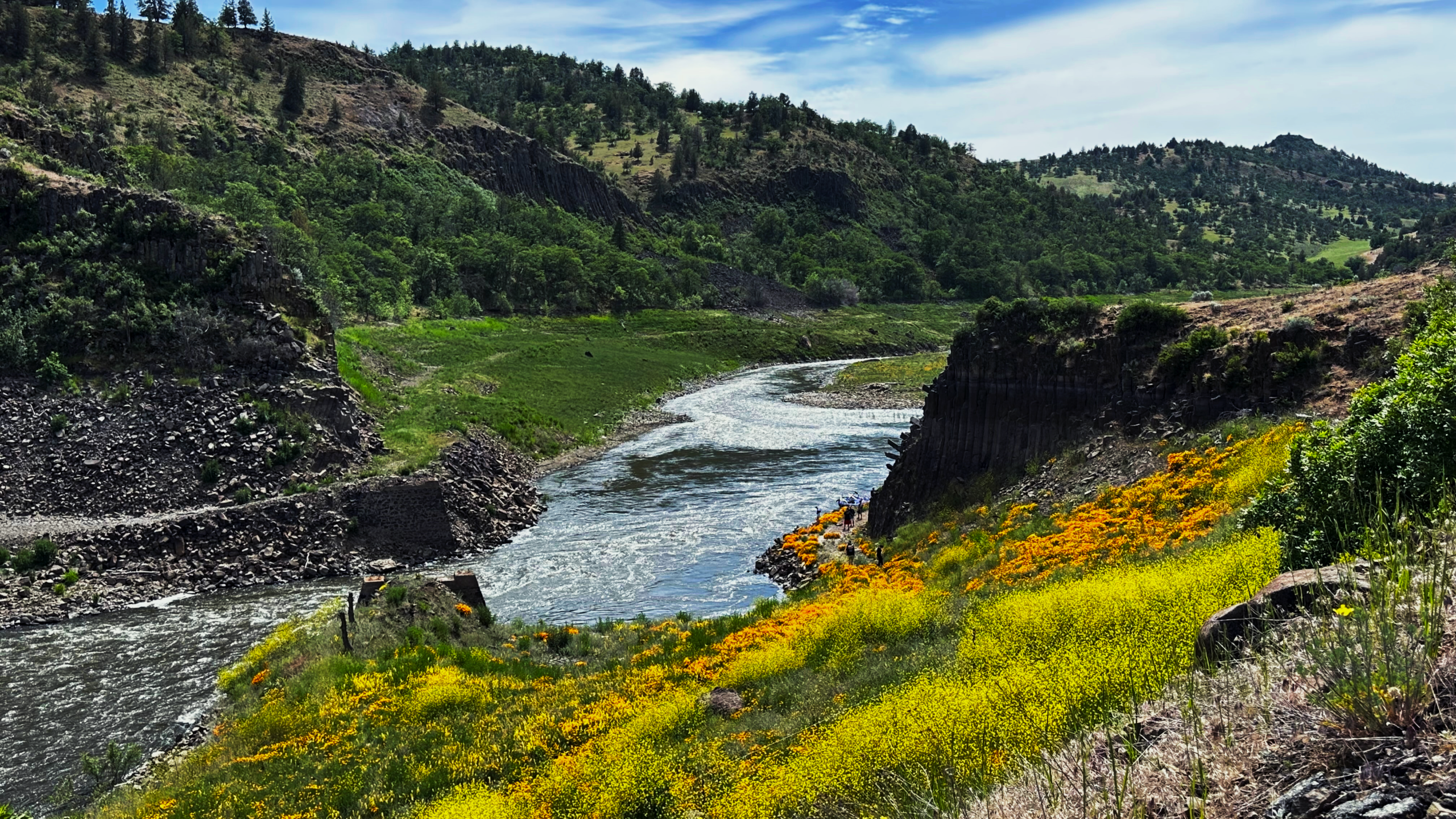
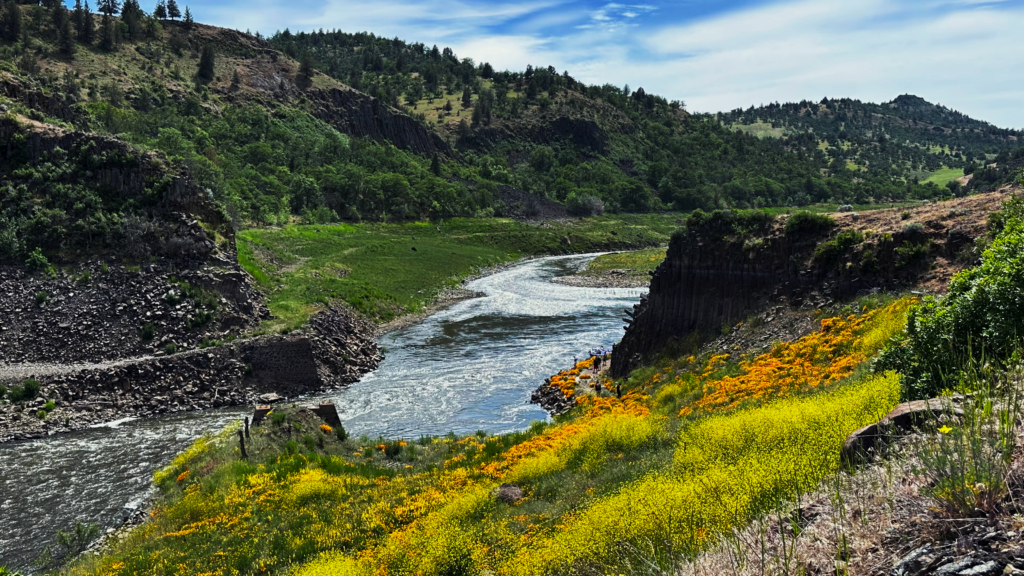
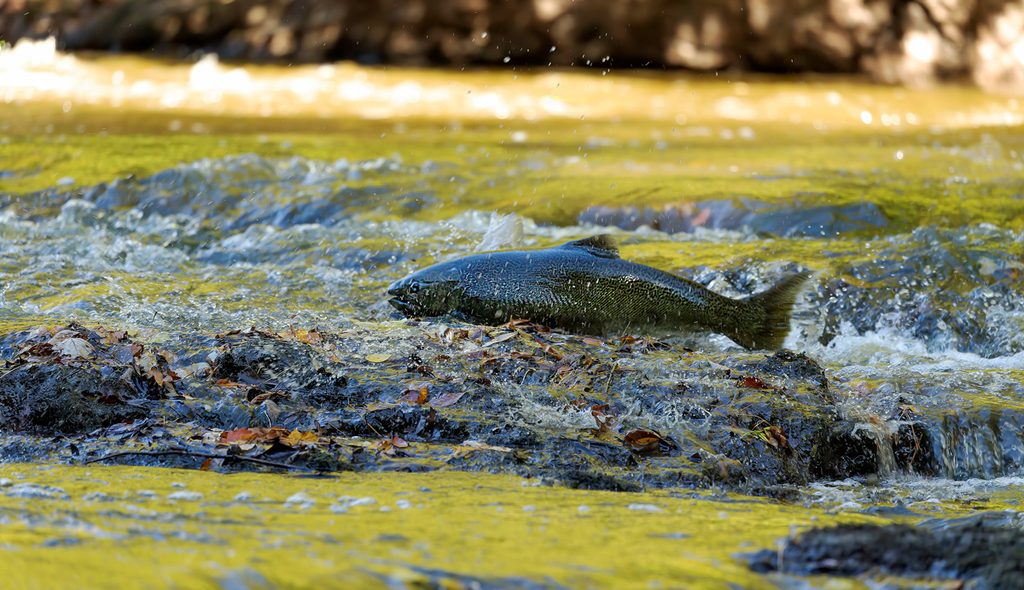
So let me skip to the big things because I think it’s really exciting to share with you that after a decadal movement by tribal leaders in California, the largest river restoration project in American history in the Klamath River Basin. [APPLAUSE] Four dams, four defunct dams have been removed that’s restoring over 400 miles of salmon habitat, critically important. [APPLAUSE] Critically important to the survival of salmon and the survival of the Yurok and the Karuk people, salmon people. And I can tell you that institutions like the agency that I lead, for decades, told tribal leaders that it would never happen, it could never happen.
But here’s the most remarkable thing. Those dams came down in the fall, and biologists said it’s going to take a handful of years to understand if salmon are actually going to recolonize this watershed, that are actually going to come back in. Do you know how long it took? Ten days. Ten days. [CHEERS] 6,000 salmon were monitored ten days later getting through that first dam, and it was ten weeks later that the first salmon were identified far up into Oregon in that top headwaters of the restored habitat. Nature is resilient if we give it half a chance.
Go 400 miles to the south to Los Angeles on what we think is the world’s largest land-based wildlife crossing—the Wallis Annenberg Crossing—connecting two critical habitats for—areas of habitat for the endangered Southern California mountain lion. That’s a wildlife crossing that’s crossing ten lanes of traffic and a two-land frontage road. Many people—most people said it could never get done—it was too big, it was too audacious, it was too complicated, could never happen.
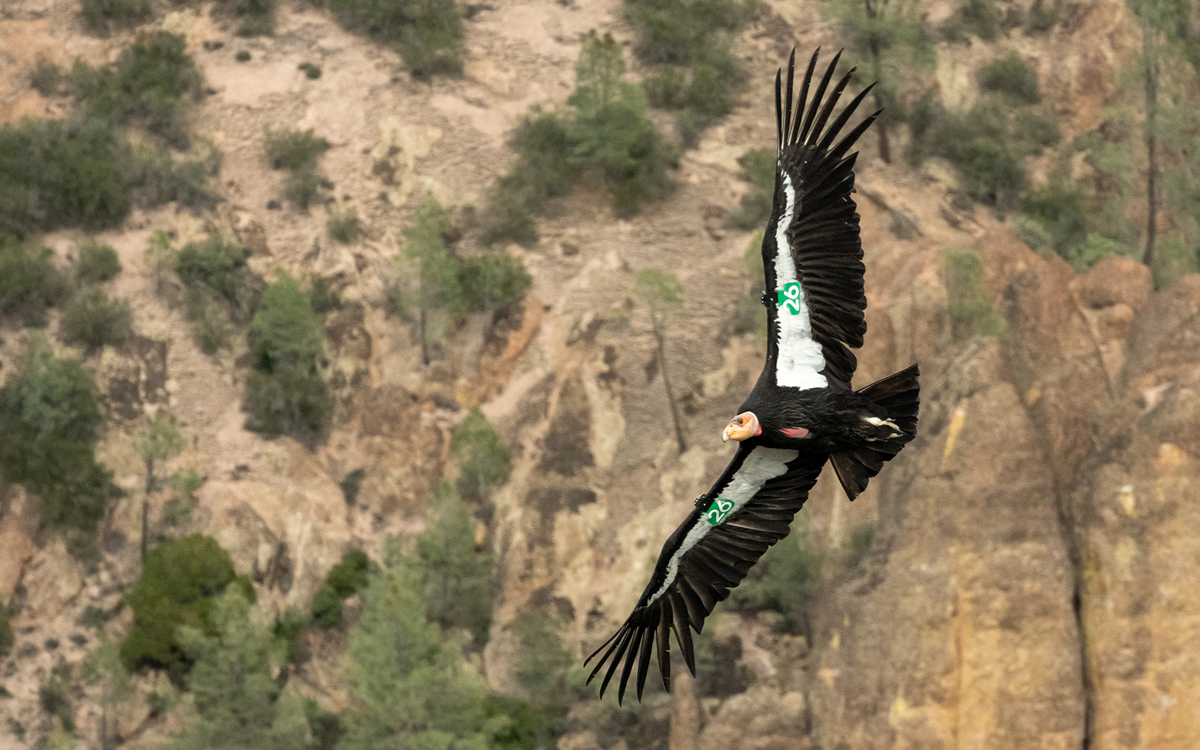
The fact is, great things are happening across California and our country. The California condor is back. I was up with a Yurok biologist releasing California condor into their native habitat in far Northern California. The gray wolves are back in California, and have made their way into the Southern Sierra. And, yes, the beavers are back. [APPLAUSE]
Host: By giving nature a chance to heal itself, these successes profoundly enrich these landscapes.
The term ‘nature-based solution’ first arose in the 1980s among visionary ecologists and biologists, but only gained official global recognition in 2022. What started as an outlier has become a legitimate and increasing priority for effective climate action.
But what exactly constitutes a nature-based solution, and what do the approaches look like in practice? The basic question to ask is: “how would nature do it?”
WC: So when we talk about nature-based solutions, a whole lot of people that don’t do this work really have a hard time understanding what we mean, so I often say, look, this is helping nature help us. When nature thrives, people thrive. And nature needs us and we need nature.
At the end of the day, in order to survive and thrive, we need clean and abundant water, we need clean air, we need safety from these environmental extremes like wildfire, and actually restoring the health of nature helps us with this.
So take, for example, on flooding. We are experiencing California increasing wet—water extremes. So the dry periods are getting drier – the droughts; wet periods are getting more intense, and frankly dangerous. And what we’ve realized over time is that one of the best solutions to protect communities from flooding are letting the rivers roam as they used to during certain times of the year. We have these seasonal floodplains across our country that we’ve essentially cut off. We’ve channelized our rivers and we’ve protected communities by creating higher and higher walls or levees around those rivers. And, in fact, by letting the rivers roam out of their river channel at certain times of the year in a safe and well-planned way is remarkable for reducing downstream flood risk.

Where I live in Sacramento, California is one of the most flood prone cities in the United States, where the confluence of two rivers. And it is these floodplains that’s actually protecting us upriver. And we’re working to expand those.
And what’s really incredible is those floodplains not only protect us from flooding, they are incredible habitat for salmon and other fish that, frankly, have lost a lot of that habitat over time. There are places that seasonal waterfowl and migratory birds are using. They’re even recharging our groundwater basins which are the savings account for water supply. So that’s just one great example where it’s a nature-based solution.
So let’s talk about another extreme – heat. So we’ve experienced worsening heat waves in California. Some people talk about the fact that Los Angeles, over the coming decades, will begin to experience a climate more like Phoenix, Arizona. And when you think about a huge place like Los Angeles, it’s covered in concrete. We know that we can reduce the surface temperatures during these really hot periods through a really simple solution, which is trees. Right? Trees and green spaces reduce the surface temperature and provide shade.
So we’ve invested more than ever in helping generate or create more street trees in neighborhoods that don’t have them, greening schoolyards so that kids, when they’re outside, can be under shaded trees, or if they’re playing, they’re playing on grass or a soft surface. We know from science that the difference between neighborhood temperatures in Los Angeles on a very hot day is more than ten degrees between those places that have a lot of trees and a lot of green space versus those places in concrete. That’s a nature-based solution.
It’s exciting when you talk to people about examples. Everybody loves the idea of greening a schoolyard. People love the idea of letting rivers roam into seasonal floodplains where it’s safe and possible. Folks love the idea of taking your organic compost and turning it into healthy soil that’s growing vegetables that you can buy in your local grocery store. These are all ideas that are not hard. They don’t involve complicated technologies. They do involve paradigm shifts, though, and they do involve thinking differently. So from my perspective, nature based solutions are all about helping nature, restoring natural processes to benefit people.
Host: In truth, many nature-based solutions are found in ancient Indigenous traditional ecological knowledge systems. What’s old is new again.
One striking example is indigenous use of fire.
WC: Across the West, we face remarkably challenging conditions with catastrophic wildfire. Right? Hotter, drier conditions. What’s amazing is, while we need to continue to improve our response and firefighters and technology, that’s all important, but the biggest solution is right in front of our nose in California, and that is reconnecting with traditional practices from our Indigenous communities.
California Native American tribes for thousands of years were practicing fire, prescribed fire, safe, low-level fire to reduce the density of our forests and reduce the risk of catastrophic wildfire. They were even managing water temperatures by creating smoke in the summer to keep water cold for salmon and other migrating fish.
What’s remarkable is for over a century, the agency that I lead outlawed this practice and was literally arresting, and in some cases, charging felonies to tribal members that were putting good fire back on the ground. And fast forward, now we’re working to scale up this practice across the state, and it’s one of our primary strategies to reduce catastrophic wildfire risk. And we’re partnering and learning from those tribal communities that have been practicing this—you know, good fire.
So to me, these nature-based solutions are all around us. We just have to get out of this box we’ve created ourselves to recognize them.
Host: Ancient Indigenous and traditional ecological knowledge and the leadership of First Peoples have become foundational elements of California’s nature-based solutions policy. What had long been violent historical conflicts are starting to transform into respectful partnerships.
WC: The Karuk Tribe in the Klamath Basin has been among the most powerful teachers for me and my team. So this is a tribe that is a salmon tribe, and they have lived in this far northern region of California, along with the Yurok people and others for—since time immemorial. And they have been practicing good fire for thousands of years. They really led a movement over the last decade to push the state to recognize the critical importance of this work, and then not only to, you know, legitimize the practice under the law, but then actually to drive or to advance their tribal sovereignty, their ability to actually burn.
It’s been fascinating to get up there and actually get on those lands and learn from the practitioners. The thing that blows me away is – with nature-based solutions – is, in so many cases, it’s sort of back to the future. It’s these Indigenous practices.
So we’re really excited. From our perspective in California, you know, to protect our residents, to actually achieve our what we think are world-leading targets to achieve carbon neutrality or net zero carbon in 20 years, we have to restore the health of our lands and waters, and it starts by learning from the original stewards of the land.
Host: We’ll hear more from Wade Crowfoot when we return.
I’m Neil Harvey. You’re listening to the Bioneers: Revolution from the Heart of Nature.
If you’d like to learn more about the extraordinary intelligence of life inherent in fungi, plants, and animals, subscribe to our Earthlings newsletter. In each issue, we delve into captivating stories and research that promise to reshape your perception of our fellow Earthlings – and point toward a profound shift in how we all inhabit this planet together. You can subscribe at bioneers.org/earthlings.

Host: In 2016, the revered Harvard biologist E.O. Wilson published his landmark book, “Half-Earth: Our Planet’s Fight for Life.” In it, he advocated for the formal legal protection of the biodiversity and ecosystem health of fully half of Earth’s lands and waters.
The clarion call was a recognition that human existence depends entirely on the health and viability of our ecosystems.
Since that time, a global movement has arisen. Called “30 by 30,” it’s a first step toward Half Earth to protect and restore 30% of Earth’s lands and waters by 2030.
Progress is difficult to measure, but most assessments warn that collective efforts are nowhere near reaching the 2030 goal. According to Protected Planet and the One Earth Global Safety Net, only around 17-18 % of terrestrial land is being formally protected, and only 9-10% of marine habitats – not much progress since E.O. Wilson called for saving half of the Earth a decade before. Conserving the ocean is especially challenging because most of it isn’t owned by anyone, so getting agreements on paper has proven difficult.
The good news is that the state of California is farther ahead. It adopted the 30×30 approach as state law and developed some of the strongest possible standards for adopting nature-based solutions. By 2026, California had conserved 27% of lands and nearly 22% of coastal waters. That means three and a half million acres of counted conserved lands have been added since the initiative began in 2022, more than half way to the state’s conservation goal. Of course, there’s much more to be done.
WC: California has a road map to achieve carbon neutrality. So that’s slashing our pollution. But we realize that in an economy like California, fourth largest in the world, we’re never going to completely eliminate pollution. There’s some really tough industries to reduce emissions. So in order to reach that net zero or carbon neutrality, we need to sequester. We need to remove and store carbon at much larger levels than we have.
It starts with these nature-based solutions. We all learned in fifth grade that plants absorb carbon dioxide and release oxygen. And when our lands are healthy, our soils are healthy, our trees and forests are healthy, they sequester more carbon than they release. Our landscapes in the West and in California are unhealthy.
And so now for the first time we’re quantifying the amount of emissions that come off our lands, and we’ve set a specific target to reduce the emissions of those lands, ultimately making the lands a carbon sink.
So things like healthy soils. We have so much organic waste that it’s actually not a form of waste, it’s actually an asset. That’s organic content. If we can actually vastly expand organic content into the soils, create healthier soils across a meaningful swath of California ag lands, this means significant carbon sequestration. And oh, by the way, remarkable water retention, more efficiency of our water usage in a state that’s experiencing greater droughts.
So those nature-based solution targets that are holding us accountable to really drive land use practices, changing and improving the health of our landscapes, again, so we can achieve carbon neutrality, but also achieve all these other benefits.
Host: Conserving and restoring nature are effective ways to heal societal and environmental harms – and they’re also also intensely popular. Wade Crowfoot finds that nature-based solutions have unusually broad public support that can transcend even extreme polarization of partisan politics.
WC: People love the outdoors and people love nature. Our state park system, the largest in the country, is beloved by rural people, urban people, north, south, Republicans, Democrats. Our public lands are revered by folks across the ideological spectrum.
So when you talk about these common sense improvements that provide benefits by using nature, or building the health of nature, I really do think it breaks through some of the ideological differences, or even the partisan differences. And at the end of the day, the great thing about, you know, this set of actions we call nature-based solutions, is, yes, it’s about combating climate change, but we don’t have to talk about that if—for somebody who doesn’t recognize that science, right? The great thing about these solutions is they’re multi-beneficial. So we can talk about them in different ways that really resonate with a range of people.
Host: California helped create the Mediterranean Climate Action Partnership in 15 regions that have similar climates, across five continents.
These states and provinces aren’t waiting for their federal governments to mobilize. Instead they’re collaborating directly to share knowledge and solutions that can migrate around the world.
Wade Crowfoot notes that advancing and scaling these nature-based solutions should also include restoring justice with First Peoples.
WC: Three months after he took office, Governor Newsom invited California tribal leaders to the future site of the Native American Heritage Center, this new tribal gathering place in Sacramento, and did something that no California governor had ever done. He offered an unconditional apology for state government’s treatment of tribes. And he read—[APPLAUSE] And he read from the inaugural address of California’s first governor, where that governor put a financial bounty on the head of Native women and children, a state sanctioned policy of genocide. And it was easily the most meaningful and impactful day in my career.
But we talked about, with the tribal leaders, that if that’s all that happened, it was importantly symbolic, but it was ultimately counter-productive because we needed to actually create a new future. So we’ve been holding ourselves accountable over the last five years to create that new future.
What does that future look like? It looks like ancestral land return, land back. [APPLAUSE] It looks like co-stewardship, co-management of our lands, and it looks like restoring traditional ecological practices that we now desperately need in California. [APPLAUSE]
We allocated $107 million to ancestral land return that have now facilitated 30,000 plus acres of land back to tribes. [APPLAUSE] California State Parks manages 1.6 million acres of land across California, now 57 percent of those lands in state parks are governed by co-management and co-stewardship agreements with Native American tribes. [APPLAUSE] And we are finally getting out of the way of tribes in getting cultural fire back on the landscape, which we desperately need in California. [APPLAUSE]
So this is happening. And this will continue to happen. And I want to tell you that as we pick up the paper or, as we do now, doom scroll in the beginning of the day or the end of the night, just know that progress is being made, and it’s not just being made in California. I had a chance to lead a delegation from California of activists and tribal leaders and local government leaders to Cali, Colombia, in the fall, where we came together with countries from around the world under the United Nations Compact convention on biodiversity, and I can tell you, governments from around the world are doing things that make these—this progress look modest. And we have a network of efforts among progressive governments. And I can tell you this linkage between restoration of the environment and restoration of justice, Indigenous led, it’s found its way, as it should, into these governmental discussions, and it’s actually guiding our path forward. So my message is: In this dark, dangerous hour, don’t despair.
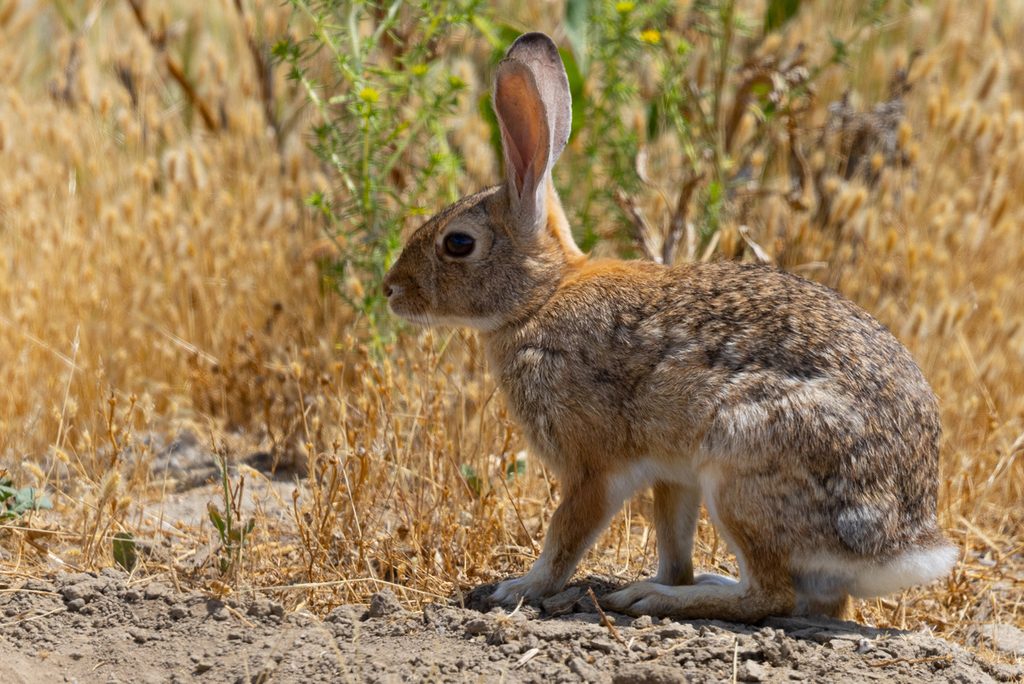
And I want to end with a story, and it’s one of my favorite stories. The San Joaquin riparian brush rabbit is this cute little rabbit that has lived in the Central Valley, the San Joaquin Valley. And as its name suggests, it lives along the rivers. It lives in those riparian zones, woodsy areas along the rivers. And we’ve lost 96 percent of our riparian habitat in the Central Valley, and we thought we lost the San Joaquin riparian brush rabbit until they found a breeding pair taking shelter under an overpass of Highway 99. […] And that breeding pair was brought into what’s called captive breeding, where they help generate more population into the dozens. […]
Well, fast forward, an incredible nonprofit named River Partners, that does these multi-benefit restoration projects, bought an area of land at the confluence of the San Joaquin and the Tuolumne Rivers, and the goal was buy it from agricultural production and re-wild it for this type of habitat, this riparian habitat. And it’s an amazing story, because we caught wind of this effort, and we decided to see if they would help us make it a state park.
And so in the course of that, they were doing biological surveys to prepare for the reintroduction of the brush rabbit, […] And during that biological survey, within that newly repaired riparian zone, only three-and-a-half years old, do you know what they found? Riparian brush rabbits. [LAUGHTER]
Somehow these incredible bunnies have figured out a way to travel ten miles and across the river to find their new home at Dos Rios. So to me, that says never give up hope, always recognize that nature can rebound if we help nature, and this is our moment.
Host: Wade Crowfoot, Nature-Based Solutions: Hope with an Action Plan