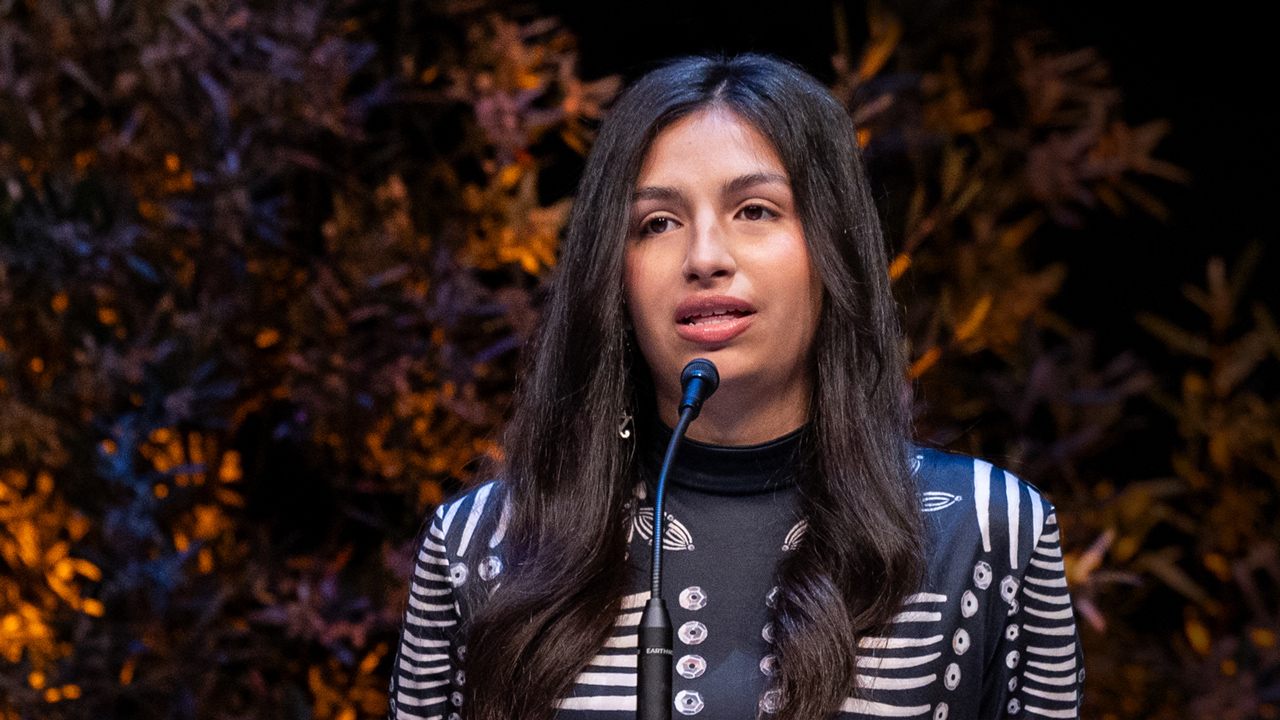
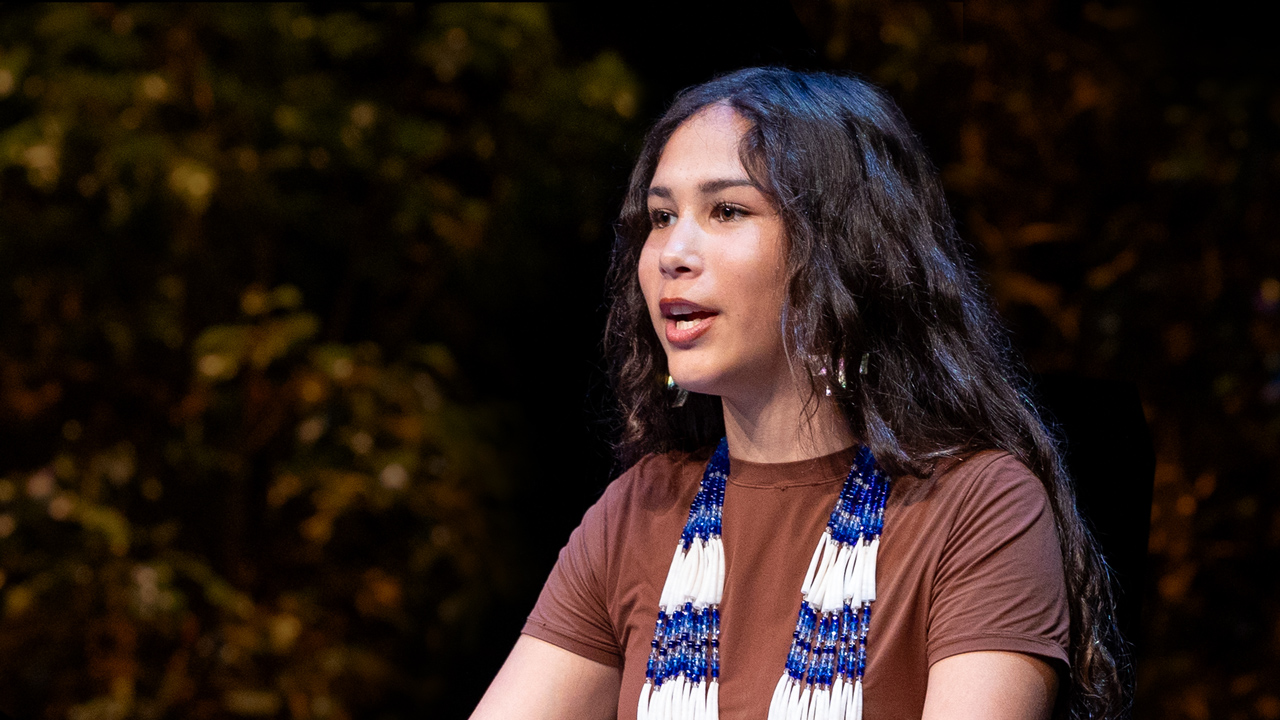
Rebecca Tickell: Revolutionary Filmmaker & Regenerative Farmer
Rebecca Tickell, who began her career as an actress and singer, is an accomplished and influential documentary filmmaker whose work not only delves into a broad range of environmental topics, but is almost always synergistically linked to important and impactful activist campaigns. Her films have been seen by millions of people and have helped raise significant amounts of money for a variety of eco and social justice initiatives. Her filmography includes such classics as FUEL, The Big Fix, Pump, and a trilogy on regenerative agriculture—Kiss the Ground, Common Ground, and the just-released Groundswell, a sweeping overview of the global Regenerative Agriculture movement, accompanied by the One Billion Acres impact campaign. Rebecca also walks her talk: Her family film studio, Big Picture Ranch, is also an actual regenerative farming operation.
Bioneers’s senior producer J.P. Harpignies interviewed Rebecca on October 21st 2026. This is an edited version of the transcript of that conversation.
Bay Area Bioneers: Join us for a screening of Groundswell in Berkeley on November 11, as part of a film series in partnership with our dear friends at the David Brower Center and at 360 Degrees Communications.
J.P. HARPIGNIES: Rebecca, thanks so much for doing this. We realize you must be incredibly busy with your fantastic newest film, Groundswell, now out in the world, so we really appreciate that you would take the time. The first thing I’d like to ask you about is your own personal trajectory. What was your childhood like, and how did you wind up being so passionate about ecological and social issues? And how did you ultimately land on filmmaking as your tool of choice in trying to have an impact in the world?
REBECCA TICKELL: You know that expression: Just ride in the direction the horse is going? Regenerative farming seems to be the direction of my life. I come from a legacy farming family in which I can trace many generations back of farmers, including the adoption of the Green Revolution, which they thought at the time was a great thing, but then my dad and aunts and uncles all stood in vats of DDT and 2, 4-D and were exposed to all of the agricultural chemicals available at the time. And I have now witnessed in my family the farmers’ diseases and the firsthand impacts of what the cost on the American farmer and the farming families actually is, and why there’s a five times higher suicide rate within these farming families. It’s deeply personal for me on that level.
And then through this kind of serendipity or who knows what, I ended up getting cast as the leading role in the Christmas classic movie Prancer, with Sam Elliott, when I was 8 years old. So, when I was an 8-year-old girl, I became a movie star, and I was famous, and the film was translated into many languages. I got to go to Russia when very few Americans could go there because I was famous there. That experience when I was so young revealed to me the power of storytelling, the reach that a film can have, and how it can touch so many people’s lives and hearts. Also, Raffaella De Laurentiis, the producer of that film, was a powerful female producer, which showed me from the start that a woman could make films.
But then I ended up being in horror movie after horror movie, and I had this experience during the filming of a Clive Barker movie in which I played a succubus that sucked the souls and blood of men. They were filming a scene in which I was giving birth to this giant alien squid baby on the basement floor of a monastery, and I had this epiphany: It’s time for a career change. And it was right around that time that I saw An Inconvenient Truth, and I couldn’t leave the theater. That movie reached out and touched my heart; it connected the dots for me around what my purpose is, to use filmmaking and storytelling as a means to help heal the Earth.
And it turns out that one of the roots of the name Rebecca in Aramaic means soil, so, okay, another sign that my life’s mission is to help heal soil, and to help hydrate landscapes, and to help reconnect people with Mother Nature, of which we’re all a part. These realizations led to 20 years of documentary filmmaking, creating more than 20 films about stabilizing the climate, looking at it from many different perspectives, ultimately through serendipity leading me to the subject of regenerative agriculture and to 15 years of telling that story through a trilogy of soil films – Kiss the Ground, Common Ground, and now Groundswell.
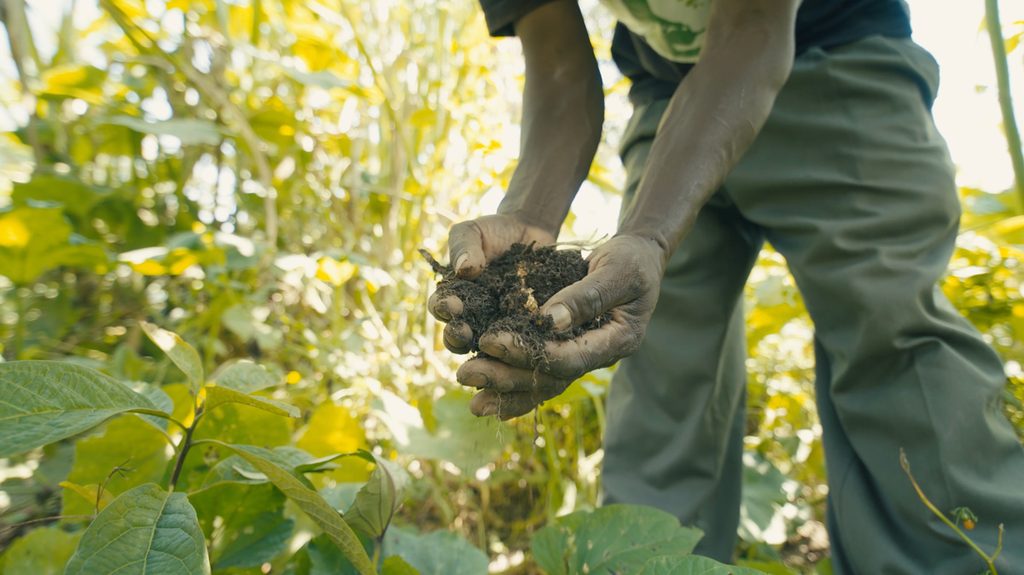
I used to make movies about oil, and I used to say the only thing duller that I can make movies about than oil would be soil, but, somehow, we were able to make soil sexy and entertaining and helped breakthrough into the mainstream with a message of regeneration. It’s been a catalyst for the movement of regeneration, and certainly something Bioneers has been standing for all these decades. So many people that I’ve learned from within the Bioneers community have taught me about regenerative agriculture. It’s been an honor to have that opportunity to be part of the storytelling of bringing that out knowledge into the mainstream, especially with it being so personal for me.
And it also has led me to doing work here within my own community in Ventura County, which has me labeled as a hysterical terrorist. I framed that quote and hung it up on my bathroom wall because I know that, like Rachel Carson, who was also tagged a hysterical terrorist, people who are asking important questions and challenging the status quo in their communities can often feel very threatening. But in my own family, with my own father, after three films about this and two decades of storytelling, my dad has finally stopped spraying chemicals.
JP: That’s fantastic. Your earlier films, as you mentioned, covered a bunch of different topics, including some of the best take-downs of the fossil fuel industry ever made. Did you have a vision from the beginning that you were eventually going to make films about farming? Was that in your mind from the very beginning or did that evolve after the first few films?
REBECCA: Initially I came into this not really knowing what the solution was to the issue that I saw exposed in An Inconvenient Truth. I knew it wasn’t light bulbs, and it’s certainly not paper straws and renewable bags. Those are important, but what I learned from those three films was that the government is super corrupt, greed and money rule the day, and the regulatory systems that are supposed to be protecting us are funded by the industries that they’re supposed to be protecting us from. Making those points in the films we made featuring whistleblowers led to getting personally attacked and got very tense at times, so when regeneration came into the picture, it was a welcome relief because when you’re poking holes in the beast it can get really rough, while shining a light on a beautiful pathway forward is a different experience. It’s a different form of activism, one that can lead to really positive impacts.
But I’m grateful we got to do all the work we did. In 2012’s The Big Fix, we exposed how BP wasn’t upholding its own environmental standards and all the corrupt permitting that led to the Deepwater Horizon catastrophe in the Gulf of Mexico. That film had a big impact as some key policy makers saw it and were moved to act by it, but we couldn’t get that film widely shown in the United States, so it’s been a 20-year journey of learning how to reach the mainstream through using entertainment to further activism.
So, when I learned about biosequestration in 2013 in Drawdown, I really wanted to make a film about it, but I was reluctant, wondering how we could make a movie about dirt and bio-sequestration that wouldn’t be so technical it would be really boring. Also, at the time, even within that movement, nobody could even agree on the facts, so we had no idea what we were stepping into.
JP: Yeah, there was, and still is, quite a lot of disagreement about the technical data, including how much sequestration happens as a result of better cattle farming practices and other agricultural carbon capture techniques. That always happens when you’re getting into territory that steps on vested interests’ toes. They hire a bunch of experts to try to discredit your work. You know the drill.
REBECCA: Every time I think I know something, I go in and start to learn and realize I know nothing, and there’s just so much more to learn. And that’s true with regeneration. I think that’s a healthy attitude, that curiosity, because there is so much to learn, and I notice that resilience comes with curiosity.
JP: I think it’s the Zen ideal of “Beginner’s Mind.”
REBECCA: Farmers, they get kind of dogged in their perspective. That’s a different type of resilience, like my dad has: “This is the way it’s always been done; we can’t do it any other way; it doesn’t pencil out.” All the arguments; it’s been really interesting for me coming from a farming family, and then learning so much simultaneously.
When I told my dad I was going to make movies about farming, he said: “Well, what do you know about farming, little girl?” And he wasn’t wrong. He’s the expert. He’s the producer. They know their business and they don’t want to be told their business, so when there are such high stakes around something as important as how we manage our land and how that affects everyone, I’ve had to learn to speak different languages depending on who I’m talking to about it, because people come to this from different places.

JP: Well, what you have that your father doesn’t is this vast global overview because you’ve been all over the world for the film, and many different farmers in different places probably have very different perspectives and are coming from different places, so that’s something you can bring that obviously one individual farmer can’t. You touched on this, but I want to expand on it a little bit. One of the things that’s a little different about your filmmaking is that your films are stunningly well made and artistically compelling, but it seems fair to say that you’re as much an activist as a filmmaker, that for you the films are a vehicle. Even though they’re wonderful aesthetic objects, they’re still a vehicle for change in the world, and so one notices that a prime example of that is for the new film, that the “One Billion Acres” campaign is very much entwined with the film. Could you talk a little bit on that and explain how you see that sort of merger of activism and filmmaking as a vehicle for change?
REBECCA: When we started off with our first film, Fuel, at Sundance, where we won the audience award back in 2008, that was at the time of intense conversations about not going to war for oil, and Tom Brokaw asked us: “What’s the line between activism, advocacy and propaganda?” And I have never stopped thinking about that question. It’s been remarkable to be able to be both an activist and a storyteller, to witness the impact of the storytelling that I and others have done by seeing actual transformations in the real world.
Common Ground, the second in the series after Kiss the Ground, is actually one of my favorite films that we’ve made. It pulls back the curtain on the corruption within the regulatory agencies. We featured some whistleblowers, and we got some blow-back and legal letters, including from the ultra-processed food industry. I love that film for a variety of reasons, but one of the things that we did during COVID in the U.S., when we couldn’t travel and we were focusing on what was happening here, is that we created the Hundred Million Acres campaign, and we were able to track acreage that was going into regenerative agriculture.
And, of course, there are a thousand arguments over how to define “regenerative” and measure acreage, but I think we did a good job in representing a movement that’s been developing for decades before we’ve stepped onto the scene. With this Hundred Million Acres campaign, we were able to track some 86 million acres using regenerative agriculture in the United States, up from less than five million just a few short years before, and that’s amazing if you think about how long it took the organic movement to get to three-and-a-half million acres. That took many decades.
Of course, there are some inner movement controversies because “regenerative” isn’t yet defined as clearly as “organic,” and some regenerative farmers still use some chemicals organic farmers don’t, and quite a bit of organic enterprises now do mono-cropping which isn’t something most of us support. But we realize that we have to include and honor the organic farmers whose shoulders the regenerative movement is standing on. So, yes, we’re facing controversies within the movement, but I see that as an excellent problem because that means there’s movement. We’ve got a conversation going about 86 million acres looking at how well the land is being managed and what the impacts of the farming techniques actually are on the ground.
With Groundswell, which is the final of our soil trilogy and sort of the culmination of 20 years of work by me and Josh Tickell, my filmmaking partner and ex-husband, we took a trip around the world, to just about every ecosystem, with our two children. We all got typhoid, the entire crew of 12, but we witnessed that this movement is happening globally, that everywhere we went people were harnessing the power of the practices of regenerative agriculture. In each ecosystem, that looks different, because it’s in context to that ecosystem, but it’s working. Everywhere we went, we saw some of the most disempowered people empowering themselves through how they were managing their land with regenerative organic agriculture.
So, a new goal emerged for us: What is it actually going to take to put enough land into transition to regenerative organic agriculture for us to sequester enough of the carbon that we’ve put up into the atmosphere? (Editor’s note: Humanity has emitted approximately 1.8 to 2.3 teratons (1,800 to 2,300 gigatons, or trillion metric tons) of carbon dioxide since the start of the Industrial Revolution). And how much time do we have to put that land into management for bio-sequestration and for hydrating our landscapes that we have been desertifying? What we came up with was that we need to reach a billion acres, which is roughly 10 percent of global ag land, by 2030. That is what we’re saying is the tipping point. That first 10 percent, in this case, is the hardest, because we’re not just talking about moving mountains, we’re talking about rethinking governmental systems. We’re talking about rethinking our global food system.
This is not a new conversation for the people at Bioneers. You all are the most radical folks I’ve ever met in terms of what it looks like to rethink the system, because you’re doing it within your own communities. I witnessed that here with Steve Sprinkle, who’s been doing it here in our community at Ojai for so long. So, a billion acres is the goal, and we’ve been working with the verifiers and the certifiers, and we have tracked 331 million acres globally currently in transition to regenerative agriculture.
And there have been some pain points, such as having to work with corporations that maybe we’ve protested against in the past, but new people are coming to the table, and then it becomes a question of how we prevent greenwashing and how we make sure people who are making these promises are genuinely coming to the table and are going to show us through their actions that they’re on board with this. Having a commitment is a starting place, though, because you can’t hold someone to account for something that they haven’t made a promise to do.
JP: Let’s dig a little bit deeper into what regenerative is. I realize it’s an incredibly complex topic, but just in broad strokes, what defines, for you, what is truly regenerative agriculture?
REBECCA: I subscribe to the Gabe Brown definition, which is “farming in context,” which is I think missing in a lot of the conversations around regenerative agriculture, i.e., keeping in mind what co-evolved within a particular microbiome, which crops work best within a particular ecosystem, but then also keeping in mind that things are shifting, so we have to be a bit creative. The other key points are: working to achieve the least disturbance of soil, i.e., the reduction or elimination of tillage; the radical reduction or elimination of pesticides, herbicides, fungicides, and other synthetic inputs; and animal integration; as well as a newer one that was “added” to the unofficial list, which is taking care of the people who are actually taking care of the soil, so protecting farmers and field workers. The use of cover crops and land management with biodiversity in mind are other basic practices and principles of regenerative agriculture. The implementation will look different in each place, but those are the core defining characteristics.
JP: One of the things that often gets lost in the discussion because climate is obviously such an immense, pressing emergency, is that other crises, such as the toxification of the environment because so much farming uses, as you mentioned about your family, toxic chemicals. How important do you think it is to not to put all the emphasis on carbon sequestration but to also include in the conversation other key problems, including biodiversity loss, that sometimes gets short shrift because of all the focus on climate.
REBECCA: Yeah, biodiversity has to be an important part of it. If you grow things in a mono-crop you really cut down on the variety of living things. You need diversity. That’s been one pitfall of the current organic movement, and another result of mono-cropping is the reduction in the nutrient density of some organic foods. That’s one thing that the regenerative agriculture model is getting right—the insistence on that diversity factor. But one thing we criticize some regenerative farmers about is the continued use of some chemicals, because organic is strictly no chemical. If I personally have to buy a food, I’m going to look for the organic label, even if that means that perhaps it’s not going to be as nutrient dense, but at least I know I’m not poisoning myself.
JP: I think agriculture’s role in the toxification of the environment has been deemphasized in recent years because of the focus on climate, but to cite just one example, so many of the dead zones in oceans, such as the one in the Gulf of Mexico, are the result of fertilizer and pesticide runoff, in that case from the corn belt into the Mississippi.
REBECCA: It’s so unnecessary. It’s so backwards to make ourselves dependent on these chemical inputs when nature has a perfect system that we have to trust and listen to. And as I’m learning more about regeneration, I’m more and more convinced that the emphasis shouldn’t be just on carbon capture. The key factor is actually water. Ultimately this is about our dehydrated landscapes, and how we can heal our small water cycles through how we manage our land. I’ve been discovering that it’s all about the small water cycles.
I’ve been learning that right here in the Ojai Valley where I live, that hydrology is the key to resilience, and how important having gentle, low, slow rains is. The key for me at this point is how to restore our small water cycles, create healthy soil with high organic matter content that can hold and filter water, and that also has the perk of stabilizing our macro climate through sequestering carbon.
JP: And, of course, the climate itself affects the hydrology because regions get drier and you get more extreme rainfalls and droughts, so, yeah, it’s obviously all connected.
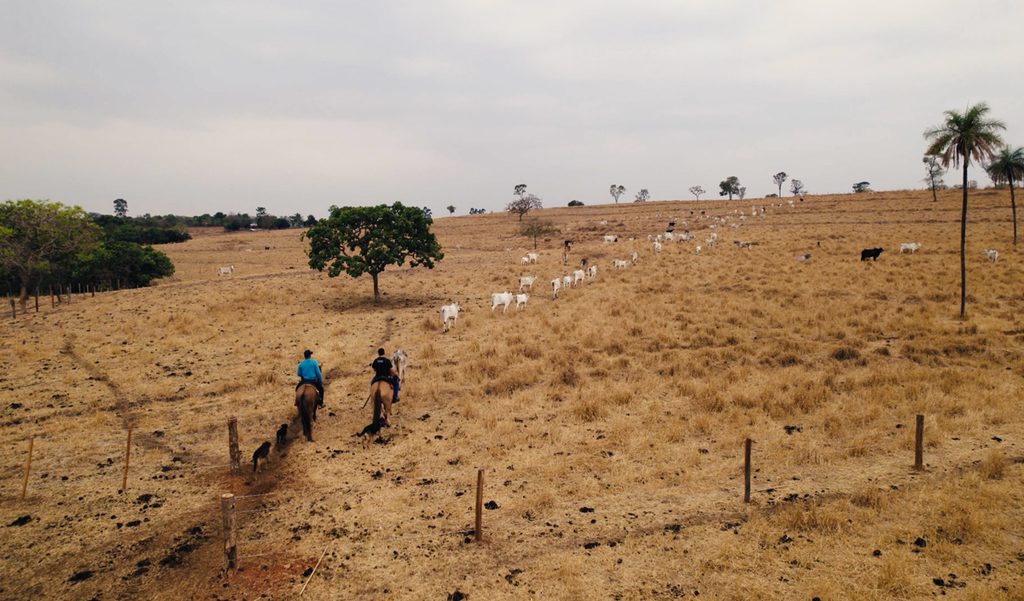
REBECCA: I just got back from the prairie. I was with Laura Turner Seydel (Editor’s Note: Director of the Turner Foundation and Chair Emeritus of the Captain Planet Foundation), who’s always been a heroine of mine. I grew up with Captain Planet (Note: eco-themed animated series for children co-created by Ted Turner). She took her father – Ted Turner’s – ashes and spread them out in the prairie that he helped save through helping to save the buffalo, so I was with these majestic buffalo, and I was seeing the power of the grasslands and the power of the keystone native animal that co-evolved with those grasslands, which is the buffalo, so now I’m, of course, in love and worshiping the buffalo, and immersing myself in the Lakota culture. There are so many stories that we’re working on over here at Big Picture Ranch around regeneration. Groundswell is just sort of the tip of the iceberg of what’s coming.
JP: Yeah, sadly you probably don’t have room for buffalo on your five acres.
REBECCA: I don’t know if there are many buffalo roaming here in the Ojai Valley, but creating wildlife corridors is something that’s so critical. I have waterways out in my orchard for animals to pass through, even some predator animals I don’t necessarily want, because I have chickens and a llama, and quail and turkeys, and peacock. I’m learning. I’m walking the walk, not just talking the talk, and how to manage the land for soil health is the key question.
And sometimes I have my own little cloud. I’m not joking. I will look out here on a hot day and I can see the transpiration and evaporation happening on my property, and then it forms a cloud above my hill in Ojai. I know that they say it takes 100,000 acres to transform your microclimate, which is probably true, but there are many stories in California of regenerative farms that didn’t wash away or burn down when a flood or fire came. Those stories aren’t often widely discussed because you don’t ever want to be insensitive to the people who’ve lost it all, but there are many stories of resiliency in California from the farmers who are managing their soil for infiltration and longevity, paying back into that bank account; those are the ones who often survive when everything around them burns.
Here in Ojai, there were intense rains two years ago and two citrus orchards washed away, but the one that was doing regenerative agriculture, that had animal integration, cover crops, diversity, was perfectly intact. The water just hydrated the soil the way nature intended.
JP: If you have your own microclimate, whatever people say, because you can see that you have clouds above your house, you should believe your senses and not the statistics.
A couple of other things: When you’ve gone around the world, are there different descriptions and terminologies used to describe regenerative agriculture? Are there preexisting traditions? Do they understand right away what you’re talking about? How does the translation occur globally in different countries and different regions?
REBECCA: I would say that in the places that I went, it usually came from within the communities; somebody had had a vision and understood enough about the ecology of that area to be able to start experimenting. Also, people have ecological memory, and they were starting to see things change, and there were inspiring resistance movements to the harms of agribusiness.
In Kenya, as seed colonization was starting, the law made it illegal for people to save and share seeds and there were heavy fines and jail time if you did, but seeds in Kenya (as in so many other places) told the story of a family’s region and culture, and it was suddenly illegal to save and share seed even within your own family. We documented what was happening there with the large-scale introduction of chemical agriculture. They gave genetically modified seeds and chemicals for free to everyone for two years, and outlawed their ability to save their own seeds, so the farmers all got hooked on chemical agriculture. And then, when they took away the free seeds and chemicals, they then had a bank loan ready for them that made them beholden to chemical inputs and genetically modified seeds, and then, when those bank loans would inevitably fail with the degradation of their climate, those people were losing everything.
This is a story that’s been happening all around the world, but local people recognize the value of their culture, of their seeds, of their stories that are persevering and protecting their native traditions, so, when they can, they organize and resist. I learned from people in each community that the wisdom is there. We don’t have to go out and reinvent the wheel. We just need to listen to the people who remember, and then adapt to that. Maybe the same seeds aren’t going to proliferate the way that they used to because the climate zone has changed, so there’s this new opportunity for people to come together, to listen to the people who know the way that it was done before so we can have that ecological memory, that cultural memory, but then add the understanding that things are changing and we need to adapt, and we all need to adapt quickly. There’s an opportunity right now if each one of us steps into these leadership roles, like those people that I saw all around the world.
And, by the way, in Kenya they won. The Seed Saver Network in Kenya got the law overturned. Their courts ultimately said it was unconstitutional for the law to prevent people from sharing seeds.
In this context, I always think of the Bioneers. You were so far ahead in this conversation, and I’m so grateful for the knowledge and the wisdom that comes from this community, for being able to be included in this community, for having acquired the wisdom to know how we can adapt, and to be able to share that wisdom with everyone we know. I’m going to do my part and fight like hell to protect the work that you and we have all been doing, and I offer these films as tools for you to share with the people in your community so that they can recognize and understand the importance of the work that’s being done by people around the world.
JP: And we’re delighted to be able to show your film Groundswell in Berkeley in a few weeks.
One last thing. What makes you, again, different from other filmmakers is that not only are you an activist using film as this elegant vehicle to spread ideas and empower effective campaigns, but you’re an actual farmer, as you’ve been describing, so you walk your talk. You make films about regenerative farming, and you’re an actual regenerative farmer.
Could you talk to us a little bit about Big Picture Ranch, because, for one thing, there aren’t too many farms that are also film studios. In fact, it’s the only one I know of. Could you explain a little bit more about how you integrate your domestic operation there in Ojai with your larger role in the world, and how difficult it is to reconcile global travel while farming at home.
REBECCA: Well, first of all, I meet leading experts on this from all over the world, and sometimes they come and stay with me here. I have five acres that was a conventional avocado farm. The barn before had been used as the avocado barn and as a motorcycle saddle workshop. I turned that barn into the movie studio, so now instead of animals, I have editors in the barn. I’ve been working them really hard. And then I have a tiny house village. I’m so close to L.A. The best talent pool in the world is right here, so it’s part of what makes the films that come out of Big Picture Ranch so good: we have the world’s best craftsmen and craftswomen when it comes to imagery and color and sound and picture and graphics. They’ll come and they’ll stay in the tiny house village, and we’ll kind of immerse ourselves into the storytelling.
And I’ve planted a food forest. I’m doing a big experiment here. I’ve got, besides the avocado which provide great shade, coffee and bananas and guava and papaya. I have an understory of ginger and turmeric. I’ve been doing all kinds of cover-cropping and experimenting with that, and now I’m building a regeneration education center here.
I’ve got produce rolling down the hill. I’m trying to give it away. I have lots of eggs. I love that my kids sell eggs to the local community. It’s really hard, though, when I have the county ag commissioner or someone who measures soil organic matter coming here, and I have to meet the standard that I’m asking the world to meet. I have to admit that there are some patches of soil that I take them to and other patches of soil that I won’t. It’s a work in progress here.
Also, meanwhile, here in Ojai, we’re trying to put into place a school-supported agricultural model and document it, and I’m making a film about that. And there are, gosh, five projects that we’ve got happening right now all around regenerative agriculture, so some of the best work I think is yet to come out of Big Picture Ranch.
JP: You say you’re working on five films. That seems incredibly ambitious. What are they? What do they cover?
REBECCA: Let’s see, I’m almost done with a docuseries for young people called Athena and Jedi Learn to Fix the Planet. It’s about my kids traveling around the world when we made Groundswell, learning about regeneration. It has animation, so it teaches about what regeneration is, what bio-sequestration is, who climate refugees are, what climate change is, etc. It deals with all of the heavy issues that young people are hearing about but then are being told that somehow a paper straw is going to fix the problem. This is something that will be shown in middle schools, in their science classes and biology, where they can understand not just what photosynthesis is but the power of photosynthesis to sequester carbon. The goal is to connect the dots for young people, so I’ve got that series coming out. My team was skeptical about doing a kids’ show, but now they all feel that it’s probably the strongest work we’ve ever done.
Then I have a series on women in regeneration. It’s women who are leading the regenerative movement, which is why I was out with Laura Turner Seydel last week in her bison field, so the first episode is on bison and matriarchy, and what the world would look like inside of a matriarchy if we were like the bison. And then there will be episodes on regenerative economies and regenerative fiber and fashion, and just going more deeply into some of the topics that I’m now so curious about.
JP: Are you envisioning this, besides the children’s project that is its own thing, as a series?
REBECCA: Yeah. There are eight basically 52-minute-long documentaries about each one of these subjects.
JP: Got it.
REBECCA: And then I have a series on school-supported agriculture, actually a documentary on school-supported agriculture, and two other projects that are currently in development, and I can’t say with whom, but it will be extremely high profile and it’s very exciting. It’s right in line with all the themes that we’re talking about.
JP: And how is Groundswell doing? How has the reaction been so far? And is it being shown around the world?
REBECCA: It was number one on Prime when it came out, the number one seen documentary. The Kiss the Ground documentary, when it came out, was I think listed as one of the top ten environmental documentaries, so there’s a strong precedent. People have been seeing it. It’s many, many countries in many languages with subtitles so people have access to it globally.
And we’ve been hosting these big screenings. It’s been remarkable to see, after 20 years of work on this, how over the years these stories have affected people’s lives, and to have people come up to me and say that, for example, the curriculum about green solutions that I created 20 years ago that I had put into classrooms that they were exposed to as kids led them into green careers, or that they saw Kiss the Ground and altered their lives because of it.
Groundswell has made it into the mainstream. It’s being viewed by governments and regulatory agencies. There are all kinds of screenings happening. We even made a version of Common Ground for the current administration to try to influence how money will be allocated to regenerative agriculture. We’ve had to deal with some uncomfortable partners in this, but when you have a movie called Common Ground about regenerating and healing farms in America, you have to work with the people who are in a position to empower them, so we’ve been able to provide different versions of our films depending on who needs to see it. I will always do that, whether it’s for a school, or an organization, or a government, or an administration, or regulatory agency. That is the point of this storytelling.
As you said earlier, it’s not just entertainment. For me, it’s deeply personal. We made these films not as propaganda but as advocacy. And in fact, we won an award for advocacy at Tribeca, and it was a new category that was invented because I think people now no longer want to hear the traditional “both sides” on these sorts of issues. I don’t think in a story like this I’m going to devote half of my time to hearing Monsanto’s side of the story. I’m going to hear instead what the real challenges for farmers making this transition are. It’s a different kind of storytelling that thankfully is being embraced by the mainstream media and by critics and by festivals and reviewers. Thankfully. Not without its criticism for including celebrities as narrators, but as far as I’m concerned, the real stars are the farmers and the ranchers. They’re the ones for whom we’re using the celebrity and the sizzle and the glitz and the glamour to get their message out there. How do we reach a regular person? You know? We use all the bells and whistles, and at the end of the day it’s been working. Thank God.
And for me, as a mom, that’s the whole point. It’s such a relief that it’s a movement, so we’re not in this alone; we have each other. That’s why we made the films, to spread the word, so join the Billion Acres campaign, spread Groundswell. If you want a free version of it to share with an organization or an institution, just reach out to us. We love doing that. Education is what our whole mission is here.
JP: Rebecca, thank you so much. I wish your passion and expertise could be bottled and shipped around the world. You’re one of a kind, so we have to be thankful that you’re doing the work you’re doing, and congratulations on a brilliant trajectory. It’s really inspiring to hear about the enormous amount of work you’re doing, so thanks again, and good luck with your two million projects.
REBECCA: And thanks to the Bioneers for what you’ve done, and for your resilience, and for your message. I mean, you guys are the real deal. So, you know, talk about preaching to the choir: I’m the one who is the student here and y’all are the ones that have been leading the way for a long time, and so I’m just honored to be able to be a part of it.
JP: Well thanks for that, and I want to mention that you’re also a great singer, since you mentioned the choir, just so people have a complete sense of the totality of your skillset.
REBECCA: JP, come down to Ojai and come visit the ranch. I would love that.
JP: I will try to do that.