Wild Pharmacies: How Animals Heal Themselves
Humans have harnessed many plants, fungi, and even animals, for our medicines. But we aren’t the only species that can do this. From chimpanzees to dolphins to geese, a striking range of animals use remedies that grow naturally in their environments. We meet primatologist Dr. Elodie Freymann, whose work in the forests of Uganda and Peru has given us new insights into how animals self-medicate.
This is an episode of Nature’s Genius, a Bioneers podcast series exploring how the sentient symphony of life holds the solutions we need to balance human civilization with living systems. Visit the series page to learn more.
Featuring
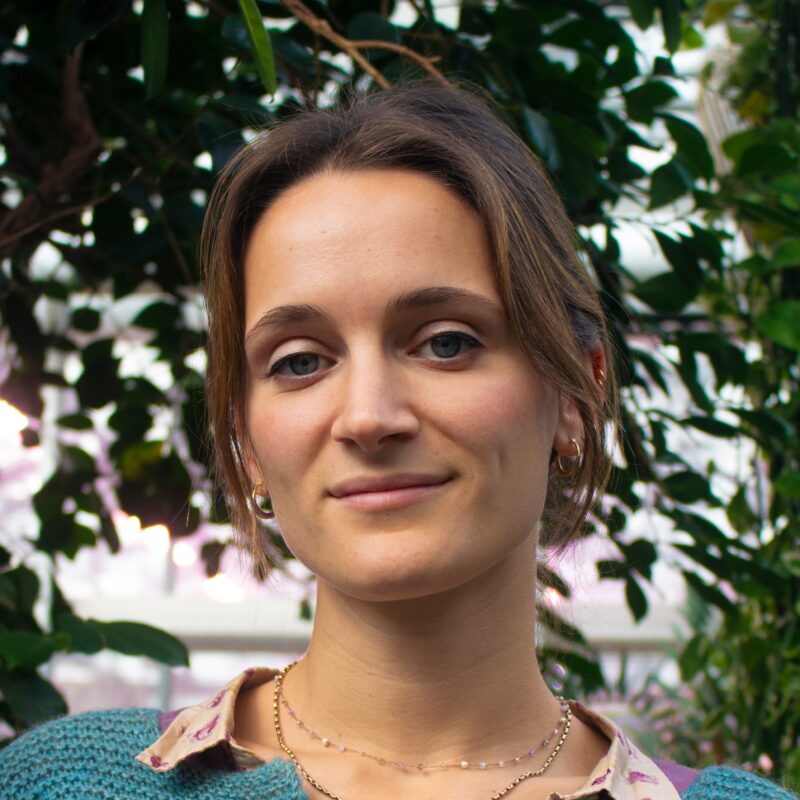
Elodie Freymann, Ph.D., is a primatologist, botanist, social anthropologist, filmmaker, scientific illustrator, and conservation activist. She has received several awards for her work and is a Fellow at both The Explorers Club and The Linnean Society.
Credits
- Executive Producer: Kenny Ausubel
- Written and Produced by: Cathy Edwards
- Senior Producer and Station Relations: Stephanie Welch
- Associate Producer and Program Engineer: Emily Harris
- Host and Consulting Producer: Neil Harvey
- Graphic Design: Megan Howe
- Interview recording engineer: Mike Kohn at KPFA studios
Subscribe to the Bioneers: Revolution from The Heart of Nature podcast







Transcript
Neil Harvey (Host): Opium poppies relieve pain, foxgloves can treat heart conditions, aloe vera gel soothes the skin. Potent chemical compounds found in nature have been used for medicine throughout human history, from medicinal fungus found on Otzi the iceman over 5000 years ago, to the latest cancer treatments being developed from tropical plants. An enormous amount of human insight and ingenuity has gone into discovering and refining these medicines across the ages.
However, we’re not the only species that knows how to use the pharmacy of the living world. Mounting evidence suggests other animals’ relationships with healing plants is also deep-seated, sophisticated and intelligent, carefully choosing specific resources to treat their illnesses and injuries.
It’s about survival – just as all animals need to eat, so we all need to heal. Sometimes healing is an automatic function of our immune systems; but often we rely on external medications to help out.
Many questions remain. To what extent is healing behaviour instinctual, and to what extent is it learned knowledge, passed down through generations? Do our human medicine cabinets overlap with those of other animals? And over time, how much medical knowledge has been shared between species?
These are questions Dr. Elodie Freymann is seeking to answer. She started by studying the plants chimpanzees select to self-medicate, and is now one of the leading researchers in this field – which has an interesting scientific name…
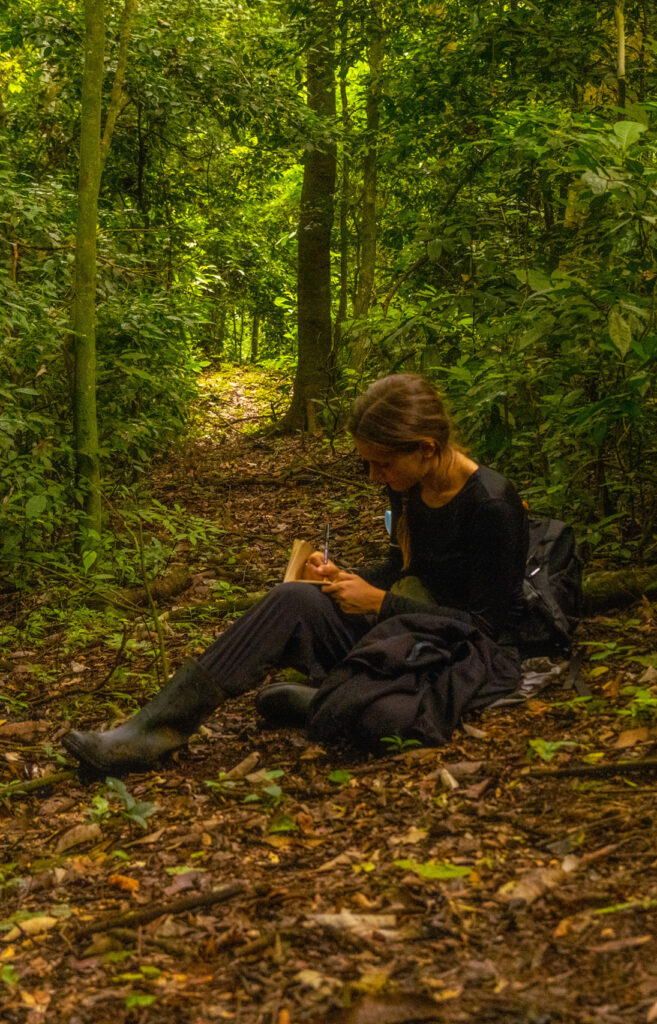
Elodie Freymann (EF): So I learned about this field, and no one has heard of this, and no one knows how to pronounce it, but it’s called “zoopharmacognosy”. And when you break down that word, it’s zoo, as in animals, pharma, as in medicine, and cognosy, as in cognition, as in knowledge. So what this field is is we study how animals know about the medicines in their natural environments, in their ecosystems. Cool. Right?
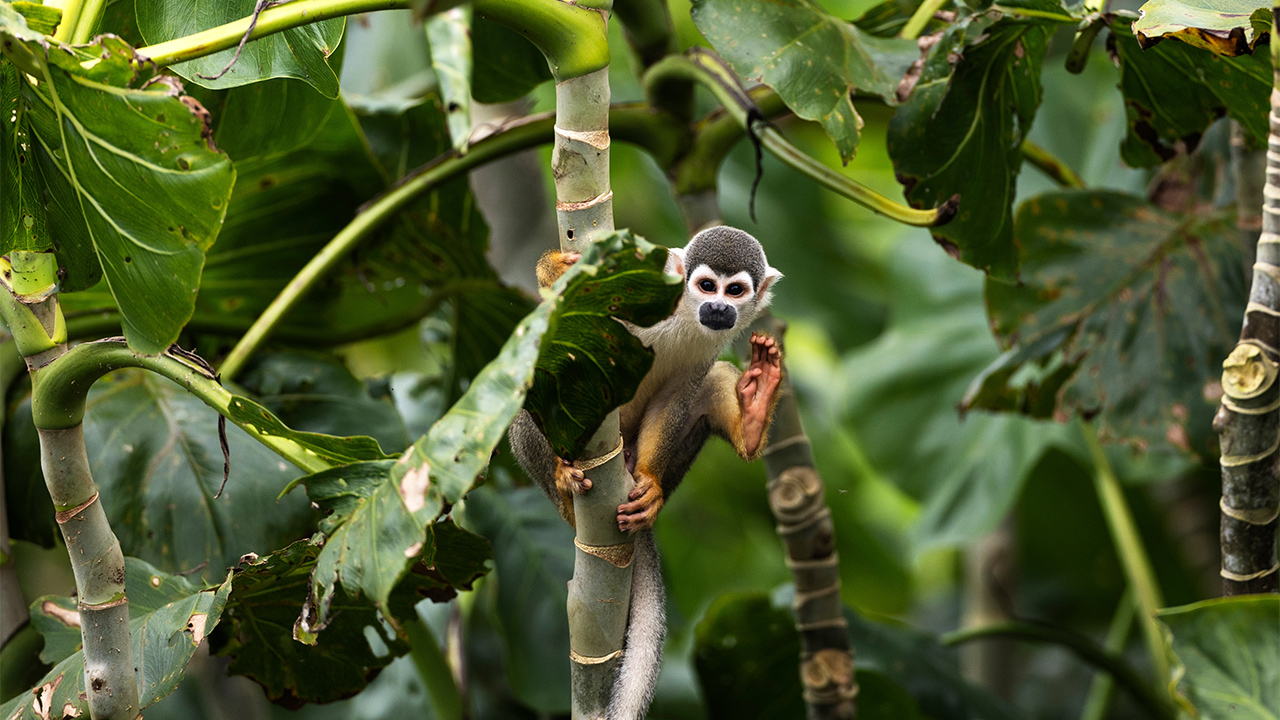
And it’s not just chimps that do this. Chimps were the first animal that we discovered to be self-medicators, and the more that researchers set their mind to it, the more we realized that actually this is happening all throughout the animal kingdom, from chimps, to elephants, to great bustard birds, to bears, to civets, to snow geese. It’s incredible, and the more that we study it, the more animals we discover.
So we’re learning that healthcare is not one of the things that sets our species apart, it’s actually something – surprise, surprise – that’s universal. And animals, just as they know how to seek shelter, just as they know how to find food, they know how to find medicine as well.
Host: The ability of other-than-human animals to find medicine in their environments has long been known by Indigenous communities and traditional healers.
But it was in the late 20th century that scientists started documenting this behavior in our close cousins, chimpanzees. The term itself, zoopharmacognosy, was coined in the late 1980s.
EF: Around the late ‘70s, ‘80s, it was discovered that Chimpanzees are pretty proficient medicine users. And chimps are able to identify and select medicinal plants that can help rid them of internal parasite infections. And then, over the course of the ‘90s and early 2000s, this was discovered in several other species of animals. Over the last few years, there’s been another big surge of people researching this topic.
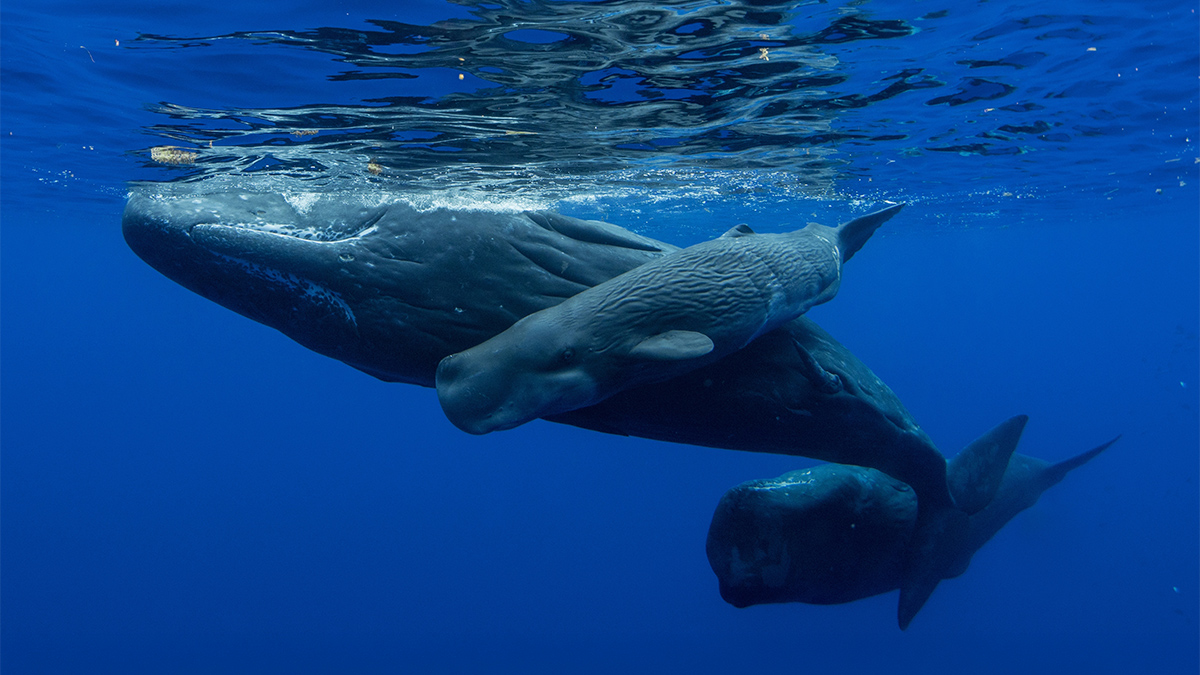
It feels like every day that goes by there’s a new amazing discovery that happens in this field. Animals ranging from bottlenose dolphins in the Red Sea—have been shown to rub against corals that have antifungal and antibacterial properties. There are these amazing birds called great bustard birds in Spain where the males eat certain medicinal plants that have antiparasitic properties during their mating season.
The theory is that it reduces their parasite load and therefore enables them to do these costly mating displays and increase their fitness. So we’re discovering self-medication– animal self-medication throughout the animal kingdom.
Host: These numerous discoveries suggest that self-medication is by no means limited to humans or even to our close primate cousins. It’s a universal survival strategy, an intelligence distributed across species. It’s an exciting moment for the field of zoopharmacognosy.
Elodie began studying the topic in 2019.
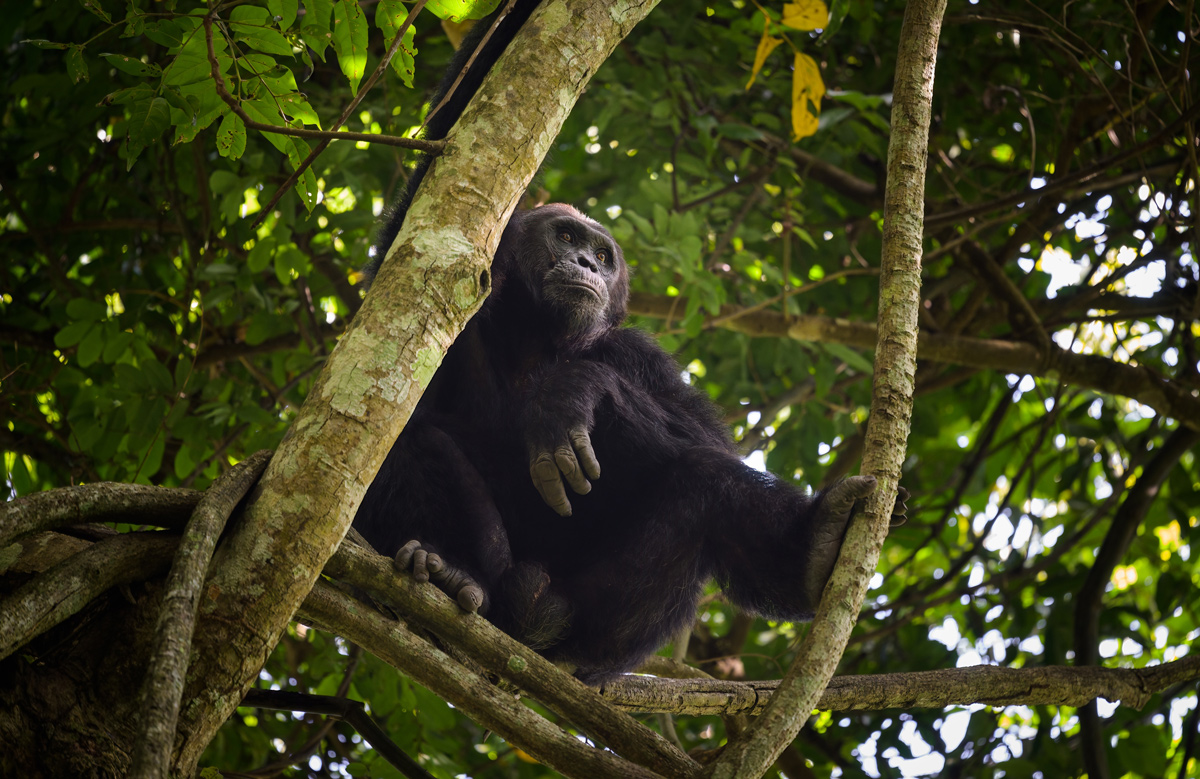
In 2021 her PhD took her to Budongo Central Forest Reserve in Western Uganda, to study the wild chimpanzees that lived there.
The research station where she lived and worked was surrounded on all sides by trees, and teeming with life.
EF: There’s just the most incredible sounds all around you. You have black-and-white-casqued hornbills, which are these incredible large birds. And they make these amazing calls.
🔊 Listen to a black-and-white-casqued hornbill
And the forest has all of these amazing smells. There’s all of this fruit fermenting on the forest floor. And then every so often you’ll be walking down a trail and there’ll be a scuttle and you’ll see a blue duiker or a red duiker, which is this kind of this small ungulate species; there’s monkeys swinging around in the trees. And hyraxes at night, it sounded like there were just people screaming at the top of their lungs in the forest.
So crazy sounds coming from all sides. And then, of course, you have the chimps, who, every morning, at the crack of dawn, you often wake up to their calls. And it’s just this chorus from all around you.
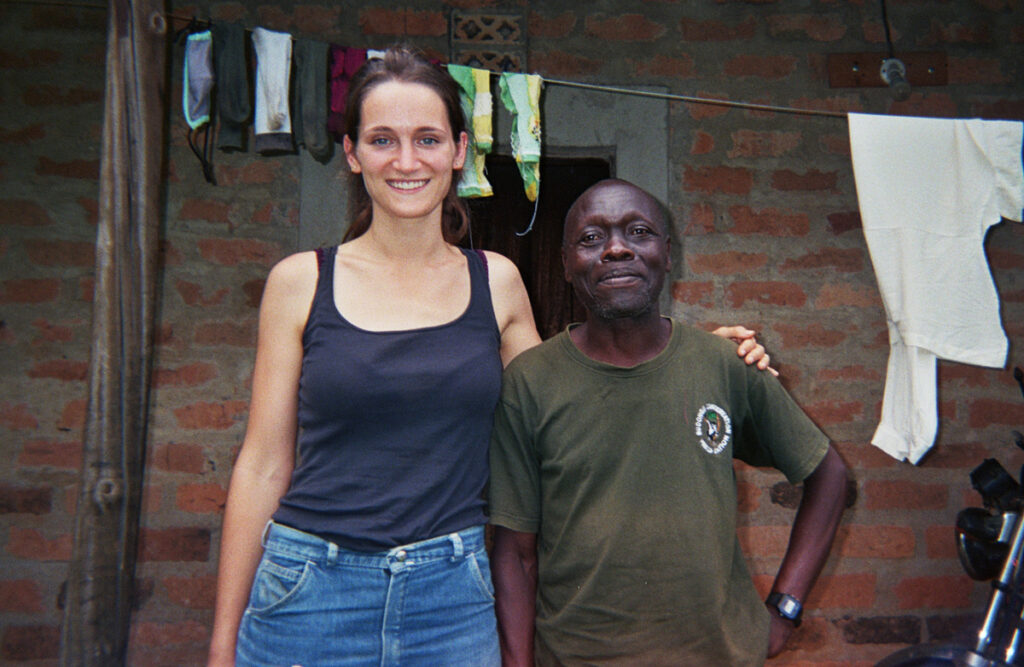
As a researcher, I would be so completely and utterly lost in the forest without the guidance of the local field staff, who most of them grew up in and around this forest. I was incredibly fortunate to work with two amazing Budongo field staff members– one was named Geresomu and one was named Robert. The amount of expertise and knowledge that these guys have is just so extraordinary.
In the morning, you wake up really early. You meet up with your field staff collaborator, and you head into the forest and you have to try to find the chimps. Chimps nest in trees. They’ll call in the morning when they’re up and they’re about to move. So you basically have to be strategically positioned so that you’re close enough that you hear their call and get to them before they disappear.
For my methodology, what I was doing was I was picking one chimpanzee a day and following them around. And that meant going wherever they go. So if they’re sleeping, you’re resting. If they’re traveling through vines, you’re cutting through vines, you’re scaling hills, you’re crossing rivers, you have no agency. You’re just – you’re a chimp. You are following the chimps, you are blending into the group. And I was taking data on as many things as I possibly could.
Host: Chimpanzees’ practice of self-medicating was already well-known when Elodie started her research in Budongo Forest. Back in the 1960s, the primatologist Jane Goodall had observed unchewed, bristly aspilia leaves in chimpanzee dung; later research found these leaves helped chimps purge themselves of intestinal parasites.
Elodie hoped to document a more comprehensive picture of the many additional plants that chimps used to treat themselves. Her goal was to illuminate profound questions about their medical intelligence.
EF: In order to ask some of the more complicated questions, like, for example, how are the chimps acquiring these behaviors in the first place. Is it instinctual? Is it learned? We needed to have a bigger sample size of these behaviors, and we needed more data. And so that was really my broad research question when I started my research: Which medicinal resources are these chimpanzees in the Budongo Forest using or targeting as medicine?
And I realized that I was going to have to, in addition to the classic primatological approach of following chimpanzees around and recording their behaviors, I also was going to need to figure out how to monitor their health in a non-invasive way so I could keep tabs on, for example, how their parasite loads were fluctuating or if they had any sort of obvious infections, or wounds, or signs of illness or ailment.
And I also knew that I would have to do some pharmacology, so figure out whether any of the medicinal resources that they’re eating actually have chemical bio activity, they actually have evidence that they are effective against the diseases or the illnesses that the chimpanzees are exhibiting.
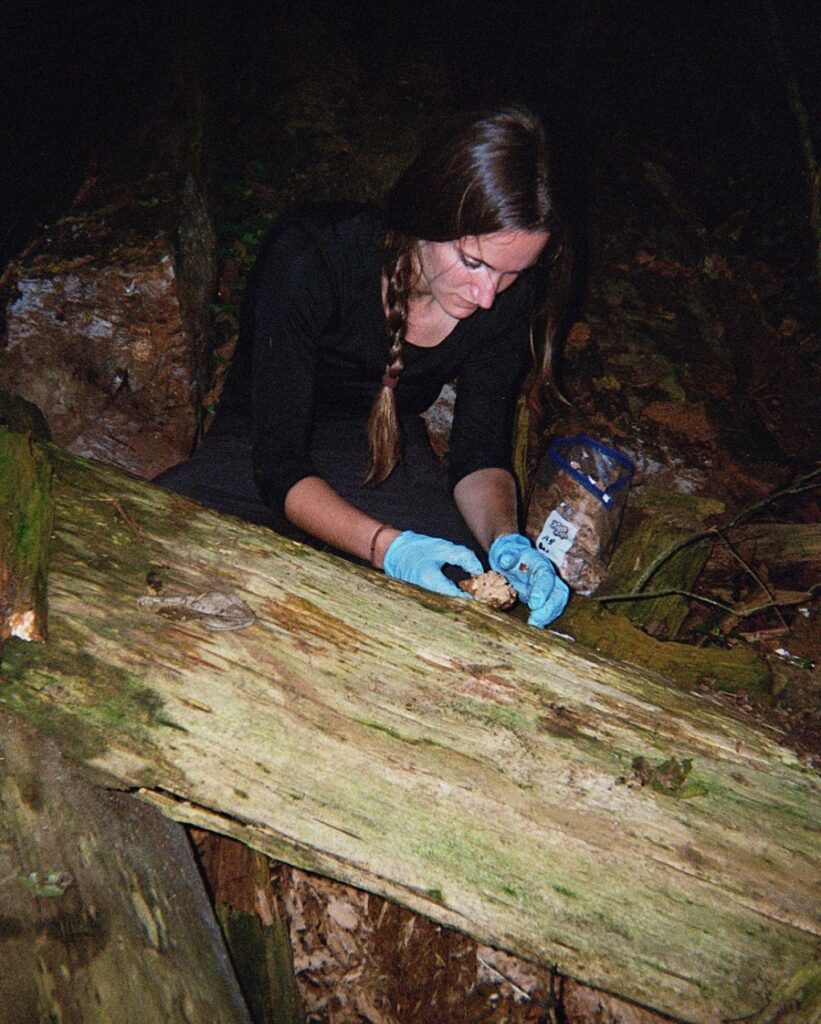
So I also wanted to incorporate this element of how people relate to the natural world: Are people that live in this same ecosystem that live in and around this forest using any of these medicinal resources as medicine as well?
I just began casting the widest net I possibly could, collecting data on everything I could imagine. Then the job became trying to take all of these different pieces of evidence and put them together to kind of build stories. You know? This chimp has a high parasite load and I know this because I collected his poo yesterday and I took a urine sample and I can see that he has some sort of infection, and he’s eating a plant that no one’s ever seen the chimps eat before. And then I collect this plant, and I test it in a lab, and I find that, oh, it actually has strong antibacterial properties, or strong anti-inflammatory properties, and oh, in the village nearby, this plant is actually really a common cure for diseases X, Y, and Z. I mean, that’s an example, but that was the way that I was trying to bring all of this evidence together and synthesize it.
So one of the things we did find was that chimps are selecting leaves to rub and apply to their wounds, and in some cases they chew up the leaves and apply that kind of saliva and leaf mixture to the wounds themselves, and in some of those cases those leaves had known medicinal properties, sometimes relating to wound healing in people.
Host: Elodie was building a comprehensive picture of chimpanzees’ behavior, health, the properties of their medicinal resources, as well as the medicinal plants local people used.
That picture led to the observation that chimps used certain leaves to treat wounds. It also revealed an intriguing insight about tree bark.
EF: I was spending a lot of my time not only studying the chimps but trying to learn how to identify all the trees that they were interacting with on a daily basis, because the second you can identify the trees, the forest just suddenly becomes so exponentially more alive around you, and you can start seeing trees as individuals, and identifying patterns in when chimps visit which trees.
And I got really interested in why they’re eating bark, because there’s tons of trees in the forest, many of which have these really juicy sweet fruits like figs that the chimps love, and yet I was seeing chimps climb down, strip the bark of certain trees, and eat the bark, which is incredibly energetically costly. It takes time. It’s not particularly nutritious. Tree bark has lignin in it that makes it difficult to digest, and it’s not obvious what nutritional value it offers to the chimp diet.
I knew that in traditional knowledge systems around the world, bark is one of the most common plant parts used in medicine because bark has some of the highest density of plant secondary metabolites, which is the chemicals that make a plant medicinal. And so I was wondering: Could this behavior be a medicinal behavior for the chimps?
We had cases of sick chimpanzees traveling far distances to certain species of trees, eating the bark in very small quantities, which is unusual in and of itself, because why travel a very far way to just take a tiny bite of bark?
And so I really focused on that, and I collected a bunch of bark samples, and we tested, and a lot of these bark samples had some really strong antibacterial and anti-inflammatory properties. So stories began to kind of bloom out of all of this data.
Host: The story that emerged from the myriad data was this: the bark of certain trees does indeed have potent healing properties, and it looks as if the chimps are experts in finding it and using it therapeutically.
This was a fascinating scientific finding in its own right, but importantly, it also highlighted an urgent conservation issue. We’ll hear more after the break.
If you’d like to learn more about the extraordinary intelligence of life inherent in fungi, plants, and animals, subscribe to our Earthlings newsletter. In each issue, we delve into captivating stories and research that promise to reshape your perception of our fellow Earthlings – and point toward a profound shift in how we all inhabit this planet together. You can subscribe at bioneers.org/earthlings.

Host: From observing the chimpanzees in Uganda, Dr. Elodie Freymann had identified certain species of trees they seemed to be using to self-medicate.
But she also noticed a concerning trend.
EF: Right as I was getting really getting excited about a few of these tree species in particular, we were also noticing that some of these same species are the ones that are most targeted by illegal loggers.
That kind of opened my eyes to a new angle. And that is the conservation aspect of all of this, why it’s important to even do this research. This science has a really important implication for the protection of these wild pharmacies, these medicine cabinets that have evolved over millions and millions and millions of years to help the plant heal, and as a wonderful side effect, help animals and people heal as well. And we’re literally chopping them down.
That kind of illuminated this new mission for me, of not just learning the science but also communicating the science, and trying to show people before it’s too late that these natural medicines, they’re gifts, we’re not entitled to them. And if we want to protect animals, we have to protect their access to these medicines; we have to make sure that they’re able to take care of themselves.
Host: It isn’t enough just to make these discoveries about natural medicines; it’s also critical to conserve the ecosystems that produce them. In protecting medicinal resources, you protect the animals who use them to heal.
And that includes humans. Another key part of Elodie’s research was about the medicinal use of those same barks by people in the region. She interviewed local experts, some of whom are featured in her documentary “Waiting for Alstonia”, available on Youtube.
Here’s an excerpt, where her colleagues Monday Mbotella Gideon and Gerosomu Muhumuza, share insights into the use of bark by both chimps and humans.
Monday: I have observed chimps feeding on tree bark, different species of tree bark, but not continuously, just one moment at a time. And this gives me the answer that really it is medicinal because if it was food, then they would feed on it time after time.
Gerosomu: I for one do believe that chimpanzees eat alstonia boonei as a medicinal tree.
Host: Alstonia Boonei is a large, deciduous tree. And it kept coming up in Elodie’s conversations with local experts
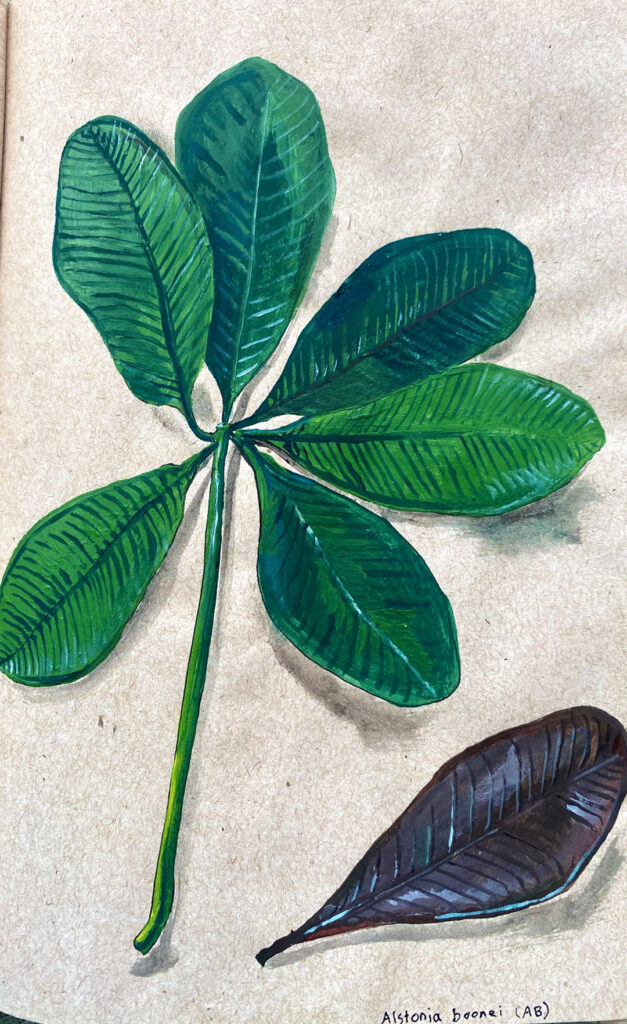
Monday: I grew up next to this forest. I’ve even seen people using alstonia boonei for medication. People get the bark, they boil it and make liquid out of it, and then they take it.
Host: It turned out that Elodie’s bark observations were far from new. They simply added more evidence to what the local community had known for generations.
And the fact that both humans and chimps were using the same tree barks for medicine raised profound questions. What was the origin of this shared medical knowledge? How far back does this knowledge stretch, and who was learning from whom?
EF: Many of the healers that I talked to, they had a couple of anecdotes about finding and discovering medicines from watching the chimps, and that is definitely something I’ve seen across – I’m working on a project now in Mount Elgon in Kenya with elephants, and a lot of the people that we’ve been talking to and doing interviews with also have learned medicines from watching the elephants.
So there’s absolutely a knowledge interchange. People are learning from animals, and there’s a chance that animals are also learning from people. And so identifying and pinpointing the origins of this knowledge is kind of fascinating to think about, and impossible to figure out.
Host: These are questions with extremely deep roots. Some medical knowledge might pre-date both chimpanzee and human species; some has certainly been learned from other animals.
It may be impossible to fully unpack the origins of medicinal plant knowledge, but the fact that humans and other animals share this knowledge underlines just how interconnected we are.
And if we all rely on these wild pharmacies for medicine, that creates an even greater incentive to protect them – not just in Budongo Forest, but all over the world.
EF: So I found some cool new plants that chimps use and some cool behaviors, but what really was grabbing my attention was this overlap that I found between the barks that the chimps were using, seemingly as medicine, and the people in the local villages used as powerful medicines.
I started thinking about that overlap as a medicinal entanglement.
And I started realizing that these entanglements must exist all over the world, and in not just chimpanzees, but in animals that look much less like us, and are more difficult for us to look in the eyes of and necessarily recognize as a cousin.
So I decided that even though I love chimpanzees, they’re my first love, and I hope to keep studying chimps for the rest of my life, I really wanted my next project to engage with wildlife species that we don’t have that obvious connection to, and show how connected we are in our need to stay healthy and flourish on this planet.
Host: Expanding her research led Elodie to the other side of the world, to a completely different ecosystem: the Central Peruvian Amazon. There, she launched a project with the biologist and conservationist Dr. Rosa Vasquez Espinoza.
This time they started by looking at the medicines local Asháninka people used, hoping to find clues to medicinal practices in the more-than-human world.
EF: We’re trying to find the first cases of animal medication in that region. So, having the privilege to sit down with Asháninka elders who have lived in this forest ecosystem, and their parents, and their parents, and their parents have lived, and they know all of these incredible secrets about the medicinal resources in this region, and learning from them, and then trying to take that knowledge about which plants people are using in this region, and work in reverse of the methods that I was using in Uganda, where I started with watching the chimps and then I asked people. Here, we’re starting with people and then we’re trying to figure out which animals are interacting or using, potentially medicating, with these resources that people rely on.
Host: The team believe they may have documented the first case of animal self-medication in the region, and are currently working on confirming this.
At the heart of this field of study is the question of how animals’ medical knowledge is acquired. Western science has historically tended to put diverse animal behaviors down to so-called “instinct.”
But Elodie has a hunch that animal self-medication is a knowledge system that requires intelligence, learning, and cultural transmission.
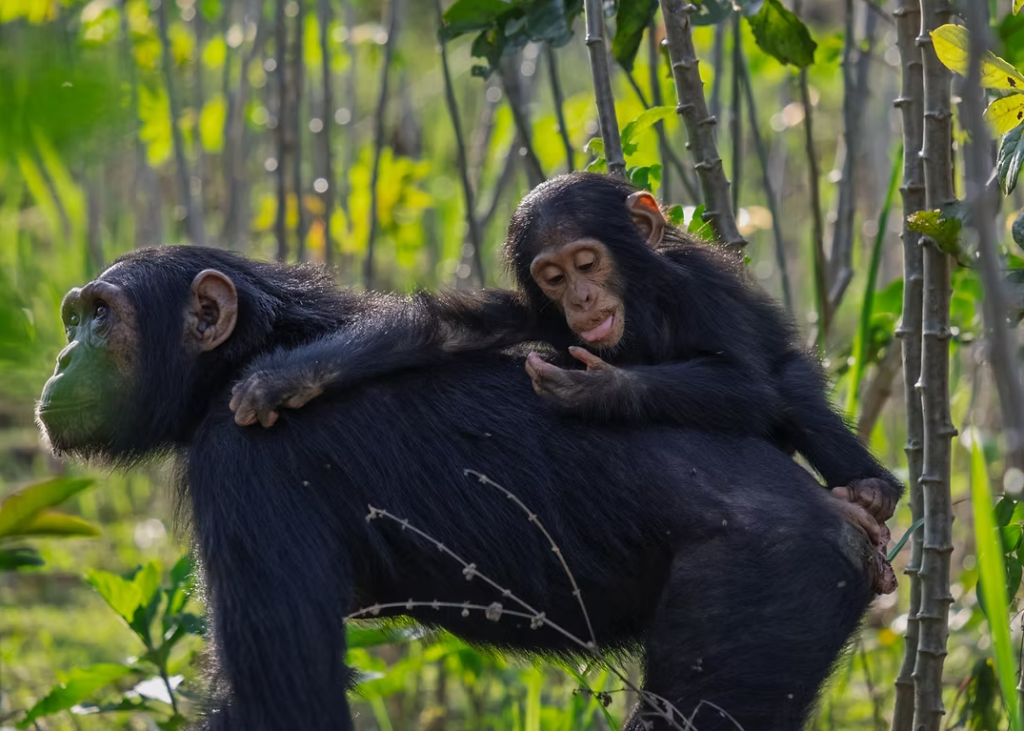
EF: My big project at the moment is trying to change people’s thinking about animal medicinal knowledge, not as something that’s just innate or instinctual or robotic, but something that is deeply cultural and learned and potentially passed down across generations just like our own knowledge is.
As someone that’s spent a lot of time in the field with animals, to me, it’s pretty obvious that this medicinal knowledge is intergenerational, that it’s transmitted, that it grows and evolves and changes. Very hard to prove. We’re working on that. It’s sort of a life goal, is to prove that.
But in the meantime, how can we protect those knowledge systems and protect those medicinal resources?
Host: There are two important imperatives for protection. One is to prevent the ecosystems where these medicines grow from being destroyed. The other is to safeguard other-than-human medicinal knowledge from being appropriated, patented and exploited by commercial entities.
EF: Right now, in the field, there’s this big ethical gap. There are protections in place, protecting against the exploitation or biopiracy of human medicinal knowledge to prevent against a pharma company coming into a community, you know, conducting a bunch of interviews, saying what medicines are important, taking and extracting that knowledge and commercializing it, and then selling that medicinal resources for profit. There are safeguards in place to protect against that. There are no such safeguards to protect against the exploitation of more-than-human medicinal knowledge. And to me, that’s a major problem.
It’s complicated because a lot of this medicinal knowledge is shared, as my research has been showing, that people get medicinal information from a lot of different ways, and there’s amazing anecdotes all around the world of people discovering medicines from watching animals. And that’s been going on for centuries and centuries. So what is human knowledge and what is more-than-human knowledge? It’s kind of hard to parse, and that’s one of the fascinating things about the field in the first place.
One of the things I’m trying to do is try to protect the medicinal resource itself and the medicators that rely on the medicinal resource before that resource disappears or is exploited for profit.
That’s the very, very bare minimum that we can be doing to help the other species on this planet stay healthy, and make it through this, you know, trying time where all of these ecosystems are changing and there’s all of these new threats, and climate change is changing which parasite species and which pathogens are arising and impacting these species. So we’re not going to turn climate change around overnight, but we can make sure that we’re not cutting down the very medicine cabinets that animals need to keep themselves healthy and happy on this planet.

Host: Healing is a universal feature of life; the ability to respond to damage connects humans with all other organisms on the planet, whether it’s automatic, instinctual, or learned.
The practice of healthcare, too, may be found in ecosystems around the world; it’s another thread that weaves us together with our other-than human kin.
EF: When we say healthcare is a universal right, I think a lot of the time people are talking about people. They’re just talking about humans. But healthcare is a universal right for people and for all of the other creatures on this planet, whether it’s chimps, whether it’s jaguars, whether it’s peccaries.
Whatever they are, they deserve access to healthcare in the same way that all of us deserve access to healthcare. And how can we do what we can to make that kind of cognitive change in how we understand the more-than-human world and dethrone ourselves as the top of this pyramid in the animal kingdom, and place ourselves back in this wider community of life.
Host: Elodie Freymann, Wild Pharmacies: How Animals Heal Themselves