Reconnecting the River
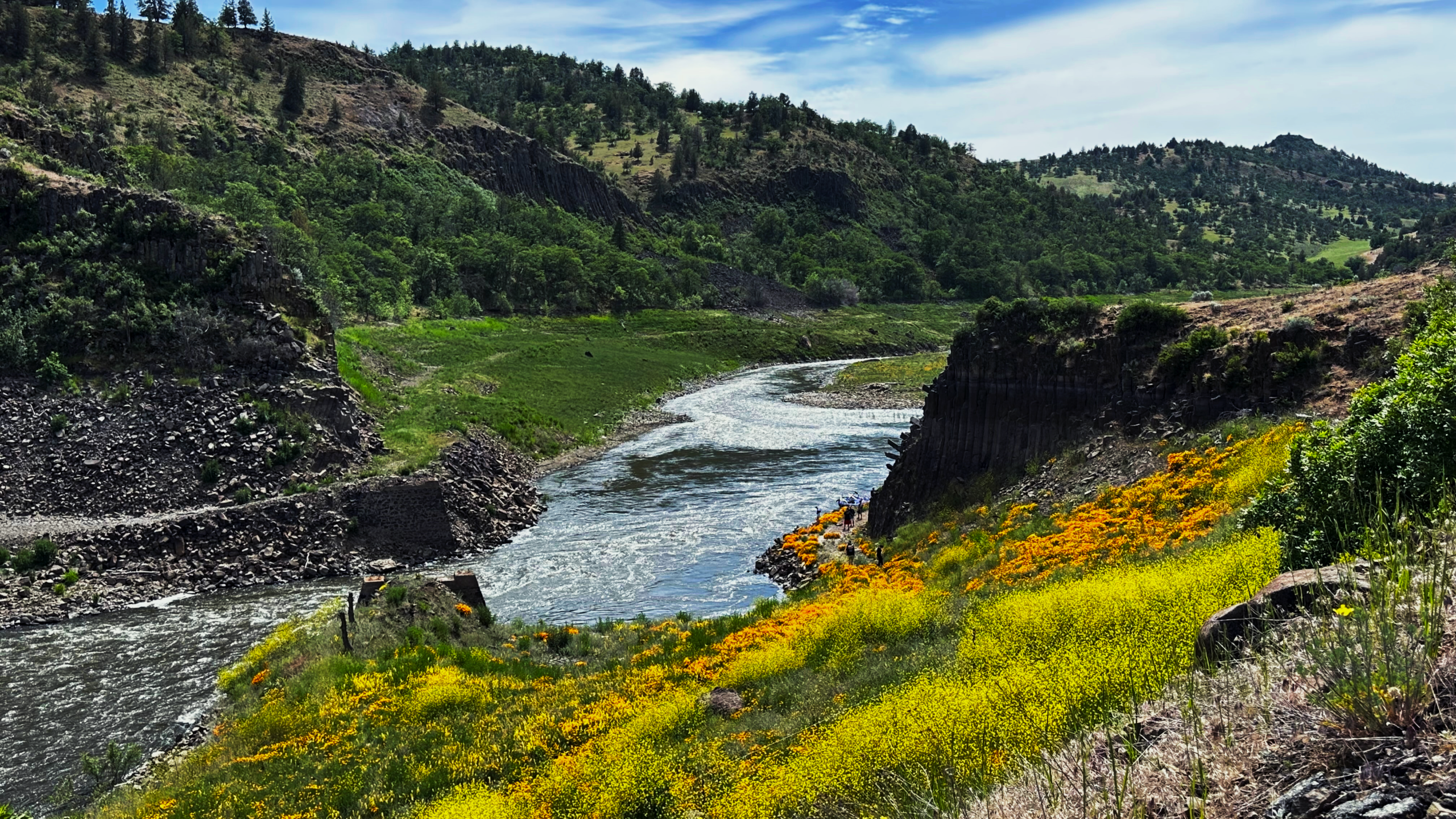
Yurok Attorney Amy Cordalis is one of many Indigenous leaders who have fought for the un-damming and healing of the majestic Klamath River Basin, spanning Oregon and California. She tells the story of the decades-long struggle to remove dams that have choked the life flow of the river and severed salmon migratory routes, and how a combination of traditional ecological knowledge, environmental law, and old-fashioned diplomacy helped remove 4 of 6 dams and ushered in a $515 million settlement agreement to restore the river and riparian lands.
This is an episode of Nature’s Genius, a Bioneers podcast series exploring how the sentient symphony of life holds the solutions we need to balance human civilization with living systems. Visit the series page to learn more.
Featuring
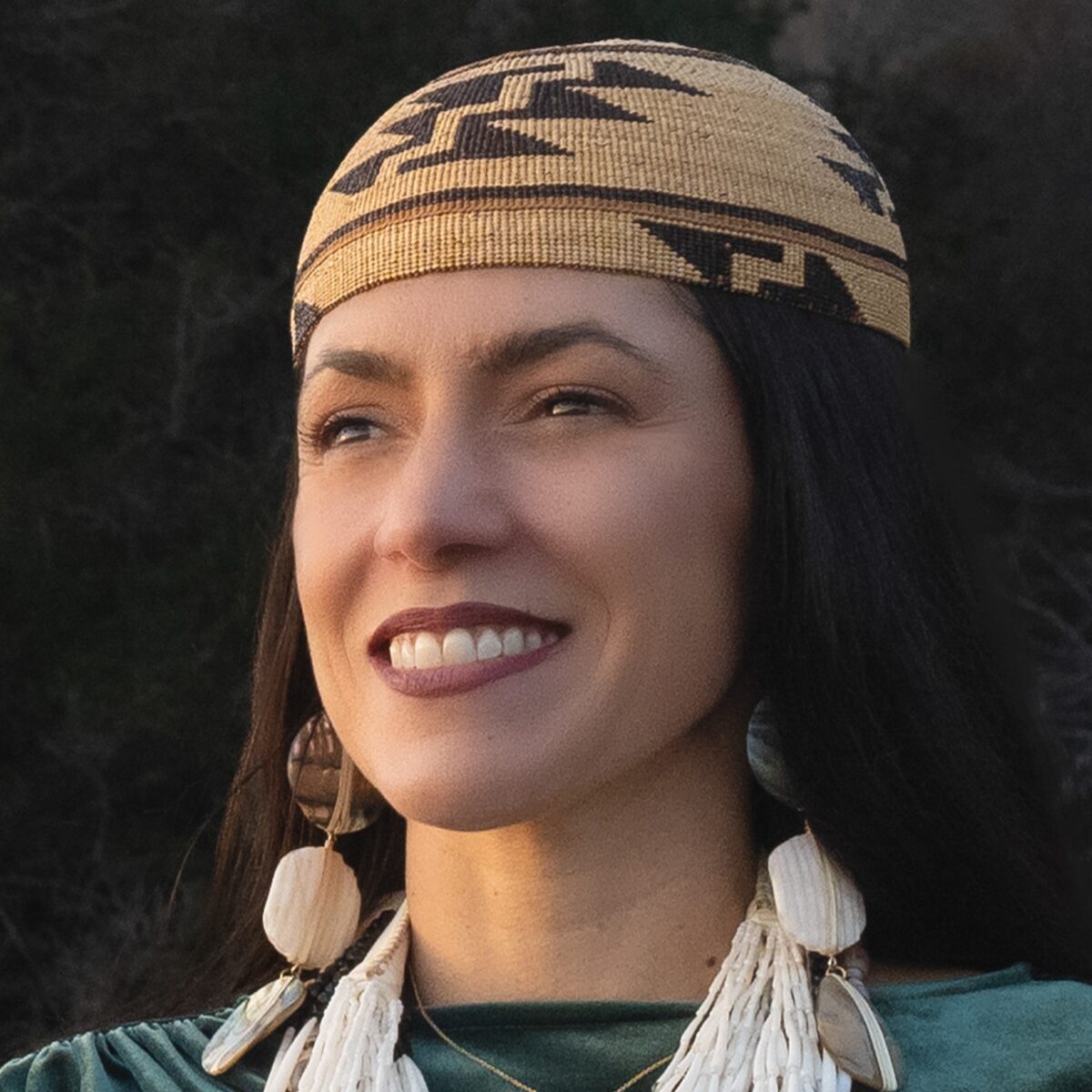
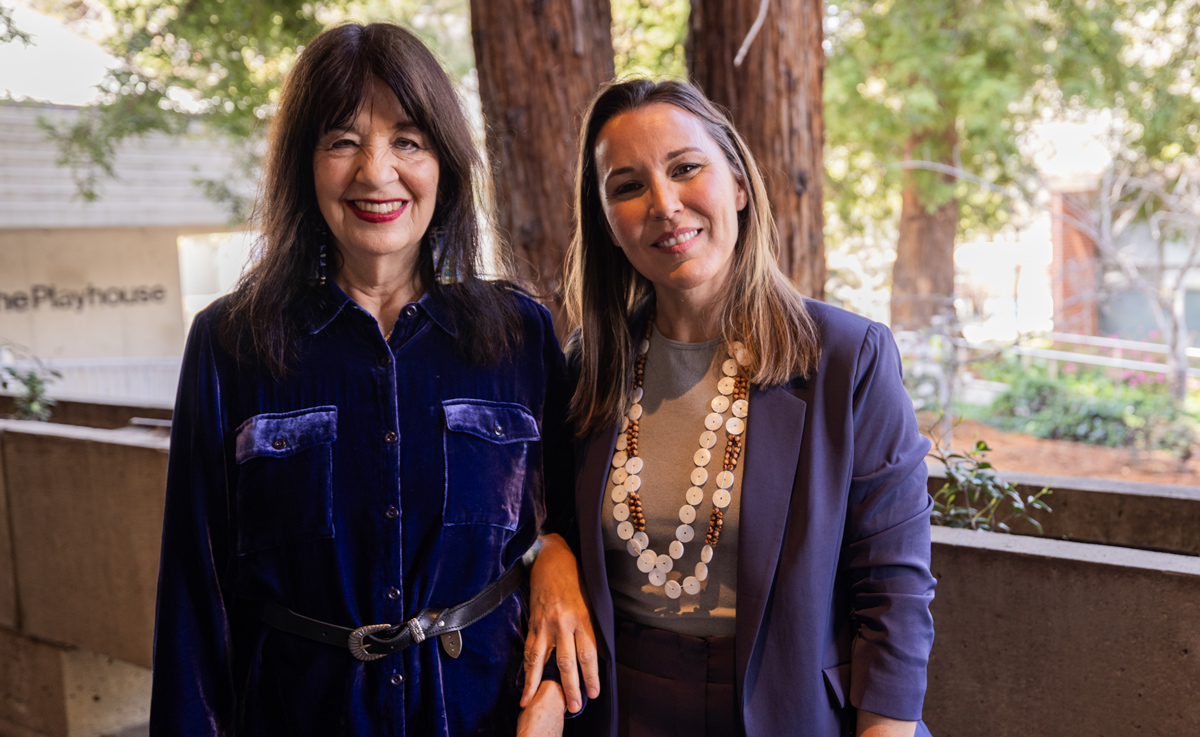
Amy Cordalis (Yurok Tribe member whose ceremony family is from Rek-woi at the mouth of the Klamath River), a devoted advocate for Indigenous rights and environmental restoration as well as a fisherwoman, attorney, and mother deeply rooted in the traditions of her people, is the co-founder and Executive Director of the Ridges to Riffles Indigenous Conservation Group and leads efforts to support tribes in protecting their sovereignty, lands, and waters, including the historic Klamath Dam Removal project.
Credits
- Executive Producer: Kenny Ausubel
- Written by: Britt Gondolfi and Kenny Ausubel
- Senior Producer and Station Relations: Stephanie Welch
- Producer: Teo Grossman
- Associate Producer: Emily Harris
- Host and Consulting Producer: Neil Harvey
- Production Assistance: Mika Anami
Resources
Ridges to Riffles Indigenous Conservation Group
Amy Bowers Cordalis – The Water Remembers: Year Zero | Bioneers 2025 Keynote
When the Salmon Died: A Family’s Fight to Restore the Klamath River | Excerpt from The Water Remembers
This limited series was produced as part of the Bioneers: Revolution from the Heart of Nature radio and podcast series. Visit the homepage to find out how to hear the program on your local station.
Subscribe to the Bioneers: Revolution from The Heart of Nature podcast







Transcript
Neil Harvey (Host): In this episode, we hear from Yurok Attorney Amy Cordalis, one of many Indigenous leaders who have fought for the un-damming and healing of the majestic Klamath River Basin spanning Oregon and California. Amy’s Yurok Nation was instrumental in removing 4 of 6 dams that choked the life flow of the river and severed the migratory routes of salmon for over a century.
I’m Neil Harvey. This is “Reconnecting The River”.
Amy Cordalis (AC): On my home waters on the Klamath River in Northern California, six hours from here north—and that is still California—we are engaged in the largest river restoration project in history. 2025 is year zero, the first year after a revolutionary change in the Klamath system, the removal of four dams in 2024 facilitated by a $515 million settlement agreement that equally values the rights of nature, Indigenous Peoples, and businesses, signed by two tribes, several NGOs, Oregon and California, and a power company. [Applause]
Historically, the Klamath was the third largest salmon-producing river in the lower 48 states. It is Indian Country top to bottom, and I am from the very mouth of the river from a village called Requa, where my family has been since the beginning of time. But through time, the basin has been colonized and developed.
Host: Amy Cordalis is a Renaissance woman; an attorney, fisherwoman, organizer, author, mother, and matriarch, she has spent the last 20-plus years in the fight of her life to restore her beloved Klamath River. She grew up fishing on the Klamath, and her family comes from a long line of Yurok people who’ve struggled tirelessly to protect it, alongside generations of other Indigenous tribes.
For over a century, hydroelectric dams blocked the once rushing, life-giving waters. They strangled its natural flow and starved the landscape it nourishes. They decimated the thriving salmon population on which the people relied.
The first dam was constructed in 1911, called Copco. It seemed as if every decade brought yet another dam. Built without fish ladders or passages, they cut off essential lifeways for Salmon and Salmon people throughout the vast basin.
The federal government first took control of the dams for hydroelectric power. It decided how the river would flow and who would receive water allocations. Invariably, it favored the interests of industrial farming and big business over the health of the river and the tribes who depended on it for their sustenance and lifeways.
In 2002, then Vice President Dick Cheney dealt a near-fatal blow to the river and the salmon. He granted farmers the overtly political favor of water diversion in the upper Klamath. By 2020, the river was dying.
Amy Cordalis spoke with us at a Bioneers conference.
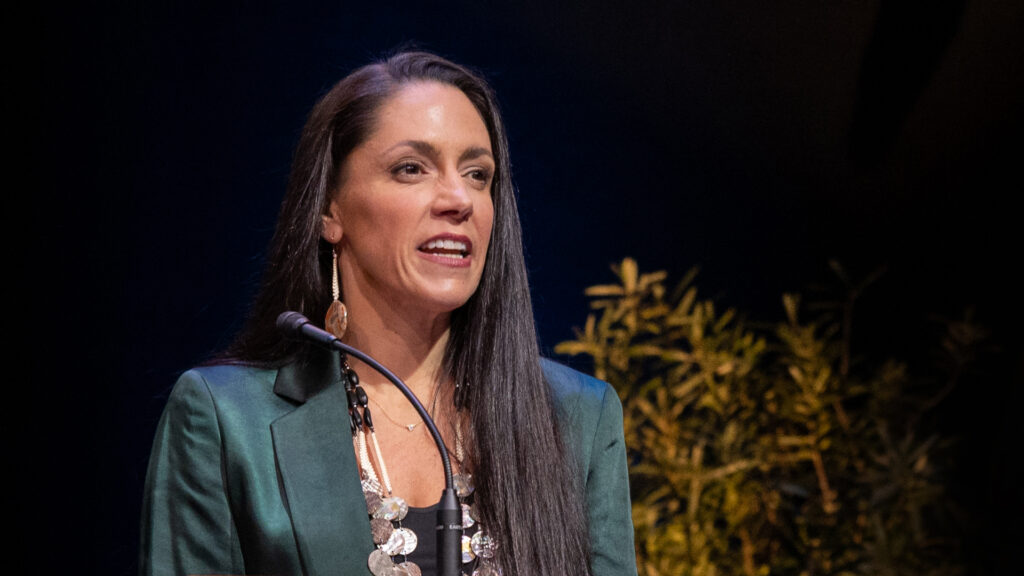
AC: I was the Yurok tribe’s, my own tribe’s, general counsel, and things on the Klamath River were really bad. The river was sick, water was extremely polluted, There were, behind the dams, toxic blue-green algae blooms every year that would move through spillways around the dams, downriver, and annually, it would make it so by late summer, you couldn’t swim in the river because it was so polluted.
And I have actually—there’s like a little scar right here from this rash I got when I was just fishing in the Klamath. And the water was so polluted that it would cause a rash. It would kill your dog if your dog got in and drank a lot. Water temperatures were really hot.
The fish were sick. We had high rates of fish disease, and our baby salmon were dying at horrific rates. You know, and when the babies don’t make it, then that means they don’t become adults and they don’t come back and then spawn. And that was happening year after year. And so we were really losing the genetic diversity of our salmon runs.
And so, previous generations of my family had fought for salmon rights, you know, and every generation of Yurok people, Karuk people, all the people on the Klamath River—and I mean this is true for probably every Indigenous group—you know, every generation fought since colonization. Right? Fought for our resources, our land, our water, our cultural natural resources, our sovereignty. And so when we were in the fight, it was almost like, well this is just our duty, this is how we live.
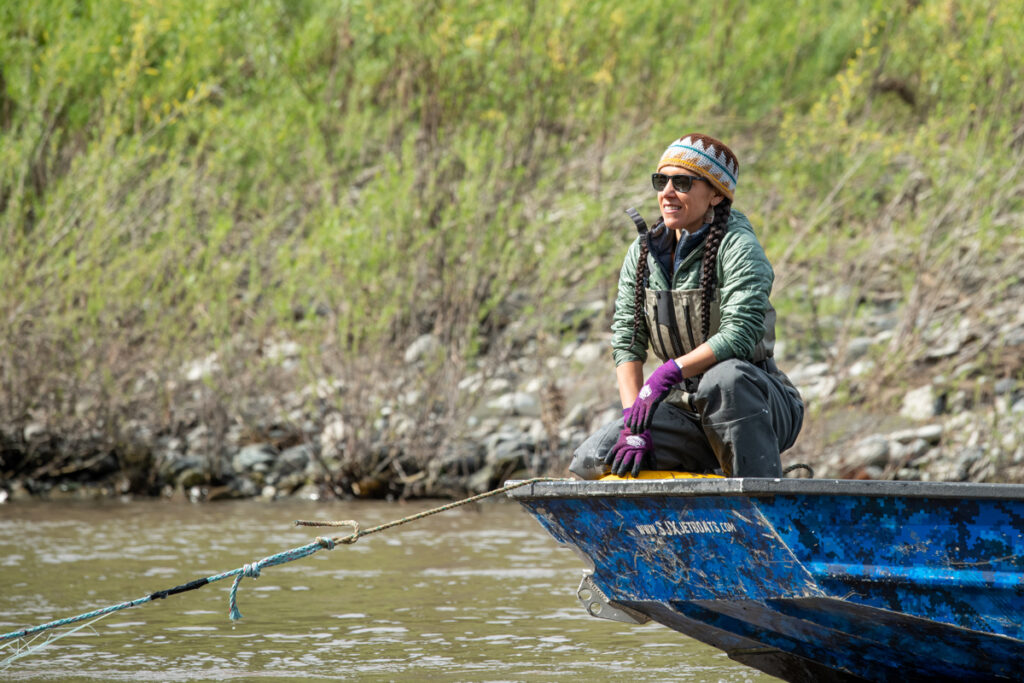
Host: Advocating for salmon, the Klamath, and Indigenous fishing rights runs deep in Amy’s family. During the fierce fish wars of the 1970s when the federal government was challenging Indigenous people’s rights to fish, her family took a stand.
Her great uncle was arrested 19 times for exercising his fishing rights. He filed one of the major lawsuits that affirmed the Tribe’s rights to fish.
Her grandmother and great-grandmother famously won a tug-of-war with a fish net against armed federal agents. As the agents attempted to rip the fishing net from their hands, her great-grandmother began to sing. A massive flock of birds answered the call of her song. It spooked the federal agents and they let go of the net.
Amy grew up with these stories. So it was only natural that her first job with her Tribe was working with their department of fisheries to count the Salmon and monitor the health of the river. In 2002, she was out on the river tallying fish when a Yurok relative called from the shore. “The fish are dying! You need to get up-river! Quick!”
What Amy was about to witness would change her life – and Yurok history.
AC: The colonization of the river took a toll. The Klamath River suffered from the largest fish kill in American history in which 70,000 adult salmon died on the Klamath River. The fish kill was caused by excessive diversions for agriculture at the top of the river, made at the order of the then Vice President Dick Cheney over the objection of federal scientists. The move was an act of ecocide against my people.
I was working for tribal fisheries then, and I will never forget the salmons’ dead bodies lining the banks of the river, three to four layers deep, and it smelled like a war zone.
Host: Witnessing the death of the Salmon was at once traumatic and galvanizing. In her memoir, The Water Remembers, Amy Cordalis describes her feelings that fateful day.
“I was devastated. It was a hopeless feeling. I felt marginalized, like no one cared… They took the water and killed the salmon.
“While my family had fought for our rights to the land and fish, they’d never thought they’d have to fight for the water, or the River’s right to survive because it was unconscionable to harm the River’s life force in my culture.
“It was clear now that my generation’s fight would be to preserve the resources upon which the Nation’s legal rights were exercised: the salmon, water, and the River. This meant we had to fight to save the salmon by restoring the River’s health, because a fishing right is no good if there are no fish. We could not continue our fishing way of life on a dying River.”
AC: It was, from our perspective, an act of ecocide against our people. And as a result, flows on my reservation at the bottom of the river, right when a very large fall Chinook salmon run came back to the river, the flows were the lowest they’d ever been on record, and it was hot. And so the water got warm and polluted, and a fish disease called ich spread through the entire salmon run and killed them.
And I just remember thinking we’re still under attack. And then I strongly felt my great grandma who had passed a couple decades before, just sort of move through me, and was like: You need to go to law school to prevent this from ever happening again.

Host: Amy dove deep into Indian law to understand how tribes viewed the treaties and how they interpreted case laws and federal statutes that apply to Indians.
While she was in law school, the movement to remove the dams on the Klamath was gathering force.
Permits for 4 of the 6 dams happened to be up for review. If they were approved, it would mean another fifty years, a death sentence for the river. Challenging the permits presented the perfect opportunity to call for the impossible: remove the dams. A coalition of Yurok, Klamath, and Karuk people – along with various non-profits – began the fight.
While Amy was studying for the bar, the final environmental impact statement was released. The verdict? The dams, lacking fish passageways or fish ladders, were violating the federal government’s trust responsibilities to the Indigenous communities.
Simultaneously, Pacific Corp, the owner, calculated that it would be more expensive to build fish ladders than to dismantle the dams. What once was impossible was suddenly a desirable scenario for the company’s bottom line.
After decades of fighting, a breakthrough started to take shape. The Native American Rights Fund invited Amy, fresh out of law school, to be a staff attorney.
AC: It was just a fight. It was like a hardcore fight. I think I was really lucky because you know I was representing my own tribe, and so I had a baseline cultural knowledge about what it is to be a Salmon person.
And one of the things I really tried to do was listen carefully to Yurok leadership, because that’s who I was representing, and hear them. Right? And so I could use all of that to create these arguments about what the rights actually meant from the tribal perspective.
So me and my generation coming into that fight, we stood on the shoulders of the ancestors because they had won in a lot of ways. I think about the early 1900s up until really like 1975, the federal government was just trying to assimilate Indians. 1975 marked a really big shift in federal Indian law policy from assimilation to self-determination. But even after 1975, when that act was passed, the federal government still wasn’t asserting or protecting Indian rights.
And so, our people, that generation, they were really out there just trying to assert the rights, even though many of those rights were established in the treaties and had been good law since the 1800s, and as a treaty were the supreme law of the land, our ancestors just had to fight to say that those are still good.
They’d have to go down to a meeting with the state or the feds, and were always running out of gas money, and they wouldn’t have money for food, and they didn’t have a hotel to stay in, and they’d have to basically buddy up with someone to even get a meal paid for, and then sleep in their car. You know, you put on top the extreme racism that they were dealing with in those times.
So I always felt grateful, to be honest. I felt grateful that I had those basic needs met and not that we had a lot of money, but we had money for hotels. We had money for food, which was a privilege the previous generation didn’t have.
Host: It took years of back-and-forth negotiations and gnarly impasses before a settlement agreement to remove the dams would be reached. By the time the Yurok Nation was nearing the finish line, big changes were taking place: Amy became the Yurok Nation’s lead attorney, and Pacific Corp was acquired by the famed billionaire Warren Buffett.
The company almost backed out of negotiations at the last minute because it feared any liability from the dam removal process. The Tribe invited representatives from Warren Buffett’s company to join them on a boat ride up river to a sacred area called Blue Creek.
There they were met by Yurok protestors. They let the corporate executives know their mind: They would never ever stop fighting for the removal of the dams. There on the banks of the Klamath River, the ground shifted.
On the plane ride home, Buffett’s team called Amy. They were going to work hand in hand with the Yurok Nation to make sure the dams came down.
AC: And a lesson I learned from working with Yurok elders is that to create change, you have to see it, you have to believe in it first. And for many Indigenous leaders on the Klamath, they had the audacity to be the first to call for dam removal, because they had heard stories from their elders about what the river was like pre-colonization, pre-dams. They could see it.
Since time immemorial, the river and its creatures have supported us, and we have the great privilege of being their beneficiary, but that comes with a corresponding duty to steward and protect the river. We exercised our responsibilities with strategic precision. History, precedent, money, power, and time were all against us. One of the richest men in the world, Warren Buffet, who owned the dams, was against us. We failed over and over again. Yet somehow, we prevailed.
In using this example, we can see that the overall health of our nation and our people and our ecosystems can be uplifted, and that allowing more voices and perspectives to contribute to our democracy is not only good for people but also the planet and business. [APPLAUSE] Thank you. Indeed, working together with our allies—there was not one single champion of Klamath dam removal. Instead, there were hundreds of champions working in big and small ways over 20 years towards dam removal, proving that what you do matters, and how you use your life force makes a difference.
Host: We’ll return after a short break.

Host: From the fish kill in 2002 to 2020, when the Memorandum of Understanding was signed to remove four of the six dams on the Klamath, the movement never relented… Again, Amy Cordalis.
AC: So between June 2023 and September 2024, we removed these four dams. [CHEERS] After 100 years of these dams blocking the life blood of my people and the Indigenous Peoples on the Klamath River, the river flowed once again. [APPLAUSE] Dam removal was completed on time, within budget, and consistent with the terms of their permits.
So through dam removal, we removed over 441 feet of steel, rock, concrete, clay, rebar. With Iron Gate dam alone, 100 million cubic yards of dam material was removed in 25,000 truck loads, with 40 yards’ holding capacity. The material that once blocked the river’s flow was recycled, returned to the earth, or repurposed.
The magnitude of this work is impossible to describe in words. So, although it won’t do it total justice, I have a short clip, and it has explosions. [LAUGHTER] [EXPLOSIONS] [APPLAUSE]
It’s real, it’s real, it’s all real.
Yes, so, I will never forget watching the river reconnect. On a very cold September morning we gathered at the base of the former Iron Gate dam with my sister, friends, and colleagues, and we watched as an excavator scooped up some of the final remains of the dam. And with each scoop, we saw from behind the dam, just little sparkles of water, and another scoop, and more water, and another scoop, and more water. And eventually, the water behind the dam flowed over and reconnected with itself below the dam. Yeah, the river was free.
Video by Swiftwater Films
And I cried. I cried because my ancestors had fought for this moment. My colleagues, friends, and I had fought and sacrificed for this moment. And I like to think that the emotion I was experiencing was the release of the intergenerational trauma that had been suffered by my family since colonization.
And then there was this deep sense of healing. I thought if this river, my ancient relative, can heal, so can I, and so can humanity. We just need to follow the river’s lead.
It was magical. It was like this magnetic force just reconnected the water. It was like feeling the lifeblood of your people flow again. I jumped in the water. It was cleaner from a data perspective, right? But it felt so much cleaner swimming in it, you could feel its vibrancy; you could feel like its life force, its pulse.
I’d swam in the Klamath my whole entire life, and I swear it told me: I am different. I’m stronger now. And it was like yes, you are.
Host: In 2019, the Yurok nation passed a landmark Rights of Nature law recognizing the rights of the Klamath River to exist, thrive, and persist. The Yurok Nation maintained that they had a right to fish on the Klamath and that the Klamath had the right to heal.
Combining traditional ecological knowledge with Treaty law, environmental law and good old-fashioned diplomacy, the Yurok Nation was able to negotiate a $515 million settlement agreement to restore the Klamath River.
By 2025, over 2,000 acres of riparian land had already been reseeded with native plants in what will be the biggest-ever such restoration.
AC: Klamath dam removal has already proven that nature-based solutions work and are profitable. We brought over $515 million into our community and to the local economy. And notably, our strongest partners were not federal agencies, and we didn’t use federal funding for dam removal, which demonstrates that it’s possible to accomplish these types of goals with little federal support. [APPLAUSE] Yeah…
In June 2024, 2800 acres around the former Copco 1 and 2 dams were returned to the Shasta Tribe, the area’s original inhabitants. [APPLAUSE] 20,000 acres in the former hydroelectric project area will be restored through multi-million dollar restoration projects. In the former dam reservoir reach area, over 19 billion—billion with a b—native seeds have been planted, and hundreds of thousands of trees and shrubs. [APPLAUSE]
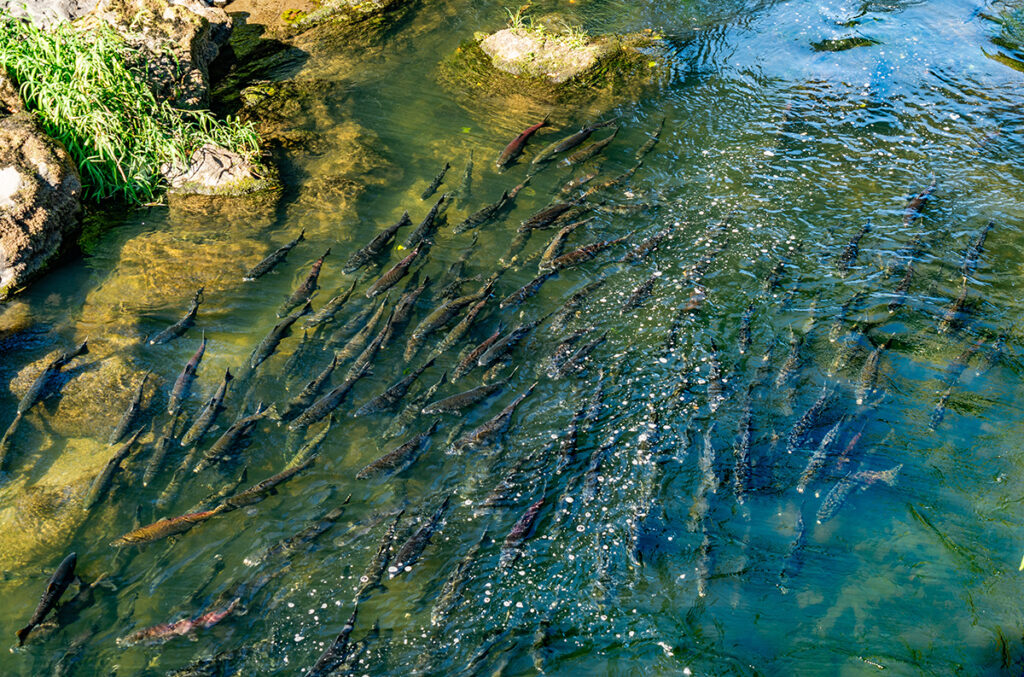
In October of 2024, the leader of the fall Chinook salmon run was spotted on sonar technology passing the Iron Gate dam site. By November, thousands of salmon had gone past the former dam sites for the first time in 100 years, [CHEERS] and they spawned. [APPLAUSE]
Host: The fight continues to remove the remaining two smaller Keno and River Link dams in the upper Klamath. Unlike the hydroelectric dams, these provide irrigation and flood control and are owned by the federal government. Many tribal members and their allies would like to see them removed to restore the Klamath completely to its precolonial state.
To celebrate the reconnection of the river that has taken place, an intertribal group of youth embarked on a 30-day journey and kayaked hundreds of miles to honor their ancestors and mark a new chapter in its story of healing and reconciliation.
Their ceremonial journey inspired international recognition for the world’s largest river restoration project and this monumental victory for Indigenous-led ecological justice.
Amy’s nieces and nephews participated in the youth paddle. She says this was the first time since European contact that Indigenous youth were able to enjoy the river without having to fight.
AC: The Klamath dams embodied the legacy of the dark underbelly of the founding of this country that supported the colonization and industrialization of nature at the expense of Indigenous Peoples, the environment, and marginalized communities.
The ecological consequences of colonization, while devastating, need not be permanent. Dam removal sends a clear message—Indigenous rights, leadership, and lifeways are not obstacles to progress, they are critical tools to sustaining life. [APPLAUSE]
And we can no longer afford to destroy Indigenous rights and their resources in service of power and money, in part because over 80 percent of the world’s remaining biodiversity is on Indigenous lands. Yeah. The Yurok and Karuk, along with the other Indigenous Peoples in the Klamath Basin, were guided through dam removal by the worldview that supported world renewal by restoring balance between nature and humans.
In Yurok, there is a myth: The sun and the moon are lovers. The dawn is their favorite time because they are together in the sky. The new day is their baby, it is a gift to us. That is why it is called the present. We must be thankful for the present, to honor the sun and the moon and the power of love. We will forgive the past by giving up hope that it could’ve been different. We will let go of the burden of the past. We will believe in our collective ability to solve the most pressing problems of our time, because we have seen it on the Klamath, because the fish have shown us the way.
And having witnessed this historic effort, I believe that all of us have ancestral knowledge in our blood about what it was like to live on a healthy planet, and that medicine is still in me, in you, it’s in all of us. And whatever your project is, whatever your it is, together we can restore the balance, and we can renew the world. Wok-hlew’, Wok-hlew’,Wok-hlew’[WORDS IN HER LANGUAGE] [APPLAUSE]
Host: Amy Cordalis, “Reconnecting the River”…