The Quiet Climate Migration Already Underway
What if the next great American migration isn’t dramatic at all?
Not a single moment of collapse. Not a headline-grabbing exodus. But a steady, uneven reshuffling—guided less by ideology than by insurance rates, mortgage markets, infrastructure investments, and the invisible signals of risk.
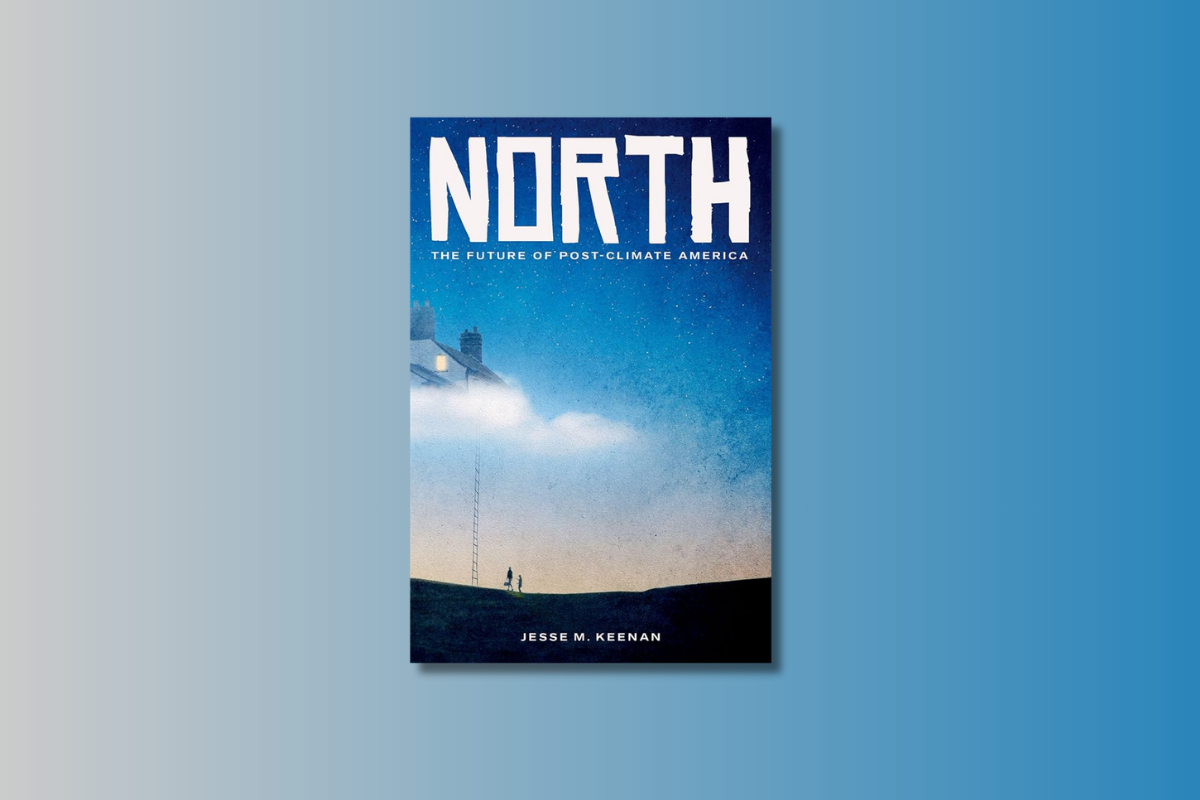
In North: The Future of Post-Climate America (Oxford University Press), urban planner and climate adaptation scholar Jesse M. Keenan examines how climate change is already reshaping where and how Americans live. Rather than speculating about distant futures, Keenan focuses on the mechanisms already in motion—and the difficult tradeoffs and inequities embedded within them.
In the excerpt below, he begins with a personal story: evacuating New Orleans ahead of Hurricane Ida while preparing for the birth of his first child. From that intimate moment unfolds a larger argument about mobility, governance, markets, and what he calls America’s emerging era of “climigration.”
The following excerpt has been published with permission from the Introduction of North: The Future of Post-Climate America (Oxford University Press, 2025) by Jesse M. Keenan.
Driving North from New Orleans
This book explores how climate change is shaping the physical and demographic future of the United States. It is an exploration of an emerging geography of risk and opportunity that arises from the shifting landscape of people, economies, and ecologies. While some will seek to preserve the status quo, others will relocate as a territorial adaptation to climate impacts that are increasingly rendering parts of this country uninhabitable, too risky, or too expensive for permanent settlement.
My own story of moving north started when I decided to move south to New Orleans, Louisiana. As people have done throughout history, people move because they want a better life for themselves and for their families. They want a better education, more accessible healthcare, lower levels of pollution, cheaper housing, and greater connections with their community. Sometimes, they even want nicer weather. This is where any exploration of American mobility starts.
I had an uneasy feeling that moving to New Orleans would change my life. It was an almost sadistic sense that I would be on the frontlines of climate change. After receiving recognition for my work in climate adaptation research and public service, journalists often asked, Knowing what you know, why would you ever voluntarily move to New Orleans? As this book will explore, people are complicated.
In the summer of 2021, my wife and I found out that we were expecting our first child. Instantly, all my calculations about New Orleans and climate risk seemed irrelevant. As we processed our future, Hurricane Ida was brewing in the Atlantic Ocean. As the hurricane approached the Gulf Coast, we had little time to decide whether to evacuate. If you wait until it is too late, then you run the risk of being trapped in another Katrina-like inundation event. In the heat of a late August night, we decided that we needed to pack our most important belongings and evacuate the next day. I was concerned about my wife’s health, as well as the health of our unborn child. Disasters have been well observed to have negative health outcomes for mothers and children alike.
As we were leaving New Orleans driving north over the causeway across Lake Pontchartrain, the local radio station that had long served as a lifeline for the city’s diaspora (WWOZ 90.7 FM) was playing Louis Armstrong’s “Do You Know What It Means to Miss New Orleans.” With storm clouds in my rearview mirror and sunshine ahead of me on the mainland, I felt guilty. I felt like I was leaving my neighbors with one less extra hand to clear debris and one less bag of rice to make jambalaya to feed the block. I felt that I had betrayed my implied oath of loyalty to the city that I loved.
We drove for hours through blinding bands of wind and rain. The car bore the weight of our possessions, and my body bore the weight of our uncertain future. On our first night as evacuees in Florida, I signed the contract for this book. Over the coming weeks, we would migrate north from state to state avoiding COVID outbreaks in search of prenatal blood work and healthy food. We finally found refuge in Philadelphia—with nothing more than what we could fit into a mid-sized sedan. I was relieved that my son would not be born in New Orleans, a city destined to be overwhelmed by climate change. From one perspective, I figured that getting official records for everything from a birth certificate to school transcripts might be a challenge in the future. From another perspective, I wanted my son to be born in a place that he could return to at the end of his life and find solace in the continuity of the endurance of human progress.
How and Where People Will Live
The central thesis of this book is that people will shift how and where they will live in the face of climate change in the United States. Climate impacts and economic stresses are already pushing people from their homes and communities. At the same time, the prospects of lower levels of risk, more moderate weather, and a more financially sustainable way of life are pulling people to relocate. By internalizing a recognition of the risks (push) and opportunities (pull) of climate change, America is poised to enter an uncharted post-climate era.
This book provides evidence that this new era is rapidly approaching. Climate change is already altering the quality of the American way of life.
This book outlines how climate impacts shape vulnerabilities in populations and the built environment, and how the behaviors of households, markets, and governments are sending signals about the capacity of society to adapt. Across these perspectives, this book explores the dawning of a new era defined by the promise of a more sustainable way of life for those on the move and the peril of those left behind.
This book is not just a collection of scientific observations and projections about America’s future. It is also a projection of optimism about America’s capacity for decarbonization, environmental stewardship, and population mobility. This book is built on years of public service advising federal and state policy makers; interviews with public-, private-, and civic-sector stakeholders; and even random unsolicited calls and emails from strangers. What these people often share in common is an unrecognized optimism in an otherwise dark time.
Our popular imagination for what America’s future could look like in the face of climate change is disproportionately shaped by a latent fear of the unknown. Scholars and the general public often fail to articulate how necessary adaptations will not only shape our daily lives, but how they will also reformulate a geography of risk and opportunity. We tend to focus on a constant projection of how climate change will destroy our lives without seeking to understand how we can advance a more sustainable future in the face of what we leave behind. Our default projections are constrained not only by a lack of imagination but also by our intellectual ordering of society’s priorities for housing, human health, education, economic opportunity, and mobility.
This book explores how climate change is already shaping the future course of America for centuries to come. It is about the push and pull factors that are shaping our decisions. The original idea for this book came from a simple but flawed premise—flora and fauna are moving north (in the Northern Hemisphere), and so too will people and firms. Here, range shifting is not deterministically limited to mere ecological systems but rather to a full spectrum of chaotic pathways across a wide range of economic, environmental, and cultural geographies. The idea of moving “north” is both a literal reference to cardinal direction and also a metaphor for the relocations of those who will move in any direction to get out of harm’s way. This book explores a series of behaviors, pathways, and scenarios that culminate in the proposition that America is on the verge of a great domestic climate migration (hereinafter, climigration) that may very well reshape everything from our physical landscape to our electoral politics.
There is not only an opportunity for climate migrants (hereinafter, climigrants) to build new communities, but there is also an opportunity to double down on our commitments to reduce our carbon footprint and to promote the accessibility, affordability, and sustainability of the built environment. We—as a society—have at least two major paths forward. In one scenario, climigrants who are economically mobile and have the means and resources can recreate their carbon-intensive settlements in the relentless exurban expansion of lower-risk places. Another scenario suggests a more orderly set of policies and behaviors that is sensitive to the environmental carrying capacity of a new sustainable frontier in “receiving zones,” as well as the trash, pollution, and social inequities of what we leave behind in our “sending zones.” Indeed, both scenarios may occur simultaneously depending on where you live and who you are. This book picks up on how these scenarios may play out for a wide variety of stakeholders. Along the way, there will be winners and losers. Understanding what you have to lose is the first step toward understanding what you have to gain.