A Conversation with Terry Tempest Williams
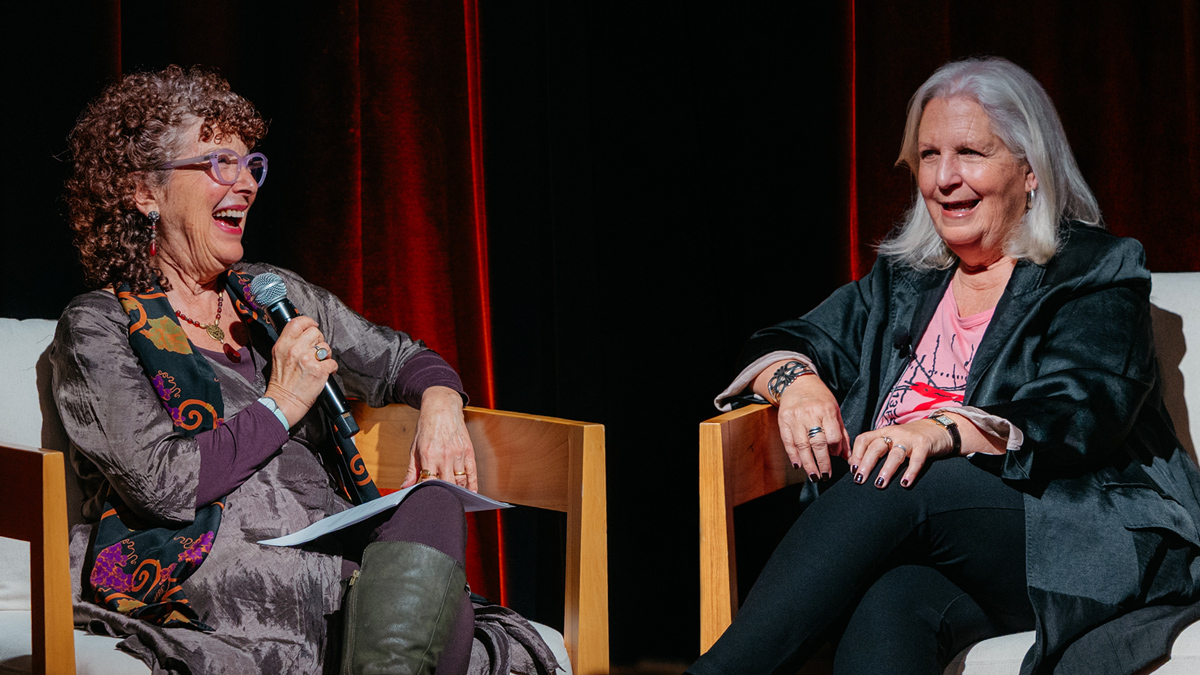
Terry Tempest Williams is one of the most celebrated and revered American nature writers. She integrates the musicality of a poet with the passion and purpose of an activist. Terry is also an award-winning conservationist, a fierce defender of her beloved Southwestern desert landscapes.
She has authored over 20 books that are translated worldwide. Her most recent book is The Glorians: Visitations from the Holy Ordinary.
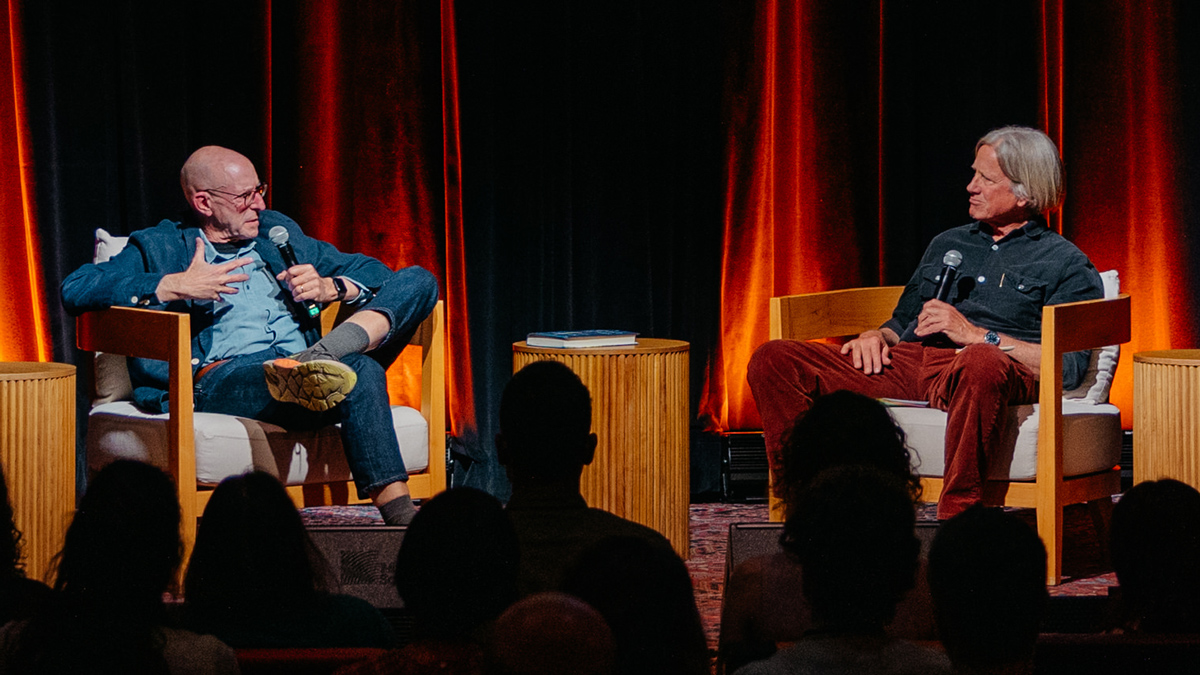
Bioneers co-founder Nina Simons, author of Nature, Culture and the Sacred: A Woman Listens for Leadership, engaged with Terry at a Bioneers conference in a wide ranging conversation between two old friends.
Featuring
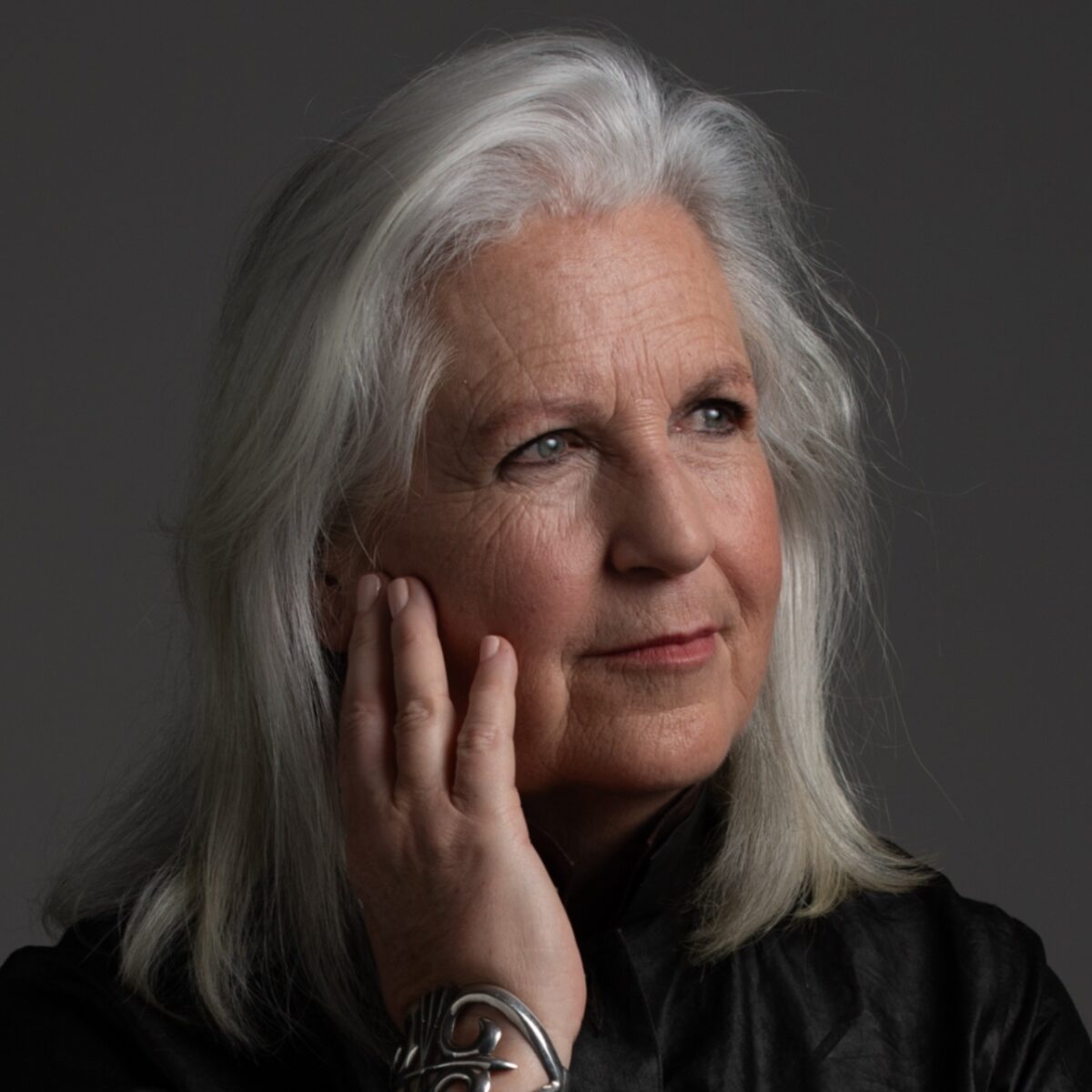
Terry Tempest Williams, a writer, educator, and environmental activist known for her lyrical and impassioned prose, is the author of over twenty creative nonfiction books. Her work has appeared widely, including in The New York Times, The New Yorker, The Progressive, and Orion, and has been translated worldwide. Her most recent book is the The Glorians – Visitations from the Holy Ordinary (spring ’26).
Credits
- Executive Producer: Kenny Ausubel
- Written by: Kenny Ausubel
- Producer: Teo Grossman
- Senior Producer and Station Relations: Stephanie Welch
- Associate Producer and Show Engineer: Emily Harris
- Host and Consulting Producer: Neil Harvey
- Production Assistance: Mika Anami
This is an episode of the Bioneers: Revolution from the Heart of Nature series. Visit the radio and podcast homepage to find out how to hear the program on your local station and how to subscribe to the podcast.
Subscribe to the Bioneers: Revolution from The Heart of Nature podcast







Transcript
Neil Harvey (Host): Standing in the lineage of the greatest nature writers, the acclaimed author, naturalist and activist Terry Tempest Williams links her deepest inner experiences with the state of the web of life. She plumbs connections: art and ecology – women and politics – democracy and social healing – wild lands and First Peoples – family and faith.
I’m Neil Harvey. This is “A Conversation with Terry Tempest Williams”
Terry Tempest Williams is one of the most celebrated and revered American nature writers. She integrates the musicality of a poet with the passion and purpose of an activist. Her tender personal reflections and intimate insights as a naturalist braid together with her keen political and spiritual insight in a voice that feels most at home in the liminal – in the space between words.
Her work and her life encompass many dimensions beyond writing. As a socially and politically engaged artist, Terry is also an award-winning conservationist, a fierce defender of her beloved Southwestern desert landscapes. She’s done everything from civil disobedience to testifying before Congress on women’s health issues, to buying gas leases to prevent the desecration of pristine and sacred lands.
She has authored over 20 books that are translated worldwide, including the masterwork Refuge: An Unnatural History of Family and Place. Her most recent book is The Glorians: Visitations from the Holy Ordinary.
Terry has received numerous prestigious literary awards, and her long academic career recently included serving as writer- in-residence at Harvard Divinity School.
Terry Tempest Williams spoke at a recent Bioneers conference, where Bioneers co-founder Nina Simons, author of Nature, Culture and the Sacred: A Woman Listens for Leadership, engaged with her in a free-range conversation between two old friends.
Nina began by asking Terry to describe the story from her book Finding Beauty in a Broken World chronicling her experience making social healing mosaics in Rwanda with the artist Lily Yeh.

Nina Simons (NS): In Finding Beauty in a Broken World, you share the story of Lily Yeh’s work with barefoot artists, helping create healing places in Rwanda and globally through engaged community art creation. And in both her work and your own, my sense is that you each elevate art to a place where its healing capacity for people, society and culture is amplified in community. You wrote that finding beauty in a broken world is creating beauty in the world you find. So now, when the need to transform our culture and society is at an all-time high, and since artists often foresee the future, I wonder if you have any thoughts about the role of artists in times like this, and what you might suggest to artists whose catalytic capacity is so vital, though so often undervalued in this society.
Terry Tempest Williams (TTW): How many of you know the work of Lily Yeh? She’s a phenomenal artist. She’s now 85, almost to be 86 years old, Asian, born in Taiwan, in China, her family. I met her in 2001, after I realized September 11th, my rhetoric had become as brittle as the opposition. And I had forgotten my poetry.
And I remember being in Maine. We were at a family place. And it was high tide. I went out to a rocky point and I said prayers. And basically said to the sea: Give me one wild word and I promise I will follow. And the word that came back to me after listening was mosaic. And I thought, oh no, my life is now going to be relegated to breaking my mother’s dishes and making bad picture frames. You know? I was—I did not understand mosaic.
And I did some research, and Lily Yeh, her name came up. She started the Village of Arts and Humanities just outside Philly, in a very tough neighborhood. And I went on a pilgrimage to meet her. And she really changed my life and showed me the aisle of angels made of mosaics, the safehouses of mosaics, how…her colleague who was—had been a former drug dealer, became a master mosaicist. And they made these beautiful murals, and it—her work has been one of placemaking around the world.
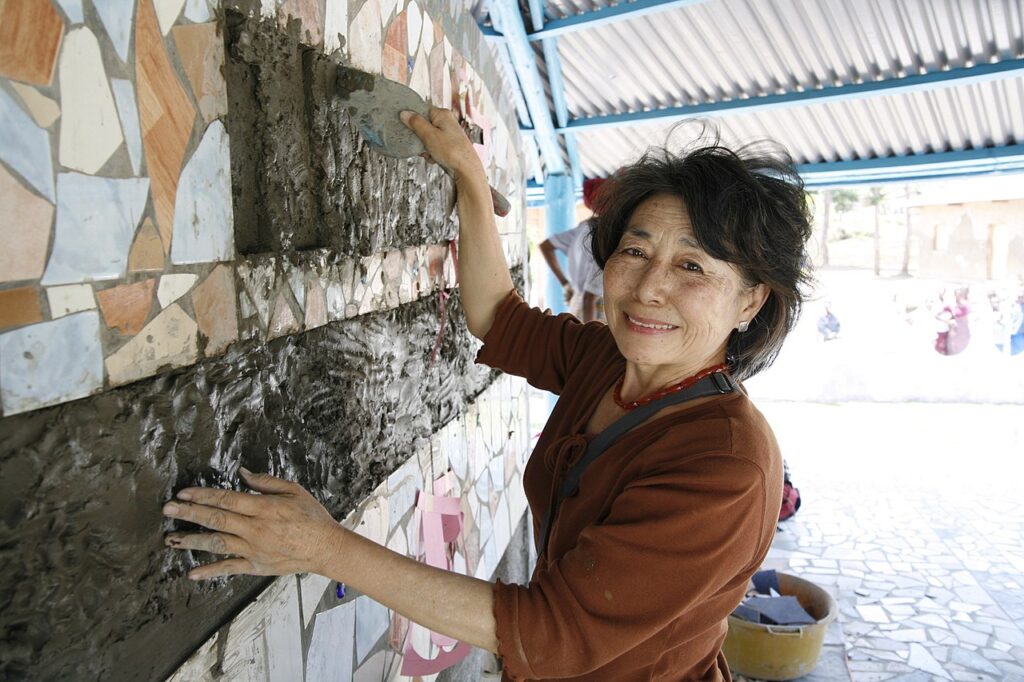
She later came to Salt Lake to do a mural in one of the poorer neighborhoods that had been invisible to the community. It became highly visible with the Latina and Latino communities. And then she said, “I need to talk to you.” And she said, “Will you come with me as a barefoot artist to Rwanda?” And I said no. My brother had just died a month earlier, and I said I cannot. I did not want to be in any more death. I cannot go. And Nina, she just stared at me. And then I heard myself, and I realized if I said no, I would be saying no to my spiritual life and growth, and I heard myself say yes. And another life-changing moment.
And, I have to tell you, here’s another lesson I learned from her. Very conscientious, you know, if I’ve got a job, I will take it seriously. So knowing we were going to go to Rwanda, I got a map, looked where it was, what it was next to. I read over 60 books, everything I could get my hands on – novels, non-fiction, government reports – went to the Library of Congress, looked at all the maps – fire maps, water maps, war maps – just to get it in my mind. And she called me and she said, “I just want to know how you’re preparing.” And so I gave her this whole list, told her what I just told you. And I said but I just don’t feel like I’m getting anywhere, but I’ve got more books to read. And I said, ‘How are you preparing?’ And there’s this long silence, and she said, “I’m meditating.” And I quit reading. And just sat with that. So she’s a real teacher.
And I think that’s what art does for us, it bypasses rhetoric and pierces the heart, and the heart is really, I think, where all change resides.
And I saw…the power of art, to go into communities…numb with grief, dead with grief, the bones of these women’s children were buried under trees that were still there, that they were carrying in the folds of their skirts. But when Lily got the paint out and the children took over and painted their houses – turquoise, yellow, red, animals – something lifted. And what it led to was the creation of a genocide memorial, where these women – and most of them were women – could bury their beloveds in a place of dignity. And that was Lily.
NS: You know that conversation about Rwanda leads me to ask you, as we are both women who are childless by choice, about your decision to adopt a son, and how that’s changing you.
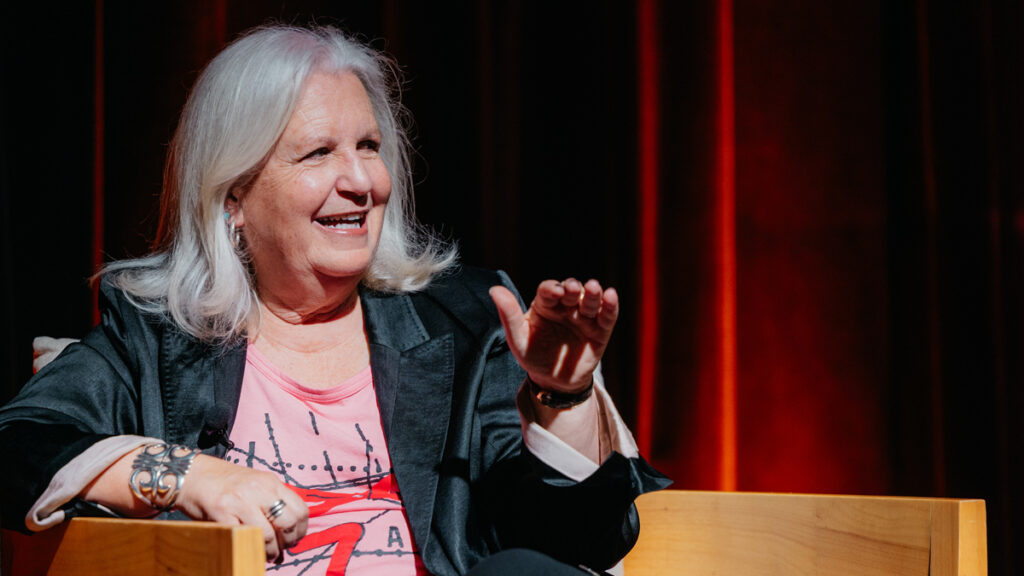
TTW: My hair’s white. [LAUGHTER] Louis Gakumba is our son. He was our translator in Rwanda. And so, again, Lily. You know?
I think being a mother at 50, as you say, childless by choice… it has brought me to my knees, and I mean in the most beautiful ways, for both Brooke and me. And Louis has been our teacher. It’s been hard. I knew nothing. I still know nothing. I am a grandmother. I have two grandchildren – we do – Malka who is 8, and Shayja who is 7. Shayja loves birds. I love him. He’s constantly calling about what he sees.
Malka, I will share this with you, since you asked how’s it changing me… When she was 5, she said to me, “Do you think I’m too black?” And I said, ‘Malka, you are beautiful.’ And I said, ‘Why do you think that?’ And she gave me her reasons. And I said, ‘Let’s look at all the beautiful Black women.’ And we looked online, and she said, “She’s black like me. She’s black like me. She’s black like me.” And then she said, “Will you show me your body?” And I have to tell you, it was the scariest thing I’ve ever done in my life, was take off my clothes in front of a 5-year old. And turn around. And then, as I am standing before my granddaughter, she says, “What color is your heart?” And I said, ‘The same color as yours.’ And we’ve never had that discussion again.
And the other day, three years later, she said, “Te Te Terry, don’t you think I’m beautiful? And I just said, ‘You are so beautiful.’ And so I think it’s what we learn together.
Shayja, the other day, we were up in Shenandoah, and he’s staring at me. You know? And I think, okay, this’ll come out. And he goes, “If only you were a little tanner.” And I just—you know, so we are learning about interracial family together, and it’s a beautiful thing. And Louis just wrote his memoir. It’s tough, it’s beautiful, and he said I want my children to know where they come from. And I want them to know who my ancestors are and—so we’re learning.
And my father, who would tell you in this audience, was a true racist. And he is now 92, and he and Louis are closer than I can ever tell you. And it was on a plane from Denver to Salt Lake, and Dad and Louis were sitting together on the exit row, and a flight attendant said, “Yes, yes, yes.” And when Louis said yes, she said, “Get out, you don’t speak English.” And my father stood up and said, “Apologize. He speaks six languages. He’s smarter than anyone on this plane.” And she said, “Get out.” And my father stood up and said, “This plane will not fly until you apologize.”
And when dad came home, I called him to see if they’d gotten home, and the flight attendant let things go, apologized. When I called my father, he was crying. And he said Terry, “I knew racism from the inside out. I never knew racism from the outside in.” And that night, he had a stroke. And I think it was such a shock that he literally was rewired. And it was Louis who took him to the emergency room, sat with him all night, and held his hand. No one holds my father’s hand. So it’s those kinds of changes, Nina. Aside from love and joy and… I’m grateful.
Host: When we return, Terry Tempest Williams and Nina Simons explore how to marry contradictions, being species-fluid, and feeding a spider.
I’m Neil Harvey. You’re listening to the Bioneers: Revolution from the Heart of Nature.

Host: If you’d like to see and hear more from Terry Tempest Williams, you can visit bioneers.org
Let’s drop back into the kitchen table conversation with Terry Tempest Williams and Nina Simons.
NS: Well, years ago, we had a conversation where you spoke of feeling drawn to marrying apparent contradictions. And it landed in me in a big way. And—
TTW: In what way?
NS: Well, in that every time I found myself encountering an apparent contradiction, I thought of you, and I thought, Huh, what does it mean to try to marry these things that seem so polarized. And…it was long before there was so much interest in non-binary gendered identities, and I found it a useful practice, to see how I could imagine them dancing together. Do you still find that resonant for you?
TTW: Every day.
NS: Yeah. [LAUGHS]
TTW: You know, living around Great Salt Lake, and living long enough to have seen her in her historic high, and now at her historic low, in retreat – and I don’t see it as retreat in the military retreat. I see it as a retreat as one goes on retreat or retreat in meditation or retreat in reflection. And I feel she’s inviting us to do the same.
So here is a saline lake that theoretically is dying, and alongside her death will be the death of the Wasatch Front – 2.5 million people if we do nothing. Not to mention the livelihood of 12 million birds. Right now, I have never seen Great Salt Lake so vibrant. I have never seen the Salt Lake area more alive with concern, with creative thinking, with young people, with artists, the Mormon Church. Great Salt Lake now has a new ally – Donald Trump. I don’t know how to deal with that, the paradox, because if I’m saying all hands on deck, that means Donald Trump’s hands too. And then I think, are we losing the lake even as we’re trying to save the lake?
I watch people who are saying it’s not called Great Salt Lake anymore, it’s the Lake. There are those that are saying this is America’s lake… I see them neutering her. And the Native people have said our Sacred Mother Lake. This is how we know her, this is how we want her dressed. I see the tribes not being brought to the table as sovereign nations, as sovereign governments. So it’s this, that and all of it.
And the Wilson’s phalarope, which is now an endangered species, we’ve filed a petition for that species protection. The scientists on one hand say we have five years, seven years. The percentage of a saline lake ever being saved is zero.
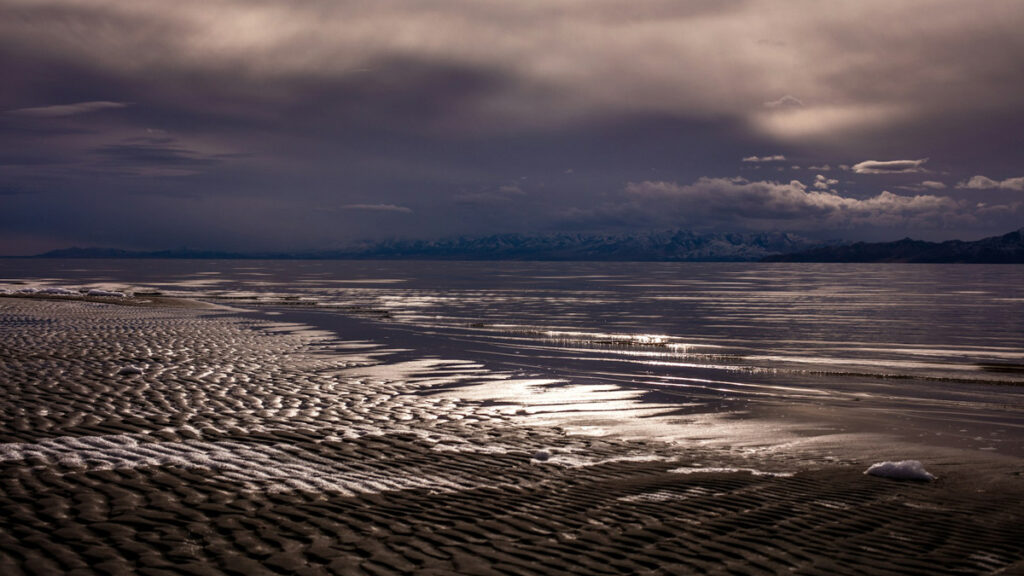
But now, the governor, who’s on board, saying the deadline is 2034, which is the Winter Olympics. So that’s not the lake’s deadline. That’s not the phalarope’s deadline. So how do we juggle all of these things? It’s a paradox that feels like a hologram. And, yet, Great Salt Lake is directing us.
And I think, again, what we were talking about today. If we are present, we’ll know what to do. If we’re listening to the lake, we will hear what she has to say. And, again, the elders, the different tribes, are leading the way, in my mind, and with integrity and a spiritual depth that I’m not seeing elsewhere.
NS: I feel a tremendous connection with you and your writing through the way that you speak to and embody a quality of the feminine in your work. And the “feminine” I want to say, with quotes, because it’s such a weird word, and it’s been so malformed in our culture. And I think of When Women Were Birds. And I’ve recently begun studying the Tao Te Ching, and especially Ursula Le Guin’s version of it.
TTW: I love that.
NS: Which is so wonderful. And it’s reminding me of a long fascination that I’ve had with this quality that’s beyond binary genderism that’s about how one way of seeing how we’ve gone so wrong is the imbalance of the yin and the yang in all of us – in our culture, in our—you know, economy, in our education, in everything. I find myself reaching to expand the gender dialogue to encompass everyone and everything, and the archetypal necessity of rebalancing our inner framework. I wonder if you have any thoughts about that.
TTW: Just for the record, I’m thinking do I dare say this. You know? [LAUGHTER] I won’t have the right language, and I’m sure I will say it wrong and offend someone. But there was a moment in one of my classes, and we were—you know, the students write essays and braided essays, and gender pronouns, all of that comes up, and it’s important, and we’re all learning. And we’ve had some really powerful conversations in terms of what stories do we tell, what’s private, what’s personal, what about families, all of those. And we had an incredible conversation about queerness. And I said, ‘I think I’m queer.’ And you could have heard a pin drop. You know? And they go, “What do you mean?” And I said, ‘Well, we’ve been talking about being gender fluid. I feel I’m species fluid.’ And they got so excited. [LAUGHTER] You know? But I feel that. You know?
And I remember in An Unspoken Hunger, I talked about pansexuality in The Yellowstone: An Erotics of Place, and mentioned bison. And, you know, I think we’re so limited in terms of what we are capable of, in terms of our understanding different genders, in terms of understanding different species, and yet, if we can open ourselves and really be present with whomever we’re with, I think there is a depth of reciprocity and responsibility and empathy that is transferred. And I feel that again and again and again in the natural world. Call it serendipitous, call it the erotics of place, call it species—being species fluid.
Talking to a person on the phone about the Say’s phoebes, that they were so beautiful. And I said, ‘I just love them.’ And then one jumped on my head. You know? And you just think, they know, you know? We’ve all had this experience.
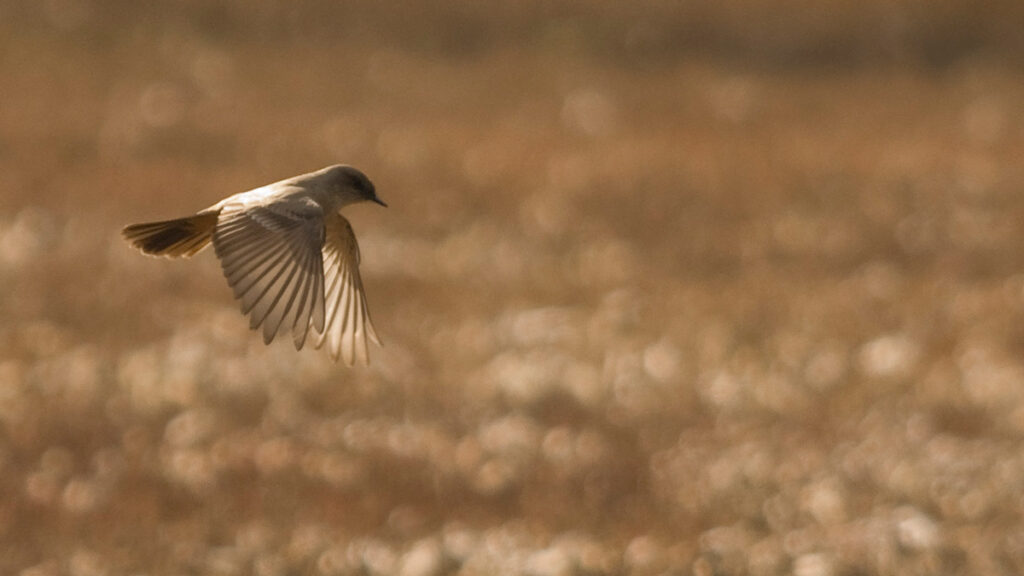
And it seems to me that the ultimate act of anthropomorphism is to assume that other species don’t feel, don’t communicate, don’t live and love and grieve. The exceptionalism that we have, I think, is so limiting, whether it’s our own view of gender, whether it’s our own view of the natural world, whether it’s our own view of ourselves.
So how do we keep expanding? How do we live and love with our hearts wide open, even in brokenness?
Host: The deeper story where the sacred dwells, where anything is possible.
As one of our generation’s greatest storytellers, Terry Tempest Williams engages with the world around her by building bridges between the human and other-than-human worlds.
In an excerpt from her recent book, The Glorians, she returns to the landscape she calls home, the Red Rock desert of Utah. She writes about what she calls “visitations from the holy ordinary,” moments and experiences that draw her deeper into relationship with the pulsing, thriving life that surrounds us all.
TTW: This is from The Glorians.
“‘I came from a family of repairers,’ the artist Louise Bourgeois once said, ‘The spider is a repairer. If you bash into the web of a spider, she doesn’t get mad. She weaves and repairs it.’
When I think of black widows in the desert, I wonder if this is true. Their webs are messy and hidden, not at all elegant like the orb weavers’ circular webs that spiral outward in summer fields of goldenrod. Black widows offer a warning. When their web is touched, it crackles like a witch, inspiring panic. The chaotic nest is a morgue of tightly wrapped victims that have had their blood sucked out of them, heightening the red hourglass on the female’s shiny black body.
Here in the Red Rock desert, they are everywhere – in between rocks, nestled in cliffs, and inhabiting our homes. Best to check coat pockets, behind pillows, and inside shoes. We have learned to live with them.
One summer, we had a large female, her abdomen the size of a Costco blueberry.” I wish I’d used a different metaphor. [LAUGHTER] “The size of a Costco blueberry, who lived behind our armoire in our bedroom. Brooke was out of town and I was about to leave for a longer period of time, so I left him a yellow sticky note attached to the wall close to where she would often come out to feed, and wrote: Please take care of her. X X X, T.
When Brooke returned home, he saw the note, and instead of understanding my message to mean please take her outside, he took it to mean please feed her. Which is exactly what he did for weeks. When I returned home, her abdomen was the size of a grape. [LAUGHTER]
The summer progressed, and one night, I was home alone again. It was hot and I couldn’t sleep. Rather than fight it, I decided I would listen to a group of soundscapes a friend had recently sent me as a stay against loneliness and heat-induced insomnia. One recording was from the Arctic in Alaska, one was from the rainforest in Costa Rica, and one was from Arizona Sonoran Desert. I listened to the Arctic. I didn’t think there was anything on it. I turned on the bedroom light and listened more closely. If one can hear cold, it was a faint growl. I changed CDs.
This time, I sat up with a low-wattage lamp. The rain intensified, and without thought, I started having an anxiety attack thinking there might be another flash flood, until I realized that it sounded, to my desert ear, like exactly that, a flash flood. I was two for two with no relief for loneliness or hope of a lullaby.
The final recording was of the Sonoran Desert, with giant saguaros on the cover. I placed the CD in the machine and returned to my chair. It was perfect. The familiar sounds of crickets, bat wings, and the pinpoint peeps, a band of coyotes and some insects I did not recognize. Just then, a shadow appeared on the wall. [LAUGHTER] I turned to see the black widow drawn from her hiding place by sounds of the desert night she inhabits. I was not startled, but welcomed her presence.
I sat in my chair. She was poised on the edge of her web. Together in soft light, we listened to night sounds from the Sonoran, a woman and a spider, comfortable with each other’s company.”
Thank you. Thank you so much. And let’s thank Nina for everything. [APPLAUSE]
NS: Thank you, all. Thank you, Terry, so very much. [APPLAUSE]
Host: “A Conversation with Terry Tempest Williams.”