Democracy Doesn’t Work Without a Living Wage
What does it take for people to meaningfully participate in democracy? For millions of workers, the answer starts with something basic: being able to afford to live.
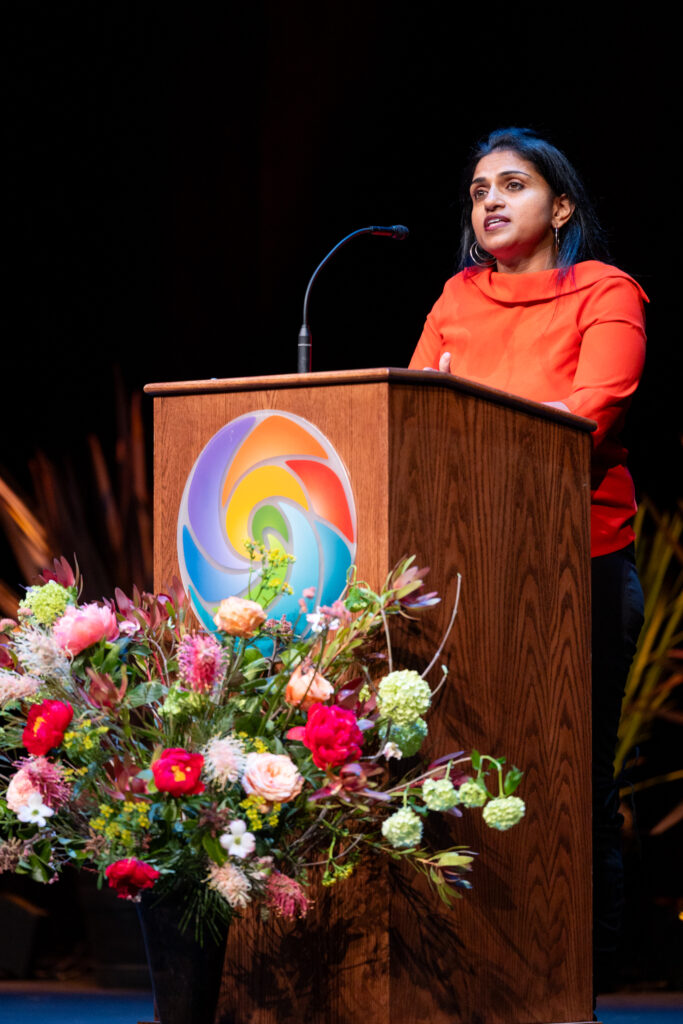
Saru Jayaraman, President of One Fair Wage, has spent decades organizing restaurant workers and advocating for fair wages across the country. In her keynote at Bioneers 2026, she made the case that economic justice is not separate from democracy or climate action, but foundational to both.
This is an edited transcript of her talk.
Saru Jayaraman:
For 25 years, I’ve been organizing and representing workers in the restaurant industry. It employs 13.6 million people in the United States, many in the lowest-wage jobs in the country.
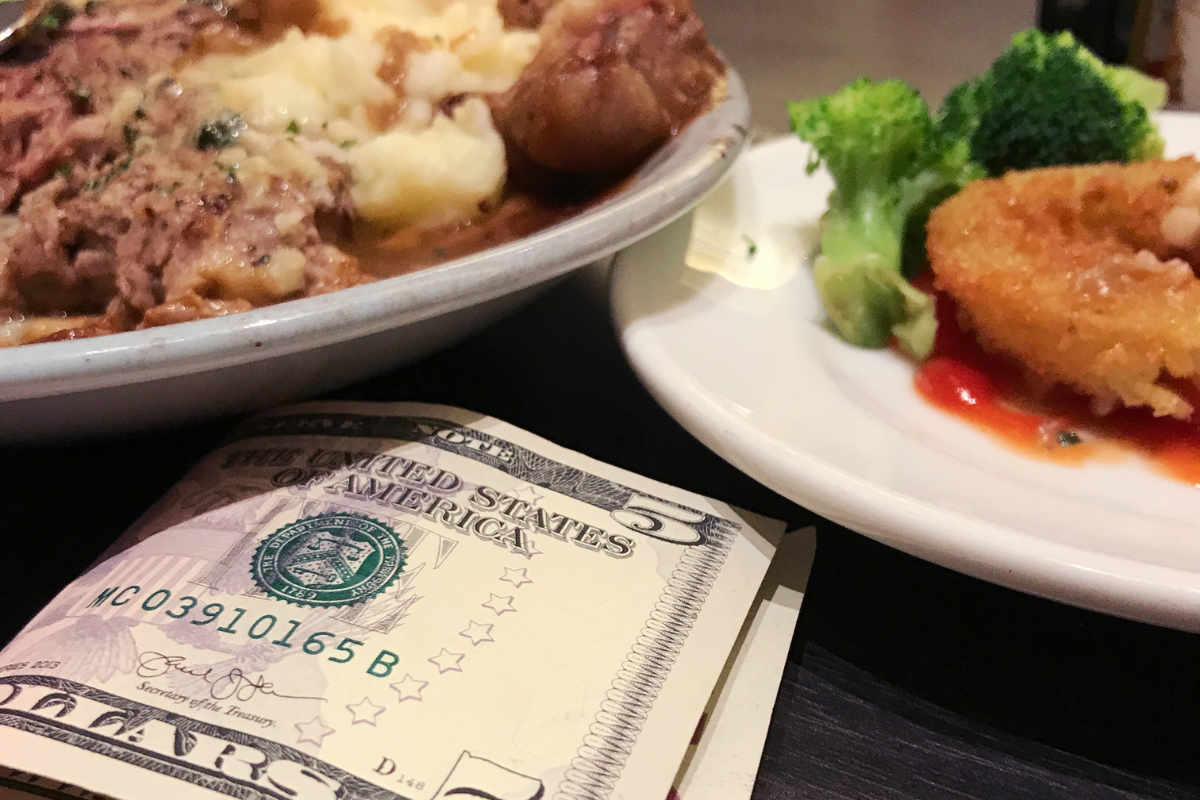
In past talks at Bioneers, I’ve shared that the subminimum wage for tipped workers was $2.13 an hour. Still today, in 2026, the largest employer of women, people of color, youth, immigrants, and really so many of us can legally pay just $2.13 an hour.
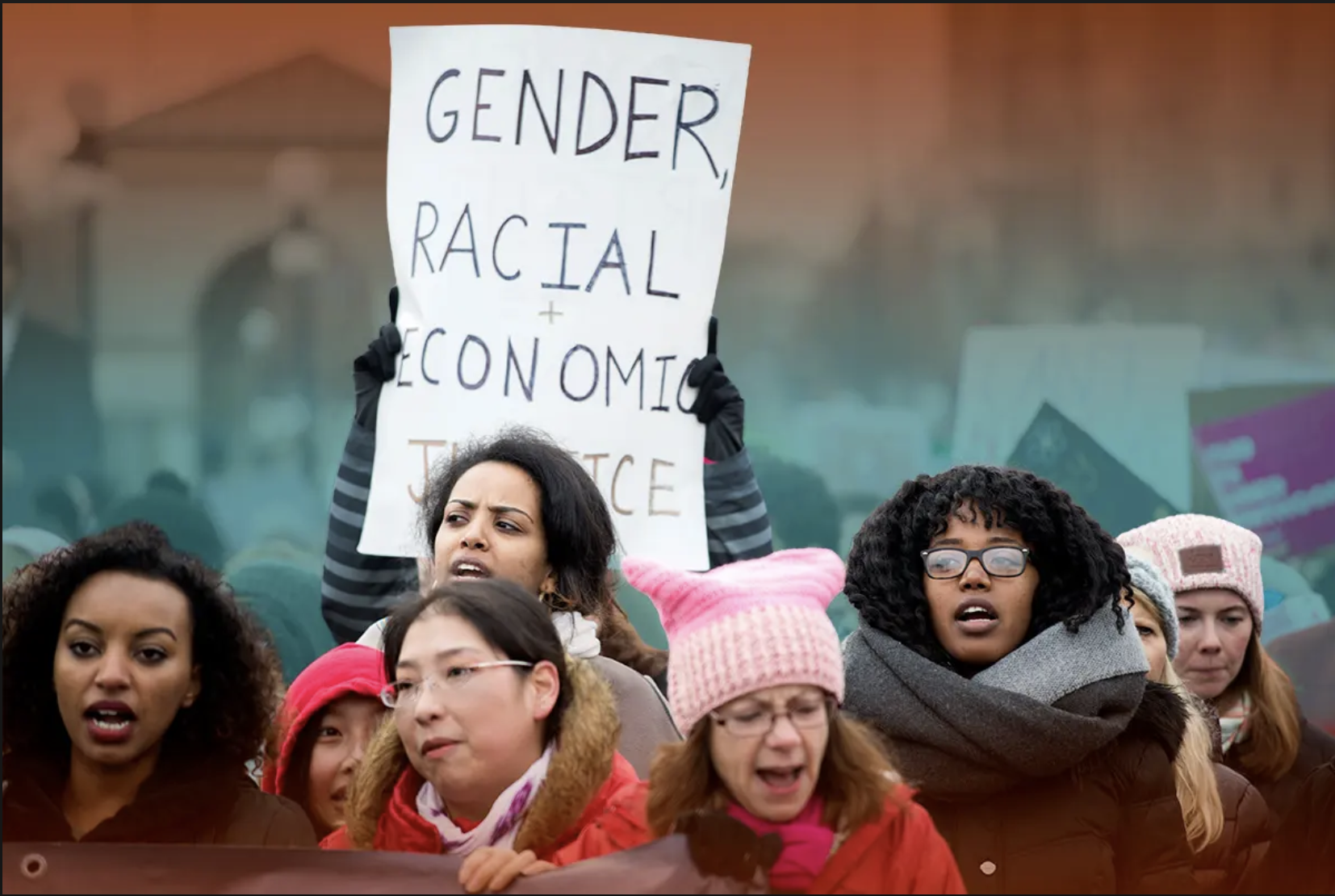
I’ve said again and again that when so much of America cannot afford to feed themselves or their families, they also cannot engage politically. There is no way people can take on issues like the climate crisis when they are working three jobs instead of one, and when those in power represent the opposite of what they need.
As I’ve continued to share this, I’ve faced a lot of pushback. In 2024, when we were raising money to put wage increases on the ballot in states like Arizona and Michigan, donors told me, “That’s cute. You’re trying to raise wages. We’re trying to save democracy.”
But raising wages is saving democracy.
Despite these repeated warnings, we’ve landed in a crisis that has been building for a long time. One clear example: Trump campaigned on and delivered “no tax on tips,” even though two-thirds of tipped workers don’t earn enough to pay federal income tax. But he at least recognized these workers as worth speaking to.
When that happened, I urged Kamala to engage this audience as well. The answer was no, again and again.
In the last election, many tipped workers either stayed home or shifted their support elsewhere. Not because they didn’t care, but because they felt unseen. We didn’t speak to them. We didn’t say, “Your lives matter.”
What the whole “no tax on tips” moment revealed is this: When you leave people out, you do it at your own peril. When large groups of people are excluded, they become vulnerable to being co-opted by the right.
In April of last year, a series of articles in USA Today documented a rumor spreading among MAGA voters that Trump had already raised the federal minimum wage to $25 an hour. The videos were widely shared and gained significant traction among right-wing audiences.
Now, we all know it’s a lie. That’s not the news. The news is that they didn’t claim he raised wages to $15, or $17, or even $20. They said $25 an hour: the minimum needed to live anywhere in the United States right now. They chose the number that reflects people’s lived reality, including their own base. And it resonated.
We have a five-alarm fire. The right is talking about $25 and energizing their base around it, while the left is stuck arguing for $17, or in some places, still $15. I’ll be blunt. This is why people are frustrated with us. They see us negotiating against ourselves before we even enter the room. They see us settling for half a loaf.
When we saw this, we organized an emergency convening in Los Angeles in June, bringing together 140 labor and community leaders from 15 states. The message was clear. It’s time to move beyond the Fight for $15. It’s time to demand a living wage for all, with a national floor of $25.

Since that gathering, we’ve launched campaigns, bills, and ballot measures in dozens of states calling for $25 across the board, and $30 in higher-cost areas. Several counties have already taken action.
Within our own movement, there was hesitation. “$25? That’s too high. $30? Impossible.” So we polled it across red, blue, and purple districts. The result was overwhelming support. And when we tested the opposition’s messaging, that this would raise prices, cost jobs, or hurt small businesses, support actually increased.
People are angry. If you tell them wages can’t go up because prices will rise, they respond, “What are you talking about? Prices have already gone up.”
The only thing that hasn’t increased is the value of human labor.
There’s so much talk about affordability, but most of it centers on bringing costs down. There is no world in which affordability comes from bringing costs down alone. Inflation over the last 75 years has never meaningfully reversed. The only way to make life more affordable for half of working Americans, and it is half who earn less than $25, is to increase wages.
This unprecedented affordability crisis is also a democracy crisis. And that makes this a moment of real consequence.
I know there’s a lot to be unhappy about. There’s a lot to defend. But if all we do is play defense, we will lose. We need a proactive vision that is bold, that shows people we are fighting. And it has to focus on the issue they keep telling us matters most, the cost of living.
We’re in a moment of real opportunity. The pendulum could swing toward a world where people work one job instead of three, where they can thrive instead of just survive, where they have time with their kids, and the capacity to engage with the issues they care about, including the climate crisis.
I believe we can achieve this because fair wages is one of the few issues working people across the political spectrum can agree on.
It’s time for our country to deliver.