Exploring the Mystery of Consciousness with Michael Pollan and Dacher Keltner
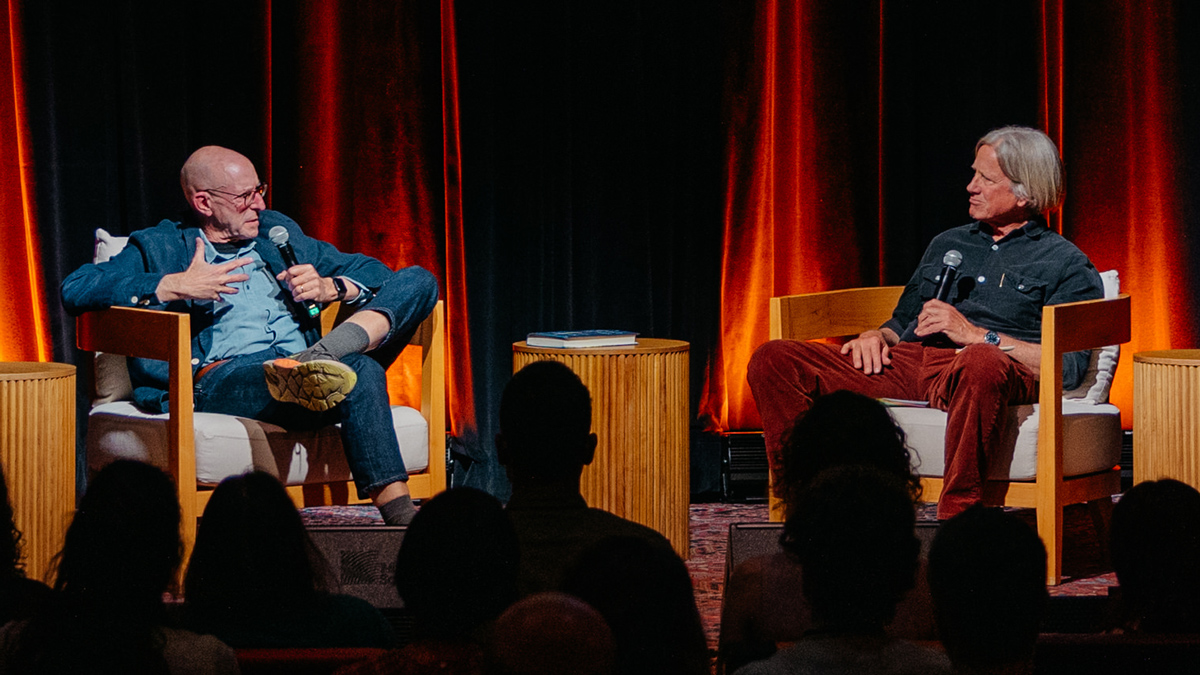
The infinitely curious author and science writer Michael Pollan embraces the mystery at the heart of the great mystery of life: What is the nature of consciousness? And how can we understand consciousness when our only tool is our own consciousness? Joined by interviewer and UC Berkeley Psychology Professor Dacher Keltner.
Featuring
Michael Pollan is a writer, teacher and activist. His most recent book, A World Appears: A Journey into Consciousness, was published in February 2026. He is the author of nine previous books, all bestsellers. Pollan has taught writing at Harvard and UC Berkeley and has been a Guggenheim and Radcliffe Fellow.
Dacher Keltner, a Distinguished Professor of Psychology at UC Berkeley, is the host of the Science of Happiness Podcast and the author of many articles and books, including Awe: The New Science of Everyday Wonder and How it Can Transform Your Life.
Credits
- Executive Producer: Kenny Ausubel
- Written by: Kenny Ausubel and Teo Grossman
- Senior Producer and Station Relations: Stephanie Welch
- Associate Producer: Emily Harris
- Host and Consulting Producer: Neil Harvey
This is an episode of the Bioneers: Revolution from the Heart of Nature series. Visit the radio and podcast homepage to find out how to hear the program on your local station and how to subscribe to the podcast.
Subscribe to the Bioneers: Revolution from The Heart of Nature podcast







Transcript
Neil Harvey (Host): There’s a good reason that philosophers, who have been struggling to understand consciousness for millennia, call it “the hard problem.” Even in this modern era, with all our sophisticated scientific understanding, the mystery of how the matter between our ears leads to subjective experiences remains more confidently explained by poets, novelists, priests or shamans than contemporary gatekeepers of knowledge.
Meanwhile, advances in our understanding of the rest of life that we inhabit this biosphere with are yielding an understanding that intelligence, once considered a solely human realm, clearly extends deeply into the more-than-human world. It may well be the case that consciousness is similarly embedded throughout life itself – but our ability to understand, appreciate and plumb our own human internal experience remains in a nascent state, collectively.
According to Michael Pollan, one of the world’s most influential science writers, quote: “To delve into the subject of consciousness is to quickly discover how little we know about a phenomenon we all know so well.” [no end quote needed]
After transforming the way society thinks about food with his landmark book The Omnivore’s Dilemma, Pollan turned his attention from the stomach to the mind, writing the best-selling volume on psychedelics called How To Change Your Mind. That body of research and experiences led him naturally to write the book A World Appears: A Journey into Consciousness…
Michael Pollan spoke at a Bioneers conference.
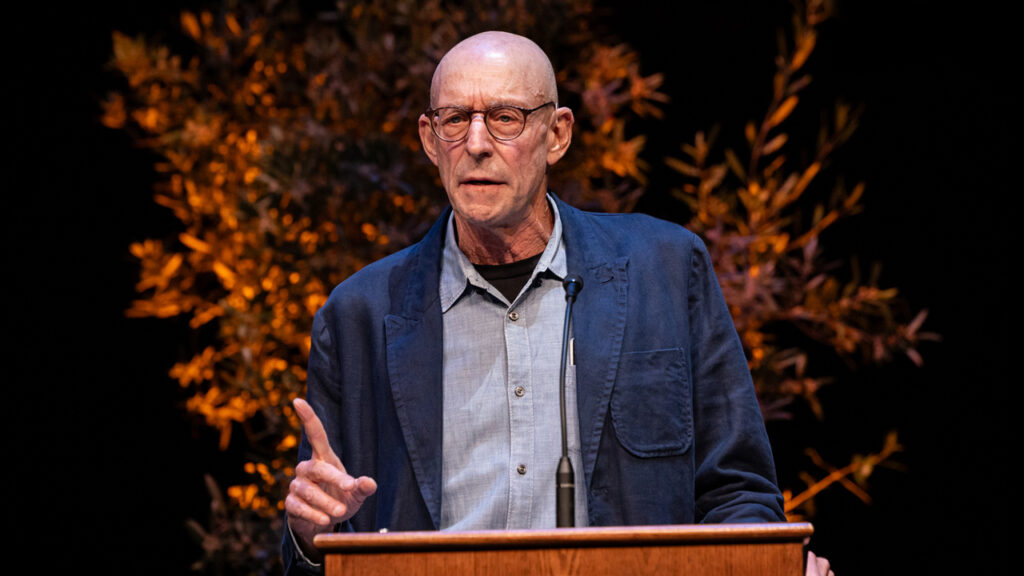
Michael Pollan (MP): I’ve spent the last five years on a quest to understand consciousness, the hard problem. How is it that subjective experience arises, and who and possibly what has it and why? I looked at everything from plant consciousness, which we’ll talk about a little bit, to my own stream of consciousness, to efforts to build artificial consciousness in machines. And I want to talk about one of the biggest takeaways from this project. And that is this: that I believe humanity is approaching a Copernican moment, what I call a Copernican moment, that will force the issue of who exactly we are and how we fit into nature.
You’ll recall Nicolaus Copernicus, 500 years ago, blew everyone’s mind in the West when he demonstrated that the Earth revolved around the sun and not the other way around. He displayed our sense of centrality in a way that was really hard for people to observe. This was the first of a series of takedowns of humanity.
Darwin came next, showing that we were animals descended from apes. And one after another, our claims to being special have fallen – culture, language, reasoning, tool-making – all have fallen when we found that there are animals that can do all these things.
But a different, and I think even more profound, Copernican moment is upon us. At the same time that we are discovering that a great many more animals and possibly other life forms like plants possess consciousness, we have the arrival of artificial intelligence, promising machines that are not only intelligent but possibly conscious. That these two developments are coinciding, are happening at the same time, I think is going to rock us very soon, prompting an identity crisis and forcing us to make some key ethical and moral decisions.
Let me talk about animals first. So, go back 400 years, and René Descartes claimed that humans had a monopoly on consciousness. And we operated on that basis for many centuries. That belief, which was so powerful, allowed him to dissect dogs and rabbits while they were still alive. And he was able to dismiss their screams of agony as just physiological noise, because that idea was so powerful, it overwhelmed the evidence of his senses.
But the same idea allowed the rest of us, beginning in the Age of Enlightenment and reason, to treat nature as unconscious, and therefore something we could exploit any way we wanted to. And we operated on that assumption for a very long time. It took us several hundred years to begin to recognize that other species shared this incredible gift that we call consciousness.
But in recent years, things have been changing. We’ve been undergoing this process in which consciousness is being democratized. You know, a few decades ago, we came to appreciate that other primates are conscious. That was the first step. In 2012, a group of animal scientists, philosophers, cognitive scientists got together in Cambridge, England, and issued a declaration on consciousness. And they declared that all mammals are conscious, and that some other species, some birds were conscious, and cephalopods, I think octopuses. And this was a real change, a real shift in the weather in science.
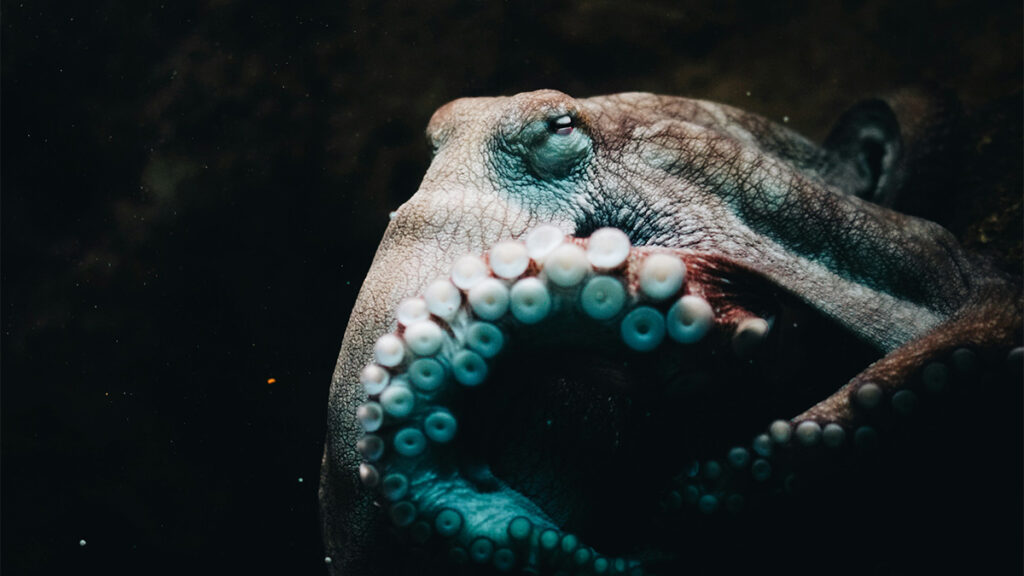
Just ten years later, they issued an update signed by a great many more scientists and philosophers, in which they said that all vertebrates are conscious, possibly some invertebrates, and possibly insects. So how did this revolution happen?
Well, part of it is due to the fact that we had always assumed that consciousness is produced or generated in the cortex. The cortex, of course, is the most recent, most uniquely human structure in the brain, and it’s associated with higher forms of thought, like rationality, decision-making. So surely, consciousness must reside there.
But the research has been shifting our sense of where it begins, and that instead of thought, consciousness probably begins with feelings, simple things like hunger and thirst, and warmth and cold, and itch. This is where consciousness begins, and therefore it begins in the upper brain stem. And lots of animals have brain stems, many more than have cortices. So that’s led to a real change. And this is a key point about feelings. Keep it in mind when we get to computers.
And I take this, this expansion of the circle of conscious beings or sentient beings, a word I’m sometimes more comfortable with, as a very positive development. Basically, I think what we’re seeing is that science is helping us to reanimate a world that we treated as dead for way too long. [APPLAUSE]
And you know, this period of treating the world that way in the larger context of things is a very recent and short phenomenon, it’s a couple hundred years. The default of humanity is one form of animism or another. Most Indigenous cultures see the world as animated by spirit, which is a synonym for consciousness. Kids, the default of young kids, is that everything is conscious – their toys, their cars, their whatever. So it’s interesting that we had a departure from this very deep human assumption. And in fact, it’s a cognitive bias that things are conscious. You’re better off thinking that that boulder over there is a bear and then deciding, oh, it’s actually just a rock – this is called agency detection – than the other way around, and you assume that that bear is just a rock and not to worry about it. So it’s a good, sort of basic response to things.
So that’s the good news. But now we have the prospect of conscious machines, and I think that this is a lot more troubling. We now have machines that speak to us in our language in the first person. We all already take this for granted, but it’s a stunning development, a momentous development that, of course, none of us were consulted about. And these machines are convincing many people that they are conscious. I’m talking about people who are having relationships with chatbots, falling in love with them, letting them convince them they’re geniuses or gods. But I’m also talking about the people who work on these machines.
So for my book, I followed efforts to create a conscious AI. I had access to a project where this was going on. And, you know, the consensus in Silicon Valley is that it will be possible to make a really conscious AI, that maybe right now they’re fooling us, but it could happen.
I argue why I don’t think this is true, and it has to do with the same reason: If consciousness depends on feelings, what are the feelings of a machine? Can a machine have feelings? I agree, no. [LAUGHTER] And if it tells us they have feelings, should we believe it?
Feelings depend on having a body. Feelings depend on the fact that you have a body that is vulnerable, that can suffer and that can die. I don’t think simulated feelings are real feelings. I think simulated thoughts are as good as real thoughts, and that’s why we see computers mastering games like Chess and Go. They can make things happen in the world, but what will this—the weight of a feeling expressed by a machine have? Unless it can be mortal, unless it can actually have a vulnerable body—those feelings will be absolutely weightless.
My argument might not matter, though, because people believe that these machines are conscious, and it’s understandable why. We have a tendency to anthropomorphize everything.
So there is talk in Silicon Valley – I’m amazed how common this is – that we should consider when we have conscious AIs, giving them moral consideration, admitting them into this widening circle of moral consideration. I think it’s a big mistake to do that. I think it’s something we have to fight against, that when we, you know, grant personhood to computers, we will lose our ability to control them.
And you will recall, we did this once before when we decided, in our lack of wisdom, to grant personhood to corporations. That did not work out very well. It seems to me that there are moral obligations we owe to people and other mammals that should come first. [APPLAUSE]
So I’m going to leave you with this Copernican question and this choice: Where does that leave us now? We have pressure coming from these two sides – animals becoming more conscious, plants possibly becoming conscious, insects becoming conscious. That’s pressing on us in a way that we can decide is positive or negative. And then on the other side, at the same time, we have computers making claims for consciousness. Who do we identify with? Who do we have more in common with, the AIs who can speak our language in the first person, or the animals that can suffer and feel and grow old and die? Who’s team are we on? The choice we make, as a species, will have tremendous consequences for who or what we admit into this circle of moral consideration, and how we conceive of our place in the world.
Host: More from Michael Pollan when we return…
I’m Neil Harvey. You’re listening to the Bioneers: Revolution from the Heart of Nature.
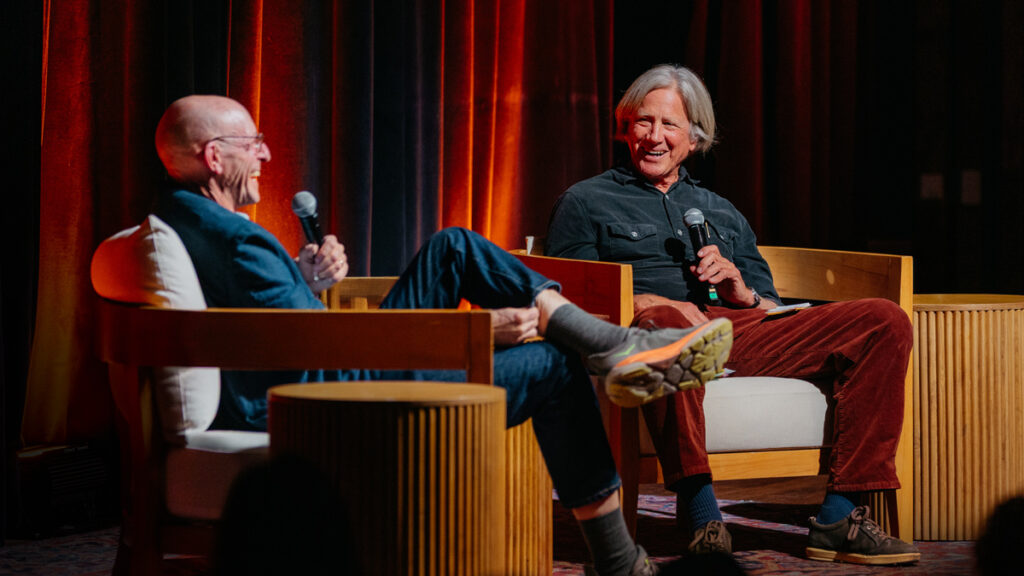
Host: At a recent Bioneers conference, Michael Pollan was interviewed by Dacher Keltner, an author and Professor of Psychology at UC Berkeley who served as the lead scientific consultant for the two animated “Inside Out” films by Pixar that explore the role emotions play in our lives.
Dacher Keltner (DK): I remember talking to you five years ago or something, kind of in the wake of This is Your Mind on Plants, and then How to Change Your Mind. And I remember we were walking in the Berkeley hills, and you were saying, you know, it’s like, well, what’s up next, and you’re like: I think I’m going to write a book about consciousness. And I laughed at you. [LAUGHTER] And I thought, well, that’ll be the end of your career, [LAUGHTER] and no one will buy that book. You know? And you’ve just been sort of jaunting around the wo—it’s a sensation! I mean, it’s like you’re all over the place; it’s a best-seller; it’s stirring all kinds of conversations. What’s going on?
MP: Good question! I have no idea. [LAUGHTER] I don’t know what’s going on. I mean, I think—
So I started on this book. It grew out of How to Change Your Mind. Right? I was having these psychedelic experiences, and like anyone who’s had psychedelics, suddenly consciousness is foregrounded. You’re like—the windshield of perception has been smudged, and you’re like: Shit, there’s a windshield. [LAUGHTER] And you start—You start thinking about that windshield, and why is it the way it is. And so I got curious. And my writing usually follows my curiosity.
DK: One of the first persons to figure prominently is this kind of mysterious philosopher at NYU, Thomas Nagel. I love his book The View from Nowhere.
MP: Yeah I do too.
DK: It’s spectacular. What a great—
MP: He’s a critic of reductive science.
DK: Yeah.
MP: And, he wrote a famous essay in the early ‘70s, before there was a lot of scientific work being done on consciousness, called “What Is It Like to Be a Bat?” Provocative title. And his thesis was that if it’s like anything to be a bat, if it feels like anything, then a bat is conscious.
Now, we don’t know what it’s like to go through the world as a bat. You know? We use light to navigate the world, and they use echolocation. Right? So they bounce sound waves off of things. But we can sort of imagine that.
DK: Yeah.
MP: Enough to say, yeah, they’re probably conscious. So that became the question you ask of any creature. Does it feel like anything to be X? It doesn’t feel like anything to be your toaster. How do we say for sure that anything is conscious? How do I know you’re conscious? We infer it in the case of—
DK: I’m insulted.
MP: —other people. [LAUGHTER] But, you know, we have to infer it, I mean, because we don’t have access to anyone else’s consciousness. You know, we can use symbol systems to learn something about it, like language. But there is—I mean, William James said the breach between two consciousnesses is the greatest breach in nature, and so how do we cross that? And imagination is an important tool. We have theory of mind, which is…you know, philosopher talk for the ability to imagine someone else’s point of view.
DK: So one of the beauties of the book is, as always, you take us on a journey, and it’s interesting because you kind of flip the typical Western approach to the mind, the Cartesian approach of you start with reason and sophisticated thinking and syllogistic logic and so forth, and you go—you start with sentience, and you move upwards, out of the brain stem and into the cortex. And, you know, I want to see where you land, and keep pressing you.
Sentience, just the registering of sensations in all the different modalities by which we receive sort of information from the outside, it’s remarkable. You know? It truly is. You think about the skin – it’s 7 pounds and billions of cells, and all kinds of information is going into your brain stem and your somatosensory cortex telling you where you are, and who’s touching you, what that touch means. You think about the new science of smell, how we create spaces and meaning and memory and childhood nostalgia out of smell. I mean, sensation’s deep. Right? And it’s great that you start there.
MP: I would add one thing to your definition of sentience, which is kind of a more basic form of consciousness. I think it’s maybe universal, I mean, among all living things. But there’s valence too. There’s a recognition of, this is good or bad for the organism.
DK: Right. And then you take us to plants, and, you know, I think a lot of us in this room, in particular at Bioneers, revere your scientific reporting and experience in writing of plants. And the new science on sentience of plants blew my mind. You know?
MP: Yeah. They have 20 senses.
DK: God!
MP: I know. They can sense gravity, I mean, and pH, and all these things that we can’t sense.
DK: And then they know kin, they know non-kin, they know cooperators.
MP: They can see. I mean, you know, there are vines that will change their leaf form to imitate the plant they’re climbing up, to hide. I mean, how do they see what the leaf form is and then how do they change themselves? We have no idea.
DK: Yeah. So what did that tell you about consciousness, the plant science? What did you start to think?
MP: So, it’s quite remarkable what plants can do. We’re fooled by the fact that they’re so still. But they have behaviors. They’re just slower than ours.
So these scientists call themselves plant neurobiologists. They know there are no neurons, they’re just trolling more conventional scientists. And it drives them crazy that they talk about plant neurobiology. So there’s a whole lot of these very cool experiments showing that plants can hear and see; they—in ways we don’t really understand.
I don’t conclude that plants are conscious because I think that word has specific meanings tied to being a mammal, at least. But I do think they’re sentient. And sentience, as I said, is a simpler form of consciousness that may well be universal. I think even single-celled creatures have sentience. I think you can’t survive in a world that’s constantly changing without sensing your environment and knowing what’s good or bad for you.
And so, yeah, that’s kind of where I came out on plants. And then I realized, well, consciousness is the way humans do sentience. And so every creature has its own version of sentience that’s appropriate to its body type, its sensorium, the scale at which it lives, and it would be anthropomorphic of us to say that, you know, plants are conscious the way we are. And they’re not. They don’t have interiority, I think. They don’t have a voice in their head. They can’t talk to themselves, all these amazing things that we can do.
DK: One of the things that scientists like myself appreciate about your writing is often scientists become unlikely heroes in your books, and one of your heroes is Michael Levin.
MP: Yeah, he’s an amazing biologist. This is a biologist at Tufts who—I urge you to look him up. He studies how animals regenerate themselves. And he’s very interested in bioelectric fields.
Now, I didn’t know what these were. They were discovered in the ‘30s, but that any multi-cellular thing will have a bioelectric field that is organizing it, holding memories, enforcing a division of labor among cells in a multi-cellular situation. The study of this didn’t really begin until the ‘80s, when we developed these voltage-sensitive dyes. Before that, when the cell died, the field was gone. So unlike DNA, which survives the death of this—of the animal, and you can study it—or plant, bioelectric fields were very elusive. But now with these dyes, you can study them. And he’s really shown how powerful they are.
He works with planaria, which are these worms that, if you chop off a tail, they regenerate a tail; you chop off a head, they regenerate a head. They’re kind of amazing. And he teaches them something. He conditions them and then he chops off their head. They grow a new head, and they remember the lesson. Which means that the information that they had learned was stored in their bodies, in this bioelectric field, not in the brain.
So his kind of covert project is a takedown of the neuron and the gene. Which is, you know, pretty ambitious. So it’s a really interesting project, and he believes that the simplest beings are cognitive beings. The way evolution works is it creates cognitive beings that can solve problems, and that you can’t hardwire everything because our world is so changeable. The world, the environment in which they live is so changeable. So that creatures need sentience in order to navigate a world that’s constantly changing, and it’s a very compelling vision.
Host: Over the course of his research for his book, Michael Pollan found at least 22 distinct and often divergent theories of consciousness, as well as a theory about the specific consciousness of consciousness researchers. He believes it’s a clear indicator of how nascent the field remains, and how ineffable a mystery consciousness is.

MP: Non-local consciousness is a term for idealism. I mean, that’s what the philosophers called idealism. And that is the idea that consciousness is outside of our brains, and the job of the brain is to channel it, and that we’re like radio receivers or TV receivers, and we’re tuning in to consciousness. And it can be different kinds of consciousness.
Aldous Huxley uses that model in Doors of Perception. And he argues that psychedelics expand what he called the reducing valve, because we only let in that amount of consciousness that helps us survive. That would be the Darwinian explanation of like we only know these, but psychedelics opens it up and suddenly you feel like you’re more conscious.
I don’t know how you prove idealism. I think it’s a metaphysical idea, so I don’t think it’s susceptible to scientific proof. It’s consistent with all the brain science we’ve done on consciousness, which sounds crazy, but, you know, the brain is obviously involved in that system as well, it just has a different role. It’s not generating, it’s bringing in, and so damaging or changing the brain in some way would change consciousness. So it holds either way.
Cristof Koch, you know, he was the ultimate brain-centered researcher. He was the head of the Allen Brain Institute in Seattle, he worked with mapping individual neurons. He really believed brains generated consciousness, until he went to Brazil and had an experience on ayahuasca, which I talk about in the book. And he had an experience of consciousness outside of his brain, and it gave him this crisis. He was like crying to his wife, it was such a big crisis. And he got very interested in idealism. I don’t know where he is right now, but the last time I talked to him, he was engaging with this idealist philosopher named Bernardo Kastrup.
So you know, I don’t know what to make of that, honestly. Same with panpsychism. That’s another theory that solves the hard problem, but at a high expense, the expense being consciousness didn’t evolve or arise, it was always here, and it’s part of matter, that all matter has some degree, small degree of consciousness, and somehow it gets combined from all these—you know, the consciousness of our individual particles and cells into the kind of consciousness we have.
Another interesting idea – you’ve solved the problem. It’s sort of like physics when they say, well, we can solve quantum mechanics if we stipulate a multiverse, that there are 50 different worlds. Okay. That’s a high price to pay, but okay.
Host: Michael Pollan and Dacher Keltner, “Exploring the Mystery of Consciousness”