Inside the Science of Animal Self-Medication
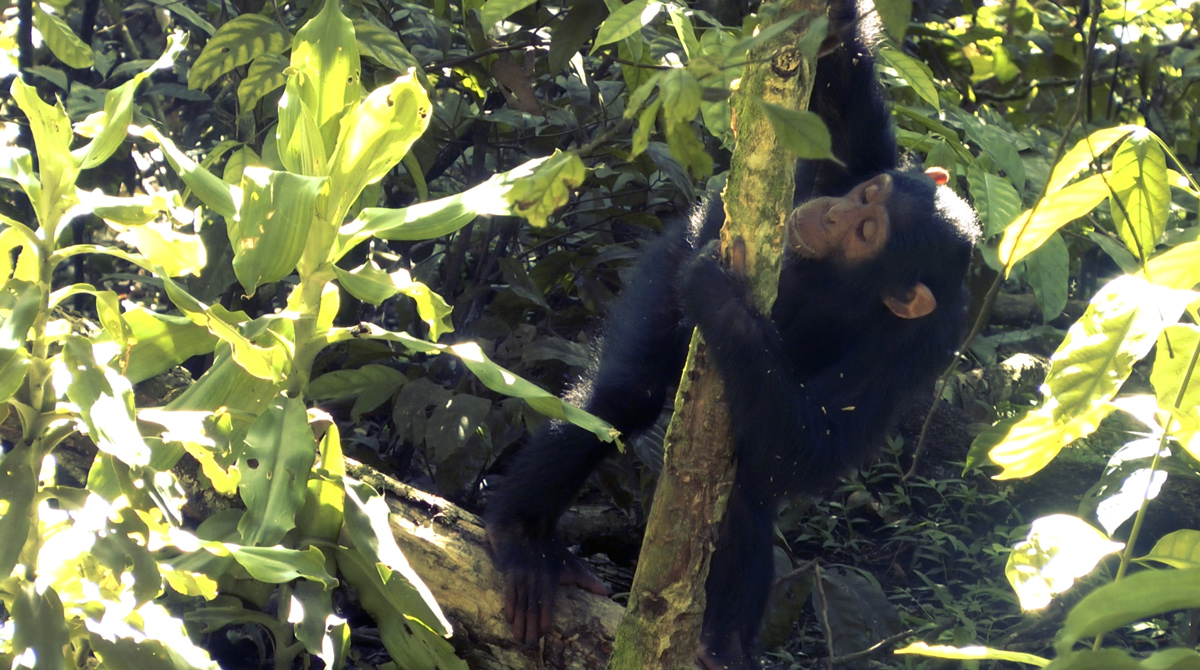
Research is increasingly confirming what many Indigenous communities and traditional healers have understood for generations: Humans are not the only species that knows how to use the natural pharmacy of the living world. Around the globe, scientists are documenting how animals ranging from chimpanzees to elephants to birds seek out medicinal plants to treat illness, parasites, and injury.
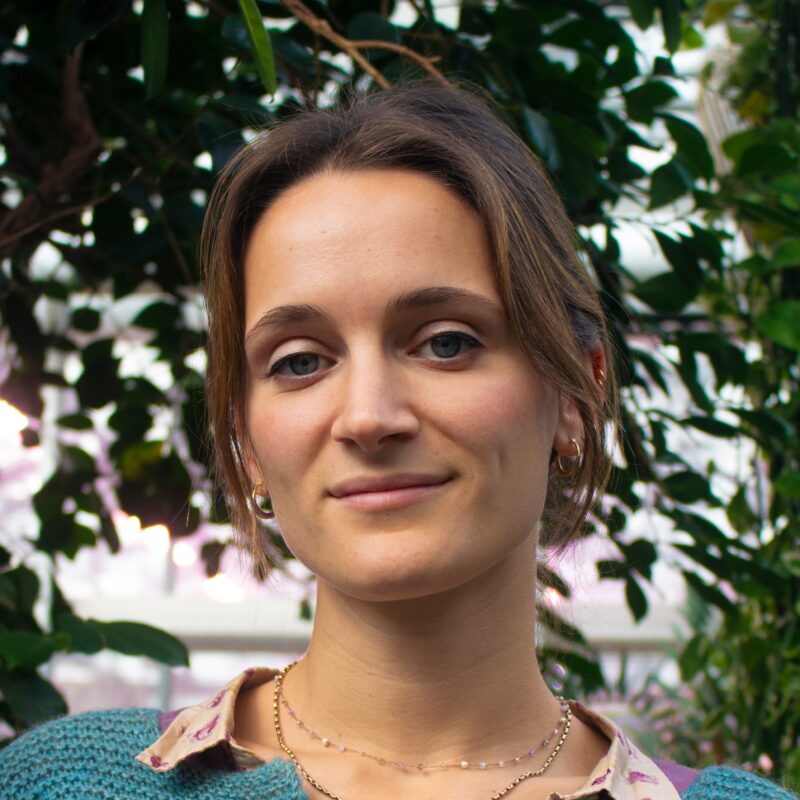
For Elodie Freymann, a primatologist, botanist, filmmaker, and conservation advocate, that realization has reshaped the way she thinks about medicine, intelligence, and humanity’s relationship to the rest of the natural world. Freymann recently attracted international attention for her research in Uganda’s Budongo Forest documenting how wild chimpanzees use medicinal plants to self-medicate. But one of her most important discoveries came through conversations with local healers, who explained that many of the same plants used by the chimpanzees were already part of nearby communities’ traditional medicinal knowledge systems.
Freymann’s work now focuses on what she describes as “shared forest pharmacies” — the overlapping medicinal relationships between humans, animals, and ecosystems. Blending primatology, anthropology, ecology, and art, her research explores how species learn from one another, how medicinal knowledge moves across generations and ecosystems, and what modern science still has to learn from Indigenous and local knowledge systems. She is currently expanding this research through the first systematic study of non-human self-medication in the Peruvian Amazon.
The following is an edited excerpt from Freymann’s remarks during a conversation at the 2026 Bioneers Conference, adapted from the original transcript. Read more about Freymann’s incredible work in our recent interview.
ELODIE FREYMANN:
I took a very winding path to end up where I am, doing what I’m doing. As a child, I was always fascinated by two things that I never thought went together. The first was chimpanzees. I’ve tried hard to figure out where that fascination came from, and I think it probably traces back to climbing as a kid and being called a monkey by family members, so I started associating myself with primates. Like many young people, I was also deeply influenced by the work of Jane Goodall. For me, she was a hero — someone I could look up to and think, “Okay, this is possible. I can do this too.”
I was also passionate about medicinal plants. I remember finding out when I was a kid that the Earth produces medicines, and I thought that was so cool.
I think what those interests have in common is that, like many of us, I was raised within a culture that teaches humans to see ourselves as separate from the natural world: exceptional, more intelligent, more complex, and more emotional than the other beings we share this planet with.
But when I looked at chimpanzees, I saw cousins. I could look into their eyes and recognize something familiar. And with medicinal plants, I began to understand that we share a long and complex co-evolutionary history with them. Somehow, the chemicals plants produce to heal and protect themselves can also heal us when we consume them. That’s not a coincidence. It’s because we are part of the same community of life. We’ve co-evolved for millions of years. We even share a common ancestor with plants.
So plants and chimpanzees brought me into the natural world. And as someone who grew up in New York City surrounded by buses and tall buildings and not a lot of trees, that was very intoxicating.
But it’s been a long, winding road. I did a lot of art as a kid. Both of my parents are artists, and for a long time, I never saw myself as a scientist. I briefly worked in documentary filmmaking and studied social anthropology in college, but I still felt this deep need to reconnect with the things that fascinated me as a child. Somehow, I ended up finding a master’s program where I could study how chimpanzees use medicinal plants. How cool is that?
I learned about this field no one has heard of and no one knows how to pronounce: zoopharmacognosy. When you break down the word, it’s zoo, as in animals, pharma, as in medicine, and cognosy, as in cognition/knowledge. It’s the study of how animals know about the medicines in their natural environments, in their ecosystems.
It’s not just chimps that do this. Chimps were the first animal that we discovered to be self-medicators, but the more researchers set their mind to it, the more we realized that actually this is happening all throughout the animal kingdom, from chimps, to elephants, to great bustard birds, to bears, to civets, to snow geese. It’s incredible. The more we study animal self-medication, the more examples we discover across the animal kingdom.
It turns out that healthcare is not one of the things that sets our species apart; it’s actually something – surprise, surprise – that’s universal. And animals, just as they know how to seek shelter and find food, know how to find medicine as well.
When I began my master’s research at the University of Oxford, which later transitioned into a Ph.D., I wanted to start with a very simple question. I knew I’d be working in the Budongo Forest in western Uganda, and I wanted to identify new medicinal plants used by chimpanzees. At that point, researchers only knew about a small handful of plant medicines chimps used, partly because the field had slowed down for a while. Funding was limited, there were methodological challenges, and after several decades of research, we still only knew of a few plants chimpanzees used to treat internal parasites.
I wanted to expand that dataset so we could begin asking more complex questions, like how chimpanzees know which plants in their environment are medicinal and which are simply part of their regular diet.
To do this, I had to use a very interdisciplinary methodology, which for me was ideal, because I had a very interdisciplinary and weird past. I had studied social anthropology and had an art background, but I didn’t have much formal training in the quantitative sciences. I had never even taken a statistics class, so I spent a lot of time teaching myself, learning new methods, and talking with researchers who had found unusual ways to bridge disciplines and combine fields.
Then I headed out into the field, completely green. I had never seen a chimpanzee in the wild before. I arrived in the middle of the pandemic and began what became a completely life-changing experience: spending nine months living alongside wild chimpanzees at a research station.

And I learned so much, not just about the chimps but about the forest ecosystem. My first paper wasn’t even about chimps; it was about red-tailed monkeys. And I wrote another paper about birds from my observations there. One of the biggest takeaways for me was that science is everywhere and everything. You have to keep your eyes really wide open, and the more you do, the more you see.
As for the chimps, I was collecting a lot of their poop and examining it under microscopes to identify parasites. I was analyzing urine samples for signs of infection, carefully monitoring their diets, and paying close attention to any plants they ate that seemed unusual. I was also collecting plant samples themselves and bringing them to a lab in Germany, where we ran pharmacological tests to see whether they had antibacterial or anti-inflammatory properties.
Spoiler alert: they absolutely did.
The final part of the research, and the part that excited me most, was having the privilege of sitting down with healers in nearby villages who also used the forest as a pharmacy and medicine cabinet. I spoke with them about several plants I had been watching closely because the chimpanzees were seeking them out in unusual ways. By that point, I had gathered evidence suggesting the chimps were occasionally using the bark of certain trees that were not part of their normal diet.
The healers generously shared that some of those same trees were also used as medicines in their own communities. Surprise, surprise.
It was groundbreaking for me. I had been so focused on these natural medicine cabinets from the animals’ perspective that I hadn’t been thinking about them as shared. I wasn’t thinking about all the many interspecies entanglements that must exist around the world when it comes to medicines different species, including ours, are using.
I published some of those results, and now I’m working on a new postdoctoral project. In many ways, the direction has stayed the same. I’m still studying how animals use medicine in the wild, but now I’m approaching it through the lens of these medicinal entanglements and shared forest pharmacies. In some ways, it’s an expansion of the concept of Indigenous traditional ecological knowledge, which is incredibly important.
At international forums, there are many conversations about the importance of medicinal plants as a primary source of healthcare for people around the world. But the more-than-human world is often absent from those discussions, even though many animals rely on some of the same medicinal resources.
We at least have some safeguards in place to protect traditional ecological knowledge in human communities, though those protections are still far too weak and exploitation remains widespread. But there are virtually no protections in place for the medicinal resources that other species depend on.
That has become my mission, both as a scientist and a science communicator: to change the way we think about medicine on this planet. Medicine isn’t something that exists only for humans. It’s something all living beings rely on to survive and flourish, especially amid the rapid changes ecosystems are facing today.
Right now, I’m working with colleagues and collaborators to draft what could become the first protections for the traditional medicinal knowledge of animals, along with safeguards for the resources themselves against exploitation, degradation, and biopiracy.
I also recognize what a privilege it is to spend time with animals in the wild, and I never take that for granted. I want to do whatever I can to bring those experiences to people who don’t have the opportunity to interact with animals on a daily basis. That’s part of why I’ve started working on films, using a handful of very small grants to help share this work with a wider audience.
This knowledge has existed for thousands of years. It’s not something we’re only discovering now. People living within these ecosystems have understood many of these relationships for generations, and science is only beginning to catch up.
I saw that firsthand while working in Uganda. I had become fascinated by a behavior called bark feeding, where chimpanzees strip and consume the bark of certain trees. In primatology, this had often been dismissed as a kind of “fallback food” behavior, something animals do when there are no better options available. But the more evidence I collected, the less that explanation made sense.
When I started speaking with healers in nearby villages, I asked whether they also used bark from certain tree species medicinally, and whether they thought chimpanzees might be doing the same thing. They just laughed at me. To them, the answer was obvious. Of course humans used those barks as medicine. Of course the chimps did too.
That experience deeply shaped the way I think about science now. I’m an outsider when I enter these ecosystems. I always try to begin by listening to the people who live there and know those environments intimately. Otherwise, trying to understand these medicinal relationships is like searching for a needle in a haystack.
There’s absolutely a knowledge interchange happening between humans and other animals. Across many cultures, people have learned medicines by observing animals. And in some cases, animals may even be learning from people as well.
That perspective is shaping my current work in the central Peruvian Amazon, where I’m collaborating with an incredible team that includes Asháninka scientists. Instead of beginning solely with animal observation, we’re starting by asking which medicinal plants and resources are already culturally important within local communities, and then studying how animals interact with those same species.
It’s also changed the way I think about scientific collaboration itself. Too often, researchers parachute into ecosystems, extract knowledge, and fail to properly credit local scientists and collaborators. That has been a longstanding problem in primatology and conservation science. For me, collaborative authorship and local expertise are non-negotiable. The people who live in and understand these ecosystems are not secondary contributors to this work. They are central to it.
A lot of what I’m trying to do now is listen deeply enough to learn the right questions to ask, and help build collaborative teams that bring together many different voices and ways of knowing from around the world. Then the goal is to carry those insights back into the scientific community until science finally begins catching up with local knowledge.