More than Human Life: Advancing Rights for The Natural World
Bioneers | Published: February 25, 2026 Intelligence in NatureRestoring Ecosystems Podcasts
Scientific evidence is increasingly supporting the theory that the Earth is alive and replete with intelligence. In fact, the wild diversity of earthly organisms exhibits the characteristics that human beings attribute to personhood. How is it then, by the law, that a corporation is a person, but nature is not? What if we expand the anthropocentric boundaries of our systems of laws, rights and responsibilities to encompass ALL living beings? How would this new legal story affect our relationship with our vast other-than-human Earth family? In this episode, we imagine a planet with rights for all, with visionary lawyer César Rodríguez-Garavito.
This is an episode of Nature’s Genius, a Bioneers podcast series exploring how the sentient symphony of life holds the solutions we need to balance human civilization with living systems. Visit the series page to learn more.
Featuring
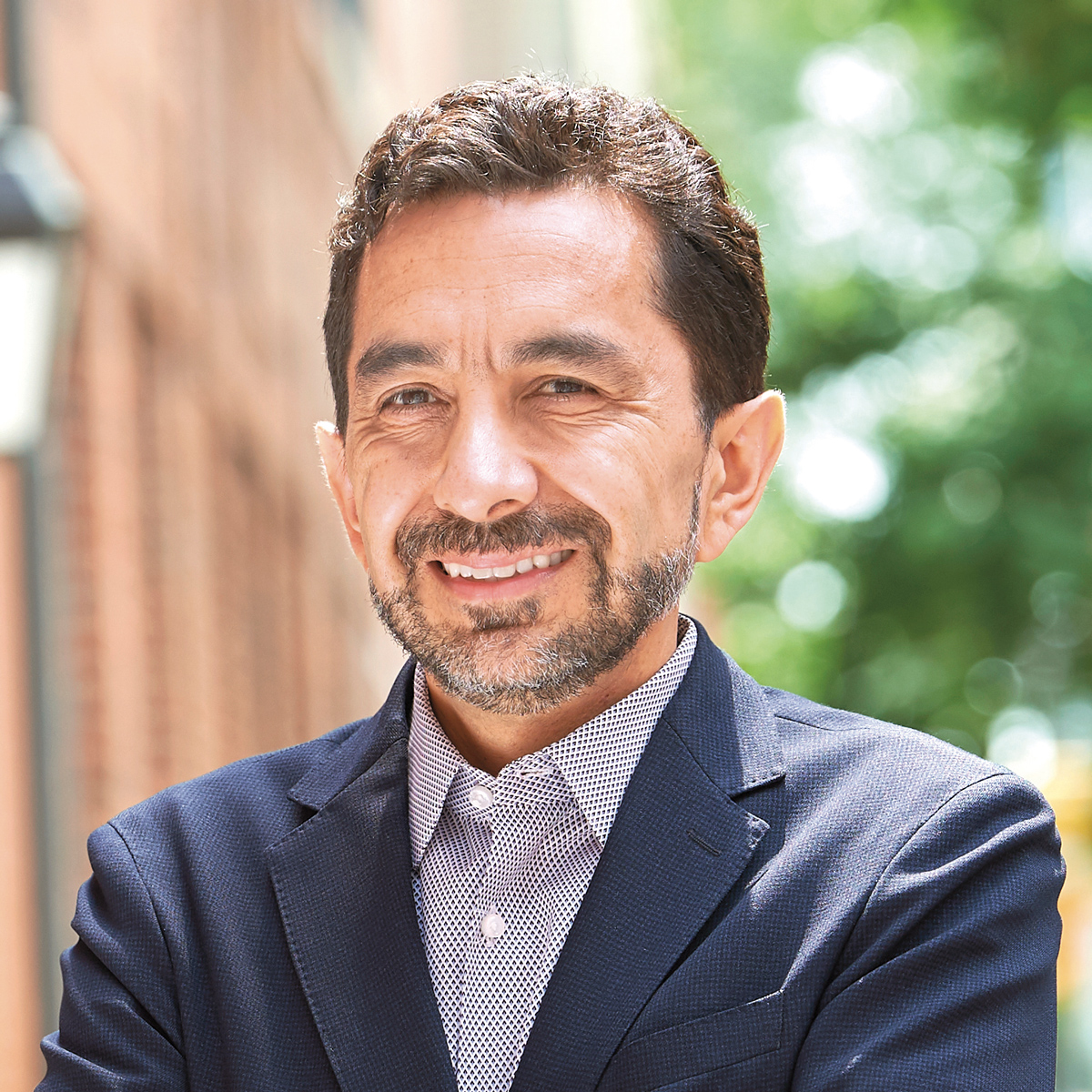
César Rodríguez-Garavito, a Professor of Law, Chair of the Center for Human Rights and Global Justice, and founding Director of the More Than Human Life (MOTH) Program and the Earth Rights Advocacy Program (all based at NYU School of Law), is a human rights and environmental justice scholar and practitioner whose work and publications focus on climate change, Indigenous peoples’ rights, and the human rights movement.
Credits
- Executive Producer: Kenny Ausubel
- Written by: Cathy Edwards and Kenny Ausubel
- Producer: Cathy Edwards
- Senior Producer and Station Relations: Stephanie Welch
- Producer: Teo Grossman
- Associate Producer: Emily Harris
- Host and Consulting Producer: Neil Harvey
- Production Assistance: Mika Anami
Resources
Report Assessing the Implementation of the Los Cedros Ruling in Ecuador | MOTH
César Rodríguez-Garavito – More-Than-Human Rights: Pushing the Boundaries of Legal Imagination to Re-Animate the World | Bioneers 2025 Keynote
Deep Dive: Intelligence in Nature
Earthlings: Intelligence in Nature | Bioneers Newsletter
This limited series was produced as part of the Bioneers: Revolution from the Heart of Nature radio and podcast series. Visit the homepage to find out how to hear the program on your local station.
Subscribe to the Bioneers: Revolution from The Heart of Nature podcast







Transcript
Neil Harvey (Host): Plants perceive the world around them. They learn, remember, and communicate. They can see what color your shirt is.
Dolphins and many other animals recognize themselves in mirrors, demonstrating self-awareness. Pigeons have a better memory for paintings than college students do. Sheep have better memory of human faces than humans do. Single-celled balls of mucus called slime molds efficiently solve mazes.
Once you entertain the prospect that as human beings we’re part of a vast pulsing symphony of intelligent organisms, it radically alters the concept of human rights. Anthropocentric laws promoting fair and just societies become meaningless if the living earth is dying because we’re treating it as an inanimate object to be exploited at will.
It’s increasingly clear that animals, plants, fungi, forests, waters and ecosystems need to be legally recognized as subjects, not objects. That intersection of human and natural law is the leading edge of environmental protection – and human self-interest.

What’s old is new again. Indigenous societies have long recognized and respected the rights of other-than-human life, and they say these rights come with responsibilities. Western law is beginning to wake up to this paradigm shift. From rivers, mountains, and critters being granted legal personhood – to the legal paradox of an ecosystem owning itself – the burgeoning movement to recognise the rights of nature is now the fastest growing environmental movement in history.
At the forefront is lawyer and NYU professor César Rodríguez-Garavito. He spoke at a Bioneers conference.
César Rodríguez-Garavito (CRG): The first time that I encountered the idea of rights of nature, I was deep in the Ecuadorian Amazon. I was working with the Indigenous Peoples of Sarayaku. Ecuador had recently become the first country in the world to recognize the rights of nature in its constitution. [APPLAUSE] Yeah. And the Sarayaku had been essential in shaping that idea. It was there that I had a chance to sit with Don Sabino Gualinga, who at the time was the yachak or shaman of the community.
We sat by the Bobonaza River just days before the Sarayaku won a historic legal victory. The Inter-American Court of Human Rights ruled in the favor of the Indigenous community and ended a two-decade-long struggle to stop oil extraction in the territory. The territory today is still free from oil extraction. [APPLAUSE]
But Don Sabino didn’t speak to me about rights, he spoke about life. I remember him saying, “the forest is alive, the rivers and the mountains are alive; they are people, just like us.” And he said this in a voice so soft that it felt like an invitation to listen to the voices of life all around us.
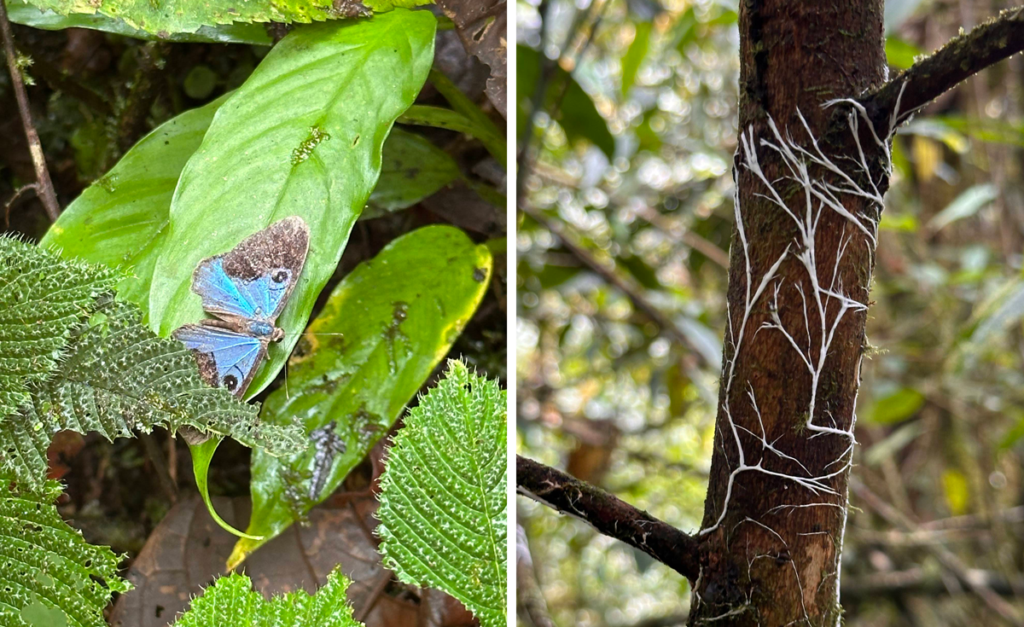
Host: On that landmark occasion in 2012, César was working with the Sarayaku people to help them implement their legal victory. As a lawyer, he was already involved with Indigenous communities around the world, where he focused on how oil drilling, mining, and pollution violated their human rights.
But for Don Sabino and the Sarayaku, it wasn’t just a matter of their own rights. They understood themselves as part of nature, as part of a far larger other-than-human community that also had intrinsic rights.
CRG: Back then I was fully immersed in the work of human rights. I would go to places teeming with life, not only in the Amazon but also working with climate refugee communities from coastal areas of Bangladesh, or with the victims of violence in the armed conflict of my own native country of Colombia.
To me, nature felt more like a backdrop to the real work at hand, which was defending human communities. And also, I have to confess that the idea of rights of nature initially baffled me. I didn’t really know what to do with it, what to think of it.
And yet, it stayed with me over the years; like a seed planted in Sarayaku, it grew. But it didn’t grow only in my own work and my own experience, but across the world. Today, there are more than 500 initiatives protecting the rights of nature around the world. Rivers have been granted rights in countries ranging from New Zealand, to Peru, to Spain. Courts have recognized the rights of animals on most continents, and entire ecosystems have been protected as legal subjects.
Host: One of these rights of nature rulings was a historic decision to protect the old-growth forest of Los Cedros in Ecuador, one of the world’s most biodiverse regions. In 2021, the Constitutional Court of Ecuador recognised it as a subject of rights and banned mining there.
Alongside judges, advocates and forest guardians, César helped monitor the implementation of this ruling. Spending time in the forest, he saw – and heard – what rights of nature feels like in its natural habitat.
CRG: I want you all to hear what a rights-bearing, breathing, living cloud forest sounds like. [LOS CEDROS AUDIO PLAYING]
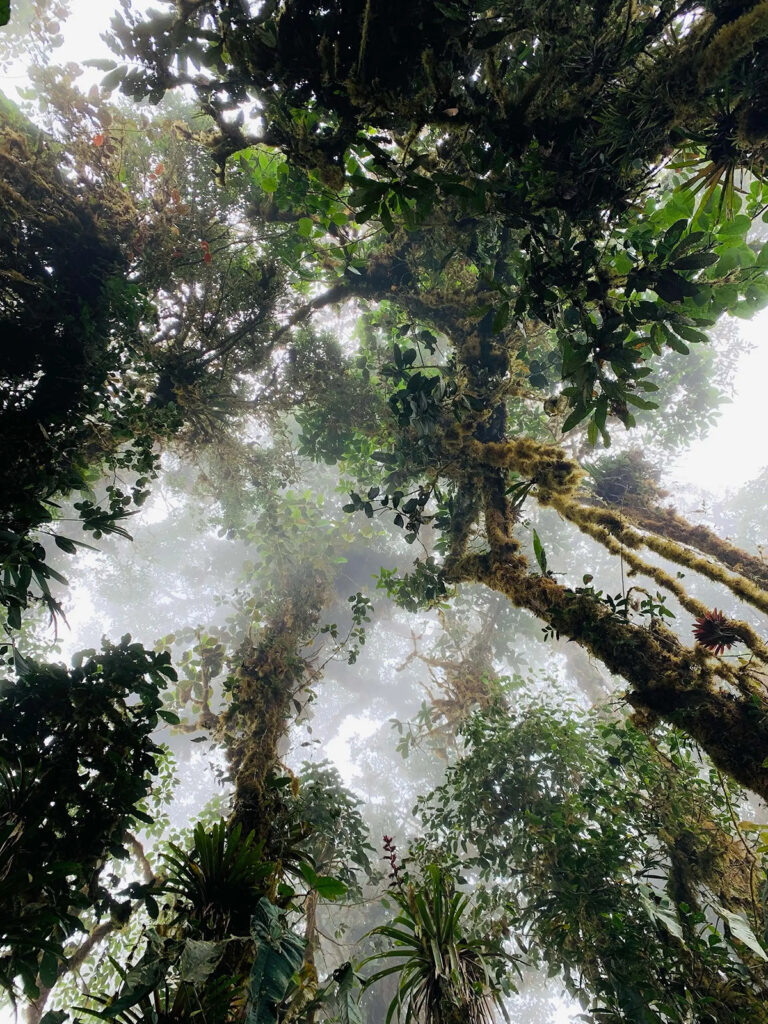
Host: The first time César visited Los Cedros, he traveled with musician Cosmo Sheldrake who weaves the sounds of nature into his compositions. This is his recording.
CRG: I wonder if you figured out what those flapping sounds were at the beginning of the clip. Those are the bats that would fly around us at night. [AUDIENCE RESPONDS] And perhaps you also heard the Toucan Barbets, the howler monkeys, the crickets and the trees that compose the orchestra of the forest at dawn. By the way, Cosmo insists to this day that he can hear my faint snoring in the background in that little clip. Which I, being a lawyer, I roundly deny, and I’m sure that no one here picked up any noise of that sort. [LAUGHTER]
But it’s not just Indigenous Peoples or professional listeners who are engaged in this exercise in paying close attention to the more-than-human world. We’re in the midst of a planetary listening exercise. Botanists are busy studying how plants emit sounds, how insects pick them up, and how those insects, like moths, make decisions based on that information. Marine biologists and technologists are busy revealing the languages of whales and other species.
Host: César was deeply inspired by what he was learning from working with communities in the Amazon. It was compounded by the mushrooming scientific evidence of nature’s genius.
CRG: That’s been a huge influence on me, as I try to make legal sense of the new science on…how plants communicate with insects, and the science that has been produced about how bees communicate with each other in highly sophisticated ways through dance.
And what you realize in reading the science and talking to these scientists, is something very similar to what Don Sabino Gualinga was saying to me 15 years ago, that everything is alive; there’s intelligence in the forest; there’s intelligence in the trees and the animals of the forest. But this is not just metaphoric. It’s beyond doubt that many animals, even plants, and now mycologists are discovering really fantastic capacities of fungi to solve problems. If intelligence is defined as a capacity to solve problems, definitely fungi and slime molds have intelligence.
So definitely all that inspiration coming from the sciences has given a big impetus to the idea of rights of nature in that now the invitation is to match those discoveries or those rememberings with the legal tools that would speak to those realizations with the appropriate words and the appropriate legal doctrines.
Host: A rich cauldron of epiphanies was brewing there in the Amazon – a blend of traditional Indigenous knowledge, paradigm-busting science and artistic alchemy.
César became convinced that the law needed to join the conversation. In 2022, with colleagues at NYU, he founded the More than Human Life programme – or MOTH.
MOTH is a collective not just of lawyers, but also Indigenous leaders, artists, judges, philosophers, writers, and storytellers – all working passionately to advance the legal standing of the more-than-human world.
CRG: I’ve never in my professional life seen such fascination, such longing for an idea. And to me, the question is why? Why is it that so many people feel drawn to this idea? One obvious answer is because we’re desperately looking for tools, for new ideas to defend the more-than-human world in the face of climate change, biodiversity loss, and pollution. But what I hear underneath the fascination with the rights of nature is the need for new stories about our relationship with the more-than-human world, and law is a very powerful storytelling device.
Law is the language that we use to tell right from wrong, and to determine who counts as a citizen and as a subject of rights. And human rights is a particularly compelling story. In fact, I think it’s the most powerful story through which we have imagined and fought for a world where every human being is worthy of equal respect and consideration.
The problem with the traditional human rights story is that in our effort to reconnect with one another, we saw it as necessary to disconnect with the web of life. We anointed ourselves as the sole citizens of the Earth. We label every other form of life as aliens without rights, and we built moral and legal walls to keep them out. So as we become more attuned to the voices of the more-than-human world, we’re starting to respond with a different story. I call this the story of more-than-human rights.
Host: The ecologist and philosopher David Abram coined the phrase “more-than-human” to challenge the illusion that humans are separate from or above nature. This worldview recognises humankind as an integral part of nature, entangled in symbiotic interdependence with all life.
César saw the transformative potential for the law.
CRG: We need to conceive of human rights as being entangled with the more-than-human rights world, meaning that without a breathing and thriving planet, human rights cannot exist because we all depend on that web of life. So these are not two different enterprises.
The more-than-human rights story is actually a pretty old story. It’s a story of interconnection that is alive in Indigenous worldviews, but it’s also alive in the origin of our own Western words. One thing that I love about the origin of the word human in human rights is that originally it comes from the root, from the Indo-European root that means soil or earth. The same root gives us humility, humble and humbling. So human rights quite literally mean earthlings’ rights.
So my invitation with the more-than-human rights story, it tries to move the ethics of human rights in the direction of reciprocity, in the direction of interrelation with the more-than-human world. And it’s one that also is concerned with responsibilities as much as with rights.
Rights are oftentimes seen—and in the U.S. that tends to be the case—as kind of sovereign entitlements of the individual. What I’m suggesting, and many others have suggested, and definitely Indigenous Peoples like the Sarayakus have suggested, is that we see rights as being intrinsically tied to responsibilities, because in the end we are responsible for everyone’s well-being. And so that dance, that going back and forth between rights and responsibilities, is what I want to help reestablish through the story of more-than-human rights.
Host: After the break, we’ll hear about tools the MOTH program is deploying to put ideas into action.
If you’d like to learn more about the extraordinary intelligence of life inherent in fungi, plants and animals, check out our Earthlings newsletter. In each issue, we delve into captivating stories and research that promise to reshape your perception of our fellow Earthlings – and point toward a profound shift in how we all inhabit this planet together. You can subscribe at bioneers.org

Host: The More than Human Life program taps into what founder César Rodríguez-Garavito calls a ‘planetary listening exercise’. Deep listening and innovative thinking are foundational. So is action.
CRG: We at MOTH learn by doing. We try to be resourceful. We come up with solutions that sometimes feel unfamiliar, even weird. Weirdness is something that we embrace because the weird today is the mainstream tomorrow.
Host: One idea for a more-than-human rights case came from another visit to that same Los Cedros cloud forest to which Ecuador’s Constitutional Court had granted rights. César made the journey with a group from the MOTH Collective, including the musician and sound recordist Cosmo Sheldrake. Naturally, a song was born.
[SONG OF THE CEDARS AUDIO PLAYING]
CRG: This song was composed in a matter of hours. We were there in the high camp of Los Cedros and we were accompanied by writer Robert Macfarlane, and also by our dear colleague and friend Giuliana Furci, a mycologist from Chile. And then what we decided is, when we saw that Rob was jotting down some lyrics, we added some words, and then Cosmo put music to it, and mixed some of the sounds of nature. And right there, we realized that the forest was a co-author of the song, that there was no way that could have come together without the forest being an active force in the composition of that song.
So we decided that we would do the logical thing—find a legal translation for that idea, that a forest is a co-author of art. And we filed, officially, a petition before the copywriter authority of Ecuador, asking that copywriter authority to acknowledge five co-authors of the song: the four of us and the Los Cedros Forest. And we’re saying that since the Constitutional Court of Ecuador had declared the forest as a subject of rights, it’s only logical that there should be consequences, including the possibility that the forest be a co-author of the song. If the copywriter authority denies our petition, we’re prepared to take it to court, to ask the court to extract the consequences of its own decision to declare the Los Cedros Forest a subject of rights.
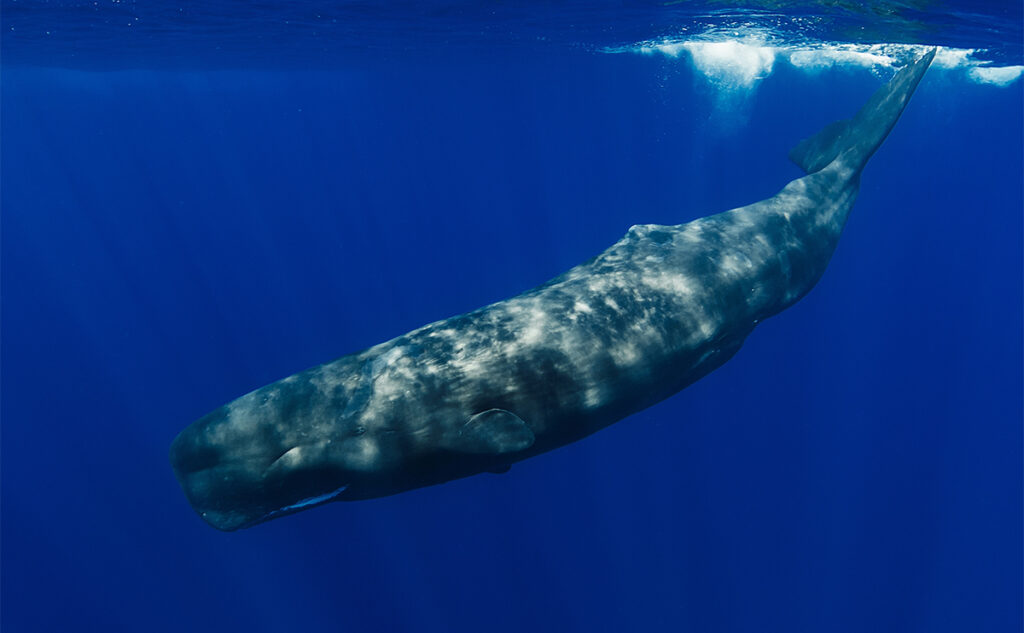
Host: The MOTH project is also using its legal repertoire to protect sperm whales, in collaboration with scientists from Project CETI.
[WHALE AUDIO PLAYING]
Sperm whales talk with each other using intricate patterns of clicks called codas. Project CETI is conducting research to decode these codas, using advanced bioacoustic technology and artificial intelligence.
Although the idea that these tools could help us understand and perhaps even talk back to another species is compelling, the endeavor demands careful due diligence of the risks.
CRG: When we started to ask these questions of the legal implications of all this science and these findings, I realized that we really are on the cusp of an immense legal world. So if, as CETI has already established, sperm whales do have complex patterns of communication and even languages, that already, without any additional findings, allows us to make really powerful arguments for the enforcement of existing laws. And I’ll give you just one example.
Sperm whales’ lives depend on being able to hear each other. So the amount of ship traffic, the plans for deep sea mining, interrupts and masks the voices of sperm whales. So the clicks, they cannot hear each other’s calls, they cannot hear each other’s voices across the ocean, so this interrupts and disrupts their basic conditions of life.
And that is torture. We’re making an argument in the paper and then in the future legal actions that this amounts to torture and cruel punishment, and cruel treatment.
But this is all reliant on the science of the perceptual world of animals. Once we understand those perceptual worlds better, we’re better as humans to be able to articulate how our incessant activity interferes with their perceptual worlds, and how those interferences amount to basic violations of dignity and well-being.
Host: Knowledge that unlocks the perceptual worlds of other species obliges us to protect their rights during the research itself. It also invites us to make amends for the heedless harms caused by our less-than-human behavior. In other words, we need a code of ethics grounded in the Hippocratic Oath: First, do no harm.
Our responsibilities would become even sharper if, in the future, we can actually begin to understand the content of their communications.
César imagines whales issuing restraining orders to humans: clean up your act, leave us alone, and give us safe migration routes free from your human cacophony.
CRG: There’s serious risks and challenges. I’ll just mention a few. One is the manipulation of animals for profit and other forms of exploitation, right? Tourism operators would love to have some sort of playback device that attracts the whales to the boats. And then imagine what you can do with other animals, and with elephants, poachers can use this technology.
The second one is that these studies can be very invasive. It can be seen as a form of surveillance, 24/7 surveillance.
Then, what’s going to happen with all this data? Since we human beings haven’t been very good at regulating circulation of our own data, imagine what can happen with the data of non-human animals.
Host: The “move fast and break things” approach to decoding animal communication is guaranteed to further disrupt and damage their precarious existence. Consequently, MOTH has worked with Project CETI to draw up new legal and ethical guardrails that prioritize the whales’ interests and minimize the risk of harms.
César has come full circle. He’s concluded it’s imperative to broaden human rights legislation to include the more-than-human world.
CRG: The international human rights architecture was born in 1948, with the adoption of the U.N. Declaration on Human Rights. We recently celebrated the 75th anniversary of that architecture, and there was reason for celebration. But if you juxtapose that timeline with a timeline of what geologists call the great acceleration, the burning of fossil fuels and the explosion of human population and urbanization, it tracks very closely the same timeline.
And this is not to blame the human rights story, it was not human rights that destroyed the Earth, but it is to realize that the project is anthropocentric just as our technologies and economies were centered in human beings to the point of annihilating countless species.
And when you look at the technical tools, for example, of Constitutional law or IP, intellectual property law, you see that there’s very little space for the recognition of the agency and the intelligence of non-humans.
I think that this is such a complicated moment in human history because we’re getting a much more granular view of more-than-human life. At the same time as we’re unleashing the triple planetary crisis of climate change, biodiversity loss and pollution. So holding those two realities is very, very difficult for human beings, emotionally, cognitively. And I think that this disconnect is unsustainable, that no human being can bear to witness the suffering of the more-than-human world while knowing so much about it.
One of the ways one can deal with this is to disconnect from all of that and, you know, just spend time on social media. The proposition coming from the more-than-human rights story is completely the opposite. Right? Because technology and our tools also have the capacity to reconnect us with the more-than-human world.
So the project here is to re-member, many of these words and many of these ideas have the prefix re, r-e, at because this in Latin means going back, to go back. But a reconnection and a remembering that hopefully imagines futures that reaffirm our belonging on Earth, and our embeddedness in the more-than-human world.
I want to be clear. We must continue to advance the rights of humans. Human rights is a project that needs to be sustained, especially now that it is under threat around the world. Yet how we treat each other is intimately related to how we treat the Earth. We’re capable of violence, discrimination and exclusion to the more-than-human world because we’re capable of it within our human societies. We’re capable of treating each other unjustly, even cruelly, because we learned to treat other forms of life that way.
As we continue the indispensable work of protecting the rights and dignity of all human beings, I want you to listen deeply to the voices of the more-than-human world that are becoming louder and louder. And I hope you’ll join this planetary listening exercise, and the effort to respond with stories of responsibility and reciprocity, to protect the more-than-human world.
Host: César Rodríguez-Garavito, “More-Than-Human-Life: Advancing Rights for the Natural World.”