“To those who say how can a river have rights? I say how can it not?”
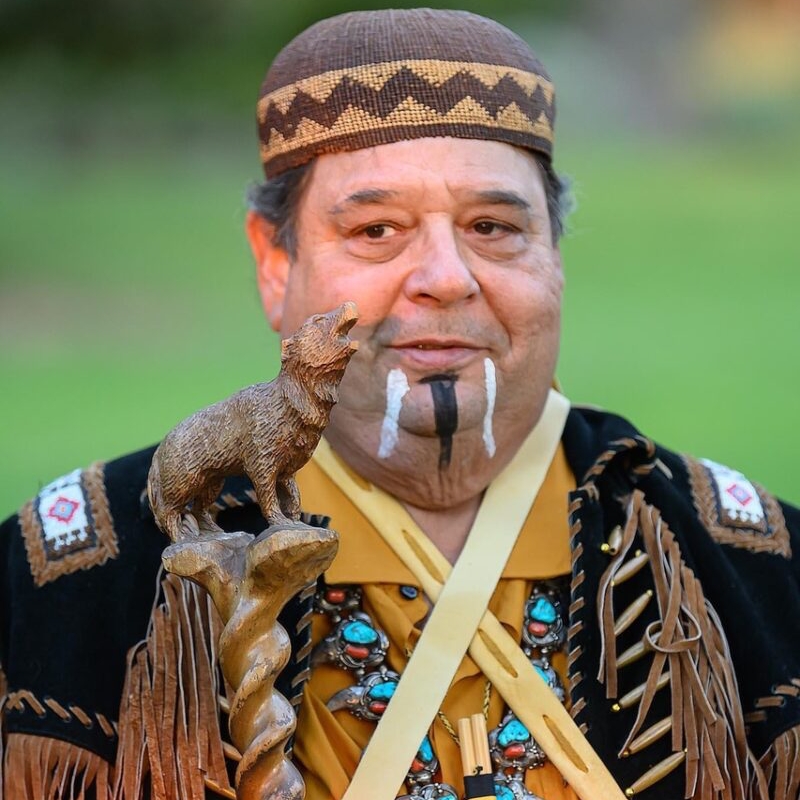
Samuel Gensaw, (Yurok) Director of the Ancestral Guard, artist, Yurok Language speaker, singer, writer, cultural/political/environmental activist, regalia maker, mediator, youth leader & fisherman
What Are the Rights of Nature in Indian Country?
Rights of Nature is a global movement spreading across Indian Country to protect our lands and natural resources for generations to come by recognizing nature’s legal rights. At its core, Rights of Nature law codifies Indigenous values for caring for Mother Earth. For the last 4 years, the Bioneers Indigeneity team has been exploring how Rights of Nature can be implemented by Tribes in the United States. We ran our strategy across a working group of Tribal leaders, attorneys, and organizers. We meticulously researched intersections of the law to anticipate ways to bring about Rights of Nature in Indian Country. We developed a guide for Tribal organizers to build capacity to present and pass a Rights of Nature law to protect lands, waters, and key species. And, we have begun to share information with Tribes interested in exploring Rights of Nature through regional workshops in the Southwest and Northeast.
Biggest Ever Intertribal Rights of Nature Gathering
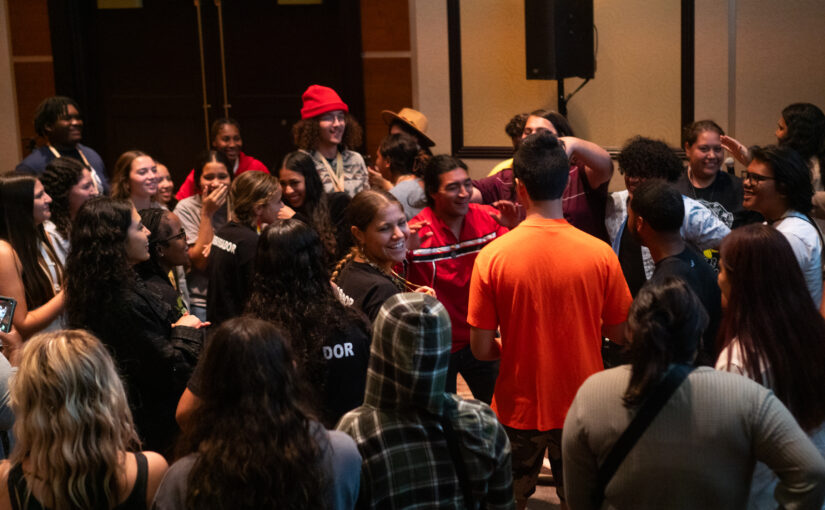
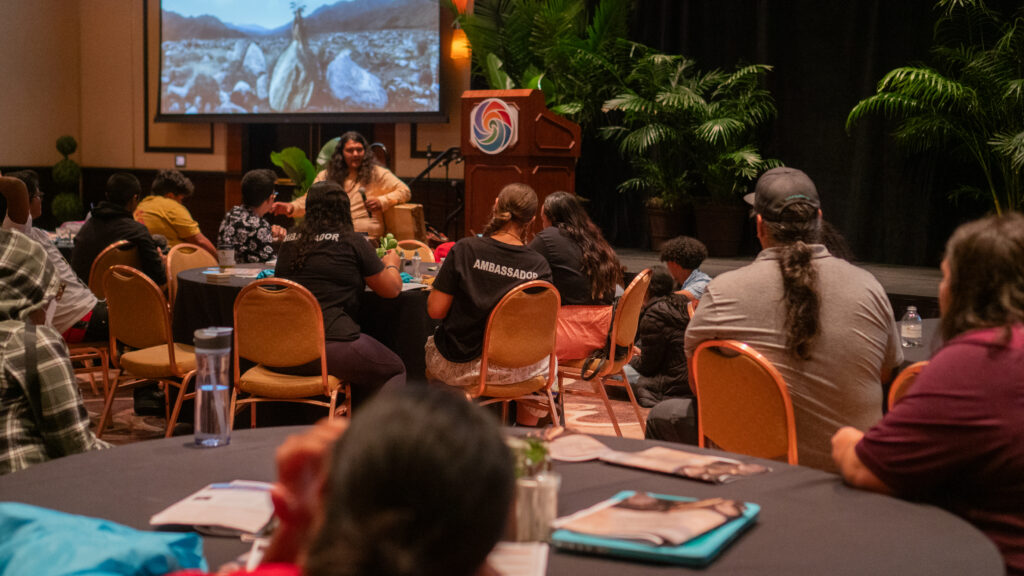
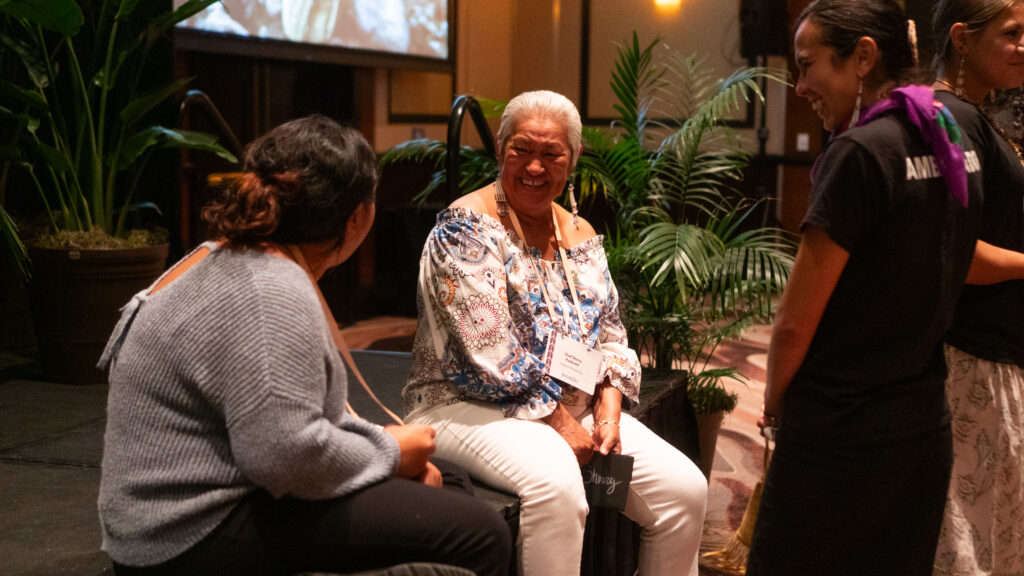
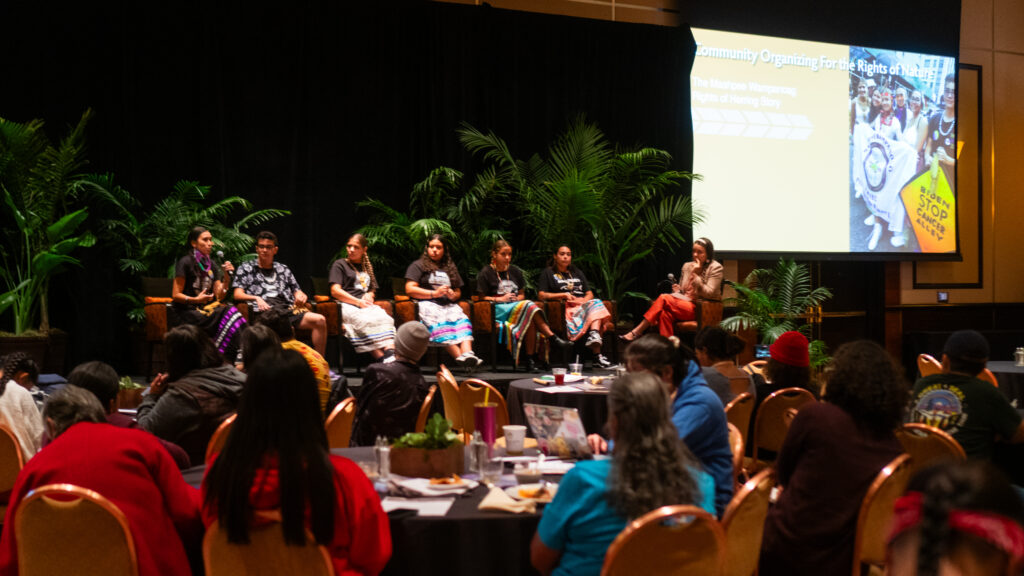
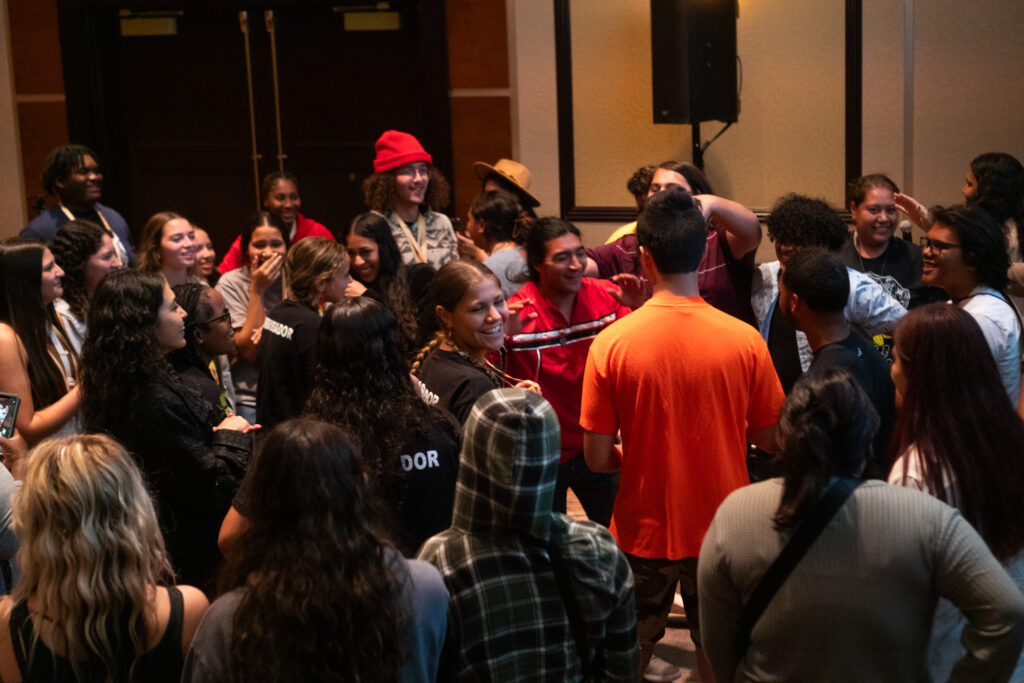
We held our most ambitious Rights of Nature gathering to date on September 21-22, 2023, with the generous support of the San Manuel Band of Mission Indians and hosted at the Agua Caliente Resort and Spa in Rancho Mirage, California. The gathering was attended by over 230 participants, representing 79 Tribes, including 26 California Indian Tribes. Based on our collective value for honoring 7th-generation wisdom, participants ranged in age from elders to youth. Keynote speakers included Tribal leaders from coast to coast as well as legal experts and youth.
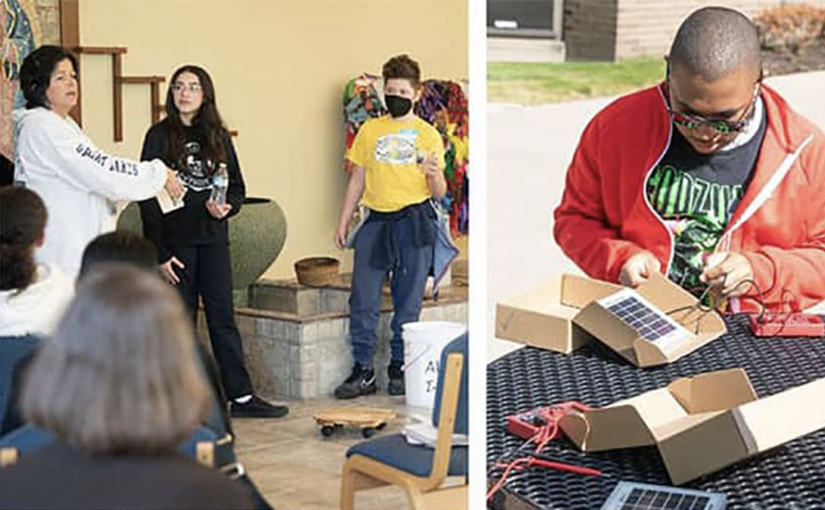
Interactive breakout workshops for community organizers, lawyers/Tribal leaders, and youth offered multiple strategies for bringing Rights of Nature to Tribes.
The Grassroots Community Organizing workshop approached this by recognizing that the greatest social change starts from the ground up. Participants were taken through a series of activities designed to support then in identifying the links between Tribal activism, Traditional Ecological Knowledge, and Rights of Nature. Facilitators then offered a series of adaptable practical steps for organizing a Rights of Nature campaign to suit their communities’ unique cultural, historical, and environmental contexts.
In the Legal/Tribal leader Workshop, participants learned about how Tribal sovereignty plays into a Rights of Nature law, how to take a Rights of Nature case through the court system and win, how to prepare for different legal outcomes of Rights of Nature law, and how to use government programs for Federally Recognized Tribes to protect nature while strengthening Tribal economies. Participants shared specific contexts where Rights of Nature might be implemented in their communities, and facilitators addressed how this can be done.
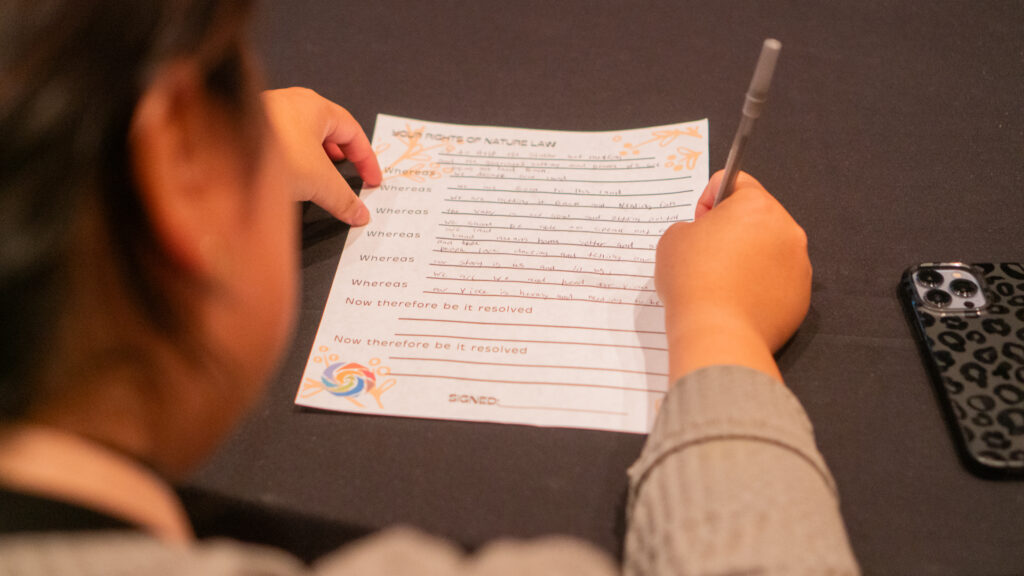
The Tribal Youth Workshop was inspired by the Mashpee Wampanoag youth who successfully petitioned their Tribal Council to adopt the Rights of Herring and Yurok youth working to protect the Klamath River through activism and ceremony. Through a series of hands-on activities, participants gained insights into how Tribal Councils operate, acquired skills to create impactful regulations, and came to understand the process of approval. By the end of the session, youth participants expanded their leadership skills and developed the confidence to cultivate community unity and growth.
After the breakout sessions, participants were treated to a gala dinner reception. The meal was organized by James Beard Award-winning Mashpee Wampanoag chef Sherry Pocknet, serving foods Indigenous to North America. Over dinner, participants discussed reflections and exciting ideas for the future of Rights of Nature in their communities. In true intercultural exchange, the evening ended with performances featuring Bird Singers, Hawaiian songs, and Mashpee Wampanoag intertribal song and dance.
Connecting With the Land
“We are not protecting nature. We are nature protecting itself”
Casey Camp, activist, environmentalist, author, and Hereditary Drumkeeper of the Women’s Scalp Dance Society of the Ponca Nation of Oklahoma.
It is impossible to understand the magnitude of Rights of Nature without being on the land. On the second day of the gathering, participants journeyed to Andreas Canyon. This oasis was once the winter home of Cahuilla Peoples, who cared for this place for thousands of years. It was easy to understand why this place is so sacred to the Cahuilla, with its perennial stream, palms, and rock formations. We saw firsthand how the people connected with the canyon, with its grinding rocks, shady outcrops, and vibrant ecosystem of birds and other animals. We were generously hosted by Bird Singers, who stayed with us all morning, calling forth birds and spirits with their songs. Those who had traveled from afar headed home with a profound experience to reflect upon, and the local California Indian hosts felt the joy of welcoming new friends with the right protocol.
Reflections and Next Steps for the Tribal Rights of Nature Movement
The Rights of Nature movement is on the precipice of growing exponentially across Indian Country. 100% of post-gathering survey respondents said that they would definitely attend another Rights of Nature in Indian Country event. 75% shared that they knew very little to nothing about Rights of Nature before attending. After the gathering, 85% felt that they now knew a lot about the Rights of Nature and how it can be applied to protect Tribal lands and waters. A few of the “aha” moments that participants shared included:
“So many communities are dealing with very similar issues, and we have so many things in common, we have to build communities and build relationships”
“Seeing the reverence that people held for their local land was really powerful as someone from an urban and industrial place.”
“When I realized that it doesn’t take a bunch of people to make a change, it can just be a little group that can make a difference”
Over 90% of participants stated that Rights of Nature could be helpful to protect their Tribal lands and waters, and they would like to share this movement with their Tribes. When asked what they hoped to protect, participants listed a range of things, from bodies of water to sacred sites, keystone species, plants, air, and more. They cited threats from mining to industrialization, always linking back to colonial capitalism’s insatiable need to consume resources resulting in the destruction of natural ecosystems. When asked if they would like Bioneers to host a similar gathering in their communities, more than half of the survey takers responded enthusiastically. They represent every single region in the United States, including Hawaii and Alaska.
Based on this incredible and inspirational feedback, the Bioneers Indigeneity Program, our friends, and allies across the U.S. have our work cut out for us. We will continue to support the Rights of Nature in Tribal governance initiative through regional workshops, but this is not going to be enough (and not fast enough) to meet the demand of this growing movement. Our plan is to develop a robust set of accessible and free training resources for Tribal Leaders, grassroots organizers, and allies to learn how to bring the Rights of Nature to Tribes through a self-guided online course offered through Bioneers Learning, a platform Bioneers developed to provide access to the most cutting-edge strategies to bring about positive social and environmental change. Stay tuned for more!
In the heart of Detroit, a buzzing Bioneers Pollinator Event, the Great Lakes Bioneers Detroit (GLBD) hosted by the University of Detroit Mercy, is preparing to host an inspiring event that promises to ignite passion and drive change. The GLBD conference, now in its 18th year, provides a platform for transformation — a space where communities come together to explore innovative solutions to the pressing environmental and social challenges of our time.
Titled “Revolution from the Heart of Nature: Take Action in Detroit,” the conference is set to be a melting pot of ideas, knowledge, and experiences. People of all ages are invited to participate, connecting, learning, and acting for the betterment of our One Earth Community. The event is not just about discussing problems; it’s about crafting solutions and fostering life-giving relationships.
Youth Empowerment Takes Center Stage
This year, the GLBD conference is expanding its youth programming, recognizing the importance of empowering the next generation. According to Gail Presbey, the Conference committee chair, “This year, it is our 18th annual conference. We have always had a substantial program for youth, but usually just on one day. This year we shifted our conference to two weekdays, Thursday and Friday, so we could have a youth program on each day. Many Detroit-area Middle Schools and High Schools come. Last year we had 230 youth, this year, we hope to have 300.”
Knowledge Sharing and Community Engagement
For adults, the conference offers a full day of enlightening sessions, keynote speeches, and opportunities for networking. In the words of Chelsea Manning, a planning committee member, “It is a wonderful opportunity for our community to learn about the amazing work being done throughout the city and engage in important discussions around sustainability. There will be 5 tours each day, keynote speakers, as well as a variety of youth and adult learnshops offering something for everyone!”
Incorporating the rich cultural heritage of Detroit, the conference opens with traditional songs by local artists like Chantal Gros-Louis and Joe Reilly, honoring the land’s indigenous roots. Keynotes by indigenous leaders Jade Begay and Yuria Celidwen underscore the conference’s commitment to recognizing and respecting Native communities.
A Call for Justice and Sustainability
The GLBD conference is not just about discussion; it’s about action. The event emphasizes the importance of acknowledging historical injustices, particularly concerning Native communities. By opening conversations about the Treaty of Detroit in 1807, GLBD is ensuring that the conference is rooted in justice for Indigenous Peoples. According to Gail Presbey, “We want to ensure that our conference acknowledges that the land that the University is on has been the land of the Three Fires Confederacy, the Ojibwa, Odawa, Potawatomi, and Wyandot nations. We acknowledge that this land was colonized via the Treaty of Detroit in 1807. We are committed to justice for Native communities.”
As the GLBD conference approaches, participants can look forward to engaging discussions, empowering learnshops, and the opportunity to be a part of a community committed to healing the Earth. In the spirit of Bioneers, this event is not just a conference; it’s a call to action, a revolution from the heart of nature, and a transformative journey toward a more sustainable and just world.
Indigenous peoples across the Pacific have a deep knowledge of the ocean and its ecosystems acquired from hundreds of generations of observation. Today, commercial farming, overfishing, resource extraction and global warming are destroying the ocean systems and exacerbating the climate crisis. In this conversation, three leaders with intimate knowledge of the relationships between land and ocean will discuss how to restore balance to the Pacific and to the planet. Moderated by Alexis Bunten, Bioneers Indigeneity Program Co-Director. With: Loa Niumeitolu, Co-Facilitator, Spirit Root Medicine People; Kiana Frank, Assistant Professor in the Pacific Biosciences Research Center, University of Hawai’i, Mānoa; Andrea Kealoha, Oceanographer, University of Hawai’i, Mānoa.
This talk was delivered at the 2023 Bioneers Conference.
Alexis Bunten, Ph.D., (Aleut/Yup’ik), Co-Director of Bioneers’ Indigeneity Program, has been a researcher, media-maker, manager, consultant, and curriculum developer for organizations including the Sealaska Heritage Institute, Alaska Native Heritage Center, and the FrameWorks Institute. She has published widely about Indigenous and environmental issues, and is the author of So, how long have you been Native?: Life as an Alaska Native Tour Guide.
Loa Niumeitolu, a Tongan poet, community organizer and educator with degrees in English and International Development, is a farming teacher and lead farmer at Tennyson High School Farm in Hayward, California. She trained in planting taro and other foods of Moana Nui under Tura Koronui in Atiu, Cook Islands; and worked as a land steward at both Sogorea Te Land Trust and at Gill Tract Farm on Ohlone Territory (the East Bay). Loa also co-founded the LGBTQ+ Indigenous support groups One Love Oceania (OLO) and the Oyate Tupu’anga Project, and currently co-facilitates Spirit Root Medicine People (SRMP).
Kiana Frank, Assistant Professor in the Pacific Biosciences Research Center at the University of Hawaii, Mānoa, weaves contemporary Western techniques with traditional Native Hawaiian science to study how microorganisms shape the land for productivity and health. Her work evaluates overall ecosystem health and informs current monitoring, restoration, cultivation, and management practices in Hawaii. She works to inspire the younger Hawaiian generations to cultivate a connection to science through their culture.
Andrea Kealoha, Ph.D., from Pāʻia, Maui, is an oceanographer at the University of Hawaii Mānoa who specializes in climate change and human impacts to coral reef health. She is the Director of UH Maui College’s water quality lab and will be starting a faculty position at UH Mānoa in Fall 2023. In addition to conducting coral reef research to support marine resource management, Andrea also works with students and the community on water quality monitoring and education to increase diversity in STEM.
We are living in a very exciting time as we witness more instances of successful Indigenous-led #landback campaigns and triumphs over the extraction industry than ever before, but we are also becoming increasingly aware that we cannot restore relations with the land without addressing our own trauma. This session will explore such critical questions as: How might the fight for #landback benefit from the inclusion of Black people and other historically marginalized groups? Does ‘call out culture’ actually harm decolonization movements? In addition to frankly exploring these issues, the panelists will share practical strategies for addressing them using such tools as an intergenerational focus, ceremony, and time on the land. Moderated by Eriel Deranger. With: Jodie Geddes and Carlee Loft.
This talk was delivered at the 2023 Bioneers Conference.
Eriel Tchekwie Deranger (Athabasca Chipewyan First Nation), a leading global figure in Indigenous Rights and Climate Justice activism, is the co-founder and Executive Director of Indigenous Climate Action and is a member of the International Indigenous Peoples Forum on Climate Change. She also sits on a number of boards of notable non-profit organizations (including Bioneers) and activist groups. She has organized divest movements, lobbied government officials, led mass mobilizations against the fossil fuel industry, written extensively for a range of publications and been featured in documentary films (including Elemental).
Jodie Geddes, a Jamaican native who grew up in Brooklyn, NY, is an international speaker on Restorative Justice and racial healing and justice. Currently the Safe Outside the System Program Director at RJOY (Restorative Justice for Oakland Youth) working to provide support for community members experiencing mental wellness and other crises; she is also the Co-Manager for CTTT (Coming to The Table), which provides training and resources for communities and individuals seeking to explore the history and legacy of enslavement. Jodie is also co-author of The Little Book of Racial Healing: Coming to the Table for Truth-Telling, Liberation, and Transformation; and co-hosts the Ma.ternity Leave podcast.
Carlee Kawinehta Loft (Shé:kon sewakwé:on), of Kahnawake/Mohawk ancestry, is the Youth Engagement Coordinator at Kahnawake Collective Impact; the Training Manager for the Muskrat Collective; and co-founder of Iakwatonhontsanónsta’ts—the Kahnawake Youth Environment Collective.
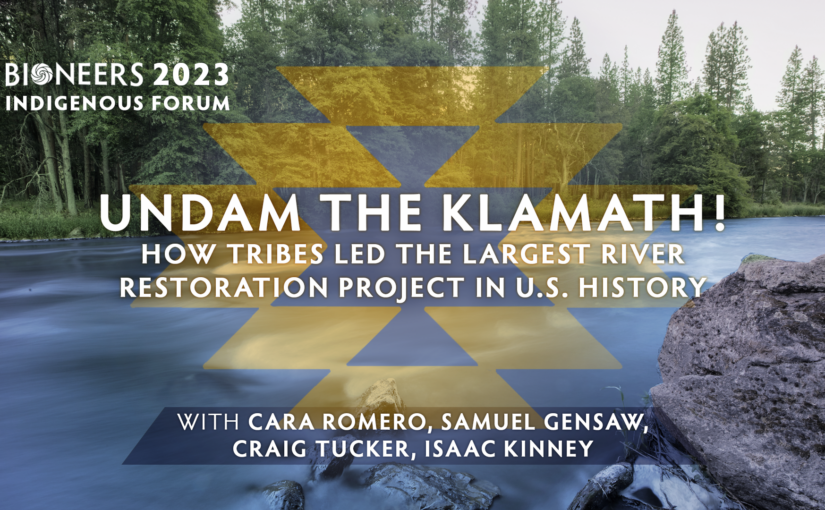
Yurok and Karuk peoples have been fighting for decades to remove dams on the Klamath River that destroyed riparian ecosystems and decimated salmon populations that underscore traditional lifeways. In 2022, the US government finally agreed to remove four dams and engage in the largest river restoration project in US history. Join us to learn the story of this incredible achievement in tribal activism, groundbreaking tribal partnerships with state and federal governments, and culture-based methods for river restoration. Moderated by Cara Romero. With: Samuel Gensaw, Isaac Kinney and Craig Tucker.
This talk was delivered at the 2023 Bioneers Conference.
Cara Romero (Chemehuevi), Program Director of the Bioneers Indigeneity Program, previously served her Mojave-based tribe in several capacities, including as: first Executive Director at the Chemehuevi Cultural Center, a member of the tribal council, and Chair of the Chemehuevi Education Board and Chemeuevi Headstart Policy Council. Cara is also a highly accomplished photographer/artist.
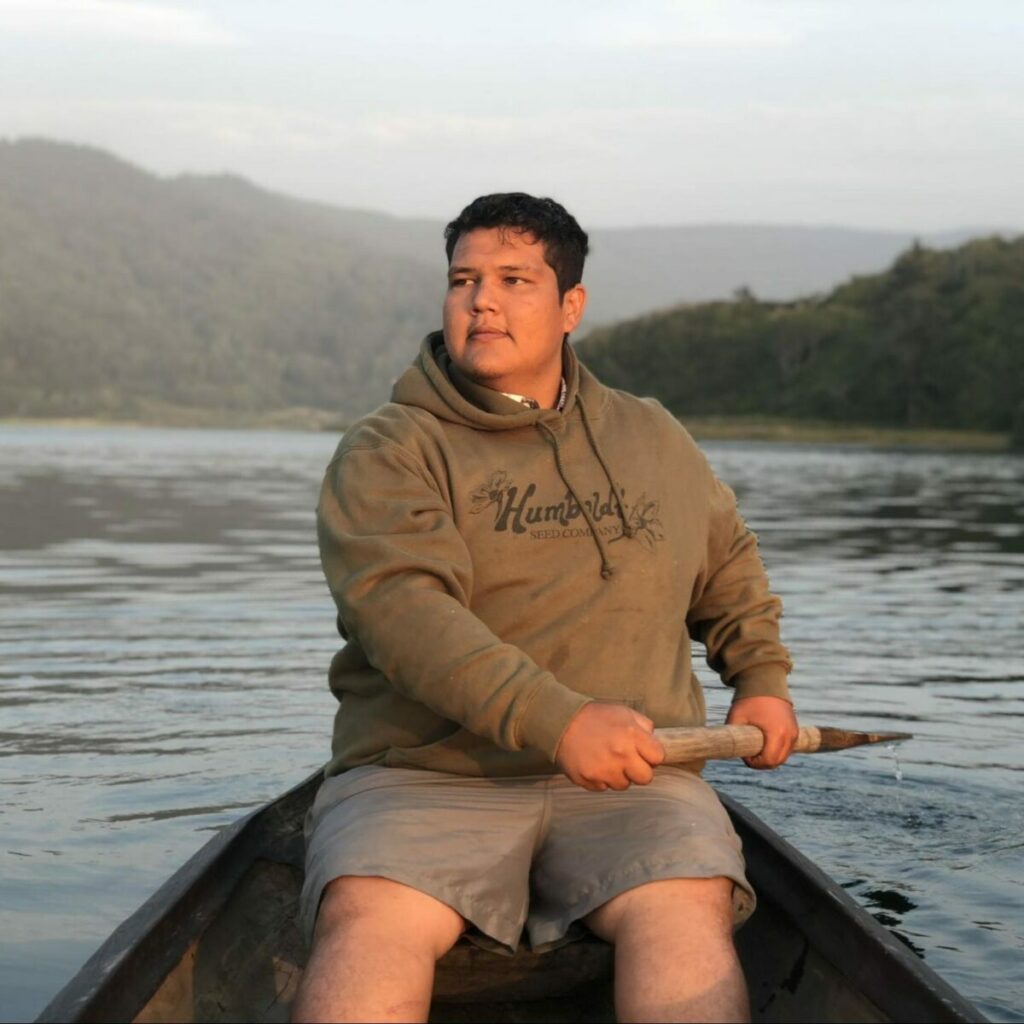
Sammy Gensaw, III, (Yurok) is the Founding Director of the Ancestral Guard, Artist, Yurok Language Speaker, Singer, Writer, Cultural/Political/Environmental Activist, Regalia Maker, Mediator, Youth Leader & Fisherman. Photo Credit: Jake Reed of the Ancestral Guard
Isaac Kinney (Yurok/Chicano) is a Yurok tribal citizen from the village of Weych-pues at the confluence of the Klamath and Trinity Rivers in what is now known as Northwest California. His extensive experience working with Indigenous communities and tribal governments have helped him become effective in his advocacy efforts in working with national and local governments, philanthropists and grass-roots organizations.
S. Craig Tucker, who has 20+ years of advocacy and activism experience, especially working with tribal members, fishermen and farmers in the Klamath Basin on dam removal, traditional fire management, gold mining, and water policy, is the founder and Principal of Suits and Signs Consulting, which provides professional advocacy and campaign planning services to tribes, local governments and non-profits working to protect watersheds and advance social justice.
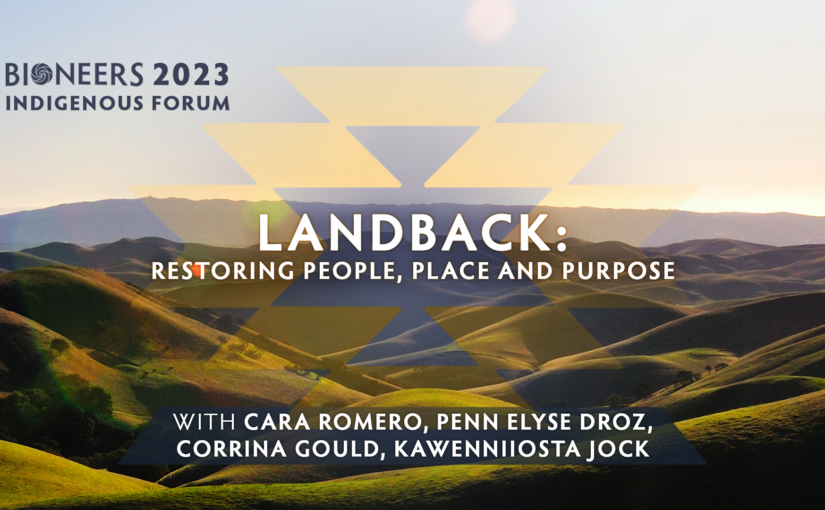
#LandBack has become a rallying cry in Indigenous circles and beyond from coast to coast, but what does #Landback really mean, and how can we be a part of this movement? In this panel, leaders in the #Landback movement will share different approaches to the return and “rematriation” of ancestral territories. For tribal members, the discussion will include organizational, fundraising, and legal strategies. For non-Natives, panelists will share how to be a good ally for #Landback. Moderated by Cara Romero. With: PennElys Droz; Corrina Gould; Tom Little Bear Nason; Kawenniiosta Jock.
This talk was delivered at the 2023 Bioneers Conference.
Cara Romero (Chemehuevi), Program Director of the Bioneers Indigeneity Program, previously served her Mojave-based tribe in several capacities, including as: first Executive Director at the Chemehuevi Cultural Center, a member of the tribal council, and Chair of the Chemehuevi Education Board and Chemeuevi Headstart Policy Council. Cara is also a highly accomplished photographer/artist.
PennElys Droz, Ph.D., of Anishinaabe and European descent, a mother of five, is a Program Officer with NDN Collective (“an Indigenous-led organization dedicated to building Indigenous power through organizing, activism, philanthropy, grantmaking, capacity-building and narrative change”), and a founding board member of Sustainable Nations, an Indigenous regenerative community development organization. She has worked in Indigenous engineering and regenerative development for over twenty years, with the vision of the re-development of ecologically, culturally and economically thriving, sustainable Indigenous Nations.
Corrina Gould (Lisjan Ohlone), born and raised in the village of Huichin (aka Oakland, CA), is the chair and spokesperson for the Confederated Villages of Lisjan and co-founder and Lead Organizer for Indian People Organizing for Change, a small Native-run organization that sponsored annual Shellmound Peace Walks from 2005 to 2009. As a tribal leader, she has continued to fight for the protection of the Shellmounds, uphold her nation’s right to sovereignty, and stand in solidarity with Indigenous relatives to protect sacred waters, mountains, and lands all over the world. Her life’s work has led to the creation of Sogorea Te’ Land Trust, a women-led organization in the Bay Area that seeks to heal and transform legacies of colonization and genocide.
Tom Little Bear Nason, born on his aboriginal homelands in Big Sur, CA, has been the Tribal Chairman of the Esselen Tribe since 1993, helping preserve 1,200 acres of Esselen sacred land, one the first “Land-Back” achievements for a non-federally recognized tribe in California. He has been involved in the preservation of traditional landscapes for 30+years and worked with agencies to remove one the largest dams in California history, effectively preserving salmon and steelhead populations. He continues to work with tribes, state agencies, land trusts and conservation groups to expand tribal land stewardship, and is also a Culture Bearer, Fire Ecologist, and Bear Dance Leader.
Kawenniiosta Jock (Kanien’kehá:ka, Wolf Clan from Akwesasne, Mohawk Nation Territory), President of the Waterfall Unity Alliance, board member of Onkwe Inc., and an alumna of the Akwesasne Freedom School, is an activist, land protector, master seamstress, traditional full-spectrum doula, mushroom hunter and artist. She works on preserving and restoring her people’s language, cultural teachings and ancient knowledge.
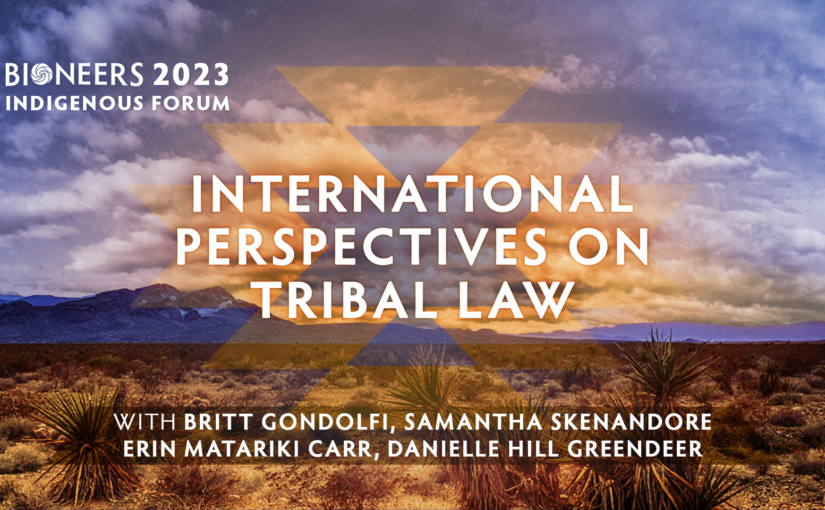
It is not surprising that Indigenous Peoples are leading the way in the “Rights of Nature” movement given that the idea that trees, waters, and ecosystems have a right to flourish reflects Indigenous worldviews. In this panel, we’ll hear from Indigenous leaders whose tribes have adopted Rights of Nature frameworks to protect sacred territories. They will share practical strategies for organizing and implementing Rights of Nature campaigns within international legal frameworks. Join us to learn more about the movement, and how you can be a part of it. Moderated by Brittany Gondolfi. With: Samantha Skenandore; Danielle Greendeer and Erin Matariki Carr.
This talk was delivered at the 2023 Bioneers Conference.
Britt Gondolfi, born and raised in Southeast Louisiana, is a law student, community organizer, future state legislature candidate, and mother. Since 2017, Britt has worked with the Bioneers Intercultural Conversation Program facilitating programming for students from Atlanta and from Bogalusa and Houma, Louisiana. While in Law School, Britt has supported the Bioneers Rights of Nature initiative by researching the intersection of tribal sovereignty and federal Indian law and facilitating workshops on the Rights of Nature at the Ho-Chunk and Mashpee Wampanoag nations.
Samantha Skenandore (Ho-Chunk/Oneida), Attorney/Of-Counsel at Quarles & Brady LLP, has vast knowledge and experience in working on matters involving both federal Indian law and tribal law. Her extensive previous experience includes serving as a Tribal Attorney for the Ho-Chunk Nation Department of Justice and clerking for the U.S. Department of Justice’s Indian Resources Section. She currently advises tribal and corporate clients in tribal governance, governmental affairs, corporate transactions, real estate, labor issues and litigation. Samantha represents clients before members of Congress, congressional committees and agencies through federal lobbying services.
Danielle Hill Greendeer (Mashpee Wampanoag), is a writer, farmer, crafter, dancer and artist who is also a seed-steward of King Philip Corn, a historically Wampanoag heirloom corn variety stolen during the King Philip War but now rematriated back into Wampanoag soil. Danielle also teaches a course on Native Food Systems at the UMass Amherst Stockbridge school of Agriculture.
Erin Matariki Carr, of Ngāi Tūhoe and Ngāti Awa descent, lives in her traditional homelands in Aotearoa/New Zealand and works in law and policy, with a focus on the interface between Indigenous and Western legal systems and methodologies. She previously worked as Manager of Planning & Design to create and implement policies under the world-first legislation conferring legal personhood to the Te Urewera rainforest. Matariki is currently a project lead at RIVER, where she focuses on the constitutional transformation movement in Aotearoa with a number of other teams, including Tūmanako Consultants and Te Kuaka NZA.
Dr. Shane Gero, a visionary marine biologist, is angling to crack the code of sperm whale communication. His mind-bending research is transforming what we thought we knew about these ancient leviathans. It’s calling on us to embrace the reality that perhaps we’ve long suspected: Sperm whales are living meaningful, intelligent and complex lives whose cultures suggest that whales are people too. What can whale culture teach us, and can deep listening help us learn to coexist respectfully in kinship with these guardians of the deep?
Featuring
Shane Gero, Ph.D., is a Canadian whale biologist, Scientist-in-Residence at Ottawa’s Carleton University, and a National Geographic Explorer. He is the founder of The Dominica Sperm Whale Project and the Biology Lead for Project CETI. His science appears in numerous magazines, books, and television; and most recently was the basis for the Emmy Award winning series, Secrets of the Whales. Learn more at shanegero.com.
Credits
Executive Producer: Kenny Ausubel
Written by: Teo Grossman and Kenny Ausubel
Senior Producer and Station Relations: Stephanie Welch
Host and Consulting Producer: Neil Harvey
Program Engineer and Music Supervisor: Emily Harris
This is an episode of the Bioneers: Revolution from the Heart of Nature series. Visit the radio and podcast homepage to find out how to hear the program on your local station and how to subscribe to the podcast.
Subscribe to the Bioneers: Revolution from The Heart of Nature podcast
Transcript
Neil Harvey (Host): In this program, we meet Dr. Shane Gero, a visionary marine biologist who is angling to crack the code of sperm whale communication. His mind-bending research is transforming what we thought we knew about these ancient leviathans. It’s calling on us to embrace the reality that perhaps we’ve long suspected: Sperm whales are living meaningful, intelligent and complex lives whose cultures suggest that whales are people too. What can whale culture teach us, and can deep listening help us learn to coexist respectfully in kinship with these guardians of the deep?
I’m Neil Harvey. This is “Deep Listening: Whale Culture, Interspecies Communication, and Knowing Your Place” with Shane Gero…
Shane Gero(SG): Human cultures have played a huge part of deciding where people live and how they behave across human civilization. As early humans evolved, language served as this cheat sheet for ‘do you do things the same way I do?’ And even today, you’re far more likely to help someone who yells for help in your natal language than in any other. And so culture can be this unifying force, but also, of course, a very divisive one, and it’s structured all of human civilization.
Host: Dr. Shane Gero has spent the past two decades studying whale culture. Listening deeply and seeking to understand their language is a natural place to start. He’s a marine biologist, National Geographic Explorer and Scientist-in-Residence at Carleton University in Ottawa, Canada. He founded and runs the Dominica Sperm Whale project, which since 2005 has been tracking over 20 families of sperm whales in the Caribbean Sea.
Shane Gero spoke at a Bioneers conference.
Shane Gero speaking at Bioneers 2023
SG: And of course, now we know that humans aren’t the only cultural animal out there. Animal culture pervades all facets of their lives. And in this amazing study in chimpanzee communities across Africa, these primatologists documented the different ways, the different solutions that chimpanzees have figured out how to live. But because of the destruction of their habitat, mostly caused by us, chimpanzee communities are very isolated. And so it’s hard to understand if I never meet a stranger, do I need a sense of I am Canadian, if you just know me as Shane.
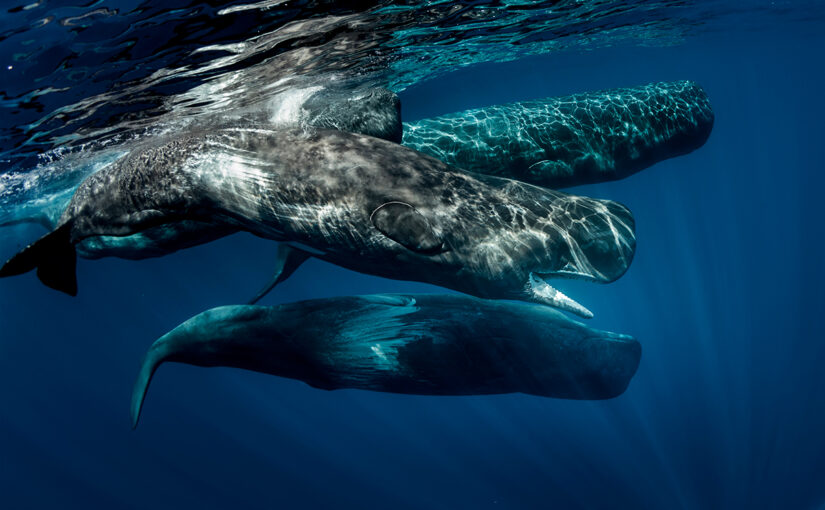
But in the world’s oceans, there’s this one ocean nomad that feels like they live in this boundless blue. And in that giant area, they are succeeding together to build multicultural societies. You see, sperm whales have been sperm whales for longer than us humans have even been walking upright, and so their stories are deeper than our stories.
Host:A prolific scientist, Shane Gero has been dubbed a “family builder.” He splits his life between what he calls his human family in Ottawa and his whale family off the coast of Dominica, the Caribbean island where he has been able to peer into the complex social lives of animals that few other humans have ever even experienced.
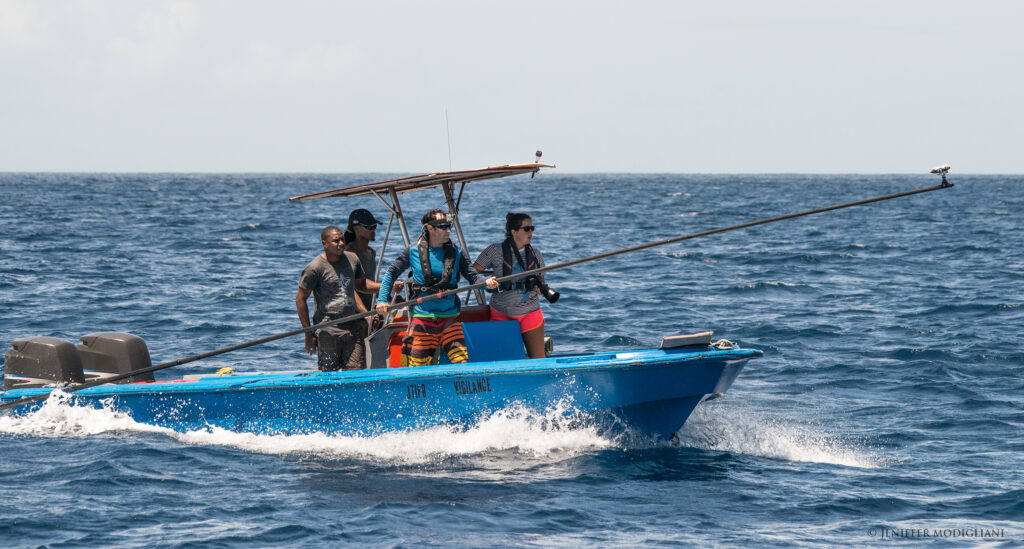
Several miles off the island, the warm Caribbean sun shines down on Shane and his team bobbing in their small boat. In the marine depths far below them, it’s pitch dark. At six hundred feet below, the sun fades away entirely – and that’s just the beginning of a Sperm whale’s journey into the hidden depths.
In their search for food, these immense creatures regularly venture down to 2,000 feet, sometimes as far as 6,000 feet below the surface. They spend 85% of their lives in near total darkness. The humans on the surface rock quietly in their boat, hydrophones in the water, headphones over their ears. They patiently await the familiar pattern of clicks: “one plus one plus three” that tells them the resident families of sperm whales that they’ve been studying for decades are heading to the surface.
SG: Sperm whales are all sperm whales across the globe, but how they’ve learned to live their lives are very different. In the same way that some of us use chopsticks and some of us use forks, these sperm whales differ in what they eat and how they eat, where they roam, how fast they move around, their habitat preferences, their social behavior, and to be honest, probably a myriad of ways that we don’t even understand yet. These cultures are fundamental to their identities.
And they use acoustic markers to label where they belong. And that makes these sperm whale clans the largest culturally defined cooperative groups outside of humanity.
When they talk to each other, they talk in these distinct patterned sequences of clicks with stereotyped rhythms and tempos, and we call those codas. And the norm for conversation is to overlap one another, and to match each other’s calls. And it sounds very exciting, and it has this elegant complexity to what, at least initially, seemed like a very simple system of clicks and pauses. And it sounds like this:
And right now, I’m running this large project with international researchers from around the world, across three different oceans, where we’re mapping the boundaries of these sperm whale clans. Because whales have been traditionally managed based on pretty much arbitrary lines that were defined by the whalers that were killing them.
Photo: Jennifer Modigliani
Host: According to Shane Gero, not only are Sperm whales clearly talking to each other, but it appears their language and dialect change based on where they live. Sound familiar?
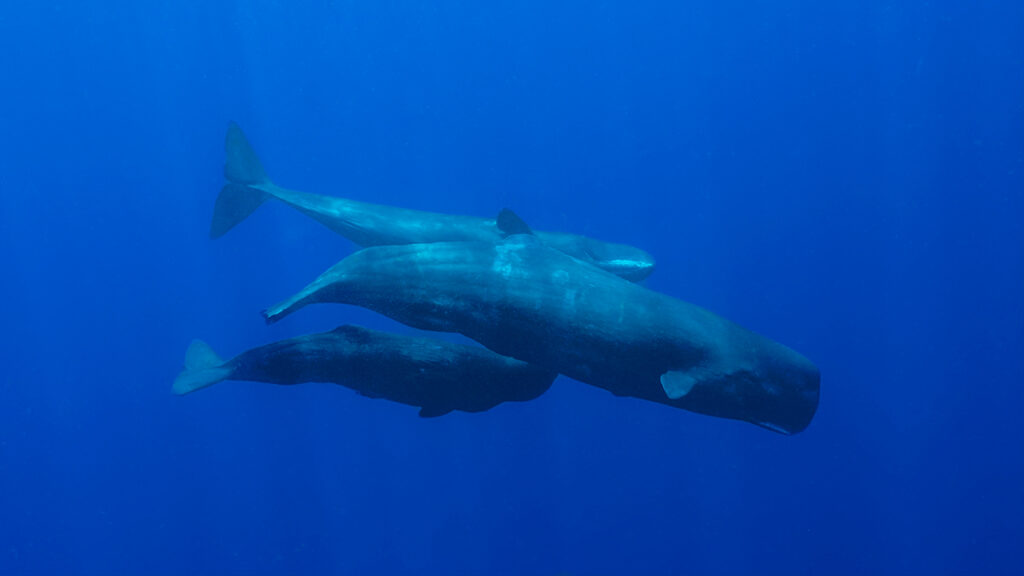
Their behavior, food choices and activities have evolved over generations of place-based learning to support the local whales’ ability to survive and thrive in the places they call home. They live as collections of families – groups of mothers, grandmothers, aunties, sisters, brothers. In other words, clans.
For the whales off the coast of Dominica, the underwater seascape and soundscape, the diversity of life from the surface to the depths – this is deep knowledge gained from transgenerational experience stretching back eons.
SG: When I think about spending half of my life learning from and listening to someone who is fundamentally different than me, I’ve taken away a lot of sort of universal lessons. Lessons like spend time with your siblings because eventually they move away.
One of the novel things that we were able to do with so much time in the company of whale families is follow the lives of the young males as they grow up and leave their families. You see, if you’re a male sperm whale, the first 15 years of your life is spent in this hyper social community of families where you’re born. When you’re a teenager, you sound like your mom, you behave like your mom, and then all of a sudden you start this incredible voyage around the world to live a mostly solitary life until you grow to be the size of about two school buses, and really become Moby Dick. [LAUGHTER]
So there’s this big shift, which isn’t so unlike our late teenage years, where you leave behind your family and go out on your own. But for the families that stay in Dominica, they learn from generations of strong female leaders – grandmothers, mothers, and daughters, who live together for life. And they’ve learned this fundamental truth that both they and we know, which is that family is critical to our survival.
Host: Shane Gero has spent literally thousands of hours in the company of sperm whales doing a deep dive of research to learn how these sophisticated animals live. Because sperm whales spend nearly 85 percent of their lives in the deep sea, learning about them involves extraordinary amounts of time spent listening to their calls, clicks and noises. His team has made leapfrog progress as they seek to understand what the whales may be saying to each other. Shane Gero spoke on a panel at a Bioneers Conference.
SG: I know what I believe they’re saying; I don’t think I know what they’re saying. But it’s pretty clear based on how they interact that they have a need to label each other as individuals, as family groups, and as clans. And that those patterns of differences emerged in such an obvious way. Once we had figured out who spends time with who, the sound overlapped perfectly. And so that explains how they might be able to not only label each other but then broadcast their own identity.
And that’s, like, a bias in how we study the whales. So I call that the dentist office problem, which is if your microphone happens to be in a dentist office and you don’t know what a dentist office is, you’re going to think the word root canal is, like, critically important to English speaking society. [LAUGHTER] Right? But it’s only because you have such a narrow picture of all of the potential contexts and behaviors that humans do when they talk. And that’s where it comes with a scale. It’s either a huge amount of boat time invested in people on the water recording across all these scenarios. Like when two cultures meet at sea, that happens very, very rarely, so the conversation of, oh, you’re not from my clan just hasn’t been recorded that many times. And the same when the males show up, born from the Azores, coming to the Caribbean for the first time, hearing that 1+1+3 click, click, click-click-click, that symbolizes or we think symbolizes the Caribbean, we’re not there necessarily when those interactions happen.
And so scaling up across contexts allows us to get the who and the what we got, but the where and the when so we can answer that why question of what are the important things that whales talk about. And that becomes a domain gap problem. Right? What is the difference between a human experience and a whale experience?
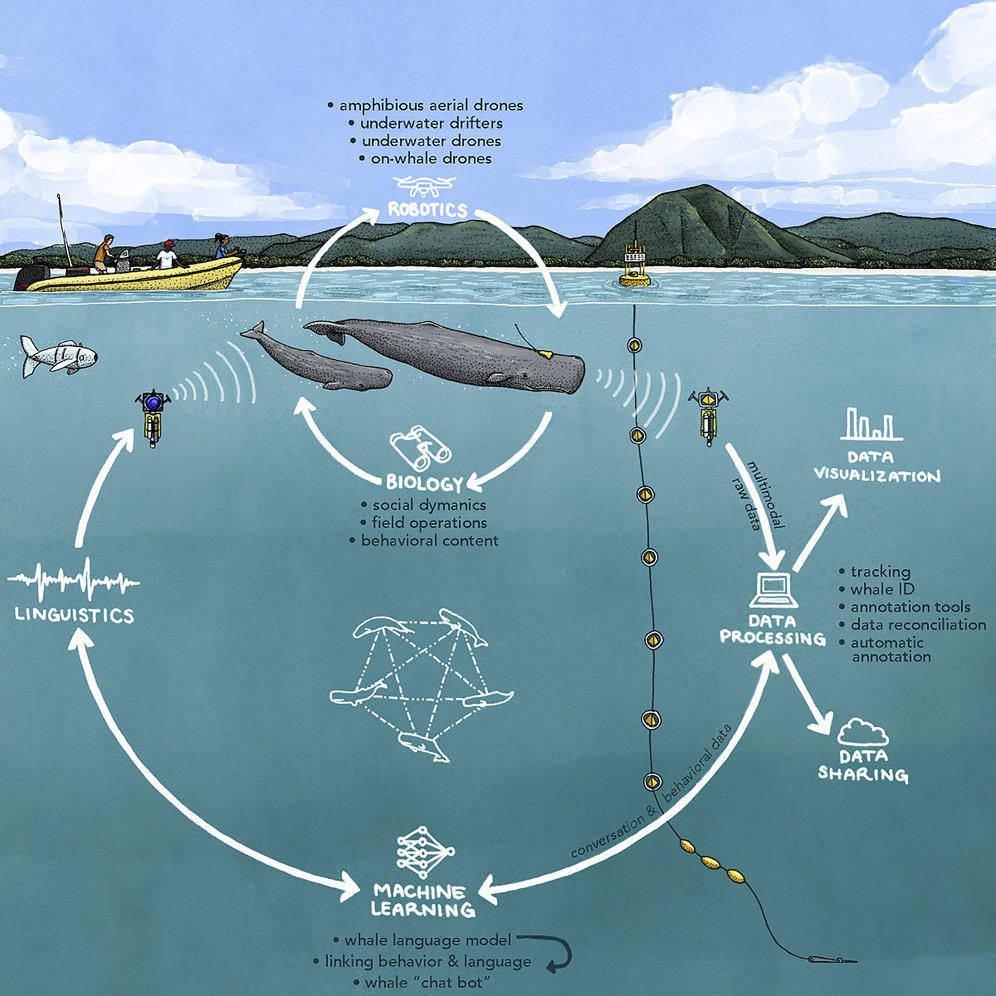
Host: To probe these interspecies mysteries, Shane Gero helped found another truly groundbreaking project. Project CETI – the Cetacean Translation Initiative – it’s an audacious effort to leverage machine learning and gentle robotics to decipher whale communication. The project builds on the tools and technologies that have rapidly transformed human language translation, such as Google Translate.
He’s collected nearly two decades of carefully tagged and coded recordings of sperm whales. It’s a veritable treasure trove of data for an interdisciplinary group of scientists who yearn to bridge the communication gap between human and other-than-human animals.
SG: I think where I find a lot of hope already with the machine learning, just even from providing this 20-year data set to these amazing modelers is that it’s blowing open the encoding space potential. Right? So when someone like myself, who have spent the better part of a number of years just cataloging all of the different calls, we’re doing that on such a basic pattern recognition scheme. Early on, literally by saying, Do you think these calls are the same when looking at them on spectrograms? And what the machines have done, quite rapidly, is open up multiple new dimensions within an individual call, within a click for sperm whales, where there is the potential for variation. So what we used to say was a 1+1+3, there’s now four different types of 1+1+3, and they seem to be used in different contexts.
So it’s not going to be Google translate next week, and there’s all sorts of reasons for that, but what it will do is give the whales a bit more credit in terms of literally defining the complexity of the information that they’re sharing with each other simply because we weren’t paying attention.
Host: As the child of a Canadian diplomat, Shane Gero grew up moving from country to country, repeatedly having to make new friends in new schools. He says he learned to observe group dynamics as a matter of social survival. He paid close attention to how various networks of friends operated.
Fast forward to today. Trained by the legendary whale researcher Hal Whitehead, he’s obsessed with watching groups of whales and figuring out their relationships with each other. Over the course of two decades of his life, he estimates he has spent nearly 5,000 hours directly in the company of these gentle giants. He’s learned not just what they do, but, increasingly, who they are.
Shane Gero recalls the story of one young whale whom he’s known since birth, nicknamed Can Opener after the white hooked shape on her right fluke.
SG: They’re individuals as much as we are, and there are some that are super curious, and especially when they’re young, about pretty much anything. So we can do things objectively and produce results and test hypotheses, but then you’re on the water the day that Can Opener decides to fake a dive.
She figured out the system that we do, which is we would get behind the whales, the whale lifts its immense tail, and we take a picture because their tails are like thumbprints, and then they dive, and then they disappear for 45 minutes. So we move up to the fluke print of where the whale just was, and we do all the sciencey things, like collect poo and record.
And what she did was see something in her environment that was doing something repeated that she could predict, and then she faked dives. And this was something that she did first, and then it kind of went through the whole community where we would come up to the fluke print, and then she would blow out all of her bubbles, and come to the surface. But importantly, she would roll her eye out of the water and look right at the people on the boat. Right?
And that’s where fundamentally the science of ‘can animals predict the future,’ ‘can animals acknowledge living and nonliving things,’ and all these questions that you can’t—I can’t as a biologist speak to, but in my mind, there’s no way that that process of events happens without complex thought and an understanding of living and non-living things.
I’ve invested so many hours trying to learn what they’re doing and who they are that the fact that they would acknowledge that we’re there is pretty substantial to me, personally.
But also just like being sort of allowed to be there, where, you know, we had these two little calves from family Unit D, they’re cousins, but the same age and basically siblings, and they’re playing and slapping each other, and making all sorts of codas, having this conversation, and it was hard not to feel like you were in their bedroom watching them mess around with their cousins, like kids do.
Like I’ve known some of the whales that I work with for longer than I’ve known my kids, which is a ridiculous thing to think about. We just had a male named Allen start to leave his family, and we found him kind of alone playing in the seaweed, you know, like maybe five miles from the rest of where his family was. And they’ve started to sort of ostracize him because he’s supposed to leave now, and he would make codas and no one would answer, and he would make these quasi-mature male sounds called clangs, but they weren’t really very good and no one was interested.
And you just kind of felt really sad for him because he’s switching from living in this super supportive community to basically spending a huge chunk of his life all alone, and it felt like he didn’t want that; like he wasn’t happy about it. And then I went back and found the first picture we have of him from 2008, and he’s like this tiny little sausage with a dorsal fin on it, and that’s—I mean, that’s so powerful to me about how these long-term projects with wildlife have so much more into them than the papers, the scientific publications that come out of them. Spending that much time following the lives of a sperm whale who’s got six years on my eldest son, is kind of like a crazy thing to think about.
I literally call them my other family. People ask me where I’m from, and I say, well, my human family’s in Ottawa, and then people kind of double take at that sentence, but it’s become so second nature to me to say it that way, you know?
Host: When we return, how understanding and honoring animal cultures can further our ability to protect the other-than-human lives of the wondrous web of life with whom we share this precious and watery planet.
I’m Neil Harvey. You’re listening to The Bioneers…
Host: In the 1960s, the acclaimed biologist Dr. Roger Payne led a legendary team of colleagues at the Ocean Alliance to collaborate with a US Navy engineer. They produced an album of songs they recorded from critically endangered Humpback whales.
The transformational experience of hearing these hauntingly beautiful songs galvanized a global movement. The epic Save the Whales campaign became instrumental in the conservation and protection of Humpback whales and ending the mass slaughter of commercial whaling. Shane Gero sees in that story several parallels in his work with sperm whales.
What if we now built a movement for the vital restoration of sperm whales, based on a true understanding of both our kinship and of nature’s intricate interdependence and diversity?
SG: We think there’s somewhere around 350,000 sperm whales left in the world, which is huge compared to some things, you know, like the North Atlantic right whale, where there’s less than a few hundred, and some species of dolphin where there’s like dozens or fewer. Right?
But it means, because they’re so spread out at this global level, it’s really hard to determine if they’re actually on a good trajectory or not, and the error on that is big enough that we don’t want to think about it. And certainly before whaling, we were talking about maybe four or five times as many whales.
And in the Caribbean, it’s quite a small clan, so the cultural group that we work with is called the Eastern Caribbean clan, and then we know of at least two other clans that pass through the Caribbean. But most of our information is about the Eastern Caribbean clan, and we think there’s fewer than about 500, and I think that’s probably being generous. And if you break that down by families that are about 7 to 10 animals, it’s only about 50 families that have this way of life of living in the Eastern Caribbean and identify themselves with that 1+1+3 coda.
Host: These distinct populations have a deep relationship with the specific places they live. Shane Gero suggests that their distinct cultural practices – how they communicate, how they find food, how they keep their offspring alive – are fundamentally different from other populations of Sperm whales living in deep relationship to the many unique other places they call home.
Any formal protection whales currently are afforded by national or international laws and treaties stems from our partial understanding only of the global population as a whole. In truth, it’s a “globalocal” phenomenon.
From a conservation standpoint, it’s imperative that we recognize these unique place-based groups as essential to the health and biodiversity of the entire species. Asking whether cultural diversity or biodiversity matters more is asking the wrong question. The answer is yes, both are true and it’s all connected.
SG: Sperm whales have typically been treated just as sperm whales, but the science increasingly, in sperm whales and in many other species, is that the important population divisions are based on culture, and that the animals are literally self-identifying in the evolutionarily important unit.
We know that genetics can’t capture the diversity that we’re trying to protect, right, which is your grandmother’s grandmother’s secret on how to survive in that space.
We’ve been fighting for a while now just to build this map of where the cultural boundaries are, so we have this empirical map that says this is where the management units are, and there’s so many more; this is where the cultural boundaries are, and we need to act on that now. Because it has been easy to say, well, we just don’t know yet. That’s often the hardest argument for conservation is, well, we don’t really know yet. Well now we know, so what are we going to do about it?
We’re going to do things differently because we listen to and learn from those to whom it matters the most. And we need to do that now, because sadly we’ve been killing whales for hundreds of years, and we do so now mostly out of ignorance rather than intent. We hit them with our ships from the ever-growing shipping fleet that brings us the economy from around the world. We entangle them in our omnipresent leftover fishing gear.
And every calf counts. When you have small families that desperately need females to perpetuate themselves, if they don’t survive, you lose the family. And when we lose a family, we lose generations of traditional knowledge of how to succeed as a Caribbean whale. And that can’t be replaced, even if the global population could swim into the Caribbean again, because these would be different whales from elsewhere who do things differently, who’ve learned from different grandmothers and are missing the solution on how to succeed there.
So these cultures aren’t just animals who’ve learned to do things differently because they never meet. These are really the link between the ocean that they live in and the animals that live there. It’s a bond between where and who.
And that’s why we can’t just do wildlife conservation based on total numbers or genetic stocks. We need to have the definition of biodiversity include cultural diversity. [APPLAUSE] These secrets are the secrets that are allowing these species to survive. They’re the viable solutions to species survival, and we need to model our framework for conservation around that.
If you can take one message from the culture of whales, it’s the power of community, that in the face of these unimaginable obstacles, the solution is to come together, and the last few years have taught us to do the exact opposite.
They’re fundamentally different from you and I, there’s no doubt about it. Right? But we can talk about shared values that we all understand. Learn from your grandmother. Love your siblings. Be a good neighbor. Because if we’re going to preserve life, ours and theirs, we need to find ways to coexist above and below the surface, and value cultural diversity in our society and our ecosystem. Thank you.o your imagination, calls to you like the wild geese, harsh and exciting, over and over again, announcing your place in the family of things.
Host: Dr. Shane Gero… “Deep Listening: Whale Culture, Interspecies Communication, and Knowing Your Place”
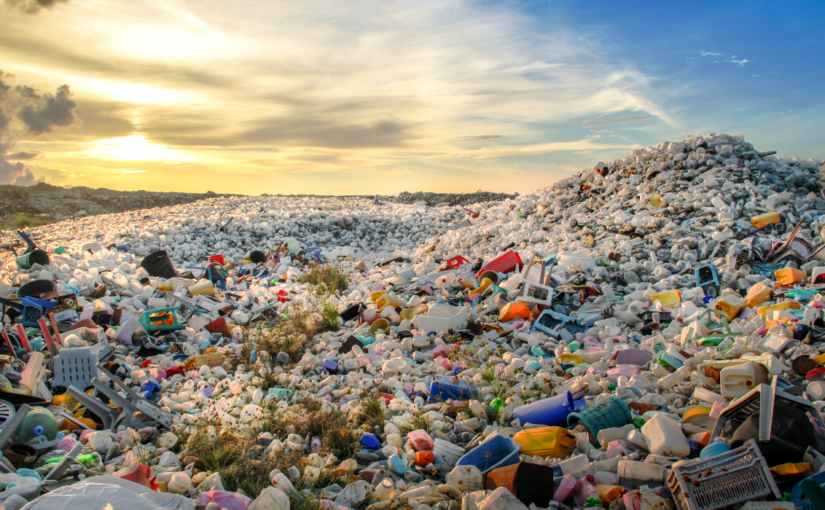
Plastics, once hailed as revolutionary materials for their versatility and durability, have now become a global nightmare poised to persist for hundreds of years. The story of plastic is catastrophic from start to finish, as its creation requires the dangerous extraction of fossil fuels and its disposal results in alarming levels of pollution. Still, the modern global economy continues to rely on plastic, often unhindered by regulations that could halt this process of never-ending waste. Petrochemical feedstocks currently represent 12% of global oil demand, and as climate concerns demand a reduction in oil consumption, fossil fuel companies are pushing to increase plastics production as fast as they can.
The plastics industry would have us believe that the responsibility for solving this problem rests with us, the consumers. We’re told to recycle carefully and avoid plastic straws, while in reality, plastic has become so deeply embedded in our society and the products that keep it running that these so-called “solutions” are laughable at best and a dangerous distraction at worst.
Leaders worldwide are actively working toward real solutions. In this newsletter, we recognize and take cues from their work and ideas.
Want more news like this? Sign up for the Bioneers Pulse to receive the latest news from the Bioneers community straight to your inbox.
From Plastic Mythology to Environmental Reality: Experts Discuss the Crisis
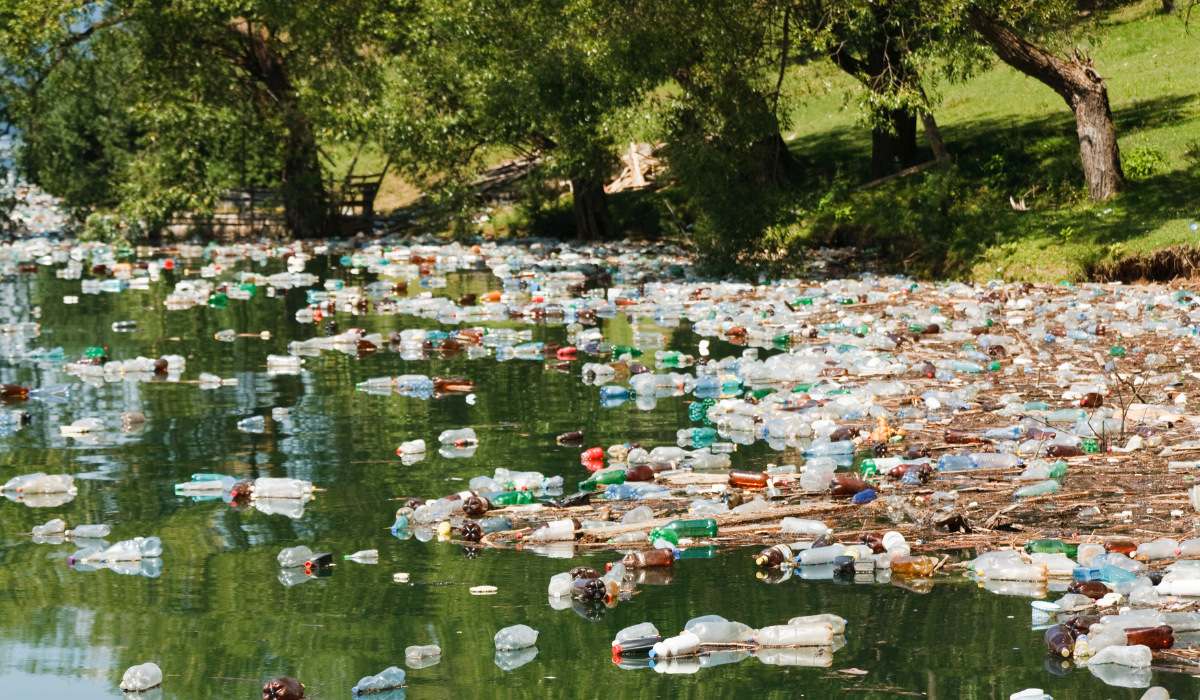
Plastic pollution has evolved into one of the most pressing environmental challenges of our time, infiltrating every corner of our planet, from pristine oceans to remote wilderness. The proliferation of plastic products, coupled with the myth of effective recyclability, has lulled us into complacency, fostering a culture of convenience that has dire consequences for our environment.
In this conversation hosted by The Ecology Center, four plastic pollution experts, Shilpi Chhotray, Yvette Arellano, KT Morelli, and Martin Bourque, talk about their work to expose the harsh realities of plastic pollution and production while debunking industry-driven myths.
Mark your calendars for March 28-30 for Bioneers 2024 in Berkley, California. Planning is well underway for our 35th annual conference, and we’re excited to share our exciting lineup of confirmed speakers with you soon. Sign up for alerts here, and you’ll be the first to hear announcements and know when registration opens.
What You Need To Know About Microplastics and Textiles
We are increasingly surrounded by plastic in our daily lives. It’s the clothing we wear, it’s the containers we eat from, furniture we sit on, and toys our children play with. Plastic has an enormous presence in mass-manufactured textiles, meaning that everything from our clothes to our curtains to our sheets are often petroleum-based. But it doesn’t have to be this way…
Plastic Planet: Stopping Big Oil, Big Plastic, and Big Misdirection
After World War II, the U.S. government worked with industry to create a single-use, disposable consumer culture as a way to ensure ongoing market prosperity. Who benefited? Consumer product companies like Coca-Cola, and the fossil fuel industry, whose petrochemicals are at the source. The result? Plastic pollution is now found in virtually every living organism – including humans – and is one of the worst threats to ocean ecosystems.
In this podcast episode Anna Cummins, Deputy Director and Co-Founder of the Five Gyres Institute, talks about the global resistance movement that is rising to abolish petrochemical plastics and to shift to a zero-waste, circular economy.
The World Is Drowning in Plastic. Here’s How It All Started
“Every year, nearly 18 billion pounds of plastic enter just the oceans — one garbage truck full every minute. Just the amount of microplastics entering the environment is the equivalent of every human on Earth walking up to the sea and tossing in a grocery bag every week.”
In A Poison Like No Other, Matt Simon reveals a whole new dimension to the plastic crisis, one even more disturbing than plastic bottles washing up on shores and grocery bags dumped in landfills.
This toolkit aims to cultivate knowledge and expertise among the community of leaders across the world, empowering them to enact change locally in their communities and countries. This portal provides a complete suite of resources, successful initiative examples, and strategy development options focused on the elimination of our global reliance on disposable packaging and on plastic’s harmful impacts.
Upcoming Bioneers Learning Courses & Community Conversations
Through engaging courses and conversations led by some of the world’s foremost movement leaders, Bioneers Learning and Community Conversations equip engaged citizens and professionals like you with the knowledge, tools, resources and networks to initiate or deepen your engagement, leading to real change in your life and community.
Upcoming Bioneers Learning Courses:
Slowing Down: Cultivating Healing Spaces of Belonging | Starting September 26 | An experiential session featuring mindful and creative practices designed to help us slow down, heal and collectively receive our greatest wisdoms.
The Rights of Nature | Starting October 19 | A full background on the emerging “rights of nature” movement in the United States and internationally and how to develop, adopt, and enforce local rights of nature laws in your own communities.
Honoring Your Emotional Ecosystem | Starting November 14 | A grounded and surprising exploration of the healing genius in your emotional realm.
A Doorway into the Imaginal Expanse | December 6 | Create a home for your intuition, coax the artist within, and make soul commitments enriching our intraceptive landscape.
What We’re Tracking
Former New York City mayor Michael Bloomberg is spending some of his wealth to try to block the construction of petrochemical plants that make fertilizer, plastics, and packaging. | Read More
Plastic pollution has evolved into one of the most pressing environmental challenges of our time, infiltrating every corner of our planet, from pristine oceans to remote wilderness. The proliferation of plastic products, coupled with the myth of effective recyclability, has lulled us into complacency, fostering a culture of convenience that has dire consequences for our environment. As we navigate a world awash with plastic waste, it becomes increasingly critical to shift our focus from industry-spun myths to genuine solutions that address the root causes of this crisis.
For decades, the plastic industry has skillfully perpetuated a narrative that recycling is the panacea for the plastic problem. It offered a comforting illusion, one that allowed us to believe that as long as we placed our plastic waste in the right bin, it would magically reemerge as new products, sparing our environment from harm. Yet, the truth remains elusive to many: a vast majority of plastic, born from fossil fuels, defies the promise of recycling, ending up as pollution in landfills, incinerators, or fragile ecosystems.
How can we collectively dismantle false narratives and underscore the urgency of embracing real solutions that transcend recycling? In a conversation hosted by The Ecology Center, we talked to four plastic pollution experts about their work to expose the harsh realities of plastic pollution and production while debunking industry-driven myths.
The following is an edited transcript of a conversation that took place at the 2023 Bioneers Conference. It features:
Shilpi Chhotray, a plastic pollution activist and co-founder and executive director of People over Plastic
Yvette Arellano, an environmental justice advocate and founder and director of Fenceline Watch
SHILPI CHHOTRAY: I actually had the privilege of speaking at Bioneers in 2018, about five years ago. This morning, as I looked back over these five years of work, I couldn’t help but notice the substantial changes and forward momentum we’ve gained. Even when discussing a topic as challenging as Plastic Pollution, the tremendous grassroots activism worldwide fills me with great hope.
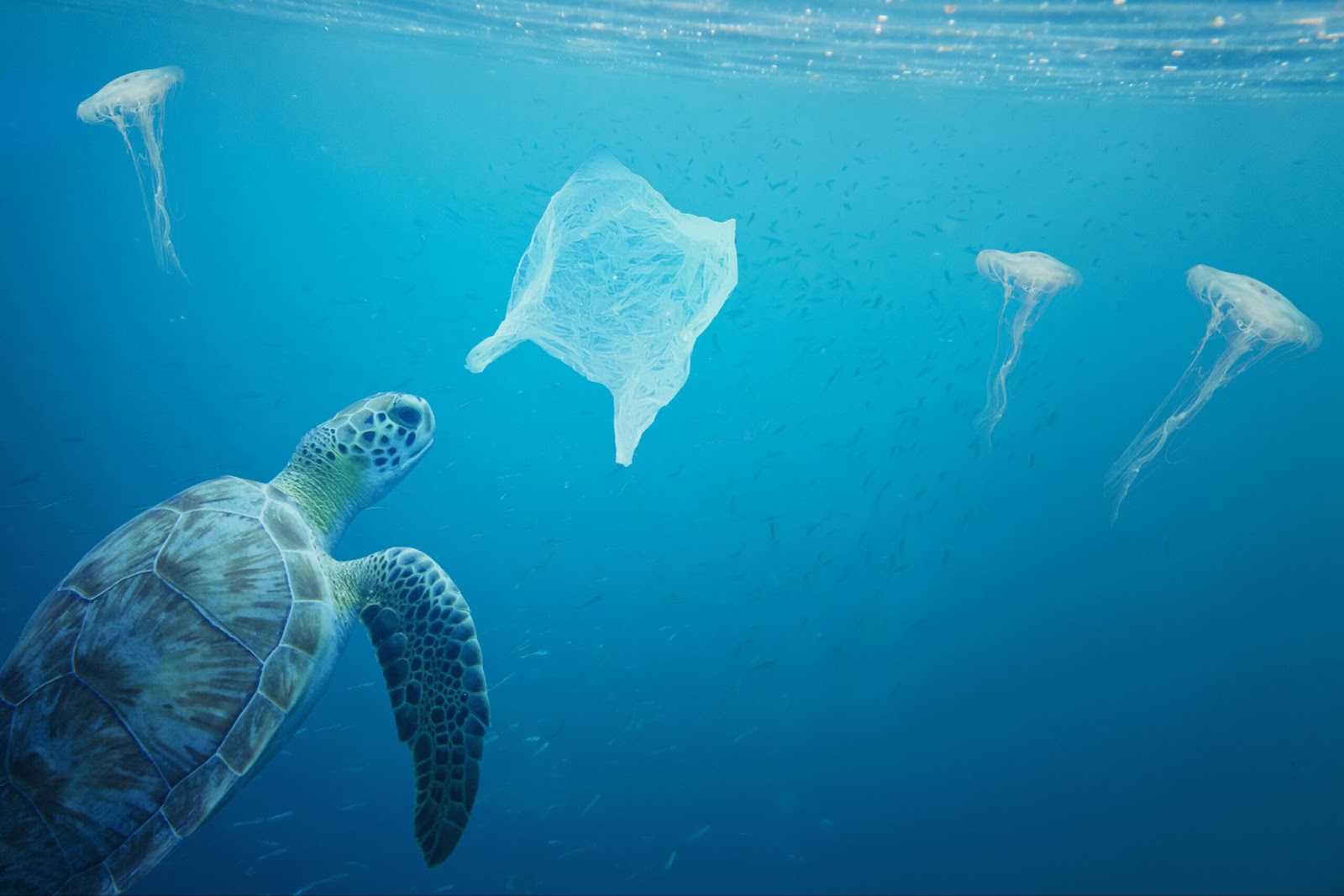
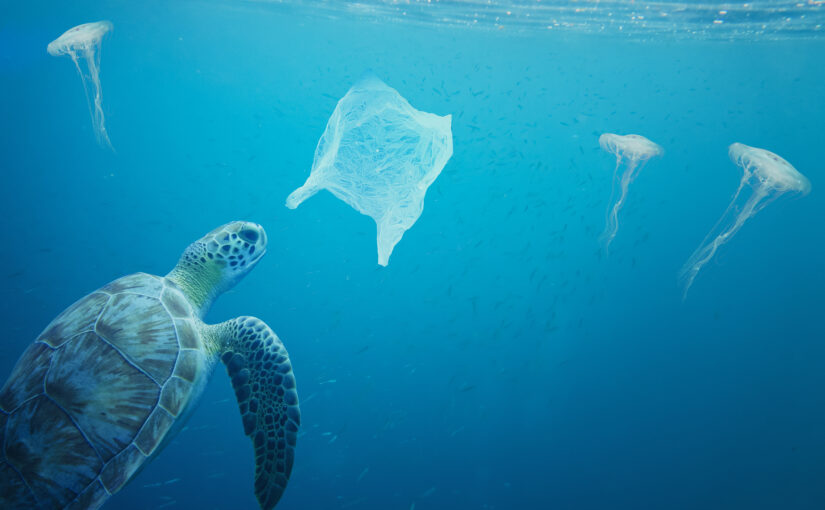
Back in 2018, I was involved in the Break Free from Plastic movement. At that time, the prevailing narrative on plastic pollution was heavily centered on the ocean, with the belief that recycling would be our savior. It was also around this period that the heart-wrenching video of a turtle with a straw up its nose went viral, appearing across social media and nightly news broadcasts. The industry seized this opportunity to reinforce the message that ocean cleanups were the solution and that the blame lay with irresponsible consumers who needed to improve their recycling habits. Yes, they claimed we just needed to put plastic in the correct bin.
Interestingly, the industry was somewhat relieved that the focus had narrowed to one single-use plastic item – the plastic straw – as it diverted attention from the broader range of problematic plastic products and packaging. Concurrently, the Break Free from Plastic movement was gaining significant strength worldwide.
“We’re talking about tracing plastic from extraction and production to consumption and disposal. It’s worth noting that 99% of plastic originates from oil and gas sources, with less than 9% being recycled globally – a figure even lower in the United States.”
Shilpi Chhotray
Our mission went beyond rescuing marine life and organizing beach cleanups. We aimed to connect all aspects of the plastic pollution life cycle, which was no small feat. We were talking about tracing plastic from extraction and production to consumption and disposal. It’s worth noting that 99% of plastic originates from oil and gas sources, with less than 9% being recycled globally – a figure even lower in the United States. Unfortunately, the communities most affected by plastic production and disposal, despite being the ones harmed the earliest and most severely, often receive minimal attention, especially regarding their vulnerability to additional impacts from climate change.
Our esteemed panelists today bring extensive personal experiences and unique expertise in understanding the health effects on communities, as well as community-driven solutions that prioritize equity and justice. I’m thrilled to share this stage with them – Yvette Arellano from Fenceline Watch, KT Morelli from Breathe Free Detroit, and Martin Bourque from Berkeley’s Ecology Center. Together, we’re here to reveal the true stories behind plastic pollution and how leaders within the movement continuously challenge the status quo of the industry. We’ll also discuss how you can actively contribute to tangible change in your community.
Now, let’s dive into the topics we’ll cover today. Yvette, who joins us from Houston, will shed light on the connections between fracking pipelines and petrochemical processes. KT, all the way from Detroit, will provide firsthand insights into the battles against waste incineration, which, for those unfamiliar, involves the burning of plastic – a solution that isn’t truly sustainable. And lastly, Martin will unveil the harsh truths and myths surrounding plastic recycling, particularly in the face of the booming consumer packaging industry.
YVETTE ARELLANO: Good afternoon, everyone. I use they/them pronouns, and I call Houston, Texas, my home. Houston boasts the largest petrochemical complex globally, stretching for approximately 52 miles. My community, including Magnolia Park on Houston’s east end, is situated within the first 16 miles of this massive complex. I work alongside four other port communities to combat the encroachment of fossil fuels into our neighborhoods.
I’d like to start by refraining from showing you the complete Houston Ship Channel because I genuinely believe that what you see today is not our future. It’s crucial to understand that wealth does not equate to a sustainable or prosperous livelihood. If Texas were its own economy, it would rank as the 27th largest globally. Texas produces around 44% of the petrochemicals used in plastic production, not only for the nation but worldwide.
“Plastic production is a significant component of the fossil fuel supply chain, with many fossil fuel companies owning plastic producers, and vice versa.”
Shilpi Chhotray
The ExxonMobil refinery in Baytown, Texas, is the second-largest refinery. Contrary to popular belief, all of Exxon’s facilities coexist on the same site, housing Exxon Chemical, Exxon Oil, Exxon refinery, and soon, Exxon’s hydrogen hub, which I’ll touch on later. Jobs and prosperity don’t necessarily follow in the wake of these industries. Many workers in the sector endure the grueling Dupont schedule – two weeks on, one week off, working 14 to 16 hours a day.
Numerous industry workers grapple with substance abuse to cope with the relentless hours. And the sacrifices made come with severe consequences, as evidenced by the release of toxic substances in our communities. These range from 14,000 pounds of cancer-causing benzene to over 25,000 pounds of ozone-polluting toxins. These are the impacts felt in my community.
With 99% of plastic originating from fossil fuels, the 618 plants lining the Houston Ship Channel are at the heart of global plastic production. Asthma and leukemia rates are alarmingly high in these areas. A Harris County study showed significantly elevated rates along the Houston Ship Channel compared to the rest of the nation, and the same holds true for brain and cervical cancer.
In Texas, the absence of zoning regulations allows schools, nurseries, elementary schools, and communities to coexist adjacent to refineries. These conditions persist in other communities along the Houston Ship Channel as well. In contrast to other communities where children paint murals of their homes and schools, children in our community paint murals depicting nearby petrochemical facilities.
For me, the intersection of these issues lies in language. Spanish is my first language, and I had to learn English. By second grade, I was proficient enough to join English-only classes. Our communities are populated by migrant workers. In fact, a nearby school in Manchester has a 64% English language learner population, meaning English is their second language. Harmful substances like butane and ethane are being permitted at several times their legal limits in Spanish-speaking communities.
Schools throughout the Houston Ship Channel face similar challenges. To address this, we formed Title 6, which received a remarkable 48-hour turnaround from the Department of Justice. This initiative now legally requires the petrochemical industry to translate their permits for air, water, and waste. It represents one more barrier to ensure public participation in the democratic process.
Our objective is to dismantle and transform systems that no longer serve us, allowing these roles to work in our favor, thereby fostering real systemic change.
To conclude, I emphasize the importance of rejecting false solutions. A report from the Principles for Responsible Investment reveals that while people acknowledge the harm caused by plastics, they still struggle to fully grasp the strong connection between plastics, chemicals, natural gas, and oil. It’s crucial to reinforce the idea of plastic as an extractive product rooted in the fossil fuel industry. We must not allow big businesses to escape accountability.
“We can’t solve this problem with the same mindset that led to it. The participation of First Nations people and the most impacted communities is essential.”
KT Morelli
SHILPI: I want to emphasize the crucial connection between plastic and climate change. Plastic production is a significant component of the fossil fuel supply chain, with many fossil fuel companies owning plastic producers, and vice versa. They are deeply intertwined, which underscores the importance of holding industry polluters accountable for the complete life cycle costs of pipelines, petrochemical plants, and plastic production.
For those who are new to this topic, I recommend checking out the Center for International Environmental Law’s “Fueling Plastic” series. While it’s a few years old, it remains an invaluable resource that I personally reference regularly.
Additionally, Yvette’s organization, Fenceline Watch, consistently produces exceptional on-the-ground research on this issue. I encourage you to follow them on social media for the latest updates; we’ll provide a slide with their information shortly.
Now that we’ve discussed the origins of plastic and its impact on human lives, let’s delve deeper into the consumer-facing aspect of this issue, including the realities and misconceptions surrounding recycling. Martin, please take it from here.
MARTINBOURQUE: You know, at the Ecology Center, we have been in this space for a very long time, founded around the first Earth Day. Recycling at the time was considered a radical notion, that we could take things out of the garbage and do something positive with them. Early in the 1970s, the Ecology Center and its supporters initiated the nation’s first curbside collection program. To this day, we continue to work with the City of Berkeley to promote responsible recycling and dispel recycling myths.
The hierarchy has always been reduce, reuse, and then recycle, as your last option. What’s happened is that the packaging industry has moved away from reduce and reuse, solely promoting recycling as the solution for everything from hair loss to erectile dysfunction. This paints an unrealistic picture of plastic recycling as a paradise of rainbows and unicorns.
The reality is much more challenging. The Ecology Center has been combating false narratives in plastic recycling from the beginning. We lost our bottle refill program in the 1980s as the bottling industry shifted from glass to plastic. Today, we fight to improve and maintain the Bottle Bill. We need to return to a model that prioritizes reuse and reduction.
“Focusing on marketing solutions and pushing more plastics into the recycling stream does not address the root problem of overproduction and overuse of plastics.”
Martin Bourque
In order to amplify our voice, we’ve partnered with other early adopters, leaders in their communities, and formed AMBR, the Alliance of Mission-Based Recyclers. Together with the Break Free from Plastic movement, we hold the industry accountable.
The plastics industry has spent millions convincing us that all plastics are recyclable. One of their campaigns, “Collect All Recyclables,” encouraged recycling programs to collect all packaging, even though only number 1 and number 2 bottles and jugs have viable markets. This created a global problem.
We must consider not just can we recycle, but should we? California’s recycling law focuses on diverting waste from landfills, but exporting our plastic scrap to other countries isn’t a solution. We need to prioritize reduce and reuse and consider the health impacts.
The surge in plastic exports coincided with the “collect all plastics” campaign and the growth of single-stream plastic in the US. However, China and amendments to the Basel Convention in 2018 and 2019 reduced this trade. Now, we need to determine where this plastic is going.
We’ve taken local action in Berkeley, focusing on reduction. We passed the Plastic Bag Reduction strategy, initiated a single-use disposable foodware and litter reduction ordinance, and are pushing for reusable alternatives. We must challenge industry myths that claim all plastics are recyclable, that recycling will solve everything, and that innovative technologies can magically fix the problem.
Petrochemical reprocessing of plastic and plastic-to-fuel are not the way forward. The truth is, recycling should be the last option after reduce and reuse. Recycling is generally beneficial, but it has its limits, especially for plastics. Most plastics should not be recycled due to toxicity and environmental issues.
“We must recognize the urgency of stopping their production in the first place.”
KT Morelli
SHILPI: Before we move forward, let’s clarify something for those new to the numbers. Martin discussed the numbers you find under plastic packaging, which are usually 1, 2, 3, 4, 5, 6, or 7. The focus has typically been on recycling 1 and 2, but what about 3 through 7? That’s where the bulk of the issue lies – low-value, single-use plastic packaging that often ends up burned or shipped, rarely disposed of properly.
Additionally, it’s essential to recognize that using reusables is not a radical concept. Communities, especially people of color communities, have been doing this for generations. I recall going to India, where I’m from, and taking aluminum cans and tiffins to the market, getting them weighed, and then heading home. This is a practice deeply rooted in our culture.
Now, shifting gears a bit, we have KT Morelli presenting on the impacts of waste incineration. Both Martin and Yvette touched on this briefly. KT Morelli is the campaign organizer of Breathe Free Detroit, an experienced activist who has lived in the shadow of Detroit’s incinerator for a decade.
KTMORELLI: I come from Detroit, and in 2019, we successfully shut down the largest incinerator in the country, located about a mile from my house. This incinerator had a long history of causing problems for our neighborhood and continues to affect us today.
I will provide some insights into the history, health issues, transitions, and future directions related to our fight against this incinerator.
Our battle spanned 33 years, with people opposing the incinerator’s construction since 1986. Unfortunately, in the 1980s, incineration seemed like a viable option due to landfill space depletion. However, trash, especially plastics, isn’t designed to be burned at the end of its life. Despite being easily combustible, the chemical changes and environmental impacts make burning plastics detrimental to our health and the environment.
In 2019, the Breathe Free Detroit campaign took the lead in the fight to shut down the incinerator, following in the footsteps of many other dedicated activists. When it closed, we learned on the same day that the workers would lose their jobs after 2:00 pm. Incinerator facilities often neglect their employees. Detroit lacks a robust zero-waste system, which could have provided better alternatives for these workers.
When waste is burned, 30% of it becomes toxic ash, often containing microplastics. This ash is typically unregulated and often ends up in landfills. Landfills, if not properly managed, can lead to environmental issues, such as soil contamination and leachate leakage into water systems. Although landfills might be a marginally better option than incineration, a just transition to zero waste is the best solution.
Communities living near incinerators worldwide face health problems stemming from contaminants such as lead, carbon monoxide, sulfur dioxide, dioxins, particulate matter, and nitrous oxides. These communities share common health issues, and the thermal treatment of plastic waste, including incineration, exacerbates these problems.
“It’s crucial to reinforce the idea of plastic as an extractive product rooted in the fossil fuel industry. We must not allow big businesses to escape accountability.”
Yvette Arellano
Recent studies by GAIA reveal a substantial presence of microplastics in incinerator ash, which ultimately enters our waterways. Even though our incinerator shut down in 2019, the lifelong health effects persist. Our community, plagued by respiratory and heart issues from living near an incinerator for generations, faced severe impacts during the COVID-19 pandemic, with 22 neighborhood members succumbing to the virus due to pre-existing health conditions caused by incinerator pollution.
Incinerators require waste as fuel, diverting recyclables and compostables away from more sustainable solutions. When money and effort are directed toward incinerators, opportunities to establish effective zero-waste systems are missed.
Community-led policies are crucial in the fight against the fossil fuel industry and plastics. Environmental justice communities are at the forefront of creating climate justice solutions. We implement these solutions out of necessity and possess valuable knowledge on how to combat the problem and protect our communities. It’s imperative to have our voices at the table to drive these changes.
I’d like to highlight the Environmental Justice Delegation, a group of EJ advocates representing communities directly affected by the entire life cycle of plastic pollution. We recently participated in the first international negotiating committee for a global plastics treaty held in Uruguay. We demand justice for human rights violations, climate damage, and biodiversity loss caused by plastic pollution.
We can’t solve this problem with the same mindset that led to it. The participation of First Nations people and the most impacted communities is essential. A legally binding global agreement is a rare opportunity to address the multi-generational harm caused by the plastic pollution crisis, affecting human rights, climate, and biodiversity.
“The plastics industry has spent millions convincing us that all plastics are recyclable.”
Martin Bourque
SHILPI: Now, let’s discuss what you should be cautious about because there are numerous false solutions circulating. As Martin hinted at earlier, to provide some context, the plastics industry has invested millions of dollars since the ’80s in PR campaigns, media sound bites, and nightly news clips asserting that plastic can and should be recycled. We’ve all seen that infamous “crying Indian” commercial, which had its own set of issues, including the fact that the person wasn’t even Native American.
Regrettably, this issue is at risk of becoming increasingly politicized as we connect it to other movements, such as climate, labor, and food justice. So I’d like to delve into this topic with the three of you, exploring what false solutions we’re encountering and what our audience should be wary of. Additionally, how can they actively engage in advocating for real solutions?
MARTIN: I’d like to begin by pointing out that the plastics industry, packaging companies, and major consumer brands are currently facing immense pressure from the global movement against plastic pollution. However, they tend to view this challenge as a marketing issue, a matter of consumer loyalty, and a problem with their brand image. Consequently, their proposed solutions often revolve around marketing tactics. Many of these solutions include introducing new terminology and planting ideas about chemical recycling and advanced recycling as the miraculous solutions to the problem. They often advocate for recycling more and advise against ceasing production or consumption of plastic.
One of the major concerns within the recycling industry is the potential flood of new types of plastic packaging being encouraged to go into the recycling bin, even though they should not be produced in the first place and are better suited for landfills. For instance, plastic pouches have become increasingly popular for everything from soup to nuts, often equipped with zip locks. These pouches are not recyclable due to their multi-material composition. However, companies like Dow Chemical have introduced 100% polypropylene pouches and claim they are recyclable. In practice, these pouches often end up mixed with paper in recycling bins. When these paper bales are exported to paper mills, especially in countries like Indonesia, the plastic is separated out, as you saw in the video. This false narrative could lead to a significant increase in the types of plastic being placed in recycling bins, creating challenges for environmentally responsible disposal methods.
The critical issue here is that focusing on marketing solutions and pushing more plastics into the recycling stream does not address the root problem of overproduction and overuse of plastics. We must remain vigilant and discerning consumers to avoid falling for these marketing-driven false solutions.
“The carbon capture initiative, which involves massive fans to capture carbon, isn’t a viable solution.”
Yvette Arellano
YVETTE: I want to highlight that for quite some time, many people haven’t been aware that the fracking industry employs plastics extensively. They utilize a thick, gooey substance, almost like sludge, and inject it into the ground. This substance is reactive and aids in determining whether the borehole is proceeding in the right direction. Plastic is already being used in various ways that most of us aren’t even aware of to support extraction processes.
Adding to this, we must also be vigilant about future false solutions that involve not only the continued production of plastics but its expansion, as exemplified in Corpus Christi with the largest ethylene plant partially funded by SABIC Aramco. This expansion is exacerbating another existential crisis—the water crisis.
Across the nation, desalination plants are sprouting up along the coastlines, posing dangers. Not only do they hyper-salinate waters, causing harm to ecosystems, but the filters used in these plants are predominantly plastic.
Furthermore, we should be concerned about the convergence of hydrogen hubs, carbon capture and sequestration, and nuclear energy. These elements are rapidly emerging under the guise of clean energy markets, and they are infiltrating the plastics market for various purposes, such as creating membranes for hydrogen storage. This, however, prolongs the problem.
The carbon capture initiative, which involves massive fans to capture carbon, isn’t a viable solution. And the coupling of offshore hydrogen plants with desalination facilities powered by wind turbines raises questions about what truly constitutes clean energy. We need to inquire about what’s being decommissioned and the feedstocks for these new energy sources. It’s essential that we begin reducing our reliance on dirty energy sources, including plastics.
“We need to inquire about what’s being decommissioned and the feedstocks for these new energy sources. It’s essential that we begin reducing our reliance on dirty energy sources, including plastics.”
Yvette Arellano
KT: I’d like to add to this discussion since I work in the waste management field. Every day, I’m surrounded by objects, and I constantly wonder about their ultimate destination. Unfortunately, there’s no favorable outcome for plastics. When you encounter a park bench made from thousands of recycled water bottles, it may seem like a positive recycling effort. However, as that bench deteriorates due to factors like teenage vandalism or exposure to the elements, it simply releases more microplastics into our environment. The same goes for items like work vests made from recycled bottles—when washed, they shed microplastics into our water systems.
The key takeaway here is that there is no environmentally friendly destination for plastics. We must recognize the urgency of stopping their production in the first place.
This article was originally published by Fibershed.
We are increasingly surrounded by plastic in our daily lives. It’s the clothing we wear, it’s the containers we eat from, furniture we sit on, and toys our children play with. Plastic has an enormous presence in mass-manufactured textiles, meaning that everything from our clothes to our curtains to our sheets are often petroleum-based. But it doesn’t have to be this way…
And it hasn’t always been this way. Plastic production has increased exponentially over the past several decades. In 1990, 1.74 billion tonnes of plastic was produced globally. That number jumped to 3.39 billion tonnes in the year 2000, and in 2015, global production of plastic reached 7.82 billion tonnes. Production of polyester, a plastic-based synthetic textile, has also skyrocketed, increasing by nearly 900% between 1980 and 2014.
Most of us are at least somewhat aware of plastic’s outsized negative impact on our planet, ecosystems, and health. Plastic is a product of the petroleum industry—which is responsible for enormous environmental harm—and up to 10% of humanity’s oil supply goes toward making plastic each year. Once manufactured, plastic continues to be hazardous both because of its longevity and the way it breaks down. A plastic bag can take up to 1,000 years to decompose in a landfill, and as most of the plastic we produce is single-use, our plastic addiction is literally piling up all over the planet. All plastic that has ever been manufactured (unless toxically incinerated), is still present within our Earth’s biosphere and ocean.
Petroleum-based plastic is dirty and extractive from start to finish. One major concern lies in the proliferation of microplastics, which are plastic pieces smaller than 5 millimeters but often microscopic. While many people are aware that microplastics can result from the breakdown of larger plastic (macroplastics) and from tiny plastic spheres used in manufacturing and personal care products, most people don’t realize that a majority of microplastic pollution is fiber, primarily derived from clothing and textiles. These small plastic particles travel through our air, soil, and waterways.
Why are microplastics in our environment such a huge problem? First, they’re easily ingestible by many organisms thanks to their small size, and ingestion of the chemicals in microplastics can lead to serious health problems. Microfibers are also capable of absorbing additional harmful pollutants. Because some of the smallest members of our food chain ingest these toxic chemicals, and because microplastics are floating in the air around us, avoiding the effects of microplastic pollution is extremely difficult.
A primary source of microplastic pollution is synthetic fibers, produced and promoted by the apparel and textile industry.
Microplastics and the Textile Industry
Plastic in textiles takes the form of synthetic fibers—most often, polyester. The majority of textiles manufactured today make use of synthetic fibers, and if we continue with the current economic and regulatory incentives, these fibers will be even more prevalent in the future. That increased reliance upon petroleum is a major environmental concern, in addition to the contribution of synthetic textiles to worldwide microplastic and microfiber pollution.
Textiles made from plastic fibers are responsible for microplastic fiber shedding at every stage of their lives: when they’re worn, when they’re washed, and when they’re disposed of. These microplastics enter the air we breathe, the water we drink, and the food we eat. They’ve been found in some of the deepest depths of the ocean, in the placentas of unborn babies, in Arctic snow and Antarctic ice, and in our rainwater.
A study of microplastic pollution around the North Pole recently found that more than 73% of microfiber pollution can be traced back to polyester fibers that resembled PET from textiles.*
*PET (polyethylene terephthalate) is the chemical name for polyester, a clear, strong plastic used in food and beverage packaging and synthetic fibers.
The popularity of synthetic fabrics has made this concern even more pervasive. Yet, we often see synthetic fiber and textiles underemphasized when it comes to conversations about the systematic shifts required in the clothing industry to start truly addressing the microplastic pollution crisis.
However, there is a growing movement of individuals recognizing the threat of microplastics and more specifically, evaluating individual consumer choices in order to combat this challenge. Synthetic fibers and textiles are one of the main sources of microplastic pollution, making the choice an easy one.
How We Can Solve the Microplastics Problem
While some brands and organizations are celebrating innovations said to reduce microplastic pollution, many of these ideas are merely Band-Aid fixes that don’t address the full scale of the issue. Laundry filtration can address only a fraction of the microplastic emissions generated by clothing. Textiles manufactured from recycled plastic, such as recycled polyester, are no better from a microplastics perspective. In fact, these textiles actually increase the prevalence of environmental microplastics, as recycled polyester has been shown to emit more microplastics than new polyester.
Reducing or eliminating our overreliance on synthetic textiles and reducing our textile consumption and waste overall, while strengthening infrastructure and support for healthy natural fiber textile systems, is the best method for a holistic solution. Textile producers and consumers must prioritize the use of natural fibers. Not only do natural fiber systems not release microplastics into the environment, they require less washing, and, with the proper support, they also can address key issues including biodiversity enhancement, climate stability, and right livelihoods.
Consumers have enormous power in this movement. By choosing 100% natural fibers such as wool, alpaca, cotton, and hemp, and avoiding plastic-based synthetic fibers such as polyester, nylon, and acrylic, shoppers can vote for a cleaner environment with their pocketbooks. Seeking untreated fibers and natural dyes (while not easy to do given current market choices), is also a critical element when it comes to protecting our oceans, biosphere, and health.
We know that natural fiber systems need significant investment to become truly land regenerating and non-toxic. Natural fibers, dyes, and cleaner chemistries have had to compete with fossil carbon based plastics industries. Fast fashion and performance-based textile industries continue to drive the use of inexpensive plastics within our clothing. The continued push to compete with synthetic fibers has driven natural fiber agricultural systems to either disappear or follow suit and maximize earnings while externalizing costs. The only way to secure investments in natural fiber and dye systems that can regenerate land is to support their existence and develop incentives that strengthen the infrastructure that delivers them to the marketplace.
Critically, big players in the textile industry must be held accountable. State and federal policies supporting reductions in synthetic textile production and consumption, taxes on virgin plastic manufacturing, incentives for natural fiber and textile producers, and holding textile producers and manufacturers accountable for costs of management and end-of-life treatment for their products are all potential steps in the right direction.
Finally, everybody who is concerned about microplastic pollution can push this movement forward by talking about it; talk to friends, post on social media, and ask questions of your local leaders. Even brief but targeted comments to policymakers will have a large impact.
This article originally appeared on Inside Climate News, a nonprofit, independent news organization that covers climate, energy and the environment. It is republished with permission. Sign up for their newsletter here.
By Katie Surma
After 50 years of expanding oil operations in its Amazonian region, Ecuador will close the door on crude extraction in three oil fields that are home to Indigenous communities, including one of the country’s uncontacted groups.
The reversal in policy for the oil-exporting nation was sealed when 59 percent of voters chose in an Aug. 20 nationwide referendum to shut down operations inside the Ishpingo, Tambococha and Tiputini oil fields located inside Yasuní National Park. The government will have 365 working days to comply with the referendum, which includes a requirement for environmental remediation.
The so-called ITT fields, located inside Ecuador’s Oil Block 43, contain a fraction of the hundreds of oil wells that will remain in operation throughout Yasuní and the greater Ecuadorian Amazon region. The ITT fields produce about 54,800 barrels of oil per day; for reference, the United States, which is the biggest buyer of Ecuadorian crude, consumes over 20 million barrels of oil per day.
Ecuadorian President Guillermo Lasso and the state-run oil company Petroecuador released statements saying Ecuador would comply with the results after the minister of energy and mines initially said Ecuador would continue with oil production in the ITT fields despite the outcome of the referendum. In the runup to the election, Petroecuador and pro-oil industry groups argued that stopping production in the ITT fields would cost Ecuador nearly $14 billion, imperil economic growth and cause job loss. The Orellana province where the ITT fields are located was one of only two provinces in the nation that voted “no” to the referendum.
The vote to halt and dismantle production in the ITT fields was widely acclaimed by environmentalists as a victory for the climate and nature. Yasuní National Park is one of the most biologically rich places on the planet and keeping the remaining ITT oil in the ground has been estimated to prevent a total of 410 million metric tons of planet-warming gas from being released.
Yasuní’s rainforest is home to endemic species unique to that area as well as endangered and threatened species like the jaguar, pink dolphins and giant otter. Oil operations in the park have been ongoing for decades and are responsible for large-scale deforestation and over 1,500 oil spills, among other ecological injuries.
The outcome of last week’s referendum holds even greater implications for local Indigenous communities whose families have inhabited the region for over 12,000 years.
Members of one grassroots community, the Baihuaeri of Bameno, announced on Monday that they have convened meetings with neighboring groups to collectively defend other parts of Yasuní which remain under threat from encroaching oil operations. The Baihuaeri are an autonomous clan of Indigenous Waorani peoples whose ancestral territory includes the southern part of the ITT fields.
Their message, released on Monday, thanked Ecuadorians who voted “yes to Yasuní” and said that the Baihuaeri are worried about expanding operations in at least six other oil blocks (numbers 66, 55, 14, 17, 16 and 31) that affect them and other Waorani peoples, including other recently contacted communities and three uncontacted groups. Uncontacted Indigenous peoples are also referred to by the technical term “Indigenous peoples living in voluntary isolation.” It is unclear why the referendum, which was pursued by the Ecuadorian nonprofit group YASunidos in 2013, did not include oil fields inside oil blocks beyond Block 43.
The Baihuaeri are spearheading efforts to bring affected communities together to agree on clear boundaries to stop the expansion of oil operations throughout Yasuní and demand that the government stop sending oil companies into their territories and recognize their land rights.
Ecuador’s constitution and international treaties affirm Indigenous peoples’ rights to their ancestral lands as well as the right to be consulted about activities that could affect them. In Ecuador, however, those rights have often been in tension with other laws allowing extractive activities to go forward if they are in the “national interest.”
“We have heard pretty words from governments and world leaders about the need to stop destroying the Amazon Rainforest to mitigate climate change. We want those words to be a reality,” the Baihuaeri wrote.
Penti Baihua, a traditional Baihuaeri leader, said his Bameno community wants to form alliances with neighboring Waorani communities in order to protect the greatest amount of forest possible. He has been organizing gatherings with other community leaders to discuss the situation of the uncontacted peoples in Yasuní, the encroaching oil companies and their visions for the future.
Penti Baihua, a traditional Baihuaeri leader, and his uncle, Kemperi, of the Baihuaeri community of Bameno. Kemperi, one of the last jaguar shamans, passed away in March 2023. Credit: photo courtesy of the Ome Yasuni organization and Javier Awa Baihua.
“We need to set clear boundaries to stop the expansion of oil activities in order to protect our living forest for our children and grandchildren, respect the families who live in isolation, avoid conflicts, and allow everyone to live in peace and tranquility,” the Baihuaeri statement said.
Reaching a universal agreement will have obstacles. Unlike some other Indigenous groups, Waorani peoples do not identify as one nation with a single leader. Rather, they historically have been self-governed at the family and community level.
Prior to the Aug. 20 referendum, at least one Waorani community opposed cessation of oil operations inside the ITT fields, citing the education, healthcare and other services the oil companies provide to their Kawymeno community.
It is unclear whether Petroecuador will continue to fund those services now that operations in the ITT fields will shut down. Typically, governments are responsible for providing those types of public services to citizens.
The Baihuaeri, in their statement, included a message to communities that believe there will be no jobs, education or healthcare without oil operations.
“The oil companies always contaminate, make noise and damage the forest. The animals need a large forest in order to live and reproduce,” the Baihuaeri wrote. “It is important to remember what our grandfathers and grandmothers taught us, and to think about how future generations will live.”
The statement also spotlighted the plight of Ecuador’s three uncontacted Waorani family groups.
One of those groups, the Dugakeri, have been relatively insulated from outsiders’ intrusions into their territory due to the remoteness of where they live. But the group is known to migrate through Oil Block 43, which houses the ITT blocks, and neighboring Oil Block 31. The Baihuaeri said they fear that if new oil operations continue to expand in those areas, the Dugakeri’s future would be afflicted with displacement and violence, much like the two other uncontacted groups, the Tagaeri and Taromenane, are now.
Oil operations and colonization have heavily impacted and displaced the Tagaeri and Taromenane, who in response have violently defended their territory and isolated status by spearing any outsiders entering their lands.
The Tagaeri and Taromenane have also been the victims of deadly attacks, including three mass murder events in 2003, 2006 and 2013. The Baihuaeri warned that if oil operations continue to advance, the violence involving the Tagaeri and Taromenane will increase.
The Dugakeri, Tagaeri and Taromenane are widely considered to be the last remaining uncontacted Waorani groups in Ecuador. All Waorani peoples had lived isolated in the Ecuadorian Amazon region until 1958 when American missionaries with the Summer Institute of Linguistics began the first wave of a campaign called “Operation Auca,” aimed at contacting and evangelizing Waorani people. The term Auca is a pejorative term meaning “savages.”
The second wave of that campaign took off in the 1970s when the American oil company Texaco encouraged the missionaries to accelerate and expand their operations into areas where the company wanted to operate. The aim was to clear Waorani people from their land so drilling could move forward. In her landmark 1991 book “Amazon Crude” and later writings, Judith Kimerling cataloged this history, including statements by U.S. missionaries who recounted how Texaco gave the missionaries use of company helicopters.
In the book “The ‘Inside’ Auca Story,” missionary Catherine Peeke is quoted speaking about the alliance between oil companies and the missionaries. At one point in the book, Peeke describes the missionaries’ use of Texaco’s helicopters, which she refers to as “this thing”:
This thing costs $200-300 an hour to run; and it was a three-hour operation—besides the four high-priced employees! The oil people, in turn, are more than willing to do what they can for our operation, since we have almost cleared their whole concession of Aucas. They assure us that they aren’t just being generous!
The missionaries’ campaign did not reach all Waorani people, and some who were taken to the missionaries’ “Christian protectorate” later returned to their ancestral territories. Still, the campaign was successful at opening up large swaths of Waorani lands to oil operations, and today those areas are heavily polluted, deforested and overrun with oil infrastructure and colonization.
Beyond the displacements and contamination brought on by missionaries and oil operations, Waorani families have lost control over their territories in other ways. In 1979, the Ecuadorian government created Yasuní National Park out of ancestral Waorani lands without consulting or informing the affected communities. Since then, hundreds of wells, including those in the ITT block, have been installed on the legal basis that the oil operations are in the “national interest.”
Now, the Baihuaeri say they want Ecuadorians and the wider world to know that they and other Waorani communities are engaged in their own process to save what remains of Yasuní, defend their territories and protect their isolated relatives. Their statement invites “those who say ‘Yes to Yasuní” to support their efforts.
“Our message to everyone is that we want to live and protect our rainforest territory, Ome, for future generations,” they wrote. “We have our own voices, and we want to be heard and respected.”
How the Yasuni ITT Initiative Came Together
Last week’s vote on oil operations in the ITT fields has been more than 15 years in the making.
The idea that Ecuador should forgo extracting some of its oil in exchange for international financial support from wealthy countries was raised in December 2006 by the economist and incoming Minister of Energy and Mines, Alberto Acosta.
Acosta’s proposal was embraced by his boss, the newly elected leftist president Rafael Correa. The following year, Correa announced at the United Nations that Ecuador was seeking to raise funding commensurate to half of the value of 846 million barrels of unexploited oil the the Ishpingo, Tambococha and Tiputini oil fields (about $3.6 billion as of 2007). By 2013, with only a small fraction of the funds raised, Correa declared that Ecuador would move forward with operations in the ITT fields. “The world has failed us,” Correa proclaimed.
In the months that followed, Correa’s administration took two steps to advance oil operations within the ITT fields. He asked the Ecuadorian congress to declare that oil operations in the ITT fields were in the national interest, a constitutional prerequisite for drilling inside a national park. And, his administration changed official maps that had shown the presence of isolated family groups living in and around the ITT oil fields. The nation’s constitution prohibits “all forms of extractive activities” on the territories of peoples living in voluntary isolation, and so the change in mapping was widely seen as a bureaucratic maneuver to circumvent the legal protections for the Dugakeri, Tagaeri and Taromenane.
In August 2013, the non-governmental organization YASunidos launched a campaign to gather enough signatures to force a nationwide referendum on the question of whether Ecuador should leave the oil under the ITT fields in the ground into perpetuity. By 2015, the activists amassed over 750,000 signatures, the majority of which were invalidated by the Correa administration. Nearly a decade and multiple legal battles later, Ecuador’s constitutional court ruled on May 9 that YASunidos’ had enough valid signatures to force the referendum.
As that litigation was unfolding, the Correa administration forged ahead with operations inside the ITT fields, which began producing oil in 2016.
Natalia Greene, an Ecuadorian political scientist and founding member of YASunidos, said last week’s vote “sent a very powerful message” that the people of Ecuador were voting for life—both for the rights of nature and for the Indigenous people living in Yasuní. In 2008, Ecuador became the first country to recognize the rights of nature in its constitution. Greene said she sees the outcome of the August 20 referendum as the nation’s affirmation of the recognition that nature and all its constituent parts have inherent rights to life, among other things. Humans, she emphasized, are also a part of nature.
Greene, who is now an executive committee member of the Global Alliance for the Rights of Nature, also rebutted the implication made by Petroecuador and pro-oil groups that oil extraction is needed to alleviate poverty in Ecuador.
“We’ve had 50 years of oil exploitation and we’re still a very poor country,” she said. “Exploitation of nonrenewable resources has a structure where few people and foreign companies win a lot of money, a few people get poor-paying jobs and our resources are exported. The social and environmental costs are never taken into account.”
Chocó Andino Referendum
The ITT vote was one of two referendums Ecuadorians decided last week.
About 68 percent of Quito’s voters also approved regional plebiscite questions to block mining in the forests and Andean mountains of the Chocó Andino de Pichincha Biosphere Reserve located just outside the capital city.
The Chocó Andino referendum, led by the non-profit organization Quito Sin Minera, will affect an area slightly smaller than the state of Rhode Island.
The outcome of the vote means that the 12 exploratory mining concessions for copper and gold cannot progress to extractive licensing and no future mining licenses can be issued.
The Chocó Andino region is rich in both cultural and ecological diversity. It has hundreds of archaeological sites and is home to endangered species including the spectacled bear, as well as around 10,000 plant species and hundreds of species of mammals, reptiles, birds and amphibians. As one of Ecuador’s seven United Nations’ Biosphere Reserves, it is also an epicenter for pioneering research on sustainable living and economies.
Greene said the Chocó Andino referendum should remind people that copper, gold and other materials desired by developed countries for the transition to cleaner energy sources often come from biodiverse places.
“There’s no fighting climate change without biodiversity and the biggest threat to biodiversity in Ecuador is mining. We need to look at the bigger picture,” she said.
Both the ITT and Chocó Andino referendums were part of snap presidential and congressional elections. Ecuador’s presidential race will be decided on Oct. 15th in a runoff between Luisa Gonzalez, a leftist affiliated with Rafeal Correa, and pro-business candidate Daniel Noboa.
Keep Your Finger on the Pulse
Our bi-weekly newsletter provides insights into the people, projects, and organizations creating lasting change in the world.