What if Plants are Conscious?
Bioneers | Published: February 18, 2026 Intelligence in NatureNature, Culture and Spirit Podcasts
Plants make up over 80% of life on earth. No animal would exist without plants’ ultimate magic trick of turning sunlight into food. Today, scientists are unearthing a wild, weird world of vegetal genius. But how can we truly understand beings so radically different from ourselves? We consider the emerging science of plants from the vantage points of philosophy and ethics, with Harvard scholar Rachael Petersen.
This is an episode of Nature’s Genius, a Bioneers podcast series exploring how the sentient symphony of life holds the solutions we need to balance human civilization with living systems. Visit the series page to learn more.
Featuring
Rachael Petersen, MDiv, Former Program Lead for Harvard’s Thinking with Plants and Fungi Initiative, an interdisciplinary exploration into how cutting-edge science on plants is challenging our notions of mind and matter, previously worked for a decade in environmental policy, with expertise in climate mitigation, forest protection, and Indigenous rights, conducting fieldwork in the Amazon, Borneo, and Arctic Canada. She served as Senior Advisor to National Geographic Society and founding Deputy Director of Global Forest Watch at the World Resources Institute.
Credits
- Executive Producer: Kenny Ausubel
- Written by: Cathy Edwards and Kenny Ausubel
- Producer: Cathy Edwards
- Senior Producer and Station Relations: Stephanie Welch
- Producer: Teo Grossman
- Associate Producer: Emily Harris
- Host and Consulting Producer: Neil Harvey
- Production Assistance: Mika Anami
- Program Engineer: Mika Anami
- Interview Recording Engineer: Rod Akil
Resources
Thinking with Plants and Fungi Initiative
Deep Dive: Intelligence in Nature
Earthlings: Intelligence in Nature | Bioneers Newsletter
This limited series was produced as part of the Bioneers: Revolution from the Heart of Nature radio and podcast series. Visit the homepage to find out how to hear the program on your local station.
Subscribe to the Bioneers: Revolution from The Heart of Nature podcast







Transcript
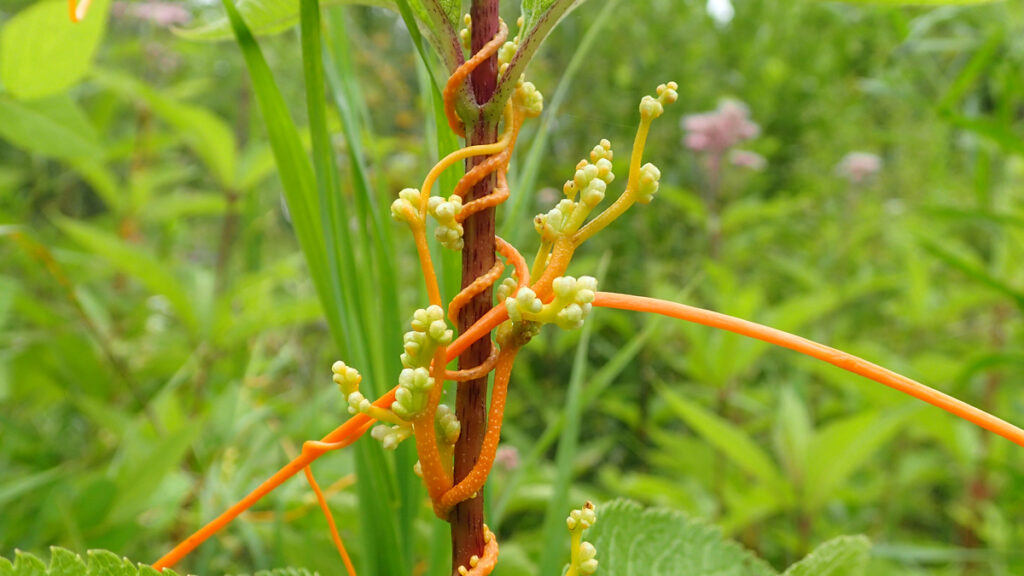
Neil Harvey (Host): If you sit patiently and watch the parasitic vine called “dodder,” you won’t see it grow. To animal eyes, it looks still and immobile.
But speed things up with time-lapse photography, and it’s an action movie. The vine seems to sniff the air to locate its host, then lunge toward it, snake-like. It’s as if it’s seeking it out – as if it’s making conscious choices.
The roots of the word “intelligence” come from Latin: “to choose between.” Is this vine’s apparently purposeful action just the illusion of intelligence? Or does altering the playback speed give us a window into vegetable time – into perceiving this plant’s intelligence, even consciousness, in action?
Over 2,000 years ago, the iconic Greek philosopher Aristotle posited a “hierarchy of living beings” with humans at the top, and plants near the bottom. The botanical legacy of this idea has circulated down through the centuries, mingling with Christian theology, to deeply inform Western science and philosophy.
It’s by no means a universal worldview though. Most indigenous and traditional land-based cultures have long revered plants as valued kin and teachers. And in recent decades, mounting evidence is revealing mind-bending examples of plant ingenuity. Aristotle’s idea of plants as lower beings is starting to wither.
Rachael Petersen (RP): For centuries, Western science has cast plants as the inert backdrop of human drama. They are silent, passive, inert. Plants, many of us have been told, lacking a brain or a nervous system, are relegated to the realm of the unconscious, what Aristotle deemed a kind of defective animal. But a growing body of research is challenging that narrative.
Host: As the timelapse of the dodder vine illustrates, what we observe is constrained by our own limitations and biases. Scientific pursuit begs philosophical inquiry. What do we really know about plants? How do we know? Are we even asking the right questions? And if plants are conscious, what are the ethical implications?
These are questions that Rachael Petersen has been exploring in an initiative called “Thinking with Plants and Fungi”. She spoke at a Bioneers conference.
RP: So what if plants were not mere furniture for the theater of life, but actors in their own right, making decisions, responding, perceiving and communicating?
Recent scientific discoveries have revealed these astonishing capabilities of plants. They are now making mainstream notions that years ago were preposterous, which is to say that plants are behaving, communicating, cooperating in ways that are previously unimaginable.
I think it’s important to say, that this research in many cases resonates with ancient wisdom that has been safeguarded by Indigenous spiritual and folk traditions throughout the world—Yup, [APPLAUSE] offering an opportunity for those of us in sort of Western scientific and philosophical positions to reflect on the biases of our ways of knowing.
I just got back from the forests of British Columbia, and was chatting with a hereditary chief there, and he says, “You call this science, we just call it common sense.”
Host: Author Robin Wall Kimmerer is a Potawatomi botanist. In her best-selling book “Braiding Sweetgrass,” she highlights the esteemed status of plants in Indigenous cultures. She suggests that to harvest these botanical relatives, the honorable protocol is to introduce ourselves, ask permission, and give thanks for what they give us. According to this worldview, humans are interwoven with plants in an intricate tapestry of reciprocal relationships.
And over the past few decades a maverick vanguard of scientists has begun to re-evaluate our human relationship with plants. Growing evidence points to plants’ mind-blowing intelligence, and the distinct possibility they may be sentient.
RP: So we know now that plants communicate. When under attack by herbivores, many plants emit chemical distress signals that recruit insects to come and neutralize their enemies, what scientists poetically call plant bodyguards.
Plants also recognize their kin. As the forest ecologist Suzanne Simard has popularized, mother trees nourish their offspring through vast underground mycorrhizal networks, sending sugars and nutrients to shaded seedlings to ensure their survival.
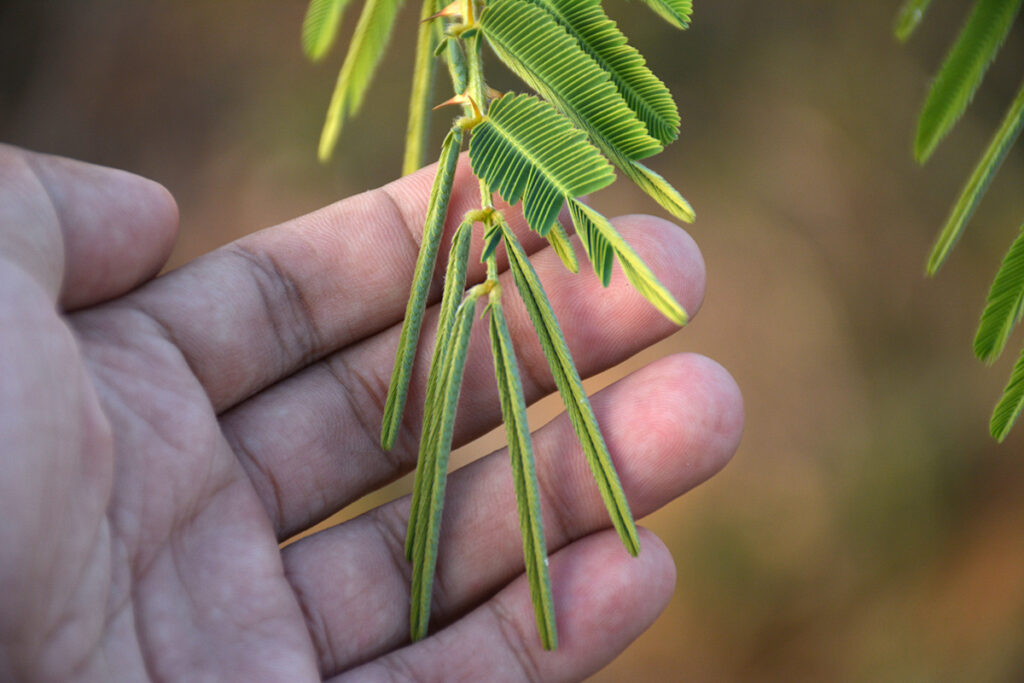
Plants can be said to learn and remember. Monica Gagliano has done these incredible experiments with the sensitive plant. When you touch them, they close immediately, so they’re the darling children of plant science because you can watch them react – and she has done these experiments where she has shown that they can remember. They learn associatively to identify threats, and that that memory lasts for a long time, sometimes longer than an animal study, so really remarkable.
Host: These kinds of experiments are sometimes associated with a movement called “plant neurobiology.” That name is provocative. Plants don’t have neurons. But they do transmit chemical and electrical signals throughout their cells, as they sense and respond to the world around them. Is that similar to neural processes in animal brains? And if so, might plant consciousness arise without neurons?
It’s a controversial field. Most scientists still contend that plant responses are automatic, mechanically hardwired by evolution.
Here, things get decidedly philosophical.
RP: These discoveries and how we interpret them are not only reshaping our understanding of plants, but they are challenging the long-standing categories we have used to make sense of life itself, determining who or what is conscious, isn’t just a simple scientific task. It is a profound philosophical and anthropological question.
Questions that have haunted philosophy for millennia, you know, what is mind. How far does it extend? And most fundamentally, is consciousness just some sort of byproduct of our fancy neuronal wiring? Or is consciousness perhaps the very substrate of materiality, of reality itself?
Host: Consciousness is notoriously hard to pin down. In a famous essay, philosopher Thomas Nagel asked ‘What is it like to be a bat?’ It’s tough for us to imagine a life of flying, hanging upside down, and navigating by sound. But even if we can’t experience a bat’s inner world, that doesn’t mean they’re not conscious. And the more we learn about other-than-human animals, the clearer it becomes that consciousness extends way beyond humans.
So what about plants? They have their own versions of our senses, plus many more. They communicate, solve problems, and remember; but without a brain. If it’s hard to conceive of a bat’s inner world, how much harder is it to imagine a blackberry’s?
Rachael is convinced that engaging with plants on their own terms requires more than science alone – which is why her Thinking with Plants and Fungi Initiative found a home in the Center for the Study of World Religions at Harvard Divinity School. She spoke with Bioneers producer JP Harpignies.
RP: People say, at a divinity school, why would you be thinking about plants and fungi at a divinity school? And my response to that is typically the questions that the science is provoking, namely what is the nature of mind, how far does it extend, is matter truly inanimate, as many Western thinkers have told us, that really gets to the core of questions at the heart of many religions, which is to say: What is the nature of reality? What do we owe one another? Who do we even consider to be one another? So I think in some ways we’re really fortunate to be a divinity school where we’re able to kind of flirt with these different tools we have at our disposal, from theology, and philosophy, and ethics, to really get at this question from a 360-degree perspective.
Host: Whose idea was it to use the terminology thinking with plants and fungi? That’s an unusual construction, I think.
RP: So that phrase comes originally from the anthropologist Claude Lévi-Strauss, and his anthropological fieldwork, his ethnographic fieldwork, he was looking at the kind of relationship between the local groups he was studying and the particular animals that were really important for them to eat, both kind of culturally, spiritually. And he said these particular animals aren’t just good to eat, they’re good to think with.
So he was kind of looking at the ways in which people’s relationships with animals wasn’t necessarily just material or even nutritional, there was something happening in the way that people were forming relationships with these animals. They’re good to think with, not just good to eat with.
And so I sort of borrowed that phrase from him in a nod towards, you know, we’re not thinking about plants, we’re not thinking for plants, we’re not thinking on behalf of plants, we’re trying to think with them; we’re trying to revitalize thought itself by really decentering the human.
But this actually started very humbly three years ago. A colleague of mine and a friend, Natalia Schwein, she’s a PhD candidate at Harvard, and an herbalist as well. She and I were introduced and we just decided to start a reading group, and we started with books like Thus Spoke the Plant by Monica Gagliano, and we were really overwhelmed by interest. We called it the plant consciousness reading group. And you would think at a place like Harvard, that would, you know, provoke a lot of eye rolling. But we had evolutionary ecologists there, we had primatologists there, we had artists there, we had students from the Divinity School there. At the time, David Abram was a scholar in residence, so he joined, Michael Pollan joined. And it was really a vibrant conversation and one people were hungry to have.
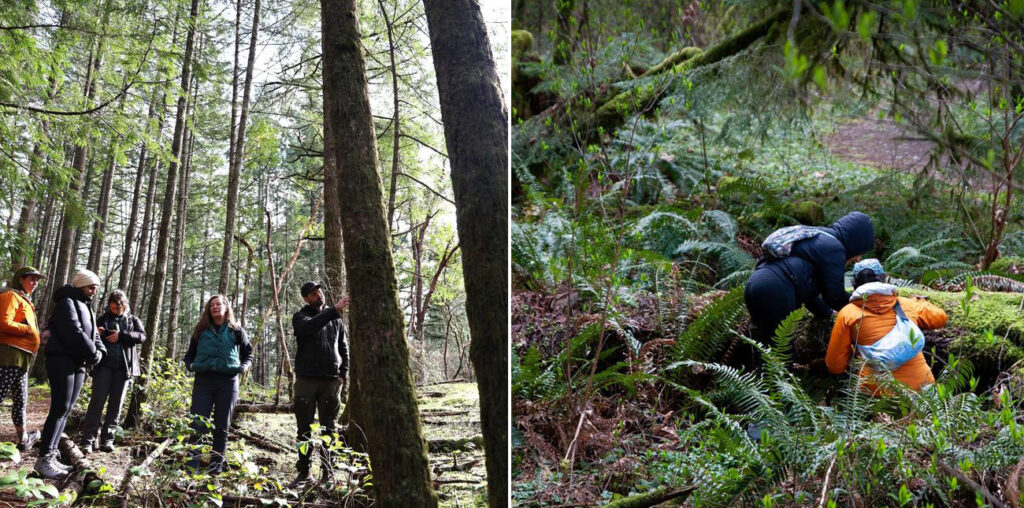
In part, what I was noticing was a lot of people in that conversation were often finding themselves in positions of having a deep intuitive relationship with plants in some way, or feeling plants were teachers or kin. And I think many of them wanted to make sense of that, and to try to revitalize frameworks that could help them hold this new-found and deepening relationship they had to the more-than-human world.
And I do think science is one way. It’s one door you can open into awe. It’s not the only door, but I think we found, in that group, the more we kind of interrogated the science, the more we unfolded all these questions that people cared about in terms of ethics and philosophy and religion.
Host: Rachael recognized these deep yearnings. She herself first became intrigued about an altered approach to understanding plants after the many heart-breaking years she spent working to protect nature.
RP: I got my start working in environmental policy in the D.C. world. At a pretty young age in college, I became a militant atheist humanist who was obsessed with the environmental crisis and in D.C., joined this incredible project called Global Forest Watch where we were monitoring deforestation in real time using satellite imagery and AI, and I thought I’m going to—I’m going to help save the forests, if I could just see in real time painful pixel by pixel where they’re being cut down, finally we can work with governments and companies, and local communities and journalists to raise the alarm and change something.
And I guess two things happened. One is that from my perspective, at least at the time, there was very little good news. It’s very painful to watch the world die in real time from space and consistently see, you know, governments and companies failing in their promises to reduce deforestation.
Also, what I found kind of strange at the time – I think this is changing quite a bit now – but even though I had this sense that all of us who were working on forest conservation had a deep connection with nature, deep personal connection, no one ever talked about it. Right? And there’s an interesting sort of moral injury, I think, at play when you have this deep personal connection to the living world and to ecosystems, and yet you totally bifurcate yourself when you go to work. And I found that to be an increasingly painful situation to be in.
And I think when you’re a kind of rationalist atheist humanist, you’re fighting the good fight and losing it consistently, I think despair starts to feel like a very rational position. So, yeah, I suffered quite a bit of depression and burnout and had a kind of last-ditch effort to address that through enrolling in a clinical trial for depression, using psychedelics at Johns Hopkins. So, you know, thank you mushrooms.
And part of that experience really felt like a religious conversion. It felt like, yeah, a conversion from being a materialist, rationalist atheist humanist to being someone who had more capacious metaphysical commitments. And that sort of led me down this path of being curious about the nature of reality and being curious about these landscapes that I love so dearly, and yet I felt like I hadn’t really gotten to know on their own terms.
Host: And did plants come up in the experience, in the mushroom experience, or…?
RP: Yeah, absolutely. In fact, I processed a lot of eco grief in my—In my experience, that was a huge theme, sort of mourning and also feeling reassured by the very beings, the plants, that I felt like were being destroyed.
Host: So to use a cliché, you sort of came into contact with plant intelligence on some level, or…
RP: Yeah. Yeah, I think so. And I don’t think people need to have those experiences, per se. My friend Natalia, who I mentioned, who helped co-found this initiative, you know, she’s an herbalist and she always says psychedelic plants are the ones who are screaming at us, but we can learn to hear the voices of the quieter plants as well.
Host: After the break, we’ll hear how this transformative experience gave Rachael Petersen new eyes with which to look at plants and those who study them.

Host: If you’d like to learn more about the extraordinary intelligence of life inherent in fungi, plants, animals and the circle of life, check out our Bioneers newsletter called Earthlings.
In each issue, we delve into captivating stories and research that reflect a profound shift in how we all inhabit and co-create this wondrous planet together. You can subscribe at bioneers.org…
After realizing that purely rationalist approaches to plants didn’t yield sufficient answers, Rachael Petersen started to search elsewhere. Many belief systems do encourage empathy with plants. That approach is generally anathema to the dispassionate methodologies of Western science. But Rachael did find historical exceptions.
RP: I’m constantly looking for forgotten ancestors in Western science because we’ve been told that it’s a horrible tradition, it’s horrible to nature, but there are people who had different ways about how to do it. And the German polymath, Johann Wolfgang von Goethe, he had this beautiful phrase. He described zarte empirie, which meant delicate empiricism. But I like to translate it as tender empiricism. So he described science as a form of tenderness, where you make yourself radically subjected to the knowledge of the other.
Host: As well as being a botanist, Goethe was a poet, novelist, and philosopher. Perhaps it was this artistic and holistic perspective that elicited his tenderness towards the subjects of his scientific study.
This wasn’t the prevalent approach at the time – nor today. The Scientific Method strives to be objective, even though true objectivity is impossible. And reductionist approaches break the whole into parts and reduce all phenomena, including consciousness, to the mechanical workings of basic physical components.
Another historical figure pushing against these ideas was the 19th century German scientist, Gustav Fechner.
RP: He actually first trained as a physician, and then he decided to become a physicist and a psychologist. In his early days, he was studying, okay, if I, you know—if I stimulate your skin, like how long will it take for you to feel a reaction? So sort of what is the relationship between outer and inner, which is a theme that will continue in his work, but he was looking at that mathematically and scientifically.
But in his journals, in his diaries, you see that he is burning out, he’s becoming disillusioned with reductive materialism. He had read a lot of German idealism and what’s called Naturphilosophie in his young days and fell in love with this kind of sweeping view of science as being artistic and spiritual.
And as reductive materialism is on the rise in Germany, he’s becoming more and more depressed. So he has this breakdown. He actually goes blind for three years, doesn’t leave his house. He has these custom goggles made out of metal, crafted for his eyes because he can’t stand the feeling of a blindfold. And one day he walks out into his garden, and he takes off this blindfold, and he claims he saw the soul of a plant, and that this experience was healing for him. He got his sight back, and he sits down in 1848 to pen this book, Nanna, or On the Soul-Life of Plants, which I translated. It had not been translated into English before. And it’s a beautiful sweeping love letter to plants, arguing that they have souls. If you look at the way he uses the word soul, it tracks onto how we might use consciousness today.
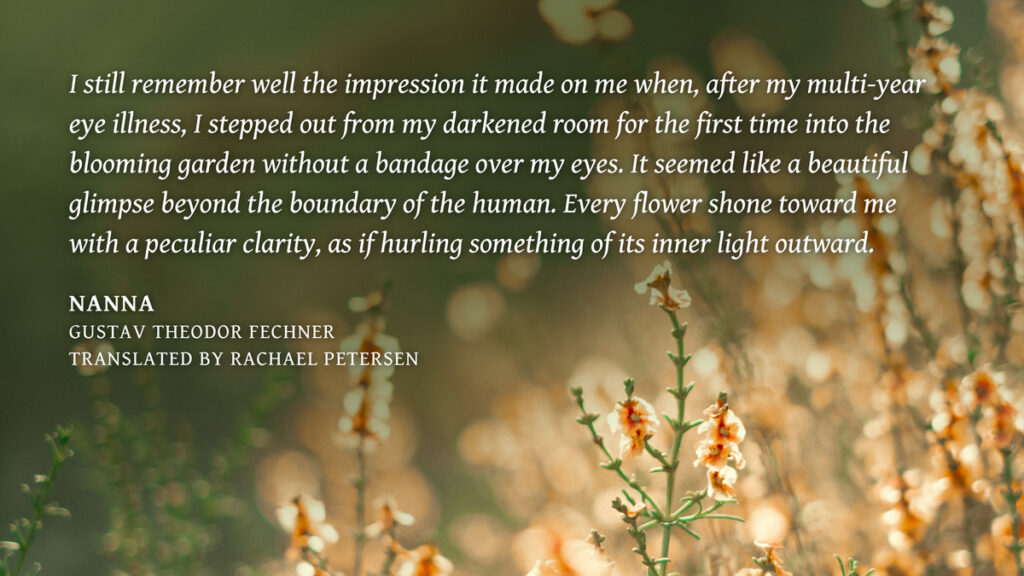
And I became very interested in him because he’s trying to defend this notion of soul at a time when the sciences are really trying to reduce everything to chemicals and electrical signals. And plants, for him, were a gateway drug into a panpsychist understanding of the world as kind of enchanted and ensouled.
You know, there’s a lot of people who tell this very…partial story about Western science and Western philosophy, that it is violent and bad towards nature. You know, science is a way to torture nature and under duress to get her to reveal her secrets. Absolutely, Western science has not been great in terms of treating nature as something to be revered.
But I’m really interested in finding these little cracks where the light gets in, these people who were disparaged in their day and forgotten, but who show us how to resist the dominant modes of thought at the time, which is something I think we need to learn from.
Host: Rachael Petersen refers to this as “re-weirding” the Western canon: finding scientific ancestors who inspire different ways of thinking about plants and our relationship with them. Indeed, Charles Darwin himself questioned the idea that plants are inanimate.
Today, scientists investigating sentience in plants are regarded as controversial outliers.
One such contemporary outlier is Paco Calvo, who directs the Minimal Intelligence – or MINTlab in Spain. He looks for evidence of plant consciousness by using timelapse photography and electrical sensors.
Observing bean plants growing up a pole, he found a spike in electrical activity when the plant lunges for the pole – just as neurons use electricity to transmit information in a human brain. Interpreting this as a sign of possible sentience, however, has proved contentious.
RP: It still remains controversial. In fact, there was an article published in a scientific journal that was pushing back against the scientist Paco Calvo in Spain and his work in the MintLab. And the rhetoric they were using in that article was like […] science that is claiming that plants are intelligent or conscious is finding its way into mainstream articles, and this could…you know, kind of influence potential science—students of science in the wrong way. And I look at the vehemence of that rhetoric and it’s quite pronounced, and it makes me curious. Is this really about an issue around replicability or rigor, or is there something else going on?

Host: Paradigms die hard. Yet this is how science operates: scientists expect their work to be scrutinized and challenged. Paco Calvo himself agrees we need “eternal vigilance” when drawing analogies between plants and animals, to avoid getting “carried away by their implications.”
Rachael believes there’s another reason to be cautious when leaning into these analogies.
RP: One issue that I have with this whole plant neurobiology conversation is that the whole kind of argument of the science is to say that plants don’t require a nervous system to be conscious. Right? But they call themselves neurobiology. And a lot of their experiments, they’re often pointing out the similarities between plants and animals by saying, look, plants have the same neurotransmitters as animals do.
And I guess what I’m driving at is this plant neurobiology movement is doing kind of what the animal studies movement did in trying to make animals as similar to humans as we possibly can in order to afford them moral considerability. Right? So the more like me you are, the more morally I will consider you to be worthwhile.
And I’m more interested – and this is why I’m obsessed with Fechner, he has this beautiful line, “perhaps it is not what I share with another person that gives them a soul, but what I don’t share that gives them a soul”. And I think ….If you have a moral heuristic that’s based on sameness – are you similar to me – that can create problems. But I think what’s so beautiful about plants is they invite us into a relationship premised on difference, potentially. Maybe they’re just so frickin’ weird and different that that in and of itself is a reason to extend them moral considerability. And it certainly is a reason to have awe and humility when looking at them.
Host: It requires daring leaps of imagination to comprehend these ineffable other lives, and it also requires humility. To truly value plants, we may need to tackle a deeply-held bias: our human supremacy complex.
RP: There is this throughline from Abrahamic religions informed by certain readings of Genesis that said God created Earth for our—you know, it is our dominion, it is for our use. And then you have the development many centuries later in what’s known as scholasticism where you have all these Medieval scholars who were reading Aristotle for the first time, who also had this idea that there’s a typology of souls with human being at the top, and they sort of inflect that with Christianity. And that later infuses the scientific revolution. And there’s this throughline that humans are at the top in terms of this ladder that leads to God, this idea that we are more perfect or more capable of becoming perfect than other beings – animals and certainly plants.
Some people perceive that by elevating plants, we are demoting the human. Right? So there’s this kind of reactionary thing that’s saying this conversation around the intelligence of nature is just another effort to make us feel bad about being human. And I do think in this conversation around the Anthropocene and climate change, there certainly has been a message that to be human is bad because look at what we’ve done to the planet.
I actually don’t think that by elevating the intelligence of nature we’re demoting the intelligence of the human by any means. I think that the invitation here is one of awe, it’s one of wonder, and I think there can even be a reflexive move where we say, wow, how cool is it to be human, that we can even sit here and have this conversation about the intelligence of nature.
And I hope that people see that by attending to plants, by attending to their unique intelligence and forms of sentience even, that doesn’t mean we have to disavow the human or say to be human is bad. It just means that we’re inviting everyone into a more kind of weird and multiple form of reality, a reality that’s peopled by more than just people.
Host: Rachael Petersen, “What if Plants are Conscious?”