How a Healing Crisis Led to Regenerative Agriculture and the Launch of an Ancient Grain Food Business
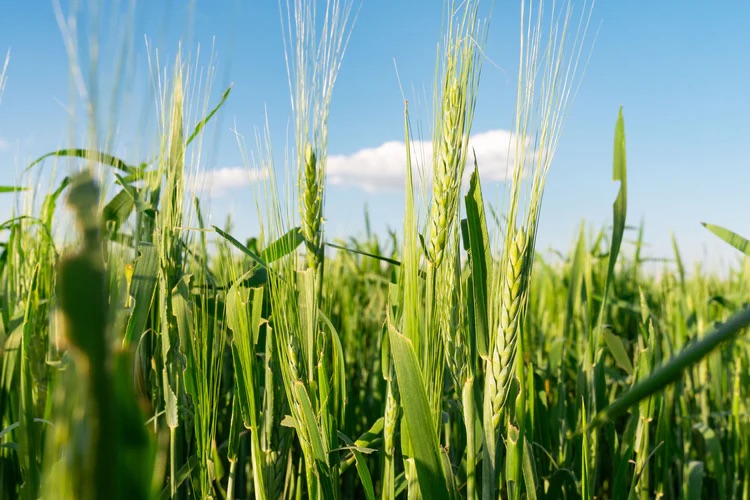
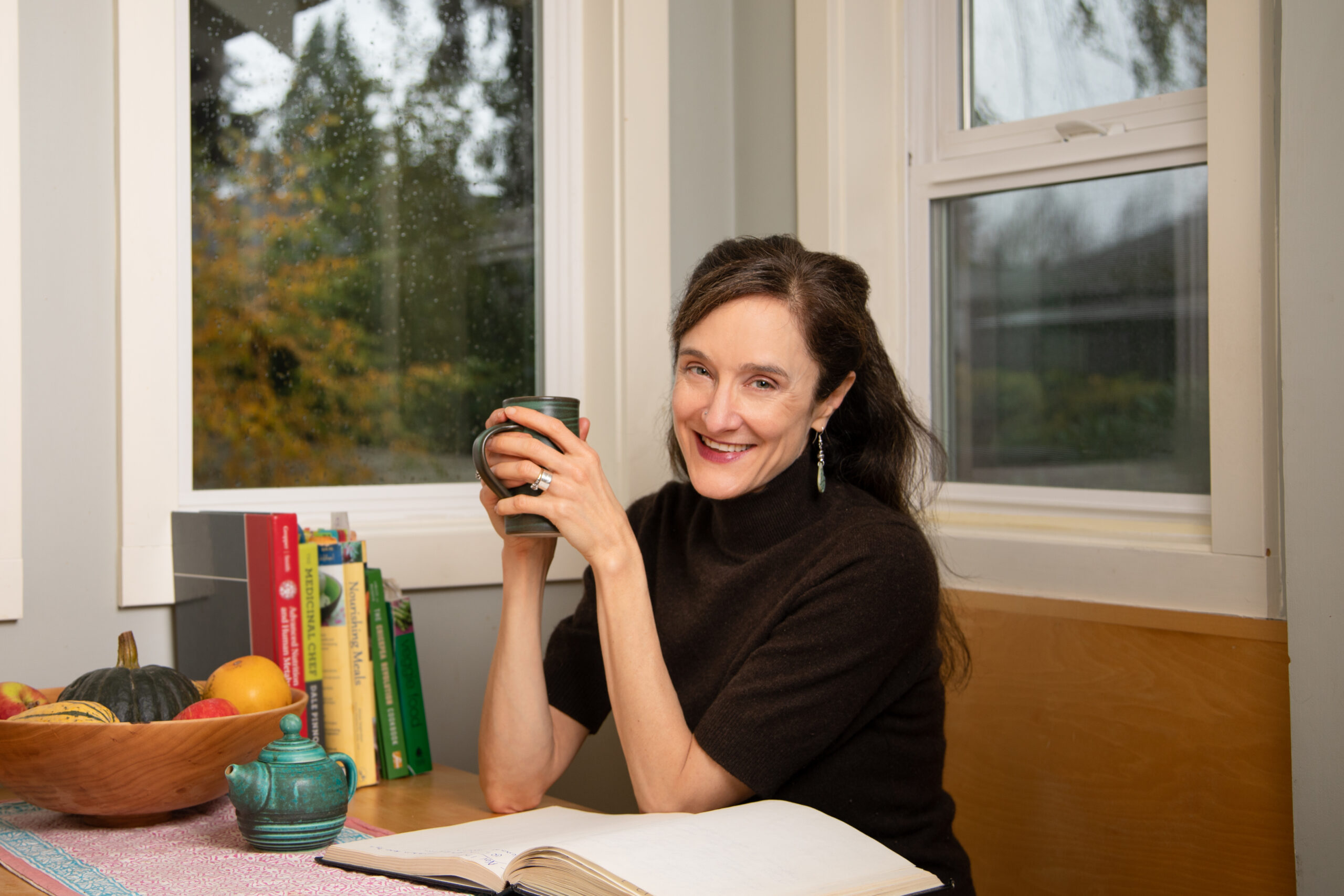
Crystal Manuel and her husband Jody both come from multigenerational farm families. A debilitating health crisis hit Crystal in the prime of her life, and her remarkable healing journey made them reconsider the risks of exposure to agrochemicals. They transitioned to organic and ultimately regenerative farming practices growing a variety of grains and pulses such as emmer wheat, Spelt, Kamut, Beluga lentils, Red Crimson lentils, Purple Prairie Barley, and Black Chickpeas on their 7400-acre farm which is a mix of cropland and pasture. In the healing process, they also adopted healthier eating habits. Their dedication to eating and growing nutritious whole foods inspired them to start a small business, Gruff Grains, producing Farro, a high protein, nutrient-dense ancient grain. Farrow is the food, Emmer is how it is referred to as a crop in the field. Emmer wheat, one of the earliest domesticated crops, has been cultivated for over 10,000 years and was a dietary staple in the Middle East, Egypt, and Europe. Gruff Grains won a NEXTY Award at the Expo East food show and Crystal won a Maxwell/Hanrahan food award in 2024 for being a whole food educator and organic food entrepreneur.
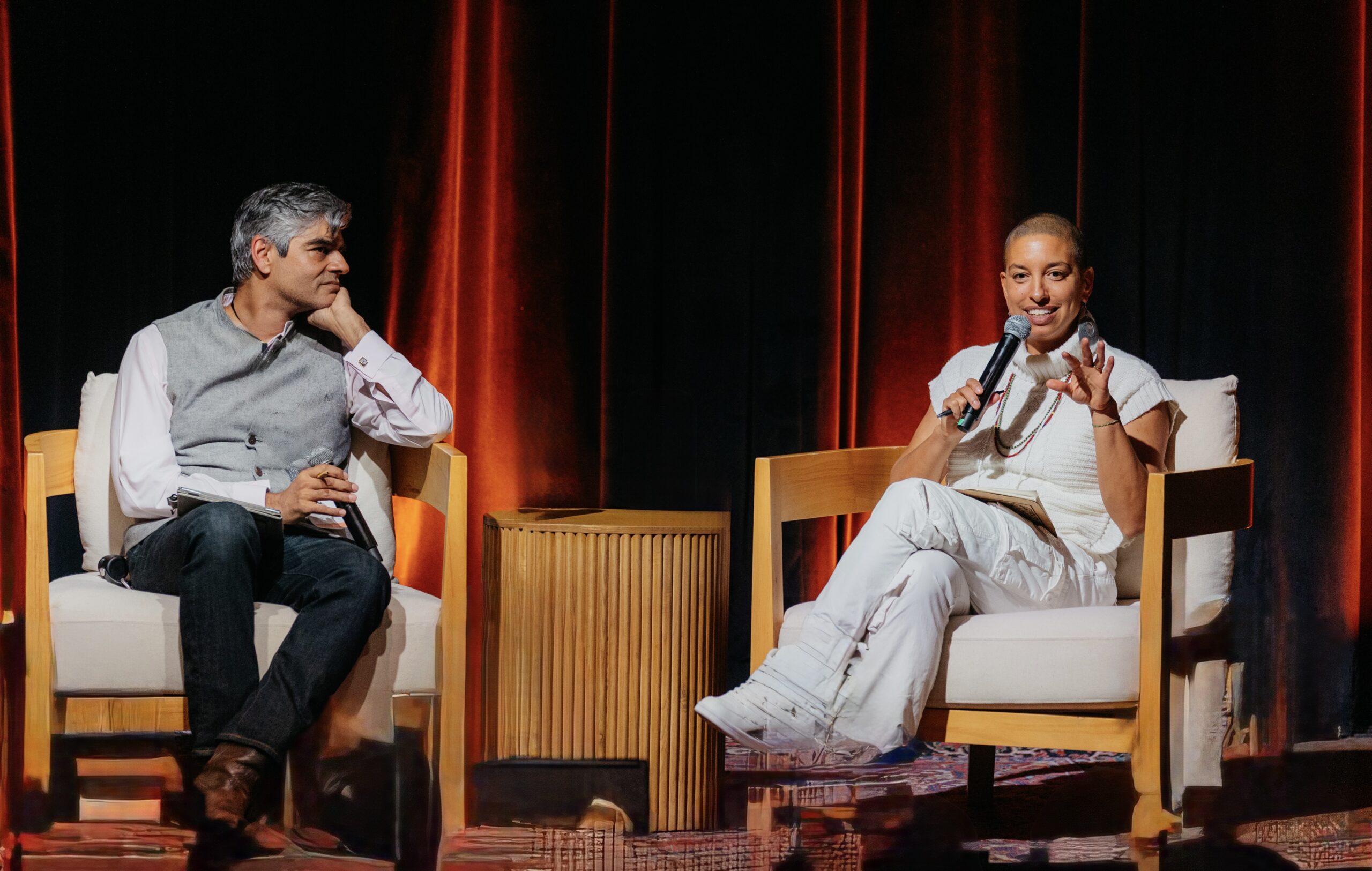
ARTY MANGAN: How did your health crisis change your approach to farming and impact your life in general?
CRYSTAL MANUEL: I had always been healthy. At the time we’d been married for a few years and had two young children, I got super sick. It happened fairly quickly and unexpectedly, but the doctor I worked with later said it actually took a long time of exposure to toxins to build up to that point.
That sickness literally changed everything. Initially, I was misdiagnosed with adult-onset asthma, but I knew that it was a wrong diagnosis. They wanted me to come back for testing three days after my initial misdiagnosis. I was back home and feeling really sick with a variety of symptoms. I had lost a half-inch swath of hair all around the perimeter of my head. It was so weird. It just fell out. And I had lost 35 pounds in a month. My heart rate was sometimes up to 160 beats per minute. It was complete insanity. I was so short of breath, but that was because my heart was beating so fast. To me it wasn’t making sense.
The day before I was to go to the doctor for the second time for testing, I had nursed the baby and I was laying her down for a nap. I walked down our hallway and I noticed this book on the shelf that had sat there for about three years that my hippie aunt had given it to us as a wedding gift. When she gave it to me, she said: “I know that you don’t know that you need this right now, but you have to promise me you’re not going to toss it into a yard sale box.” For the last 30 years, my aunt had preached that food is medicine, and everybody thought she was crazy. She is my favorite aunt, so I was definitely going to keep the book.
I grabbed that book off the shelf, and read the title, the Prescription for Nutritional Healing, and I thought, “I wonder if I could find some help in this book.”
So, I sat down with the book, with my 2-year-old on my lap, and I started flipping through the pages. On each page is one disease. It talked about the symptoms, and about food and supplements that you could take, and about all the things to avoid. I just sat, flipping pages, looking for my symptoms. On page 211, I found Grave’s Disease, and it described the exact symptoms I had.
The next thing that happened was really wild. I was looking through the section on which supplements to take and which foods to eat to avoid Graves’ disease. The first food listed was cabbage. I can’t even explain to you what happened, but I had an instantaneous craving for cabbage that was unbelievable. It was crazy. I had to have cabbage.
I called Jody and I said, “I know this sounds insane, but I need you to go to town as soon as you can and buy a couple of cabbages and bring them back as quick as you can.” He just started laughing. He thought, “This is the craziest thing you’ve ever asked me to buy for you.”
So he zips to town and he comes back home, and by the time he gets home, I already had a pan of water steaming, the cutting board was out, and I whacked the cabbage in half, and chunked it up, and tossed it into the steaming water. I literally consumed an entire cabbage about 15 minutes later. I have never, to this day, been more satiated from any meal I’ve ever consumed. I’ve had quite a lot of good food fortunately, doing what we do, but that meal was extraordinary. It just felt so good.
That entire experience was a turning point in my life because I realized in that moment that food was medicine. After doing some research, I found that cabbage contains compounds that are very similar to the synthetic components that go in the medication for Graves’ disease. The cabbage is more gentle in the way it responds, but it does the same thing internally that thyroid medications do in terms of calming everything down that’s interconnected with that disease, which is your pituitary gland and your thyroid.
So I ate cabbage, after cabbage, after cabbage. There was not anything in this whole world for several months that sounded better to me than cabbage. It got to the point where I had to force myself to eat other whole foods, but really, all I just wanted was cabbage.
I went back to the doctor the next day, and I don’t know why, but I let him do the test for asthma. He was just so adamant that’s what it was, and I knew it was wrong. The test involved taking some blood. I said to him, “I don’t think I have asthma; I think I have Graves’ disease.” He laughed and said, “You do not have Graves’ disease.” “Well, you’re taking blood anyway, go ahead and test me for it.” So he did.
After the appointment. I drove 15 minutes back to the ranch. By the time I got home, there was already a message on my machine from the lab that said you did test positive for Graves’ disease; we need you to come in immediately. I thought, no, I just diagnosed myself so I’m not going to go back to you.
I ended up seeing a few doctors, and they wanted to remove my thyroid. They said you are advanced, we’ve got to do something quick. Jody pleaded, “Please just listen to them.” I was so sick, but I just kept saying no.
When I asked the doctors what causes an autoimmune disease like Graves’, they said they didn’t know. They wanted to use radioactive iodine to kill off part of my thyroid, or remove it completely. Either way, I would need synthetic medication to mimic the job of the thyroid. But I knew that the cabbage was working, so I said no.
I finally found a doctor who agreed that food can be used as medicine, but everything he knew about it was self-taught. He said, “I didn’t learn anything about this in medical school, but I have studied on my own. I do think there’s something to it, but, I must say, that I’ve never had anybody walk into my office with a holistic nutrition book and claim that cabbage was part of the cure. But I see you’re determined, so if you do as much as you can with food, I’ll do as little as I have to with medicine, and we’re going to see if we can pull this thing off. But here’s the thing: it took you a long time to get sick. I know that you think it happened quickly, but it builds up and when you get to the tipping point, the symptoms appear. To overcome this, if it’s even possible, it’s going to take a while.”
He was right about that. It took a little over two years before I was normal again. But I did continually get better, but it was very incremental.
I was super curious about autoimmune diseases and what caused them. I felt that removing my thyroid wasn’t going to fix anything except for an over-active thyroid, but I still wouldn’t understand why I was sick. What would go wrong next if I don’t try to address the root cause?
When I did a search on what causes an autoimmune disease, it listed agrochemicals as one of the known culprits. There were other things on the list as well, but I knew that I had had a lot of exposure to that sort of thing in our farming environment.
We began deep diving into the research, and we learned about the correlation between food and chemicals and pharmaceutical companies. So we immediately began making incremental changes on how we were farming. It took a handful of years to completely transition to organic because when you convert to an organic system, you have to have a three-year transition period on any ground that has been sprayed. So we broke up some virgin ground and had fields that were certifiable right away, but we had to wait for the fields that had been chemically treated in the past to go through the transition period. I got sick in 1997 and by 2007, we had converted everything over to organic.
ARTY: That’s an incredible story in so many different ways. I’m skeptical about Western medicine as well. But it is good to hear that there are doctors who do integrative medicine and will customize a healing regime that’s right for you. So, you changed your diet. You’re not exposing yourself and your family to agrochemicals. How are you feeling?
CRYSTAL: Amazing. After it took those two years to heal, I finally went to the doctor to do blood tests, and he said, “You made it. Everything is perfect. We can stop all medications.” And I’ve never taken them since. That was in 1999.
I can never say that I absolutely know that agrochemicals are what caused my disease, but I do know that I had a ton of exposure to them and that they are linked to Graves’ disease.
A few years after all of that, my Mom encouraged me to get a medical checkup. I was feeling really healthy but I made an appointment anyway. The doctor looked at my chart and said, “I had no idea that you were so sick with Graves’ disease. Whoever did your surgery did an incredible job. Usually you can see the scar.” I just started laughing. I told her that I didn’t have surgery. She said, “I’ve never seen anybody so sick not do surgery for this.” She was concerned and recommended a blood test. A week later she called and said, “What I learned in medical school versus what your test results are saying don’t really match up. I know that you did the medications, but there had to have been something else for you to overcome this. There must be something that’s missing from your chart. What was it? Do you have any idea?” I just started laughing, and said, “Well, yeah, it was cabbage.”
ARTY: That’s such a wonderful story, with a wonderful outcome. Congratulations on the strength of your convictions. Talk about the turning point when you decided to change the way you and Jody farmed.
CRYSTAL: We knew that if we were going to stay in agriculture, we had to grow food organically. That was a pretty bold statement for us to make because at the time, my father-in-law was also working the farm, and he thought we were crazy. None of this made sense to him, and none of our neighbors were organic farmers. You learn when you talk to people who farm organically that that’s usually the case – their neighbors, their family members just don’t understand why somebody would go through what you go through to farm organically because in a commercialized system, everything is easy. There’s a spray or a synthetic fertilizer for any problem that you might have.
My father-in-law thought we were making a very unwise decision. He literally said, “This is never going to work and you’re going to go broke.” But we had to give it a try or otherwise stop farming altogether.
So we went to an organic farming convention, and we ended up meeting the most incredible, outside-the-box thinking people: farmers, gardeners, orchardists. Everyone was so passionate about what they were doing and were so willing to share information. They cared about people, and health, and the food system, and all the things that had been resonating with us. So we knew we had found our tribe.
We started growing lentils for the Timeless food company. Lentils are a legume that naturally put nitrogen in the soil. Liz Carlisle wrote a book called The Lentil Underground: Renegade Farmers and the Future of Food in America and we were one of the farms she wrote about. The book got publicity and we started getting calls from companies like Dave’s Killer Bread and Annie’s (the organic mac and cheese company).
Annie’s sent out a whole team of people. At that point we were farming regeneratively. They knew that the regenerative was going to be a trend in the market, and they wanted to be on board with it because of the climate-friendly aspects.
For several years prior to all of that, I had become passionate about education on the health benefits of whole food, so I co-wrote a series of classes. Talking with these companies made me realize I wanted to do something different and I’d always had this entrepreneurial spirit. I told Jody that if we started our own food company, we probably could educate the consumer audience better than other companies because we live and breathe it every day on the farm. That’s how the concept for the Gruff Grains came about. Our tagline is “Nutrient-dense ancient grains for your family’s health.”
We had reached out to Montana’s oldest food company, Cream of the West, a hot cereal company. They started in 1914 by farmers and ranchers who wanted to get healthy food into the hands of people. They agreed to co-pack for us.
With the help of a USDA grant, we developed our product. About six months into the process, we found out Cream of the West–a legacy Montana-based company producing whole grain hot cereals–wanted to sell the company. We panicked; we didn’t want to lose our co-packer. They asked us if we wanted to buy the company. I thought it was crazy–it was a fully functioning company three-and-a-half hours from the ranch. But Jody decided we should do it. So we bought the company.
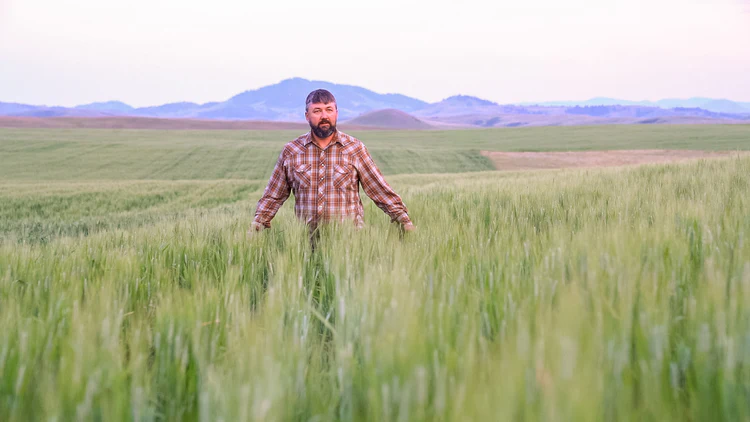
ARTY: So now you and Jody are growing Farro (which when it is growing in the field is called Emmer) and process it into grits and sell it under the Gruff Grains label.
CRYSTAL: We refer to Gruff as a mission with a brand. What I want to do with that company is explain to people what’s happening in the food industry, specifically concerning grains in the US because that category has been adulterated.
At the turn of the century, when industrial steel mills, which were more efficient, replaced stone mills, they began separating out the bran and the germ from the endosperm. Every kernel of wheat has three components – the bran, the germ, and the endosperm. To make white flour, you strip out the bran and the germ, but the problem with doing that is you take out more than 20 naturally occurring vitamins and minerals, all the healthy oils and fats, and all of the fiber. When they began doing that, people started getting sick with all kinds of diseases – beriberi, Pellagra, anemia, and other things.
In order to remedy that situation, they made a very profitable but unhealthy decision; they created five synthetic vitamins, and added some iron, and put it into white flour so that they would have something to say on the nutrition label, and they could take care of the symptoms of some of these diseases that were arising due to the lack of nutrients in white flour.
Today, there are a lot of people with serious gluten sensitivities who are avoiding wheat altogether and going gluten free. But, it’s not that grain is dangerous in and of itself. If it’s ancient and if it’s grown organically, and if it’s a whole food, most people do not have any problem with it. In fact we have all kinds of testimonies from people who have tried our product–our ancient grain grits made from Farro–saying, “Thank you for helping us understand this. We can enjoy grain again, and we understand how to make better choices.” As a company, this is the kind of information we want to share with people.
Sharing that kind of information is what pumps us up. People are consuming loads of enriched flour; it’s in everything: cold cereals, crackers, fast foods, pizza. It’s almost impossible to avoid enriched flour.
Because everything natural has been stripped out of it, it causes spikes in blood sugar. The nutrients that actually aid in the digestion of the grain have been removed in white flour. Conventionally grown wheat is sprayed with chemicals which end up in the food supply and wreak havoc on the gut microbiome as well.
Enriched flour is linked to a very long list of modern diseases, but very few people are making the correlation that if they switch to whole grains they could achieve better health.
ARTY: Absolutely. White flour is pretty close to white sugar in the way the body metabolizes it, both have empty calories that drive diet-related disease.
CRYSTAL: People are starting to figure that part out, but oftentimes they think they have to avoid grain completely. But, for most people, that’s not necessary. Gruff Grains is grits made from Farro, an ancient wheat traced back to Roman times. For people who want to learn more about Farro and how to cook it, we have recipes on our website.
Our mission with Gruff Grains is to bring this ancient, whole grain to the marketplace with the highest certification possible, that’s why we got the Regenerative Organic certification (ROC). We also want it to be part of the farm-to-fork movement so it has to be traceable back to the farm where it was grown so we can tell the farmer’s story. Most grain goes through a mill and gets mixed together with grains from many different farms.
We also want people to understand what it takes to farm regeneratively. Since we got the Regenerative Organic Certification, we’ve begun working with a number of other food companies. We’re the only ROC farm in the world that grows Kernza, a perennial grain that we contract exclusively with Patagonia Provisions to grow. We’ve also sold crops to Purely Elizabeth’s granola company, and a handful of others. It’s definitely been an interesting journey.
Learn more about Gruff Grains and Farro
For more articles like this subscribe to the Food Web