Pesticides Devastate Farmworkers Lives
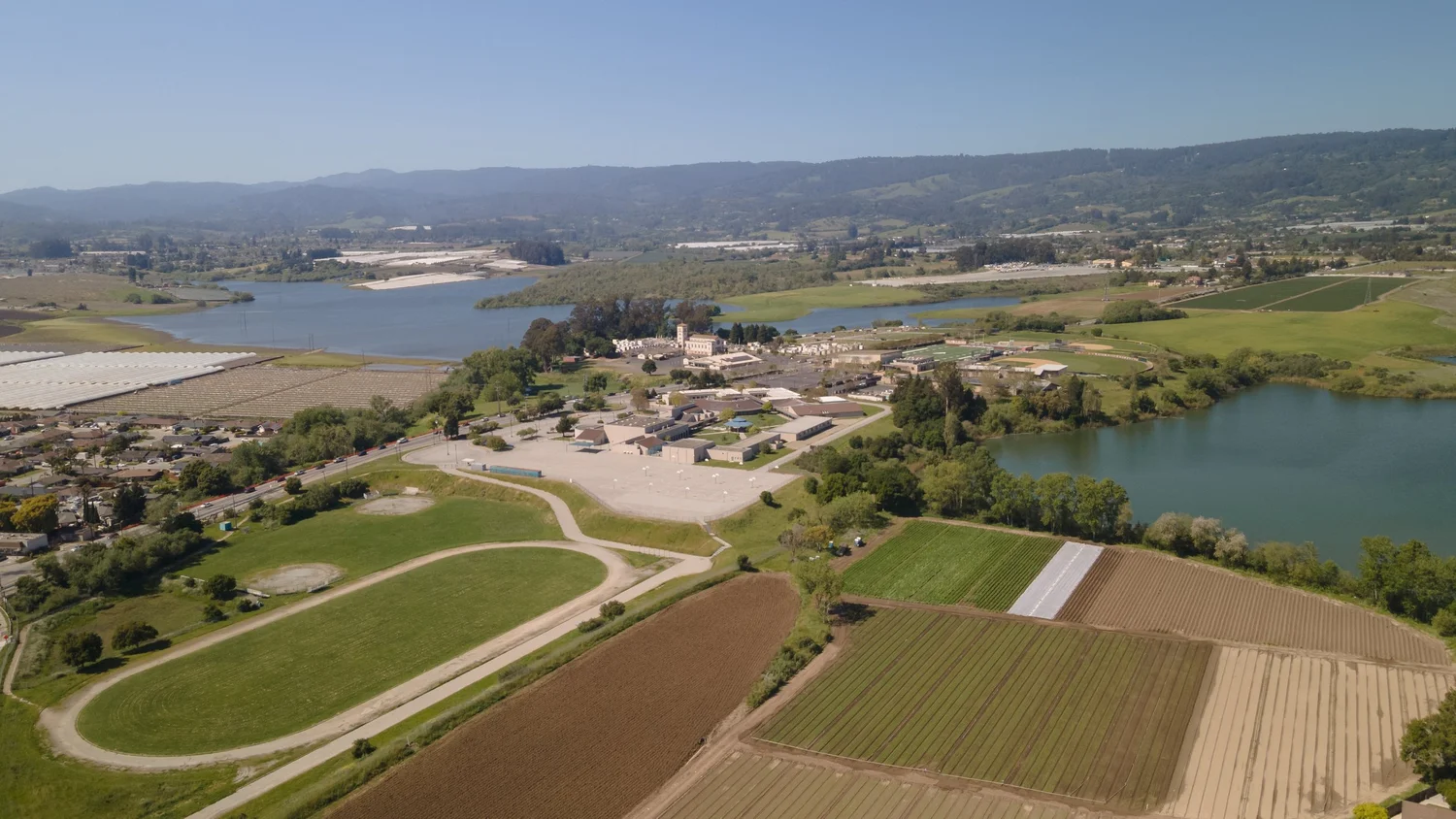
Photo: Lakeview Middle School in Watsonville, CA, surrounded by farms that use pesticides
At a Pesticide Reality Tour last May, Dr. Ann Lopez stood next to legendary farmworker activist Dolores Huerta, Lopez’s inspiration for her work to elevate the lives of farmworkers. Dolores Huerta, ever the activist at age 95, was there to support the Campaign for Organic and Regenerative Agriculture (CORA) co-founded by Lopez to eliminate the exposure to toxic pesticides that farmworkers endure with devastating regularity.
Seventy percent of the population of the farming community of Watsonville, CA, where the rally was held, is Latinx, many of whom work in the local berry fields in the Pajaro Valley that straddles the Santa Cruz and Monterey County line. In this agricultural region, like many others, pesticides are routinely sprayed around schools and homes. Each year, one million pounds of pesticides are applied to farmland in Santa Cruz County, 67% of which are toxic fumigants that become airborne and can travel for miles.
One of these pesticides, chloropicrin, is banned or restricted in Europe. The chemical is injected into the soil as a sterilizing fumigant before planting a crop. In the First World War, it was used as a poison gas and recently there have been allegations that it is being used by the Russians in the war against Ukraine.
The European Union’s Food Safety Authority has established that chloropicrin is toxic when inhaled and causes severe eye, skin, and respiratory irritation. Some studies have indicated that it could also cause DNA damage.
Lopez, a biologist turned farmworker advocate, addressed the gathering about the dangers of pesticides with a tone of indignation, “I’m sick and tired of meeting families that have at least one kid that has some anomaly that will probably affect them for life including brain cancer, bone cancer, ADHD, and learning disabilities. It was shocking to go house-to-house and meet these families and almost everyone has some child that has one of the serious anomalies…. Mothers sent me pictures of their children just before they died.”
Lopez’s ire is not solely based on anecdotal evidence. The UCLA Fielding School of Public Health has identified 13 pesticides correlated to the onset of childhood cancer between birth and 5 years old, when the mother lives within 2.5 miles of pesticide application while pregnant.
Dr. Lopez pointed to the fact that Latinx school children are 3.2 times more likely than white students to attend schools with high exposure to hazardous pesticides as an example of environmental racism. Children and pregnant women are particularly vulnerable to the harmful effects of these agricultural toxins.
Ernestina Solorio has been working in the farm fields since 1993, even when she was pregnant with her two youngest children who have been diagnosed with ADHD, have learning problems and suffer from depression. Holding back tears as she addressed the CORA rally in Spanish, Solorio said, “Both of them are constantly going to medical appointments and counselors and psychologists. It is very difficult to see that they are not getting better or making any progress. If I had known about the chemicals in the field, I would have chosen not to work there. The difficult thing for me is that my lack of knowledge now results in my kids’ suffering. My 18 year old asks why he can’t be normal. The owner of these fields should have some conscience and think about the kids and how much they suffer… Driscoll’s should have some conscience and change those farms to organic for the kids and the farmworkers and the community.”
The CORA campaign is primarily targeting Driscoll’s, a family owned company that began in the early 1900’s in Watsonville and is now the largest berry grower in the world with farms in California, Oregon, Washington, British Columbia, Baja California, Chile, and Peru. CORA is promoting organic and regenerative farming as the remedy to the tragedy of farmworker families’ exposure to toxic pesticides that destroy health and even take lives. Fifteen to twenty percent of Driscoll’s production is currently organic, however, 9 of the 11 schools in Pajaro Valley are adjacent to conventional farms that use toxic pesticides and the 2 others are only a couple of blocks away from farms that use chemical sprays.
Driscoll’s position is that they are in full compliance with state and federal pesticides laws. But evidence is mounting that those laws are woefully insufficient to protect the public’s health. Ultimately, CORA wants to see the more than 25,000 acres of farmland in the Pajaro Valley farmed organically. In the short term, their campaign is focused on having the fields near homes and schools converted to organic farms in order to protect the health of children and the wider community.

For more articles like this sign up for the Food Web newsletter