LFF #31: Radical Collaboration and Collective Power: Women’s Climate Leadership
This is Volume #31 of the Leading from the Feminine newsletter, a vibrant resource in the flourishing world of leading from the heart, hands and spirit.
Subscribe to receive the newsletter straight to your inbox.
Radical Collaboration and Collective Power: Women’s Climate Leadership
Earlier this month, the UN Environment Programme’s Limiting Overshoot report acknowledged what is becoming increasingly clear: global temperatures are likely to cross the 1.5°C threshold within the next few years. How high temperatures rise, how long they remain elevated, and how quickly we can bring them back down depends on the choices we make now.
The report gives scientific language to what we’re already witnessing in our own local landscapes and ecosystems. In the high desert stretches of Northern New Mexico, where winter was once steeped in white, snow accumulates in only the slightest of dusting. Warming temperatures cause flowers to bloom weeks ahead of historical schedules, leading to increased food shortages, starvation, and failed breeding for many pollinators, such as hummingbirds.
As journalist Aarohi Sheth writes: “Climate touches everything and everyone.” Large and small.
Climate fatigue is real. It’s easy to feel desensitized, disengaged, and powerless as we navigate information overload and overlapping stressors from the macro to the micro. Like the hummingbird, an animal with the largest heart-to-body ratio of any species in the world, some days it seems like we’re the ones walking around with oversized hearts. So how do we stay rooted, focused, and engaged?
The good news: we can lean into the joyous responsibility to act from where we already are and what is imminently possible. As Dilafruz Khonikboyeva, Executive Director of Home Planet Fund, puts it: “I focus on the day-to-day, like what can I do today; what can I do now; what can I do sitting in relationship.” These daily practices can be seen across the globe as women-led movements steer collaborative, culturally-informed actions on the ground from within local communities. That spirit, despite the fatigue, was visible throughout NYC’s recent Climate Week, which brought over 100,000 people together across more than 1,000 events, from global policy and finance to grassroots and community-led action.
In this issue of Leading From The Feminine, we’re listening to women who are building climate solutions through relationship — to land, water, community, culture, and one another — from the wetlands of Bolivia to the grasslands of Tanzania and the glacial watersheds of Central Asia. These are just a handful of the many women-led organizations on the frontlines of climate work, showing up not only during Climate Week, but for the other 357 days of the year.
Although they receive less than 1% of climate funding, women-led climate justice grassroots projects are generating cascading benefits, from greater gender and economic equity and less gender violence to improved biodiversity and ecosystems’ health. Simultaneously, the centrality to many Indigenous peoples’ cultures of traditional relationships to place and to honoring all of life as sacred are a tremendous resource in strengthening efforts to protect and renew biodiversity and water resources.
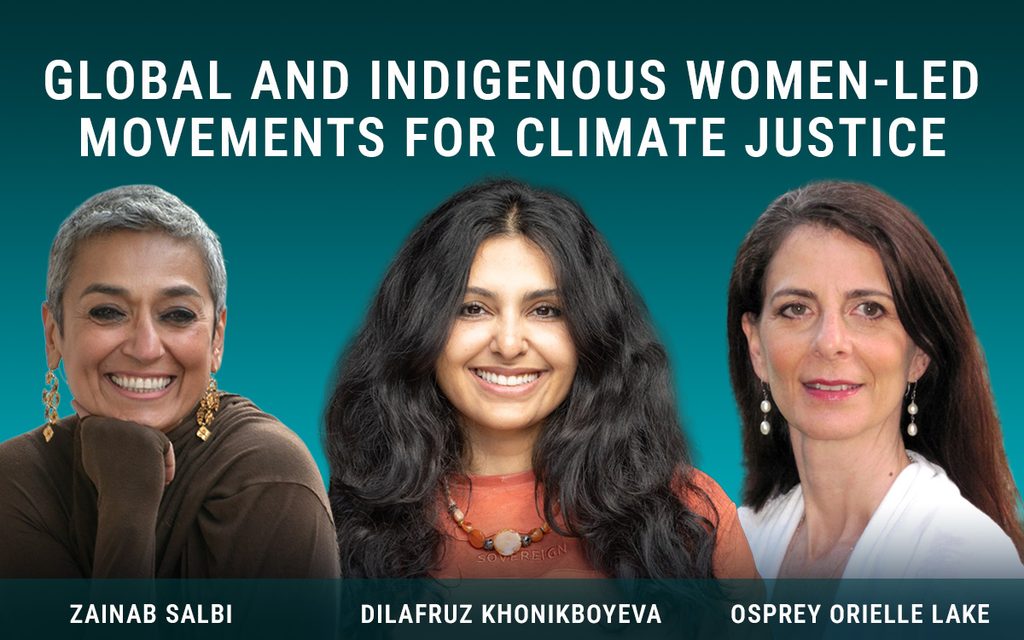
We invite you to listen to this excerpt of a panel conversation from the Bioneers 2026 Conference, which explores what these two vastly under-resourced constituencies have to offer in the quest to co-create regenerative landscapes and futures. With Dilafruz Khonikboyeva, Executive Director of Home Planet Fund; Osprey Orielle Lake, founder and Executive Director of Women’s Earth and Climate Action Network (WECAN); and Zainab Salbi, co-founder of Daughters for Earth.
Daughters for the Earth is a fund and global movement supporting women-led solutions to restore nature. Listen to their special four-part podcast series, The Hidden Economics of Remarkable Women.
Home Planet Fund supports Indigenous People working on the frontlines of the climate and biodiversity crisis around the world. Read their 2025 Impact Report and learn how you can support their work.
Women’s Earth and Climate Action Network is a solutions-based climate justice organization established to engage and unite women worldwide in policy advocacy, on-the-ground projects, trainings, and movement building for social and ecological justice. Join their Women For Forests campaign and make a public comment by October 6th to save the Tongass Rainforest of Alaska.
Featured Media
Listen: Eriel Tchekwie Deranger featured on For the Wild podcast
Host Ayana Young in conversation with Eriel Tchekwie Deranger (Athabasca Chippewan First Nation), President of Indigenous Climate Action, about the ongoing Indigenous Tar Sands Campaign and more.
Read: Collective Power: The struggle for protection for land and environmental defenders
The investigative organization Global Witness reports that in 2025, at least 124 people were murdered defending lands and waters from destruction. Serious threats, intimidation, and smear campaigns also continue, according to the ALLIED network of human rights monitors.
Watch: The Climate Emergency Mixtape
Sollisai Sistahs, Tamil Nadu’s first all-women rap crew, use hip-hop as a voice for resistance, identity and change. Their music celebrates culture, sisterhood and community while challenging social norms.