LFF Volume #30: Young Women Leading: From Cultural Memory to Political Action

This is Volume #30 of the Leading from the Feminine newsletter, a vibrant resource in the flourishing world of leading from the heart, hands and spirit.
Subscribe to receive the newsletter straight to your inbox.
At the Water’s Bend: Young Women & the Rights of Nature
What happens when young women draw on the wisdom of their ancestors to transform the laws that govern their tribal communities? A new generation of Indigenous leaders are doing exactly that: bringing ancestral values and the essential work of protecting the living world into the halls of their tribal councils.
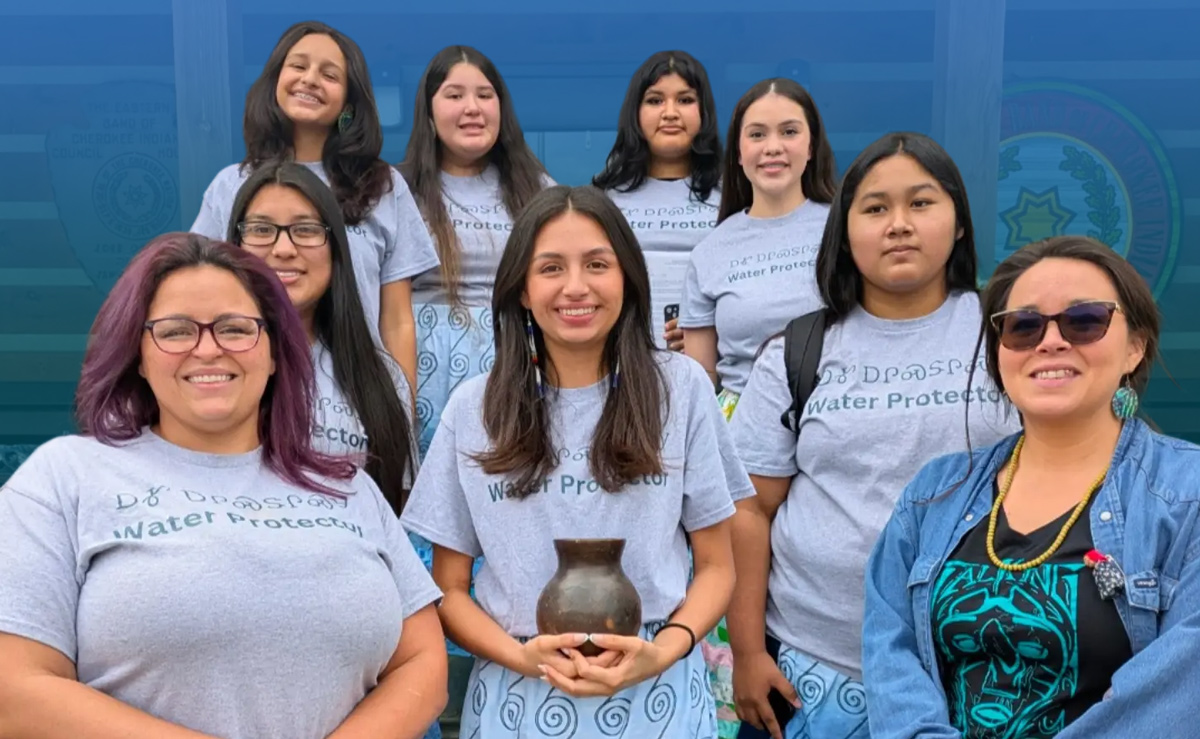
Our conversation with Jasmine Smith, founder of NAIWA Daughters and a Bioneers Native Youth Ambassador, offers a powerful glimpse into this catalytic moment in the Rights of Nature movement. As a teenager, Jasmine and a group of young Indigenous women organized to protect the Long Person—the Cherokee name for their interconnected waterways—and helped secure a historic Rights of Nature resolution through the Eastern Band of Cherokee Tribal Council. Their work is now laying the foundation for further efforts to restore and protect the watershed that sustains their home.
These young women are not embracing a new idea so much as reclaiming an old one: that we are nature; that water is our relative, rather than our resource; and that our responsibilities extend both backward and forward seven generations. These young leaders are showing what becomes possible when Indigenous knowledge, youth leadership and the power of collective action come together—and when the voices of young women help guide the work of restoring our Earth.
This is leading from the feminine at its most transformative: rooted in relation and shaped in community.
What follows is a transcript of a conversation between Britt Gondolfi, Bioneers’ Indigeneity Special Programs Coordinator and Jasmine Smith, Founder of NAIWA Daughters and a Bioneers Native Youth Ambassador. The transcript was edited for clarity and brevity.
A Conversation with Jasmine Smith, Founder of NAIWA Daughters
An introduction from Britt Gondolfi, Bioneers Indigeneity Special Programs Coordinator
I first met Jasmine Smith in her ancestral homeland, the Great Smoky Mountains, along the banks of the Long Person, the Cherokee name for the river and stream system that has sustained the Cherokee people for millennia. We were camping streamside at a Protecting Mother Earth gathering hosted by the Indigenous Environmental Network. Over several days, we attended workshops and strategic visioning sessions together, learning directly from Tribes working to protect and preserve our precious planet.
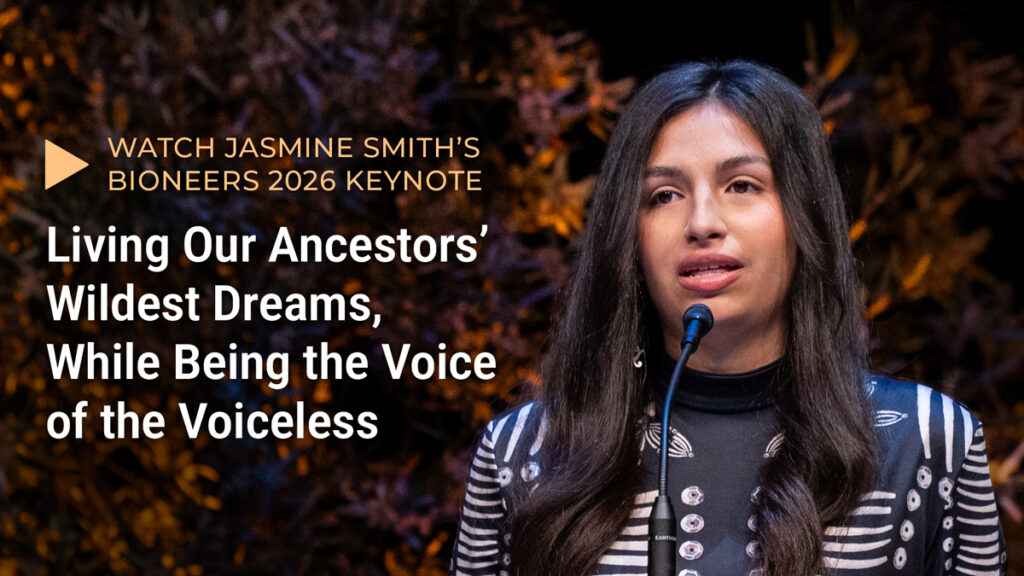
When Jasmine took the stage at an open mic, her powerful poem about the legacy of Cherokee women carried the audience 20 generations back and 7 generations forward, leaving them on their feet for a standing ovation. My 7-year-old was so moved by the Indigenous teen on stage that she found the courage to share an impromptu song of her own. That moment captured one of Jasmine’s great gifts: lifting up, inspiring, and empowering other young Indigenous women to speak up and join in.
At 16, she founded a junior chapter of the North American Indian Women’s Association so young women in her tribe could build a support network of sisters and aunties and get organized. After taking Bioneers’ Indigenizing the Law course, Jasmine connected her organization of Indigenous teenage girls with our Native Youth Ambassador Program. With grit, determination, brilliance, ferocious faith, and guidance from elders, parents, and mentors, these young women helped pass the first-of-its-kind Rights of the Long Person Resolution in the Eastern Band of Cherokee Council. The resolution created a task force and inspired the council to initiate efforts to undam a section of the Long Person on the Ewa River.
In this conversation, Jasmine shares the journey behind that work, the power of young Indigenous women organizing together, and what it means to indigenize the law by speaking for “that which cannot speak for itself.”
BRITT: Would you share how you decided to start the NAIWA Daughters, and who NAIWA (North American Indian Women’s Association) Daughters are?
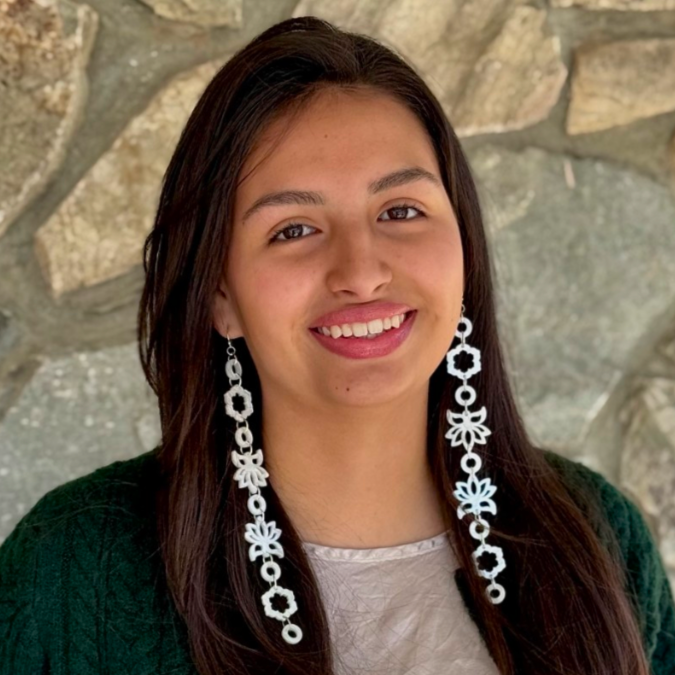
JASMINE: NAIWA is a nonprofit within our tribe with elder women members. They’re known for their cooking, but we always wanted to bridge the gap and have youth talk to our elders more. I remember the day we went in there; we were talking about creating this pilot program and building that partnership. I was so nervous talking to our elders about it. Now we’ve built those relationships, and they’re supporting our work, and we’re supporting theirs.
My third great-grandma, Ruth Littlejohn, is a very big pillar within our community. She helped found our fire station and raised money for our housing program. She’s a very impactful and strong woman. She and Ethylene Conseen and another woman they knew got together to create a network of Indigenous women across Turtle Island, and that’s when they started NAIWA. It grew from the Cherokee chapter into a national nonprofit.
NAIWA Daughters is also contributing and partnering with national NAIWA more. We’ve attended several national conferences, and this year, the national organization is coming back to the homelands. They’re having their conference in Cherokee, and we’re planning that and will host youth caucuses for the first time in a long time. They originally had youth as part of it, but it kind of dwindled away after my great-grandma passed away. So we’re getting to bring that back to our homelands.
My second great aunt is the treasurer for our chapter, and for the national nonprofit. We have four generations within NAIWA this year. So my aunt, my grandma, my mom, my sister, and me. We have four generations on our homelands, affecting change and starting youth caucuses. So it’s a really historic moment, and it’s part of our family and lineage.
BRITT: You’ve talked about patriarchy and the importance of Indigenous women having a platform and a place of leadership in the community. This is a very wise and grounded awareness to carry. How old were you when you started the NAIWA Daughters? How old are you now, and how did you get to this place of understanding?
JASMINE: I started NAIWA when I was 11, and this understanding of how Indigenous women lead goes back to our ancestral ways. As a community, we understood that women were pillars and lifegivers, and we honored them, but we were an egalitarian community. So everyone was equal, but we honored women for what they did for our community and how they gave life. Without them, we wouldn’t be here. That’s something that they passed down through generations.
Coming from a family that has such strong matrilineal women and matriarchs, it’s kind of in my DNA to lead. And harnessing this in NAIWA Daughters was an outlet for that, and it fostered that environment. And through, I think, intergenerational trauma, our community’s looking at how we can reconnect with those ancestral values.
It reflects within our tribe. I grew up not having seen Indigenous women within our Tribal leadership. And now, since the ‘90s, we’ve had four women on our tribal council. It was an honor bringing our resolution for Rights of Nature into the chambers, and there were already four women on the council supporting us. It was great, because it wasn’t like we were talking to a bunch of men. We got to see women who looked like us in those seats, and they have really been empowering, supporting us.
We’ve always seen, at least in my family, women taking leadership. And my mom’s someone I always look up to because she always takes that leadership role. And she does so much, but she does it the right way, and understanding when we do anything, we have to do it under a certain set of values. So it kind of goes back to those values of how we live and how we interpret things, and just a way of being.
BRITT: You all originally started with a Rights of Nature initiative for the Eastern hellbender salamander. Will you walk us through the journey and thought process, and how you ended up narrowing your focus to this immense water body? And share a bit about the Cherokee history of the Long Person?
JASMINE: Yes, Long Person’s what we call our waterways. Its head begins in the mountains, and its feet travel to the sea. That’s over roughly 800 miles. This is a personal connection for me because my Cherokee name’s Agasga, meaning “rain”. So when you’re a baby, in our community you’re introduced to water. And for us, traditionally, we went to water and had ceremony sometimes seven times a day. It was a daily routine to have that relationship.
The journey to create the resolution all started when we were tubing down the river, and we would have to stop all the time because tourists would stack rocks, which disrupts the ecosystem and the homes of the juwa, the hellbender salamander. We got so frustrated, we wanted to do something about it. So we started conversations, and thought, “what if we made a resolution that says you can’t do this?” Then we talked about advocating for the land. We didn’t really know about Rights of Nature efforts until we met you. We understood this isn’t a new concept, it’s a cultural concept, something we’ve done since time immemorial, advocating for nature, and being a voice for the voiceless.
We submitted a public comment, and that was one of our biggest community events. We had over 60 youth participants and adults come in just one night, planned out the public comment, wrote it as a community, and advocated for the juwa. We even had a survey about how many of the adults here had seen a juwa, and three or four raised their hands. Then we asked the youth, and nobody raised their hand. That’s a connection point that we’re losing because our waters have been unclean, and the hellbender has always been an ecological count, a mark, for us. What we say is that if the water flows over its back five times, it’s clean enough to drink. And what is it telling us when the juwa’s going endangered, and it’s going extinct? The juwa has been around since the dinosaurs. It survived all of that, and it’s starting to be endangered now. So what are we doing, as humans, for it to be going extinct? It’s a cultural loss as well.
This resolution has opened many doors for other projects, like the dam project. We’re working on undamming one of the big parts of our Long Person, and reconnecting the sicklefin redhorse fish with the juwa. They haven’t been in connection for almost 101 years.
But it all ties back to our water. We are water. Water is life. We couldn’t do any advocacy for land without talking about water. You can’t talk about Cherokee people without talking about water. You can’t talk about our homelands without water, because it is the center of Cherokee. If you look at where we lived traditionally, it was always in a water bend, and the importance of water to us has always been there.
Featured Media
Watch:
Bioneers Conversation: The Rights of Nature Movement in Indian Country and Beyond: From Grassroots to Mainstream
Bioneers Keynote Talk: Coley Kakols Miller – Undam the Klamath: The Fight Isn’t Over Yet
Read:
From Atmos: The Rights of Nature: Rewriting the Law For a Living Planet
From Mosaic Environmental Fund: Native Youth Network Spreads Rights of Nature
Listen:
Bioneers Radio & Podast episode: Indigenous Women Rising: Upholding the Hoop of Life
Indigeneity Conversations Podcast Series: Indigenize the Law: Tribal Rights of Nature Movements with Casey Camp-Horinek | Part 1 & Part 2
To Learn More & Get Involved in the Rights of Nature Movement:
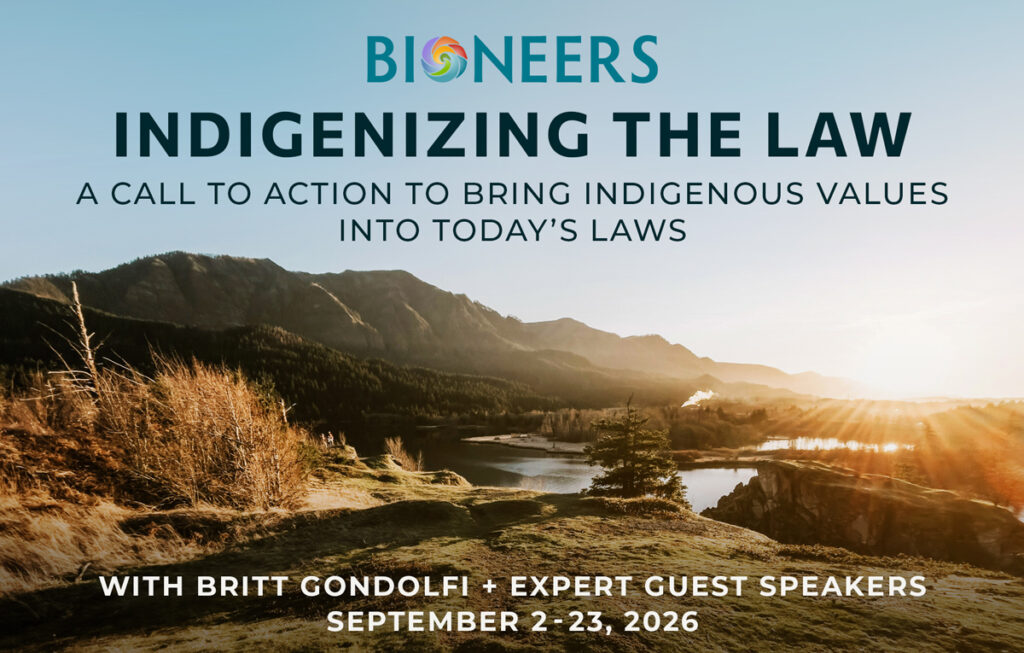
Through four interactive sessions, we will explore the connections between tribal sovereignty and environmental governance, learn how Rights of Nature laws are being developed and defended, and see how these movements intersect with community organizing, youth leadership, and local action.