The Native American LandBack Movement Reaches Urban America

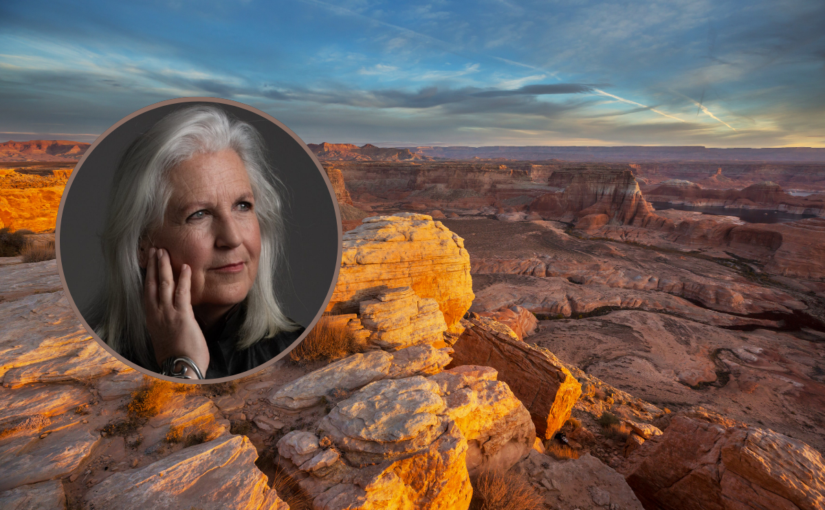
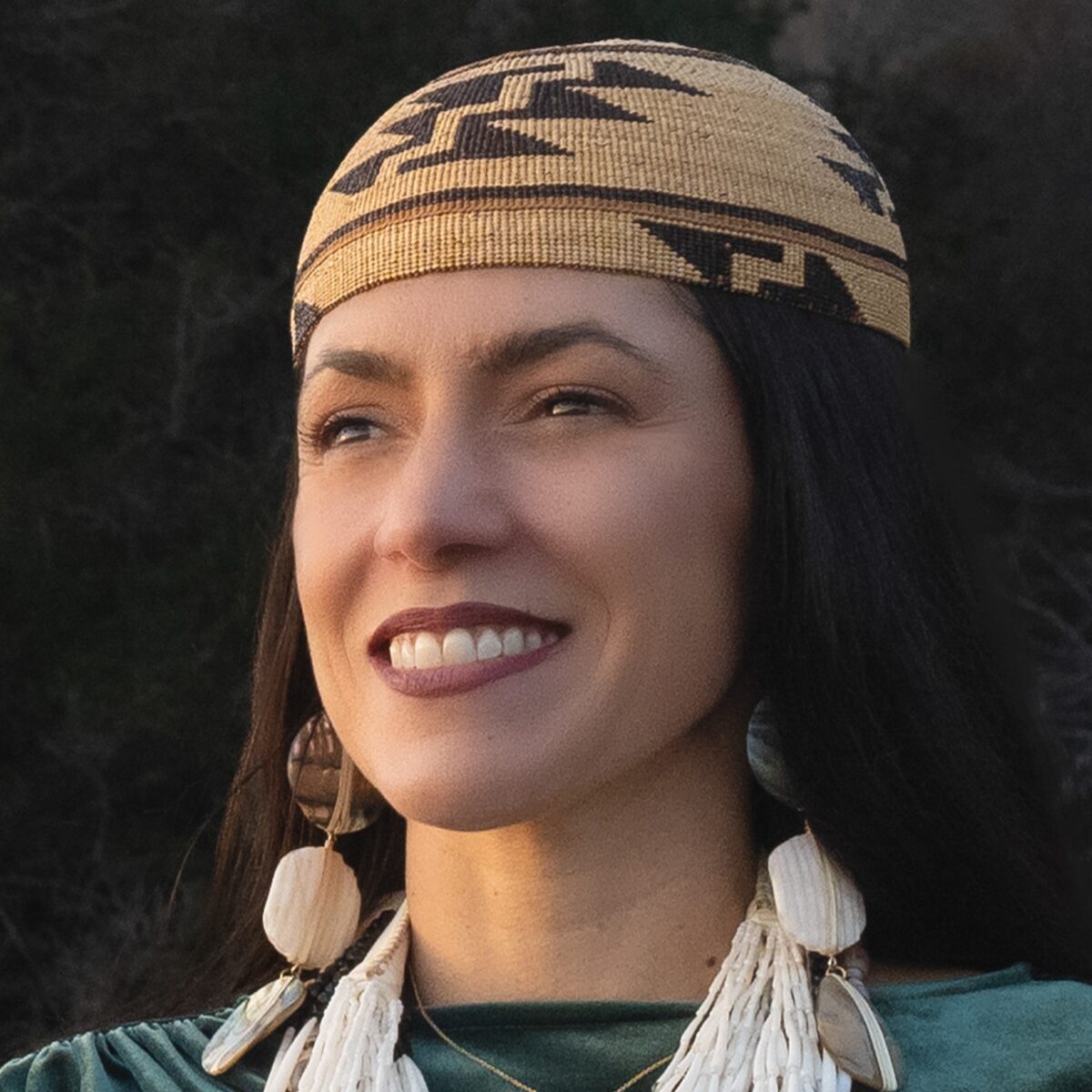
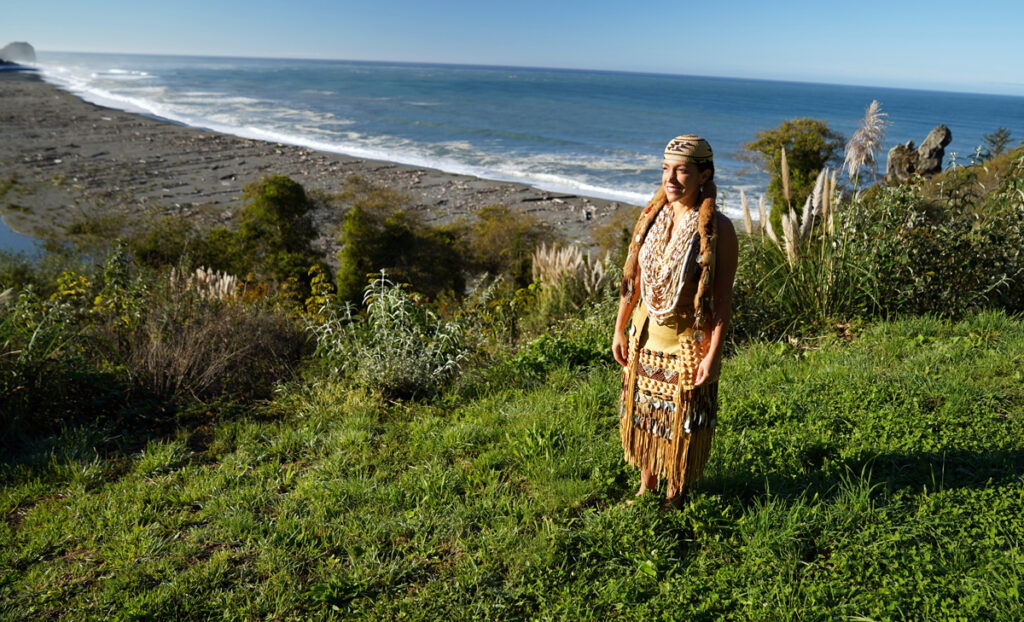
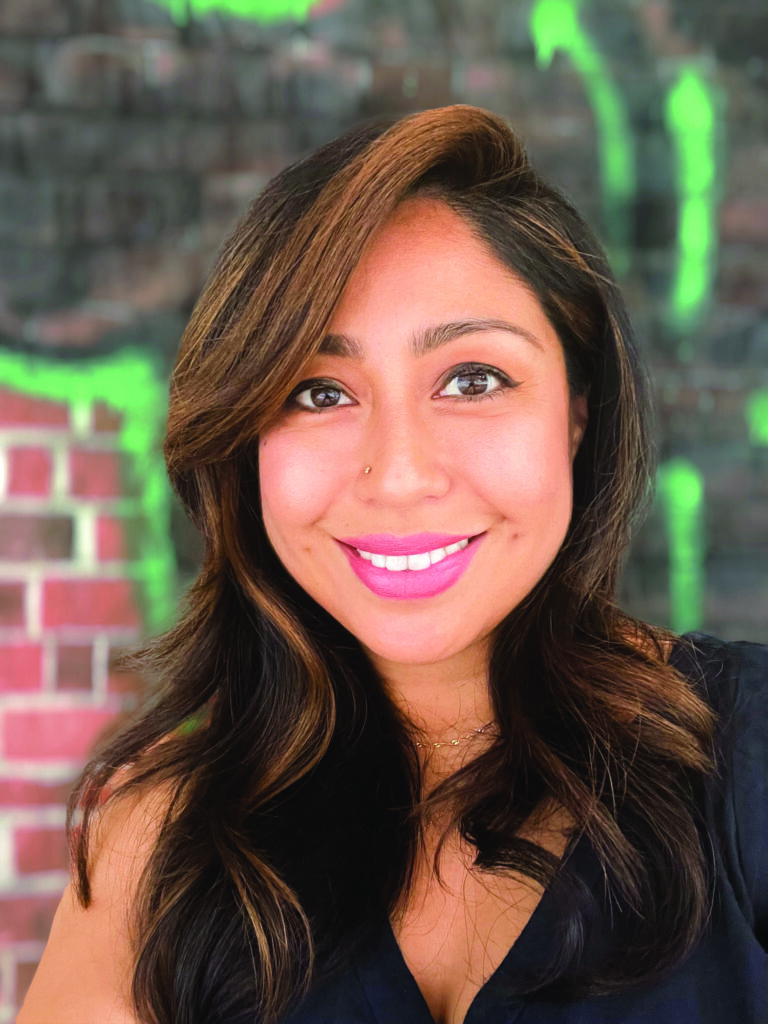
Corrina Gould is a celebrated activist of the First Peoples of the Bay Area and a leader in the LandBack Movement. She has helped forge a model for returning stolen land to Native American Tribes and restoring sacred sites in a defiant act of remembrance and resistance against cultural erasure.

Featuring

Corrina Gould, born and raised in the village of Huchiun (now known as Berkeley CA), is the Tribal Chair for the Confederated Villages of Lisjan Nation and co-founded and is the Lead Organizer for Indian People Organizing for Change, a small Native-run organization; as well as of the Sogorea Te’ Land Trust, an urban Indigenous women-led organization within her ancestral territory. 

Credits

  • Executive Producer: Kenny Ausubel
  • Written by: Britny Cordera and Kenny Ausubel
  • Senior Producer and Station Relations: Stephanie Welch
  • Associate Producer: Emily Harris
  • Producer: Teo Grossman
  • Host and Consulting Producer: Neil Harvey
  • Additional audio recordings courtesy of the Sacred Land Film Project at the Earth Island Institute and Stewie G
  • Music provided by: Nagamo Publishing and APM

Resources

Sogorea Te’ Land Trust

Landback: Restoring People, Place and Purpose
A conversation with Cara Romero, Corrina Gould, PennElys Droz, and Kawenniiosta Jock

Corrina Gould – Resilience and Rematriation | Bioneers 2025

California Genocide and Resilience and Returning to What Was Lost and Stolen with Corrina Gould | Indigeneity Conversations Podcast Series

This is an episode of the Bioneers: Revolution from the Heart of Nature series. Visit the radio and podcast homepage to find out how to hear the program on your local station and how to subscribe to the podcast.

Subscribe to the Bioneers: Revolution from The Heart of Nature podcast


Transcript

Neil Harvey (Host): LandBack is a Native-led movement that has existed, really, since European colonists first forcefully began seizing lands from Indigenous peoples who have inhabited and continue to care for them since time immemorial.

In the wake of centuries of land theft and broken treaties, the Landback movement has been garnering recognition and support as a way to repair these injustices and to heal the country’s relationships with its First Peoples.

Many of the lands that were illegally stolen and remain unceded are not by accident–often in the most wealthy, and expensive real estate in the country. It was also no accident that many California tribes’ treaties were never ratified, and so the tribes were not only decimated but also did not gain federal recognition with sovereign nation-to-nation status.

Unratified treaties impede a tribe’s nationhood as a self-governing entity. This continues to be used to prevent Native peoples from gathering freely and living on sacred lands. Defending these sacred sites is difficult for California tribes that do not have federal recognition.

This is the case with Corrina Gould’s tribe, the Confederated Villages of Lisjan/Ohlone, located in the San Francisco Bay Area.

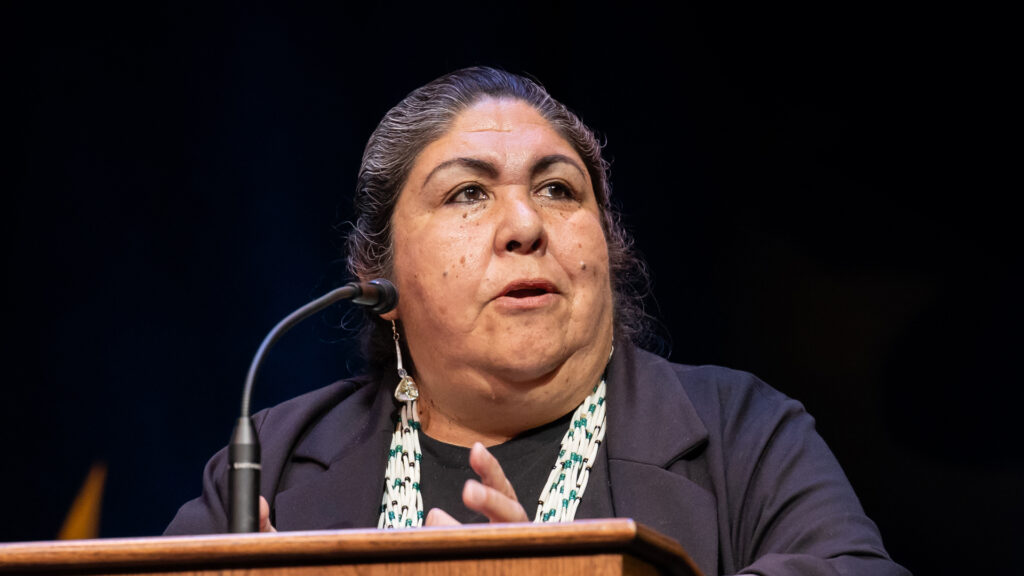
Corinna Gould spoke at a Bioneers Conference…

Corrina Gould (CG): I am often asked to come and do a land acknowledgement, and that’s always interesting to me. Right? Because land acknowledgements didn’t start here for a while. I mean, just a short while ago, right? But when we do land acknowledgements, it’s really about building reciprocity. It has to come with action items. It cannot just be words that we say and wrote. Many of us grew up saying the Pledge of Allegiance, and we can say it by rote but don’t remember what those words mean. And so the same cannot be true for land acknowledgements..

We cannot say ‘Welcome to this territory of Huchiun, the territory that embraced my ancestors, that we were created upon, that we were born to these lands and waters, that we have faced three waves of genocide and thank you very much. And so next on the agenda…’ [LAUGHTER] We can’t do that. Right?

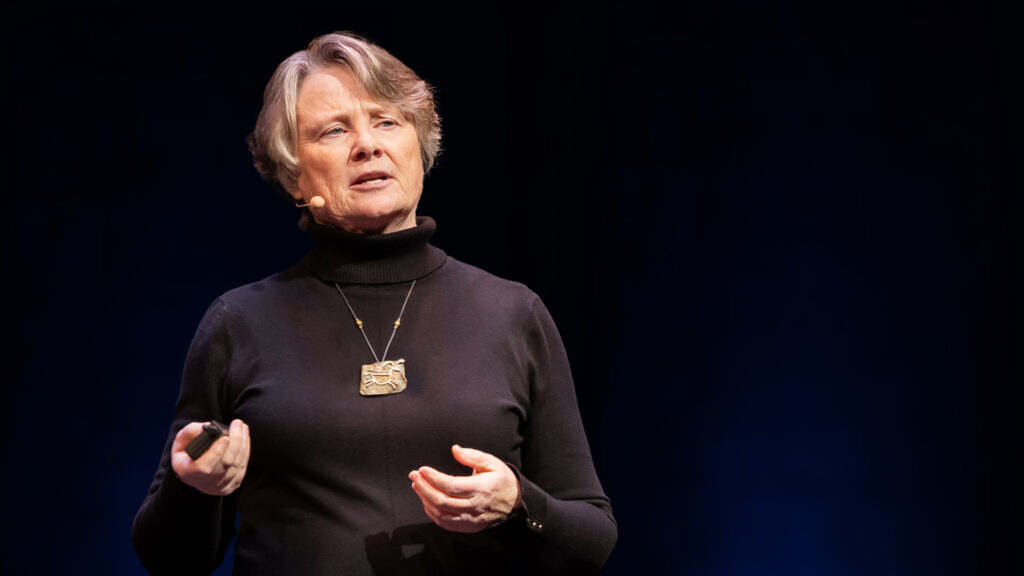
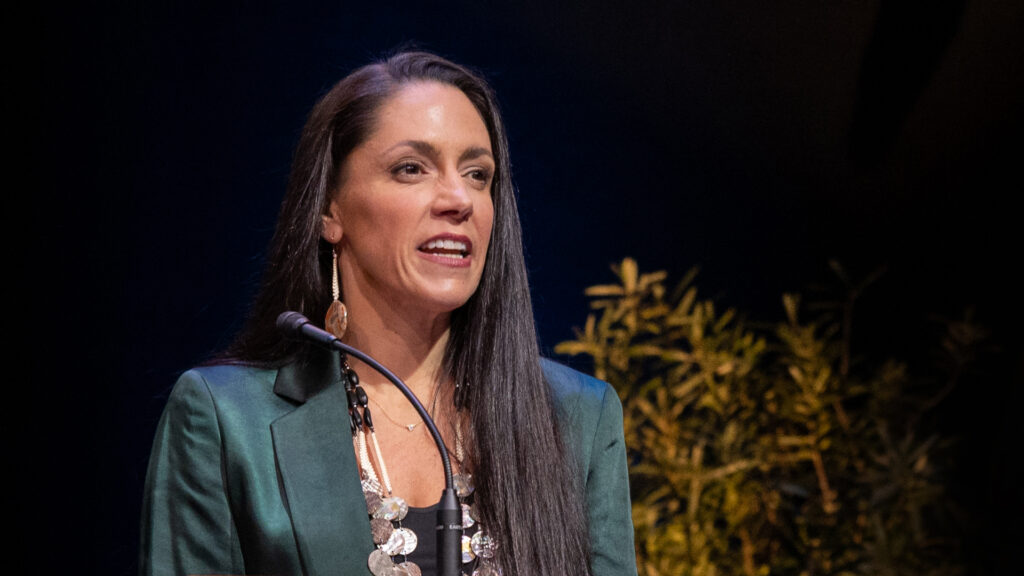
Corrina Gould speaking at Bioneers 2025. Photo by Nikki Ritcher

So in this kind of way, it’s a weird kind of acknowledgement of this land, this land that we are asking people to come in to be good guests, to be good guests on our land so that we can be good hosts, that as Indigenous people, we are supposed to take care of people that come into our territories, gift them and have good times together, make sure that they get to the other side or back home safely. And yet, over all this time of colonization, we’ve not been able to be the good hosts that we’re supposed to be. And then we’re asked to do land acknowledgements.

Host: Corrina Gould is a celebrated leader and activist of the First Peoples of the Bay Area. As a leader in the Land Back movement, she’s committed to Indigenous sovereignty, cultural resurgence, and helping all people come into good relations with the land. The ancestral village sites of the Confederated Villages of Lisjan — some over 5,000 years old – are scattered across what’s now called the East Bay.

As the tribal chair of the Confederated Villages of Lisjan, she co-founded the Sogorea Te’ Land Trust with Johnella La Rose, a Shoshone Bannock activist. The intertribal, women-led, Indigenous urban land Trust works to rematriate stolen Ohlone land. Unlike “repatriation,” which centers on legal return, rematriation is about restoring sacred balance to heal the relationship between people and land, especially through the leadership and ceremony of Indigenous women.

CG: Tuushtak is our sacred mountain that we are born to. We are born to this mountain through a creation story of our own. We are the Lisjan people born to that waterway, and my ancestors have been here since the beginning of time. They were actually created at the top of this mountain. 

People came from different places—Spanish came and Mexican ranchers came, and the current occupation of the United States government. And when people came here, other people, they didn’t bother to ask the Indigenous people, “How should we live on this land? How do we come in right relationship with the waters? How do we ensure that everything, every being, survives for the next seven generations?” Instead, they named things after themselves, or changed the names of things that have been here for thousands of years. Made people forget the language that was spoken on these lands, forced them into slavery. People died of many different diseases. 

Host: The story of California’s Native Peoples is not only one of dispossession. It’s also one of survival, resistance, and deep relational knowledge to each other and the land. Even without federal recognition, Corrina, the Sogorea Te’ Land Trust and the Native women she’s worked with for decades have built a movement to return land not just in title, but in spirit.

CG: And so this land back movement, it was trying to figure out how to get 9,000 ancestors home from U.C. Berkeley. And the hundreds and hundreds of ancestral remains that are in universities and museums and other places in the Bay Area. And as a non-federally recognized tribe, what does that look like when you have been erased from your own place of origin?

Over 25 years ago, we started to do work in the Bay Area about bringing recognition to the generic term of Ohlone, that we were still here, and that we walked to shell mounds in the Bay Area starting in 2005, and we walked from Vallejo down to San Jose and up to San Francisco with hundreds of people from all walks of life, stopping at these different burial sites of our ancestors that were under railroad tracks and parking lots and schools and bars and streets. And we laid down prayers for our ancestors, asking them to remember us as we were remembering them.

Host: Some of the most important sacred sites for Corrina’s tribe are traditional burial grounds of the Ohlone people called Shell Mounds. Her ancestors created these as monuments, burying their people in the land and covering them with soil and shells, sometimes as tall as three stories high.

Corrina Gould co-founded the grassroots organization Indian People Organizing for Change, which works to defend and preserve sacred Ohlone shell mounds.

Video by Stewie G

CG (Speaking at West Berkeley Shellmound, 2021): We do not stand here as Lasjon people alone. We stand here with all of you who have made your homes on our lands…

Host: Since 2005, Native women in the Bay Area have led the annual Shellmound Prayer Walk. Covering nearly 280 miles, the pilgrimage is rooted in prayer, but it’s also an act of reclaiming history, a call to honor ancestors whose stories were nearly erased.

CG (Speaking at West Berkeley Shellmound, 2021): This is living in reciprocity, this is rematriation, this is what it looks like to live in community, This is what it looks like for our people to stand together against oppressions of all kinds. We are here to take down the walls, we are not defeated…

Video by the Sacred Land Film Project

Host: One of the most sacred sites on the walk is the Sogorea Te’ shellmound in Vallejo. The shellmound was flattened in the early 1900s by private landowners. Over time, the land changed hands until it was designated for public park development.

In 2010, the City of Vallejo approved a $1.5 million development plan whose construction would cap the remaining shellmound under a layer of soil.

Groups including Indian People Organizing for Change, Sacred Sites Protection, and Rights of Indigenous Tribes pushed back. They wanted the shellmound and the wetlands around it to remain undisturbed. They called for the right of Native peoples to pray for and with their ancestors on this sacred land. Out of this struggle came the birth of the Sogorea Te’ Land Trust.

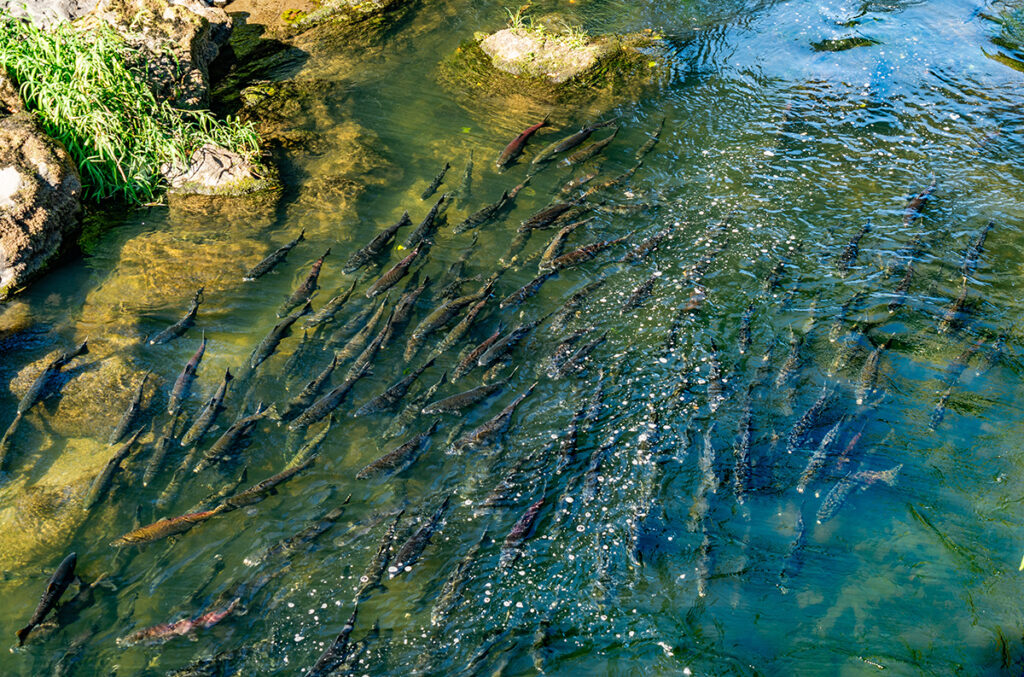
CG: We did this work all on our own, without a nonprofit, out of our own pockets, really. Then in 2011, those who live in the Bay Area may remember that the City of Vallejo actually filed for bankruptcy. And when they filed bankruptcy, there were two shellmounds that were along the Carquinez Strait, the last 13 acres of open space on that place, a place that connects our bay to our rivers to the place where our salmon come up and our salmon go back into the ocean; this place that had been a place that my ancestors had held as one of the last strongholds before they got pulled into Mission Dolores in San Francisco.

For 109 days we held that site with the sacred fire that was lit. And people from all walks of life came and put down prayers at that fire, hoping to save it from a destruction that was going to happen, because although the City of Vallejo had filed bankruptcy, they gave the park district $30,000 worth of permits for free in order to destroy that site.

And so we made a callout, because we had done these walks, because people understood what shellmounds were now, because they understood that we were still alive, they came and they stayed with us, and we created a village there. And we were surrounded by Coast Guard and police, and it was an interesting time.

But that land changed us.  It made us somebody different. We remember what it was like to be human beings and to live in community again, and to acknowledge each other and to share food and prayer with one another on a daily basis, to put down prayers every morning together and at night, and to hold strong together.

And on day 99, two federally recognized tribes stepped in. It was not their territory, but they stepped in and they created the first cultural easement between two federally recognized tribes, a park district and a city that saved that land from being developed forever. [CHEER] It was because of that. Yep. [APPLAUSE]

But it was because we stood strong. It was because we were the ones that said that site needed to be protected. If we had not stood our ground, that land would be destroyed today. That place, Sogorea Te’, that village site, is the place that still holds that sacredness to us, that we continue to go and have ceremony for our salmon there, joined by many other people, including my good friend from the Winnemen Wintu, the spiritual leader and chief, Caleen Sisk. And we’ve been doing run for salmons up and down, from Shasta down to the ocean, and the ocean up to Shasta, going on eight years now.

Host: By this time, the idea of Landback was spreading in unanticipated ways. Inspired by taking part in the seismic Standing Rock pipeline protests, young people at an organic nursery in East Oakland called Planting Justice offered a quarter-acre of their land to Sogorea Te’.

CG: And when we looked at this quarter acre of land, it had transmissions on it and pieces of concrete, and all of this stuff. Right? And we said, yes, we would take back this land on a couple of conditions. We would pay Johnella’s salary for a year so she could make relationships with those people that were working that land; that we would clean up that land together, and that we would see how far it got, and if those relationships were good.

And so we did. Over the first year, we cleaned up that space. And my ancestors, I think that they—They always tell me these funny things in different ways. That piece of land is right along the Lisjan Creek, who we are named after – our waterway. It’s a half-mile walk from my house. And underneath the 880 freeway, it’s under fill. About a half a block away, one of our shellmounds were destroyed in order for them to put that freeway up. And so I know where that land sits is a place that my ancestors that had a village site for thousands of years, and that they were bringing it back to us in this totally different way.

Host: Sogorea Te’ innovated by creating an agreement with the nonprofit to be able to use the land rather than buy it. The group has since gone on to create several more such arrangements, as well as actual purchases.

CG: And we recently were the first non-federally recognized tribe in California to receive almost five acres of land back from a city, the City of Oakland. [APPLAUSE] 

So landback comes in a lot of different ways when you’re doing this in your own territories and you’re not federally recognized, and you’re using a nonprofit in order to do it. But I always say that if you open up your imagination, and people come with a good idea, that you say yes– we figure out how we do that kind of work together.

Host: When we return, we’ll visit the West Berkeley Shellmound—believed to be the first Ohlone village along the Bay shoreline. It looks like just a parking lot today, but beneath the asphalt is a 5,000-year-old sacred site. Once again, developers had their eyes on it. But Corrina Gould and her community stood their ground.

You’re listening to the Bioneers: Revolution from the Heart of Nature.

Utilizing the U.S. government’s 1856 Coast Survey map, landscape architect Chris Walker and filmmaker Toby McLeod set out to illustrate 150 years of changes to the landscape of the West Berkeley Shellmound (shellmounds shown in yellow). Animation of maps by Bioneers. Learn more at shellmound.org.

Host: The West Berkeley Shellmound near the shore of the San Francisco Bay was one of the largest, oldest, and most sacred sites in the Bay Area. Built over thousands of years by Ohlone ancestors, it stood at 20 feet within a vibrant fishing village and was a place of ceremony and a burial ground. But over time, settlers moved in and destroyed the Shellmound. By 1950, what was left of the site was covered in concrete. A proposed 5-story condominium and retail complex would dig 10 feet underground to construct a parking garage.

Corrina Gould has been part of the long struggle to protect and restore this last undeveloped portion of Ohlone ancient village sites.

CG: People from all walks of life came together and began to speak against a development happening on this 2.2 acres of land that would have continued the erasure of the Lisjan people.

Photo by Brooke Anderson | @movementphotographer

Host: After eight years of tireless organizing, protests, prayer walks, and legal battles, the Sogorea Te’ Land Trust secured the West Berkeley Shellmound in what’s now recognized as the most significant urban Land Back victory in California history. The Trust secured a $20 million Shuumi Land Tax contribution from a family foundation, providing the bulk of funds needed for the City of Berkeley to purchase the land. The City then adopted an ordinance authorizing the acquisition and transfer of the land to the Trust, which will hold it on behalf of the Confederated Villages of Lisjan.

Video by the Sacred Land Film Project

CG: We’re creating something way bigger than ourselves, this imagining this place of opening a creek again where water should always flow free. For us to be able to open it up and to sing to that water again in the way it should be sung to. To allow children to laugh and play in water like that is good for the water and it’s good for human beings. Water’s alive. To allow us to put our feet on the ground and to dance the way we’re supposed to dance is an amazing thing. For 200 years we haven’t been able to do that in our own territory.

To create a mound that’s possible, a mound that is either the one we imagine now, or to recreate a shell mound so that people can actually see what these were like. To find a place to re-inter our ancestors, to give dignity back to those ancestors, but also to the people that are living today. And not just the Ohlone People, but it gives dignity back to everyone that lives in our territory now. That’s the importance of doing this work, the importance of a new vision that’s there that we can bring people to. Where do you take people that come here, people from all over the world, and talk about who the Ohlone people are? Berkeley could be the first place. It was the first place my ancestors put that village, and so it should be the first place that stands up for those ancestors as well.

And we came up with a dream, a dream of freeing the West Berkeley Shellmound, and in doing that, she freed us. We were able to imagine having ceremony on this land, to building up and never disturbing what’s underneath, to creating a cultural center that could be there for every fourth grade child that has to learn about my ancestors, to not just learn about the history, but the resiliency of our people. [APPLAUSE]

Host: There’ve been other significant landback transfers throughout Turtle Island.

In 2020, the Supreme Court handed down a historic decision that nearly half of Oklahoma – a whopping 3 million acres – in fact belongs to Muscogee Creek Nation. That same year, a 1,200-acre ranch was returned to the Esselen tribe in Big Sur in California.

By 2025, California had allocated $107 million to ancestral land return that has facilitated the transfer of over 30,000 acres of land back to tribes. Well over half of California’s State Parks- covering 1.6 million acres – are governed by co-management and co-stewardship agreements with Native American tribes.

These are astonishing advancements for what was once an unthinkable idea.

CG: So let’s figure out how do we work together in reciprocity. Think back to where you live. Who are the First Nation people on whose land you live on? What is their real name? What is the language that they speak? What do they stand for? And how can you support that work that they’re doing? How do we say thank you and please? How do we ask permission? How do we not touch things that are not ours? These very basic things. [APPLAUSE]

These very basic things that we teach all of our children and our grandchildren how to be in good relation with their friends and their grandparents, and when you go to their homes, this is what we ask people to do. And this is what we’re asking for folks to do, to come in right relationship.

When we come in right relationships, when we work with Indigenous leadership, when we begin to see what our responsibilities are to the lands and waters and airs that we live, work and play on, we’re able to create magic. This is a time of great turning in the world. We are seeing this idea of land back, there’s this consciousness that’s happening, that people understand that settler colonialism has hurt this world, that capitalism is killing our Mother Earth. [APPLAUSE] 

We’ve seen a lot of things happen in history, but we have seen that people can come together and stand, and that when we fall backwards, when we listen to our ancestors, when we listen to the direction of Indigenous people, when we follow rematriation and Indigenous women’s work, that we can remember who we are as human beings, that we can pray for the next seven generations to have fresh water to drink, that they could have fresh air to breathe, that they could have good soil to grow food and medicines, and that we create a relationship with fire again so that we are not afraid.

Thank you, all relatives, for being here today. [APPLAUSE]

Host: Corrina Gould… “The Native American LandBack Movement Reaches Urban America”

The Quest to Decode Whale-speak

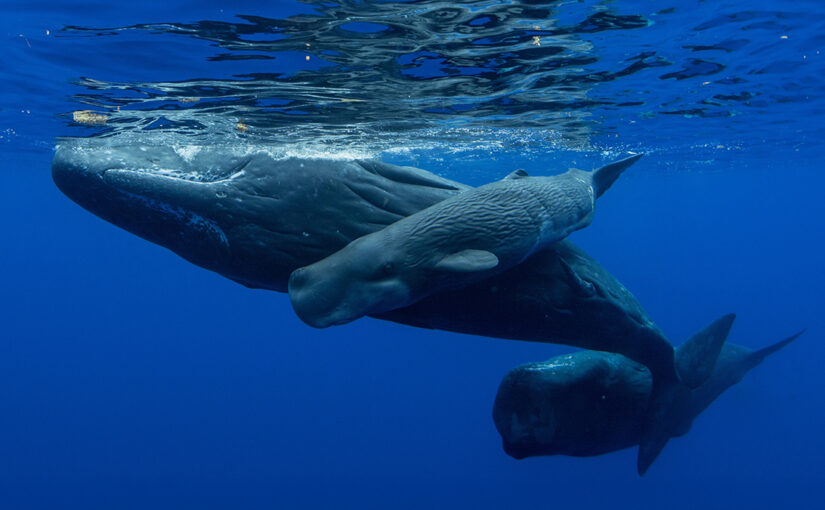
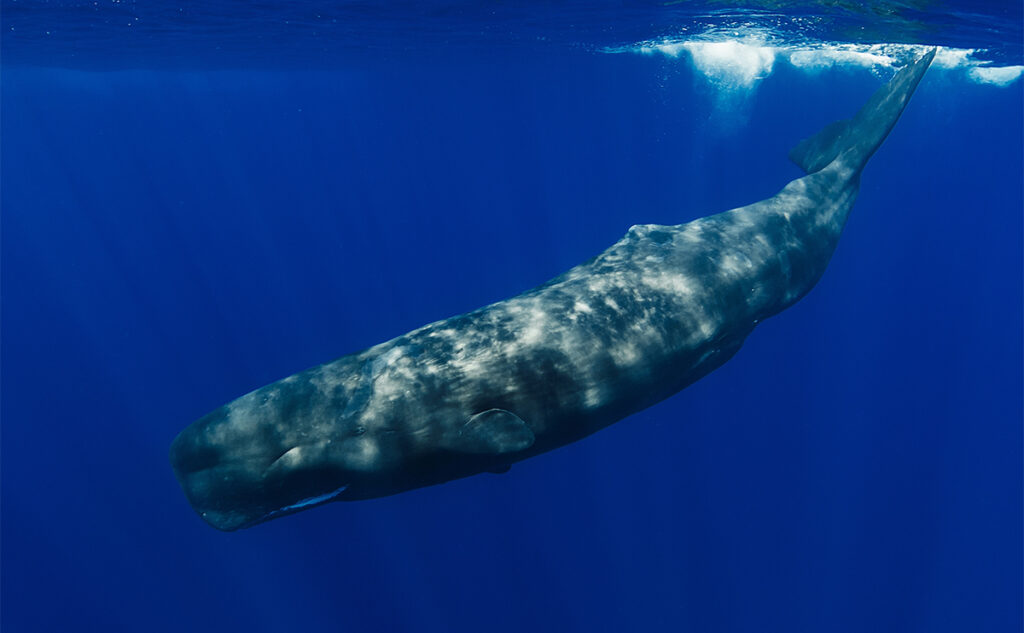
When members of Project CETI (the Cetacean Translation Initiative) witnessed the birth of a sperm whale, they observed a breathtaking scene of cooperation and communication that few humans on earth have ever seen. The extraordinary experience was both a scientific milestone as well as one more strand in the web of sperm whale culture that this innovative project is studying.

The Project CETI team leverages world-leading technology and science in a quest to understand nonhuman animal communication. At the same time, the scientists leading the project are keeping an ethical throughline, placing the health and well being of whales at the center of the effort. As we get tantalizingly closer to truly communicating with other species, the question becomes not only whether we can, but whether we should – and what the implications are if we do.

Featuring

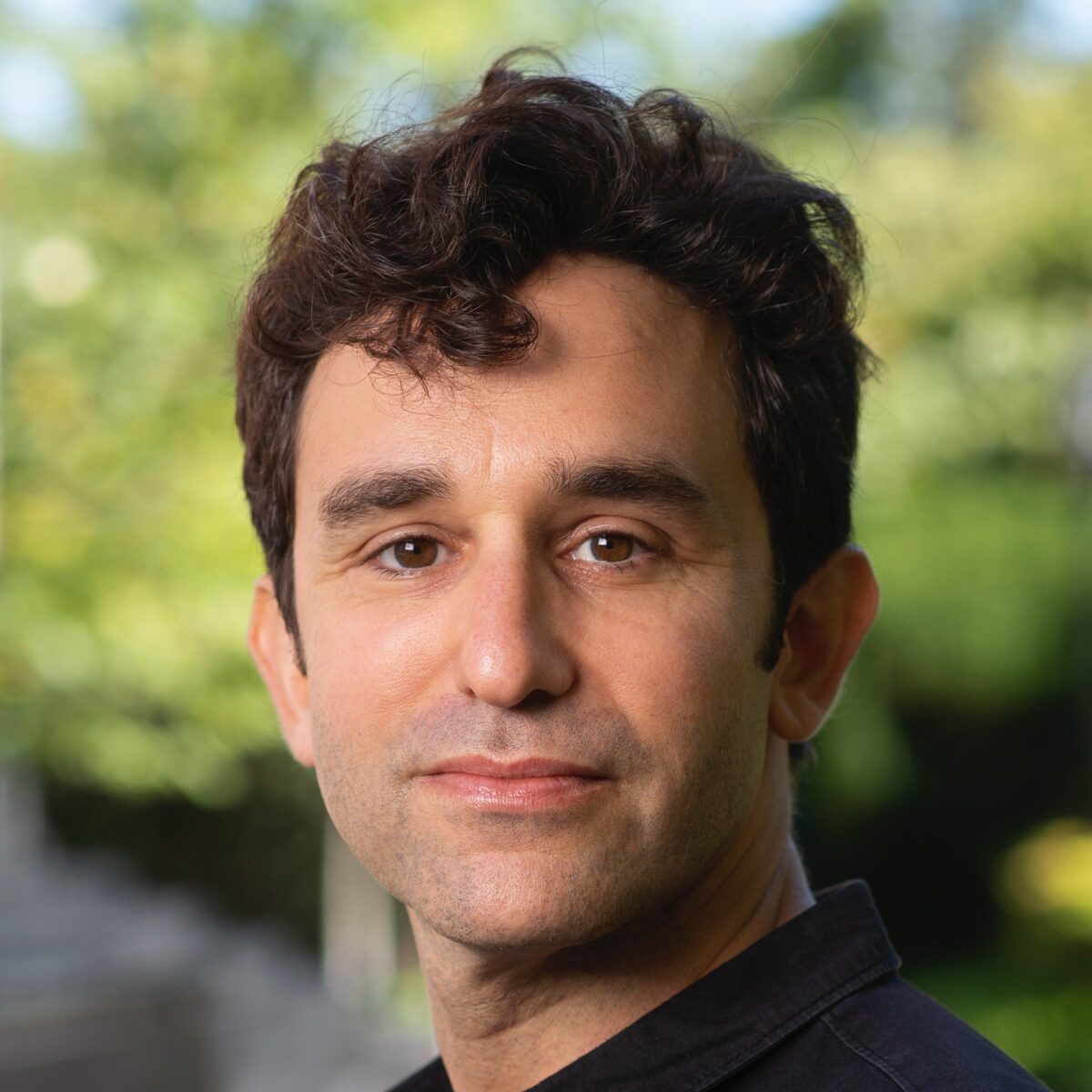
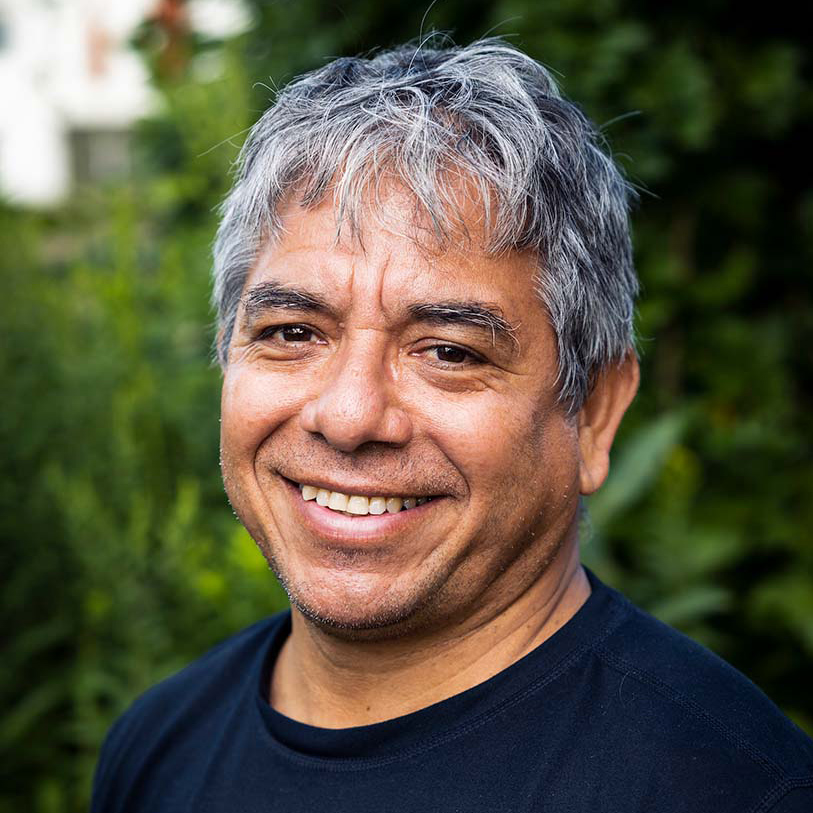
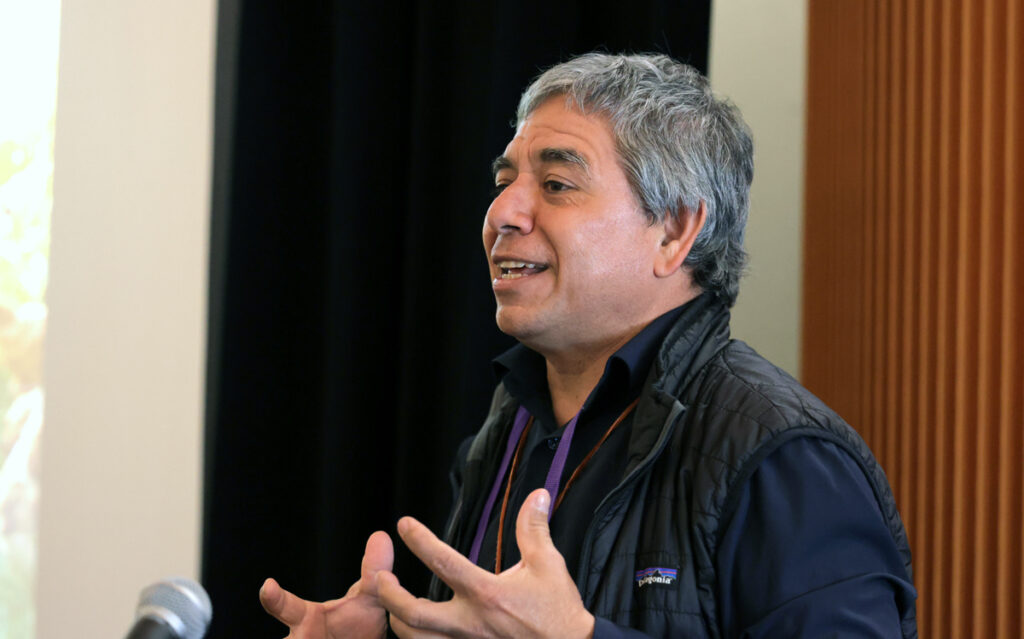
David Gruber is the Founder & President of Project CETI (Cetacean Translation Initiative), a nonprofit, interdisciplinary scientific and conservation initiative on a mission to listen to and translate the communication of sperm whales. He is a Distinguished Professor of Biology and Environmental Sciences at the City University of New York, Baruch College & The CUNY Graduate Center.

Credits

  • Executive Producer: Kenny Ausubel
  • Written by: Cathy Edwards and Kenny Ausubel
  • Producer: Cathy Edwards
  • Producer: Teo Grossman
  • Senior Producer and Station Relations: Stephanie Welch
  • Associate Producer: Emily Harris
  • Host and Consulting Producer: Neil Harvey
  • Production Assistance: Mika Anami
  • Interview Recording Engineers: Rod Akil at KPFA and Bill Siegmund, Digital Island Studios, LLC

This limited series was produced as part of the Bioneers: Revolution from the Heart of Nature radio and podcast series. Visit the homepage to find out how to hear the program on your local station.

Subscribe to the Bioneers: Revolution from The Heart of Nature podcast


Transcript

Neil Harvey (Host): In this episode, we meet David Gruber, founder and president of Project CETI: the Cetacean Translation Initiative.

The name deliberately echoes the groundbreaking SETI Institute – the Search for Extraterrestrial Intelligence. Both share a dream of communicating with intelligent life beyond the human species. Rather than searching deep space, Project CETI’s quest is the depths of the oceans on Planet Earth.

I’m Neil Harvey. This is “The Quest to Decode Whale-speak”.

As the Coast Salish Chief Dan George wrote: “If you talk to the animals, they will talk with you and you will know each other.”

Indigenous traditions such as those of the Coast Salish are closely attuned to hearing beyond human boundaries. Yet talking, and listening, to other animals is a shared experience across humanity—intuitive to anyone who has ever conversed with their pet. Within the Western scientific tradition, researchers have struck up conversations with chimps and parrots, while revealing language-like qualities in bee dances and meerkat calls.

However, faithfully translating other animals’ communication is a formidable endeavor – as is the question of whether it really constitutes language. Other animals’ perceptual worlds are radically different from ours. So, naturally, their communication is also profoundly different, which presents a mind-bending challenge to interspecies translation. Project CETI’s mission to crack the code of sperm whale communication is monumentally ambitious.

[SPERM WHALE CLICKS]

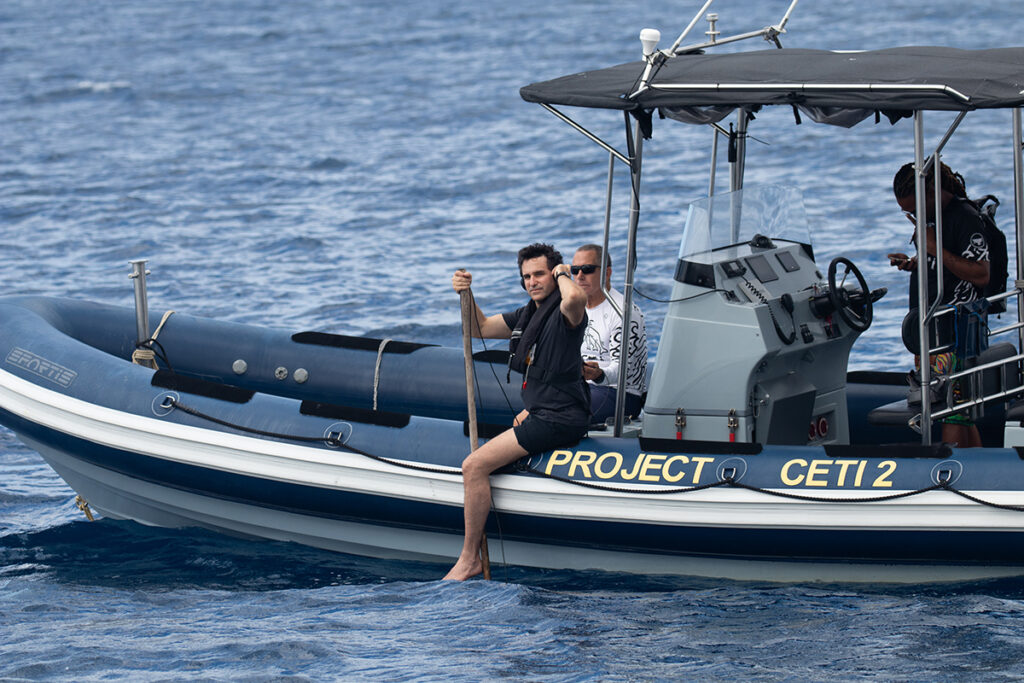
David Gruber and the CETI team study whales near the island of Dominica in the Caribbean. This is how they sound…

David Gruber and Yaniv Aluma on CETI 2. Photo © Michael Lees, National Geographic

David Gruber (DG): [AUDIO PLAYING] [CLICKS] They’re so social, living in families of grandmothers, mothers and kids, matrilineal populations in Dominica where there’s about 200 sperm whales that are almost there year-round.

We set up a 20-kilometer by 20-kilometer underwater listening/recording studio in Dominica. How we’ve kind of dreamed this up, is like, humans have invented all the technology, that we could do this; we could translate sperm whale language. And I think it reminded us all of when people started to look at the moon and be like, you know, can we go there? And they’re like “F=ma”, you know, they’re like, yeah, well you’ve gotta shoot the rocket, and then I’m going to get out and walk around it. It turns out there’s not that much to do on the moon. [LAUGHTER] So we’ve not been back that much.

But here, is like sperm whales! We live on a planet with sperm whales, and there’s still a couple hundred thousand of them. And they’re communicating in ways that are fantastic.

And going back to like Carl Sagan, you know: “Is it possible that the intelligence of cetaceans is channeled into the equivalent of epic poetry, history, and elaborate codes of social interaction? Are whales and dolphins like human Homers before the invention of writing, telling of great deeds done by, in the depths of and far reaches of the sea?” Like just these beautiful quotes. Like who knows?

Host: Whales loom large in our imaginations: their self-evident intelligence seems at once familiar and foreign. They have the biggest brains of any animal on Earth, and a humbling evolutionary history: Their ancestors went from the land into the sea nearly 50 million years ago.

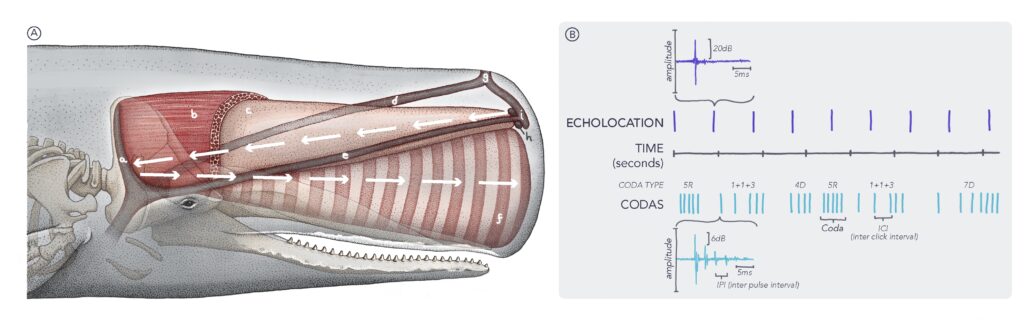
Sperm whales themselves have been around for about 20 million years – that’s eons before any human ancestor walked upright. Over those unfathomable timescales, they’ve evolved an extraordinary capacity for complex communication. They seem to talk to each other in a kind of whale morse code: sequences of clicks known as “codas” that repeat and overlap.

[WHALE CLICKS]

Though these codas sound nothing like human language, we do have some things in common with sperm whales. Like us, whales have rich social lives, with unique cultures that vary between groups. And like us, they’re mammals who learn to communicate by imitating the intricate sound patterns of their elders.

DG: All life came from the ocean; we’re almost like little bodies of seawater trapped in skin. There’s this group of relatives that went back in and started, you know, about 50 million years ago, this Pakicetus, this wolf-like thing that went back into the ocean, and the nose rolled over the head and became a blow hole, and the skin had to change. So it’s like when you’re in the bathtub too long, they needed to fix that. [LAUGHTER] And their blood changed so that they can dive for a mile and they could hold their breath for over an hour, which I don’t—I mean, that’s like yogi central. You know? These guys are OG karmic masters of breath work. [LAUGHTER]

And thinking about the nostrils rolling over the head, one of the nostrils becoming a blow hole, but then if you hold a whale skeleton, you’ll see there’s still the other small nostril that is being used, and they kind of snap this air back and forth.

Host: Biologists believe sperm whales’ sound is produced by snapping this air along the right nasal cavity, which has twists and turns. It winds through a series of air sacs, spermaceti oil and fatty tissue to a pair of ‘phonic lips’ at the front of the head. This complex journey, they think, allows the whale to amplify and focus sound, giving it a vast sonic repertoire.

DG: Whales are living in this like deeply sonic world. Huge part of their brain is dedicated to sound processing, and echolocation is such a major feature of how they’re navigating living their lives, how they’re even producing the sound in their head and magnifying that sound to incredibly loud—They could produce it almost twice as loud as an airplane taking off. And they could focus it on very tiny fish or they can kind of have the sound permeate outward. They can even click right into each others’ heads using bone conduction.

Just phenomenal, the way in which sperm whales hear the world, and it would be equivalent to like us describing how our eyeballs work. To say, well, I open my eye and I see all these things, and I can sense depth. You know? It’s likely that their way of hearing echoes returning, and it gets processed in their lower jaw, similar to us describing how our eyeballs work.

Host: Whales’ sonic skills are essential for navigating ocean life. They sing different types of clicks for long-range sonar, for close-range hunting, and for socializing.

DG: There’s the echolocating, when they’re using it to kind of almost see in the dark, and you’ll hear them when they go down, it’s like click, click, click, click. And then as they’re getting closer to food, it’ll go faster, faster, faster, then you hear a gulp. [LAUGHTER] They’re very good at eating squid.

But they’re also—at the surface, they communicate with these codas, which in Dominica, the one that you hear all the time is just like click, click, click-click-click, the 1, 1, 3.

There’s actually regional dialects. So among the clans of whales in Dominica, each clan, even though they’re living in the same place, has a specific dialect, like it could be British and Scottish-type accents that are among them. [LAUGHTER]

Illustration by Alex Boersma for Project CETI

[WHALE CLICKS AND SOUND OF OCEAN]

Host: David’s colleague, marine biologist Shane Gero, has been observing the Dominica whales for 20 years. It was Shane’s work that revealed the unique codas that signal group membership, or cultural belonging.

Deciphering yet more meanings within this complex system of clicks and pauses needs diverse facets of expertise – from the mechanics of underwater recording to a deep knowledge of whale behavior, to the computational codebreaking required to unscramble the click patterns. The immensity of the project enthralled David Gruber.

DG: Oceanography is a very interdisciplinary field of working, understanding the physics of the ocean, the geology, the chemistry. And so I kind of came to this project taking on many, many different, increasingly complex interdisciplinary science projects.

For instance, I was working on a project to build a shark eye camera. We needed to put together a team of camera designers and optometrists that could study the eye of the shark, and divers that could dive with the shark. And we made this camera that sees a specific type of shark. And then we were able to make first order approximations of how that shark is able to see the world.

So seeing from the perspective is one of the really big themes of my work. And the other theme that we were really working on is gentle robotics and being as gentle as possible when studying life. So this project kind of brought everything together. Rather than seeing from the perspective of the shark, we’re hearing from the perspective of whales.

Host: Seeing from another being’s perspective requires imagination, care and empathy – and in Project CETI’s case, cutting-edge technology.

In the past decade, machine-learning systems have become remarkably adept at translating between languages.

Algorithmic tools excel at finding patterns in large data sets – for example, all the words that exist online. That’s what trains large language models like ChatGPT.

[WHALE CLICKS]

Could similar tools find hidden patterns, maybe even language-like words and grammars, in the click codas of sperm whales?

It seemed possible—if they had enough data, which, in this case, meant thousands and thousands more recordings of those codas. Recording them was the first challenge…

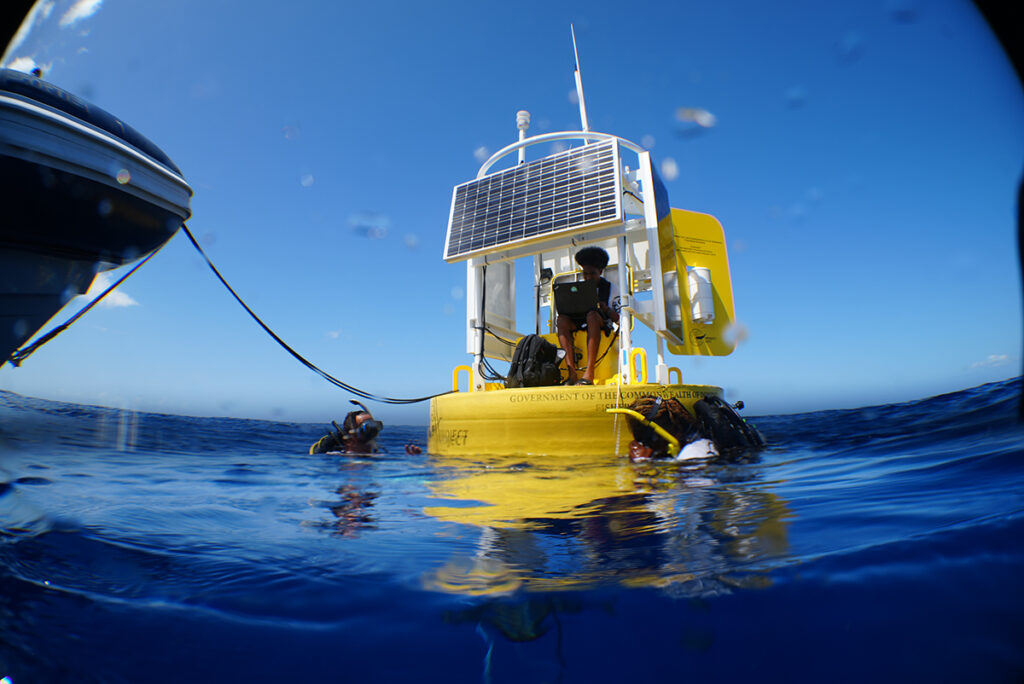
Project CETI Core Whale Listening Station. Photo © Project CETI

DG: It’s not like you can just go to the store out there and be like, “I’d like some whale listening tech,” you know? [LAUGHTER] So we have to design everything ourselves. So we’re making all the listening apparatus that’ll go into the project. 

So there’s eight different disciplines in Project CETI. We have a machine learning team, and a robotics team, a natural language processing team, a network science team, marine biology team, underwater acoustic team. This all pieces together in this effort, and we’re almost getting close to the point where the word language could possibly fall as being a human-only thing. 

Over these past five years, we’ve been understanding the basics of their communication system, and at the same time, we’ve been building up our data set. The reason like ChatGPT is getting so good is it digested the entire Internet—every book that’s ever been written—and was able to learn kind of where words are placed with each other. Like you might see woman and queen, or man and king, you know, next to each other. So once you put this together with billions of data points—we call them tokens—the machine learning can get good at predicting what will be the next piece. And they’re doing so by looking for patterns in multi-dimensional space. So that’s kind of why the more and more data you throw at these, the better it is, is finding elements and patterns that maybe humans couldn’t detect on our own.

Host: The process of gathering the data, however, was deeply human. In contrast to the robotic efficiency of large language models, recording the whales was an emotional voyage.

DG: So we’re going to be playing now two different sounds—which one would you be more likely to die for. [LAUGHTER]

Number one…[CLICKING NOISES IN WATER]

Alright. Number two…

[WHALE SONGS]

Host: Perhaps you recognise this second sound. It’s on the biggest-selling nature album of all time: Songs of the Humpback Whale, recorded by legendary biologist Roger Payne.

The album’s release in 1970 resonated powerfully with the public. The songs awakened many millions to humpback whales’ extraordinary intelligence and culture. They inspired the Save the Whales movement, one of the iconic conservation successes. It led to a global moratorium on commercial whaling.

[SPERM WHALE CLICKS]

These, on the other hand, are the clicks of the sperm whale. They may not carry the same visceral impact as humpback whale songs, yet they hold a spellbinding promise: not only hearing whales, but understanding them, too.

And these particular clicks tell a powerful story. We’ll find out more after the break.

If you’d like to learn more about the extraordinary intelligence of life inherent in fungi, plants and animals, the Bioneers Earthlings newsletter delves into stories and research that promise to reshape your perception of our fellow Earthlings – and point toward a profound shift in how we all inhabit this planet together. You can subscribe at bioneers.org/earthlings

[WHALE BIRTH CLICKS]

Host: These sperm whale codas were recorded during a magical moment that David Gruber and the Project CETI team witnessed in 2023.

DG: We were out there doing our normal thing of finding the whales and recording them, and we saw these 11 whales, and it was very odd, they were kind of just going up and down and up and down, and they weren’t diving. And about two hours later, there was a bunch of thrashing, and then there was blood in the water. And I think at that moment, you know, we thought there was some shark attack or something terrible might have been happening.

And then we saw that there was like a tiny little whale head amongst the ruckus, and there was this little baby whale, and we just realized that we were watching a whale birth. And literally, the whales started swimming right towards our boat, holding the baby above water. Inches from us we watched this baby whale go right past us. 

As the baby came out, the fluke was folded, so the baby was unable to swim. And it took, you know, several hours for the kind of fluke to unfold so the newborn had the capability of swimming on its own. And in the process, all the other female whales were going under it, and lifting it, and twirling it.

And then there was another moment of collective terror, where we saw a group of pilot whales rolling in. Pilot whales could be aggressive to sperm whales, and there’s several reports of this. And we watched them kind of coming in slowly, and nothing really bad was happening.

And then we look over at the horizon, and there’s like 200 Fraser dolphins. They almost look like little pinwheels. And now there’s this scene out there, right in front of our boat, with hundreds of whales, all amongst these 11 whales that are holding the newborn above water, all kind of moving around.

Slowed down drone footage of the sperm whale newborn emerging for the first time. Video by © Project CETI

Host: It was a breathtaking scene of cooperation and communication, engaging the baby whale’s family, the wider group of sperm whales, and even other cetacean species.

The Project CETI team were astounded by their luck in witnessing such a significant event, and being able to record it in great detail.

Then came the enormous task of organizing and analyzing six hours of data.

DG: It took us more than two years to design it and almost go frame by frame through the six hours. Some of the beautiful things that have come out is we found that the grandmother, the mother, and a mother’s daughter were all there, present. So we’re able to look at the role, the doula-type roles, that each whale played in this unit.

But what’s also interesting is this unit is separated between kin and non kin. And they took turns in diads, two by two, whales holding the baby like a ballet of two at a time, between the kin and the non kin. So it represents one of the most empathetic, collective examples of a mammal entering the world beyond maybe humans.

And I think back now of the story of the evolution by cetaceans going back into the water and delivering a thousand-pound baby. The baby is actually negatively buoyant. So the baby would sink to the bottom. So the sociality of whales, they needed to collaborate to hold the baby to ensure its survival. So they needed this collective communication.

Host: Studying this whale birth gave Project CETI a remarkable insight into sperm whale culture – as well as their communication system.

DG: We’ve been analysing this data now for two years, and looking at the acoustics of it underwater, and some new codas that were spoken during this. And then we also did an evolutionary analysis that’s able to show that likely this process of a mammal giving birth in the water is something that dates back around 35 million years.

And, you know, that brings up the profundity of—was their vocalizations necessary to coordinate this? Are these vocalizations something that we can now start calling language? And if so, do sperm whales have a language older than human language? Like it’s kind of raising these really profound questions that are making us question…how superior of a communication system we-we think we have.

[WHALE BIRTH CLICKS]

Host: During and after the birth, the whales exchanged copious complex codas. The multiple overlapping sequences are challenging to tease out, and they provide a treasure trove of data for translation.

In these and other recordings, the scientists have uncovered a rich palette of variation and nuance. They use musical terms like “rubato” and “ornamentation” to describe how the messages vary in speed, rhythm, and sonic flourishes. Gradually, some meanings may come into focus.

Real-time drone footage of the whale birth, synced with hydrophone audio of the sperm whale’s communication. Video and audio by © Project CETI.

DG: What we recently did is show more of like a phonetic alphabet in the clicks, not just click, click, click-click-click. It could be like click-click, click-click-click—so tempo, and rubato, and rhythm, and ornamentation were playing significant roles in the context of their communication.

So one of the key parts now of being able to translate what sperm whales are saying is we need to be able to ground the symbols. Like we have all these vocalizations. We’re seeing there’s complexity. We’re seeing the kind of nuances of their alphabets. There’s a linguist on the team, Gašper Beguš, and he’s able to show now that there’s vowel-like features in sperm whales. But then, knowing there’s incredible complexity to their voices, but what are they saying still? 

So at this stage now, we’re beginning to kind of parse out some of the first words, like diving. There’s a conversation, whale A is saying something to whale B, and then eventually they’ll make a decision to dive. And if you have hundreds and hundreds of those, you could just look at the vocalizations and say, that’s where they’re going to dive; that’s where they’re going to dive; that’s where they’re going to dive. And that would be a sperm whale language model. We have a kind ChatGPT 1 for sperm whale, is what it is.

Host: Creating this rudimentary dictionary of “whale-speak” requires painstaking work. It’s not just a matter of applying human language models to whale codas. The team is training its own computer models from scratch, homing in on the sperm whales’ unique communication traits.

DG: In the beginning of this project, some people would just be like, AI, animals, just throw them together. But all this AI is just designed for us. And what you really need to do is kind of like, yeah, which tools are going to work and which aren’t?

And the musical elements came from people on the team with backgrounds in both linguistics, and natural language processing, to be able to kind of look carefully at these smaller sized data sets and look for patterns. And once we kind of see some of the first patterns, then we can train the computer to look for them again.

Like tempo, rubato, ornamentation, really these early models were done a lot by hand and careful looking. And we still can’t understand other animals’ communication without the humans who have spent their whole lives looking carefully and listening. You know it’s kind of like, in Darwin’s sense of, the eyeballs are like the biologist’s best instrument because everything starts with just looking and observing.

Host: Deciphering what sperm whales may be saying requires a thorough understanding of their biology, their behavior, and their perceptual worlds. To try to comprehend their conversation requires trying to imagine what it’s like to be them.

Scientists with deep knowledge of other life forms have similar goals to decode the communication of elephants, moths, plants and fungi.

This is an era of rapid discoveries about the realities of other-than-human-life. At the same time, AI is turbo-charging breakthroughs in many areas of science. In this context, talking to other species feels tantalizingly possible.

Yet there are also grave risks. Rather than ushering in a golden era of interspecies understanding, new insights into whales’ worlds could also be used in harmful ways, along with precipitating yet another intolerable invasion of their lifeways.

To mitigate potential harms, Project CETI values the ethical implications of their research on par with the research itself. What are the moral and ethical risks? What’s in the whales’ best interests?

DG: Even the suction cups that we’re designing are inspired by sucker fish so that they don’t hurt the whales. We have a philosophy on the team of not to draw a single drop of blood.

And we always ask ourselves: Is this work in benefit of the whale? We’re at the intersect of animal, and then we’re also in groups with the AI crowd, and it’s a really intense place to be.

But all these new technologies now are slowly going to be applied to animals, and it could be beautiful. AI combined with bio acoustics can allow us to hear and interpret things that our Old-World primate weird little ears that we have don’t necessarily pick up. So this world of wonder and possibility and connectivity awaits, but how we do it is important.

Host: Working with the More than Human Life program at the NYU School of Law, CETI drew up 18 principles for using these technologies to study animal communication. By proceeding with care and precaution, they are committed to minimizing harms – while growing our empathy for other life. The hope is that this intrinsic biophilia – this instinctual bond that life has for life – will guide us to respect and protect the ineffably complex symphony of living beings.

So, suppose we can we dream up ways to speak to beings whose perceptual worlds are so wildly different from our own. If the whales were to respond, what do they have to say? And will we heed their call?

DG: The whales are more in danger right now, if you look at the ship traffic going across the ocean, it’s terrifying, and they are getting hit a lot. And then also imagine the idea if you had a jackhammer playing in your house all the time. You’d be very annoyed, and they’d probably want to sue as well.

And I guess the real fear is that what if we can deeply translate and we hear, but then we choose not to act. That’s going to be a real moment for us as a species, if we can actually really meaningfully translate and then we choose to turn that off.  I mean I love the fact that it’s making us think of these things. But I think almost all science fiction is very dystopian. So I think because we are talking about this early, is there a possible pro-topian? And even just think about it before the future just comes to us.

Host: Even in best-case scenarios, a quest as ambitious as interspecies communication is bound to bring mistakes, misunderstandings, and unforeseen consequences. Now that AI is irreversibly out of the bag, thinking through how to use it ethically with whales and other organisms is crucial.

In truth, humanity has an ancient and sacred relationship with whales. For example, the whale is revered in Polynesian culture, whose navigators crossed vast oceans with extraordinary skill and knowledge thousands of years ago with no GPS.

David wonders whether human voyagers might have even learned navigation from the whales, who, like us, pass their knowledge across generations.

Photo: Martin Prochazkacz / Shutterstock

DG: Some whales could be over 200 years old, so by living in three generations, there’s so much knowledge that could be passed within three generations but then even more than that, like the navigators were just passing this on and on.

If being able to cross the ocean played such a big deal for human evolution, that story of the first human to like build a little canoe and go all the way across, and the knowledge of the navigators wasn’t even written; it was mainly just passed verbally around, just using dead reckoning and navigating by the stars, and being able to kind of use all these features.

But then I was like, well, if we look at the tract of cetaceans, they had to do a similar thing, because they’re also mammals that were just semi-aquatic. So there’s a parallel story of whales being a semi-aquatic thing that was getting chased into the water. But then, you know, going a little further out, and a little further out, and a little further out, and then one day being like, you know, I’m not even going to come in to go to sleep. I’m just going to sleep out here tonight. [LAUGHTER] You know? And then like one day, you know, I think I could go a little further out, and then like, you know… So being able to cross the ocean was a big deal for the first whale.

And then we began looking in the science record of, like, can the cetaceans use stars to navigate? And there’s like one study of a harbor seal that does show using stars to navigate. Like everything—We think that we’re inventing it, but it’s already been invented, and there could be this moment when humans were learning this information from the whales. So we’re looking for some of this in written records. But all these crazy ideas; half these are hypotheses, completely untested.

Host: There’s so much that remains a mystery, and likely always will. Humility is our constant companion. Perhaps we’ll never know whether whale language contains the equivalent of epic poetry and history, as Carl Sagan speculated.

But as science fiction gradually becomes science fact, the promise of forging closer ties with our underwater kin could inspire us for generations to come to respect, protect, and cherish the intricate web of life.

DG: I’ve only studied animals my whole life — every animal that I work with is like a series of mysteries and magnificence, like jellyfish and corals. I so deeply love jellyfish, and corals and anemones. But when it moved to whales it was like, whales just really reach almost everybody. We can get in a taxicab right now and just start talking about whales, and what they’re doing, and about whale dreams and…they are magnificent.

There’s a level of complexity in what they’re saying that is far beyond what I imagined at the beginning of this project. And I think probably, at the end of my life we’re not going to get to the end of this, this is like an intergenerational translation exercise, because the amount of mysteries is so huge that it’s far beyond what we will be able to do in this… on our time here on Earth.

Host: David Gruber, “The Quest to Decode Whale-speak”

The Orchid’s Deal: Beauty, Deception, and Survival

Lead Photo: TheAlphaWolf, CC BY-SA 3.0, via Wikimedia Commons

We tend to think of flowers as decoration — something to admire, arrange, or pass along as a gesture. But beneath their beauty lies a far stranger and more consequential story.

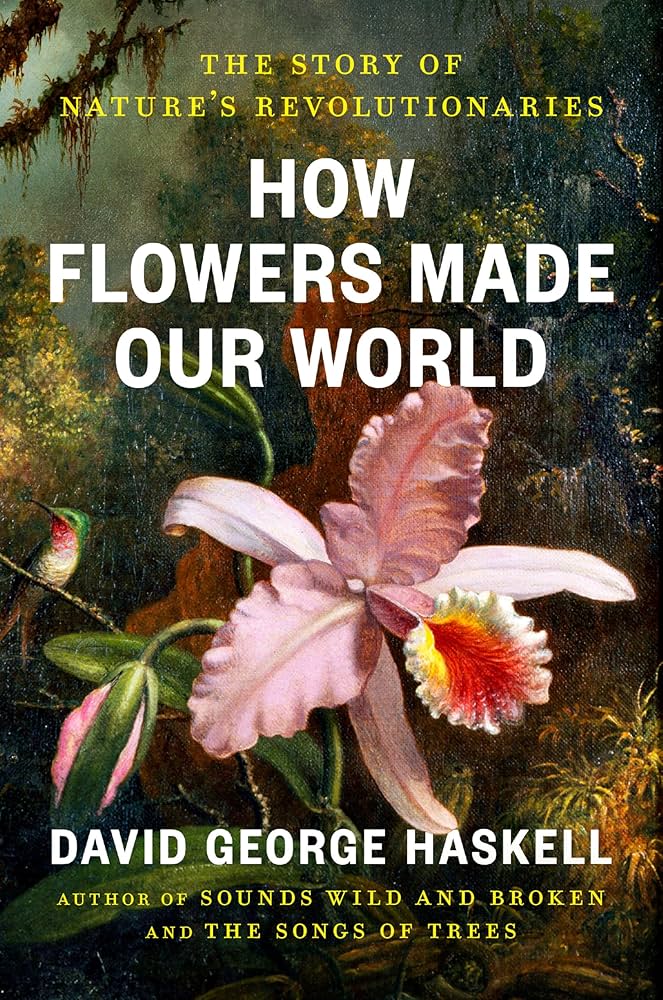
In this excerpt from How Flowers Made Our World, biologist and writer David George Haskell invites us into the intimate, often surprising relationships that flowers form with the living world around them. Through the lens of the cranefly orchid, we begin to see flowers not as passive ornaments, but as active participants in complex ecological exchanges — shaping behavior, forging alliances, and, at times, exploiting the very creatures they depend on.

What emerges is a deeper understanding of life as a web of connection — one where even the smallest bloom carries the imprint of evolution, cooperation, and survival.

The following excerpt is published with permission from How Flowers Made Our World by David George Haskell (Viking, 2026).


Orchids first evolved 112 million years ago, and the family now contains about twenty‑eight thousand species, making the orchids the most species‑diverse plant family on the planet, although the aster and sunflower family is a close second or, by some counts, slightly more diverse. For comparison, there are fewer than seven thousand species of mammal. Each orchid species is a unique twine of plant, pollinator, and fungus. It is this closeness of relationship that fuels the orchids’ diversity. In many species, the bonds are mutualistic. Almost all newly germinated orchids, for example, are entirely dependent on fungi for their food, a radical departure from the sunlight‑fueled growth of most young plants. Orchid pollination is often highly specialized, using miniaturized and intricate sexual parts to work with a handful of pollinating insects or sometimes a single pollen‑ferrying species. It is tempting to find in these connections an allegory about the harmony and generous reciprocity of nature. But other orchid species undermine the parable. Relationships take many forms. Some orchids have embraced illusion and thievery with gusto, parasitizing fungi and duping pollinators. But whether parasitic or mutualistic, orchid relationships are always intense. They have taken novelist E. M. Forster’s exhortation “Only connect!” to extreme and sometimes twisted ends.

~~~

As autumn progresses and most plants in the forests of the eastern United States fall into slumber, the cranefly orchid wakes. As falling tree leaves presage winter, we get an unexpected glimpse of new life. A pointy‑tipped oval leaf pushes through the downed oak and maple leaves. The orchid’s leaf is pleated and its top surface is a dark matte green, the color and size of a spinach leaf. Bend down and flip the leaf and you’ll get a surprise. The underside is uniformly purple, sometimes as light as lavender but usually dark plum. The purple pigment salves the burn of frost inside the leaf. In a few individuals, the top of the leaf is spotted with purple. In others, the whole leaf is dark eggplant, one of the most striking and beautiful winter sights in these forests.

Autumn seems an odd time to unfurl a leaf, but the summer tree canopy here is thick. At midsummer, only meager greenish light trickles through. Many wildflowers emerge in early spring, then rush through their life cycles before the tree buds open. Cranefly orchid is hardier. It grows through the winter, then dies back as the spring wildflowers reach their peak. With little competition, the orchid leaf feasts whenever the sun is out and the temperatures edge above freezing.

The cranefly orchid rests all its hopes on one leaf. This precious solar panel is well defended. Microscopic spikes of calcium crystals are scattered throughout. Purple pigment makes the leaf hard for deer to see. As it sips on weak sunlight, the leaf sends food to a buried stem. In late spring, the leaf dies then quickly rots. Hidden in the soil, the stem waits out early summer, its tissues swollen with starch.

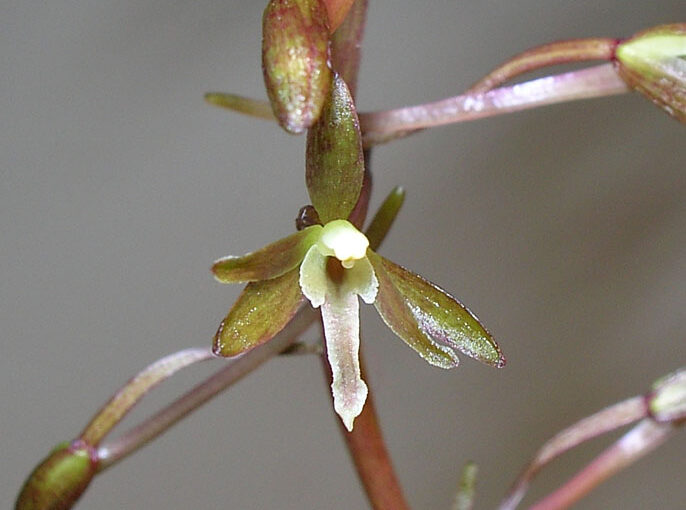
Sometime after the summer solstice, usually in July, a leafless stalk lances up. Straw thin, but as high as my calf, the stalk is first tinged with green and purple, then matures to the color of old hay. Flowers—sometimes two dozen or more—grow from the sides of the stalk, regularly spaced all along the top half. They look like half‑crushed leggy insects hanging in a spider’s web. Seen through a magnifying lens, the flowers sprout seven brownish‑yellow skinny petallike projections and a long, slender nectar tube. The projections are twisted and squashed to one side. The overall effect is like a wounded cranefly, its legs akimbo, hence the orchid’s name.

Against a backdrop of summer foliage, the flower stalks are easy to miss. To find them, it is easiest to note where the winter leaf grows, then return in summer to find the bloom. The flower might be inconspicuous to us, but not to owlet moths. For these small dusk‑and night‑flying moths, the blooms are an aromatic delight. A delight, that is, until the flower partly blinds them.

At night, the cranefly orchid bloom emits an aroma like a mild daffodil flower, so gentle that it is hard for my nose to distinguish from the smell of the dead leaves on the forest floor. When a cruising owlet moth picks up the scent, though, the signal comes through loud and clear. The moth flutters down and uncoils a long proboscis. Ah, sweetness. The throat of the flower leads to the backward‑pointing spur full of nectar. The moth pushes forward, slurping deeper. Bump! One of the moth’s eyes hits something very sticky. Orchid superglue gloms the eye. The moth pulls away and a pair of pollen sacs pop loose from their hiding place in the flower’s roof. The pollen sacs are cemented to one of the moth’s eyes.

The surfaces of moth eyes are smooth and hard, good places for glue, unlike the fuzz of scales that covers the rest of their bodies. The cranefly orchid’s strange asymmetry, petals twisted to the side, evolved to hit the eye square‑on. The arrangement works, at least from the orchid’s perspective, because one‑eyed moths keep searching for flowers.

Pollen sacs are first covered by a prophylactic cap that falls off after about thirty minutes. The cap prevents self‑fertilization. Such “selfing” yields inbred offspring, although many plants, including the cranefly orchid, will eventually self‑fertilize if they can find no other pollen. Once the cap is off and the moth finds another flower, pollen sacs get stuck onto a sticky stigma as the moth drinks. Half of the flowers twist left and half twist right. When moths visit a second flower, the pollen sac has a fifty‑fifty chance of finding a stigma with the same twist.

The moths’ love of orchid blooms partly blinds them. Photographer Ken Childs has recorded on his farm in Tennessee moths with half a dozen or more pollen sacs glued to each eye. When I’ve poked a toothpick into orchid flowers—including a few cranefly orchids—I’ve found the sticky pollen‑delivering pad extraordinarily annoying. It has a gummy texture and will not let go. I try wiping it away with another toothpick and both get gooped, even after several hours. The orchid is unquestionably harming its pollinator by dimming moth vision.

Although the cranefly orchid stalk can hold two or three dozen flowers, on average only about seven mature into fruit pods. These swell through the late summer until they are bean sized. The energy and material needed to grow these fruits depletes the plants’ underground stores. For every fruit grown in late summer, the leaf that appears in autumn is 2 percent smaller. Heavy fruiting causes the plant to skip flowering for a year.

In autumn, the stalk and fruits dry out, turning the light tan color of bleached fallen oak leaves, a great match for the leaf litter. On dry days, the fruit pods split, revealing shockingly small seeds. Through a magnifying lens I count thousands in a single pod. Like nearly all other orchid species, the cranefly orchid takes a minimalist approach to childcare. Each seed contains an embryo and nothing else. No droplets of nutritious oil, no starchy reserves, no protein packs. Just a ball of embryonic cells enclosed in a minuscule balloon‑like seed coat. The gentlest touch of wind carries these mini zeppelins aloft.

When the flyers land, only those that alight on fungus‑filled downed branches or tree stumps will live. Like all other orchids, germinating cranefly orchids draw their food not from the sun, but from fungi. The orchid babies welcome webs of fungal strands into their tiny bodies, then nurse on this inner network. Every orchid species has its own taste in fungus helpers, and cranefly orchids need wood‑digesting fungi, usually found in abundance on fallen trees. In this way, parts of giant fallen trees are, via fungi, resurrected as minuscule orchids. This dependence of orchid on fungus can last for many years. When the orchids finally get large enough to grow leaves, they may repay the fungi with sugars, although by then the original nurses may have been replaced in the orchids’ tissues by other fungus species.

Cranefly orchids are living headstones. Wherever we encounter them, we know we’re at the gravesite of a fallen tree or branch. The downed wood may be gone, but the orchids let us peer back in time and know that we’re in a healthy forest, one with a history of life‑giving rot. Decaying wood provides food and sustenance to many: orchids, fungi, salamanders, small rodents, and many invertebrate animals. A forest newly grown back from pasture or one intensively managed for timber lacks a history of fallen wood. Cranefly orchids reveal this past.

The curious life cycle of the cranefly orchid is built, in all its parts, on specialization. This is true of all orchids. They thrive by focusing. Orchid seeds are as small as a plant seed can be. But, with the help of fungi, orchid seeds explore wherever the wind takes them. Orchid flowers are also stripped down. Although their petals are often showy, usually with a distinctive swollen lower lip, the female and male parts of the flower are miniaturized and fused into a central column. The pollen of most orchids, like the cranefly orchid, is bundled into two compact sacs, delivered to insects on a sticky arm.

Orchids thus take the bisexuality of ancestral early flowers to the next level, shedding and receiving pollen from the same compact structure. Their sleek flowers waste no pollen. In addition, the column‑inside‑petals design allows evolution to sculpt each orchid species’ flower to the shape and aesthetic tastes of a small number of insect species. This allows orchids to develop specialized, tight relationships with insects.

Orchids are the anti‑magnolias. Magnolias offer generous all‑you‑can‑eat pollen buffets from open cups to any passing animal. Orchids invite only VIP insects to their blooms, often a single species of insect, then entrust these visitors with small parcels of elegantly wrapped pollen.

How Would Nature Do It?

Mother Nature is the ultimate designer. After all, since life first emerged on Earth, she’s had 3.8 billion years of evolutionary R&D to get it right. Biomimicry is the art and science of learning from this ineffable genius: tapping into the patterns of nature to live harmoniously with life’s principles. We meet Janine Benyus, known as the “godmother of modern biomimicry”.

Featuring

Janine Benyus is a world-renowned biologist, thought leader, innovation consultant and author of six books, including 1997’s foundational text, Biomimicry: Innovation Inspired by Nature. She co-founded the Biomimicry Guild, which morphed into Biomimicry 3.8, a B-Corp social enterprise providing biomimicry consulting services, and The Biomimicry Institute, a non-profit institute to embed biomimicry in formal education.

Credits

  • Executive Producer: Kenny Ausubel
  • Written by: Cathy Edwards and Kenny Ausubel
  • Producer: Cathy Edwards
  • Producer: Teo Grossman
  • Senior Producer and Station Relations: Stephanie Welch
  • Associate Producer: Emily Harris
  • Host and Consulting Producer: Neil Harvey
  • Interview Recording Engineer: Ray Day

This limited series was produced as part of the Bioneers: Revolution from the Heart of Nature radio and podcast series. Visit the homepage to find out how to hear the program on your local station.

Subscribe to the Bioneers: Revolution from The Heart of Nature podcast


Transcript

Neil Harvey (Host): Looking to nature for inspiration and guidance is an ancient practice. For example, early medicines were likely discovered when humans observed other animals using them to self-medicate. Countless historical examples illustrate how people have long observed and mimicked natural phenomena.
Indigenous and traditional cultures have an ancient lineage of emulating nature’s ways based on intimate long-term scrutiny.

Western science has also sought to understand the design principles of nature. Leonardo da Vinci famously studied bird wings in great detail, to try to understand how humans could take flight.

More recent examples of biomimicry abound as engineers and inventors have become more attuned to the symphony of life. Common burdock seeds inspired Velcro. The beaks of kingfisher birds led to the redesign of the Japanese bullet train. A sea sponge was the model for London’s famed Gherkin skyscraper.

In 1997, the publication of Janine Benyus’s landmark book Biomimicry: Innovation Inspired by Nature crystallized this paradigm of creating from nature’s playbook. It galvanized this breakthrough in design science.

A few years before writing this foundational text, Janine had a personal reason to seek answers from nature. In the early 1990s, she had moved to a property in Montana which had an ailing pond.

Janine Benyus spoke at a Bioneers conference.

Janine Benyus speaking at Bioneers 2025. Photo by Nikki Ritcher

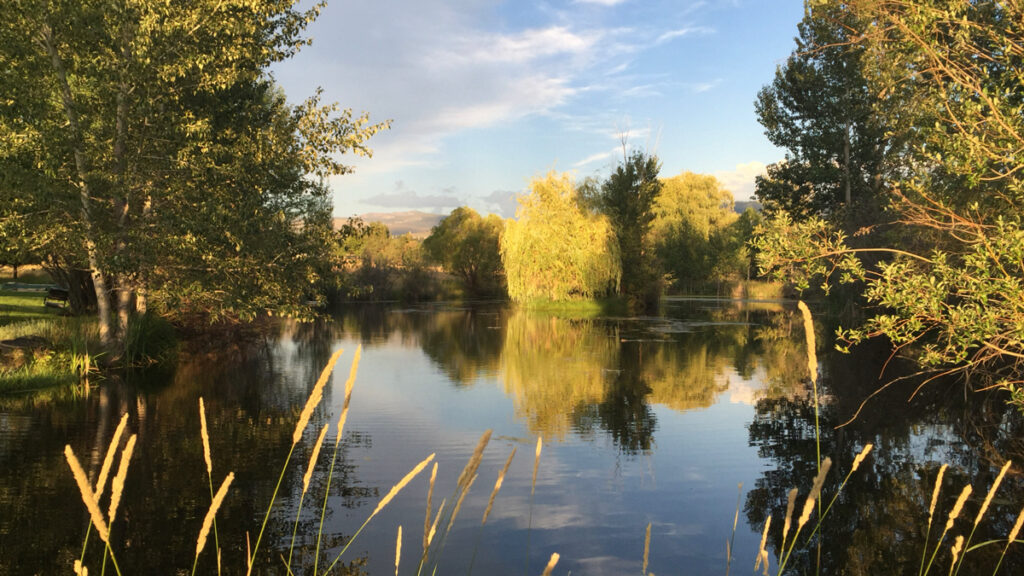
Janine Benyus (JB): This pond, when we got there– it was a mess. Full of agricultural chemicals, it was full of silt, there was no open water whatsoever. We tried everything. And then what we did was we went to a healthy pond in the national forest, and we noticed—my partner and I, Laura—we noticed the flow happening, and we rushed back and we realized that we had four springs that were smothered. When we released them, and reconnected this pond to its source of groundwater, every year it’s been getting better, and better, and better, and better. Because that’s what life does. One organism promotes another organism’s success and thriving. Another organism promotes another organism’s, right? It’s this incredible positive feedback loop.

We talk so much about negative tipping points, right—climate change and Greenland melting. There are also positive tipping points. And when we can get in the healing team and bring a place like this to that positive tipping point, life takes over. Biodiversity begets biodiversity. It is stunning to watch and to be a part of. So let’s remember that and then let’s try to do it consciously.

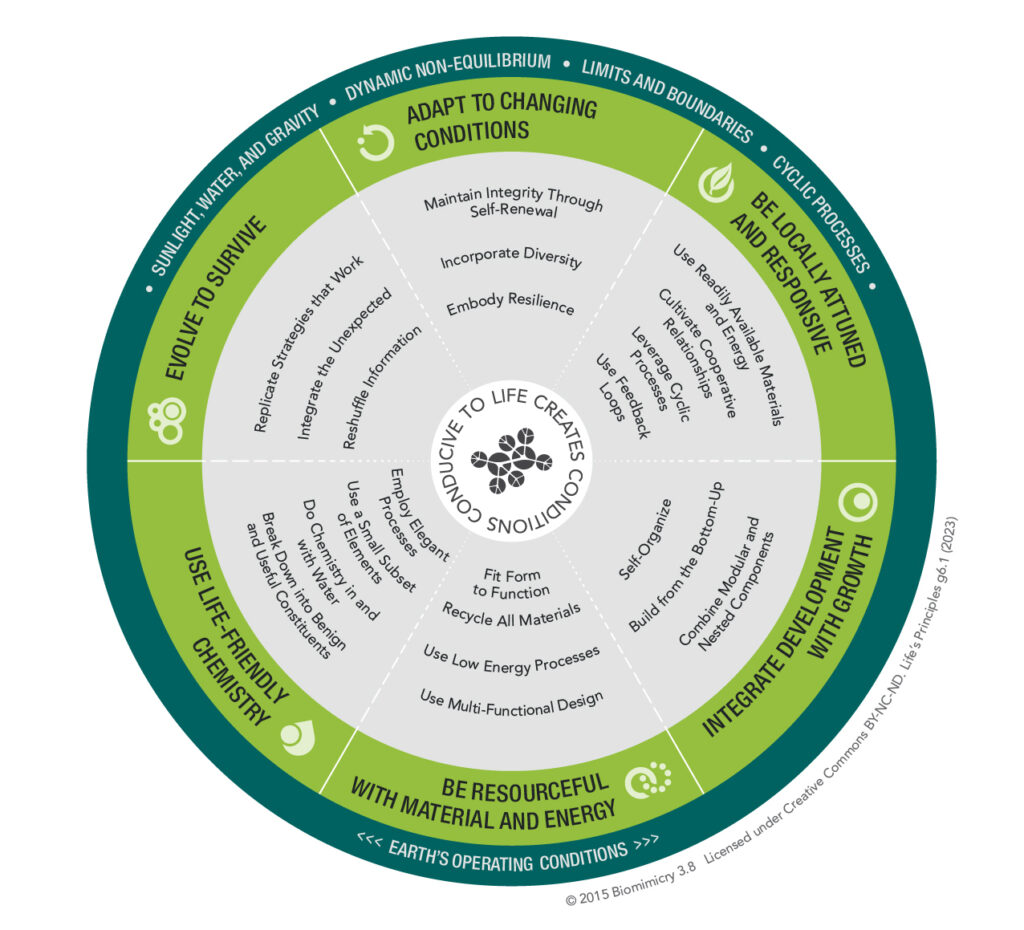
Host: Janine sums up the essence of biomimicry’s mission this way: Life creates conditions conducive to life. That became her metric for biomimicry.

Janine went on to co-found a non-profit, The Biomimicry Institute, and a consultancy, Biomimicry 3.8. The goal is to encourage design innovation that’s guided by nature’s genius.

And the field has flourished: nowadays, biomimicry is widely taught and practiced. But it was an outlier back when Janine’s book was first published.

JB: So, how do you do biomimicry? You start with quieting your cleverness and then listening, and then echoing what you hear, and then giving thanks. But you quiet your human cleverness because we tend to, when we design new things -– say like, an industrial designer or product designer – we look at things that humans have done before. It’s very, very different to learn about, say, all the kinds of nests that organisms make out of local raw materials that dissolve back into the environment in safe and healthy ways.

Once they start looking at the natural world and saying, you know, what do you do for a living? Well, I’m a water desalination expert. And then you take a person like that to a mangrove grove and say, well, this mangrove has its roots in the saltwater, but it lives in freshwater, and it’s solar-powered desalination. And they go, what? Why didn’t I ever learn that in school? Once people realize that, then they become biomimics for life.

Host: Nature has a boundless treasure trove of such ingenious blueprints to be discovered and emulated by humans. There are literally billions of solutions to be unearthed and understood.

But naturally, there’s a risk. Human beings have a nasty habit of both plundering nature and not giving back – nor taking precautions against unintended harms.

For example, birds inspired the engineering marvel that is human flight—but the consequences are decidedly a mixed bag.

JB: I remember reading the first flight happened, and then 11 years later we were dropping bombs out of planes. So this has always been front of mind for us.

When people say what are you most proud of, that’s the ethos of biomimicry. It’s not enough to say look at a humpback whale’s flipper. There’s a scalloped edge which really reduces drag, and if you put it on a wind turbine, it reduces drag by 32%. It’s amazing.

So the shallow biomimicry is ‘I’m just going to mimic the shape’. A deeper biomimicry is ‘I’m going to mimic the chemistry—How is it made? How is it shipped? What kind of economic model are you using? And we try to bring nature’s wisdom into every one of those decisions’. So it’s biomimicry of form, process—which is, how do you make this? And then, also, system. Is it life-enhancing? Does it create conditions conducive to life at every single part of bringing it into the world?

It’s been our mission to try to teach people this ethical biomimicry. And I always say it’s remedial for Western industrial culture. Indigenous Peoples have been looking to the natural world for model, measure, and mentor for millennia.

Host: There are more and less sustainable ways to harvest nature’s bounty, and the same is true for harvesting nature’s ideas.

To raid a landscape for engineering models, then pollute it in the manufacturing process, is a fundamentally flawed way to mimic nature. Ecosystems have no “true” waste and are incredibly energy efficient. In fact, Janine and her colleague Dayna Baumeister have catalogued what they call “life’s principles,” a list of 27 characteristics and properties that all organisms have in common – for example, recycling all materials, using only water-based chemistry, and cultivating cooperative relationships. To design according to those principles is to create conditions conducive to life.

Life’s Principles, courtesy of the Biomimicry Institute

In recent years, Janine has become keenly attuned to one radically under-appreciated aspect of nature.

JB: Ecosystems — forests, corals, prairies, grasslands, steppes — are incredibly generous. And what I mean by that is they have knit their society together in such a way that each year they’re enhancing the place that they live, right? They’re building soil, and it’s getting more fertile.

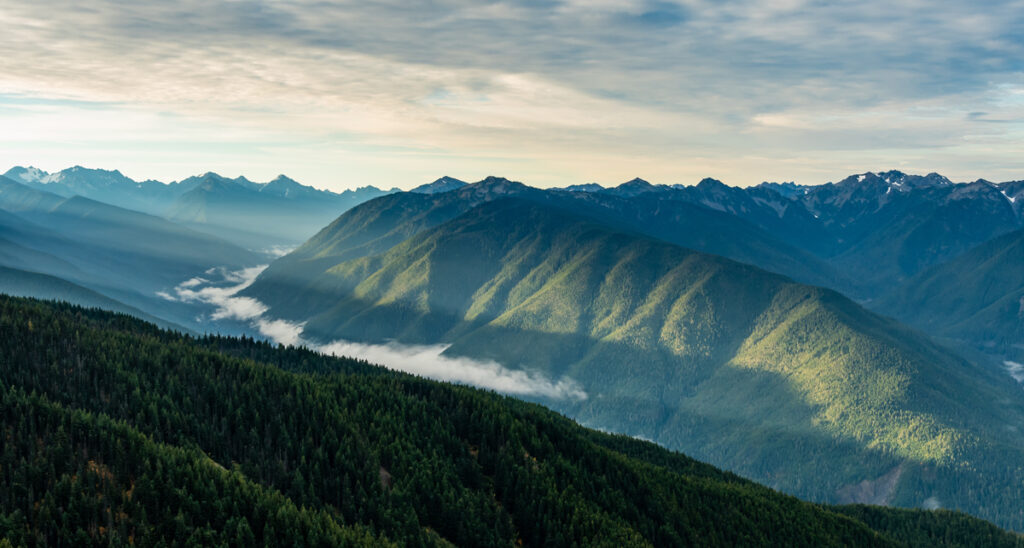
But the thing that they also do is they exhale goodness. Like when water comes into a forest, it’s actually cleaned by the soils and the organisms. When it leaves, that water is cleaner than when it comes in. Same way with air. It might be full of pollutants, but when it goes through the forest, it gets purified. But then it gets sent downwind. What’s coming out of forests are migratory species. There’s all of these benefits being sent out beyond their borders.

Hoh Rainforest, Washington. Photo by Kelly vanDellen / Shutterstock

Forests, we now understand, are constantly releasing and transporting water vapor into the air, but they’re also transporting microbes, fungal spores, pieces of insects, little tiny, tiny insects like springtails and—there’s an aerobiome up there. And what that does is, those bits of life that the forest exhales become nucleators for raindrops. Say a small ice-nucleating bacteria floats up, that bacteria has proteins on its surface that hold the water molecules in such a way—it’s like a geometric template that they crystallize into ice, which then, as it moves through the cloud, melts and becomes rainwater.

So 40% of the rain in the Amazon is created by the forest itself. So you have all this rain that goes down into the Amazon, but then you also have these flying rivers, they’re called. And these rivers of water vapor will go down to South America. They also come up as far as Canada. So this is generosity. That’s what I mean by generosity.

Host: During a flight she took over Montana, Janine had an epiphany about this quality of generosity.

JB: I was flying in, flying over wilderness, and it’s so lush down there. It’s so beautiful down there, right? It’s so clean down there, the water, the fragrance. And then, I got to the city, and it ended. And I thought, wait a minute, what’s going on here? Why are all the arrows of benefits going from the green into the grey?

Host: Seen from above, the city revealed itself as a gray disfigured blot on the landscape. This footprint highlights a huge problem, given that 4 billion people, and counting, live in cities today.

What would it look like, Janine wondered, if cities were as generous as healthy ecosystems are?

JB: What would a biomimetic city be like? Well, it would function like a forest. And one of the things that it would do is export good things, positive benefits.

In ecology, we have this list of ecological benefits: things like purifying air, purifying water, storing carbon, supporting habitat, building soil, cycling nutrients, supporting pollinators – you know, it’s endless – moderating the climate, cooling the air. Right? Those are ecological benefits. We said why don’t we measure the ecological benefits of a reference habitat and literally come up with how many gallons of water is stored, how much nitrogen is cycled, how much habitat is created, and organisms supported.

And that’s what we do now. It’s called Project Positive, and it’s biomimicry at the systems level. We go to a reference habitat. Basically what that means is what would be growing there if we weren’t putting our building there? We go to the healthiest one we can find locally, and we say, okay, these are the benefits that are happening here. Then we go back to the building site and we say, that’s your aspirational goal, these ecological benefits.

So you’re not just creating a shelter for humans, you’re creating a shelter where the buildings themselves, the sidewalks, and the landscaping all provide benefits beyond their borders; they create such abundance that they clean the water, they clean the air, they support wildlife. Right?

I mean, our clients have said: Why should I export benefits beyond my borders? Why should I clean the water that comes through my site? Well, if you want to be biomimetic, that’s what natural systems do.

Now, what happens is once they figure that that’s an interesting way to design, and you say use as many surfaces as you possibly can—green walls, green and blue roofs, rain gardens—right, and stack as many benefits as you can, you wind up with amazing designs.

Host: Through the Project Positive initiative, Janine and her colleagues at Biomimicry 3.8 collaborate with a consortium of architects, engineers, and designers on a wide range of built environment projects and share best practices to embody this systems-level biomimicry. We’ll hear about some of these inspiring creations after the break.

I’m Neil Harvey. You’re listening to the Bioneers: Revolution from the Heart of Nature.

Through the Project Positive initiative, Janine and her colleagues at Biomimicry 3.8 collaborate with a consortium of architects, engineers, and designers on a wide range of built environment projects and share best practices to embody this systems-level biomimicry. We’ll hear about some of these inspiring creations after the break.

Host: Creating buildings and landscapes according to life’s principles can have spectacular results.

Just ask the United States Coast Guard. In the early 2000s, they decided they needed a new headquarters. They found a good site in Washington D.C., and started planning…

JB: And they were going to, you know, basically put up a couple office towers. And instead we got to talking. We said: What is your motto? What’s the motto of the U.S. Coast Guard? What do you do? And they said we protect the nation’s waters. So we said: Why don’t we try to build a building and a site that purifies water, then? 

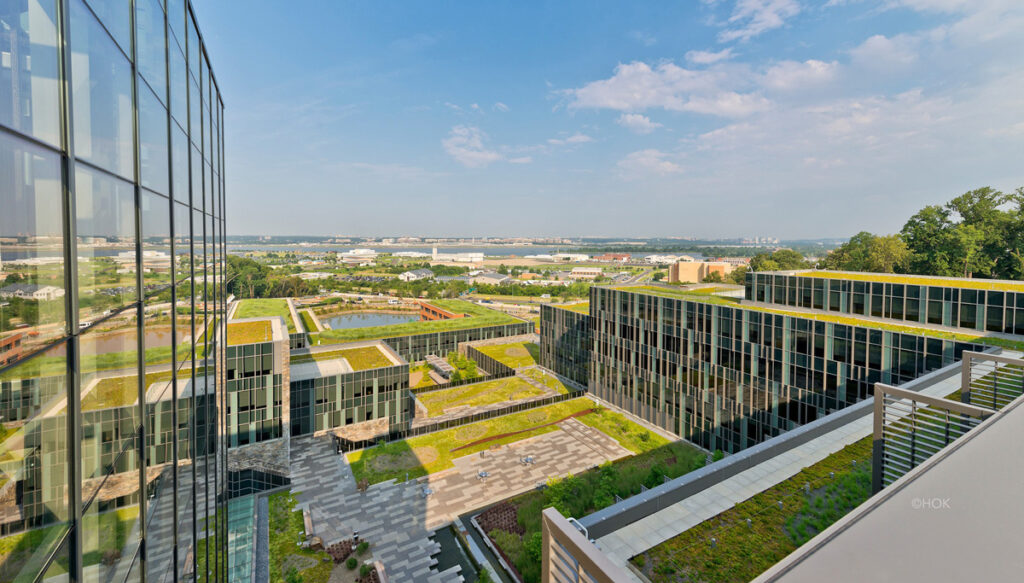
And we said, okay, in a watershed in the east, in a temperate broad-leaved forest, if you have a really healthy watershed, you probably have beavers there, they pond water, and those dams are leaky. And so what happens is you’ve got this shifting mosaic of everything from a pond to a wetland to a meadow. And as it goes down the watershed, the water is actually purified by these beautiful mosaic systems. So we wound up doing a series of terraced blue-green roofs that were connected with waterfalls. And it’s a gorgeous building. 

And at the base, it was going to be a parking lot. It’s not a parking lot. We put the cars underground. It’s a lake with wildlife watching trails all around it, and many thousands of plant species, an actual wetland. When you fly over it, you can hardly see that there’s a building there. And it’s so beautifully integrated into the landscape, it has become part of the landscape. It’s functionally indistinguishable from other parts of the landscape around it. So, for instance, even when it was first built, it was 1.6 degrees cooler than any of the other building sites around it.

So that’s just one service, right? There’s noise abatement. There’s climate mitigation. You’ve got this leafy canopy that’s creating shade and that’s full of bird song. This idea that you would go to your workplace and see a waterfall out your window, and you’d picnic at lunch. That’s pretty amazing.

When you try to reach the emerald standard, and you take nature—the rest of nature—as your standard of excellence, what you’re building and why you’re building changes dramatically.

U.S. Coast Guard headquarters design by HOK

Host: Inspired by beaver dams, the U.S. Coast Guard building was a landmark project costing hundreds of millions of dollars. Many of Biomimicry 3.8’s clients these days are giant organizations working on big sites: Microsoft’s data centers, for example. These scattered sites are spores that can spawn additional visionary design revolutions and benefits at scale.

JB: One of the things that we realized is that it can’t stop with just a few data centers and factories, and the things we’re doing. That’s important. But what if everybody did it?

So now what we’re doing is saying: What land do you touch? We touch a lot of land. When I talk to these companies, I say, how many employees do you have? Oh, 235,000. How many customers? Can you help them do it in their backyards? What about your supply chain? What about doing positive ecosystem gifts on all farms, forests, fisheries?

Host: Influential high-profile projects like these can multiply their ecological gifts by showing a lot more people it’s possible, desirable and cost-effective to adopt a similarly generous approach in their own lives. Janine calls this ‘pixelated healing’, and she wants to ensure everyone has access to the knowledge they need in order to get in the game.

She and her team at the Biomimicry Institute created Asknature.org as an invaluable online tool for dialing up nature’s solutions. It’s a kind of ‘field guide to the natural world’ that catalogues over a thousand biological strategies, and it’s expanding.

JB: You learn about the place that you’re living in or building in, and you learn about the ecological dynamics—What makes it tick? What makes it tip? You know, the fragilities, the superpowers of that place.

And most people are not asking their backyard to do everything that a forest does or that a grassland does, but when they do, then you also have to say, okay, here are the design interventions, meaning when you’re planting trees, make sure that you plant shrubs beneath it. Why? Because a lot of, say, moths that feed birds, if you want the function of bird habitat, a lot of the moth species have their caterpillar stage in a shrub. 

That sort of deep ecological knowledge is something that Indigenous People knew because they knew the deep patterns of their place. We’ve forgotten that. So if we give people the opportunity to see the deep patterns and how to replicate those landscape attributes, how to emulate those, it’s biomimicry at the ecological scale, they will begin to move towards an ecological positive tipping point.

And believe me, life will take off. I mean, the monitoring of this is really fun, because you go back five years later onto a landscape that you’ve intentionally tried to make a welcoming place, and you will see your ecological benefits just blossom, and they will be going beyond your borders.

Host: The aim of Ask Nature, says Janine, is for any of us to be able to type our zip code, and learn about the kind of habitat that existed in our area before it was ecologically degraded by human development.

Janine is confident people are yearning for this. She believes that we humans can be as generous as nature – because we ARE nature.

JB: We worked on a factory project in Georgia, and they had a stream on the property, but many streams in cities and urban areas are put into pipes.  So we do what’s called daylighting, where we take that pipe up and we recreate the stream. And the employees at the factory, we sat with them for a long time in the reference habitats, in the pine forests, talking about what they remember of growing up in those places, and they remember things like picking berries, or having their father teach them to fish. So the idea that they could go to work and bring their kid and go fishing or pick berries at their workplace is amazing.

But what really amazed us was when we were talking about the ecological dynamics, and showing them that, yes, this stream in this part of Georgia eventually goes into the Apalachicola Bay. Hundreds and hundreds of miles away!

And we told them that the oyster fishery in the Apalachicola Bay was almost extinct because it’s so polluted, and that we were going to try to clean the water. Many, many times, they said, I want to tell my kid that I work at a place that’s helping the oystermen of Apalachicola Bay. Wow. I mean, that’s super generous. That’s our true nature. So if you give people the opportunity to make a place more and more generous, they will do that.

Host: Janine says that if many more people strove to emulate nature in their own locale, the results could be truly transformative. It’s something she has certainly experienced in her own life. Remember her formerly stagnant pond? Fast forward 33 years.

Restored pond on Janine Benyus’ Montana property. Photo courtesy of Janine Benyus.

JB: We were out along the pond, and I look down at my feet and there’s – in the water’s edge – there’s this giant swath of boiling organisms. It was amazing. It was tadpoles and toadlets, tiny things like the size of a—not even the size of a quarter. And then I looked at my feet, and the toadlets were coming out of the water. They were hatching and emerging. And they were like hopping by me. And it was our entire pond edge.

So we called—we have a friend who’s the non-game wildlife manager of Montana – and we called him. We said, there’s something you should see. And so he went down and he came running back and said they’re Western toads, and their habitat’s highly endangered in Montana. Only 10% of their habitat is left. And there were thousands of them, and they were not going to stay on our property. They move up to two-and-a-half, three miles away. And then, you know, herons came in and Sandhill cranes were eating them, and they flew away.

We could watch the beneficial flows of our property going to other places. Life’s abundance was now traveling beyond borders, beyond property lines. There are no property lines in the natural world. 

And I’ve got to tell you, that’s—if everybody had that experience, even if they’re just on a balcony and they happen to create a home for something, there’s something deep about that in which we remember our generous spirits as humans.

So can humans be a welcome species? Yeah. Why not? We’re young, we’re young. But this is our true home. We belong here. And I think our true nature is generous, because we’re a biological being. [APPLAUSE]

And we can do what life does, I know that we can. Whatever part of the Earth you touch, you can help heal. Let’s do it by design. Let’s find our true generous natures. [APPLAUSE]

Host: Janine Benyus, “How Would Nature Do It?”

Terry Tempest Williams: Noticing the Glorians in a Fractured World

Terry Tempest Williams is a writer, educator, and environmental activist known for her lyrical and impassioned prose in such creative nonfiction books as Refuge — An Unnatural History of Family and Place; The Open Space of Democracy, Finding Beauty in a Broken World; When Women Were Birds; and Erosion: Essays of Undoing. A Recipient of Guggenheim and Lannan literary fellowships, Ms. Williams’ work has been translated worldwide, and she is currently Writer-in-Residence at the Harvard Divinity School. On the occasion of the publication of her most recent book, The Glorians — Visitations from the Holy Ordinary (Spring 2026), she responded to Bioneers Co-Founder Nina Simons’ questions as they engaged in a deep conversation. 

NINA: I’ve always admired and respected deeply the ways that your life weaves together your art, your passion, your activism, and your spirituality. I wonder if you could tell a story of an event that you feel integrates these elements?

TERRY: Finding beauty in a broken world is creating beauty in the world we find. I believe the power of art — be it literature, paintings, music, or dance — has the capacity to bypass rhetoric and pierce the heart. Especially now. I see an influx of students coming to the Harvard Divinity School not to become a priest or pastor or a scholar in religious studies, but rather they want to sharpen their skills and commitment to their crafts as artists. One artist in particular comes to mind: Maisie Luo. During the pandemic when galleries were largely closed, she committed to weekly “Art Walk Outs” whereby she would take one particular painting on a walk to the beach; to Rodeo Drive; or to the parking lot of an In-N-Out Burger. She wanted people to notice the paintings and feel something at a time when many of us were looking away from all that was breaking our hearts.  

When she returned to school, she had a dream: A dolphin inquired about the rise of the oceans and what their path might become in Cambridge, Massachusetts. A Northern Right Whale was also in the dream, carrying that same query. At that time, in 2021, it was estimated that there were only 300 to 400 Northern Right Whales left. When Maisie awoke, she made a vow to chart the future sea rise so the dolphins and whales could find their way.

Maisie bought an 8-foot door and turned it sideways and painted a Northern Right Whale beached, tangled in fishing net with a small portrait of herself kneeling trying to untangle what was binding the whale to shore, making the cetacean unable to swim freely. Maisie invited Brooke and me to join her on this “Art Walk Out.” She had found from scientific mapping how the sea would rise and how far it would inundate Cambridge. Harvard Yard would be underwater. 

Together, we carried the whale up Massachusetts Avenue, past the Cambridge Commons and cemetery, across the street through Harvard Yard, stopping momentarily in front of the John Harvard bronze statue. Dozens of students walked by us, not one student stopped to ask about this beached and confined Northern Right Whale. It was a disturbance. We continued carrying the whale past the Memorial Church, past the Museum of Natural History to the Divinity School. Once inside, we continued to carry the painting up two flights of stairs to the Associate Dean of Faculty and Students, Janet Gyatso’s office where the netted Right Whale was met by another Northern Right Whale breaching in a moment of joy.  A few days after this Art Walk Out with Maisie Luo, NPR reported that several whale calves had been born, a shift in the lack of births in the past few years. Coincidence? Synchronicity? Who can know the power of one heartfelt gesture made on behalf of another?

Nina: You’ve written and thought a lot about The Open Space of Democracy, including in a past talk at Bioneers. Now that our democratic institutions and norms are under such severe attack, and many of our cultural delusions shattered, revealing both the beauty of some of our people’s values, commitment and kindness, (think of the courage, and determination of the people of Minneapolis) and the rot that’s always been at the roots, how might you imagine that we’ll survive this painful yet perhaps necessary chapter? 

TERRY: We have made the mistake of confusing democracy with capitalism and have mistaken political engagement with a political machinery we all understand is corrupt. It is time to resist the simplistic utilitarian view that what is good for business is good for humanity in all its complex web of relationship — including the web of life for all species. Ecology reminds us again and again that the ecotones are where diversity flourishes — the edges where the forest meets the meadow; where the tides rush up to dune grasses on a sandy beach; where the edge of the river becomes a tributary that refreshes the wetlands. We, too, can be edgewalkers finding what binds us together rather than what tears us apart in these moments of great and grave uncertainty.  

The human heart is the first home of democracy. My edgewalking is the richest in the places I call home: the red rock desert of southern Utah and the shores of Great Salt Lake. Here, I see the beauty of erosion and retreat, both makers of beauty that take us to the essence of things.  Wind, water, and time create arches in sandstone; the retreat of a saline lake is inspiring the rise of unlikely allies who are committed to bring water to Great Salt Lake. Change is growth. We are growing and it is not easy. For me, there is something deeper than hope, and that is engagement. We are creating, together, a new way of being. Nature is in constant upheaval and renewal, as we are. This can be its own form of grace.

Nina: So what counsel do you offer, as you’ve witnessed so much ecological harm and destruction to wildlands and species in your life — to all of us who are feeling the immense grief of experiencing so much loss in this time? How do you manage to reclaim your sense of purpose and capacity to act on behalf of what you love and feel devoted to? 

TERRY: In the summer of 2024, our small community in southeastern Utah experienced 5 flash floods in a matter of weeks. Depending on our state of mind and frame of reference, those floods could be viewed as floods of devastation or floods of re-creation. I choose to see the latter. It has also been a physical point of reorientation as a community. We are asking different questions: Instead of asking, “How can we protect our individual property — and build berms and dams around our homes?” We are asking, “Where does the water want to go?” And can we imagine and create a community-wise climate plan for both the present and future?” We all grieved our loss of the land as we knew it. The floods carved a canyon in our backyard, 40 feet long, 12 feet wide, 10 feet high. Two years later, another flood and wild winds have filled it. We are in dynamic times, uncertain times. And regarding the Earth, that is always the way, it continues to be under construction as we are.  I take comfort in this, even among all we are losing. The Earth will survive us.  We are the ones being baptized by fire.

Grief is love. They are siblings. When we agree to open our hearts, they will be broken. The question then becomes “How do we live and love with a broken heart?” When we feel those sharp aches of grief, that is what love feels like — one cannot live and love without the gravity of grief. One informs the other. We can engage. We can choose to not look away.  There is still so much beauty that remains. If we are present, we will know what to do.  For me, we do our most beautiful work together in community because it asks that we listen to one another. And in these acts of listening, we expand our frames of reference. Empathy is fostered. New ideas emerge, even in conflict, especially in conflict. In community, we are engaging with shared imaginations — and suddenly, we see more possibilities than obstacles. What is possible becomes what is necessary.  We evolve.  We are evolving together now in our brokenness and love. 

Nina: I learned from a traditional Peruvian ceremonialist named Oscar Miro Quesada these nine words, which have had a profound effect in informing my life, ever since. They are “Consciousness creates matter. Language creates reality. Ritual creates relationship.” If language creates reality, then we who are alive in this precipitous and remarkable time will need to create or adapt some new or old words to reinvent a cultural reality that works for all of life. So please tell us about your new book, The Glorians — how it came about, why it’s the book you had to write now, and what the word means to you. 

Terry: One week after the world was in lockdown on March 13, 2020, due to a global pandemic, The Glorians came to me in a dream. The dream I had was this: 

I was walking through Harvard Yard. It was fall. The trees were resplendent: red maples, bronze oaks, yellow ash. I knew I had to get to the tower (there is no tower) and as I walked toward it, I saw there were two ways to get to the top: a direct staircase at the front of the tower; and a spiral staircase on the side. I chose to take the spiral staircase on the side. When I got to the top, I realized I was standing in the ruins of Cassandra’s Temple. I had the distinct feeling I had forgotten something. I heard my name called. I turned — and there was a woman professor with students behind her who had come up the direct staircase. The gate was locked in front of them.

“Terry — “ she said.  “Do you remember the vow you made to us?”

“Remind me,” I answered.

“Your vow is the epic documentation of the Glorians.”

And then, I woke up.   

What is a Glorian? This is the question I have been holding and paying attention to for the last six years. It is not so much something to be defined, as that which is calling to be noticed, the joy of being met when our focused attention merges with another. These are not distant deities, but the holy ordinary, often-overlooked presences — animal, plant, memory, moment — that reveal our shared vulnerability and interconnectedness with the natural world. A Glorian can be an ant ferrying a blossom to its queen and as commonplace and startling as a night sky of stars. It is that moment when time stops and we are present to something so much larger than ourselves.

I believe the Glorians are reaching out to us, inviting us to engage. They remind us of the power of contact between species and the meaning of reciprocity. They are calling us to attention, not as an army, but as fellow inhabitants of our sacred, threatened home — and the profound courage and awareness it will take to dream a more cohesive future into being.  

At a time of political fragility, wars, climate chaos, and seeking beauty and a calm heart wherever we can find it, the Glorians are with us. This book is my own spiritual awakening to a life of greater intention in the midst of epic changes. I am seeking grace.

How the Chicken Crossed the Road to Build a Regenerative Food System

Visionary agricultural innovator Reginaldo Haslett-Marroquin unearths a startling natural-world template for building a global movement that puts the chicken at the heart of bioregional food systems. These Poultry-Centered Regenerative Agroforestry farms can both renew the land and ultimately support the hundreds of millions of small farmers who produce 70% of the world’s food.

Featuring

Reginaldo Haslett-Marroquin, is an award-winning agroecology innovator, co-founder and CEO of Tree-Range® Farms, a pioneer of the “Poultry-Centered Regenerative Agriculture System,” founder of the Regenerative Agriculture Alliance, and owner of Salvatierra Farms LLC, a 63-acre regenerative poultry farm in Northfield, MN.

Credits

  • Executive Producer: Kenny Ausubel
  • Written by: Kenny Ausubel
  • Senior Producer and Station Relations: Stephanie Welch
  • Producer: Teo Grossman
  • Associate Producer: Emily Harris
  • Host and Consulting Producer: Neil Harvey
  • Production Assistance: Mika Anami
  • Production Assistance: Arty Mangan
  • Interview Recording Engineer: Ray Day

This limited series was produced as part of the Bioneers: Revolution from the Heart of Nature radio and podcast series. Visit the homepage to find out how to hear the program on your local station.

Subscribe to the Bioneers: Revolution from The Heart of Nature podcast


Transcript

Neil Harvey (Host): Why did the chicken cross the road?

If you pose that timeless riddle to the agricultural innovator Reginaldo Haslett-Marroquin, he might say something like this:

The chicken crossed the road to fulfill its ancestral blueprint to escape from predators in the shady multi-tiered canopy of shrubs and nut trees where it first originated as a jungle fowl, and where it can safely eat and contribute to the circles of energy flows that fertilize and regenerate the landscape – just by living out its natural lifeways.

Reginaldo says that this natural-world template provides the foundation for a bottom-up economic system big enough to challenge the ecologically and economically extractive monopoly of industrial agribusiness. The model supports the vision of democratic ownership and cooperative governance of bioregional food systems. One critical design criterion was that the system must fit within the farm blueprints of the nearly 700 million small farmers who produce up to 70% of the world’s food on land averaging 60 acres.

Instead, today they live like indentured servants in a system that demands cheap, fast food and is controlled by giant global corporations. All of this comes at the expense of real nourishment and resilience coupled with the destruction of the very ecosystems on which we depend to feed the world.

So how does the chicken get us to this other side?

From Reginaldo Haslett-Marroquin’s youth in Guatemala, agriculture seemed to be his destiny. He spoke at a Bioneers conference.

Reginaldo Haslett Marroquin speaking at Bioneers 2025. Photo by J.R. Sheetz

Reginaldo Haslett-Marroquin (RHM): I was 4 years old when the civil war started in Guatemala. We moved to the northern rainforest at that time. The militarization of the country really limited a lot of what we could do, and so we were literally confined to going to the school, which was also heavily militarized. Going back home, and then going to the forest, about an hour and a half away, where we grew our crops. And that really was my childhood—going to school and doing those things, and in the middle, playing soccer and doing all the things that kids do with the dream of going to the Escuela Nacional Central de Agricultura, the National School of Agriculture.

And so I worked since I was like 13 or so, I worked really hard. This was a scholarship-based boarding school. It was funded by the military a long time before any of the war started. And it was literally a public school dedicated to agriculture, and very strict, and very famous, coveted place where if you graduated from that school, you literally had a—you know, came to occupy this new space in the country because you would be respected, you had the knowledge, you got the—all of those things.

And so I really—I liked agriculture. I was also involved in it, but I wanted to conclude in there. That really where my life circled around that.

Host: After graduating from the esteemed Central National School of Agriculture, Reginaldo continued his studies at San Carlos University in Guatemala and then in Minnesota, where he has lived since 1993.

Throughout his life, he has focused on cultivating what he calls “the Indigenous intellect.”

RHM: I have always felt like I’m one of the wealthiest people on the planet, and I mean it not the way we understand wealth, necessarily, but from the perspective of, am living to the optimal potential that the geo-evolutionary blueprint of the Earth gave me to live with? Am I using everything I was made with? And if that’s true, then you are one of  the wealthiest people on the planet. All the money in the world won’t do that for you. It can only be done from within.

I was raised to think beyond the immediate concerns. And one of the fascinating things that that does to your mind is that you learn to see things as a whole.

Systems, like in the U.S., if you look at the food and agriculture and beverage, is somewhere around 9-point-something trillion dollars. At the top there’s like 10 sectors that control 90, 95 percent of everything. Tyson alone controls 75 percent of the poultry in this country, Cargill 90 percent of the grain or something like that. That means like, how the heck did we get there to begin with? Well, we got there because we gave up ownership, control, and governance of the—one of the most important things in our planetary survival systems, which is food, water, and those things that are essential to our bodies to live. That is the foundation.

So I get to the U.S., and there’s this mass scale system. I studied it very thoroughly as a system—looked at every part that makes it – beef; pork; poultry, so you’ve got turkey, chickens and eggs; dairy, you’ve got the cows out there; grain sector; corn and soybeans dominating it; and then you’ve got other sectors. You’ve got fruits and vegetables, and all of these are within a very large pyramid. And within that context, we also have this mass accumulation of ownership, control and governance because it’s all part of that top. Right?

On the bottom of it is over 32 million people who provide everything that the pyramid needs to create that illusion that we call cheap food, and also to create the illusion that this is what’s feeding the world.

Now that lie is really right in your face if you use the Indigenous intellect, you see it straight up. There’s nothing hiding it. What we call the Indigenous intellect – which is formed through the innate intelligence we are born with, aggregating, observation, storytelling, listening, and telling them and experiencing life, and doing it in a real way. That’s what creates the Indigenous intellect. When you use that Indigenous intellect, you can be self-assured you’re on the right path.

Host: Reginaldo says the first thing to understand is that life on Earth is about flows of energy that come from nature and the cosmos. Those circles of continuous creation regenerate and renew life, creating conditions conducive to life.

RHM: As farmers, we are probably in the best place to understand that everything is energy, and all we do on a farm is– steward, cherish, manage, work with, relate to, however you want to call it. We are really relating to this space we call a farm, which lives inside a larger regional ecosystem, which lives among hundreds of thousands, millions of ecosystems across the planet, altogether forming the planetary ecosystem.

Reginaldo in the field. Photo by Leia vita Marasovich.

Now back to the farm where we go and maybe raise a chicken, plant a carrot, whatever we do, all we are doing is watching and hopefully caring for the biophysics and the chemistry that is going to get involved so that life can express itself in a different way. And at the end of the day, that is energy that, through the living processes, becomes expressed in the form of a carrot, a chicken, an egg, whatever it is. We don’t produce anything; we simply steward the processes by which that-that energy is transformed. That energy is only edible to us in a little blink of an eye of the processes of energy transformation, which is when we harvest it. That apple became an apple. We harvest, eat it, and it’s gone again.

Host: At the base of these energy flows is photosynthesis, nature’s magic trick of capturing sunlight to create life and make food. Plants absorb light and use it as an energy source to combine atmospheric carbon and hydrogen from water to form carbohydrates to feed the plant. Some of that carbon is sent into the soil where it builds soil health, creates climate stability, and feeds more carbon-based life forms.

On the farm, animals are essential to the regenerative process. Reginaldo compares their role to a planetary digestive tract.

RHM: It’s pretty much every species that depends on that photosynthesis in order to take—you know, get food, fiber, protein, minerals, whatever it needs, whether it’s bison eating the grasses or antelopes eating the leaves in the grass in the, you know, high plains, or whatever animal—literally the output of photosynthesis needs to go into a chewing, a biting, chewing, digestive mechanism before it—that energy can be turned into molecularly appropriate levels of energy that the microbes, the fungus, and everything else in the soil below are able to biophysically and chemically process so that it becomes again this source of energy for photosynthesis.

And so from the three of those, the animal is the more important. Photosynthesis without animals is just a lot of carbon sitting there.

Host: After a decade of R&D, Reginaldo founded the Regenerative Agricultural Alliance in 2018 with a clear strategic goal: to create a regenerative systems change model for one sector of land-based agriculture that could precipitate both an ecological and social transformation. That model is grounded in poultry farming, referred to as Poultry-Centered Regenerative Agroforestry, or PCRA.

Chickens are ubiquitous globally and fit in most cultures and ecologies. Their short lives, economic cycle, and ability to provide healthy protein of eggs and meat can impactfully address global hunger and rural poverty. The model is scalable to become a coordinated system of large-scale networks of small farms and infrastructure.

Video by Tree-Range Farms

According to the United Nations, there are over 700 million farms globally that operate on under 60 acres – and every one of them could integrate poultry into their operations. Because this small-farm sector delivers 70 percent of the world’s food, it offers high-leverage systemic opportunities – from abundant healthy food production and regenerative land management to social and economic equity for the farmers and the larger food infrastructure.

At the base of the PCRA model is the return of the domesticated chicken to its ancestral blueprint. So naturally, Reginaldo and his colleagues looked back at the lifeways of its ancestor: the jungle fowl from Southeast Asia’s rainforests.

RHM: So jungle fowl, if you were into something regenerative, ask the species. Ask the oats, ask the trees, ask the chickens, ask and listen, and learn to learn so you may acquire the right knowledge to do things with the Indigenous intellect as opposed to just the stuff that we have been forced to memorize during the process of domestication we have gone through that we call education. It’s good for knowledge and facts, not very good for education. It’s very good for domestication, and so we are domesticated. And so we’ve got to un-domesticate ourselves, decolonize our minds, and decolonize knowledge and methodology so that then we can properly use all of this amazing stuff we went to school for.

So, jungle, ancestral, ancient chicken doesn’t like the outside, can’t be in an open area with sun. It goes toward the trees for the shade. You know, you take all of that profile, and now you can start saying, alright, so if I take the chicken, and my goal is to return it to its ancestral blueprint so that it will optimize energy transformation as a foundation.

Host: When we return, Reginaldo refines the chicken’s ancestral blueprint to create a “greenprint” for transforming agriculture into a cycle of regeneration and equity…

To learn more about how restorative food systems can be a source of community wealth building, right livelihood, and health for people and land, you can subscribe to the Bioneers Food Web newsletter at bioneers.org

Host: Alongside the Regenerative Agriculture Alliance team, Reginaldo designed a sophisticated shrub and tree canopy system that incorporates all the ancestral elements for a symbiotic and regenerative habitat for chickens to thrive.

First, they start chicks in a barn where they get protection from heat, cold, wind, and predators. A month later, the chickens are put in a rotating paddock system where they range on the land, safely enclosed. The paddocks mimic their ancestral habitat, the jungle, with multi-layered stories. Then the team selects the botanical and vegetable species specifically for the nitrogen-cycling capacity, and they customize the plants to each unique place and conditions.

In this metaphor, Reginaldo Haslett-Marroquin explains how the intelligence of nature and coevolution provide multiple benefits for both plants and animals. The innovation in this model mimics ancestral blueprints by bringing together domesticated chickens and Hazelnut trees.

RHM: And sometimes, many thousands, hundreds of thousands of years ago, the chickens and the hazelnuts had a gathering, and they discussed their symbiotic relationship, and the hazelnut said, I need a lot of nitrogen to produce nuts because, for the most part, my nuts are always empty because I don’t have enough. 

And the chicken said, well, listen, when the hawks come around, and the eagles and stuff, they get me very easily because the canopies here are kind of shrubbery and not very good. 

So the hazelnut said, you know what? Instead of like the European cousins that created these trunks and became trees, we’re not going to do that, we’re going to be shrubs. And so they started to develop these shrubs. And we will make sure that as we do that, no hawk, no eagle, no predator that will eat you can perch on top. We’ll make it multi-layered so that we can create 100 percent cover and nothing can see you.. And that’s what they did!

Host: Following the ancestral blueprint, the whole becomes far greater than the sum of the parts.

RHM: And guess what happens when the chickens are out there having a good time and a hawk comes by, and he goes like, oh! And he runs under the tree. Well, as they scare them and all that, just like other species, they poop. And that’s what the tree wants.

So when you ask the tree, and you do some research, you find out that they can take 350 to 400 pounds of nitrogen per acre. Their roots can actually travel seven-and-a-half feet in each direction, 12 feet up and 12 feet down, creating this mass-scale network for capturing energy and transforming it into this absolutely nutrient-dense, superb food.

Take a sample of our hazelnuts now that we have raised them with chickens for 15 years. The list of nutrients is endless. And that’s because the chickens are there. Without the chickens, for example, we don’t have chickens in some of the experimental plots, the hazelnuts are producing half as many, and 35 percent of the nuts are empty. And with the chickens, they are producing twice as many hazelnuts. They are heavier because they got more dense, more nutrients and all that. And only five percent are empty.

And when the hazelnut weevil came and started boring holes into the nuts, the scientists that were working with us said, oh, these are all the recipes that we can use to control the weevils. I said, no, no, no, no, no, no. We can’t control the weevil. The weevil will control itself. Let’s just give it time. Two years later, a mass scale population of these black-and-yellow spiders rose up, and now we have weevils, spiders and everything, and only about five to ten percent damage. It’s not a problem as long as you don’t make it a problem.

Host: Reginaldo says that once you apply the Indigenous intellect, nature’s principles guide the way for how to grow a production system that optimizes regenerative energies.

The farms that produce the Tree Range Chicken brand grow plants to attract vital pollinators. They cultivate the healthy garlic that chickens love. They grow beans using only on-farm inputs, such as chicken manure mixed with organic matter. Now the economics are ready to branch off the farm into the supply chain and the larger food system.

Salvatierra Farms chickens

RHM: We are starting to do it now at a significant scale, significant scale that we can take a whole farm and fertilize it with this in one year, so that is all the input that they need. And so those are outputs of the system – valuable economically.

Hazelnuts – we have been producing hazelnuts now for five years. About 7,000 new trees are about to enter into production, and every year we are planting thousands every fall and spring. We’ve got our own nurseries now. We tested 250 vegetables to see if they will grow 100 percent with just these inputs, nothing else, not even insecticides or herbicides or anything, just this mix that we are talking about. And have successfully achieved results. 

We measure everything, of course. I mean, if you don’t measure, you can’t manage. The best bean plant for black beans came out of Nicaragua national Central University – 100 beans on average per plant, about 30 pods, 35 inches high, planted about eight inches apart, 36 between rows. Okay? These beans came out of the same germplasm or genome. We’re now harvesting plants with up to 75 pods, over 250 beans per plant.

And it is 100 percent with no other input than the feed that came into the chicken, that came through the chicken, that became poop, that was mixed with organic matter that went into the bean field. We already invested in that input.

And now that we added grain producers to the ecosystem of enterprises, now it’s just starting to circulate in regions instead of just the farm. Now we can start talking about systems change.

Host: Reginaldo and his team steadily refine economical methods of raising the chickens. Those numbers must and do respect the ecological boundaries of the land and forage so that they regenerate. The regimen employs crop rotation and perennial cover crops. A basic unit of farmland is increments of 1.5 acres – a small-but-mighty challenge to the agribusiness imperative of “get big or get out.”

Reginaldo says the model can be adapted for any community based on factors such as climate and what plant species are native to the area. In his native Guatemala where the model is spreading, the protocols include bananas, yucca, yams, and a dozen other forest species that enhance productivity. They must also fit local market demand, provide food security, and renew perennial cover to the land.

To compete with agribusiness, the decentralized system has to be able to grow big enough. Today, an expanding network of over 40 farms is raising chickens in alignment with the Poultry-Centered Regenerative Agroforestry blueprint. The chicken from many of these farms is brought to market under the Tree-Range® Chicken brand, providing the backbone for a regional system-change throughout the Midwest.

RHM: Building the farm, the unit, the farm, all of those, is not sufficient. If you want to achieve some system level outcomes, you’ve got to start thinking bigger than that. So we launched a nonprofit. It’s called the Regenerative Agriculture Alliance, so we could coordinate curriculum, training, development, training teams, training farmers, further doing research and development, and all of that. We are now one of the leading institutions globally doing this kind of work.

With the nonprofit in place, then we went over and bought a poultry processing facility in Iowa because we needed a poultry processing facility. And then after that, we launched a brand. It’s called Tree-Range Chicken, and that brand is under Tree-Range Farms. You can look it up. You can buy it anywhere in the country. It’s distributed for us by 99 counties out of Iowa.

With all of these pieces in place, we launched a transportation company that is within the ecosystem that takes the chickens from the farms to the plant. We are about to make a decision on whether we build our own freezing warehouses now, out of Alberta Lea or Rochester, one of these places. We entered into partnership with the state. They finance the development of the concept[?] for industrial development park.

Every time we do this, more chickens are produced, more people are eating this kind of chicken, more farmers are involved, more of this ecosystem is formed, and more acreage and change keeps happening. That is how we chip at the bottom of the pyramid. We’re well known even though economically we’re not really that large. We barely sold $1 million worth of chicken. But we have moved over $10 million of resources and there is over 34 million of property, plants, and equipment in the system.

Salvatierra Farms chickens during paddock establishment

So the ecosystem as a whole includes up to 20 enterprise sectors. One of them is the production of chicken on the farm. There are processing facilities now that we are developing for further processing, so bringing in grinding and mixing. We’ll be bringing oil extraction for the hazelnuts, elixirs and medicine for the elderberries, cough syrup. I mean, garlic salt, because garlic and chickens go together so perfectly. If you look at the profile of nutrient demands from garlic and the nutrient profile that supplies the chicken, it’s like 1:1.

So once we do this, then we start thinking about regions so that we can then take back the ownership, control and governance of at least one sector.

If we can do this, then every other sector can be done the same way. And if other sectors are doing the same thing, along with us, all we have to do at a certain point is come together, and that is a real coup. That’s the kind of coup I would like to see in my lifetime.

Host: Balancing environmental, financial, and social well-being is a core holistic management principle. Regeneration, with all of its environmental and climate benefits, also needs to elevate the people who work the land.

RHM: We start with the farmer. If the farmer doesn’t get a margin, it isn’t worth it. It is the blood of the system. If we can’t codify that properly, forget about the rest of it. And so we did that first. And from there we built the margins for the other operations to at least break even.

In this world, we don’t have to create profit in the way the extractive, colonizing linear mind understands profit. For there to be profit in the traditional way we understand it, somebody’s got to give it up. You’ve got to take it from someone. But in the context of quality of life and regeneration, why would I need a profit if I pay myself well, I cover all my expenses, I have a community, I’ve got food, shelter, and all of that was paid for as part of the process. What is the meaning of profit in that context? And this is the ancestral Indigenous way of thinking and relating, and this is why, especially the U.S., tried to obliterate the Indigenous communities across the world, because they—an Indigenous mindset is—you can’t colonize it. There’s no space for it.

Host: The final goal of the system is ambitious: to produce and distribute 440 million meat chickens or around 5% of the market, Reginaldo believes a tipping point can be reached at around 1% of the market. From there, the system can accelerate and reach scale.

As Chief Systems and Strategy Innovation Officer, Reginaldo is turning his attention to the people who are still connected to the land and committed to protecting and regenerating it – hundreds of millions of small farmers the world over, as well as the 370 million Indigenous people who still occupy a fifth of the total global landmass. He believes they are our best hope.

What Reginaldo describes is a direct challenge to the ferociously profit-hungry pyramid of industrial agribusiness.

So how does the chicken cross THIS road?

RHM: This is how governance structure resembles our ancestral community-based systems where you place all the stakeholders in the circle. They are the guardians of the system. In this case, you could use the poultry producers. Or you put the poultry producers in one section, the grain producers in another, the investors in another, customers in another, and you make it about everyone. You can do whatever you want with this. The diagram is a mental construct of how we’re supposed to organize governance.

And then each one of those affinity groups elects representatives, and then those representatives become concentrically part of our permanent governing structure. 

So… I hope that you won’t walk away thinking what we do is chickens. Chicken is the center of a large-scale, fully developed, systemically structured discipline, launched and managed, scientifically verifiable process by which we can change systems.

We can’t recruit you; we can’t do anything except be there when you’re ready. And that is the best way to build an insurgency. It’s completely voluntary, it’s completely self-driven, it’s completely about passion…Circles need to birth out of each region for us to make this change happen.

Host: Reginaldo Haslett Marroquin, “How the Chicken Crossed the Road to Build a Regenerative Food System”.

Reconnecting the River

Yurok Attorney Amy Cordalis is one of many Indigenous leaders who have fought for the un-damming and healing of the majestic Klamath River Basin, spanning Oregon and California. She tells the story of the decades-long struggle to remove dams that have choked the life flow of the river and severed salmon migratory routes, and how a combination of traditional ecological knowledge, environmental law, and old-fashioned diplomacy helped remove 4 of 6 dams and ushered in a $515 million settlement agreement to restore the river and riparian lands.

Featuring

Amy Cordalis (Yurok Tribe member whose ceremony family is from Rek-woi at the mouth of the Klamath River), a devoted advocate for Indigenous rights and environmental restoration as well as a fisherwoman, attorney, and mother deeply rooted in the traditions of her people, is the co-founder and Executive Director of the Ridges to Riffles Indigenous Conservation Group and leads efforts to support tribes in protecting their sovereignty, lands, and waters, including the historic Klamath Dam Removal project.

Credits

  • Executive Producer: Kenny Ausubel
  • Written by: Britt Gondolfi and Kenny Ausubel
  • Senior Producer and Station Relations: Stephanie Welch
  • Producer: Teo Grossman
  • Associate Producer: Emily Harris
  • Host and Consulting Producer: Neil Harvey
  • Production Assistance: Mika Anami

This limited series was produced as part of the Bioneers: Revolution from the Heart of Nature radio and podcast series. Visit the homepage to find out how to hear the program on your local station.

Subscribe to the Bioneers: Revolution from The Heart of Nature podcast


Transcript

Neil Harvey (Host): In this episode, we hear from Yurok Attorney Amy Cordalis, one of many Indigenous leaders who have fought for the un-damming and healing of the majestic Klamath River Basin spanning Oregon and California. Amy’s Yurok Nation was instrumental in removing 4 of 6 dams that choked the life flow of the river and severed the migratory routes of salmon for over a century.

I’m Neil Harvey. This is “Reconnecting The River”.

Amy Cordalis (AC): On my home waters on the Klamath River in Northern California, six hours from here north—and that is still California—we are engaged in the largest river restoration project in history. 2025 is year zero, the first year after a revolutionary change in the Klamath system, the removal of four dams in 2024 facilitated by a $515 million settlement agreement that equally values the rights of nature, Indigenous Peoples, and businesses, signed by two tribes, several NGOs, Oregon and California, and a power company. [Applause]

Historically, the Klamath was the third largest salmon-producing river in the lower 48 states. It is Indian Country top to bottom, and I am from the very mouth of the river from a village called Requa, where my family has been since the beginning of time. But through time, the basin has been colonized and developed.

Host: Amy Cordalis is a Renaissance woman; an attorney, fisherwoman, organizer, author, mother, and matriarch, she has spent the last 20-plus years in the fight of her life to restore her beloved Klamath River. She grew up fishing on the Klamath, and her family comes from a long line of Yurok people who’ve struggled tirelessly to protect it, alongside generations of other Indigenous tribes.

For over a century, hydroelectric dams blocked the once rushing, life-giving waters. They strangled its natural flow and starved the landscape it nourishes. They decimated the thriving salmon population on which the people relied.

The first dam was constructed in 1911, called Copco. It seemed as if every decade brought yet another dam. Built without fish ladders or passages, they cut off essential lifeways for Salmon and Salmon people throughout the vast basin.
The federal government first took control of the dams for hydroelectric power. It decided how the river would flow and who would receive water allocations. Invariably, it favored the interests of industrial farming and big business over the health of the river and the tribes who depended on it for their sustenance and lifeways.

In 2002, then Vice President Dick Cheney dealt a near-fatal blow to the river and the salmon. He granted farmers the overtly political favor of water diversion in the upper Klamath. By 2020, the river was dying.

Amy Cordalis spoke with us at a Bioneers conference. 

Amy Cordalis speaking at Bioneers 2025. Photo by Nikki Ritcher

AC: I was the Yurok tribe’s, my own tribe’s, general counsel, and things on the Klamath River were really bad. The river was sick, water was extremely polluted, There were, behind the dams, toxic blue-green algae blooms every year that would move through spillways around the dams, downriver, and annually, it would make it so by late summer, you couldn’t swim in the river because it was so polluted.

And I have actually—there’s like a little scar right here from this rash I got when I was just fishing in the Klamath. And the water was so polluted that it would cause a rash. It would kill your dog if your dog got in and drank a lot. Water temperatures were really hot.

The fish were sick. We had high rates of fish disease, and our baby salmon were dying at horrific rates. You know, and when the babies don’t make it, then that means they don’t become adults and they don’t come back and then spawn. And that was happening year after year. And so we were really losing the genetic diversity of our salmon runs.

And so, previous generations of my family had fought for salmon rights, you know, and every generation of Yurok people, Karuk people, all the people on the Klamath River—and I mean this is true for probably every Indigenous group—you know, every generation fought since colonization. Right? Fought for our resources, our land, our water, our cultural natural resources, our sovereignty. And so when we were in the fight, it was almost like, well this is just our duty, this is how we live.

Amy Cordalis. Photo by Shane Anderson/Swiftwater Films

Host: Advocating for salmon, the Klamath, and Indigenous fishing rights runs deep in Amy’s family. During the fierce fish wars of the 1970s when the federal government was challenging Indigenous people’s rights to fish, her family took a stand.

Her great uncle was arrested 19 times for exercising his fishing rights. He filed one of the major lawsuits that affirmed the Tribe’s rights to fish.

Her grandmother and great-grandmother famously won a tug-of-war with a fish net against armed federal agents. As the agents attempted to rip the fishing net from their hands, her great-grandmother began to sing. A massive flock of birds answered the call of her song. It spooked the federal agents and they let go of the net.

Amy grew up with these stories. So it was only natural that her first job with her Tribe was working with their department of fisheries to count the Salmon and monitor the health of the river. In 2002, she was out on the river tallying fish when a Yurok relative called from the shore. “The fish are dying! You need to get up-river! Quick!”

What Amy was about to witness would change her life – and Yurok history.

AC: The colonization of the river took a toll. The Klamath River suffered from the largest fish kill in American history in which 70,000 adult salmon died on the Klamath River. The fish kill was caused by excessive diversions for agriculture at the top of the river, made at the order of the then Vice President Dick Cheney over the objection of federal scientists. The move was an act of ecocide against my people.

I was working for tribal fisheries then, and I will never forget the salmons’ dead bodies lining the banks of the river, three to four layers deep, and it smelled like a war zone.

Host: Witnessing the death of the Salmon was at once traumatic and galvanizing. In her memoir, The Water Remembers, Amy Cordalis describes her feelings that fateful day.

“I was devastated. It was a hopeless feeling. I felt marginalized, like no one cared… They took the water and killed the salmon.

“While my family had fought for our rights to the land and fish, they’d never thought they’d have to fight for the water, or the River’s right to survive because it was unconscionable to harm the River’s life force in my culture.

“It was clear now that my generation’s fight would be to preserve the resources upon which the Nation’s legal rights were exercised: the salmon, water, and the River. This meant we had to fight to save the salmon by restoring the River’s health, because a fishing right is no good if there are no fish. We could not continue our fishing way of life on a dying River.”

AC: It was, from our perspective, an act of ecocide against our people. And as a result, flows on my reservation at the bottom of the river, right when a very large fall Chinook salmon run came back to the river, the flows were the lowest they’d ever been on record, and it was hot. And so the water got warm and polluted, and a fish disease called ich spread through the entire salmon run and killed them.

And I just remember thinking we’re still under attack. And then I strongly felt my great grandma who had passed a couple decades before, just sort of move through me, and was like: You need to go to law school to prevent this from ever happening again.

Host: Amy dove deep into Indian law to understand how tribes viewed the treaties and how they interpreted case laws and federal statutes that apply to Indians.

While she was in law school, the movement to remove the dams on the Klamath was gathering force.

Permits for 4 of the 6 dams happened to be up for review. If they were approved, it would mean another fifty years, a death sentence for the river. Challenging the permits presented the perfect opportunity to call for the impossible: remove the dams. A coalition of Yurok, Klamath, and Karuk people – along with various non-profits – began the fight.

While Amy was studying for the bar, the final environmental impact statement was released. The verdict? The dams, lacking fish passageways or fish ladders, were violating the federal government’s trust responsibilities to the Indigenous communities.

Simultaneously, Pacific Corp, the owner, calculated that it would be more expensive to build fish ladders than to dismantle the dams. What once was impossible was suddenly a desirable scenario for the company’s bottom line.

After decades of fighting, a breakthrough started to take shape. The Native American Rights Fund invited Amy, fresh out of law school, to be a staff attorney.

AC: It was just a fight. It was like a hardcore fight. I think I was really lucky because you know I was representing my own tribe, and so I had a baseline cultural knowledge about what it is to be a Salmon person.

And one of the things I really tried to do was listen carefully to Yurok leadership, because that’s who I was representing, and hear them. Right? And so I could use all of that to create these arguments about what the rights actually meant from the tribal perspective.

So me and my generation coming into that fight, we stood on the shoulders of the ancestors because they had won in a lot of ways. I think about the early 1900s up until really like 1975, the federal government was just trying to assimilate Indians. 1975 marked a really big shift in federal Indian law policy from assimilation to self-determination. But even after 1975, when that act was passed, the federal government still wasn’t asserting or protecting Indian rights.

And so, our people, that generation, they were really out there just trying to assert the rights, even though many of those rights were established in the treaties and had been good law since the 1800s, and as a treaty were the supreme law of the land, our ancestors just had to fight to say that those are still good.

Amy Cordalis in regalia. Photo by Matt Mais/Yurok Tribe

They’d have to go down to a meeting with the state or the feds, and were always running out of gas money, and they wouldn’t have money for food, and they didn’t have a hotel to stay in, and they’d have to basically buddy up with someone to even get a meal paid for, and then sleep in their car. You know, you put on top the extreme racism that they were dealing with in those times.

So I always felt grateful, to be honest. I felt grateful that I had those basic needs met and not that we had a lot of money, but we had money for hotels. We had money for food, which was a privilege the previous generation didn’t have.

Host: It took years of back-and-forth negotiations and gnarly impasses before a settlement agreement to remove the dams would be reached. By the time the Yurok Nation was nearing the finish line, big changes were taking place: Amy became the Yurok Nation’s lead attorney, and Pacific Corp was acquired by the famed billionaire Warren Buffett.

The company almost backed out of negotiations at the last minute because it feared any liability from the dam removal process. The Tribe invited representatives from Warren Buffett’s company to join them on a boat ride up river to a sacred area called Blue Creek.

There they were met by Yurok protestors. They let the corporate executives know their mind: They would never ever stop fighting for the removal of the dams. There on the banks of the Klamath River, the ground shifted.

On the plane ride home, Buffett’s team called Amy. They were going to work hand in hand with the Yurok Nation to make sure the dams came down.

AC: And a lesson I learned from working with Yurok elders is that to create change, you have to see it, you have to believe in it first. And for many Indigenous leaders on the Klamath, they had the audacity to be the first to call for dam removal, because they had heard stories from their elders about what the river was like pre-colonization, pre-dams. They could see it.

Since time immemorial, the river and its creatures have supported us, and we have the great privilege of being their beneficiary, but that comes with a corresponding duty to steward and protect the river. We exercised our responsibilities with strategic precision. History, precedent, money, power, and time were all against us. One of the richest men in the world, Warren Buffet, who owned the dams, was against us. We failed over and over again. Yet somehow, we prevailed.

In using this example, we can see that the overall health of our nation and our people and our ecosystems can be uplifted, and that allowing more voices and perspectives to contribute to our democracy is not only good for people but also the planet and business. [APPLAUSE] Thank you. Indeed, working together with our allies—there was not one single champion of Klamath dam removal. Instead, there were hundreds of champions working in big and small ways over 20 years towards dam removal, proving that what you do matters, and how you use your life force makes a difference.

Host: We’ll return after a short break.

Host: From the fish kill in 2002 to 2020, when the Memorandum of Understanding was signed to remove four of the six dams on the Klamath, the movement never relented… Again, Amy Cordalis.

AC: So between June 2023 and September 2024, we removed these four dams. [CHEERS]  After 100 years of these dams blocking the life blood of my people and the Indigenous Peoples on the Klamath River, the river flowed once again. [APPLAUSE] Dam removal was completed on time, within budget, and consistent with the terms of their permits. 

So through dam removal, we removed over 441 feet of steel, rock, concrete, clay, rebar. With Iron Gate dam alone, 100 million cubic yards of dam material was removed in 25,000 truck loads, with 40 yards’ holding capacity. The material that once blocked the river’s flow was recycled, returned to the earth, or repurposed. 

The magnitude of this work is impossible to describe in words. So, although it won’t do it total justice, I have a short clip, and it has explosions. [LAUGHTER] [EXPLOSIONS] [APPLAUSE]

It’s real, it’s real, it’s all real.

Yes, so, I will never forget watching the river reconnect. On a very cold September morning we gathered at the base of the former Iron Gate dam with my sister, friends, and colleagues, and we watched as an excavator scooped up some of the final remains of the dam. And with each scoop, we saw from behind the dam, just little sparkles of water, and another scoop, and more water, and another scoop, and more water. And eventually, the water behind the dam flowed over and reconnected with itself below the dam. Yeah, the river was free.


Video by Swiftwater Films

And I cried. I cried because my ancestors had fought for this moment. My colleagues, friends, and I had fought and sacrificed for this moment. And I like to think that the emotion I was experiencing was the release of the intergenerational trauma that had been suffered by my family since colonization.

And then there was this deep sense of healing. I thought if this river, my ancient relative, can heal, so can I, and so can humanity. We just need to follow the river’s lead.

It was magical. It was like this magnetic force just reconnected the water. It was like feeling the lifeblood of your people flow again. I jumped in the water. It was cleaner from a data perspective, right? But it felt so much cleaner swimming in it, you could feel its vibrancy; you could feel like its life force, its pulse.

I’d swam in the Klamath my whole entire life, and I swear it told me: I am different. I’m stronger now. And it was like yes, you are.

Host: In 2019, the Yurok nation passed a landmark Rights of Nature law recognizing the rights of the Klamath River to exist, thrive, and persist. The Yurok Nation maintained that they had a right to fish on the Klamath and that the Klamath had the right to heal.

Combining traditional ecological knowledge with Treaty law, environmental law and good old-fashioned diplomacy, the Yurok Nation was able to negotiate a $515 million settlement agreement to restore the Klamath River.

By 2025, over 2,000 acres of riparian land had already been reseeded with native plants in what will be the biggest-ever such restoration.

AC: Klamath dam removal has already proven that nature-based solutions work and are profitable. We brought over $515 million into our community and to the local economy. And notably, our strongest partners were not federal agencies, and we didn’t use federal funding for dam removal, which demonstrates that it’s possible to accomplish these types of goals with little federal support. [APPLAUSE]  Yeah…

In June 2024, 2800 acres around the former Copco 1 and 2 dams were returned to the Shasta Tribe, the area’s original inhabitants. [APPLAUSE] 20,000 acres in the former hydroelectric project area will be restored through multi-million dollar restoration projects. In the former dam reservoir reach area, over 19 billion—billion with a b—native seeds have been planted, and hundreds of thousands of trees and shrubs. [APPLAUSE]

In October of 2024, the leader of the fall Chinook salmon run was spotted on sonar technology passing the Iron Gate dam site. By November, thousands of salmon had gone past the former dam sites for the first time in 100 years, [CHEERS] and they spawned. [APPLAUSE]

Migrating Chinook salmon. Photo: GeorgeColePhoto / Shutterstock

Host: The fight continues to remove the remaining two smaller Keno and River Link dams in the upper Klamath. Unlike the hydroelectric dams, these provide irrigation and flood control and are owned by the federal government. Many tribal members and their allies would like to see them removed to restore the Klamath completely to its precolonial state.

To celebrate the reconnection of the river that has taken place, an intertribal group of youth embarked on a 30-day journey and kayaked hundreds of miles to honor their ancestors and mark a new chapter in its story of healing and reconciliation.
Their ceremonial journey inspired international recognition for the world’s largest river restoration project and this monumental victory for Indigenous-led ecological justice.

Amy’s nieces and nephews participated in the youth paddle. She says this was the first time since European contact that Indigenous youth were able to enjoy the river without having to fight.

AC: The Klamath dams embodied the legacy of the dark underbelly of the founding of this country that supported the colonization and industrialization of nature at the expense of Indigenous Peoples, the environment, and marginalized communities.

The ecological consequences of colonization, while devastating, need not be permanent. Dam removal sends a clear message—Indigenous rights, leadership, and lifeways are not obstacles to progress, they are critical tools to sustaining life. [APPLAUSE] 

And we can no longer afford to destroy Indigenous rights and their resources in service of power and money, in part because over 80 percent of the world’s remaining biodiversity is on Indigenous lands. Yeah. The Yurok and Karuk, along with the other Indigenous Peoples in the Klamath Basin, were guided through dam removal by the worldview that supported world renewal by restoring balance between nature and humans.

In Yurok, there is a myth: The sun and the moon are lovers. The dawn is their favorite time because they are together in the sky. The new day is their baby, it is a gift to us. That is why it is called the present. We must be thankful for the present, to honor the sun and the moon and the power of love. We will forgive the past by giving up hope that it could’ve been different. We will let go of the burden of the past. We will believe in our collective ability to solve the most pressing problems of our time, because we have seen it on the Klamath, because the fish have shown us the way.

And having witnessed this historic effort, I believe that all of us have ancestral knowledge in our blood about what it was like to live on a healthy planet, and that medicine is still in me, in you, it’s in all of us. And whatever your project is, whatever your it is, together we can restore the balance, and we can renew the world. Wok-hlew’, Wok-hlew’,Wok-hlew’[WORDS IN HER LANGUAGE] [APPLAUSE]

Host: Amy Cordalis, “Reconnecting the River”…

When the Forest Breathes: Suzanne Simard on Regeneration and Relationship

Forests are not collections of individual trees. They are living communities shaped by cooperation, memory, and cycles of renewal that stretch across generations.

In her new book, When the Forest Breathes, forest ecologist Suzanne Simard deepens the groundbreaking work that transformed our understanding of forest ecosystems. Expanding on the research she first brought to wide public attention in Finding the Mother Tree, Simard offers both a scientific and personal vision for how forests regenerate and what is lost when we disrupt the relationships that sustain them.

Drawing from decades of research, as well as close collaboration with Indigenous communities whose stewardship practices long recognized forest interdependence, Simard challenges the industrial model of forestry that treats trees as isolated competitors. Instead, she reveals a dynamic system in which older trees support younger ones, nutrients and information move through underground fungal networks, and kinship influences growth, resilience, and survival.

The excerpt below brings us into a striking thread of this research: the discovery that Douglas fir seedlings recognize and benefit from growing near their relatives. Through the work of her former graduate student, Simard illuminates how trees adjust their behavior based on who surrounds them, reshaping how we understand competition, cooperation, and regeneration in forest systems.

At a moment when wildfires, drought, and extractive practices threaten forests worldwide, this passage underscores the book’s central insight: that resilience is rooted in relationship.


After making Mum coffee and toast, I walked home, where Amanda and Eva were waiting to celebrate the publication of Amanda’s first paper. They’d brought a six-pack of Amanda’s favorite ale and a bag of chips, and Eva had brought her new border collie pup, Tia. For as long as I’d known her, Eva had been dreaming of getting a dog. But a graduate student’s life is anything but stable, so she’d made herself wait until the conditions were right. Now she and Tia were inseparable.

Amanda had been keeping a grueling schedule. Just back from playing baseball in Japan, she was heading to Golden to collect more soil carbon data before the snow flew. The ground was almost frozen and the days were getting short.

“I’m really proud of you, Amanda. It’s not easy juggling all this,” I said, as I poured the midday beer into three tall glasses.

“Oh, it’s nothing,” she said, her cheeks dimpling. Her walnut-brown hair was tied up in a bun, nothing fancy, but ready for action.

“I have it pretty easy,” she added. “Other people are doing much more than me.”

I hid a smile. I was pretty sure this wasn’t true. I poked her.

“I don’t know anyone else who got their master’s and their PhD while playing baseball in the world championships,” I pointed out.

“Yeah! Cheers, Amanda!” Eva said. From her place at Eva’s feet, Tia looked up to see what all the fuss was about.

We held up our glasses, swigged our beers.

I thought back to celebrating my own first discovery with my doctoral adviser, David Perry. After finding that carbon-13 and carbon-14 transmitted between birch and fir, we’d shared a glass of whiskey in his office. I recalled how excited we’d been at the finding that the two species were trading photosynthetic carbon back and forth in a reciprocal relationship, and that a greater amount of carbon flowed from nutrient-rich paper birch to the more acidic Douglas fir, especially when the fir was shaded. This was the first sign that the trees were in direct communication through underground channels, forming a robust, interdependent network.

Despite her humility, I knew Amanda was pleased to be celebrating this moment. It had taken her a decade to complete her graduate studies—from her twentieth year to her thirtieth—and we were finally toasting her first dispatches to the world. In her new publication, Amanda reported her clearest, most profound finding: interior Douglas fir seedlings were larger and had more foliage when growing in the neighborhood of kin Douglas fir seedlings rather than strangers. It didn’t matter if those strangers were other Douglas firs, or some other species entirely.

This finding alone was astounding. It meant that trees recognized other trees that were their relatives and benefited from growing near them. This complemented Amanda’s earlier master’s research. She’d found that seedlings establishing next to older kin rather than strangers not only had more productive traits, but greater mycorrhizal colonization rates, presumably because they had access to the established mycorrhizal network of the older sibling.

The older trees, with more resources, were connecting with and nurturing their younger siblings.

These discoveries were breathtaking. Not only did they fly in the face of modern forestry practices, but they corresponded with thousands of years of Indigenous knowledge on the importance of kinship among living beings.

Over the previous three decades, a common forestry practice in the dry Douglas fir forests had been clearcutting followed by planting. This was done to generate more profit and reduce planting costs, speed up rotations, and reduce uncertainty compared with selective harvests reliant on natural generation. That’s why the companies were clearcutting the Douglas fir forests in Nlaka’pamux territory, Dave Walkem’s ancestral home. These tree farming practices meant the next forest could be cut faster and more money could be made sooner.

Getting rid of the old trees, they believed, also reduced risk of wildfire and the spread of bark beetles. The mother trees were thus sent to the mills, and new seedlots of seedlings were planted to replace them. But these planted trees fared poorly in the arid environments, often succumbing to heat, drought, or frost. Nursery-grown trees were bred for rapid growth and straight trunks, rather than belowground traits or adaptive cues enhanced in the presence of relatives that could increase survival. Perhaps because of this, their rooting responses were not finely attuned enough to cope with extreme drought in June, or their needles were too sparse to withstand a sudden frost in July. Natural regeneration around parent trees, with their locally adapted seeds, adaptive cues to relatives, and guerrilla root systems, was proving more successful.

But there was even more to this story. Amanda wanted to know how kin selection played out in more diverse forests, such as those in Prince George, where she’d grown up. There, she’d seen Douglas fir growing alongside lodgepole pine, spruce, and aspen. Could a tree’s neighbors—their species, density, or even the soil in which they grew—affect how well Douglas fir related to its own kin?

As pitcher and captain of her team, Amanda knew that camaraderie affected the performance of all the players. Just like she did in our lab, she would boost the morale of the group, and this increased cooperation while working together on one another’s projects in the woods or in the greenhouse. Her natural intuition led her to ask questions about how the whole forest influenced kin relationships.

Amanda designed her experiments to look deeply into what diversity in the forest meant to relationships among kindred trees. She planted Douglas fir seedlings in mixed neighborhoods of kin seedlings, stranger seedlings, and a different species altogether, lodgepole pine. She found that the trees were able to adjust their behaviors based on the complexity of their quarters. Even in mixed stands, kin seedlings preferred to grow near kin, but they performed better in the neighborhood of lodgepole pine than around other Douglas firs that were unrelated to them. They responded to neighbor identity by adjusting their mycorrhizal status, slenderness, foliage, and fine root allocation. In these mixed stands, the kin seedlings were able to integrate their complex environments and respond in different ways to enhance their performance.

This made sense—interactions between kin depended on who their neighbors were. In this case, the pines were smaller than the firs and less competitive, and this enabled kin to thrive in their siblings’ presence.

From When the Forest Breathes © 2026 by Suzanne Simard. Excerpted by permission of Alfred A. Knopf, a division of Penguin Random House LLC. All rights reserved. No part of this excerpt may be reproduced or reprinted without permission in writing from the publisher.

Interview with Cristina Jiménez Moreta

Cristina Jiménez Moreta  moved to the United States  from Ecuador at five years-old with her family. At seventeen, she became a youth organizer in the movement for immigrant/migrant rights. She is a founding member of United We Dream and was instrumental in getting the DACA act passed in 2012, the first major immigration policy victory in over 25 years.

Anneke Campbell: In your memoir, Dreaming of Home, you describe your inner journey moving from fear and shame about being undocumented to speaking out and recognizing migration as a story of love and courage. 

Cristina Jiminéz Moreta: I grew up with a lot of fear that my family could be separated by ICE and that I could be deported, that my parents could be deported when they went to work. There was shame about migrating, shame about being Latina in the United States, being a person of color. Therefore, I never spoke about my undocumented status or my experience because I was living in hiding and in deep shame, that somehow my parents and I had done something wrong for coming here to seek a better life, because that’s what we are told.

After 9/11, as a kid growing up in New York City, this fear of deportation I lived with became even more imminent because I started seeing ICE agents in my neighborhood in Queens. Our country turned immigration into a conversation of threat to our national security. And when I started seeing people so close to me being deported, the fear wasn’t just a shadow over me, it became very real. 

That is when I met everyday Americans, immigrants and non-immigrant, who were fighting against these unjust deportations. Joining in their efforts led me to realize I wasn’t the only one, and that this was more about systems and laws we had no control over that impacted our family’s lives and had forced us to flee. And I experienced that in solidarity with others. Not only could I be protected because people would fight for me, but I also realized that I did not have to live in shame and fear. 

So this was the transformation for me, engaging with others in advocating for communities facing deportation and then having the experience that we could create change, we could win. In silence we lose. We could be deported and nobody would know. But in community, there would be people that have my back, that would try to find me in jail, try to get me released, and fight for my family to be able to stay.

Anneke: So much of what you’re saying resonates with all that’s going on today. How did you find the courage to come out as undocumented and proud?

Cristina: I still held a lot of fear, but courage is really about taking action in spite of your fear. So I remember meeting María Gonzalez, one of the first young people, a high schooler, who was facing deportation with her family to Costa Rica. She started publicly coming out in newspapers and engaging in advocacy with members of Congress, asking to stop her deportation and that of her family. I thought that could be me. And like María, there were many other young undocumented people across the country who shared their stories, thereby confronting the rest of us with what are we going to do? Keeping people in the shadows and in hiding through the fear of deportation contradicts the values of a country where all of us are supposed to be equal and free.

Anneke: So you were inspired by others and community solidarity made you feel at least the possibility of safety and power. That must be true today, right?

Cristina: This is what you see in Minneapolis and across the country. Silence does not protect us, community does. Masked ICE agents with weapons can kill people. Immigrants and non-Americans alike can disappear. But in community, we get to protect one another. I mean there’s thousands of stories of neighbors that protected students and parents and children and friends and colleagues and care workers and landscapers and construction workers.

So seeing people taking action and a sense that we are interconnected and can do more to care for one another has been such a huge inspiration, and a source of hope in this moment. Rene Good and Alex Pretti knew the profound value of being there with your neighbors, the value of bearing witness and recording what’s happening. That is what’s saved the country from being fully lied to by the administration as to the actual facts of these events. So from bearing witness to exercising our constitutional rights of recording what law enforcement and ICE or Border Patrol agents are doing, to defending and protecting and caring for one another, that is what we all can do. 

Anneke: Thanks for answering that question before I asked it! We have beautiful examples right in front of us that show us what to do. You’ve also said there’s never been a movement that hasn’t had young people at the front. How did you start organizing young people?

Cristina: There was a collective, and a generation of young undocumented people and our allies, many of them educators, many of them U.S. citizen friends, siblings, family members, labor organizers, and other social justice organizers who came together around fighting deportations. So we started building relationships with people in Florida, people in California, people in Texas, becoming not only friends, but really supporting each other in the different fights against deportations or for our right to pursue higher education, to follow our dreams. Young people who were ready to go to college were denied an education because their state barred them, even if they had done everything to be the strongest candidates.

We met through advocates that had been working on access to higher education and immigration reform, both at the state and the national level. Like Josh Bernstein, who’s a friend and huge ally, a lawyer who directed policy at the National Immigration Law Center and was one of the first drafters of the Dream Act in the early 2000. Many of us met at conferences and training programs hosted by UNIDOS, and by Community Change. Both of these national organizations have a rich history of training community organizers and developing leaders. They gave us the first set of tools to start doing things on our own.

They connected us with leaders from the civil rights movement, getting the exposure and skills that allowed us to gain confidence to lead campaigns. And this confidence and leadership growth enabled us to find our voice and start saying we need to play more of a role in the strategy. But many of the established organizations felt like maybe we were too young and inexperienced, so we started realizing that we needed our own space where we could make decisions. 

For instance we realized that the Dream Act, which would provide a pathway to citizenship for young undocumented people as a standalone bill, could have a better chance of moving forward in Congress than a bigger, more complex package of immigration reforms. It wasn’t to say that we young people didn’t want comprehensive reforms, of course we did. But our assessment was that we just didn’t have the power to win that, so it made sense for us to focus on a more narrow set of options we could fight for. In that debate, we started having tension and disagreements with the older generation of leaders who had been in the game longer, and many of them professional advocates and lawyers, who had a different view about what the conventional wisdom believed possible.

Anneke: Was it painful to disagree with these elders who had supported you?

Cristina: Yes, it was painful for me as a young person to hear folks say things like, young people don’t know what they’re doing, they lack sophistication, or they are just thinking about themselves. Some of them told us that it would be impossible to stop deportations, but then we did. And they would say it will be impossible for you to share your story and not be deported. And then we shared our stories and some of us were targeted, but others were not. So we were constantly testing our power. 

And we pushed DACA into law, which was a huge accomplishment. But there was the human complexity in the moment, which was that these older leaders were our mentors and supporters who had made it possible for young people like us to get training, to ensure that we were able to travel to D.C. So in retrospect, I wish we had had the tools and the emotional and spiritual capacity to navigate disagreement and conflict in a way that could have been more generative. That said, many of us have continued to do the work together over the years. 

The reason why I keep naming that you have never seen a successful movement where young people have not been at the center is that we question the conventional wisdom and always ask the question: why not fight now for what we need? You know, young people usually play this role of impatience and wanting change to happen fast. And I think that is such a positive force that helps propel movement and inspire people with the imagination of what’s possible.  

Anneke: You describe yourself as a strategist. What actually is a strategist? 

Cristina: I love this question, and I will start with the framework that I use to train new generations of strategists and movement leaders, along with my colleagues Deepak Bhargava and Stephanie Liu at CUNY, at the State University of New York, and their book, Practical Radicals, which I highly recommend.

It starts with the vision. Let’s start from a place that you are able to name, how the world should be. And we anchor in that vision. Once the vision is clear, then we have to answer the question: how do we get there? And the answer is that the strategy is the bridge to get to your vision. And what makes a robust strategy is to have a sober analysis of conditions. Because what may be a good strategy today may not be a good strategy tomorrow. What were really good strategies, say, under the Obama administration as it relates to immigration work, are not going to be the same ones that make sense today, right? So a strategist is always attuned to how the conditions have shifted and the environment has shifted. And how does the current environment create openings for change? 

Then there’s the question of power and what is power. Often we are trained to think of power in just one form. People power is very important. But it’s not the only one. So part of what I have been working on in becoming a better strategist is to think about economic power, electoral and political power, people and community and solidarity power, spiritual power, collective care power. And if we think about all of those sources of power, then you can think if I have that vision and I need to develop a strategy, what are the different sources of power that I need to build and or flex to be able to get to my vision?

I always bring people back to the Montgomery bus boycott. As one of the best examples to think about all of these forms of power, the solidarity power that led black folks to be able to go without using the busses for over a year and still go to work and still move around town, the kind of collective care that they needed to not only give each other rides, but to make sure that people had food, to make sure that people had lawyers when they were targeted by police and by law enforcement or elected officials. The economic power of understanding that this town moves with our labor, and with our dollars, and being clear that withholding that was going to create a disruption and a weakening of their opposition, which led to many in the business class to start saying, we may have to change our minds. So I name this as an example because it’s such a good reminder that we need to think about all the different sources of power and leverage that we have. 

So in this moment, we need to flex our electoral power. We need to flex the power of taking care of one another, to show up for communities, to defend our neighbors. But we know that that’s not going to be enough, right? To stop the massive level of violence perpetrated by this administration and the deployment of thousands and thousands of agents that can go and target communities. And so we need other strategies, right? Economic power. There are these corporations and actors that are benefiting from detention and deportation money. How do we use our consumer power to stop that? To stop shopping at Home Depot or Target. And the more the people can experience their power in different ways, the closer that we can get to realizing our vision.

We don’t think enough about spiritual power, about how we are connecting with one another. And how joy and culture and belonging become such a critical ingredient for us to be able to keep up the fight.

Anneke: Like Bad Bunny’s half time show at the Superbowl? What an uplift!

Cristina: Yeah, that was incredible. Our artists in our communities and those thinking about spaces and experiences of joy, and belonging are just critical. In this moment of rising authoritarianism, actually, I think that the strongest antidote is the power of belonging in community together. And the cultural power that brings us joy, that strengthens our spirits to keep going.

Anneke: How do you stay resilient in these circumstances that have gotten so extreme?

Cristina: There’s no recipe that works for everybody. I tell people I have learned by making mistakes, by really working myself to the ground and feeling so depleted that I cannot give more. That’s not good for ourselves, or the work that we are doing. 

Also, now, as a mother, I need to spend quality time with my son. I also know that I don’t thrive in isolation, that I need to be in community and with friends. I need art in my life and culture. I have found that 3 or 4 times a month, if I go to a show, a theater performance, anything related to art, even a dance class, that works for me. I have to strive for that balance. But if I tell you that I’ve got it figured out, I wouldn’t be honest. Because when we go into a moment of crisis when a member of our community is facing deportation, let’s say, or has been disappeared or put in detention, you go all in. And you may miss meals and you may not sleep as much. But then what do you do the next day, or next week to care for yourself?

Anneke: I am so glad you will be at the Bioneers conference to share your wisdom and heart at this time when we all need to hear it.

How Climate Risk Is Reshaping Where We Live

Across the Northern Hemisphere, species are shifting their ranges: flora and fauna are moving north, and marine life is moving toward cooler waters as ecosystems track a warming world. But what about humans?

In North: The Future of Post-Climate America (Oxford University Press), urban planner and climate adaptation scholar Jesse M. Keenan argues that climate change is already influencing how and where Americans live—not through a single dramatic exodus, but through the less obvious but nonetheless potent mechanisms of housing markets, insurance pricing, infrastructure investments, and institutional constraints. (Read an excerpt from North here.)

Rather than offering a speculative vision of the future, Keenan examines the forces already in motion and the difficult tradeoffs they demand. Bioneers spoke with him about adaptation, governance, inequality, and why climate change may be less a moral story than a structural one.

Bioneers: What made you write North now?

Jesse M. Keenan: For me, this book is the culmination of almost 20 years of work. A number of years ago, I became deeply curious about the idea that climate change would alter how and where we live through the mechanisms of the built environment—housing, real estate, infrastructure—the systems that shape the material dimensions of our lives.

At the time, there was exactly one scientific paper on the topic of how a warming climate alters how you pour concrete. As I ventured into researching the relationships between climate change and real estate, people said I was crazy. But from my prior work in post-disaster reconstruction and housing markets, it seemed intuitive: If we stay on the course we’re on, this isn’t going to end well.

North isn’t a distant projection of the future. It’s about the mechanisms already in motion—economic signals, institutional constraints, physical risks—that are accelerating difficult decisions about where and how we live. The book is really a treatise on adaptation. Human mobility is simply the lens through which we can see it unfolding.

Bioneers: Why “North”? And what does ecological range shifting teach you?

Jesse: The title North isn’t meant to be taken literally in terms of cardinal direction. Rather, the title is rooted—at least in terms of my inspiration—in ecological range shifting. Across the northern hemisphere, we’re observing flora and fauna moving north for more suitable environments—so why wouldn’t humans, as part of complex socioecological systems, also move north?

Of course, humans are different. Technology and institutions act as differentiators. We can build air conditioning. We can harden infrastructure. We can subsidize public investments and extend insurance. We can adapt our environment in ways other species cannot. At the same time, there are limits to our ability to adapt.

So “North” becomes less about a simple directional shift and more about the broader mechanisms through which environmental change interacts with economic systems, governance structures, and human decision-making. It’s a metaphor for movement—not just geographic shifts, but institutional, financial, and social transformations already underway.

Bioneers: How do we measure climate-driven mobility, and can we actually quantify the climate signal?

Jesse: It’s important to start by saying that climate is very rarely a unilateral driver. It’s one of many factors shaping how and where people live. That said, climate is on the table, and in many cases, it’s a significant component, especially as it interacts with chronic economic stresses, such as housing affordability and the cost of living.

There are several ways researchers try to measure how climate change influences human mobility and immobility. We can observe long-term out-migration patterns after floods, fires, or storms. We can utilize interviews and survey-based research in receiving communities—asking people what factors shaped how and why they ended up where they did. Some social scientists are even using agent-based models to attempt to simulate mobility patterns based on people’s emerging behaviors and preferences.

But the research still has a long way to go to understand the role that climate plays in shaping our mobility patterns. Human mobility is remarkably predictable in some ways. We follow fairly consistent demographic patterns. Yet, climate motivations are much more nuanced. They vary by geography, by culture, by local belief systems, and by things like the emotional attachment to place. The power of affective reasoning that shapes why people remain in high-risk areas, even under dangerous circumstances, is extraordinary.

Today, much of the movement we’re seeing is also fairly localized, insofar as people often are simply moving from one part of town to another. They are not necessarily moving across the country. At the same time, it’s not just displacement. There are multiple cohorts on the move: yes, some are involuntarily being pushed out of high-risk areas, but others are voluntarily on the move because of the opportunities—as they perceive it—to lower their risk exposure.

For instance, we can say more confidently that those with increased measures of wealth and labor mobility fall into this category of preemptive movers. Simply put—the capability to move is shaped by money and labor skills, and many rich people are deeply engaged in building transgenerational wealth outside of the ravages of high-risk areas. That introduces a dimension of economic inequality into the story, particularly in the context of the growing inequalities that may arise in high-risk sending zones as wealth and jobs move elsewhere. At the same time, many people remain deeply tied, emotionally and culturally, to place. That tension between mobility and immobility is central to understanding what’s unfolding.

Bioneers: Why do people stay in risky places even when it seems irrational? What’s driving that push and pull?

Jesse: A central argument in the book is that the market economy is shaping our future pathways more than we recognize. We tend to think democratic institutions decide who gets protected and who doesn’t—that we collectively choose the winners and losers. But in many cases, market economies are already making those decisions for us.

At the same time, those signals are often clouded. Public institutions are frequently disincentivized from fully acknowledging climate risk. Local governments want to preserve their tax base. They want to maintain stability and economic output. State insurance regulators have historically faced pressure not to incorporate forward-looking climate risk into pricing because of what that would mean for consumers and the subsequent political backlash.

So, you have this tension: Markets are beginning to send signals about risk, but public institutions often resist passing this information on. That resistance isn’t always malicious. It’s often about institutional self-interest and survival. But the result is that information gets blurred. People rebuild. Risk persists. And, in some high-risk places, the status quo is maintained longer than it probably should be.

Bioneers: You’ve argued that public institutions are falling behind. What does that look like in practice?

Jesse: Adaptation is difficult politics because it inevitably produces winners and losers. Mitigation—decarbonization—has a clearer moral arc, a precise empirical measure, and a broader political appeal. Adaptation, by contrast, forces hard choices about where to invest, where not to invest, and who bears the costs and burdens of resource allocation. That makes it less politically advantageous, especially for leaders who are beholden to the status quo.

At the federal level, adaptation policy has often been relegated to a marginal issue despite the vast macroeconomic and social welfare implications. It’s sometimes folded into other frameworks, such as environmental justice, rather than advanced directly and explicitly. No politician wants to stand up and tell people that their community is in a location where no amount of money or engineering could possibly ensure their ability to stay in place in the long term. At the state level, there are similar constraints in terms of the political headwinds. As a consequence, the most acute pressure is on local governments.

In the United States, we have more than 90,000 governmental entities. Many are small, fragmented jurisdictions operating under strong home rule traditions. They are often the least equipped—lacking technical expertise, fiscal capacity, or institutional bandwidth—to confront complex multisector climate risks. Yet, they are the ones left holding the bag.

There’s also a disclosure trap wherein once a municipality formally acknowledges certain physical climate risks, it can trigger regulatory and economic obligations to do something about the problem. But many local governments simply don’t have the fiscal capacity or political support to do much of anything. Transparency can create liabilities they cannot afford to meet.

The result is a governance system that is fragmented, under-resourced, and structurally outdated for the scale of the challenge. It’s not always about ideology. It’s often about institutional capacity, and the gaps there are significant, particularly when the municipal bond market is racing ahead to price climate risk.

Bioneers: If public institutions are lagging, what role is the private sector playing in shaping adaptation?

Jesse: Markets economies are certainly shaping the flow of capital in ways that shape what public institutions can and cannot do.

When a local government goes to borrow money, credit rating agencies and investors are asking questions: Have you considered the physical risks to this infrastructure? What happens to your revenue if flooding disrupts operations? How will climate impacts affect your long-term debt obligations? Those pressures influence where public investment flows and how projects are structured.

There are positive aspects to this accelerated market adaptation. Risk is being priced and analyzed more rigorously. But there’s also a more troubling trend: what I call the ‘climate intelligence arms race.’ Increasingly, proprietary climate risk analytics are creating asymmetries of information. Firms develop highly sophisticated models, but the insights are often well out of view of the general public.

As I document in the book, there are cases where a local government used proprietary climate analytics for planning purposes, realized a particular area faced significant risk, and then discovered it could not publicly disclose that information because of licensing constraints of the proprietary information. That creates a profound tension. The public is left without full transparency about risks that directly affect them.

At a basic level, markets operate on information. But when that information is unevenly distributed or intentionally limited, people cannot make informed decisions about where and how they live. That asymmetry shapes outcomes just as powerfully as policy does. In this sense, there are real limits to the idea that consumers can adapt by listening out for market signals about climate risk.

Bioneers: What would “getting it right” look like? Are there places doing this well?

Jesse: Progress is happening, but unevenly. Jurisdictions with resources, political will, and institutional capacity are moving forward. Larger cities tend to have the expertise and fiscal tools to invest in adaptation. They’ll continue to make strategic investments.

The deeper challenge lies in smaller cities and rural counties that lack capacity. They often don’t have climate specialists, resilience planners, or the administrative bandwidth to pursue funding effectively. Even when federal programs exist, they can be complex and expensive to navigate.

What we need are stronger regional governance models that build capacity across jurisdictions. In Massachusetts, for example, the Municipal Vulnerability Preparedness program supports local governments in assessing risk and collaborating regionally. This is critical because some states like Massachusetts have tiny townships that are a relic of colonial era governance and are not up to the task with managing infrastructure and climate change problems that extend well beyond their limited jurisdictions. Out of necessity, the commonwealth plays a constructive role in filling institutional gaps while preserving local engagement.

But there’s a tension. States are increasingly centralizing authority. In some cases, that can result in strengthened coordination in the hands of state administrators who use state funding to incentivize local adaptation investments. In other cases, state legislators can suppress local innovation and climate action, such as what we see in Florida, where cities like Miami and Tampa have lost many regulatory tools that are critical for moving people and a tax base out of harm’s way. So “getting it right” isn’t just about funding. It’s about institutional design and whether governance structures are modernized to meet the scale of the challenge.

Bioneers: In the book’s closing argument, you suggest we need to stop moralizing climate change. What do you mean by that?

Jesse: For too long, climate change has been framed primarily as a moral imperative—as a question of what we ought to do, grounded in what we perceive to be the morally righteous outcome. That framing has a certain power for political mobilization, but it can also obscure the realities of adaptation.

Adaptation is messy. It involves tradeoffs. It creates winners and losers. Sometimes that means protecting people over protecting the environment. It forces tough decisions about who is protected, who relocates, where capital flows, and how institutions respond. Those outcomes are contested. They’re not grounded or guided by a moral consensus.

If we’re going to be successful in advancing environmental quality and social welfare, we need more robust public conversations about that messiness and who is really making the decisions that shape what comes next. Step one is acknowledging that markets are moving faster than democracy can keep up. This means we need to fundamentally rethink the nature of what it means for the public sector to invest in our future.  

Constantly projecting adaptation as some kind of universally positive outcome that will manifest in the future if we truly believe in the righteousness of our cause fundamentally overlooks the fact that the processes of adaptation (and maladaptation) are already well underway all across America. We need to be more attentive to how climate impacts people’s everyday lives—their cost of living, job prospects, health, and family relationships. When we communicate in a way that acknowledges those lived realities in blue and red states alike, we can build a broader and more diverse coalition for the stewardship of our future. I don’t make the argument that we should empower markets to shape the future of post-climate America. I make the argument that this is already happening.

The Quiet Climate Migration Already Underway

What if the next great American migration isn’t dramatic at all?

Not a single moment of collapse. Not a headline-grabbing exodus. But a steady, uneven reshuffling—guided less by ideology than by insurance rates, mortgage markets, infrastructure investments, and the invisible signals of risk.

In North: The Future of Post-Climate America (Oxford University Press), urban planner and climate adaptation scholar Jesse M. Keenan examines how climate change is already reshaping where and how Americans live. Rather than speculating about distant futures, Keenan focuses on the mechanisms already in motion—and the difficult tradeoffs and inequities embedded within them.

In the excerpt below, he begins with a personal story: evacuating New Orleans ahead of Hurricane Ida while preparing for the birth of his first child. From that intimate moment unfolds a larger argument about mobility, governance, markets, and what he calls America’s emerging era of “climigration.”

You can also read our full conversation with Keenan about adaptation, inequality, and the politics of risk here.

The following excerpt has been published with permission from the Introduction of North: The Future of Post-Climate America (Oxford University Press, 2025) by Jesse M. Keenan.


Driving North from New Orleans

This book explores how climate change is shaping the physical and demographic future of the United States. It is an exploration of an emerging geography of risk and opportunity that arises from the shifting landscape of people, economies, and ecologies. While some will seek to preserve the status quo, others will relocate as a territorial adaptation to climate impacts that are increasingly rendering parts of this country uninhabitable, too risky, or too expensive for permanent settlement.

My own story of moving north started when I decided to move south to New Orleans, Louisiana. As people have done throughout history, people move because they want a better life for themselves and for their families. They want a better education, more accessible healthcare, lower levels of pollution, cheaper housing, and greater connections with their community. Sometimes, they even want nicer weather. This is where any exploration of American mobility starts.

I had an uneasy feeling that moving to New Orleans would change my life. It was an almost sadistic sense that I would be on the frontlines of climate change. After receiving recognition for my work in climate adaptation research and public service, journalists often asked, Knowing what you know, why would you ever voluntarily move to New Orleans? As this book will explore, people are complicated.

In the summer of 2021, my wife and I found out that we were expecting our first child. Instantly, all my calculations about New Orleans and climate risk seemed irrelevant. As we processed our future, Hurricane Ida was brewing in the Atlantic Ocean. As the hurricane approached the Gulf Coast, we had little time to decide whether to evacuate. If you wait until it is too late, then you run the risk of being trapped in another Katrina-like inundation event. In the heat of a late August night, we decided that we needed to pack our most important belongings and evacuate the next day. I was concerned about my wife’s health, as well as the health of our unborn child. Disasters have been well observed to have negative health outcomes for mothers and children alike.

As we were leaving New Orleans driving north over the causeway across Lake Pontchartrain, the local radio station that had long served as a lifeline for the city’s diaspora (WWOZ 90.7 FM) was playing Louis Armstrong’s “Do You Know What It Means to Miss New Orleans.” With storm clouds in my rearview mirror and sunshine ahead of me on the mainland, I felt guilty. I felt like I was leaving my neighbors with one less extra hand to clear debris and one less bag of rice to make jambalaya to feed the block. I felt that I had betrayed my implied oath of loyalty to the city that I loved.

We drove for hours through blinding bands of wind and rain. The car bore the weight of our possessions, and my body bore the weight of our uncertain future. On our first night as evacuees in Florida, I signed the contract for this book. Over the coming weeks, we would migrate north from state to state avoiding COVID outbreaks in search of prenatal blood work and healthy food. We finally found refuge in Philadelphia—with nothing more than what we could fit into a mid-sized sedan. I was relieved that my son would not be born in New Orleans, a city destined to be overwhelmed by climate change. From one perspective, I figured that getting official records for everything from a birth certificate to school transcripts might be a challenge in the future. From another perspective, I wanted my son to be born in a place that he could return to at the end of his life and find solace in the continuity of the endurance of human progress.

How and Where People Will Live

The central thesis of this book is that people will shift how and where they will live in the face of climate change in the United States. Climate impacts and economic stresses are already pushing people from their homes and communities. At the same time, the prospects of lower levels of risk, more moderate weather, and a more financially sustainable way of life are pulling people to relocate. By internalizing a recognition of the risks (push) and opportunities (pull) of climate change, America is poised to enter an uncharted post-climate era.

This book provides evidence that this new era is rapidly approaching. Climate change is already altering the quality of the American way of life.

This book outlines how climate impacts shape vulnerabilities in populations and the built environment, and how the behaviors of households, markets, and governments are sending signals about the capacity of society to adapt. Across these perspectives, this book explores the dawning of a new era defined by the promise of a more sustainable way of life for those on the move and the peril of those left behind.

This book is not just a collection of scientific observations and projections about America’s future. It is also a projection of optimism about America’s capacity for decarbonization, environmental stewardship, and population mobility. This book is built on years of public service advising federal and state policy makers; interviews with public-, private-, and civic-sector stakeholders; and even random unsolicited calls and emails from strangers. What these people often share in common is an unrecognized optimism in an otherwise dark time.

Our popular imagination for what America’s future could look like in the face of climate change is disproportionately shaped by a latent fear of the unknown. Scholars and the general public often fail to articulate how necessary adaptations will not only shape our daily lives, but how they will also reformulate a geography of risk and opportunity. We tend to focus on a constant projection of how climate change will destroy our lives without seeking to understand how we can advance a more sustainable future in the face of what we leave behind. Our default projections are constrained not only by a lack of imagination but also by our intellectual ordering of society’s priorities for housing, human health, education, economic opportunity, and mobility.

This book explores how climate change is already shaping the future course of America for centuries to come. It is about the push and pull factors that are shaping our decisions. The original idea for this book came from a simple but flawed premise—flora and fauna are moving north (in the Northern Hemisphere), and so too will people and firms. Here, range shifting is not deterministically limited to mere ecological systems but rather to a full spectrum of chaotic pathways across a wide range of economic, environmental, and cultural geographies. The idea of moving “north” is both a literal reference to cardinal direction and also a metaphor for the relocations of those who will move in any direction to get out of harm’s way. This book explores a series of behaviors, pathways, and scenarios that culminate in the proposition that America is on the verge of a great domestic climate migration (hereinafter, climigration) that may very well reshape everything from our physical landscape to our electoral politics.

There is not only an opportunity for climate migrants (hereinafter, climigrants) to build new communities, but there is also an opportunity to double down on our commitments to reduce our carbon footprint and to promote the accessibility, affordability, and sustainability of the built environment. We—as a society—have at least two major paths forward. In one scenario, climigrants who are economically mobile and have the means and resources can recreate their carbon-intensive settlements in the relentless exurban expansion of lower-risk places. Another scenario suggests a more orderly set of policies and behaviors that is sensitive to the environmental carrying capacity of a new sustainable frontier in “receiving zones,” as well as the trash, pollution, and social inequities of what we leave behind in our “sending zones.” Indeed, both scenarios may occur simultaneously depending on where you live and who you are. This book picks up on how these scenarios may play out for a wide variety of stakeholders. Along the way, there will be winners and losers. Understanding what you have to lose is the first step toward understanding what you have to gain.

More than Human Life: Advancing Rights for The Natural World

Scientific evidence is increasingly supporting the theory that the Earth is alive and replete with intelligence. In fact, the wild diversity of earthly organisms exhibits the characteristics that human beings attribute to personhood. How is it then, by the law, that a corporation is a person, but nature is not? What if we expand the anthropocentric boundaries of our systems of laws, rights and responsibilities to encompass ALL living beings? How would this new legal story affect our relationship with our vast other-than-human Earth family? In this episode, we imagine a planet with rights for all, with visionary lawyer César Rodríguez-Garavito.

Featuring

César Rodríguez-Garavito, a Professor of Law, Chair of the Center for Human Rights and Global Justice, and founding Director of the More Than Human Life (MOTH) Program and the Earth Rights Advocacy Program (all based at NYU School of Law), is a human rights and environmental justice scholar and practitioner whose work and publications focus on climate change, Indigenous peoples’ rights, and the human rights movement.

Credits

  • Executive Producer: Kenny Ausubel
  • Written by: Cathy Edwards and Kenny Ausubel
  • Producer: Cathy Edwards
  • Senior Producer and Station Relations: Stephanie Welch
  • Producer: Teo Grossman
  • Associate Producer: Emily Harris
  • Host and Consulting Producer: Neil Harvey
  • Production Assistance: Mika Anami

This limited series was produced as part of the Bioneers: Revolution from the Heart of Nature radio and podcast series. Visit the homepage to find out how to hear the program on your local station.

Subscribe to the Bioneers: Revolution from The Heart of Nature podcast


Transcript

Neil Harvey (Host): Plants perceive the world around them. They learn, remember, and communicate. They can see what color your shirt is.

Dolphins and many other animals recognize themselves in mirrors, demonstrating self-awareness. Pigeons have a better memory for paintings than college students do. Sheep have better memory of human faces than humans do. Single-celled balls of mucus called slime molds efficiently solve mazes.

Once you entertain the prospect that as human beings we’re part of a vast pulsing symphony of intelligent organisms, it radically alters the concept of human rights. Anthropocentric laws promoting fair and just societies become meaningless if the living earth is dying because we’re treating it as an inanimate object to be exploited at will.

It’s increasingly clear that animals, plants, fungi, forests, waters and ecosystems need to be legally recognized as subjects, not objects. That intersection of human and natural law is the leading edge of environmental protection – and human self-interest.

What’s old is new again. Indigenous societies have long recognized and respected the rights of other-than-human life, and they say these rights come with responsibilities. Western law is beginning to wake up to this paradigm shift. From rivers, mountains, and critters being granted legal personhood – to the legal paradox of an ecosystem owning itself – the burgeoning movement to recognise the rights of nature is now the fastest growing environmental movement in history.

At the forefront is lawyer and NYU professor César Rodríguez-Garavito. He spoke at a Bioneers conference.

César Rodríguez-Garavito (CRG): The first time that I encountered the idea of rights of nature, I was deep in the Ecuadorian Amazon. I was working with the Indigenous Peoples of Sarayaku. Ecuador had recently become the first country in the world to recognize the rights of nature in its constitution. [APPLAUSE] Yeah. And the Sarayaku had been essential in shaping that idea. It was there that I had a chance to sit with Don Sabino Gualinga, who at the time was the yachak or shaman of the community.

We sat by the Bobonaza River just days before the Sarayaku won a historic legal victory. The Inter-American Court of Human Rights ruled in the favor of the Indigenous community and ended a two-decade-long struggle to stop oil extraction in the territory. The territory today is still free from oil extraction. [APPLAUSE]

But Don Sabino didn’t speak to me about rights, he spoke about life. I remember him saying, “the forest is alive, the rivers and the mountains are alive; they are people, just like us.” And he said this in a voice so soft that it felt like an invitation to listen to the voices of life all around us.

Los Cedros Reserve, Ecuador. Photos courtesy of NYU MOTH Program

Host: On that landmark occasion in 2012, César was working with the Sarayaku people to help them implement their legal victory. As a lawyer, he was already involved with Indigenous communities around the world, where he focused on how oil drilling, mining, and pollution violated their human rights. 

But for Don Sabino and the Sarayaku, it wasn’t just a matter of their own rights. They understood themselves as part of nature, as part of a far larger other-than-human community that also had intrinsic rights.

CRG: Back then I was fully immersed in the work of human rights. I would go to places teeming with life, not only in the Amazon but also working with climate refugee communities from coastal areas of Bangladesh, or with the victims of violence in the armed conflict of my own native country of Colombia.

To me, nature felt more like a backdrop to the real work at hand, which was defending human communities. And also, I have to confess that the idea of rights of nature initially baffled me. I didn’t really know what to do with it, what to think of it.

And yet, it stayed with me over the years; like a seed planted in Sarayaku, it grew. But it didn’t grow only in my own work and my own experience, but across the world. Today, there are more than 500 initiatives protecting the rights of nature around the world. Rivers have been granted rights in countries ranging from New Zealand, to Peru, to Spain. Courts have recognized the rights of animals on most continents, and entire ecosystems have been protected as legal subjects.

Host: One of these rights of nature rulings was a historic decision to protect the old-growth forest of Los Cedros in Ecuador, one of the world’s most biodiverse regions. In 2021, the Constitutional Court of Ecuador recognised it as a subject of rights and banned mining there.

Alongside judges, advocates and forest guardians, César helped monitor the implementation of this ruling. Spending time in the forest, he saw – and heard – what rights of nature feels like in its natural habitat.

CRG: I want you all to hear what a rights-bearing, breathing, living cloud forest sounds like. [LOS CEDROS AUDIO PLAYING]

Los Cedros cloud forest. Photo by Robert Macfarlane. Source: Emergence Magazine

Host: The first time César visited Los Cedros, he traveled with musician Cosmo Sheldrake who weaves the sounds of nature into his compositions. This is his recording.

CRG: I wonder if you figured out what those flapping sounds were at the beginning of the clip. Those are the bats that would fly around us at night. [AUDIENCE RESPONDS] And perhaps you also heard the Toucan Barbets, the howler monkeys, the crickets and the trees that compose the orchestra of the forest at dawn. By the way, Cosmo insists to this day that he can hear my faint snoring in the background in that little clip. Which I, being a lawyer, I roundly deny, and I’m sure that no one here picked up any noise of that sort. [LAUGHTER]

But it’s not just Indigenous Peoples or professional listeners who are engaged in this exercise in paying close attention to the more-than-human world. We’re in the midst of a planetary listening exercise. Botanists are busy studying how plants emit sounds, how insects pick them up, and how those insects, like moths, make decisions based on that information. Marine biologists and technologists are busy revealing the languages of whales and other species.

Host: César was deeply inspired by what he was learning from working with communities in the Amazon. It was compounded by the mushrooming scientific evidence of nature’s genius.

CRG: That’s been a huge influence on me, as I try to make legal sense of the new science on…how plants communicate with insects, and the science that has been produced about how bees communicate with each other in highly sophisticated ways through dance.

And what you realize in reading the science and talking to these scientists, is something very similar to what Don Sabino Gualinga was saying to me 15 years ago, that everything is alive; there’s intelligence in the forest; there’s intelligence in the trees and the animals of the forest. But this is not just metaphoric. It’s beyond doubt that many animals, even plants, and now mycologists are discovering really fantastic capacities of fungi to solve problems. If intelligence is defined as a capacity to solve problems, definitely fungi and slime molds have intelligence.

So definitely all that inspiration coming from the sciences has given a big impetus to the idea of rights of nature in that now the invitation is to match those discoveries or those rememberings with the legal tools that would speak to those realizations with the appropriate words and the appropriate legal doctrines.

Host: A rich cauldron of epiphanies was brewing there in the Amazon – a blend of traditional Indigenous knowledge, paradigm-busting science and artistic alchemy.

César became convinced that the law needed to join the conversation. In 2022, with colleagues at NYU, he founded the More than Human Life programme – or MOTH.

MOTH is a collective not just of lawyers, but also Indigenous leaders, artists, judges, philosophers, writers, and storytellers – all working passionately to advance the legal standing of the more-than-human world. 

CRG: I’ve never in my professional life seen such fascination, such longing for an idea. And to me, the question is why? Why is it that so many people feel drawn to this idea? One obvious answer is because we’re desperately looking for tools, for new ideas to defend the more-than-human world in the face of climate change, biodiversity loss, and pollution. But what I hear underneath the fascination with the rights of nature is the need for new stories about our relationship with the more-than-human world, and law is a very powerful storytelling device.

Law is the language that we use to tell right from wrong, and to determine who counts as a citizen and as a subject of rights. And human rights is a particularly compelling story. In fact, I think it’s the most powerful story through which we have imagined and fought for a world where every human being is worthy of equal respect and consideration.

The problem with the traditional human rights story is that in our effort to reconnect with one another, we saw it as necessary to disconnect with the web of life. We anointed ourselves as the sole citizens of the Earth. We label every other form of life as aliens without rights, and we built moral and legal walls to keep them out. So as we become more attuned to the voices of the more-than-human world, we’re starting to respond with a different story. I call this the story of more-than-human rights.

Host: The ecologist and philosopher David Abram coined the phrase “more-than-human” to challenge the illusion that humans are separate from or above nature. This worldview recognises humankind as an integral part of nature, entangled in symbiotic interdependence with all life.

César saw the transformative potential for the law. 

CRG: We need to conceive of human rights as being entangled with the more-than-human rights world, meaning that without a breathing and thriving planet, human rights cannot exist because we all depend on that web of life. So these are not two different enterprises.

The more-than-human rights story is actually a pretty old story. It’s a story of interconnection that is alive in Indigenous worldviews, but it’s also alive in the origin of our own Western words. One thing that I love about the origin of the word human in human rights is that originally it comes from the root, from the Indo-European root that means soil or earth. The same root gives us humility, humble and humbling. So human rights quite literally mean earthlings’ rights.

So my invitation with the more-than-human rights story, it tries to move the ethics of human rights in the direction of reciprocity, in the direction of interrelation with the more-than-human world. And it’s one that also is concerned with responsibilities as much as with rights.

Rights are oftentimes seen—and in the U.S. that tends to be the case—as kind of sovereign entitlements of the individual. What I’m suggesting, and many others have suggested, and definitely Indigenous Peoples like the Sarayakus have suggested, is that we see rights as being intrinsically tied to responsibilities, because in the end we are responsible for everyone’s well-being. And so that dance, that going back and forth between rights and responsibilities, is what I want to help reestablish through the story of more-than-human rights.

Host: After the break, we’ll hear about tools the MOTH program is deploying to put ideas into action.

If you’d like to learn more about the extraordinary intelligence of life inherent in fungi, plants and animals, check out our Earthlings newsletter. In each issue, we delve into captivating stories and research that promise to reshape your perception of our fellow Earthlings – and point toward a profound shift in how we all inhabit this planet together. You can subscribe at bioneers.org

Host: The More than Human Life program taps into what founder César Rodríguez-Garavito calls a ‘planetary listening exercise’. Deep listening and innovative thinking are foundational. So is action.

CRG: We at MOTH learn by doing. We try to be resourceful. We come up with solutions that sometimes feel unfamiliar, even weird. Weirdness is something that we embrace because the weird today is the mainstream tomorrow. 

Host: One idea for a more-than-human rights case came from another visit to that same Los Cedros cloud forest to which Ecuador’s Constitutional Court had granted rights. César made the journey with a group from the MOTH Collective, including the musician and sound recordist Cosmo Sheldrake. Naturally, a song was born.

[SONG OF THE CEDARS AUDIO PLAYING]

CRG: This song was composed in a matter of hours. We were there in the high camp of Los Cedros and we were accompanied by writer Robert Macfarlane, and also by our dear colleague and friend Giuliana Furci, a mycologist from Chile. And then what we decided is, when we saw that Rob was jotting down some lyrics, we added some words, and then Cosmo put music to it, and mixed some of the sounds of nature. And right there, we realized that the forest was a co-author of the song, that there was no way that could have come together without the forest being an active force in the composition of that song.

So we decided that we would do the logical thing—find a legal translation for that idea, that a forest is a co-author of art. And we filed, officially, a petition before the copywriter authority of Ecuador, asking that copywriter authority to acknowledge five co-authors of the song: the four of us and the Los Cedros Forest. And we’re saying that since the Constitutional Court of Ecuador had declared the forest as a subject of rights, it’s only logical that there should be consequences, including the possibility that the forest be a co-author of the song. If the copywriter authority denies our petition, we’re prepared to take it to court, to ask the court to extract the consequences of its own decision to declare the Los Cedros Forest a subject of rights.

Host: The MOTH project is also using its legal repertoire to protect sperm whales, in collaboration with scientists from Project CETI.

[WHALE AUDIO PLAYING]

Sperm whales talk with each other using intricate patterns of clicks called codas. Project CETI is conducting research to decode these codas, using advanced bioacoustic technology and artificial intelligence.

Although the idea that these tools could help us understand and perhaps even talk back to another species is compelling, the endeavor demands careful due diligence of the risks.

CRG: When we started to ask these questions of the legal implications of all this science and these findings, I realized that we really are on the cusp of an immense legal world. So if, as CETI has already established, sperm whales do have complex patterns of communication and even languages, that already, without any additional findings, allows us to make really powerful arguments for the enforcement of existing laws. And I’ll give you just one example.

Sperm whales’ lives depend on being able to hear each other. So the amount of ship traffic, the plans for deep sea mining, interrupts and masks the voices of sperm whales. So the clicks, they cannot hear each other’s calls, they cannot hear each other’s voices across the ocean, so this interrupts and disrupts their basic conditions of life.

And that is torture. We’re making an argument in the paper and then in the future legal actions that this amounts to torture and cruel punishment, and cruel treatment.

But this is all reliant on the science of the perceptual world of animals. Once we understand those perceptual worlds better, we’re better as humans to be able to articulate how our incessant activity interferes with their perceptual worlds, and how those interferences amount to basic violations of dignity and well-being.

Photo: Wonderful Nature / Shutterstock

Host: Knowledge that unlocks the perceptual worlds of other species obliges us to protect their rights during the research itself. It also invites us to make amends for the heedless harms caused by our less-than-human behavior. In other words, we need a code of ethics grounded in the Hippocratic Oath: First, do no harm.

Our responsibilities would become even sharper if, in the future, we can actually begin to understand the content of their communications.

César imagines whales issuing restraining orders to humans: clean up your act, leave us alone, and give us safe migration routes free from your human cacophony.

CRG: There’s serious risks and challenges. I’ll just mention a few. One is the manipulation of animals for profit and other forms of exploitation, right? Tourism operators would love to have some sort of playback device that attracts the whales to the boats. And then imagine what you can do with other animals, and with elephants, poachers can use this technology.

The second one is that these studies can be very invasive. It can be seen as a form of surveillance, 24/7 surveillance.

Then, what’s going to happen with all this data? Since we human beings haven’t been very good at regulating circulation of our own data, imagine what can happen with the data of non-human animals.

Host: The “move fast and break things” approach to decoding animal communication is guaranteed to further disrupt and damage their precarious existence. Consequently, MOTH has worked with Project CETI to draw up new legal and ethical guardrails that prioritize the whales’ interests and minimize the risk of harms.

César has come full circle. He’s concluded it’s imperative to broaden human rights legislation to include the more-than-human world.

CRG: The international human rights architecture was born in 1948, with the adoption of the U.N. Declaration on Human Rights. We recently celebrated the 75th anniversary of that architecture, and there was reason for celebration. But if you juxtapose that timeline with a timeline of what geologists call the great acceleration, the burning of fossil fuels and the explosion of human population and urbanization, it tracks very closely the same timeline.

And this is not to blame the human rights story, it was not human rights that destroyed the Earth, but it is to realize that the project is anthropocentric just as our technologies and economies were centered in human beings to the point of annihilating countless species.

And when you look at the technical tools, for example, of Constitutional law or IP, intellectual property law, you see that there’s very little space for the recognition of the agency and the intelligence of non-humans.

I think that this is such a complicated moment in human history because we’re getting a much more granular view of more-than-human life. At the same time as we’re unleashing the triple planetary crisis of climate change, biodiversity loss and pollution. So holding those two realities is very, very difficult for human beings, emotionally, cognitively. And I think that this disconnect is unsustainable, that no human being can bear to witness the suffering of the more-than-human world while knowing so much about it.

One of the ways one can deal with this is to disconnect from all of that and, you know, just spend time on social media. The proposition coming from the more-than-human rights story is completely the opposite. Right? Because technology and our tools also have the capacity to reconnect us with the more-than-human world.

So the project here is to re-member, many of these words and many of these ideas have the prefix re, r-e, at because this in Latin means going back, to go back. But a reconnection and a remembering that hopefully imagines futures that reaffirm our belonging on Earth, and our embeddedness in the more-than-human world.

I want to be clear. We must continue to advance the rights of humans. Human rights is a project that needs to be sustained, especially now that it is under threat around the world. Yet how we treat each other is intimately related to how we treat the Earth. We’re capable of violence, discrimination and exclusion to the more-than-human world because we’re capable of it within our human societies.  We’re capable of treating each other unjustly, even cruelly, because we learned to treat other forms of life that way.

As we continue the indispensable work of protecting the rights and dignity of all human beings, I want you to listen deeply to the voices of the more-than-human world that are becoming louder and louder. And I hope you’ll join this planetary listening exercise, and the effort to respond with stories of responsibility and reciprocity, to protect the more-than-human world.

Host: César Rodríguez-Garavito, “More-Than-Human-Life: Advancing Rights for the Natural World.”