Challenging American Patriarchy at Its Roots
Sociologist, storyteller, and best-selling author Anna Malaika Tubbs calls for dismantling the key system that has determined who actually gets to be considered human in the United States: The American patriarchy. She says that transforming the forefathers’ vision of a republic of men requires deep change at the personal, community, and national levels.
Featuring
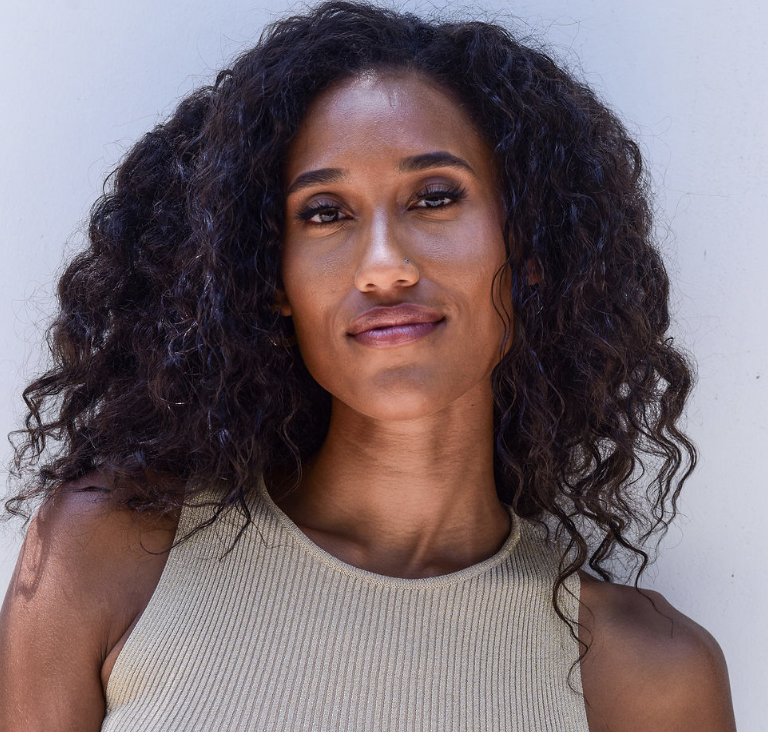
Anna Malaika Tubbs, Ph.D. is a bestselling author and leading multidisciplinary expert on race, gender, and equity. Her most recent bestselling book is Erased: What American Patriarchy Has Hidden From Us (2025).
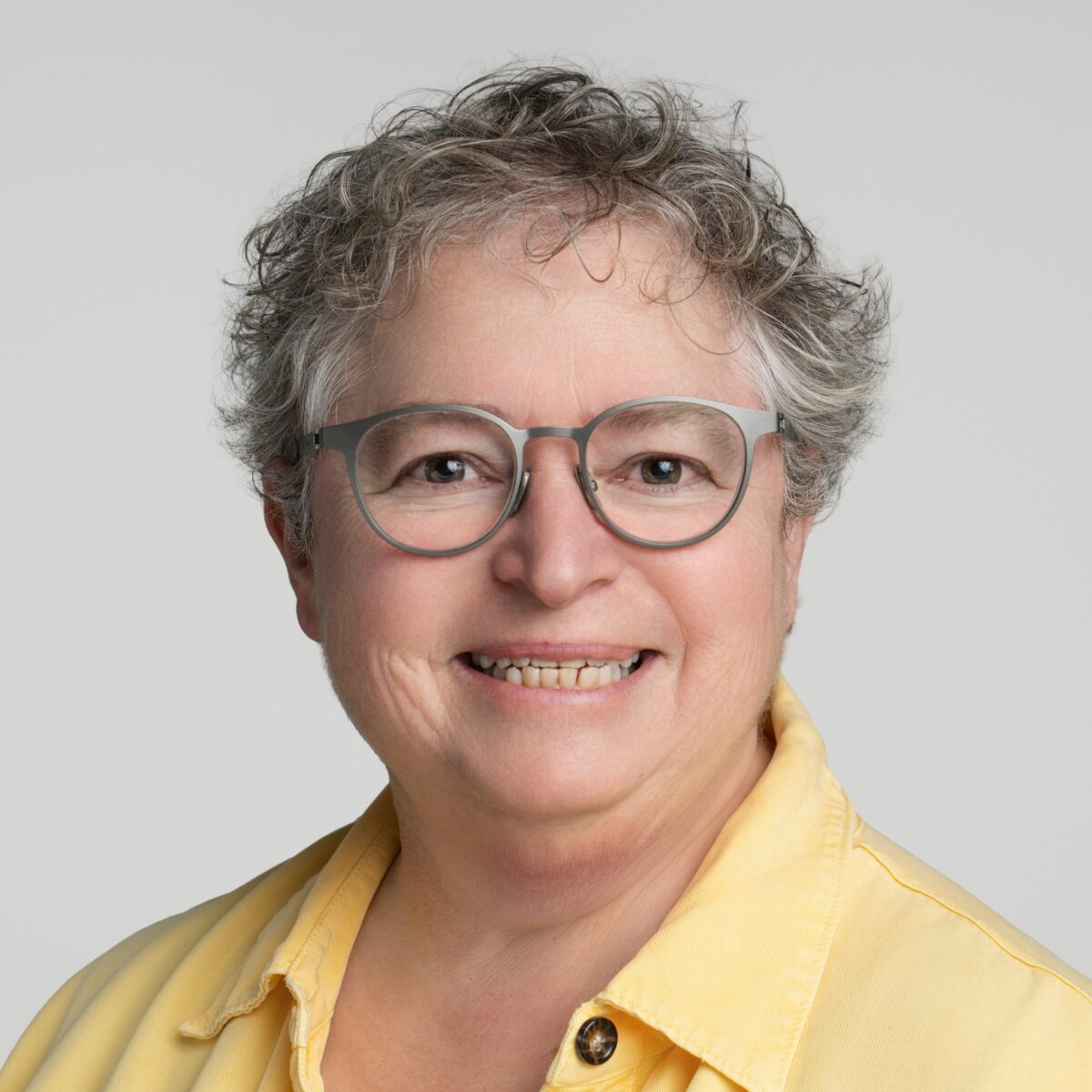
Lisa Rudman, Partnership Director at the San Francisco Public Press, a local investigative newsroom, is a lesbian feminist journalist, media professional and environmentalist.
Credits
- Executive Producer: Kenny Ausubel
- Written by: Stephanie Welch and Emily Harris
- Senior Producer and Station Relations: Stephanie Welch
- Producer: Teo Grossman
- Associate Producer and Program Engineer: Emily Harris
- Host and Consulting Producer: Neil Harvey
This is an episode of the Bioneers: Revolution from the Heart of Nature series. Visit the radio and podcast homepage to find out how to hear the program on your local station and how to subscribe to the podcast.
Subscribe to the Bioneers: Revolution from The Heart of Nature podcast







Transcript
Neil Harvey (Host): After 250 years of existence as a republic, the United States stands as a symbol of many things to many people. Some struggle every day to counter the popular notion that the U.S. is a thriving democracy. They work to shed light on how the country has always been separate and unequal for Black people and other people of color, and how the patriarchal structure that the founding fathers crafted from the very beginning remains firmly embedded in the systems that shape U.S. society.
As a scholar and author, Anna Malaika Tubbs has carefully studied how patriarchy and systems of capitalism, white supremacy, and colonialism intersect and reinforce one another.
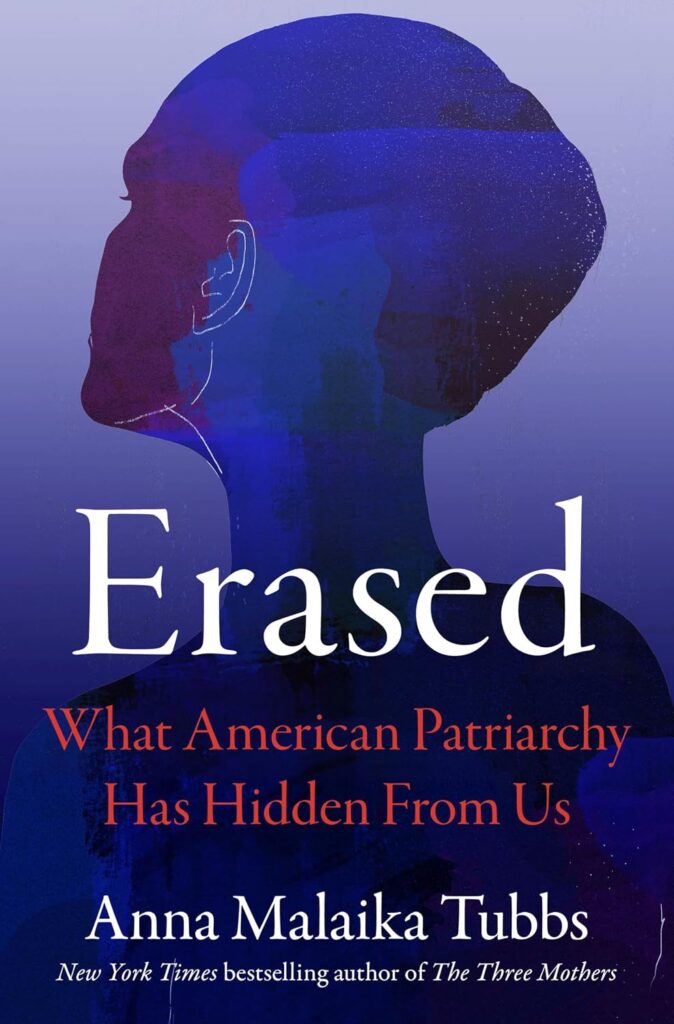
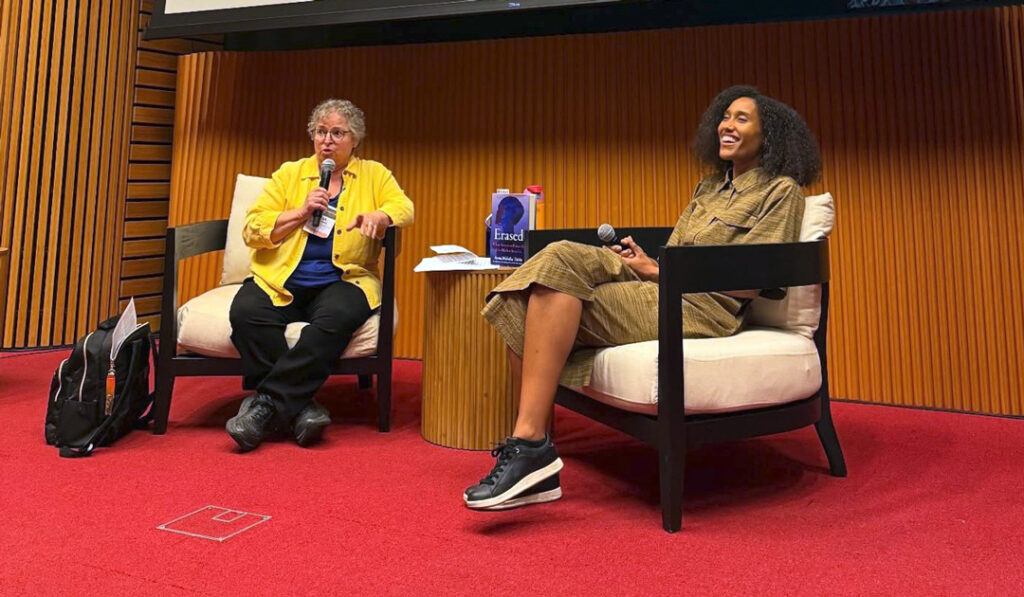
In a conversation at a Bioneers Conference, Lisa Rudman, Partnership Director at the San Francisco Public Press, spoke with Anna Malaika Tubbs about her book Erased: What American Patriarchy Has Hidden From Us, and strategies to move beyond this deeply embedded and destructive system.
Lisa Rudman (LR): Anna is a New York Times best-selling author and multi-disciplinary expert on current and historical understandings of race, gender and equity, with a PhD in sociology and a Master’s in multi-disciplinary gender studies from the University of Cambridge, in addition to a Bachelor’s in medical anthropology from Stanford. You see why I wanted to go through this. [LAUGHTER]
Anna Malaika Tubbs (AMT): I’m just a nerd, just a proud nerd. [LAUGHTER]
LR: Anna translates her academic knowledge into stories that are clear – that is true – and engaging.
Please join me in welcoming Anna Malaika Tubbs. [APPLAUSE]
AMT: Thank you. Thank you so much. Thank you.
LR: You made a distinction earlier that I think is a good segue. You said, you know, in America, we like to talk about patriarchy everywhere else. You specifically talk about the brand of American patriarchy. I really want you to start there, and if you can define what you mean by both those words together, both those words separately, anywhere you want to take that.
AMT: Yes. I love defining it. It’s one of my favorite things to do. So thank you. And I’ll say, when I wanted to talk about American patriarchy, it’s not because I think that it’s the worst patriarchy in the world. I’m really not in the business of ranking patriarchies. They’re all bad. [LAUGHTER] We’ll just say that. But I think that we haven’t spoken as much about patriarchy in the United States. And I think that, from what I’ve observed and from what I’ve studied, patriarchy operates differently in each of the places that it exists.
And so our definition of patriarchy has often really been reduced to this notion that it’s about men against women. That’s not the case. That’s not the definition of patriarchy. It’s actually about how we define who gets to be human in any nation, and that changes, right, from place to place. So patriarchy in the U.S. is different than patriarchy in India. It’s different than patriarchy in France. It’s different.
And so, in the U.S., I point to the founding fathers, and that doesn’t mean that they created patriarchy. Right? Obviously, they’re taking from the monarchy, etc. But when we’re looking at each nation, we can really point to the leaders who chose patriarchy. So we have to remember patriarchy is not divine. It’s not the natural order. It wasn’t our first way of organizing ourselves. Right? Indigenous people organized themselves very differently. There still made of—might have been some elements of patriarchy, but it’s different than what we’re seeing right now.
And so, in 1776, if we just all go back to look at the founding fathers for a second, they win the Revolutionary War. This is a surprise to everybody. They were the underdogs. They weren’t expecting to win. [LAUGHS] No one was really expecting them to win. Many of them were young men. They are very fearful that this revolutionary spirit is going to spread across this new nation, because they’re also oppressing a lot of people who they needed to win the Revolutionary War, so they’re oppressing the women in their lives, they’re certainly oppressing Indigenous people, they’re certainly oppressing people who are enslaved – Black people. So they’re very afraid of what happ—they’re oppressing poor people, poor farmers, especially. They’re afraid of what would happen if that revolution spreads.
And so the period of time between writing—or the Declaration of Independence, winning the Revolutionary War, and then writing the Constitution, we all—we see several rebellions taking place, one of them, the most famous, being Shay’s Rebellion. It’s the thing that makes them want to go and write the Constitution, because they’re worried that they couldn’t actually quell this rebellion fast enough, and they want to form a national military, mainly inspired by and—a local conflict, not an international one. So they’re motivated to write the Constitution and decide who is going to get to have power in this nation. This is when we choose patriarchy – they do. And they say that they want to create a republic of men.
So the Constitution tells us that they are the ones that are going to get to own land. They are the ones that are going to get to vote. There’s a lot of other things they’re going to get to do, but these are two of the primary ones. They, on purpose, leave out women. And we see in the letters that they write to their mothers, to their wives, to their daughters, that women should not participate politically. They do not want that to happen.
“Depend upon it, We know better than to repeal our Masculine systems. Altho they are in full Force, you know they are little more than Theory. We dare not exert our Power in its full Latitude. We are obliged to go fair, and softly, and in Practice you know We are the subjects. We have only the Name of Masters, and rather than give up this, which would compleatly subject Us to the Despotism of the Peticoat, I hope General Washington, and all our brave Heroes would fight. I am sure every good Politician would plot, as long as he would against Despotism, Empire, Monarchy, Aristocracy, Oligarchy, or Ochlocracy.”
Letter from John Adams to Abigail Adams, April 14, 1776
Now this is not just a sign of the times, because there are other countries that are choosing differently. In fact, we see in France, not that women could vote, but that women could have Parisian salons where they talk about politics and voice their opinions, at the very least they’re allowed to talk about it. And Thomas Jefferson says that this is going to ruin France. And so he says, in particular in the United States, we will not repeat the mistakes of the French.
So they’re aware there are other ways and other things that they could choose. They choose a republic of men.
So they define women as those who are simply meant to reproduce the power of men through children. This is where we get the binary in the United States, of—there’s a man that’s recognized, there’s woman that’s recognized. Clearly that’s leaving out a lot of people who they’re not recognizing as neither man nor woman, so they create a problematic binary. But then we have, in the Constitution, clauses to protect the institution of slavery. So they’re not including Black people in the definition that’s already limited of man and woman. They’re not including Indigenous populations. They’re not including immigrants from that point forward. They’re no longer including them. They’re not really including poor white people either. They make it up to the states to decide if people who don’t own property can vote. It was really important to some of the founding fathers it would only be people who could—who owned property who would be allowed to participate.
So then all these people who are excluded from notion of man and woman are told: You’re not going to be treated as human beings, however, you may some day be treated as human beings if you assimilate to the two groups that are recognized. And if you do your part to protect this social order, then one day you might be able to ascend this made-up ladder of humanity. And that’s where the trick of so many people who are not included in it fully still support it, protect it, because they think some day they’ll be able to get there.
And so all of American history can really be summarized by a group of people who loved that social order, who thought this is the way that this nation needs to be organized, who said that that was democracy, but it’s not democracy, because democracy means that power is vested in the people, all of the people. So we’ve not actually experienced that. So what we’ve actually experienced is American patriarchy.
But then you have a part of American history, the other part of it, which were all the people who were not included but who did not fall for the trick, and who said: This is not good enough, this is not democracy; we can get closer to democracy. The more that we include people, then we will be closer to that ideal, and that has been the tug of war of American history ever since.
LR: You have to. Yeah, I mean…[LAUGHTER]
To your point about these structures and systems are not accidental, they get set up, they… give power and privilege to certain people, it’s not about a conspiracy, it’s saying this is not an accident. And so I’m going to ask you, how do you see, then, the structures and systems of white supremacy and racism interlocking with American patriarchy? Because even though this book is defining American patriarchy, I’m trying to think of gender binaryism and – it’s more than sexism. It’s really about everything underneath that umbrella. So how do you see those systems interlocking and working? And maybe there’s a story from the book that you want to refer to.

AMT: Yeah. So I see American patriarchy encompassing all of those -isms, because if you’re saying that people who are enslaved are not counting as man or woman, that’s how we’re furthering the justification of racism in the United States. And if you’re saying that people who don’t own land cannot participate, that’s where we have classism. If we’re saying that in order for us to be human we must be man or woman, of course, you’re leaving out people who are non-binary, and you’re very specifically erasing many Indigenous belief systems that did recognize people beyond this gender binary. It’s where all of it kind of stems from under first telling us that you either have to be a man or a woman.
And so, in a way, we’ve all been told that we’re kind of fighting for our right to be gendered in the United States, that gender becomes our path to humanity. But it’s not just gender, it’s white elite gender. So it is all of those things. That’s why American patriarchy is really unique. That’s where—That’s the difference.
And as an example, if—in the example that I gave earlier, where the founding fathers are saying we are the ones who get to have power, we are the ones who get to have status, and the women in our lives are solely meant to reproduce that status through children, if we look instead at Black women at the time, Black women who are enslaved, the law was saying that their children were not children but were somebody else’s property, and that no matter how a Black woman came to have children – and we know that there horrific ways in which this has happened – no matter how, that child would always carry the status of the mother. So this is a direct opposite definition than what they’re showing of the white male.
So this is why, in many ways historically, Black women have been seen as the antithesis of that power. But what I argue is that actually that, having been so separated from it, is the power that Black women hold, because if you were told by law you’re not a human being, your children are not human beings, in fact, you’re somebody else’s property, Black women don’t go, oh, well, if the law says it, it must be true. [LAUGHTER] Instead, you immediately wake up to the con, and you say this is BS, this is made up; I don’t believe you, and therefore I need to make up something else; I need to create new systems; I need to reclaim systems before patriarchy; and I need to make this nation worthy of me, worthy of my children. That is how progress has happened in the United States. That’s how change has happened. It’s not ever been that those who loved the original social order woke up one day and said: [SIGHS] I feel like giving people their rights today. You know? I’ve changed my mind. They deserve their rights. No. It’s been that those who did not have those rights guaranteed to them, they grabbed it with their hands, they fought, they bled, they sacrificed. They made it so that we made it to where we are today.
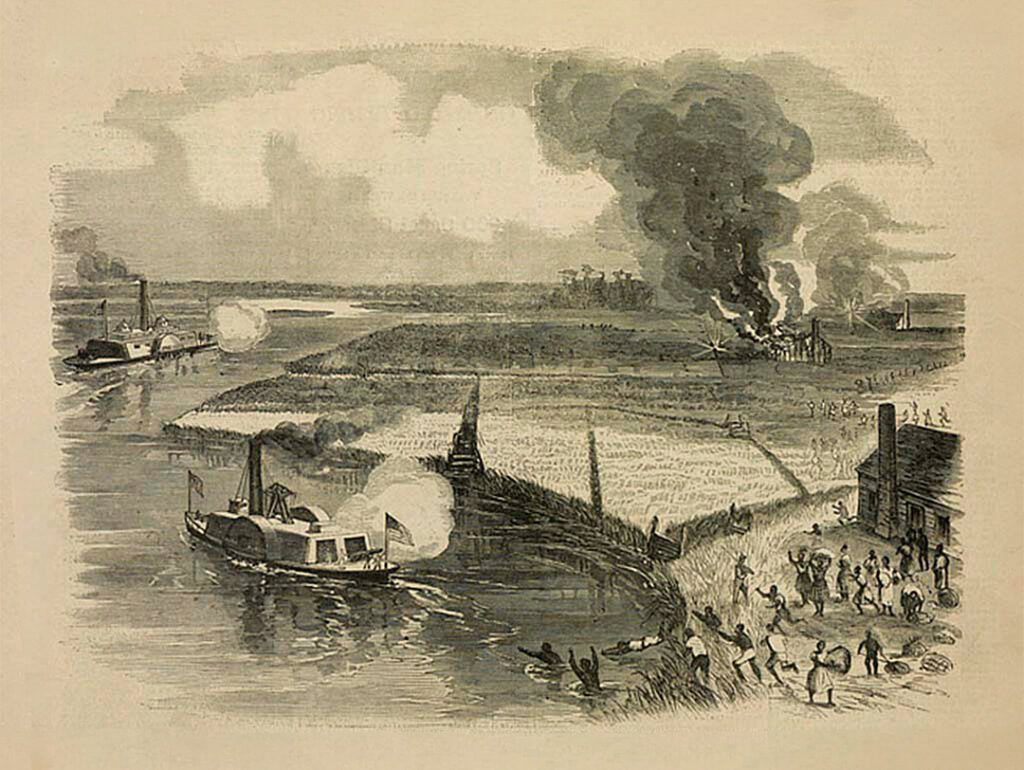
And so when we’re having even conversations right now, where so many people are saying this is the worst it’s ever been, we don’t know what to do, that is just a complete misunderstanding of American history, quite frankly. This is a continuation of the pattern, and now we’re being called to fight like those who had to redefine and make new systems, and claim those rights and protect them.
Host: More from Anna Malaika Tubbs and Lisa Rudman when we return…
I’m Neil Harvey. You’re listening to the Bioneers: Revolution from the Heart of Nature.
Host: Let’s return to the conversation with Anna Malaika Tubbs and Lisa Rudman… Waging a fundamental challenge to the American patriarchal system, Anna says, requires solidarity and looking to the long tradition of collective struggle in the United States, which has repeatedly confronted and reshaped American institutions.
Lisa asked Anna about the role of white women in sustaining and challenging patriarchal structures—a complicated dynamic, given that white women both benefit from, and are harmed by, those structures.
AMT: So white women…So the reason—And I will say it first, too. My mom was a white woman, so I’m also going to talk about the allyship of white women, but first I want to talk about the problematic part. A lot of people ask this question: Why are white women voting for Trump? Why are they protecting this? What is—You know, this is not in their best interests, and they’re voting against themselves, all those things. But if you understand American patriarchy, you understand that actually, in a lot of ways, they’re not, in their minds, voting against their interests, because in American patriarchy, they’re at least recognized, they’re seen. If we’re looking at the scale that I described, and you have the white elite man, and then you have the wife connected to him who has a role to play – you can talk about “trad wives” if we want to – she has a role to play in reproducing the power of that man. And we see that everyone else has just said you don’t get any of this recognition. Okay? Well, in that case, that person is saying I kind of would like to stay in this; I have some proximity to this power.
So, similar to what I was saying earlier around how Black women were cast so far away from that power, that they see it very clearly; they’re not trying to fall for the trick, those who have any proximity to the power can be fooled.
LR: A little more erased for them?
AMT: Yeah. They can be closer to it. They want to replicate it. They want to protect it. They want to play their role in it.
But that’s not all white women. And so in the book I also talk about allyship. I talk a lot about how my mom, in particular—it’s something that I took for granted because she’s my mom. I wasn’t really even thinking of her obviously in the sense of an ally, but the more I had conversations with people who struggled with allyship and what it means to be an ally, I realized that there was a lot that they could learn from my mom, because my mom never said to me that she knew, because she was a woman too, what it would be like to be a Black woman. Never. In fact, she said, “I don’t know what that is like, but I will do my part to learn; I will walk alongside you.” And similar to what I was saying earlier about Black mothers, she said, “I will do what I need to do to make this world worthy of you, my child.” And that’s allyship.
So even if it doesn’t—you don’t feel like you know exactly that experience, you have to see what it means to change this world for all of us to be included.
LR: And you don’t need to be stuck, if I can say, in the essentialism of who you are. You need to recognize that. You might feel guilty for a couple minutes, but guilt is not really motivating emotion, really—doesn’t really get you into change. But then you can decide where you want to be—What I always say, like, in relationship to struggle. And really, it’s beautiful what you said about your mother saying my relationship is to change the world to deserve you.
You get to choose how you want to—and it might mean you have to give up some stuff to move away from that proximity to power, and to join with people who—who you know are really fighting for the new world.
AMT: Yeah. And the thing is it’s this trick of power and what that means. Right? Everybody’s losing in this system. It’s hurting everybody. It’s hurting those who were supposed to be the primary beneficiaries. Even, you know, white men who seem to have it all, if they are not aware of the trick of this system, they’re actually experiencing really high levels of depression, drug dependency. People don’t realize there’s a lot of pain, no matter where you fall in this system. And that’s where those who have kind of woken up to it, to the con, choose allyship, choose let’s stop trying to ascend this ladder, it’s made up; the system isn’t working; let’s try to change the system versus let me try to thrive within it.

LR: Yeah. And individually navigating a way as opposed to collectively seeing where liberation is.
You talk about “breaking free”, so we want to talk about what we can do and how to actually work together. But I know that you have some more to say about men particularly, and fear, how fear motivates a certain amount of staying stuck in what’s not really even good for any humans.
AMT: Yeah. I think that anything that comes from fear and insecurity is going to lead to control. It’s going to lead to having to silence parts of yourself that keep you from being vulnerable, that keep you from being an actual human being. You know, obviously the violence that’s been waged against women is not something that I’m trying to minimize by any means, and so much of that has come from men not being allowed to be fully human. And so there is just a conversation to be had there.
And then in terms of the layers of how we start to break free from this, I think the first layer is it happens on a personal level. This book is deeply personal for a reason. I want the reader to also really take kind of—to see how it’s operating in your own life, first of all, how are you speaking about yourself to yourself. For many of us, we really have internalized the notion of I am supposed to be quiet, I am supposed to be in the background, I am supposed to allow somebody to talk to me any kind of way. Or we’ve internalized I’m supposed to dominate, people are supposed to listen to me— so what’s going on internally? That’s going to be really important as a step. And all of this can happen simultaneously, it doesn’t have to be one at a time. But internal work is really important.
The second part is in our relationships, we may be replicating American patriarchy, whether that’s in our friendships, whether that’s in romantic relationships, certainly within parenting. If we look at our children and we’re thinking, actually, I need to just tell you how the world works right now, and you need to fit into that; or are asking them something June Jordan said is that “when a child is born, the world begins again”. And if we look at children in that way, instead we think what beautiful new world are they carrying, and how do I protect that as much as possible. That would be the opposite of American patriarchy. But if we’re saying to them: This is how things work, and this is how you need to do it, and this is the box you need to fit in, that’s one way in which we’re replicating it. So then we need to analyze it on that relationship level.
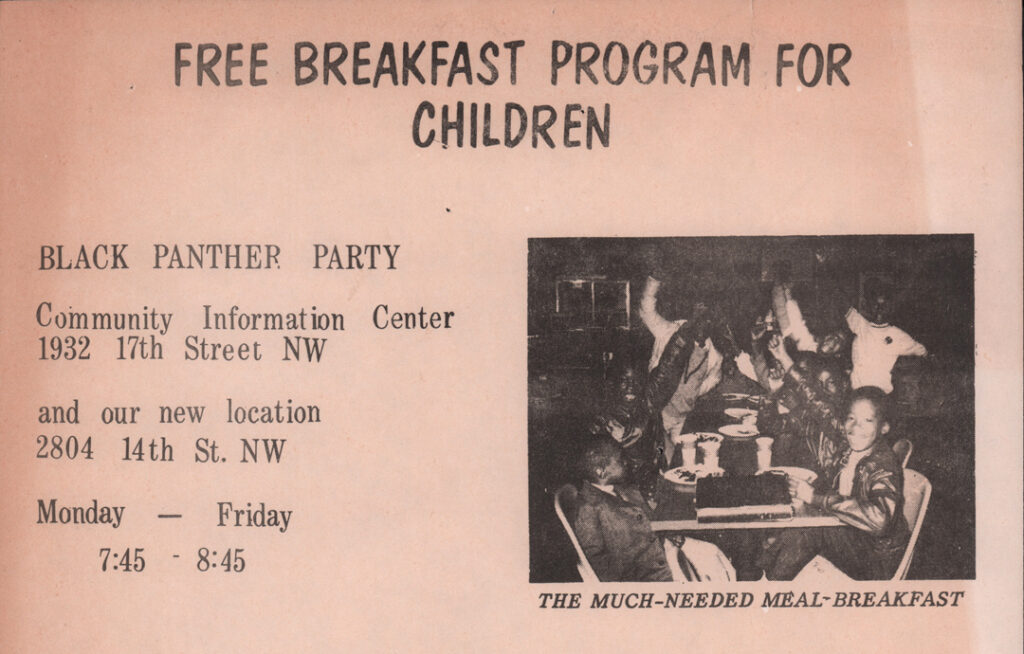
The third level is really kind of one of the most important. This is the community level. This is where we see new systems forming all the time. This is actually where change happens always first, is at the community level. It doesn’t happen nationally first. It always happens where a neighbor sees a mother who needs help with childcare, and they help; where a person says, “It doesn’t make sense that children don’t have food,” and let’s say the Black Panther Party, they make free meal systems. Right? These are where we see the models of what the world could look like. If we look at American history and we look at Black American history in particular, the Black church was one example. There’s other issues with—we could talk about the Black church, but the good parts have been meeting the community needs and creating a nation within a nation. It’s why so many of the powerful orators in American history have come from Black church, because that was one of the first places where they were allowed to speak as human beings, and be taken seriously.
And then, that’s when you actually start to see something take hold on a national level, because people have been able to see it operating. And so they then advocate for that on a political or policy level. And that’s really kind of like a fourth layer of change.
So, yes, it can feel very daunting when you’re coming up against American patriarchy because it’s in all of our experiences. It’s in all of our systems. Every law that came out of this vision of insecurity, every—the medical system, you know, why Black women are dying at such high rates when they go in to give birth, all of it comes back to this. And we’re not just—None of us are going to solve this on our own. It’s not going to be one person who brings the solution to everything, but if we recognize that we’re a part of a larger team of people in this tug of war, and we recognize the needs of those around us, and we recognize that we actually have the power to always create something new in every single one of our interactions, you can start right away.
And the final part is that when we talk about people saying: We don’t know what to do right now; this is so scary. I’m not minimizing how scary it is, I agree. It’s scary. It’s one of the scary times. But this is when you really learn how people have done this in the past. What did they create together in order to achieve change, in order for us to have many years of, honestly, privilege that we’ve forgotten what it means to be brave? This is the time to study them. We know how to live differently every single day. We have the tools, we have the stories. If we’re not doing so, that’s just our choice.
Host: “Challenging American Patriarchy at Its Roots” with Anna Malaika Tubbs and Lisa Rudman