Introducing this year’s exceptional winners of the Brower Youth Awards for Environmental Leadership

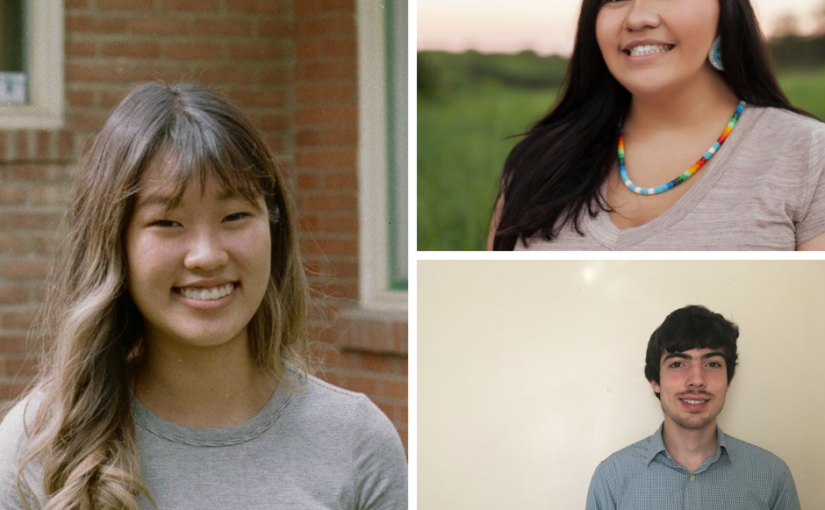
Every year, Earth Island Institute’s New Leaders Initiative selects six young people from North America for their outstanding work in activism, campaigns, organizing and leadership in the environmental movement. They are awarded the Brower Youth Award, the premier environmental ceremony honoring young environmental activists in North America. Brower Youth Award winners demonstrate excellent leadership in the communities that they serve. Bioneers has been honored to feature numerous Brower Youth Award winners on our stage over the years. Without exception, these awardees have been inspiring and visionary, exemplifying the power and necessity of youth taking leadership roles. This year’s theme is “Grow the Movement,” focusing on the momentum of the youth-led campaigns that have made waves in 2018.

Below, a first look at this year’s winners.

Rose Whipple, 17
Speaking up against oil pipelines on Indigenous lands

For Rose Whipple, the Line 3 pipeline project represents a direct threat to the land of her ancestors. The project — which would expand pipeline company Enbridge’s existing Line 3 pipeline allowing it to carry twice as much crude oil from Canada’s tar sands mines to Lake Superior’s western tip near the Minnesota-Wisconsin border — will transect Indigenous territories and threaten the way of life of the Anishinaabe and Dakota people.As an Indigenous organizer from the Isanti Dakota and Ho-Chunk Nations, Whipple has been speaking at high schools and colleges, as well as organizing local events to raise awareness of how the pipeline would harm the Great Lakes, rivers, treaty territories, and sacred Ojibwe sites, and fuel further climate change. The 17-year-old is also one of the 13 youth climate intervenors who were granted legal standing in the Line 3 permitting process in Minnesota, which allowed them to contest the project before the Minnesota Public Utility Commission. Despite fierce opposition, the commission approved the controversial project in June. Tribes and environmental groups filed three lawsuits in early August challenging the decision. Meanwhile, Enbridge has already commenced construction work on the pipeline in Canada. But Whipple is committed to keeping up her fight against project. “It is really important that I bring my voice into this since it is going into my territory,” she says. “I am determined, I follow through, and am in it for the long haul.”

Whipple’s activism also extends beyond opposing Line 3. She has been actively involved in other intersectional issues, including the fight against the Dakota Access Pipeline at Standing Rock and raising awareness about the epidemic of Missing and Murdered Indigenous women in North America.

Tina Oh, 21
Amplifying narratives of frontline communities

Tina Oh’s family immigrated to Canada from South Korea when she was just two years old and her environmentalism is shaped by being raised near one of the world’s largest, messiest oil-mining projects — the Alberta tar sands. Like many Albertans, Oh’s father worked in the tar sands industry until 2014 when oil prices tanked. Oh was a freshman at New Brunswick’s Mount Allison University (MTA) at the time, and as she watched her family, friends, neighbors, and peers lose their jobs, she understood clearly that true climate justice requires taking into account the impacts of the transition from fossil fuels on working class people. Through her work as a divestment organizer and youth delegate at the UN climate negotiations, the 21-year-old activist hopes to amplify stories and narratives of people on the frontlines who are demanding climate justice.

Oh has worked with DivestMTA, which is pressuring the university to withdraw its investments in fossil fuel companies, and Ottawa Climate 101, a youth-led protest on Parliament Hill that called on the Trudeau government to reject the Kinder Morgan Trans Mountain pipeline. (She was among 98 people arrested for participating in the non-violent protest in 2016.) She is also part of the coordination team of the Canadian Youth Delegation to the UN climate negotiations (COP 24) in Katowice, Poland. In 2017, Oh was named one of Canada’s Top 25 Environmentalists Under 25 for her activism and divestment work, and in April 2018, the Canadian Broadcasting Corporation named her one of “13 Canadian environmentalists and innovators changing Earth for the better.” Oh strongly believes “that youth voices on the topic of climate change will be essential to moving our communities towards a safe, habitable, and just world.”

Stephen O’Hanlon, 22
Communicating the need for political action

Stephen O’Hanlon began organizing five years ago after he went to West Virginia with a student group to see the impacts of mountaintop removal coal mining. During the trip, he heard stories from families similar to his who had watched their loved ones suffer and die because they grew up drinking polluted water or breathing toxic air. He had very recently lost his older sister, Tara, to cancer, and he could see how fossil fuel development threatens to put millions of working-class families through the same pain his family went through. So he made a decision to save as many people as possible from that pain.

O’Hanlon started by organizing at Swarthmore College in Pennsylvania, where for three years he led a fossil fuel divestment campaign that received widespread media attention. During summer breaks, he organized to stop fracked gas pipelines in Massachusetts, and to stop the expansion of an oil refinery in a working-class black community in Philadelphia. Last year, O’Hanlon co-founded Sunrise Movement, an organization that is mobilizing a grassroots army of young people across the country to be politically active and combat the corrupting influence of fossil fuel executives and lobbyists. The organization — which is bringing together direct action and issue-based campaigning with electoral politics — has already trained over 300 young people and is currently hosting, Sunrise Semester, a six-month long training for 75 young organizers who will help make climate change matter in the midterm elections. The plan is to have conversations with over 250,000 voters about climate change, push hundreds of candidates to sign the “No Fossil Fuel Money” pledge, and develop hundreds of young climate movement leaders.

“It won’t be easy,” says O’Hanlon, “but I do what I do because I believe in youth leadership and I believe that the youth climate movement, along with other movements, can change the balance of power in the halls of government.”

Mishka Banuri, 17
Intersectional organizing for climate justice

Ever since she was a little child, Mishka Banuri has felt a connection with the natural world, but it wasn’t until she started learning about the “problems humans were afflicting on it” that she realized how deep that connection was. And once she learned about how economically depressed communities and people of color tend to be affected disproportionately by climate change and other environmental hazards, she was determined to do something to address these inequities.

In 2016 when Banuri was in 10th grade, she lobbied for Utah to adopt a “Climate Resolution” written by high school students. The effort failed. Undeterred, she went on to help organize a People’s Climate March in Salt Lake City in 2016, and in 2017, along with two other students, Banuri launched Utah Youth Environmental Solutions — an organization designed to keep young people engaged with environmental issues, and inspire them. Earlier this year, her organization revived the push for the Utah Climate Resolution, hosting an event where students, legislators, and business people started a dialogue on the issue of climate change. After months of hard work, the resolution passed the legislature successfully in March, making it the first resolution of its kind in a traditionally conservative state.

Banuri, whose negative experiences in Utah as a Muslim, woman of color has been one of the driving factors of her work towards justice, believes in the intersectionality of movements. She is also an active advocate for reproductive justice, anti-Islamophobia, and gun control, and seeks to make room for conversations about climate change within these movements as well. “My drive for justice also comes from my religion,” says the 17-year-old. “In Islam, we are taught of peace and justice for communities … I fully believe that it is my duty to help others when I can because it is the right thing to do.”

Jade Sweeney, 18
Supporting our key pollinators

In 2015 the Green Team, a student-led, environmental awareness club at White Oak High School in Jacksonville, North Carolina, started a pollinator park, putting in hours of work to transform a junky, overgrown courtyard into a bee-friendly garden. Jade Sweeney, who was a club member, spent two years helping maintain the garden and learning about the many challenges facing our key pollinators, including colony collapse disorder, pesticides, and loss of habitat. In her final school year, Sweeney decided to take the pollinator park idea one step further by bringing bees on to the school campus. She founded The Pollinator Initiative and proposed the idea of constructing an apiary on campus to school officials. Once they agreed, Sweeney sought the advice of local apiarists on the project and raised the funds required for the Green Team to maintain a beehive and train 13 students to become certified beekeepers. The bees arrived on campus last April and have since been buzzing around school sipping nectar from the pollinator park’s pesticide-free flowers.

White Oak is the first school in North Carolina to have an on-campus apiary, but Sweeney, who will be starting her freshman year at University of North Carolina at Chapel Hill in the fall, wants to replicate her work at other schools in the area and across the East Coast by encouraging students, teachers, administrators, and school boards to see the benefits of apiaries on school campuses.

The 18-year-old envisions a world where the “environment doesn’t need protecting” and she believes education is the key to making that world possible. “For me, bees were the way to start,” she says. “They touch upon the issue, are easily identifiable, and most people can easily help by starting a garden or not squashing [a bee] when it flies by.”

Valeree Catangay, 21
Advocating for a more inclusive environmental movement

Valeree Catangay grew up in North Long Beach, California, a predominantly working-class neighborhood in the greater Los Angeles metropolitan area surrounded by some of the busiest freeways in the country that are used to move goods to and from the Los Angeles and Long Beach ports. The area suffers some of the worst air pollution in the United States due to diesel exhaust from ships, trains, and trucks, and some of the poorest water quality due to urban runoff.

Catangay has witnessed first-hand how this kind of pollution impacts the health and wellbeing of communities. The emerging visual artist and environmental science student decided to advocate for environmental justice when she learned that many other working-class communities of color face similar or worse issues. As a Filipino-American woman of color, “my ambitions in the environmental field both shape and are shaped by my identity,” she says.

Catangay started with her college, the University of California at Los Angeles. As a UC Carbon Neutrality Initiative Fellow, she had used visual communications to engage students in the UC system-wide goal of net zero greenhouse gas emissions by 2025, an experience that gave her the leadership training she needed to get started. Earlier this year, she co-founded the Environmentalists of Color Collective at UCLA, an organization that prioritizes the voices of black, indigenous, and people of color environmentalists and aims to bring industry professionals, artists, students, faculty, and other community members together to find sustainable solutions for our future. One of the collective’s first initiatives was a Climate Justice Forum for the UCLA community and general public. This was followed by the release of mini-documentary highlighting unheard stories of sustainability and the concept of environmental racism. Ultimately, the 21-year-old wants to serve as a liaison between pollution and climate-affected communities and the corporate world.
Restorative Justice: Healing the Cycles of Violence, Incarceration and Wasted Lives of Youth of Color

Jodie Geddes is helping shift the focus of justice from punishment to healing. As the Community Youth Organizing Coordinator for Restorative Justice for Oakland Youth (RJOY), she is using a framework that meets the needs and responsibilities of all involved so that relationships and community can be repaired. RJOY’S work in West Oakland Middle School has eliminated violence and expulsions and reduced suspension rates by 87%. Jodie will be leading a workshop at the 2018 Bioneers Conference for youth entitled Tell Your Story to share strategies to interrupt the tragic cycles of violence, incarceration and wasted lives. Jodie talks about her work in this Bioneers interview.

BIONEERS: How did you get involved in restorative justice work?

JODIE: My work involves truth-telling, racial healing, and reparations coordination based on a national truth and racial healing process for the United States. All of that grounds my work as a healer. Telling the truth about our nation’s history with race and oppression, and ultimately to be able to shine a spotlight on ourselves as a nation is an example for others because there are so many relationships between violence and oppression in the US and around the world.

My personal journey began in Jamaica, West Indies where I was born. At age 6, I came to the United States. I didn’t know where I was going. I arrived in a new world where there was an energy in the atmosphere that made me realize that oppression existed.

I received a lot of messages about being different. There are a lot of cultural differences between Jamaica and the U.S. Race does exist in Jamaica, but more in a form of colorism and shadism and not these clear distinctions between black and white because in Jamaica the national identity is a primary marker. I began to shift my understanding and became more nuanced in my intersectional identity – being Jamaican living in America and seen as American as my accent went out the window.

I started out from a place of anger because I wanted the world to see the blackness that I saw. I wanted people to see the joy that I saw in my community, despite the stories being told about it. I also wanted folks to see the real pain that was happening and how that manifested as a result of the racial history of the country.

Where I grew up in Crown Heights, Brooklyn, gentrification is putting additional pressure on the Black and Hasidic Jewish communities who have a history of tension and separation between them. Many of the properties are owned by Hasidic Jews. It’s interesting to think about the kind of trauma that we perpetuate on each other, even when there are similarities of historical oppression and genocide.

I was an angry organizer who wanted to flip the system on its head. I’d been organizing in high school for different parties and groups, but the anger persisted. The organizing action would feel good, but I was still angry. There was a deep rage towards white people. It was quite problematic, honestly, and could have been dangerous.

I found a justice class with an incredible professor who really challenged us. There were a lot of women of color sharing, for the first time, their stories that were deep and traumatic. I realized that many people don’t recognize oppression and don’t see these incidents through an equity lens. That’s when I decided to get into justice work.

I did a justice circle on my college campus with refugees and immigrants, young folks from places like Cameroon that I worked with in North Carolina. I did it in a selfish way, for my own healing, for my own sake so that I could take off many of the masks that I wear. I wanted to be able to hold that space for all people especially the most marginalized.

BIONEERS: What does restorative justice means to you?

JODIE: It’s hard to talk about restorative justice because there are so many ways it has shown up in community. Restorative justice is a process of how we look at harm and how we lean into healthy relationships in our community. The deeper relationships we have, the less disposable we become to each other. It doesn’t mean that we won’t get into arguments. I will get into an argument with my best friend and say we’re no longer best friends, but there’s a pathway for us to get back to who we used to be in relationship with each other.

Often in our social and justice systems, there isn’t a pathway. Emotion can fester and we could dwell in a place of hatred or disagreement and not recognize that often it’s miscommunication more than anything else. In my work, I’ve come to understand that restorative justice is a process of remembering that there’s a way to create a sacred space and be with each other in community in that sacred space.

One way we can use the process of remembering, particularly when working with youth, is when we lose someone, we build an altar outside. People walk by the altar who didn’t even know that person. So, restorative justice is a process of remembering what it means to be in community.

It is also being able to hold the nuances of who we are in the emotions that we carry. There are waves in society that we have to choose one or the other. If you identify Indigenous, somehow other identities don’t exist. If you identify black, you can’t be Indigenous. So, I would say it’s a process of remembering what it means to be in deep relationship and community with each other in a way that centers our voices, and centers our story, that doesn’t just center on harm, but centers on joy. It’s okay to hold onto joy, and to also speak of it. I think there’s something about the way that restorative justice is being used now that isn’t joyful enough. Yes, harm exists, but what can come from that? What kind of joy can be tapped into?

BIONEERS: What are some of the ways that you’ve brought restorative justice into West Oakland and other communities?

JODIE: First I want to acknowledge that I don’t think the community needs us to take care of them. I think it’s important to acknowledge that out loud. There’s a way West Oakland takes care of itself.

I had a meeting with Reverend Curtis Flemming. He’s also originally from the East Coast. One of the things he talked about was leaning into the wisdom that existed here when he arrived. I think that’s critically important. I thought about the way that he made his ministry, his church, a place that he could be unapologetically Christian, but also build up youth leaders in the community to the point where his voice wasn’t the one that was the loudest. People know him, but it’s not like he’s the one that’s leading everything or he’s the one that’s doing everything.

What does it mean to build multiple leaders and not just have one person leading who everyone is looking at and saying, “This is the one person who’s saving us?” But instead to recognize the wisdom in the way that folks have always taken care of each other.

That affected our approach at RJOY. Anytime we go into a community to do an event or to host a circle, we always make connections beforehand. We never just go in and pop up with an event. We find out who the elders and the key people are in the community. We invite and connect with local organizations so that they can say to their community that this is an opportunity that they can tap into.

Honoring that wisdom and sacred power of the community is really important to us. So even in West Oakland, East Oakland, and North Oakland, where we’re doing restorative justice circles, that is a huge part of it. Are we asking folks to come to the table? Are we bringing the table to them? All of that is a part of a process of remembering and being in community.

Continuing to center on young people is critical. We’re always asking, “Who are the youth? Are youth coming? How are they going to get here? Do they need bus passes?”

We bring radical hospitality, which was named for us by some folks in Chicago at the Restorative Justice Hub. We’re always greeting people, hugging people, even when they don’t want hugs. I used to be the type of person who didn’t want hugs. Now, we’re going to love on you.

And have food, that’s essential. Sometimes people are going to meetings not having food or a place to live. How are we meeting people’s essential needs? I think all of that is the way that we engage in community. If a youth needs something because they’re preparing for a child, we ask, “Do we need to do a baby shower?” It’s asking a lot of those essential questions. All of that affects our approach into community; we’re not trying to do to folks, we’re trying to be with folks.

Our community restorative justice work throughout Oakland is about tapping into the capacity of folks in the community to hold space for and with each other. Not so much to build their capacity, because that’s there, but tapping into it to recognize the realities of the everyday lives people are living. Also, we want to name the dreaming that can happen. For all of us, there’s a way that our dreaming can stop. You can feel hopeless, especially in this political climate. You can be the most awake organizer, and then you see a report on CNN and you’re like, “Oh my God, it’s doom and gloom.” So, continuing to hold a space for people to dream and to begin to come alive, a lot of that happens with our community.

BIONEERS: What are some of the ways that RJOY empowers young people?

JODIE: We have justice circles every second and fourth Thursday. It’s a youth-led and youth-owned space. There’s always going to be food. We also have our Sisters Rising circle, which is our intergenerational circle with young women. It’s really important to continue to elevate multiple narratives, because there’s often just one narrative about men of color. There’s a way that that erases the narrative of women who are being pushed out of the system, particularly in a hyper-sexualized way. That’s why we have our Sisters Rising circle. We have a Black Male circle as well. All of that can be found on our social media sites – SnapChat, Facebook, Instagram, and Twitter @RJOYOakland.

If people are interested in being an intern or just volunteering, they can just reach out to me through our website or volunteers@RJOakland.org

Youth are a part of all of the processes. Letting a young person know that their voice is valued if they are interning with us, that we don’t want to use you; we want to be in community, in relationship with you until you’re a part of all of our decision-making practices.

We also want to know what young people are interested in and what they want to give. What they think RJOY should be doing and why. We open the door to that, to listen, and to be in relationship with young people in community.


Jobs and Clean Energy – Danny Kennedy


The great energy transition is underway. Renewable electricity build-out is outpacing dirty projects. Global greenhouse gas emissions have flatlined, but the transition isn’t happening fast enough to significantly arrest climate change. Danny Kennedy, founder of Sungevity and Managing Director of the California Clean Energy Fund, draws from lessons learned over decades as an activist and entrepreneur on the frontlines of the global energy transition. In this excerpt from his 2016 keynote address, Kennedy highlights the overwhelming employment and economic opportunity that solar energy development is providing right now and moving forward.

Watch Danny Kennedy’s complete talk here.

Vice To Virtue: From Carbon Crisis to Carbon Farming

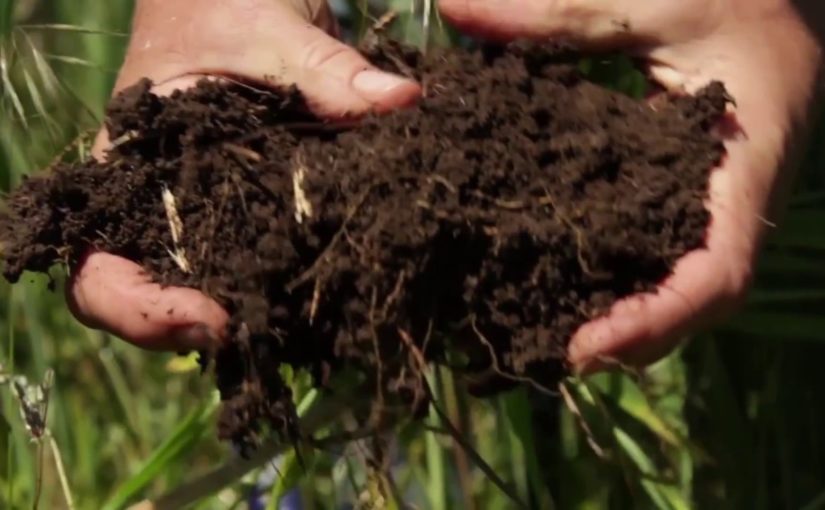
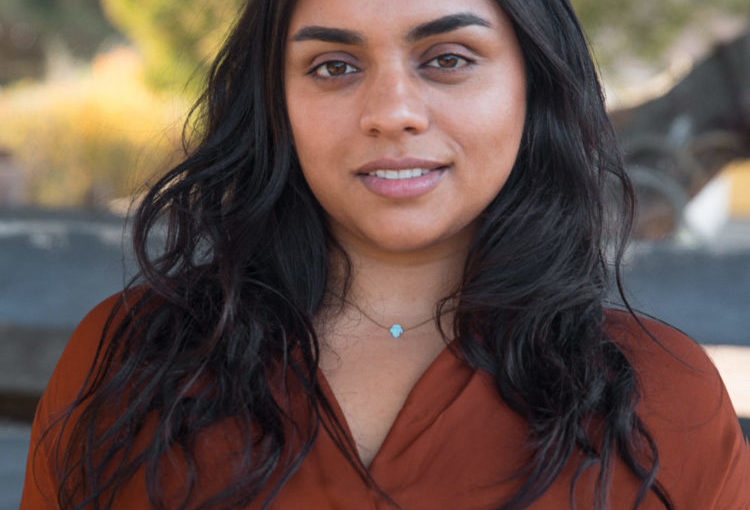
How does a virtue become a vice? How does a basic building block of life turn into a threat to life? And how do you turn that vice back into a virtue? In this half-hour we visit with two unlikely pathfinders who are helping to revolutionize farming. Calla Rose Ostrander and John Wick of the Marin Carbon Project are taking carbon out of the atmosphere and putting it back where it belongs: in the soil. In so doing, they’re also revitalizing the soil, conserving water, and building agricultural resilience. Scaling up these revolutionary regenerative methods can offset the climate destabilization, which that threatens to confound agriculture and endanger our food supply.

Carbon Farming: Agriculture’s Answer to Climate Change

Ranchers, farmers, scientists, and food system activists share solutions, practices and the latest research on how carbon farming can play a preeminent role in addressing climate change and ensure food security by stewarding working landscapes to sequester carbon. Part of the Bioneers Carbon Farming Series.

Huge thanks to Kiss the Ground and The Marin Carbon Project

Videography: Guido Lois, Kiss the Ground
Editing: Guido Lois and Stephanie Welch


Mimicking Nature, Managing for Carbon

By Mark Shepard

Mark Shepard is the CEO of Forest Agriculture Enterprises who has developed a 106-acre polyculture farm by combining Permaculture, agroforestry and biomimicry principles. He is the author of Restoration Agriculture, a book that shares his experience on how to create an agricultural system that imitates the form and function of nature. Shepard gave this talk, transcribed and edited below, as part of the Bioneers Carbon Farming Series.

Twenty-five years ago, I decided to settle in southwestern Wisconsin and convert the land to a mimic of the natural plant community type that was originally there. I was 100% debt financed. I lived on the land and had nothing when I first arrived. About 60% of the land had been farmed in annual crops with only stubble left over from the previous year’s crop. The other 30% was incredibly over-grazed pasture where the grass was no taller than a golf course green with roots that didn’t penetrate the soil more than an inch. If it rained at all, you’d slip and the sod would tear, underneath was red-brick clay.

Mark Shepard (photo by Jan Mangan)

Using library references, I identified the biome and the dominant plant communities of that ecosystem that were in existence prior to the arrival of European settlers. Out of that list, I picked the species of the woody perennials that produce food, fuels, medicines, fibers, etc. Once I had chosen the perennial plants that I would use, I did a little bit of earthwork construction. The next step was to establish perennial polycultures using agroforestry techniques. The number one plant nutrient that we cannot do without is water, so everything is patterned after the water harvesting earthworks and the flow of rainfall on the land.

If you abandon a piece of land for millennia, it will naturally accumulate more top soil. Nature builds soil. The problem is how we do agriculture. If we mimic our natural plant community types, mimic the processes of our place, we’ll be able to build soil. A lot of people say it’s all about the soil life. Some people say it’s all about the soil minerals, or all about organic matter or compost. Actually, it’s about all of those combined. All of those work together to turn the solid planet Earth into bioavailable nutrients that plants can use in a cycle. All of it is important.

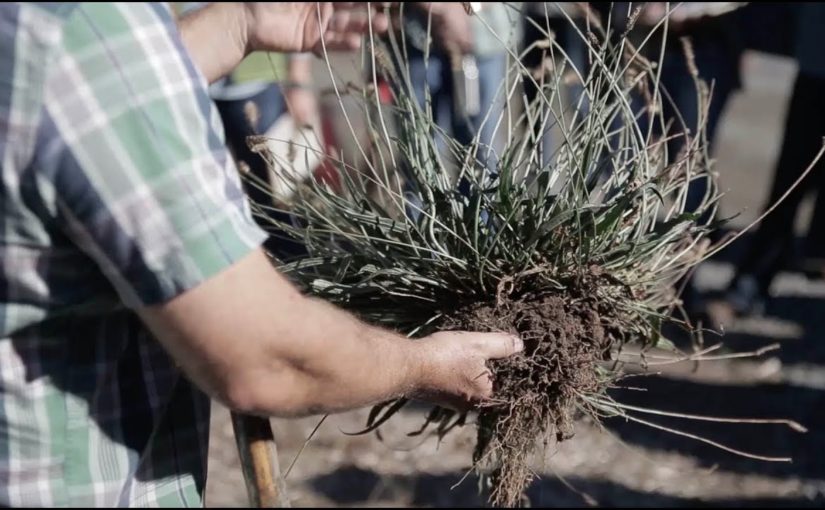
The decomposition cycle is key. We need to get stuff to rot because carbon is energy. It’s the fuel of the system. The more fuel you have on your site, the more the biological activity can burn that fuel to liberate more nutrients from the atmosphere, water and bedrock to the plants.

Trees that live the longest period of time in any place will chemically “color” the soil and transform it with their organic matter and also transform the biology that associates with them. Those trees will drive the soil chemistry. If a plant can’t tolerate the conditions that pine creates, it won’t live with pine. The same is true for walnut and other species.

Tree crops take time to mature, but we’re growing trees that are adapted to the area and we take a hands-off approach so we don’t have any expense in taking care of them – no inputs whatsoever. We’re going to continue to graze cattle and pigs, which are going to control weeds and provide fertilizer for our woody crops. Over time we’ll have additional crops coming off of the land.

If we’re going to take carbon out of the atmosphere, we need green to do that. The largest photosynthetic organisms are trees. They exude sugars into the soil. Sugars are carbohydrates – compounds made up of atmospheric carbon. Trees make leaf litter. They make bark flakes. They’re alive. Even if your grasses are dormant, trees can still photosynthesize. Even trees that have lost their leaves photosynthesize. Atmospheric gasses are exchanged through tiny holes in their stems called lenticels and the layer of green cambium just beneath the bark in young branches photosynthesizes, albeit a lot less than leaves.

We plant natural plant communities with a hands-off approach, and let them grow. If we don’t plant things to fill a particular niche in space, other things are going to come in and plant themselves that we may not necessarily want. Let’s occupy the site with the species that we do want and farm them.

On my farm in southwest Wisconsin, we selected the oak savannah as the plant community type. The plant community that has adapted with the oak savannah includes apples, hazelnut, the prunus species (cherries, plums, peaches, nectarines, almonds), raspberries, blackberries, grapes, currants, and gooseberries, which provide a variety of edible market crops as well as animal feed. We planted the trees first. As the trees are maturing, we grow hay, pasture, small grains, produce and cover in between the trees.

Our design consists of an alley, a swale, a berm and trees. That pattern is repeated so the water, instead of going downhill into the valley and flowing away, gets caught in the swale and spreads out to the ridge. This is done by just slightly changing the orientation of the fields.

In alleys where we raise row crops or produce, we lightly till the soil, maybe only two, three inches deep at the most, with a rotovator or a disc harrow depending on what crop we’re going to plant. We use yellow sweet clover, red clover, white clover and hairy vetch as a cover crop to take atmospheric nitrogen out of the air and put it in the soil where it becomes fertilizer for the next crop. In the area where we tilled there’s going to be a collapse of soil life, that’s where we plant cucumbers or squash or green peppers for wholesale markets. But not all of the soil is disturbed by tillage. The undisturbed area is the refuge for soil life that can come back out and colonize where we tilled and planted.

Yellow clover is also a source of nectar for honeybees. We get about a hundred pounds of honey per acre of yellow sweet clover. That’s an additional yield. Then it is it all goes to seed. What’s my biggest weed problem? Clover. That’s not really a problem. We’re not afraid of weeds in the crop. I didn’t want to spend an inordinate amount of time, or heaven forbid have to hire somebody, to pull weeds, I’m not going to do that. I’m just going to let the plants duke it out. I’ll take reduced yields, but by saving on labor costs, I’ll come out ahead.

After the crop is harvested, we lightly disk it up. Once again, just a shallow disking that incorporates all those different weeds back into the soil, keeping the fungal process, the decay process, going. Then we’ll broadcast a winter rye, winter wheat, or winter triticale, some sort of winter cover crop that’ll quickly turn green.

The rye, wheat or barley cover crop that we put down in the fall grows the next spring. If we need it for cash, we’ll hire a neighbor to come in with a combine and harvest it. If we want it for feeding and bedding, we’ll bale it in small dairy square bales. There’s grain and straw in it, and pigs and chickens like to nest in it.

In our wheat fields, we’ve got at least three different kinds of clover mix, plus all kinds of wild and crazy weeds. I’m not necessarily growing acorn squash, I’m growing carbon. Winter rye puts down about 6,000 pounds per acre of hard woody carbon below ground, about 5,000 pounds in the straw above ground, that’s 11,000 pounds. Yellow sweet clover will do about 4,000 or 5000 pounds total between the roots and the tops, so I’m getting anywhere between 17,000 and 20,000 pounds of hard, difficult-to-decompose organic matter under the ground. It feeds the fungal food web, and maybe it takes a little nitrogen away, but after that first year the decomposer populations are built up. It’s amazing how fast the decomposer organism population amps up.

One of the most destructive things on the land is a drop of water landing on the bare soil because it splashes into the soil, and it takes the particles with it and then it settles out. It gives you a clay layer on the surface, which seals the soil surface. Your soil can’t breathe anymore. So, by utilizing the cropping system described above, I’m putting 6 inches of straw mulch on a hundred acres of land. If you were to do this by hand or even by machine, it’s not very easy and a heck of a lot of work, but if you grow it in place and manage it, as I’ve described, you’ll get a kind of compost and mulch happening, with clover coming through it. The clover is helping to supply the nitrogen.

Once the clover starts to recover, I’ll move a little portable fence and I’ll bring in anywhere between a half dozen and 30 animals. I’ll buy small stocker cattle in the spring, graze them through the summer when I’ve got green grass. They can gain 300 pounds in 6 months. I pay $500 for a cow. It gains 300 pounds, if I buy it for a dollar a pound it’s now worth $800. I take it to the conventional sale barn. I’m buying cheap animals and I’m selling them on the cheap market where they’re going to go to a feedlot and get fattened. If it now weighs 800 pounds and I sell it for the same dollar a pound, I just turned $500 into $800. It’s a 60% return on my investment over six months. Why would I need barns and hay bales and all that kind of baloney? Just put the animals out there when the grass is green. They’re my labor force.

The key distinction is we’re using the livestock as the ecosystem management tool. Animals help manage the land. They recycle nutrients. They take carbon, chew it up, mix it with other materials, ferment it, and poop it out. They’re mowing the grass, they’re trampling. If I get a 50% trample and a 50% graze, I’m happy. Seventy-two cow patties per animal, and about thirty-five gallons of urine per animal per day. That’s a lot of fertilizer.

Then I bring in the mop-up crew after them, pigs. We put rings in their noses because I don’t want them plowing up the ground. On my farm, it’s all about the grass. We don’t want pigs rooting up all the grass, but they are perfectly good at picking up chestnuts that have bugs in them and have fallen off the tree, or apples from trees that abort fruit, or whatever is falling to the ground from your tree crops. Pigs can pick raspberries, they’ll pick currants, they pick grapes, and they eat a lot of grass.

We do not use deworming medications in our animals. As a result, we have good populations of dung beetles. They lay their eggs in the manure and bury it at the root zone of all of the plants. Dung beetles are an amazing creature and if we were using any sprays, we wouldn’t have those benefits. Cow patties just totally disappear, as does pig poop.

After a while, our tree crops start to yield. We’re getting yields in addition to what was going on underneath it with the animals and annual crops. Once you start generating branches, you have extra carbon. We cut and chip the branches. It’s fuel that feeds soil life, starting with fungi, which releases nutrients that feeds the crop, which in this case is grass for the cows.

What I do is first to go through an alley and remove any branches that are overhanging the alley, or the ones that want to scrape me off my tractor. I’m not pruning like a typical orchardist would. I cut the branches and then drop them to the ground in the alley. Next, I take Wine Cap Stropharia mushroom spawn and just scatter it. Throw it all over the place. Then I go through with my flail chopper and then I chip it up. Just grind it on the spot. The ramial wood chips are made from the small stems where most of the nutrients are stored in trees and woody plants. It is an amazing fertilizer that breaks down really fast, even in an arid environment.

You want to do it in the fall before the winter season comes on so you’ll get an optimal breakdown of the chips and the nutrients don’t just oxidize into the atmosphere. In chestnuts, I chop and drop just after blossom set so that nutrients will be released to fill and ripen a nut crop. In apples and pears, I chop and drop in late summer to mow the alleys before harvest and to give the hard-working trees a little shot of fresh nutrient before harvest.

Within three to six months, there’s hundreds of dollars worth of Stropharia mushrooms coming up. What does fungus do to wood? It helps to break it down and turns it into soil. That’s the way I turn wood into $300 and fertilizer. It’s a cool way to grow fertilizer.

With these practices, we’ve changed the land from a bare dirt desert with red clay subsoil into a nice rich black topsoil with the natural native plant community.

Protecting What Remains and Reconnecting with the Ground Beneath Our Feet

When the latest environmental devastation—a clearcut forest, a mountaintop mining site—breaks your heart, it’s easy to sink into despair. Author Trebbe Johnson, who founded Radical Joy for Hard Times, hopes to inspire others to find joy, make art, and experience ritual, through her book Radical Joy for Hard Times: Finding Meaning and Making Beauty in Earth’s Broken Places (North Atlantic Books, 2018).

Join Johnson at the 2018 Bioneers Conference, where she’ll speak about leading with nature’s guidance, and read more from Trebbe Johnson here: Make Guerrilla Beauty by Meeting With Friends at Wounded Places.

The following excerpt is from Radical Joy for Hard Times: Finding Meaning and Making Beauty in Earth’s Broken Places.

When Charlotte Regennas returned to her home on Little Torch Key after Hurricane Irma’s rampage through Florida, she found the whole area so radically changed that she hardly knew where she was. Only part of the roof still clung to one room of her house. Most of the walls had collapsed, and her belongings were broken and scattered, most beyond recovery. She couldn’t even approach what remained of the house to poke through the upturned contents, because debris blocked any passage. The whole neighborhood was almost unrecognizable. Charlotte had been back for only a week, however, when she spotted something that filled her with joy. “Already there are tiny buds on the trees. It’s coming back already. What you thought was dead turns out not to be. That eases my pain a little bit, seeing those buds. What’s happening to the trees is true of everyone. We’re in a budding phase here.”

In the midst of despair and grief there sometimes arises a startling perception: a flash of something fleeting and luminous. It shoots out of all that is entrenched, dark, and numbing, and it penetrates your whole being. It does not make you forget everything else that is happening to you, not at all, but it blasts the negative into bits and disperses it through your sudden and undeniable realization that everything you’re dragged through, even this, is part of life. Surely, as Charlotte Regennas’s exultant discov­ery of Florida trees asserting themselves after a devastating hurricane also makes clear, joy is just as likely—perhaps more likely—to land in times of hardship as in times of ease and comfort, for it is in such circumstances that we least expect and most need it.

This joy has to do with a sudden full-bodied epiphany that you are part of the murky, marvelous, ceaseless surge of life, and that life is going to keep surprising you, no matter how down in the dumps you are. In this flow all things sweep past: death, falling in love, losing your phone, holding a baby, hating your job, immersing yourself in a book, getting a dreaded medical diagnosis, diving into a cool pool on a hot day. There is nothing wrong, then, with opening up fully to that joy when it grabs you, for you have not chosen it; you have simply passed under its stream and found yourself momentarily rained upon. Saying yes to joy—accepting it with as full a measure of consciousness as you have accepted grief—doesn’t mean that you are ignoring the reality of calamity; it simply means that you surrender to the full range of life. Besides, those moments don’t last long. All too soon, the burst of joy dissipates, abandoning you again to the real­ity of your sorrow. And yet, when joy descends upon you, you just can’t help but offer yourself up.

Yeats wrote, “Now that my ladder’s gone / I must lie down where all the ladders start, / In the foul rag-and-bone shop of the heart.” To find and practice radical joy in hard times is to confront our grief about the state of loved places but refuse to fixate on misery. This is an important distinction. Living with the diminishment of wild animals and wild places and the unpredictability of seasons is—and will continue to be in our lifetimes and the lives of our children and grandchildren—a challenge unlike even that of the death of a loved person, for the demise of loved places is ongoing. If your community shudders at the foot of a mountain that is being blasted daily by the coal industry, you are permitted no respite for recovering and rebuilding. Over and over you must concede to fear, worry, grief, and anger until it feels like there is nothing left to feel. And then, once again, you set your foot upon your ladder and start climbing back up: you determine to find beauty, generosity, compassion, and community, and you determine to offer it. There is no other way to survive. When things go wrong, I must accept the invitation to meet them with inner ferocity and inner receptivity greater than I had assumed I was capable of. As Zorba the Greek blusters, “It just can’t go on like this, boss; either the world will have to get smaller or I shall have to get bigger.” Making ourselves bigger, we open up to being pierced by these odd, illogical darts of joy.

The future will require heroes and heroines who are not just brave but joyful as well, not just productive but relentlessly creative, not just capable of organizing effective actions but of acting spontaneously to comfort, give compassion, act generously, make beauty, and share joy. We are those heroes. Planet Earth is spinning in its old orbit, yet everything humans have taken for granted about the airs, waters, weathers, and living crea­tures participating in that wild ride is being challenged. We citizens of the planet, lovers of our own homelands, will have to engage a culture that is losing what it knows and has always taken for granted. How will we live with increased mining and drilling in an age where the planet is burning up? How will we absorb the reality that Bengal tigers and the frogs in our own woodland ponds have gone extinct? How can we possibly prepare for the next devastating storm when it could land anywhere at all and do incalculable damage? What choice do we have but to make our work—and our lives—as creative, meaningful, mutually supportive, and joyful as possible?

Implicit in all of our responses must be the recognition of the reality that exists, even as we acknowledge that it’s a reality we do not want. We must live, as revolutionaries have always lived, with the knowledge that our actions may produce few results—and that the effort itself is worth everything. We must strive for the impossible—and continue to strive. Protecting what remains is vital. Fighting further depredation is essential. And there must, at the basis of all of it, be attention to living meaningfully where we are right now. To acknowledge the places among us that are wounded, make time to visit them with curiosity and compassion, share the stories of what they mean to us, spend time getting to know them, and making gifts of beauty for them, we come back to Earth, to the place where we exist in all our human fallibility and nobility in the moment. Then we reconnect, as people for millennia have known it is essential to do, not only with the ground beneath our feet, but with the ground beneath our hearts.

This excerpt has been reprinted with permission from Radical Joy for Hard Times: Finding Meaning and Making Beauty in Earth’s Broken Places by Trebbe Johnson, published by North Atlantic Books, 2018.

Read more from Trebbe Johnson here: Make Guerrilla Beauty by Meeting With Friends at Wounded Places.

Intelligence in Nature: Jeremy Narby interviewed by J.P. Harpignies

Anthropologist Jeremy Narby’s life’s work has involved reconciling Western scientific views and assumptions with those of Indigenous cultures around the world. In this interview excerpt, Bioneers Senior Producer and author J.P. Harpignies talks to Narby about intelligence in nature, the limitations of language and more.

Explore our Intelligence in Nature media collection >>

We’re a Culture, Not a Costume: Fighting Racism In Schools

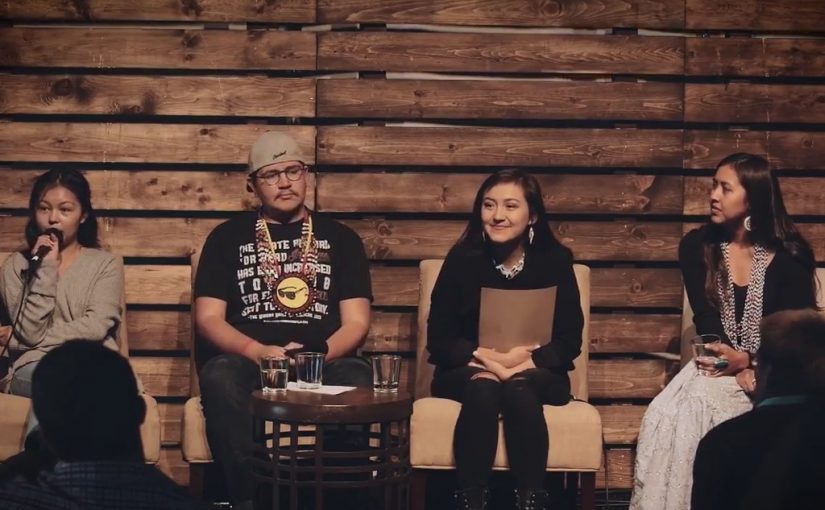
Native American students face racism throughout their education, from racist mascots to the historical erasure of the American genocide from textbooks. In this passionate conversation, Indigenous Rights Activists Dahkota Brown, Chiitaanibah Johnson, Jayden Lim, and Naelyn Pike share stories of their own experiences and how they are working to abolish racism in schools.

Fibershed: Building Local Economy and Healing the Climate

Rebecca Burgess and Fibershed are building a regional economy that connects ranches producing wool with artisan clothing manufactures. Fibershed’s local economy network is based on carbon farming practices that capture atmospheric carbon and store in the soil. Soil carbon supports a regenerative fertility cycle and is the building block for a climate-friendly life-promoting economy. For more information go to the Fibershed website: https://www.fibershed.com/

Healthy Soil and Environmental Justice in California’s San Joaquin Valley

By Janaki Jagannath

Janaki Jagannath is an advocate for farmworkers who, as the former Coordinator of the Community Alliance for Agroecology, works to advance environmental justice in California’s San Joaquin Valley where chemical farming continues to impact the health of rural communities. She gave this talk, transcribed and edited below, as part of the Bioneers Carbon Farming series. Jagannath is currently in law school at the University of California at Davis. 

Protecting the health and diversity of soil microbial communities is the first step to protecting the health and diversity of the human communities.

In California’s San Joaquin Valley — home to many of the nation’s largest fruit, nut and vegetable operations — agricultural soils have been sterilized and depleted of natural fertility. This trend in agricultural soil management is standard practice for industrial farming, and while it’s still possible to turn the trend around and begin managing soils to improve the health of the region, doing so will require us to examine the history of environmental justice (and injustice) in California.

Environmental Justice & Injustice in California

In the 1990s, President Clinton signed Executive Order 12898, Federal Actions to Address Environmental Justice in Minority Populations and Low-Income Populations, a set of policies that required federal agencies to ensure the fair treatment and meaningful involvement of all people regardless of race, color, national origin or income with respect to the environmental impacts of the development, implementation, and enforcement of federal programs and policies.

Among other state programs and policies that have been advocated for and created by environmentally burdened communities of color, the California Environmental Protection Agency has released CalEnviro Screen, a mapping tool depicting communities that are impacted by cumulative environmental impacts such as groundwater pollution, ozone, particulate matter, pesticide exposure, and other toxic pollution. Under Senate Bill 535, California directs 25% of the proceeds from its Cap and Trade program to climate investment funding in those zones which are most impacted.*

These communities suffer the problems that arise from historic land-use policy in California, which has essentially been created by and for large agribusiness, and rarely prioritizes soil health or community health. Rather than building carbon and organic matter, the soil has been stripped of most of its life, and nutrients such as phosphorus and nitrogen get added back in through synthetic fertilizers.

As a result, over one million California residents are exposed every year to water that is unsafe to drink by state standards. In addition, many communities lack adequate wastewater infrastructure, housing, and perhaps most importantly, effective governance. Many environmental justice communities are places that were settled during the migration that took place when the agriculture of the Midwest was pushed to its limit resulting in the Dust Bowl. A period of dramatic expansion of the fruit and specialty crop economy in California led thousands of migrants from across the country to move to California as field workers and packers.

During World War II and with the implementation of the Bracero program, Mexican farmworkers and other communities of color moved into and continued to build these small California communities. Wells were dug by hand and when electrification took place it was often done without proper oversight. Land-use policies were historically discriminatory. Since then, larger municipalities haven’t annexed these places and provided them with basic protections for their drinking water and air quality. These rural unincorporated communities face a lack of local governance and some of the most acute environmental and climate impacts in the state.

Today’s Reality

In unincorporated farm worker communities, residents deal directly with harmful impacts of agriculture. Parents send their kids to school knowing they’re going to get exposed to pesticide drift. They are dealing with chronic disease, asthma and valley fever— a deadly infection caused by a fungus found in soil — on a regular basis.

Drinking water in the San Joaquin Valley primarily comes from groundwater wells. The area’s ground water is often contaminated with nitrates, selenium, arsenic, and 123-TCP – a heavy carcinogenic chemical that was recently regulated for the first time. These water contaminants are pesticide and chemical fertilizer byproducts, or simply the products themselves, washed away into the aquifer. This is a direct result of the way that the soil in the area has been treated over time by chemical-heavy farming practices.

The crops are mainly irrigated with surface water. There is a constant lobbying effort by the agriculture industry for access to more surface water because ground water is expensive to pump and often contains large quantities of salt, which is the primary concern for farmers. Meanwhile, ninety-five percent of the water going to people’s homes is groundwater.

There has also been an enormous loss of native vegetation in the Valley because the agricultural industry has removed most of what was left of the native plants, animals and people. We have lost nearly all ecological memory of the area to privatized industrial-scale agricultural landholding.

Moving Forward

A few important examples of alternative agriculture stand out. In Tulare County, an area known for its conservative approach to large-scale agriculture, Steven Lee of Quaker Oaks Farm is working to educate the local community on the importance of building soil carbon as a foundation to achieve environmental justice priorities. A recent recipient of funding through the Healthy Soils Initiative, Steven is planning to pilot a number of soil improvement practices on his land and gauge their ecological benefits. Quaker Oaks Farm shares historic ground with the Wukchumni Indian tribe of the region, and also with farm working families of Oaxacan origin who utilize a portion of the land for subsistence farming.

Community Alliance for Agroecology has built a framework based on ecology that prioritizes the protection of the water and air and other environmental media in addition to building political power because we believe historically underserved communities who have built our agricultural economy should have a say in how agriculture moves forward in our state. Healthy soil protects our waterways, our local air quality and displaces chemical fertilizers and pesticides if built as a part of a natural soil fertility regimen. This has both short and long-term benefits.

We are at a point in California history where we need to be linking arms around the protection of our soil. We have a State Water Board, and a pesticide department, but we don’t have any direct oversight of our soils at the state government level. The health of our soil has been largely left to the discretion of private land owners. Soil is the basis of our food system and we need to be protecting it—especially in the areas like the San Joaquin Valley. To do that right, we must also include the voices of rural people of color and others who have been historically left out of the decision-making process around farming and land ownership.


To learn more about Janaki Jagannath and her work, read this in-depth profile from Civil Eats.

* To learn more about SB 535 and the 25% of California’s Cap & Trade revenue going to disadvantaged communities, please watch Vien Truong of Green for All on Creating an Equitable Environmental Movement.

5 Videos to Watch This Weekend

If you’re anything like us, you need an occasional break from the steady grind of political news to focus on solutions and to find inspiration. As Bioneers, we’re fortunate to be able to connect with a nearly endless list of innovators and thought leaders — people who have identified major world challenges and heeded the call to do something about them.

Year after year, we bring a sampling of these amazing changemakers to the Bioneers stage, where they share their ideas with people like you who are seeking answers and ideas. And we always discover that, while the challenges we face are significant, the power we have as a collective is stronger.

Below, we’ve collected five Bioneers presentations that our audience returns to time and time again. Watch them this weekend, and share the ones that move you with others who seek inspiration.

1. Paul Stamets – Mushroom Magic

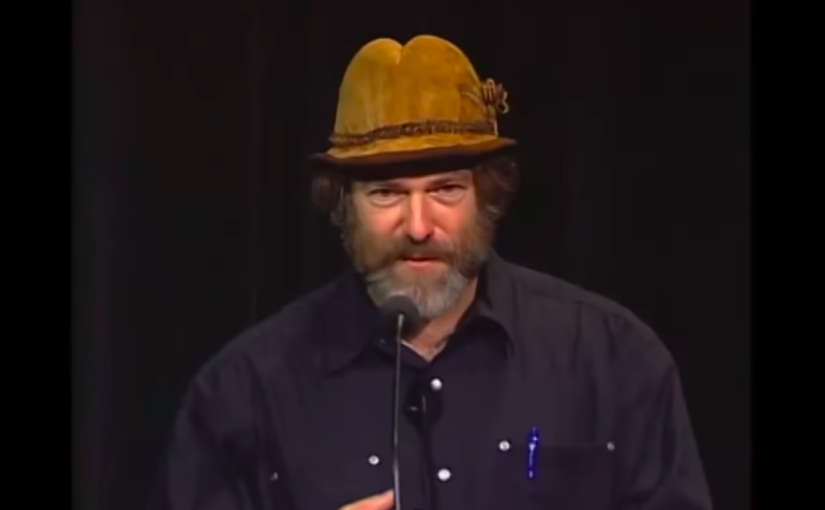
Paul Stamets, visionary mycologist extraordinaire, has discovered several new species of mushrooms and pioneers countless techniques in the field of edible and medicinal mushroom cultivation. He has achieved remarkable results cleaning up dangerous toxins using “fungal bioremediation” and radically improving soil fertility with mushrooms.

2. Dr. Gabor Maté – Toxic Culture

The Canadian physician and best-selling author of In the Realm of Hungry Ghosts is a brilliantly original thinker on addiction, trauma, parenting and the social context of human diseases and imbalances. Contrary to the assumptions of mainstream medicine, he asserts that most human ailments are not individual problems, but reflections of a person’s relationship with the physical, emotional and social environment, from conception to death. Mind and body are not separate in real life, and thus health and illness in a person reflect social and economic realities more than personal predispositions. In other words, personal responsibility cannot be separated from societal responsibility and changing the world.

3. Severn Cullis-Suzuki – Remember the Future

Severn Cullis-Suzuki, daughter of David Suzuki, graduated from Yale with a B.S. in ecology and evolutionary biology, and is on track to outpace her father as an activist. She founded a children’s environmental group at age 9, addressed the Rio Summit at age 12, and hasn’t stopped since, starting several groups and projects and becoming a dynamic, luminous light in a new generation of eco-leaders. Severn discusses our responsibilities toward future generation; how to heal our disconnect from nature and each other; and how to draw from the best of ancient traditions and modern innovation to build a sustainable future.

4. Naomi Klein – This Changes Everything

The award-winning Canadian journalist, international activist and best-selling author (The Shock Doctrine, No Logo) depicts climate change as more than an “issue.” It’s a civilizational wake-up call delivered in the language of fires, floods, storms and droughts. It demands that we challenge the dominant economic policies of deregulated capitalism and endless resource extraction. Climate change is also the most powerful weapon in the fight for equality and social justice, and real solutions are emerging from the rubble of our failing systems.

5. Jeremy Narby – Intelligence In Nature

In this mesmerizing talk, Jeremy Narby shares the findings from his groundbreaking book Intelligence in Nature. He describes his quest around the globe to chronicle how leading-edge scientists are studying intelligence in nature and how nature learns. He uncovers a universal thread of highly intelligent behavior within the natural world, and asks the question: What can humanity learn from nature’s economy and knowingness? Weaving together issues of animal cognition, evolutionary biology and psychology, he challenges contemporary scientific concepts and reveals a much deeper view of the nature of intelligence and of our kinship with all life.