AI is rapidly embedding itself into nearly every sector of society, from agriculture and education to health care, infrastructure, and national security. It’s often framed as an inevitable step forward, offering efficiency, insight, and even hope. But behind the headlines and marketing buzz lies a more troubling reality: the expansion of AI is deepening inequality, accelerating environmental destruction, and entrenching systems of surveillance and control.
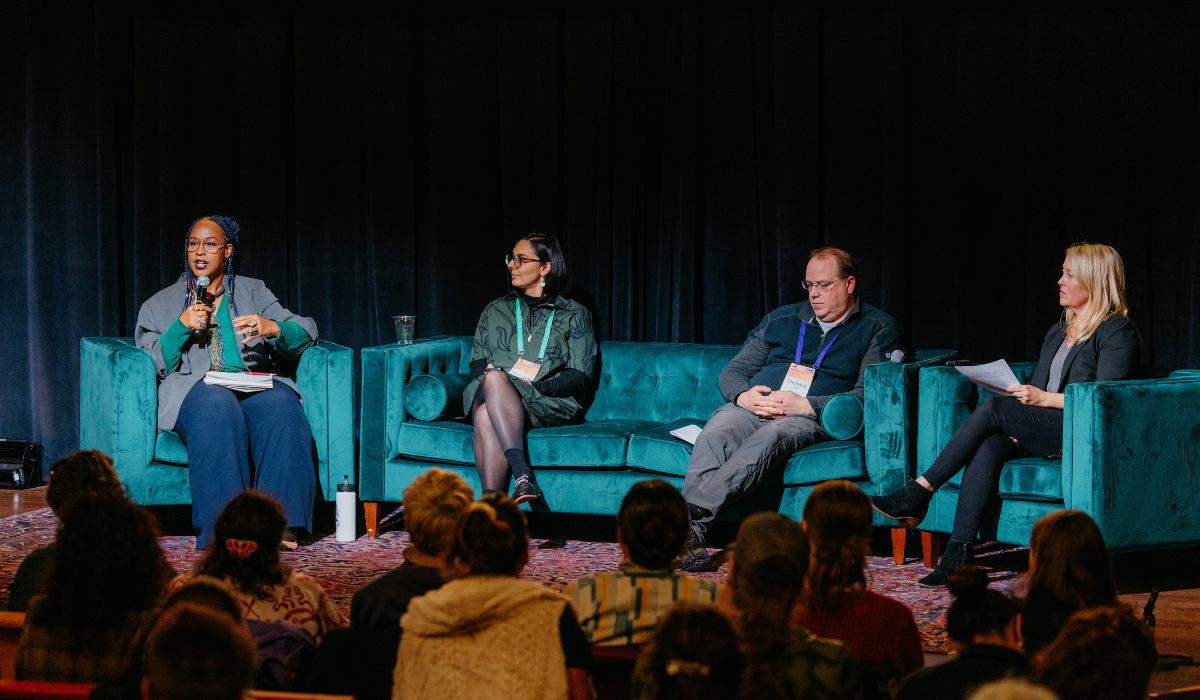
This four-part series—adapted from a 2025 Bioneers Conference panel—dives into the lesser-told stories of AI’s rise. From the erosion of food sovereignty to the energy demands of data centers and the legal frameworks that prioritize corporate power, these essays challenge us to look more closely at what’s really being built in AI’s name and who gets left out.
You’ll hear from journalist and activist Koohan Paik-Mander, tech critic Paris Marx, environmental lawyer Claire Cummings, and anthropologist and farmer Soledad Vogliano. Each brings a distinct lens, from environmental law to food systems and digital rights, but they share a deep commitment to equity, accountability, and the protection of life in all its forms.
At Bioneers, our role isn’t to endorse a single viewpoint, but to open space for critical inquiry and diverse perspectives. The thinkers featured here are longtime activists and technology watchdogs who offer urgently needed context and critique. Their insights help illuminate not just what AI is, but what kind of future we’re allowing it to shape.
Whether you’re cautiously curious or deeply concerned, we hope this series offers new angles, sharper questions, and a deeper understanding of the stakes at hand.
Want more news like this? Sign up for the Bioneers Pulse to receive the latest news from the Bioneers community straight to your inbox.
Part 1: Progress at Any Cost? The False Promises of AI
Far from a neutral tool, artificial intelligence is reinforcing the very systems it claims to disrupt. Journalist and activist Koohan Paik-Mander dismantles the narrative of AI as progress, revealing how it deepens inequality, fuels mass surveillance, and locks us deeper into extractive systems. From data centers powered by fossil fuels to algorithms used for political manipulation and drone warfare, she exposes AI as the latest frontier of late-stage capitalism and makes a powerful case for questioning the real price of so-called innovation.
Part 2: The True Cost of AI: Water, Energy, and a Warming Planet
In desert towns and rural communities, entire ecosystems are being reshaped to keep AI running. Tech critic Paris Marx turns our attention to the staggering environmental footprint of AI’s infrastructure—hyper-scale data centers that consume millions of gallons of water and enough electricity to rival entire nations. With urgency and clarity, he challenges the unchecked expansion of a technology whose benefits remain speculative while its harms grow increasingly tangible.
Part 3: The Illusion of Control: Deregulation, Legal Loopholes, and the Rise of AI
Drawing on decades of work at the intersection of law and activism, Claire Cummings traces a direct line from the deregulation of GMOs to today’s AI free-for-all. She reveals how artificial intelligence is advancing under familiar patterns: minimal oversight, voluntary compliance, and legal frameworks designed to serve private power. But she also makes space for possibility, calling on us to resist with clarity and care, and to recommit to community in the face of automation.
Part 4: Farming in the Dark: The Black Box of AI and the Erosion of Food Sovereignty
As AI becomes more embedded in global food systems, it’s not just changing how we farm; it’s redefining who holds power over knowledge, land, and livelihoods. Anthropologist and activist Soledad Vogliano reveals how corporate-built algorithms are displacing traditional ecological wisdom and tightening the grip of agribusiness. With vivid insight, she frames AI in agriculture not as a neutral tool but as a political force with far-reaching implications for communities, ecosystems, and food sovereignty.
Bioneers Learning Course Spotlight — From Reactivity to Resilience: Responsive Leadership and Fractals of Healing
Unlock your capacity for authentic, grounded leadership in From Reactivity to Resilience: Responsive Leadership and Fractals of Healing, a live online course with therapist and ReParentive® Therapy founder Pamela Rosin. Over six transformative Saturdays (Sept 13–Oct 18), you’ll explore how personal and collective trauma shape your patterns—and how to shift them. Through nervous system tools, embodied practices, and dynamic discussion, you’ll learn to move from reactive cycles into empowered presence. Ideal for therapists, activists, and changemakers ready to lead with clarity, compassion, and resilience.
As artificial intelligence rapidly embeds itself into nearly every sector of society, its unchecked expansion is triggering urgent questions about power, accountability, environmental cost, and the future of life on Earth. While some applications of AI may offer meaningful insights or tools, our new four-part series—adapted from the 2025 Bioneers Conference panel AI and the Ecocidal Hubris of Silicon Valley—focuses on the darker undercurrents: corporate overreach, surveillance, digital colonialism, environmental exploitation, and the erosion of sovereignty.
While Bioneers is not an advocacy organization with a singular platform, one of our core missions is to provide a dynamic forum for diverse, life-affirming ideas. The thinkers and changemakers we feature don’t always agree on every issue—and that’s by design. Because AI is such a complex and rapidly evolving topic, we want to be clear: the views expressed in this series are those of the authors, as is always the case with Bioneers content.
Some in our community see potential in AI’s selective use, such as its role in decoding whale communication, recently featured at our conference, and various other applications. But the broader context cannot be ignored. The explosive growth of AI, fueled by corporate ambition and massive investment, carries sweeping risks across every sphere of life. The four long-time activists and technology watchdogs featured in this series bring urgently needed perspectives to a conversation often dominated by hype. Their insights help us ask better questions about the world AI is shaping—and who it’s leaving behind.
The Series
Essay 1: Progress at Any Cost? The False Promises of AI By Koohan Paik-Mander
A sweeping critique of AI as a force multiplier for climate collapse, authoritarianism, and capitalist control. Paik-Mander draws connections between militarization, planetary destruction, and the seductive myth of techno-salvation.
Essay 2: The True Cost of AI: Water, Energy, and a Warming Planet By Paris Marx
A look under the hood of AI’s infrastructure, revealing the massive and often hidden environmental toll of data centers, energy use, and water consumption fueling the tech industry’s AI ambitions.
Essay 3: The Illusion of Control: Deregulation, Legal Loopholes, and the Rise of AI By Claire Cummings
Legal scholar Claire Cummings explores how weak regulatory frameworks, corporate lobbying, and familiar patterns of industry capture are shaping the AI frontier, often to the detriment of democracy and human rights.
Essay 4: Farming in the Dark: The Black Box of AI and the Erosion of Food Sovereignty By Soledad Vogliano
Anthropologist and agroecology educator Soledad Vogliano unpacks how AI is quietly infiltrating food and biodiversity systems. Her piece explores the dangers of opaque algorithms, digital colonialism, and corporate consolidation in agriculture, and makes a compelling case for bottom-up resistance.
Decades ago, prior to the Human Microbiome Project, the brilliant, iconoclastic, eco-farmer, Bob Cannard, stood up in public and made the seemingly outrageous announcement that the human body was, in fact, an amalgamation of microbes. The skepticism in the room was palpable and the derision was audible.
But now science has confirmed that microbes in and on our bodies outnumber human cells by estimates ranging from 3-1 to 10–1. And that microbial community, now known as the human microbiome, plays vital life-supporting roles in many of our bodily functions, including digestion, immunity, and hormone and blood sugar regulation.
As a farmer, Canard works diligently to optimize what he refers to as the “digestive capacity of the soil.” When I first heard him make that reference, I thought it was an enigmatic and imprecise metaphor for soil fertility, but, in fact, it’s an insightful and scientifically accurate way to describe the interactions within the soil food web, in which microscopic organisms play an outsized role in decomposition, nutrient cycling and plant health. Diverse species of microbes digest and break down organic matter making it more digestible for the next level of the soil food web, ultimately converting it into a form able to nourish plants. Microbes are also architects: they create soil structures that increase the water retention capacity of the soil and enhance carbon storage.
Whether it be fertility-enhancing activities in soil, or the critical functions of fighting disease and regulating metabolic functions in the bodies of humans, it turns out that our lives are highly reliant on the skillful, mutualistic activities of invisible organisms.
The Astonishing Microbes
Though invisible to the naked eye, microbes make up almost 25 % of the weight of all life on Earth. There are hundreds of millions to trillions of species of microorganisms (more than 99% of them undiscovered!) that perform vital functions sustaining life. The cyanobacteria that live on the oceans’ surfaces generate oxygen and help regulate atmospheric CO2. Several types of bacteria and fungi help control the nitrogen cycle in the atmosphere and in soil. As the oldest life forms, microorganisms have an astounding ability to adapt to most all of life’s extremes. Some actually have evolved to thrive in ponds of nuclear waste.
Their ubiquity is also impressive: they colonize virtually all natural surfaces, so it should come as no surprise that microorganisms have evolved symbiotically with humans and inhabit heathy soils in abundance. Microbiomes found in different ecosystems from land to sea, or on and in the bodies of people, animals and plants, could be considered sophisticated civilizations, without which much of life would be severely degraded, if not cease to exist.
The Human Gut Microbiome: An Ancient Community of Allies
Microorganisms, the oldest life forms on earth, have been around more than 3.5 billion years, and over the last 6 million years, they have used humans as an opportune host with which to establish a complex, symbiotic relationship in which each entity has grown to depend on the other to survive and thrive.
But it wasn’t until 350 years ago–a relatively fleeting interval of time compared to the billions of years of microbial life and the two or so million years since early humans first appeared–that the first crude microscope enabled the human eye to view these minute life forms.
150 years after the advent of the microscope, the 19th century French chemist Louis Pasteur discovered that microorganisms are the cause of infectious diseases. That discovery became known as the germ theory, and it ultimately led to the development of wonder drugs to fight infections. But the germ theory is only part of the story of the relationship between humans and microbes. It was not until relatively recently that the health-regulating functions of microorganisms in the human body became known, and the failure to understand the positive role of microbes and the critical importance of the microbiome as an essential aspect our immune system has led to some unintended consequences.
Unfortunately, it has become widespread practice to use antibiotics in livestock on a massive scale as a strategy to prevent disease rather than limiting them to the more judicious use for curing infections. Also, doctors, over the years, have overprescribed antibiotics in people when they were not necessary. Both these misguided practices have contributed to the dangerous crisis of rising antibiotic-resistant bacteria, as these dynamic organisms adapt and become immune to medications. Microbes are some of life’s most dynamic “shapeshifters.” They have an average lifespan of 12 hours, which gives them countless generations to evolve and become resistant to many of the formerly life-saving drugs.
Overprescription of antibiotics also leads to a reduction in both the number and the species of the beneficial microorganisms in the gut. Many antibiotics don’t differentiate between infectious and benign organisms. Those misguided practices arose out of an overemphasis of the germ theory and a lack of understanding of the microbiomes of humans and animals.
Good Health is Dependent on a Healthy Microbiome
Although there were some isolated discoveries of the healthful benefits of good bacteria going back to the late 1800s, those ideas were carried forward mainly on the fringes by traditional cultures and modern aficionados of probiotic health foods such as kimchi, miso, yogurt, kefir, etc. It wasn’t until the Human Microbiome Project in 2007 that science fully accepted the critically important role of the microbiome.
Before that, the colon was viewed as nothing more than a cesspool for housing undesirable microbes and temporarily storing metabolic waste. But more and more, science has been discovering how important a role the microbiota in our gastrointestinal tracts play in the regulation our health. The vast majority of our microbiome reside in the colon where a significant portion of our immune system is also located.
Two-way communication between microbes and our human cells and organs takes place via the immune, endocrine and nervous systems that form an intricate network that regulates our metabolic functions. The science is not exact, but of the trillions of microbes that make up the human biome, only about 1400 are considered potentially pathogenic, so wiping out good bacteria unnecessarily with antibiotics can take a serious toll on a person’s long-term health.
The relationship between our bodies and our microbiome is so intimate that bacteria even share genes with us in a process known as horizontal gene transfer, a kind of intercellular sex sometimes referred to as “jumping genes.” And that transfer is not trivial, it happens among millions of genes. The gut microbiome plays a crucial role in metabolism, immunity, maintaining a balance in our intestines between fighting pathogens while regulating inflammation, and even influences brain function and behavior.
A disruption of the makeup of the microbial community by poor diet, exposure to toxins, lack of exercise, etc. can lead to disease. One example is obesity, which creates a favorable environment in the gut for a specific strain of bacteria to flourish and produce endotoxins that leak into the bloodstream and trigger a chronic state of inflammation. Research has shown that chronic inflammation can result in a cascading suite of misery: diabetes, heart disease, some cancers and many other chronic degenerative diseases. Even some psychiatric disorders are now being linked to poor gut health. Approximately 60% of those who suffer from gastrointestinal disorders suffer from one of several psychiatric disorders, such as depression and anxiety.
Perhaps Bob Canard’s assertion that we are essentially an amalgamation of microbes was a bit overstated, but not by much. It’s now well established that our bodies are an ecosystem rife with complex, mutualistic relationships with microorganisms that have co-evolved with humans to support robust health.
Another critical microbiome, not just for people, but also for animals, plants and ecosystems is the microbiome of the soil.
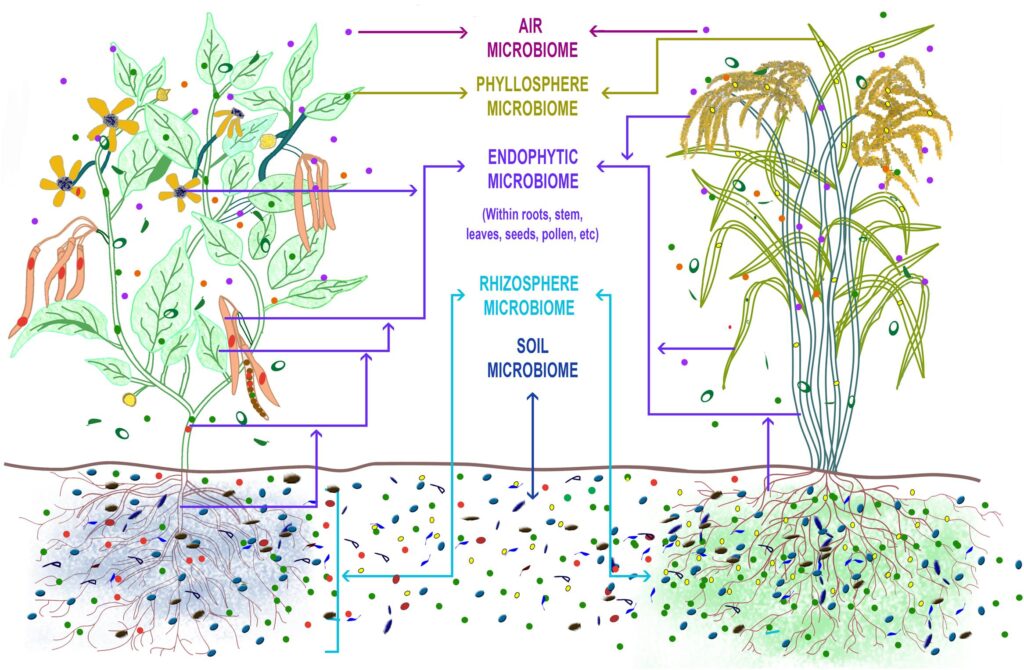
What Cannard refers to as “soil digestion” actually begins one level above the microbiome with the soil macro fauna–those organisms that can be seen–such as earthworms, sow bugs, beetles, ants, etc. Those two communities taken together are referred to as the “soil food web.”
The macro fauna, along with fungi–an important part of the microbiome–initiate the first cycle of decomposition breaking down carbonaceous material, leaving behind a metabolic biproduct (their waste) that microorganisms feed on. Bacteria and other microbes ultimately solubilize the nutrients, converting them into a form that plant roots can take in.
Plants uptake nutrients in a few different ways. To a limited extent, they reach out into the soil and intercept nutrients that have been solubilized by microorganisms. Nutrients can also be carried by water in the soil to the root zone known as the rhizosphere. And plants also get fed with the assistance of mycorrhizal fungi that attach to plant roots, extend out into the soil and harvest water and nutrients and deliver them to the plant.
Plants have the extraordinary ability to take carbon from the air, hydrogen from water molecules, and, by using sunlight as an energy source via photosynthesis, to produce food in the form of carbohydrates that feed not only themselves but also their microscopic allies in the root zone. About 30 % of that food is pushed out into the soil through their roots to feed beneficial soil microbes.
Recent research has revealed just how intimate a relationship plants have with their microbiome. Dr. James White of Rutgers University has discovered a process called the rhizophagy cycle, a fascinating process in which plants actually draw microbes into their roots and circulate them until they break down into nutritional components the plant can absorb. If the process stopped there it would seem a bit exploitive and ungrateful by the plant toward its crucial partners, but it doesn’t stop there. Not all of the microbes taken into the plant are broken down and consumed. The survivors are pushed back out into the rhizosphere to repopulate their community, and in a gesture of gratitude the plant sends a renewed supply of food to those microbes to ensure they can, in biblical terms, “Go forth and multiply” and renew the cycle. The drama of life, death and renewal even occurs at a microscopic level.
All of these ways in which plants get food are directly or indirectly associated with microbes. Photosynthesis provides plants with the macro nutrient of carbohydrates, but for the critical micronutrients that play an essential role in their health and immunity–and subsequently for the well-being of those who eat the plants–they rely on the services of the soil microbiome.
And, as in the human microbiome, those services are comprehensive: communication with cells, turning genes on and off, warding off pathogens by opposing them directly or by stimulating the plant’s innate immune response, etc. And that’s just a partial list, in fact, we still don’t have a complete understanding of all the interactions of plants and microbes. We haven’t even identified the majority of species in the soil microbiome. What we do have is a better understanding of the highly elegant and cooperative system that has stood the test of time to the tune of millions of years by refining its ability to create a steady-state fertility cycle.
As soil microbiologist Dr. Kris Nichols said in an interview that I conducted with her, “Mycorrhizal fungi have been associated with plants for over 400 million years, so they have been able to figure out how to optimize the system and are able to do it at the highest level of efficiency… Humans can’t do it better.”
Misguided Progress
In contrast, the Green Revolution, for which its founder Norman Borlaug won a Nobel Prize, is less than 100 years old. Its celebrated contribution was high-yielding seeds for food crops that came with a promise to feed the world, but the caveat is those hybrid seeds require high amounts of chemical fertilizers and pesticides. Most people are at least somewhat aware of pesticides’ profound “side-effects” on human and ecosystem health, but they’re generally not as aware of the negative impacts of chemical fertilizers.
The routine over use of high amounts of nitrogen and phosphorous causes those fertilizers to runoff off farms and leach into waterways that ultimately create “dead zones” in seas all over the world. As they runoff from farms when it rains, the fertilizers leach into waterways that make their way to rivers that drain into the oceans. The Mississippi River, for example, is estimated to carry 1.7 million tons of those chemicals into the Gulf of Mexico each year, resulting in giant dead zones in that body of water. That is a serious consequence at the macro level, but how do chemical fertilizers affect the soil microbiome?
Commercial chemical fertilizers contain abundant amounts of macro-nutrients—nitrogen, phosphorus, and potassium, but for the most part they lack the valuable micro-nutrients that are also essential for heathy plants, animals, and people. Once applied to the root zone those highly soluble fertilizers are readily taken up by the plant roots. Plants get bigger but often have lower nutrient density. The intervention of adding highly stimulating inputs disrupts a natural cycle and is damaging to the microbiome in two ways. First, the flush of nitrogen pushes the microbes into an overstimulated reproductive and feeding frenzy that ultimately causes the microbial community to crash. The second is a direct disruption of the millions of years of coevolution and symbiosis between plants and microbes. When plants are fed with chemical fertilizers, they turn their back on their traditional community and ultimately decide not to expend the energy to feed the soil microbiota, further degrading the highly efficient, mutualistic system of self-sustaining fertility. At that point, the only way to keep producing crops is to keep pumping them up with more overstimulating fertilizers that increasingly impoverish the soil, degrade the nutritional vitality of the plants, and toxify the global environment.
As David Montgomery and Anne Biklé wrote in their fascinating book The Hidden Half of Nature, on the topics of soil and human microbiomes,“The more farmers rely on synthetic inputs instead of beneficial soil life, the more they need the former and lose the latter.”
Regenerative agricultural is emerging as the response to the degradation of soil health caused by chemically-driven industrial agriculture. By farming in a way that mimics natural systems, regenerative farmers prioritize soil health rather than agrochemical inputs to create a thriving, productive farm for the long term. The first step in accomplishing that is by learning how best to work with the invisible microbial partners in the soil and learn to be a good ally rather than an antagonist. That is the prudent and most scientifically practical way to maintain agricultural soil health and productivity and ensure long-term food security.
The Relationship Between Soil and Human Microbiomes
Science is in the process of an ongoing exploration of the enormous importance of these two fascinating microbiomes. We now know that we are vitally dependent on healthy microbiomes for human and ecosystem health, but less is known about how, or if, these microbiomes are related.
Soil, for billions of years, has been the greatest reservoir of microbial richness while the human microbiome is at best a few million years old. Over those millions of years, humans evolved predominately in rural environments in which they were very much integrated in nature. It would seem logical, under those circumstances, that the soil microbiome would be a significant influence on the human microbiome, but even though functional parallels between the two microbiomes clearly exist, a direct relationship has not yet been determined.
How then does our microbiome develop in each of us? Not surprisingly, we receive our first microbial inoculation from our mothers as we pass through the birth canal, have skin-to-skin contact, and are breastfed. Lacking any one of those leaves a new born with a less vigorous microbiome to start life with. As children grow, the environment plays a big role in the further development of their microbiome. Locale, ecosystem, diet, lifestyle, etc. all have a direct influence in the makeup of our microbiota. In fact, each person’s microbiome is so individualized that it is sometimes compared to the distinctiveness of fingerprints.
Microbial life is highly dynamic and adaptable. In hunter gather cultures, for example, when a deer or other animal was hunted down, it was carried back to the village to share with family and community. Carrying, butchering, and cooking the meat all involved lots of physical contact with the animal. Some of the animal’s microbes were inevitably transferred to the people involved in those activities.
Conceivably, if the conditions were right, those microbes could become part of that person’s microbiome. Similarly, a transfer of microbes from nature to people could occur with early farmers and even small farmers today who have regular physical contact with their environment. That kind of contact, with our hypersensitivity to “germs,” could raise alarms of contracting disease from animals or soil, etc. But remember, the vast majority of microbes are not just harmless but are life-supporting and protective against disease.
Multiple studies in Europe and North America have shown that kids who grow up on farms or in rural areas and have regular contact with soil and animals have fewer allergies, asthma and auto immune diseases. Even in households with pets, kids have better immunity than those who don’t live with a four-legged companion.
As a research article from the University of British Columbia, “Linking the Gut Microbial Ecosystem with the Environment,” states: “Reduced exposure to pathogenic microorganisms, largely as a result of modern hygienic practices, can also result in defective immunoregulation.”
This speaks to the overuse of antibiotics when not necessary and the over-sterilization of non-medical environments. A microbiome rich in diversity can protect against disease, and when stimulated by pathogens, it can learn how to defend against that specific disease. Of course, there are times when medical interventions such as antibiotics are absolutely necessary, but our first line of defense is a strong immune system developed by interaction with nature and a healthy diet and lifestyle.
The analogy in regards to the soil is the disruption of the microbiome by chemical inputs that degenerate the health of the entire food chain from soil to plant to person or animal.
In The Hidden Half of Nature, Montgomery and Biklé wrote: “Pesticides and herbicides have also altered soil microbiota in ways we do not fully understand. Some studies, however, point to the effects that echo the basic problem with the Western diet–like overconsuming refined carbohydrates, excessive use of agrochemicals feeds the bad actors and starves the good ones.”
A highly diverse, well-balanced community of predominately beneficial microbes is the key to both personal and soil health. A core tenet in seeking to preserve an ecosystem’s biodiversity is to maintain, not only a large number of organisms, but a wide array of species. That combination is the foundation for establishing resilient health in the soil as well as the human microbiome.
Our connection to nature is often overlooked or undervalued. As we degrade biodiversity in nature, it could well come at a cost to human health. In the aforementioned article “Linking the Gut Microbial Ecosystem with the Environment,” the authors hypothesize that: “Urban development leading to the loss of local habitats and biodiversity may be detrimental to human health by depleting or otherwise altering the reservoirs of environmental microbes.”
Hopefully, we can now agree that the unintended and indiscriminate depletion and destruction of microorganisms is just not a good idea. We could be eliminating lifeforms that have been our indispensable allies for eons. Modern science is just scratching the surface of our understanding of these sophisticated, invisible civilizations that we have evolved with and depend on. And as Bob Cannard implied, those microscopic life forms are much more an intimate part of who we are than we previously could have imagined.
If you haven’t tuned in to the Young & Indigenous Podcast series, you’re in for a treat. Bioneers is honored to have collaborated with the team at YAI to record a remarkable series of 16 podcast interviews with visionary leaders and movement makers. These interviews were recorded at the 2025 Bioneers Conference with speakers from the Indigenous Forum as guests. Bioneers provided the space and opportunity, legendary recordist and producer Ray Day recorded the audio, and YAI provided the talent, vision, and people power. You can hear the first two episodes and subscribe below so you get alerts when the rest are released!
This special crossover episode marks the launch of our Young and Indigenous at Bioneers series and continues the ongoing conversations from Healing Women Heals Mother Earth. Co-hosts Haley and Santana speak with Amy Bowers Cordalis, a Yurok attorney and activist, about the historic removal of the Klamath River dams. Recorded live at the 2025 Bioneers Conference, the conversation explores how restoring the river is inseparable from cultural survival and personal healing. Amy shares powerful reflections on health, justice, and what it means to fight for the future of your people — and the planet — one foot in front of the other.
In this mic drop of an episode, Raven and Santana sit down with Emmy-nominated host, writer and public speaker Baratunde Thurston. In this conversation they discuss healthy masculinity, storytelling as resistance, and maintaining Indigenous values in the age of AI. Together, they explore what it means to carry and protect information in an era of knowledge erasure, and how humor, creativity, and active participation can help us build pathways of resistance. This pivotal conversation dives deep into urgent questions: Is democracy dying? How do we keep knowledge alive? What does it mean to be a citizen? And how can men truly support women? Recorded live at the Bioneers Conference, this episode invites us to look inwards and outwards — at who we are, and how we can live in good relation with those around us. You’re going to want to listen to this more than once.
The Young & Indigenous Podcast amplifies the voices, stories, and experiences of Indigenous people in all walks of life, creating a platform that fosters empowerment and meaningful conversations. Through storytelling, they uplift the spirits of Native youth, strengthen community, and celebrate indigeneity.
In the race to digitize every aspect of life, artificial intelligence is rapidly gaining ground in agriculture, quietly reshaping how we grow food, manage ecosystems and make decisions about land and livelihoods. Framed as a tool for efficiency and sustainability, AI is increasingly embedded in systems that claim to address climate change and food insecurity, but beneath the promises lie deeper questions: Who controls these technologies? Whose knowledge do they prioritize? And what happens when decisions about nature are outsourced to opaque, corporate-built algorithms?
In this essay, Soledad Vogliano, an anthropologist, farmer, and Program Manager at the ETC Group, unpacks the expanding role of AI in food systems. Drawing on her work supporting Indigenous and peasant movements and her leadership on digitalization at ETC, Soledad makes the case that AI in agriculture is not just a technical issue, it’s a political one.
Adapted from the Bioneers 2025 panel AI and the Ecocidal Hubris of Silicon Valley, this piece is the fourth installment in our four-part series examining some of the hidden impacts of artificial intelligence. Read to the end to access the other essays in the series.
SOLEDAD VOGLIANO: Artificial intelligence is quietly but profoundly reshaping the way we grow food and manage biodiversity. While it’s often promoted as a high-tech fix for some of our biggest global challenges, from climate change to hunger, its growing presence in agriculture raises unsettling questions: Who’s really in control of these tools? And whose interests are they designed to serve?
Let’s start with what I consider the elephant in the room: the black box.
The “black box” refers to the opaque nature of many AI systems, especially those built using machine learning. These models can generate highly accurate predictions, but how they arrive at those decisions is often unclear, even to the experts who design them. We can observe what goes in and what comes out, but the inner workings remain hidden. That lack of transparency is one of AI’s most dangerous features—and one of its most overlooked.
Those mysterious algorithms making decisions about everything from crop protection to biodiversity conservation are, in practice, about as transparent as a brick wall.
Imagine a farmer—let’s call him John—standing in his field, facing a pest outbreak. He consults an AI system developed by a far-off tech company for guidance. The system gives him a recommendation. But here’s the problem: John has no idea how that decision was made. Was it based on the latest agronomic data? Was it tailored to his region’s climate or soil? Was it simply designed to push a product? He can’t tell, and there’s no way for him to find out.
That’s the danger of the black box. When AI systems operate without transparency, their decisions may be flawed, biased, or harmful, and users are left in the dark. If John applies a pesticide that degrades his soil or plants a crop unsuited to his land, he may not even know what went wrong, let alone how to fix it.
The black box doesn’t just obscure technical processes; it raises serious ethical questions. In high-stakes fields such as agriculture, healthcare, finance, and criminal justice, this opacity threatens fairness, accountability, and human agency.
This brings us to a second and equally urgent concern: accountability. What happens when decisions that shape lives and livelihoods are made by invisible algorithms that answer to no one? It may sound dystopian, but this is increasingly the world we live in as AI systems are integrated into the foundations of agriculture, health care, finance, and more.
Consider a scenario: an AI system recommends a pesticide that ends up destroying beneficial insects or encourages a crop choice that later crashes in value. Who is responsible? The farmer who followed the advice? The corporation that built the model? The algorithm itself—a piece of software with no awareness or agency?
This is where accountability breaks down. Without transparency, there’s no clear line of responsibility. Tech companies can shrug off failures, claiming the system, not the company, made the decision. Meanwhile, it’s the farmers, ecosystems, and communities who suffer the consequences. It’s like receiving a harmful medical diagnosis, only to be told afterward that “the AI said it was fine.” How can that possibly be acceptable?
The lack of accountability in black box AI isn’t just a technical oversight; it’s a systemic failure. One that protects corporate interests at the expense of human and environmental well-being.
So, who’s really in control of AI in agriculture? The answer probably won’t surprise you. Many of the same corporate giants that dominate agrochemicals and industrial farming—companies such as Bayer, Syngenta, and Corteva—are now at the forefront of AI integration, often in collaboration with major tech firms. Together, they are shaping the digital future of agriculture.
These companies are using AI to steer decisions about what gets planted, how crops are managed, and which inputs are used. Their systems are powered by data they often control, collected from farms across the globe. And they’re embedding themselves deeper into agriculture by layering digital decision-making on top of the same extractive models they’ve long promoted—models reliant on genetically modified seeds, synthetic fertilizers, and pesticides.
The result is a consolidation of power. AI becomes a tool not for democratizing knowledge or supporting sustainability, but for reinforcing the dominance of firms already shaping global food systems. The technologies remain opaque, their logic inaccessible to farmers and the public. What looks like innovation is often a digital power grab that risks locking farmers into systems they can neither fully understand nor easily escape.
And it doesn’t stop there.
When AI systems are built on appropriated data and biased assumptions, they don’t just miss the mark, they perpetuate inequality, erode sovereignty, and turn culture itself into a commodity.
Even when AI systems appear neutral, they are not. Algorithmic bias is a growing concern that we ignore at our peril. These systems are trained on data that reflects the values, assumptions, and interests of those who create and control them. In farming, this often means data drawn from industrial agricultural practices, leading to recommendations that prioritize yield and profit over soil health, biodiversity, or local needs, overlooking the ecological and cultural realities of small, diverse, or Indigenous-managed farms.
When corporate interests shape the data, they shape the outcomes, and when those outcomes are flawed or biased, it’s communities and ecosystems that pay the price.
This leads to harmful mismatches. AI may suggest fertilizers or pesticides based on monoculture norms, ignoring local soils, biodiversity, and traditional knowledge that has sustained communities for generations. Yet these outputs are often framed as objective, scientifically validated truths, despite being based on biased inputs.
Which brings us to another critical issue: data ownership, or more precisely, the lack of it. In the world of AI, whoever controls the data holds the power. And right now, that power lies almost exclusively with corporations. Data is often extracted from farmers, frequently without clear consent, and fed into AI models that go on to shape the tools, policies, and economic systems those very farmers must navigate.
This is a form of digital colonialism. Local and Indigenous communities that have long been the stewards of biodiversity and traditional ecological knowledge are seeing their insights extracted, repackaged, and monetized by distant actors. Their knowledge is treated not as a living inheritance, but as raw material to be mined for corporate gain. All of this is buried beneath layers of technical complexity, making it nearly impossible to recognize, let alone resist, the exploitation.
When AI systems are built on appropriated data and biased assumptions, they don’t just miss the mark, they perpetuate inequality, erode sovereignty, and turn culture itself into a commodity.
And then there’s the hype: the narrative that AI is the future, whether or not it actually works. One of the most troubling aspects of AI’s rapid rise is the overwhelming optimism surrounding it. The excitement—amplified by corporate marketing, media headlines, and government endorsements—has triggered a wave of massive investments, often based more on speculative promise than proven performance.
This rush to adopt AI has created artificial demand in sectors such as agriculture, even when the technologies in question remain opaque, unreliable, or misaligned with real-world needs. The more corporations can frame AI as revolutionary, the more funding, influence, and market share they can secure, even if the tools themselves haven’t delivered on their promises and rarely acknowledge their limitations.
Mainstream media often reinforces this narrative, presenting AI as an inevitable solution to pressing global challenges: climate change, food insecurity, and ecological collapse. In doing so, it pushes critical questions to the margins: How effective is AI really? What are its social and environmental consequences? Who benefits, and who bears the cost?
In this environment, the deployment of AI technologies often outpaces our understanding of their impacts, leaving little room for democratic oversight or ethical reflection. That’s why we need to shift the narrative from top-down innovation to bottom-up assessment.
Bottom-up technology assessments are essential if we want AI to serve the public good rather than corporate interests. These approaches center community voices, lived experience, and local knowledge. They prioritize inclusion and transparency and ensure that those most affected by new technologies have a meaningful say in how they are developed, implemented, and evaluated.
Corporate-led evaluations often sideline Indigenous and local communities, undermining their rights to self-determination. In contrast, bottom-up approaches center those voices, allowing assessments to reflect cultural values, ecological knowledge, and sustainability priorities.
But effective bottom-up assessments must go beyond surface-level consultation. They should support community organizing and help local groups build and share their own narratives. These communities offer essential insights into how technologies affect ecosystems, livelihoods, and futures. When they are empowered to define resources and benefits on their own terms, the resulting assessments are far more likely to align with shared values and aspirations.
To conclude, the growing reliance on AI in agriculture and beyond raises serious concerns about transparency, accountability, bias, and power. The opacity of these systems, often referred to as the “black box,” combined with corporate control over both the tools and the data, risks exacerbating inequality and displacing local knowledge.
What we need instead is clear: greater transparency, better data, and inclusive, bottom-up assessments that ensure AI technologies serve all communities, not just corporate interests.
This series—adapted from the Bioneers 2025 session AI and the Ecocidal Hubris of Silicon Valley—offers critical perspectives on the systems driving the AI boom and the broader impacts of techno-solutionism.
The technologies shaping our future aren’t arriving in a vacuum—they’re following a well-worn path laid by industry influence, regulatory retreat, and legal systems designed to serve private power.
In this third installment of our series on AI’s hidden costs, environmental lawyer and longtime activist Claire Cummings traces the roots of today’s AI boom back to the biotech battles of the 1970s, the rise of deregulation under Reagan, and the legal frameworks that continue to prioritize profit over people. Drawing from decades of experience confronting unchecked corporate power, Cummings warns that the same forces that once enabled genetically engineered crops to flood the market are now steering the future of artificial intelligence—with consequences that go far beyond code.
Read to the end to access the other three essays in this series.
CLAIRE CUMMINGS: For more than 30 years, I’ve worked at the intersection of law, journalism, and activism, focused in large part on biotechnology and its growing influence on agriculture. That experience has shaped how I understand the deeper forces reshaping our legal systems, our environment, and our humanity.
Over the past five decades, the legal and regulatory systems meant to protect our privacy, health, and environment have been steadily dismantled. Rights we once took for granted have been quietly eroded, often in the name of innovation or efficiency.
Let me take you back to 1975, to a place called Asilomar. Asilomar is a conference center in Pacific Grove, California. That year, scientists developing recombinant DNA technology—using cancer cells and E. coli to cut and splice genes—recognized the risks. What if this technology got out into the world? So they held a conference, but in the end, they chose to self-regulate. They didn’t want government oversight. That decision still shapes our failures to adequately regulate technologies today.
As a result, this work has continued largely without external checks as scientific breakthroughs are rapidly deployed as technologies worldwide without meaningful safeguards. Many of these applications remain essentially uncontrolled experiments.
Just after Asilomar, Ronald Reagan launched his presidential campaign with the now-famous line: “Government is not the solution, government is the problem.” He ran on a platform of deregulation and won.
By 1986, Reagan’s vice president, George H. W. Bush, invited four Monsanto executives to the White House. Together, they crafted a plan to support biotechnology with minimal interference. When Bush became president, that plan was formalized as the “Coordinated Framework.” It gave industry everything it wanted: no new laws, no new oversight, just a patchwork of existing regulations never meant to handle genetic engineering.
Sound familiar?
Today, we’re facing another wave of powerful, poorly regulated technology, AI, with the same pattern repeating. Scientific-sounding concepts are invented to make it all seem safe. The review process is largely voluntary, and the government only knows what the companies choose to share.
I did a little test recently. I asked Google, “Is artificial intelligence regulated in the United States?” And it said yes.
With AI, as with biotechnology, there are no new laws, no meaningful oversight. What Reagan started—dismantling the agencies meant to serve the public—is still happening, and what we’re seeing now is the result: regulatory agencies being gutted and businessmen with clear conflicts of interest being put in charge of public protections.
And even when regulatory agencies do exist and courts agree they have jurisdiction, what we usually get is risk assessment—a cost–benefit calculation, not a real safeguard. It’s not protection; it’s permission.
These technologies are inherently invasive. Think back to the debates around genetic engineering and GMOs. These were products that entered our bodies and ecosystems. They weren’t just ideas; they became part of us, often without our consent.
But the campaigns we ran around GMOs offer a model for how to respond. We didn’t just critique the technology; we organized across sectors and spoke directly to the public. Together, we demythologized the science. We cut through the industry hype and told people what was really going on. And it worked. We helped build public skepticism. Not cynicism, but healthy doubt. The kind of critical thinking we desperately need right now around AI.
And just as important, we offered an alternative. We didn’t stop at opposition. We promoted organic food, sustainable farming, and direct connections between farmers and consumers. People had something to say yes to. That combination—clear critique and offering tangible alternatives—is one of the most powerful tools we have.
Another critical point of intervention is intellectual property (IP). The lifeblood of both GMOs and AI is the ability to patent and profit from information. In the case of GMO patents, it’s life itself—genes, organisms, even biological processes. Over time, IP law has been reshaped to make this not only possible, but standard. This legal structure doesn’t just enable exploitation; it also hides it. Trade secrets and proprietary data make it nearly impossible to know what’s being done, let alone to stop it. That’s how these technologies continue to advance—out of view and without accountability.
Legal reform is one piece of the puzzle, but it won’t be enough on its own. We also need to rethink how we tell the story. Mainstream media tends to embrace whatever’s new and shiny, often without asking hard questions. That’s why it’s critical we create our own channels: spaces rooted in care, caution, and collective values. We did it during the GMO campaigns, and we can do it again.
But at the heart of this moment is a deeper question: How do we resist? How do we confront these technologies and the systems that enable them while staying grounded in our humanity? There’s no single answer, but I hope these stories spark ideas about where you can intervene, and how your voice might help shape what comes next.
We didn’t know what we were doing. We were figuring it out as we went. I hope you’re willing to do the same—to step into the unknown, because the stakes are high.
Most technologies, going all the way back to the plow, have been designed to replace human effort. That’s their core function. Today, doctors don’t have to conduct patient interviews because AI can do it. Farmers don’t have to weed because they rely on herbicide-resistant crops. These tools aren’t just making tasks easier—they’re replacing people.
This isn’t only a threat to jobs. It’s something much deeper. I want to invite you to consider: What does it mean to be human? What are we losing when we adopt these technologies so readily, without reflection?
I want to share a recent personal experience—something that happened just a couple of weeks ago.
My husband and I live in a senior living center up in Sonoma County, a community that was started by the San Francisco Zen Center. It’s very intentional, rooted in the idea of “beloved community.” We’re deeply committed to living by our principles, taking care of each other, and making decisions together using Quaker-style consensus tools.
Not long ago, two people came by promoting AI tools for senior care. One of the products they introduced was a surveillance system that watches you as you move around your apartment. It tracks how you walk, how steady you are, how active you are, supposedly to learn how you’re doing and, if something seems wrong, to alert someone if you fall or don’t “match” the behavioral data they’ve collected about you.
The second product they presented really broke my heart. It was an artificial intelligence “friend” for people who were lonely.
Of course, we rejected both proposals outright, but it also challenged us to really live according to our principles. If we believe in that concept of beloved community, then we have to ask: How do we truly take care of one another? How do we notice if someone is lonely, or struggling, or in need of support?
The reality is that many care communities will adopt these technologies because they’re underfunded, understaffed, and overburdened. On paper, AI looks like a practical solution. But I’m challenging all of us to go deeper, not just to oppose these tools in theory or try to tweak the legal system, but to call on our own humanity. Ask yourself: What can I do to replace what AI is promising everyone else?
In 1964, I was a student at UC Berkeley, part of the Free Speech Movement. We were young, idealistic, and determined to figure out how real change happens—how to challenge unjust systems while staying true to our deepest values.
The day Mario Savio gave his famous “Rage Against the Machine” speech, we were running a freedom school, kind of like the Occupy movement. We held classes and had conversations about how to create change, how to live in alignment with our deepest values. That’s what was happening in December 1964 on Sproul Plaza on the Berkeley campus.
We didn’t know what we were doing. We were figuring it out as we went. I hope you’re willing to do the same—to step into the unknown, because the stakes are high. We are in a moment of crisis. My generation did what we could. We made progress, but our time is passing.
So how will you rise to meet the challenge? How will you respond to what may be some of the most dangerous and dehumanizing technologies our society has ever seen?
This series—adapted from the Bioneers 2025 session AI and the Ecocidal Hubris of Silicon Valley—offers critical perspectives on the systems driving the AI boom and the broader impacts of techno-solutionism.
AI doesn’t run on magic—it runs on energy, water, and massive physical infrastructure. As tech companies scale up generative AI, they’re building out hyper-scale data centers that consume millions of gallons of water per day and as much electricity as entire nations. These facilities are quietly reshaping local ecosystems and rapidly increasing global carbon emissions, all while companies promise a more “intelligent” future.
In this essay, tech critic Paris Marx unpacks the environmental footprint of AI’s infrastructure and asks: Is this the future we really want? Adapted from the Bioneers 2025 panel AI and the Ecocidal Hubris of Silicon Valley, this piece is the second in our four-part series exploring the unchecked impacts of artificial intelligence. Read to the end to access the other three essays.
PARIS MARX: Let’s go back to November 2022. You probably heard about an app called ChatGPT, released on November 30th. Almost overnight, generative AI was everywhere. It became the dominant topic of conversation, central to headlines, social media, and everyday discussions. The media couldn’t stop speculating about what ChatGPT might mean or how it could reshape society. OpenAI’s CEO, Sam Altman, was tweeting about how fast it was growing, as if rapid adoption alone proved that a massive transformation was underway. And with everyone from tech outlets to your social feed buzzing about it, it felt almost obligatory to try it out just to see what the fuss was about.
That launch was accompanied by a sweeping narrative: this was going to change the world. Something bigger was emerging—something with the potential to be incredibly powerful, maybe even beneficial, but also deeply unsettling.
Proponents of generative AI framed it as a leap in collective human intelligence. They promised a wave of AI assistants, each specialized for different industries—an architecture bot, a science bot, and so on. These tools, they claimed, would revolutionize entire sectors and possibly replace human workers along the way. At the same time, they made sure to pitch a silver lining: AI would vastly expand access to education and healthcare. But let’s be honest: When they talked about people going to AI doctors, they didn’t mean themselves. That was clearly meant for everyone else.
These tech giants are channeling their capital into realizing their particular vision of the future—one that depends on expanding AI, increasing computational power, and rolling it all out at a global scale.
There may well be some positive outcomes from this technology, but there’s also the looming possibility of serious harm. The narrative goes something like this: We must develop AI, even though it might destroy the world. It could lead to the end of humanity. This mix of hype sprinkled with warnings of existential risk doesn’t just shape public perception; it influences how the media talks about AI and how organizations begin to position themselves in response to it.
The tech industry benefits from these grand, speculative conversations. They want us focused on how powerful AI might become someday, rather than examining how it’s already being used right now. It’s more convenient to keep eyes on the future than on the real impacts unfolding in the present.
That’s why it’s so important to understand the foundations of this technology—where it comes from, what it actually is, and why it feels like it’s suddenly everywhere.
So why, in November 2022, did a chatbot like ChatGPT emerge and suddenly dominate the tech conversation? I think there are three key reasons. The first is centralized computing power. Back in 2006, Amazon began building massive centralized cloud computing warehouses—what we now call data centers. Imagine an e-commerce warehouse, but instead of packages, it’s packed wall-to-wall with servers. These enormous facilities require a huge amount of energy and power. Over the past two decades, they’ve expanded rapidly and become essential to the infrastructure behind the internet and the digital platforms we use every day.
So why are we seeing this explosion of AI tools right now? Yes, they require centralized computing power, but they also need something else: massive amounts of data. Companies collect enormous quantities of information from the open web and beyond, feeding it into these models. The result? Tools that seem far more capable than previous versions, not because of magic, but because they’re powered by vastly more data and computing resources.
That’s why data collection is so central. It fuels not just generative AI but also targeted advertising and many other systems. To gather all that data, companies have built a vast surveillance infrastructure, quietly capturing information across nearly every corner of our digital lives.
But there’s a third ingredient here: money. Immense amounts of capital are required to build and scale this kind of infrastructure. Companies such as OpenAI are reportedly losing billions each year in the short term, betting that these tools will become profitable in the long run.
They can afford to take that risk because they’re backed by some of the largest, most valuable corporations in the world. These tech giants are channeling their capital into realizing their particular vision of the future—one that depends on expanding AI, increasing computational power, and rolling it all out at a global scale.
So what do these infrastructures actually look like?
We often talk about “the Cloud” as if it were something intangible—data floating in the ether. But in reality, all that data lives in massive physical facilities that require enormous amounts of power and water to operate.
Hyper-scale data centers are a step beyond the standard data centers that have existed for decades. These facilities are far more massive in both their size and their impact. And they’re growing fast.
In 2018, there were about 430 hyper-scale data centers worldwide. By 2020, that number had jumped to 597. By the end of 2024, it had nearly doubled to 1,136. According to Synergy Research Group, another 504 are currently under construction or in the planning stages, driven largely by the surge in demand for generative AI infrastructure.
Roughly 40 to 50 percent of these centers are located in the U.S., though international growth is accelerating, especially in China. The three biggest players—Amazon, Microsoft, and Google—own about half of them.
As these facilities multiply, so do concerns from the communities where they’re built. One data center requires significant resources, but build five or ten in the same area, and the strain on local power and water systems becomes hard to ignore.
Around the world, more and more communities are beginning to push back, and for good reason. Hyper-scale data centers such as Google’s use an average of 550,000 gallons of water per day, or about 200 million gallons per year, primarily for cooling. Just as a laptop heats up under heavy use, these massive facilities, housing tens of thousands of constantly running servers, generate an enormous amount of heat. That heat has to go somewhere, so water and air conditioning systems are used to keep things cool.
Just between 2022 and 2023, Google’s water use across its data centers rose by 20 percent. At Microsoft, it jumped 34 percent. And that was before the generative AI boom really gained momentum, so it’s safe to say those numbers have only gone up since.
In pursuit of lower costs, many companies are building hyper-scale data centers in more remote or arid regions such as Arizona or parts of Spain—where water is already scarce. These areas often offer more access to renewable energy, which allows companies to market the facilities as “green,” but in reality, this shift puts even greater stress on already fragile water supplies.
Next, of course, is energy use. Globally, data centers currently account for about 2–3% of total energy consumption. In the U.S., that number is closer to 5%, since, as mentioned earlier, a disproportionate number of data centers are located here, and that energy demand is only set to grow. In 2022, data centers, along with crypto and AI infrastructure, consumed about 460 terawatt hours of electricity worldwide—roughly equivalent to the total energy use of France. By 2026, the International Energy Agency projects that number will more than double to 1,050 terawatt hours—about the same as Japan’s total annual energy use. That’s a massive escalation in just a few years.
Ireland is on the frontlines of this issue. Right now, 21% of all metered electricity used in Ireland goes to data centers. In winter, this creates serious strain on the grid, sometimes triggering public alerts that warn residents to reduce energy use or risk outages. As a result, there’s growing pressure to expand what has been a temporary moratorium on new data centers in Dublin. But Ireland’s struggle is just the tip of the iceberg; similar tensions are emerging in communities around the world.
How much computation do we actually need? Do we really need to build out endless data centers to support a flood of AI tools with questionable uses—tools that often serve tech companies’ bottom lines more than the public good?
So, where are we headed? Generative AI really began taking off at the end of 2022, and the momentum hasn’t slowed. In late 2024, OpenAI CEO Sam Altman told Bloomberg at the World Economic Forum: “We need way more energy in the world than I think we thought we needed before. We still don’t appreciate the energy needs of this technology.” He went on to say that the world may soon have to embrace geoengineering as a stopgap for climate impacts, unless, of course, we have a breakthrough in nuclear energy. In other words, we’re pushing forward with AI, no matter the energy cost, and if it overwhelms the planet, we’ll just have to engineer our way out of it.
More recently, we’ve seen a major shake-up coming out of China. You might have heard about DeepSeek, a company that’s doing what American AI companies are doing, but far more efficiently. Its emergence rattled the industry, causing U.S. tech stock prices to dip as investors began to question whether this AI boom is really all it’s cracked up to be, and whether the massive buildout by U.S. companies was truly justified? But of course, they’re not backing down.
Not long after DeepSeek’s debut, Sam Altman, Oracle CEO Larry Ellison, and SoftBank’s Masayoshi Son went to the White House to announce a $500 billion investment—code-named Stargate—aimed at building even more massive, nuclear-powered data centers. Meanwhile, Nvidia CEO Jensen Huang responded to DeepSeek’s efficiency by saying that greater efficiency will only drive greater demand, ultimately requiring 100 times more computing capacity. In his view, more efficient models don’t reduce resource use, they multiply it.
But is that actually what’s happening?
We’re starting to see some serious cracks in the foundation. Microsoft has recently canceled a number of data center leases, raising red flags for investors. Even leaders such as Alibaba’s Chairman Joe Tsai have warned that we may be in the middle of an AI data center build-out bubble..
So I’ll leave you with two final questions.
First: Who gets to decide what kinds of technology we build? Should those decisions be left to people such as Sam Altman or Microsoft’s Satya Nadella? Or should we be making these choices democratically, asking whether it really makes sense to invest staggering amounts of water, energy, and materials into technologies whose benefits are still unclear?
And second: How much computation do we actually need? Do we really need to build out endless data centers to support a flood of AI tools with questionable uses—tools that often serve tech companies’ bottom lines more than the public good? These companies rely on constantly growing demand for Cloud services to keep profits up, but that doesn’t mean we have to go along with it. It’s worth asking: how much computing capacity do we truly need? I’d argue it’s probably a lot less than what they want us to believe.
This series—adapted from the Bioneers 2025 session AI and the Ecocidal Hubris of Silicon Valley—offers critical perspectives on the systems driving the AI boom and the broader impacts of techno-solutionism.
In the wake of ChatGPT’s release in late 2022, artificial intelligence quickly became a global obsession—and a corporate gold rush. But behind the promises of productivity, convenience, and innovation lies a far more sobering reality: AI is accelerating energy consumption, fueling inequality, and embedding mass surveillance deeper into the foundations of society.
This article is the first in a four-part series adapted from the Bioneers 2025 panel AI and the Ecocidal Hubris of Silicon Valley, featuring leading voices who challenge the dominant narratives about AI and call for deeper scrutiny of its impacts. Read to the end to access the next three essays.
Here, journalist and activist Koohan Paik-Mander delivers a sweeping critique of AI as the latest frontier of late-stage capitalism. A co-founder of the Tech Critics Network and board member of the Global Network Against Weapons and Nuclear Power in Space, Paik-Mander draws a clear line from data centers to autocracy, and makes the case that the surveillance economy isn’t just dystopian. It’s already here.
KOOHAN PAIK-MANDER: Artificial intelligence—AI—is attracting truly enormous amounts of investment these days. In the two years since the introduction of ChatGPT, hundreds of billions of dollars have been poured into AI, all chasing the kinds of returns that Silicon Valley has traditionally seen. That’s why AI is being pushed down our throats at every turn.
At climate conferences like COP, you’ll see corporate banners claiming AI will cure climate change. At biological diversity conferences, fossil fuel companies tout AI as the solution to species extinction. And politicians across party lines, from Trump to Biden, celebrate AI as the path to U.S. dominance. Techno-utopianism is a bipartisan fever dream.
The entire globalized economy is racing to saturate civilization with AI, no matter the cost. If it means building data centers from sea to shining sea, so be it. If those data centers use so much energy that they foreclose the possibility of ever reaching climate solutions, hey, we’ll just open Three Mile Island and use nuclear power. And if those nuclear power plants take decades to come online? Fossil fuels will suffice in the meantime, because you can’t stop the wheels of progress, right?
This is late-stage capitalism, and AI is the poster child. It’s capitalism eating itself and everything else.
Now, I’m not saying that AI doesn’t have good, useful applications. But we need to start examining the real costs of an AI-driven society. That’s why I’m excited to introduce three incredible thinkers who are helping us do just that: Paris Marx from Canada, Soledad Vogliano from Argentina, and, from the exotic land of Healdsburg, California, Claire Cummings.
Before we get to them, let’s take a moment to demystify AI. It’s not intelligent. It doesn’t think. It’s basically a very sophisticated classification machine that makes predictions based on large volumes of data. Building an AI system typically involves scraping the entire internet, or collecting as much genetic or biometric data as possible, and training the model to recognize patterns. What you get is a fancy machine that makes educated guesses.
And because they’re just guesses, they’re often wrong. The industry doesn’t call them mistakes; it calls them “hallucinations,” a term that conveniently anthropomorphizes the machine. And these errors are baked into the system—you can’t eliminate them. Worse, you often can’t even trace how the mistake occurred. That’s the “black box phenomenon”: millions of calculations happening at once, totally opaque, with no audit trail.
When you think about the fact that Elon Musk has used AI to determine which people and programs are getting cut from the federal budget, it’s infuriating.
The enormous power asymmetry created by the AI economy can’t be overstated. In the past 30 years, digital technology has basically been the most effective means of accelerating inequity and centralizing control, maybe since slavery. Think about it: Of the ten richest people in the world, eight are Silicon Valley tech magnates. This isn’t a coincidence. There’s something inherent in this technology that drives inequality.
AI is what’s known as a “force multiplier.” It amplifies this dynamic of inequity and locks it in. It does this by embedding itself in society’s infrastructure: massive data centers, yes, but also the vast surveillance web of the “Internet of Things”—smart appliances, connected cars, facial recognition cameras, biometric sensors. These aren’t conveniences. They’re surveillance tools. And surveillance, as we know, is a cornerstone of autocracy and fascism.
At the same time, investors are frothing at the mouth to pour billions of dollars into AI. A few years ago, The Economist ran a cover that said, “Data is the new oil.” If that’s true, then AI is the refinery, processing raw data into pure power for a small group of oligarchs.
This is late-stage capitalism, and AI is the poster child. It’s capitalism eating itself and everything else.
The AI surveillance infrastructure entrenches a profound power asymmetry in our society. This is nothing to sneeze at. The corporate state knows everything about us, and we don’t know anything about it. These are the conditions for fascism.And the persecution has already begun.
This data surveillance infrastructure serves three main purposes. First, it continually trains AI by harvesting new data. It’s never done learning, and it needs constant input. Second, it builds detailed personal profiles for every one of us—profiles that can be used to control us. Third, those profiles are monetized. You become the product.
Let’s take a look at how that plays out. Say you miss a payment on your car insurance. Your insurance company can remotely deactivate your engine. Say you live in a smart home, and someone who remodeled your kitchen visits you regularly. If that person later commits a crime, it could be associated with your profile, potentially impacting your ability to get a job or a loan.
This isn’t science fiction. It’s the same proximity-based technology used by Lavender AI to determine kill list targets. Tens of thousands of people have been assassinated using this system, simply for being near someone labeled a terrorist.
The poster child for all this? Cambridge Analytica. Remember them? The cyber warfare firm that worked with Steve Bannon to manipulate 230 million Americans in 2016 using AI tools to identify and target persuadable voters. That manipulation helped elect Trump and later passed Brexit. Airbnb now uses similar methods to shut down local legislation aimed at regulating short-term rentals.
And still, people tell me, “This isn’t my problem—I’m not even on social media.” But it is everyone’s problem. If enough people are persuaded by this propaganda, it shapes policy that affects us all.
Sure, AI can be fun. You can make weird videos. But that doesn’t address the core issue: the staggering power imbalance created by embedding surveillance into the very fabric of our civilization just to prop up the AI economy. For me, that’s a deal breaker.
To continue unpacking the global consequences of artificial intelligence, we’re sharing a series of essays adapted from the Bioneers 2025 session AI and the Ecocidal Hubris of Silicon Valley. Each contributor brings a unique lens to the broader critique of techno-solutionism and the systems that support it.
Our industrial, agricultural and land-use practices have set off a cascade of disruptions to the environment, increasing air and ocean temperatures faster than at any time in our human history. Rainfall patterns are shifting, glaciers and ice sheets are melting, permafrost is thawing, sea levels are rising, and severe weather is becoming more violent and frequent. All of these impacts cause specific harms, but they also have the potential to compound each other and lead to the collapse of ecosystems and the human systems that rely on them. To head off such devastating scenarios, there must not only be widespread global change but also targeted local action.
The biosphere is made up of hundreds of distinct ecosystems that support highly diverse societies, cultures and local communities, and each one faces its own specific series of threats, from deforestation to drought to flooding to dangerous pollution levels to plummeting biodiversity. To prevail in protecting our diverse planet, our greatest assets are often the local people who best know their ecosystems and communities. In this newsletter, we hear from several exemplary local leaders, including: Doria Robinson, among many other achievements, the longtime Director of Urban Tilth, a renowned urban food project building a more sustainable, healthy, and just food system; Abby Reyes, a lawyer, environmental organizer, and Director of Community Resilience Projects at the University of California, Irvine; and four other inspiring climate action leaders working on building bioregional alliances.
Want more news like this? Sign up for the Bioneers Pulse to receive the latest news from the Bioneers community straight to your inbox.
Doria Robinson – Empowering Community from the Grassroots: The Richmond, CA Model
The city of Richmond, California, has provided an impressive example of highly effective progressive grassroots organizing that has included the building of groundbreaking citizens’ organizations, local institutions and co-operatives, and successful electoral campaigns, as well as a major Environmental Justice victory in a decades-long struggle with Chevron, whose massive facilities have long polluted the region. One of the most important figures in this exemplary community is Doria Robinson, whose multi-faceted activism has been a key element in its successes. Since 2007, she’s been the Executive Director of Urban Tilth, a renowned urban food project building a more sustainable, healthy, and just food system, and has helped nurture the birth of many local initiatives, from bicycle co-ops to urban “greening” projects. Now serving on Richmond’s city council, Doria shares some of what she has learned in her decades of building people’s power from the ground up.
The Struggle for Justice in Colombia’s Oil Wars: Climate Organizer Abby Reyes on Love, Loss and Resilience
In 1999, three land rights defenders were kidnapped after they left Indigenous U’wa territory in Colombia. Multinational oil interests seeking the massive reserves beneath the region were attacking U’wa lifeways — and those who accompanied them in resistance. The bodies of Terence Freitas, Ingrid Washinawatok El-Issa (Menominee) and Lahe’ena’e Gay (Hawaiian) were eventually found bound and bullet-riddled in a cow pasture. The murders were part of a struggle that would continue for decades, bringing about both setbacks and victories for the U’wa.
Twenty years after the murders, Terence’s partner, Abby Reyes, found herself a party in Case 001 of Colombia’s truth and recognition process, set up to investigate the causes and consequences of that nation’s decades-long internal armed conflicts. In “Truth Demands: A Memoir of Murder, Oil Wars, and the Rise of Climate Justice,” Reyes navigates her own grief and the fight for accountability for the murders of Terence and his colleagues. In this conversation, Reyes, a lawyer, environmental organizer, and Director of Community Resilience Projects at the University of California, Irvine, discusses land rights advocacy, entrenched oil interests, resistance and resilience, and what she hopes her book can offer climate activists.
As climate breakdown escalates, communities are increasingly realizing that climate action and resilience have as much to do with actual ecological boundaries as with political boundaries on a map. The fundamental principle of bioregionalism is that communities are to a large extent defined by their watersheds, foodsheds, and energy sheds and that basing their local organizing around these ecological realities can lead to meaningful strategic collective action. But how exactly can bioregional perspectives translate into effective political action? This visionary group of leading-edge climate action organizers illuminates multiple pathways for addressing both practical climate actions and emerging forms of eco-governance that center equity and justice.
In this presentation, we hear from global Indigenous climate leader Eriel Deranger; leading “Rights of Nature” attorney Thomas Linzey; climate justice organizer and attorney Colette Pichon Battle, whose Taproot Earth nonprofit works in the Gulf South and Appalachia; and OneEarth founder Justin Winters, whose science-based climate solutions framework focuses on Renewable Energy, Regenerative Agriculture, and Land and Biodiversity Conservation.
Bioneers Learning Course Spotlight — Sacred Activism: Meeting our Challenges as Gateways for Cultivating Relational Leadership
What if our greatest challenges are invitations to become more whole? In an era of accelerating change and deepening divides, we’re being called to meet the moment—not only with action but with presence, compassion, and a reimagined sense of leadership. This course is not about striving harder — it’s about showing up more fully, guided by love, connection, and a deepened sense of relational leadership. Led by Nina Simons and Deborah Eden Tull, this four-week online course runs from November 13 to December 11, 2025.
As climate breakdown escalates, communities are increasingly realizing that climate action and resilience have as much to do with actual ecological boundaries as with political boundaries on a map. The truth is that communities are defined by their local watersheds, food sheds and energy sheds – as well as culture sheds. These ecological maps will increasingly redefine political maps that can engender meaningful strategic collective action. How do bioregional perspectives translate into political action? How can we build political-ecological alliances for climate action that address urgent bioregional realities and needs? This visionary group of leading-edge climate action organizers illuminate multiple pathways for addressing both practical climate actions and emerging forms of eco-governance that center equity and justice.
With global Indigenous climate leader Eriel Deranger; leading Rights of Nature attorney Thomas Linzey; climate justice organizer and lawyer Colette Pichon Battle, whose Taproot Earth nonprofit works in the Gulf South and Appalachia; and OneEarth founder Justin Winters whose science-based climate solutions framework focuses on renewable energy, regenerative agriculture, and land and biodiversity conservation.
This conversation took place at the Bioneers 2025 Conference. You can experience more of the amazing keynote talks, conversations and performances here. (photo: Boris Zharkov Photography)
For billions of years, the natural cycle of day and night, light and darkness, has governed the lives of plants and animals. They have evolved with these cycles, which play a critical role in their survival. This daily cycle of light and dark governs life-sustaining behaviors such as reproduction, nourishment, sleep and protection from predators. But humans and our plethora of bright outdoor lighting are breaking through this vital darkness.
In “Night Magic: Adventures Among Glowworms, Moon Gardens, and Other Marvels of the Dark,”Leigh Ann Henion embraces darkness, rebuffing its associations with malady in the Western world. Henion writes that darkness is an integral and essential part of the human experience, and it’s one that we are collectively losing. She notes that organizations ranging from DarkSky International to the American Medical Association have implored the public to fight light pollution, which, in addition to degradation of entire ecosystems, has been shown to cause increased rates of diabetes, cancer and a variety of other ills in humans.
“What might we discover if we pause to consider what darkness offers?” Henion writes. “What might happen if we, as a species, stopped battling darkness—negatively pummeled in popular culture and even the nuance of language—as something to be conquered and, instead, started working with it, in partnership.”
Like many nocturnal creatures, salamanders’ natural activities can be confused or deterred by artificial light, including their mating rituals. As Henion explains, salamanders spend most of their lives underground, but once a year, they emerge to mate, navigating back to the ephemeral spring pools of their own beginnings to lay their eggs where fish cannot eat them. One such place is Barbwire Pond. In the following excerpt from “Night Magic,” Henion embarks with her friend Wendy to this ephemeral pool, hoping to see a spotted salamander dance.
Before I started spending time with salamanders, I’d never considered that it might be easier to slide across rain-glazed ground. I hadn’t thought about how moisture turns hard-edged leaves into tissue paper. I’d never looked up at bright clouds on a warm spring day and wished they would swell into dark forms. But that’s what happens the following day. Every hour of sunshine makes me think to myself: I wish it would just rain already!
When I tell Wendy that I’m headed out again that night even though clouds have failed to gather and temperatures seem below ideal, she offers to accompany me. Neither of us consider ourselves big news-watchers, but recent events have been acutely concerning. The specifics of doom are ever-changing. What remains the same is how scrolling newsfeeds makes me feel like my soul is shriveling.
My headlamp has, night after night, proven too diffuse for probing water. It is more of a bludgeoning device than a scalpel, so Wendy has brought her husband’s scuba light for me to borrow. I’m happy to have a better tool, but I’m having trouble figuring it out. The flashlight doesn’t have a switch; instead, its casing requires a twist. And I’ve twisted it too far, all the way to a distress setting that looks like the reflections of a disco ball. As the light thump-thumps against my calf, Wendy laughs. “How are you even doing that?” she asks.
The activity is so rare that some field biologists who’ve gone out for years have missed witnessing it. Still, I’m here because, against all odds, I want to watch a salamander dance.
The nightclub-style strobes inspire me to tell her that one of the reasons I’ve been excited to witness the migration is because I’ve heard that spotted salamanders perform artful courtship rituals. They nudge each other and move in circles. The activity is so rare that some field biologists who’ve gone out for years have missed witnessing it. Still, I’m here because, against all odds, I want to watch a salamander dance.
Wendy gets it. After a hard winter, she has specific natural-world yearnings of her own. “This time of year, I just want to get my hands dirty,” she says. “It’s the best way I know to combat the winter blues.”
It’s well documented that bacterium in soil can boost moods, maybe as effectively as antidepressant drugs. While light therapy plays a role in increasing serotonin and has long been used to combat seasonal affective disorder with morning exposure, researchers have started sounding warnings that being exposed to artificial light at night warrants more attention for its contribution to rising rates of mood disorders.
It’s been linked to pro-depressive behaviors, and it activates the part of the brain associated with disappointment and dissatisfaction. Brains that process artificial light at night are known to have lower dopamine production the following morning. But, given our cultural associations, it’s difficult to align with the concept of light as a force with the power to make us sad. We almost always use darkness to symbolize depression and light to indicate happiness.
The human relationship to artificial light is relatively new, but our relationship to natural darkness is ancient. This seems obvious, but it’s hard to absorb that, unlike society’s most prevalent light-dark metaphors, light is not always a positive force and darkness is not always a negative one.
It’s Friday, but there are no stadium lights tonight. The soccer fields are quiet. It hasn’t rained, and there’s nary a worm on the sidewalk. “I don’t think we’re going to see anything,” Wendy says, directing our attention across the New River, where security lights reveal the contour of a distant riverbank.
Instinctively, we turn to identifying the lights as if they are stars forming constellations. There’s a car dealership. A produce-distribution center. A new indoor gym that Wendy sighs at on sight. “That’s right on the river, one of the prettiest places in the world, and they didn’t put a single window on the backside of that building,” she says. Even in full daylight, people on treadmills cannot see the river running alongside them.
Outdoor lighting at night often gives people a sense of security, but there is not clear scientific evidence that it increases safety.
We recognize another cluster of lights as a gas station. We’re temporarily stumped by a parking lot that appears to be the brightest spot in the lineup. It’s directly across from the ephemeral pool. Ultimately, Wendy identifies the lot as being attached to the administrative offices of a local electric company. She shrugs. “I guess they were like, ‘Well, we’ve got the energy, might as well use it!’”
Outdoor lighting at night often gives people a sense of security, but there is not clear scientific evidence that it increases safety. In fact, some studies have found that streetlights do not lessen accidents or crime. Certain forms of security lighting have even been found to decrease safety since they make potential victims and property that might be stolen or vandalized easier for perpetrators to visually target. It’s a fraught topic with no easy answers, but the fact remains: It’s not uncommon for outdoor lights to be installed haphazardly, favoring as much illumination as possible with little thought as to how darkness might situationally be of aid.
Temperatures keep dropping. Our breath appears as chalky puffs against a blackboard. We walk back toward the ephemeral pool, drawn by the promise of life. At the place where the sidewalk ends, we crouch in foliage that shields us from the lights across the river. In my scuba beam, I can see fallen twigs with salamander egg clutches attached to them. And there, in the middle of the pond, embracing one of those clutches, is a female spotted salamander. The egg mass she’s clinging to resembles NASA images of a star expanding. And right now, she’s adding to it.
“She’s laying eggs! Right now!” Wendy says. She grabs my arm in an I-can’t-believe-this move, and we jostle up and down like we’ve just won the lottery.
This isn’t the courtship ritual I’ve read about, in which males attempt to woo females by nuzzling their heads, but it’s clearly some type of dance.
Next to the egg-laying salamander, the pale flash of a second salamander’s belly appears. Then it disappears. This isn’t the courtship ritual I’ve read about, in which males attempt to woo females by nuzzling their heads, but it’s clearly some type of dance. “Did you see that?” I ask Wendy. But she is still hyper-focused on the egg laying.
“I can’t believe this is happening! We need to be careful that we don’t disturb her,” Wendy says, turning her scuba light from its high to low setting.
Meanwhile, two frogs locked in an embrace pop to the surface of Barbwire Pond. They’re surrounded by a halo of fairy shrimp who are fanning their pink-feather legs, flashing tropical colors in dark waters. Through the cloud of translucent fairies, the frogs swerve into a gelatinous mass of already-laid frog eggs, shining purple. Their movement is making everything quiver.
That’s when I see the dancing salamander again. From the darkest part of this pool, in the darkest part of this beloved park, the salamander’s star-dotted body shoots again to the surface of water. This time, Wendy sees him, too. “Oh, my!” she exclaims.
The animal is flipping. He’s somersaulting. His feet-hands are fervently waving back and forth, churning with such joy that we start laughing along with the wood frogs as, all around us, the peeper frogs howl. Every species in this ephemeral pool seems to have come alive at the same time. The water is writhing with life. It twists and turns, colors of a kaleidoscope, until I’ve lost my bearings.
The most critical feedback loop in a democracy is a free press and access to vital information. Yet decades of corporate consolidation allowed giant conglomerates to annihilate local news outlets and predatory hedge funds are leaving news deserts in their wake. In 2025, a fifth of people in the U.S. live with little or no access to local news and three quarters of newspaper jobs have been axed over the last 20 years. But new models are crystallizing to fill the void, thanks to innovating journalists and publishers. With Larry Ryckman, publisher and co-founder of The Colorado Sun; Madeleine Bair, founder of El Tímpano; and Jacob Simas, community journalism director for the Cityside Journalism Initiative.
Featuring
Larry Ryckman, Co-founder and Editor of The Colorado Sun, was previously: Senior Editor at The Denver Post; Managing Editor at The Gazette in Colorado Springs; and City Editor at the Greeley Tribune.
Madeleine Bair, Founder of El Tímpano, an award-winning civic media organization designed with and for the Bay Area’s Latino and Mayan immigrant communities.
Jacob Simas, Oakland-based Community Journalism Director at Cityside Journalism Initiative.
Credits
Executive Producer: Kenny Ausubel
Written by: Claire Reynolds & Kenny Ausubel
Producer: Claire Reynolds
Senior Producer and Station Relations: Stephanie Welch
Associate Producer: Emily Harris
Producer: Teo Grossman
Interview Recording Engineer: Rod Akil at KPFA studios
This is an episode of the Bioneers: Revolution from the Heart of Nature series. Visit the radio and podcast homepage to find out how to hear the program on your local station and how to subscribe to the podcast.
Subscribe to the Bioneers: Revolution from The Heart of Nature podcast
Transcript
Neil Harvey (Host): As the iconic journalist Bill Moyers has said, “The quality of journalism and the quality of democracy are inextricably intertwined.”
Yet decades of corporate consolidation in the U.S. allowed a half-dozen giant conglomerates to seize control of information and nearly annihilate critical local news outlets that people rely on and trust.
Two or more local newspapers go out of business every week. In just the past 20 years, nearly a third have folded under the crushing weight of giant media and digital platform monopolies that starve them of advertising revenues.
Some outlets that survive become distressed properties and therefore targets for private equity firms that swoop in, downsize them, strip them for parts, and then close up shop.
According to a 2025 study by Northwestern’s Medill Journalism School, about a fifth of people in the U.S. live with little or no access to local news – and they often live in rural and low-income areas.
One committed journalist who decided to fight back is Larry Ryckman. After decades working as a reporter for the Associated Press, he landed at the Pulitzer Prize-winning Denver Post.
Ironically, he’d previously worked as a foreign correspondent in the early 90s where he covered the dismantling and looting of the Soviet Union by big banks and investors. Returning to the U.S., he witnessed the Alden Capital hedge fund dismantling and looting the Post. Larry Ryckman spoke at a Bioneers conference.
Uprising against Alden in Denver. Credit: John Leyba
Larry Ryckman(LR): Alden is a hedge fund that buys distressed properties, whether they’re shoe stores or pharmacies or whatever it might be. I mean, you know, back in the day, owning a newspaper was like printing money; it was a very profitable business. Until it wasn’t. Craigslist came along, the Internet came along, digital advertising, print advertising became upended, and it became a very different business. And when the bills came due, the people who held the notes were hedge funds like Alden Global Capital.
So Alden went from not being involved in newspapers at all to being one of the nation’s largest newspaper owners. It’s just been awful to see them snap up newspapers left and right and do what they do.
So, they follow a very similar playbook in town after town after town. They come in and they buy the newspaper. They sell off the real estate – so that might be the newspaper’s building, might be the printing press, whatever that property might be. So they sell off the real estate, they jack up subscription costs, and they cut the staff. So they just lay people off, wave after wave after wave of relentless cutting.
And there’s another hedge fund that owns the nation’s largest newspaper group, which is Gannett. Take a look at Salinas, California, birthplace of John Steinbeck. The Salinas Californian was once a great scrappy newspaper that covered Salinas. Today, Gannett owns it, they have no local reporters left. They have laid off all the reporters. The only unique local content in The Salinas Californian are death notices. I mean, you can’t even make this stuff up. And that’s what the future looks like under hedge fund ownership. They are not planning for the future. It’s all about today.
A mural celebrating John Steinbeck on the former Salinas Californian building. The newspaper moved out of the historic building in 2017.
So they squeeze every dime they can out of these properties. And at the end, if nobody wants to subscribe to it, they’ve already made their money and they move on, and they just turn the lights out. They really do not care at all about newspapers, journalists, or these communities – or frankly, democracy itself.
These hedge funds are such a threat. I think that they have done more damage to American democracy than practically anything that I can even think about. I mean, how can we expect to have informed voters if people don’t have access to knowledge, if they don’t have access to, you know, verified information? There’s a reason the founding fathers put protection for freedom of the press in the very first amendment of the Constitution. It wasn’t that they were any big fans of newspapers. They got beat up pretty bad back in their day; maybe they should have gotten beat up a little more. But they understood that a healthy democracy depends on a vibrant free press. It depends on having a watchdog able to ask difficult questions of those in power.
Host: Powerful political and economic players benefit from information deserts. Research shows what happens when communities don’t have reliable local news sources: there’s more corruption and higher public spending. Fewer people register and turn out to vote, fewer people run for office, and there’s more polarization.
Research also shows that good local journalism holds policymakers to account. Communities that are well informed are more likely to have representatives that vote in their interests.
But since 2005, a whopping three quarters of newspaper jobs have been axed. Newspaper job losses now rank in the same range as employees of companies that manufacture DVDs and cassette tapes. Ryckman says that when we have fewer reporters, it’s the community that loses.
LR: We’ve lost so much. I mean, the fact is, it’s sad when anyone loses their job, whether it’s a journalist or someone working at a restaurant or a factory.
The tragedy is we’ll never know the stories that aren’t being told because there wasn’t a journalist there to tell them—the trials that weren’t covered, the city council meetings that weren’t covered, the school board meetings that weren’t covered because there wasn’t a journalist left to cover them.
Once upon a time, legacy newspapers like the Denver Post had teams of reporters who covered city hall, teams of reporters who covered state government, who covered religion, education, health, etc. Those are long gone.
Jacob Simas, Madeleine Bair, and Larry Ryckman at a Bioneers 2024 panel.
Where are people left to turn for news about their government? You know the fact is, there are bad people getting away with things because there was no journalist there to shed light on their misdeeds.
I mean, there are studies out there that show that borrowing costs for cities rise when newspapers go away. Government operates less efficiently when there are no reporters poking around in budgets and asking difficult questions.
But also, you know, journalism is not just about being the watchdog, it’s also about celebrating good people doing good things in our communities. And journalists provide the fabric that weaves together the tapestry of community; it helps us connect with each other.
I’ve heard from people in the arts community that they’ve noticed the absence of journalism as well. They’ve said we don’t care if we even get a bad review for our production. If there’s no review, people don’t come to our art galleries or they don’t come to our productions.
When there is a lack of local coverage, local news coverage, what do you have left? It is more of the national discussion, it’s the news coming out of Washington. It just dominates everything. It’s the politics, the things coming in from TV, from wire services, whatever it is. If the hedge funds and others aren’t willing to hire local reporters, they’re filling up their newspapers with something. It’s not things that are relevant to you and me on a local level.
Host: When Alden Capital hedge fund bought the Denver Post, it ordered Larry Ryckman and his fellow journalists to vacate their offices in the iconic downtown Denver Post building and exiled them to the printing plant in the suburbs. A few weeks later, Alden Capital cut another third of the newsroom.
That’s when Ryckman decided there must be a better way. He invited nine other journalists, including Pulitzer Prize-winning reporters, from The Denver Post to start a new online news outlet. The Colorado Sun would explore new models for journalism.
LR: Journalism isn’t dying, but the old business models are dying. Newspapers, forever, 100-plus years, were dependent largely upon advertising. Yes, you had to pay for a subscription, but circulation never paid the bills for a newsroom, really, and newspapers could provide that because there was no Internet, there was no other way to get their message out there other than advertising in the newspapers or maybe going on radio or TV. So that model is dying right before our eyes.
Now, at The Colorado Sun, when we launched in September of 2018, we looked around and said, if the old model was built around traditional advertising, then let’s not do that; let’s come up with another way. And in the newspaper world, in the legacy newspaper world—and I’m talking digital here— the way you get get eyeballs is through page views. The way you get page views is to do things like write about zoo babies. When there’s a new baby at the zoo—and for the record, I love zoo babies—but those stories are easy to do, and they’re cheap to do, because you’ll get a press release, you can rewrite it in less than a half an hour, you post some photos and then you move on. But does that really provide us much understanding of what’s going on in the world? It doesn’t.
What takes time is to file public records requests, to sit through court hearings or sit through government hearings. Who’s got time to do that if not a journalist? Most people don’t. So we go there and try to do that work, because it’s important to do. But a lot of news organizations are just stretched so thin that their reporters don’t have time to go out and actually get out in the world and talk to real people and dig into documents, and do the kind of traditional work that needs to be done.
I look around the country and it’s not just TheColorado Sun that has popped up, but there are things here in the Bay Area, Berkeleyside, Oaklandside, CalMatters—things that have popped up to try to fill the void.
Host: When we return, Larry Ryckman joins two fellow news entrepreneurs innovating new models of journalism.
You’re listening to the Bioneers: Revolution from the Heart of Nature.
Host: As local news outlets are shuttered week after week, new models of news media are crystallizing to fill the void. Today, there are nearly 500 nonprofit news organizations reporting for their communities. It’s clear there’s no lack of heart, grit, and reporting chops to provide vital local news. The question is how to pay for it when… Federal funding for public media has been slashed since the Reagan Administration declared war on it in the 1980s. Those grants continue to diminish today.
Some state governments have passed legislation to support local newsrooms. It includes subsidies, tax credits and journalism fellowships to retain and hire reporters. Philanthropy has also stepped up with hundreds of millions of dollars, but it’s far from enough to stem the losses.
Some outlets are funded solely by their readers. One emerging nonprofit model revolves around building trust by listening to and reporting on the local community’s perceived needs and aspirations. Building that cohesion also helps outlets engage more effectively with city, county, and state governments.
Madeleine Bair is an award-winning journalist and the founder of El Tímpano, a media outlet which creates news stories for and with Spanish and Mayan speaking residents in the San Francisco Bay Area.
Madeleine Bair (MB): So I started El Tímpano back in 2018. And before launching, we undertook a process of just listening for nearly a year to Spanish and Indigenous Mayan immigrants in Oakland, to really hear what do they want to see in local media; what are the issues that are most important to them; where do they get news and information on those issues; what do they want to see change in local media. And what’s really interesting is when you start from that place rather than from the idea that, well, we’ll start putting up Spanish-language articles on a website, you wind up with a very different looking newsroom.
And in that initial listening process, we heard from so many people that, “I don’t have a home computer,” “I don’t have home Internet,” “I wish I could get the news on my phone or at any time of day.” And so text messaging became our primary platform for distribution and also engagement.
But we’re also in the streets. We do a lot of community outreach and engagement. We partner with a lot of other trusted organizations, because all of our work is really founded on a relationship of trust with audiences, the communities that we serve.
Erica Hellerstein, Senior Labor and Economics Reporter, helps a family fill out their event passport so they can be entered into the various raffles during El Tímpano’s resource fair. Credit: Hiram Alejandro Durán for El Tímpano/CatchLight Local/Report for America corps member
We have an editorial meeting each week where, you know, rather than us kind of looking at what other news outlets are covering, or what sort of press releases are coming in, we’re really listening to the community members themselves, and talking about, okay, what are the stories that came in that week from our text messaging community; what stories are worth investigating.
Also looking back at all of the surveying we’ve done, which has told us, for instance, a lot of people might think that as a news outlet covering immigrant communities, immigration might be the number one issue. Not true. Immigration is actually usually around number five. The top issue of concern for the communities we cover is health. Has been well before the pandemic and is every time we go out and ask people. And so that’s why the very first reporter that we hired is a health equity reporter, and that’s most of what you’ll see on our website.
Host: Journalist and educator Jacob Simas is the community journalism director for the Cityside Journalism Initiative. It’s a media outlet that creates hyper-local news stories in Berkeley, Oakland, and Richmond, California.
Jacob Simas (JS): We also started a pretty in-depth community listening campaign to just really try to understand what people in Oakland wanted from a local news organization.
And so we really saw this absence of like a lot of the bread and butter stuff that local newspapers used to provide information about local community events, just consistent reporting about public meetings, what’s happening at the school board, what’s happening with the city council.
You know, we have a section that we call How We Work, and it’s just a space where, as editors and reporters, we can just explain to readers why we do journalism the way we do; why we don’t cover crime the way that the Oakland Trib used to; why instead we chose to cover the police department, and cover systems instead of symptoms, right? That kind of work I think has been really important in building trust with our communities in Oakland.
It’s just so important thatlocal news plays such a critical role of a town square, where people can have conversations and dig into the nuance without the polarization that you get at the national level with discourse, and that’s playing out on certain platforms.
Host: By listening to their readers, news outlets like El Timpano and Cityside can produce life-saving information for the communities they serve. That includes community feedback on what’s not working the way it’s supposed to.
MB: California became the first state in the nation to expand MediCal eligibility to undocumented immigrants of all ages – really groundbreaking policy to address a huge health equity issue. These are the communities that El Tímpano’s really designed to serve. We’ve been following this policy for years. It’s come out in stages. So when they expanded to include undocumented immigrants 50 years and up last year, we informed our community members about that; told them how to sign up; what the eligibility requirements are; where to call if they want to learn more.
For thousands of undocumented immigrants, they were newly eligible, newly enrolled, and really trying to access their healthcare coverage for the very first time. We found a number of these community members within El Tímpano’s own audience. As we were providing information about this expanded new policy, so many people were writing us back saying, actually, I’ve been trying to get back onto MediCal for months but no one will answer my call; or I was dropped from MediCal and I can’t figure out why, it seems to be a mistake.
That’s one example of why this method of really having a two-way conversation with our audience is so critical, because we could just provide this information about this great new policy, how you can access it, but whenever we do that and invite community members to write back, we hear, lo and behold, that policy usually isn’t working as it’s intended. So we want to cover the successes of policies like that, but also what are the challenges that they’re facing.
Host: The Bay Area’s Cityside publishes community input and actually pays community members to contribute stories. Again, Jacob Simas.
JS: We’re not the first publisher to run first-person stories, but we do it with a lot of deliberation and consistency, where we will find community members with important lived experiences to share, and we’ll invite them to either write a piece or allow us to listen to their story and then transcribe it into a piece that we can publish, and we pay them a commission, the same as we would pay a freelance reporter.
Some of those stories have been wildly popular. A few that come to mind would be a mother who lost a son and multiple family members to gun violence and getting that really nuanced take on the problem of gun violence in Oakland. Also from a solutions angle, because she’s now doing incredible violence prevention work for an organization in the community.
Host: New models of journalism range from an approach of community engagement and outreach to creative ways to sustain the small outlets that remain. Surprisingly, some of these new models are reviving the earliest form of news media – print journalism.
JS: We have two housing reporters at Cityside, they would get all these appeals from people in the community—emails, phone calls from folks—asking them, as experts in their beat and in their field—asking them about resource information and questions like: how do I get on this list for this housing in my community? They just realized there’s an incredible need for a one-stop shop for information that people can use about affordable housing in the East Bay.
They came to their editors and said, hey, we want to take this on, and we want to create this affordable housing guide, and we don’t want to just put it on the website because a lot of people are going to miss it. We actually want to create a physical product and distribute that in the community, and make it available to people.
So we piloted that and we did it. They did an incredible job. It was a bunch of reporting and multiple articles, but then also just a lot of resource information that they pulled out of their reporting, what people need to know to access affordable housing in Berkeley and Oakland, and put that content into a print publication.
Jacob Simas and Madeleine Bair at a Bioneers 2024 panel.
We printed 500 of those, because we were taking baby steps and we thought, okay, let’s just kind of see if there’s an appetite for this. Right? Brought it to some, you know, places in the community and some different community providers and libraries and things of that nature. Published the whole package online, made it available as a pdf download, and left an email for people to get ahold of us if they wanted us to actually bring them a copy of the print version. And we ended up producing 5,000 because of the outpouring of like messages that we received from people asking for that information – both people in personal situations where they wanted the information, but also from service providers who saw a benefit in what we produced and the way we produced it. It was very easy to sort of understand and access.
Yeah, it’s a cost, but it sure seems worth it. So I would love to just hear how you’re both sort of thinking about print as a medium.
Host: Again, Larry Ryckman…
LR: And we were just going along and growing at the Sun. Then the phone rang one day and somebody said, you know, have you ever thought about owning a group of newspapers. Like, no, I have not. Should I? And the answer was yes, I should.
A lot of newspapers, small newspapers, particularly in rural areas, are owned by mom and pop operations, and that was the case with these 24 suburban Denver newspapers. So we partnered up with the National Trust for Local News, which is a nonprofit, national nonprofit, and we jointly bought these 24 print newspapers. And the good news is more than two years later, those community newspapers are still doing their hyper local coverage, which is awesome.
As it turned out, you spend most of your money on a newspaper on two things: people, of course, in your newsroom; newsprint is the other thing. Newsprint prices have just gone up like crazy over the past few years. Newsprint manufacturers, you know, frankly make more money printing—creating Amazon boxes than they do creating newsprint. So there are very few suppliers for newsprint.
The place where we printed those community newspapers was up in Cheyenne, Wyoming. They wanted to more than double the cost of printing those newspapers. So we moved the printing to the Pueblo Chieftain, which is owned by Gannett. Well, not for long after, Gannett decided they were going to close the printing plant. So we ended up having to be printed at the Denver Post. [LAUGHTER] So, you know, there’s just no escape sometimes.
So we, along with our friends—really, it was the National Trust for Local News and the Colorado Media Project decided, you know what, what if we bought a printing press; what would that look like? And could we turn it into an asset for the community, for all of these other newspapers?
And we really ran the numbers. It was counterintuitive, like hey, I know a great business model: let’s get into print. [LAUGHTER] But as it turns out, it really—when you run the numbers, it made sense.
I’m still happy about being all digital at the Sun because it is a lot less complicated; we don’t have to worry about the availability of newsprint. But there is an equity issue as well. There are communities in Colorado, particularly rural communities, where their Internet coverage is not great. They need print. They want print.
Host: As established and emergent news outlets continue to research and reveal vital information for their communities, one way or the other, they require support.
Clearly good government policy ought to include support for journalism in a nation where the value of a free press is baked into the Constitution. At the same time, the reality on the ground is that communities themselves have a big stake in supporting local media and real news.
LR: Freedom of the press is something we should all care about. Readers can make choices. Do they want to support hedge fund-owned newspapers and news sites, or do they want to go support Berkeleyside and Oaklandside and some of the other digital startups that have tried to fill the void?
You have to fight for your freedoms, and you have to fight to preserve your rights. Freedom of the press is not something that you should take for granted. You know, whether it’s a hedge fund taking it away or whether it’s the government. We all need access to information and knowledge.
I’m up on my soapbox, but I’m not dramatizing this. Our democracy is at stake. And it’s not a partisan issue. It shouldn’t be a partisan issue. I think it requires vigilance on all our parts.
Host: Larry Ryckman, Madeleine Bair, and Jacob Simas … When No News Is Bad News…
Keep Your Finger on the Pulse
Our bi-weekly newsletter provides insights into the people, projects, and organizations creating lasting change in the world.