The Earth Said Remember Me: An Interview with Jason Mark
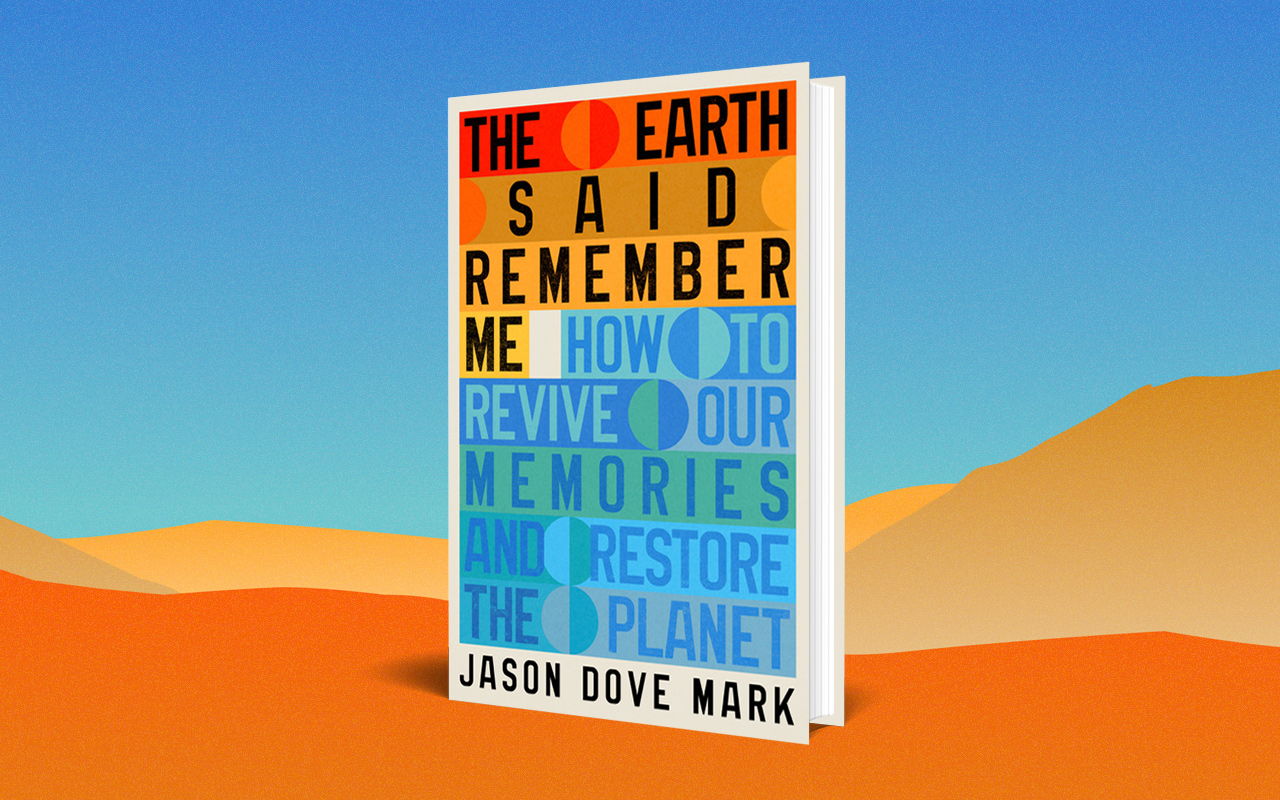
Bioneers’ senior producer J.P. Harpignies in conversation with one of the leading environmental journalists of our era, the author of the new book, The Earth Said: Remember Me and former editor of Sierra magazine and of Earth Island Journal.
J.P. Harpignies: Jason, you’ve had a long career as a journalist covering a very broad swath of topics related to the environment, from climate and energy to biodiversity to public health, and you’ve had to vet many more such stories by others since you served as one of the nation’s leading “eco editors,” first for some 8 years at the excellent Earth Island Journal and then, for nearly a decade, as editor-in-chief of the Sierra Club’s flagship magazine with, I believe, nearly a million readers. You’ve also traveled extensively to investigate stories, from the Arctic to tracking jaguars in the Sonoran Desert to witnessing the massive devastation of Alberta’s tar sands to covering the aftermath of hurricanes, to mention only a few. How did you get your start and what drew you to eco journalism? Was it a calling from a young age?
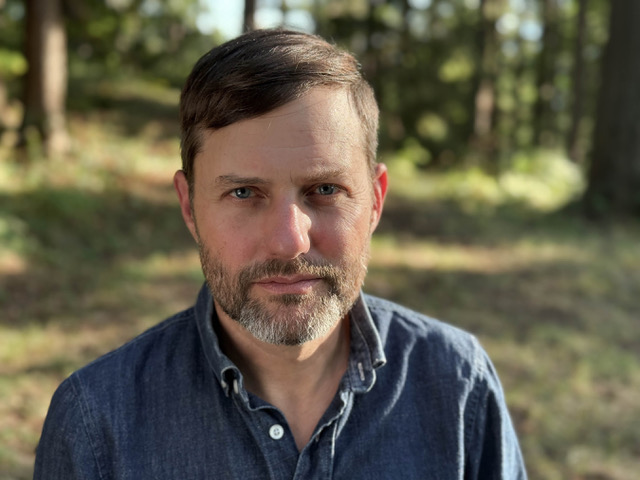
Jason Mark: Thanks for this opportunity to talk to the Bioneers community. I appreciate it! I’ve certainly taken an unorthodox path as a journalist. I started my journalism career in the late 1990s at the (dearly departed) San Francisco Bay Guardian, a muckraking weekly dedicated to holding the powerful to account. After a short stint at a community newspaper, I then made a major swerve and spent six years as human rights campaigner at Global Exchange, working on issues like sweatshop abuses and helping to organize protests against the World Trade Organization and the Bush administration’s war in Iraq. Around that time, climate change was starting to get more attention, and I came to sort of an intellectual commitment to environmentalism. I had been a backpacker and wilderness enthusiast since college, but at first those were more aesthetic and recreational pursuits. Over time, I came to believe that environmental justice is going to be the social justice issue of the 21st century.
My passion for environmental sustainability was cemented when I made another swerve—this time, toward organic farming. While living and working on an organic farm in Santa Cruz, California, I started to develop more of an emotional and visceral commitment to the more-than-human world. Eventually, I was able to reignite a journalism career by carving out a beat for myself covering food and agriculture. To be able to combine my passion for protecting the living world with my passion for language and writing has been a real honor and a privilege—one I don’t take for granted.
J.P.: Though you have delved into so many aspects of the environment, and you are an extremely rigorous and precise investigative reporter, one gets the sense that a passionate love of the natural world and especially of wilderness is foundational in your work and in your psyche. Is that an accurate assessment? And if it is, does that passion make you view your role as activism as much as journalism?
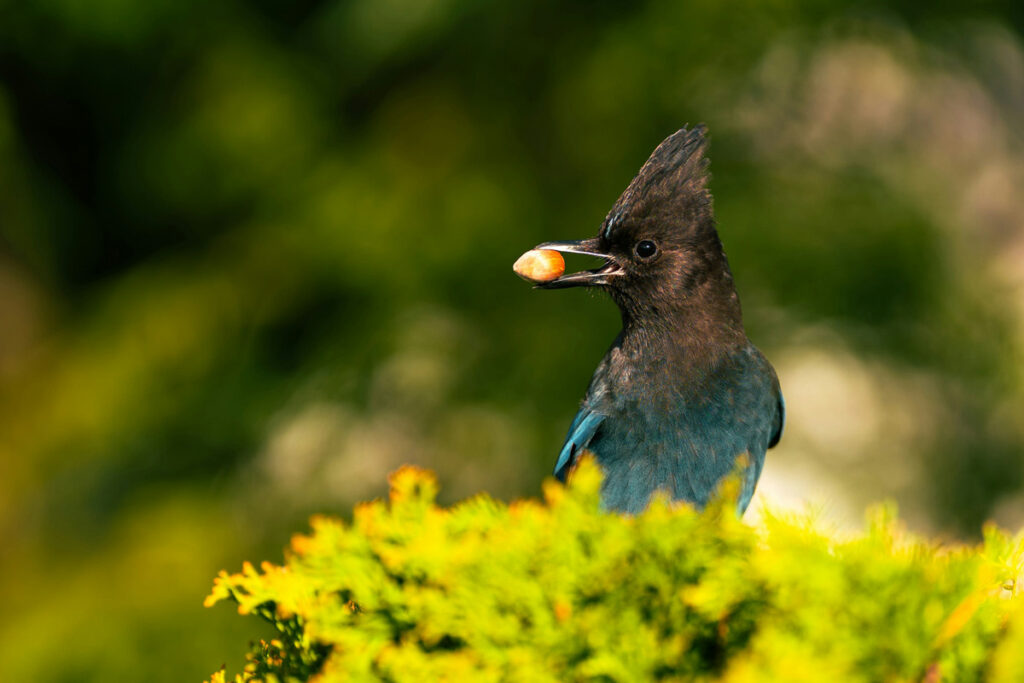
Jason: Yeah, that’s very much true. I’m a flesh and blood being with a flesh and blood connection to the rest of the living world and I feel a genuine sense of kinship with other beings—whether that’s coyotes and river otters or Stellar’s jays and Western red cedar. I believe we all have an innate biophilia. And I also believe that such biophilia has to be cultivated and encouraged—if that weren’t the case, then I suppose we’d have fewer people locked in their digital boxes. I try to bring that love of nature to the page.
There’s a classic saying that you should write what you love. So, if you love golf, become a golf writer; if you’re a political junkie, write about politics. Me? I’m in a romantic affair with Mother Nature, so I write about the environment.
Now, I suppose it’s true that such passion could cloud my judgement as a journalist. And when I was in my twenties, I did mostly wear an activist’s hat. But for the better part of 20 years now, I’ve been first and foremost a journalist. Do I have a point of view? Certainly. I also have opinions—one of which is that pure objectivity is a crock. But when it comes to my writing, my north stars are accuracy, thoroughness, honesty, and intellectual fairness. Above all, get the facts right. Everything starts with that.
J.P.: Your earlier book that came out in 2015, Satellites in the High Country: Searching for the Wild in the Age of Man, was really a quest to find and appreciate some of the last pockets of untamed land and creatures in this evermore anthropocentric biosphere, and your brand new book The Earth Said Remember Me: How to Revive Our Memories and Restore the Planet strikes some similar themes, but it also has a very different flavor, in that there’s less pure reportage and more philosophical discourse, especially focused both on the crucial role of memory in human culture and on mobilizing memory as an activist strategy in order to protect and regenerate the natural world. It struck me as a sort of “eco-Proustian” text. Where did this idea about the centrality of memory in the struggle to preserve the web of life come from?
Jason: I think that’s true—while Satellites in the High Country was more boots-on-the-ground, my new book, The Earth Said Remember Me, is more contemplative and meditative, even as it’s anchored in profiles of citizen scientists and grassroots environmental activists.
How did I get the idea for The Earth Said Remember Me? There are two answers. One is cerebral. The other is a bit more West Coast woo-woo. And they are both integral to how this book came to be.
The Earth Said Remember Me is all about the idea of “shifting baseline syndrome.” The term describes the ways in which we keep getting used to ever-degrading environmental conditions—how easily we accommodate and adapt to loss.
First, the cerebral. The Earth Said Remember Me is all about the idea of “shifting baseline syndrome.” The term describes the ways in which we keep getting used to ever-degrading environmental conditions—how easily we accommodate and adapt to loss. It’s a powerful idea, one of those concepts that helps us to see the world. Some years ago, I noticed that various environmental authors, no matter their subject, kept coming back to it. In book after book, shifting baseline syndrome would be given a brief cameo, a two- or three-page detour as the author would unpack the idea and explain how it connects to their specific topic and concern.
There was shifting baseline syndrome in George Monbiot’s Feral, a book about rewilding, as Monbiot bemoaned how “our memories have been wiped as clean as the land.” There it was again in Jon Mooallem’s book, Wild Ones, about humans’ conflicted relationships with wildlife. I spotted shifting baseline syndrome in Melanie Challenger’s On Extinction, and Lydia Millet touched the hacky sack in We Loved It All. Shifting baseline syndrome has become like the Forrest Gump of environmental letters, always there at the edge of the frame.
Someone should write a whole book for a lay audience about this concept, I felt. That person should be me, was my next thought.
Now, the woo-woo. Five years ago, my family and I were coming back from a weekend getaway to the San Juan Islands and on our way home to Bellingham, we passed over what’s called Colony Creek. Just as we went over the bridge, a big bald eagle zoomed above the car. It was January, the season when bald eagles gather in big numbers in the local farm fields, and the sighting wasn’t unusual. But something happened in that moment: a visitation from the muse. Time twisted and warped, and I felt myself pulled into the distant future as I wondered: “What will my daughter know of bald eagles?”
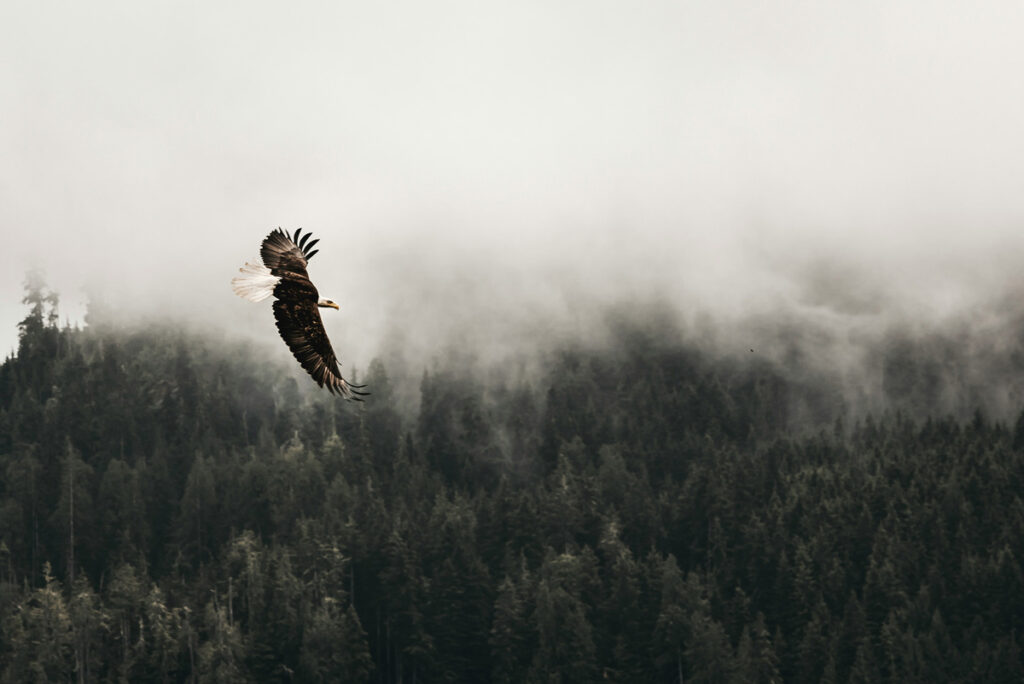
When I was growing up in the 1980s, bald eagles were still listed as endangered and vanishingly rare. Today, they are common; my daughter and I have even spotted them at the county dump. The eagle seemed a perfect example of how baselines can shift, of how our experiences of the natural world are based on our expectations of what is “normal.” It was, more importantly, an example of how sometimes baselines can shift in virtuous directions, of how we can lose sight of abundance just as easily as we can ignore loss. I’ve spent the years since unpacking those ideas.
J.P.: Since it’s so central to your text, could you unpack a bit more about “Shifting Baseline Syndrome,” i.e., the human tendency to adjust to new realities and rather rapidly forget how shocking that reality would have been to us just a little while earlier.
My argument in the book is that this form of environmental amnesia is one of the major reasons why civilization has not responded adequately to the climate crisis and the extinction emergency.
Jason: “Shifting Baseline Syndrome” sounds technical, like something out of the psychiatry’s official handbook of disorders, but it’s a commonplace malady. You’ve experienced shifting baseline syndrome anytime you’ve struggled to remember what summers were like before the nonstop, sizzling heat, in those years before fire season was an annual Armageddon. You’ve been caught in shifting baseline syndrome if you’ve ever tried to tell a younger person what a beloved place was once, like: “There used to be red-winged blackbirds at this pond”—only to be greeted by a look of confusion. None of us are strangers to what I call “the great getting used to.
The concept of shifting baseline syndrome was coined in a one-page essay written in the mid-1990s by a fisheries scientist, Daniel Pauly, who was attempting to describe a collective amnesia he had perceived among fishermen. Pauly noticed that each generation of fishermen looks to the catch at the beginning of their fishing career to establish their sense of normal—without recognizing that their normal, their baseline, would be considered meager by previous generations. Pauly described this as “a gradual accommodation of the creeping disappearance of species.”
My argument in the book is that this form of environmental amnesia is one of the major reasons why civilization has not responded adequately to the climate crisis and the extinction emergency. All of it—the extinctions, the clear cuts, the wounds of the mines, the looming chaos of an atmosphere unraveled—can be traced to the ways in which we trick ourselves into believing it’s not really that bad because today is only a tad worse than yesterday.
It’s not necessarily that we cease to care, but that we slowly cease to notice—and then inevitably fail to remember. Forgetting conspires against even the strongest commitments to defend the planet. So, my book is about how easy it is to forget—and how important it is to remember. Remembering is part of the work of resistance.

J.P.: Another term many of us might not be familiar with that you invoke is an emotional state called “solastalgia.” Can you explain what that word describes and what’s important about it?
Jason: Solastalgia is another one of those terms of art that keeps popping up in environmental literature, another neologism for this bewildering age. The term was coined by an Australian environmental philosopher, Glenn Albrecht, around the turn of this century. It’s a deliberate play on nostalgia: sol for solace and desolation, algia for pain. Albrecht defines it as “the pain or distress caused by the ongoing loss of solace and the sense of desolation connected to the present state of one’s home territory.” In the simplest terms, solastalgia is the homesickness one feels when home no longer feels like home.
I think that solastalgia is such an important idea because it can serve as a counter to the lure of nostalgia, which often colors the past with a rosy patina, and all too often has served as the political reactionary’s sour tonic. When it comes to the important work of ecological memory-making, the great virtue of solastalgia is that—in contrast to nostalgia—it doesn’t crop the past. If it did, then it wouldn’t click. For a place of solace to become a zone of anguish requires a fidelity to the reality of earlier times. Solastalgia also depends on specificity; anchored in intimacy, it counters abstraction. Butterflies and salmon and bald eagles aren’t ideas—they are living, breathing beings, each with a will of their own. We should think of them, and remember them, as such.
J.P.: Your book advocates using observation and note-taking/record-keeping whether in the form of citizen science engagement or just in becoming an “ecological memoirist” as conscious forms of resistance. Could you explain why you think those might be effective strategies?
Citizen scientists are writing the first drafts of natural history, and that’s so important because history is—and always has been—contested terrain.
Jason: A lot of the book is centered on citizen scientists—whether they are counting monarch butterflies or tracking the diminishment of glaciers or working for the recovery of salmon. I am just endlessly inspired by the citizen scientists who bring so much passion and energy to work that is done on a volunteer basis. Community science is great because it’s so democratic—anyone can do it. And it’s often physical and embodied—people are usually doing this work out in the living world, sometimes in remote places. They are engaging with wild nature. Also, it works! Especially in this era of decreased government funding for the sciences, citizen scientists play an essential role in data gathering.
Citizen scientists are writing the first drafts of natural history, and that’s so important because history is—and always has been—contested terrain. There are people working right now to rewrite or erase history, including the history of the landscape. The powers-that-be have always sought to foment forgetting.
Here in the United States, wannabe authoritarians are waging a war on history and memory. Historical plaques at national parks, national monuments, and battlefields are being rewritten to change any narratives that might reflect negatively on the nation’s past. The Smithsonian Institution—that great repository of American history—is facing government officials’ threats to revise the stories it tells. The federal government is removing from official websites certain words that are now considered verboten. Forbidden words include “advocacy,” “oppression,” “Native American,” “climate change,” and even “female.” Also on the list: “historically.” Maybe you can see, then, why memory is a form of rebellion.
J.P.: Given how dire the environmental situation is and the immensely powerful reactionary political forces blocking any attempts to address it, is there a risk that the only thing left for us is a form of solastalgia, or do you still have hope that we can start to turn the tide in the years ahead?
Jason: I understand that things are dire. As I’ve been out talking to folks while on book tour, one of the most common questions I get is about how to deal with climate grief. I try to tell people that while grief is a state, mourning is an action—and any action can be alchemized into something else, including a commitment to defend the earth however you can.
I have plenty of hope. I remain buoyed by optimism, especially when I see all the grassroots, under-the-radar, community-level work to protect, restore, and rewild the planet. I also believe that hope and optimism are, in a way, irrelevant. If you are optimistic, then act to make things even better. If you are pessimistic, act to avoid the worst possible outcomes.
But no matter what, act.