The Nature of Trust: What Biomimicry Can Teach Us About Building Trust
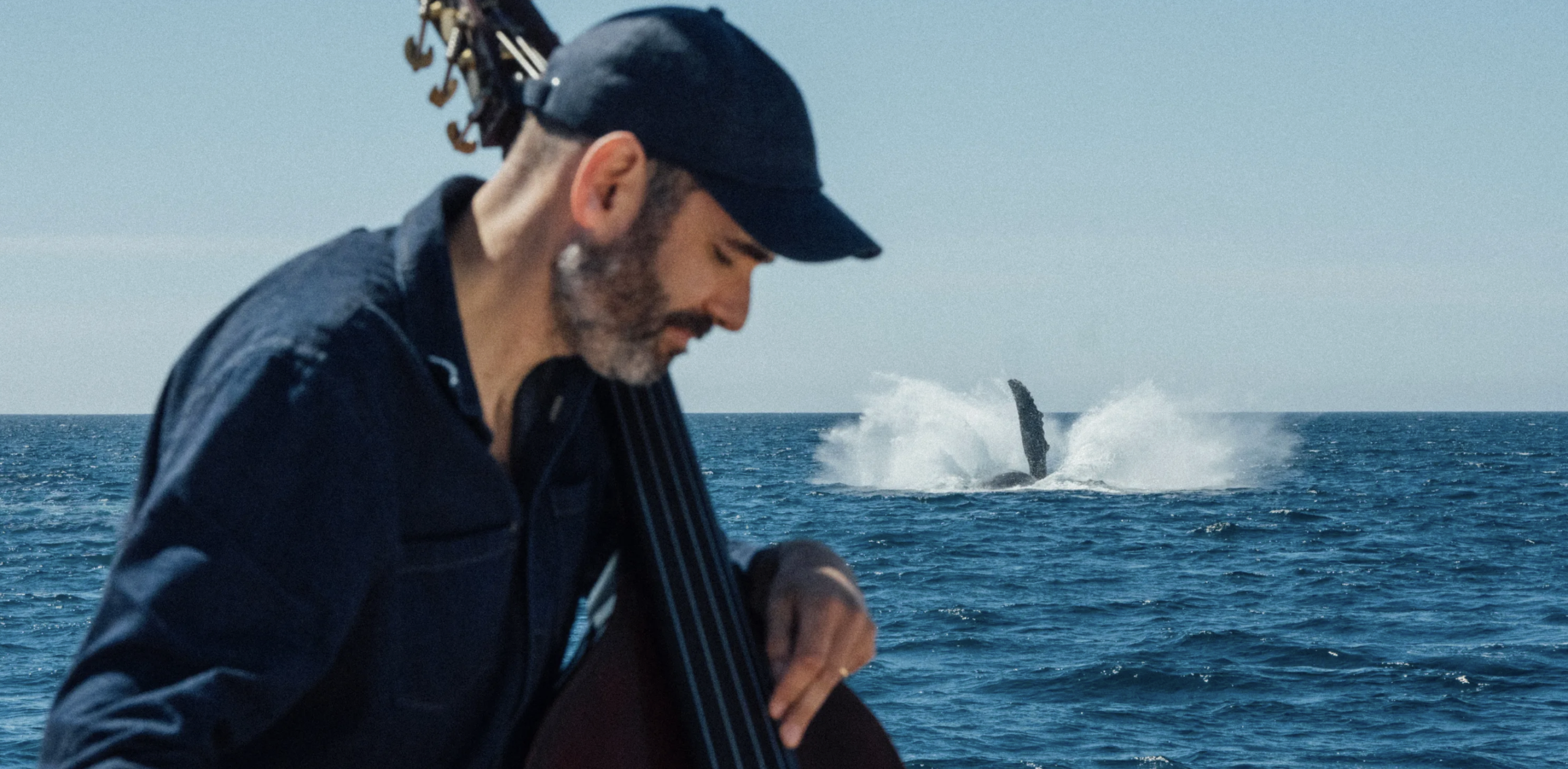
What can billions of years of evolution teach us about trust? That’s the question at the heart of the Nature of Trust Project, a collaboration between Biomimicry for Social Innovation (BSI) and Biomimicry 3.8 that spanned two and a half years, studying how trust functions across the natural world — and what that research reveals about building trust in our own relationships, organizations, and communities.
The project grew out of conversations with a health equity funder that saw trust as central to the challenges facing healthcare. Once funded in the fall of 2023, the project brought together:
- a team of biologists at Biomimicry 3.8, led by the organization’s co-founder Dayna Baumeister, to study trust patterns across taxa;
- BSI’s team, led by founder and Director Toby Herzlich, to translate those findings for leaders working on social change;
- documentary filmmaker Patsy Northcutt, who followed the project throughout and produced its video library;
- and a cohort of 11 social justice and community leaders across five organizations, who tested the emerging framework and helped ground the biological insights in real-world applications.
The result is the Nature of Trust Framework — eight guiding principles, drawn from biology, organized around three phases of trust: how it’s established, how it grows, and how it’s maintained.
We sat down with BSI Managing Director Gina LaMotte, who served as the Nature of Trust project manager, to discuss how the research came together, what nature reveals about trust that we often miss, and why this work feels more urgent than ever.
Bioneers: Can you tell us about how the research for this project was conducted?
Gina LaMotte, BSI Managing Director: A team of biologists, led by Dayna Baumeister of Biomimicry 3.8, conducted what they call a Bio360 — a deep-dive into the question, “What can nature teach us about trust?” The team reviewed more than 200 species and systems, looking at the more-than-human world. They researched trust between organisms of the same species, as well as relationships across ecosystems, with the intent of finding the deep, recurring patterns across all taxa. It was an incredibly systemic way of looking at trust.
Once those biological patterns had been identified and distilled, the team compared the findings with existing human research on trust. This showed where the patterns aligned with — and differed from — what humans have learned about trust over the last few decades. There’s a section near the end of the Bio360 report that lays out that analysis.
After the Bio360 was complete, we began testing and exploring the material with our cohort. They brought in really important questions and perspectives from their lived experience, such as, “What does this mean in our social context? What is the right language to convey these ideas to our communities? How do we account for the ways that trust is shaped by our history of harm, injustice, and institutional distrust?” There was a lot of valuable dialogue and critique during that co-creation process, which helped us strengthen and make the framework more accessible.
There was a moment in the research when some of the findings seemed fairly obvious and intuitive — like “Of course we need willingness and honesty!” But we realized the real “aha” moments weren’t happening at that level of the eight guiding principles. They are actually in the specific insights that bring life to those principles — the things you’re not always conscious of, but that turn out to be true and highly consequential once you notice them!
Bioneers: Can you walk us through the framework itself?
Gina: The framework is structured like an infinity loop — starting with how trust is established, how it grows, and how it’s maintained. Within that, there are the eight guiding principles: willingness, discovery, familiarity, honesty, cooperation, reliability, feedback loops, and boundaries. As I mentioned, the really valuable part for us is that within each of those eight principles, there are three to four specific insights — and that’s where things get really interesting.
Most people’s instinct, when it comes to trust, is to want to know how to repair it once it’s broken. But one thing we found in the natural world is that when trust breaks down, organisms don’t necessarily repair it directly — they either go their separate ways, or they have to re-establish the conditions that allow trust to develop again. There’s no shortcut back to the level of trust that existed before. You have to return to that foundational question: What makes you willing to build trust with me in the first place? What’s in it for you, and what’s in it for me? Trust takes energy to build and maintain, and it has to be worth the investment.
Bioneers: Can you tell us about some of the findings and examples?
Gina: One of the best entry points is the cleaner wrasse fish. It’s become the “poster fish” of the project, the common thread we use to illustrate all eight guiding principles. Cleaner wrasse are these tiny fish that establish “cleaning stations” in coral reefs. Larger fish — sometimes the very predators that would normally eat them — will stop at a cleaning station as clients. The cleaner wrasse eat dead skin and parasites off of them, getting a meal in return. You’ll see these iconic videos of a tiny fish inside the gaping mouth of some scary-looking predator, cleaning away like a dentist. It’s a mutualistic relationship. That big fish could just close its mouth and eat the little one at any time.
There’s a lot to unpack in that dynamic — what draws the larger fish to the station in the first place, and what makes the interaction work over time? They have repeated interactions and real feedback loops — and the information from each interaction influences what happens in the next one.
Bioneers: Is that trust happening on a community level or an interpersonal one — is the larger fish learning it can trust cleaner fish in general, or just one specific fish?
Gina: In the immediate moment, it’s organism-to-organism. But since many cleaner fish service one larger fish over time, that larger fish is also learning which stations it can reliably return to. If the interaction becomes less reliable, it’ll go somewhere else next time. So there are really both interpersonal and community-level dynamics at play.
Bioneers: Are there examples of distrust that don’t seem to come from any actual bad experience — more like innate distrust?
Gina: Not exactly. In human terms, distrust can be shaped by trauma and historic injustice, and there isn’t a direct analogy for that in the natural world. That’s one of the important limitations of looking to biology for insight: Nature doesn’t capture the full complexity of the human experience of trust.
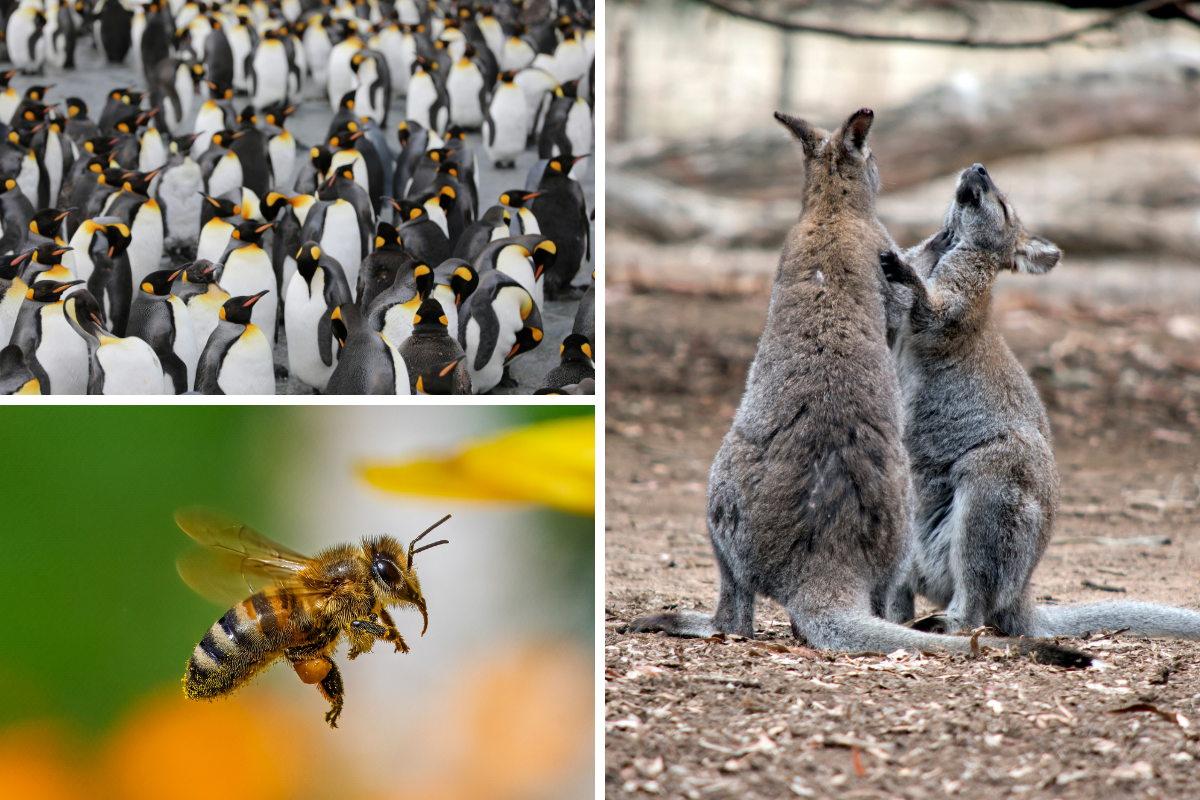
There is something we learned about familiarity, though. Across the more-than-human world, familiarity and similarity can be important cues for trust. We tend to trust organisms that are more similar to us than ones that are different, in part because it’s metabolically more efficient to do so. We will see some marker of similarity — like our physical features or style, a cultural affinity, a shared hobby — and we make a leap: “If we have this in common, I can trust you more.”
One of the counter-lessons here is that we need to be conscious of this tendency in ourselves and others. When familiarity becomes a proxy for trustworthiness, we can unconsciously extend more trust, credibility, and belonging to people who look, act, or think like us — and less to people who don’t. It takes real effort to find common ground with people who are different from us when our brains are already, unconsciously, a few steps ahead in deciding who to trust. The tendency is natural, but it is also addressable.
Bioneers: Can you give us an example of trust-building within a single species?
Gina: One honeybee example I love is the waggle dance, as an example of cooperation. When forager bees find a good source of pollen or nectar, they return to the hive and perform this elaborate dance to communicate the quality and location of the resource. Other bees will then follow that information, check out the location themselves, and then bring their own information back to the hive. The better the source, the more bees dance about it, and the colony can reach a quorum around where to find the tastiest nectar or pollen!
What’s interesting — from a trust perspective — is that this isn’t just a one-way communication. It’s an ongoing feedback loop engaging the entire colony. They’re constantly taking in new information, testing it, and adjusting their behavior accordingly. It’s a beautiful example of how cooperation and feedback loops work together in a social system.
Bioneers: Boundary-setting is one of the eight guiding principles of trust identified, but it seems like an unusual thing to associate with trust-building — can you speak to that?
Gina: It’s an interesting one, because a lot of people think of boundary-setting as separate from — even at odds with — trust-building. Trust feels associated with openness, generosity, and cooperation, so setting a boundary can feel harsh. But when we look at the natural world, we see that healthy relationships aren’t limitless. They have thresholds. Conflict is inevitable, so what matters is that those thresholds are communicated and that there are consequences when they’re crossed. When have you gone too far, and what happens when you do?
In the natural world, you see this constantly. Animals signaling around their territory, or your dog protecting its food or toys. If animals play too roughly, there’s a correction. These are all signals that reduce uncertainty in the relationship and help make cooperation more sustainable. Our relationships depend on knowing what the limits are — and what happens when those limits are crossed. A lot of us struggle with boundary-setting, especially around trust, because we want to signal harmony, but if we don’t establish boundaries, trust actually erodes.
Bioneers: Why does trust matter so much right now?
Gina: I asked myself the same question when this proposal was first suggested. Why trust? Is it really that important? But the more we dug into it, the more evident it became: Trust is an invisible force in our lives that underpins every relationship we have — yet that we understand surprisingly little about. We’re pretty good at breaking it, but we don’t understand the mechanics of rebuilding it and nourishing it over time.
It’s omnipresent in our lives — with family, partners, colleagues, and institutions such as government, education, technology, and law enforcement — and it has consequences at every level. Trust is foundational to social change and collective action. It underpins all our social interactions, whether we’re conscious of it or not, and determines whether we can accomplish anything that requires collaboration, cooperation, peace, or stability.
We’ve entered a new era in our cultural evolution and our planetary health — one with a lot of uncertainty and disruption, and that’s only going to keep amplifying. The massive challenges we’re facing will require collective action and decentralized leadership. To respond effectively, we’ll need to be able to build trust with one another.
When we turn our attention to the more-than-human world for insights and time-tested strategies, it’s like having access to an entire library of solutions. We are surrounded by 3.8 billion years of research and development. As we grapple with how to redesign our social systems, or even the way we lead our own organizations, we can turn to the more-than-human world for new approaches — models that are adaptive and resilient, rather than mechanistic, industrial, and extractive. That’s exactly the kind of modeling we need as we enter the ecological age.
Bioneers: Given how many potential applications this research has, how are you approaching the dissemination of this information?
Gina: For us, it doesn’t end with theory and inspiration. We’re committed to making it incredibly pragmatic. Our job is to build the bridge between nature’s intelligence and practical human applications so people can actually start to integrate this into their lives. Like any new habit, you strengthen these muscles starting with small, concrete practices. So we’re approaching dissemination as more than simply sharing the framework — we’re creating different entry points for people to explore, reflect on, and apply these ideas in very grounded ways.
We built the Nature of Trust Toolkit, with videos and printable insight cards, as well as more than 40 activities people can download, including case studies, discussion questions, and journal prompts. We also have team activities and games to ground all of this within organizations. The idea is to give people tools they can pick up and use, rather than simply giving them something interesting to read about.
Bioneers: On a personal level, is there a specific application of this work that you’re most excited about?
Gina: We’re living in an era with a lot of signals of distrust at the societal level — distrust in government and media, obviously, but also in the K-12 education system and in climate science, which I’ve been especially close to, having worked in sustainability and environmental education for a long time.
But as we’ve been digging into this in preparation for our September Trust CoLab, I’m finding that the application I care most about is at the organizational level — tuning into my own habits and noticing what I’m doing — or not doing — that contributes to trust-building. BSI is steeped in partnerships. Everything we do involves collaboration with others, so it is genuinely satisfying to see how these lessons play out in such a practical and embodied way. And I’m realizing that this isn’t something you master — it’s a lifelong practice of paying attention.
Watch a video about the Nature of Trust Project:
Go deeper with BSI’s work: Their Intro to BSI session this fall is a good entry point for anyone curious about applying biomimicry to social change.