Climate Change Has Two Drivers. We’ve Been Largely Ignoring One.
We often talk about climate change as a problem of carbon emissions rising and the technologies needed to bring them down. But that framing leaves out something fundamental.
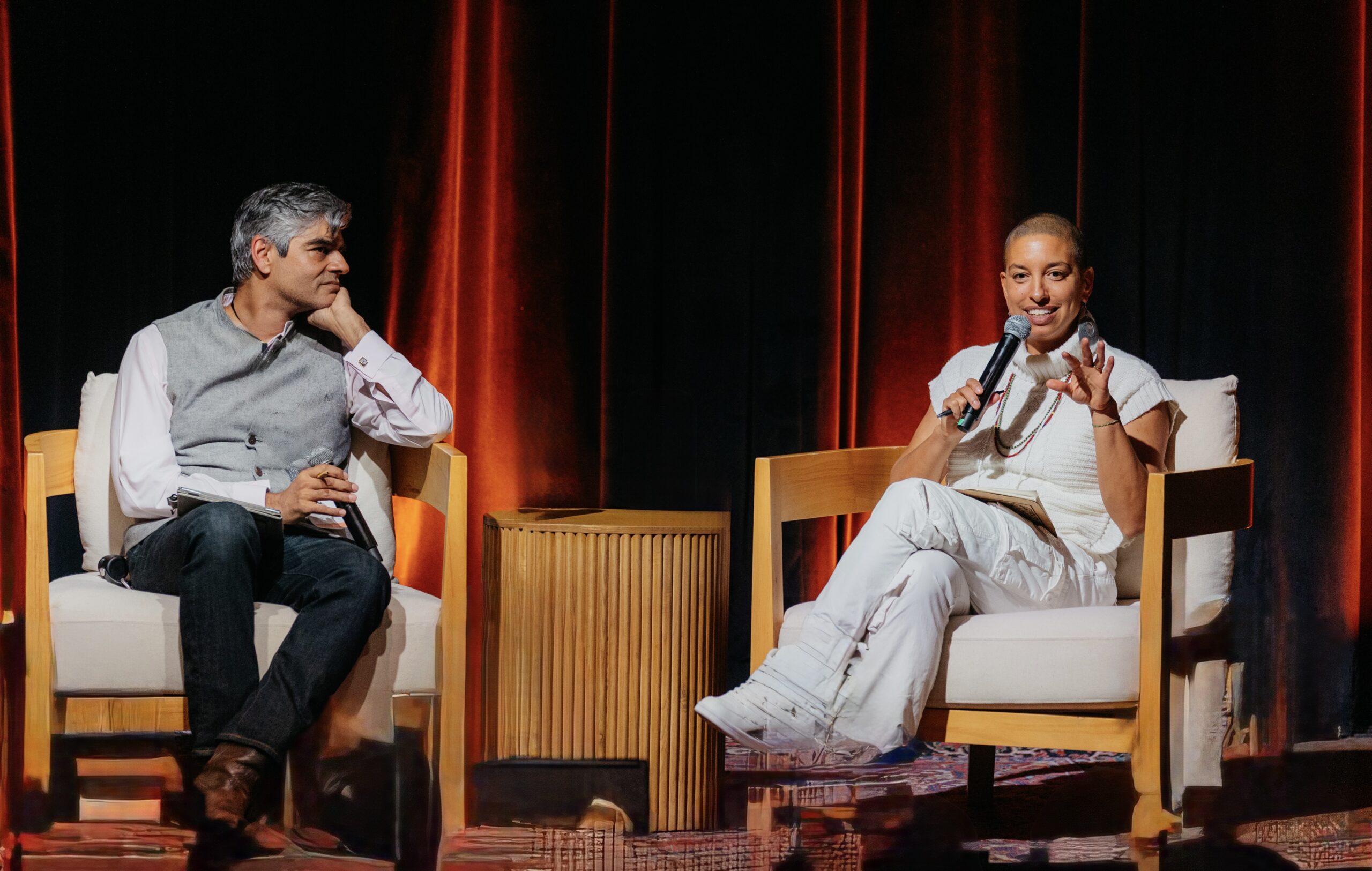
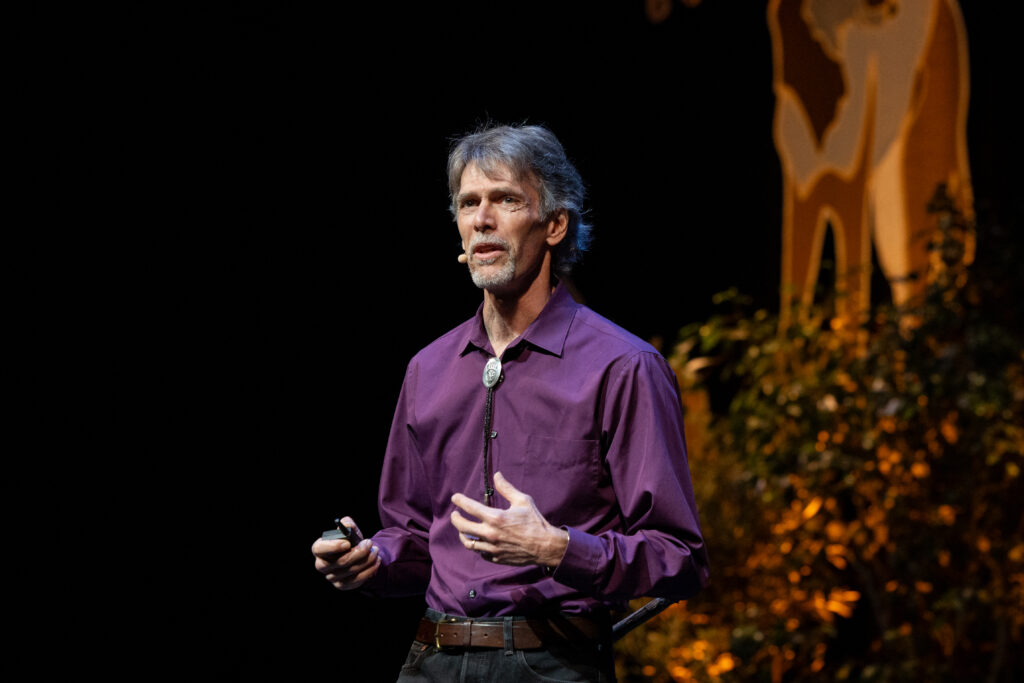
Brett KenCairn, founding director of the Center for Regenerative Solutions and a longtime leader in community-based climate initiatives, has spent decades advancing nature-based solutions grounded in land restoration and local action. In his keynote at Bioneers 2026, he reframes the crisis as one rooted not only in emissions, but in the widespread degradation of living systems — and points toward restoration as a path forward.
This is an edited transcript of his talk.
Brett KenCairn:
I come from Boulder, Colorado, a community with a unique relationship to climate change. We have 11 federal research labs, including the National Center for Atmospheric Research, established there in 1967. Our community takes climate science seriously, probably because around 3,000 climate scientists actually live there. There’s a bit of an inside joke in Boulder that we have more climate scientists than therapists and personal trainers.
Boulder was also one of the first communities in the world to step up when our federal government chose not to sign onto early international agreements to reduce emissions. We said we would. We committed to reducing emissions as a community, and then we started organizing — working with other cities across the country and helping build a broader global movement.
When I joined in 2013 to help shape the next generation of our climate action plans, I was given the opportunity to collaborate with teams all over the world: Helsinki, Stockholm, Rio, Sydney, New York, Seattle, Toronto. It was an exuberant time.
But many of those cities are now quietly stepping back from this work. There’s a real sense of despair and hopelessness among many of us who’ve been at it for years, because we can see that our strategy isn’t working.
What I’ve come to understand is that it was doomed from the beginning, built on a false premise and a half-truth. The premise was that this problem was purely about technology — about machines, about energy sources. That if we just changed those sources — built more wind farms, installed more solar, deployed more electric vehicles and heat pumps — we could solve it.
That’s the half-truth.
Climate Change Has Two Drivers
The other half is something we’ve known for more than 50 years. If you go back to the early days of global climate conversations in the 1970s, they all pointed to the same thing: Climate change has two legs. Yes, one of those legs is fossil fuel emissions. Nothing I’m saying diminishes the importance of reducing them. But even then, we knew there was a second leg: the degradation of land, the desecration of living systems.
Because the atmosphere isn’t just a geochemical machine governed by CO₂ in and CO₂ out. It’s a life-mediated system. Life created our atmosphere — for life. And the breakdown of these living systems is what’s been driving instability within them.
When the world came together in the 1990s at the Rio Earth Summit, we understood that there were three existential threats we needed to address. Climate was one, and we created the Convention on Climate Change — the IPCC we’ve heard so much about.
But there were two other conventions established at that summit. Biodiversity was one. The other was meant to be called the Convention on Land Degradation, but that didn’t sound compelling enough, so it became the Convention to Combat Desertification. Unfortunately, that framing led many of us to think, well, that’s a problem somewhere else; maybe Africa, but not here.
But I can show you places right outside Boulder that are desertifying right now. Because even then, we understood that this crisis was also about land degradation.
But then we started to forget. We need to understand why we made those choices. But what I will say is this: It’s time to change our strategy, because the one we’ve been using doesn’t offer much hope.
Let me summarize this in a way that might feel familiar.
If I asked many of you what’s causing climate change and how we solve it, you’d probably describe it something like this: Over the past few centuries, carbon dioxide levels in the atmosphere have been rising. And as fossil fuel use has increased, emissions have risen right alongside it.
Those two trends line up so closely that it feels obvious, like clear cause and effect. It’s easy to say: There’s your answer. The smoking gun — or in this case, the smoking stack.
When you understand climate change through that relationship, it naturally leads you to believe the solutions are technological. And if you’re a financier, if you like technology, that’s a very appealing frame to work within.
But we’re starting to learn that there’s another driver here. The science is finally beginning to catch up.
A 2017 report by Jonathan Sanderman and others looked at soil loss over the past 12,000 years. For most of that time, soil loss was minimal. But with the rise of early empires and the expansion of agriculture, you start to see it increase. And then, in the last century, it accelerates dramatically.

What Sanderman and his colleagues found is striking: Somewhere between a quarter and a third of the excess carbon in the atmosphere didn’t come from burning fossil fuels. It came from the loss of soil carbon — from degrading the land itself. And it’s not just about carbon.
When we lose soil, we also lose the capacity of living systems to hold water. We’ve forgotten that the most abundant greenhouse gas driving warming isn’t CO₂. It’s water vapor. So as we degrade the land, we’re not only releasing carbon, we’re also releasing vast amounts of water that would otherwise be held in healthy ecosystems. And that, too, intensifies climate instability.
There’s another relationship here, too: how fossil fuels, used through machinery, have reshaped the land itself. You don’t have to look far to see it. Just look at our own backyards. Take the Great Plains, once one of the most extraordinary ecological systems on the planet. In the span of just 10 years, we plowed up 30 million acres.
And it wasn’t just in the United States. This was happening all over the world. So while we’ve told ourselves the story that climate change is about industry and fossil fuel combustion, it’s also about the widespread degradation of the living world.
And the scale of it is immense.
The UN estimates that around 70% of the Earth’s terrestrial systems are degraded. A report last year suggested that roughly half of the planet’s biological capacity has already been compromised.
We’re living on a planet operating at roughly half its basic photosynthetic capacity — what scientists call “net primary productivity.” We don’t even know what it feels like to live on a fully functioning planet anymore. Although we’ve heard the stories.
We’ve Recovered Before, and We Can Again
Remember the stories about the passenger pigeons? Wow, when they took flight, the sky would go dark? That the rivers were so full of salmon you could walk across them? That you could stand on the Plains, look in any direction for miles, and see the land moving with millions of buffalo?
That’s what this planet looked like when it was operating at its full capacity. And that’s what we have to bring back. It’s the only real hope we have to address the climate crisis.
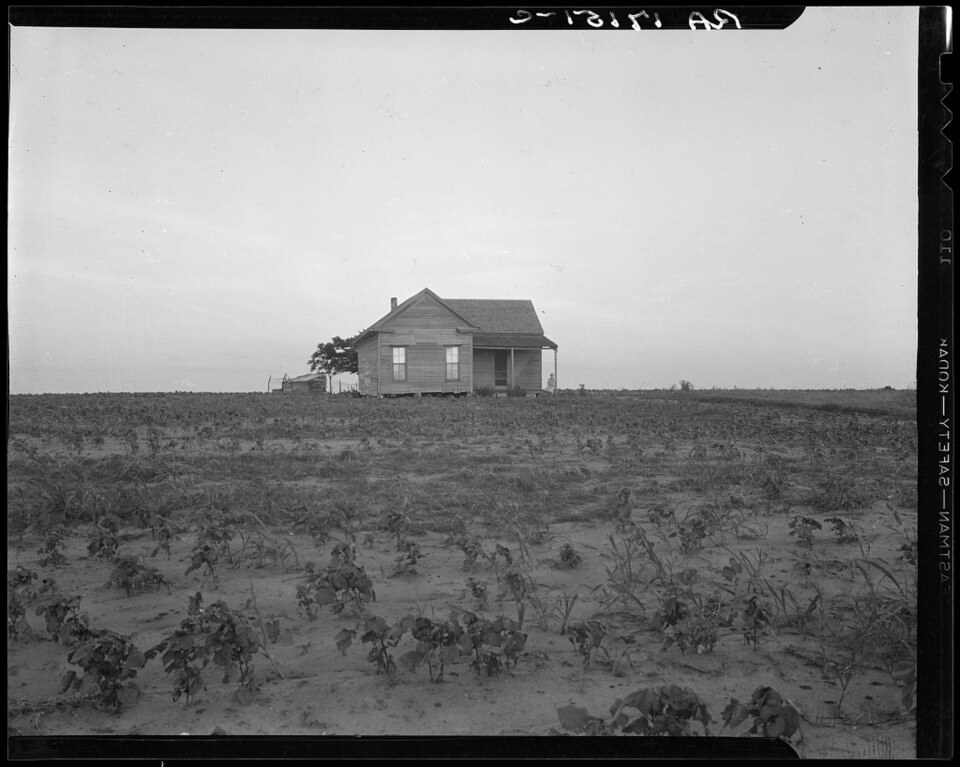
Now, it can feel hopeless. But there have been other moments when it felt that way. If you haven’t watched documentaries about the Dust Bowl, you should. Try to imagine what it was like on the Great Plains after we plowed up 30 million acres and turned it into a monoculture of wheat, and then the dust storms began. At first, just a few each year. Then dozens. People describe walls of dust, miles high, rolling toward them — like hell itself descending. It must have felt hopeless.
But we lived in a time when we still believed we could do something about it. When we believed we could return to the land and repair what we had broken. Millions of people went back to work restoring it. We made a living putting the world back together. And we did it.
In the span of a decade, we stopped the destruction. Within another decade, we began to restore what had been lost.
What happened during the Dust Bowl affected nearly a third of this country, but it also showed what’s possible at scale. The work people did together was extraordinary. Billions of plants were put back into the ground. Thousands of miles of contouring and check dams were built. It was simple, practical work, but deeply impactful. And it’s exactly the kind of work we need to be doing again.
I recently heard a presentation from Elizabeth Heilman at Wichita State. She shared that in parts of Kansas, regenerative agriculture has now been adopted at a remarkable scale — something like 70% of a county has returned its land to living cover, to deep-rooted systems. Do you know what they’re seeing? They’re changing weather patterns.
We can do this. We’ve done this. We are doing this right now.
The Real Shift: An Economy That Repairs the Planet
This won’t happen just because we shift consciousness, or do more education, or launch another communications campaign for the planet. It will happen because we change the economy. We have to make it possible to make a living repairing the planet.
There’s promising research showing that if we restored just a third of degraded land globally, we could stabilize the climate while also reversing biodiversity loss. And according to the World Economic Forum, that kind of effort could generate 190 million jobs and $3.5 trillion in economic activity.
That’s the future we need to demand. So where do we start?
- First, we have to prepare and plan, just like in the 1930s. When systems begin to unravel, it’s too late to start from scratch.
- Second, we need to test and prove what works. Pilot these approaches now. Get them underway.
- Third, we need partnerships at every level — across neighborhoods, jurisdictions, countries. And we have to learn quickly and scale what works.
- And finally, we have to remember: This is a political process. I know it’s more fun to talk about whales and growing things — I like that too — but this is political.
Yes, this is daunting. I know, especially for younger leaders, it can feel overwhelming. But you can start now.
In my own community, we’re starting with a simple idea: Remove the barriers to participation. We have to de-professionalize land stewardship. This isn’t complicated work. It’s something many of us can do. But when only professionals are allowed to participate, most people are left out.
First, we need to move beyond volunteerism. That was a 20th-century model. People’s time and knowledge deserve to be paid. Even modest support — 10 to 15 hours a month at a living wage — can sustain these systems. Water the trees, mulch, care for the plants. That’s enough to keep things going.
Second, we need the infrastructure to do this at scale. We’re training local contractors, especially small and minority-owned businesses, in things like wildfire-resilient landscaping, rain gardens, and biodiversity restoration. Then the public sector can seed that capacity through small contracts.
Third, we need to fund this work at scale. Through partnerships, we’ve seen how communities can generate tens of millions of dollars through local funding measures to invest in restoration.
That’s what we need to be doing everywhere. And we can. So join in.
Start by growing something. A flower, a medicinal plant, food. Then learn how it grows alongside other plants — what it needs, what it supports. And then start to see how that small system fits into something larger. Before long, you’ll find yourself part of a much bigger community — one that’s ready to welcome you and help you find your way.