Research is catching up to the fact that fungi play an absolutely fundamental role in the very existence of our ecosystems and in the lives of plants, animals and other organisms. Vast underground fungal networks exchange nutrients, form relationships with microbes and plants, and funnel billions of tons of carbon dioxide into the soil and biosphere. Yet we know astonishingly little about the ecological extent and distribution, as well as the biological characteristics, of this under-recognized kingdom of life. If we are to address the climate and biodiversity crises, we cannot neglect to look underground.
Explore what some of the most intrepid scientists and researchers in this emerging field are learning about the ancient relationships between fungi, plants and animals — and why they are critical for the health and resilience of the web of life. Below, Merlin Sheldrake discusses the ancient library of solutions fungi have developed in their co-evolution with plants; Sheldrake and Toby Kiers, a leading evolutionary biologist, explain the work of the Society for the Protection of Underground Networks (SPUN) to build a global database of underground fungal networks; Paul Stamets shares how a mycelium-derived treatment could help endangered bee species; and Suzanne Simard talks about her breakthrough discoveries regarding plant communication via underground mycelial networks.
Learn about the thriving world under our feet and help us spread the word about its foundational role in life on earth.
Want more news like this? Sign up for the Bioneers Pulse to receive the latest news from the Bioneers community straight to your inbox.
‘An Ancient Library of Solutions:’ The Effort to Save the Mycorrhizal Fungi Vital to Life on Earth
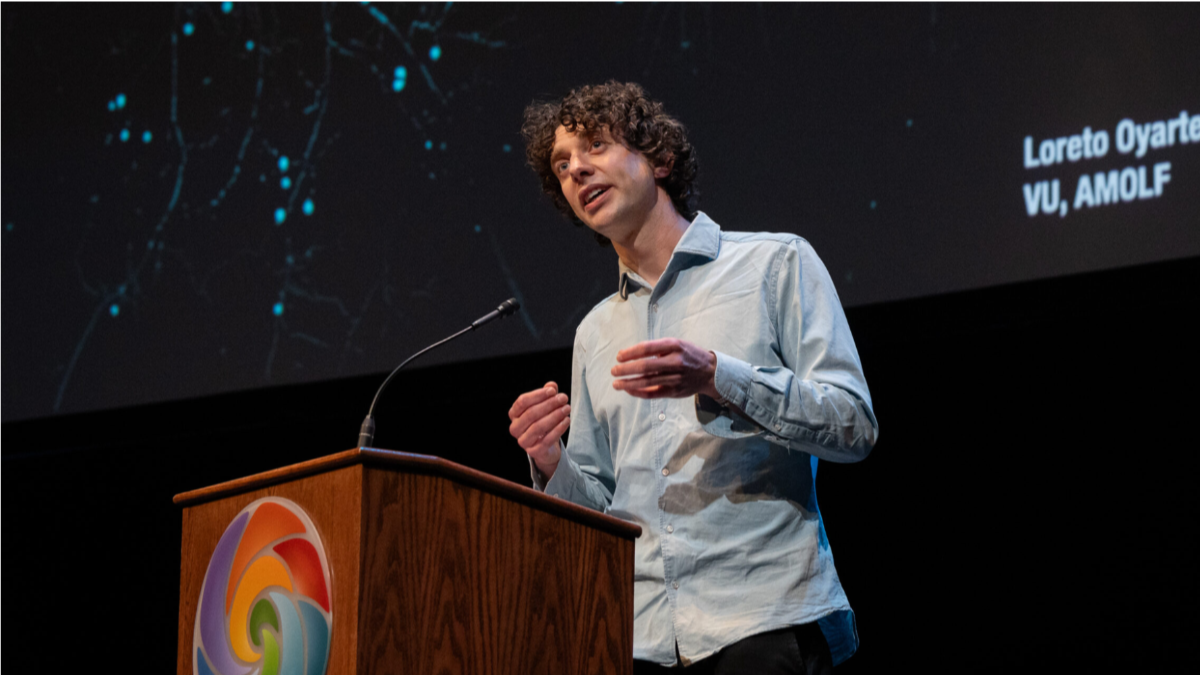
Before plants evolved their own root systems, fungi provided the connection to the soil that enabled plants to move from water onto land. These underground networks remain crucial to plants’ survival, exchanging nutrients, forming relationships with microbes, and funneling billions of tons of carbon dioxide into the soil. But these vast underground networks represent a global blindspot, with 90% of mycorrhizal fungal hotspots currently falling outside protected areas. This is a problem not only for the fungi but all the organisms and ecosystems that depend on them. In this edited transcript of a Bioneers keynote address, biologist and bestselling author Merlin Sheldrake talks about the vital work of the Society for the Protection of Underground Networks (SPUN) to map and protect these fungal networks and preserve this “ancient library of solutions.”
Mapping, Protecting and Harnessing the Mycorrhizal Networks that Sustain Life on Earth
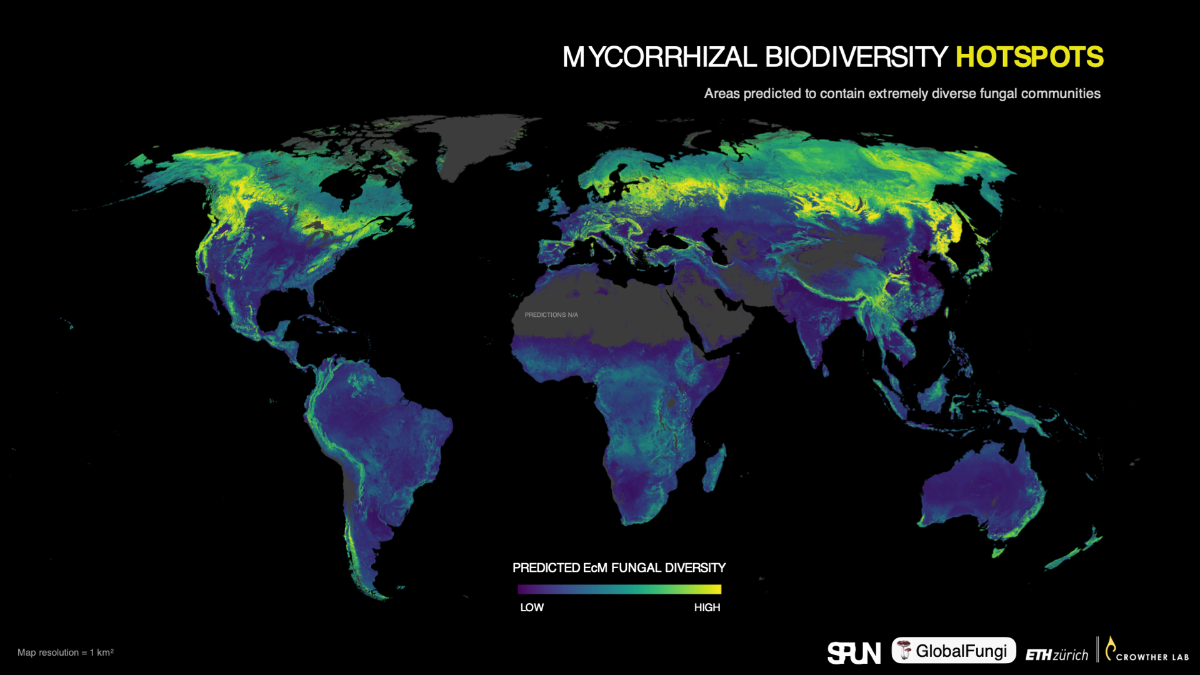
Merlin Sheldrake and Toby Kiers are two of the world’s leading researchers seeking to understand the critically important but long-overlooked and understudied role of fungal networks in supporting life. Join them as they discuss their work with the groundbreaking, visionary Society for the Protection of Underground Networks (SPUN), which Kiers co-founded. Together with GlobalFungi, Global Soil Mycobiome Consortium, the Crowther Lab, and researchers, SPUN is building a global database of mycorrhizal diversity that will allow researchers to quantify biodiversity hot-spots and identify underground ecosystems of high conservation priority.
Solutions Underfoot: How Mushrooms May Help Save the Bees
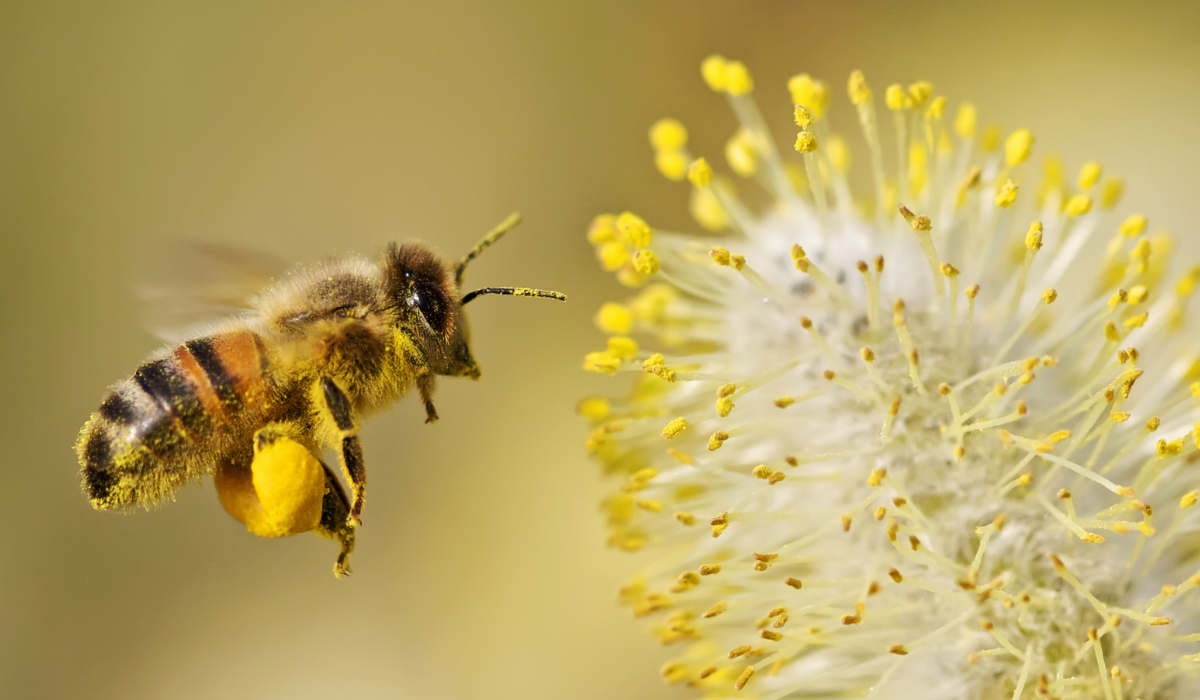
Old-growth forests are libraries of ancestral knowledge, with fungi being the biological network that connects it all. Visionary researcher Paul Stamets has spent more than 40 years studying mycelium, its ability to recycle nutrients, and its role in sustaining life from the ground up. He’s now using those restorative properties to help protect endangered bees. Read about the potential benefits of a mycelium-derived treatment and what it could mean for the health of bee populations.
As a doctoral student, Suzanne Simard discovered something about the forest that radically upset the status quo and challenged the dominant idea that the relentless competition for resources was invariably the primary driver underlying the behavior of all species. Her breakthrough scientific discovery, dubbed the “Wood Wide Web” by Nature magazine upon publication, revealed the symbiotic biological exchanges and the communication between forest species via underground mycelial networks. Simard, a professor of forest ecology at the University of British Columbia and author of “Finding The Mother Tree: Discovering the Wisdom of the Forest,” discusses her work in this interview with Bioneers.
Mapping Earth’s Hidden Allies: SPUN’s Mission to Protect Mycorrhizal Fungi and Combat Climate Change
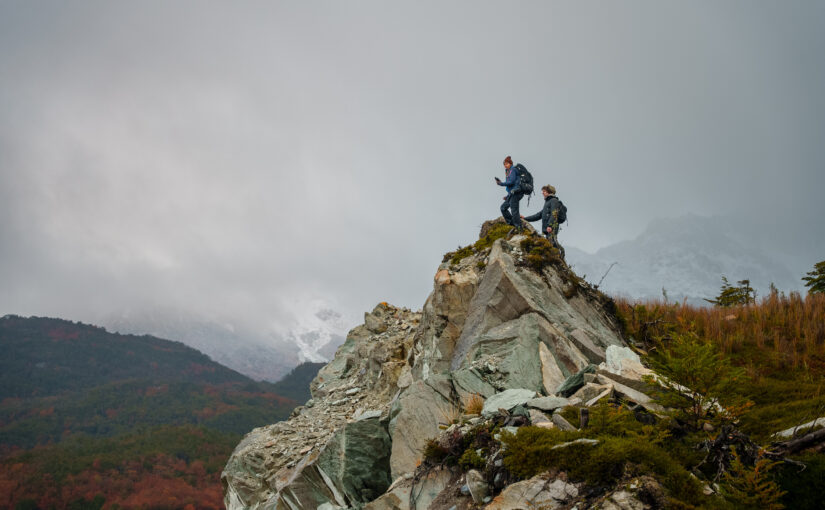
The Society for the Protection of Underground Networks (SPUN) is tackling the urgent need to map and protect mycorrhizal fungi, crucial for ecosystem health and carbon transport. Despite their importance, only 0.01% of Earth’s surface has been sampled for these fungi. SPUN’s Underground Explorers Program accelerates sampling by supporting local scientists with grants to document mycorrhizal fungi in underexplored regions. With climate change intensifying, SPUN’s mission to create high-resolution biodiversity maps using machine learning is critical. Learn more about SPUN’s work and how you can help. Photo credit: Mateo Barrenengoa
We’re excited to announce that our new season of Bioneers Learning is online, and registration is open! You can register for our first-ever self-paced courses, along with courses covering topics such as the Rights of Nature movement, gender equity, regenerative herbalism, and sacred activism.
Written by The Society for the Protection of Underground Networks (SPUN)
Mycorrhizal fungi, the network-forming fungi that form symbiotic relationships with plant roots, have underpinned life on Earth for over 450 million years. Scientists know that mycorrhizal fungi are critical to maintain ecosystem health, and that they transport massive amounts of carbon fixed by plants – making them an untapped resource in our fight against climate change.
However, only 0.01% of Earth’s surface has been sampled for mycorrhizal biodiversity. As a result, these underground ecosystem engineers have been left out of conservation agendas and environmental assessments.
In response to the gap in global concern for mycorrhizal fungi, The Society for the Protection of Underground Networks (SPUN) launched in 2021. SPUN is carrying out large-scale research to map and protect the mycorrhizal networks that regulate Earth’s climate and ecosystems.
There’s a tremendous amount of ground to cover. As the planet’s warming accelerates, we need to gather as much information about climate-regulating underground fungi as possible. In an effort to accelerate sampling efforts and decentralize their research methods, SPUN developed the Underground Explorers Program, supporting local scientists with grants to sample and document mycorrhizal fungi in the world’s most underexplored regions.
SPUN and their collaborators need resources and funding to help compile fungal data from across the world into high-resolution maps that use machine learning to project mycorrhizal biodiversity and threats to underground ecosystems, so fungi in the greatest peril can be identified and conserved. Reach out to SPUN on the contact page if you have ideas for resources, funding or collaborations. You can learn more by watching the videos of their expeditions.
Profiles of all Underground Explorers are available on their web page. Here are a few profiles of past recipients of the awards.
Dr. Jessica Duchicela – Ecuador – Dr. Duchicela is tracing 19th-century German explorer Alexander von Humboldt’s route through Ecuador. “While his scientific contributions were remarkable, it is important for Ecuadorian research teams to critically engage with his legacy, acknowledging the power dynamics and biases inherent in colonial scientific endeavors, while leveraging his methodology and findings to advance our own indigenous knowledge systems.”
Dr. Nicole Hynson – Hawai’i – Dr. Hynson’s project aims to understand which mycorrhizal fungi are partnered with Hawai’i’s endemic plants. The islands’ native flora are facing exceptionally high rates of extinction, and Hynson hopes that understanding their mycorrhizal communities could aid in future restoration efforts.
Dr. Nahuel Policelli – Patagonia – Patagonia’s steppe grasslands are extremely understudied. These ecosystems are being threatened by an invasive willow shrub that is quickly dominating the landscape. Policelli is working to learn whether non-native plants are “borrowing” mycorrhizal fungi as a mechanism to facilitate their invasion.
Dr. Nourou Yorou – Ivory Coast – Ivory Coast has lost 85% of its forests since 1960, driven in large part to cocoa production. Yourou is studying the underground effects of forest conversion to cocoa plantations, comparing forested belowground biodiversity to conventional and organic cocoa plantations.
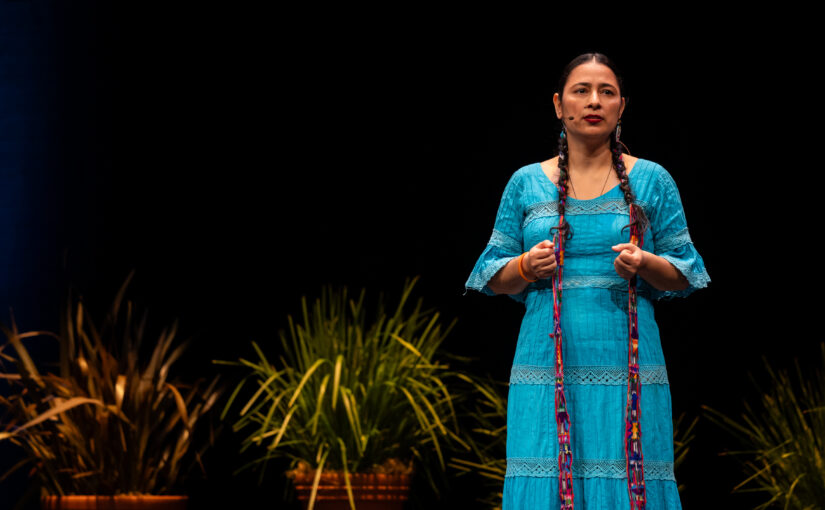
When Claudia Peña brought the show “Lyrics from Lockdown” to Houston, she saw that the crowd was mostly older white people and worried there could be some walkouts. She even positioned herself in a chair by the door so she could talk to anybody who walked out about why they had done so. But it turns out there was no need. Not only did no one walk out, but the crowd was energized. In this excerpt from an interview with Bioneers, Peña talks about the power of stories to change hearts and minds and why she stopped relying on statistics to discuss incarceration and prison abolition.
Peña is the executive director of For Freedoms, an artist collective that centers art and creativity as a catalyst for transformative connection and collective liberation. She serves on the faculty at the UCLA School of Law and is the founding co-director of the UCLA Center for Justice. The Center runs the Prison Education Program, which creates innovative courses that enable faculty and students to learn from and alongside currently incarcerated participants.
BIONEERS: What are some examples of the art and media you’ve created around the issues of incarceration in prisons?
CLAUDIA: I’ve been working on the issue of prison abolition since the late ‘90s. I used to be really committed to numbers and data and statistics, because they were so obvious and overwhelming. I was convinced all anybody needed to see was these numbers. They needed to know how much we were spending on prisons in comparison to universities. They needed to know how much we were spending on keeping somebody in prison — which is $132,000 in California — and know that it would cost half that amount to send somebody to the most expensive private university in California. I thought those numbers would make them agree with me. But I was wrong.
Stats are actually not that convincing to people. Or they might be in the moment, but they don’t really motivate people to do something. I realized that storytelling, where you can reach people’s hearts and minds — which is the oldest way we’ve ever shared knowledge and wisdom in the existence of humanity — is the thing that really can get people to move in particular ways.
The most recent and actually one of the most exciting projects I’ve ever worked on is a show called “Lyrics from Lockdown.” It is a show that uses comedy and hip hop, calypso, spoken word — all sorts of different styles of music and poetry — to tell two parallel stories of men who were wrongfully incarcerated. One man was incarcerated while he was a student at Harvard Law, and the other one still sits in a prison in Texas now, 30 years after being locked up at the age of 17 for a crime he didn’t commit. The show has been written by Bryonn Bain and workshopped in prisons and jails all over the country for over a decade. It’s an incredible show, and it’s actually going to be going to Broadway this year.
We did a southern tour of it last year. We went to Houston, Birmingham, Atlanta. And I have to tell you something funny about what happened in Houston. I’m not that familiar with Texas, but everybody I know from Houston in my own network is Black. So when we went to Houston, I had just assumed we were going to have a Black crowd. I think the time we had done it before then in its fullness was at the Apollo Theatre, and it was an incredible crowd. We got a standing ovation and an incredibly enthusiastic response. We got to Houston, and I sort of assumed it was going to be the same thing, and when I looked out at the audience, it was pretty white and pretty old. I went back to Bryonn and the three musicians, and I was like, “Okay, we have a very different audience out there; prepare yourselves; I don’t know what it’s going to be like.” The man who we’d worked with at that venue said they get walkouts from some shows, so we should be prepared; some people might walk out; don’t take it personally.
So I decided to sit in the audience right next to the door so I could have a sense of walkouts and the demographics. And I thought, maybe I’ll walk out with them and ask them why they’re leaving, just to understand. Not only were there no walkouts, but there was, again, a rousing standing ovation, an incredibly enthusiastic response. I’ll admit that I had assumed it would not be the case, because I had made my own assumptions about the audience. It was just great to see that the story is universal enough.
The writing is unparalleled, and Bryonn’s performance is incredible. But the story is universal because it touches on family and love, friendship and resilience, and challenges. And, of course, it touches on the criminal legal system and the injustice and the horrors of being in prison, but it does it in a way that, for some reason at the end of the show, you leave feeling pumped up. You want to go do something. That’s the energy I’m looking for; that’s the response that I want. All my little charts and statistics from the late ‘90s and the early aughts didn’t quite do it, but a show that’s headed to Broadway is nailing it.
BIONEERS: When there was this rousing response, and people were ready to go take action, where were you all directing them? Where were you telling them to go?
CLAUDIA: I’m so glad you asked this question. Everywhere we do a show, we work with local community organizations to be in the lobbies, so they’re ready to gather all of that energy and galvanize. Whether it’s just signing up for a listserv or getting people to come to your next event, or being able to educate people on the local political issues.
We’ve had voter registration tables at some of the shows. We plan to do the same exact thing on Broadway, in a way that Broadway has never seen. We’re connected to over a hundred community organizations that will be in the lobby. We’ll have artwork from formerly incarcerated folks, maybe even currently incarcerated folks in the lobby as well. In our talkbacks after the show, we’ll feature advocates, formerly incarcerated people, perhaps even some well-known names that really care about these issues in order to continue to direct people on exactly what to do. Right now, while you feel this way, sitting in this seat, what you need to do next is X. It may be to vote on a local policy, it may be everybody’s gotta go storm a particular governmental agency. Perhaps for many people in the audience, the way that they participate is they fund things, and so perhaps they will donate to the community organizations. There are a lot of different directions people can take their participation, and every single one of them is needed.
BIONEERS: How do you respond to people who are concerned about the concept of abolition of prisons?
CLAUDIA: There are a few ways to take that. When people say, “I can’t imagine the abolition of prisons; what are we going to do with all the murderers and the rapists?” First: You can’t end violence with violence, and the prison industrial complex is an incredibly violent institution. Second: I want people to understand that for those who cause harm, it’s a result of harm they’ve experienced that’s been left unaddressed. We would do much better by providing resources for people to heal — to do the work so they can reconnect to their own humanity. Our society would benefit more from people having a healthier mental and spiritual state than it would from sending people into these cages where, generally speaking, they become even more dehumanized. The experience of dehumanization as a result of being someone incarcerated — oftentimes there’s a lot of violence and scarcity in these spaces — and it affects people’s ability to show up in a more humanized way.
I also like to point out that this way of addressing harm using punishment on the scale of mass incarceration, in the way that it exists in this country, is very new. It has not been the reality for most of human existence, and it certainly wasn’t the case on these lands since the beginning of time. Mass incarceration on this level has really only existed for the last 40 years. Incarceration in the way that we know it in the United States has existed for maybe even less than 100 years. If something has not existed for that long, it’s not a foregone conclusion that this is what’s needed or that this is even working.
There’s also a lot of literature showing that being incarcerated doesn’t necessarily help you get to a better space before you get released. Programming does. Access to therapy, access to group, access to education. All of those things do help, and those things can exist outside of carceral facilities. You don’t need to access those programs by going to prison or jail; they can just exist in the community. Those are the things, along with education, that help people get to a place where they can see that there are different paths, different opportunities, and different responsibilities for them.
With education, it’s wild what we have seen with recidivism rates. The average recidivism rate in this country is 65%. People who go to prison have about a 65% chance of going back, which is a terrible failure rate. But that’s exactly what the system is set up for, so in that way, it’s a great success rate. Go them. But with each type of education that you get, the recidivism rate drops significantly. Getting vocational education, and then getting an AA. Once you get your BA, it drops to 6%. And, of course, with a Master’s degree, it’s zero percent. So if people want folks who have been incarcerated to not end up back there, education is the best thing, not more incarceration.
I also want to note the reasons why people go to prison and who is being put in prison. There are a lot of people in prison for use of drugs. The use of drugs is usually self-medication for trauma that people have experienced. Overwhelmingly, the folks who are in prison for using drugs are Indigenous and Black people and poor white folks. But the people who do the kind of harm that affects thousands, potentially millions of people, like financial fraud, white collar crime, poisoning our rivers. Those are real crimes. They’re crimes against the land, crimes against humanity. They are awful things that will have an effect on thousands, millions, for a long time. Those folks are not being incarcerated. Now I’m an abolitionist, so I am not advocating that those people should go to prison. I am advocating for people to look more closely because there are a lot of folks out there who think people in prison deserve to be there. You should be asking yourself: why do you have that perspective?
Before plants evolved their own root systems, fungi provided the connection to the soil that enabled plants to move from water onto land. These underground networks remain crucial to plants’ survival, exchanging nutrients, forming relationships with microbes, and funneling billions of tons of carbon dioxide into the soil. They are also vast, with the mycorrhizal fungal mycelium in the top 10 centimeters of soil extending more than 450 quadrillion kilometers. Despite this, they represent a global blindspot. Because they are underground and unseen, 90% of mycorrhizal fungal hotspots currently fall outside protected areas. This is a problem not only for the fungi but all the organisms and ecosystems that depend on them. In the following edited transcript of a Bioneers keynote address, biologist and bestselling author Merlin Sheldrake talks about the vital work of the Society for the Protection of Underground Networks (SPUN) to map and protect these fungal networks and preserve this “ancient library of solutions.”
I’m going to talk about fungi. Fungi are ecosystem engineers that underwrite the regenerative capacity of the living world. There are lots of ways to be a fungus. I’m going to talk about a specific group of fungi called mycorrhizal fungi.
Mycorrhizal fungi form intimate and ancient relationships with plants. I’m going to ask how we can nourish generative relationships with mycorrhizal fungi to support the flourishing of life on Earth and help address the coupled crises of climate change and biodiversity loss.
Almost all plants depend on mycorrhizal fungi, and these are fungi that form mycelial networks — which are branching, fusing networks of tubular cells. These fungi are brilliant. They’re chemical wizards. They’re brilliant navigators in the wild, wet world of the soil. They’re able to grow and remodel their bodies and forage using their chemical ingenuity for nutrients — nutrients that plants need, like nitrogen and phosphorous. They acquire these nutrients, and they supply them to their plant partners. The plant partners, in exchange, provide the fungi with things that the fungi need to grow — energy-containing carbon compounds like sugars and fats that the plants have made in photosynthesis.
This relationship is one of the living world’s great intimacies. It is an astonishing way that organisms can come together, extend their reach, and make things possible that wouldn’t otherwise be possible. These are really the roots of life on land. Plants can only make it out of water onto the land with the help of their fungal associates, who have behaved as their root systems for tens of millions of years until plants could evolve their own roots.
These are sophisticated relationships. At any one moment, a mycorrhizal fungus will be remodeling itself to explore the soil, one of the most complex habitats on the planet. It will be doing crazy things with its metabolism to forage and acquire nutrients. It will be forming relationships with crowds of microbes across its network. It will be diverting nutrients around its networks, circulating them in just the right way to enable it to trade with its plant partners. It must be integrating information across an immense number of nodes, which at any one moment can be strung between multiple plants and sprawled over meters.
The influence of these quadrillions of trading decisions spills out over land masses and continents. A recent study that Toby [Kiers, Ph.D., Professor of Evolutionary Biology and Executive Director and Chief Scientist at SPUN] and I are part of found that mycorrhizal fungi funnel around 13 billion tons of CO2 into the soil every year. That’s as much as a third of the total CO2 emissions produced by the burning of fossil fuels every year. It’s a significant amount of carbon. They stabilize this carbon in the soil and power soil food webs, which contain over half of all species on the planet.
Globally, the total length of mycorrhizal fungal mycelium in the top ten centimeters of soil is more than 450 quadrillion kilometers, which is over half the width of the galaxy. These organisms are stationed at a vital point in global carbon and nutrient cycles, and they make up one of the planet’s circulatory systems, an ancient life support system that easily qualifies as one of the wonders of the living world.
However, despite their roles in supporting plant biodiversity and regulating the Earth’s nutrient cycles and climates, mycorrhizal fungi are a global blind spot. They are largely absent from climate change agendas, conservation strategies, restoration strategies, agriculture, and forestry. This is a problem.
It’s a problem first because mycorrhizal fungi lie at the base of the food web that sustains much of life on Earth and is a key lever in planetary ecology. Yet hardly anyone touches this lever. It would be like trying to perform life-saving surgery without considering our bodies’ circulatory systems.
It’s a problem for another reason. What we are blind to, we tend to destroy. The destruction of underground ecosystems accelerates climate change by causing diversity loss. What’s more, when we disrupt these communities, we destroy an ancient library of solutions that fungi have evolved. We have no idea how many of these solutions might prove vital to life on Earth moving forward. When mycorrhizal fungi suffer, so do the organisms and ecosystems that depend on them.
So, back to this question: How can we nourish generative relationships with these ancient life support systems to support the flourishing of life on Earth, and respond to climate and biodiversity crises? I’m going to describe two projects that I work on with Toby.
The first is this grand, very big, zoomed-out perspective. It’s the Society for the Protection of Underground Networks, or SPUN. SPUN is trying to answer this question by taking a global perspective, using huge datasets to map the planet’s mycorrhizal communities and advocate for their protection.
The second approach zooms all the way in. We use advanced microscopy, robotics, and machine learning tools to look inside mycorrhizal fungi to try to decode the flows and behavioral dialects of these living, sensing networks. In both of these projects, we are seeking partners and funders, collaborators, and resources, so if you feel moved, please do get in touch. You can find a place to do it on my website.
There are many threats to underground ecosystems, despite the fact that we think about them less than we should—deforestation, desertification, over-application of industrial agricultural chemicals like fungicides and fertilizers, over-plowing—the list goes on. The result of all of this combination is that, based on current trends, 90% of the Earth’s soils will be degraded by 2050.
SPUN is an organization working to map and protect mycorrhizal fungal communities, and in doing so, find ways to harness their power to help mitigate and adapt to climate and biodiversity crises. Why map? One of the reasons is that we know very, very little about who lives where underground. We have maps of ocean currents, we have maps of global vegetation, we have maps of global climate. We don’t have maps of mycorrhizal fungal communities. This limits our ability to monitor and protect these key underground ecosystems. It limits our ability to work out which are the most important underground ecosystems to monitor and protect.
SPUN is working to make reliable maps that can inform decision-makers and support legal actions to protect land from ecocidal exploitation. To do so, we are supporting the creation of a decentralized network of scientists around the world and funding researchers in local communities to answer mycorrhizal questions in their places, in their homes, and in the ecosystems that they care about. All of this data comes back to feed the very big models that we’re making to build the global maps.
We have so many wildly enthusiastic mycorrhizal researchers coming out of the woodwork. We’re building capacity for mycorrhizal research all over the world, especially in places where this research has happened much less. There are researchers in the Ivory Coast studying cacao plantations, and researchers in Mexico using these mycorrhizal diversity maps to engage local politicians to protect water sources. There are people comparing the communities in humid and dry forests in Madagascar. It’s hugely exciting. We are inundated with enthusiasm and requests, and actually really struggling to keep up. This is hugely gratifying.
Usually, if you were to make a map of global biodiversity, you would just look at the organisms living above ground, and you would find diversity was concentrated around the tropical regions and fades out as you move toward the poles. But that’s not the case here. There are mismatches between biodiversity above ground and below ground, and this is one of the reasons why it’s so important to take these below-ground communities into account as we try to work out who lives where and what everyone’s doing. Building these maps of mycorrhizal fungal communities can help us to approach aboveground life from the perspective of belowground organisms.
Why does this matter? We think that these maps can help inform climate change strategies, restoration practices, land management, and legal actions. These maps reveal that over 90% of mycorrhizal fungal hotspots are currently falling outside protected areas, which means that they’re at immediate risk. We’re trying to quantify these threats.
We have a map that shows what we call an integrated threat index, combining different kinds of threats to mycorrhizal fungal ecosystems, mycorrhizal fungal communities, and underground ecosystems. We can integrate the threat to mycorrhizal fungal communities with mycorrhizal fungal diversity. This kind of map can empower decision-makers and form the basis for tools to support mycorrhizal fungal life and the processes that they oversee.
One project that I’m really excited about right now is a collaboration to test the application of this kind of fungal dataset in legal actions. We’re working together with the More Than Human Rights Collective, the Fungi Foundation, and the Sarayaku people of Amazonian Ecuador. With the Sarayaku people, we’re going to visit the territory to map the mycorrhizal communities and provide them with these datasets, which they can then use in their ongoing legal battles with the Ecuadorian government to make sure that the underground communities are protected. So many of the threats that these ecosystems face are from mining, which explicitly destroys the underground.
We’re really thrilled at how this is unfolding. We’re thrilled about these coalitions that we’re building and where this can go.
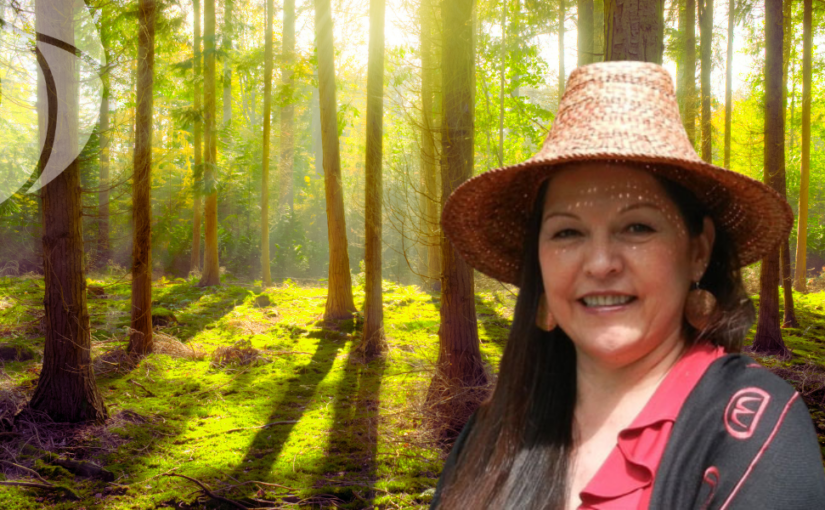
Teresa Ryan, also known as Smhayetsk, from the Gitlan tribe of the Tsimshian Nation, carries the wisdom of her Ganhada clan and her mother, Loa Ryan. Her career in forestry and conservation sciences intertwines scientific rigor with Indigenous knowledge, creating a bridge between ancestral wisdom and modern ecological understanding.
As a lecturer at the University of British Columbia’s Faculty of Forestry, Teresa’s work delves into the complexities of forest ecology and the profound relationship between Chinook salmon and the lands they traverse. Her insights into ancient Indigenous practices and their relevance in contemporary conservation shed light on the intricate balance within these ecosystems.
In this conversation with Bioneers, Teresa’s narrative offers glimpses into the interconnectedness of diverse species, the intelligence of forest systems, and the imperative of honoring Indigenous stewardship practices in land management strategies. Her approach is not solely academic but emphasizes the enduring bond between humans and the natural world, rooted in millennia of Indigenous care for the land.
BIONEERS: Can you tell us about your research?
TERESA: I work with the Faculty of Forestry at the University of British Columbia in forest and conservation sciences. I’m an Indigenous Knowledge and Natural Science lecturer.
I did my post-doc at the Faculty of Forestry. It was the first aboriginal post-doc there, a decade ago, and I’m still there.
I entered into a forestry program because the work that I had been doing was related to Chinook salmon. I’m a salmon scientist. I’m a fisheries aquatic ecologist working in forest ecology. We had come across this situation in which there was an observed increase in Chinook abundance in a particular area that had been ravaged by pine beetle infestations, which I thought was odd.
The regulatory authorities didn’t have the funds or even the personnel to investigate that type of question, so I suggested that I enter a forestry program and build a research program based on this relationship between salmon and forests. As an Indigenous person, I have a different understanding than most other researchers. I have a science background, but I also have an Indigenous knowledge base that I can draw from at all times.
I wrote my dissertation for two audiences—of course, my committee was one, but I also wrote it for Indigenous communities on the coast. They were surprised by colonialism when it landed on their doorstep 150 years ago. We’ve been tortured trying to figure out why we can’t maintain our stewardship practices.
Whatever goes on in the watersheds, such as forestry, agricultural activity, or mining, goes right into the streams and affects salmon. Indigenous people in areas where salmon occur have observed enormous changes in salmon runs over the last 150 years.
We have to figure out how to get back to expressing our stewardship traditions to protect salmon, to manage our resources better than the way this colonial system has managed them because what we have been doing is counting fish that are going extinct. If we can change the way we are attending to the salmon consistent with our Indigenous knowledge, belief systems, technologies, and strategies, we will probably see a difference in the abundance of fish.
There are ways to do that. I’ll give you one example.
We have a traditional method of fishing that allows the largest fish to go up to the spawning grounds to escape. We do this from a scientific perspective. Those larger fish have higher fecundity, which means the female fish have more eggs. If we allow the largest males to go up and spawn with the largest females, then we have this progeny of larger fish and more of them, which is amazing.
This is something that is kin to the principles of generosity and reciprocity from an Indigenous worldview. Indigenous knowledge tends to apply these types of principles, allowing the biggest to flourish, which provides for future generations.
This is accomplished through an important salmon-management technology that has been documented to exist for at least 5,000 years, known as tidal stone traps, which are massive walls in the intertidal area. The tide goes up and down, and when water comes in and inundates the enclosure created by the rock wall, the fish don’t see it, and they head up to their spawning stream. Then the tide goes out, and the fish aren’t going to spend all of their energy fighting that tide, they’re going to just hang out. When the tide comes back in, the next group will head upriver.
During the lowest tide, the fish get entrained in a pool area, and you can walk in and pick out the fish you want. You can also leave the fish that are going to go up and escape. So instead of managing the fishery using a modern stock assessment bell curve that gives you days of a week and timing of the peak run, this traditional practice manages human use, not the fish. The fish aren’t being managed. It is the human use that is being managed according to the tide schedule, which matches a lunar cycle.
BIONEERS: These technologies, techniques, and practices have co-evolved over thousands of years, as you say, and they’re in tune with the complexity of this entire system. How do the salmon fit into this whole forest-river network?
TERESA: These are beautiful systems that are interconnected.
Salmon coming from the ocean bring marine-derived nutrients into the river system. When they swim into the rivers, they’re feeding many predators. The one most people think of is bears. It turns out that bears are picky eaters. They’ll catch a salmon and take it to the riparian area alongside the river, and sometimes even a little farther inland. They’ll go up to their favorite spot and eat their favorite parts, and then they’ll leave the carcass and go catch another fish. Depending on location and species, some bears might catch up to 150 salmon per day.
An amazing thing happens when the carcass decomposes into the soil. Other critters like birds and insects come along and nibble on it too. Once it starts decomposing into the soil, organisms in the soil also feast on it. It’s this annual abundance of food that just shows up on their doorstep.
These nutrients are carried along mycorrhizal networks in the forest, which are fungi associated with tree roots. A student in our salmon forest project, Dr. Allen Larocque, demonstrated that marine-derived nitrogen can be found above waterfalls. Salmon can’t actually get to those spots, which shows us that this marine-derived nitrogen is transmitted below-ground in these vast networks of root systems.
We know that these nutrients are being dissipated throughout the forest, and it isn’t just nitrogen. Nutrients originating with salmon are everywhere in the forest, and that’s pretty amazing when you think about the size of our trees. Salmon play an important role in their life cycle.
It’s a feedback mechanism. It’s simultaneously balancing and reinforcing the health and success of the forest, and it’s also beneficial for the salmon. The forests provide the shade, the canopy cover, to keep the streams cool. They also modulate the precipitation that comes in off the Pacific Ocean. When the forests receive the precipitation, some of it evaporates and creates a beneficial vapor. Cloud forests are known for that vapor.
When the precipitation reaches the ground, it permeates the soil. The forest and its roots help modulate the flows.
So there is a reciprocal relationship between the forest and the salmon. This is something that is known in the Indigenous knowledge systems. It’s recited, it’s repeated, it’s a story. We have this knowledge in our stories and in our histories, and our identities have histories, but the expression of this knowledge has been limited in the last 150 years as a result of colonialism.
BIONEERS: Do you see these forest systems as intelligent?
TERESA: You could say there’s sentience there, but “being” might be a good word. Everything that is living has spirit—everything. So yes, I would say that also means intelligence, but I don’t know how salmon figured out how to go out to sea. I’m sure the glaciers kind of forced them into that. But it’s having this spirit…
The way that we think about these beings has an impact on how we adjust our management and how we behave as stewards. For example, if there is a geological slide that increases sedimentation in a salmon stream, we might take cedar branches into a spawning bed area to sweep the sediment away so it doesn’t suffocate eggs.
We don’t want to offend those spirits. We don’t want to offend those beings, because they’ll know, and they may not return.
When we think about intelligence in the forest, from a scientific perspective, we are seeing responses from beings in the forest, particularly through the work on mycorrhizal networks. We can actually demonstrate that we’re seeing responses. It’s a work in progress, but it’s come such a long way in helping us to understand these relationships.
They’re probably smarter than us. And they’re probably having a good laugh at us.
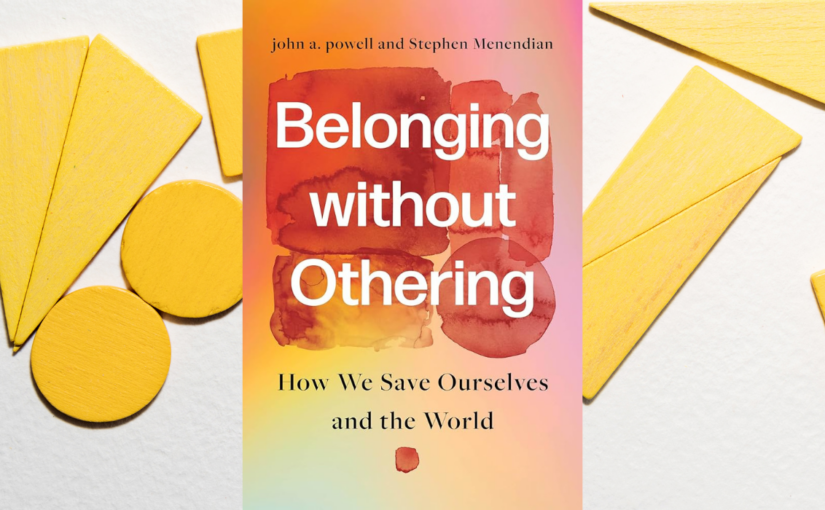
We all yearn for connection and community, but we live in a time of pervasive calls for further division along the well-wrought lines of religion, race, ethnicity, caste, and sexuality. This ubiquitous yet elusive problem feeds on fears — created, inherited — of the “other.” While the much-touted diversity, equity, and inclusion initiatives are undeniably failing, and activists narrowly focus on specific and sometimes conflicting communities, “Belonging without Othering: How We Save Ourselves and the World” (Stanford University Press, 2024) prescribes a new approach that encourages us to turn toward one another in unprecedented and radical ways.
In the book, john a. powell and Stephen Menendian make a powerful and sweeping case for adopting a paradigm of belonging that does not require the creation of an “other.” This new paradigm hinges on transitioning from narrow to expansive identities — even if that means challenging seemingly benevolent forms of community-building based on othering.
john a. powell is an internationally recognized expert in civil rights, structural racialization, housing, and democracy, and the Director of the Othering and Belonging Institute at the University of California, Berkeley. He is a former legal director of the American Civil Liberties Union.
Stephen Menendian is Assistant Director at the Othering and Belonging Institute, where he manages many ongoing research projects, including the Inclusiveness Index and the California Zoning Atlas.
Elements of Belonging
Like many important ideas, belonging is a complex, multifaceted, and multidimensional concept. It is also dynamic, meaning that it can exist in one context but disappear in another, or appear and reappear in the same context over time. For decades, scholars have sought to define belonging and decode the elements that appear to constitute it. One of the classic definitions is the “satisfaction of an individual’s need to be personally involved with their environment and to feel part of a larger social entity—socially embedded.” More recent definitions, often emphasizing different elements, have been propounded. In many ways, these efforts are similar to the efforts to measure and define “happiness,” which is also a highly subjective experience and eludes a specific and singular definition.
In lieu of agreement upon a specific definition for belonging, scholars have instead developed—and sought to validate—a series of scales capable of measuring belonging. One of the first, and probably the best-known of these instruments, is the “Sense of Belonging Instrument” (SOBI), published in 1995. The SOBI is a long questionnaire (a 27-item survey with 49 questions) divided into two parts, “psychological states” and “antecedents.” This instrument has been widely applied in a variety of contexts. But that has hardly slowed the creation of new measures. Intervening research and additional efforts have produced new scales and instruments, with their authors touting their advantages over the alternatives.
Despite these impressive efforts, there remain many limitations to and criticisms of these instruments. Even if these instruments maintain predictive validity, that does not mean that they are capturing or illuminating the elements that constitute belonging. Paradoxically, they may be successful at predicting or measuring belonging, but fail as operational definitions or at generating such definitions.
Moreover, as the names of these instruments suggest, they are focused on a sense of belonging, and have limited ability to tell us why belonging is experienced or what sorts of conditions, traits, or interactions help generate that sense. By focusing on the respondent’s personality, identity, or dispositional traits, many of these instruments fail to document or identify the contextual or situational factors that could provide further illumination on the material conditions that shape the experience of belonging.
Further research has sought to unpack different dimensions to belonging, with different researchers arguing for or against different components. For example, some emphasize the dimension of “connectedness,” while others might emphasize “participation” or “recognition.” It is not our goal to resolve these debates here. Given the variety of circumstances in which belonging may be desired, it is possible that there is no comprehensive or complete set of elements sufficient to create or foster belonging in every possible context. Nonetheless, we can specify a few elements that may be necessary to belonging irrespective of context and a few related fundamental insights along the way.
In terms of general principles, first, we maintain that belonging is a compound concept, which incorporates multiple elements and/or dimensions. To the frustration of many, like other important compound or complex concepts, it is not reducible to a simple proxy or singular element, even “fit” or “feeling of home.” Second, belonging is a relational concept, which means that it cannot be understood in a reductive, analytic mode of examining individuals or their psychological traits or attitudinal tendencies. We must examine the relationship itself, not simply the things that are in relationship. Third, and relatedly, belonging is both subjective and objective.*
As a concept measured by self-report, belonging may ultimately be subjective (existing or not according to subjective experience), but it nonetheless has a material substrate. This is a point we wish to emphasize: there exist socio-ecological preconditions that make the experience of belonging more or less likely. Thus, like othering, belonging is structured and patterned in society, not simply the experience of individuals. In general, the psychological instruments that measure belonging give insufficient attention to these conditions. To the extent that these preconditions are functionally “necessary conditions,” whose absence makes belonging either impossible or extremely unlikely, we feel comfortable including them as definitional elements.
In terms of elements, we contend that, first, belonging encompasses and requires inclusion, and to some extent equity as well. This is part of the objective aspect to belonging. If extreme disparities persist or exclusion is maintained, then the conditions for belonging cannot arise or exist. Belonging may also require accommodation.** Norms, customs, or practices that are designed to be neutral, but have a persistent disparate impact, undermine belonging. If an institution, for example, provides food options that fail to recognize certain religious or dietary needs, then members of some groups may be or feel excluded. Similarly, if building design or other physical structures impede access for people with disabilities, then exclusion can occur even if formal inclusion is the policy. These and other examples are discussed in more detail later in our book.
Second, belonging requires a sense of connection, with an emphasis on sense. Whether we wish it or not, most things exist in some sort of dynamic relationship, and belonging is no exception. The experience of belonging is more likely when there is a tether or a tie, something that binds or affiliates a person to another person, community, group, or institution. That connection need not be intimate; nor must it be permanent. But the absence of a sense of connection is unlikely to generate a sense of belonging. This is part of the subjective aspect of Belonging.
Furthermore, this connection generally comes with an emotional valance, often a sense of attachment, fondness, safety, or warmth. This is what is meant by an “affective” component to belonging that is not generally acknowledged or emphasized in other equity and inclusion practices, even those that stress representation. The affective element describes how individuals regard or feel about the object of belonging. This affective component cannot be known by simply scanning formal policies or objective conditions, but only by investigating the sense of connection itself.
Third, belonging requires visibility or recognition. The simple act of being seen can engender powerful feelings between people, even a sense of intimacy between erstwhile strangers. In the public sphere, people yearn to be heard and understood, especially if they feel neglected or overlooked. Recognition occurs when people feel that their social group is seen, respected, and valued. This is partly why representation is so important: if a person feels that their identity or their group is invisible in the community or institution, they are less likely to feel a sense of belonging. A feeling of belonging is fostered when a community or an institution affirmatively communicates that participants belong, and does so in a way that demonstrates that the community or institution sees and respects their identities.
Recognition may form the predicate for a sense of connection, which then becomes a reciprocal element: the subjective experience of belonging is more likely if the connection is in some way mutual, if the person holding the connection to the community, institution, or group simultaneously feels that they are visible, recognized, and valued. The sense of connection may be a by-product of feeling recognized and valued.
Mixed messages or subtle cues can undermine efforts to engender belonging. If the message feels more like a marketing slogan than an authentic expression of intent, it could weaken attachments rather than engender belonging. Such messaging should be grounded programmatically. It should resonate in the life of an institution.
Fourth, belonging requires agency. Agency is the sense or feeling of control people have over actions and their consequences. Belonging requires a meaningful degree of actual agency in relation to the object of belonging. If barriers are removed, objective disparities are eliminated or reduced, recognition is accorded, and connection is forged, but agency is denied, then belonging is unlikely exist. Or if inclusion occurs, but some participants are given a voice and a say, but others are denied it, then belonging is thwarted for those who are treated less generously.
The requisite of agency brings power into the belonging formula. To have agency, one must individually and collectively have the power to act and the potential to influence. This goes beyond the classic formulation of “voice.” Having a voice means being heard, which is largely a corollary to being recognized or visible, our third definitional element. Agency goes beyond voice to “say,” or influence. Having a say does not necessarily mean getting one’s way, but it does entail more than the right to be heard; it means some degree of capacity to shape the proceedings or the deliberations. To foster belonging, we call for the empowerment of people, especially those from marginalized groups, to be able to fully participate in society. Belonging will arise when institutions and communities take steps to facilitate agency so that these participants ultimately feel that they have a say.
*We recognize the inherent complexities and difficulties in the notions of “subjectivity” and “objectivity,” but these concepts serve as close-enough heuristics or approximations to convey our intended meaning as it applies to belonging. Moreover, the focus throughout our book has been on the status and experience of groups rather than individuals, along with the broader societal conditions, meanings, and practices that generate othering. While not ignoring the subjective experience of belonging, we wish to emphasize that belonging is also materially grounded, patterned, and structured in society. ** The incorporation of inclusion into a compound definition of belonging may be intuited from the fact that belonging is, in many ways, an evolution of the concept of inclusion and builds on it. It is difficult to peg exactly what minimal level of equity is required to create the material conditions for belonging, but it is likely a threshold that varies from context to context.
This excerpt has been reprinted with permission from “Belonging without Othering: How We Save Ourselves and the World” by john a. powell and Stephen Menendian, published by Stanford University Press, 2024.
As we continue to wade through a moment marked by unparalleled global crises, it is often the youngest among us who have the clarity, passion and energy to take the lead in tackling the dire problems we face. As they prepare to wrestle with the challenges left behind by their ancestors, youth movement leaders are inspiring people across generations to act boldly to right historic wrongs and implement genuine solutions.
Below, we invite you to hear Sage Lenier discuss how we can transition to a green economy; read about Yurok leader Sammy Gensaw III’s progress in restoring the Klamath River; watch the Destiny Arts Youth Performance Company’s explosive creativity in its social justice advocacy; and hear young genius inventor Charlotte Lenore Michaluk share her hopeful vision for sustainable technologies. The new generation is setting the course, and is asking us all to join them.
Explore these inspiring campaigns lead by the next generation, and help us spread the word about the diverse ways youth are working to heal our world.
Want more news like this? Sign up for the Bioneers Pulse to receive the latest news from the Bioneers community straight to your inbox.
Sage Lenier – Towards a Just Transition: Blueprint for a Green Economy
We spend a lot of time talking about the ecological crisis and not nearly enough talking about real, workable solutions. If the ultimate goal is to keep fossil fuels in the ground, how must we transform our economy to make that possible? Award-winning activist and innovative educator Sage Lenier, one of the most impressive young leaders to emerge in recent years, sheds light on what a realistic and just transition looks like and the role we can each play in leading us toward a more circular and equitable economy.
Navigating the Currents of Change: A Conversation with Indigenous Activist Sammy Gensaw III
“I really want people to know that these are whole families that have depended on these watersheds for thousands and thousands of years. We will continue to depend on these watersheds until the end of time.” — Sammy Gensaw III
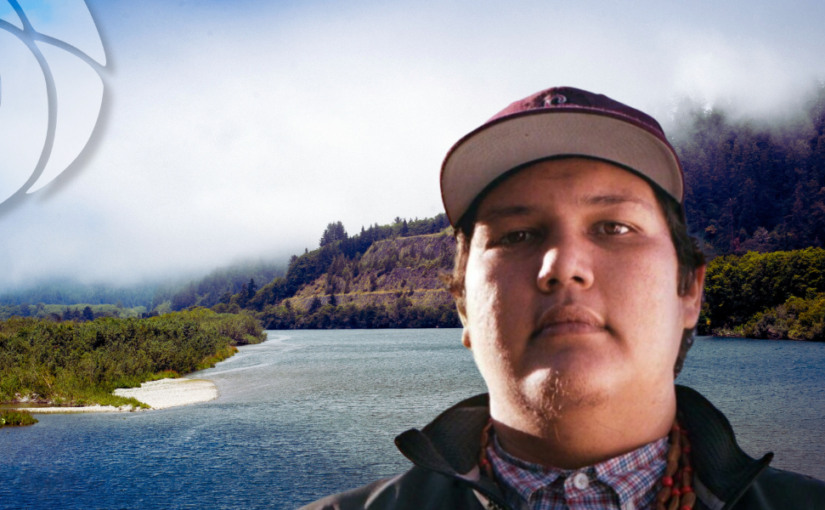
Gensaw (Yurok) was born and raised as a fisherman along Northern California’s Klamath River. From his earliest days, he was steeped in the ethos of community organizing, a legacy passed down through generations within his Yurok heritage. This upbringing instilled in him a profound understanding of the interdependence between human communities and the natural world, a perspective that would shape his life’s work. As Director of the Ancestral Guard, a nonprofit dedicated to teaching traditional fishing and farming practices to Indigenous youth, Gensaw’s approach encompasses not just environmental advocacy but also food sovereignty, cultural revival, community resilience, and self-sufficiency. Working alongside his people, he played a pivotal role in securing the removal of four of the six major dams on the river. Watch his Bioneers keynote and read more in the below Q&A.
Performance by Destiny Arts Youth Performance Company
In a performance that weaves together spoken word, step and dance, the diverse group of teens who make up Destiny Arts Youth Performance Company express their experience and vision. Since 1993, Destiny Arts has performed original work for up to 25,000 audience members annually, garnering critical acclaim and widespread community support for both their technical prowess and their commitment to advancing inclusivity, equity, and justice. Destiny Arts collaborates with professional artists to create dynamic, original productions. Combining hip hop, modern and aerial dance, theater, song, and rap, company members take the stage to tell stories that stem from their lived experiences and express their visions for a world transformed.
Charlotte Michaluk – Sailing into the Future: Weaving Tradition and Modernity
What can fiber arts and rotor sails have in common? How can we create sustainable technologies that can be implemented in the near future while balancing economic realities with public health and climate change mitigation? Charlotte Lenore Michaluk, an extraordinary 17-year-old scientist, researcher, biomimetic inventor, passionate eco-activist, and conservationist shares her hopeful vision informed by a deep respect of the natural world and powered by brilliant, clean green technologies.
Kevin J. Patel – A Brief But Spectacular Take on Giving Climate Activism a Shot
“When people tell me that climate change is inevitable, I always tell them that that’s not true. We can still do something about this crisis. I’m very optimistic in the young people who are leading this fight.” — Kevin J. Patel on PBS NewsHour.
Los Angeles climate justice activist Kevin J. Patel was recently featured on the PBS NewsHour program Brief But Spectacular. As part of the program, Patel talks about how he was inspired to take action after experiencing health issues due to poor air quality. In 2019, he founded OneUpAction International, an organization that supports and empowers youth to implement climate solutions. Watch the PBS segment below and check out his 2022 Bioneers talk on collective ecosystems.
Through engaging courses led by some of the world’s foremost movement leaders, Bioneers Learning equips engaged citizens and professionals like you with the knowledge, tools, resources, and networks to initiate or deepen your engagement, leading to real change in your life and community.
The Four Sacred Gifts: Indigenous Wisdom for Modern Times | Self-Paced | Discover how the Four Sacred Gifts of forgiving the unforgivable, unity, healing, and hope in action provide us with a path to our most grounded, loving, healed, and generous selves.
Regenerative Agriculture: Nourishing the Soil, Healing the Planet | Self-Paced | Be enlightened on the practical applications and impressive potential that regenerative agriculture has to revive healthy landscapes; contribute to human and animal health; create an equitable food system; and help heal the climate.
Sammy Gensaw III (Yurok) was born and raised as a fisherman along Northern California’s Klamath River. His journey reflects a blend of ancestral wisdom and contemporary activism, all centered around the profound significance of preserving ecosystems and Indigenous traditions.
From his earliest days, Sammy was steeped in the ethos of community organizing, a legacy passed down through generations within his Yurok heritage. This upbringing instilled in him a profound understanding of the interdependence between human communities and the natural world, a perspective that would shape his life’s work. As Director of the Ancestral Guard, a nonprofit dedicated to teaching traditional fishing and farming practices to Indigenous youth, Gensaw’s approach encompasses not just environmental advocacy but also food sovereignty, cultural revival, community resilience, and self-sufficiency.
Gensaw’s pivotal role in the remarkable dam removal project on the Klamath River stands as a testament to his unwavering commitment to environmental justice. The removal of these dams, which will be finished by fall of 2024, will mark a historic victory, not just in terms of ecological restoration but also in reclaiming ancestral lands and revitalizing Indigenous lifeways.
In this Q&A with Bioneers, Sammy Gensaw III delves deeper into the intricacies of the Klamath River, the challenges posed by dam infrastructure, and the transformative power of grassroots activism.
Sammy Gensaw delivered a keynote address at Bioneers 2024 about the Klamath River and anti-dam activism. Watch it now.
BIONEERS: You just won an incredible victory by helping get the removal of four of the six major dams on the Klamath River approved, with their demolition starting this year and ending this fall. Can you talk a bit about the Klamath River and its importance in your culture?
SAMMY GENSAW III: When we talk about the Klamath River, we have to realize how important it is to the health of California. Many things that happen within the Klamath Basin determine how the rest of California’s water year will look.
Our river systems are so connected. My community is tucked away so far up north that it’s sometimes hard for people in California to imagine whole communities living and depending on these river systems. I really want people to know that these are whole families that have depended on these watersheds for thousands and thousands of years. We will continue to depend on these watersheds until the end of time.
It’s really important to me that people understand not just the benefits of removing dams on rivers, but also the significance for the communities around those rivers.
BIONEERS: Tell us a bit about these dams. Why are there dams on the Klamath River, and what impact are they having?
SAMMY: Beginning in the early 1900s, there was this huge infrastructure boom across America. Dams were new and exciting. There were originally plans to put dams all the way down the Klamath. Thankfully, the people at Blue Creek or Ah-Pah and the Yurok tribe along with people from all over the world stayed at the river bar, determined not to let this beautiful place be decimated by dams. They stopped those projects.
But unfortunately, four other dam projects on the Klamath River moved forward in the name of electricity. Those projects were publicized as being good for communities and the river. Resistance to the dams began in the 30s, so we know problems with the dams started much earlier than many people realize. The dams have been an issue practically since they were built.
Today, the way that we’re able to live our lives is based on our rights and access to this river. If the river is not healthy, then our people aren’t going to be healthy. You would expect people living on a river to have an abundance of salmon, steelhead, and fresh greens. But we don’t, because access has been denied to our people.
BIONEERS: What effect did the dams have ecologically?
SAMMY: The Klamath River is a really special river because of the way it’s formed. We have wetlands at the top of the river, and then the river does a turnaround, goes back up north, and then runs out to the ocean. This has created a paradise for our people at the mouth of the river, but these dams have decimated the number of salmon. And there are more people depending on this river than ever before.
These dams slow or completely stop the natural flow of the river. The river should be almost breathing. It should rise and fall. It should pick up algae and other materials and throw them up higher on the bank. When the river gets low again, it should dry that stuff out.
That process slows the creation of blooms that we see today such as toxic blue-green algae. We have natural moss paddies in our eddies, and they’ll collect toxins coming down the river from poor agricultural decisions, mining, and dams. Add that all up, and it creates a perfect disaster of shallow water conditions and places where salmon can’t spawn, where people can’t swim, and where even dogs can’t drink. And this is the river that our whole way of life is based around.
We get together in hopes that this river stays healthy enough to sustain our people, because our people are sick. I like to look at the whole situation. Being a fisherman, we’re sitting on the river and can tell that something is obviously wrong. The water’s super warm. You reach down, you feel it, you can touch it. When you can catch the fish, you can see sickness in them. There are all kinds of little things. When our people see that, they ask why it is like this.
Then someone will say climate change. In reality, it’s not climate change that’s directly affecting our people this way. It’s people sitting comfortably in their houses that this river has paid for. It’s people who are deciding that we do not get to live a healthy lifestyle so they can cushion their bank account. It’s these types of decisions that are impeding our ability to live a good life. Some people claim to know the value of water. But it’s not like when you go into your gas station to buy a bottle of water. Our lives are not included in this estimate.
These dams—they’re not a monster; they’re not something that’s undefeatable. That’s something I want Indigenous people around the world to know. These dams are not mythical creatures. These are things that can be dismantled. These are things that can be organized against. And there are people all around the world who are willing to help you fight for your right to live a healthy life. You’re not alone.
BIONEERS: That’s a really strong message. Could you tell us about your activism and experience fighting to get these dams removed?
SAMMY: I’m an old salty fisherman. I’m a fisherman first, and my whole life revolves around the river and the needs of my people. That’s what’s most important to me.
My activism started in the fifth grade. I spent a long time with my grandma, and she kind of coached me. The school district in Del Mar County was going to shut down fifth to eighth grade on one of the only elementary schools on the reservation instead of adjusting the budgets of neighboring schools in the city. That was the point in my life when I realized that the whole world wasn’t run by tribal council. I realized that the majority of the world wasn’t Indigenous.
Then when I went to school, we were forced into the back of these buses and driven two hours every day. When we got to school, we’d get in trouble for being late and sent straight to detention. It was this terrible thing that I experienced.
The ACLU came in, and they started asking me questions. They became our lawyers. We fought the county. We advocated for the perfect environment for Indigenous students to thrive, but the court decided that was impossible to provide. We actually didn’t win that legal battle. That was my first experience with activism.
What we did do is strike a deal to make sure that none of these Indigenous children had to suffer the same way I did in school. None of them had to face the same problems that I faced, and that was something that made me feel really good. So it started there.
I wasn’t allowed to go back to that school. I had to be home-schooled. Then a school on the reservation opened up, the Klamath River Early College of the Redwoods, and I enrolled there in the eighth grade. From there, I became an organizer, and then an organizer for the Klamath River Justice Coalition. I’ve spent the majority of my life fighting for the removal of dams and the health of our community. I didn’t know what I was doing in the beginning. I just knew that if our people were to live a healthy existence on the Klamath River, we couldn’t do so while these dams existed. Something had to go, and we weren’t leaving.
I moved into the teen advisory group through United Indian Health to teach about diabetes prevention, health awareness, and sexual education, among other topics in local schools and communities. From there, I moved into pretty much full-time activism. I’d leave my house sometimes for long periods of time without a dollar in my pocket. I would go on the road to these meetings, one after the other. Luckily I wasn’t on my own. There are so many people who have dedicated their lives to seeing these dams come down.
I grew up in this ragtag group of organizers, and I realized that what they were saying and the changes they were creating were monumental. I knew I was in the right place. I knew that I had to do something to make myself useful among these people so I could continue to be with them.
It’s so important to have youth in every aspect of organizing. Children have the solutions. We’re making the decisions, but they have the solutions. If we continue to break that connection, we will forever be in this status quo. We have to make sure that we think about children as our next generation of elders and leaders.
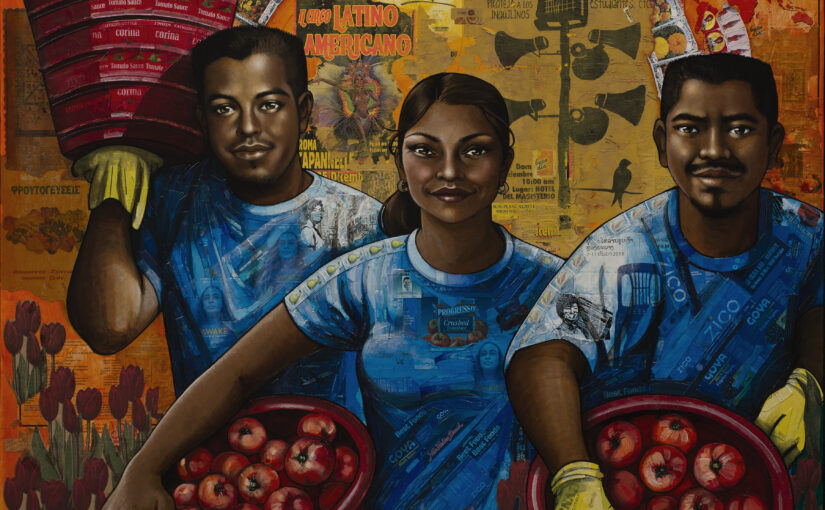
“The Harvesters” image – courtesy of artist Erin Currier (@erincurrierfineart www.erincurrierfineart.com) – depicts three Coalition of Immokalee Workers leaders: Gerardo Reyes Chavez, Nely Rodriguez, and Lucas Benitez.
The Coalition of Immokalee Workers (CIW) began as a small group of Florida farmworkers fighting against abuses in the field, wage theft, and forced labor. Eventually, realizing structural change had to come from the top, the CIW campaigned against some of the most powerful corporations in the food industry. After decades of rallying consumers, students and church groups, they were able to negotiate enforceable standards to safeguard farmworkers’ rights.
At the EcoFarm Conference, Arty Mangan of Bioneers interviewed three CIW leaders who shared the horrific conditions that farmworkers endure and how the CIW was able to make real change in the daily lives of those who grow and harvest our food.
Gerardo Reyes Chavez has been a farmworker since age 11. He works with consumer allies in the CIW Fair Food Campaign, educates farmworkers on their rights, and helps investigations of abuse and modern-day slavery.
Judge Laura Safer Espinoza, a former NY State Supreme Court Judge, directs the Fair Foods Standards Council, which monitors and enforces the Fair Food Program’s agreements between agricultural workers, growers and corporate buyers to ensure human rights for farmworkers.
Greg Asbed, a former farmworker, is the co-founder of the CIW, a human rights strategist and principial author of the Fair Food Program. Asbed was chosen as a MacArthur Fellow in 2017 for “transforming conditions for low-paid workers with a visionary model of worker-driven social responsibility.”
ARTY MANGAN: What was the turning point for each of you to get involved in this work? What drew you in?
GERARDO REYES CHAVEZ: While working in the fields in Mexico, I heard that there was work in Immokalee, Florida. So I went there thinking that I would work, save money and support my family. But I didn’t expect to see all of the situations of abuse against farmworkers. My friends and I were taken advantage of by the crew leader. He didn’t pay us for two weeks of work. That was how we were welcomed to Immokalee. We had asked for a little bit of money just to buy utensils and basic staples to cook instead of buying the food from his sister-in-law, which was making us sick. He didn’t like that so he fired us and didn’t pay us.
Because of that, we ended up with no home, no money, no job, and we didn’t know anybody. Then I met two workers who were part of the second case of modern-day slavery that the Coalition Of Immokalee Workers (CIW) helped bring to justice. They became my roommates and told me their stories. I learned very quickly about all the abuses against farmworkers working in the agricultural industry in Immokalee – wage debt, sexual harassment, violence in the fields, etc.
They introduced me to the CIW. I went to a meeting and met Greg, and I met Lucas Benitez and other colleagues. At that time they were planning a 230-mile March for Dignity, Dialogue and a Fair Wage for farmworkers from Fort Myers to Orlando, to the Florida Fruit and Vegetable Association, carrying a paper mâché Lady Liberty that is now sitting in the Smithsonian on permanent display in Washington. That was my entry point.
And after I learned about the general strikes that took place in the ‘90s – there were three of them, 3,000 workers each time, the march against violence, hunger strikes, all of those things – I knew that that’s where I wanted to be. So I got involved.
LAURA SAFER ESPINOZA: I was a judge in New York State for 20 years, and moved to Florida in 2010, after retiring from the bench. I was working for the US Department of Justice, teaching in Latin America, and one day, on NPR, I heard a program talking about situations about 30 miles from my doorstep of modern-day slavery and, in fact, hearing federal prosecutors call Immokalee ground zero for modern-day slavery. Like many people of my generation, I was aware of the situation of farm workers from the early campaigns in California in the 1970s, centered in California. That news echoed across the country. But this was 40-some-odd years later, and to hear that this was still happening seemed incredible and horrendous.
I looked into who was doing something about the situation and came across the Coalition of Immokalee Workers. So I showed up offering to volunteer a couple of days a week. But they had just gone through 10 years of incredible sacrifice on this campaign for fair food and were at the point where the entire Florida Tomato Growers Exchange agreed to come into what was to become the Fair Food Program after nine participating buyers had signed legally binding agreements with the Coalition. The CIW told me they didn’t need a volunteer, what they really needed was someone to direct a statewide monitoring organization.
That really wasn’t in my retirement plans, but they pointed out that they had worked for 20 years to arrive at this point, and if things weren’t set up properly, it would be worse than if they had never started, because people would have no belief in it. Then they pointed out that the 30 years of my legal career had probably just been intended for this one moment when I would come across their path. That was 12 years ago. They are really consummate organizers.
ARTY: Gerardo, perhaps people are aware that farm workers suffer poor working conditions and sub-poverty wages, but to hear about modern-day slavery is something I think is unfathomable for most people. What are the conditions in the field that CIW works to change?
GERARDO: When you go to the fields, you wake up around 3:30, 4:00 a.m. to get ready to go to a center location in town in the parking lot or La Fiesta Tres, which is a Mexican store. That’s where the farm labor company bosses gather to get workers. Farmworkers get there by walking or riding bikes because wages are so low they can’t afford transportation. The wages paid are basically the same for the last 30 years, so we have to walk because of that poverty.
If you were lucky to find a job, you get on the bus that takes you to the fields. There they make you wait for hours. And you can’t complain, because if you complain, then you won’t have a job the next day. So for the time you wait, you are not getting paid; then you start working. The typical day could be between 10 to 12 hours working in the fields.
This is an industry where it is mainly men working in the fields. But for very few families, it was especially difficult because they have to take their kids to the home of somebody else who would take care of them and bring them to school. By the time they come back home, they have not been able to see their kids during the light of day. And sometimes their kids are already asleep. So, that’s like a typical day of work.
Within that workspace, the crew leaders pit the Haitian, Mexican and Guatemalan workers against each other to push them to work faster. With the low wages, you have to really be pushing yourself in the fields to be able to make ends meet, to pay rent and to try to save some money.
People are living in overcrowded mobile homes because that was a way to try to save money. So sometimes people are living with 8, 10, or sometimes even 15 other workers, paying exorbitant rent for a small place.
And there were beatings in the fields that happened very often. Before the Coalition started in ’93, seven to ten cases were reported to Rural Legal Services. And there was an estimate that for each case, there were seven to ten situations of violence that were not reported because of fear of reprisal. When the Coalition started, it helped to reduce a little bit of that, but it still continued to happen.
The goal of the CIW was to be able to sit at the table with the growers to talk about how to work together to eliminate all of that from the industry, but during the ‘90s, the industry wasn’t ready to sit at the table. After the hunger strike by six workers in Immokalee, a grower was asked by another grower, “Why not sit at the table?” He said, “I’m going to put it to you this way: A tractor doesn’t tell a farmer how to run his farm.” That was basically the way in which the entire industry was looking at the workforce, not as human beings but simply as tools for the job that were disposable like a tractor.
That’s what led us to think about what we should do to force the industry to hear what we have to say, and to sit and talk about a different way of doing things.We knew that we needed more power to be able to do that, so we started to analyze the market to understand who the big buyers of tomatoes were.
The Packer [a major produce industry magazine] mentioned that Taco Bell had connections to many of the farms where abuses were happening. After several attempts trying to communicate with Taco Bell, we decided to start a boycott against Taco Bell. We wanted them to sit with us to discuss an agreement on conditions to purchasing and the implementation of a list of rights including a code of conduct. We were also asking for a penny per pound increase for tomato pickers.
LAURA: At the time, tomato pickers were earning 45 cents a bucket for 32 to 36 pounds of tomatoes, meaning that you have to pick essentially over two tons of tomatoes in a day to make minimum wage, if your hours are actually counted for minimum wage, which as he described, they had many people waiting hours and hours before going in the field, and that time was never on the clock. So it was massive wage theft and underpayment.
In the cases of forced labor, the CIW didn’t start out to be an organization that would investigate forced labor. They were organizing against abusive conditions in the field and for decent wages. But in doing so, CIW uncovered cases of forced labor, people who were indebted and being held against their will. And so they became the pioneers of investigations into those cases, and ultimately received a presidential medal as a result of their extraordinary efforts to combat human trafficking. It was not the original intention, but it was a very prevalent situation that impacted networks of hundreds of workers at a time.
ARTY: You used the words forced labor, and we also used the language of modern-day slavery. Can you unpack that a little bit so people understand what was going on? And also, did it expand beyond Florida?
LAURA: I can give you the legal definitions, but Gerardo lived and witnessed the situations.
The legal groundwork is people were being held against their will and forced to work through violence, or threats of violence, or psychological coercion, having their documents withheld, having their families threatened, and certainly not being paid adequately for their labor while this was happening. I know it sounds remarkable in the 2000s, however, there were actually situations of people being held against their will, being beaten, held behind electrified fences, and taken from one state to another. These were multi-state networks that the CIW investigated. One of their first cases became the seminal case that helped to motivate the passage of the Trafficking Victims Protection Act.
GREG ASBED: That’s the legal framework today. At the time when we started with US vs. Miguel Flores, which is the first one of the two seminal cases in the birth of the modern anti-forced labor movement, there were no laws like that. They were using the 14th Amendment or whatever laws after the Civil War that made slavery illegal.
To give you the real, on-the-ground worker experience that led to that, the CIW was starting to organize in Immokalee. People would come together every week and have meetings to talk about the problems they faced as farmworkers, and some leadership was starting to emerge. In the Guatemalan community there were leaders who were deeply connected to the world of recent Guatemalan refugees because a lot of people were coming from Guatemala for political and economic reasons. At the same time, people from Haiti were leaving their country after the overthrow of a government that was popularly elected.
The people from the Guatemalan community were coming to the meetings and talking about a particular crew leader or pair of crew leaders – Miguel Flores and Sebastian Gomez – who were bringing people over from the border. Back then it was referred to as being coyotes. They were bringing over van loads of people and creating crews of hundreds, but they were treating people absolutely horrifically. They were threatening to cut their tongues out if they talked to the police; they were holding young women and taking them as their slaves, essentially, not to work but for sex, and just treating people horribly.
The CIW was starting to come together. We were starting to hear about that more and more. And then summertime came and people went north into South Carolina from Immokalee to get work. But a group of people who stayed in Immokalee decided to go follow up and see if they could find out where Miguel Flores and Sebastian Gomez were working.
We went to a labor camp and some people came up to us and said, “Can you help us get our last check from another employer? We’re working at this labor camp now, but we lost our last check at the last place.” We said, “Yeah, we do that all the time.” We asked what happened. They said, “Well, the police came in the middle of the night, and so we left quickly.” And then we asked, “Why did the police come?” “Well, our boss, Miguel Flores, shot one of our friends in the stomach because he was telling us all that we don’t have to work like slaves, not in this country. In this country, we can work where we want to. And he shot him. And then the police came, so we took advantage of that and took off.”
That led to the investigation that led to the case US vs. Miguel Flores. Those are the conditions behind what workers themselves call slavery. There’s some debate at higher levels in this world about whether slavery’s the popular term, but if you ask the people who actually experienced that, when your friend gets shot for saying we don’t have to work like slaves, that’s the word people use, they say, “I feel like I’m being treated like a slave.”
GERARDO: The agricultural industry has much more abuses than any other industry that create an atmosphere in which modern-day slavery can flourish. So for us, it was also a question of changing those conditions, creating something to be able to basically eliminate the oxygen for those kinds of extreme abuses to continue to happen.
GREG: We became well known for discovering and helping to investigate major forced labor prosecutions. But we also realized that that wasn’t a solution; we could chase these things forever; even with a successful prosecution somebody else would fill the void. And so we weren’t satisfied with that as success. Success had to be stopping them from happening altogether, and that’s what eventually led to the Fair Food Program.
ARTY: There was a key shift in your strategy from attempting to get change from the middle of the system – the labor bosses and farmers – and realizing that wasn’t where the leverage was and pivoting to put pressure at the top of the system. I think that was a brilliant move.
GREG: If you take 10 years to make it happen, I’m not sure how brilliant it is. [LAUGHTER]
When you’re working in a field, you see what’s in front of you; you see the crew leader, first and foremost.
GERARDO: And that’s all you think about.
GREG: That’s your world. And then if you expand it, you think about the farm. But actually, in the farms where people work in Immokalee, you never see the owners.
GERARDO: You would see them sometimes flying over, but you didn’t get to actually meet any owner of the company.
GREG: So for people who work in the fields, it’s very difficult to see beyond that. But, for example, if you’re loading 18-wheelers with melons all day long, and if you pay attention, you hear where those trucks are going. You learn that they’re going to Walmart and to places like that. So then you start to connect the dots.
You realize how powerful those companies are. You realize that there is an immense power at the top of that system. What farmers can pay farmworkers is actually limited by the price they receive. So if we were looking for a structural change that can actually be sustainable in terms of raising wages and improving conditions, it’s going to start at the top. That’s the analysis that got us there, eventually. Like I said, it took us a long time and a lot of sacrifice to actually do it.
But every single step of the way was closer toward realizing that the answer’s not inside of the farm gate, but outside of the farm gate.
LAURA: It was also realizing that ultimately consumers were going to be the final destination for those crops. And that they were going to help the farmworkers to turn this around by telling buyers what they wanted to see in terms of the working conditions for the produce that they were buying.
Many people were active in the ‘70s, and boycotted grapes and lettuce, but this is an evolution of that, and a more powerful leveraging of that buying power at the top of the supply chain, driven by a consumer alliance with farm workers.
GREG: Yes, a more sustained leveraging.
LAURA: Because the goal of it was to arrive at agreements that would be broad, and cover not employer by employer but an entire industry.
GREG: It sounds idealistic to say that consumers are at the top of the market, and literally they are, but if we all make individual decisions about what we’re going to buy, it’s not going to add up to real power. The collectivized purchasing power is with the corporations. And the more restaurants or the more grocery stores that they have, the more power they have in the market.
But we were actually able to collectivize the purchasing decisions of enough consumers through this tireless organizing that we did for another decade, that we were able to take that itemized market of individual consumers and make it act collectively to move corporations so that they in turn exercised their collective leverage and changed conditions in the field. So Taco Bell stopped making farmers poor. Taco Bell started making farmers a little bit better off.
ARTY: And then came the legal structure of the Fair Food Project.
LAURA: Yes. The legal structure – I can say this since I had nothing to do with designing it – is brilliant and also elegantly simple. The buyers commit to pay a premium for their produce, which is destined to supplement workers’ wages with a small percentage that goes to the farmer themselves to mitigate against any increased payroll taxes or administrative costs that they might have in managing the premium, and they also commit to purchase preferentially from growers in good standing in the program, meaning that they’re in compliance with the program’s code of conduct. So good conduct is rewarded by the market.
If there are offenses, we understand that nothing is perfect when you start, and all can be remediated if there is goodwill on both sides. We have a very incremental and gradual and collaborative approach toward compliance, but without cooperation, nothing gets done. So if that point is reached, then the buyers have an obligation to cease purchasing from any operation that’s suspended from the Fair Food Program.
So it rewards good practices and it sanctions the worst practices. There is zero tolerance for offenses such as forced labor or systemic child labor, or an operation ceases to cooperate with the program. And that’s been a tremendous incentive for improving everything that Gerardo was describing at the beginning, everything from dangerous health and safety conditions, to sexual harassment, to physical violence, to discrimination and, of course, forced labor.
The same farms that were making headlines in The New York Times: “Slavery in the Florida Tomato Fields” are now recognized as the best work environment in US agriculture, also on the front page of The Times. So it’s a dramatic transformation brought about by those market incentives.
GREG: Interestingly, when you really think about it, it wasn’t any innovation, it was just making them honest about what they claim. The corporations were all claiming they had codes of conduct.
What’s the idea of a code of conduct? It means if I’m going to buy from you, you have to meet these standards. But if there’s no enforcement to that, then it’s meaningless. What we did was challenge the claim that the buyers only purchase according to certain standards, and made them sign a legally binding agreement to that effect. So, now we will be able to enforce the standards if they don’t. And that changed everything.
We added new standards based on what workers asked for to make the industry more fair. But essentially 95% is already existing law. Our position is to have the corporations do what they claim they are doing, and have us, as people whose rights are in question, monitor and enforce on the ground. That’s what is needed to have a much more just system.
LAURA: That’s what really had never been done before. There are a lot of certifications out there with a code of conduct that may have a once-a-year or once every two- or three-year audit. There may be an 800 number to call or maybe a committee that is supposed to regulate things. But because this program was created by farmworkers themselves, it became meaningful.
The process includes educating workers on their rights, so people knew it was a new day. They are educated by farmworkers themselves – people who have lived their experience – and are told what to do if things did not go as everyone is now saying they should. And beyond that, they set up a whole new organization dedicated to this process, to monitor and enforce these agreements with the buyers and growers.
That was the birth of the Fair Foods Standards Council, the FFSC. FFSC audits get a snapshot of conditions, and the auditors have tremendous access. There’s been a huge fight based on cases in California for access to workers during the workday, but by contractual agreement, the Fair Food Program has that access. Two workers in the field as they work, two workers at company housing, and we interview at least 50% of workers. We have full transparency into growers’ records, their payrolls, their health and safety records. We work with them on an agreement for corrective actions for non-compliances or risks.
So we have the complaint mechanism, which is 24/7. And the investigators, the same people who go to the field, they respond to the 24/7 hotline. They carry it on their person. And so it’s always answered live, and we investigate those complaints collaboratively with the grower. But ultimately, there has to be a resolution.
I was a judge for 20 years, and I know how long a case takes to wind through the tribunals and appeals processes. We resolve about 67% of our cases in two weeks, and 80% in just under a month. That’s lightning speed. It’s good for the grower, it’s good for the workers, and it’s good for putting in place measures that’ll prevent the next case because we not only want to resolve the individual case, but also want to eliminae the cause of the problem.
There is a working group that is composed of growers who are invested in the success of the Fair Food Program. During COVID, the working group created a set of prevention and response protocols. If you look at the statistics, they managed to cut in half the number of illnesses it affected and workers impacted from the general agricultural population.
We have heat stress protocols to protect farmworkers now. Heat is a serious and growing threat, especially to farmworkers.
There is an education committee. That goes to the farmworkers. And there are tens of thousands of frontline monitors of their own rights. They can be effective because they know they are not going to be retaliated against.
CIW march for farmworker rights. Image courtesy of marie, CC BY-SA 3.0, via Wikimedia Commons
ARTY: Can you give an example of something that the farmworkers themselves asked for that has improved since the code of conduct has been implemented?
GERARDO: Tomato pickers were forced to overfill the buckets that get dumped onto the truck, but they weren’t getting paid for the extra amount. It was basically a 10% theft of wages. The money would eventually go into the pocket of crew leader. So there was a lot of violence. There were workers who had their foreheads split open when the dumper threw the bucket back at them if the dumper thought the buckets weren’t overfilled enough. So eliminating over-filling of the buckets is a way to strip the power of the dumper and the crew leader, and has mitigated instances of violence.
GREG: Establishing that was important for our community. All the conversations with the farmworkers to create the code of conduct helped create a needed picture of all the abuses. In that process, we put all the ideas together, and the Fair Food Program is the end result. What it contains comes directly from those conversations.
LAURA: The workers knew the source of abuse that they were suffering, but in terms of how to make real changes on the ground, we needed the knowledge and the input of the farmers themselves. It was in conversation and collaboration with growers that the fill-to-the-rim standard (not overfilled) was created.
GREG: To help operationalize the standard, we had three or four of the biggest growers in the Florida tomato industry in the CIW office, in the office of a group that they refused to recognize for 20 years. This was the first time that we collaborated, actually worked together toward one solution. We were able to agree on a standard that created more fair conditions for farmworkers, and that was efficient for the growers’ production, as well as reduced violence in the fields.
LAURA: Implementing these changes by recognizing that collaboration was going to be the key to success, CIW gained this tremendous power. I worked for 30 years [as a NY State Supreme Court judge] in an adversarial system, and this is not that. During an investigation of a complaint, there is a constant back and forth with the grower until we arrive at the findings and what we are going to do about it. That can only happen because now everyone respects confidentiality, everyone respects the right of workers not to be retaliated against. And if there is retaliation, as there were many attempts of that in the very early implementation days, it doesn’t work because we will know about it, and the power of the market stands behind the enforcement. So it is very effective.
And now our growers don’t have major Department of Labor judgments. There aren’t forced labor cases. You’re not having EEOC [Equal Employment Opportunity Commission] cases brought for sexual harassment, or class action cases. I would say that we have become the best insurance policy that growers could have.
Many growers came to the table out of a desire to do the right thing, to do the right thing for the soil, to do the right thing for the Earth, to do the right thing for the people they work with. This program recognizes good practices. You don’t have to start out with bad practices to join the Fair Food Program. In fact, our expansion is happening with growers knocking on our door. For the first time, we have emails wanting to find out more about a worker-driven responsibility program. We did not think in 2011 that we would see that.
ARTY: It’s seen now not as punitive, but rather as an asset.
GREG: All of the certification programs start from the idea that there is a human rights crisis to be addressed in agriculture and it has been since time immemorial. That problem can have two consequences: suffering for the humans whose rights are in question; and for the employers and corporations who sell the products harvested by those humans, there is a public relations problem that harms their reputation.
The reason the Fair Food Program is different from other codes of conduct is because it’s worker driven. This is the only program that starts with the humans, whose rights are in question, being the ones who created the standard. Quite naturally, their solution goes toward ending human rights violations. Whereas all the other programs are managed either by the corporations or by the farmers.
When it is the employer or the buyer establishing the code, the focus is on stopping the reputational harm, not on stopping the human violations. When it’s the humans who suffer abuses, it’s about stopping the human rights violations. The funny thing is, one of those two solutions solves everybody’s problems because when you stop the human rights violations, the reputational harm stops too. But when you only focus on reputational harm, the human rights violations continue, and that’s the difference, and that’s what makes this uniquely successful, and that’s what’s driving the paradigm shift over time. But it’s huge industry involving billions of dollars. With that infrastructure built around the old paradigm, shifting it takes take time.
Growing up in the diverse and bustling California Bay Area, renowned wildlife ecologist Dr. Rae Wynn-Grant always felt worlds away from the white male adventurers she watched explore the wilderness on TV. As Rae set off on her own journey in the wild, finding her way in a profession where there were few scientists who looked like her, she saw nature’s delicate balance in a new light. Hers is a story about a career in the wild spanning nearly two decades, carving a niche for herself as one of very few Black female scientists.
Today, Wynn-Grant is a Research Fellow with the National Geographic Society, serves on The North Face’s Explore Fund Council, co-hosts Mutual of Omaha’s Wild Kingdom Protecting the Wild on NBC, and hosts the podcast “Going Wild with Dr. Rae Wynn-Grant,” produced by PBS.
Wild Life: Finding My Purpose in an Untamed World is an incredible journey spanning the Great Plains of North America to the rainforests of Madagascar. In this vulnerable and urgent memoir, Wynn-Grant explores the ever-shifting relationship between humans, animals, and the earth through her personal journey to becoming a wildlife ecologist.
Nestled in the breaks of the Sierra Nevada lies the cerulean depths of Lake Tahoe. Rocky shores border the lake as snow-capped mountains disrupt the water’s infinite stretch to the horizon. Fir trees and stately pines flank the shores and provide shelter for the region’s wildlife: yellow-bellied marmots, mountain lions, American martens, and, of course, the largest of the Sierra carnivores—black bears.
I had been studying black bears since I started my PhD in the fall of 2010. And for that first year, while I was meant to become an expert on the subject, I still hadn’t seen a bear in real life. I felt like such a fraud—rigorously starting my research career on an animal I’d never encountered.
My new project would take me back to the same region where I’d first explored the outdoors as a schoolgirl on my Yosemite National Park class trip. I would be researching a small black bear population in the Lake Tahoe Basin, on the California-Nevada border, in the middle of the Sierra Nevada mountain range. From 2011 to 2013, I’d swing like a pendulum between my research project in Tahoe and my home base in NYC.
Early on in our research, as a rite of passage, my research collaborators, Dr. Jon Beckmann and Carl Lackey, took me on a long driving tour of all the different habitats bears use in the Lake Tahoe ecosystem. For the first time, I saw the mountains, forests, lakes, and deserts of my birth state and the bordering state of Nevada, all within a few miles of each other. That same day, they drove me to a secluded area of the forest and patiently taught me how to shoot a tranquilizer gun, a tool I’d use throughout my many years of work with black bears.
The timing couldn’t have been more ideal, because the next day we captured what we all called “Rae’s First Bear.” Its fur wasn’t black, but light brown, which is typical for western bears. As I’d soon learn, North American black bears come in various shades, even stark white, and their coats often correspond to their native regions.
I learned how to process the bear, which wasn’t much different from how I’d process lions in my earlier years studying African wildlife: weigh and measure the animal, check its temperature (rectally—you haven’t lived until you’ve done this), comb through its fur to look for ectoparasites, take hair and blood samples, and give it an ear tag and a GPS collar so we could track its movements and learn about its ecology.
Although I always want to appear to be a cool, collected, well-seasoned field biologist, it was impossible for me to contain my excitement during this first experience catching and tagging a black bear. As soon as it was tranquilized, I pulled out my smartphone and texted pictures of me and the giant animal to my friends and family. The next day was another bear, and the day after that, another. The work energized me, and I was awestruck by how naturally black bears fit into this ecosystem that housed both people and wildlife.
Yet what seemed a “natural fit” to me didn’t necessarily reflect the experiences of many people I met during my first days in Tahoe. These people, having built homes and livelihoods in bear country, often perceived bears as a nuisance and occasionally as a threat, either to their safety or to their prosperity. This tension between humans and bears on this shared landscape struck me as a conflict in need of mitigation, a problem I was determined to use science to solve. What came out of my commitment, however, was less of an ability to make sweeping recommendations to eradicate human-bear conflict in Tahoe and more of a deep understanding of the ways human lives and values are distinctly intertwined with bears.
Days later, we captured an adult female black bear with her two “cubs of the year,” about six months old. They wrestled and played with each other while we processed their mother, placing a GPS collar around her neck that would allow us to track her movements into the winter as she made a den for herself and her cubs. Once we had finished, we hid in a nearby bush to monitor the cubs’ safety while the mother slowly arose from her sedated state.
It is rare for people to be able to observe the behavior of a mother bear with her cubs, as this is often a dangerous scenario. Watching the playfulness of the little ones, as well as their seeming sense of relief when their mother began to stir again, connected me to these animals in a way I’ll never forget. Upon waking, the mother’s first order of business was to nurse her cubs, an instinct familiar to all mammals. Reunited and well fed, the troupe of three then calmly walked back into the depths of the forest.
A widely-traveled, brilliant conservation ecologist/wildlife biologist who has done cutting-edge work on apex predators in many remote and rugged locales around the world, Rae Wynn-Grant is also one of the most captivating and inspiring science communicators of our time as well as a leading advocate for women and people of color in the sciences. In this talk, she draws from her new memoir, Wild Life, to share some of her experiences finding her way in a profession with very few scientists who looked like her as she embarked on a quest to study the ever-shifting relationship between humans, animals, and place and came to understand the vital roles we must each play not just as stewards for our land and water, but also for our communities, each other, and ourselves.
This talk was delivered at the 2024 Bioneers Conference.
Rae Wynn-Grant, Ph.D., a wildlife ecologist and conservation biologist who researches how human activity influences carnivore behavior and ecology and is passionate about science communication, is the creator of the award-winning podcast “Going Wild with Dr. Rae Wynn-Grant” (produced by PBS’ Nature) and has recently become the co-host of the just resuscitated revered TV show, Mutual of Omaha’s Wild Kingdom. Currently a Research Faculty member at the Bren School of Environmental Science and Management, she maintains a Research Fellow position with the National Geographic Society in partnership with the American Prairie Reserve and a Visiting Scientist position at the American Museum of Natural History. Dr. Grant, who also serves on the Board of Directors for NatureBridge, is a leading advocate for women and people of color in the sciences and is the author of many scientific papers, as well as her new memoir, Wild Life.
Wild Life: Finding My Purpose in an Untamed World is an incredible journey spanning the Great Plains of North America to the rainforests of Madagascar. In this vulnerable and urgent memoir, Dr. Rae Wynn-Grant explores the ever-shifting relationship between humans, animals, and the earth through her personal journey to becoming a wildlife ecologist. Read an excerpt from the book here.
In this Bioneers 2024 keynote, Colette Pichon Battle draws from her decades of experience fighting for equitable climate resilience to unearth historic lessons and expose the root causes of the inequities and imbalances that characterize our relationships to the natural world and to each other.
This podcast features the visionary primatologist and conservationist Dr. Jane Goodall, who revolutionized primatology and helped us realize how close our kinship is with the animal kin-dom. It has been 50 years since Dr. Jane, as she’s affectionately known, began her intensive solitary studies of chimp behavior In Africa’s Gombe National Forest and inspired the world to save the rapidly dwindling populations and their habitats. Today, her compelling vision in action to restore people, animals and planet is delivering real hope.
Throughout the year, we are frequently reminded that inspiration can come from myriad places: a childhood spent in nature, proximity to a community in need, and phenomenal mentors, to name just a few. Once each year, at the annual Bioneers Conference, a few thousand of us are inspired by the luminous thinkers, doers and creators who share their visions for a brighter future. It’s a heart-healing reminder that we aren’t alone and that we can do incredibly hard things if we work together.
On the heels of Bioneers 2024, we look forward to sharing video recordings of all of our keynote speakers, giving you a chance to be inspired anew (or for the first time!) and share that inspiration with your communities. Today, in our first step toward that full release, we’re proud to share videos of four incredible Bioneers talks. Enjoy, learn, and pass them on.
Want more news like this? Sign up for the Bioneers Pulse to receive the latest news from the Bioneers community straight to your inbox.
Claudia Peña – Abolition as Amends to Mother
“This nation has suffered mass alienation from the colonizers to the genocides to the kidnappings in Africa and the slave trade. Many of us walking these lands were cut off from our roots, and healing requires reconnection to those roots.”
In her Bioneers keynote, Claudia Peña, Executive Director of the artist collective For Freedoms and founding Co-Director of the Center for Justice at UCLA, discussesher multifaceted restorative justice work. Like so many other industries, our enormous mass incarceration system has wreaked havoc on society. Peña argues our desire for punishment and the profits made by the incarceration of millions of human beings, consequences be damned, lead to the destruction of the social fabric of countless communities in the short term and contribute to the ravaging of the larger global environment in the long term. Our only path forward is to address each harmful industry — including the abolition of the prison industrial complex as we know it — and make amends with land, water and air.
“Mycorrhizal fungi are based in rich fields of sensory information. They must determine when, where, and how to move resources across their networks. They must integrate myriad data streams across billions of nodes in their networks. These are complex information processing systems solving non-trivial problems on a moment-to-moment basis, and we have no idea how they can do what they do to achieve these astonishing feats.”
Most fungi live out of sight, yet they make up a massively diverse kingdom of organisms that support and sustain nearly all living systems. The symbiotic mycorrhizal networks formed by plants and fungi comprise an ancient life-support system that easily qualifies as one of the wonders of the living world. Yet climate change strategies, conservation agendas and restoration efforts overlook fungi and focus overwhelmingly on animals and plants. This is a problem: the destruction of underground fungal networks accelerates both climate change and biodiversity loss and interrupts vital global nutrient cycles. In this keynote, bestselling author, biologist and expert on fungal life, Merlin Sheldrake discusses the critical importance of fungi and the visionary work of the Society for the Protection of Underground Networks (SPUN).
Sammy Gensaw III – The Restorative Revolution and a River of Reciprocity
“I’ve dedicated my life to the culture because of a small sentence that my grandmother always told me growing up: ‘One day, they will need people like us.'”
In his Bioneers keynote, dynamic young Yurok leader Sammy Gensaw III shares some of his experiences working for ecological and cultural revival along the Klamath River. The river is central to the Yurok people’s identity and livelihood, and they led an epic struggle to remove destructive dams that required drawing deeply from ancestral wisdom, modern science and cutting-edge activism. Hear Gensaw discuss how Indigenous leadership can play a central role in rekindling our connections to land and water and ushering in a restorative, resilient future for all of us.
Colette Pichon Battle – Expanding Our Movements for Climate Justice
“We have devoted our prayers to a ridiculous religion of capitalism, and we are now caught in this rapture of extraction. We have to be willing to change not only what we believe but how we move in this world.”
Colette Pichon Battle, climate justice activist and award-winning environmental and human rights attorney, discusses how to expand the movement in her Bioneers keynote. Pichon Battle, who was born and raised in Bayou Liberty, Louisiana, focuses on creating spaces for frontline communities to gather and advance climate strategies that help them steward their water, energy, and land responsibly. Drawing from decades of experience fighting for equitable climate resilience, she unearths historic lessons and exposes the root causes of the inequities and imbalances that characterize our relationships to the natural world and to each other.
Through engaging courses led by some of the world’s foremost movement leaders, Bioneers Learning equips engaged citizens and professionals like you with the knowledge, tools, resources, and networks to initiate or deepen your engagement, leading to real change in your life and community.
The Four Sacred Gifts: Indigenous Wisdom for Modern Times | Self-Paced | Discover how the Four Sacred Gifts of forgiving the unforgivable, unity, healing, and hope in action provide us with a path to our most grounded, loving, healed, and generous selves.
Regenerative Agriculture: Nourishing the Soil, Healing the Planet | Self-Paced | Be enlightened on the practical applications and impressive potential that regenerative agriculture has to revive healthy landscapes; contribute to human and animal health; create an equitable food system; and help heal the climate.
Keep Your Finger on the Pulse
Our bi-weekly newsletter provides insights into the people, projects, and organizations creating lasting change in the world.