Beaver Believers: How to Restore Planet Water

In this age of global weirding where climate disruption has tumbled the Goldilocks effect into unruly surges of too much and too little water, the restoration of beavers offers ancient nature-based solutions to the tangle of challenges bedeviling human civilization. Droughts, floods, soil erosion, climate change, biodiversity loss – you name it, and beaver is on it.

In this episode, Kate Lundquist and Brock Dolman of the Occidental Arts and Ecology Center share their semi-aquatic journey to becoming Beaver Believers. They are part of a passionate global movement to bring back our rodent relatives who show us how to heal nature by working with nature.

This is an episode of Nature’s Genius, a Bioneers podcast series exploring how the sentient symphony of life holds the solutions we need to balance human civilization with living systems. Visit the series page to learn more.

Featuring

Kate Lundquist, co-director of the Occidental Arts & Ecology Center’s WATER Institute and the Bring Back the Beaver Campaign in Sonoma County, is a conservationist, educator and ecological artist who works with landowners, communities and resource agencies to uncover obstacles, identify strategic solutions, and generate restoration recommendations to assure healthy watersheds, water security, listed species recovery and climate change resiliency.

Brock Dolmanco-founded (in 1994) the Occidental Arts and Ecology Center where he co-directs the WATER Institute. A wildlife biologist and watershed ecologist, he has been actively promoting “Bringing Back Beaver in California” since the early 2000s. He was given the Salmonid Restoration Federation’s coveted Golden Pipe Award in 2012: “…for his leading role as a proponent of “working with beavers” to restore native habitat.

Credits

  • Executive Producer: Kenny Ausubel
  • Written by: Kenny Ausubel
  • Senior Producer and Station Relations: Stephanie Welch
  • Program Engineer and Music Supervisor: Emily Harris
  • Producer: Teo Grossman
  • Host and Consulting Producer: Neil Harvey
  • Production Assistance: Monica Lopez
  • Graphic Designer: Megan Howe

This limited series was produced as part of the Bioneers: Revolution from the Heart of Nature radio and podcast series. Visit the homepage to find out how to hear the program on your local station.

Subscribe to the Bioneers: Revolution from The Heart of Nature podcast


Transcript

Neil Harvey (Host): In this episode, Kate Lundquist and Brock Dolman of the Occidental Arts and Ecology Center share their semi-aquatic journey to becoming Beaver Believers. They are part of a passionate global movement to bring back our rodent relatives who show us how to heal nature by working with nature… I’m Neil Harvey. This is “Beaver Believers: How to Restore Planet Water”.

We live on Planet Water, where water is life. During the past 4.6 billion years or so of Earth history, we’ve had water for about 4 billion years. 70 percent of Earth’s surface is water. Water has carved and sculpted the landscape in a dance among geology, hydrology and biology. Our bodies are mostly water. Try living without it sometime.

As the iconic ecologist Aldo Leopold’s son Luna Leopold put it, the health of our waters is the principal measure of how we live on the land. You’d think that by now, we’d have learned to cherish water and think like a watershed.

To the contrary, as the species that is the greatest degenerative disturber of our surroundings, we’ve commodified, trashed and wasted water like there’s no tomorrow. Now that there may be no tomorrow unless we radically change our ways of living on Planet Water, we can turn for solutions to that other famously busy, regenerative disturber of its surroundings: cousin Beaver.

In this age of global weirding where climate disruption has tumbled the Goldilocks effect into unruly surges of too much and too little water, the restoration of beavers offers ancient nature-based solutions to the tangle of challenges bedeviling human civilization. Droughts, floods, soil erosion, climate change, biodiversity loss – you name it, and beaver is on it.

So let’s begin at the beginning. Who is cousin beaver anyway?

Brock Dolman (BD): So we’re really talking about the North American beaver, which is Castor canadensis. They are rodents. So a colony could be 5 to 12 individuals. Beavers slow water, irrigate the land to grow vegetation to grow themselves food, and make a pond deep enough that they can escape predation. Mountain lions, for instance, like to eat beavers.

They’re forest farmers. They’re going to have a main dam where they live in their house, whether that’s a stick house out in the middle like a little island, or burrowed into the bank. And that’s where they spend their day times mostly inside the lodge. They are protected in there. It’s cozy and warm in there. They get to hang out and groom and they might emerge out at sunset. They’re going to go work on the dams, patch things up, they’re managing water, they’re socializing, they’re marking territory. And then they may go harvest food. They’re just busy as beavers.

Host: Brock Dolman co-founded the Occidental Arts and Ecology Center in Sonoma County, California, where he co-directs its WATER Institute, Permaculture Design Program, and Wildlands Program. He has consulted on regenerative project design and implementation internationally.

Along with Brock, Kate Lundquist co-directs the Center’s WATER Institute as well as its Bring Back the Beaver campaign. She’s a conservationist, educator, ecological artist and wildland tender.

Kate Lundquist (KL): So they go as high up as the Taiga, and now with the melting of the Arctic, they are moving into the Arctic as well, and there’s been a lot of press about that: Beavers are ruining the Arctic! Actually, I don’t think it was beavers that burned all that carbon that is now melting the Arctic, so we’ve got to cut them a little slack. They’re just adaptable and taking advantage of that habitat that’s being freed up. And they go down as far as the Sonoran Desert.

They have these incredible adaptations that make them really, really capable of being in the water a lot. They have these paddled feet so they can swim. They have the tail that is also really good for helping propel themselves in the water. They regulate their body temperature through their tails as well. They have this really cool specialized toe. They need to groom themselves to keep their fur waterproof so that they can stay warm in the water and stay dry when they get out. And they have these incisors that are super key to their ability to cut down the trees and to peel the bark, and to do all of the incredible engineering work that they do.

And they’re unusual as a rodent. Beavers only have one set of kits every year. They keep the young around for up to three years, training them in all the skills of being a beaver, living together and doing this work collectively.

Host: Beaver is a keystone species. “Keystone” is the architectural term for the stone at the top of an arch that holds it in place. Remove it and the arch collapses. In other words, beavers disproportionately benefit many natural processes which in turn support countless other species, including us humans. It’s all about managing life-giving water, for which they are uniquely fitted.

Beavers are crucial for water conservation. Their dams slow water down and spread it out, creating lush wetlands while recharging ground water. They store water against droughts. They prevent violent flooding. They create firebreaks against the now common “firenados” that have beset California and the Western states. They create habitat for countless other species – from fish and turtles to birds. The list goes on.

KL: What those dams end up doing is they act like these sieves. So when you have these floods that are delivering nutrients or sediments, they’re trapping all of that. And the study that was done in 2007 demonstrated that the dams were trapping phosphorous, which is actually a contaminant and causes poor water quality.

They end up buffering many of the impacts that happen with the climate changes that we’re experiencing right now. And so multiple dams, they end up being like speed bumps, and so you get these high-flow events coming in, and it helps slow that water down, shunt it off onto the floodplain, and then basically distribute the energy and de-escalate that energy that comes in with those floodwaters.

But then similarly, in a drought situation, they’re holding that water and keeping it there longer on the landscape into the dry season.

Host: As environmental journalist Ben Goldfarb illustrates in his book, “Eager,” we need to reconfigure our historical conception of what a healthy riverscape looks like. Not every stream fits our English countryside inspired vision of an idyllic mountain brook, free-flowing, fast-moving, and gravel-bottomed. Instead, across the continent beavers created complex, multi-threaded webs of water, patched with swampy wetlands that also built soil and sequestered carbon. Goldfarb estimates that pre-contact North America beaver dams may have impounded an additional 230,000 square miles of water. That’s the size of Arizona and Nevada. Although wetlands comprise just 2 percent of land area, they support 80 percent of biodiversity.

KL: Beavers will dig entire canal systems out to their favorite food sources, especially if it’s like willow thicket. You’ll see this a lot in Sierra meadows where they’ve dammed up the stream in the meadow and that’s created a big wetted area behind the dam, but then there’s these aspen stands, and they love aspen. That’s one of their favorite foods. They will risk their lives for aspen.

And so for them, digging these canals to get to those aspen groves so that they can fell the trees and cut them up, get the bark, get the leaves, and then drag what they want back through these canal systems. But ideally you find these areas where beavers have been living there for generations, and so they just inherit the work of the former colony of their ancestors, and they get to build on it, and it creates these just amazing expanses of wetlands. And some areas will have younger trees because the beaver harvested those, and other areas will have more mature trees, and it just creates this beautiful mosaic.

Host: Think of it as a vast hospitality enterprise – an all-you-can-eat-and-drink buffet for the neighborhood. As Goldfarb puts it, “The list of organisms that benefit from beavers is basically a list of organisms in North America.”

In their relentless drive to change their surroundings, beavers are creating conditions conducive to a riotous diversity of life. Northern California’s Smith River, which is the last mighty undammed river of its size in California, is a case in point. Again, Brock Dolman.

BD: It’s a system too big for the beavers to dam across. It’s too deep and too wide, and the beavers are like, there’s plenty of water; we don’t need to dam up. Right? So what they do is they’ll dig a burrow into the bank, and folks got their snorkel gear on, and they would like snorkel up into these little like bank caves and stick their head up into the entrance of this bank burrow and look at all the critters in there, and then see all of this wood, like after the beavers chew off all the bark and—we call it corn on the cob, like you take a willow stick and you strip off that bark. That’s what they’re eating is the cambium layer. Then the stick is either just used there—and then they pile up outside of these. And these folks coined this idea that they were called river reefs.

So the bank lodge, inside the entrance to the bank burrow, they found all kind of coho salmon and steelhead hiding out in there, and then on all those sticks, they found all these types of native critters that were using this complexity like a coral reef. These are what they were calling river reefs. And it was the three-dimensional heterogeneity, the complexity that the beavers created in their refuse pile that increased the carrying capacity, creating conditions conducive for life, for Castor canadensis. Right? And so they’re super cool that way.

Host: Along the Feather River that originates in the Sierra Nevada mountains, a group doing water restoration work discovered sticks that beavers, dating back to around 580 AD, had chewed on. These aquatic creatures had created a landscape of lush mountain meadows over a twelve-hundred-year timeline.

Pre-contact in 1491, before European settlers arrived in North America, there were as many as 400 million beavers on the continent, compared to today’s 10 or 15 million. Lewis and Clark described beaver dams as far as the eye could see, up every tributary of the Missouri Basin.

This was well-known to the millions of First Peoples of North America. Beaver was a revered totem animal for numerous tribes across the continent.

However, as the Haudenosaunee put it, “What your people call resources, our people call relatives.” The European settlers saw this revered creature only as a valuable commodity.

BD: Beavers unfortunately made really good hats, and their castoreum gland has a scent to it that was used for perfumes and flavorings and all kinds of things. And really the arrival and the driver of settlement in North America starting way back in the Northeast in the 1500s and 1600s was the push for beaver fur.

But we also had the Russians working the coast of Sonoma County, and Mendocino and Marin County in the late 1700s– sea otters, fur seals, but also trading for beaver or any other fur they could get on the inland as well. And that process drove beavers to near extinction.

Host: After the fur rush came the devastating Gold Rush that resulted in another beaver massacre. Subsequently, settlers removed beavers to drain the wetlands for agriculture and cattle grazing. The beavers had created rich, carbon-laden soil for farmers to exploit. 

By the early 1900s, there were fewer than 1,000 beavers in California. The meadows dehydrated, dryland plants disappeared, lodgepole pines invaded, Then came the sheep who overgrazed what was left.

By 1911, the state of California tried to reverse the damage and passed a law to protect beavers. 

BD: And then the Government of the Division of Wildlife, it was called then – it’s now called California Department of Fish & Wildlife – actually engaged in a process of relocating beavers. And California relocated about twelve hundred beavers, more than any other Western state by a longshot.

In Idaho, in 1948, they started parachuting beavers out of planes, and they had “Geronimo”, the beaver who they dropped to figure out the mechanism on this parachute box when it landed so it would open up and beaver Geronimo could walk away. California, not to be outdone, we had our own beaver parachuting campaign in 1950, into the El Dorado National Forest up kind of eco summit, south of Tahoe, if people know that part of the world. And they did that, imagine, because beaver dams in the mountains save water for fish, wildlife and agriculture.

Host: But by the 1950s, the various agencies, fisheries, and biologists became less interested in restoring beaver populations. Some said beavers were bad for salmon, blocking their passage in rivers. Others claimed the beavers weren’t native to California and were put there only when states were moving beavers around. Perhaps most of all, they complained beavers were a major nuisance to human affairs.

Brock Dolman and Kate Lundquist co-published with a number of other authors two peer-reviewed papers in the California Fish & Game journal that looked at the historic range of beaver in both the Sierra Nevada and the coastal areas of California. They worked with colleagues to gather evidence that indicates beaver are native to much of California.

BD: And the result of those papers is, that was a shift in the perception, I think. The data shows beaver and salmon have coexisted forever. Beaver habitat, beaver dams, salmon, they’re symbiotic. And then all these other benefits. So I think we’ve systematically just been rigorously and as scientifically as possible organizing and addressing the misperceptions in societies, specifically in California, around beaver.

And then what is possible with respect to how to coexist with this very large rodent – 60, 70, 80-pound rodent with really big teeth that chews down trees and builds dams and floods things, and does amazing stuff. But if that’s your driveway or that was your favorite tree or your vineyard, you might not be so happy – or your culvert. So thankfully there’s a lot of affordable, accessible, non-lethal coexistence strategies to live with the beaver and get the benefits of the beaver.

Host: Although today’s beaver populations of about 10 to 15 million are a small fraction of their former glory, they are a relative success story in the restoration of an endangered species. However, there’s no doubt beavers can be a serious nuisance for human activities.

So the question becomes: How can we learn to live with beavers? Because we can’t live without them. More when we return…

Indeed, beavers can present serious disruptions to human endeavors. Consequently, Brock Dolman and Kate Lundquist are supporting farmers, landowners and others who are frustrated by busy beavers that mess with their waterways and agricultural lands. They say that human ingenuity combined with beaver mimicry is yielding a beaver peace treaty using non-lethal strategies to both peacefully coexist AND partner with beavers. Again Kate Lundquist.

KL: We really want to ideally keep the beaver where they are, if we can, because that’s going to be the easiest for the beaver, also the easiest for us. Trapping and killing beaver is actually economically not sustainable. They just keep coming back if you have the good habitat and the water.

KL: We work in a lot of different areas of California, so starting at the ridgeline and really focusing on our montane meadows in particular, because those places act as sponges, and in an era of decreasing snowpack, we really need to invest in restoring those meadows and making sure that they can retain as much water that falls on them later into the season. And so there’s already a huge movement of folks doing this restoration work in mountain meadows. And we really help bring the beaver to that conversation. 
A big part of this is beaver mimicry, as well, so putting in these structures in the stream that goes through these meadows that mimic beaver dams. We’re doing a lot of this work, especially in areas where fires have come through and there’s a lot of sediment now being delivered, and ash and whatnot.

We really want to ideally keep the beaver where they are, if we can, because that’s going to be the easiest for the beaver, also the easiest for us. Trapping and killing beaver is actually economically not sustainable. They just keep coming back if you have the good habitat and the water.

So figuring out ways to fence them out totally works. You can protect your levies and culverts so they aren’t going to dig into them. You can put a pipe through a beaver dam and you can set the water level that you want that pond to be at – high enough so the beaver sticks around and you get all the benefits, but low enough that it’s not going to flood your property. And we’ve been putting in these devices all over. We’ve been working with water agencies, community service districts, CalTrans, a bunch of different agencies and these are really cost-effective, simple ways, time tested, they’ve been utilized. There are certain states where you can’t trap beaver, and the departments of transportation there have to use these devices.

And so we’re working with the California Department of Fish & Wildlife to rethink their guidance on how they give their permits for landowners to kill beaver.

Host: In California, thanks to the work of the Occidental Arts and Ecology Center and others, Governor Newsom signed landmark legislation in late 2024 that helps landowners, NGOs, and Indigenous tribes promote habitat restoration and climate change resiliency.

The law codified the Beaver Restoration Program at the Department of Fish and Wildlife to encourage coexistence and relocation strategies. The agency works with landowners who seek permits to kill pesky beavers that are causing damage and ensures that they first exhaust coexistence strategies before resorting to lethal ones. Lundquist says all these efforts are helping to change perceptions of the beaver. 

KL: There are ranchers in Nevada who have been at beaver restoration longer than those in California, who are willing to go on record now saying, “20 years ago we used to shoot the beaver and now we wouldn’t have a cattle operation without them” and they’re having to save their neighbors who come and literally get water from them and truck it to their operation because they haven’t been able to retain the water in the same way as those who have these beaver complexes.

Host: Meanwhile, several California Native American tribes are working to bring back the beaver. Within sight of the spot where the Tule River tribe is preparing for this homecoming is a three-foot-long beaver pictograph. It’s estimated to be 500 to 1,000 years old.

Credit: Tule River tribe

KL: Because they’re a sovereign nation, the department had no legal standing to refuse their desire to restore beaver. And so they were saying, sure, we’ll help you find the beaver, test the beaver, quarantine, and deliver you the beaver, which is like, huh; that’s good. And so we’re, in the meantime, really trying to set the stage of making good habitat, and so we got to work with the Tribal Natural Resources Department, and just do this amazing collaboration of thinning fuel loads, so taking out a lot of these extra fuels, limbing and thinning, and then stuffing them in the creek and really trapping the sediment.

Host: Thanks to the work of the Bring Back the Beaver Campaign and other advocates across the state, beaver restoration is taking root in riparian rangelands… 

National Wildlife Refuges, and the Central Valley Duck Clubs and rice-growing fields. It’s also infiltrating urban areas. In downtown Napa, the mayor issued a formal beaver welcome proclamation. In San Luis Obispo, they formed a Beaver Brigade. The town of Martinez annually hosts a wildly popular beaver festival and parade.

BD: Those wetlands that the beaver habitat create then can sequester carbon, can create these peat bogs, creating a place for sequestering atmospheric CO2, greenhouse gas emissions, which is a big topic.

And so here we have an organism who works for free, who does it better than we can do it, who doesn’t require permits, who makes babies and trains their own young how to do this, and they slow the flow, they recharge the water, they clean the water, they create fire refugia, they improve the drought resilience, the flood resilience, the fire resilience and make habitat, and people love to go see them. And they’re watchable wildlife.

Host: Much of the momentum for bringing back beavers is coming from the grassroots – from regular folks. Beavers need all the help they can get from citizen scientists, says Kate Lundquist.

KL: We absolutely encourage citizen science, because right now, we don’t actually know how many beaver we have and where they all are. And so through the iNaturalist program, which is run by California Academy of Sciences, there’s a great way that people can make observations. And so you can do it on your Smartphone. And just upload observations of signs of beaver, chewed sticks, dams, the beaver themselves, if you’re lucky enough to find some. They do generally only come out at night or in the sunset and sunrise hours, the crepuscular times – I love that word. So that’s really helpful for us, knowing where the beaver are.

And then also just really getting the word out about these different strategies. So if you know of a neighbor or if you yourself are having problems, if you have a conflict with a beaver, then let us know and we want to connect you with the resources and information of how to implement these coexistence strategies.

Host: That grassroots impetus is also leading to actual state policy change and funding. The campaign has even gotten beavers their own lobbyist.

KL: So just want to remind everyone that we are all keystone species and we, too, have impacts on the ecosystems that we’re living in. And we can disturb them in a way that’s regenerative or we can disturb them in a way that’s destructive. And the more we can learn from our allies like beaver and all of our other allies out there, the more we can show up in a way that is, in fact, more regenerative.
Justice, Grief and Overcoming Fear: A Young Poet Finds his Voice

Fania Davis is redefining justice. Her bold vision is “a justice that seeks not to punish, but to heal. A justice that is not about getting even, but about getting well.” As the founder of Restorative Justice for Oakland Youth (RJOY), Davis has developed a practical methodology that requires all parties involved in conflict or crime to have the courage to enter into conversation, lean into discomfort and work toward personal healing and community peace.

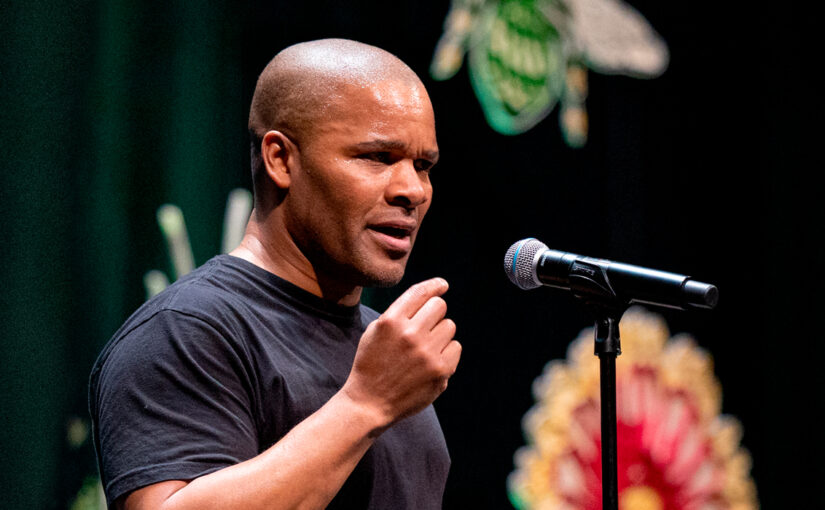
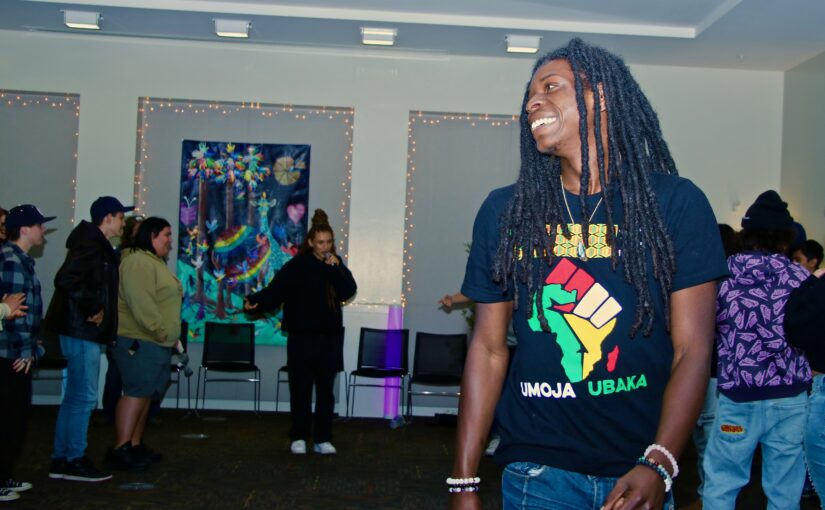
A group of thoughtful, young leaders from RJOY recently conducted a restorative justice circle in the youth program at the Bioneers Conference. Khantane Jackson, a 23-year-old RJOY intern, was among them. As a young boy, Khantane was ridiculed for his speech impediment so he turned to writing as his preferred form of expression and to develop self-awareness. But his writings were, for the most part, kept private. Charged by an argument he had with his mother, he used the energy of that conflict to write a poem and in the safe, brave space of the Bioneers Open Mic, Khantane performed his first spoken word piece in public.   

I say they get mad when I express myself. They need help.

Mentally, Physically, Spiritually, Holistically.

That’s wrap-around support. Yeah that’s what I do.

In this work…it’s Heart work, so it’s hard work…I just speak my truth.

And they like how I move. Calming, healing, intentional. Aligned with the mission.

If alignment is not the assignment then something’s missing.

You see ever since I was a young, young, young, young kid I knew I was different.

 Or maybe I was tripping. It’s just no one around me could see my vision.

But I love my people. I mean more and more everywhere I go I see Black Joy on so many faces.

That’s hope.

The hope I’m glad I had as a kid because otherwise I’ll probably be addicted to that dope.

But I thank God because now I’m not alone on this lonely road.

From the streets of Oakland to RJOY. We are JOY.

I hope these words feed your soul. I want to thank each and every one of you.

May you stay blessed and highly favored.

And let us say Ase Ase Ase. We pray we pray we pray.

Not just for better days. Not just to elevate. Not just to find a way but for love and strength to enjoy all of the beautiful moments we have each and every day.

Because before you know it…they will all fade away.

After his performance, Brittiny Moore, Bioneers Young Leaders Fellow, conducted this interview with Jackson.

BRITTINY MOORE : We just got out of the Open Mic, and I had the pleasure of listening to your performance, which was absolutely amazing. You noted at the beginning that it was your first open mic. What inspired you to get up and share your poem?

KHANTANE JACKSON: Shout out to Gold Beams in Oakland. They have an open mic for Black creatives. Everyone always is like, hey, are you signed up? I’m like, “Do I look like I’m an artist? How do you know I write?” I’ve always been a writer. But It’s been hard for me to read my words aloud because of my speech impediment and people making fun of my voice and the way I talk. What really inspires me is my community. They kept pushing me to get up there. Everybody was telling me, “The only way to get up there is to face your fears.” Before I got on stage, my heart was really beating fast. I was like, I don’t know how I’m going to do this. But when I got on stage, feeling the energy from the people in the room really welcomed me in; so, I felt more comfortable. That’s why I wasn’t as nervous as I thought I was going to be when I actually got on stage.

BRITTINY: I’m glad that you were able to be in a warm and welcoming space to share your art. As a writer, where do you find inspiration?

KHANTANE: I find inspiration from my life experiences, my imagination. I always go very deep in my dreams. I’m a Pisces and so my imagination is very big. I get inspiration not just from my own imagination, but from the imagination of other people. I read many different books. So, I feel the inspiration and imagination from other people. I also just wanted to speak my truth and express myself. That gives me inspiration.

BRITTINY: I imagine that being able to have this medium to speak your truth and to amplify your voice has to be somewhat healing for you.

KHANTANE: It’s definitely healing. A lot of times, I write not for other people, but just for myself, and so it really has been a healing thing for me to write every day. I don’t have to say the words. When I write the words, they come out how they should come out. Sometimes when I talk out loud, the words don’t come out the way I want them to. I can’t articulate it how I want. But when I write, I can.

BRITTINY: You said this is your first Bioneers conference. It’s also my very first Bioneers conference. So we’re in that together. How has your first experience been?

KHANTANE: I would say the experience at the Bioneers Conference opened my heart to different people from different walks of life. To be honest with you, I’m not really surrounded by too many white people on a daily basis. Coming to this conference, I was told that it was going to be a lot of Indigenous cultures and learning about indigenous ways of life, and so I wasn’t really expecting to be in a population of so many white people. It made me more receptive to seeing the reflection of everyone and not just focusing on color. Some people expressed that they felt uncomfortable around so many white people, because growing up in our neighborhoods, the fear and hatred is so generationally ingrained in us. But I like to see the light in everything, so me coming to this conference, I smile at everyone, and I love the energy that everyone has.

I attended a ritual yesterday called Tending to Our Grief with Breath and Ritual with Ladybird Morgan and that was really powerful. It felt really good to release the grief I was holding. I cried a lot, but they were good tears, and just being able to talk to my friend who passed away, and to put a song into the water. I really do love water, so that really touched me as well.

Participating in the Youth Speaks spoken word workshop, Myra Estrada inspired me to do Open Mic today. Talking about activism, just knowing that people at Bioneers are here to make a change. They’re actively in a community. I feel blessed and honored to be at Bioneers.

BRITTINY: Well we are blessed and honored to have you here with us. Is there maybe one particular thing that you think has been most impactful that you can take with you after this conference and apply to your everyday life?

KHANTANE: I would have to go back to the grief circle that I was in, because Ladybird really taught me a different way to move through my grief. And I have to shout out to someone I met there who also told me different ways I can move through my grief. She was telling me that my friend who passed away is always here with me. The last time I saw him was on my birthday and he passed away two days later, so my recent birthday was very hard for me. She told me that he’s still here, that you can talk to him, you can do things that you did together. Make a plate of his favorite food and talk to him. He wouldn’t want you to be sad. That’s  going to stick with me because I’m always pouring into people, and I don’t have too many people pouring into me, so to hear those words really touched me.

And I have to say that I was talking to Jada Imani, the facilitator for the youth Open Mic and the orientation, and she was telling me because there’s not too many people of color, our presence is needed here. And so I definitely feel like I have to show up in these spaces where we’re not that seen. It’s important for us to come and have a voice.

So I did a poem at the Open Mic. I was arguing with my mom and it inspired a poem, and I just want to say that I love my mom to death. I talk about my mom so much, but we like to run away from the trauma in the house and bring it outside. But my intentions in this lifetime is to be a healer and to break generational curses. So, having an argument with my mom and turning it into something as powerful as that poem I did, I feel like it was a testament to show that even through the dark times, we can always find a light. Even if we may have some broken relationships with our friends and family, there’s always hope because they have to do their own inner work. So just realizing that and giving them grace is very important.

Performance by Jason Nious of Molodi

This performance took place at the 2023 Bioneers Conference.

Jason Nious, a performing artist and creative director whose background with high school step teams and NCAA gymnastics launched his career, has traveled extensively with Cirque du Soleil, Usher, Stomp, Step Afrika, and numerous theatre and film productions. As founder and Director of the Las Vegas, NV-based, award-winning body percussion ensemble, Molodi, Jason designs new touring productions and facilitates Molodi’s arts education program, reaching over 20,000 students per year. He also serves as an arts integration consultant with Focus 5, Cirque du Soleil, Cleveland Playhouse, and The Smith Center; and is an Artist-In-Residence with the Museum of Dance, Education Chair of the LAB LV Theatre Company, and regularly conducts in-school residencies through the Nevada Arts Council.

EXPLORE MORE

Jason Nious and Antwan Davis of Molodi Perform at Bioneers 2022

Jason Nious, a performing artist and creative director, and Antwan Davis, a multi-percussionist specializing in body-percussion, improv actor and stand-up comedian, perform at Bioneers 2022.

Join the Urgent Call to Climate Action

We’re in the midst of a civilizational crisis, a moment of transformation as we attempt to wean ourselves off polluting and extractive energy and move towards an era where economies are powered by clean and efficient electricity. It’s going to be a big lift and has been a bumpy road.

Bioneers has long highlighted the work of leaders at the forefront of advocating a just transition to a more sustainable, regenerative, and equitable future. This is a community committed to building a world where human activities are in harmony with the natural systems that support us.

As we continue to face the challenges of the climate crisis, it’s more important than ever to stay informed and take action. In this newsletter, we hear from some of the world’s most informed experts on the energy transition and share a conversation between frontline activists about the importance of women’s leadership in the struggle for climate justice.


Leah Stokes | The Future is Electric

Leah Stokes, Ph.D., one of the nation’s most influential leading experts and “engaged scholars” in climate and energy policy, is the author of the award-winning book Short Circuiting Policy, which examines the role of utilities in undermining regulation and promoting climate denial. In her presentation, The Future is Electric, Leah explores the massive influx of clean energy investments that are poised to transform the American economy and the opportunities available to take advantage of new climate incentives. She challenges questions such as “What did it take to pass a historic $370 billion climate deal in Congress?” “How can American households and businesses take full advantage of it?” and “What does effective, equitable implementation look like?” to show the ideals of our electric future in this decade and beyond.

Watch Leah Stokes’s Presentation


Danny Kennedy | The Charging 20s

Danny Kennedy, with an extensive background in activism, has become one of the nation’s leading figures in clean-technology entrepreneurship and the capitalization of the transition to a “green” economy. In his keynote presentation, Danny delves into the race to the finish line of the transition away from fossil fuels and a plan to build out the full potential of clean energy — energy that is not just distributed, but decentralized in ownership and democratized in control.

Watch Danny Kennedy’s Presentation


Grassroots Women & Climate Justice | What’s Working and Why

The dominant culture that brought us colonialism, patriarchy, white supremacy and capitalism has led us to the brink of global ecological, economic and social collapse. In this conversation, women leaders who are lifting up frontline women around the world share what they see as emergent directions in movement-building, healing and transformative change. Osprey Orielle Lake, Leila Salazar Lopez, Zainab Salbi, and Amira Diamond show how it’s essential to amplify and invest in BIPOC and grassroots women climate leaders globally.

Read the Women & Climate Justice Conversation


Ilana Cohen | The Time for Fossil-Free Research is Now

Ilana Cohen is a lead organizer of the Fossil Fuel Divest Harvard campaign and the international Fossil Free Research movement, which combats the fossil fuel industry’s dangerous influence on academia. In her presentation, Ilana dives into how we need to evolve the fossil fuel divestment movement to the next level by holding universities and academia broadly accountable to fully separate from Big Oil’s influence. Ilana explains how a burgeoning international grassroots movement of students and academics, known as Fossil Free Research, is seeking to combat the industry’s pernicious influence, and how you can get involved in the fight.

Watch Illana Cohen’s Presentation


Bioneers Learning: Permaculture, Regenerative Design and Earth Repair for the Great Turning with Penny Livingston

Through engaging courses led by some of the world’s foremost movement leaders, the brand new Bioneers Learning platform equips engaged citizens and professionals like you with the knowledge, tools, resources and networks to initiate or deepen your engagement, leading to real change in your life and community.

Register now for a live course with Penny Livingston, “Permaculture, Regenerative Design and Earth Repair for the Great Turning,” to learn about the principles of permaculture, including how to work with natural systems, design for resilience, and create regenerative systems.

Register Now


Diane Wilson is Announced a 2023 Goldman Environmental Prize Winner

Congratulations to Diane Wilson as well as other winners for being named 2023 Goldman Environmental Prize Winners. Thank you for all of your hard work and your continuous efforts in fighting against industrial pollution.

Bioneers has been a fan and supporter of Diane’s incredible work for decades. Her early talks at Bioneers were legendary, telling the riveting stories of her fight against Formosa plastics and her transition from a gulf shrimper to one of the most inspiring activists we’ve seen in a long time.

Watch Diane Wilson’s 2005 Presentation from Bioneers

Congresswoman Pramila Jayapal – The Theory of Change: How We Achieve Real, Meaningful Policy Victories

Before Rep. Pramila Jayapal was elected to Congress and later became the Chair of the Congressional Progressive Caucus, she was an organizer and activist, and an enthusiastic Bioneers participant. In this personal video message to the Bioneers community, Rep. Jayapal discusses her theory of change that she developed as an organizer and has employed as a legislator. She highlights an “inside-outside” approach to building power and enacting meaningful change and policy shifts at national, state, and local levels.

This talk was delivered at the 2023 Bioneers Conference.

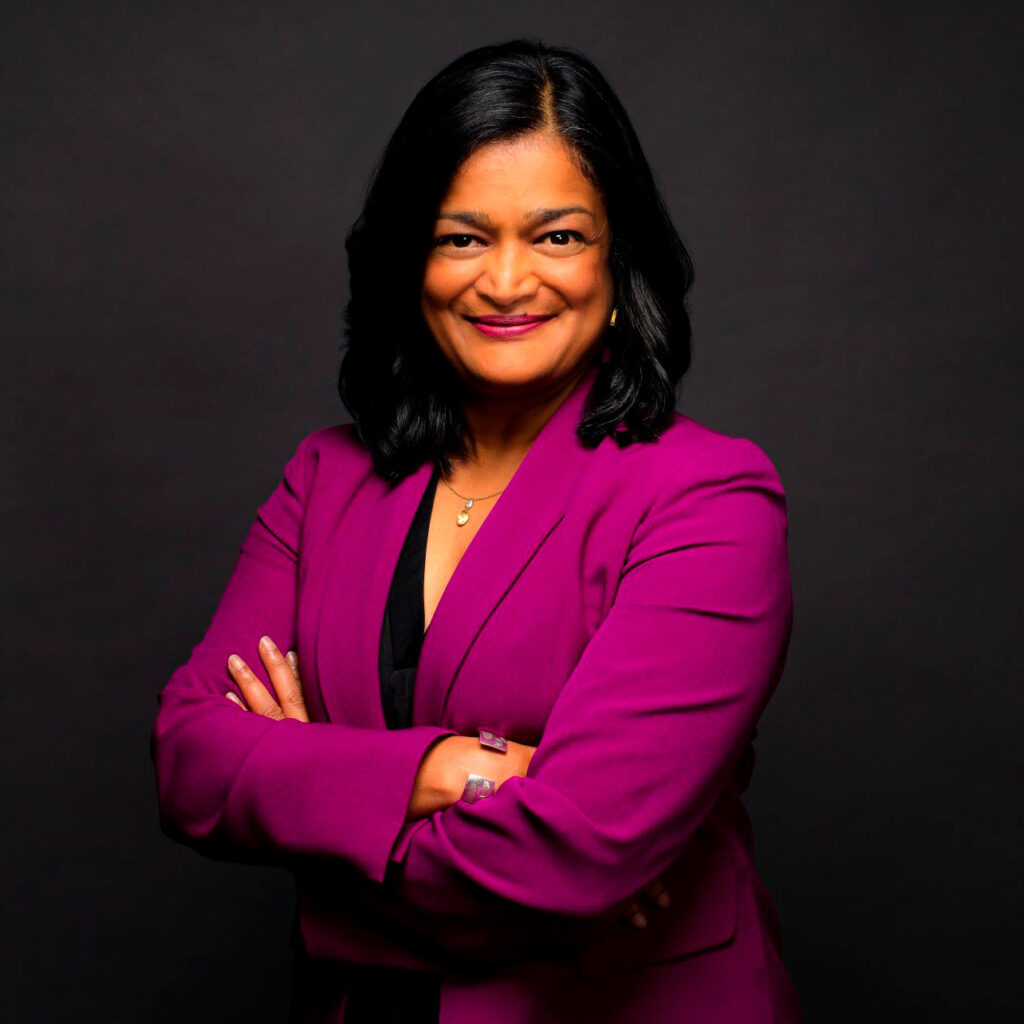
Congresswoman Pramila Jayapal, now serving her third term in Congress representing Washington’s 7th District, the first South Asian American woman elected to the House, is the Chair of the Congressional Progressive Caucus and serves on many key committees. A highly influential leader on progressive policies on: immigration, LGBTQ rights, labor issues, economic inequality, climate, clean energy, etc., Congresswoman Jayapal, prior to her election to political office, spent decades working internationally and domestically in global public health and development and as an advocate for women’s, immigrant, civil, and human rights. She is the author of two books, including, most recently: Use the Power You Have: A Brown Woman’s Guide to Politics and Political Change.

EXPLORE MORE

Transformative Solidarity for a Thriving Multiracial Democracy

In this Bioneers 2022 keynote, Angela Glover Blackwell, a renowned civil rights and public interest attorney, longtime leading racial equity advocate, and founder of the extraordinarily effective and influential national research and action institute PolicyLink, discusses transformative solidarity and why it’s necessary for a thriving multiracial democracy.

Bending Toward Justice: The Arc of Black Lives Matter

In this podcast episode, Patrisse Cullors, one of the co-founders of Black Lives Matter, tells the story of the birth of this powerful movement for racial justice, and shares her vision of a world where black people are actually free, a world that we all deserve to live in.

Intersectional Environmental Justice: Empowering Women on the Frontlines

“We are not victims. Yes, we’re being impacted. We are being impacted terribly. But we are the solution.”

While women throughout the world more heavily bear the burden of the climate crisis’s worst effects than men, their voices are still incredibly underrepresented within movements, organizations, and initiatives intended to address climate change. In the following conversation, three climate justice leaders discuss the ways in which their organizations and those they’ve worked with are successfully empowering women in frontline communities to solve enormous environmental challenges in intersectional ways.

Featuring:


Zainab Salbi

ZAINAB: We’re here to talk about the interconnection between women and climate action and climate justice. 

Women get two cents out of every dollar that goes to environmental issues and solutions. They’re being impacted, and they’re doing a lot of work, but they’re not getting resources, and they’re definitely not included in decision-making. I find it amazing that the biggest crisis confronting humanity – a climate crisis – is excluding 50% of the world’s population in solving it.

We are here to talk about solutions. Osprey, can you take us into more depth about the issue we’re facing?

Osprey Orielle Lake

OSPREY: When I first learned about the climate crisis, I was looking for an entry point for what would be the most effective use of my time. What was I going to dedicate the rest of my life to on this issue? Through a lot of research over a decade ago now, I found that the nexus between the role of gender and women leading is a key to resolving the climate crisis.

Because of unequal gender norms all over the world, women are impacted first and worst. Some of that is because they don’t have access to funds. In some countries, they’re not taught how to swim, so if there are floods, they die. They’re displaced. They’re taking care of their children and elders. The list goes on. 

And at the same time, we work with women in 50 different countries in different capacities, and all of them will tell you, “We are not victims. Yes, we’re being impacted. We are being impacted terribly. But we are the solution.” And they’re absolutely right. 

Just to give a few examples: 60-80% of household food production in developing countries is done by women. Studies show that if you don’t involve women in water collection and water practices, they don’t work because women are the ones who know what’s going on in the environment and what’s happening with water and their families. Counties with women in charge are doing far better on environmental laws. And in the height of the COVID-19 pandemic, countries led by women did far better in caring for their populations. 

I mention these examples because people sometimes like to degrade this conversation to “It just feels fair that women should be in charge.” That’s true, we’re fighting for equity, but women’s value in leadership is also a fact. We need to be in decision-making places.

I have been attending climate negotiations every year for a decade, and 74% of speaking time is occupied by men. We’re not where we need to be.

I also want to consider a larger arc for a moment to understand how we got here. We talk about the climate crisis and the environmental biodiversity crisis and the crisis of violence against women. We can weave these crises together when we understand that we do see a mirror image of the violence against the Earth and violence against women. In my opinion, we all need to start taking deep responsibility for our own education, our own research, and our own historical analysis of what this moment is. I believe if we don’t look to the past and learn from our ancestors and our histories — including the roots of patriarchy, extractive and dangerous economic structures, and colonization, even if they’re really uncomfortable — if we don’t step back and really look at where this comes from, it’s very difficult to come up with a deep enough analysis to meet the moment.

We’re in this huge moment of transformation. We’re either heading into deep peril or into deep promise. Everything we do and everything we think and how we’re thinking about it absolutely matters. 

ZAINAB: What I’m hearing from you is that it’s not enough to only act. We actually need to redefine our relationship with Earth and our leadership. It’s not only reacting to the crisis, it’s owning our voice and our leadership in acting about it. 

OSPREY: That’s exactly right. The crisis is here, and we want to move with haste. At the same time, we have to slow down and go deep. Both are happening, and it’s quite an amazing time.

ZAINAB: Leila, can you tell us more about the work you are addressing at Amazon Watch and what women are saying there?

Leila Salazar Lopez

LEILA: Our work at Amazon Watch is about protecting and defending the Amazon rainforest and our climate in solidarity with Indigenous Peoples. I don’t live in the Amazon. I live in the Mission District of San Francisco, and we have lots of our own battles in our local community. But my work is about standing in solidarity with Indigenous Peoples, forest peoples, our NGO allies, and our partners across the Amazon and around the world.

When I first started working in the Amazon in 1995, one of the things I first noticed was that all of the leaders were men. I was working on campaigns, and there were always very few women, if any, in the room. Any time I would go to a meeting, I would literally say, “Where are the women?” We have to ask that question with a lot of respect. The dynamics between men and women in some of the communities are very different than in our cultures and our communities. 

We weren’t the only ones asking those questions. In 2013, the first Indigenous women’s march took place in Ecuador. The men had negotiated with the government to allow oil companies onto their land. Women from all of the different Indigenous nationalities of Ecuador came together, held a press conference, and said, “We are Mujeres Amazónicas. We are Amazonian women, and we are organizing in defense of the Amazon and Mother Earth against extraction.” 

And that began their march from the rainforest all the way to Quito: days of walks with their babies on their backs. It began their challenging of their brothers who were in leadership. They were saying, “We don’t agree with you; you do not speak for us. You cannot negotiate our rivers and our rainforests and the water that we need to survive and to live.”

That began a movement of Amazonian women that is now very well known in climate justice work. It’s inspired many other women across the Amazon. Where the men used to fight each other, the women from the nationalities have come together, and they’re united in this collective. They’re inspiring their young people, their young women, and they’re connecting with other women across the Amazon.

ZAINAB: It just really speaks to the power of storytelling. Women are not well-known in the space of climate discussion. But they are getting the job done, and these stories keep us going. We need to tell these stories to each other, to our daughters, and our granddaughters.

Amira, tell us about what were you doing in Indonesia recently. I think you have some inspiration to share with us.

Amira Diamond

AMIRA: I am just back from eight months in Indonesia. I was there with my husband and my two sons, and we had the opportunity to visit a lot of Women’s Earth Alliance projects around Bali. Women’s Earth Alliance started our programs there in 2019, and our organization was founded in 2006 to address the issues that frontlines women leaders are facing. It was a moment when there really was not a lot of widespread recognition that women’s voices were needed at decision-making tables.

When I think about our challenges, I think of my colleague, Sumarni Laman from Kalimantan, who is with Ranu Welum and the Heartland Project. She would tell you that fires have been burning in her community since she was a small child and that the destruction caused by palm oil is ravaging her community. My colleague Lil Milagro in the East Bay who runs Mycelium Youth Network would say the youth are demoralized and don’t know what to do in the face of climate change; we need to activate programs and stories to make sure they know there’s a future they can be part of building. My colleague Morning Star Gali, who is with the Pit River Tribe and runs an Indigenous Justice, would tell you that missing and murdered women is an epidemic around the world, and in particular in Northern California, and that it needs to be addressed; our sisters are going missing, and there’s very little attention on that fact.

These are the voices that are arising throughout our work. The beautiful thing is that the women I am naming now, and there are literally thousands more, are actually raising their hands to do something about it. 

I think one of the things that we can all possibly agree on is that we’re experiencing a bit of a leadership crisis right now in our world. When I talked with Sumarni, she shared with me how she had just gotten back from doing a rescue mission in the floods. And she doesn’t know how to swim. But people weren’t raising their hands, so she put on her life vest, and she got on boats, and she traveled hours and hours through the jungle to find families that hadn’t had food or water for days. 

Her mission is to mobilize 10,000 forest guardians, and she’s doing it. In the face of these incredible difficulties, there is so much power and strength rising right now. 

ZAINAB: I have a question for everyone because you all touched on, directly or indirectly, the intersectional aspect of movements related to women, climate, colonization, the patriarchy, etc. I am not from the climate movement. I’m in the women’s rights movement. But for a while, I was very sick, and I ended up spending a lot of time in nature. I came out of that personal experience saying I am going to do everything possible in the rest of my life to help Mother Earth because I owe it to Mother Nature. So it’s very personal.

But I’m learning in the climate movement. And in the process of learning and in my travels, I have come to discover that there is a huge gap between the discussion and the narration of climate issues in America or in Europe and the rest of the world – in the language we’re using and in the attitude we’re going about it with.

What I’m seeing is a Western-centric narrative of how we should engage in the discussion. I’m curious to learn about your experiences of how women at the grassroots level are changing that narrative.

OSPREY: I think it’s important to realize that there are many realities. As we’re talking about intersectionality, the idea is sort of that you can’t just pull on one thing without pulling on something else because they’re really tied together. But there is no question that there is a huge inequity happening right now, which is why it’s called the climate justice movement, because it’s not impacting everyone the same.

We’ve been working for about eight years now with a wonderful woman in the DR Congo, who is a force of nature herself. She’s incredible. She is disabled. She has been walking with support for most of her life. 

Some of you may know that the DR Congo is one of the most violent countries in the world for women. It has one of the of the highest rates of rape. It’s extremely patriarchal, and additionally, it’s a war zone. Getting anything done there is miraculous. 

At the same time, they’re facing terrific droughts and starvation because of the climate crisis. 

So the project that we started with her needed to be really intersectional. We were given funds for them to reforest areas that have been completely damaged through different techniques of agricultural business that are industrialized. We’re talking clearcut to the point of—it’s not sand, but it’s as close as you can get to sand. And the region we’re working in is a rainforest. The complexity was that the Indigenous populations there are now engaged in chopping down trees and the old-growth forests because of the desperate situation of war, and also safety. They have to feed their families and build their homes. 

Over the course of about eight years, we’ve been reforesting areas. Some fast-growing trees were purposely grown so that the communities can now start using their firewood and growing their own medicines and their own food. So 25% of the trees are for human use, and 75% of the trees are intended to bring back the natural forest and more local species and native species. It’s this very complex reforestation project. 

Then we started growing food because food security is a major issue. Iit’s been really amazing. We’re actually reforesting this incredibly damaged land and now protecting 1.6 million acres of old-growth forest. That’s helping the climate, helping the communities, and it’s also positive because these women are now more valued because they’re bringing in food. They are becoming leaders in a very patriarchal society. 

LEILA: We call it “climate change” or “climate crises,” but people on the frontlines may not call it that, especially people in very remote communities. But when there are floods, for example, in Sarayaku, that haven’t happened in 100 years … like even the grandparents didn’t remember floods like this. Then the younger people will come in and say, “This is climate change,” and they’ll talk to their elders and say, “Has this ever happened before? Has the river ever been this high? Did it used to rain like this?”

When you break it down like that, then people are like, “Oh yeah, that’s climate change.”

Lots of people say to me, “That’s why we want to speak for ourselves. We want to speak for ourselves about what’s happening in our own communities, and we want to address it ourselves.” We need to be directly supporting Indigenous Peoples on the frontlines.

AMIRA: You know, there’s a nasty legacy of development where, in so many cases, well-intentioned or potentially not well-intentioned organizations have come into communities and delivered solutions from a charity perspective, from a top-down perspective. And as Osprey was saying, our colleagues are saying every day, “We’re not victims; we are here as agents. We know how to lead our communities forward. We know what the solutions are.” 

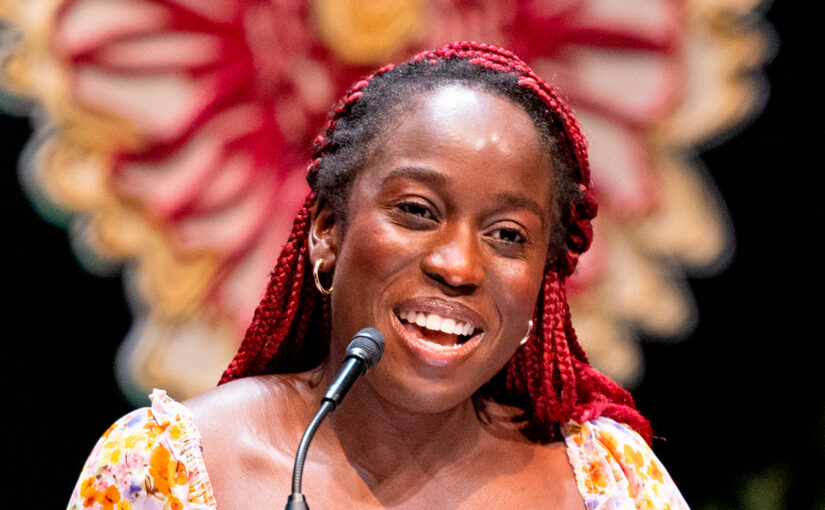
The Women’s Earth Alliance model is based on being responsive. It’s about listening to communities and what the community sees as an important solution. Sometimes the first thing isn’t to talk about climate change, as is the case in Nigeria where my colleague Olanike Olugboji
Olanike launched a really robust clean cookstoves initiative, and clean cookstoves are a clean energy intervention that have a ripple effect of benefits. So women are no longer making a long walk to cut down fuel, to cut down forests. Deforestation is minimized. The danger that women face when they make a long walk and often encounter sexual violence is diminished. The time that comes back to them because they’re no longer making that long walk allows them to engage in other potentially income-generating opportunities or in going to school. And then the health benefit is really the first thing that turns women on to wanting to take this step, because they’re tired of coughing. They’re tired of their babies on their backs having asthma and smoke inhalation-related diseases.

The critical thing is that there’s a trusted community leader who’s actually saying, “Hey, this is an intervention that works.” It’s not someone from the global North walking in and handing someone something.

Our model also integrates economic sustainable livelihoods work. In all of the programs we run, women are either learning how to sell some kind of sustainable technology or they’re learning about how to fundraise for their community-based organization.

I think that it’s really important, as someone from the global North, that I’m not coming in with my language and trying to tell my colleagues what to think or what to say. Instead, I should listen, really long and really hard, about what someone’s experience is and find ways to connect. As part of our accelerator program, women leaders fill out a strategic framework where they get to look at their impacts as they relate to the sustainable development goals.

What we find is that women feel empowered by that information because they’re choosing to think about who they are as it relates to achieving these global goals. So rather than importing these goals that have been created not necessarily with their voices at the table, it’s an opportunity and a launchpad for leaders to really see how powerful they are and how connected they are to all of the solutions that, frankly, people at decision-making tables are looking for. 

I believe that it’s time to let the innovating rise from the ground, and really listen, because clearly those who are in power haven’t been able to figure out a solution that’s working well for all. It’s really time for listening.

john a. powell – Belonging without Othering: The Story of our Future

Western culture has for the last several centuries built a society founded on three strong separations: our separation from ourselves, our separation from the other (or the person we call the other), and our separation from the Earth. But, according to john powell, one of our nation’s longtime leading experts on civil rights, structural racism, poverty, and democracy, Director of the groundbreaking Othering & Belonging Institute at UC Berkeley, the reality is that we’re not separate. We’re deeply connected to each other. Our challenge is that in order to emerge from the existential crises we face and to birth a far more humane civilization, we now need to look deeply at ourselves and our social structures to overcome the separations that have been inculcated into us for so long and rediscover our fundamental connection to each other and the entire web of life. 

This talk was delivered at the 2023 Bioneers Conference.

john a. powell, Director of the Othering and Belonging Institute and Professor of Law, African American, and Ethnic Studies at UC Berkeley, was previously Executive Director at the Kirwan Institute for the Study of Race and Ethnicity at Ohio State, and prior to that, the founder and Director of the Institute for Race and Poverty at the University of Minnesota. He also formerly served as the National Legal Director of the ACLU, co-founded the Poverty & Race Research Action Council, and serves on the boards of several national and international organizations. Well-known for his work developing the frameworks of “targeted universalism” and “othering and belonging,” john has taught at numerous law schools including Harvard and Columbia University. His latest book is Racing to Justice: Transforming our Concepts of Self and Other to Build an Inclusive Society.

EXPLORE MORE

Creating a World Where Everyone Belongs: From a Change of Heart to System Change

In this podcast episode, we dip into a deep conversation on this topic between Angela Glover Blackwell and john a. powell, two long-time friends and leaders in a quest toward building a multicultural democracy.

Healing Across Divides: Building Bridges to Challenge Systemic Injustice

In this Bioneers 2020 keynote, john a. powell challenges us to think beyond individualized practices of bridging across differences, which ignore the structural injustices we live in.

Kenny Ausubel – May The Farce Be With You

“As we confront the sorrows of our time, there’s authentic hope in nature’s solutions, and in each other. It’s times like these when the nobility of the human soul swells to meet the moment.” 

Bioneers’ founder takes us on one of his renowned, tour de force surveys of the current zeitgeist, this time masterfully tracking the diabolical machinations of the fossil fuel industry and oligarchs seeking to derail global economic decarbonization, but offering us genuine pathways to building a green and just world together, if we put our shoulders to the wheel.

This talk was delivered at the 2023 Bioneers Conference. Read a written version of this talk here.

Kenny Ausubel, CEO and founder (in 1990) of Bioneers, is an award-winning social entrepreneur, journalist, author and filmmaker. Co-founder and first CEO of the organic seed company, Seeds of Change, his film (and companion book) Hoxsey: When Healing Becomes a Crime helped influence national alternative medicine policy. He has edited several books and written four, including, most recently, Dreaming the Future: Reimagining Civilization in the Age of Nature.

EXPLORE MORE

Manuel Pastor – Solidarity Economics: Mutuality, Movements and Momentum

In this Bioneers 2021 keynote, Manuel Pastor, one of the nation’s most influential progressive thought leaders, activists and scholars, proposes that drawing on our instincts for connection and community can actually help create a more robust, sustainable, and equitable economy.

Democracy v. Plutocracy: Behind Every Great Fortune Lies a Great Crime

In this podcast episode featuring Thom Hartmann, Stacy Mitchell, and Maurice BP-Weeks, we travel back and forth in time to explore the battle between democracy and plutocracy that goes back to the very founding of the United States. In today’s new Gilded Age of rule by the wealthy, rising anti-trust movements are challenging the stranglehold of corporate monopoly.

Rebecca Solnit – Not Too Late: Changing the Climate Story from Despair to Possibility

How do we imagine what’s possible, what matters? Who we are shapes what we do, and what we do in the present shapes the future. In addition to the many practical, scientific and material aspects, the climate crisis has cultural aspects with which we need to engage in order to meet this emergency. Drawing from the new anthology she co-edited, Not Too Late: Changing the Climate Story from Despair to Possibility, Rebecca Solnit talks about the stories emerging from what science, Indigenous leadership, good organizing, and visionary thinkers are giving us. These stories offer the grounds for hope and the work hope does. What are the ways that what the climate requires of us could mean ushering in an age of abundance rather than austerity? 

This talk was delivered at the 2023 Bioneers Conference.

Rebecca Solnit, one of our nation’s most influential writers, thinkers, historians and activists, is the author of 20+ books, including: Orwell’s RosesRecollections of My NonexistenceHope in the Dark; Men Explain Things to MeA Paradise Built in Hell: The Extraordinary Communities that Arise in Disaster; and A Field Guide to Getting Lost. She is also co-editor of Not Too Late: Changing the Climate Story from Despair to Possibility (coming April 2023) and writes regularly for the Guardian, serves on the board of the climate group Oil Change International, and just launched the climate project Not Too Late.

Learn more about Rebecca Solnit and her work at rebeccasolnit.net.

EXPLORE MORE

Kim Stanley Robinson – What I’ve Learned since The Ministry for the Future Came Out in 2020

Kim Stanley Robinson’s visionary 2020 novel, Ministry for the Future, projects how a possible climate-disrupted future might unfold and how the world might respond meaningfully. It’s also chock full of brilliant science and wildly imaginative ways humanity steps up. In this Bioneers 2023 keynote, Stan offers his overview of where we currently stand in relation to the climate crisis.

The Green New Deal: Launching the Great Transformation with Demond Drummer and Tom Hayden

As climate chaos and obscene inequality ravage people and planet, a new generation of visionaries is emerging to demand a bold solution: a Green New Deal. Is it a remedy that can actually meet the magnitude and urgency of this turning point in the human enterprise? This podcast features lifelong activist and politician Tom Hayden, and Demond Drummer of Policy Link.

Performance by Rising Appalachia

This performance took place at the 2023 Bioneers Conference.

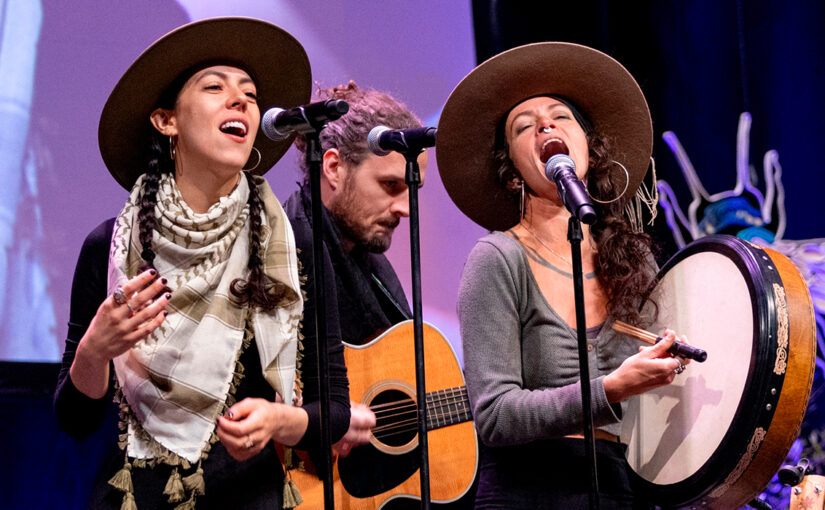
Rising Appalachia, an internationally touring Appalachian and world folk ensemble founded by Atlanta-raised, New Orleans-based sisters Leah and Chloe Smith whose soulful folk-roots sound traces back to their open-minded musician parents and to grassroots music communities in the hills and valleys of the Deep South as well as urban Atlanta, has consistently used its platform to activate, organize and support frontline justice work and community organizations. Fifteen years into an adventure that has taken this self-made, stubbornly independent band around the globe, they have recently released a new master-work, their seventh album, Leylines, recorded in California in a studio overlooking the Pacific Ocean.

EXPLORE MORE

“Stand Like an Oak” by Rising Appalachia

A luminous example of socially engaged and visionary artistry, Rising Appalachia perform their song “Stand Like an Oak.”

Art That Responds to the Times: Wisdom from Rising Appalachia

Chloe Smith of Rising Appalachia discusses making art that brings people together and responds to the times we’re in with Bioneers Arts Coordinator, Polina Smith.

Yuria Celidwen – The “Ethics of Belonging” of Indigenous Traditions

“In community we pause, we open, we nourish, and we become.”  

Yuria Celidwen is of Nahua and Maya descent from the highlands of Chiapas, Mexico, born into a family lineage of mystics, healers, and poets. Her scholarship centers on Indigenous forms of contemplation and has developed into a broader statement she calls the “ethics of belonging.” It has become evident that when we pay attention to the world around us, all we hear is urgency. It is time for community reflection. Yuria shares two core guiding principles from her scholarship, Kin Relationality and Ecological Belonging. She explains how these concepts can help us access an ever-expansive unfolding of a path of meaning and participation rooted in honoring Life.

This talk was delivered at the 2023 Bioneers Conference.

Yuria Celidwen, Ph.D., of Indigenous Nahua and Maya descent, born into a family of mystics, healers and poets from Chiapas, Mexico, conducts research at U.C. Berkeley’s Department of Psychology at the the intersection of Indigenous studies, cultural psychology, and contemplative science; is a Senior Fellow at the Other & Belonging Institute; co-chairs the Indigenous Religious Traditions Unit of the American Academy of Religion, and is part of the steering committee of its Contemplative Studies Unit. She also works with the United Nations on the advancement of Indigenous peoples’ rights and the rights of the Earth and is a teacher of Indigenous epistemologies, spirituality and contemplative practices.

Learn more about Yuria Celidwen and her work at yuriacelidwen.com.

EXPLORE MORE

Inalienable: Belonging to the Earth Community | Joanna Macy

Deep Ecology extends an inalienable right to life to all beings. In this podcast episode, systems theorist, author and lifelong activist Joanna Macy describes how healing the world and healing your heart and soul go hand in hand.

Indigeneity Conversations

This podcast series, a project of Bioneers Indigeneity Program, features deep and engaging conversations with Native culture bearers, scholars, movement leaders, and non-Native allies on the most important issues and solutions in Indian Country. It explores compelling issues such as Indigenous Land Return, Cultural Appropriation, Rights of Nature and other essential conversations that exemplify the essential leadership role that Indigenous cultures are playing in the effort to reshape and transform society’s relationship with the natural world while highlighting the contemporary lives, work and experiences of Native Americans.

Amara Ifeji – Storytelling for Social Change

Amara Ifeji mobilized a grassroots effort to address racism in her high school in Maine, at age 14. She also developed a love for the mountains and woods around her, but she saw her passions for the environment and racial justice as distinct until she heard youth of color like herself share their experiences working at this intersection and realized these struggles were completely intertwined. She shares how this awakening shaped her subsequent work as a remarkably effective organizer and advocate who centers storytelling to realize environmental justice, climate education, and outdoor learning for ALL youth. 

This talk was delivered at the 2023 Bioneers Conference.

Amara Ifeji, 21, an award-winning (2021 National Geographic Young Explorer and 2022 Brower Youth Award) climate justice activist, Director of Policy at the Maine Environmental Education Association, has had great success in mobilizing youth-led, grassroots movements to advance climate education legislation and ensure equitable access to outdoor learning for ALL youth in Maine.

EXPLORE MORE

Alexia Leclercq – Climate Justice Must Be Social Justice for All

For the Climate Justice Movement to arrive at results that are truly “just,” it must be radically inclusive, which means that its struggles must of course intersect with those of social, racial and gender justice movements, but it also means that other historically disenfranchised groups can’t be excluded. In this Bioneers 2021 keynote, Brower Youth Award winner Alexia Leclercq, an environmental justice organizer based in Austin TX and NYC, shares her passion about these rarely discussed aspects of intersectionality.

Alexandria Villaseñor – Working Together: Building Coalitions of Power in the Global Youth Climate Movement

In this Bioneers 2022 keynote, international youth organizer Alexandria Villaseñor shares the unique ways in which a multicultural, geographically distributed youth movement is building trust, negotiating compromises, distributing decision-making and centering the stories, experiences and leadership of those most impacted in each action and campaign.