Biomimicry 101: 5 Names You Should Know

Biomimicry 101

New to Biomimicry? Don’t worry, we’ll help you cover the basics with the help of these five brilliant Bioneers.

Janine Benyus

Headshot of the Biomimicry Institute's Janine Benyus at the Bioneers 2013

Blessing the Bioneers Conference not once, but THREE times – the acclaimed biologist, innovation consultant and author Janine Benyus illuminates how the biomimicry community can collaborate with nature on a hot list of challenges that just can’t wait. Engage with her over What Life Knows, Emulating Life’s Genius and Grace, and the Biomimicry Network Effect: diving deeper into the endlessly beautiful world seen through her eyes. For more information, check out her Biomimicry Institute.

“Take heart, we’re surrounded by genius.”


Dayna Baumeister

The Biomimicry Institute's Dayna Baumeister speaking at the 2011 Bioneers Conference

Envision what our world would and could look like if we actually started reading and following the directions contained in “Life’s Operating Manual.” Co-founder of the Biomimicry Guild and Biomimicry Institute, Dayna Baumeister provides an eagle’s-eye view of biomimicry breakthroughs using ecological design and nature-inspired technologies that emulate nature’s profound design sophistication. She has worked in the field of biomimicry with Janine Benyus since 1998 and designed and teaches the world’s first Biomimicry Professional Certification Program.

“We can create conditions conducive to life. When we do that, we’ve figured out the magic key.”


Greg Watson

Biomimicry Enthusiast Greg Watson speaking at the 2015 Bioneers Conference

Growing up in Cleveland, Watson would notice black ash from the smoldering river raining down on him as he waited for the bus. Industry and government’s failure to address the pollution crisis followed him into his adult life when he learned about Buckminster Fuller’s idea of using nature’s design strategies to leverage energy and create significant positive effects. In state government and the private sector, Watson’s leadership has since manifested in urban planning, wind energy development, and launching community gardens and farmers markets. Watch him speak on the Twelve Degrees of Freedom at the 2008 Bioneers Conference.

“Pollution in most cases are valuable resources in the wrong place. Symbiotic relationships are there to be made in almost all the systems we create.”


Jay Harman

Biomimicry Enthusiast Jay Harman at the 2013 Bioneers Conference

Gracing our Conference stage TWICE, President-CEO of PAX Scientific, Jay Harman reveals in The Nature of Innovation how scientists and designers are taking cues from nature to find breakthrough solutions. Take sunscreen modeled on hippo sweat. How might we borrow the recipe? It’s time for a fresh look at technology and design, with nature as our mentor. See his previous keynote on Designing the Future here.

“Nature has already solved every problem facing humanity.”


Jason McLennan

Jason McLennan at Bioneers 2013 speaking on the Living Building Challenge.

The visionary founder of the Living Building Challenge illuminates the game-changing impacts of the world’s most advanced and provocative green building certification program. He chronicles its core principles, its global influence on designers, builders, communities and educational systems, and its manifest progress transforming the interface between human habitats and the natural world into a virtuous cycle.

“Instead of designing whatever we want and then having impacts downstream and upstream, we need to understand the notion of limits and work within what we have.”

Ready to move onto Biomimicry 201? Be sure to check out our Ecological Design Playlist and the Global Biomimicry Design Challenge (which will have its first ever awards ceremony at Bioneers 2016!).

Bioneers to host the first Biomimicry Global Design Challenge “Ray of Hope” Prize awards event

The 2016 National Bioneers Conference will host the first-ever awards ceremony for the world’s premiere biomimicry design prize, the $100,000 Ray C. Anderson Foundation “Ray of Hope” Prize. The prize will be awarded to one of seven finalist teams in the Biomimicry Global Design Challenge, a worldwide design competition that crowdsources nature-inspired solutions to climate change issues, like food systems, water management, and alternative energy.

“Ray Anderson believed wholeheartedly in nature as a model and a mentor, so it is incredibly fitting that this prize, which is intended to accelerate marketable solutions, be given in his honor,” said John A. Lanier, executive director of the Ray C. Anderson Foundation.

The National Bioneers Conference, to be held this year from October 21-23, 2016, is a yearly gathering of dynamic changemakers dedicated to solving our world’s most pressing environmental and social challenges. This year, in addition to the Ray of Hope Prize award event, the conference will feature biomimicry pioneer and visionary Janine Benyus as a keynote speaker. There will also be biomimicry workshops and panels throughout the 3-day conference that will explore how nature-inspired design approaches can profoundly shift how we restore and rebuild our world.

“With climate disruption upon us, and a swelling population, transforming our food and water systems is paramount,” said Kenny Ausubel, co-founder and CEO of Bioneers. “But success will require more than just technical solutions. It necessitates a shift in our worldview, and a change of heart. We are so deeply honored to host this landmark event, and to continue our long partnership to make biomimicry the default position for design, industry, economy, and culture by 2020.”

“Bioneers is one of the only conferences where an 18-year-old activist will be sitting next to a 67-year-old one, both wanting exactly the same thing,” said Biomimicry Institute Executive Director Beth Rattner. “Attendees completely resonate with biomimicry, and their cheers will give the Design Challenge teams the encouragement they need to take their inventions to the next level.”

For the 2015-16 cycle, the Biomimicry Institute’s Biomimicry Global Design Challenge asked participants to tackle any aspect of the food system that could be improved by looking to nature for design guidance. Submissions cover a wide range of related issues, like waste, packaging, agricultural pest management, food distribution, energy use, and other solutions.

The finalist teams vying for the Ray of Hope Prize were chosen to enter the Biomimicry Global Design Challenge Accelerator program in October 2015. They are spending this year testing and prototyping their design concepts with the help of biomimicry experts and business mentors in order to create viable, market-ready solutions. The winner must have not only a functioning prototype, but a tested business model and in-the-field proof points. A full list of the finalists’ submissions can be found here.

A new round of the Biomimicry Global Design Challenge is currently open, which is another opportunity for teams to join and compete for the $100,000 “Ray of Hope” Prize. Individuals and teams can learn more about the Challenge at challenge.biomimicry.org.

About Bioneers
Bioneers is an innovative nonprofit educational organization that highlights breakthrough solutions for restoring people and planet. Founded in 1990 in Santa Fe, New Mexico by social entrepreneurs Kenny Ausubel and Nina Simons, Bioneers has acted as a fertile hub of social and scientific innovators with practical and visionary solutions for the world’s most pressing environmental and social challenges.

About the Biomimicry Institute
The Biomimicry Institute is a 501(c)(3) not-for-profit organization that empowers people to seek nature-inspired solutions for a healthy planet.
http://www.biomimicry.org

About the Ray C. Anderson Foundation
The Ray C. Anderson Foundation is a 501(c)(3) not-for-profit organization that seeks to promote a sustainable society by supporting and funding educational and project-based initiatives that advance knowledge and innovation in sustainability.
http://www.raycandersonfoundation.org/rayofhopeprize

World Water Day: 5 Visionaries You Should Know

Water is life. With communities worldwide facing drought, pollution, and more, these five visionaries outline what we can do to protect, restore, and cherish one of nature’s most precious gifts.

Maude Barlow

Maude Barlow speaking at the Bioneers Conference in 2003.

The world is running out of fresh water, and there is no environmental crisis as great as the commodification of the world’s water supply by giant corporations. Maude Barlow, national chairperson of The Council of Canadians, and author of Blue Gold, describes the movement to guarantee a water-secure future based on conservation, equity and the public good:

“Water is the sacred life blood of the earth, no one has the right to take it for profit. Until we collectively understand that, expect more resistance, expect violence, expect the resistance to get stronger, expect it to get global, expect the rise of a powerful civil society movement to challenge the lords of water. No one gave them the world’s water: people and nature will take it back.”


Kandi Mossett

Kandi Mossett

In the Bakken Formation of North Dakota the oil industry’s frantic extraction has violently exploited nature and people – especially on the Ft. Berthold Indian Reservation in what has become a drilling/fracking sacrifice zone. For Mossett (Mandan-Hidatsa-Arikara) of the Indigenous Environmental Network, this violence has come at a personal cost. Several acquaintances, as well as her dear friend Cassi, lost their lives to reckless transport truck drivers, poisoned water, soil and air, and rampant drug abuse and crime. There’s little or no accountability, leaving many residents no other option than to relocate. “So…do I stop breathing? What am I supposed to do?” Mosset is fighting back, from the local to the United Nations, garnering social, political and legal momentum, and winning victories for hers and future generations:

“We come to fight back, to gather, to take back the power in our communities – because no one else is going to do it for us.”


Henk Ovink

Henk Ovink speaking at the Bioneers 2015 Conference.
Photo Credit: Nikki Richter

One of the world’s leading experts on sustainable, resilient coastal infrastructure, Henk Ovink served as a Senior Advisor to the Hurricane Sandy Rebuilding Task Force and is a leading figure in the Dutch Ministry of Infrastructure and the Environment. He shares his vision of how we must change our entire culture to put water back into the center of our hearts and minds if we are to cope effectively with climate change, water crises, biodiversity loss, ecosystem collapse, extreme weather events, and myriad environmental/economic/sociopolitical crises:

“Infrastructure can make a better community and environment, only if you are willing and able to do it right.”


Wallace J. Nichols

Wallace J. Nichols speaking at Bioneers 2014

The cognitive and emotional benefits of healthy oceans and waterways have been celebrated through art, song, romance and poetry throughout human history. Marine biologist, activist, community organizer and author Wallace J. Nichols dives deeper and explores our blue minds through the dual lenses of evolutionary biology and cognitive science, reminding us that we are water:

“Water connects us, changing our brain in the best possible way. Water gives us a Blue Mind.”


Alexandra Cousteau

Alexandra Cousteau speaking at Bioneers 2008

As a member of the legendary Cousteau family, Alexandra Cousteau grew up traveling the globe, and learning firsthand the value of conserving the natural world. An Emerging Explorer with National Geographic, Alexandra discusses what we must do to preserve the integrity of our planet’s waters; shares stories from her most recent adventures around the world; and speaks about her latest initiative, which seeks to inspire and empower individuals to protect not only the oceans and its inhabitants, but also the human communities that rely on the purity of our freshwater resources:

“We must shift our current perception that water exists in fragment stasis, towards a more accurate understanding of water as a system in which we are all downstream from one another.”


Learn more about World Water Day here, and follow along with Bioneers as we dive deeper into this revolution with our March newsletter, Facebook, Twitter, and Instagram.

Purifying Water Nature’s Way: Bioneers Youth

Local youth place native plants in a bioremediation “island” at Bioneers 2015. Photo by CMCM

Legendary environmentalist David Brower once said, “My secret is that I surround myself with bright young people and then stand back and bask in the glow of their accomplishments.”

For the last two years, the Bioneers Youth Leadership Program (YLP) has worked with interns from the Marin School of Environmental Leadership (MSEL) and with Strategic Energy Innovations (SEI) as part of a cooperative education course with Skyline College in San Bruno. The interns earn two units of college credit. This year, we are working with MSEL high school seniors Selena Khisa and Julietta Saccardi.

Selena and Julietta helped us in planning the YLP aspects of the Bioneers conference in 2015, and they designed a youth-led community mural that was showcased during the Saturday Night Dance Party. They invited all Bioneers attendees to co-create the mural and engage in conversations about the effects of drought and wildfires and the role each individual can play to effect positive change. They are also in the process of designing and producing a Bioneers event on their campus for Earth Day.

Marin County Students Help Launch Bioremediation Project

MSEL students, Elly Blatcher, Evan Gabbard, Max Manwaring-Mueller, Cole Parker, Ben Wagner and Sophie Yoakum worked with Alex Kahl, of the Gallinas Watershed Council, to deploy the Floating Island bioremediation project, which helped clean the water in the lagoon at the Marin Civic Center, the Bioneers conference venue. The design, inspired by former Bioneers speaker John Todd, soaks up excessive nitrogen in the water (from the waste of Canada Geese), a source of pollution that causes unhealthy algal blooms.

The Floating Island bio-filters, made of tule, iris, reed-leaved rush and other plants native to Marin, create a living ecosystem that naturally filters the lagoon water and creates a healthy habitat for wildlife.

It’s a very simple thing,” said Alex Kahl, co-founder and co-organizer of the project, “What it does, it mimics nature. That’s why it’s called biomimicry. We make something out of technology, which acts the way nature does. On a very small scale, we’re imitating what these plants do in the real world — they clean out the dirty stuff in the water.”

The MSEL students helped launch the floating Islands during the Bioneers conference by putting 200 native plants into an island structure made of recycled bottles. The project involved research on structural engineering, and a taste of civic engagement: The students filed for an extension of time with Marin County to keep the islands floating as long as possible. They will monitor the effectiveness of the biofilters on the lagoon’s water quality and share the data with other schools.

Learn more about the link between bioremediation and ecological design in our Ecological Design Media Collection »

A New Generation of Indigenous Leaders

Indigenous youth mural at the 2015 National Bioneers Conference. Photo by Tailinh Agoyo.

The Bioneers Indigenous Knowledge Program fosters new Native Youth leaders by creating opportunities for Native Youth to participate in, present, and be empowered by attending the annual Bioneers Conference.  At the 2015 Bioneers conference, we had about 70 Native youth, including many from the Bay Area.

Bioneers is learning that the most effective component of our Native Youth delegation is its peer-to-peer and youth-to-adult relationship-building activities.  It’s always heartening to follow our amazing Native Youth leaders/presenters who emerge and bloom from Bioneers.

I’d like to take a moment to highlight three Native Youth presenters and scholarship recipients from 2015 and their ongoing work today. I want to offer my most profound gratitude to each of you who support our Youth Scholarships! This is the gift your gift is giving the world.

Xiuhtezcatl Martinez and Earth Guardians

Xiuhtezcatl Martinez Bioneers Conference 2015 © Nikki Ritcher

Xiuhtezcatl Martinez is a powerful voice on the front lines of the youth-led climate movement. He’s the 15-year-old Indigenous change agent, environmental activist, public speaker, eco hip-hop artist, and the Youth Director of Earth Guardians. Xiuhtezcatl has been taking the world by storm, rocketing from a grassroots organizer to the cover of Vogue, to the pages of Rolling Stone. He’ll be back with us at Bioneers 2016 with a first-time, full-length keynote.

Jade Begay and the Indigenous Environmental Network

Indigenous activist Jade Begay photo by Jade Begay

I spoke with Tom Goldtooth recently about the exciting news that IEN is working with Jade Begay, a 2015 Bioneers Native Youth scholarship recipient. She went from Bioneers 2015 on to the Paris climate talks  (COP21) with Tom and his crew from Indigenous Environmental Network. Here’s a great article on Jade. She is of the Tesuque Pueblo and Diné (Navajo). She is a filmmaker and currently works as the Sustainability and Justice Communications Fellow at Resource Media, and on the Indigenous Environmental Network‘s media team.

Naelyn Pike and Saving Oak Flat

Naelyn Pike photo by Spiritualution

An arresting youth presenter from Bioneers Indigenous Forum 2015, Naelyn Pike continues her brave work to Save Oak Flat.  Watch this video and stay tuned for a release of Tom Goldtooth’s intimate interview with Naelyn in the 2015 Indigenous Forum.

We invite you to join with us again in supporting these brilliant, courageous young Indigenous leaders to participate in Bioneers 2016 and change the world!

Postscript: In Memory of Berta Cáceres, Human Rights and Environmental Activist

Berta Cáceres, who was awarded the Goldman Environmental Prize for her opposition to Central America’s biggest hydropower projects, was shot to death in her home on March 3.  Two weeks later, thousands converged in Tegucigalpa for the start of a mobilization to demand justice for Berta. Her death, followed by the murder of another eco-activist, prompted international outrage, as well as a flood of tributes to the prominent and courageous defenders of the natural world.

We honor the memory and courage of Berta Cáceres and send our prayers to the Lenca people as they continue their struggle to protect their sacred lands.

“We must undertake the struggle in all parts of the world, wherever we may be, because we have no other spare or replacement planet. We have only this one, and we have to take action.” — Berta Cáceres

Celebrating Native American Female Warriors

We still learn little about Native Americans in our history classes and even less about Native women beyond Pocahontas and Sacagawea. For Women’s History Month, let’s dive a little deeper. We’ve compiled some outstanding articles and links on our Native Women sheroes:

Bonus Video: Antwi Akom – What Is Eco-Apartheid?

Please share this link with all of your Native Studies educators worldwide! I am excited by the formal release of our newest Indigenous Forum videos. These videos can be used in the classroom or for special interests.

Through schools and businesses, Akom, Associate Professor of Africana Studies at San Francisco State University, works to engage low-income youth and communities to address the health-wealth gap. In the “toxic triangle” – from Berkeley to Oakland and across to Bayview-Hunters Point – life expectancy is 10-15 years shorter for African Americans, Latinos and Indigenous Peoples than for wealthier residents in the Bay Area. It’s not an achievement gap but an opportunity gap, and it stems from institutional privilege for whites.

Rethinking the Relationship Between Agriculture and Water

agriculture and water photo of farm sprinkler system

The New York Times front page photo was incomprehensible: it showed Joseph Poland of the U.S. Geological Survey standing by a telephone pole in the San Joaquin Valley with a sign 30 feet above that read 1925. The sign marked where ground level had been 90 years ago. Due to a phenomenon called subsidence, the ground has dropped almost 30 feet, a result of regularly over-drafting groundwater.

GwsanjoaquinI couldn’t wrap my head around it.  How was that possible? Well, when aquifers in the Central Valley are overdrawn, the water no longer helps hold the natural structure of the layered clay aquifer walls, and they collapse into the void that is left. So the ground sinks.

California has never regulated its groundwater. In 2014, the Sustainable Groundwater Management Act was passed, but without specific guidance for the design and structure of groundwater management.

New Report Focuses on California Groundwater

A new report, “Designing Effective Groundwater Sustainability Agencies,” lays out a framework for successful groundwater governance. Coauthor Andrew Fisher of the University of California Santa Cruz said, “California has been over-pumping groundwater for decades, by millions of acre-feet per year…. The Sustainable Groundwater Management Act provides a once-in-a-lifetime opportunity to change how groundwater resources are managed and to put basins on a path towards water security.”

In the Salinas Valley, California’s second largest agricultural region, they face a different issue caused by overdrawn aquifers: salt-water intrusion. Increased salinity from seawater intrusion of coastal aquifers ultimately makes the aquifers unusable for domestic or agricultural use, and the problem will only worsen with sea-level rise. The Salinas Valley Reclamation Project treats wastewater from northern Monterey County municipalities to tertiary standards (filtered and disinfected to drinking water quality).  That recycled water is used to irrigate 12,000 acres of farmland in the northern Salinas Valley to offset well pumping and to inhibit seawater intrusion. The recycled water has successfully arrested increased saltwater intrusion and has prevented salt water from entering the aquifer farther inland. Such water recycling typically uses less energy than groundwater pumping or importing water from long distances, as Southern California does.

Tom-Willey-with-dirt
Tom Willey

But perhaps the most radical idea for rethinking the relationship between agriculture and water is one I heard from organic pioneering farmer Tom Willey at the CalCAN (California Climate and Agriculture Network) Summit at UC Davis last year. He suggested that the way to restore long-term agricultural viability in California’s Central Valley was to look to nature and mimic her methods that sustained ecosystems and built fertility over eons; allow the valley to seasonally flood like it did before the construction of dams and aqueducts restricted natural hydrological processes, so that over time the aquifer can recharge.

Now, that would come with a high cost economically and politically because it would mean farmland lying fallow, at least for some time. But long-term exploitation and disregard for the stewardship of a precious resource like water has led to this crisis. Looking to nature through the lens of biomimicry is not a wild abstract idea, but a prudent and powerful way to regenerate ecological health and ensure long-term sustainability of our food-producing landscapes.

Learn more about how California’s leadership on global climate change is changing agriculture in our free e-book »


Andy Lipkis: Trees as Models for Adaptation and Resilience

“Superheroes are what happens when any of us link hands and say we care.” — Andy Lipkis, TreePeople

This is an edited transcript of Andy Lipkis’s keynote at Bioneers 2015. Full video here.

Times have changed. The doors to the White House have opened. The Pope has opened the doors. This is a critical time because, for all of us who have been knocking on those doors for decades, it’s easy to be frozen, thinking we still need to be pounding. We need to get our feet moving and move forward.

It is a new day, and we need to wake up and notice it. Severe weather is now upon us: the threat of 50-years-out sea level rise, forget about that. We have to accelerate the work.

The times are upon us and not only do we need to work rapidly and with great vigor on policy change, but also our bodies are going to be needed. This is not a time for the faint of heart.

It calls for superheroes. That’s us. It’s our power. Superheroes aren’t macho strong men. Superheroes are what happens when any of us link hands and say we care.

Greening South Central

A retired schoolteacher named Eudora Russell got trained as a TreePeople citizen forester so she could mobilize her Los Angeles neighborhood. She planted some trees. It worked. And then she dreamt big. She wanted to plant all of Martin Luther King Boulevard with trees as a living monument to the man. But the mayor said it would take 5 to 10 years, millions of dollars, not going to happen. She refused to take no for an answer. She came to me and I said, “Yeah, let’s show what people can do when they join together. Let’s do it in a day.”

Now, how did it happen? She shared her idea with me. I shared it with more people. A thousand people volunteered to be trained in advance, and 3,000 people showed up on the day to plant. Every month for 10 years, a dozen TreePeople staff and volunteer leaders were joined by 100 people to water the trees and protect them. And that’s why there’s a 7 mile-long row of trees in South Central Los Angeles that you can see from space, honoring Dr. King.

TreePeople’s Origin Story

It rained a lot in Los Angeles in 1980. Mudslides threatened communities. People called for help, but first responders had no training or tools for dealing with all the mud. There was no 911. There was no preparedness for what happens with severe rain. After three days the mud moves, houses move, people are in trouble.

We used our shovels and got a bunch of volunteers to rescue a couple homes,. A city councilman saw that and said, “If it gets worse, could you do this on a larger scale?” I was 22. I had no idea what I was doing. And I said, sure, why not.

We crowd-sourced and reached out to the community. There were no social media, no cell phones, no nothing back then, but we went to radio and TV, and said we need help. We need able-bodied volunteers. The city certified us all – 3,000 volunteers worked for 10 days, and saved 1,200 homes. The fire department and emergency command center turned their dispatches over to us. But the volunteers who showed up were off-road vehicle association folks, people with bumper stickers on their car that said, “Kill a Sierra Clubber.” Ham radio operators. The community showed up and saved the community.

The Crucial Community of an Oak Tree

Oak tree in downtown Oakland, California
A mature oak tree anchors Oscar Grant / Frank Ogawa Plaza in downtown Oakland, CA.

They took away our sponges. That’s the reason it was flooding in LA for several years. The oak trees are the pillars of our ecosystem, and they are incredibly important.

The minute that acorn sprouts, it puts down a root as far as nine feet deep before it sends out leaves. It’s establishing a stable water supply. But from there it starts to transform the ecosystem and attract all kinds of critters it relies on to be able to thrive and grow. This massive thing, one of the largest living things on the Earth, could not function without the community of tiny critters that live in this space underneath the tree, like the worms and the mycorrhizal fungus.

That tree cannot drink unless each tiny piece of fungus hands a molecule of water to its roots. So you ask, “Who’s more important in this equation?” It’s not about that kind of power. We all need each other. This space is a collaborative space. Everything’s happening because these guys are communicating.

The oak and its community becomes a kind of a sponge with huge capacity and volume to capture water in the massive canopy of the tree. The water drips slowly to the ground below, and that fungus captures it. The animals, critters, everybody works together to clean and treat it, and then they send it to the aquifer. The capacity of that one tree with a 100-foot canopy, is 120,000 gallons of water that is captured, cleaned, sent to the aquifer.

When we take that tree away, we all that water downstream, rather than to our aquifer. We send the soil with it. And what do we replace it with? Bureaucracy. We take the trees out, we pave the land, we lose the water, and then we need to bring water in.

City Agencies in Symbiosis

In Southern California, we have a water supply agency that brings in 90 percent of our water. It costs more than a billion dollars a year to bring it in and distribute it. At the same time, it rains enough in Los Angeles to meet half our needs. But we throw almost all that water away by failing to capture it. And now we need a flood control agency that spends up to a half a billion dollars a year to move that water out of town.

That water is contaminated, so we have a pollution control agency. Meanwhile all that money flowing out is damaging the economy and we’re trying to figure out how to rebuild it and create jobs. Meanwhile, half the water we use in Los Angeles is to grow grass and landscapes. It’s mowed, collected and sent to the landfill, which costs about $100 million a year.

What you see here is a hemorrhage of cash and resources, not from anyone being evil, but because we dis-integrated the ecosystem and then put regulations around these people, our friends, preventing them from collaborating. We had to fix it. We worked to bring them together, slowly, as we convinced them that it made economic sense, engineering sense and social sense to join together. And when they joined, we were able to bring about new solutions.

So, we started biomimicking what the tree does. A TreePeople cistern is the same 100-foot diameter space as that oak tree’s canopy but it’s deeper. Its capacity is a quarter million gallons. It captures enough water to help protect us from floods, and keep a 45-acre park green.

Last year, during the drought we started with an empty cistern. It rained four inches in one week in February, which gave us 65,000 gallons. In May, a fire truck showed up, Code 3, red lights and siren. I ran out. It was 105 degrees. They were deployed, ready for fire. I asked, “What’s up?” And they said, “We heard you have water.” This is the times we live in. I said, “Come and get the water.”

We have spent a lot of time building these partnerships, getting agencies to work together. They knew it made sense, but they still weren’t collaborating full time, all the time, commingling their DNA, their sensibilities, their passion. We needed to take it deeper. Those three agencies – Department of Water & Power, Flood Control, and Sanitation – have asked us to facilitate them in a new partnership where we build new hybrid infrastructure they can work towards full time.

Australia as Climate Bellwether

Climate scientists said Australia would be the first continent to be really rocked with early onset severe weather. They said California would be next. Hotter hot. Drier dry. Wetter wet. Colder cold. And ladies and gentlemen, we are in it.

It hit Australia around the year 2000, the millennium drought. Very similar to the California drought, but it lasted longer. Australians responded, and the government helped. People started conserving and then government helped enable them do more. The government helped people install three types of cisterns for their homes and on their farms: 2,000 gallons, 5,000 gallons, 20,000 gallons per house. Between 20 and 50 percent of the homes in every city adopted these, installed them, connected them to their toilets, their laundry, and saved their landscapes. Everybody in Australia became a manager of the water instead of a mis-manager.

They radically reduced their water use from 80 gallons per person per day to 33 gallons in Brisbane. They did all kinds of other things: water recycling, wastewater recycling. I even visited a farm, an organic biodynamic farm that still retained its certification but using treated wastewater mixed with rainwater, and the wine was amazing.

It is hotter than ever in Australia. It started getting to 115 degrees in cities and people started to die. They’ve died nearly every year there from the heat. City managers figured out that the best way to save their population was to return to the trees and create dense tree canopy. In Melbourne, they committed to 40 percent tree canopy which is enough to cool the city during peak temperatures by four degrees, and save lives.

That country’s resilience is inspiring our leaders. This week, another delegation of California legislators is arriving there and meeting with the same people that we did, and they’re bringing back the solutions.

Australia is so similar to us that it’s easy to think that we could replicate what they’ve done, and replicate it in a hurry. We need to do that.

More about California’s Climate Leadership

Discover how California is setting the pace for addressing global climate change in water management, agriculture, clean energy, environmental justice and more:

Some Dogs Can Sniff Out Cancer

Science is now showing that a dog’s nose is the most sensitive tool known for detecting cancer. Like, 99% accurate. Woof!

My old friend and colleague Ralph Moss just published a fascinating short piece that surveys this remarkable research. Read it and howl.

cancerdogsTruthfully it’s not all that surprising. In the 1980s I produced a movie called Hoxsey: How Healing Becomes A Crime that had a parallel story. In the early 1900s, Harry Hoxsey inherited his family’s herbal cancer treatment from his grandfather, an Illinois horse farmer. Old farmer Hoxsey had devised the formula after reputedly observing a horse with a malignant tumor cure itself by eating unusual plants not part of its normal diet. Call it horse sense. About 150 years later, all the herbs would be shown to have anti-cancer, anti-tumor and immune-boosting properties.

When I invited a Native American friend to the editing room and he saw this part of the story, he audibly grunted. He turned to me, slyly grinned and said, “People think the Indians went around and tasted every plant to gain their knowledge. That would be very dangerous. We watched the animals.”

Today there’s an entire branch of science called “zoopharmacognosy” that Jane Goodall helped develop. Animals have been successfully self-medicating for a very long time. One reason their senses are so highly developed is evolutionary. Predators such as dogs (or their ancestor the wolf) expend less energy pursuing the sick, the weak, the old and the young.

Thus do scientists doggedly pursue the mysteries of healing. We’ve been barking up the wrong tree.

Here’s an excerpt of Ralph’s blog post on this:

In 2006, acupuncturists at the Pine Street Clinic, St. Anselmo, CA, published a pioneering study titled “Diagnostic Accuracy of Canine Scent Detection in Early- and Late-stage Lung and Breast Cancers.” In it, they demonstrated that a dog’s nose is the most sensitive tool known for the detection of cancer cells. …

“Recent research suggests that dogs can detect scent in the measure of one part per trillion,” Nicholas Broffman, son of the clinic’s co-director, Michael Broffman, LAc, told me.

Pine Street then asked Prof. Tadeusz Jezierski, of the Institute of Genetics and Animal Breeding of the Polish Academy of Sciences, to conduct further research on dogs’ scent detection. “We wondered if there was a biomarker, some kind of signature to cancer cells,” said Nicholas. “We set out to look for a device to test for such a thing, and it turns out that it is the dog. There is no technology that even comes close.”

Read the entire blog post here.

Women’s Wisdom: Happy International Women’s Day 2016

International Women’s Day, 2016

It is International Women’s Day and we’re celebrating wisdom with this gorgeous short video by our friend Julia Maryanska in association with Bioneers and the Namaste Foundation.

Women’s Wisdom: International Women’s Day from Julia Maryanska.

Women’s Wisdom, Women’s Leadership

If you’d like to see even more great women’s leadership videos, please check out our Women Leaders on Leadership Collection. This inspiring Collection brings to life the vision, voices and fierce purposefulness of leaders with a different relationship to power: focusing on “power to” and “power with,” rather than “power over.”

These extraordinary leaders are reframing the role of women and the feminine; proposing different responses to confrontation; transforming the story with living models; integrating gender justice with racial justice, cultural diversity and consciousness; leading from the heart; valuing vulnerability and reclaiming wholeness through the inner transformations necessary to be the change we seek in the world.

Here’s to women around the globe!

Philanthropists Disrupting the Giving Game

The traditional philanthropy model is overdue for some serious disruption. At Bioneers 2015, we convened four of the most innovative philanthropists to share their insights and practices. Here are some of the highlights of that electric session.

valentine_stuart_new-e1435340673629Stuart Valentine
Director of the Sustainable Living Coalition
Financial Advisor, Centerpoint Investing

Before we can reimagine philanthropy, take a moment to consider its literal meaning: the love of humanity. Simply close your eyes and take a moment and drop your awareness into the infinite backdrop of your being.

So take a deep breath. Open the mind, open the heart, and open the soul, in that order. Think of the iceberg. When you think of your life, when I think of my life, how much of my life do I dedicate to the tip of the iceberg in the form of my human doing? And how much of my life do I dedicate to the reality of human being that is at the basis of my doing? That is how we can build a new model of philanthropy, from the foundation of universal intelligence, instead of just an ego-driven, mind-based approach to giving.

I refer this model as communion, communication, and community: an integral path to re-imagining philanthropy.

How many of us in the audience would trade the profoundly connected life we have for a pile of cash? In the world of wealth and investment philanthropy, we often give more power to that pile of cash than to the gift of life, and the goal of an integral model of philanthropy is to create a union of the two.

I recently sat with a group of financial advisors who were so steeped in the belief that fossil fuels were the only answer. They literally could not see the data right on the screen. I was flabbergasted. The data did not matter because their beliefs colored their perception. We all have that level of filtering going on.

So look at yourselves and ask yourselves: Where are my beliefs actually bordering on dogma? To the degree that we can release ourselves from that, we have more freedom and liberation.

Out of beliefs come our thoughts, out of our thoughts we grow the model of philanthropy, the model of our life. And, of course, from thoughts, beliefs, emotions, experience, from being come our ethics and our values.

Here’s where we move into action. This is a cosmology from being to action. From ethics, values, thoughts and beliefs, we actually start thinking about our core mission, especially if we’re in the philanthropic world, this is where the rubber really hits the road. Who are we? What do we care about? What has meaning for us? And in the context of philanthropy, where can I give my gift of life, whether it’s an institutional gift or an individual gift?

Philanthropy is not just about money, obviously. If every single one of us has the capacity to give. If it’s of money, fine, great, but also our gift of attention, our gift of skill sets. There’s a numerous range of possibilities, how we give, and it really comes back to somewhat of a selfish but an important feedback loop: What am I here to accomplish in this lifetime? How can I actually live my life consistent with my own personal mission, and therefore act from a greater position of integrity?

The first step is to ask: How do I get more in relationship to myself? How do I establish this state of communion? This is the purpose of introspective exercises – deep breathing, yoga, meditation.

Nina had a really great revelation in the opening plenary today about the importance of reconnecting to ourselves. Her feedback loop is saying, ‘Time to invest more of my attention into being, because there’s so much doing that I’m turning into a stress monkey.’ Right?

So, from communion spontaneously arises insight, communication. And the goal here is let’s get more informed from that source of creative intelligence. Let’s move into action and communicate those ideas with others, because out of communication we start finding our tribe, we start generating commitments. Those commitments are central to generating and creating community.

We find ourselves deeply involved in our communities, because that is where the true wealth of life resides. Cash is no more than a unit of account to facilitate transactions to support greater experience of community.


Marian-Moore-Headshot-e1444926385504Marian Moore
Founder, Play BIG
Senior Advisor, RSF Social Finance

Both of my parents were from super wealthy families. But they were traitors to their class. My dad’s grandfather was one of those Robber Barons who basically did all the things that we’re trying to undo now. When my father and my mother met, they shared an admiration for the Catholic Worker movement and Dorothy Day. My dad became an Episcopal priest and they moved their family to Jersey City for eight years and lived in a slum parish. That’s where I was born.

I recognize that I had these two very strong inheritances. The extreme wealth was sort of bizarre: I visited my grandmother’s house and there was a butler and a maid and a chauffeur. And then we lived in this little parish house in Jersey City slum.

In 1964, when I was 7, we moved to Washington, D.C. I spent my formative years in DC in the ‘60s with activist parents. All the social activism and racial justice, peace movement, politics, human rights—that was what we were raised with.

There was this money, but there was no connection made between these two things. When they died, they left us no guidance for what to do with it.

I didn’t have wealthy friends, so I was totally in the closet about having money. I had a job for many years producing music and TV. All my friends were struggling musicians.

I was in my early 30s when I found The Threshold Foundation, which is a national network of social change philanthropists. Oh my God. I got to go be with people who shared my values and who also had a closet but were out of that closet at least with each other. That’s where my journey started to integrate the money with the values.

My job now with Play BIG is to guide others along that same path. My funny job is to find people who have tens of millions of dollars and are really interested in thinking about it in a different way. We challenge the conventional assumptions not just about philanthropy, but also about people’s assets that are busy, busy, busy doing things that they don’t believe in or want to support. We create an environment to have a conversation to consider a different way of doing it.

What we do is we bring together 18 people who have tens of millions of dollars. Normally they’ve never talked about that money with anybody but their wealth advisor, and not all wealth advisors are talking about the cosmos like Stuart Valentine is. Most wealth advisors are, by definition of their business model, committed to keeping the corpus large so they maximize their percentage.

Someone who comes into Play BIG, yes, they give money; they know what their values are; they have a mission or they wouldn’t be interested in coming. In many cases they have dissociated those things from the invested money because they’ve been told their whole life that it’s very complicated, and you can’t understand it and that’s just how it’s done.


hunt-hendrix_leah-e1432660333748Leah Hunt-Hendrix
Cofounder/Director, Solidaire

I rebelled against philanthropy for a big part of my life, and I now spend most of my time working in philanthropy. Never, even four years ago, would I have imagined myself here.

My grandfather was a poker player in Oklahoma and in a poker game won a piece of land in East Texas and under that land there was all this oil, and he turned out to be a good businessman. He built a big oil company and was a very right-wing conservative guy, very involved in right-wing politics. But he had a couple of good kids, and one of them was my mom. She spent a lot of her life focusing on women’s philanthropy and giving her money away to women, not with a really political analysis, but mostly to make up for the patriarchy within her family.

I basically thought that was boring, and it definitely wasn’t gonna solve the problems of the world.

I went to Princeton and got a PhD, and one of the things I was really interested in was how detrimental philanthropy and international aid are on communities and on political work I studied the ways in which international aid in the West Bank would pull people out of their political struggle. These kinds of apolitical NGOs that were doing palliative work for people who had been freedom fighters.

I decided not to just write a dissertation critiquing this. I got really interested in the idea of solidarity and what it would look like, what it looks like to be someone with wealth in solidarity with people who are struggling.

I came back to New York right when Occupy Wall Street was happening, and got really involved in that. I came to really believe in the power of social movements and in direct action and people getting into the streets, and civil disobedience, and speaking truth to power. But these are things that philanthropy tends not to fund. But I found some really cool philanthropists and we decided, what if we create a community of people who would fund these kinds of things? And who would just sort of ignore all of the trappings of foundations and 501(c)3s, and just get money into movement spaces.

Screen Shot 2016-03-07 at 3.50.38 PMWe started this community called Solidaire. The reason I mentioned the end of philanthropy is because I feel that philanthropy is an interim tool we have in a time when we have vast economic inequality, but it’s only about a hundred years old. The foundation model was created in the late 1800s, and the 501(c)3 was created in the 1950s, and they’re just very ill-equipped to deal with the kinds of problems that we have. These models are structurally unsound.

Can we use philanthropy to think about a new form of ways of funding advocacy and organizing social change in the future? Can we be a part of movements that are addressing economic inequality and racial inequality in ways that will ultimately diminish the amount of money that’s concentrated in a few hands?

On the progressive side of the spectrum philanthropists will think about their interests and their mission and their passions, and then kind of do whatever fits for them. And our question is how can we actually come together and create the structural changes we need, not just as individual philanthropists. If we believe in organizing and movements we have to organize within philanthropy to be more strategic and to think about how we’re going be a part of other social movements of changing the landscape.

Leonardo DiCaprio: Oscar Winner and Bioneer!

It takes a lot more courage than you might think to do what Leonardo DiCaprio did at the 2016 Oscars. When Leo accepted his richly deserved Best Actor award, he passionately and forcefully called out climate change.

“Making ‘The Revenant’ was about man’s relationship to the natural world — the world that we collectively felt in 2015 as the hottest year in recorded history. Our production had to move to the southernmost tip of this planet just to be able to find snow. Climate change is real, it is happening right now, it is the most urgent threat facing our entire species, and we need to work collectively together and stop procrastinating. I thank you all for this amazing award tonight. Let us not take this planet for granted; I do not take this night for granted.”

An Uphill Battle

A little over 10 years ago, Leonardo invited me to join him at the Cannes Film Festival for the world premiere of his feature documentary, “The Eleventh Hour,” produced by our friends at Tree Media. I had been a central advisor to the movie, bringing in 30 bioneers (half the film’s interview subjects), and appearing in it myself. Leo brought me to LA for the Hollywood premiere, where we spent two long days doing press.

I got to see up-close-and-personal the kind of madness Leo has to confront for taking a stand, daring to use his celebrity for a higher purpose. Reporter after reporter asked embarrassingly trivial questions, while incessantly attacking the messenger. If you really care about climate change, why do you fly in a private jet? In fact, Leo flies commercial. What right do you have as a movie star to speak to such a complicated scientific issue? In truth, Leo is exceptionally knowledgeable and has been a diligent learner since his youth who has done his homework and can hold his own with most “experts,” and is far better informed than most politicians.

But the press did not care. They just kept flogging him with the tired old archetypes of a Hollywood airhead and gilded hypocrite. He is neither. It was painful to witness, yet inspiring to see his personal courage and willingness to take the heat in hopes of staving off the planetary heat.

In his Oscar acceptance speech, Leo also said this:

“We need to support leaders around the world who do not speak for the big polluters or the big corporations, but who speak for all of humanity, for the indigenous peoples of the world, for the billions and billions of underprivileged people who will be most affected by this, for our children’s children, and for those people out there whose voices have been drowned out by the politics of greed.”

Leo’s Oscar and brave speech are very personal for us at Bioneers. We are profoundly honored by the Leonardo DiCaprio Foundation’s unwavering support of Bioneers’ leadership over the past decade-plus. In late 2015, here’s what Executive Director Justin Winters wrote to us:

“This multi-year commitment and increase in our funding reflects our firm belief in the unique value of Bioneers. We see you as being among the most important movement-building forces in the world today, the rare ‘big tent’ that brings together a genuinely diverse set of key players and influencers making real breakthrough change and innovation in the world. The Bioneers gathering is a place to convene and provide practical guidance on creating a sustainable world to a broad network of committed change-makers. So much happens because of Bioneers that otherwise might not.

“We recognize your exceptional gift for spotting talent early and serving as a hatchery to bring countless key figures to far wider recognition and influence. The Foundation itself has benefitted directly with invaluable connections such as Chief Oren Lyons, Paul Stamets and Janine Benyus. As a connector, Bioneers is unparalleled, catalyzing important collaborations and novel new networks with remarkable diversity and creative power, which we are grateful exist today.”

Leonardo DiCaprio is showing the kind of leadership we deserve to see in our leaders. He knows the planetary peril we face and he’s calling on all of us to face it squarely and work together to turn the tide.

Yay, Leo!!!! You deserve a second Oscar for your climate action and environmental leadership.

Check out our Climate Leadership Media Collection for more on global responses to climate disruption »

2016 Summer Bioneers Kinship Expedition: A Circle of Friends in Spain

We are thrilled to invite you to join us on this year’s Kinship Circle expedition, a journey into the heart of Spain’s revolutionary political and cultural landscape.

Our eight-day voyage will take us from San Sebastián to Barcelona, where we will meet with and learn from key leaders of the major Spanish social movements, all while delving into the magnificent art, culture, and natural beauty of the region.

The adventure spans from June 22nd through July 1st, 2016, though you are certainly welcome to extend your stay. Spots are filling up fast, so please register soon or get in touch for further information!

We have to announce the cancellation of the 2016 Bioneers Conference in the Basque Country. Our partnership with the Basque Government, our host and primary underwriter, was brokered at a time of political upheaval in Spain. After recent elections, the present Basque Government’s ability to host and fund the event became less-than-secure and it became necessary to pull the plug.

Nevertheless, we’re pleased to still be working with other partners in Spain who have helped us develop this spectacular Kinship journey.

Trip Overview & Highlights

Spain is at the forefront of fascinating developments in progressive politics. The anti-austerity protests that began in May 2011 in Puerta del Sol Square in Madrid and spread throughout the Iberian Peninsula inspired the Occupy Movement in the US. Subsequent developments, including the emergence of the Podemos party and other leftist coalitions, make the current Spanish scene perhaps the most dynamic locus of progressive political ferment on the planet.

It’s particularly worthwhile for U.S. progressives to study because (the Bernie Sanders campaign not withstanding) the Spanish left has been far more adept at organizing itself to mobilize effective coalitions to compete for real political power.

Spain is also obviously steeped in history, food and culture, which we will be engaging with. Our time together will combine old and new, social movements and ancient heritage, local innovations and continental ambitions.

Our adventure will consist of three legs:

  • Three days in the beautiful Basque Country, a hotbed of progressive political activism, artistic creativity and legendary gastronomy. We begin in San Sebastian, welcomed by revelry at the Noche de San Juan, a very early (centuries) precursor to Burning Man, this celebration is an annual festival that concludes with the seaside burning of a large wooden sculpture. We will meet with political leaders and movement activist and take a deep dive into the legendary Mondragon Cooperative, the world’s largest with 75,000 employees. Mondragon represents a third way: an ethical, worker-owned, trans-generational enterprise competing successfully on a global scale.
  • Two days in the Spanish Countryside. We will take two days to leisurely travel the six hours across the Spanish countryside from Basque Country on the Atlantic coast to Barcelona on the Mediterranean. Along the way we will visit leading edge sustainable vineyards and the legendary Neolithic Cave Paintings in Aragon.
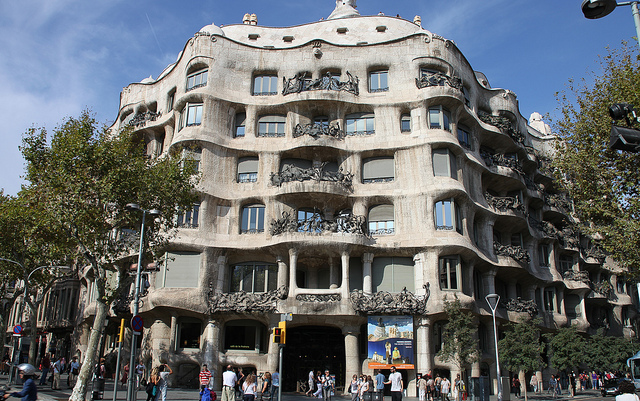
  • Four days in Barcelona, a cultural center renowned globally for its vibrant street life and beautiful architecture. Again, we’ll be provided an intimate look into the state of the Spanish social movements headquartered there, with personal meetings with leading figures in the nation’s cultural and political scene, including the current Mayor of Barcelona. We’ll take a deep dive into Gaudi and green design, visit the legendary Boqueria market and have additional cultural engagements.

Here are some of the inspirational leaders we’ll have the opportunity to meet over the course of our journey, with more in the works:

  • In addition to the Bioneers leadership team, we’ll be joined by Professor Manuel Pastor from USC, a brilliant analyst on the economic, environmental and social conditions facing low-income urban communities and the social movements seeking to change those realities.
  • The “Next Generation of Mondragon” — a younger set of leaders who are working to transform the business model of the legendary Mondragon Cooperatives into a truly green enterprise. Globally competitive and cooperatively owned, Mondragon has long been a model for how equitable business can be scaled up. We’ve been personally invited by these revolutionary youth leaders to experience their transformative work firsthand.
  • The brilliant minds behind “The Art of Collaboration” gathering in San Sebastián, a special event hosted by the Global Eco-Village Network. The Bioneers leadership team will be speaking at the event, and we’ll accompany them for special networking events with conference speakers, participants and organizers.
  • Juan Lopez de Uralde, the former president of Greenpeace Spain, now turned politician. As of December, Mr. Lopez de Uralde’s Podemos party received a majority in the Basque Country elections.
  • Ada Colau, the current Mayor of Barcelona. The former leader of the Anti-Eviction Movement, she has been Mayor of Barcelona since May 2015, voted into office on an anti-austerity, equity and social justice platform.
  • Carlos Fresneda, a journalist, green activist and correspondent in the US (now in London) of the newspaper El Mundo.
  • Gijsbert Huilink, Founder of Som Energia, the first renewable energy cooperative in Catalonia.
  • And much more – see the comprehensive itinerary below.

The price of the trip is $7500 and that is all-inclusive (within reason) from our starting point in San Sebastián to the close of the trip in Barcelona. Airfare and ground transport to and from these cities is not included. Below is a link where you can register and make payment. If you prefer to call with a credit card, please contact Maria Rotunda at 505-395-2801 or maria@bioneers.org.

Some Backstory on the Kinship Circle

Our Kinship Circle consists of our most supportive of supporters. They help provide the financial oxygen that keeps the fire of Bioneers burning bright.

Yet this circle brings much more than financial mojo. It is a community of highly accomplished people who offer deep expertise, wisdom and diverse points of engagement and working partnerships in our shared work.

In fact, we started the Kinship Circle after we realized what an authentically amazing donor circle Bioneers has, how few of you know each other, and how much everyone would benefit from getting connected.

The Kinship Circle consists of Bioneers donors who give $25,000 or more annually. If your current giving is less or you are new to Bioneers, you are welcome to come if you are committed to considering making a gift at that level.

Our first Kinship gathering in the spring of 2014 took place in Hana, Maui, a deeply Indigenous community with ancient roots, brilliant contemporary vision and ongoing struggles. Next year’s adventure brought us to British Columbia for an exploration of Canada’s thriving environmental movement. The expeditions were hugely successful, bringing together a circle of friends for truly transformative learning-in-action and creating a collaborative network we believe will last a lifetime.

Third time’s the charm, as they say, so here’s to an adventure that pushes the boundaries of kinship and creativity, broadening the Bioneers family beyond borders for true global partnership!

Several of you have already signed on, and it’s shaping up to be a spectacular group of people. We hope you will join us!

With Heartfelt Love and Gratitude,
Kenny Ausubel & Nina Simons, Founders

Draft Itinerary

Wednesday, June 22
Arrival in San Sebastián from US (via connecting flight from Madrid).

IN SAN SEBASTIÁN JUNE 22 – 26

June 23: Mondragon Cooperative Tour

We’ll travel the short distance to Mondragon for a special day to learn about the legendary Mondragon Cooperatives. Globally competitive and cooperatively owned, Mondragon has long been a model for how equitable business can be scaled up. We’re particularly excited to be invited by the “Next Generation of Mondragon”, a younger set of leaders who are working to transform the business model into a truly green enterprise.

Night event: Noche de San Juan

Early precursor to Burning Man, Noche de San Juan is an annual festival in San Sebastián that concludes with the seaside burning of a large wooden sculpture. This even also coincides with the opening of “The Art of Collaboration” week in San Sebastián.

June 24 – 25: San Sebastián Activities

The Art of Collaboration

Participate in The Art of Collaboration, a special gathering hosted by the Global Eco-Village Network. The Bioneers leadership team will be speaking at the event and we’ll accompany them for special networking events with conference speakers, participants and organizers.

Meeting the Movement

While in San Sebastián, we will have the honor of meeting with representatives from this emerging political movement including:

  • Juan Lopez de Uralde, former president of Greenpeace Spain turned politician. As of December, Mr. Lopez de Uralde’s Podemos party received a majority in the Basque Country elections.
  • Eduardo Maura, the Podemos deputy from the Basque Country
  • Carlos Fresneda, a journalist, green activist and good friend of Bioneers. Carlos will offer an in-depth overview of what is going on around Europe in the Eco scene. For ten years he was the correspondent in the US (now in London) of the newspaper “El Mundo”, where he publishes the series of interviews “Ecoheroes.”

June 26 & 27: Spanish Countryside
We will take two days to leisurely travel the six hours across the Spanish countryside from Basque Country on the Atlantic coast to Barcelona on the Mediterranean. Along the way we will visit leading edge sustainable vineyards and stay for the night in a local hotel. On the way to Barcelona the following day, we will stop for lunch near the legendary Neolithic Cave Paintings in Aragon. Arrive in Barcelona in the afternoon and settle into the hotel.

IN BARCELONA June 27 – July 1
While in Barcelona, we will have the opportunity to meet key players in Spanish progressive politics, visit legendary landmarks accompanied by experts and enjoy some of the best the city has to offer while allowing for plenty of down time, relaxation and exploration. Our four days in Barcelona will include:

Exploring Barcelona

  • Gaudi, Nature & Green Architecture. We will visit several Gaudi Buildings and Parks, guided by Claudia Marie Vargas, author of the book “Gaudi and Nature”.
  • Mercat de la Boqueria. We will enjoy a sustainability oriented tour of Barcelona’s legendary open produce and meat market.
  • Sustainable Bike Tour of Barcelona with Jordi Miralles of Fundació Terra

Meeting the Movement
We will visit and receive briefings from a number of luminaries and players in the larger eco-social movement in Barcelona and Spain, including:

  • Ada Colau is the current Mayor of Barcelona, representing “Barcelona en Comú”, a coalition of eco-social movements. The former leader of the Anti-Eviction Movement, she has been Mayor of Barcelona since May 2015, voted into office on an anti-austerity, equity and social justice platform.
  • David Fernandez, a former representative of CUP, the radical left-wing Catalan Independence party, now working with COOP57, a very successful social banking cooperative.
  • Gijsbert Huilink, Founder of Som Energia, the first renewable energy cooperative in Catalonia.
  • Ignasi Fontanals, member of the Barcelona Resilience Group and Opticits and representative of the Barcelona 100 Resilient Cities efforts.

Outside Barcelona
Just outside the urban center of Barcelona are a number of fascinating efforts related to sustainable food and farming practices. Possible short trips include the following:

  • Fundación Alicia is led by the legendary Spanish chef Ferrán Adriá and is located in beautiful Mont Sant Benet
  • Torres Wines and Vineyard, one of the most sustainable vineyard in all of Spain.
  • La Fagenda, a cooperative for the integration of mentally disabled people, and a successful sustainable yogurt and cheese producer, located 1.5 hours north from Barcelona in the Natural Park of the Vulcanos.

July 1
Kinship Trip concludes and participants depart for home or further European travel.

Questions? Please contact Maria Rotunda at 505-395-2801 or maria@bioneers.org.