Architect Katrina Spade invented human composting after learning about the “mortality composting” practices used on some farms. She has worked tirelessly to bring the process to the world, first getting a human composting bill passed in Washington state, then founding Recompose, a Public Benefit Corporation based in Seattle and the world’s first human composting company. Recompose started accepting bodies for human composting in December 2020.
Below, Katrina shares how this journey began and what she’s learned along the way.
On getting started thinking about “greening” the end of life:
I’m Katrina Spade. I was in grad school for architecture about eight years ago, and I actually hadn’t lost anyone I was close to at that point. But I had turned 30, so I was feeling quite mortal. It’s the truth. It happens.
Architecture school isn’t just about buildings not falling down, it’s also about systems that humans create and use. I started to look at the American funeral industry as a system that we’ve created and that we have to use – we have no choice – and it quickly became just very apparent that I didn’t like the options we had.
Before I even realized the environmental impact of those options, which are conventional burial and cremation, I was just struck by the fact that neither of them felt very meaningful to me. They didn’t excite me. It occurred to me that both of those options meant that the very last thing I would do on this planet would be to poison it with my body. My body that has been supported by the planet my whole life. It just seemed totally unfair and frankly, totally weird.
I also felt like the whole way that bodies are cared for after death was needlessly impersonal, frightening, inauthentic, and wrapped in plastic.
So I spent some time thinking about what another option could be. How else can we care for bodies after death?
I started thinking about how we could bring nature back into this in a way that perhaps worked in an urban setting. Natural burial is a beautiful concept in which the body is buried directly in the ground, but that, of course, does take land, so maybe it isn’t an appropriate solution for all our urban dead.
Luckily, right around that time, a friend of mine called me on the phone. She knew I was thinking about death. She knew I was kind of a compost geek also, and she asked me if I’d heard about the practice that farmers have used for decades now to recycle farm animals – cows and horses – back to the land. It’s a form of composting called mortality composting.
That was my epiphany moment.
On transitioning what she learned about mortality composting into something that could apply to humans:
I know I’m not the first person to think of this idea, but I think so far I’m the first person to run with it. I graduated with a thesis idea that was composting humans. My professors didn’t even laugh me out the door.
The next year, I got a fellowship from an early-stage funder, and they didn’t laugh me out the door either. So I kept working on it and kept finding that more and more people love this concept of turning ourselves into soil after we die.
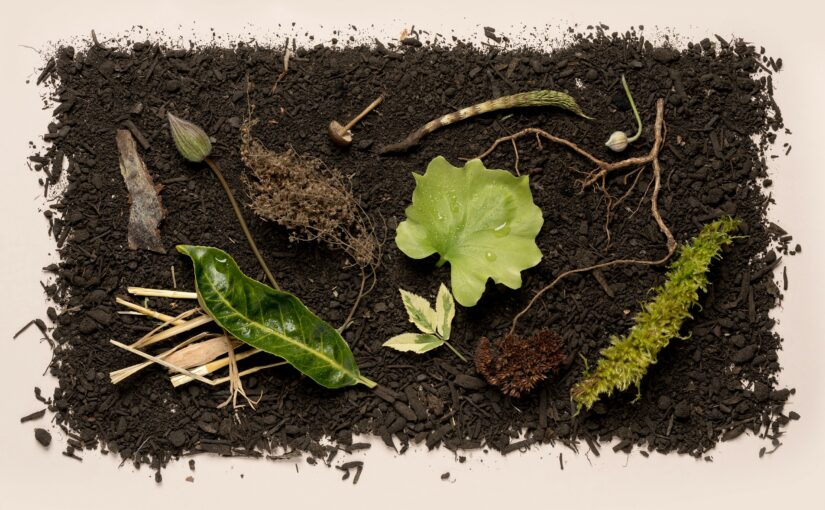
My favorite way to think of composting is that it’s what’s happening on the forest floor. We have dead organic material like sticks and leaves and the errant chipmunk, and with the help of microbes and lots of oxygen and moisture, those organic materials break down to create this beautiful topsoil. I think of composting as an accelerated version of that process.
My company Recompose is working on providing this option to human beings as an alternative to cremation and burial.
On the process of human composting:
The first thing to know is that we are using an in-vessel system. There’s a container that we put all of these wonderful natural materials in, and that helps us both control the process and accelerate it. So it’s faster than what’s happening on the forest floor.
In 2015, I partnered with some beautiful people at Washington State University, because we knew if we really wanted to make this an option that was available to the public, we had to prove that it was safe and effective for humans as well as for livestock. These beautiful people helped me create a pilot research project at Washington State as part of the soil science department. We were deeply honored to invite six donors to this work. I’ve now met either the donors or the families of these donors, these six wonderful people who donated their bodies to the work and then died. They were part of a pilot to prove that recomposition is, in fact, safe and effective for human beings.
We took the successful results of that study to the Washington state legislature in 2018. We approached it pretty straightforwardly as providing more options for a family at the end of life, and about having more sustainable choices for our bodies after we die. We actually saw really broad, bipartisan support. We had an 80/16 vote in the house for this bill that would legalize what is essentially human composting in Washington state.
Our vision is not just to turn bodies into soil, although that is, I think, the heart and the hook of it. Our vision is also to create places in our cities where families can come, where the dead are transformed, and also where we can have what is a more participatory, transparent, and authentic experience around this incredible, magical, mysterious event.
On death phobia and how to manage it:
I have deep gratitude for nature showing us how to do death really, really well. I love to be able to take what nature gives us and offer a new way for humans to be cared for. But I think it’s about more than just using nature. It’s about tapping into our own human ability that we all have to care for each other when we die. You don’t have to be an expert to do that.
I think dying is like giving birth. The only time I went through labor to have a baby, I was thinking about it and reading about it and trying to plan out how it would go. Everyone was like, “No, you can’t do that. It just happens. Your body knows what to do.” I hope that’s what dying is like for me as well.
I think we’re all experts in this already, and we just have to tap into it.
On the rewards of her work:
I got a letter yesterday from someone who said she was 84 and very grateful that this was going to be an option, hopefully before she died. And I thought, this is incredible timing. I needed that letter right then. That was very special.
The other thing I’ll say is I take tremendous satisfaction from trying to take something from just a concept to fruition. The reason that’s been so satisfying has everything to do with the people I’ve worked with. It’s taken lawyers, legal experts, soil scientists, project managers, engineers, and people who are experts in ritual and ceremony and funeral direction. It makes me very satisfied and feel very lucky to have this movement happening.
What a year it’s been. We bounced between news that was either terrifying, deeply heartening, or both, but the one thing we collectively understand moving forward is that the connections between us are what will keep us all going. As Sarah Crowell, founder of legendary arts and dance troupe Destiny Arts, once said, “The way we’ll hold it together is to hold it—together.” From the bottom of our hearts here at Bioneers, we’re so deeply grateful to you, a community of leaders that we strive to represent and showcase in our programs, storytelling, and convenings. It is entirely due to your support that we’re able to continue the incredible work that makes such a difference each year.
In this newsletter, we’re celebrating the stories that you loved most in 2022 and the exciting Bioneers projects that are in the world thanks to your inspiration and support. Below, you’ll find fascinating scientific research, engaging interviews, practical information for creating a brighter future, historical analyses, and so much more.
Want more news like this? Sign up for the Bioneers Pulse to receive the latest news from the Bioneers community straight to your inbox.
Top Bioneers Articles of 2022
In what ways do men and women differ? Do we find the same differences in our fellow primates? Do apes learn sex roles, or is gender uniquely human? World-renowned primatologist Frans de Waal offers key insights into gender, drawing on his extensive experience observing chimpanzees and bonobos.
As awareness grows about the lasting impact of stolen land and slavery in the United States, some Americans are becoming increasingly conflicted about Thanksgiving. While many cherish the turkey and family gatherings associated with the holiday, they also recognize its dark history for Native Americans. Some Native Americans view Thanksgiving as a Day of Mourning, while others have more complex feelings about the holiday. Learn three ways to teach children about Thanksgiving.
Americans love to manicure their lawns. It is a sign of pride in homeownership deeply steeped in the “American Dream” to buy a house in the suburbs and raise a family. However, this “dream” belies deeper, nefarious roots in settler colonization and white supremacy. Read how and why it’s important to decolonize your yard.
With the surge of social dislocation, political unrest and illnesses resulting from climate change, it is apparent that our planet is inflamed, and that individual health is inseparable from planetary health. Physician and activist Rupa Marya explores how structural injustices affect both human and environmental health and calls for more holistic approaches to diagnosing imbalances in our bodies and communities to put us on a path of deep personal and collective healing.
David Solnit is a San Francisco-based carpenter; climate justice, anti-war, arts, and direct-action organizer; an author; puppeteer, and trainer. Learn more about his history and how he uses “artivism” to spread his messages in this Bioneers interview.
As we roll into our 34th annual conference, the big wheels of massive change are turning. Sign up for alerts here, and you’ll be the first to know when registration opens; plus, we’ll send you a discount code for 15% the price of your ticket.
Top Podcast Episodes of 2022
In the late 20th century, a handful of scientists proved that aquatic mammals have advanced communication capabilities and a consciousness strikingly similar to humans. Author and adventurer James Nestor leads us on a deep dive into the mystery of marine mammal consciousness, and the story of how a small band of freedivers, pushing the limits of human endurance, is finding that saving the whales may become the story of the whales saving us.
From local communities and states to federal policy, movements to dismantle monopolies are challenging the current system that can be summed up as: Make Feudalism Great Again. Although breaking up is hard to do, we’ve broken up monopolies before. In this second of our two-part program, we join Thom Hartmann, Stacy Mitchell, and Maurice BP-Weeks to survey the landscape of rising antitrust movements seeking to break the stranglehold of corporate power and level the playing field for a democratized economy.
California Indians have survived some of the most extreme acts of genocide committed against Native Americans. We discuss this brutal history with Corrina Gould, a member of the Lisjan/Ohlone tribe of Northern California and co-founder and Co-Director of the Sogorea Te’ Land Trust. We talk about the importance of addressing that historical trauma, which caused deep wounds that still affect Indigenous Peoples today.
History doesn’t repeat itself, but it rhymes. From the historic Indigenous occupation of Alcatraz Island in 1969 to the fossil fuel fights throughout Canada and the U.S. today, Indigenous resistance illuminates an activism founded in a spiritual connection with the web of life and the human community – featuring Julian NoiseCat, Dr. LaNada War Jack and Clayton Thomas-Müller.
This conversation among diverse transformational women leaders offers insight into the depths of what it means to restore the balance between masculine and feminine to bring about wholeness, justice, and true restoration for people and the planet. Join Alice Walker, Jean Shinoda Bolen, Nina Simons, Sarah Crowell, Joanna Macy, and Akaya Windwood to envision a future in which all of us and the planet can thrive.
True solidarity requires stitching together what appears separate into a powerful, magnificent whole. Angela Glover Blackwell, a renowned civil rights and public interest attorney, longtime leading racial equity advocate, and founder of PolicyLink, discusses transformative solidarity and why it’s necessary for a thriving multiracial democracy.
California is the world’s largest single destination of oil from the Amazon rainforest, and its extraction contributes to climate change, deforestation, ocean pollution, and the displacement of Indigenous peoples who are the best stewards of the Amazon’s remaining biodiversity. Two Indigenous Amazonian forest protectors, sisters Nina Gualinga and Helena Gualinga, work with Amazon Watch to appeal to Californians to demand corporate responsibility for people and the planet.
As climate change and environmental destruction accelerate, women are disproportionately affected but also often on the frontlines of the fight to protect our future. However, their work and leadership are often not recognized or supported. Daughters for Earth, a new initiative founded by female leaders in the women’s rights, environmental, and philanthropic sectors, seeks to address this marginalization. Zainab Salbi, a co-founder and leader of the initiative, is a widely celebrated humanitarian, author, and journalist. She previously founded Women for Women International, and now explores the connection between personal healing and addressing the challenges of climate change.
Nick Estes, Ph.D. is an Indigenous Rights activist, scholar, writer and author and a co-founder of The Red Nation organization. He speaks about the outsized impact frontline Indigenous communities are having in fighting climate change and resisting extractive industries, the importance and effectiveness of Earth-centered approaches to fighting for Climate Justice, and the overarching goal of being “good ancestors of the future.”
What if cities were designed so that they could absorb excess rainfall, neutralize floods, and turn their streets green and beautiful in the process? Kongjian Yu is doing just that, as he reports from China. This award-winning leader in ecological urbanism and landscape architecture, and founder of the planning and design firm Turenscape in Beijing, has become world-renowned for his “sponge cities” and other revolutionary nature-based solutions.
In this multimedia series, we focus on the water scarcity facing arid regions, highlighting innovative designs and far-sighted strategies based on principles drawn from conservation hydrology, permaculture, regenerative agriculture, and keystone species restoration that demonstrate that there are existing strategies and practices we can implement to sustainably steward our most precious resource and ensure water security for all life.
Join Bioneers co-founder Nina Simons on an inspiring journey to shed self-limiting beliefs, lead from the heart and discover beloved community as you cultivate your own flourishing and liberation. Inspired and informed by Indigenous wisdom keepers who are leading the way towards a regenerative future, Nina invites women and people of all genders to, as Joanna Macy suggests, “see with new and ancient eyes.”
Where do psychedelics fit into modern medicine and societal traditions? Because psychedelics are currently generating so much interest and societal attitudes about them are undergoing enormous change, we decided this would be a propitious time to bring together some of the most interesting and topical material in this domain that has been generated under the auspices of Bioneers in the last few years in an easy-to-read and to-share format.
The Indigeneity Conversations podcast is a project of Bioneers Indigeneity Program, a Native-led Program that promotes Indigenous approaches to solving the earth’s most pressing environmental and social issues. We produce the Indigenous Forum, original media, educational curricula and catalytic initiatives to support the leadership and rights of First Peoples, while weaving networks, partnerships and alliances among Native and non-Native allies.
These days, scientists are starting to talk like shamans and shamans are starting to talk like scientists. So says anthropologist and author Jeremy Narby. And, he says, we need to talk about talking – because words matter. In this episode, Bioneers Senior Producer J.P. Harpignies speaks with Narby about how the very language and words we use reveal the topography and limits of our worldview, including Western culture’s adamant centuries-long but now increasingly discredited assumption that intelligence is restricted only to human beings.
Featuring
Jeremy Narby, Ph.D., an anthropologist who has been working as Amazonian Projects Coordinator for the Swiss NGO “Nouvelle Planète” since 1990, backing initiatives of Amazonian indigenous organizations in land titling, bilingual and intercultural education, environmental monitoring and sustainable economic development, is the author of The Cosmic Serpent: DNA and the Origins of Knowledge (1998) and Intelligence in Nature (2005), and co-edited the anthology Shamans Through Time with Francis Huxley.
J.P. Harpignies, Bioneers Senior Producer, affiliated with Bioneers since 1990, is a Brooklyn, NYC-based consultant, conference producer, copy-editor and writer. A former Program Director at the New York Open Center and a senior review team member for the Buckminster Fuller Challenge from 2010 to 2017, he has authored or edited several books, including Political Ecosystems, Delusions of Normality, Visionary Plant Consciousness, and, most recently, Animal Encounters.
Credits
Executive Producer: Kenny Ausubel
Written by: Kenny Ausubel
Senior Producer and Station Relations: Stephanie Welch
Program Engineer and Music Supervisor: Emily Harris
This is an episode of the Bioneers: Revolution from the Heart of Nature series. Visit the radio and podcast homepage to find out how to hear the program on your local station and how to subscribe to the podcast.
Subscribe to the Bioneers: Revolution from The Heart of Nature podcast
Transcript
Neil Harvey (Host): So it was obvious that there was this human supremacist thing lurking in the word “nature”.And anthropologists have pointed out that this is a concept specific to Western cultures. So you go to the Amazon and ask people there how they say “everything that is not human”, they say, No, we think plants and animals are people like us. We don’t have this idea – “everything that is not human”.
In this program, we drop in on a provocative conversation about the concept of “Intelligence in Nature” and how language itself can encode our worldviews. Bioneers Senior Producer J.P. Harpignies talks with anthropologist Jeremy Narby, author of many books including “Intelligence in Nature: An Inquiry into Knowledge.” Narby suggests that today you’d be hard pressed to find a scientist who disputes intelligence in nature. But what is intelligence? And what if how we talk about it still signals a human-supremacist bias?
These days, scientists are starting to talk like shamans and shamans are starting to talk like scientists. So says anthropologist and author Jeremy Narby. And, he says, we need to talk about talking – because words matter. The very language and words we use reveal the topography and limits of our worldview, including Western culture’s adamant centuries-long but now increasingly discredited assumption that intelligence is restricted only to human beings.
We join a free-range dialogue between Jeremy Narby and J.P. Harpignies at a Bioneers conference.
J.P. Harpignies (JP): One of your big themes here at the conference has been your insistence on the fact that the words we use and the language we express ourselves in are really determinant in- not just our attitude towards the natural world, but how we behave.
Maybe we should talk a little about that, about why you think that’s so important. And you know- a lot of your life, one of your big intellectual challenges has been this idea of reconciling Indigenous wisdom and ways of knowing with the Western scientific approaches, something that’s very difficult to reconcile, but that’s been your life’s work. And you’ve often used the term being bi-cognitive. Now you’re sort of talking about being plural-lingual. So maybe let’s explore that a bit.
Jeremy Narby (Jeremy): Ok, well, obviously, it’s complicated to talk about the limits of a language in that language. But that also makes it interesting. For me, it started to become clear when I wrote Intelligence in Nature.
So English is my mother tongue. I also speak French. I know that when you go from one language to another, things don’t necessarily translate. So I think that experience of having grown up with several languages, and then Spanish, then a bit of German. I’m not bragging. Actually I feel my head’s relatively small. I know some people who can speak a whole bunch of languages.
But anyway, as I was writing Intelligence in Nature,I still have the reflex of most people just to think that the words that are in our mother tongue are normal there, so “intelligence”. Well, everybody knows what intelligence is, or we think we do. Or okay, you can look in the Dictionary and there’s a definition. Alright. So my book is going to be about intelligence in nature, but the more I started looking into the subject, the problem with the word emerged fairly quickly.
So intelligence is a word that comes from the Latin inter legere, to choose between, so it’s in Western tongues, and if you look in the dictionary, the definition of the word is often in exclusively human terms, which means that it can’t really be applied to other species if we’re strict with words.
So then you think, well, wait a second, how come intelligence is in exclusively human terms? Well, you look into it and you realize that there’s this thing in Western cultures, human exclusivity, this whole idea that humans have things that the others don’t, and there’s like a kind of a long shopping list that Western thinkers have tended, especially modern Western thinkers, to line up as being what makes us above all other species. And you think, but hold on. What is this above other species business? I mean, we’re all—we’re mammals, after all, so where is the above?
Well, we say there’s a whole list of things that humans do and that other species don’t do, and intelligence is one of them; that over the centuries, Western thinkers have said humans have intelligence and the others have instinct or–
JP: (overlapping): Well, but those goal posts have moved quite a bit. Right? Because a lot of recent research on animal—I mean, when you wrote [CROSSTALK] your book, it was early, but now there’s been quite a lot…[CROSSTALK]
But when I was doing the research in 2002, so, yes, the goal posts have been moved all over the place, but when a Japanese researcher showed that a slime mold could solve a maze and use the word intelligence in Nature magazine in 2002, all the Western commentators said, Wait, you can’t use the word intelligence for a single cell of slime.
I remember he said that if he used the word “cleverness” they were better with it.
Jeremy: (overlapping): “Smart. Smart.”
JP: Yeah, “smart”.
Jeremy: But, so it was obvious that there was this human supremacist thing lurking in the word intelligence. Okay…And then I found that it was also lurking in the word “nature”, so that if you look in the dictionary, “nature” is defined as the phenomena of the physical world – plants, animals, and the landscape, as opposed to humans and human creations. This is the Oxford English Dictionary definition of the word – as opposed to humans and human creations. Nature is everything that is not human.
And anthropologists have pointed out that this is a concept specific to Western cultures. So you go to the Amazon and ask people there how they say “everything that is not human”, they say, No, we think plants and animals are people like us. We don’t have this idea – “everything that is not human”.
So then you think, okay, so let’s wind the tape back. So English is my mother tongue. Nature, we know I like nature; nature’s plants and animals. Okay. But it means everything that is not human. Yeah, it’s kind of a weird concept. I thought that nature was a natural concept. I thought nature existed. I like nature. I’m a friend of nature. But actually the concept is this weird concept.
JP: (overlapping): So what do you think about how to transcend—to deal with that, because as you were saying, the only languages we have are the ones that we are raised with, so how to—Is there any escape?
JEREMY: Yeah. There’s escape. Like, for example, I tend to not use the word nature. I tend to say plants and animals, or the living world, or all living organisms. You know, there are ways of—or the biosphere.
JP: Or the web of life.
Jeremy: The web of life. There’s all kind of ways of talking, but… So then, both intelligence and nature are centered on humans but in opposed ways. In fact, “intelligence in nature”, if you’re strict with words, is a contradiction in terms, because intelligence excludes non-humans, and nature excludes humans. But that just shows that our categories or our concepts have these blind angles.
So I think this is interesting, but it means that if we want to move forward with understanding what we would call “intelligence in nature”, or let’s just say “the full capacities of all living organisms”, if we want to understand that, doing away with concepts that put a difference between us and the other species seems like a good move. In other words, okay, if intelligence is problematic because it’s irremediably a human exclusivity, forget about it; we need a new concept.
If nature is problematic because it also excludes humans and puts a difference between us and other species, then we don’t need it; we can use alternatives.
JP: There is a sort of more underground philosophical tradition in the West, of panpsychism, this idea that consciousness permeates everything in the universe, even inanimate—what we think of as inanimate—that’s probably another problematic word. So—
Jeremy: Still, but you note that — let’s call it the capitalist world that has been established; this sort of huge industry, market-driven, worldwide distribution containers, plastic objects made all over the place, that world is a world that has considered plants and animals as objects, not as subjects. So there’s humans on one hand. They’re the subjects, they’re the consumers, and all the rest are objects. We can wrap them in plastic and sell them. And that’s what’s going on.
So, this view that humans are somehow above all the rest and can do with all the rest what they want, is the world we live in.
Asháninka tribe
Host: For over 30 years, Jeremy Narby has worked with the Swiss-based nonprofit Nouvelle Planète supporting Indigenous Amazonian initiatives in Peru for land conservation and cultural preservation. Living and working with tribes including the Asháninka, he participated in their ceremonial use of ayahuasca, a psychedelic plant medicine central to their medical and spiritual practices. These powerful experiences ignited in him a desire to seek to build bridges between shamanic and scientific worldviews.
JP: So one thing that will certainly interest probably a certain subset of listeners, is because you’ve written about ayahuasca, and ayahuasca experiences had a big influence on shaping your world vision when you were living with the Asháninka in your younger days, how do you think the use of sacred plants and ayahuasca in particular, and other sacred plants, might influence that type of—that linguistic struggle or does one access states that are beyond language or apart from language? Or what do you think the relationship is?
Jeremy: Well, I can talk on the basis of personal experience. For me it’s been clear that ayahuasca has kind of heightened or enhanced my attention to words, how one pronounces them, the choice of words, also the sound of one’s voice, that what comes out of one’s mouth counts and participates in the creation of the world. So that may sound a little bit – I don’t know what – but, yeah, words matter. What you say matters. And if you can say things clearly and with a pure heart, it has a ring that people can hear, and so you really can transmit, well, knowledge or these things through how you speak. Yeah, that is a kind of an ayahuasca insight.
Language almost seems more concrete in that state of mind, or breath, certainly. And actually in the ayahuasca experience, people sing spontaneously, and as they sing, they experience the power of melody in their voice, that it’s really this beautiful thing that we can make these sounds with our voice and add meaning and melody to them. It’s such a precious and beautiful thing, that you don’t want to spend your day cussing and having garbage coming out of your mouth.
JP: Do you think that those early ayahuasca experiences, you describe them as having really changed your worldview. How does that apply to this issue of language? Do you think the seeds of your questioning of Western language began then, or do you think it’s something else in your anthropological training that triggered that, or some combination of the two?
Jeremy: Well, it’s true that the ayahuasca made me think about language and how you say things, and then how when you say things in one language, it’s not the same as the other, and so forth. Then I started writing The Cosmic Serpent, and trying to think about things, and realized that actually it’s like two different systems of logic here. It’s not just that we’re in English on the one hand and in Asháninka on the other hand. It’s, we’re in Western science on the one hand and in a kind of a shamanic epistemology on the other. And it’s kind of like oil and vinegar, and making sense of one from the other is difficult.
And then I started seeing it was towards the end of writing The Cosmic Serpent that I understood that it was kind of like bilingualism, and that you could look at the world from the point of view of science, and so the molecules that it contains, and so what does science tell us about ayahuasca and the brain, and so on and so forth. And then you could look at the same scene from the point of view of shamanic knowledge. And they’d be fairly complementary. The Cosmic Serpent was all about that, how you could reunite these two different gazes that had been separated, and actually they’re surprisingly coherent and agree on many fundamental levels about the nature of nature.
So, hmm, it was like the metaphor I had, it was like a reserve camera angle. My main camera angle was Western science, but we could see the replay from a reserve angle, and you could look at any question, like how does a DNA molecule function. Well, seen from the shamanic side, there must be some portents of vibration, melody, if what the shamans say is true about the essences that animate living beings, then vibration must be part of what makes a molecule tick. Well, okay, so that’s what you can get from the reserve angle. It may not—These are ideas for future research, for example.
And so then I understood that what was at stake, or what could then happen, if you could line up science and shamanic knowledge, then it would be a question of learning to go back and forth, like a bilingual person. And as somebody who’s had experience learning languages, other languages to the point of more or less becoming bilingual, there’s a period when you learn the second language where you cease to speak your mother tongue as well as you used to, yet you don’t speak the second language fluently yet either, so you’re in this kind of no-person’s land, so you speak two languages poorly. And what it takes is a lot of going back and forth, and that’s how you become bilingual by going back and forth a lot.
So the idea was that this was like bi-cognitivism. So it’s not two languages but two systems of knowledge.
Host: When we return, Jeremy Narby and J.P. Harpignies survey the erosion of the heretofore seemingly unbreachable dichotomies between scientific and shamanic ways of seeing the world. They suggest it might behoove us to try to come down from our imagined pedestal to be able to see ourselves as a part of nature, rather than apart from it.
I’m Neil Harvey. You’re listening to The Bioneers: Revolution from the Heart of Nature…
You can visit bioneers.org to subscribe to our newsletters and podcasts, check out Deep Dives on the topics that matter to you most, and learn about our events. That’s bioneers.org
Today, science has established beyond dispute human beings’ literal kinship with all other plant and animal species. Half the genes of a banana have exact equivalence in the human genome. Chimpanzees, bonobos and humans share close to 99% identity in their genomes. There are genes common to both humans and bacteria. In other words, we’re family.
At the same time, a growing body of research has convincingly demonstrated that intelligent behaviors and capacities are widely distributed throughout nature. Pigeons have a better memory for paintings than college students do. Sheep have a better memory for human faces than people do. The list goes on and on.
Yet how does the illusion that we humans are the only intelligent species, persist so tenaciously? Is it part of a Russian doll of false dichotomies that mistakenly separate humans from nature? Might our language itself be trapping us into faulty worldviews?
Let’s drop back into the mystery with Jeremy Narby and J.P Harpignies, talking about talking…
Jeremy: There’s that good old dichotomy where you have matter on one hand and then spirit on the other. And that’s what we then learn looking at this is that it’s not that Asháninka people don’t do dichotomies, they have a dichotomy between visible and invisible in that word “maninkari”, it’s that their dichotomies are a lot less watertight than Western ones. That’s what characterizes Western thinking. It’s not only that it’s dualist and it makes dichotomies, but that the categories are so watertight.
JP: So you think fluidity is a key aspect of the Indigenous worldview that we lack in Western languages.
Jeremy:This has been commented on by different anthropologists and so on, is that there is an increased permeability in the categories in Indigenous traditions worldwide, really. You can think of it as the yin yang symbol, where you have not only white and black surrounding each other, but the little bit of black in the white and the little bit of white in the black.
JP: Well that’s the dialectic where you get something else that results from the two forces. There’s a kind of a synthesis or interpenetration or—
Jeremy: But it comes from categories being less water tight.
JP: Right.
Jeremy: So what’s also interesting about thinking about other cultures and about the limits of our vocabulary to try to understand those other cultures is that we think we’re trying to understand the others but at some point we’re also looking in the mirror and understanding ourselves. So like, you know, by trying to understand Amazonian reality in English, I’ve learned a lot about the limits of English and of Western thought. And that so—By trying to understand Amazonian logic, I realize the extent to which my Western logic is filled with this tendency to dichotomize you know—mind-body—
I used to think I have a body. I used to think I know what a body is. But actually the body is the result of an opposition between mind and body. You go to Asháninka people, of course they recognize that you have a hand, an arm, they have the word for knee, foot, leg and so on. They don’t have a word for body. They don’t have a word for mind either. They don’t make a separation between mind and body. And when you ask them to say body, they say all my skin standing. [LAUGHTER] So it takes—So actually their word, it’s more like there’s a skin capsule. So that’s their view of the world.
And then what we would call mind is that with which we know, it’s the same word as heart. So then I go back to body and mind. I think that, well, first of all, body is a pretty strange concept, because it is this part of this whole thing of me that is not my mind. And then you think, wait a second, but this idea that there’s a mind that is entirely separate from the body.
JP: Well there also is the Buddhist tradition which tells you that you don’t have a body or a mind, as you think of them, and that your body, in fact, looks distinct but in fact it’s interacting with the environment, molecules are leaving and coming, and there is no clear boundary. And in the same way your mind was deeply influenced by your education, your school, it’s permeable. So there are other traditions that question this.
But also the other thing is that—
Jeremy (overlapping): Well, I’d like to make clear that [CROSSTALK] I don’t doubt that I’m an organism.
JP: Right.
Jeremy: I actually do like my whole physical setup. I’m not complaining.
JP: And if you stub your toe, you—
Jeremy: It hurts.
JP: It hurts. Yeah.
Jeremy: But I think that getting away from seeing it as being a sort of a body on the one hand and a mind on the other is what I want to do, because I want to understand myself, and I think that—like calling it body is like turning it into an object a little bit. Why do that?
JP: Yeah. But I mean, there is no complete way out, because we are stuck with language, to some degree. Right? So every effort we make in this will be partial. Don’t you think?
Jeremy: Well, like I could say I think of myself as a pulsating organism. Okay? Or a wet organism. Alright. I do try to think of myself that way. We could do—So it recognizes the physicality, but—And body, which is this kind of weird concept resulting from a pretty water tight dichotomy, we don’t need it.
JP: So, Jeremy, are you thinking of writing a new Dictionary of appropriate terms to describe the human condition? And which words to avoid and new ways to describe ourselves?
Jeremy: You know, it’s more like it’d be a guide to how to think ourselves out of this mess. And it’s true. I think that—
JP: Liberation through nomenclature…
Jeremy: Yeah, kind of. But obviously one would want to avoid word police, absolutely. But just that becoming aware that I don’t think that we can really remove ourselves from the pedestal we’ve put ourselves on relative to all the other species if we continue using the word nature, because it’s a—it’s a pedestal word. So there are pedestal words, and avoiding them is part of coming down from the pedestal. It’s as simple as that.
JP: The linguistic smashing of the pedestal…
Jeremy: Or just the coming down from. No smashing.
JP: No smashing. Okay.
Jeremy: Just get down from the pedestal.
JP: So, Jeremy, the idea of your work having come at a time when very few people were open to this idea of intelligence in nature, forgive the use of those two terms, but it was the title of your book–[LAUGHTER] Do you—Have you seen progress in terms of the mainstream scientific establishment in terms of catching up with the ideas you expressed in that book? And do you see hope there, or do you think it’s just partial penetration and much more needs to be done?
Jeremy: Yeah. Actually the funny thing was that obviously my experience is specific to the quirk of what I lived, but the quirk of what I lived was publishing Intelligence in Nature in 2005. The book was mainly ignored, like it was non-reviewed and so on. Then in the months that followed and the years that followed, the examples of the intelligence in nature reported by scientists kept on cropping up, new ones, like some have said there’s been a revolution in vegetable biology since 2005.
I mean, the timing was almost perfect, not for book sales because the book didn’t sell, but it was like all that science has produced since then has been an enormous confirmation of the surprising capacities of plants and of uni-cellulars, of fungi, of trees and networks of trees, and interspecies communications, and at this point, there’s no articles on stupidity in nature, and thousands of articles and bits of research on these surprising capacities of all kinds of species, including communication, learning, remembering, perceiving, even plants. They perceive. They smell. They hear. It’s just been demonstrated that plants can hear the sound of water and so on. So there’s all this research that has unfolded in the last decade, so, yeah, clearly it’s been shifting. And it’s funny how it happens, because for so long the subject of the intelligence of plants and so forth, this was almost like a taboo subject.
JP: Well hippie. It sounded like hippie nonsense…
Jeremy: Yeah. But now it’s like everybody knows that plants are intelligent. So I’m really happy. It’s never occurred to me to have been so right so fast. These things usually take longer. Now I don’t think there’s any argument.
All plants and animals are objects in the eye of the law, except some are starting to receive personhood, except person is another one of these human-centered concepts. The first definition of the word, if you look in the Dictionary, is a human being regarded as an individual. So by definition, this is what critics say, you can’t grant personhood to other species because it doesn’t make sense.
JP: Although French is a weird one because it’s person and no one.
Jeremy: Yeah. And the etymology, “person” in the Greek, refers to a mask—
JP: Right.
Jeremy: And the mask is—can apply to anybody. In other words, person is one of these complicated concepts, and it’s probably going to be—get on the list of concepts that need to be avoided if—
JP: In your linguistic dictionary.
Jeremy: Getting down from the pedestal. We’re going to have to drop that one too. [LAUGHTER]
JP: I think we just came up with your next writing project. [LAUGHTER]
As Bioneers rolls into our 34th annual gathering, the big wheels of massive change are turning. Climate disruption bears down daily, and there’s a widely felt morning-after awakening that it’s going to crash the economy and bring civilization to its knees. Although the regime shift to renewables is now an accelerating inevitability, it’s going to take relentless political action. To beat the clock, we also need to override the doom loop of delay and propaganda the desperate fossil fuel industry will keep pushing.
Meanwhile, the unprecedented movements of the past decade for liberation, justice and multicultural democracy are swelling to challenge the right-wing populist and neo-fascist forces underwritten by cynical plutocratic elites. “Make feudalism great again” is proving to be a marketing challenge. Something’s gotta give.
At the core is a crisis of democracy: a radical disconnect between the world people want and the world corporations and their client governments have hijacked. The climate crisis and the inequality crisis are the same crisis. Our separation from nature and our separation from each other are the same dis-integration. The choice is clear: nihilism or regeneration. Shattering or wholeness.
Slouching toward sustainability will not turn the tide. Only immediate, bold and transformative action will enable us to make the leap across the abyss. As Bioneers has long shown, the solutions are largely present, or we know what directions to head in. The solutions residing in nature surpass our conception of what’s even possible. Nature has a profound capacity for healing, and we can act as healers. What we do to each other we do to the Earth, and we’ll have peace only when we practice justice, a process that never ends. We can marry the genius of nature with human creativity to heal the web of life and ourselves.
Bioneers is about a revolution from the heart of nature and the human heart. “As world leaders take us on a guided tour of Hell, let love reign,” as Robbie Robertson puts it. Since 1990, the Bioneers conference has illuminated the topography of transformative change. This transformation inspires a change of heart, celebrating the unity and intrinsic value of all life.
The rise of regenerative social movements and civil society leadership hold the greatest power and promise for successfully navigating the “Great Unraveling.” For over three decades, the Bioneers Conference has served as a trellis on which this visionary movement of movements has grown and grown together around authentic “solve-the-whole problem” solutions. This historic shift to become an ecologically literate and just civilization heralds a declaration of interdependence.
Never has it been more vital that we come together around the council fire to share what we’ve learned, link arms, fill our hearts and vision, and align ourselves to prevail for the long haul.
Especially in these darkest of times, we come together to regenerate and celebrate. We invite you to join forces with the Bioneers community of leadership in this time when we’re all called upon to be leaders. As David Orr says, “Hope is a verb with its sleeves rolled up.”
REGISTRATION WILL OPEN JANUARY 5, 2023.
Sign up for Bioneers 2023 email alerts, and we’ll send you an exclusive 15% discount to use when you register.
The key role of the arts in social movements is as true today as it’s ever been, and we at Bioneers have long sought to feature the work of groundbreaking socially and eco-engaged artists from across different disciplines. It is our belief that without the inspiration and visions artists provide, we won’t be able to give birth to the life-affirming and just civilization we aspire to.
This newsletter features five new interviews by Bioneers Arts Coordinator Polina Smith with profoundly influential engaged artists. Below are interviews with:
Two renowned California-based Indigenous artists: muralist/collagist Mer Young and ceremonialist and earth-altar/mandala creator Veronica Ramirez
Two daring curators: Patricia Watts, who has, over several decades, done more to promote the “Eco-Art” movement than anyone on the planet and Patsy Craig who is passionately helping promote the work of Indigenous artists in the Andean highlands
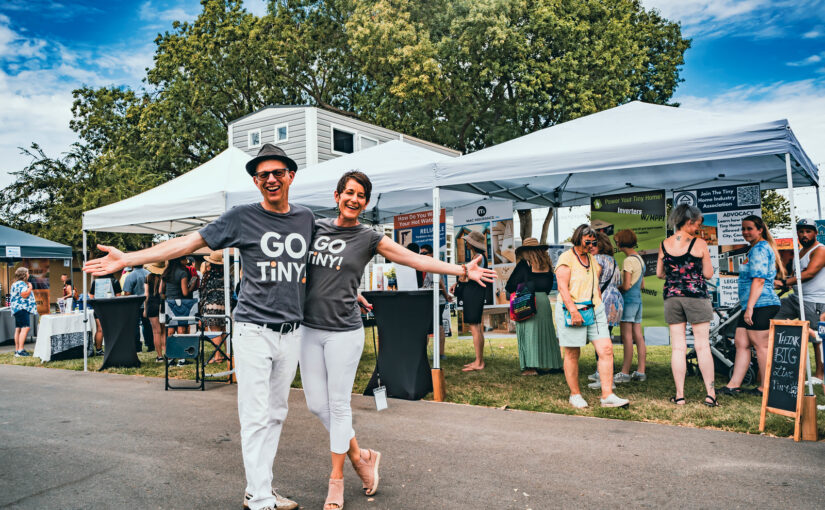
The leading advocate for and educator about “tiny homes,” Lindsay Wood.
Want more news like this? Sign up for the Bioneers Pulse to receive the latest news from the Bioneers community straight to your inbox.
Do What You Love, The Rest Will Follow
Mer Young is an Indigenous (Chichimeca and Apache) socially-engaged, Southern California-based artist whose body of work includes collages, drawings, paintings, and murals. She is the founder of Mausi Murals, and she has been widely exhibited nationally and internationally. Some of her public artworks can be found in a wide range of Southern California towns, including Long Beach, Glendale, South Pasadena, San Pedro, Paramount, Anaheim, Tustin, and Los Angeles.
Bioneers reached out to Mer to help design the beautiful look and feel of Bioneers’ latest podcast, Indigeneity Conversations. She worked closely with the podcast team and guests to create the singular images of each guest that appear alongside each episode, highlighting the power and depth of the work of each of these leading activists. We discussed Mer’s career as both an artist and an activist in our recent interview.
“Artists are creative divergent thinkers who can inspire new ways of seeing and of addressing the ecological problems of our era. They can serve as healers in this time, and they are here in large numbers because this is their time to speak; and now is our time to listen.”
Patricia Watts, the founder of the groundbreaking, highly influential nonprofit ecoartspace, has been one of the world’s most important curators and leading figures in the “eco-art” movement for over a quarter century. Ecoartspace is an online platform for hundreds of artists across 26 countries to connect and learn from each other.
All significant movements for positive change are accompanied by outpourings of artistic expression that help open our eyes to injustice and convey powerful new visions and possibilities.
Explore the world of incredible artists within the Bioneers community in our Engaged Arts collection, featuring interviews, galleries, resources, and more.
Lindsay Wood, widely known as “The Tiny Home Lady,” the founder and CEO of Experience Tiny Homes, is an expert on tiny home design, material/appliance selection and builder analysis. She has been a leading figure in developing innovative strategies to change the way tiny homes are designed and purchased, and she serves on the board of the Tiny Home Industry Association.
In this interview, Lindsay describes her home-buying struggles and how she became the “Tiny Home Lady.” She also explains the highs and lows of tiny house-living, and why she thinks tiny homes can play a role in helping address the housing and climate crises.
Patsy Craig is a curator/producer, author/artist and Indigenous rights advocate who has for over 20 years generated and cultivated a wide range of cross-cultural collaborations in the fields of art/design, music, urbanism, and environmentalism. This output has included publications, exhibitions, and events, including lectures, concerts, symposia, workshops, etc.
Six years ago, Craig turned her focus to the environment and Indigeneity after spending time at Standing Rock to support the water protection movement resisting the infamous Dakota Access Pipeline. Since then she has continued her activism and seeks to provide platforms that contribute to amplifying Indigenous world-views.
Veronica Ramirez, an Oakland, CA-based artist of Mapuche/Chilean-Mestizo ancestry, was born and raised in the San Francisco Bay Area. She has been leading public “earth-altar” making (mandalas) for the past 24 years in a variety of different communities. In this interview, Veronica discusses her artistic journey, her favorite projects, and her hopes for what role her art will play in the world.
What would it feel like to live in a world where our built environment was as elegant as nature’s designs? What if our living and working spaces nurtured our human communities and quality of life? Architect and designer Jason F. McLennan takes the revolution from the heart of nature and the human heart into our built environment. He is shifting the fateful civilizational inflection point we face – from degradation to regeneration – from fear to love.
Jason F. McLennan, one of the world’s most influential visionaries in contemporary architecture and green building, is a highly sought-out designer, consultant and thought leader. A winner of Engineering News Record’s National Award of Excellence and of the prestigious Buckminster Fuller Prize (which was, during its 10-year trajectory, known as “the planet’s top prize for socially responsible design”), Jason has been showered with such accolades as “the ‘Wayne Gretzky’ of the green building industry and a “World Changer” (by GreenBiz magazine).
Credits
Executive Producer: Kenny Ausubel
Written by: Kenny Ausubel
Senior Producer and Station Relations: Stephanie Welch
Program Engineer and Music Supervisor: Emily Harris
Producer: Teo Grossman
Host and Consulting Producer: Neil Harvey
Production Assistance: Anna Rubanova and Monica Lopez
This is an episode of the Bioneers: Revolution from the Heart of Nature series. Visit the radio and podcast homepage to find out how to hear the program on your local station and how to subscribe to the podcast
Subscribe to the Bioneers: Revolution from The Heart of Nature podcast
Transcript
In this episode, architect and designer Jason F. McLennan takes the revolution from the heart of nature and the human heart into our built environment. He is shifting the fateful civilizational inflection point we face – from degradation to regeneration – from fear to love.
Neil Harvey, Host: “In the design world, when you’re talking about regeneration of a place, you have choices that you make. And every design intervention, there’s a decision whether you’re going to participate in a feedback loop that is regenerative or degenerative.
What is fundamental, and this is the work that we all have to do, is we actually have to focus on love. Imagine going into design meetings with developers and say let’s talk about love. [LAUGHTER] But my belief is that only through the sustained awakening of the human heart are we going to have a future.” [APPLAUSE]
Jason F. McLennan: We need to design our built environment in the same way that nature devises its architecture, running off of the sun rather than fossil fuels, using the water that we can capture, and not polluting our environment. The important thing, of course, is that we solve these issues in an interconnected fashion. They aren’t isolated issues. They are things that have to be solved together. And that holistic framing, if you will, is fundamental to the Living Building Challenge. And what we’re trying to imagine, of course, is a world that actually is living, that will be worth living for.
Host: Now, contrast that vision with current reality:
In the US, buildings are the number-one energy-using sector. They account for 40% of primary energy consumption, 39% of CO2 emissions, and 13% of water consumption.
Instead, what would it feel like to live in a world where our built environment was as elegant as nature’s designs? Where nature itself is our design model, mentor and metric, so we live comfortably within its boundaries and limits? What if our built environment actually enhances natural systems? What if our living and working spaces nurture our human communities and quality of life?
And yes, what’s love got to do with it?
Those paradigm-changing questions have inspired Jason McLennan’s lifelong quest to design and build what he calls “living buildings” that are in harmony with nature and create vital healing spaces for people.
He’s among the world’s most influential visionaries in contemporary architecture and green building. As a sought-after designer, consultant and thought leader, he’s the principal of McLennan Design. As a global design firm, it uses regenerative design to solve some of the most vexing challenges bedeviling society at this transformative inflection point.
He published the influential WELL Building Standard and has written seven books on sustainability and design, including the cornerstone in the field, the Philosophy of Sustainable Design.
In 2006, McLennan transformed the still nascent field of green building with a shot across the bow called the Living Building Challenge. It conceptually leapfrogged the leading green building certification standards – by a country mile.
Jason F. McLennan: I started writing the Living Building Challenge, and the idea was that we needed to fundamentally change architecture, that we needed to reimagine the impact that our built environment was having on the world. And it was a bit crazy in people’s minds, and I was told that this will never happen or be a long time, and I’m glad that that has been proven wrong. It was so far out there when we launched it, it was illegal, in fact, in just about every jurisdiction in North America, so we had to get to work on that. And it’s amazing to think that doing things in support of life would be the thing that was illegal.
So a lot has happened since I launched the challenge. I remember not only was it illegal and we had to change water laws in particular, and you couldn’t find the materials, but of course energy, renewable energy at the time was more expensive, and now that’s changed. Right? The cheapest form of new energy is renewable energy, and that’s incredible. It’s amazing to think that when we launched the challenge, we didn’t have Smartphones, we didn’t have Teslas. This idea that we can now electrify everything is much more real, and people are doing it, and they’re doing it all over the world, which is exciting, again, which is good. It’s progress. And we can imagine that we have all the tools now that we need to have a fundamentally different world.
Host: The Living Building Challenge standards were so radical that initially, even when the practices were legal, there simply weren’t many architects, developers or construction companies that dared even to try to achieve them.
But what may have seemed like wild-eyed idealism or fringe folly has matured into dozens of certified Living Buildings and thousands pursuing it on six continents. These efforts are rapidly spawning the beginnings of a global movement.
The nonprofit Living Future Institute that McLennan founded, along with numerous other innovative organizations and companies, have been systematically disrupting and transforming an entire sector: the architecture, construction and design industries.
On the ground, the work has evolved from Living Buildings to initiatives to create entire Living Communities. The Living Building and Products standards include the world’s first social justice label, called JUST.
And that’s not to mention certifications for zero carbon, zero energy and more.
In 2019, Jason McLennan connected with some colleagues in his Seattle home base who landed him smack in the middle of mainstream. The firm behind a billion-dollar stadium project in downtown Seattle – the new home of the national hockey league’s Seattle Kraken – was hoping to sell the naming rights to Amazon. Together, the Oak View Group and Amazon opted to call the venue “Climate Pledge Arena,” and they engaged McLennan as lead Sustainability Consultant to ensure that it lived up to its ambitious name.
Jason F. McLennan: I got involved and I got asked to figure out, well, how do we actually live up to this kind of name; what would we do differently? And this is a major sports venue, 17, 18,000 people or something like that.
First of all, there was this incredible 1962-era building for the Seattle World’s Fair. It was designed to be kind of like a rain hat, a Coast Salish looking rain hat. And one option was that it would have been torn down. It’s right next to the Space Needle. You know, there was, of course, it was on the Nationally Historic Registry and people love it, and there was a decision to keep it, which was the right decision.
They brought me in and said, okay, we have an opportunity to do something amazing and to be a beacon for the sports and entertainment industry and be the greenest venue of its kind in the world. And I said, well, the first thing you need to do is get rid of all the natural gas and have no fossil fuels inside the building, and that wasn’t done for a building of that size. But they – to their credit – they said, okay, alright, we’ll do that, even though we’ve ordered the equipment, paid for it, we’re going to cancel the orders, suck up the lost cost, and we’re going to go all electric.
And then the second thing was, well, but then we’ve got to get all of our electricity from renewable sources, so we have to have on-site solar, which we had put in a few places, and then we’ll have off site renewable energy as well, and 100% of the energy will be from renewable energy sources, so now we’ve decarbonized the energy. We already had lower embodied carbon because they were recycling the building. Then there was a decision to go even further and say, how do we actually track all the transportation of fans getting there, all the food purchased, all the materials that are used in the building, track the carbon footprint of that as well. And there’s all sorts of other things that are pretty cool when you go there.
Environmentally, it’s not a huge benefit in Seattle where it rains a lot. But it is cool that why would we not make the ice from rainwater, and why not do that everywhere? Why do you spend all this energy and resources to treat water and then use it to make ice when rain falls naturally on these big roofs of these venues? So, it had been done once somewhere else, not for a professional hockey team. But, I knew that rainwater was going to be actually a better source of ice.
So we essentially put in cisterns just like you would at your house with a rain barrel. We have a big rain barrel under the plaza of the building. And we collect rainwater and we make NHL hockey ice on it. And the good news is the experts there believe it’s the best ice they’ve ever made, which I already knew it was going to be; water is distilled, and they have to make sure that it’s clear so you can see the puck on the ice and everything else, and they love it.
Host: Even the beloved Zambonis that sweep the ice are electric and charged by renewable power. The Climate Pledge Arena aims to be the first zero-carbon stadium certified by the Living Building Challenge.
The initiative is also pledging to produce zero-waste and eliminate single-use plastics by 2024, which is unprecedented for a major arena.
Although the stadium project is one high-profile result of decades of prior learning and practice, McLennan’s efforts behind the scenes to transform the way we create the everyday products and materials that surround us has had widespread impact.
He and his organization developed a Red List of toxic chemicals such as formaldehyde, PVC and some flame retardants to eliminate from building materials. Now, Red List-free products are available throughout the building industry.
Taking a holistic, nature-based approach requires a fundamentally different mindset. Jason McLennan says it also engenders a change of heart.
He spoke on a panel at a Bioneers conference.
Jason F. McLennan: The hardest barriers that we have found to doing regenerative projects, to doing living buildings in the end are not technological, they’re not economic, they’re not educational like know-how based, it has been the resistance that we face from people and attitudes and inertia of, “well, that’s not how we do it here, or that’s not how we did it last time, or I don’t know if you can do that, I’m afraid to do that” and all the excuses. And so that, and there’s just this inaction that happens.
My focus, of course, has been on primarily the environmental impact of the decisions we make around buildings. But you can’t get into that in any authentic way and not understand it’s about people as well. And so the deeper you get into regeneration, the more you realize that the barriers to change, the barriers to regeneration are all between our ears and the way we think, and the stories that we tell ourselves.
So the ironic thing is that I talk about living buildings, but our buildings are not actually alive. They are actually more like—it’s not the dam, it’s the beaver that is the hydrologist. It’s not the building, it’s the people in the buildings. But our buildings are these sort of manifestations of our values, you know, the things that we believe are important, our needs, our desires. And they’re the biggest things that humans built, our buildings and cities, so they take the most stuff, and they have the biggest legacies and the biggest impacts of the non-living things that we’re surrounded by.
And I think a lot of architects overstate the importance of architecture, and a lot of other disciplines misunderstand or underplay how important architecture is as a form giver for our values.
Host: So how do we integrate the humanity, dignity and purpose of people into the design of buildings and communities? Moving beyond bricks and mortar, McLennan became engaged with a next generation of living building projects that transformed his understanding of what a living building could be and do for the people using it.
Clearly one barrier to the spread of living buildings and living communities has been inertia – or what you might call Intention Deficit Disorder. Yet as these inspiring models do get built and seen, people love them and want more of them.
According to Jason McLennan, it’s biophilia in action – the innate love and attraction that life has for life. The question becomes: Can we translate that love both to the natural world and to our fellow human beings?
From the pyramids to skyscrapers, our built environment vividly shows that that has not been the story so far.
Jason F. McLennan: What is fundamental, and this is the work that we all have to do, and this is the work that we’re trying to do in our practice more and more, which is a tough thing for architects to admit that it’s not about the buildings, because we actually have to focus on love. Imagine going into design meetings with developers and say let’s talk about love. [LAUGHTER] But my belief is that only through the sustained awakening of the human heart are we going to have a future. [APPLAUSE]
In the design world, when you’re talking about regeneration, regeneration of a place, you have choices that you make in what you do and how you design, so there’s this point of action. And every design intervention, there’s a decision whether you’re going to participate in a feedback loop that is regenerative or degenerative.
But more than that, bigger than that now is the idea that there is this need for love and reconciliation, and that same decision point, is the decision point between fear and love, and feedback loops that are either bringing us together as a people and as life on this planet or moving us apart.
And after decades and decades of this in any culture, in any country, it builds into this insidious form of institutional racism, institutional harm that is done– most people don’t even see. And these same forces are there with institutional environmental degradation.
And so this is what we have to overcome. And as you go from thinking about people and other species, you understand that it’s the same root issues, the same fear, the same lack of love allows us to justify our cruelty not only to each other but to all of life. And that’s why in my mind it’s clear – and I understand, of course, it’s clear to the people in Bioneers – that environmentalism and social justice are truly two sides of the same coin.
Host: As the scholar and activist Cornel West has said, “Justice is what love looks like in public.”
So if we’re talking about love, then what’s justice got to do with it? Are Living Buildings to be only for the wealthy?
Jason F. McLennan: The systems that we have benefit certain people and they don’t want those systems to change, as you might imagine. If you’re the beneficiary of a lop-sided system, you know?
Obviously, if I had all the resources in the world, I would love to see living buildings for those that can’t afford to pay for good infrastructure of any kind right now. It would be nice if affordable housing were all living buildings and they never have energy bills and water bills to worry about, and they were more comfortable, and they lived in a healthier environment so their kids wouldn’t have asthma and allergies, and sort of perpetuate the cycle of always being at a disadvantage because of the poor infrastructure that they have. The rich can take care of themselves.
If we could design or retrofit our cities to be truly sustainable – and by we, I mean a very large collective “we” of really smart people – we know how to do that. We could transform our energy systems, our water systems, our waste systems, our food systems. We could do that within a few years, in a decade. I believe that. I believe we could get off of fossil fuels, for example, in a short amount of time if we could get out of our own way, and if we could solve those huge political hurdles that get put in place.
We should be, as a culture, in this unparalleled moment of decarbonization, that if there was real political leadership, real moral leadership in this country, that this would be a discussion of like—not a question of if or how long or these vague targets of 2050, 2040, 2030. It should be like we are going to transition our economy, and we all need to come together on this, and this is what we’re going to do, and then actually do it. We need to engage in a more quick way.
Host: Jason McLennan says he’s been doing a whole lot of soul-searching about where this work has had the most impact or less impact. He finds himself continually coming back to the projects that embrace reconciliation as the heart of regeneration.
One of those endeavors was in partnership with the Ngāi Tūhoe a tribe from the northern Island on Aotearoa New Zealand. In the 2010’s, work began on the design and construction of their new parliament building and community center.
The building site was adjacent to their ancestral homeland (called Te Urewera), a vast area of rugged, forested hill country formally designated as a national park.
Like Indigenous communities worldwide, the Tūhoe have experienced waves of colonization, land theft and settler violence. It has included the confiscation of the best agricultural lands, accompanied by brutal military campaigns targeting their settlements. In 2014, their ancestral home was returned to them as part of a transformative national reparations settlement.
A design team worked with the Tūhoe to co-create a design process inspired by the Living Building Challenge that incorporated an active process of reparations and reconciliation. The goal was to conceive of and build a structure that healed not only the community, but the land itself.
The question was, could that process help justice become love made public?
Jason F. McLennan: They shared it with the chief and members of the clan, and they resonated with it immediately and said, oh, this is another way of saying what we believe. And it became then a real useful tool for the architects and engineers and builders and the Tūhoe to talk about the values and the goals and the vision for what success would look like if they could build a building that would embody who they were in their relationship to the land. And so that was really kind of cool.
So, yeah, the Living Building became a rallying cry. The whole community got involved, literally. They made earth blocks together, and there’s some great photos, sometimes I show, of people from the Tūhoe making earth blocks that were the walls of the facility. And you had that happening, as well as you had a lot of sort of big glue-laminated timbers from New Zealand forests that were brought in with big equipment. So it was this high-tech, low-tech, centuries-old way of doing things and modern ways of doing things coming together. It actually was the first living building in the country, which is great. Now there’s several other living buildings in New Zealand. And yeah, it was inspiring to be part of that.
Host: Known as Te Kura Whare, the Living Building-certified structure is now a thriving community hub.
It’s 100% off the grid and off fossil fuels. It collects and treats all water onsite. It was built by the community with materials caringly harvested from the surrounding lands. Yet it’s so much more than just a structure.
The New Zealand Property Council described the deep community-process design approach as “transformative.” It’s now used as a model practice in New Zealand and beyond, and a glimmer of what a Living Community can be and do.
It starts with a change of heart.
Jason F. McLennan: We have to be able to have uncomfortable conversations. We have to be able to accept that we have had an impact on other people. We have to ask for forgiveness. We have to make amends. We have to stop the damage. We have to work together to heal and design systems together. You cannot heal an ecosystem without healing yourself. [APPLAUSE]
And the beautiful thing, though, is if you begin to heal an ecosystem, you will heal yourself, because it is an opening up of your heart, and that’s this amazing thing. When you start this journey of opening your heart to love, and asking for forgiveness, and making amends, and working together, it is a powerful path in my mind to both, again, reconciliation, regeneration. And you can begin it anywhere. All of us here have a journey, some more deeply than others, perhaps.
Narriation: As the renowned ecologist and Biomimicry designer Janine Benyus famously put it, “What life does is to create conditions conducive to life.”
Like the Gaia Hypothesis, it’s the idea that the entire symphony of all living things self-regulates the Earth’s conditions to make the physical environment more hospitable for them in an exquisite, dynamic balance. Think of it as a vast “hospitality” enterprise.
Jason F. McLennan: And the world wants to heal. It wants to regenerate. Life is the only thing in the universe that we know resists entropy. It wants to come back. And I think, and what I would add to Janine’s quote is: Love creates the conditions for love.
And so where you begin, that’s up to you. There’s so many places, peoples, cultures that we need to reconcile with as a society. We need to obviously reconcile within ourselves. And there’s so much regenerative work that needs to be done, and these are like interlooping spirals of work, I think. And one without the other doesn’t work.
And I hope that that can extend, of course, not only to the people that look like us and other people generally, but to all of life.
When we begin to see the world as one interconnected system of which we are just one critical part, and when all people and all life are deemed valuable, then we will make it. And only then will we have a future.
And we can either decide to take that point of inflexion that I showed earlier and move towards love, regeneration and reconciliation or move towards degradation, divisiveness, and essentially consume ourselves out of a planet.
I think I know the secret to life. It’s to be in right relationship to all living things. [APPLAUSE] And to be personally reconciled with our role of life on the planet. And so we need to let go of our old ways of thinking and become a new kind of human. Maybe homo Regenesis. [APPLAUSE] And if you’re homo Regenesis, you do recognize that you’re just one part of an interconnected system of all life on the planet, and that we’re all beautiful and we all have a role to play in healing and making sure that there’s conditions for life to thrive, using love as the conditions for life to thrive.
It feels at times like that starfish story. Right? You guys know the starfish story of this young child is throwing starfish back in the water, and someone says, “Well, what good is that? It doesn’t matter. Look at all the starfish on the beach.” And she says, “It matters to this one. It matters to this one.”
So I don’t know how many people we have to touch. I don’t know how much is enough. I guess we’ll find that out, but all I know is that I’m doing the work that I do and doing the best I can, and I hope that you are as well. Thank you. [APPLAUSE]
The Bioneers community (that means you) has always been at the vanguard of social and environmental movements, especially those that honor Indigenous knowledge to solve the planet’s most pressing challenges. In order to understand how destructive practices continue to persist in America, we need to examine how narratives of “conquest” continue to disconnect us from nature and the peoples who have been stewarding it since time immemorial. In this newsletter, we share our ideas developed by the Bioneers Indigeneity Program about how to transform Thanksgiving into a new set of narratives that honor nature, the plants and animals indigenous to this land, and help us reconcile our nation’s troubled past.
Want more news like this? Sign up for the Bioneers Pulse to receive the latest news from the Bioneers community straight to your inbox.
Teaching Children the True Story of Thanksgiving
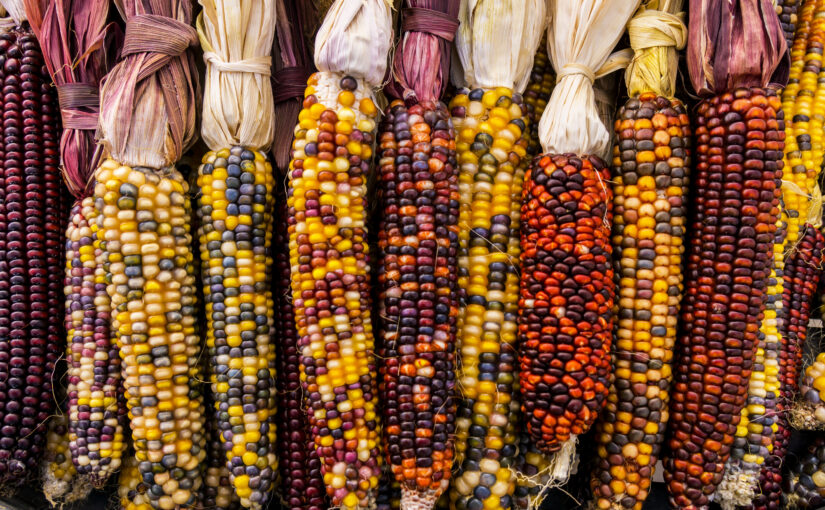
In 2022, Charlsebridge Press published Keepunumuk: Weeâchumun’s Thanksgiving Story to transform the story of this holiday that so many Americans take for granted. The inspiration for this children’s book came from the idea of hosting a “Decolonized Thanksgiving,” and it creates a new story that puts Native peoples—and nature—at its heart: Two children from the Wampanoag tribe learn how Weeâchumun (corn) persuaded the First Peoples to help the newcomers (the Pilgrims) survive in their new home.
“I think it will play an important role in a larger, Native-led movement to educate the American public about Native Peoples, our histories, and the contributions that we make to this country. It’s very important to underscore that this book is reaching children. I strongly believe that children are the pathway to the social change their parents learn. When children learn, their parents learn. For children who read this book as their first exposure to Thanksgiving, Keepunumuk will shape their baseline understanding of the Wampanoag peoples and all Native Americans by extension.” —AlexisBunten (Unangan and Yup’ik), co-author of Keepunumuk and co-director of the Bioneers Indigeneity Program
3 Simple Ways to Teach Children About Thanksgiving
As parents and authors of the children’s book Keepunumuk: Weeâchumun’s Thanksgiving Story, Alexis Bunten, Anthony Perry, and Danielle Greendeer strove to create a story that gets ahead of the stereotypes that are so often children’s first exposure to the narrative of Thanksgiving. They believe that the holiday can be celebrated in a way that shows gratitude to the plants and animals native to North America, while not shying away from the true history of this country. In this article, the authors offer three hands-on ways to help children learn the real story of Thanksgiving and integrate the lessons from Keepunumuk into their holiday traditions.
In 2016, Bioneers made a commitment to decolonize Thanksgiving by recognizing and sharing the truth of what this holiday means for Native Americans and all Americans. We’ve collected a variety of resources to learn more about what it means to decolonize Thanksgiving, including articles, videos, and curriculum on how to “Indigenize” the holiday and what decolonization encompasses that can help you start conversations with your family and friends, and create new traditions. You’ll also find an interactive map that will show you whose ancestral territories you’re living on.
Healing From Colonization on Thanksgiving and Beyond
Edgar Villanueva and Hilary Giovale share an ancestral bond that is far from unique, but one that is rarely acknowledged. Edgar is a member of the Lumbee Tribe of North Carolina. For generations, his family has lived in the same region where Hilary’s ancestor received a land grant after his family migrated from Scotland in 1739. Now 280 years later, Edgar and Hilary reach across the Thanksgiving table to bridge the painful colonial gap.
With Thanksgiving around the corner, millions of families across the country are preparing to celebrate one of the more loved holidays on the calendar. Most look forward to the day as a time to take a break, to be with family, and to enjoy a meal together in the spirit of gratitude, but for many Native Americans, Thanksgiving is a national day of mourning over the genocide that took place throughout America. Here are some ideas for new traditions you can include at your Thanksgiving this year to better honor the Native Americans, immigrants, and their descendants who contribute to our country’s diversity.
By Alexis Bunten, Anthony Perry, and Danielle Greendeer
As more Americans become aware of the ongoing effects of stolen land and slavery in the United States, many are becoming increasingly concerned about Thanksgiving. Most Americans cherish the turkey and family get-togethers that mark this holiday, but many recognize that the story didn’t turn out so well for Native Americans. Some Native Americans consider Thanksgiving a Day of Mourning, but many of us have conflicted feelings about it.
As authors of the children’s book Keepunumuk: Weeâchumun’s Thanksgiving Story, we strove to create a story that gets ahead of the stereotypes that are so often children’s first exposure to this narrative. Our take on Thanksgiving is that the holiday can be celebrated in a way that shows gratitude to the plants and animals native to North America (see 3 ways to Decolonize Thanksgiving) while not shying away from the true history of this country.
Image of the cover of Keepunumuk courtesy of Garry Meeches Sr. and Charlesbridge Press
As parents, we are also aware of children’s social and emotional development stages. We were very thoughtful in how we introduced concepts and themes around the holiday to our children who were of preschool age when we started writing this book. The easiest way to introduce Thanksgiving to young children is to read Keepunumuk to them.
After that, try the following three easy Native American-inspired suggestions to help young children to integrate the lessons introduced in Keepunumuk.
1. Connect to Nature
Try to make a Thanksgiving meal with food indigenous to North America, and have your children help pick and cook the produce. Danielle is a seed keeper and has helped to revive the Wampanoag traditional corn (see A Thanksgiving Lesson in a Handful of Corn). You can serve the Three Sisters — corn, beans and squash — and explain how the sisters help each other to grow strong and healthy. This year, Alexis is growing the Three Sisters from heirloom seeds for the second time. Spending time in the garden with her daughter is a way for them to connect with nature by being outside and caring for the plants as they watch them grow. Tony is also raising the Three Sisters in his garden with his family in England, using seeds of plants raised by his Chickasaw ancestors.
Here’s a Three Sisters curricular resource and craft written to Kindergarten standards, but these could be easily modified for other grades and contexts.
Author Danielle Greendeer with the King Philip Corn
2. Help Others
We will never know the “real reason” why the Wampanoag decided to help the Separatists, now known as Pilgrims, to grow their indigenous foods. It is possible that they thought an alliance with the settlers would strengthen their position politically vis-à-vis other Native groups in the area after their population was decimated by disease. They may also have simply wanted to help others in need. Perhaps it was a little bit of both. Regardless, the theme of helping others lies at the heart of Thanksgiving, no matter what background you come from. Make a new tradition by asking your young children to “help at least one other person, plant, or animal” on the holiday. Ask them to share at the table who they helped and how that made them feel.
3. Honor Elders
One of the things that we love most about Thanksgiving is gathering with family across generations. The dominant American culture has divided families into nuclear units, dividing families by generations. However, for more than 99.9% of human history, our species has lived in intergenerational groups, where elders are revered for their knowledge and help in taking care of children. Ask your young children, “Who is an elder?” and “Why is it important to honor elders?” and your heart will be warmed by their responses. Have them make a present or put on a play for an elder in your life or community.
Here’s a crafting and play activity developed for 1st graders that can be adapted for other grades and contexts.
Author Danielle Greendeer’s mother Nokomis with her grandchildren, who inspired Keepunumuk. Photo Courtesy of Danielle Greendeer
More Helpful Resources
The activities shared in this article and many more can be found at the Bioneers Indigeneity Curriculum webpage. The early grade Thanksgiving curricula have been developed to Massachusetts State Standards and take into account social, emotional, and cognitive learning as well as different learning styles. All of the curricula has been created by Native content developers.
Mer Young is an Indigenous (Chichimeca and Apache) socially-engaged, Southern California-based artist whose body of work includes collages, drawings, paintings, and murals. She is the founder of Mausi Murals, and she has been widely exhibited nationally and internationally. Some of her public artworks can be found in a wide range of Southern California towns, including Long Beach, Glendale, South Pasadena, San Pedro, Paramount, Anaheim, Tustin, and Los Angeles.
Bioneers reached out to Mer to help design the beautiful look and feel of Bioneers’ latest podcast, INDIGENEITY CONVERSATIONS. She worked closely with the hosts and guests to create the singular images of each guest that appear alongside each episode, highlighting the power and depth of the work each of these leading activists.
She was interviewed by Bioneers’ Polina Smith.
Polina Smith (PS): Mer, you have had such an extraordinary career as an artist and activist. How did you start off on your path as an artist? Were there specific people and/or events that inspired you?
Mer Young (MY): I have always been moved to help others. When you go through the trenches yourself and are able to come out of them, you know what many people have to go through, so it was natural for me to want to give back. As a youth I used my gifts to help me survive through some hard times in very hostile and volatile environments: art was my outlet, but it wasn’t until my early adulthood that I began to use my art as my voice to create change. The light went on, and I felt a calling from within.
Many people have influenced me: my son, some of my relatives, my shimá (my mother), those from my community, the Trask sisters from Hawaii (Dr. Haunani-Kay Trask and Mililani Trask), Assata Shaku, Angela Davis, James Baldwin, Wendsler Nosie Sr., Lozen, Dahteste, Gouyen, Goyaałé, Casey Camp Horinek, Corrina Gould; the list goes on, but these individuals molded me into doing better for the greater good.
PS: Is there a particular project of yours that you feel especially, deeply committed to and passionate about?
MY: I have been creating collages inspired by the “Land-back” movement. Land-back is long-term, lifelong work. All over North America, Native folks are seeking to bring a number of traditional lands back into Indigenous hands. In this collage project, I reimagine 1900 photographs that were taken by privileged men with cameras who took posed photographs of Natives in unnatural settings in the 19th and early 20th centuries. I try to learn about each photograph: the individual in the photo, their tribal nation, the land they came from, etc., and then I cut the original image and place it into a photo of their actual ancestral lands. Photographs are long lasting, like time capsules, so I felt it was important to me to reframe those images and give them back their lands in this symbolic way.
PS: Do you have any projects on the horizon you’re really looking forward to?
MY: I am also a muralist, and I am always happy when I get to go out and paint and create public art. I have a project coming up, and the wall is approximately 30x30ft, so it will be nice to get out in the sun and create something on a large scale for the community.
PS: What role do you hope your art will play in the world?
MY: My hope is to bring awareness, to invoke change, to inspire the hearts and minds of the young and of future generations.
PS: When things feel challenging and seemingly insurmountable, what keeps you going?
MY: My family keeps me going. I have a four-year old son who looks to me for love and guidance, and fighting for my people keeps me going as well. I was always taught never to break, to keep pushing and have courage to move out of whatever vortex you’re in and to show resilience. I believe there is nothing that can stop us from overcoming what’s wrong on this planet. Even in death, our lives move into the spirit world, and from there we can live through our relatives and ancestors to keep the struggle and the good work going forward.
PS: Could you share some words of inspiration to young artists who may be feeling scared or just aren’t sure where to begin?
MY: I was told as a youth that art wouldn’t take me anywhere, but when I created, it did. It provided a safe place from all the ruckus around me. I kept at it and continued, and I found my voice, so my advice is: Continue doing what you love, and the rest will follow. Show your work to your relatives, to your peers, to your community, and they will see your gifts. They will have different things to say, good and bad. Take them both equally, and that will help you get better at what you do. Never be afraid to use your gifts: they were given to you for a reason, so listen to yourself and your heart. It is always an honor to share your talents; it brings life and appreciation even when no one is looking. You can begin by simply putting your work on the wall with tape. Be proud of yourself because no one, other than you, created those marks. You can only get better and soar beyond your imagination. The best part is that there is no end in the universe, we are a part of that, so there is no end to us. Ahéhee’
PS: Thank you Mer, for taking the time to speak with us today and for your extraordinary work!
Patricia Watts, the founder (in 1997) of the groundbreaking, highly influential nonprofit ecoartspace, has been one of the world’s most important curators and leading figures in the “eco-art” movement for over a quarter century – for a detailed bio and information about her organization’s work, see: ecoartspace.org
She was interviewed by Bioneers’ Polina Smith.
Polina Smith (PS): Patricia, how did the idea for ecoartspace first come about and how has it evolved over the years?
Patricia Watts (PW): It was conceived in 1997 in Los Angeles. I was a mother of a two-year old and had recently lost a job working on a museum-in-development centered on the creative process. For three years I had researched artists working in and with nature alongside a staff of creativity theorists, anthropologists and exhibition designers. As with most of the unfortunate events in my life, I turned this experience around and decided I wanted to create a place where children and their families could learn about the principles of ecology through immersive environments created by artists. I came up with the phrase ecoartspace, and the following year I created one of the first websites of artists addressing environmental issues.
In 1999, I was introduced to Amy Lipton, a curator in New York City, and we decided to partner and move forward as a team, together in our vision but apart geographically, she on the East Coast and me in California. Our mission was to reach out to museums, botanical gardens, and nature centers to educate them about the work that artists were doing focused on ecology. The actual “place” never came to fruition, though we persisted for twenty years curating over sixty art and nature exhibitions between us, and we gave dozens of lectures and participated on many panels nationally and internationally. Combined, we worked with hundreds of eco focused artists.
In December 2019, I decided to remake ecoartspace into a membership platform, which launched in January 2020, just weeks before the pandemic lockdown. It worked brilliantly. The timing was perfect as artists were looking for ways to connect online. We started doing Zoom events, inviting our members to share about their work. Artists connected with each other and new collaborations ensued. We launched calls for artists to do online exhibitions and publish companion books. The first year we had around 400 members and by 2021, we ended the year with 700. This year, 2022, it’s looking like we will end with 800, although we’ve had almost 1,000 members join since 2020. Over 200 members are from 26 countries outside the United States. And, we have another 1,000 followers who subscribe to our monthly newsletter.
Karen Hackenberg, Amphorae ca. 2010-2011, oil on canvas, 24 x 48 inches
PS: Was there a project that took place during the lockdown period that you felt was especially inspiring?
PW: During the lockdown there were wildfires raging all over the world, in Australia, Brazil, California, etc., that were burning millions of trees. The loss was so profound, and we were all making connections between the difficulty breathing caused by both COVID-19 and the smoke from the fires. We were also making connections with how mycorrhizal networks connect forests with rivers and creeks. The lights started going off, so we created a monthly Zoom event called Tree Talk hosted by Sant Khalsa, in which our members making work about trees can share their work. We then put out a call for artists for an online exhibition titled Embodied Forest, which launched in September 2021. Almost 200 artists applied and 90 artists were included. We have now printed the second edition and only have a few copies left! A third edition is in the works.
PS: Is there a project on the horizon you’re especially looking forward to?
PW: This year we put out a call to our members to submit recipes and remedies to heal the “man” and heal the land. It’s called Earthkeepers Handbook. Artists or scientists (who are also members) can submit how-to instructions, manifestos and meditations to help make the world a better place. Kim Abeles, who wrote Crafts, Cookery and Country Living, a homesteading book, in 1976, and is also a member, was the inspiration for this year’s project. Abeles, along with member White-Feather Hunter, will be reviewing the submissions and coming up with a curatorial focus for the layout of the book. This year we decided to be more inclusive and we will include all submissions, with guidance if needed. Submission fees go towards the design of the book and honoraria for Abeles and Hunter’s time. The handbook will be available online at the end of this year and be a printed book early 2023.
ecoconsciousness catalogue 2020, Maru Garcia, Vivarium I, 2018 (detail)
PS: What do you think the role of the arts is in the eco-movement? How can arts serve to move the conversation forward?
PW: Most of what we do not know is unseen, happening behind our backs, or it is simply invisible to us, like carbon emissions in the air. Today’s artists are in a way more like scientists, doing the research to understand the behaviors and lifestyle choices we make to offer a different way of seeing and thinking about the role humans play in the destruction of our ecosystems. Artists are making the invisible visible. Their work offers a point of departure for having real conversations about the fate of our planet and human survival, topics that are not exactly joyful or entertaining. They are taking on the hard realities that we face and making their understanding of what is happening into visual, audible and experiential art or aesthetics.
PS: When things feel hard and insurmountable, what keeps you going?
PW: I’m all about truth. I’m not someone who sticks my head in the sand, although I’ve definitely tried to survive situations maybe a bit too long that were unsustainable. I always say we are all on a learning curve. It takes time to be willing to face the hard truths that we are currently living in. I mean, how can we tackle climate when most people are just trying to survive, making just enough money to keep a roof over their head? If those in power or the wealthy do not care about the majority who are struggling and do not feel safe due to racism or violence against those who are different, we are fighting for more than just a reduction of carbon. There is so much not right in the world, we have so much catching-up to do, to feel heard and be free to be ourselves, but people such as MacKenzie Scott give me hope. She has donated billions to hundreds of nonprofit organizations, which will hopefully make a big difference. We definitely need more Robin Hoods today, and we need to live in truth.
PS: Do you have any words of wisdom you would be willing to share with young artists wanting to combine their work with environmental advocacy?
Embodied Forest catalogue cover, left, Laura Gorski, Sprout in the Encounter, 2021 (detail), and right, Carol Paquet, Shrouded Green, 2020 (detail)
PW: If you are an artist who is concerned about ecological issues, use your skill-set to make work that speaks to the people in your community. I think this work is more about quantity than quality, though quality is always important. You don’t need to be a part of the larger art world or to be in a big city to make this work. It’s antithetical to be concerned about the hierarchy of the artworld when we need all hands on-deck. In fact, I go as far as to say that the work that you do should be replicable; that you should encourage those around you to also do similar work. A few years ago, I started making Action Guides that allow artists to perform other artists work as their own. Yes, sure it’s important to acknowledge those who have inspired your work and to consider how your work is different than work by other artists, but when we are trying to save the planet and humanity, I think we can let go of the idea of originality, especially in this day and time when imagery and information are so ubiquitous.
PS: Is there anything else you’d like to share?
PW: Artists are creative divergent thinkers who can inspire new ways of seeing and of addressing the ecological problems of our era. They can serve as healers in this time, and they are here in large numbers because this is their time to speak; and now is our time to listen.
PS: Thank you so much, Patricia, for taking the time to speak with us and keep up the incredible work!
Lindsay Wood, widely known as “The Tiny Home Lady,” the founder and CEO of Experience Tiny Homes, is an expert on tiny home design, material/appliance selection and builder analysis. She has been a leading figure in developing innovative strategies to change the way tiny homes are designed and purchased, and she serves on the board of the Tiny Home Industry Association.
She was interviewed in October 2022 by Bioneers’ Arts Coordinator Polina Smith.
Polina Smith (PS): Lindsay, how did you become The Tiny Home Lady?
Lindsay Wood (LW): In 2017 my husband and I were living in Marin County, and while it was an amazing place to live, we were renters, and we figured out that after seven years we had contributed up to $100k to someone else’s dream of building wealth (our landlord) instead of our own.
We thought about it and realized we had a few basic desires: home ownership, living simply with a lighter footprint on the planet, and the ability to move around. After exploring our options, we landed on the idea of a movable tiny home, so we flew out to Arlington, Texas, and went to a tiny home festival. On the last day of the event, in the final hour, we met our future builder. We signed up, started the design, and placed our deposit of $45k on a $90k build.
While we were waiting for our house to arrive, we started downsizing our stuff in preparation, but after three months, after we had paid our second deposit, the builder kept extending the delivery date, until one day, six months after we had ordered the house, they called and said, “We are going out of business, so you need to come pick up your tiny home.”
We drove from California to Utah, and the day we picked up our (unfinished!) home it was a hundred degrees. We had no experience towing such a large load and had trouble with the brakes, but we persevered and made it back. After eight months of DIY work with a lot of help from family members lending their expertise in building, welding, painting, and all-around support, we hit the road, traveling from California to Texas.
But on day-two of our travels, we found out that our builder had undersized our axles and tires, so we had to spend $5400 more to fix that. Overall, we wound up spending $50,000 over our initial budget, but we made lemonade out of the lemons the builder had served us because we took everything we had learned from our experience and turned it into the GO TiNY! Academy, so other folks interested in a tiny house could avoid all the problems we had had. The GO TiNY! Academy born out of our challenges now supports people to get the information and guidance they need to navigate their own journey towards their dream Tiny Home. Our goal is to save people time, energy and money in that pursuit.
PS: Do you think tiny homes can play a role in helping address the housing and climate crises?
LW: I do think tiny homes are uniquely positioned to help with the housing crisis and to help reduce greenhouse gas emissions. Smaller-sized homes mean more living spaces can be placed in back and side-yards, giving families the option of housing family members and friends, or providing a rental unit that helps both the homeowner and the renter. Having more housing stock in a more compact area makes living more affordable.
Smaller homes use far fewer building materials, so their construction has much less environmental impact, and creating “infill” housing (i.e., that fills into already existing cities, roadways and infrastructure) results in less sprawl, less destruction of natural landscapes or agricultural land, and less strain on police and fire departments and utilities.
PS: For you personally, what have been the unexpected gifts of tiny house living?
LW: The less stuff I own, the more flexibility I have, the more I can travel, and the more energy I can devote to building a business. I don’t get as caught up in the process of buying stuff, which is very time-consuming. I only buy what I really need, and I have really enjoyed reducing the items I own because they actually end up owning you.
And because I go to many Tiny Home events every year, I have developed a whole new set of friendships that are a beautiful connection to this growing industry. I have also really enjoyed the mentorship of some developers, business owners, real estate investors and others. This lifestyle has been a great way to align with people doing good work on this planet.
PS: And what have the biggest unexpected challenges been?
LW: The biggest unexpected challenge was right at the beginning when our builder went bust in the middle of building our home. While building a business has its challenges, diving into this industry through that really traumatic experience was one that I do not wish on anyone.
PS: On a policy and political level, what are the biggest challenges tiny homes face? What changes would you like to see implemented in the next 5 years?
LW: In our country we have two main areas that need to be addressed for tiny homes to become more available: building standards and zoning. The good news is that a new International Tiny House Provisions document just got released, so at least there is now a document that describes four types of building standards for tiny homes. This is a terrific start.
But outdated zoning regulations (that dictate what is allowed and not allowed on land) are the biggest challenge. There is an ugly side to the history of zoning, as realtors through most of the 20th Century wouldn’t sell or rent homes to members of minorities seeking to move out of inner cities and banks refused to give them mortgages (a discriminatory practice called redlining), and that led to de facto segregation and the separation of “ghetto” neighborhoods from lily-white suburbs. And many, many neighborhoods today don’t allow anything other than large single-family homes with a quarter or half-acre of land around each house.
But for many of us, buying a large home in the suburbs is either out of reach financially, or we simply don’t want that much space to have to take care of. The notion of living in 200-400 square feet goes against the traditional American Dream of owning a big home with a big lawn that has been sold to us through decades of advertising and propaganda, etc., so some cultural attitudes will need to change as well, but that’s starting to happen.
PS: What words of wisdom would you have for anyone considering a tiny home?
LW: Join the GO TiNY! Academy. At $400 a VIP seat in the Academy is 0.5% of the cost of an average size $80,000 tiny Home, and it’s a great way to get answers to your questions and the guidance to ensure you make the right choices. Going Tiny is a transformation. If you are eager to explore if it’s something you’d like to do, check out: TheTinyHomeLady.com.
Patsy Craig is a curator/producer, author/artist and Indigenous rights advocate who has for over 20 years generated and cultivated a wide range of cross-cultural collaborations in the fields of art/design, music, urbanism, and environmentalism. This output has included publications, exhibitions, and events, including lectures, concerts, symposia, workshops, etc.
Six years ago, Craig turned her focus to the environment and Indigeneity after spending time at Standing Rock to support the water protection movement resisting the infamous Dakota Access Pipeline. Since then she has continued her activism and seeks to provide platforms that contribute to amplifying Indigenous world-views. Since 2020 she has been operating a cultural project called AWA in Cusco, Peru that showcases environmentally focused art and the work of Indigenous artists.
HubertTayori1@MINE
Polina Smith (PS): To refresh our memories, Patsy, how would you describe AWA?
Patsy Craig (PC):AWA is a word that in Quechua, the native language of 14 million Peruvians, refers to weaving and the notion of interweaving. So that is what I do, I interweave visual culture in order to amplify Indigenous world views because to me it is clear that we have much to learn from ancestral wisdom. This learning is long over due and desperately needed at this point in our human story. A story that is currently driving us towards ecological collapse due to our ethically untenable relationship to nature. With these works of art I hope to inspire a reconsideration of all that drives us.
AWA is based at 11,500 feet in the ancient capital of Cusco in the Peruvian Andes- one of the oldest continuously inhabited cities in the Americas conceived as the belly button of the world. From this vantage point, my work focuses on environment, Indigeneity, ancestral knowledge, and decolonisation. Through research, art, and education I aim to provide unique access to cultural traditions that acknowledge, enrich and perpetuate sustainability and biodiversity as the means to ensure mutual flourishing. Today, such traditions are calling out to be seen, understood and honoured.
RaynerMikiri@MINE1
PS: Since our last interview in 2020 tell us about what you are up to, how is AWA evolving?
PC: Well so much has happened since we spoke last, the world has completely shifted, for one! Here in the Peruvian Andes many understand that this point in time is one of transition, of both personal and collective reflection and re-action. In these sacred lands many identify this time as the beginning of a new cycle, the Pachakuti, which in the Andean tradition refers to the cycle of changes of the earth. The Pachakuti is manifest in the union of the ancestral and the here and now. In this way, we can describe ourselves not as who we are or what we were, but who we are becoming.
Given the current state of planetary affairs, I hear our earth mother’s calls loud and clear and I know that if I do not pay heed then I am out of sync. So I feel the need to shift with her, and I do my best to envision relevant responses.
In this light I guess the primary shift with AWA since we spoke over two years ago is that it is evolving into more of a project than a gallery, per se. This is exciting actually. It means that I am out in the field more often generating projects to do with art of course but that the focus is more on collectives or communities rather than individuals. The idea is to allow for individuals to shine in this context but to embrace what I feel is closer to the essence of the Indigenous ethos. In Andean culture we call this Ayni, which embraces the concept of reciprocity or mutualism. Ayni and the practices related to Ayni remind us of the interconnectedness of all life and how to live in relation to one another. So this is the essence of how I choose to evolve my practice that is not accidentally located in the heart of Andean culture.
YesicaPatiachi2@MINE
PS: What new projects are you generating?
PC: There are three principal projects that I have been developing:
One focuses on an art collective from a native community in the Madre de Dios region of the southern Peruvian Amazon known as the Harakbut. This collective is called ETOCHIME. In their native language Etochime means “our roots” and they identify their artistic practice as such: PAINT SO AS NOT TO FORGET. The members range in age from 4-44 and are essentially self taught artists. Paint on canvas is not their traditional art form but they have chosen this medium as a means through which to communicate their urgent messages with the outside world. Their imagery consists of lines and figurative representations of their human and non-human surroundings. The lines traditionally are natural plant dyes painted on the body as a symbol of respect to their sacred forest and it is believed that through these lines a more profound connection to the spiritual beings of the jungle is possible. The Anämëi tree is at the heart of their origin story. Just as the tree saved the Harakbut and gave rise to many species of animals and plants, the Harakbut iconographies also originated there. The tree became a symbol of unity, respect and harmony with the forest and other beings of the Harakbut worlds.
Yesica Patiachi is the driving force behind Etochime and was chosen to represent all Indigenous Amazonians to address Pope Francis when he visited Peru in 2018 warning that the Amazon’s indigenous people have never been so threatened in their territories as they are now demanding an end to the relentless exploitation of the region’s timber, gas and gold. The illegal gold mining so prevalent in Madre de Dios has had a tremendously negative impact on the cultural survival and territories of the Harakbut peoples.
PercyTayori1@MINE
Over the past year I worked with Etochime to create paintings that represented their culture and the impact of gold mining on their communities. This body of work was presented in San Francisco, California at both the Bioneers conference 2022 and elsewhere in SF alongside works by San Francisco Art Institute alumni in an exhibition I curated titled MINE: What is Ours in the Wake of Extraction. This was geographically and historically relevant of course because both Northern California and Madre de Dios share a connection to gold mining. I also curated an exhibition in Peru of their works which was recently presented in Cusco entitled ETOCHIME Children of the Forest: The Infinite Lines of the Harakbut. A more recent proposal with Etochime is in its initial stages so I will only say briefly that it has to do with dreaming, an important aspect of theirs and all Amazonian Indigenous cultures.
The second project involves my translating an extraordinary book called Soy Sontone, an account by a Harakbut elder of his memories pre-contact. It is the first publication by an indigenous person in a situation of isolation in the Amazonian forests as told by father to son. The testimony of Antonio Sueyo Irangua as transcribed by his son Hector Sueyo Yumbuyo, immerses us in the life of the Harakbut, an Indigenous people whose territory is located in the region currently known as Madre de Dios. The first half of the 20th century the Harakbut remained isolated from the rest of society until they were contacted by rubber barons and Dominican missionaries, thus Antonio, or Sontone, lived his youth without contact with what he would later know as Peru. These memoirs show us a personal view of the dramatic changes suffered by the Amazonian peoples due to colonisation; how in the span of Antonio’s lifetime, their world changed completely. Alongside Luis Fernandez, director of CINCIA (Centro de Innovacion Cientifica Amazonica), I received a grant to translate this book for CEES at Wake Forest University.
The third project is with a women’s weaving collective from a remote Andean community focusing on the impact of climate change in the Cusco region.
PS: So you are working with Andean communities now, how would you compare this to working in the Amazon? What characterizes each?
Video walk-through of the exhibition MINE : What is Ours in the Wake of Extraction
PC: It is totally different. Peru is divided into three distinct regions: extreme jungle, extreme mountains, and extreme desert. That is what makes Peru so geographically spectacular. Although distinct these areas are coherent and have always maintained interrelation. One of the sacred plants of the Andes for example is coca and it is grown in the Amazon. What distinguishes the Andes from the Amazon of course is altitude and vegetation. Both regional cultures are intrinsically defined by their natural surroundings; by the local flora and fauna, which in regards to artistic practice is manifest both iconographically and materially.
Pre conquest, paint is perhaps more prevalent in Amazonian cultural traditions and weaving is the traditional art form in the Andes. Both of course implement natural dyeing techniques and both employ abstract patterning in their respective visual iconographies. Weaving is integral to the Andean cosmovision and Andean weaving is one of the worlds most sophisticated textile traditions still practiced widely to this day. I have been collecting Andean weavings for quite some time so I’m really excited about further developing my relationship with these remote Andean weavers.
YesicaPatiachi4@MINE
PS: How is weaving integral to the Andean cosmovisión? Please elaborate.
PC: Weaving is the aesthetic manifestation of the entire Andean cosmovisión and all of the tangible and intangible elements that identify it. This cosmovisión embraces the notion that humans are but one component in the biosphere within which all living organisms evolve. It is the belief system that links the human and non-human with the cosmos, where the native language for example does not have a word for “it,” only pronouns that signify the position or location of an entity in relation to surroundings like “this, here” or “that, there.” This culture of life that celebrates and venerates the Pachamama or earth mother as the supreme universal intelligence is a perfect model for the new- old Rights of Nature movement proposing legislation that recognises knowledge that has long been silenced by European hegemony as fundamental to planetary survival and indeed flourishing.
So from this place, weaving is central and universal- the words “text” and “textile” share a common root in the Latin word texere, which means to weave, for example. To me, and to many, ancient Peruvian woven textiles were essentially a cultural database, a library if you will, of all that is culturally significant practically, intellectually, and esoterically. My project involves generating dialogue and inspiring new textile works that are representative of our times amongst a remote community of women weavers. Although there have historically been other climate crises for example some classify this one as the anthropocene- a geological era whose characteristics, the sixth great extinction event and general environmental collapse, as driven by human activity, primarily the unsustainable use of land, water and energy. I would love to see this represented in contemporary Peruvian woven works.
HubertTayori2@MINE
PS: Tell us a bit more about the exhibition you brought to San Francisco over the summer MINE: What is Ours in the Wake of Extraction, will your focus now be on extraction and its impact on Indigenous communities?
PC: In that all of the environmental issues that we are up against relate to extraction and our addiction to what this “provides” us, then yes. The exhibition MINE: What is Ours in the Wake of Extraction was interesting because it combined sensibilities with Indigenous non-Western artists alongside Western artists, attracting an audience that might not otherwise have been present. I think it was a welcome and appreciated learning curve for all Westerners involved to learn about the issues at hand from front line communities. And of course an opportunity for Indigenous artists from the Peruvian Amazon to have their voices heard. As the title suggests, my aim was to inspire a realisation that we are all interconnected and responsible however far off the context. I hope to work with Native American artists in the future and am excited by this prospect.
YesicaPatiachi1@MINE
PS: Finally, in the last interview we spoke a bit about the plant medicines that are part of traditional Peruvian culture, do you have any updated thoughts in this regard?
PC: Yes I do. Since last we spoke I have initiated a relationship with the plant known as Wachuma or San Pedro. I feel a calling from the plant and am interested to explore it further. It speaks to me and after a powerful experience with Wachuma in the past year I am working with a Peruvian master to engage more profoundly. I am now open to receive the wisdom of the plant and with this master we will be looking at dreams as a source of significant spiritual knowledge and information. Essentially I will be learning from the plant and the guidance of a master healer, how to dream… All for now!