Not All Food is Created Equal
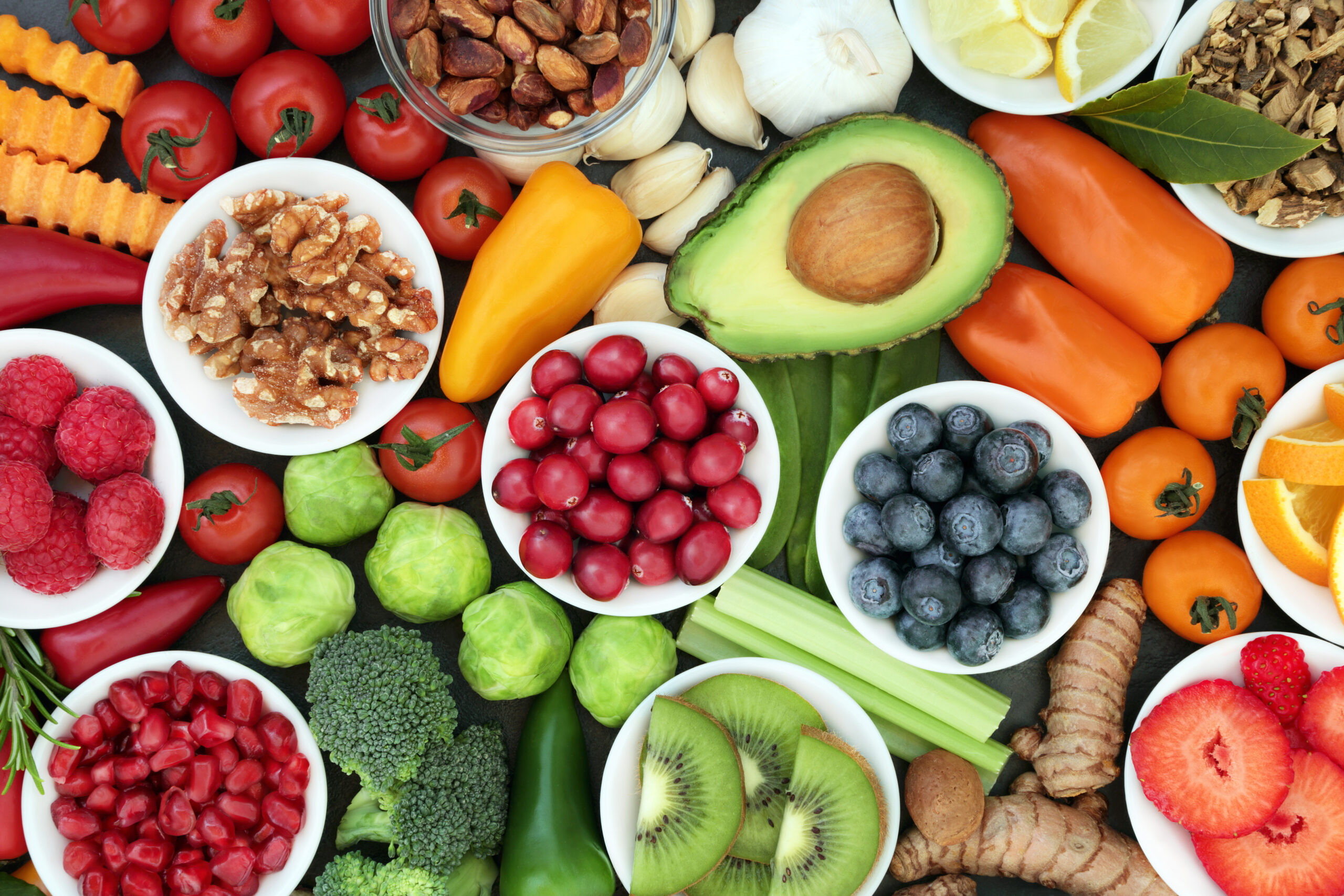
Dan Kittredge is an organic farmer in Massachusetts following in the footsteps of his parents who are organic farming movement pioneers. As a farmer, he became interested in the flavor and aroma of food, and turned his attention to researching the complexities of food quality and nutrient density. Dan has worked with researchers, NGOs, and farmers in India, Russia, and Central America. In 2010, he founded the Bionutrient Food Association to educate and empower people to make healthy food choices based on research and science. This article is an edited transcript of Dan’s talk at a recent Bioneers Conference.
My parents were back-to-the-land homesteaders starting in the early 1980s. They bought land and built a farm. Their day job was running the Northeast Organic Farming Association, commonly referred to as NOFA. They wrote some of the first organic standards in the country and produced a conference; that was their day job, but their lifestyle was the farm.
After working on their farm through my teens and 20s, I got married and realized I needed to make a living. Like a lot of farmers, I wasn’t able to because the farm suffered with pest pressure and disease pressure. So I started studying beyond the organic rubric because organic was not providing me the success I was looking for. I looked to nature and saw plants flourishing, but didn’t see plants flourishing in my fields.
I did a lot of research and shifted my farming practices, still staying within an organic framework. I got to a point where pests were dissipating, diseases were dissipating, yields were going up, flavor was going up, shelf life was going up, cost of production was going down, and I was making a living farming, working 20 hours a week. At that point, I felt obliged to start talking about what I was learning. I knew the permaculture, biodynamic and agroecology communities, but none of them were focusing on the nutritional caliber of food, so in 2010, I founded an organization called the Bionutrient Food Association, focusing on the nutritional quality of food as the objective.
By quality, I’m talking about flavor, aroma, and nutrient value, not aesthetics and uniformity, which is how a lot of food is defined by the industry today. Our initial work for a number of years focused on education: conferences, courses, workshops, etc. We found a lot of success in educating people about how nature evolved things to grow, as opposed to a narrow focus on NPK fertilizers and soil pH, which are the things that people are taught in universities about agronomy. We decided to teach people how nature has been growing plants for hundreds of millions of years, and as we did that, we found success across multiple ecosystems, with various scales, and with different crops, and tried to figure out a way to bring that to scale.
Economics is a powerful force in today’s age. Our goal was to figure out how to align economic incentives with ecological benefits and human health benefits. If we could provide a dynamic where people buying food could differentiate between a higher and lower nutritional content of, for example, carrots, our supposition is that people will choose the higher and leave the lower quality on the shelf. The work we’ve been doing for the last eight years from a research standpoint is characterizing that variation, identifying what causes it, and developing ways to assess it.

From a foundational standpoint, our vision is to go beyond labels and certifications. It’s not about if you are organic or not, if you are regenerative or not, if you are local or not. We want to give people the ability to actually measure the nutrient levels of the food in real time, and the science with which you would do that is called spectroscopy. That’s how the Hubble space telescope works. It’s how the James Webb telescope works. We can read the atmosphere of a planet 10,000 light years away and determine that it has methane in it. If we can do that, we should be able to tell what a carrot a few millimeters away is made up of.
We built our first handheld meter in 2017 and our first lab a year later. We had people send in carrots and spinach from across the U.S., from grocery stores, farmers’ markets and farms, organic, and non-organic. We wanted to survey the supply chain, to find out how much nutrient variation there is. In 2019, we set up our second lab in California at Chico State University. That year in both of our labs in Michigan and Chico State, we had farmers send in crops from the field in triplicate. They would harvest the crops, they would pull samples of the soil, and they would answer management data questions: What was the variety? When did you plant it? How did you prepare the soil? What’s your fertility program? So we could overlay nutrient variations in food against managing practices and causal factors against soil metrics to see what patterns we could find.
In 2020 we set up our third lab in Europe. Farmers sent in crops from their fields for testing and citizen scientists sent in crops from grocery stores and farmers’ markets. We tested samples for four years – 10,000 crop samples, 25 different crops, hundreds of farms, from four continents – to understand the nature of the supply chain and what causes nutritional variation in foods. All the data is available on the Bionutrient Food Association website and is in the public commons.
As an example, let’s look at sulfur, which is an element or nutrient the body needs to function. In carrots, the lowest level we found was 8.41mg per 100g. The highest level was 33.19. That’s a 4x variation. If we assign 100 to the highest level, the vast majority of the samples were between 20 and 40 out of 100. Most carrots have relatively low levels of sulfur in relation to what they could have.
Phosphorous in carrots, we found an 8x variation. Most carrots tested in the 27th percentile. The vast majority of the sample sets were below the 50th percentile. Most crops have relatively low levels of nutrients in them in relation to what they could have. There is a presumption that all food is uniform. We have found that that is absolutely not the case.
What about antioxidants? Antioxidants are known to protect cells against free radical damage and help prevent disease. Antioxidants are measured in FRAP (Ferric Reducing Antioxidant Power) units. In carrots, 4.92 FRAP units per 100 grams is the lowest we found, 195 is the highest we found. That’s a 40 to 1 variation.
In the old days, before they invented pharmaceuticals, medical practitioners talked about medicinal plants, which have intense flavor and aroma that are associated with compounds such as polyphenols, terpenoids, and alkaloids which promote good health.
Humans have evolved with a capacity to discern relative nutrient levels in food through flavor; a whole bunch of our DNA is associated with discerning nutrient levels with our noses and our tongues. It’s the high flavonoid compounds that are understood to be anti-cancer, anti-diabetes, and protect against heart disease, etc.
Our testing showed a 20x variation in flavonoids. Most samples were in the 7th percentile. The vast majority of the samples were below the 20th percentile. Almost everything out there in the supply chain is relatively poor in relation to what’s possible.
What causes that variation? Some people say genetics. We tested different carrot varieties–Napoli, Bolero, Nantes, Mokum. We found a wide range in nutrient levels in the same crop variety, and have not found any connection between genetics and nutrient levels.
Then we tested soil type and have not seen any connection between soil type, bioregion, or climate zone, and nutrient levels.
Some people say point of purchase: we tested crops from farm stands, CSAs, farmers markets, home gardens, and stores and saw quality variation in all categories. We see variation everywhere. None of these dynamics is sufficient to predict quality.
Based on our testing, regenerative, organic, biodynamic, and permaculture also do not seem to, from a scientific standpoint, connect to increased nutrition. None of these various individual factors seem to correlate with increased nutrient levels.
The first question we started with was: What is the spectrum of nutrient variation? We found that the spectrum of nutrient variation was large. Second question: What causes it? What seems to cause it is functionality of the biological system, not individual practices or certifications. Third question: Can you build a handheld, consumer priced, flash-of-light nutrient meter at a consumer price point?
We published the answer to that question in a peer-reviewed journal called Nature: Scientific Communications. The Bionutrient Food Association developed a handheld spectrometer, which is open source technology, to prove the concept. You can flash a light in the store on a vegetable or fruit and get a reading of its nutrient density and discern relative quality. Because nutrient density is associated with flavor, that may be helpful in encouraging your children to eat more fruits and vegetables.
From our research we now know that nutrient variation exists. And we can go beyond labels, certifications, and claims to measure it on a continuum of 1 to 100. That way consumers can make choices based on the nutritional quality of the food.
The challenge is to arrive at an accepted definition of nutrient density for different foods. We focused on beef first because it has a larger ecological footprint than any other food on the planet. More acres of land are used to produce beef than anything else. The hypothesis is if cows eat what they have evolved to eat rather than an unnatural diet of grains, they will be healthier, the land will be healthier, and the people who eat them will be healthier.
Agriculture has a significant effect on climate and ecosystem function, and if we can inspire a shift in the way the land is managed to improve its function that will have beneficial impacts for everyone. In researching beef, we looked at a number of different metrics: in the soil, management practices, feed stocks, and assessments of the microbiome of the animals. Our thesis is that there’s going to be patterns between soil function, ecosystem function, animal welfare, and human health. We are using a scientific method to look for the patterns of nature.
Finally we did human trials. Feed humans this meat and see what happens to them. Take the data from the meat, and the microbes, and the management, and the human health trials, give it to statisticians, and see what patterns they can find.
This is where we’re at right now. It looks like there are eight biomarkers that predict overall system function. Those eight biomarkers are measured and scored 1-100 and that information becomes public. Our understanding is that sensors to measure nutrient density can be built into phones; the cameras in your phone could be a spectrometer. Chinese phone companies have already built spectrometers into the backs of phones. Consumers will be able to test the food at point of purchase. Food can be tested by the grower or in the supply chain. We can have a completely open dataset sharing and learning, where the market can be incentivized to focus on nutrition as opposed to volume and aesthetic.
We feel that this project is important enough that one small NGO should not be doing it solely. A broad coalition of allies should be working on this globally. We’ve proposed a treaty on the definition of nutrient density. We engaged in a listening tour on six continents, and met with nutritionists, agronomists, chefs, corporations, government people, farmers, and eaters and asked them to tell us what you think about our plan. This is a process we think could potentially have a massive impact on the planet, and we welcome peoples’ engagement.
The feedback I’m getting from some of the biggest global food corporations is they want help to transform their supply chain before the public knows about this. They want to get ahead of this before they are threatened by it. We’ve done our market research, we understand that consumers want flavor, nutrition, and are concerned about the well-being of their children. So this is an economic advantage for any food company that is a first mover in the space.
Working in harmony with nature seems to be the best way forward to accomplish the goal of optimizing nutrient density in food. The question is how do we align economics with that, and how do we empower the transition. Most people have been trained in a reductionist paradigm, but they need to be supported in that transition to a holistic perspective. Some of the simplistic talking points such as if you cover crop, all will be well, is detrimental. It is incomplete and it is reductionist. You have to optimize soil health, which is all the levels of life in the soil. There are many tools in the toolbox, cover cropping is one, minimal tillage is one, biochemistry is one. Farmers must be empowered with a full toolbox, without dogmas and empiricism to support them in the process.
We are in the process of collecting the metadata to share and learn together in a mycelial fashion.
Our organization has been educating farmers for 18 years about how to work with nature. We’ve got hundreds of hours of content on our YouTube page, freely available. Now we teach courses. It takes a shift of consciousness required to understand that you are serving nature, you are in right relationship with nature, not that you’re applying practices. If you think that you can go out and do one practice and that’s all it takes, you’re missing the point. The biggest issue is understanding your role in the process.
It’s a shift in paradigm from recommending practices to humble, gentle listening and service. It’s a shift of perspective from a colonized approach to a more Indigenous perspective. The colonized perspective is thou shalt grow a cover crop; thou shalt use compost. In contrast, the Indigenous perspective is: I’m in service to the land, what does it need now? And only when we can get into that place of humility should we expect to be proper stewards.