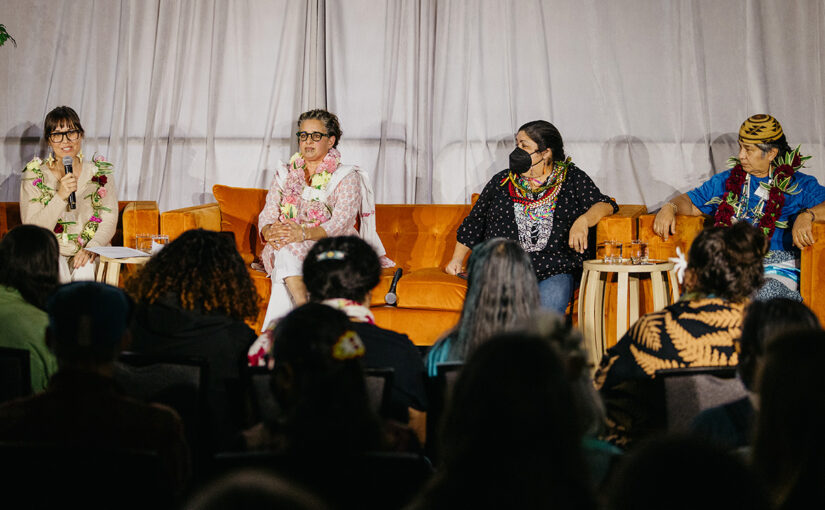
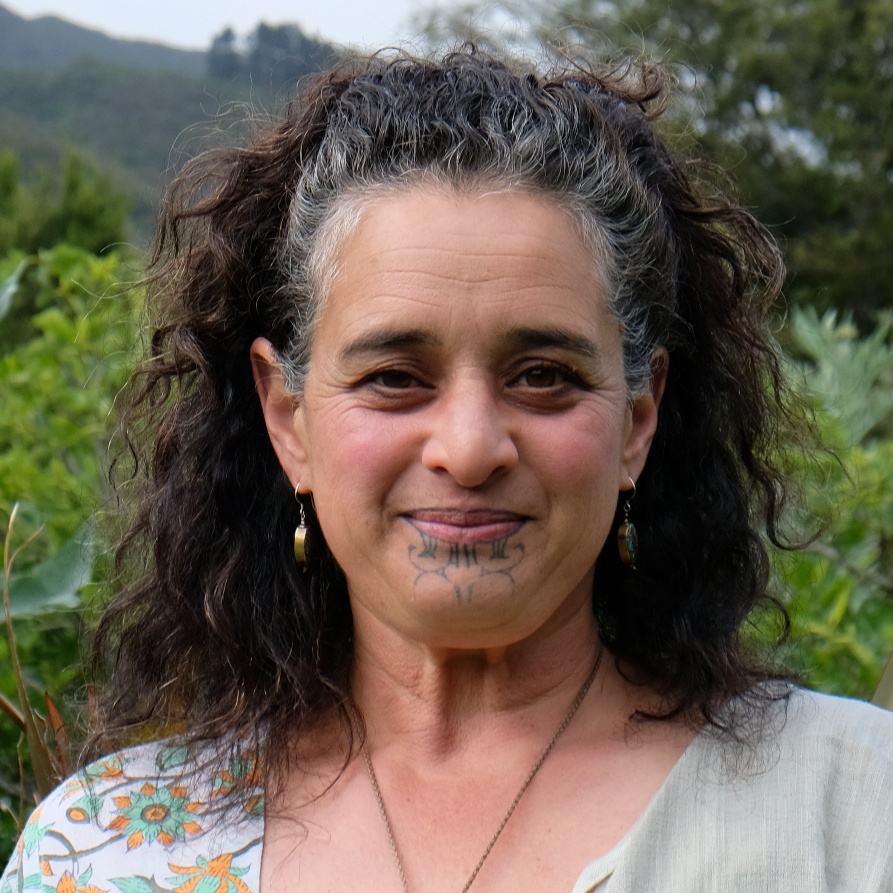
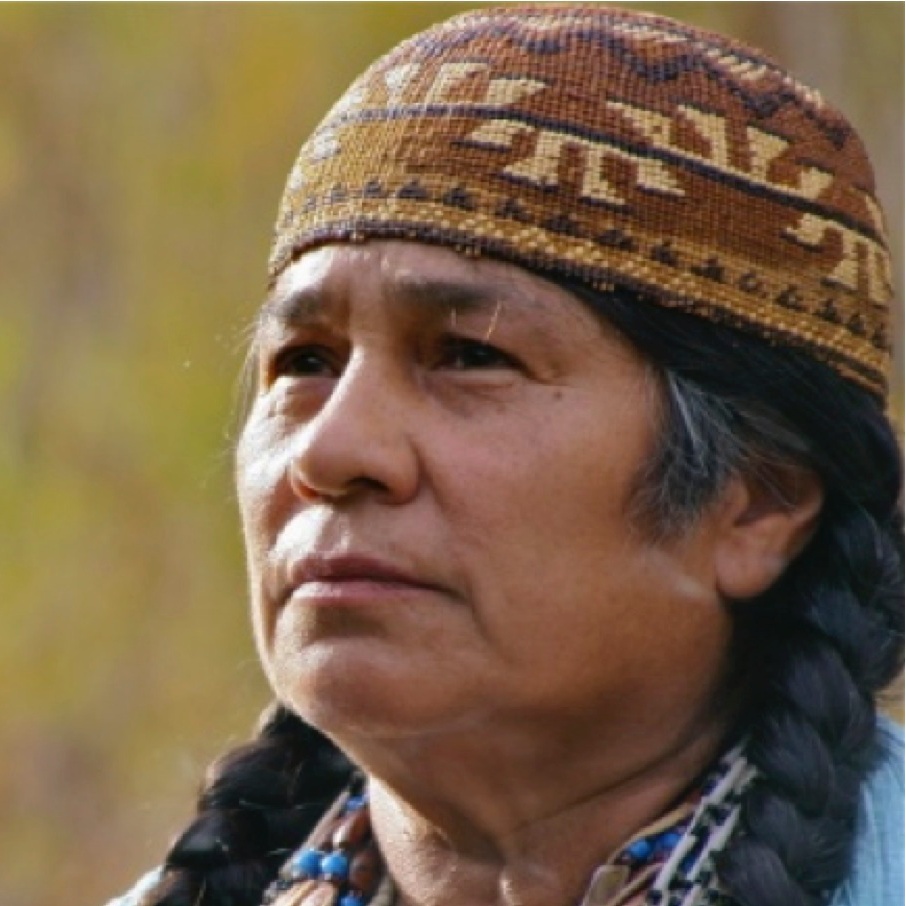
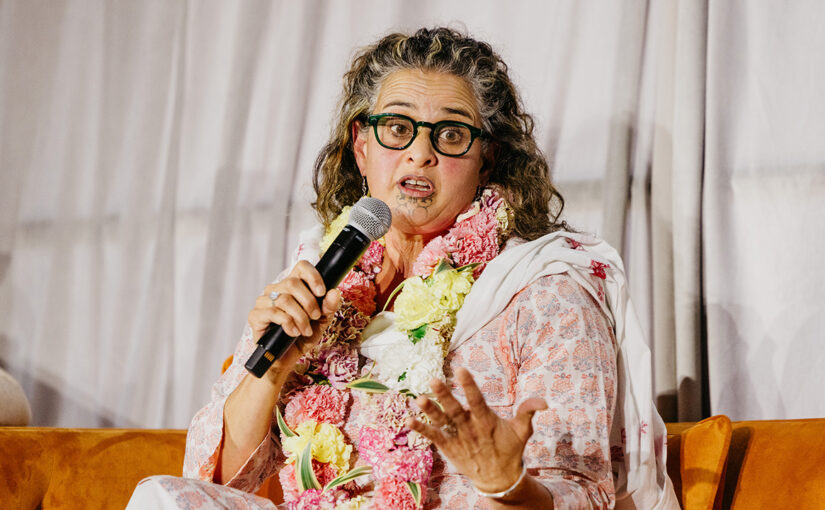
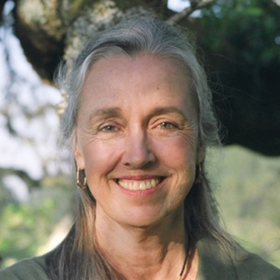
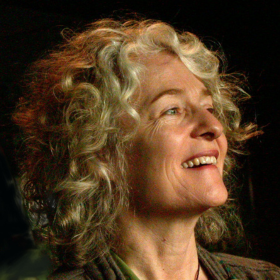
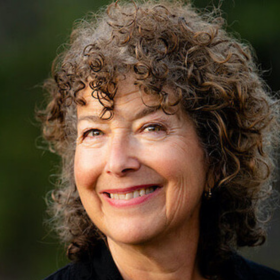
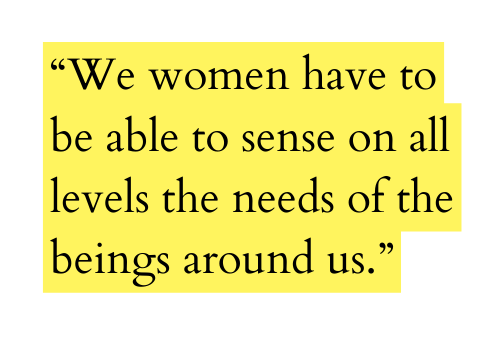
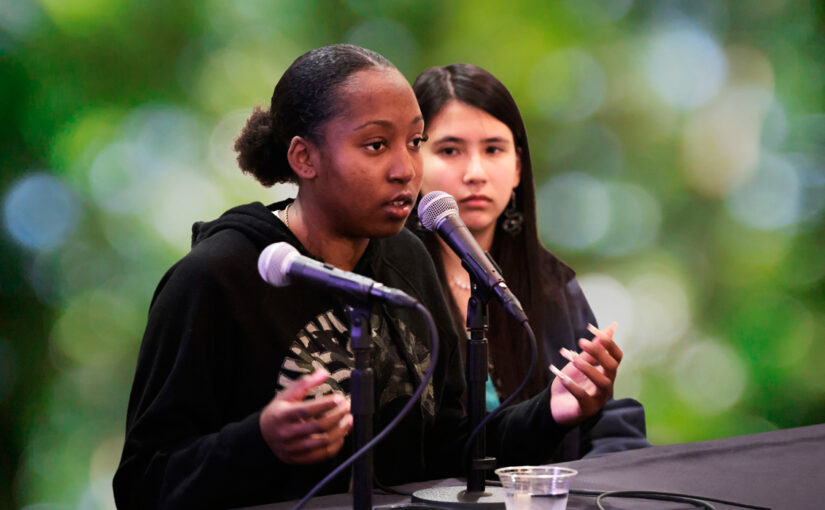
Rematriation centers Indigenous Women’s leadership for the restoration and regeneration of land and water. By revitalizing Indigenous knowledge, honoring traditions and renewing annual cycles of life, rematriation directly addresses harms caused by patriarchal extraction and violence. In this panel featuring Corrina Gould, Caleen Sisk and Jessica Hutchings, these three powerful Indigenous women share “real-life” examples of rematriation, the ripple effects of these practices, and ways that we can all get involved to Indigenize the future.
This discussion took place at the 2024 Bioneers Conference.
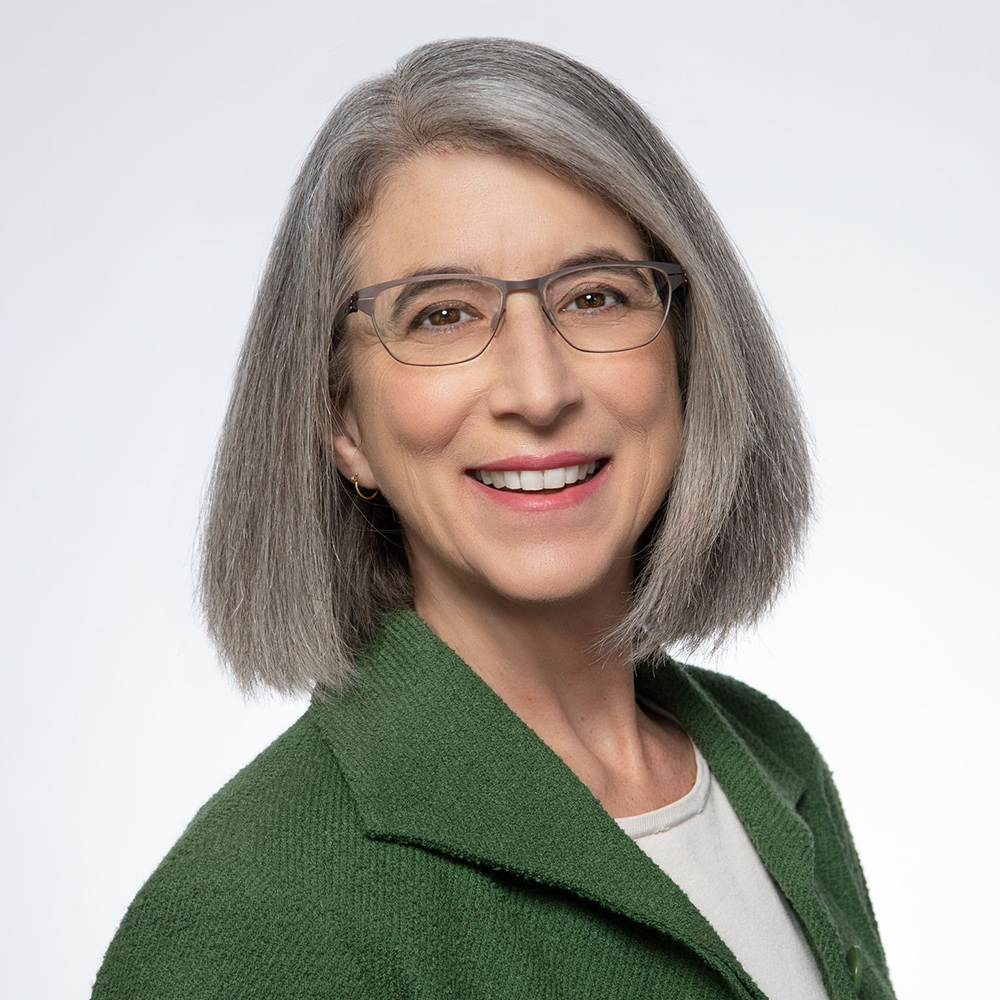
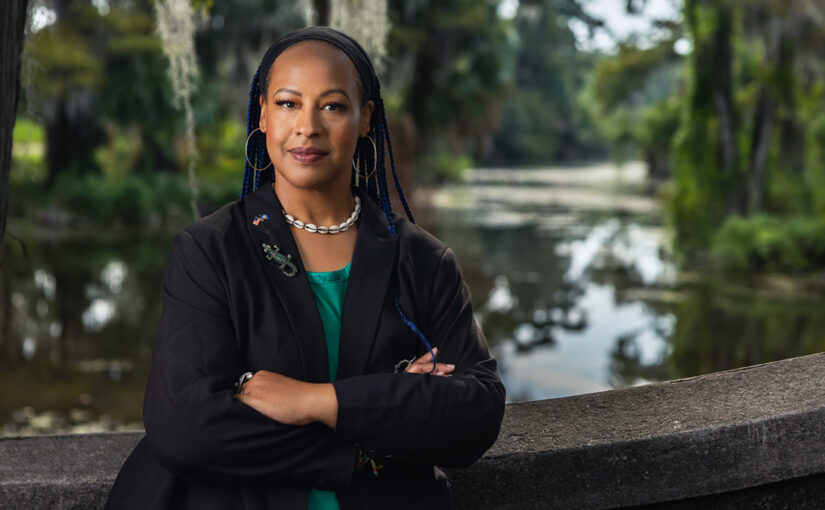
Corrina Gould, born and raised in the village of Huichin (now known as Oakland CA), is the Tribal Chair for the Confederated Villages of Lisjan Nation and co-founded and is the Lead Organizer for Indian People Organizing for Change, a small Native-run organization; as well as of the Sogorea Te’ Land Trust, an urban Indigenous women-led organization within her ancestral territory. Through the practices of “rematriation,” cultural revitalization and land restoration, the Land Trust calls on Native and non-Native peoples to heal and transform legacies of colonization and genocide and to do the work our ancestors and future generations are calling us to do.
Jessica Hutchings, Ph.D., (Ngāi Tahu, Ngāti Huirapa, Gujarati) is nationally (in New Zealand) and internationally recognised as a leader and researcher in Indigenous food systems and Māori food and soil sovereignty. A founding trustee of the Papawhakaritorito Charitable Trust that works to uplift Māori food and soil sovereignty, she is herself a food grower and has been a member of Te Waka Kai Ora (the Māori Organics Authority) for 20+ years. A widely published author on food sovereignty issues, Jessica has been working at the crossroads of Indigenous knowledge, environmental wellbeing, and Indigenous social justice, organic farming and self-determination for 30+ years.
Chief Caleen Sisk, the Spiritual Leader and Tribal Chief of the Winnemem Wintu Tribe since 2000, is an internationally known speaker on traditional tribal and spiritual issues including topics such as water and global warming. In addition, Chief Sisk is the Spiritual and Environmental Commissioner for ENLACE Continental, an international network of Indigenous women. Throughout her career she has focused on maintaining the cultural and religious traditions of her tribe as well as advocating for California salmon restoration, conferring rights to rivers and the protection of Indigenous sacred sites.
Jessica Hutchings, Ph.D., (Ngāi Tahu, Ngāti Huirapa, Gujarati) is nationally (in New Zealand) and internationally recognized as a leader and researcher in Indigenous food systems and Māori food and soil sovereignty. A founding trustee of the Papawhakaritorito Charitable Trust that works to uplift Māori food and soil sovereignty, she is herself a food grower and has been a member of Te Waka Kai Ora (the Māori Organics Authority) for 20+ years. A widely published author on food sovereignty issues, Jessica has been working at the crossroads of Indigenous knowledge, environmental wellbeing, and Indigenous social justice, organic farming and self-determination for 30+ years.
Jessica spoke with Bioneers Senior Producer Stephanie Welch about her work at the 2024 Bioneers Conference.
Part 1: Papawhakaritorito Farm
Part 2: Six values of hua parakore, Māori organics
Transcript
Part 1: Papawhakaritorito Farm
My earliest connection to farming is before I was born. My ancestors were farmers and were growing food, so on my Indian side, I’m from Gujarat in India, from a little village called Matwad down near Dandi Beach, and my grandfather and his parents, and the generations beyond that all lived a subsistence lifestyle off the land. So before I even appeared in this form in this lifetime, it was already kind of manifesting itself.
Then on the other side of what we call our whakapapa in our culture in New Zealand, in Aotearoa, I come from Ngāi Tahu, from Ngāti Huirapa, which is a big tribe on the South island. And my people down there, we’re not so much farmers, but we had a practice of mahinga kai, which is what we describe as our food gathering. So we would live on the coast in the warmer months of the year and have shellfish and what we call kaimoana, seafood, and then in the colder months, we’d move into the interior inland, and we’d have us some foraged food and find our food sources in there.
My ancestors on both sides of my genealogy have been hunting and gathering and growing food forever. But I think the beautiful thing is on my Indian side, there’s such diversity in the food that was grown. And so a lot of the grains that my ancestors grew are grains that are not really around these days. They’re not part of a mainstream food system, you know, like all of the different varieties of ragi, of millets, all the different varieties of beans, of rice. You know? We don’t see any of that around.
Somewhere inside me there’s this kind of call to bring back the diversity in our food system, and that’s what we’re really trying to do on our little farm—Papawhakaritorito—just north of Wellington in Aotearoa.
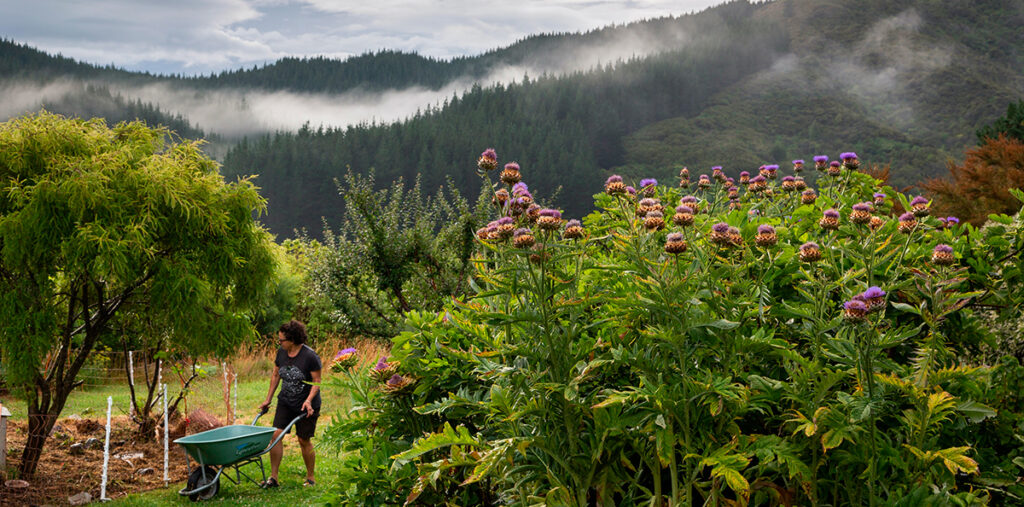
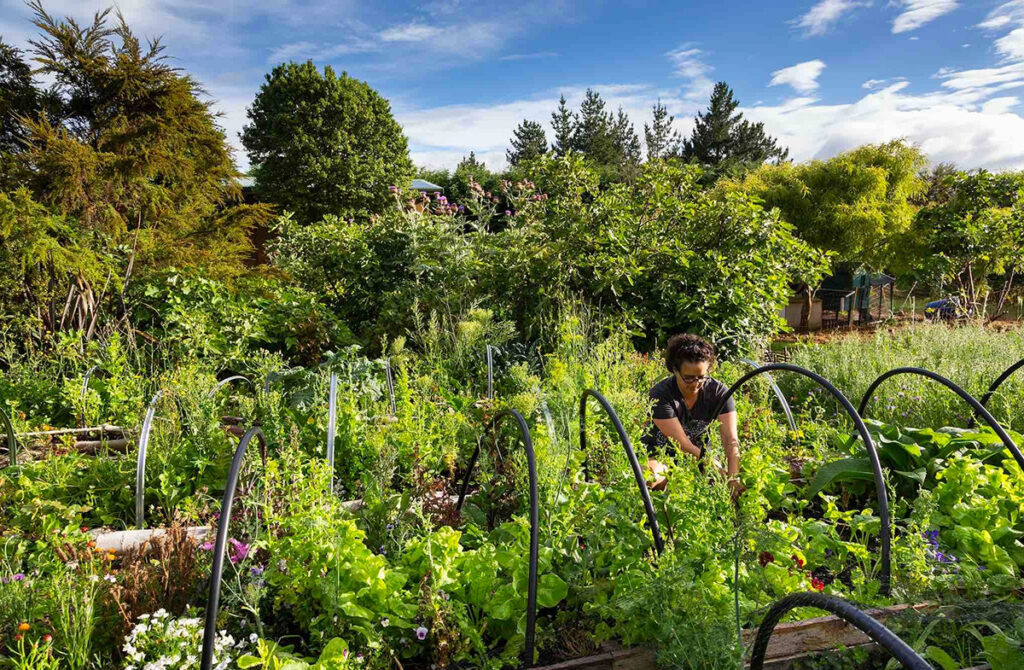
I live on 12 acres. It’s all women-run. I live there with my wife and my mom. I’ve been there for 20 years now. So I’ve been tending that soil or Hineahuone, who’s our soil deity, for 20 years—no pesticides, no chemicals, working and being with those natural rhythms of the land.
Papawhakaritorito Farm. Photo courtesy of Papawhakaritorito Trust
We do research. We’re in charge of our own Indigenous knowledge production. I do not have to publish in academic journals if I don’t want to. We do practice. We run courses. We run online courses, and people come up to the farm and we have traditional gatherings and workshops, how to make compost, how to work with the soil in a way which really enhances the soil microbes. So we’re very much about how can we feed the bacteria and the fungi and the nematodes and the protozoa; what’s the relationship between all of those entities, which we describe as our grandchildren of our soil deity, so the mokopuna of Hineahuone, and trying to teach a different way of food and farming, which doesn’t do harm to the soil, which actually replenishes and puts back.
The major part of our week is getting out into the māra or the garden, tending to the soil, growing the food, making sure we understand what we need to sow in order to have succession crops coming on, and then make sure that we’ve got good distribution so that nothing is wasted, so that food actually reaches—In the first instance, we feed our extended family. It’s all about feeding our extended community and helping our people get off the global capitalist food system back into the Indigenous foodways.
We’re all about providing I suppose hope and alternate futures for Indigenous communities in New Zealand, to move them on a pathway from conventional farming to organics, or what we call Hua Parakore, Māori organics.
Then the third part of the trust is about evidence based Indigenous storytelling. I’ve been involved as a lead presenter, writer and collaborator in an eight-part TV series for our Indigenous broadcaster on Māori organics and ‘fixing’ the broken food system through returning to Indigenous knowledge and right relationship with the Earth. Indigenous led storytelling is something I have always had a deep passion for. It is important that we as Indigenous peoples set the narrative and the frame and show there’s a different way to produce food, without pouring pesticides and chemicals on our lands to be able to grow food.
We can’t negate the impact that colonization has had on Indigenous farming. So the land that Māori communities or our tribes were able to retain, which has all been stripped of forests, has been farmed conventionally for generations. And so it’s just having pesticides and chemicals thrown on it. There’s a lot of work, like there is everywhere at this time across all these kind of complex layers to decolonize food and farming and agriculture for our own people in New Zealand.
We just hold space for a little period of time where there is a beacon of hope, a beacon of light of what could be achieved. People might just need to touch and connect with us for a very short period of time, and then they can bounce back to their own communities and take the bits of knowledge and then start to grow their own food or create their own models for self-empowerment.
It’s hard work, but it’s heart work, and there’s a whole process of grief in that, because a lot of the Indigenous farmers in New Zealand who are farming conventionally, you know, they’re bringing a dividend back from the commodities market, back to their people and back to their tribes. And that’s really important for our people. For a lot of people, that’s where their bread and butter is from. So we need to do it with a really loving heart.
If you don’t know about the soil food web from a biological standpoint, but you’ve only understood the soil from a chemical analysis of it, and then a farm advisor or chemical company said, well, your soil’s lacking in this chemical here, let’s pour it on, then you’re not going to have any understanding about microbes and bacteria and the relationship between bacteria and fungi. So we need to recreate this world for our Indigenous farmers to come into it.
We have a beautiful saying in our language—Me aro koe ki te ha o Hineahuone—Pay heed to the dignity of women. Not only was Hineahuone the first human to be formed in our creation stories, she is also the deity of our soil, so right now at this time, as Indigenous women we are calling out that it’s time to return to right relationships with our soils.
Part 2: Six values of hua parakore, Māori organics
Let’s start with a really foundational value, which is whakapapa, we understand it as genealogy, but really when we think about whakapapa, I think about the whakapapa, my genealogy of who I am as a farmer, on whose land do I stand. So although I’m Indigenous, my tribe is in the south island and I live in the north island. So I’m farming as a guest on somebody else’s tribal area, on The Ātiawa’s tribal area, although we own the land in private Western ownership.
But it’s about having that understanding. And a lot of farmers don’t have that understanding, and a lot of organic farmers don’t even have that understanding, on whose Indigenous land are you standing. So whakapapa, what’s your genealogy; where are you standing? Then it’s also, too, about the whakapapa or the genealogy of the seed. Where does the seed come from? And then it’s also, too, about the whakapapa or the genealogy of the inputs. What’s going into your farming system?
So these are things that we’d think about in organics anyway, but when you wrap it up and talk about that in our own cultural frameworks in terms of whakapapa, then our people understand it. It’s not something that’s, “oh, organics, that’s for white people; that’s not for me”. It’s like, no actually, that is for you; let’s talk about it in terms of this Indigenous value of whakapapa.
Photo courtesy of Papawhakaritorito Trust
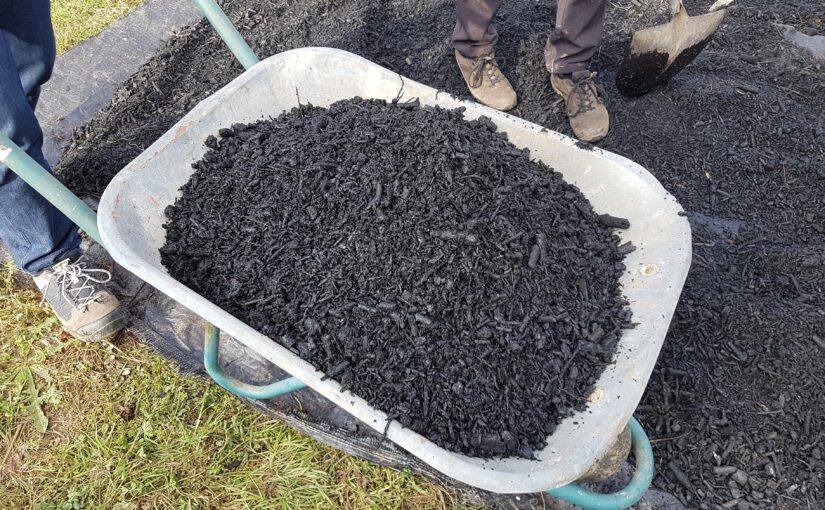
The next value is mauri. And it’s about vibration. And we use it as an environmental performance indicator. We understand the health of our waterways or the health of our forests in relation to this value of mauri. And mauri could be understood as vibration, as chi, as prana, as energy, as resonance. And so if we have a high resonance, then we’re going to have wellbeing. And if we have a low resonance, then we’re unwell and we need to do something to lift our vibration. Think of composting. You know, mauri rich, life-giving compost doesn’t smell anaerobic. We rub it between our fingers and it leaves a nice black color in between our fingers.
And it’s about soil health. In Western terms you might understand it as, at harvest time, you would test vegetables and fruit around the Brix level, having high sugars or low sugars. So high sugars is high mauri. So there’s a correlation there. You know? We’re all talking about the same thing.
Another value in our organic system is mana.We think about mana in our organic system as the health and safety and the wellbeing of the people who are on the farm as well. So it’s not just about the farm itself and the environment, but it’s also, too, about the people.
We describe ourselves as Indigenous people in New Zealand as tangata whenua. So tangata meaning “people ” and whenua meaning “land”. We’re people of the land. So you can’t separate us from the land. It’s how we know ourselves.
Tribally, we describe ourselves as mana whenua, so mana, this value that I’ve just described, mana whenua is the people who have the authority over that tribal area.
Another value in the Māori organic system is wairua, “two waters” may be one way to understand it. Spirit is another way to understand it. How can we bring spirit, how can we bring spirituality, how can we bring ceremony into our practices? One of the things we do on our farm is we have what we call pou atua– or it’s a post in the ground, but it’s a representation, a manifestation of our deity, of our atua. And so that brings spirit into our garden. We say prayer before we harvest. We say prayer before we turn compost. And these are not Christian prayers from the colonizer, these are prayers which reach into our godly landscapes, our earthly landscapes.
Te Ao Tūroa, which is the natural world, is another value and another principle. And that’s about our interconnected Indigenous woven universe. And I love to think about that as a farmer is – from the microbes in the soil reaching all the way up to the starry realms. The microbes are just that reflection of what’s happening in the starry realms in the cosmos. So Te Ao Tūroa reminds us that everything is always interconnected. It really pushes quite hard against the reductionist, mechanistic way that Western agriculture—chemicals and pesticides—claim a falsity around like glyphosate, you know, saying well we’re only going to spray—It’s okay, it’s only going to kill this, this, and this, not this. In Te Ao Tūroa, everything is connected.
And the last value, which I just adore, and as I’m getting older is really coming forth for me, is this value of Māramatanga, higher consciousness and awareness. And so when we grow food, as a Hua Parakore producer, as a Māori organic farmer, we describe it as growing what we call kai atua, kai being “food” and atua being “deity”. We’re growing it in the godly landscapes and the landscapes of our deity. We’re growing food in our godly landscapes, fit for us, as manifestations of our deity ourselves. And so when we do that, we’re actually eating and consuming at elevated consciousness.
So when we have all of those six values in operation at the same time, we produce what we describe as a Hua Parakore or a Māori organic product. So it’s much more than organics. And this is what our old people, our ancestors, this is what they were eating every day. This is what feeds culture. This is what feeds wellbeing. We are truly guests in the magic of the life of soil.
In the 1980s, on a quest to understand the regionally-adapted ways in which traditional agriculture is able to feed people while tending the health of the land, Michael Ableman set out, on a journey to photograph agrarian cultures around the world to learn the “ valuable information [they had] for modern destructive society.” Michael was accompanied, on part of the journey (to the Russian Far East and Mongolia) by legendary environmentalist David Brower who was a key supporter of the project. A master photographer and author of four books on the relationships between food, land, people and culture, Michael is, most of all, a great farmer who considers himself, even after almost 50 years of farming, “a beginner.” In this photo essay, Michael reflects back on that journey and some of the photographs that appeared in his first book From The Good Earth, A Celebration of Growing Food Around the World.
All photos are copyrighted and cannot be distributed, reproduced, or reused in any way without the explicit permission of the photographer (Michael Ableman).
This article is a transcribed, edited excerpt of a conversation with Michael Ableman
MICHAEL ABLEMAN: By the early 1980s, I had already been farming for a while, and I was interested in understanding more about this 7,000-year tradition I’d stepped into, considering myself, as I still do today after 44 years, a beginner. I was interested in what the lineage is and whose shoulders I’m standing on. At the same time, I was fascinated with the idea of hiking in the Himalayas, the highest mountain range in the world.
On the way there, I stopped to see a friend who was living and working in China and ended up in the city of Xindu. In those days, there weren’t a lot of foreign visitors in China and visiting rural areas was not something that was encouraged, but I was curious, so I walked for hours on the outskirts of the city on a path that led up a hill, and what I saw was remarkable. There was a vast network of fields being farmed by multigenerational families—kids with their parents and grandparents and, in some cases, even their great grandparents. Those fields had been farmed the same way, over and over, for thousands of years, and yet still appeared fertile and productive without the use of industrial methods. The thought struck me: “How is it possible? There were places near where I was farming in California where the land had been made useless after just a single decade.” I thought it was incredible, and I began photographing feverishly.
This image exemplifies the ability the Chinese had, at that time (1983), to feed a billion people on only 11% of their land base using the techniques that had been passed down since the Han dynasty. It is a highly intensive system.
When I returned home from that journey, I was on fire with curiosity. I was young and fearless at that point of my life (neither of which I am now). I was intensely curious, and I was completely amazed and fascinated at the possibility that the profession I had chosen had a deep-rooted, vast, indigenous knowledge and history. I wanted to learn from it, and I wanted to understand how the work I was doing related to these other cultures that had been doing it for thousands of years.
But it wasn’t some sort of romantic quest for a mythic golden age; I wasn’t that stupid. I knew that the places, people and situations that I was looking at were also fraught with challenges and problems. It was more of an intense desire to learn and to record what I was seeing. I spent another winter in China because it was the oldest traditional agriculture in the world. I thought there was no better place to start exploring.
This two-acre onion field was being watered by hand. It was fascinating–like watching a well-choreographed dance. The equipment, which seems so rudimentary, is really well made, and the process is extremely balanced. The man was using both containers at the same time. I watched the entire thing and what was really profound is that two men using watering buckets could irrigate a two-acre field in about two hours without a word spoken. They both were in their 70s and had enormous physical strength, but what I saw was less about physical exertion and more about careful planning and balance. There was a great calm about the whole experience. It was a beautiful, silent dance.
I spent the entire next winter in the Andes in terraced fields built by the Incas that were so steep that farmers were known to fall out of them.
Capturing this image was a three-day process in order to get the lighting right. It gave me a lot of respect for Ansel Adams who would sit and wait for days just to make one frame.
I also traveled to East and Central Africa to try to catch a glimpse of the remnants of the few traditionally agrarian tribes that were still there. Pastoralists were dominant in those regions, but there were some really interesting examples of agrarian people making their own tools and doing some pretty cool stuff.
This photo was taken in the mountains of Burundi at the market in a little town called Ijenda where I lived for a while. The sorghum that the women are working with is made into a slightly fermented drink that’s sipped communally out of a common gourd with straws cut from a local tree. At the time, it was a very popular drink, but you would never see somebody sitting at home alone drinking it. It was a communal and social experience.
There’s an energy to this image of the women, a kind of excitement and enthusiasm around what’s happening. It’s a swirl of color and energy.
There was, at times, a tendency for me to romanticize the experiences I was having with the people I was visiting and sometimes to project my own ideas onto what I was seeing, feeling and experiencing as I was photographing them, but I had to keep all that in check.
People are basically just trying to survive, but the simplicity of some of those farming systems and the long history of those people on the land hold valuable information for modern destructive society.
The Moroccan markets are just incredible. I love the visual perspective of the passing of feet, the colorful clothing, the robes that people were wearing, and the vendor on the ground selling citrus and other items.
In this image of an Italian olive merchant, you can see the diversity of olive varieties. There is also a diversity in the ways that olives were prepared, which is an almost lost art, but one that is coming back.
Traveling in Italy, I saw olive and carob trees that were four to five thousand years old growing wrapped around each other. The planting together was intentional because the carob is a legume that fixes nitrogen and feeds the olive tree.
Those ancient, long-term perennial systems are some of the most interesting to me because I’ve always believed that the fundamental structure of a farm has to be the perennial. The perennials have to be the anchor on the farm on many different levels—holding soil, creating habitat, reducing the churning of the ground, providing shade, etc. The folks in Italy know so much about all of that, as well as the importance of having a lot of diversity in their cultivars.
This image is from the Russian far east near Ulan-Ude in East Siberia. It’s so emblematic of the time: the style of dress, the soldiers and the seriousness with which people reflect on their cabbages.
David Brower had invited me to go to the Russian far east to Baikal the year I turned 40 (27 years ago). He had just turned 80. David had a longtime interest in Lake Baikal in Siberia because it is the oldest, deepest and largest body of freshwater on the planet with species that don’t exist anywhere else. David felt that it was one of the planet’s critical ecological cornerstones that needed to be preserved.
It was an extremely hard trip—long flights followed by long train trips. Transportation was not terribly functional. Food was not good; in fact, it was awful. When we eventually got to Ulan-Ude on Lake Baikal, David said to me, “Michael, I want to go to the Mongolian side of Baikal.”
So, we went down to the Mongolian consulate in Ulan-Ude and they said, “You’ve got to be kidding. You should have started six months ago to get that visa; there’s no possibility.” David had written two autobiographies, and he had one of them with him; I asked him to give it to me. There’s a page in that book with him and the Dalai Lama arm-in-arm with big smiles, so I opened it up to that page and I slid it on the table over to the consular agent. Then things happened fast. We got the visas right away. The agent even phoned and got us a ride in an ambulance. It was a hellish trip, super hard but super interesting.
The ambulance could only take us so far, so we took a train to Ulaanbaatar, the capital of Mongolia. As we were standing on the train platform, a drunk guy came right up to my face and out of the blue for no reason punched me as hard as he could in the stomach and put me out onto the ground.
After that, I decided to take a taxi to the marketplace, which is miles up above the city. I began photographing what was quite an incredible scene, but I didn’t realize that I shouldn’t have been there. A gang of young people chased me and pelted me with rocks; I barely got the hell out of there.
I began to realize that photographing those different cultures could be interpreted as appropriation of ideas, information and images that I could never really understand because I wasn’t from those places, and that would be a reasonable criticism. I questioned myself. I heard about people in various parts of the world who thought that taking their photographs was akin to stealing their spirits. Some Western people would laugh at that idea, but I began to believe that there may be some truth to it. Was I stealing the spirits of the people that I was photographing?
But I felt what I was doing was fundamentally different. I was not a journalist or photojournalist. I didn’t step out of my office at The New York Times and fly off to some remote place. My daily work for most of the year was using my hands to grow food for my own community. Everywhere I went, I carried in my back pocket a little booklet of photographs of my farm and of me out in my fields. I thought that was critical because I shared a connection to the land and a shared interest in farming with the people I was taking photos of. Mind you, some people were farming from pure personal survival perspectives, some were farming to feed more than themselves. I was farming for both reasons, to feed my family and as a livelihood.
But the common thread was farming; that was a bridge. I’m sure I made mistakes, but I feel like that gave me a valid reason to be doing what I was doing. Often, when people see the portraits I made of other farmers, they comment that in many of the photos the farmers are looking into the camera, and you can see that there was a relationship there. Those images could not have been made without some connection. When I say relationship, I don’t mean that I was living with them or that I spent weeks there, but there was some sort of commonality established before the camera got pulled out.
I never made a photograph of anyone without first developing even just the briefest of relationships. David Brower, who was involved in this project from its inception, said at a public event, “Notice how people in Michael’s photographs are connecting to the person behind the camera.”
There’s a sister image to this, which is of our friend Caroline, a Hopi elder, whom we spent a lot of years with at Hotevilla-Bacavi on Third Mesa in Arizona. Why would I be mentioning her in the context of this Karen tribesman? At the entrance of Hotevilla, there were hand-painted signs saying “no photographing, no drawing, no recording, no filming.” I was always very respectful of that, but in time Caroline gave me the permission to take some photographs of her, also winnowing beans. She had an amazing collection of bean seeds. When the time came for the book to be published, I knew there was no way I could use an image of her without her explicit permission.
So, I showed her a series of different images, and she said, you can use one of them if it’s next to the one of the Karen people winnowing beans. She understood acutely that there was a relationship that existed between Indigenous people all over the world, and she wanted to be thought of in relationship to that.
I took this photo in Todos Santos in the mountains of Guatemala, a little village where we spent a month living with a local family. This is a man on his way to the market outside an old church to sell his wares. The entire village, at that time, was made up of widowed mothers, children and old people. Inside the church where the market was held, the walls were riddled with bullet holes because all of the young men of that village were herded into the church during the civil war and murdered there.
This picture was taken looking south. Directly to my back, to the north, would have been Trump’s steel wall. We guard the borders and build fences and walls to keep out the very people whose hands are doing all the work to grow our food. We’re talking about people who risk their lives to make that journey. The craziest damn stories: being put in a refrigerated truck for hours and hours, stuffed into trunks of cars, all kinds of crazy shit to do the work in service industries, restaurants, factories and farms, that most Americans will no longer do. It’s an absurd situation, and it’s heartbreaking to see what people have to go through to survive.
Hilario slipped over the border in his late teens as an “illegal” farm worker and eventually became a farm owner employing 100 people with a very successful farming operation. It’s one of those rare but important stories to tell because, historically, people like Hilario are not celebrated for their contributions. He’s an exceptional farmer.
I wrote the book The Good Earth: A Celebration of Growing Food Around the World based on these journeys, but when I completed those incredible international visits recording those traditional cultures, I realized that, in a sense, I had been looking at the remnants of where agriculture has come from. I felt that I should also look at what’s happening now and what we are moving towards in the future, so, I delved into the hardest images that I made, the ones of industrial agriculture in California’s Central Valley, the largest feedlot in the world. I went up in helicopters that spray pesticides and did all sorts of crazy shit just to get striking visual examples of industrial agriculture for people who were unaware of the scale of its impact and devastation. I thought if they could see it, maybe they’d want to do something about it.
This very emblematic image taken after the harvest in a California Central Valley cotton field has been used repeatedly by Patagonia and others to illustrate how incredibly destructive we have been in a very short amount of time to the land which we are inextricably tied to and dependent on. The contrast is stark between this field likely totally depleted in less than a decade and some of the fields I saw in China and Peru that were being farmed continuously for thousands of years and were still fertile and productive.
This is a celery field in the Oxnard Plain in Ventura County being fumigated. You can see the sprayer in the background. I didn’t sneak this photograph. The man is posing. He’s looking at me. I think his stance, his willingness to pose, demonstrates a certain pride. This is not a critique of this person. That’s an important point. He was part of a system. The system and the thinking behind the system are all wrong. And yet, I think there was a certain pride in the power of chemistry, the power of the industrial mindset, the power of the ability to control and manipulate the natural world.
This is the same celery field in Oxnard. That chemical being sprayed directly onto the crop’s leaves and stems enters the plant’s cells and then subsequently enters into our cells when we eat it. I believe that in those days they sprayed every 10 days, so you’ve got to understand that the chemical became fully embedded in the crop.
This farmer is pouring fertilizer into a furrow irrigation ditch. It’s crazy, it’s one of the hottest places in California, and they’re furrow irrigating (flooding the rows between crops). This is not precision farming. The day I was there, it was probably 110 degrees, and probably 80% of that overhead irrigation that you see in the background was evaporating into the atmosphere. So, the whole process makes no sense.
Minkah Taharkah is an artist, poet, farmer, and organizer. While a student at UC Berkeley, she co-founded Black Earth Farms based on her desire to eat healthy and affordable food and to provide the local community with the same opportunity. Black Earth farms also provided a vehicle for BIPOC community members to get actively involved in the Food Justice Movement.
Growing up in Leimert Park, a vibrant Black neighborhood of Los Angeles, helped ignite both her artistic creativity and her passion for social justice, and Minkah now works for the California Farmer Justice Collaborative, supporting farmers and farmworkers who are challenging racism and structural discrimination in the food system. She also works with The Butterfly Movement, an organization/network that seeks to empower Black women and girls, foster their entrepreneurship, and advocate for social equity.
Arty Mangan of Bioneers interviewed Minkah at a recent Bioneers Conference. The photos, by Jan Mangan, are accompanied by Minkah’s personal reflections on fashion, dance and art.
ARTY MANGAN: You currently live in Fresno, the number one agricultural county in the country. Why did you choose to live there?
MINKAH TAHARKAH: I’m homesteading, which I have wanted to do for a while. I’ve been like a seed in the wind for a time. I lived in Yosemite for a while, and up in Tuolumne County. I lived in the Bay Area for about eight years. I lived in Ghana for a year. And then I came to Fresno because I farm and work with farmers.
Living in Fresno and seeing the connections between urban and rural regions and cultures has been really eye-opening. The Central Valley is such a hub of agriculture, not just in the state or the country, but in the world. Unfortunately, the people there face a lot of injustice and exploitation. I work with farmworkers who are experiencing what I call “nutricide”—their health is being depleted because they don’t have access to good nutrition; and that’s a bitter irony because those folks working in the fields are the ones harvesting healthy produce for other people. So, there is a lot of work to do, and part of the reason I’m there is to work with farmworkers and farmers, including Black, Latino and Hmong farmers.
“I got this outfit from an amazing designer Mama Amatullah. Mama Amatullah and her husband Baba Shakah specialize in making amazing diasporic couture prints, working with cloth and material makers from Africa to make fantastic designs.” Photo by Jan Mangan
ARTY: How did you, who grew up in an urban environment, get interested agriculture?
MINKAH: I co-founded Black Earth Farms with a few of my colleagues from UC Berkeley in 2019 after we did a bit of trekking through Cuba and Jamaica learning from different farmers about their different techniques and practices. One of those colleagues, Diego Jimenez, taught a permaculture class at Berkeley. While I was a student there, I studied environmental science through the “Society and Environment” track, but that didn’t necessarily bring me into direct connection with the land and farming.
And at the time, I had become interested in growing food because I was a student on a very limited budget spending a lot of money on rent, and I’m a vegan and wanted to eat well, but I could not afford Berkeley Bowl, so I knew I had to do something. So, we began growing food on campus. In 2019, Will Smith, Diego Jimenez, Jibril Kaiser and I worked together to co-found Black Earth Farms utilizing spaces on the Berkeley campus. There had been some similar projects initiated by students already, such as the Gill and Oxford tracts, where food was grown and sold at a sliding scale, prioritizing Black families across the East Bay. I transitioned from Black Earth Farms in 2022, and now I work with the California Farmer Justice Collaborative.
ARTY: Is Black Earth Farms still operating?
MINKAH: To my knowledge, Black Earth Farms is not operating anymore. We grew to about 12 people involved in supplying food to about 60 families. I really want to pay homage to everyone who was involved because we learned a lot about ourselves, about the nature of organizing, about supply and demand, and about organizational development.
ARTY: It sounds like a really worthy project for college students: working together with the shared goal of helping people in need.
MINKAH: Exactly. I really value and still hold true to a lot of the connections that I made there, and from that experience, I’m still involved in agriculture now.
“I traveled to Ghana, and while there, I met folks who said, “We don’t dance just to dance; our dances have storylines and specific steps that lead you to a map of sorts, through timelines and dimensions.” Photo by Jan Mangan
ARTY: It’s interesting to see what forms our life’s path, how one thing leads to another.
MINKAH: The way things have gone I wouldn’t have had it any other way. The people I met along the path were so integral to helping me build the perspective and the resilience that permits me to now work with the California Farmer Justice Collaborative. I was the first staff person for the organization. CFJC is an amazing group of farmers, of people who decided that we need more equity for BIPOC small farmers and producers, land tenders and preservers, and bee keepers in California. They came together with that in mind to craft the Farm Equity Act, which passed in 2017. The Act explicitly names BIPOC folks—Black, Indigenous, Latinx, Asian folks—who have been historically marginalized to be prioritized and provides a definition for “socially disadvantaged farmer and rancher,” so that we don’t get lost in some of the jargon that often isolates us when it comes to policymaking.
I want to recognize the legacy of CFJC’s core group of folks who have done and do so much grassroots organizing and work to get accessible language on current policies that affect BIPOC producers so that there is a more digestible framework and farmers can mobilize when necessary. People involved with making policy often say: “We tried to talk to farmers but they’re just too busy.” My response to that is that if you’re not operating on the farmers’ time, how do you expect to support them? You’ve got to meet them where they’re at, so you’re not just doling out resources willy-nilly, but instead you’re finding out what people actually really need and figuring out how to connect them with those resources. That’s pretty much CFJC’s ethos.
ARTY: Important work. What does your daily routine look like?
MINKAH: I work on finding farmers, calling them, scheduling meetings to go visit them at their farm and showing up. We also have a small grant program called the Farmer Justice Micro-Grant, which is up to $10,000 of emergency and direct operating funds. There’s an important ethos in developing a framework of equity. When we focus on those that need the most support, everyone else will benefit, and if you take that same approach to our land, to our earth, and focus on the health of the soil, everything else begins to bloom.
When working for equity, it’s important to understand that for Black folks, many of our ancestors worked the land, but legacies of dispossession and colonization have taken most of us away from a connection to the land. How do we bring ourselves back to the land in a way that offers us the opportunity to heal? There are studies that show how touching soil can be very effective in reducing stress.
“Rhythm is something you feel; it’s in you, it guides you. In my yoga classes, I often tell people to let your breath be your rhythm, let your breath be your guide along with our heartbeat, which is like our original internal metronome.” Photo by Jan Mangan
ARTY: Yes, that’s true, but at the same time the life of a farmworker can be grueling: long hours and low pay for very physically demanding work.
MINKAH: Most of us don’t have to go and work on a farm every day because farm worker folks are working the land for sometimes 13 hours, day-after-day-after day. I worked with a family last year who were going from farm-to-farm picking grapes, and then they’d come and weed on our land. It was my first time working with farmworkers. I don’t even like saying the phrase “farm workers” because they’re actually farmers, people who tend land, so I often use the term “land stewards.” Farming can be very violent. We have to talk about the relationship to violence when it comes to farming versus tending the land. When it comes to working with the land, people are being forced to rush and are not able to care of themselves or the land.
ARTY: The economic system doesn’t incentivize farmers to be land stewards. They are pressured to produce as much as possible without regard to the impact on the land or those who work the land. The system is exploitive, and farmers, land, workers, etc. are all in servitude to large scale agribusiness.
MINKAH: An additional inequity of the industrial food system is that it produces excess food and yet not everybody has access to food. However, I do strongly believe that people at the grassroots working together can alleviate some of those injustices. I work with amazing humans right now who allow me to get up every day and talk to them and strategize about tools we can use to ensure that our families and friends are nourished and cared for. And that ripples out to people that you have one or two degrees of separation from, and even to those you have multiple degrees of separation from.
ARTY: Toexpand the idea of food security to include the larger community, we can look to traditional cultures that shared the work of the harvest and the gains of the hunt not just with family but with other community members.
MINKAH: Absolutely. I also work with the Butterfly Movement co-founded by my mentor Brandi Mack, who is also part of the CFJC Governance Committee. Within the Butterfly Movement, we have a project called Sankofa Gardens that started as a mutual aid backyard garden program out of the pandemic. Folks were calling Brandi asking what to do since the grocery stores were empty. They were ready to try to grow food, so we built several gardens in East Oakland. The project is based at Castlemont High School at their beautiful 1-acre farm. The farm manager, Arthur McDade, is working diligently to ensure that students and community members have access to the food grown there. So, together we grow food at Castlemont and people also have their backyard gardens at home. We work together planting, weeding, and harvesting. One of the phrases that we often use is “many hands make for light work.” We have embodied that.
ARTY: What are some of the challenges you have encountered trying to get people to work together for a common goal?
MINKAH: Figuring out how to be together is one of the biggest things that I have learned so far in the many projects that I’ve worked with. I’ve been part of many cooperatives and intentional communities, and one of the biggest gaps is taking the time to be with each other and learning how to be with each other. It’s the art of relationship-building. It’s a skill, and it starts with being able to know yourself because if you don’t take the time to know yourself, how are you going to be able to accommodate and experience where others are coming from in a way that is anti-oppressive and non-violent? I love being in community because when I’m in my authentic community, they are able to hold me accountable and also reflect me back to myself in a way that helps illuminate parts of myself that I didn’t necessarily see or pay attention to.
“My entire physical, intellectual, emotional, spiritual wellbeing is within my relationship to the land.” Photo by Jan Mangan
ARTY: What have you learned about yourself?
MINKAH: I want to be on land, but what does it really mean to be on the land? My relationship to the land feels so very vulnerable and tender. I feel like it’s a place where I have to be stripped of all things. Pomp and circumstance don’t really exist there. It’s the one place that truly brings me to my knees, and I have to surrender. It’s such an important place to practice meditation and other mindfulness exercises to be connected to the soil and to the land—it is literally grounding, so my entire physical, intellectual, emotional, spiritual wellbeing depends on my relationship to the land. I’m so thankful that I’m able to have that relationship, and I’m dedicated to sharing what I’ve learned with the next generations and to help create spaces and opportunities so they too can also know themselves through that relationship.
We plug into the real world Matrix – the digital Wild West of surveillance capitalism that dominates this Age of Information. Behind it is the unholy alliance between Big Tech and Big Brother. Privacy is the first casualty and democracy dies with it. Our guide is Cindy Cohn, director of Electronic Frontier Foundation, with her decades of experience challenging digital authoritarianism.
Featuring
Cindy Cohn, the Executive Director of the Electronic Frontier Foundation since 2015, served as EFF’s Legal Director as well as its General Counsel from 2000 to 2015. Among other honors, Ms. Cohn was named to The Non-Profit Times 2020 Power & Influence TOP 50 list, and in 2018, Forbes included Ms. Cohn as one of America’s Top 50 Women in Tech.
Credits
Executive Producer: Kenny Ausubel
Written by: Kenny Ausubel
Additional production and writing: Leo Hornak
Senior Producer and Station Relations: Stephanie Welch
Program Engineer and Music Supervisor: Emily Harris
This is an episode of the Bioneers: Revolution from the Heart of Nature series. Visit the radio and podcast homepage to find out how to hear the program on your local station and how to subscribe to the podcast.
Subscribe to the Bioneers: Revolution from The Heart of Nature podcast
Transcript
Neil Harvey (Host): In this program, we’ll plug into the real world Matrix – the digital Wild West of surveillance capitalism that dominates this Age of Information. Behind it is the unholy alliance between Big Tech and Big Brother.
Privacy is the first casualty and democracy dies with it. Our guide is Cindy Cohn, director of Electronic Frontier Foundation, with her decades of experience challenging digital authoritarianism.
This is “None of Your Business: Claiming Our Digital Privacy Rights, Reclaiming Democracy”… on the Bioneers: Revolution from the Heart of Nature.
Host: In the year 2000, just 25% of the world’s information was digitized. Shoshanna Zuboff – the author of “The Age of Surveillance Capitalism” – points out that when the dot-com bubble burst, Google was a small startup with a potent search engine, but scant revenues. Until – she says – Google “learned how to combine massive data flows of personal information with advanced computational analyses to predict where an ad should be placed for maximum ‘click through.’”
It would prove a world-changing act.
But the catch is that this magic trick of prediction was dependent on an insatiable appetite for data. That hunger soon scaled by orders of magnitude with the advent of smartphones, apps, and all manner of cameras, devices and sensors – and now AI.
Says Zuboff: “User ignorance was understood as crucial to success. Each new product was a means to more ‘engagement,’ a euphemism used to conceal illicit extraction operations.”
In other words, while you’re searching Google, Google’s real purpose is searching you – as secretly and profitably as it can get away with. As the saying goes, when something is free, you are the product – because knowledge is power.
It’s asymmetric warfare that Zuboff compares to “one-way mirror operations.”
Facebook followed close behind Google in this systematic abolition of personal privacy. So would the other Tech overlords, setting the table to dominate the 21st century economy as the richest and most powerful corporations in history.
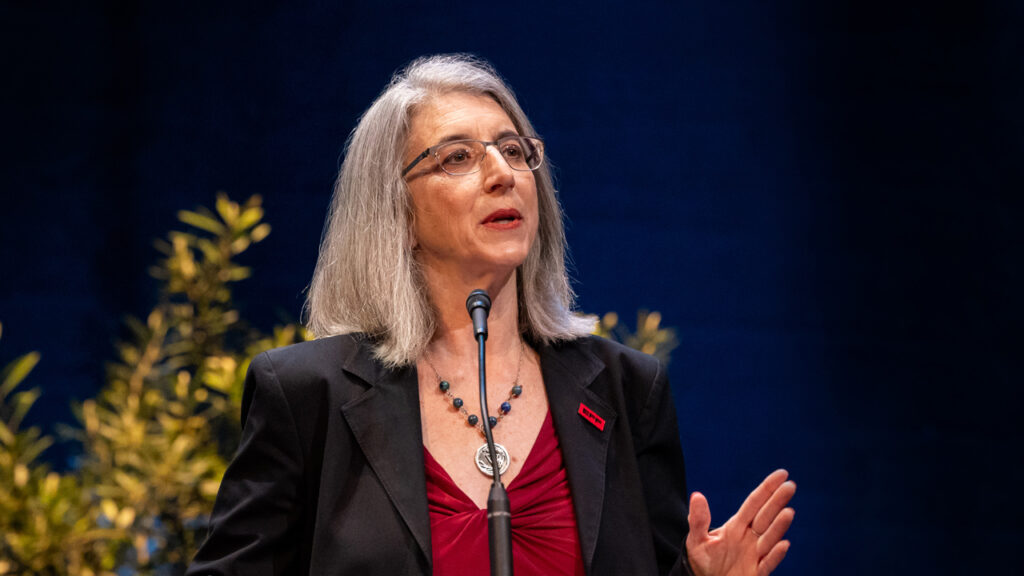
Cindy Cohn is Executive Director of Electronic Frontier Foundation, the world’s oldest and largest digital civil liberties organization. She says ceding control of your data brings all manner of unintended consequences – for everyone.
Cindy Cohn spoke at a Bioneers conference.
Cindy Cohn speaking at Bioneers 2024
Cindy Cohn(CC): The surveillance part of it is very pervasive, and it’s built into everything. We know that a lot of the inferences that these systems draw are not right and are discriminatory. If Facebook knows that you’re a woman, you’re unlikely to see ads for becoming a CEO. If you’re a Black person, you’re more likely to see ads for becoming a bus driver and not ads for something that might pay you more salary. Targeted advertising is bad just in and of itself, but it also really can supercharge a lot of things in our society that we’re trying to combat.
But even when they are right, I don’t think that’s the world that most of us want to live in. So it’s been disturbing to work so hard to try to build a space for private conversation and private activities online and see this business model just crush that.
Host: That business model achieved warp speed after 9/11. Any quaint concerns the government had about restrictive digital regulations favoring online privacy vaporized in a national-security fever dream to attain what Vice President Dick Cheney called “Total Information Awareness.” As the head of the CIA put it. “Collect everything and hang onto it forever.”
Naturally, the government turned eagerly to private tech corporations. The cover of national security neatly allowed the military-intelligence complex to bypass Congressional regulation and pesky legal and constitutional privacy protections.
CC: So these two powerful forces in our society – the people who want to make money and the criminal justice or national security justice, whatever you want to call them, the cops – they’re aligned in wanting to build an Internet where there is no privacy, there is very weak security, and we are not in charge.
And I think it’s really important that we talk not only about the corporate side but the governmental side. The surveillance part of surveillance capitalism isn’t just talking about the companies. And there are real serious ramifications for people around the world, and for movements around the world.
Host: One iconic rallying cry of early digital enthusiasts was: “Information wants to be free.” It began as a liberatory vision of democratic access to information and institutional transparency. But in practice, what tech monopolies want is free unfettered access to your information to claim as their private property.
So, how did we get here?
CC: I got involved with EFF in the early ‘90s, and my hair was not silver then. The promise of digital technologies to me involved building a secure and private way for more people to talk to each other than they could with technologies before – so this idea that we have to be able to figure out how to make change among a wider range of people, the technology made that possible. Doesn’t make it inevitable, but it made it possible. And that was one of the founding things.
I’m a lawyer by training, and I did human rights work before I stumbled into the digital age, so I’ve always been interested in how technology can facilitate the promise of human rights. So, you know, how can we build a movement that will actually help us better control our lives?
How can we make all the world’s knowledge available to all the world’s people, and how can we make voices heard that couldn’t be heard before? Those were three things that I saw – and I’m not the only one – that we saw as the possibility of this new global digital technology. And what happened, in my view, is that the B-School people got involved, right? The business school.
Host: In the 1990s, there was broad bipartisan consensus about the promise of these novel global digital technologies: to connect people, facilitate the sharing of knowledge and culture, and advance democracy.
But already by the 1980s, in backroom meetings between Congress and the Reagan and Bush Administrations, their interest was not the public interest. Instead, federal policy would ensure the nascent world wide web would provide private enterprise with the biggest profit-making opportunity in history – unregulated by government.
The Clinton Administration also excluded the public from the table, readily handing this game-changing global communications nervous system over to the so-called “free market” to sort it out.
But, of course, it was Congress, not the free market, that shelled out copious taxpayer dollars to build the information highway.
Back in those Before Times, one of Cindy Cohn’s first projects focused on the most critical political-economic variable at the heart of the matter: privacy.
CC: I met some folks who were involved in the free software movement. They asked me one day if I would take on a lawsuit involving freeing up encryption technology from government regulations. Encryption technology is how you have privacy online. And at the time in the 1990s, it was controlled by the U.S. government, like a munition. So it was on the U.S. munitions list along with you know surface-to-air missiles and tanks was software with the capability of maintaining secrecy. We sued, and the regulations were thrown out as unconstitutional.
So, I believe strongly that we all deserve the right to have a private conversation. And that’s true whether we’re using digital services or non-digital services that it’s part of our human rights. It’s part of us as humanity. So a good part of my career has been spent trying to make that happen.
Host: The landmark court decision meant the public had the right to use encrypted technology to keep their internet communications private – by default. The reversal of fortune came in the wake of 9-11.
During this time, Cohn and EFF launched a campaign to restrict online snooping by the National Security Agency. The hyper-secretive government intelligence branch would only be forced out of the shadows in 2013 by whistle-blower Edward Snowden…
CC: I was suing to try to stop the NSA from doing mass spying on everyone in 2006. And the government maintained that we were making it all up, we didn’t know what we were talking about; they certainly would never spy on Americans. And then they got caught. Mr. Snowden provided evidence that confirmed that what we had been saying for, at that point, seven years, was true.
And that was what inspired him, because he believes that it’s important that a government be straight with its people. And, you know, I don’t like that he’s stuck in Russia. I will tell you that the place you are standing when they take your passport away is the place you will stay. So if they want to give him his passport back, he’d be delighted to come home. But they need to drop the death penalty-based espionage charges that they have against him, because he didn’t engage in espionage. He engaged in turning on the lights for all the rest of us and stopping the lying. And then the government had to come clean, and they had to admit it.
If it weren’t for Mr. Snowden, they would still be lying to us about what they’re doing. And that’s why we owe him a debt of thanks. And we can’t change our government unless we know the truth about what they’re doing. And as a result of what he did, we have scaled back some of the mass spying, especially the telephone records program.
And EFF is part of a large coalition that helped encrypt the web in the aftermath of the Snowden revelations. The work that I and other people did is part of why we have things like Signal, things like WhatsApp, that let people communicate securely and privately over digital networks. And we went from a very low percentage of web transactions being encrypted to well over 90% being encrypted now. EFF has a plug-in for Firefox and Chrome called Privacy Badger that blocks third-party cookies.
So both stuff that people might use directly and then stuff that’s deep in the undercurrent of our digital world, we’re involved, pushing for people’s rights at every level.
But it’s not just federal intelligence agencies that use and abuse surveillance capitalism’s arsenal. The tools of “street-level” surveillance are ubiquitous. They’re embedded in downtown city advertising kiosks, automated license plate detectors, bodycams, drones and who knows where else.
Funding for these tools got a big boost when cities across the country funneled a significant portion of $350 billion in Covid relief to police departments, with little or no public debate.
In response, EFF created the Atlas of Surveillance. It maps the kinds of tools to which local police forces have access, and where they’re being used.
CC: Local police and the feds get this equipment without any of us knowing it, without any local accountability. And getting some local accountability, a set of ordinances that we call CCOPS ordinances, is really an important first step to figuring out what’s going on and empowering people to take the steps they need to roll it back.
We know these technologies get used on people who are engaged in climate activism, and Indigenous people, and marginalized people at a disproportionate rate. If you look at the mapping we did as part of the Atlas of Surveillance or another thing about where the automated license plate readers are in Oakland, those of you who live in the Bay Area, I bet you can predict where those are. They are targeted at marginalized communities, the people who are already over-policed, and the lily-white hills not so much. What’s going on there. Right?
So, EFF has a set of materials that we call surveillance self-defense materials. These are materials for people who are engaged in various kinds of activities where we think they might come under special surveillance or even broad surveillance by governments or companies. And we know that this has hit the climate justice community very hard already.
Host: Cindy Cohn says the privacy stakes are sky-high for journalists and activists swarmed by a digital armada of unreasonable or illegal surveillance tools.
Take Standing Rock, for example. As one of the most powerful environmental mobilizations of the last decade, it was organized by a coalition of Indigenous Peoples and non-Native allies to resist an extension of the Dakota Access Pipeline through Indigenous territories.
Protests on the ground mushroomed amid global media attention, and digital privacy became a fierce front in the struggle.
CC: We sent some folks to Standing Rock because they were using these things called IMSI catchers. These are fake cell phone towers that handle people’s calls, but also track who’s in the area based upon the location information called IMSI that your cell phone provides.
So we did some research about that and they’re continuing to track it. We think this is a pretty go-to tool for police and other law enforcement when there is mass protest activity and they want to get identifying information or close to it for the people who go there
In an early IMSI Catcher case that we handled, we found that law enforcement was using this by basically lying to a judge about what it did, and we were able to uncover the lie and require law enforcement to get an actual court order based on truthful information about what they were doing to do it.
So even when we can’t block it entirely, we can begin to scale it back and bring things within the realm of rule and law. And I think that these are things that are going to be important for this community because the climate justice movement wants to be out in the streets. It wants to be loud and wants to be making noise.
So those are some of what I think of as prevention tools that we make available. We also help people who might have other people’s information that they’re collecting, whether they’re doing reporting of one kind or another, and how can you best take the steps to keep that information safe, not just when your information is on the line, but when the information of people who might have trusted you with it is on the line. And there’s a set of things that journalists should think about, including how to safely delete stuff if things start to go wrong and you don’t want to have that information in your hands.
Host:Another egregious example of digital surveillance is Pegasus. It’s spyware that can eavesdrop on calls, read texts, locate passwords, gather information from apps on a device, and initiate a device’s camera and microphone to make you an unwitting spy.
In short: Strip search and hijack your smartphone without your knowledge or consent. Pegasus was designed by an Israeli cyber-arms company with close military ties. The Israeli government has licensed it to other governments and corporations who use it to track, repress and sometimes kill journalists and dissidents…
CC: So the lack of a secure ability to have a private conversation online is important, and it’s not just important because I believe it’s part of dignity, but there are quite clearly lives at stake for these choices that we’re making about what kind of systems we want to build.
Host: When we return, Cindy Cohn says there are ways out of the Matrix, and our democracy depends on it.
I’m Neil Harvey. You’re listening to the Bioneers: Revolution from the Heart of Nature.
Host: What feels like the overwhelming power of Big Tech and Big Brother is actually core to their strategy: Induce a sense of inevitability, helplessness and resignation, and keep people on the dark side of the one-way mirror.
CC: I think a lot of companies would like us to feel that way, and so there’s a lot of corporate pushing in that direction. You know, very famously, the head of Sun Microsystems said, privacy is dead. Get over it. That serves the interests of the tech industry if we engage in what my friend, Eva Galperin, calls “privacy nihilism”, right?
I mean, we can build a world where technology supports us. I just interviewed Alvaro Bedoya, who’s FTC commissioner, and I asked him: What does the world look like if we get it right? He said we live in a world where technology supports dignity, it supports human rights, and it supports a life where we can live and work with pride.
And I live a life where the things that I do online and the places I go and who I see are my business and nobody else’s business. And I can share them if I want, but I don’t have to –– that the focus of my technology is to support me, not having a secondary business model, not having a secondary interest, not having tracking.
And of course –– I’m a straight up OG civil liberties person –– not available to the government unless it has proper process and warrant. You know, that’s, again, kind of the place I started in this work was the idea that we should be able to have a private conversation online.
We’re still working on it. We have lots of tools, we’ve come a long way, but that’s still the goal, and I still think we can get there.
The first thing that has to happen is that people have to believe that they can have a way out. They have to have a vision of what it looks like if we get it right. Everything flows from that. I’ve sat down in congressional offices with staffers and members of Congress and said, we need a world beyond Facebook, and they look at me blankly. They can’t imagine a world beyond Facebook.
Many people can’t leave Facebook. They can’t leave the big platforms. That’s where their community is. There are people who run their businesses there, but they ought to be able to have other tools that help them interoperate on it with a different deal then the one that Facebook is operating.
Host: After twenty years of a Wild West virtually without regulation, resistance is building to reclaim democratic governance.
Breaking up these behemoths can allow real competition, and it would also allow more flexibility and autonomy for users and their local communities at the technical level, in actual networks.
CC: And so the question is: How do we move from a “one platform to rule them all, let’s see if we can make our dictators as benevolent as possible” model, to one where we get rid of the dictators. Right?
The Internet started as something that was decentralized. In fact, one of the founding ideas of the Internet was that it was a communications mechanism that would stay up even if part of it went down. This is the kind of “military” view sometimes you hear of the early Internet. It’s not the only story, but it’s definitely one of them.
And so re-decentralizing the Internet, bringing us to smaller places, communities that decide for themselves what the rules ought to be, and decide for themselves who else they want to communicate with and on what terms.
It means we can experiment with business models. It means that we could have maybe a non-business model. Maybe we have the, you know, community-funded social network. There are several of these in development right now – municipal social networks, philanthropic social networks, and then of course the volunteer ones, as well.
So we’re moving from, you know, one department store to rule them all to a town with small businesses. And then let’s see what could develop there.
Host: But even breaking up these Goliaths won’t address the fundamental issues of data privacy and behavioral manipulation. It’s about a lot more than targeted ads.
These radical new conditions of the digital information society require new rights. It starts with the freedom to choose if, when and how we share our data, and who owns or profits from them.
CC: The lack of comprehensive privacy protection for us is leading to a lot of these situations.
We have a very strong anti-wiretapping law in the United States. We have a very strong one in California. If you want to wiretap a conversation, if you want to listen to a conversation, you have to get both ends of the conversation to agree. But that is why there’s a difference between facial recognition and wiretapping and vocal recognition. We don’t have companies selling and collecting the conversations that we have and selling them into the data broker world. That’s because there is a strong wiretap act that prohibits that.
So we can do this. Right? We did it with voice. We need to be able to do this with our faces now, and with visual stuff as well. Whether you care about corporate surveillance or law enforcement surveillance. They are the same thing, practically, most of the time. Even the big cases that we do against the NSA, that I did against the NSA, are because AT&T lets the NSA tap into the Internet background.
So there’s corporations in every piece of this. And so if anybody says, well, I worry about law enforcement but I don’t worry about Amazon, or I worry about Google, they’re more scary to me than law enforcement, they are misunderstanding the systems that are happening. It is the same, and you can’t just pick one. We have to address both of them.
Host: But the real lynchpin for digital democracy and privacy rights means passing legislation to assure your data are none of Big Tech’s business by law and by default. The European Union has now instituted such laws and regulations protecting user privacy, and California has passed similar laws.
Cindy Cohn believes it’s the responsibility of government to connect crucial new rights to the public good and to the authentic needs of people and society.
CC: One of the fallacies that I think sometimes people get stuck in is the idea that their personal choices are the only thing that matters. One of the things that is important to remember is that some of the things that we need to fix we need to fix through collective action. We need to write our congressmen. We need to get the law changed. We need to participate in social movements and social growth, that your own personal privacy choices and whether they’re exactly the most privacy protective or whatever tools you use, those are fine. And we can make those choices, but don’t get stuck there.
We need to support the development and deployment of other systems that better serve us. And our individual choices are not the only thing and in fact, they’re probably not the most important thing. We need committed political and legal and creative innovation, action in order to move towards this better world.
That’s somewhat lobbying, somewhat geeky technical, to try to make it so that we have more control over our experiences online, and they’re not just dictated by these gigantic platforms who have terms of service that nobody can read, but we all have to agree to, and then we get limited by.
So smaller communities, more community involvement, more systems that let us be in charge of our experiences online. Those are all ideas that are being developed by people right now, and a lot of our work at EFF is to try to create the legal and policy space for them to grow.
Host: Cindy Cohn, director of the Electronic Frontier Foundation. “None of Your Business: Claiming Our Digital Privacy Rights, Reclaiming Democracy…”
BIPOC communities, from the Arctic to Oakland, face systemic economic and social marginalization, denying them basic needs like food security, healthcare, housing, and education. Inspired by movements like the Black Panthers and ancestral Indigenous knowledge, young leaders are advancing food sovereignty, economic equity, and cultural revival.
This conversation features two such leaders making tangible differences in their communities.
Deenaalee Hodgdon, a queer Deg Xit’an Dene and Sugpiaq person from the villages of Gitr’ingithchagg (Anvik) and Qinuyang (South Naknek) in Alaska, is the executive director of On the Land Media, which elevates Indigenous voices. With experience in commercial fishing, guiding in Denali National Park, and interning at the Wilson Center’s Polar Institute, Deenaalee works with the Arctic Athabaskan Council and co-directs the Smokehouse Collective, promoting sustainable salmon fisheries and just economies in the Arctic region.
Following is an edited transcript of their conversation with Arty Mangan, Director of the Restorative Food Systems program at Bioneers.
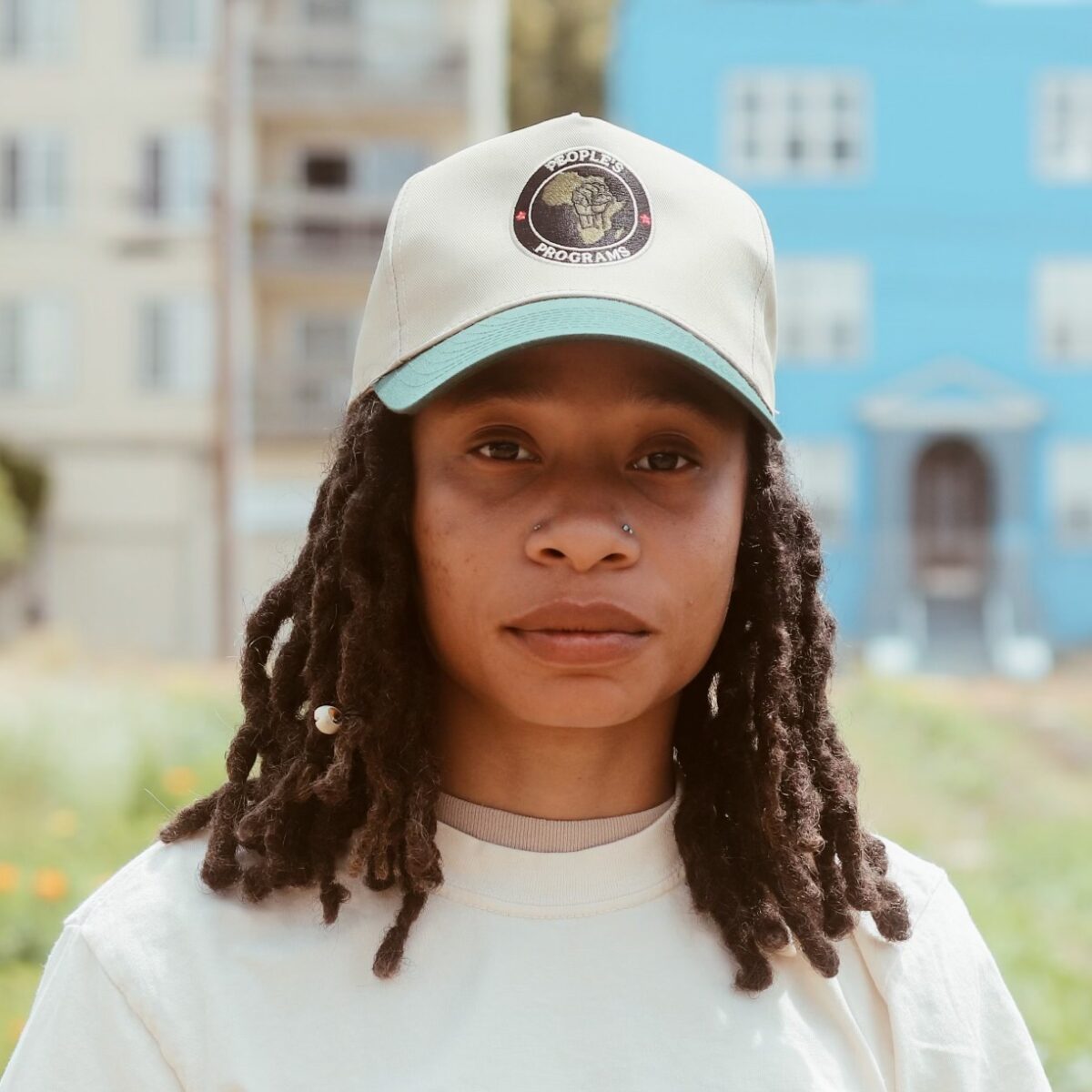
ab banks, PEOPLE’S PROGRAMS: I’d like to start with a brief introduction to People’s Programs. We’re a new African socialist organization based in West Oakland. Our food sovereignty program collaborates with Oxford Tract at UC Berkeley. Oxford Tract is an acre of land, and People’s Programs stewards half of that. We distribute produce from this land, in partnership with other produce partners, to 150 families every other Friday.
We also operate a clinic, which complements our program that provides fresh and hot meals to the shelterless and houseless people in West Oakland. We distribute between 300 and 600 meals every other Sunday, along with basic healthcare services and hygiene packs.
Additionally, we run a political education program. This program engages people on the issues we face today, guided by dialectical materialism. We focus on data and addressing material needs rather than being abstract or esoteric. We are what we call “road runners,” meaning we are grounded and actively work on the ground to make tangible changes for the people.
We also support agroecology and Indigenous technologies. We aim to uplift local food systems and promote culturally relevant foods. We believe that losing access to traditional foods is a significant loss, and we are dedicated to bringing those foods back by uplifting Indigenous technologies.
I want to highlight the importance of staying connected to the land. It’s not just about what’s on us but what’s in us.
DEENAALEE HODGDON, ON THE LAND MEDIA: I feel fortunate to learn about your work. Numerous food projects are happening across Turtle Island and the world, and it’s crucial to visualize and share these efforts. It would be incredible to see this kind of work spread everywhere.
Bristol Bay is a beautiful area, and my family was displaced from what’s now Katmai National Park to South Naknek after the Novarupta eruption in 1912. Our displacement continues due to industry and colonization.
Reflecting on your work, ab, it’s interesting to consider that Alaska settled its land claims in 1971, which is relatively recent. When colonizers reached Alaska, they realized they couldn’t use a reservation system like in the lower 48 states. Instead, they created Native corporations, turning Native people into entrepreneurs to facilitate American capitalism, especially in a resource-rich area like Alaska.
What’s inspiring about Oakland and Berkeley is the long history of resistance and the valuable lessons we can learn from the food systems and community power developed here.
The organization I co-founded with Ruth Miller is the Smokehouse Collective. We’re working on creating traditional food hubs and contemporary fish camps to support communities facing scarcity due to overharvesting, poor river management, and bycatch. We aim to foster relationships across communities, strengthen traditional trade routes, and revitalize our cultural practices.
We’re exploring how to trade and exchange without relying on a cash economy, reconnecting with our relationship to salmon.
ARTY MANGAN, BIONEERS: I wanted to explore the theme of this conversation, “Combining Traditional and Radical Visions.” A few years ago, I had the privilege of attending a Bioneers retreat in Northern New Mexico led by Marlowe Sam and Jeannette Armstrong. They introduced us to a traditional Okanagan First Nations process called Four Societies.
The Four Societies are vision, tradition, relationship, and action. Action and relationship form one axis, while tradition and vision form another. In a healthy society, these elements are in harmony. However, there can often be dynamic tension or even antagonism between them. For instance, visionaries focus on the horizon and want to progress quickly, sometimes overlooking the current landscape. Traditionalists, on the other hand, emphasize the established way and may advocate for a slower, more considered approach. When these perspectives harmonize, the results can be very effective. When they clash, conflicts can arise.
I’d like to ask, ab and Deenaalee, how radical vision is informed by tradition.
ab: When I think about tradition, I consider a group of new Africans, a community of Black people, who are actively building their own traditions. I reflect on Deenaalee’s work and how it connects to this ongoing process.
Our work is not created in isolation — history matters, but it’s also something new. I think about religion, language, and culture, and how we’re currently building a culture. Tradition, for me, involves leaning on elders who, due to cultural loss, might not have many generations to draw from. This makes intergenerational longevity and cultural continuity crucial.
I also want to emphasize that I embrace conflict. Conflict often gets a bad reputation, but without it, there would be no innovation or renewal. Conflict arises from unmet needs on both sides; finding a middle ground can lead to a new iteration of what both parties envision. I believe that a world without conflict means that some needs are not being addressed.
While these conversations can seem complex, to me, they are simple: everyone should bring their needs and visions to the table and work toward a middle ground. It won’t be easy, but we’re prepared for the challenge.
From my perspective, I’m not a traditionalist because I am constantly searching for tradition. I’m always reading and trying to understand what Black traditions mean in this context. The search for answers can be elusive — no one has a complete answer.
My focus is often on the future, but more importantly, on the present. The intersection of traditional and visionary perspectives is in the present. If you’re always thinking about the future, you might feel anxious; if you dwell on the past, it can be disheartening. I invite everyone to meet in the present, to examine our current reality, and to build based on what we see, informed by both traditional and visionary perspectives.
ARTY: I have a follow-up question for both of you. ab, one of your influences is the Black Panthers, who are often seen as a radical organization. Yet, community care was central to their work, which is also a Black tradition. Can you elaborate on that?
ab: Absolutely. When I think about tradition, I often think about the past, which is something many Black people yearn for. The term “tradition” can trigger a search for what our traditions truly are. The Black Panthers, for instance, are a significant influence on us. While we’re inspired by their work, it’s important to note that we’re also building a new tradition. For example, the Panthers had survival programs, while we refer to our initiatives as decolonization programs. Survival programs focused on surviving together, whereas decolonization programs are more action-oriented and aimed at addressing systemic issues.
Reflecting on the Four Societies framework, I see the importance of learning from the Panthers’ work and evolving from it. Their contributions were radical and impactful. I grew up in Oakland and still see the effects of their work today.
Imagine if the CIA and FBI hadn’t infiltrated their organization. We can think about what that might have looked like and honor the Panthers for their contributions. At People’s Programs, we strive to embody their spirit and build upon it, rather than resting solely on their legacy. So, a big shout-out to the Panthers.
ARTY: Deenaalee, for many Indigenous people, tradition is central to their lives. Do you consider your work to be radical?
DEENAALEE: Yes, definitely. Given our current context, I do consider it radical. The Alaska Native Claims Settlement Act (ANCSA) established a system where our land rights are tied to corporations. We’ve become shareholders in entities that often invest in oil and gas, perpetuating the issues that brought us to this point. In contrast, the Smokehouse Collective and On the Land are radical because they challenge us to rethink our economy from a perspective of caring for our land and communities, rather than focusing on financial metrics.
ANCSA has created a class system among Native people in Alaska. While some thrive in a Western context, others face significant challenges. Discussing this can be controversial, but it’s the reality.
The Smokehouse Collective addresses this by emphasizing that our bodies and health are interconnected with the land. It’s about valuing community well-being over financial wealth. Tradition, to me, has lost some of its meaning as language and concepts evolve. In our Indigenous context, tradition might be less about specific practices and more about a way of being.
The Smokehouse Collective envisions creating both traditional and contemporary fish camps. Tradition involves practices like fishing and preserving fish, which bring communities together. In contrast, our contemporary vision recognizes the impact of climate change and the need for new approaches, including growing food in Alaska, which traditionally wasn’t done. As the climate warms and land becomes more desirable, it’s important to explore how we can integrate traditional knowledge with new practices to adapt and thrive.
ARTY: Deenaalee, you mentioned the changing environment in Alaska, with land opening up for farming and fisheries in decline. What does food sovereignty look like in your community?
DEENAALEE: In many ways, it doesn’t look that different from Oakland. There are similarities and differences.
Right now, I’m trying not to separate the two aspects of food sovereignty: agriculture and our traditional practices. Agriculture involves growing, planting seeds, and nourishing the land. Many Indigenous peoples across Turtle Island and the world have learned that these practices are integral to living in harmony with the land.
In an Arctic context, where we are traditionally hunter-gatherers, climate change is creating a pivot point. As we face these changes, food sovereignty becomes about blending our traditional knowledge with new realities. Imagine a traditional gathering space, like a longhouse, where we would discuss what seeds we need to plant to adapt to changing conditions — losing permafrost and thawing tundra.
We also need to remember our old stories, such as those from the Inupiaq people about palm trees once growing in Alaska. How can these stories guide our current efforts?
At the same time, we are advocating for change. I’m moving away from language of fighting and war, and focusing more on finding light amidst the darkness. There is ongoing conflict in Alaska over land access and division among federal and state governments, Alaska Native tribes, corporations, and local governments.
Each community must navigate these complex relationships and determine how to approach agencies like the Federal Subsistence Board and the North Pacific Marine Fisheries Council, which regulate our fishing practices.
Food sovereignty, for me, means transitioning and translating our traditional practices into a future shaped by climate change. It involves grieving the loss of permafrost and boreal forests while advocating for our right to harvest. Ensuring that everyone in our community, from the young to the elderly, has the opportunity to participate in these practices is crucial. Our communities are suffering because we’re losing our traditional harvesting practices.
So, food sovereignty is about a process of transition, grief, and advocacy. We need spaces and conversations to support this work and help each other maintain our practices while facing these challenges.
ab: I want to address that as well. There’s a lot of discussion about how current practices are harming the land. When we talk about “freeing the land,” it’s crucial to understand what that truly means. It involves uplifting Indigenous technologies and traditional planting methods.
For example, my farm is on land that was once a river. Everything we’re doing now doesn’t align with the land’s ecological needs. That’s a constant struggle for me.
In Ohlone land, which should be a forest full of trees, the reality is different. Ideally, farming here would be more about agroforestry — a system that integrates trees and shrubs with crops. Many of us dream of living in a forest and foraging abundantly.
But the reality of my program involves growing food for 150 people who lack access to it, which often conflicts with what the land needs. I grapple daily with this tension between fulfilling immediate needs and respecting the land’s ecological integrity.
At UC Berkeley, where I work, the land was once a river. Knowing this makes me yearn to plant trees there, though I can’t because it’s a research field. It’s a reminder that sometimes traditions exist because they serve a purpose.
As a farmer, I often feel conflicted. I know the land needs trees, but I have to grow potatoes and other crops. We cover crops to improve soil health, but ideally, we wouldn’t need to do this if the land were used more naturally.
I don’t want to frame this as a war, but there’s a strong contradiction between our needs and our practices. Realigning with what the earth needs can lead to greater liberation for us all. The earth speaks through us, urging us to share strategies and understand our ecological position.
If you’re a farmer, I encourage you to learn about the land’s history before you start growing. Discover what plants originally thrived there. Native gardens are great, but it’s important to consider what was growing before the garden was established. I find it amusing that native plants are trendy now. But I wonder — what was there before you planted those native species? If it’s not invasive, it might be what the land naturally wants. I’ve been reflecting a lot on this. It’s serious to me.
So, Deenaalee, even though our worlds seem different, they’re strongly parallel. I really resonate with what you’re saying. My question is, how can I support your work? We just met, but I’m eager to be an ally. Is there anything specific you need from me, especially here on Ohlone land? I’d love to know how I can contribute or learn more.
DEENAALEE: I think you’re already doing something valuable for me and for many of us who are guests on this land. You’re being great hosts. For instance, ab recently asked me how to accommodate me, and I didn’t respond right away. That’s something I’m working on — learning to ask for what I need. It’s important for all of us to learn to ask for help and to be open to receiving it.
We just visited Wahpepah’s Kitchen, which was amazing. If you haven’t been there yet, I highly recommend it. I’m still feeling nourished from the meal. Crystal and a friend from Alaska, Conrad Frank, who couldn’t make it to Bioneers this time, treated our group. This gesture is an example of what it means to be a great host. I’d love to see more of this — more people being excellent hosts and guests, whether it’s through everyday interactions, like having tea, or when visiting places like Alaska. Learning how to engage respectfully with different lands is important.
When I leave here, I want to carry forward this spirit of being a good guest and host. To answer your questions about accommodation and support: I want to be of service by contributing my efforts and dedication to the soil. I’m excited about Smokehouse Collective because it represents a genuine exchange — beyond simple transactions, it’s about a meaningful transfer of energy. I see this happening here, with everyone’s engagement and appreciation for the conversation.
I’d love to ask you, ab, about your favorite ways to build community, invite people in, and spread your love. You mentioned that the earth is using you as a translator and conduit, so how do you bring others into your work?
ab: That’s a great question. To me, there are different levels to bringing people in. We talked earlier about conflict, and I believe that struggling together is one of the highest forms of coming together. It’s about aligning on the same page, even when it’s challenging.
I’ve found that working through difficult conversations — whether they’re about specific words or broader issues — can bring people closer. For example, my family and I often have intense discussions that, while sometimes uncomfortable, strengthen our bonds. It’s a form of conflict that I value.
In addition to having tough conversations, I believe in the importance of breaking bread together. Sharing a meal can be incredibly meaningful. It’s not just about having food; it’s about connecting over a meal, as opposed to just casual finger foods or drinks. It’s about truly sitting down and sharing an experience.
Another way to build community is through working together. I’ve had some of the most profound connections come from physical labor, like digging a trench or shoveling rocks. These shared tasks can forge strong friendships.
So, to sum up: If I challenge you, it means I care. I only engage in conflict with those I trust and respect. In our society, critiques can feel like battles, but they should be seen as gifts. One of my elders once told me that a critique should be wrapped in a gift. So, let’s continue to build community through conversation, shared meals, and collaborative work.
Of Kathleen Harrison’s essay “Women, Plants, and Culture,” Nina Simons remarks, “Somewhere deep in our bones, or in our lineages, we understood how to commune with the plants, how to read their signals, and how to live in mutuality with them. As an ethnobotanist, Kat Harrison has lived and studied with many cultures, relearning how to bridge the languages of people and plants in time-honored, wise, and sensitive ways that will hopefully inform us as we move forward. As an artist, Kat has learned the great value of stillness and observation, which her leadership style embodies. Her quiet dignity and gentle nature reflect a strength through a softness that’s accessible to us all.”
Kathleen (Kat) Harrison is an ethnobotanist, artist, and writer who researches the relationship between plants and people, with a focus on myth, ritual, and spirituality. She teaches for the California School of Herbal Studies, Arizona State University, and the University of Minnesota, specializing in tropical field courses. She has done recurrent fieldwork in Latin America for the past thirty-five years. As co-founder and director of Botanical Dimensions — a nonprofit foundation devoted to preserving medicinal and shamanic plant knowledge from the Amazon and tropics around the world — Harrison has helped support indigenous projects in Mexico, Peru, Ecuador, and Costa Rica.
Harrison’s essay (below) was excerpted from the book “Moonrise: The Power of Women Leading from the Heart,” edited by Bioneers president and cofounder Nina Simons with Anneke Campbell. “Moonrise” contains more than 30 essays exploring the flourishing, passionate forms of leadership emerging from trailblazing women on behalf of the earth and community.
I have worked many years in the realm of people, plants, and plant medicines. In the 1970s, I spent quite a while in the Peruvian Amazon working with healers who used a spectrum of plants from the most subtle to the most powerful. Then I came back into my life in California and worked on many other botanical projects while raising a family. It was only in 1993, when I went back to the Amazon, that I completely got the idea of plant spirit. In fact, it was no longer an idea; it became a reality and got under my skin and changed my life substantially.
Since 1995, I’ve been able to spend time most years with a traditional healer’s extended family of Mazatec Indians in the mountains of Oaxaca in Mexico. I’ve also been able to learn more about the indigenous Native Californian relationship to nature and plants. I see wonderful parallels in these nature-based societies in which everything is viewed as animate, and every species is a being. I think we too need to develop an intrinsic perception of this hidden reality to make the medicine that we grow, are given, or even that we buy more effective. Our culture has become extremely reductionist and materialistic in its worldview, so we need to learn from models that can help us understand spirit in nature and spirit in medicine.
The word spirit comes from the Latin for breath, so what we’re talking about when we say a plant or a species has a spirit is that it draws energy from the universe and expresses it in a particular form. An ancient notion of many indigenous cultures around the world is that there were primordial beings on Earth before we came along. They interacted and had relationships, love affairs, conflicts, and exchanges of all sorts, and each of those beings became a species.
According to those creation stories, we humans, as complex and differentiated as we may seem, are one being, and each of the plant species that we use as medicine is also one being. I’ve learned from my native friends to talk to the spirits of those plant species. Whether you’re ingesting a plant or growing it in your garden or passing it in the forest, you learn to speak to it as though it were a being you are meeting for the first time, or greeting it in such a way that indicates you know each other already. In its genes and in its form the individual plant carries a constellation of qualities, actions, and ways of interacting with us that we need to speak to. To know about it is a step, but to speak to it and listen to it is really what makes the medicine work, because then we are creating a relationship.
That’s why in many parts of the world it is women who carry the knowledge of plants and who gather the medicines. Women are good at relationship. Like all female mammals, and most particularly female primates, one of our roles is to be nurturers and doorways for life. When children come through us, they are not ready to be in the world, of course, by themselves. In some species they are, but not in mammals, so we have to give them a deep level of attention and read their needs in a way that goes far beyond the verbal to help them survive and grow and thrive. We women have to be able to sense on all levels the needs of the beings around us.
We have this innate ability, no matter what or who we apply it to. These skills translate well into gathering plants. We can look back through the entire history of hominids and see that we survived and thrived by using our senses of taste, smell, touch, and sight to make clear distinctions between one plant and the next, between safety and danger, between all the different ways that the elements present themselves to us, and it was mostly women who perfected these skills.
I think it’s important for women that we recognize and appreciate the inborn skills we have at paying attention to the natural world. These are the skills that allow us to call nature in through our hands to be food, to be medicine, to be magic, to be whatever the many forms of partnership are between the plant world and human women. Language itself can be an obstacle in this quest. It can be a sort of screen we get trapped behind, separating us from the multileveled reality on the other side of it.
I love words, but our culture has bought into the idea that there’s an objective reality, and it’s important to remember that this very objectivity is, in many ways, a cultural construct. I think we’re becoming braver about showing what we know and not being held back by the inner judge that says, “Objectively speaking, that sounds crazy.” Women are often more willing to trust their subjective experiences, dreams, and intuitions and are therefore more able to develop a relationship to the plant world that is spontaneous and deeply authentic.
I’m encouraged by what I’ve been seeing as a teacher. For years I’ve spoken at herbal conferences and taught at herb schools and in college classes focused on ethnobotany. Perhaps three quarters of the attendees and students are young women who are studying to be herbalists or who are called to work with plants in some way, often seeking a way to heal themselves or others. These young women give me heart because they’re starting farther along than many of my generation who had to work through old cultural baggage just to begin to trust our instincts, to begin to know nature, to begin to rediscover that our roots were in the Earth too. Now I see many women coming in with the assumption that they have the ability to be healers. I want to encourage this new generation to learn to listen to the ancestors and to the voices of all the species around us, however humble and subtle.
I’m a champion of subtlety. The subtler something is, the more you have to pay attention, and that’s a good thing. Remember, it’s not always the big, loud species that are the best teachers. Sometimes it’s the little, quiet, humble ones.
Plants have the ability to transmit energy. Plants draw in and transform earth and water and nutrients and light and make their bodies out of them. The plant beings are manifestations of these forces being woven together, and we humans have relied on them to sustain us from the beginning of our evolution. In cultures that are close to the Earth I see a recognition of the power of plants to hold and draw energy in a situation and to move it along, thereby changing it in a healing way. The plant world is constantly whispering to us, if we can hear it. There’s been a long partnership between plants and, significantly, women around the world, who know how to take plants with offerings and with prayers, and to use them to move energy. This is part of all our ancient traditions, and we’re gradually returning to these ways.
These concepts are rooted in the way that native people—worldwide, those who are still close to the Earth—live daily. In relating to the natural world, one of the most basic principles that they abide by is reciprocity. When, for instance, you meet a plant and you wish to take some of its body for medicine, you ask its permission and you explain why you need it, and then you give it something back. On this continent the ritual has long been to give tobacco, the most sacred traditional spiritual plant of the Americas, domesticated thousands of years ago by indigenous early Americans. I’ve thought about what is most valuable to people in our contemporary culture, and I think it’s time.
Time is the thing that we feel we have the least of, that we value, so we can offer a plant our time if we want to ask something of it. The way we can offer it time is to learn about it, sit with it, and maybe grow it. But even if you’re just purchasing some of it, try to learn about that plant’s world—where it grows naturally, what it looks like, what it’s related to. When we use a plant, we’re communicating with the entire chain of experience of that species through its evolution.
Medicine, in the traditions I’ve worked in, is not just about chemistry. It’s about that which heals. Many cultures talk about the songs that come through the plants. If you listen well to a plant that you have solicited as medicine, they say that you can learn its song, and that its song will be as effective a medicine as the plant material itself. That’s when you’ve taken that plant in as your deep ally: when you can invoke its medicine without even necessarily touching or finding the plant. At that point you have access to the spirit of the medicine.
It has been part of my work to go to cultures that use sacred visionary plants in Mexico, Ecuador, and Peru and learn their mythology and sometimes their ceremonies. These traditions and these sacred plants have to be met with total respect. I ache when I think of any of these sacred plants becoming mere commodities in our culture. The commodification of spirit is really dangerous territory. We’re generally not wise enough and openhearted enough to take that type of medicine on our own, for casual use, without a teacher or a healer who can show us how it really is medicine. But I can certainly grow a beautiful little peyote plant, and it can be a teacher to me, even if I just watch it flower and act as its guardian. A tiny little delicate plant can have a very powerful spirit.
Our culture still has a strange relationship to plants. For example, it’s interesting that finally, after a very long period of denouncing cannabis, we’ve opened the dialogue enough to talk about it again as medicine, as it has been for thousands of years to many people, and little by little money has come forth to do studies. Formal studies have validated thousands of personal anecdotes in concluding that it actually relieves pain. There are so many receptors in the human brain for the active principles in cannabis that it is uncanny. When used with intention and gratitude and awareness, it can be a multifaceted medicine. It is our sister and ally in many ways.
I try to keep my eye on the big picture and observe how cultures vacillate in their appreciation and rejection of powerful plants and how fear and denunciation cycle around again to an appreciation of these plants. We’re in a time of such fierce denunciation of tobacco right now that we find it very hard to talk about its holy and sacramental properties. A plant is in itself not evil or good. Its effect depends upon how we use it and how conscious we are, and that’s true of all medicine. Unconscious use of anything is damaging, and conscious use of anything can make it medicine, and this goes for food and all the other substances that we love and hate. Still and all, we seem to go through periods of demonizing aspects of nature that we don’t understand.
Chocolate is another fascinating psychoactive plant. Chocolate pods are filled with beans that have been used as offerings; in Mexico they still are. People give them and other plants and seeds to the Virgin Mary or to the spirit of a mountain or the local gods. They give them things that they know will please them, and how could chocolate not please them? Some plants they burn as incense, and some they just lay in sacred places where water wells up out of the ground. They don’t necessarily bring flowers or spectacular-looking things but often more subtle gifts. You bring nature to nature because it shows that you have paid attention and understand reciprocity. You don’t take without giving something, and then you’re always grateful for what you get. That’s medicine.
While we must radically transform our economic system to move away from fossil fuels and destructive extractive practices, for this transition to occur fairly the priorities and needs of frontline communities must be centered. Communities of color, people with low incomes and many immigrant groups are most vulnerable to the health impacts of climate change. A just transition that transforms our skewed structures of wealth and power is needed for these and all communities to thrive.
Learn about climate justice organizer Colette Pichon Battle’s vision for radical democratic climate action; the inspiring work of young climate justice activists; the call for a Fossil Fuel Non-Proliferation Treaty; and a network of lawyers working to support Black-, Brown-, and Indigenous-led frontline movements for climate justice. A just transition will take these efforts and more — and all of us contributing to and supporting these movements.
Want more news like this? Sign up for the Bioneers Pulse to receive the latest news from the Bioneers community straight to your inbox.
“Let’s Get Behind the Frontlines” with Colette Pichon Battle
Award-winning lawyer and climate justice organizer Colette Pichon Battle shares her bold vision for Taproot Earth, a new bioregional frontline organizing project designed to model radical democratic climate action. She shares what inspired her to become a lawyer, how her legal work is rooted in her community and her traditions, and how the law is limited when it comes to justice. You can also watch Colette’s keynote talk at the 2024 conference here.
Taproot Earth is Building a Just Transition Lawyering Network
Taproot Earth is building a network of lawyers working to support Black, Brown, and Indigenous communities and movements leading us toward climate justice and a just transition from an extractive to a living economy and democracy. The Just Transition Lawyering Network seeks to build power, shift resources, and engage in systemic change for climate justice and a just transition by building the infrastructure for a values-aligned community of attorneys and scholars who are committed to Black-, Brown-, and Indigenous-led frontline movements.
Young activists have emerged as the most significant and impactful voices in global movements to combat climate change and demand environmental justice. In this conversation, learn from the perspectives, projects and aspirations of three outstanding young leaders. The discussion features the award-winning, globally renowned activist Alexandria Villaseñor, founder of Earth Uprising; grassroots environmental justice organizer Alexia Leclercq, recipient of the 2021 Brower Youth Award and co-founder of Start: Empowerment; and Oakland-based spoken word poet and performer Aniya Butler, a Lead Circle Member of Youth vs. Apocalypse. Callie Broaddus, Founder and Executive Director of Reserva: The Youth Land Trust, moderated the panel.
‘Closing the Gates to Hell’: A Global Plan to Phase Out Fossil Fuels and Accelerate a Just Transition
How do we get away from coal, oil and gas, and on to the future that we want? Learn about the call for a Fossil Fuel Non-Proliferation Treaty and how an international coalition is plotting the course for a just transition to clean energy and low-carbon solutions. In this Bioneers conversation, a group of civil society, government and Indigenous leaders discuss the growing momentum for a Fossil Fuel Treaty.
The discussion features Osprey Orielle Lake, founder and Executive Director of Women’s Earth and Climate Action Network; Eriel Deranger, founder and Executive Director of Indigenous Climate Action; climate and campaign strategist Michael Brune, Director of Larsen Lam Climate Change Foundation; Eduardo Martinez, longtime activist and current Mayor of Richmond, California; and Bryony Worthington, a key architect of the United Kingdom’s world-leading Climate Change Act and co-chair of Peers for the Planet. The discussion was moderated by Cara Pike, Senior Communication Advisor to the Fossil Fuel Treaty and founder and Executive Director of Climate Access.
Cultivating Personal and Collective Healing with Deborah Eden Tull & Nina Simons
Embark on a profound journey with Deborah Eden Tull, engaged Buddhist teacher, spiritual activist and author; and Nina Simons, co-founder of Bioneers. This transformative retreat goes beyond conventional notions of activism and the sacred, fostering relational mindfulness, evolving leadership, and compassionate action. Join a supportive community to cultivate meaningful connections, harmonize self-care with global stewardship, and uncover newfound resilience and hope.
We’re excited to announce that our new season of Bioneers Learning is online, and registration is open! You can register for our first-ever self-paced courses, along with courses covering topics such as the Rights of Nature movement, gender equity, regenerative herbalism, and sacred activism.
Indigenizing the Law: Tribal Sovereignty & the Rights of Nature | Aug. 13-Sept. 17 | This course examines the prominent cases, laws, and legal theories that make up “Federal Indian Law” while exploring the intersections between the movements for Native Sovereignty and the Rights of Nature.
Regenerative Herbalism: The Healing Power of Plants | Sept. 18-Oct. 23 | Explore the magical realm of herbal wisdom with this 6-session online course led by renowned herbalists Penny Livingston and Rosemary Gladstar.
The Four Sacred Gifts: Indigenous Wisdom for Modern Times | Self-Paced | Discover how the Four Sacred Gifts of forgiving the unforgivable, unity, healing, and hope in action provide us with a path to our most grounded, loving, healed, and generous selves.
Regenerative Agriculture: Nourishing the Soil, Healing the Planet | Self-Paced | Be enlightened on the practical applications and impressive potential that regenerative agriculture has to revive healthy landscapes; contribute to human and animal health; create an equitable food system; and help heal the climate.
Award-winning lawyer and climate justice organizer Colette Pichon Battle shares her bold vision for Taproot Earth, a new bioregional frontline organizing project designed to model radical democratic climate action. She shares what inspired her to become a lawyer, how her legal work is rooted in her community and her traditions, and how the law is limited when it comes to justice.
Colette spoke with Bioneers Senior Producer Stephanie Welch about her work at the 2024 Bioneers Conference.
Music: “Watching Pieces Move” – Nagamo
Transcript
For some people, the climate justice work is a career choice. For others of us, this is about our life, our livelihood, and for me it’s about my traditions and the communities that I come from.
I was my grandmother’s caregiver, and so I was always around a lot of old people, I was always around them. You know, my job was to read a lot. I had to read the scriptures out loud or read the instructions out loud. There was an understanding of your role and how respect could be shown through service, not servitude, right, but service; how listening was more important than talking. And these are things that I learned very, very young, mostly because traditionally that is the role of the child, right, to definitely be in the room but not necessarily to be the main voice.
And I have to say I was also in rooms where if I ever wanted to voice my opinion, I was allowed to. But wisdom was the response. Right? So if I have something to contribute, I also have to be ready to receive what wisdom has to give back to you. Right? So it’s not “Let me make a point,” it’s “Let me make a contribution,” and if my contribution isn’t yet mature, let me receive what wisdom has to offer. I think about that all the time.
I was just talking earlier today about, you know, me and my attitude, and I always had an opinion, and enough for your community to say, “You should be a lawyer,” as opposed to “be quiet and sit down, little girl.” You know? They see you, and they see that you’ve come with something. Right? God has given you something—courage, a voice, a quick mind. We know what to use that for. You should be a lawyer. And I think many people in my community would tell you, yeah, she’s been that the whole time.
But there were two lawyers that stood out for me. One was Thurgood Marshall. So as I learned about the Civil Rights movement, as I learned about people fighting for their rights, and I learned about who was a lawyer in the Civil Rights movement, it’s Thurgood Marshall. It’s a Supreme Court justice. It’s rising to this occasion. It’s standing up and articulating and advocating for our community to have equal rights under the law. And that felt right. It felt noble. It felt good. And I was like, yes, I want to be that; I can do that.
The other person that stands out is Clair Huxtable. So you have to know that—I remember, it was a really big deal with The Cosby Show came to primetime. I’m in that generation where like on Thursdays at 7:00, everybody got around the TV to watch The Cosby Show. And there was this beautiful Black woman who had children, a family, joy. She was smart, she was so beautiful to me. And she was a lawyer. And I said, oh, well, you know, she’s cuter than Thurgood Marshall, for sure, so that’s clearly what I am—I’m a Thurgood Marshall/Clair Huxtable wannabe.
And so, for me, it was—I want to be everything that I know I can be—a Black woman with an education and a family that they love, and someone who’s fighting for our society and for us to have equal rights. That feels good; I’ll go there.
And that’s what I had in my head. And, of course, when you go to law school, especially as a Black person from the South, the opportunity is that you’ve made it to a professional class. You must now go earn a six-figure salary, work for a corporation, and it doesn’t matter who you defend or fight for so long as you can say you work at a firm, wear a nice suit, have a good house, and have a nice car. And that wasn’t enough. I was disenchanted with the law the first year of law school, and realized this has nothing to do with justice. In fact, I remember understanding law as a very formulaic and methodical practice. And like I said, it’ll teach you; it’s a great teacher. There’s a formula to law. That’s how a judge can say yes or no to a thing. You know? A B = C. If it’s not A or B, then it doesn’t equal C, like it is that formulaic. I should be—It is. It’s taught that way. But that’s rarely justice. Justice is in between those. Justice is invisible sometimes. Justice is unspoken or unproven, but it doesn’t make it untrue, and it doesn’t make it unreal.
And so fighting for this broader notion, not just of what man has thought to write down, but to understand inherent laws, and natural laws. You know? That’s what I love about Bioneers. This is the first place I really heard people leaning into the rights of nature.
So my understanding of the laws has grown. And now I think about how to be the type of lawyer that is rooted in poetry and mystical understanding of invisible things, and faith, and belief in the best parts of humanity, and hope. These are not things you learn in law school. These are things you learn organizing at the community level. These are things you learn, can’t possibly have been written down. You can’t possibly write down the rights you have in the aftermath of Hurricane Katrina. Nobody can imagine that. But we had rights in the aftermath of Hurricane Katrina, and they weren’t articulated anywhere, because they never had to be. The law is necessarily reactive to something that we’ve experienced. It’s rarely, you know, pro-actively ready for what we haven’t gotten. We’re seeing that now with AI and climate. The laws are way behind. Right?
So you realize law follows the human experience, and you have to really engage in the human experience to understand your role as a lawyer, to ensure that the structures and laws that come from it allow justice to continue to grow, allow for things to be addressed, yes, but for justice to grow, and perhaps even repair.
The beginning of this work was so full of sadness and anger, and disbelief, and confusion. And all I had at that time was my law degree, my legal background, my very school-based understanding of what the law and the government and governance was supposed to be, and so it was just a really limited way of thinking about the world and the responses to a disaster like Katrina. And it was one dimensional. Effective, but one dimensional.
I think over the years, and we’re at 19 years since Katrina this year—it’ll be 19 years—I think over the years it has come to be multi-dimensional. Emotionally, anger is not—it’s not a sustainable emotion. It’ll hurt you or someone else if you try to just move in that. And I don’t come from anger. I come from joy. I come from the Bayou community that’s really full of joy and life and livelihood. And so to evolve out of anger into more joy, gratitude, possibility, abundance, resistance, that has been a place where I think I’ve evolved, at least in my approach.
New Orleans, 2006 – an aid distribution center set up by Common Ground Relief, a local community organization. Photo by Robert Kaufmann/FEMA
And the legal work is not the beginning. It’s not the top. It’s not the tip of the spear, it’s wind for wings that are much broader than just a legal approach. The legal approach is a tactic, but organizing and building power at the community level is the win, and that’s what I’ve really learned.
So I think my growth has been to understand that, at best, we are learning one-dimensional ways of living on the planet and advancing our profession. Coming into movement work, you learn there are many dimensions of being, and many ways of intersecting on purpose, and if you can shift from anger into something a lot more regenerative, like love and abundance, you can start to create inside of these moments of resistance. Right? You don’t just have to tear down. You can actually get to some of the answers that we’re all looking for.
So it’s been a tough trajectory. You know, you don’t just move to that place. You have to get to that place, but I’m really grateful to be in a more steady, stable place, rooted in love that I come from, rooted in joy that I come from, but still very committed to advancing a resistance toward a broader liberation for everyone.
I’m so proud to talk about Taproot Earth. It is a new organization, and it began last year in 2023, with a seven-year time horizon. So we are moving until 2030. And we’re moving until 2030 as an organization, because 2030 is the point of no return, so says the International Climate Scientists. Once we get to 2030, if we haven’t made significant reductions in greenhouse gases, the way we live on the planet will be dramatically changed—mass migrations, because it’ll be too hot or too cold somewhere; extreme weather events at a rate that no one can really respond to. This is what’s going to happen if we don’t reduce our greenhouse gas emissions by 2030.
Taproot came on the scene specifically to be an actor inside of that timeline. 1) we want to be a weapon for the climate justice movement. But 2) we want to actually experiment and show the possibility of impermanence.
You know, sometimes we take these sort of colonized ways of being— Institution-building is necessary but not for everybody. Some of us need to be able to move around and dissipate. Right? Some of us need to be able to do hard things and then go to the next level.
And so Taproot Earth is such an organization. We’re strange. I am the partner for vision and initiatives. My strategy partner is Anthony Giancatarino, and he and I have been working together for over a decade, really thinking through this climate crisis.
Photo courtesy of Taproot Earth
So our work is really to build formations that can govern themselves, and to build those formations from the frontlines upward. We focus on the Gulf South, which is Texas, Louisiana, Mississippi, Alabama, Florida, and Puerto Rico. We share a water, and so that is how we—we use, some might call it a bioregion, we call it watershed organizing. Take off those borders and think about the natural systems that we share. We share that gulf. We share those waters. We share the realities of a particular history in the South.
We also focus on Appalachia, which brings us into not just the Ohio River Valley but into the sort of Appalachia mountain chain, but all the states that touch that—the Carolinas, some of the Georgia south, of course, Kentucky, Pennsylvania—it takes us into Pennsylvania—West Virginia. And, again, we’re working in these areas that are the energy sources for this country. So oil and gas and coal is the Gulf South and Appalachia.
And we also work in the Black diaspora, and we define the Black diaspora as any place where Africans were and were taken from and brought in the Transatlantic slave trade. And so we work absolutely on the African continent, but also in the U.K., Canada, the U.S., the Caribbean, Latin America, South America. These are places where Black folks are, and that’s where we want to do our work.
And so building formations, both domestically in the U.S., but also globally. We have our global Black climate leaders network. It’s called Taproot Noir, and it is all Black from the Black diaspora.
We have a Gulf South to Appalachia formation that runs those 17 states, and it’s all frontline people who are coming together to say we understand what’s happening and we have solutions. We’re not an organization focused on, you know, tearing down or dismantling the system, although we are in deep solidarity and support for those organizations whose job that is. We want to be ready with some solutions, and we want to be ready with not just ideas, but actually piloted projects, [LAUGHS] that come from the frontline, so that when someone has the audacity to tell us that they understand what we’re saying but there’s no proof that we can make change, we say we have the proof. And we are starting to really show that in the world. And I’m really excited about that.
We are pushing a billion-dollar refund by 2030, to get a billion dollars to the ground to the Black diaspora, governed by the frontlines. And we’re really hoping that folks will join us, not just to make individual donations, which we love and we want, and thank you, but to hold some of the largest systems accountable—the Church, the Crown, the corporations who are responsible for so many of these imbalances that we’re seeing.
And so we’re going big. The vision is large. It’s taking a lot of courage. We’re building a team. Our team is global, and I’m really excited about it. But at the end of the day, we are headquartered in the great state of Louisiana. We have a role to play in a global conversation. And we’re taking on the fossil fuel industry as a main culprit in this fight. And we have a responsibility to the world to hold this industry accountable.
So we’ve got a just transition lawyering network, and that lawyering network works in the U.S., and it’s specifically to flank the climate frontlines. It’s lawyers who know we ought to be doing something. They know there’s something that we can offer in our legal system, but they just don’t know what to do. And the answer is not to let the lawyers lead, the answer is to connect the lawyers to the community and get behind what the community wants to do. So the just transition lawyering network is doing that.
We’re building these formations that govern themselves. And in seven years, when we finish, they will stand on their own. You know, Lord willing, they will stand on their own. And maybe they won’t. You know? We’re trying things. We’re having some courage. We’re trying new ways of being, but we’re putting some solutions out there so that folks can stop saying we understand but we don’t know what to do; we understand but there’s nothing we can change. Taproot Earth wants to be able to say: Here are the models, and they’re coming from the frontlines. And they always were. And they always can. So let’s put our investment, our time, our energy there, and let’s get behind the frontlines.
Sarah Wentzel-Fisher grew up in the Black Hills of western South Dakota, in and around the small town of Custer. That Custer State Park was essentially her backyard and a National Grassland also nearby was extremely formative for her.
“I was outside every single day,” she says. “I was one of those kids who would get kicked out the back door, and we would go saddle up horses and ride into the state park all day long by ourselves without supervision. There was so much to take in all of the time.”
She says even at a young age, she really cherished being able to take that time. She loved the forest, the waters, and getting to hang out with animals. In ways, it seems her life has always been about the land. Now, Wentzel-Fisher, a farmer herself, serves on the boards of the Southwest Grass-fed Livestock Alliance, the Rocky Mountain Farmers Union, and is the Executive Director of Santa Fe, New Mexico-based nonprofit the Quivira Coalition. The coalition seeks to build soil, biodiversity, and resilience on western working lands and has been involved in food and agriculture planning, with a focus on supporting young and beginning farmers and ranchers. In addition to its staff and board, the coalition includes numerous family ranchers and farmers, conservationists, scientists, public land managers, and dozens of volunteers.
Wentzel-Fisher discussed the coalition and its work toward resilient and regenerative agriculture in an interview with Bioneers.
BIONEERS: What is the mission of the Quivira Coalition?
SARAH: The Quivira Coalition is a nonprofit, headquartered in Santa Fe, that works throughout the Mountain West. We’ve got staff in Montana, Colorado and New Mexico, primarily. Our mission is resilience on working lands. We do that through three primary program areas. We have a ranching apprenticeship program called the New Agrarian Program. We have an education and outreach program that is focused on convening a community of practice around land stewardship in the Southwest. Then we have a carbon ranch initiative, which is a soil health initiative focused on better understanding soil health in a rangeland context in the Southwestand supporting producers to change practices so they can improve or maintain soil health.
A lot of our work is about agriculture and land restoration and how we shift culture from one that is extractive to one that is regenerative. At the end of the day, it’s about people and how we relate to each other, because I think that all of our land issues are very rooted in the way that we engage with each other and our resources as a result.
BIONEERS: How did the Quivira Coalition come together?
SARAH: Quivira was founded in 1997 by two members of the Sierra Club and a rancher in New Mexico. It was an interesting moment in the social-political landscape of public lands in the West, where there was a lot of contention about having grazers on public lands. I think that there was some real fire in the belly of the environmental movement, and part of that was about trying to get grazing off of public lands. This rancher, Jim Winder, was an early adopter of holistic management, which are the practices of Allan Savory. I think that introduced Barbara Johnson and Courtney White, who were the other two founders, to those concepts. A big light bulb went on that was like, ‘Oh, grazing is actually a conservation practice when it is done in an intentional way that really is paying attention to the economy.’ I think that that was the spark of our organization.
The organization has always also been about convening community, specifically convening community across differences. Some of the earliest things that they did were just bring people out to ranches to have dialogue and to see what was happening on the ground. That seems so simple, but when you bring people together in those types of spaces, it’s really profound what can happen.
BIONEERS: What’s an example of something profound that’s come out of those gatherings?
SARAH: I’ve been with the organization for seven-and-a-half years, and we’re an almost 30-year-old organization, so there’s a lot that I don’t know about. But one project that was still happening in my early days with the organization was restoration work on the Comanche Creek in the Carson National Forest, which is in the northeast corner of New Mexico. It’s a really beautiful place, but also a place that’d had a lot of damage because of grazing, mining, and extractive forestry practices.
I think it was 2001 or 2002. The work we were doing there was focused on keeping the Rio Grande cutthroat trout unlisted as an endangered species. Comanche Creek is a critical breeding ground for that particular fish, and I think everybody recognized that listing the fish would dramatically change the way many people use that landscape.
Bill Zeedyk, a brilliant restoration ecologist, was there. He was really passionate about doing stream restoration. He was working with Trout Unlimited — we have a really great Trout Unlimited group in New Mexico. They were working with our state environment department to get all the pieces to fall together. Because when you’re working on public lands, there are so many decision-makers. There are so many interested parties involved. I think that’s not always obvious to folks who aren’t immediately engaged. They were making some good progress, but the folks they couldn’t get to the table were the grazing association who had the grazing lease. And grazing can have a really significant impact on riparian areas if the cows aren’t managed around those streams. I think there was a lot of stigma that the cows were really causing the significant damage to the streams that were impeding the fish from breeding.
And because of the work of Courtney White and the Quivira Coalition, Bill called us and said, “Hey, would you be interested in potentially working with us to see if we can’t figure out a way to get the grazers involved in this project?” This is anecdotal because this was before my time. I think it took maybe three years, but they finally got them to come to a meeting and start to participate in the dialogue about how to make restoration work possible. How do we keep cattle out of those areas while the streams are revegetating? How can we work collaboratively on measuring the progress of this work?
As time went on, the way that we would get the work done was we’d invite these big groups of people up. So we’d have these amazing four-day work weekends where like 75 people would show up and everybody’d be moving rocks around in creeks and getting stuff done. And I think that the grazing association loved being there, and I think that they saw the profound impact that it had on all of these folks who were not there routinely. Then I think they also started to see changes in the landscape that benefitted them in terms of revegetation and they started to get excited about it. And 15 years into the project, they really were the biggest champions of that type of work and were talking about it to other grazing associations and saying how important and beneficial it was to do riparian restoration.
Then in 2018, we had one of the worst droughts ever in New Mexico. There was no snowfall that year, it was warm, things were not looking great. We went up to do our annual monitoring, and went out to one of the tributaries to the Comanche Creek. Nearly every blade of grass had been eaten. There’s this little teeny strip of green along either side of the creek because that area’s also grazed by big elk herds. We would do the monitoring right before they would put their cows out, and this was supposed to be the early summer pasture for the grazing association. But there’s no grass there. The project manager immediately called up the head of the grazing association and said, “You can’t put cows out here. Twenty years of stream restoration work is literally going to flush downstream if we put cattle out here after how much the elk have grazed.”
The president came up and assessed the situation, and he was like, “Yeah, you’re right. We can’t do this.” He and the rest of his grazing association figured out where else to put their cows for the next couple of months. They did not put them out there because they understood how all of those things were connected and how important it was to keep the cattle off of the creek that summer. To me, that is really where we’re succeeding, when they are empowered to make those decisions. It was a complicated decision, because the Forest Service, the Department of Game and Fish, and all of these folks had to be consulted. But at the end of the day, everybody was working together for the health of those stream systems.
BIONEERS: One of the concepts the coalition puts forward is the idea of a radical center. Could you talk about what that means to you and what you are trying to convey with that term?
SARAH: I think that the idea’s about a couple of things. For me, it’s about how do we convene people in dialogue intentionally across difference? So, how are we identifying folks who we know are going to think differently about a particular topic than we do, but who we know are important voices in some kind of community decision-making process? We need to commit to being in conversation, learning about those viewpoints, and figuring out a way to stay in that space together because that’s where action happens. That’s where movement happens.That’s where community building happens, and then ultimately, in the case of Quivira, where land stewardship happens.
I think the concept was first articulated in reference to cross-aisle politics in D.C., but there were a couple of groups in the Southwest, the Quivira Coalition being one and the Malpai Border Lands group being another, who were like, “This is a really interesting concept, what if we were able to engage in a similar type of dialogue and decision making but with environmental groups and ranchers, particularly on public lands.” I think that was the seed of the concept.
But I think that we use it and apply it in a lot of other circumstances now. We are trying to think about it more broadly, particularly in the Southwest. We’re a really diverse place. We have a lot of tribes. We have land-grant communities. We have a lot of issues of equity. Those are spaces where we also need to be thinking about being in a radical center, where we need to be inviting in different viewpoints, holding space for them, and really listening to one another. So I think the way that we think about the radical center has expanded and shifted, in good ways.
BIONEERS: What’s an example of where the concept of the radical center has helped to heal rifts or move forward on a project?
SARAH: Two years ago, we were in Denver for our Regenerate Conference. We invited a woman named Beth Robinette, a rancher from Washington, to talk a little bit about her experience. She chose to talk about “land back” and what that meant to her.
The idea of land back is one that is extremely touchy with ranchers, and I think evokes a lot of emotion and strong feelings and ideas. And she gave an amazing presentation, and was really able to convey how the way that she approaches that idea is about inviting people from the tribal community in her area back onto her land. As an organization, we have stepped into a space to say: How does equity show up in our work? And it’s really been a challenge to have that conversation with ranchers. I think there’s a lot of resistance. After Beth gave this talk, one of the ranchers who’s a mentor in the apprenticeship program came up and he was like, “I’m starting to get this now. I’m starting to understand why thinking about how people feel about land, what their connection to land is, how that connection may have been severed or disrupted because of colonization is important.” There was a light bulb that had gone on for him. And to me, that’s a really critical space for us to be thinking about it, and one in which the radical center really can go to work for us.
BIONEERS: Could you talk about the inspiration, founding, and growth of the New Agrarian Program?
SARAH: Our New Agrarian Apprenticeship Program was started in 2009 by Avery Anderson Sponholtz, our executive director at that time, and George Whitten and Julie Sullivan, who are ranchers in the San Luis Valley.
The inspiration was that people aren’t going back into farming and ranching. The generational succession just isn’t happening for family farms and ranches. George is a fourth or fifth-generation rancher in the San Luis Valley, brilliant guy, and really practicing ranching in a very different way from early on. There’s a great book about his ranch called, “The Last Ranch.” He has always been somebody who — through frugality and I think a really keen ecological eye — has managed his herd rotationally and in a way that is very tuned into minimal inputs into his operation.
I believe it was in the late ‘90s that Julie Sullivan was working for an experiential education program. It was a college program that involved a semester in the West. They’d bring students around to different sites and meet folks who were in some type of land stewardship. She had read this book and landed at the ranch, and she was a flag-waving vegan at the time and had the cattle free in ’93 bumper sticker on her car. She came to this ranch and fell in love with George, and so now she is a rancher.
That part of the story is really fantastic, but I think it was actually the potent combination of her being an educator and George having this particular approach to ranching. George has a couple of kids, but none of them wanted to come back to the ranch. That was sort of the seed for this program. She’s like, “Well, George, why don’t you teach what you know and why don’t we get some additional help on the ranch by bringing apprentices on and doing an exchange of work to learn?” That’s how the program started.
Initially, it was just that one ranch, and thinking through what the curriculum looked like and what was important in these relationships that actually make it work. Then three or four years after that, we brought in a couple of other operations, so we had three to five operations a year. Actually, how I got to Quivira is through this program. Eight-and-a-half years ago, one of our funders was like, “This is an amazing program that is really doing a great job of empowering people to get the education they need to step into roles managing large landscapes through agriculture. But graduating one to three people a year isn’t going to necessarily have the impact that it needs to. What do you all need to scale? We’re going to give you a planning grant to do some planning work and research around this to figure out how to scale.”
So I came in to manage some of the nuts and bolts while our program director did the research. Now, seven years later, we are working with anywhere between 18 and 25 ranches a year, from Montana to New Mexico. We’ve graduated over 120 people out of the program. Scaling up that way has been pretty profound — it’s been amazing to see how we went from a very small network of people to a much more robust network. What’s so valuable about that is that folks who have been through the program still stay connected to one another, and all of a sudden there’s a social landscape of folks who are engaged in regenerative agriculture, specifically regenerative ranching. It’s beginning to transform what’s happening on the land.We have a lot of different types of entities reaching out, being like, “Hey, can you put me in touch with the people who’ve gone through your program? (Or) We’re looking for a ranch manager. We’re looking for a speaker.”
BIONEERS: What are the challenges of introducing regenerative agriculture and ranching practices in an economy that’s built on corporate industrial food systems, such as major meatpacking and other interests?
SARAH: I feel like agriculture in general and livestock agriculture in particular is a wicked, wicked problem right now. There are three or four companies that own something like 80% of the market share of all the meat that is produced in this country.Consolidation is insane, and we can’t seem to get the federal government to really crack down and lean into antitrust rules when it comes to meat production in this country. It’s an enormous issue, and I think all producers butt up against that.
Another hat that I wear is board member of the Rocky Mountain Farmers Union, which is a grassroots farm organization. The Quivira Coalition doesn’t do advocacy work, but I really enjoy advocacy work, and I do that through the Farmers Union. We’ve been pushing for decades for the government to break up the monopolization of our food system, and it just seems to go nowhere. In the last couple of years, we’ve had the good fortune of being able to actually go in and meet with the Department of Justice when we do our annual fly-ins, which feels like progress. But it’s also disheartening when we go into those meeting spaces and it’s like this is brand new information to the folks who are working there, that our food system is consolidated this way. That’s hard.
But I think that there are also things that are hopeful. There are people carving out space and trying out models in spite of how challenging the situation is. In some ways, I feel like we’re at a moment of significant paradigm shift because things are so bad. It’s like when things are so broken, that’s when you start to see new, better, more resilient things emerge through the cracks. I’m hopeful that that is the type of moment that we are in right now.
BIONEERS: Are there particular obstacles you’re dealing with that you feel the general public should know about?
SARAH: I think that consolidation in the meat industry is one. I wish that people understood better how livestock production works — the really critical role that having grazing animals on the landscape has. When it comes to beef cattle, 97% of animals go into a feedlot system. Confined animal agriculture is very problematic and very challenging, but when that’s stacked up against the type of market system that we have, it really is the only option. The other dimension is the meat processing part, which is also consolidated.
So in New Mexico, for example, on any given day of the week, we have somewhere between two and five USDA-approved meat processing plants. So for folks with a cow/calf operation — in which you have a mother herd that gives birth to calves and then you raise those calves — when they get to be of a certain age, you have to make some decisions about where they’re going to go. Most people will sell them, and then they get channeled into that feedlot track. There are folks who will try to sell direct-to-consumer or find a more regional wholesale market. But one, they have to have enough grass to continue to feed those animals and have them grow. Then two, they need to have space at a USDA-approved processing plant to then be able to sell that meat. And so the amount of consolidation of every step of the value chain is what presents the barriers. I just wish people knew more of that.
So I’d say one thing is read about it, learn about it, get educated about it. The second thing is to know where your meat comes from. Know the people who grow it and produce it and understand what their practices are. Because if we’re waiting around for the federal government to break up meat consolidation, that is a battle that has been waged for over 120 years. It is not new. Consolidation was behind the whole founding of Farmers Union, and it’s a 110-year-old organization.
I think that the way that we start to shift that is through consumers. If consumers really demanded to know who’s raising these animals; where they’re coming from; that they’re not confined; if they’re being finished in a feedlot system. I should say, I don’t want to totally demonize feedlots; There are situations in which it makes the most sense to put a group of animals together and bring food to them rather than have them out on the landscape. We have to balance impact to the land with the food production piece. But know where your food comes from is the point that I’m trying to make.
BIONEERS: And it’s hard to find that out sometimes, right? People see these company names and don’t realize they’re part of a larger company.
SARAH: Absolutely. There’s so much greenwashing that could happen. I also recognize that it’s a privilege to be able to have the time and space to figure out some of those things. But for those of us who have that, if we can really advocate to have more market share for small family farmers and have the support in place for those folks to practice agriculture and to get paid fairly for the food that they’re producing, all of those things go a long way to make a big difference.
Young activists have emerged as the most significant and impactful voices in global movements to combat climate change and demand environmental justice. In this 2023 Bioneers panel discussion, learn from the perspectives, projects and aspirations of three outstanding young leaders. The panel features the award-winning, globally renowned activist Alexandria Villaseñor, founder of Earth Uprising; grassroots environmental justice organizer Alexia Leclercq, recipient of the 2021 Brower Youth Award and co-founder of Start: Empowerment; and Oakland-based spoken word poet and performer Aniya Butler, a Lead Circle Member of Youth vs. Apocalypse. Callie Broaddus, Founder and Executive Director of Reserva: The Youth Land Trust, moderated the panel.
The following discussion has been edited for clarity.
CALLIE BROADDUS: Today, we’re going to be talking about community organizing and movement building. Fighting for the planet and her inhabitants is incredibly hard; it takes resilient and creative people to lead that change, and I’m here with three amazing young activists who have not just led but have also helped build movements. We need to build strong communities to sustain ourselves and reverse the trends that many people would have us believe are immovable. Building community is fundamental to winning the various fights we’re all waging because, as Saru Jayaraman said this morning, none of us are going to win alone.
I started an organization called Reserva: The Youth Land Trust. I work with youth from around the world. We have 100 young people 26 and under from 30 countries working to try to save and help protect threatened biodiversity hotspots, including a reserve we helped create in Ecuador, which is an entirely youth-funded nature reserve.
It’s an enormous honor to be here with three remarkable people who have been waging, all in their own ways, incredible battles on the climate front. We’ll start with Alexia Leclercq.
ALEXIA LECLERCQ: My climate activism journey started in middle school when I first introduced recycling at my school. Later, I started working with the Youth Climate Strike movement and with Sunrise, working to elect progressive politicians and on various social justice issues, from police abolition to anti-gentrification, as well as helping translate for asylum seekers.
When I was 18, I connected with an organization called PODER, which has been around for over 30 years now. I got involved in a campaign of theirs to fight a 52-acre fuel storage facility in East Austin, Texas, which had for years and years been causing groundwater and soil contamination, dumping toxic chemicals, and nothing had been done about it. There were extremely high cancer rates in the community, which was predominantly Black and Brown, yet officials refused to acknowledge the cause of those high cancer rates. It wasn’t until the community members came together and some incredible people that I get to call my mentors led the struggle. Ultimately, six Latina women went up against some of the largest oil corporations and, within two years, won and were able to force that facility to relocate and leave East Austin. That really showed me the power of organizing.
Through PODER, I was able to learn about the deep history of racism in Austin. Even though I had spent most of my life growing up there, I was ignorant about it because it wasn’t something that was taught in school. But with PODER, I got my hands dirty doing organizing, going door-to-door in the community to understand the issues people were facing. Besides working on relocating toxic tank farms, we also fought for aggregate mining operation regulations because Texas has some of the weakest regulations in the country.
Most recently, we’ve done a lot of work around protecting the Colorado River Conservancy. Not just the health of the river but really connecting the health of the river to the health of the community. That has led us to work a lot in local government in order to create a guide for sustainable development alongside the Colorado River in East Austin, which had been an area that was just a free-for-all because the environmental regulations are extremely unequal — with the richer, whiter West Side having lots of protections and the East Side having very few. Water privatization has also been a huge issue. The city of Austin is often seen as a progressive place, but 12,000 residents there don’t have clean water. The water is quite literally brown. That is because that community is being serviced by a private water entity, so I’ve been digging into water policy a lot lately.
The last thing I want to talk about is my organization Start: Empowerment. In 2019, I attended the Wallerstein Exposition, which is a climate education conference. There were hundreds of organizations there, and they were all really cool, but every single one of them focused on the science of the climate; none of them touched on Indigenous ecologies, or the social-political dimensions, or the justice aspects of the crisis. So I and one of my close friends, Kier, came together and wrote up an Environmental Justice curriculum. I had a friend who graduated before me and was able to go back to work at her own high school, and so we pitched it to the vice principal. From there, we were able to spread it to different high schools, as other teachers and vice principals started reaching out, and from there we not only worked with public schools but started doing a lot of community-facing educational programs as well.
We realized that there was a huge lack of access, especially in grassroots communities of color, to the training and skills to be able to strengthen the organizing already happening in those places. I wanted to develop a liberatory model that would facilitate knowledge exchange and really support young people on the frontlines in organizing. I think it’s led to some incredible work and some very different campaigns and victories. From fighting the Brooklyn pipeline in New York City to fighting Enbridge’s new oil terminal — which we successfully prevented from being built in Corpus Christi — to mutual aid and Food Justice initiatives. It’s generated a lot of cool policy work as well.
I’m really honored to be able to be in this space to learn from elders and meet other organizers. I really believe in the power of community organizing, which I define as communities building collective power to enable change. And I think history doesn’t lie. We’ve seen, from the Montgomery bus boycotts in the 1950s to the United Farm Workers Union in the ‘60s, to Indigenous People winning against the Keystone pipeline, to EJ organizers, to mention only a few, that organizing really does work. I really believe that we can change the world.
CALLIE: I have one quick follow-up question. You talk about education as knowledge exchange, and I had to look up what “liberatory pedagogy” meant. How does liberation fit into education?
ALEXIA: It’s a framework that establishes that we need to have a critical understanding of the systems that we live within and an analysis of the actual levers of power in society. It’s really an exchange of information, because people learn from their lived realities, so they know what’s happening.
My professors at Harvard say certain things that my neighbors down the street who have never gone to college also know, perhaps even more clearly, but they might not have the words to express it in a scholarly manner. Communities know what they need, what they want, and how to be resilient. I think education has to be an exchange of knowledge that includes learning from people’s lived experience. When we can really work together to co-create knowledge and to combine it with action, we are headed towards liberation.
CALLIE: That’s fantastic. Our next speaker is Aniya Butler, a 16-year-old spoken word poet and organizer from Oakland, California, who works with the youth-led climate justice group Youth vs Apocalypse, where she directs the Hip Hop and Climate Justice Initiative, and coordinates the No One Is Disposable campaign.
ANIYA BUTLER: I started to write poetry when I was eight years old, and I performed my first poem when I was 10 at the annual OUSD MLK Oratorical Festival. It was an original poem titled “This World Is Upside Down” that was inspired by a mural on a wall in a high school next to my elementary school dedicated to the lives of people who had lost their lives to police violence and lynching.
From there, I just became more and more aware of what life looked like for people who looked like me, people who came from my community. I wrote that poem, and my mom pushed me to read it at that contest, and it gave me the sense that I could have a voice. Poetry gave me a way to channel my anger, to feel less lonely and to help me find a community.
I got involved with a writing center, Chapter 510, based in Oakland, and I published a book when I was 12, “This World Is Going to Change.” By that point, I was more interested in how I could use my art to get people to know more and to get involved. I continued to expand my art, to learn more about the different systems that hold us back, and to keep exploring what role I could have in changing things through my poetry. So, I continued to perform, write, educate myself, talk to different people, gain mentors, and develop a sense of community with friends and people who care about the same issues that I do, then I got involved with Youth versus Apocalypse when I was 13.
Youth versus Apocalypse (YVA) is a Bay Area-based group led by predominantly frontline youth fighting and advocating for climate justice but through an intersectional perspective. The climate crisis is often portrayed as only about science and about the natural world, but I think it’s really important to see how it connects to people, to all of us, but especially to frontline Black and Brown communities.When I first heard about the climate movement, I didn’t think it was something that I wanted to be involved with. But I went with YVA to an action in 2019, International Climate Strike Day, and there were 20,000 to 40,000 people there and the energy was really strong. YVA people spoke about not just stopping the process of climate change, but about dismantling the systems that caused it in the first place, realizing that climate change is a symptom of colonialism, capitalism, racism, white supremacy, all these systems that have been built to deprive frontline communities of liberation.
That spoke to me. Once I realized that, I realized that I needed to be in the climate justice movement, and that I needed to be organizing my peers in my community to realize their connection to the climate crisis and the important role they have. Within YVA, I wear a couple of different hats. I’m involved in the “No One Is Disposable” action planning team, which started in 2022 in the beginning of the school year. It specifically focuses on organizing direct actions around intersectional issues. For example, in Oakland in September, we led an action around keeping coal out of Oakland, to fight a plan to build a coal terminal in West Oakland.
We recognized how detrimental that would be to the health of that mainly Black, Brown and low-income community. We had an action to raise awareness about it and to hold our city council members accountable to keeping coal out of Oakland, and a lot of them agreed to do that, so that has been a big success, but that campaign is still ongoing to make sure they keep their word.
We also held an action this past November around COP27 to focus attention on the military’s role in the climate crisis. People don’t talk about that very much, and it was a new issue to many in our community, but the military is a huge consumer of fossil fuels, and its actions have enormous impact on all our lives.
My second role in YVA is to coordinate the Hip Hop and Climate Justice Initiative, which I hold so dear to my heart. We focus on engaging youth in the climate justice movement through different forms of hip hop, realizing that everybody might not want to call their senator or their local politician, but they might want to write a poem advocating for a certain policy. It has been a great way to help a bunch of our young peers find their voices, just as poetry did that for me.
We’ve produced three music videos and over 50 workshops in Oakland and San Francisco schools. That has been a very good experience for me because I’ve gotten to not only create art but help others create meaningful art. This year we’ve done some open mics in partnership with Chapter 510 to provide a space where youth can come together and be vulnerable and share their experiences, struggles and hardships, not only in what we’re fighting against but in the fight itself, because it can be very draining. It provided a great opportunity for us to showcase our resistance but also our resilience, our ability to come together as a community and to continue this fight together.
CALLIE: How do you make that overlap between joy and resilience in trying to deal with this incredibly difficult topic that is climate change and the way it impacts people unfairly?
ANIYA: I think art in general can play a big role in providing both joy and resilience, and that can enable the movement to continue to happen, because I think it definitely cannot last if a lot of people are grumpy or sad all the time. Art can give people a feeling of freedom and hope and a sense of playfulness, which can help them maintain their motivation. For me, it’s given me the freedom to tell my story and it’s helped me feel connected to a community.
CALLIE: Our final speaker is Alexandria Villaseñor, who at age 13 co-founded the U.S. Youth Climate Strike movement, which is part of the international, youth-led Fridays for Future movement. Now, at 17, she’s become an internationally recognized, award-winning activist who has founded several initiatives, including Earth Uprising International. She was also one of the child petitioners for the groundbreaking international complaint to the U..N Committee on the Rights of the Child, Children vs. Climate Crisis.
ALEXANDRIA VILLASENOR: I grew up in Northern California here, but when I was 13, my mom ended up going to New York City for a 12-month masters’ program, and I insisted she take me with her, not realizing that that would be the place where my activism would really start. So, we were living in New York City, but a lot of my family still lived in Northern California, so I found myself going back and forth. I was in my hometown when the fire in Paradise, California, happened in November of 2018, one of the worst wildfires in California’s history. I remember the entire area where I lived was just blanketed in this thick, unbreathable smoke. The air quality was over 350 AQI, which is in the hazardous category. I remember seeing people just collapsing in the street because they didn’t realize how harmful smoke inhalation was. I have asthma, so I remember being terrified, thinking that if I stepped outside for longer than 10 minutes, I could be in serious trouble.
When I got back to New York City from that trip home, I was angry, sick, upset and really stressed for my family who were still experiencing the effects of that fire. So I ended up doing reading and research around climate change and its connection to increasing wildfires, and it made me really want to do something. But I didn’t really realize what I could do until I started to see Greta Thunberg. That was right when Greta had just given her first big speech at the COP in Poland, and I remember being so inspired. Right after that, a bunch of school strikers in Australia went on a climate strike, and that also helped launch more of the global movement.
I was so inspired by these young people, so I took all the climate anxiety and grief I was feeling, and I turned it into action on December 14th, 2018, when I made two signs: one that said “COP24 failed us” and another that said “School Strike for Climate.” I went and sat in front of the United Nations headquarters every single Friday for around a year, all the way up until the beginning of the pandemic. And I started to get connected with the global climate movement and discovered that social media could be so helpful with connecting with other young people. I found myself organizing global climate strikes in 2019, on March 15, May 3, and on September 20, when we got 315,000 young people protesting in the streets of NYC.
That was really inspiring, but I realized that there were still so many more people we needed to bring into this movement if we were going to succeed, so I decided to start a nonprofit organization called Earth Uprising. Getting educated about the realities of climate change had gotten me into the movement, and it was one of the main things bringing other young people into the movement as well. But the most effective education is peer-to-peer, which is what the Fridays for Future movement was all about. When one young person talks with another young person about climate change and they educate each other, that gives them the feeling that activism is accessible to them.So, Earth Uprising started on the principle of educating young people, peer to peer, on climate, education and bringing them into the movement.
We started it on Earth Day of 2019. Since then, we’ve continued to grow, and we have a couple different focuses. Earth Uprising has a Global Youth Leadership Council that focuses on Climate Justice and making sure that voices from all around the world, from the communities most affected, are heard. Two people from every continent serve on this council for two years. That way, we’re constantly hearing new voices, new ideas, and we actually took this Global Youth Leadership Council and some of our other youth, a very diverse delegation of 20, to the Conference of Parties (i.e., “COP”) in Egypt this past November.
We also have a few different branches of the organization — Earth Uprising Law and Policy, Earth Uprising Media, and Earth Uprising Education. With Earth Uprising Law, one thing that we’re really focusing on is connecting young activists with legal representation. One thing I found with the petition that I was a part of was that using legal action to force corporations and governments to take action can be effective, but there needs to be a lot of public pressure backing up the legal effort. We plan to amplify cases and to partner with our Uprising Media to make sure that when these cases are brought, they become more widely known.
Our media work focuses on making sure that young people are having their own voices represented and are sharing their own stories from their own perspectives. Our Earth Uprising Education and Scholar program focuses on continuing to educate young people, including by getting climate curricula into schools, as well as by helping get some students from some poorer countries the resources they need to be able to go to universities to get environmental science degrees.
Another campaign we’re planning right now is called “Seat at the Table.” We think it’s so important that young people are represented in decision-making spaces, and so we are setting up a framework so we can engage companies, businesses and governments to create youth advisory councils, so we can be involved in their processes and actually be heard and bring new ideas and new initiatives.
The other main campaign we’re working on is “Mission: Finance Earth,” which focuses on getting resources to communities most affected by the climate crisis, focusing especially on disaster relief. The climate crisis affects every aspect of our lives, so the climate movement has to be a broad coalition that includes every social justice movement out there. Climate justice has to include such issues as justice for migrants and women’s reproductive rights as well as stopping ecocide and protecting species and biodiversity all around the world.
For adult allies, there are a number of ways that you can help support the youth climate movement. First, be fans of the movement and spread the word about it and help amplify young leaders’ voices in your communities. And funding is so important because very often those young activists who are able to go places and speak tend to come from more privileged backgrounds, and we need to get more young frontline voices heard. And intergenerational partnerships are really critically important as well. 350.org and Bill McKibben have been great examples of intergenerational activism, and he went on to co-found ThirdAct.org to organize seniors. In New York City, I found these two old-school activists who I refer to as my climate parents and grandparents. And the great book “All We Can Save” that I was honored to be asked to contribute to highlights a lot of great solutions and successes from leading women within the climate movement. It’s a great resource.
CALLIE: How did your parents react to your skipping school every Friday and picketing the U.N.?
ALEXANDRIA: Neither of my parents had ever really been in activism before either, so the concept of going out and protesting was something that hadn’t really been familiar in our family before. But my mom got her master’s in climate science, and I argued with her that “you scientists” study what’s happening to the planet, but if we want to have any chance of changing things for the better, we should be out making some noise. So she was supportive, but she didn’t realize how far it would go. My dad is also very supportive of my activism. He taught me how to go and listen to the birds in the forest. So, my family was very supportive of it, but we were all kind of surprised by just how much of an impact someone can have and how it took off.
CALLIE: Most people who are in their teens and early 20s are still working out what they want to do when they grow up, but the three of you have already accomplished more than most adults have and probably ever will. So how has your understanding of these intersectional crises shaped the way you think about your own futures? How has being engaged in climate activism and being so aware of this crisis shaped how you see your future, where you want to go with your future?
ALEXANDRIA: Climate change is going to affect young people’s futures because every single aspect of everyone’s life is going to have to be considered in the context of climate change. A lot of my friends are considering whether or not to have children, if they’re going to go to university, what type of career they should have, all in the light of the major impact climate change will have on all of society. It’s a lot of pressure that young people are feeling.
ANIYA: Because of YVA and my experience in organizing, I cannot imagine myself doing anything where I’m not deeply engaged with my community. Even if we do a better job bringing in clean energy and all that, there will still be a lot of social oppression to deal with because unfortunately we can’t quickly reverse the damage that has been done for centuries now, not only to our planet but to our people. So I’m really interested in helping myself but also engaging with my community about how we can work together to heal from these multigenerational traumas, how we can move forward, away from capitalism and colonialism.
ALEXIA: My mom instilled a strong sense of justice in me, and so justice, serving others, compassion and connection to the environment were things that were always very present in my consciousness. Even though I didn’t realize it, that guided my activism and now my career path. But to this day I don’t actually know what my career’s going to be. I’m graduating in May, so we’re going to find out where I’m going to end up working at, but I think community-building and organizing, fighting for liberation for our people and fighting against oppression will always be a central part of my life.
CALLIE: You’ve all spoken about myriad challenges — biodiversity loss, climate change, racial injustice, systemic oppression, but how do you decide what to focus upon on any given day? If it’s everything, everywhere, all at once, how can you focus effectively?
ANIYA: My main priority is to build youth power and to help frontline youth get involved and organized. I’m always thinking about ways to change the narrative to help youth feel that they are needed in this movement and that they have a community to back them up.That’s what my work with Hip Hop and Climate Justice and with coordinating the No One Is Disposable team is all about.
ALEXIA: For me it actually really helps, first of all, to know that everything is connected, that all the injustices are connected, so if you’re tackling injustice at any intersection, you’re doing the work. I’ve found my focus change over the past decade, but right now I’ve been honed in on the immediate issues facing the communities in Austin I’ve been working with.
ALEXANDRIA: I feel like it is kind of “everything, everywhere, all at once” because there are so many issues that can intersect with campaigns we’re working on, so one thing I try and do is if there’s a campaign that we’re planning on which we can partner with different groups in different areas working on different social justice issues, I’ll want to connect with them and make sure that we’re trying to include their actions in what we’re doing, and making sure that we’re messaging around how all these issues are related. Trying to find a way to fit everything into one campaign, when it’s possible, is one thing that I have tried to focus on.
What follows was part of the Q&A segment of the discussion:
AUDIENCE MEMBER (AM): So many people are overwhelmed and in fear and stressed about the state of everything. How do you bring them in and offer them the sense that there’s hope?
ANIYA: I’m still learning how to do that because I’m still pretty young, and sometimes I get freaked out too, but the key for me is in sharing experiences about the impact we can have and are having. There are thousands if not millions of people working on these issues around the world, millions of people who definitely care, millions of people coming together to see how we can make change and dismantle oppression. Sharing that can give people hope and the desire to be part of it.
ALEXIA: I also really like to refer people to history. I think we’ve overcome the impossible multiple times. My grandparents lived under colonization. They were not supposed to survive, but they did, and time and time again, people do; we do. We keep on fighting and we keep on going. There’s a lot we can learn from those histories.
ALEXANDRIA: I also think that one of the best remedies for climate anxiety or eco grief is action. When I go and focus on some campaign, when I’m protesting or organizing, it’s one of the things that really makes me feel better about what’s going on. And for a lot of young people who can’t vote yet, it’s the only way to have a say in our political system. I think action’s the best remedy.
AM: Alexandria, could you tell us a bit more about the legal and media work of your organization?
ALEXANDRIA: We focus on connecting young people with legal representation at the local, national and international levels, because there are many climate lawsuits with young people happening all around the world. It’s a great way to put pressure using the systems we have created. You need pressure on the inside and from the outside; they’re equally important. In the Children vs. Climate Crisis complaint that I was part of, a lot of people didn’t actually know about it. If we had had more public awareness and pressure, it would have made a big difference. But sometimes with legal cases, you can just get stuck in the nitty gritty process of it, and it’s sometimes hard to communicate to the public what’s going on. So, with young people who have current legal cases, besides connecting them with lawyers, we also want to help them amplify their message and get the word out about their cases.
In our media projects, we work on op-eds, interviews and using social media, but we want young people to write their own narratives instead of being interviewed by a journalist. We want to make sure that it’s authentic and it’s coming from young activists themselves. We also collaborate with a coalition of a bunch of media groups that have committed to reporting on climate; we work with them on making sure that youth are being represented in the media.
AM: How do you deal with attacks and negative comments and with adults not taking you seriously? And how do you cope with what must be an incredibly busy schedule combining activism and your studies?
ALEXIA: I think when you start having haters is when you know you’re having an impact, but usually the best strategy is to not pay attention to those people that are just attacking you, because that’s not a genuine conversation. When you talk to people in real life, and you listen to what they care about, especially in a community setting, if you’re able to have that sort of real conversation, I’ve been quite successful in getting people to join our campaigns, because people care about their experiences and their quality of life. But in terms of a busy schedule, I don’t quite know what the answer is there. I’m a little sleep deprived and probably drink too much coffee, to be honest…
ANIYA: Yeah. I definitely don’t have any answers about my busy schedule. I’m sort of still trying to manage it all. I’m a junior in high school. When I started with YVA shortly after the pandemic came, we were mostly just doing work on Zoom, so I just had two different screens open, one for my YVA Zoom meetings and one for my homework. But now that I have to go to school and I also want to hold myself to a certain standard when it comes to my academics, I have to balance school and the roles I hold at YVA, and it’s hard. I tell young people that I think activism is important, but I don’t think it’s worth sacrificing your childhood for it. You have to have fun, too, and I try to follow my own advice, but it’s a challenge…
In terms of dealing with the negative comments, in mainstream climate spaces I have encountered adults who only want to talk about science and don’t want to hear about or talk about the impacts on my frontline community, and that seems disrespectful, and it hurts me. But I’ve learned how to communicate that these issues need to be talked about, to just push and use my young person card to get people to listen to what I’m saying.
ALEXANDRIA: When it comes to negativity or people who don’t agree with you, it’s true that a lot of teenagers can be annoying. I know I’m annoying, but I think we can use that for the good, so I encourage young people to continue sharing your message without fear. When it comes to negativity and social media trolls, it’s important to just continue to outnumber those people, and I think that we are. I think that the message of climate action and climate justice is starting to outnumber those people, and I think just continuing to do that is important, so we can just drown them out.
And I’m also a junior in high school, and it’s definitely very difficult managing a schedule. I came here directly from school, and I have so much homework tonight and a test tomorrow. Taking naps is probably the best advice I can give: just take a nap whenever you can and try and plan ahead as much as you can, but also just expect the unexpected, because it will happen.
AM: What do you do when movements lose steam? And how do you decide if it’s worth reforming a system or if you should just work to abolish it?
ALEXANDRIA: I think that to make change happen you need pressure from outside and sympathetic people inside the system. There are times you may have to compromise, but you still have to make sure that you’re sharing the movement’s fundamental messages.I think we need some youth inside in the decision-making spaces, at the negotiation tables, and a lot of mobilized young people outside of those rooms protesting. Having both of those at the same time can be the most impactful.
ALEXIA: I want to second that. My personal kind of organizing strategy has been an inside and outside game. Sometimes I focus on a local, specific, limited goal, but I don’t forget the long-term overall goal of abolishing capitalism and colonialism.
ANIYA: I’m more of a “the whole system needs to go” kind of person. I feel that the roots of these systems of oppression are so strong that it will be very hard to achieve real liberation just by reforms around the edges and some compromises, but I’m still learning, and I’m sure there are many other approaches.
ALEXANDRIA: I think that there’s so many different ways to take action in this movement, and I hope to see you all finding your calls to action and going out and building community.
Amazonia is the largest river basin in the world, covering an area greater than Europe. More than 3 million species live in the Amazon rainforest, making it one of the most diverse ecosystems and largest carbon sinks on earth. Some 20 billion tons of moisture are released daily through the transpiration of the teeming plant life there, regulating regional temperatures and affecting climates as far away as the American Midwest.
And yet, in spite of its immense size and its commanding ecological influences, the majestic Amazon stands on a fragile foundation. Paradoxically, despite supporting some of the world’s highest levels of biodiversity and greatest density of plant life, its soils are some of the poorest in the world.
In the high heat and humidity of the tropical rainforest, plant litter on the forest floor rapidly breaks down and the nutrients released from decomposition are readily taken up by the roots of the abundant flora, so the lion’s share of the nutrients are held in the trees and plants, not the soil, and the region’s heavy rains leach out even more nutrients from the very thin layer of topsoil, further contributing to its impoverishment. When an area is deforested for agriculture or cattle ranching by outsiders who don’t understand the local ecology, those soils become barren after just a year or two, leading to a vicious cycle of further clear-cutting and an alarming loss of precious rainforest.
Terra Preta
But it turns out that ancient Indigenous people in the Amazon developed methods to enrich soils so that they remained fertile for decades, and in some cases centuries. The soils they improved became known as Terra Preta (“black earth” in Portuguese). The technique goes back an estimated 2500 years.
Carbonaceous household and agricultural waste – kitchen scraps, animal manure and bones, agricultural waste, fallen tree branches and leaves, pottery, etc.—were buried in a pit in the ground and heated under low oxygen conditions (a method know as pyrolysis) that burned off volatile oils and produced charcoal with a high carbon content.
That charcoal, a very stable form of sequestered carbon, was ground into smaller particles and incorporated into the soil. Terra Preta soils, which still make up about 10 % of the Amazon Basin, are dark and fertile and in some places up to 6.5 feet deep with 3 to 18 times as much carbon as nearby untreated soils.
Biochar draws in nutrients and prevents nutrient leeching. It also creates habitat for beneficial microbes that feed on those nutrients and deliver them to the plant in a more useable form.
Biochar: What’s Old is New
Because of the degeneration of so many agricultural soils around the world due to industrial farming methods that include the heavy use of chemicals and intense plowing, agricultural soils, by some estimates, have lost 50 % of their valuable carbon stocks, which have been released into the atmosphere contributing to climate change.
Kuikuro man at Brazil’s Indigenous Games. (Photo by Valter Campanato/ABr – http://www.agenciabrasil.gov.br/media/imagens/2007/12/02/0900VC0034a.jpg/view, CC BY 3.0 br)
But carbon-poor degraded soils can be replenished by the appropriate use of properly produced biochar, essentially the same material used by ancient Indigenous people in the Amazon. In fact, Kuikuro farmers who live along the Xingu River in Brazil – and whose ancestors have been there for centuries – are still enriching their soils by adding a form of biochar they call eeqepe.
Making and Using Biochar
Modern methods of making biochar range from high-tech pyrolysis systems to a low-tech backyard process of placing a metal trash can inside a 55-gallon burn barrel that heats up the feedstock to high temperatures without burning it. In addition to pioneering gardeners and farmers who make their own biochar, there are about 150 commercial biochar producers in Canada and the U.S. who sell their product.
The feedstocks of biochar are typically wood from fallen branches or dead trees, but as the Indigenous people of the Amazon proved, a variety of suitable feedstocks can be used as long as they have a high carbon content. It is ecologically imperative that biochar be made from garden or agricultural waste and not from virgin material harvested solely for the purpose of making biochar. That would just make it yet another exploitive commodity and would compromise its carbon sequestration benefits, and, of course, it should never be made from contaminated materials such as treated lumber.
Biochar increases pH, buffering overly acidic soils, and it helps build a healthy soil structure, which increases water-holding capacity and reduces erosion. When wood is used as a core feedstock, it results in a biochar with an astounding amount of surface area (9000 sq ft in one gram!), and that structure provides habitat for many beneficial microbes. Also, because biochar has a strong negative charge, it draws in minerals and other nutrients for soil life to feed on.
Newly made biochar must be activated or charged with nutrients and microbes by mixing in compost, manure, urine, organic amendments, grass clippings, leaves, etc. There is a lot of leeway and variability with what you can mix in with the biochar depending upon what is available. Once you have added those amendments, the biochar mix should sit for a number of days ( if the additives are soluble fertilizers) to a number of months (if you add fresh green waste). The time allows the biochar to absorb and hold the nutrients which eventually will be released to the plants with the help of the microbes. The inoculation process is important because if the biochar is applied to the soil before it is charged, it will draw in nutrients from the soil itself and for a time reduce the amount of nutrients available to plants.
There are a number of ways to apply the biochar once it’s charged. The simplest is to apply it to the soil surface and over time it will be incorporated deeper into the soil by irrigation, rain, earthworms and microbes. It can also be mixed with compost and used the same way you would use compost. Application rate recommendations are a bit vague and vary from 10 – 20 % biochar to soil. The calculation should take into account the depth of the soil you want to treat.
Biochar’s Benefits
Research has shown that biochar is a singularly stable form of carbon that can be sequestered for hundreds of years, as the Terra Preta soils have proven. Research has also shown that biochar increases nutrient availability and earthworm and microbial populations and improves yields. Its ability to hold water can reduce irrigation costs and prevent erosion. Its strong electrical charge draws in nutrients and can harness excessive fertilizers that leech off farms and harm waterways and aquatic species. Although Biochar is not a silver bullet, with its multiple benefits it can be a valuable tool when used in concert with other regenerative practices to enhance soil health and mitigate climate change by sequestering carbon.
Keep Your Finger on the Pulse
Our bi-weekly newsletter provides insights into the people, projects, and organizations creating lasting change in the world.