Justice - Page 31 of 64 - Bioneers

Category: Justice

Social justice carries a long history of dynamic, vibrant movements carrying on the long struggle for human rights and dignity. Activist groups continue to emerge with savvy and effective campaigns that target deep-seated issues in civil society. Their strides toward progressive change are built on demands for “another world” — one based on racial justice, universal human rights, fairness, genuine grassroots democracy and beyond.

  • The Human Game: Playing and Winning Against Climate Change

    The Human Game: Playing and Winning Against Climate Change

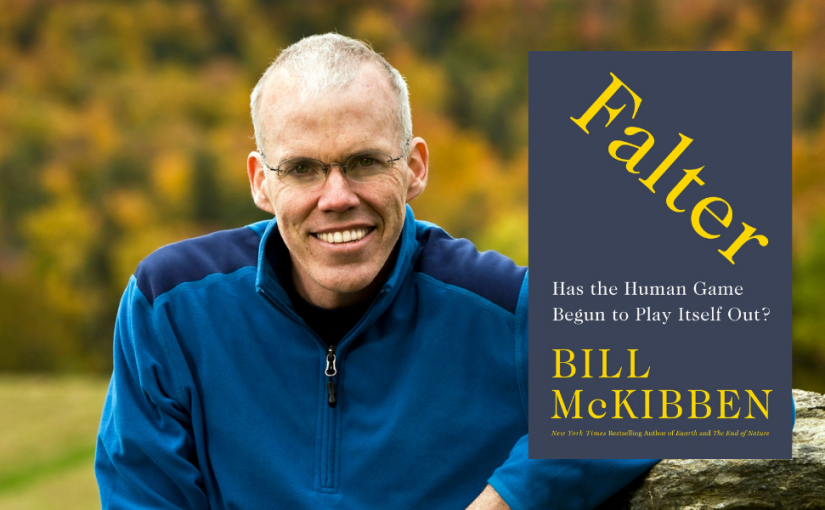
    We’ve been playing the human game for centuries. Each individual experience across time and space have culminated in a complex web, with culture, politics and economics as the playing cards of a human game whose stability has come to be taken for granted. In his New York Times best-selling book Falter (Henry Holt and Company, 2019) Bill McKibben warns us that climate change is unraveling this very human game. Our rapid degradation of the environment is moving faster than ever as humans have used more resources in the last 35 years than in all of human history before.

    Every decision in this interconnected world holds more risk for the sum of humanity. Even compared to the collapse of Rome, other surviving civilizations were left standing. But with no back-up plan, human development at the cost of our environment is leading to a resounding “Game Over.” The conversation around climate change is more critical now than ever, and McKibben’s book offers a perspective on how we can work together to keep the game going. Following is an excerpt from Falter.

    Buy Falter on Amazon or IndieBound.

    McKibben has been a regular contributor to the Bioneers Conference over the years, and we’re deeply honored to be hosting him as a keynote speaker at the 2019 Bioneers Conference.

    If you viewed Earth from far above, roofs would probably be the first feature of human civilization you’d notice. A descending alien would see many shapes, often corresponding to the local weather: A-frames for shedding snow, for instance. There are gambrel roofs, mansards, hipped and gabled roofs. Pagodas and other Asian temples often sport conical tops; Russian churches come with onion domes; Western churches sit beneath spires.

    Palm leaves probably topped the earliest houses, but as humans began to grow grain in the Neolithic era, the leftover straw became a reliable roofing material. Some homes in Southern England have thatch roofs five hundred years old; new layers have been added over centuries till, in some cases, the roofs are seven feet thick. Though it is harder to find good stuff to work with—the introduction of short-stemmed wheat varieties and the widespread use of nitrogen fertilizer have weakened straw—thatch is now growing more popular with rich Europeans looking for green roofs; in Germany, for instance, you can now get a degree as a “journeyman specialist thatcher.” But at least since the third century BC (perhaps beginning with Greek temples deemed valuable enough to protect from fire) humans have been tending toward hard roofs. Terra-cotta tiles spread rapidly around the Mediterranean and to Asia Minor; slate roofs became popular for their low maintenance; where trees are plentiful, wood shakes and slabs of bark work well. Given that the average human being currently resides in an urban slum, it is possible that corrugated iron shelters more sleepers than anything else.


    Do you find this a little dull? Good. What I want to talk about is the human game—the sum total of culture and commerce and politics; of religion and sport and social life; of dance and music; of dinner and art and cancer and sex and Instagram; of love and loss; of everything that comprises the experience of our species. But that’s beyond my powers, at least till I’m warmed up. So, I’ve looked for the most mundane aspect of our civilization I can imagine. Almost no one thinks about her roof from one year’s end to another, not unless it springs a leak. It’s a given. And so, it will illustrate my point—even the common and boring roof demonstrates the complexity, the stability, and the reach of this human game.

    Consider the asphalt shingle, which tops most homes in the West and is itself, doubtless, the dullest of all forms of roofing. The earliest examples date to 1901, and the first manufacturer was the H.M. Reynolds Company of Grand Rapids, Michigan, which sold its product under the slogan “The Roof That Stays Is the Roof That Pays.” Asphalt occurs naturally in a few places on Earth—the tar sands of Alberta, for instance, are mostly bitumen, which is the geologist’s word for asphalt. But the asphalt used in shingles comes from the oil-refining process: it’s the stuff that still hasn’t boiled at five hundred degrees Fahrenheit. Vacuum distillation separates it from more valuable products such as gasoline, diesel, and naphtha; it then is stored and transported at high temperatures until it can be used, mostly for making roads. But some of it is diverted to the plants that make shingles, where manufacturers add granules of some mineral (slate, fly ash, mica) to improve durability. The CertainTeed Corporation, the world’s biggest shingle manufacturer, has produced a video showing what it rightly calls “this underappreciated process” at its plant in Oxford, North Carolina, one of its sixty-one facilities it operates around the country. The video shows a ballet of pouring and dumping and conveying, as limestone arrives by rail car to be crushed and mixed with hot asphalt and then coated onto hundreds of thousands of miles of fiberglass mat. A thin mist of water is sprayed, and as it evaporates, the sheet cools, ready to be cut and then bundled onto pallets in a giant warehouse, to await distribution.

    Marvel for a moment at the thousands of events that must synchronize for all this to work: the oil drilled (maybe deep undersea, or in the equatorial desert); the pipelines and rail lines laid; the refineries constructed (and at each step, the money raised). The limestone and the sand need mining, too, and the miles of fiberglass net must be fabricated on some other production line. The raw materials are all sucked into the North Carolina factory, and then the finished shingles must be spewed back out again, across rail lines and truck routes and into a network of building supply stores, where contractors can haul them to building sites, confident that they’ve been rated for resistance to wind, fire, and discoloration. Think, again, of the sheer amount of human organization required for the American Society for Testing and Materials to produce directive D3462-87 (“Asphalt Shingles Made from Glass Felt and Surfaced with Mineral Granules”) and then to enforce its mandates.

    We could, clearly, repeat this exercise for everything you see around you, and everything you hear, and everything you smell—all the infinitely more interesting activities always under way beneath all those roofs. As I write, for instance, I’m listening to Orchestra Baobab on Spotify. It was the house band at a Dakar nightclub in the 1970s, where its music reflected the Cuban beats that came with sailors to West Africa in the 1940s; eventually the group recorded its best album at a Paris studio, and now it somehow resides on a computer server where 196,847 people from across the planet listen to it each month. Try to parse the play of history and technology and commerce and spirituality and swing that make up the sound pouring into my headphones—the colonialisms layered on top of one another; the questions of race, identity, pop, purity. Or consider what I’m going to have for dinner, or what you’re wearing on your back—everything comes with strings attached, and you can follow those strings into every corner of our past and present.

    What I’m calling the human game is unimaginably deep, complex, and beautiful. It is also endangered. Indeed, it is beginning to falter even now.

    I’ll spend this book explaining that danger and, at the end, pointing to some ways we might yet avert it. But I think it’s best to begin by stressing not the shakiness of the human game but, instead, its stability. For humans, all of us together, have built something remarkable, something we rarely stand back and simply acknowledge. The sum of the projects of our individual lives, the total of the institutions and enterprises we have created, the aggregate of our wishes and dreams and labors, the entirety of our ceaseless activity—it is a wonder. I call it a game because it has no obvious end. Like any game, it doesn’t really matter how it comes out, at least in the largest sense of Our Place in the Universe, and yet, like any game, it absorbs the whole concentration of those involved. And even if it has no ultimate aim that doesn’t mean it lacks rules, or at least an aesthetic: by my definition, the game is going well when it creates more dignity for its players, and badly when that dignity diminishes.

    Dignity, in the context of the human game, can be measured in many ways: enough calories, freedom from fear, clothes to wear, useful work. And by plenty of those measures, we’re on a roll. Extreme poverty (life on two dollars a day or less) is far rarer than it used to be. Many of the diseases that poverty helped spread have lessened, too: worms in your gut, say. Even compared to the twentieth century, violence is now far less likely to kill us—of the more than 55 million people who died around the world in 2012, war killed just 120,000 of them. Eighty-five percent of adults can read now, a staggering increase inside two generations. Women, with more education and at least a modicum of equality, have gone from having more than five kids apiece on average in 1970 to having fewer than two and a half today, probably the most rapid and remarkable demographic change the planet has ever witnessed. In the year 1500, humans managed to produce goods and services worth $250 billion in today’s dollars—five hundred years later, that number is $60 trillion, a 240-fold increase. The chorus of affirmation swells, from Steven Pinker insisting we’re in an age of unprecedented enlightenment to Donald Trump tweeting, “There is an incredible spirit of optimism sweeping the country right now—we’re bringing back the JOBS!”

    We’re quite accustomed to this idea of progress, so accustomed that some can’t imagine anything else: the former chief economist of the World Bank, Kaushik Basu, recently predicted that, in fifty years, global GDP will be growing 20 percent a year, meaning that income and consumption will be doubling every four years or so. There are, each day, more ideas hatched, more songs sung, more pictures taken, more goals scored, more schoolbooks read, more money invested.

    And yet. There are other authorities almost as highly placed as the former chief economist of the World Bank. Pope Francis, in his landmark 2015 encyclical on the environment and poverty, said, “The earth, our home, is beginning to look more and more like an immense pile of filth.” Don’t consider popes sufficiently authoritative? Consider this: In November 2017, fifteen thousand scientists from 184 countries issued a stark “warning to humanity.” Just like Pinker, they had charts, but theirs depicted everything from the decline in freshwater per person to the spread of anaerobic “dead zones” in the world’s seas. As a result, the scientists predicted, we face “widespread misery and catastrophic biodiversity loss”; soon, they added, “it will be too late to shift course away from our failing trajectory.” (Within six months, that warning was already the sixth-most-discussed academic paper in history.) The worries have grown severe enough that a NASA-funded group recently created the Human and Nature DYnamics (HANDY) program to model the fall of the Roman, Han, Mauryan, and Gupta Empires, and when they pushed the button, it spit out a disquieting forecast: “Global industrial civilization could collapse in coming decades due to unsustainable resource exploitation and increasingly unequal wealth distribution.” (The fact that I’d never even heard of the Mauryan Empire gave me a quiet shiver.) In this model, by the way, one of the greatest dangers came from elites who argued against structural change on the grounds that “so far” things were working out.

    That “so far” is always the problem, as the man who fell off the skyscraper found out. If you want to fret, you can find plenty of indications that the pavement is approaching with discouraging speed. A third of the planet’s land is now severely degraded, with “persistent declining trends in productivity,” according to a September 2017 report. We’ve displaced most everything else: if you weigh the earth’s terrestrial vertebrates, humans account for 30 percent of their total mass, and our farm animals for another 67 percent, meaning wild animals (all the moose and cheetahs and wombats combined) total just 3 percent. In fact, there are half as many wild animals on the planet as there were in 1970, an awesome and mostly unnoticed silencing. In 2018, scientists reported that the planet’s oldest and largest trees were dying fast, “as climate change attracts new pests and diseases to forests.” The baobab—Africa’s tree of life, in whose shade people first hunted and gathered—can live as long as 2,500 years, but five of the six oldest specimens on the planet have died in the last decade. Before century’s end, climate change may kill off the cedars of Lebanon—plundered by Gilgamesh, name-checked in the Bible—as snow cover disappears and sawflies hatch earlier in the heat.

    The baobab tree in Africa can live as long as 2,500 years, but five of the six oldest specimens on the planet have died in the last decade.

    Even our arks are leaking: with a burst of foresight, the world’s agronomists designed a Global Seed Vault in an Arctic mountain, an impregnable bank where they could save a million varieties of seed covering all the Earth’s important food crops. Eight years after it opened, during the hottest year ever recorded on the planet, melting snow and heavy rain flooded the entrance tunnel and then froze. The seeds weren’t damaged, but the builders were no longer confident that they’d constructed a stronghold that would last into deep time. “It was not in our plans to think the permafrost would not be there and that it would experience extreme weather like that,” a Norwegian government spokesman said.

    And yet nothing slows us down—just the opposite. By most accounts, we’ve used more energy and resources during the last thirty-five years than in all of human history that came before. Every economic assumption our governments make about the future requires doubling the size of the economy again, and then again, and then again during the lives of the youngest people on the planet. So, it’s hard to make the argument that past performance indicates much about the future—it looks like the same game, but it’s on new ground.

    In part, that’s because the past is so short. We are the first acutely self-conscious species, so wrapped up in our own story that we rarely stop to remember how short that story really is. Day to day, we forget that if the billions of years of life on Earth were scaled to a twenty-four-hour day, our settled civilizations began about a fifth of a second ago. That short burst covers the taming of fire, the development of language, the rise of agriculture. On the time scale of a human life, these changes seemed to take forever, but in geological reality, they occupied the blink of an eye. And now we see shifts (the development of nuclear weapons, the rise of the internet) that change many of our assumptions in real time. So, the fact that even over this short span we’ve seen the routine and often sudden collapse of one civilization after another might give us pause. And in some ways, it does—books such as Jared Diamond’s Collapse intrigue us with their stories of past calamities, from Greenland to Easter Island.

    But these warnings also somehow seem to give us confidence, because, after all, things continued. Rome fell, and something else rose. The Fertile Crescent turned to desert, but we found other places to grow our food. The cautionary tales about transcending our limits (the apple in Eden, the Tower of Babel, Icarus) seem silly to us because we’re still here, and we keep transcending one limit after another.

    Sometimes we scare ourselves for a season, but then we shake it off. As the postwar explosion in consumption spread across much of the planet, for instance, modern environmentalism also took shape, questioning whether this trajectory was sustainable. That movement reached its first height in 1972, with the publication of a slim book called The Limits to Growth. Without specifying precisely how and when, the authors of that book, and the computer models they built, predicted that our pell-mell growth would, “sometime within the next hundred years,” collide with many natural limits, and that without dramatic change, “the most probable result will be a rather sudden and uncontrollable decline in both population and industrial capacity.” Alternately, they said, the nations of the world could “create a condition of ecological and economic stability that is sustainable far into the future,” a task that would be easier the sooner we began.

    Needless to say, we’ve not done that. Though we’ve taken the environmental idea semi-seriously, passing the laws that cleaned air and water, we’ve never taken it anywhere near as seriously as we’ve taken further growth. On his way to the theoretically groundbreaking Rio environmental summit in 1992, the first President Bush famously declared, “The American way of life is not up for negotiation,” and as it turns out, he was correct—and speaking for much of the world. And so far, we’ve gotten away with it: even as we keep accelerating, the game spins on.

    So, why should you take seriously my fear that the game, in fact, may be starting to play itself out? The source of my disquiet can be summed up in a single word, a word that will be repeated regularly in this book: leverage. We’re simply so big, and moving so fast, that every decision carries enormous risk.

    Rome’s collapse was, of course, a large-ish deal. But given that there were vast swaths of the world that didn’t even know there was a Roman Empire, it wasn’t a big deal everywhere. Rome fell, and the Mayans didn’t tremble, nor the Chinese, nor the Inuit. But an interconnected world is different. It offers a certain kind of stability—everyone in every country can all hear the scientists warning of impending climate change, say—but it removes the defense of distance. And the sheer size of our consumption means we have enormous leverage of a different sort—no Roman emperor could change the pH of the oceans, but we’ve managed that trick in short order. And, finally, the new scale of our technological reach amplifies our power in extraordinary ways: much of this book will be devoted to examining the godlike powers that come with our rapid increases in computing speed, everything from human genetic engineering to artificial intelligence.

    We are putting the human game at risk, that is, from things going powerfully wrong and powerfully right. As we shall see, humans have now emerged as a destructive geologic force—the rapid degradation of the planet’s physical systems that was still theoretical when I wrote The End of Nature is now under way. Indeed, it’s much farther advanced than most people realize. In 2015, at the Paris climate talks, the world’s governments set a goal of holding temperature increases to 1.5 degrees Celsius and, at the very least, below 2 degrees; by the fall of 2018 the IPCC reported that we might go past that 1.5 degree mark by 2030. That is to say, we will have drawn a line in the sand and then watched a rising tide erase it, all in a decade and a half.

    And humans have simultaneously emerged as a massive creative force, in ways that threaten the human game not through destruction but through substitution. Robots are not just another technology, and artificial intelligence not just one more improvement like asphalt shingles. They are instead a replacement technology, and the thing’s that’s going obsolete may well be us. If we’re not humans, then the human game makes no sense.

    Over our short career as a species, human history has risen and fallen, gotten stuck and raced ahead, stagnated and flourished. Only now, though, have we achieved enough leverage that we can bring it to an end, both by carelessness and by design. As a team of scientists pointed out recently in Nature, the physical changes we’re currently making by warming the climate will “extend longer than the entire history of human civilization thus far.” And as the Israeli historian and futurist Yuval Harari recently wrote, “Once technology enables us to re-engineer human minds, Homo sapiens will disappear, human history will come to an end, and a completely new process will begin, which people like you and me cannot comprehend.” That is to say, the game that we’ve been playing may end with neither a bang nor a whimper, but with the burble of a rising ocean and the soft beep of some digital future being birthed.

    The outsize leverage is so crucial because, for the first time, we threaten to cut off our own lines of retreat. When Rome fell, something else was there. We had, to draw on pinball, perhaps the most delightfully pointless of games, another silver ball, another chance. But our current changes are so big that they’re starting to tilt the whole machine, at which point it will fall silent. And as we shall see, because of the radical inequality we’ve allowed to overtake our society, the key decisions have been and will be made by a handful of humans in a handful of places: oil company executives in Houston, say, and tech moguls in Silicon Valley and Shanghai. Particular people in particular places at a particular moment in time following a particular philosophic bent: that’s leverage piled on top of leverage. And their ability to skew our politics with their wealth is one more layer of leverage. It scares me.

    It scares me even though the human game is not perfect—in fact, no one gets out of it alive, and no one without sadness and loss. For too many people, it’s much more tragic than it needs to be—indeed, it’s wretched, and often because its rules have been rigged to favor some and damage others. Given that I’ve been in the luckier fraction, the game may seem more appealing to me than to others. And perhaps its loss will not feel as acute to those being born now: certainly, they will not mourn the absence of things they did not know, just as we are not wrenched by the loss of the dinosaurs. If you back up far enough, it’s possible to be philosophical about anything—the sun is going to blow up eventually, after all. But that’s more philosophy than I can manage; for me, and for many others, the loss of this game is the largest conceivable tragedy, if, indeed, we can conceive it.


    And so, we will fight—some of us already are fighting. And we can, I think, see some of the ways out, even if the odds of their succeeding are not great. Success would require real changes in thinking from both conservatives and progressives. (Conservatives, oddly, tend not to worry about conservation; progressives tend to think all progress is good.) But if those changes came fast enough, the game could roll on: scientists estimate that we have five billion years until the sun turns into a red giant and expands past Earth’s orbit. I’m neither optimistic nor pessimistic, just realistic—enough to know engagement is our only chance.

    I said before that the human game we’ve been playing has no rules and no end, but it does come with two logical imperatives. The first is to keep it going, and the second is to keep it human.

    Excerpted from FALTER: Has the Human Game Begun to Play Itself Out? by Bill McKibben. Published by Henry Holt and Company, April 16th, 2019. Copyright © 2019 by Bill McKibben. All rights reserved.
  • This 26-Year-Old Native Activist Is Rewriting the Future

    This 26-Year-Old Native Activist Is Rewriting the Future

    Julian Brave NoiseCat (Secwepemc and St’at’imc) is a 26-year-old Indigenous journalist, activist and policy analyst. As Director of Green New Deal Strategy at Data for Progress and Narrative Change Director at the Natural History Museum, his work is largely focused on environmental justice and Indigenous issues — and where the two overlap.

    NoiseCat’s writing has appeared in The Guardian, in which he recently covered the highly publicized standoff between high school students and a Native American man in Washington, D.C. (“It appears that a great deal of this nation … is not ready to look at the nasty complexity of racism, power and privilege squarely in the face and tell the truth.”); The Nation, in which he profiled Native Congresswoman Deb Haaland; The Paris Review, in which he wrote about the new Native literature renaissance (“In a cultural moment defined by fear of ecological apocalypse, democratic decline and legitimized white supremacy, newfound interest in Native writers—who speak with the authority of a people who lived through genocide and survived to talk about it—makes sense.”); and several other publications.

    We caught up with NoiseCat to discuss the experiences that set him on a pathway toward storytelling, the value of strong leadership within his generation, and what he hopes to achieve by the time he turns 30.


    BIONEERS: Tell us a little bit about your pathway toward becoming a media maker and why storytelling is so important to you.

    Julian Brave NoiseCat

    JULIAN: The reason why storytelling is so important to me is that I grew up believing that, as an Indigenous person, I did not see myself in the stories that I was encountering in the broader culture and definitely in school. But I also believed, because my father is a Native artist and because I had very strong pride in who I was and in my difference, that, as an indigenous person, I had something to say and something to contribute.

    Every opportunity I got, I would read the writings, for example, of Sherman Alexie, which were really impactful to me. And I would try to emulate that. Somewhere, stored away, I have a short story that I wrote when I was in fifth grade that was supposed to be in the voice of Sherman Alexie.

    I think believing that I had something important to say led me down this path, and also being encouraged by my mom and lots of teachers. I was also fortunate enough to grow up in a place like Oakland, where nobody would scoff at the idea that a young Indigenous guy would have something to say and that people should listen.


    All of that gave me a sense that my voice could matter and have an impact. And then, I went to college, and I did some writing for the campus newspaper and got a summer gig with the Huffington Post after I graduated. I just kept pushing for those kinds of opportunities. I’ve been very fortunate to get a lot of opportunities in the writing and journalism world at a younger age. But also, I think I’ve been pretty willing to put myself out there and to keep trying. And I’ve faced a fair amount of rejection as well.

    BIONEERS: You mentioned your mom, and you mentioned Sherman Alexie. Who are some other people who you look up to, who influence your work?

    JULIAN: I was born in Minnesota. I remember, when I was 11, we went to the opening of the National Museum of the American Indian in Washington, D.C., in part because my dad had a piece that was featured there. We ran into Jim Northrup, the late Indigenous poet from Minnesota, on the National Mall, and he read his poem, “Indian Car,” to me. That moment always has stuck with me as being really powerful.

    I also participated in the Martin Luther King Oratorical Fest when I was a kid, which was in the Oakland Unified School District. Being surrounded by that activist culture, and in particular, in Oakland, the black church activist tradition, really emphasized oratory and voice, which had a longstanding impact on my development.

    BIONEERS: What are some of the biggest issues you see facing your generation and the people you care about right now?

    JULIAN: Climate change is the big one. Also, more broadly speaking, just a sense of precariousness for millennials. We are coming of age in a world that is economically very difficult to be viable in. Rising costs of living and declining wages are very real. We’re seeing way less protection for workers than ever before, and in the media field in particular. There’s a complete destabilization of the business model for journalism, sort of wrought by big tech.

    In the last few years, we’ve also seen a real sense of political destabilization, with the rise of proto-fascist and sometimes outrightly fascist movements along with a resurgent right wing.

    BIONEERS: All of those things being the case, do you have hope that we can turn this ship around?

    JULIAN: There are some very powerful rising social movements, many of which are being led by young people, as is the case with my friends in the Sunrise Movement. That is incredibly inspiring to me.

    In the Indigenous world, the movement at Standing Rock was initiated by the youth of Standing Rock, who met with Barack Obama in 2014. Then, when the Dakota Access Pipeline was threatening their water and their homes, they led a run to Washington, D.C. to raise awareness of this issue. That was really the beginning of the campaign.

    Throughout Standing Rock, there was a group called the International Indigenous Youth Council, and they were literally organizing without laptops. All they had were iPhones. Before the Green New Deal, Standing Rock was the headline environmental movement in the United States. In that moment, groups like the International Indigenous Youth Council weren’t even getting the resources to have their own computers.

    Whenever I go out and report in Indigenous communities, I am always amazed by how much communities and nations and organizers, governments, social workers, creators, artists, all of these people who are relatives and friends, are doing with so little. That is always incredibly inspiring to me. At the core of it, being part of that is really the reason why I write and work: to hopefully make a contribution to that big picture.

    BIONEERS: If one of your peers were to approach you and ask, “What is the biggest action I can take to improve the world for future generations?” what would you tell them?

    JULIAN: I think that the biggest action we can take as young people is to stand with the young people out there, who are organizing in their communities, fighting back against climate change, environmental degradation, democratic decline, economic injustice, social injustice, gender injustice, racism. I think the biggest thing young people can do is to join that monumental struggle. I would just encourage young people to look to their left and look to their right at their fellow young people who are already doing amazing stuff, and believe that they can do it.


    BIONEERS: What does it mean to you to “stand with” people who are taking action?

    JULIAN: First, I think it means to show up, whether that be in person or even online. It means showing up when, for example, our Jewish brothers and sisters or our Muslim brothers and sisters or our black brothers and sisters or our queer brothers and sisters are under threat or being attacked by forces that aim to divide us; showing that we see their wellbeing, their health, and their prosperity as integral to our own health and happiness and prosperity.

    Fundamentally, it’s about seeing all of our struggles as interconnected, all of our destinies as interconnected, and therefore seeking to do one of the things that humans are uniquely good at, which is to be compassionate as a species, and then to cooperate, to try to take on these big challenges together to make them a little less scary.

    BIONEERS: Tell us about what you’ll be working on in the next couple of years.

    JULIAN: I’m hoping to write my first book before I’m 30. I really want to write a book about Indigenous current affairs: pain that endures and is still inflicted upon Indigenous people and communities and bodies, but also the resilience and resurgence of those communities that I’ve seen and reported on throughout North America and beyond.

    BIONEERS: What excites you most about coming to Bioneers this year?

    JULIAN: The people. For folks who are engaged in environmental work, it’s a gathering place, and it’s an opportunity to see people you might not have seen the rest of the year.

    Also, personally, I grew up in Oakland, California, so Bioneers is an opportunity for me to go home, to get out of D.C. I’m always excited to get back to my roots, see my mom and see my friends and girlfriend.

    See more from Julian Brave NoiseCat

  • How a Green New Deal in Maine Could Transform Progressive Organizing: An Interview With Chloe Maxmin

    How a Green New Deal in Maine Could Transform Progressive Organizing: An Interview With Chloe Maxmin

    Chloe Maxmin represents District 88 in the Maine House of Representatives. She’s the youngest woman in the Maine House of Representatives and won her election running as a Democrat in a district that is one of the oldest in the state and had never elected a Democratic to the state house.

    Representative Maxmin has been active in climate organizing and politics since she was barely a teenager. She co-founded Divest Harvard, has been the recipient of numerous awards including a Brower Youth Award, and is a contributor and fellow at The Nation. We first met Chloe when she gave a keynote address to the Bioneers Conference in 2014 and have been witness go the leadership that she’s shown on a regular basis at national and local levels since then. Chloe generously paused her busy schedule to speak with Bioneers’ Teo Grossman about the groundbreaking Green New Deal for Maine, the power of youth movements today, and the big question of whether our current system is capable of dealing with the challenges we face.

    TEO GROSSMAN, SENIOR DIRECTOR OF PROGRAMS & RESEARCH, BIONEERS: We spoke with you last year during your primary race. You’ve since won the election and taken office. Congratulations! I’m curious what it feels like now, having won the election, now you are actually representing all the people in your district, which is a different job than campaigning for them, I suppose.

    REP. CHLOE MAXMIN (D – NOBLEBORO), MAINE: Thank you! It is a very different job than campaigning. It’s kind of ironic to me how they’re two completely different skill sets but both vital and complementary if done right. It is an honor to represent my community and my home that I love. I represent a very conservative community, even though I’m a Democrat. A lot of people put their faith and trust in me, and that is something that I think about every day and will never take lightly. I am very committed to actually representing my district, which should be obvious but it actually seems to be kind of novel to always be asking, “What does my district think?” whenever we’re going to take a vote in Augusta.

    Sign for Chloe Maxmin’s recent campaign.

    When I really think about it, I don’t think of myself as somebody who is on the inside of the system. I’ve fought outside the system for so long and been so frustrated at its lack of empathy, urgency, attentiveness, representation. I am really trying to do things differently and to focus most of my energy on how I can bridge what’s happening in Augusta and in these political spaces with the realities in my community and among my constituents, what we’re talking about, and what we’re thinking about.

    TEO: You recently introduced, “An Act to Establish a Green New Deal for Maine” (LD-1282). Can you describe what the legislation is, what it’s proposing, and how it’s been received?


    REP. MAXMIN: Yes, I sponsored Maine’s Green New Deal. It genuinely came out of conversations I had when I was knocking on doors in my district. I live in a very rural natural resources-based community, and we don’t really talk about climate change, we don’t really talk about green jobs, but everything I heard was, “We want good jobs, we want growing industries, we want to protect our natural resources, we want to lower our property taxes, we want to make sure that we’re really boosting vocational training and technical training.” All these different themes to me are what a Green New Deal mean. It’s an economic revitalization strategy.

    I wasn’t really sure if I wanted to push a climate bill or not because I’m just so frustrated with how politics deals with climate change, but I decided to do this and call it a Green New Deal to really call attention to a radically different way of thinking and talking about climate policy in Maine specifically but also in general. What we created is targeted legislation instead of a very broad resolution, and it’s very Maine specific. It leaves out some big things like agriculture and transportation, but that’s because we really focused on economic growth and rural development.

    The other unique thing about our bill is that, since day one, the labor community has been involved with crafting it. One of the main purposes of the bill is to build a broad platform so that we can have broad political power instead of a niche political power, which is how it usually works in Maine. As we transition to renewable energy, the bill is asking how we make sure that all Mainers are treated fairly and equitably.

    The first part of the bill is the Renewable Energy Mandate, which moves Maine to 80% renewable energy electricity consumption by 2040, about double where we are right now. The second part of the bill creates a task force on a Green New Deal, which is where a lot of these green jobs programs will be fleshed out. These are going to be major programs, and they have to be thought through and researched before we just throw in legislation. The other big part of that task force is creating a subsidy for solar power and heat pumps for low-income homes in our low-income heating program and tax incentives for middle class homes that want to go solar. Again, we are focusing on the most vulnerable folks as we make this transition.

    The third part of the bill is Solar on Schools, which will create a voluntary net metering program for public schools in Maine. We’re teaming up with a bond proposal that would increase access to renewable energy for schools. This is an educational opportunity, a labor/economic growth opportunity, but also will lower the costs of operating our schools so that our property taxes aren’t going up.

    The last part of the bill is a Commission on a Just Transition, which is a body that will report annually on how/if our renewable energy transition is just and equitable. The task force and the commission both have very unique memberships. The task force has young folks, climate scientists, local energy developers, people from frontline communities, labor voices, people who have an existential stake in making this transition just and rapid. The Commission on a Just Transition includes people who are impacted by this transition. So we’re really bringing to the table all of these voices that have been traditionally left out of this conversation.

    I debated whether or not to keep the title of the bill the “Maine Green New Deal” because it’s now become very contentious, and it was not back when I first thought of this. I decided to keep it because I knew that everyone would be excited and would look at the bill. That part has been really successful, and the bill has been received really well. A lot of people are excited to mobilize around it, and the launch of the legislation definitely created the space that I wanted to have this new conversation about climate. Obviously there is some pushback, but this pushback is good because we’re talking about this issue in a different way.

    TEO: I’d like to get your take on workforce development, a “Just Transition,” and the costs and economic potential of a Green New Deal. You got your start working on Divestment, which has continued to grow  – Norway’s Sovereign Wealth fund divested recently and the total numbers are upwards of $6 trillion committed to divestment. Now we’re talking about the other side of things: what to invest in. How would this work and what’s the forecast for Maine? Anything you learned from the Divestment movement that applies here?

    REP MAXMIN: That’s such an interesting question. I think especially with this bill, since it will eventually be binding legislation, it’s really combining the divestment and the investment conversation. They’re intertwined in this context because, by investing in and requiring renewable energy, we’re divesting from fossil fuels, and part of what this bill does is really draw attention to the impact of that divestment. For example, we’re moving to 80% renewable energy consumption by 2040 instead of 100% because there are lots of folks in Maine who work in the fossil fuel industry. We don’t have any extraction here, but we have a lot of pipelines, compressor stations, oil tankers,and all that kind of stuff. So we’re really looking at the cost of divestment in these communities. It has a real impact.

    As we’re making progress, we need to be investing in technical training, apprenticeship programs, green jobs, strategy, and growth programs. We need to be training a whole new workforce and creating economic opportunities like putting solar on schools, for example, or solar on low-income homes, or solar on middle class homes.

    Maine is a very rural state, and we’re also one of the poorest states in the nation with one of the highest income tax rates. What we are always seeking here in Maine is sustainable industries. So many of our industries, like our logging industry, for example, or our paper mills, have been declining because the world is changing. We’re always trying to find that next thing and incentivize those folks to come to Maine. Our farming community is a huge part of that, growing hemp and sustainable crops and creating resilient food systems. Our fishing industry is a huge part of that, but we want to make sure that we’re creating an even broader field for people. Because of our previous administration, we have not made much progress towards making Maine a renewable energy industry hub. We have a lot of work to do to really bring people to our beautiful state and make sure we have true vibrant economic development here.


    TEO: I was doing a little research prior to our conversation and I was pleasantly surprised by the total amount of renewable energy used in Maine in terms of the overall energy mix.

    REP MAXMIN: Yes, right now about 75% of the electricity that is generated in Maine comes from renewable energy, but not all of that energy is consumed in Maine. Right now our retail electricity consumption is about 40% renewable. However, our Renewable Portfolio Standard kind of acts like a cap and there’s absolutely no incentive to consume more than 40% renewable in the retail sector. That’s where this bill comes in.

    TEO: That’s a good base to build from. I mean…some of us living in other states would be happy to have that problem.

    REP MAXMIN: It is definitely. I think Maine is brilliant and beautiful. I’ve argued that we can be a real climate leader because we’re an extremely purple state, and we’re a very poor state, we’re a very rural state, and our entire economy will collapse if the worst of climate change comes to pass.

    TEO: Why is that?

    REP MAXMIN: Because the majority of our economy is based on our natural resources and our tourism industry. The things that are bringing people to Maine are disappearing and the things that are sustaining Maine outside of the tourism industry are also disappearing. Our lobstering industry, for example. The lobsters are already moving north. The Gulf of Maine is warming faster than 99% of the world’s oceans. Shrimping, scalloping, fishing, these are multi-multimillion dollar industries in Maine, and they’re at risk of extinction if we don’t do something. Maine is all about our natural resources, our woods, lakes, rivers, oceans, and even in my lifetime living here I’ve seen it change drastically.

    TEO: I recently spoke with Vien Truong, CEO of Green For All, about the Green New Deal. Part of our conversation focused on the reality that although much of the conversation is at the federal level,  so much of the actual work that needs to be done will likely take place at regional, state and local levels. Numerous pieces of ambitious clean energy and “Green New Deal” legislation are being introduced at the state and city levels across the country. Are you tracking what’s happening elsewhere on this front? What do states bring to the table in this regard? How do your efforts fit into a much larger movement?

    REP MAXMIN: First of all, we need everything. We need federal action, state, local, municipal —  at every level we’re regulating different things, so we need it all. Right now federal action, I think, is hopeless, so the states better get going. Some states already have, but we have not here in Maine.

    Speaking from the perspective of a Mainer, we have a very prideful and independent culture here. We do not like anything top-down. When we’re talking about building a climate justice movement that it is very Maine specific, it makes sense to not just take whatever is happening at the national level and just smush it down onto Maine. That would never work, and it would be a losing game. I really believe that each state should have its own comprehensive climate justice energy policy.

    I have been talking with a lot of different folks working on labor/climate bills to kind of get a sense of where we’re matching up, and we’re definitely on par with what the other renewable mandates are, and specifically for the efforts that have heavily involved and prioritized labor. I think there are lots of unique parts about our bill, like who we’ve included on these task forces and the commission, our Solar-on-Schools piece, and how we’re using it as an organizing tool statewide. But all the efforts echo each other to some extent.

    I think when some people hear about our bill, how we’re “only” 80% or how it establishes a task force, they say, “But climate change is so urgent, we can’t study it anymore!” There is a whole conversation to be had regarding whether our political system is built to deal with a crisis like this. I don’t think it is at all.

    It’s frustrating, but this is the point that we’re at. We have to be intentional and strategic with our policy and how we’re thinking about this transition. I don’t think rushing it through, not thinking about it and not bringing all the right people to the table is going to get us anywhere good. It will just replicate the same problems and improper power dynamics that we’re struggling with right now with the fossil fuel industry. We have a chance to do things right, and I think we should take that really seriously.

    TEO: That’s fascinating. It must be really different for you to approach the urgency and immediateness of the response required from the perspective of an elected official compared to the thinking that might have come when you were a 20-year-old climate activist in college.

    REP MAXMIN: When I was 20 (and I’m only 26, so it’s not like that was that long ago!) if someone had put forward a bill saying anything less than 100% by 2030, I would have been very frustrated. But what I keep saying to people is that, to me, our Green New Deal bill does match the urgency of the crisis. It matches the urgency of the climate crisis because we’re building a platform for action that is creating actual political power that can actually pass this type of legislation with support from the labor community.

    It’s a bill that came from the perspective of my community, which has been completely left behind by the Democrats. My whole focus now is rural politics because I don’t think we can achieve the kind of policy that we want on climate, healthcare, anything, if we’re not broadening our base and really involving people who are struggling with our movement. To me, this is bold, and it is exciting. It’s very different. And I think it can change the way that we organize around these issues in Maine and ultimately everywhere, when we get all the rural communities on board.

    My goal with this Green New Deal bill was to take something that’s traditionally associated today with hyper liberal politics and translate it to a rural state and a rural community. I think we did that pretty successfully.

    TEO: I don’t believe the Sunrise Movement was around while you were in high school and college but clearly they’re cut from the same cloth as the Divestment movement that you were engaged in. How do you feel about the work that young people are doing today to drive action and policy change?

    Sunrise Movement Members in Washington D.C. (credit: shutterstock.com)

    REP MAXMIN: I’ve always felt so grateful to work with youth organizers because youth is its own kind of expertise. There’s a moral clarity and purpose there that I don’t think exists anywhere else. Unfortunately because of that clarity, youth voices have often been dismissed as naïve, or told “You don’t know what you’re talking about.” And we’ve really listened to different voices, and those voices have not served us well. We keep electing older folks, but we keep having the same problem. I think part of what’s happening in our country is that we’re just fed up with politics as usual, and we’re seeking different ways to influence our political system.

    I know all the Sunrise folks, I think what they’re doing is amazing. They have absolutely turned the tide on the national climate conversation. That’s the power of young people.

    We have our public hearing for the Green New Deal on the Youth Climate Day of Action in Augusta so that all young folks have an opportunity to come testify and actually have their voices heard in front of the committee. Most of these folks can’t vote because they’re too young. So how are they supposed to have a voice? It’s time.


    Follow Rep. Chloe Maxmin on Twitter, Facebook or visit her website.

  • Taking It to Court: Legal Strategies for the Environment and Human Rights

    Taking It to Court: Legal Strategies for the Environment and Human Rights

    Over the past three decades, there have been a litany of efforts to address and tackle global climate change. These include a host of keep-it-in-the-ground campaigns, tactics and strategies to try to keep oil, gas and coal in the ground, as well as grass roots activist campaigns against carbon majors: ExxonMobil, Shell and Chevron, among others.

    More recently, however, environmental groups have started to look in another direction to address this global dilemma: the courts. These efforts are using litigation to address climate change and the devastating effects it’s caused and continues to wreak on our planet and humankind. During this fascinating panel from the 2018 Bioneers Conference, attorney Kate Sears, Marin County, CA, elected supervisor and chair of Marin Clean Energy, Abigail Dillen, President of Earthjustice, and Coreal Riday-White, community engagement manager for the environmental nonprofit Our Children’s Trust, joined Sierra editor-in-chief Jason Mark to outline and discuss the innovative and promising litigation taking place at local, state and national levels right now.

    JASON MARK: Kate, let’s talk about this lawsuit filed by Marin County and San Mateo County, and a bunch of other jurisdictions against some of the major carbon polluters seeking to recover damages from climate change-related effects. Why did you and the other members of the board of supervisors make the decision to sue ExxonMobil and Chevron?

    Kate Sears

    KATE SEARS: In July 2017, the County of Marin, the County of San Mateo, and the City of Imperial Beach were the first three jurisdictions to file lawsuits against members of the oil, coal, and gas industries. Focusing on Marin, as I represent Southern Marin, I’ve been very engaged as a country supervisor in addressing sea level rise. We are already very well aware of the impacts of sea level rise here in Marin. In one of our areas, a little north of Sausalito as you would go north on 101 to go into Mill Valley, there’s a park and ride. It’s one of only two ways into our largest town in Southern Marin. It now floods over 30 times a year from king tides. This is not even storms. This is blue sky flooding.

    We have the advantage, really, of having our feet wet, and knowing that climate change and sea level rise are a reality, but we wanted to learn more. So a couple of years ago we started doing a sea level rise vulnerability assessment for our entire county. It was a collaboration between our county and our city and our towns, to really look at different scenarios going forward of the anticipated impact of sea level rise in our county. And it’s tremendous.

    We have an analysis of coastal Marin with water on both sides. Sea level rise is a really serious issue for us. We looked at all of the assets that are impacted, and will be even more impacted as we go forward in time with different scenarios, and realized that we have serious trouble ahead.

    As an elected official, I think about what we’re going to do about that, and who’s going to pay for it. We got the opportunity with pro-bono representation from a fabulous firm to bring this lawsuit against the fossil fuel industry in state court. It’s basically established legal claims of nuisance and liability, and strict liability, product design, and trespass.

    Marin County faces serious danger if sea levels continue to rise.

    There are reasons that I, as a former lawyer and a litigator, liked this opportunity. One is the state of the science and how much it’s developed, and our ability to attribute the amount of greenhouse gas emissions to each of these defendants. Mind you, these 24 defendants taken together, their impact is about 20% of all greenhouse gas emissions worldwide. So that was important to me, really having a strong scientific basis for the lawsuit.

    Here’s a quote from an Exxon study from 1979: “The present trend of fossil fuel consumption will cause dramatic environmental effects before the year 2050.” Another report from 1982 said once the effects are measurable, they might not be reversible, and little could be done to correct the situation in the short term. These industries have very sophisticated engineers. They have experts that are doing these reports and advising them.


    So what did the industry do? In some instances they took steps to improve the adaptability and the sustainability of their own oil-drilling platforms in anticipation of the impact of sea level rise. Did they go public with this information? Did they go to any elected official and share this information? No, they didn’t. Instead what they did was spend millions of dollars on a misinformation campaign.

    We feel that these are a group of defendants that knowingly created damage in our community, and they should have to pay for what they’ve done. This lawsuit is about getting damages for the harm caused by the conduct of these oil, gas, and coal companies. We’re not trying to legislate climate change. This is an old-fashioned kind of case that seeks damages, so we have a fund of money to protect our residents and do what we need to do to plan for our future in a responsible way.

    JASON: And to put this in some broader context, there are also lawsuits from cities and counties in Colorado, King County, WA, the State of Rhode Island, the City of Baltimore….

    KATE: Thank you for raising that. As I mentioned, the three of us were the first that went out there in our group, also represented by our same group of lawyers. We now have the City of Richmond, the City and County of Santa Cruz, the City of Baltimore, and the State of Rhode Island. And then there are the lawsuits that were filed by other entities, like King County.

    JASON: Abby, I’d love to ask you while still keeping it accessible for a lay audience, if you can put this in context of a First Nation’s community in Alaska—Kivalina. They filed a case against Murphy Oil, an offshore drilling company in the Gulf of Mexico after hurricane Katrina. Is there anything to your mind that makes this litigation different or perhaps increases the chance of success? Has anything changed since that first round of climate litigation about 10 years ago was filed?

    Abigail Dillen

    ABIGAIL DILLEN: I would say that one of the biggest differences between the litigations that are going forward now as opposed to Kivalina and some of the first efforts is that the science has advanced so much. It’s possible now to do what climate scientists are calling a sort of a “forensic analysis.” When you look at the bleaching of the Great Barrier Reef, or you look at the flooding in Louisiana or the impacts of hurricane Sandy, you can determine and you can meet a legal standard that this is more likely the result of climate change than not. In fact, we know by a factor of 100 that this incident was made more likely by climate change.

    That gets to the legal issue of causation. If you can prove that the emissions of a large group of what we’re calling the “carbon majors”—essentially oil, gas, and coal companies—have contributed a large share of global emissions, and then you can link those emissions to actual damage, you can quantify that damage in dollars. Then you start having something that looks like a much more conventional tort suit, holding actors accountable for behaviors that have caused damage that’s quantifiable.

    The real question is really a philosophical question in my view. Are the courts ready to look at the behavior of the carbon majors as culpable? What Judge Alsup, the federal district court judge in the San Francisco case, and the judge in New York were asking for was briefing on the whole history of industrialization, and asking a question fundamentally: Who’s culpable for this damage? I think their sense is that we’ve all participated in the benefits of a fossil fuel economy and that the court is not the right place to determine who should pay for the negative consequences.

    In my view, what that misses is the affirmative choice by these fossil fuel companies to hide the ball, to create a disinformation campaign. No other country is debating the existence of climate change, only the United States. And that alone is having significant impacts on us.

    Exxon has adapted its infrastructure to weather the effects of climate change, but should the company have to pay for the damage caused by its public misinformation?

    These cases are really pushing the envelope. Win or lose, they are properly in the courts, and they draw on fundamental principles that our society agrees upon. They are putting climate science on trial, and it’s a place where facts can be heard, where facts matter.

    JASON: I do want to point out, the federal district court of San Francisco also was asking the plaintiffs and the defendants to balance new harms against benefits. And that’s the tough thing: grappling, for lots of the public, with how we all get benefits out of fossil fuels.

    KATE: Judge Alsup clearly hadn’t been paying attention to climate change because he did do a whole workshop to get himself informed—good for him—but he was looking at the wrong question. We’ve had products and litigation in the past. Think of asbestos. Think of tobacco. We’ve had products that the manufacturers knew were damaging. We have a court system that can deal with tort liability, that can deal with impacts that are the result of these products. The question really is different, and you layer on top of that, like tobacco, the intentional misinformation and misrepresentation, and spreading of doubt.

    We were glad that we had Chhabria, US District Judge for the Northern District of California, who said this is about damages that are created by a company and by their conduct, and this is an issue that can be adjudicated by the courts, and it belongs back in state court. But it creates challenges for lawyers and judges and lay people in remembering which conversation is the most appropriate to what’s in front of you at the time.

    JASON: So these cases are suing the carbon majors, but Coreal, your case is much different. Let’s talk about Our Children’s Trust and the claims being made by your 21 young plaintiffs.

    Coreal Riday-White

    COREAL RIDAY-WHITE: In a lot of ways, it’s kind of the flip side of the cases against the carbon majors. Whereas those are seeking damages and focusing on adaptation to damage that’s already happened and we know is going to happen, our case is not seeking damages. It’s focused on remediation. Our case is about trying to slow the emission of greenhouse gases and sequester the CO2 that’s already up there, that’s making for this climate chaos we’re starting to see. The fundamental basis behind it is that the government, as the sovereign authority that has control over the essential natural resources we all need to live and that are protected under the Public Trust Doctrine, like our air and our water and our seas, they have a duty to make sure that those essential natural resources are not so depleted that the next generation can’t have them.

    On top of that in the Juliana case, what’s also at issue is the plaintiffs have brought a claim under the Fifth Amendment, saying that they have a right to life, liberty, and property without undue influence or loss. The government cannot come in and take away your life or your freedom or your land without getting due process of the law. These plaintiffs are claiming that their government, through all the actions they’ve taken over the last 70 years, have caused a crisis that is now taking away their freedom, eating away at their property and building on the land, and will for future generations threaten their lives. The government has a duty to not violate those fundamental rights. That’s another difference in terms of the cases. Corporations might not owe you that duty, but the government does.

    Some of the similarities, though, are about knowledge. We have documents that show that well before we had an EPA, the executive branch of this government had their scientists going out and researching what this burning of fossil fuels, what this CO2 culmination in the atmosphere, was going to mean for the future. In a 1965 report, commissioned by President Johnson, the scientists came back and said at this rate, if we keep on burning fossil fuels the way we are, there will be 25% more carbon dioxide in the atmosphere by the year 2000. And if that happens, we’ll see marked changes in the atmosphere and the weather that we cannot control from the local level. With the benefit of hindsight, we can go back and look at what the CO2 levels were in the atmosphere in 1965 and what they were in 2000, and they were almost exactly 25% more. The scientists knew what they were talking about.

    In 1969, a report said that sea levels will rise by 8 to 10 feet by the year 2100 at this rate. A 1970 report said that the issue of the atmosphere and climate “may well determine whether man perishes or survives.” That’s the White House scientists. It’s not us.

    JASON: And Lyndon Johnson mentioned it in the State of the Union address in ’65 or ’66, right?

    COREAL: Yeah. They read these reports. They knew it. And yet they still continue to base our energy system on the burning of fossil fuels. They continue to permit the expansion of a fossil fuel-based system. They continue to subsidize the industry, give tax breaks to the industry, lease our publicly owned land to the excavation and development of fossil fuels, including off the seashore. Each one of those takes the government saying yes, let’s do that. That’s an action—that’s not an inaction.

    The United States is responsible for a full one-quarter of all the CO2 emissions in the atmosphere. We’ve done more to cause this crisis than any other country, and we’re still emitting a lot. Maybe we’re not number one anymore, but we’re one of the very top emitters, even still. And clearly with the current administration, those policies are only regressing.

    Scientists in the U.S. have been predicting the climate catastrophe we’re facing today since the 1960s.

    But this case is not in response to the current administration. The named defendants originally were President Barack Obama and the heads of his certain agencies, the EPA, Department of Energy, Transportation, Defense. Trump and his administration just inherited it when they came into power. So in that sense it is not political. Most importantly, what it’s asking for is just the court to order the executive branch to create and implement what we call a climate recovery plan, a plan based on what the scientists say we need to do to get back on track, to get climate stability by the end of this century.

    JASON: Why is it important for you all to enlist and to work with young people as your plaintiffs?

    COREAL: Levi was 8 when we filed. He’s 11 now, and he’s so money! Sometimes our detractors will say that we’re just using these kids, or there’s kind of a front. And let me tell you, we are not. These kids know what’s at stake. They’ve done the least to cause this crisis, and they’re the ones that are going to be affected by it the most.

    One of the claims that they brought is an equal protection claim under the Fifth Amendment, wherein it says that all of our laws should be applied equally to all citizens. Their claim is these current policies and laws you have are not being applied equally when you guys are the ones benefiting from them and we’re the ones that are going to have to pay for them.

    JASON: Abby, when the case was first filed, a lot of attorneys thought it was quixotic and that it was a pretty big pass to make these claims under equal protection and invoke the Public Trust Doctrine. What has been your sense of it?

    ABIGAIL: Well, there were many skeptics of the novel ways that this case pushes the law, and people wondered about how a remedy could be fashioned. I think it was a brilliant stroke to make this a case on behalf of young people, even putting aside the international equal protection claims. Even the skeptics recognized the moral force of the case, and recognized its place as a tool to elevate and educate, and to give these young people voice. Regardless of how people may have felt about the ultimate merits and chances in court, I think overwhelmingly the feeling has been that this is an amazing act of courage, and who can’t be with these young people with their incredibly righteous cause?

    I will say that reading Federal Oregon magistrate Judge Aiken’s initial decision rejecting the first motions to dismiss, the government was the most skeptical of all. I think they viewed this case as one that they could easily get dismissed. And so this Magistrate Judge’s opinion was very closely awaited and watched, and the day it came out, we were having a meeting of our trustees, and it’s not our case, and I had just a talk to give to our litigation committee, and I was going to talk about all of our work, but I felt that her decision was so astonishing and consequential in its recognition of a federal trust, a due process claim. It was so incredible to have a judge really internalize the stakes and to say, I’m not going to leave this to the other branches; I think these kids are properly before the court. And so it was a stunning decision.


    Earthjustice has been a little bit involved on the edges as this case has moved toward trial and discovery. You can imagine the federal government’s reaction—it’s been like a disbelief. They have made Hail Mary moves to the Ninth Circuit Court of Appeals and to the Supreme Court to stay this case. So far they’ve been unsuccessful. They have another such bid before the Supreme Court now. We’ll see. The composition of the court has changed since their last unsuccessful effort.

    To be fair to the skeptics, this is the kind of case that is likely to command the Supreme Court’s attention. It’s likely to command the attention of Congress to the extent it’s successful. And so I think the ultimate outcomes are subjected to tough politics.

    JASON: So Coreal, you’re scheduled to start trial on October 29, 2018. So what is the latest? [Editor’s note: this trial is currently scheduled to begin in summer of 2019.]

    COREAL: As Abby said, the defendants really don’t want to go to trial. Our lead attorney Julia Olson, who’s the founder and chief legal counsel of Our Children’s Trust, had a great line at the March for Science this year: “We’re giving science its day in court, where facts are facts and alternative facts are perjury.” Again, legal, reasonable legal minds could probably differ on a lot of that stuff, but I really do believe they just don’t want the testimony. We have some of the world’s most recognized experts that are working pro bono for these youth plaintiffs, including Dr. James Hansen and Nobel prize winner, Joseph Stiglitz, an oceanographer, people from mental and physical health fields. These experts are going to lay out what’s happening and what’s going to happen in such clarity. And the evidence we have about government knowledge is not something I think they want to see the light of day.

    JASON: So we got into the particulars of these case(s), but let’s step back and see the forest for the trees: How do these cases help in the larger effort for climate justice for a stable, global atmosphere?

    KATE: Litigation is something that’s important because we want to get money to help address the needs and the safety of our communities. But public education, getting everyone involved, and making sure that we’re talking and we’re educated about climate change, and we’re changing our practices and we’re doing everything we can to push others, and companies and businesses to change their practices is hugely important—doing that both on the adaptation and the mitigation side.

    We need to be doing everything that we can in any possible way we can think about it, because as we all know, change is happening much more quickly than we anticipated. We have to be engaged in all different ways. There will never be enough money to solve or to really address the adaptation needs that we have to address the impacts of sea level rise and climate change. Our lawsuit is about sea level rise, but as we all know, that’s only one aspect of climate change, and for those of you who are Californians, you know about the intense fires that we’ve had. We’re seeing climate change impacts all over the country—all over the world. We have so much to deal with to try to make our society and our culture and our communities truly adaptable. But the urgency is palpable now.

    JASON: Don’t these cases serve as public education vehicles?

    ABIGAIL: For sure. I think that’s perhaps most important when it comes to deceit. The New York Attorney General’s office has thought about this litigation and the powers they have under New York statute to force companies to disclose what they’re up to. What they are doing with the kind of discovery of information that’s helped with the Exxon Knew campaign is to erode the social capital of companies like Exxon and Shell and Chevron.

    When I was growing up, my association with Exxon was that they sponsored Masterpiece Theatre. The myth in our country is that these are the biggest contributors to American prosperity in history. This administration would like to bring that narrative back.

    The other thing I would say is that investors are getting awfully nervous. It’s making the whole fossil fuels sector so nervous that you’re starting to see, in my view, very premature deals floated on the Hill, saying, “Sure. We would love to pay a carbon fee, but we want to be insulated for any liability for anything we’ve ever done in the history of the world.”

    KATE: We have a lot of really tremendous activists in our community who have really done great work of trying to get carbon fees and really do a bipartisan effort. The problem is the Republicans are on board with that because one of the things that they want is a waiver of liability. You really need to pay attention to this, because it’s being sold as, “Well, the carbon tax is going to solve the problems, so you don’t need the litigation anyway.” That’s as far from the truth as you can possibly get.

    JASON: Coreal, I want to just come back to this question about your case as a public education vehicle, but also an organizing vehicle. You guys have sparked a lot of media and grassroots attention. I know that before this administrative stay was announced, the Sierra Club student coalition is having solidarity rallies at federal courthouses across the country.

    COREAL: Both of these cases really allow us all to grapple with the many issues that are at play. There’s of course the intergenerational issue. There’s the reframing of how we see industry and how we see government, and how each decision they make—and even kind of more broadly than that—how each decision all of us makes has an impact, one way or another. Either we’re making a decision that’s taking a destructive action or a corrective action. And I think that this case helps us reframe that in a way.

    I think it’s also a chance to really engage civically for everybody, but especially for youth, saying this is what I want my future to look like. That’s pretty cool. And then the idea of like what is a fundamental right, and what is it that we hold dear as a nation? Starting to reframe the issue in a way that helps us look at all the small things but also think about the bigger things in a moral context and a legal context is powerful.

    JASON: So we’ve talked about these sort of marquee cases, but there’s lots of other stuff happening. There’s just enforcement of the Clean Water Act, enforcement of the Clean Air Act, Endangered Species Act. When Earthjustice is in the case of, say, fighting the Mountain Valley pipeline or the Atlantic Coast pipeline, those are not always necessarily explicitly climate action cases, but they are advancing the interests of climate justice, right?

    ABIGAIL: Yeah. In close partnership with the Sierra Club, we have been using all of the laws we have on the books—the Clean Air Act, the Clean Water Act, our federal waste statutes—to force our coal-fired power sector to clean up and stop making money off all of the pollution that it has imposed upon us.

    As climate-change-related disasters, such as wildfires, become more prevalent and predictable, insurance companies may pull back on coverage.

    When we started this work in the early 2000s, our major utilities were set to build a whole new generation of coal-fired power plants. We knew that we had to stop that if we were going to have any chance of combating climate change because they were the biggest polluters in the country. They still are the biggest polluters in the world. And we were successful in stopping a rush to build new coal-fired power plants—and then we realized we had to get to the existing coal fleet. And at that point, it was a little like Our Children’s Trust in the beginning, the sense that the Sierra Club, Earthjustice and others could do anything about coal in this country just seemed crazy to most people.

    We had existing clean air health-driven regulation to try to start getting these standards for air, water, and waste. And we had some consent decrees that the Obama administration forced them to finally institute for the most polluting industry in our country. What that created was a set of obligations to clean up on the scale of hundreds of millions of dollars that finally put the choice to big utilities like Duke and Southern Company, and AMP and First Energy: Are you going to invest hundreds of millions of dollars in this old polluting facility or are you finally going to shut it down?

    What we’re seeing is a wave of retirements of coal plants, except in states where the utility says, “Yes, I want to pay $100 million because I can put those costs onto captive rate payers, and I’ll get a rate of return on that investment.” That’s the case in much of the Midwest. That’s where lawyers have come in again, where we can go into public utility commissions. We don’t have a national energy policy. We have a state-by-state policy that is defined in these public utility commissions that operate like courts of law where you and I, as people who pay electricity bills, have the right to intervene as parties. Once we’re there, we can depose utility executives about what the basis for their assumption that an investment in coal or gas in California, for instance, is better than an investment in renewables. We can make motions.

    What we’re able to do as lawyers is go in and say, We’re going to bust up this clubby show. We’re going to present our experts. We’re going to show you that clean energy is actually cheaper than retrofitting that old coal plant. Clean energy’s actually cheaper now than investing in a new gas plant. And we’re having success in places like Indiana and Kentucky, in making that case for clean energy.

    As we’re using all of that work to shift the profile of our energy mix toward cleaner energy, that’s when we can start saying, Okay, let’s start electrifying transportation because we’re on track to cleaning up the power sector. Let’s get gas out of our buildings and start electrifying the buildings too.

    Audience member: Do insurance companies pay out to those affected by disasters caused by climate change, and are they working on any strategies to be part of a solution?

    KATE: As part of being a county supervisor, I also serve on the Bay Conservation and Development Commission. We’ve been looking at sea level rise issues for the San Francisco Bay for the last five years. One of the subcommittees we have is Financing the Future, and it’s been an exercise in frustration. But one of the industries that we’ve met with several times is the insurance industry.

    They have said to us in meetings that they never insure what they know will happen. So as these megastorms happen more often, as the science and the predictions get better, that’s actually going to provide tools for the insurance industry to not provide insurance where we might want to see it. There are some people who are more hopeful than I and will say that the industry will be in transition and create new products and try to figure out ways to fund this problem—but I’m not seeing the kinds of development there that are positive for what we want to achieve. I think the securities markets are much more interesting, actually, and there are international re-insurance companies, some of the majors, who have been looking at climate change issues for quite a while now and are working on trying to develop new products to create funding streams for climate change adaptation.

    JASON: I heard a good line the other day. I had an interview with Sheldon Whitehouse, the Senator for Rhode Island who’s been a leader on climate. He said climate change is going to get real for the financial markets when sea level rise intrudes on the horizon of a 30-year mortgage. In some places that’s going to be like next year. When it doesn’t make sense to get a mortgage on a home because you can’t get any insurance for it, that is really going to get people’s attention….

    Audience member: What can we do in our own communities to prevent fossil fuel companies from expanding or emitting carbon dioxide into the atmosphere?

    ABIGAIL: I’m thinking about the legal strategies you may have. In all of our states, we have under-enforcement of our laws, and if there is a facility that’s really going rogue in terms of the pollution it’s imposing on neighboring communities, it’s vulnerable to a lawsuit.

    KATE: I think acting to stop pollution and finding out where there is pollution is tremendously important. But also trying to find allies and really develop renewable energy production and create these alternatives so people aren’t stuck just going to a utility that is getting power from a dirty energy provider, and that there is in fact that choice in your community can have an incredible impact.

    COREAL: I’ll just add, remember that you can work with the law too. We support youth that sue their governments, but we also support youth that work with their governments at a local level to shape their own city ordinances. We call it the Youth Climate Action Now campaign, and it’s been great. Several cities in Oregon have tried it. They’ve actually gotten their city code to change to mandate reductions in fossil fuel use. So it starts by going to city council meetings and testifying, and it’s scary at first but it’s crazy empowering. Then you start to get one-on-one meetings with your city councilors and you start to talk about the policies. You put a face to it, and you tell a story, and then they get invested in it.

  • 5 Female Visionaries Changing the World

    5 Female Visionaries Changing the World

    This year, we’re celebrating Women’s History Month with a record number of women in Congress. Historically male-dominated fields, from politics to business to tech, are shifting to pull their ecosystems more in-line with the general population. Women continue to break through ceilings in the workforce, but empowering women goes beyond the professional. It starts with the personal.

    Sisterhood transcends boundaries of land and language, but the unique, lived experiences that inform it can look a lot different around the world. Kimberlé Crenshaw, a civil rights advocate and law professor, developed the concept of intersectionality, which she describes as “a way of thinking about identity and its relationship to power.” It illustrates how the interconnection of personal identities can layer political, economic and social disadvantages. Learning from women of various backgrounds provides invaluable solutions to resisting injustice for all, especially as society moves toward a more equitable future for both men and women.

    Watch the five empowering lectures from women below to learn how they use their own spaces in society to incite change, and how you can too.

    Patrisse Cullors – Women of the #BlackLivesMatter movement

    Patrisse Cullors, a Los Angeles-based artist and activist, is one of the most influential movement builders of our era as one of the three original co-founders of Black Lives Matter. In this talk, she explores the contributions women have made to the movement for Black lives, and some of the issues the movement aims to change: institutional racism, mass incarceration and high rates of maternal mortality in African-American communities.

    Jensine Larsen and Sister Zeph – Crowdsourcing the Feminine Intelligence of the Planet

    World Pulse founder Jensine Larsen and Sister Zeph, an award-winning Pakistani digital crusader for girls’ education, illustrate how their global network is harnessing the power of digital communication into a powerful force for change by connecting women from more than 190 countries – including those reaching out using Internet cafés and cell phones from remote rural areas and conflict zones. Jensine shares her personal journey building World Pulse from a vision into a network now impacting over two million lives. She and Sister Zeph show us how we can participate in this soulful digital revolution to unleash the true feminine intelligence of the planet.

    Saru Jayaraman – Women in the Service Industry

    Workers have been rising up all over the country to join the campaign for “One Fair Wage,” and demand higher wages and the elimination of lower wages for tipped workers. Innovative, award-winning labor leader Saru Jayaraman says that, if we join together, we can end economic inequality in America. Director of the Food Labor Research Center at UC Berkeley, Saru co-founded the Restaurant Opportunities Centers United, which has more than 25,000 worker members, 200 employer partners, and thousands of consumer members in a dozen states nationwide.

    Fania Davis – Restorative Justice’s Promise

    Drawing on her lifetime of social justice activism, Fania Davis depicts the essence of Restorative Justice, an emerging approach that seeks to move us from an ethic of separation, domination and extreme individualism to one of collaboration, partnership and interrelatedness. Rooted in Indigenous views of justice and healing, this rapidly expanding global movement invites us to make a radical shift from either-or, right-wrong, and us-versus-them ways of thinking. It seeks to midwife an evolutionary shift beyond domination, discord and devastation toward healing, wholeness and holiness with one another and all creation.

    Kandi Mossett – Standing Against Big Oil to Defend the Earth, Water and Indigenous Communities

    A mother and member of the Mandan Hidatsa Arikara nation of North Dakota, Kandi Mosset is known worldwide for her involvement on the frontlines of the protests at Standing Rock. Mosset is passionate about bringing visibility to the impacts of climate change and environmental injustice, specifically those affecting Indigenous communities throughout the world. This is her keynote speech on defending indigenous lands and communities from the negative impacts of the fossil fuel industry.

  • Youth Activists Are Building An Intersectional Climate Justice Movement

    Youth Activists Are Building An Intersectional Climate Justice Movement

    A few weeks ago a group of young people, including myself, stood in front of Senator Diane Feinstein to ask for her help in saving our future. These young people, representing Earth Guardians, Youth vs. Apocalypse and Sunrise Movement, were told that we were too young to understand the ways of the world and would not accomplish anything with our persistence. Feinstein claimed there was not enough money to enact the Green New Deal and that she knew the right way to get things done.

    Youth speaking with Diane Feinstein

    This encounter not only highlighted the lack of willpower in our current governing bodies, it also emphasized the vast chasm between how those in power choose to view climate change, and how those in frontline communities, especially youth, have no choice but to see the dire implications of how this changing planet will affect our futures.

    Global and national governing bodies still seem to only see the abstract concept of climate change as it relates to our economic systems – capping CO2 emissions, mitigating pollution, more renewable energy, etc. Climate change is so much bigger than economics, peoples’ lives and homes are at risk. Our collective home is at risk. As Bioneer Heather McGee said recently on Meet the Press, “There is no higher responsibility of anyone with any kind of political power right now than to try to stop a global catastrophe that’s not happening in three generations. It’s happening now.”

    Young people will not wait for old-world politics to keep moving chess pieces around. We don’t have the time. We have twelve years, if that. We went to Feinstein’s office because we know that our future, and the futures of those that come after us, are at stake. And we know we cannot do it without standing together across race, class, gender and borders. We know we need to speak up for economic justice and against environmental racism when we talk about solutions to climate change. The Green New Deal, initially put together by Sunrise and proposed by Sen. Markey and Rep. Ocasio-Cortez, is the only legislation on the table that not only addresses climate change, but also creates good jobs and addresses inequality in our current socioeconomic system.

    Youth are building new models for social movements, ones that include self-care to avoid burnout, caring for each other because this is the beloved community we are stepping into the world with and caring for our earth because she gives us life. From Parkland to Sweden to Oakland to India and Brazil, young people are no longer sitting back and waiting for older generations to make the change we know needs to happen. The activists of this next generation will need to be fearless and resilient. They will need to rely on one one another, and lead with intersectionality and solidarity.  

    Inspired by Greta Thunberg’s strike that began in August of 2018 outside of the Swedish Parliament, on March 15th over 1.4 million youth in 123 countries around the world participated in a Global Climate Strike. Bioneers joined some of our youth partners at the Bay Area Climate Strike where over 1000 young people participated in the march led by Youth vs. Apocalypse.

    Poppy, a Native American high school student offering a blessing

    The speakers began with a Native American high school student named Poppy who honored the Native stewards of the land. The following line-up of youth speakers ranged in age from 10-16 and represented the diverse backgrounds of people that live in the Bay Area. Many of these youth centralized their experience as youth of color growing up in Oakland. One young woman named Hannah Estrada voiced, “In order to go forward ethically, we need to acknowledge the generations of communities of color who have suffered from pollution. Living and growing up in polluted communities has brought us [all] here. Sometimes we forget that communities of color have been living like this for years.”

    Toward the end of the day, youth leader Isha Clarke identified that there were a lot of white faces in the audience and followed up by saying, “Thank you for being here, we need you as allies, and for this movement to be intersectional we need to centralize the voices of native youth and youth of color. We also need you to show up for racial justice and economic justice in your communities.”

    Isha Clarke of Youth vs. Apocalypse

    Youth today, across a spectrum of backgrounds, recognize the ways in which communities are being marginalized and hurt by outdated political systems, exploitative economics and social constructs that divide us from seeing our shared humanity. They see how important it is to have diverse leaders speaking from their own experiences, calling in others who have historically felt left out of the conversation.

    As Edna Chavez stated in her 2018 keynote at Bioneers,” We need to focus on changing the underlying conditions that foster violence and trauma in the first place…People need to listen to us, this is our moment as young people. As black and brown youth leaders, we need to use our voices to be more inclusive in these conversations, to share our stories, to reclaim our power, and most importantly to hold policy makers accountable…Those in power need to remember that we are the future.”

    For more day to day updates and pictures about what the Bioneers Youth Leadership Program and our partners are doing, follow us on instagram @bioneersyouthleaders

  • A Green New Deal: A Conversation with Vien Truong On How We Got Here and Where We’re Heading

    A Green New Deal: A Conversation with Vien Truong On How We Got Here and Where We’re Heading

    In recent months, the Green New Deal proposal has been front-and-center in conversations surrounding climate change. Based on several decades’ worth of ideas, the idea found its way into the mainstream thanks to the phenomenal efforts of the next generation of leadership along with yet one more round of highly publicized climate reports indicating an extremely urgent need for widespread climate action. For all the talk about a Green New Deal, however, much of the actual detail remains to be developed (learn more about the Green New Deal here). 

    Vien Truong, former President of the DreamCorps, has worked tirelessly to bring equity, social justice and climate justice to the frontlines of the environmental movement and public policy. Prior to her role at Green For All, Truong was a central force in the effort to put environmental justice at the center of California’s groundbreaking climate policy mechanisms and cap-and-trade funding.

    Vien Truong at Bioneers

    Bioneers’ Teo Grossman spoke with Truong about the potential future of the Green New Deal proposal and how California’s climate action can serve as a template for national progress.


    TEO GROSSMAN, Senior Director of Programs & Research for Bioneers: Starting with the basics, what is the Green New Deal and why do we need it?

    VIEN TRUONG, President of DreamCorps: The Green New Deal is an idea that’s been in the dialogue in the public realm for over a decade now, but it was refreshed recently with the Sunrise Movement in collaboration and with the leadership of Congresswoman Alexandria Ocasio-Cortez, whom I love, and Senator Markey. Both the Congresswoman and the Senator have introduced peer resolutions in the House and the Senate to get us moving toward an aggressive climate change plan meeting the science targets that we need in the next 10 years. That resolution has already the support and the sponsorship of over 100 people, which is great. So it’s growing in the national realm, and in the national dialogue.

    We want to make sure that we continue to move that dialogue forward to meet the moment with a plan that grows the support necessary to realize the promises in the Green New Deal resolution.

    GROSSMAN: The preamble to the Green New Deal legislation introduced by Ocasio Cortez and Markley specifically highlights the inequitable distribution of economic, social and environmental impacts resulting from climate change. You’ve obviously been focused on these realities for much of your career – how big of a deal is it to see what the bill collectively labels “vulnerable and frontline communities” called out in this way in proposed federal legislation?

    TRUONG: It’s heartwarming and reassuring. It tells us the kind of leadership that is behind this work. For too long, when we talked about climate change solutions, low-income communities and communities of color, who really are at the frontlines of the problems, were left out of the conversation. But you really can’t address a problem if you won’t even acknowledge it. By having the communities cited first and foremost in this conversation has been amazing and reassuring that this is a priority for the leaders behind it.

    I’m in Oakland, California, and when I look out the window here, I see West Oakland, where I grew up. For us, growing up in a community that has been surrounded on all sides by freeways and highways, we’ve been so close and proximate to the problems, literally breathing in the tail pipe pollutions. We have been deeply concerned and increasingly scared about what’s going on and how we’ve been left out of the conversation, even when directly impacted.

    For instance, in West Oakland, you’re three times more likely to get cancer than anywhere else in the Bay Area. You’re five times more likely to have asthma than in other areas. The disease rates are so much higher than average that we now have a better prediction of your life expectancy based on your ZIP code than your genetic code.

    That is made worse by realizing that the pollution problem is aggravated by poverty issues. This is an area that has been deeply underinvested in. The school system has been neglected for far too long. We have inconsistent, inadequate access to healthy foods and healthcare. When you put those two things together, it’s no wonder we’re now seeing a proliferation of tent cities in the community here. We’re seeing a proliferation of people who are working and can’t even afford the cost of living. In fact, in the Bay Area and in California, we have the highest levels of poverty because of the gap between the cost of living and the disproportionate amount of costs we are burdened with to be able to have a quality life. We live all of those realities on a daily basis, and I think that has made us feel more righteously indignant about the inability of our elected leaders to address and solve the issues in our communities with us.

    So to have the leaders in Congress and the Senate recognize these issues, and with community-based organizations helping to lead this charge, it has been heartwarming and reassuring.

    GROSSMAN: In many ways, the policy work that has taken place in California since the early 2000s could serve as a sort of blueprint for a national Green New Deal. You were certainly instrumental in the implementation of some key components of California’s leading-edge climate policy. What are the differences between what has happened in California in the past two decades and the proposed national Green New Deal and what can we learn from work already underway at state and regional levels?

    TRUONG: I think California has been a clear leader nationally in setting strong environmental targets. From AB-32, which was passed in 2006, getting us on a path toward 1990 levels of pollution by 2020, which we’re on target to meet; to passing SB-100, which gets the state and the energy systems to 100 percent renewable by 2045; to policies that have been part of leading toward the largest investments of funds to low-income communities to green up; to the most ambitious charge for the transportation sector to electrify and green up as fast as possible; to really investing in communities to build and create their own vision, and then supporting that vision with investments from both the private and the public sector.

    It has been reassuring to see that even as the federal government steps backward, we have seen states and leaders in California stepping forward. The results speak for themselves. California has gone from the eighth largest economy to now the fifth largest economy in the world. Based on what we’ve seen, all of this scaremongering in the national conversation pointing to job loss and economic ramifications is unfounded. Actually the reverse has been evidenced in truth. We have seen the economy grow, and more jobs have been created because of California’s doubling down on climate policies. Businesses have risen because they now have consistent, transparent and committed language that allows for them to build and plan, and to invest in their work being responsible not only to their employees and to the shareholders, but also to the planet and to the environment.

    California is one of the largest states with one of the largest economies, and it has been able to demonstrate that these policies do well, by doing better. We can now let the federal levels and other states know that this is possible, and that they can also step up and—I would say not even try to meet California, but try to beat California. As much as I love California, this is the time when I think we need people to actually be better than we are here.

    GROSSMAN: There’s a bit of a paradox that I’ve been struggling with regarding where solutions need to come from. In many ways, it’s the federal and large-scale systems that are broken and have gotten us to this point. They’re brittle, not particularly nimble, unresponsive to rapid changes and, by definition, are large, centralized bureaucracies. Much of the innovation and pathways forward in a time of climate crisis are coming from smaller scales, highlighting the need for different, more resilient systems – decentralized smart grids, local food economies, water systems that aren’t reliant on pumping water over mountains. How do we reconcile the need for something on the scale of a wartime mobilization that only a federal actor can bring when so much of what we need is going to be built and implemented at a local, regional or state level?

    TRUONG: It’s not a surprise to anyone that in order for us to reach the scale and promise of the Green New Deal, we’ve got to have buy-in from people and groups beyond the federal government. Even having support on the state and local levels isn’t enough. We’ve got to have the top-down and the bottom-up work.

    Top down, we need the federal government to direct the energy systems, the utilities and the power plants, to double down and keep protection around clean air and clean water. We’ve got to make sure we’re creating a fair playing field across the country to create and enforce fuel efficiency standards for car manufacturers. There are so many things that the federal government can and must do for us to rise to what the UN’s Intergovernmental Panel on Climate Change says we need in order to meet our targets in the next 12 years. It’s a lot of demands, and it’s necessary.

    At the same time, in order for us to get anything passed at the federal level right now, we need Senate buy-in, which is Republican-dominated, and we need our president to sign off on the law. Right now, that is very unlikely on any ambitious climate policy. In order for us to wait for Senate and presidential buy-in, as well as to get a plan in place and implemented, it’s going to take at least half the time that the scientists have told us we have to dramatically reduce pollution. We need to do it within 12 years. We don’t have that amount of time to wait for the federal government to really step up and do the work.

    That means that right now we need a bottom-up strategy. We need cities to work toward investing in renewables at the local level and to support the workforce development needed to make that happen. Cities need to help green up their municipalities, green up their utilities, their schools, and their hospitals. We need the states to commit to strong targets.

    In order for us to meet the transformation that we need in the Green New Deal, we’ve got to have the top-down and the bottom-up strategies: the federal level working to help transform and create the platform needed, and also the localities and the states to do the same.

    GROSSMAN: I detest the political horse race type coverage of the Green New Deal (long on political speculation, short on relevant policy details) but given you have some experience getting unexpected legislation through a major governing body, I am curious what you think needs to happen to see it through? Considering your experience with coalition building and working to craft legislation, what are the important steps you feel can bring about the bold actions that are needed? How do we avoid getting bogged down in conflict among various stakeholders?

    TRUONG: I’ve continued to grapple with that question in my work. I’m the youngest of 11 kids, and I feel like I was born in a circus, like I was born to build coalitions, because I just saw a whole lot of siblings fighting over everything. I grew up in Oakland during the crack years, and it was a time when there were a lot of gangs, there was a lot of trouble, and I saw a lot of fights in schools. Being in a home and in a community and in a space where there was always fighting  taught me that I hate fighting. I always want to be focused on what we’re trying to accomplish

    When people are fighting and shouting and they can’t hear each other, it’s the people who are the most vulnerable and who are most in need of support that are left behind. They’re forgotten and neglected. They’re the ones who suffer because we cannot get our acts together.

    That experience as I was growing up is now many times worse on a national scale with our political and elected leaders. While the left and the right have been fighting, we have seen criminal justice problems slip between the cracks, and we have seen our planet burning up. California literally saw Paradise burned to the ground. Meanwhile, we still see people shouting over each other trying to get air time.

    The Dream Corps and I have been focused on the solutions that we need at this moment. Who do we need to work with in order to make those solutions happen? Who’s ready to actually throw down and make some change? Because if we don’t, we’re going to see these continued problems in our communities. I’m going to see my family members losing 12 years of their lives because of the increased amounts of pollution and poverty. Those things are going to continue without end because people are fighting with each other, and I just can’t have it. I just can’t deal with it anymore. I’m done with it.

    At the Dream Corps, we have been working to build partnerships with unlikely allies. For instance, last year we were able to help pass the First Step Act, which The New York Times said was the biggest criminal justice reform bill in a generation. That has led to giving more rights to incarcerated women, to unlocking and freeing people who have done their time and served their penalties, and are now able to rejoin communities much earlier than they had expected. We have been able to hold events in all 50 states calling for a day of empathy to support people who have been affected by the criminal justice system. People who are now moving forward with empathy, saying “Instead of fighting against each other, how do we fight with each other for a better future for all?”

    We at Green For All have realized that this climate change conversation has been seen as a white conversation for too long, even while African Americans, Latinos, and Asian Americans are more directly impacted by these issues. Survey after survey is saying that these populations care even more because we are breathing in the polluted air and drinking the polluted water. Our team is making sure that we’re growing the community of people who realize their right to sit at the table of these conversations and to shape solutions.

    For instance, we’re calling all artists to be part of this as part of our #fuelchange work. We’re having artists, hip-hop musicians and poets contribute to sharing the word about why climate change and tail-pipe emissions actually matter to us, and why and how we can be part of creating solutions.

    We’ve been partnering with a bunch of amazing folks across the country. At the end of the day, if you’re tired of fighting and trying to shout at each other, you’re tired of the bickering and animosity and just want to work with other people who share your values, your solutions, and want to do something good in the world, we want to be one of the homes where you can find some of your peers to do that.

    GROSSMAN: Is there anything else that you want to share with the community here in terms of the work Green For All is doing?

    TRUONG: One thing we haven’t talked about yet is business. I’ve just come back from a few conversations with big and small businesses, and I think that there’s a bit of heartburn around businesses’ part in the Green New Deal. There’s been a profound lack of their voices, and I think that’s on both sides. We can do better at inviting business voices to be part of the conversation, and we need businesses to step up and take leadership around how they can help realize the dream of this Green New Deal.

    When I’m in these conversations with my friends in the environmental sector and the social justice community space, there is some justified suspicion around big businesses. For far too long, we have doubled down and over-invested in businesses that have contributed to getting us into this mess. And there’s a belief that if they got us into this mess, they can’t get us out of it. But I think that even though that’s a justified concern, it’s over-attributed.

    Right now, we have a lot of businesses that are actually trying to do good and to do better — from having stronger emissions targets, to hiring people that can diversify their voices and perspectives, to committing to their communities. We have seen businesses continue to green up their supply chains and continue to diversify the contrast they have to low-income communities. There are a lot of businesses that are trying to do better, but they can benefit from activists and leaders helping them figure out how they can go even further.

    For folks who want to hear more examples, some of our friends at GreenBiz.com are chronicling the journey of businesses that have been trying to do better for a long time. I think we need their help. Nonprofits can only go so far. Leaders at the federal and state and local levels can only go so far.

    Right now, when we have this scale of a pollution and poverty problem, when we’re dealing with the reality of 12 years left to deal with dramatically reducing pollution, we need businesses that have access to capital, that have access to supply chains, that have access to business acumen, that have access to shaping and influencing policymakers in ways others may not have, we need to work with businesses to meet the promise of this Green New Deal. I implore for us to make sure that we are not forgetting important sectors and important partners that can help us realize this goal.

    I also want to note that my support and push to make sure businesses are at the table does not mean we should have unmitigated support for businesses just because they stamp green on their labels. There’s a lot of greenwashing out there; a lot of businesses want to capitalize on this new consumer demand for better business models and better business systems, and they slap on a green sticker and think that’s enough. That’s not enough. We want to make sure businesses have strong targets, strong regulations around hiring from the community, and that they’re paying workers a good wage and making sure that they can actually afford to live in their communities.

    I am done with waiting for other people lead the conversation. Now it is our time. And in order for this to happen, we need all in.


    Learn more about Vien Truong and her work by visiting The Dream Corps or by watching her keynote address to Bioneers. For more on the Green New Deal, check out Bioneers’ #GreenNewDeal page.

  • The Equal Rights Amendment Still Hasn’t Passed: Jessica Neuwirth On Why That’s a Big Deal

    The Equal Rights Amendment Still Hasn’t Passed: Jessica Neuwirth On Why That’s a Big Deal

    Jessica Neuwirth has spent her career fighting for human rights. She’s worked for Amnesty International and the United Nations Office of Legal Affairs, and taught international human rights at Harvard. She’s also the founder and co-president of the ERA Coalition and a founder of Equality Now, both of which are working toward the Constitutional guarantee that a woman’s rights and protections under the U.S. Constitution are equal to those of a man.

    Jessica Neuwirth on a panel with Kimberle Crenshaw at a recent Bioneers Conference

    Bioneers spoke to Neuwirth about the history of the Equal Rights Amendment and why pushing toward ratification is still important today.

    What is the Equal Rights Amendment? Aren’t all Americans guaranteed equal rights under the law already?

    The ERA Coalition commissioned a poll in 2015, and we found what previous polls over decades found: 80% of Americans think that we have equal rights in the Constitution. The first challenge is to close that information gap, because people think we already have it, and we actually don’t. I graduated college in 1982, the year the final deadline for the ERA expired. Anybody a little older than me usually remembers it, and people younger than me have no idea what it is.

    As most people know, women got the vote in 1920, and the Constitution was amended. Right after that, a number of the suffragists developed the Equal Rights Amendment because they wanted women to have equal rights in all aspects of life, not just the vote, and felt the Constitution should be amended to reflect that. The ERA was first introduced in Congress in 1923, but it took a long time to build up momentum for it. In 1972, it passed two-thirds of the House, two-thirds of the Senate and was sent to the states for ratification. By 1982, 35 states had ratified the Equal Rights Amendment.

    But you need three quarters, or 38 states to ratify, so we were just three states short. By many accounts of activists who worked so hard on this, it literally was just a handful of votes in a few states that made that difference. But the deadline expired, and the Amendment did not get into the Constitution.

    Since 1982, it has been introduced in every single session of Congress. But most people don’t even know what it is because it’s never really been publicized. It doesn’t get a lot of visibility. Many congressional representatives sign on as co-sponsors, but it never moves. There’s never been a hearing. There’s never been a vote. It just sits there.

    It’s been treated as symbolic and unnecessary, and that’s what we want to change — to make it real and to really try to get it out of Congress and into the Constitution. That’s our goal. In 2017 Nevada voted to ratify the ERA, and in 2018 Illinois followed suit with ratification of the ERA, bringing the number of ratified states to 37, just one state short of the 38 needed. In 2019 Virginia came very close to being this 38th state, failing by just one vote to get the bill passed. Other states including North Carolina, Arizona, Florida and Georgia are all racing to be the 38th state to ratify. These state actions have sparked new momentum in the campaign, and there is a bill in Congress to remove the 1982 deadline. ERA-related developments have been further fueled by the energy of the #MeToo movement, and constitutional equality now seems within our reach. 

    What does the proposed Equal Rights Amendment actually say?

    A very simple sentence constitutes the ERA: “Equality of rights under the law shall not be denied or abridged by the United States or by any state on account of sex.” Very hard to disagree with that. It’s simple, straightforward, and I think pretty non-controversial. It was a very bipartisan campaign.

    Why do we need it? Well, here are a number of remedies that are not available to women who suffer from various forms of discrimination as a direct result of not having that Constitutional protection.

    Many cases have been thrown out by the Supreme Court for failure to have a basis in the Constitution – violence against women cases, other forms of discrimination. As a matter of practical remedy, we really need it.

    But I think we also need it as a matter of principle. I think all Americans — and by “all” I mean all women and all men — should want, and most do want, to see the Constitution really embody the human rights basic principles that we all believe in, and the first one is equality. That wasn’t the case when the Constitution was written. We all know that women were intentionally excluded, and that African Americans were intentionally excluded. Fights for those rights have made some progress over time, but they really need to be enshrined in the bedrock of our legal framework. That’s the idea.

    Can you share an example of a story that might have had a different outcome if the Equal Rights Amendment been ratified in 1982 or before? Beyond the principle of equality, what would practically change?

    There are lots of really tragic stories, but one that is especially timely for us is a story of campus sexual assault from 1994. A young woman named Christy Brzonkala’s story reads like any story that you could read today. As a freshman, she was gang raped by several varsity football players. She went to the school, she went to the state, but she couldn’t get justice.

    Right around that time, Senator Joe Biden helped to pass the Violence Against Women Act, which included a provision that allowed access to federal courts for gender-based violence cases. She used that new provision to bring her case against the rapists and against the university. The case went all the way up to the Supreme Court, but it was thrown out. It wasn’t thrown out because it wasn’t gender-based violence. The judges said it fit within the scope of the Violence Against Women Act. The problem, they said, was the Act had no jurisdictional basis in the Constitution. They struck down that part of the Act, which then denied all other women subject to that form of gender-based violence access the federal court system for remedy.

    That was in 1994, and I always wonder what would have happened if Christy Brzonkala had been able to prosecute her case and won, and the university had been held responsible. Who knows if that might have started a pattern of cases and a pattern of responsibility that would have helped us avoid what we have now, which is as a total epidemic of campus sexual violence. Because there wouldn’t be this culture of impunity if people could have gone to court and held universities accountable for failing to take action and failing to take these allegations seriously.

    Here’s another example. The Supreme Court uses a lower standard to judge sex discrimination than it does for race and religious discrimination. The highest standard of review for race discrimination and religious discrimination cases is called “strict scrutiny,” but when a sex discrimination comes to the Supreme Court they use a lower standard called “intermediate scrutiny.” Why? That’s discrimination in judging discrimination! These layers of discrimination sound legalistic and obscure, but they actually affect the outcome of cases, which affect policies and practices and women’s lives.

    Look at the Wal-Mart case, where a class action suit went up to the Supreme Court and was thrown out. The Supreme Court basically said even if workplace discrimination has been proven (by showing that in every single one of the thousands of Wal-Mart stores across the country, women were paid less and promoted more slowly) that evidence wouldn’t be even the tip of the iceberg of what would be needed to prove to make this case work. Why wouldn’t that be enough? If there is a statistical finding of discrimination in every single store for women being promoted more slowly and getting paid less? Why wouldn’t that be even the tip of the iceberg of what is needed? But that’s the way the Supreme Court has looked at these issues.

    I have to be honest, when I wrote the book Equal Means Equal, even I was not that aware of the really horrendous things the Supreme Court has said about discrimination against women — and I’m a lawyer. If we put the ERA in the constitution, it covers so many different areas that are each associated with entire movements, like pregnancy discrimination, women in the workplace, gender-based violence, etc. They all come together, because they’re all manifestations of inequality.

    When you think about how the law works in conjunction with social change, it’s a synergistic process. A case might push a social agenda forward, or a social revolution might push the law forward. They work hand in hand. I think people don’t see the potential for legal reform to help change things like closing the pay gap or ending gender-based violence. But if you can’t get a legal remedy, then it’s very hard to promote change.

    The courts have been closed to many women who have suffered severe forms of discrimination and violence, and that is something that the Equal Rights Amendment would definitely change. It doesn’t mean that the day we have the ERA is the day we get equality, it just means that we’ve established the principle at the highest level of the law, and that has many ramifications. It has practical impact in terms of giving women remedies.

    What are the arguments levied against ratifying the Equal Rights Amendment?

    I don’t hear any opposition now. What I hear is: “What is the ERA?” People really don’t know what it is, and don’t really know why we need it.

    That’s why I wrote the book, just go through some of these cases and show people why the ERA would make a difference. I think what happened is that the women’s movement moved on after 1982 and started to use whatever they could, other litigation tactics short of Constitutional reform, to bring about sex equality. Many laws have been put in place and the 14th Amendment has been stretched to try to incorporate some of the concerns of women.

    The first time the 14th Amendment was ever used for discrimination against women was in the 1970s. The Amendment often makes people think we have equal rights. “Oh, equal protection under the law,” but it really has not been very helpful to women. Most of the legal protections women have don’t fall under the 14th Amendment, they fall elsewhere.

    Lawyers who have tried to use the 14th Amendment have had some success. There has been progress on the legislative front and through litigation, but we still need the ERA. We want to take this moment of opportunity to kick it across the finish line because there’s no substitute for a Constitutional amendment. Whatever great legislation we have is riddled with loopholes, has been gutted by court interpretation, and can be rolled back any time a new Congress comes into office. We want something more permanent, and a Constitutional amendment would be that.

    How does the situation in the United States compare to the situation for equal rights for women in other countries?

    Most of my work prior to founding the ERA Coalition has been in the international women’s rights field, and a few years ago I started Donor Direct Action, a project of the Sisterhood is Global Institute working to strengthen front line women’s groups in countries such as Afghanistan, the Congo and Somalia.  We’re very lucky to have Robin Morgan, its founder, and Gloria Steinem on our board and to have their vision of feminist solidarity — a global vision, really.

    People often think we’re in much better shape from the point of view of gender equality than a lot of other countries, yet so many have elected women heads of state, and a long time ago. Countries like Rwanda have 50% women in Parliament, while we’re only at about 25%, which is the highest it’s ever been.

    From the ERA point of view, many countries have equality provisions in their Constitution. It’s very, very common. In fact, U.S. foreign policy has strong-armed countries such as Iraq and Afghanistan into putting the exact same ERA provision in their constitutions. We diplomatically support countries that put quotas in for 33%, and we can’t even do 20% here. It’s very hypocritical. Women in other countries are often very surprised to find out that we don’t have these protections.

    We are behind in many ways. Of course, not all ways, but I think most women and men would acknowledge we don’t have equality in this country. So many statistics tell us women make 79 cents on the dollar for every man makes, and less for Black and Hispanic women, 64 and 54 cents on the dollar, respectively. That’s not equality. Everybody knows we don’t have equal pay. Everybody knows we suffer from gender-based violence. There’s a lot of pregnancy discrimination. There are so many different forms of discrimination, so I think people know we don’t have equality.

    For some further perspective, CEDAW is the Convention on the Elimination of all Forms of Discrimination Against Women or (in more user-friendly terminology) the International Bill of Rights for Women. It’s a United Nations treaty, and every country in the world has signed and ratified it except for Sudan, South Sudan, Somalia, Iran, Tonga, Palau and the United States. Those of us who have worked in the international women’s right movement are ashamed that our country has not signed on to this treaty that everybody else in the world accepts.

    The treaty has quite a lot of provisions in it, and most of them are really very straightforward. One that has drawn some attention is the requirement to give women paid maternity leave. Every country in the world gives women paid maternity leave except four: Swaziland, Lesotho, Papua New Guinea and the United States of America

    I can’t really defend that in any way, but that’s the status of it.

    What can people do, today, to help push this along?

    Anyone can go on our website, ERACoalition.org, and click on “advocacy”, find a map of the country, put in their zip code or click on their state, and see exactly who in Congress supports the ERA and who doesn’t. With one other click, they can write to that Congressperson.

    That really, really helps, because our biggest problem is that none of these representatives have been hearing about the ERA. The moment they do hear about it, they sign onto it because they really have no reason not to. It’s just not something they’ve thought about or think is important to their constituents.

    This what we want to change, and we’re using our website as an advocacy tool to really try and build the pressure we need to finally pass the ERA.


    Learn more about the Equal Rights Amendment and the issues surrounding in a recent episode of Bioneers Radio with Jessica Neuwirth, Joan Blades and Kimberle Crenshaw.

  • Charlie Jiang On Making the American Dream Attainable Again

    Charlie Jiang On Making the American Dream Attainable Again

    A U.S. policy analyst at the Environmental Defense Fund, Charlie Jiang advocates for just climate solutions at the state and federal level. He was a key SustainUS youth delegate to the 2017 U.N. climate negotiations, organizes for climate justice in Washington, DC with 350 DC, and received a 2017 Brower Youth Award for co-leading a #NoDAPL divestment campaign in DC.

    Jiang’s own history has been a massive influence on his life thus far. The son of Chinese immigrants, Jiang is familiar with the struggles involved with attaining the American Dream, and through his work he’s realized that our country’s promise falls short for too many—or is simply impossible. He wants to change that.

    In his Bioneers 2018 keynote address, Jiang talks about his own experiences growing up in the US, the environmental and humanitarian crises we are currently facing, and what needs to be done to make the American Dream attainable for all.

    Watch Charlie Jiang’s keynote address in full here.

    View more keynotes, transcripts, and more from the 2018 Bioneers Conference.


    CHARLIE JIANG:

    My mom carried $300 in her pocket, and barely spoke a word of English when she immigrated to the US from China in search of the American Dream. She and my father believed that if they worked hard enough they could create a better life in America for themselves and for their kids.

    But today that dream seems unattainable for too many, and as I have learned and witnessed, it always has been in a country founded on the injustices of slavery, genocide, patriarchy, and white supremacy. I’ve seen that for people in my generation the promise of the American Dream seems laughable in the face of police brutality, gun violence, deportations, unlivable wages, threats to water and Indigenous sovereignty, and climate change.

    When I was little it seemed like we had all the time in the world, but in this era, time is running out. Today we face a choice. We can go down a path of denial rooted in a politics of fear, or we can choose to confront our legacy of racism and injustice, and forge a new vision for our nation, a new kind of dream in which everyone can lead their lives with dignity and grace, where all of us—whether a queer black woman from Baltimore or a working class family from the California’s Central Valley or a Chinese American kid from the South Side of Chicago—has a chance to thrive in communities that are healthy, safe, and just, with access to good healthcare, education, housing, and jobs, where the air is clean and the water is safe to drink, where women are believed and respected, and privileged men are held accountable, where communities can self-determine their own futures, and where pipelines and pollution are a thing of the past. This is the future we are called to create.

    It’s not an easy path, not when our political system is held captive by billionaires and corporations who profit off of violence to workers and communities of color, not when there are still resource inequities in our own movements. But I believe we must try.

    We face a crisis on a global scale. We need action for global climate justice, and we need concerted federal efforts to mobilize trillions, for a Green New Deal to stop climate change and create opportunities for millions of Americans in a new economy.

    But it starts with our communities. It starts with you. And it starts with me, a son of Chinese immigrants, who grew up wanting to be a scientist, who became an organizer because I saw that I have a voice to give to a struggle for a new ideal for this nation.

    So what can we do? First we must do what we need to do to process the trauma and grief in ourselves and our communities from the pain and damage that has already been inflicted. We are called in this time to be vulnerable and strong so we can hold space for the deep relationships, trust, and love that we need in ourselves and each other.

    Second we have to vote. If our elected officials won’t prioritize the needs of millions of people over those of the wealthy few, then we must replace them with leaders who will. Knock on doors, make phone calls, help your neighbors get to the polls, and go vote.

    Third, we have to organize to build solutions in our own communities, and in doing so ensure that communities of color, Indigenous People, young people, leaders on the frontlines of the crises we face, who know what need to be done, have the resources, access, and power to lead the way. It’s already happening.

    In Washington, DC, we’re building a diverse movement to divest from Wells Fargo and create a public bank that will promote a just economy for the district, not pipelines and private prisons. In Chicago, a statewide coalition secured funding for a solar job training program for formerly incarcerated individuals and youth in the foster system. In California, youth and frontline communities are demanding the governor phase out fossil fuels for good, a movement led in part by dear friends of mine from the organization SustainUS.

    Support us.

    My parents came to this country and dreamed they could build a better life. It’s a dream I grew up believing in, and it’s up to us, to all of you and to me, to get to work to make that dream fully possible.

  • Tattooing the River: People, Place and the Art of Diversity

    Tattooing the River: People, Place and the Art of Diversity

    Award-winning painter Judy Baca describes how art can reconnect people to place, revive disappearing history, and repair cultural root systems. While working with at-risk youth to create The Great Wall of Los Angeles, the world’s longest mural, Baca realized that restoring a disappeared river also meant restoring disappeared cultures.

  • J.L. Chestnut: Bringing Justice to African-American Farmers

    J.L. Chestnut: Bringing Justice to African-American Farmers

    J.L. Chestnut, the first and only African-American lawyer in Selma, Alabama in 1958, was very active in the Civil Rights Movement and, as a partner in Chestnut, Sanders, Sanders, Pettaway and Campbell, is widely recognized as one of the leading civil rights attorneys in the country. Chestnut was a central legal figure in the successful historic litigation against the USDA on behalf of black farmers.

    This speech was given at the 2000 National Bioneers Conference.

    Learn more about J.L. Chestnut and his relationship with Bioneers.

  • Jacqueline Martinez Garcel Is Building Up the Latino Community with Love and Opportunity

    Jacqueline Martinez Garcel Is Building Up the Latino Community with Love and Opportunity

    Jacqueline Martinez Garcel and the Latino Community Foundation are on a mission to unleash the power of Latinos. Martinez Garcel is the CEO of LCF, where she has helped create one of the largest networks of civically engaged Latino philanthropists in the country: The Latino Giving Circle Network is now a movement of 500 members and 15 Giving Circles statewide. She also co-chairs the National Latino Funds Alliance, and has led highly effective Latino voter engagement campaigns and collaborated with Google to launch the first Latino Non-Profit Accelerator, a groundbreaking incubator that unleashes the power and impact of grassroots nonprofits.

    Martinez Garcel is committed to and passionate about her work in not only providing Latino-led nonprofits with the resources they need to achieve social justice, but also improving health and care for vulnerable populations. Though LCF, she helped organized the first televised gubernatorial forum focused on issues that matter most to Latinos, reaching an incredible 8 million voters.

    In her Bioneers 2018 keynote address, Martinez Garcel delves into the work she and her team at LCF do to support Latino-led organizations committed to providing opportunity, and why it’s important to lead and create change through a basis of love.

    Watch her full keynote address here.

    View more keynotes, transcripts, and more from the 2018 Bioneers Conference.


    JACQUELINE MARTINEZ:

    Today in California, there are 15 million Latinos. We make up 39% of the population. But right now, we’re living in a reality that’s too painful for all of us. On June 14, The New York Times had this picture (below) in their front cover. It’s a picture that pierced not only our hearts and our minds, but also penetrated the soul of this nation, and demanded that we ask ourselves: Who will we become? Will we actually live up to the ideals that were set forth 242 years ago? It’s a democracy that’s still in its experimental stages.

    I just came back from Costa Rica, meeting with students from Nicaragua who are leading a revolution in their country, trying to take back their democracy. And I dare to say to them, we are experiencing the same thing in our country right now.

    But these images and the numbers are painful. They are painful because they are happening in a state that claims to have strong progressive values for our future. And yet if you look at the central part of our state, there are raids going on, there are hate crimes going on against our elderly, against our children, families being separated. I know all of you are very well aware of that reality right now. But that is the context in which I want to ground this talk in.

    We also face the fact that the institutions that were supposedly set up to protect and defend are killing our fathers, our brothers, our sons, and yes, even our daughters. 41% of police shootings are of black and Latino men and women, and more than half of those shootings have been of people who are unarmed. And if we’re not dying in the streets because of a bullet, we’re being put behind bars in numbers that are just too far gone for a country that’s supposed to be democratic, industrialized country. And we’re locking up our men in prison? Leaving our children fatherless in our communities?

    All of this, by the way, has taken place in the last 12 months. In September, October, and November – and I’m bringing this up because we just commemorated Hurricane Maria with a group of Puerto Rican leaders here in California. It’s a painful time, because in less than 18 days between September 20 and October 7, 4,000 people lost their lives between Hurricane Maria, the earthquake in Mexico, and the North California wildfires. Over 70,000 people were displaced who have yet to find a home.

    It is in this context that we’re also experiencing a breakdown of the institutions that were set up to protect our democracy. Corporate dollars have penetrated our voting, and our voices seem like they matter less and less. Yet, the Latino Community Foundation is convicted—and I am convinced that the only way out is if we stick to love and to hope. It is the only thing that will not only undo what we’re experiencing as a country, as a world right now, but it will also propel us forward to build institutions that matter to the people who are hurting most.

    Revolution Through Love

    I have to share with you some truth and principles by which I wake up every morning and I ground myself in. And it’s this one: 1 John 4:8, “God is love.” It’s a truth that I learned at a really young age. In family dinners we talked about this. And it’s a truth I held onto when I saw cousins of mine lose their lives to a crack epidemic in Washington Heights. It’s a truth that I held onto when I saw cousins of mine suffer from HIV/AIDS in hospitals. It’s a truth that I held onto when I saw my family being separated because of immigration laws that were unjust. And this truth is founded on a movement 2,000 years ago that believes that the creator of the universe sent his only begotten son, was motivated for love for a broken and decaying world, to bring about salvation only because of love.

    These words are still core to the Christian faith, and I understand there are a lot of imperfect, evil people who claim this title, as in many movements, many have lost their way. But I want to repeat these words from 1 Corinthians: “If I speak in the tongues of men or of angels but do not have love, I am only a resounding gong or a clanging cymbal. If I have the gift of prophecy and can fathom all mysteries and all knowledge, and if I have faith that can move mountains, but I do not have love, I am nothing. If I give all that I have to the poor and give over my body to hardship that I may boast, but do not have love, I gain nothing. And now these three remain: faith, hope, and love. But the greatest of these is love.”

    It’s a verse that’s been repeated in weddings, sometimes really meant, sometimes just repeated because it sounds good. But these are the founding principles by which we are trying to build a revolution in California with Latinos on the hedge, leading from a place of love and power.

    It is a truth that has guided four of my heroes in the Civil Rights movement. Martin Luther King says, “I believe that unarmed truth and unconditional love will have the final word in reality. This is why right temporarily defeated is stronger than evil triumphant.” Cesar Chavez reminded us that if there is enough love and goodwill in our movement to keep giving energy to our struggle and still have plenty left over to break down and change the climate of hate and fear around us. My favorite poet, Maya Angelou: “Love recognizes no barriers; it jumps hurdles, leaps fences, penetrates walls to arrive at its destination full of hope.” Grace Lee Boggs, when speaking about her husband, reminded us that revolutions are made out of love for people and for place. He often talked about loving America enough to change it. “I love this country,” he used to say, “not only because my ancestors’ blood is in the soil, but because of what I believe it can become.” If we don’t hold on to that love of country for what it can become, we will lose our way and become what we are critical of our enemy has already become.

    We have built the largest network of Latino philanthropists. I am proud of that. But what I am most proud of is that these women and these men and these youth are building this movement out of a place of love, and building up their power out of that inner strength that they have found in their moments of pain, and found purpose in that pain to build out their love.

    Building a Movement

    I’m not looking to build a movement of people who are writing checks and feeling good about themselves. I am done with charity. We should all be done with charity. This country has too often lifted up philanthropy as this thing that the wealthy are giving to the poor and therefore should feel good about themselves. I want to remind everyone that when philanthropy was started with Kellogg, Ford, Rockefeller, what drove them to start foundations was the fact that they were trying to not pay certain taxes when FDR settled taxes in 1936. Ford put aside $25,000. It is now one of the largest foundations in the world. Also keep in mind that 72 percent of board members in philanthropy are white.

    What we’re trying to change is the face of philanthropy, the purpose of philanthropy, and the heart of philanthropy. Latinos are, yes, the future workforce. We are also the future philanthropists, and we can build something different.

    Philanthropy for far too long has benefited from capitalism, and created some of the conditions by which we’re now trying to solve. What we’re trying to do at the Latino Community Foundation is unleash capital for social movement by everyday people. This is something new and different.

    Giving circles are not new to this country. In fact, I have learned from some incredible Jewish women in New York, who have established these giving circles, and this is not about holding money, collecting interest, and growing funds. It is not about writing a check once a year to say, “Wow, I gave to this organization, I should feel so good about myself.” This is about liberating the capital that belongs to the people to begin with, that needs to undo the systems that have oppressed and robbed people of their fullest potential. That’s why when we go up and down the state—whether it’s Latinos in the technology sector, banking sector, nonprofit sector—we’re saying to them, “You have the power to change this, and it comes with your time, your talent, and your treasures.” We don’t want you to just come once a year and fill out a check. We want you to sit on the boards, to work with these community partners, to open up doors of opportunity. Because if you’re working at Google, you’re sitting in a place of privilege, and they know that. And they come from homes where their parents have taught them to pay it forward. Let’s harness that power for this country, for the good of our communities.

    Then the question is: Well, who do we invest in? And who decides who do we invest in? Well, the Latino Community Foundation has made a commitment to invest in Latino-led organization, because we believe that those closest to the pain have the best solutions, that will last the longest, and actually transform the lives of a whole generation.

    It Starts With Deeper Healing

    Sammy Nuñez was expelled from school when he was 15 years old. At 18 he was shot in the chest but survived. Nine months later, he retaliates. He ends up in prison for nine years. During those nine years, Sammy dedicates himself to education, to ground himself in prison in a movement called La Cultura Cura, which means I will tap into my ancestral power to heal this pain, understanding that hurt people hurt more people, and I want to heal that hurt before I go back out into my community.

    Today, Sammy leads one of the most important organizations in Stockton, CA: Fathers & Families of San Joaquin. Stockton Mayor Michael Tubbs knows that it’s because of the leadership of people like Sammy Nuñez who has worked in this community, who has healed his own pain and are looking to heal the pain of others who’ve been through the same systems and the same oppression that they’ve experienced. They want to lift them up, and not just put them through a GED program or into a job, but to remind people that success without significance doesn’t mean anything; that we don’t need just jobs, we need jobs with dignity.

    They are working to build up the advocates that are spending time in DC fighting for these changes for Stockton. Now everyone is paying attention. Sammy, for the last 30 years, has built this movement rooted in understanding that healed people heal people, and a healed community heals a nation.

    Today this organization runs a trauma center. The state finally opened its eyes and said, “Wow, there’s something happening here.” When we started working with Sammy, the organization was mostly volunteers— men coming out of the criminal justice system. But there’s really no justice in that system. However, these men have come out looking for a place where they can turn their pain into purpose and use love to heal. Now the state is funding this healing and this trauma center on these cultural values.

    Jacob Martinez is the son of a Mexican immigrant. His dad joined the military, fought in Vietnam. When he came back he was uprooted and they moved from South LA to Texas. Somewhere along the way, Jacob understood that a door had been opened for him, and now he wants to open it for others. He comes back to Watsonville, California—that’s where our strawberries come from—and established an organization called Digital Nest. It’s a nest for the sons and daughters of our farm workers to find a place where they can dream bigger and ground themselves deeper in the roots of this land that they have cultivated and their ancestors have cultivated to find a greater place for themselves.

    Digital Nest is not about training the next workers for Google or Pandora or Apple. Those companies are great and we’re grateful for the doors that are opening, but what we are really grateful for is that these young people are working with the small businesses in Watsonville to lend their expertise in digital marketing, in analyticals with their web technology, to use what they’re learning and replanting it back into Watsonville and now Salinas. They’re staying there and grounding themselves there.

    We are funding organizations like Community Coalition, which lifted up Edna Chavez after she witnessed her brother being murdered in South LA when they were walking home from school. In her pain, she found the strength to find purpose, and now has become a leader in March For Our Lives. She is holding onto love and to hope, understanding that the loss of her brother’s life cannot be in vain, that South LA has to be viewed differently and lifted up differently. And that’s why we invest in these leaders and in these organizations.

    In North Cal, we selected three organizations whose sole purpose right now is not just to rebuild Sonoma and Napa, but to reimagine it as a just and inclusive place where our vineyard workers and our hospitality workers actually have a place that they can call home, where their wages will afford their children an opportunity to go to school.

    I know many of you know who have grown up in poor neighborhoods know that money is not enough. Poverty is not just solved by money. Poverty is not just a lack of money, it is a lack of opportunity. And the nonprofit accelerator that we’ve established is about taking these organizations that I’ve just mentioned to you and giving them a home where their leadership can be unleashed, where the doors of opportunity can be opened wide for them. One of those organizations, La Luz, finally convinced Tipping Point to give them $3 million to do a micro-lending program for women who have worked the fields and have bigger dreams. They just need a little bit of opportunity and money to actually make them happen.

    Standing with these organizations, their ideas, and their visions is what’s going to take us to the California that we all hope for. It’s just not what we do but how we do it. Every celebration, our giving circles meetings, we have our wine, we have our dinner, we have our music, we bring in our culture, we celebrate. And people want to be part of that celebration, even now when our hearts are hurting.

    The power of all of this is that if we harness this and unleash this, the state of California can look really different 10 or 15 years from now. When we think about our civic and political power, every 30 seconds a Latino turns 18 and becomes eligible to vote. Latino millennials make up 40 percent of the millennial vote. Imagine if we actually invested in them and in the infrastructure of these organizations that will harness their political power, and have Edna Chavez not just vote, but become the next city councilor, the next school board member, to have Latinos sit at the table of water boards and decide how water will be used in their community.

    There are days that we go home and we cry really hard because the political climate that we are living in hurts. But we are committed to this mission because we know that it can change the future.

    One of the great problems of history is that the concepts of love and power have usually been contrasted as polar opposites, so that love is identified with a resignation of power, and power with a denial of love. Now we’ve got to get this thing right. What is needed is a realization that power without love is reckless and abusive, and that love without power is sentimental and anemic. Power at its best is love—implementing the demands of justice. And justice at its best is love correcting everything that stands against love.

Privacy Overview

This website uses cookies so that we can provide you with the best user experience possible. Cookie information is stored in your browser and performs functions such as recognizing you when you return to our website and helping our team to understand which sections of the website you find most interesting and useful.