Black reproductive justice: Black birthing spaces and support could be the key to maternal health

This article is part of Dreaming Out Loud, a media series written as part of the Bioneers Young Leaders Fellowship Program. To learn more, visit bioneers.org/dreaming-out-loud.


Shaquyla Baker didn’t expect to have a cesarean birth. At the age of 19, she hadn’t planned to become pregnant at all. She was nervous, but she was also excited to become a mother.

During her second trimester, Baker began experiencing daily excruciating headaches, but she dismissed them at first. Between her cravings for salty pickles, a contentious relationship with her boyfriend and the general anxiety of pregnancy, she assumed a poor diet and stress were to blame for her headaches. 

“I was definitely feeling in my prime, and really wasn’t too focused on medical issues,” Baker said. “I was just having a baby at [a young] age.”

Baker’s son, Marlon, Jr., was born on October 3, 2022.

Soon after the headaches began, Baker began having fits of dizziness and imbalance, unable to move. Her mother pleaded with her to see a doctor, and after several clinical tests, Baker discovered she had preeclampsia — a dangerous pregnancy complication characterized by high blood pressure that can result in death. 

Baker’s OBGYN, who was also a Black woman, was responsive to her condition and able to coach Baker through her pregnancy to lessen her symptoms and ensure a healthy pregnancy for her and her baby. 

“It’s very beneficial when you have a doctor that knows a lot about your race; she knows the circumstances and things that can go on just within the culture of your body, things that could happen,” Baker said. “When you have someone who knows your culture and knows things that we as Black women go through, it makes me feel a little better.”

While Baker had originally wanted to deliver her baby girl naturally, the risk of complications from her preeclampsia caused her and her doctor to settle on a cesarean-section. Baker’s daughter, Dakota, was a healthy baby girl, and still today, Baker thanks God for her Black doctor and the wellbeing of her and her daughter. 

As a Black woman whose serious health condition was not overlooked by her healthcare provider, Baker’s story is somewhat unusual. According to recent statistics regarding maternal health, it could be the reason why she and Dakota are alive today. 

Black birthing parents are dying at an alarming rate

In the United States, Black women and birthing people are consistently at the mercy of a system of care dominated by white, male medical practitioners and wrought with sinister and life-threatening failures. The result is a public health crisis plaguing the lives of Black birthing people, who suffer staggeringly worse maternal health outcomes. 

Hospitals in the U.S. that serve Black communities — where 75% of U.S. Black women give birth — have been found to provide lower-quality maternal care and have higher rates of maternal complications in their patients. Moreover, when surveyed, both Black and Hispanic women reported receiving poor treatment from hospital staff because of race, ethnicity, cultural background or language.

The U.S. spends more on healthcare than any other developed nation, yet it ranks second to last in healthcare coverage and records the highest maternal mortality rate. According to the Centers for Disease Control and Prevention (CDC), more than 800 new and expectant mothers died in the U.S. in 2020, with 1 in 3 pregnancy-related deaths occurring due to life-threatening postpartum complications 1 week to 1 year after giving birth. More than 80% of those deaths were preventable, and a disproportionate number of the birthing parents suffering were Black.

Non-Hispanic Black women in the U.S. are 2 to 3 times more likely to die from pregnancy-related causes than non-Hispanic white women. For Black women over the age of 30, this figure increases to 4 to 5 times more likely than white women. 

“This is intentional. By no accident are people who are the descendants of stolen people, on stolen land, having the most severe outcomes. This is the outcome of 400 years of chattel slavery, of trauma passed down, and untreated trauma for 400 years of slavery. We live in a society [in which just] because Black people have access to a hospital doesn’t mean that there’s equity or equality.”

Angel Walton, Austin, Texas-based birth companion

Most research that seeks to explain this disparity in maternal health outcomes focuses on a Black birthing person’s exposure to risk factors during pregnancy, including poverty and low socioeconomic status. However, the same disparity holds true across education levels and socioeconomic statuses. One could easily suggest that in the United States, nothing — not wealth, education or status — is enough to prevent Black birthing people from dying during and after pregnancy.  

“It is literally being a Black person — a Black woman — in this world that has fatal outcomes,” Walton said.

Chronic stress is worsening Black birth outcomes

To fully understand these maternal health disparities, we must be willing to acknowledge the deeply entrenched anti-Black racism in our society that continues to violently devalue and dehumanize the health of Black folks as well as the exposure to stress that comes with being systemically marginalized in this country. 

Given the United States’ climate of racial inequity, Black birthing people are far more likely to be chronically exposed to stress. As a result, they produce about 15% more of the stress hormone cortisol than white women, according to the National Heart, Lung and Blood Institute. High cortisol levels raise the risk of pregnancy complications — including conditions such as hypertension and preeclampsia — that can result in preterm births and low birth weights in infants. Preeclampsia is 60% more common in Black birthing people than white birthing people.

These conditions are far more common in U.S.-born Black women than their African-born counterparts. 

“We are in the belly of the beast, and Black women who have had babies outside of the United States have high maternal and fetal outcomes. When they come to the United States, their [health outcomes] decline and become the same statistic as Black women in the United States. So there’s something about giving birth in this country that poses a severe risk for Black birthing bodies when they’re having babies. It’s because we live in a white man’s world, and the exact opposite of that is something that is female and something that is Black.”

Angel Walton

Black women in the U.S. have yet to experience a reality in which their quality of care fosters better birth outcomes.

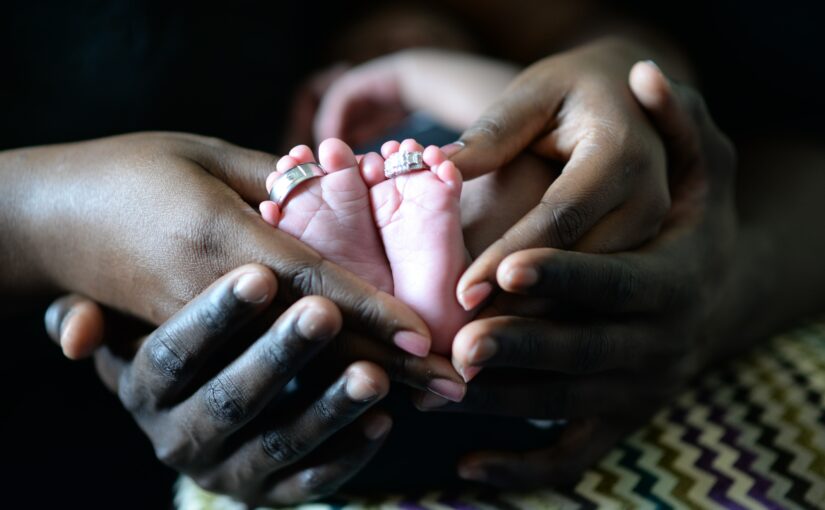
Dakota and her newborn brother, Marlon, Jr.

“There’s never been a moment in which Black women are having equal birth outcomes to our white counterparts because we’ve always been put under excessive stress, we’ve always had lower access to nutrition, and lower access to prenatal care or whatever the case may be,” said Niria White, Interim Birth and Postpartum Director for Mama Sana Vibrant Woman – a non-profit organization providing culturally resonant and quality prenatal and postnatal care to people of color in Travis County, Texas. “There’s never been a moment where we’ve had everything we need for a majority of us to have positive birth experiences.”

While the solution to ending these maternal health disparities for Black birthing people is a dismantling of the racist medical institution, Black birthing people like Shaquyla Baker are turning to Black birthing spaces — maternal care settings and experiences that provide a refuge from the daily violences of anti-Black racism in the healthcare system — and ancestral birthing practices to make their pregnancy and birthing experiences safer and healthier.

When Baker became pregnant with her second child, Marlon Jr., she worried about the potential of a pregnancy with similar or worse complications than those she experienced when she was 19. She was more mature now, more health conscious and in a loving relationship, but with family unable to attend her son’s birth, her pregnancy had become a lonely experience. 

“I definitely wanted somebody to be there that’s in our corner, to emotionally support us during the experience,” Baker said. “That’s really why I wanted to go the doula route. I didn’t have my mom, but I did want somebody who could kind of take her place during that experience in the hospital.”

Black maternal health necessitates Black spaces

Doulas — often referred to as “birth workers” or “companions” due to the term’s association with slavery — have always been a part of many communities of color, taking up a role that allows them to support and advocate for a birthing parent at their most vulnerable. Birth workers are non-clinical health professionals who provide emotional, physical, and educational support for birthing people and families during and after pregnancy and birth. 

“[Having a doula] made a complete difference,” Baker said. “It made situations a lot smoother just talking to somebody outside of family, outside of friends, somebody who actually just wants to help you, not because they have to, they just want to help you. It was definitely an experience I think I needed.”

It is undeniable that Black birthing people need their own spaces to be afforded maternal experiences that are self-determining, healthy and that holistically tend to the wellness of the birthing parent and their family. Birth workers offer this much-needed space, providing a buffer between Black folks and the anti-Black racism that has infested the traditionally white-centered healthcare system. 

“I definitely felt 10 feet tall going to every appointment knowing I was important, knowing this is my baby,” Baker said. “It felt great.”

When they are involved in a birthing experience, doulas are associated with improved maternal health outcomes for Black birthing parents and their babies.

A 2021 study of Medicaid beneficiaries receiving birth-work support revealed lower rates of cesarean and preterm births when compared with other pregnant individuals enrolled in the program. Furthermore, birthing persons in communities that are most vulnerable to adverse maternal health outcomes were two times less likely to experience a birth complication, four times less likely to have a low-birth-weight baby, were more likely to breastfeed and were more likely to be satisfied with their care.

Birth work and birthing companionship has also been linked to reduced rates of postpartum depression and anxiety, and increased positive feelings about birthing experiences and the ability to influence one’s own pregnancy outcomes. 

“It’s just somebody to care for you, especially in this country or just generally, Black women are not privileged to have someone caring for them. Birth work is a way that we can show up and care for each other in deeply intimate ways. Watching each other care for each other, and love on each other in a world that doesn’t love on us is so bright and healing. It’s like it feels like sunshine in the most corny way.”

Niria White

Before her pregnancies, Baker had always assumed doula care was for the bourgeois. Doula care and support is often seen as a luxury reserved for wealthier white women, stemming from the hefty price tag that accompanies many doula services on top of the already overwhelming expense of pregnancy and childbirth. 

However, organizations such as Mama Sana Vibrant Woman (MSVW) and Giving Austin Labor Support (GALS) are leading in providing access to culturally responsive prenatal, birth and postpartum care for communities that have been systemically barred from their ancestral birthing spaces. These organizations provide Black and brown birthing parents and their families with access to pregnancy and birthing care, community resources and healing practices at no cost. They offer spaces to receive culturally responsive care and to build community through educational classes, support circles and in-home childcare aid. GALS has even worked in partnership with the local county sheriff’s office to offer doula support and educational programming to pregnant and postpartum incarcerated individuals. 

These types of community-based doula programs build on the strong relationship doulas establish with mothers throughout pregnancy, birth and the postpartum period to promote ongoing care and support.

It was through the GALS doula program that Baker was able to find the support she was longing for, with her new doula, Angel Walton. 

“Angel, she was so touching. She was so concerned about my feelings,” Baker said. “Just the experience of Angel being my doula — I can’t just say she was my doula, she was my family’s doula.”

Birth work and the ancestral embodiment of holding Black space 

Tall cypress trees line the riverbank. Their green, yellow and red leaves sway in the breeze,  reflected in the clear water below. It’s not unusual to see steam rise from the surface of the San Marcos River on a brisk morning, or to catch swimmers weaving their way through Texas Wild Rice that is rooted in the riverbed.

Angel Walton, 38, has been a birth companion in the Austin, Texas area for six years.

The San Marcos River in San Marcos, Texas holds sacred water; the springs that feed the river are a spiritual site for Indigenous Peoples and a guide for sacred pilgrimages. For Angel Walton, the river provides a conduit for connection with her ancestors and her gods, who she calls to and often prays to, before each birth she attends. 

When called on to assist in the birth of a client, Walton lights a candle on her ancestral altar welcoming the new soul, and she heads to the river.

“I’m usually called to the water,” Walton said. “Babies are living in water, and they’re transitioning. I think all water is connected. I end up being at the river just calming my spirit and washing away what needs to be washed away so that I can be clear, clean and present for that person and that baby and that family, in particular, for the ceremony of birth.”

Just as she is drawn to the river, Walton feels called by her ancestors to be a doula and create Black birthing spaces in which Black birthing people are able to dream up a pregnancy and birthing experience that tends to the mind, body and spirit — an experience that is difficult to achieve in an otherwise anti-Black, racist society.

Walton describes her work as a birthing companion as energy work and work that embodies her ancestral practices of connection and creating genuine relationships that are nurturing and based in community. To Walton, creating and holding Black birthing spaces is a focal point in her work as a doula and is critical in saving the lives of Black women and birthing people.

“Doulas, particularly the way that I’ve learned to doula, hold that space and ensure that when a pregnant person comes up with a birth plan that is their idea, their dream of how they want to give birth, how they want this birthing experience to feel — I’m there to make sure that those things are happening. Holding that space as a whole human being for this person who is bringing in another whole human being, of course it saves lives. Our bodies — in this country, on this stolen land and as stolen folks, as descendants of stolen people — we were never intended to be looked at as whole human beings. To be chosen to be a facilitator and space holder in this sacred ceremony is an honor.”

Angel Walton

These spaces are particularly profound for births that happen inside of a hospital, Walton said.

“Human beings, mammals, go into places where it’s dark, they go into a place where they feel safe [during birth],” Walton said. “They go into a place that feels so quiet and relaxing, and hospitals are pretty much the opposite of that, especially for Black and brown bodies.”

An ancestral history of community-based support

Doula practices existed for centuries prior to the earliest recorded practices in the U.S., with a history and legacy deeply rooted in African ancestry.  

When a birthing parent in West Africa gives birth, they are surrounded by community and embraced by the love of female relatives, who build altars to protect the spirit of new life and create drumming circles to commemorate the new arrival. The sacred ceremony of birth is attended by a midwife — a health professional who cares for mothers and their newborns during childbirth — and a doula, who supports the birthing parent through their experience of labor and childbirth. 

African birthing parents continue to be cared for by midwives and doulas.

“Birth was a community event as much as it was private and sacred and secret,” Niria White, the Interim Birth and Postpartum Director for Mama Sana Vibrant Woman, said. “It was a secret thing that happened, but for women, particularly women who had given birth, this was a moment to come together and care for each other.”

African midwives and doulas were more than just baby catchers, traditionally performing roles as spiritual healers, nutritionists, breastfeeding consultants, postpartum doulas, family planning counselors and advocates who provided resources, care and Black birthing spaces for their birthing communities. 

“When you move away from the medical way of understanding birth and lean more into the natural, the holistic, the physiological — the body’s response to birth — that’s what our ancestors did. They focused on that,” White said. “How was your mind, your body and your spirit moving throughout this portal of birth?” 

Experienced midwives and doulas were among the many enslaved persons who survived the middle passage of the Trans-Atlantic slave trade. They were exploited as medical practitioners who could ensure the health of reproducing enslaved women and their newborn babies to expand their labor force, and to care for the pregnant and birthing wives of African slave owners. It’s from these African traditions, born out of African ritual, that the roots of African American midwifery and doulaship in the U.S. grew. 

Black midwives and their accompanying doulas were crucial figures in their communities, particularly among enslaved persons. By the mid-to-late 1600s in the U.S., while these birth workers were still subjected to the brutality of slavery, Black midwives, doulas and their birthing traditions became the primary sources of prenatal, birth and postpartum care for all birthing people in the country and were instrumental in the preservation of Black maternal and infant health.

According to a 2003 study published by the American College of Nurse-Midwives, between the 1600s and early 1900s, nearly half of all babies born in the U.S. were born into the hands of midwives and the birthing companions that studied under them. 

Even after Emancipation, Black midwives, affectionately known as “granny midwives,” continued their vital, sacred and ancestral work with both Black and white birthing people in the U.S. South, particularly in rural communities, where access to maternal care and resources for birthing people were minimal. Granny midwives traveled throughout the South, ensuring that Black birthing spaces were available to Black families regardless of their geographic location or ability to pay, mitigating the disparities experienced by Black birthing parents in the health care system.

Despite the racist institutions of slavery, Reconstruction and Jim Crow, granny midwives and doulas held onto and passed down African birthing traditions that included rituals and herbal remedies and served as connectors to the spiritual and cultural legacies of African birthing practices, birthing Black babies during life in a Diaspora. 

Racism has erased Black birth work in the U.S.

The practices of midwifery and doulaship create Black birthing spaces that challenge the racialization and overmedicalization of birth with an emphasis on community-based care, intimate relationship building, prenatal and postpartum wellness and avoiding unnecessary interventions that can, and often do, spiral into dangerous birthing complications. 

Yet today in the U.S., only 6% of midwives are Black and 16% of doulas are women of color. 

These statistics are largely due to racist beliefs that eroded the cultural practices of doulaship and midwifery in Black communities. By the early 20th century, a reformation campaign was launched by physicians, nurses and public health departments to shift control of birth from community-based and traditionally trained Black women to the power of the white and male-dominated medical profession. 

“We’re getting eradicated because of these changes in the healthcare system, and it just happens so fast,” White said. “I think in the span of 20 years, like 30 to 50% of midwives who are primarily birthing in the South were eradicated, are just non-existent.”

Medical and health professionals began spreading false and racist claims that Black midwives and birthing companions were at fault for the high maternal mortality rate due to a lack of education, skill and cleanliness, demoting the traditional practices to barbarism and superstition. 

“Trying to reduce maternal mortality in the context that they were was a matter of control: wanting to control women’s bodies, wanting to control how labor was being created. It’s never been about women. It’s never been about our health. It’s never been about our body. It’s been about control. They just don’t care enough or even think we deserve the beauty and sacredness of birth.”

Niria White

The annihilation of ancestral birthing practices was further accelerated by the signing of the Sheppard-Towner Act of 1921 into law. The Act created regulatory barriers for education and licensure that effectively outlawed out-of-hospital birthing practices and workers without institutionalized training. This law was accompanied by a push from the American Medical Association in 1948 to standardize medicine and eliminate out-of-hospital healers.

According to the Journal of Midwifery and Women’s Health, physicians made up the vast majority of primary care providers by the 1940s, and home births were essentially replaced by hospital births. The move to hospital births accompanied a reliance on intervention methods such as cesarean deliveries, artificially rupturing membranes and epidurals, which may not have been medically necessary in low-risk pregnancies.

“It was never about actually prioritizing women’s health, women’s bodies, maternal health or anything like that,” White said. “White women have always had better birth outcomes than we have, but their birth experiences aren’t necessarily better. They weren’t necessarily having beautiful, magical births in the early 20th century. They were being drugged and put to sleep in weird, violent ways. Weird things are still happening, it’s just that Black women are getting the worst of this already weird world.”

Racism continues to harm Black birthing bodies

The U.S. has a long history of the erasure and theft of ancestral practices that have proven to save Black lives. With anti-Black racism being intimately intertwined in the foundation of gynecology, the profession itself was built on non-consensual medical experimentation and the exploitation of enslaved Black women. 

In the 1840s, James Marion Sims, a white gynecologist in Montgomery, Alabama, performed excruciatingly painful experiments without anesthesia on enslaved Black women, often while other doctors observed. While he eventually achieved the title of “Father of Gynecology,” he did so only through this life-threatening experimentation.

Many of Sims’ experiments were unsuccessful, but he continued to perform procedures on enslaved Black women from 1845 to 1849, needing only the permission of the enslaved women’s “owners.” Often drugged and unable to refuse treatment, Sims’ patients were powerless to protect themselves from the racist medical exploitation that he performed.

“They wanted to create a system to ensure that white people were going to have their babies and be healthy. Black people were just the tester, the sample. We’ve always been products for them. If we’re going to put [childbirth] in the hands of men, it was never going to be the beauty of when it was just women in that space.”

Niria White

It’s evident that current medicine was built on the backs of Black women and birthing people — a practice that has altered how doctors and medical professionals have treated Black patients throughout the course of U.S. history. 

The 19th century saw the emergence of eugenics: the inherently racist and ableist ideology that labeled certain people, particularly Black people, unfit to have children due to possessing “undesirable” traits. The idea behind eugenics was that the human race could be bettered through selectively breeding people with specific traits thought to be genetic, like intelligence, work ethic and cleanliness. 

This belief became widely popular with upper-class white Americans who sought to control the populations of people deemed inferior and with undesirable traits — immigrants, people of color, poor people, unmarried mothers, the disabled, the mentally ill. Numerous powerful actors chose to adopt eugenics, including Theodore Roosevelt, Andrew Carnegie and, most notably, Margaret Sanger — the founder of Planned Parenthood. 

Sanger is renowned for founding the American birth control movement. She spoke at numerous eugenics conferences, including the women’s auxiliary of the Ku Klux Klan, to generate support for the use of birth control. When she spoke, she often referred to birth control being used to facilitate a process of weeding out those unfit to bear children and to prevent birth defects.  

Though it is claimed that Sanger eventually distanced herself from eugenics, she endorsed the Supreme Court’s 1927 decision in Buck v. Bell, which allowed states to sterilize people considered mentally “unfit” without their consent and sometimes without their knowledge — a ruling that would take eugenics to its horrifying extreme with the forced sterilization of tens of thousands of people of color in the 20th century.

California had the nation’s largest forced sterilization program, sterilizing about 20,000 people beginning in 1909. More recently, California prisons were exposed for falsely diagnosing incarcerated women with cervical cancer and coercing the women to remove their reproductive organs — with doctors sometimes performing non-consensual hysterectomies after they gave birth. The Center for Investigative Reporting also found that the state paid doctors nearly $150,000 to perform tubal ligations on almost 150 women, a procedure the women say was done under coercion.

Between 1997 and 2014, nearly 1,500 women were forcibly sterilized in California prisons, most of them Black.  

“What we’re seeing now is a reflection of how we’ve always been treated, and I think we’re just now able to see the data,” White said.

Black futures require Black birthing spaces

Black women’s bodily autonomy and health have been consistently attacked throughout the course of U.S. history. This violence has only been exacerbated by the recent U.S. Supreme Court decision to overturn Roe v. Wade, which further complicates pregnancy and childbirth by denying millions of birthing bodies their constitutional right to abortion and abortion care. 

According to a 2021 study conducted by University of Colorado sociologist Amanda Stevenson, banning abortion nationwide will lead to a 21% increase in pregnancy-related deaths for all birthing people and a 33% increase for Black birthing people specifically. 

At the state level, research has concluded that the most restrictive abortion laws tend to be associated with the poorest maternal health outcomes. A recent study published in the journal of American Public Health Association revealed that states with higher abortion restrictions had a 7% increase in total maternal mortality rates. 

“They want people to be having children so that we have a working class,” White said. “Eradicating abortion is a way to reduce the amount of agency for women, and to have more babies.” 

It is imperative that Black birthing people have access to birthing spaces in which they are valued and humanized while they endure one of the most vulnerable — and sacred — experiences of their lives. Community-based care, like birthing work, is key. However, according to White, more birth workers alone won’t bring the U.S. out of the depths of the Black maternal mortality crisis.  

And, birth workers can’t be expected to singlehandedly mitigate the anti-Black racism deeply embedded within the medical landscape. The healthcare system is responsible for the deaths of hundreds of Black mothers every year, and the creators and enforcers behind that same deadly system should be held accountable for their role in the current state of maternal health outcomes. 

Today, the American College of Obstetricians and Gynecologists agrees that reproductive justice — agency over one’s body and access to quality care — and equitable maternal health outcomes cannot be achieved without addressing racial bias in the medical field. 

“We should start there, bringing it back to listening to the individual, listening to our bodies, and we should stop trying to navigate the medical world as a Band-aid and really focus on real healing. Then we would actually be able to find some reproductive justice,” White said. “That would be so nice.”

Real, lasting change will require us to examine every part of our societal processes that are steeped in anti-Black racism — that are permeated with racial violence — and to deconstruct our sexist and dehumanizing understandings of Black women’s bodies. In doing so, we can ensure there is a focus on providing Black birthing people with greater access to healthy foods, quality mental health care, a balance of home and work environments, spaces to care for ourselves and others and quality maternal care that is conducive to safe and healthy pregnancies. 

“I have faith that we can get back to a place where at least we’ll be able to create pockets of safety for women to be able to have this beautiful experience, at least a little bit stress-free, just for that moment of time,” White said. 
How Black Creative Spaces Can Be Havens for Resistance

This article is part of Dreaming Out Loud, a media series written as part of the Bioneers Young Leaders Fellowship Program. To learn more, visit bioneers.org/dreaming-out-loud.


Art has always been a pillar of the life and culture of Blackness in America. From hiding Yoruba religious symbols in Christian iconography to singing of a liberated future in the so-called “negro-spirituals,” Black folks have used creativity to carve spaces that are gentle, loving and humanizing against the backdrop of a society that does not love on them. Black creativity has been a way for Black minds and bodies to heal from a seemingly never-ending struggle for freedom.  

Born from a unified struggle, the art and creativity of Black folks has shaped and shifted American culture. It has called out the ills of a country that continues to marginalize its people. It has sparked movements for Black joy. It has shown us how to change the world into one that allows Black bodies to rest instead of fight. 

Creating spaces where Black creativity and Black art are allowed to flourish can be daunting, but it is a key act of resistance. These Black creative spaces are settings and experiences that embody Black expressions and imaginations. They offer Black folks support to dream their wildest dreams out loud, unencumbered by the white gaze. They allow both artists and the beholder to relish in the rich depths of their Blackness.

This “Black Creativity” collection will explore transformative figures in Black art and creative culture. The following creatives know what it’s like to challenge the status quo, dream up possibility and tell the stories of the beauty of their Blackness.


Ebby, Chibi Magical Girl and Chrissy, Chrissy Plays Dressup

Ebby enjoys putting her art on display at cosplay competitions. She won first place at the 2022 Savannah Comic Convention as Princess Sailor Moon from the live-action series “Pretty Guardian Sailor Moon.” Photo: @ThePicWitch

Ebby has always loved anime. “Tokyo Mew Mew,” “Winx Club” and “Princess Tutu” were just some of the series that frequented her television set when she was younger. It was the magical girl animes — anime centering concepts of girls coming of age and possessing power through their femininity – that she loved the most. These were characters that brought her so much joy. 

Ebby was swept away to the furthest reaches of her imagination when in the midst of magical girls. Anthy Himemiya from the “Revolutionary Girl Utena” series was particularly inspirational for Ebby. She was a woman of color. 

“I never saw people of color, dark-skinned characters, that were magical girls or a Shōjo at that time,” Ebby said. “That was like, wow. I told myself, eventually when I get better at sewing, let me actually make this particular character.”

Countless hours and yards of fabric later, Ebby had completed her first cosplay – a costume resembling the red gown and short purple bob worn by Anthy. And, over 13 years later, Ebby – known to fans as Chibi Magical Girl – still indulges in the depths of her creativeness, dressing up as the magical girls that continue to bring her joy.

Ebby’s art has taken her far and wide. She’s donned stubbed, white horns and a beaded white wig while transporting herself to the realm of “Miss Kobayashi’s Dragon Maid” as the magical girl Kanna Kamui. She’s metamorphosed into Madoka Kaname from “Puella Magi Madoka Magica,” complete with a bow and arrow. She’s even been seen dressed as a Black fae, adorned with pointed ears. 

For Ebby, cosplay has been an opportunity to break out of her shell and to learn new skills as she builds her craftsmanship. She has learned to visualize, prep fabrics and stitch together her own garments. She taught herself how to tease and style wigs and to apply makeup. 

“When you start to actually see every little bit, those parts of the cosplay come together, you’re like, wow, I actually did this!” Ebby said. “This looks pretty good! It’s actually becoming something from nothing!”

Cosplay, a term derived from the words “costume” and “play,” is a common art form in fandom communities in which folks dress as their favorite characters from anime series, TV shows, comics or video games. Many cosplayers like Ebby make their own cosplays, spending countless hours sewing clothes, sculpting foam armor and weapons and styling wigs – oftentimes spending hundreds of dollars on a single cosplay. Some cosplayers will go as far as to mimic the mannerisms and personalities of the characters they impersonate.

Cosplay is also a staple at many fandom gatherings, such as anime and comic conventions – providing a space for cosplayer art to be on full display. Not long ago, engaging in geek culture was considered uncool in popular culture. Today, tens of thousands of cosplayers attend conventions every year, across the nation. 

The beauty of cosplay is that it is an art form that allows fans to dream out loud by embodying characters they resonate with and who bring them joy. It offers them an escape from reality. The craft itself is a combination of ingenuity and fandom passion that opens portals to new and magical worlds. Cosplay has become an outlet for geeky folks – a medium through which folks are afforded the creative space to openly express themselves and display their unconventional art. It’s an exciting world, and for many, a personally fulfilling one. But for Black folks, namely Black femme-presenting folks, it can also serve as a reminder that we are seen as outsiders.

“You just come to cosplay; you just come to dress up as a character, or you come to socialize with people who share the same interests as you,” Ebby said. “You come to bring more people in and share your stories, but for a lot of people, they’re not in the cosplay community long enough for their story to be heard because of all the negativity.”

There is a dangerous misconception in the cosplay community that seeks to exile Black folks from fully participating in the depths of their art forms. While white folks have always been free to emulate characters from various cultural backgrounds, at times even donning blackface,  Black cosplayers have continuously been persecuted for dressing up as characters who do not share their skin color or facial features. The concept of accuracy and authenticity in the cosplay community has set a damaging expectation: that the physical traits of Black cosplayers are enough to bar them from experiences in the art of cosplay.

Black cosplayers are tired of being told who they can and can’t portray in their very own art form. And, as geek culture gains notoriety under a mainstream lens, harmful behavior that is guided by white supremacy is becoming more visible. Body shaming, racial slurs and other forms of discrimination persistently cast a menacing, dark cloud on the cosplay experience – morphing an escape from reality into a visceral reality of racism and sexism. 

“There are going to be people that will tell you other things about your cosplay or the color of your skin,” Ebby said. “It’s so hard to ignore that, but the thing is, as long as you love cosplay and you find some type of joy in it, all that negativity, all those harsh things people say, all those racist comments don’t even matter anymore.”

This anti-Black racism — the dehumanization and marginalization of Black folks — in the cosplay community stems from members who see themselves as the gatekeepers of geek culture. Racialized and sexualized discrimination in the cosplay experience has been fueled by those who have sought to dominate fandom — a group of people, particularly white men, who feel that different elements of geek culture belong to them.

“You don’t have to look a thing like them,” Chrissy said, another cosplayer. “I definitely enjoy cosplay more since I figured that out. We are all just little creative nerds together. We are all just out here trying to make our favorite characters into a reality.”

Chrissy — affectionately known by the cosplay community as Chrissy Plays Dressup — has been cosplaying for over 15 years. Their journey began after attending their first anime convention at the age of 14. The costumes emulating characters from popular animated series such as “Inuyasha,” “Naruto” and “Bleach,” were vibrant, whimsical and sensational. They were self-expressions of the folks who wore them.

Chrissy had always been a big nerd with a passion for anime. It wasn’t a question of could they cosplay, but rather an excitement to get started. They even learned how to craft models through 3-dimensional artistry to build their own props. 

Through their art, Chrissy has transformed themself into a number of magical girls. In one costume, they are metamorphosed into Amulet Angel from “Shugo Chara!,” complete with white, feathered angel wings. In another, they put on their sailor suit, large blue bow included, to be transformed into the Sailor Guardian, Sailor Venus. Their latest costume transported them to the realm of “Cardcaptor Sakura” as the magical girl Sakura Kinomoto

“I want to make something that has never existed in this world before,” Chrissy said. “That is the most exciting part of cosplay for me.”

To address the harmful behavior within the community, Ebby and Chrissy have begun adding elements to their costume designs that weren’t necessarily accurate to the character, but that represented them, their art and their culture. For Chrissy, they often imagine an alternate reality where these characters are all Black — where the softness and sweetness of Blackness is fully on display — for inspiration. 

“I’m actually working on a Rapunzel costume, and I’m using a much curlier texture for her long braid. I’m putting box braids in as some accents,” Chrissy said. “It makes it feel a little bit more like this is me. I am this character.”

Black cosplayers like Ebby and Chrissy remain undeterred in their self-expression, using their cosplay to refute the discriminatory behavior that has infested the cosplay community. In a collective stand against these white supremacist tactics, Black cosplayers have used their skin tones and hair textures to embrace and embody the deep beauty of their Blackness. Black cosplayers continue to create creative spaces where Black art can flourish and be celebrated. These Black creative spaces invite other Black folks to relish in their Blackness in a cosplay community that is safe and loving.

Black cosplays are stunning works of art and a key act of resistance.

As the granddaughter of notable Civil Rights activists Wyatt Tee Walker and Theresa Ann Walker, it was natural for Chrissy to weave social justice into their art of cosplay. And, in the spirit of their ancestors, Chrissy has found a community — a Black creative space — with the power to further expose a sensational narrative of how Black folks show up and find joy in the United States.  

“I didn’t set out trying to change the world with costumes, but I’m so happy that I’m able to,” Chrissy said. “Not like it’s a huge platform, but I have a platform, and it’s giving people the chance to see themselves in ways that they never really thought they could before.”

Chrissy hopes to be able to hold space for folks who don’t have the capacity to attend Anime conventions by cultivating new creative spaces online. They envision a space where Black folks of all abilities, gender expressions and cultures can gather and relish in the geekiest parts of themselves. 

“I want everyone to have a space; I want everyone to have a voice; I want everyone to feel like they belong, especially in something as silly and fun as a hobby,” Chrissy said. “I just want everyone else to feel a little less burdened from the expectations that society puts on us, so I hope my little corner of the Internet can be a refuge for you.” 

For Ebby, in spite of the racist scrutiny, she hopes to join more cosplay competitions, to show off her craftsmanship and to let other Black folks know that there are creative spaces just for them. 

“We’re here in this space and we want to be acknowledged,” Ebby said. “No matter the comments that I might get or the looks I might get at a convention, despite all that, I’m still able to cosplay these characters, no matter how serious it may get, because these characters bring me joy, and that’s all that matters.”


Evan Narcisse

When the original “Black Panther” movie hit box offices in 2018, T’Challa became a household name for millions of moviegoers. But for Evan Narcisse, T’Challa is a name that lives deep within his earliest memories. 

Narcisse grew up reading comic books and graphic novels, becoming engrossed in the worlds of superheroes like Superman and Batman. He was particularly fond of the Black superhero the Black Panther.

“I’ve always been a pop culture junkie when it comes to comics,” Narcisse said. “I learned to read off of comics. Most people my age, they have this arc where they read comics as a kid, then they grow up and have other interests, and they fall away from it. That part never happened for me. I was always a fan of the medium.”

A young Narcisse found escape from the often-harsh outside world, immersing himself in the worlds and stories of superheroes. These worlds, which allowed him to imagine different and electrifying ways of showing up in the tangible realm, would prove to be an early influence for his future writing career.

Although continuously told that writing would not be a viable career, Narcisse decided to charter his own path, eventually obtaining a degree with a journalism minor from New York University (NYU). After graduation, Narcisse landed his first gig as a fact checker. But his passion for writing remained. 

“I still wanted to write about the media I loved – comic books, video games, science fiction,” Narcisse said. 

Over the next decade, Narcisse  was published in media outlets that embraced and celebrated geek culture, writing reviews and articles for Gawker, Kotau and io9. While at io9, he mostly wrote about the Black Panther universe. Narcisse’s expertise in the enchanting realm of Wakanda did not go unseen. 

In 2018, the “Black Panther” movie was nearing its release, and Narcisse was preparing to release his own story of Black Panther. He was nervous. He had never written a comic book before. Yet, in a pairing with esteemed illustrator Brian Stelfreeze, acclaimed writer Ta-Nehisi Coates and penciler Paul Renaud, Narcisse ushered in a new era for Marvel’s Black Panther. His story, “Rise of the Black Panther,” follows T’Challa on his rise to Wakanda’s throne and to the Black Panther legacy that made him an Avenger. 

“Comics are a unique medium with regard to how they let you play with time and pacing,” Narcisse said. “It’s very different from writing animation or video games. Each one of these media that I work in has different requirements and needs, and that stuff has been challenging but fun. But comics were really, really hard because my first chance to enter the media professionally was with my favorite character, who, little did we all know, was about to become a whole phenomenon.” 

Narcisse has written other comic books and graphic novels, publishing a mini-series titled “Wakanda,” the graphic novel “Batman: Gotham Knights – Gilded City” and a series of other comic projects that have created a multicultural superhero universe. Today, Narcisse is a senior writer with Brassline Entertainment and provides narrative design consulting for several popular video games — recently “Spiderman: Miles Morales,” and “Black Panther: The War for Wakanda.”

“I never thought I’d be writing Black Panther comics when I was a kid,” Narcisse said. “And to be perfectly blunt, I didn’t know that there was room for me as a Black person within the medium.”
Narcisse has found great success in embracing his passion. But, to his point, it can be hard for Black folks to see themselves represented in these types of creative spaces.

“It wasn’t until someone like my writing heroes Christopher Priest and Dwayne McDuffie, it wasn’t until I found out that they were Black that I realized, oh, there might be a little space for me,” Narcisse said. “We’re still underrepresented in that medium, video games more especially, but things are changing slowly but surely.”
Narcisse’s art form is a growing one: comics by Black artists written for Black folks that weave sensational tales of African ancestry before slavery. He is part of a blossoming hive of Black creatives who have intentionally carved space where Black folks can revel and indulge in their Blackness in an otherwise racist and harsh world. He is part of a collective whose niche seeks to tell the stories of Black folks and their African ancestries.  

Genres like Afrofuturism — which entangles African culture with science fiction — reflect worlds dreamed up by Black artists. The imagination of Black creatives has created worlds in which existing, often oppressive power structures are dismantled and Black folks thrive. Black creatives have become activists through their art. Their art has become a key act of resistance. 

“Hopefully, if you pick up something with my name on it, you’ll feel the pride and the fear and the anger and the love and the happiness and the goofiness and a sense of mentality that make me up as a person, and realize we can imagine our fictions in that way, we can imagine our realities in that way, and that’s what making art, making story, making magic is about,” Narcisse said. “Expressing a sense of yourself and your experience in a way that hopefully transmits and transforms into something universal that can be appreciated by other people. If I’m not hitting that, it ain’t worth it.” 

Although exhausting, Narcisse has been compelled to use his art to dispel the persistent perception that Blackness is a monolith, that there is a singular way in which Black folks show up in this world, and that all Black folks are nothing beyond the racialized violence inflicted on them by a white supremacist society. Narcisse strives to expose a narrative of Blackness as varied, as multicultural, and as something that can be soft, sweet and steeped in joy. 

“The depth and nuance and complexity of Black lived experiences is vast,” Narcisse said. “There are many different kinds of Black people. These ideas that Black people need to be stoic because of the oppression that we endure, that we have to control our emotions in different ways — there is an element of a survival tactic to that that I don’t want to dismiss — but it creates a rigidity in terms of what we tend to think of as possible with our lives and how we express ourselves.”

This rigidity can break us down, and it can make us brittle, Narcisse said. Black folks are in need of spaces in which they are afforded the flexibility to engage in the joys that build us back up, that feed our humanity, that we need to survive our lives. 

“They have the full range of hopes, dreams, responses, reactions that every other human being has,” Narcisse said. “Just because the predominant narratives about Black people are X,Y, and Z doesn’t mean the rest of the alphabet isn’t available to us. We’ve had to invent our own alphabets to subvert these ideas and to better communicate what our realities are, and speak truth to power with regard to calling out the elites and institutions that want to erase our history.”

When Narcisse sits down to write a comic strip, he envisions what he can conjure up that will excite the artist who will eventually turn his words into graphic frames of a comic. He wants to present a story that challenges them, that pushes them to paint a picture of a world of Black multiculturalism, Black joy and Black possibility. 

“I want to leave behind work that illustrates a sense of possibility and abundance for Black lived experiences that doesn’t feel constrictive, that feels it’s opening things up, hopefully, that’s charting history, that’s invoking the ancestors,” Narcisse said. “The collective spirit of my ancestors from Haiti who fought for their own freedom and really scared the entire world as to what Black agency could look like — I want to honor that spirit.”


Jasper William Cartwright

A gash of radiant light breaks through the raven-black sky, peeking over the mountains to the east and dissipating the fog that had covered the dense grassland. Rain pours from the storm clouds above, mixing with the blood that now stains the battlefield. Crimson-red dragons circle the skies overhead, spraying down flames that scorch hordes of undead and soldiers of the Animal Kingdom. An odor of dirt, iron and char clings to the air. Spread across this magical and mysterious landscape is a blur of chaos and violence, as a battle of creatures only found in the realm of fantasy ensues. 

This fantastical world, where armies of mythical creatures come to wage war, was born from the imagination of Jasper William Cartwright and his fascination with world-building. 

“I think that was always the thing I loved the most when I look back at my childhood or the books and games and shows and films that I loved — it was always the worlds I was fascinated in,” Cartwright said. “It was all about going somewhere that wasn’t where I was, just a normal human speaking to other humans. It was always about, can there be anything more fantastical to this?” 

When Cartwright was young, he spent hours dreaming up vast landscapes, mythical and strange monsters and new traditions and folklore. Once these new worlds took full shape, he would whisk his friends away to the whimsical lands, dank dungeons and thick forests of the Feywild, all of his own creation. Guided by Cartwright, his friends embarked on thrilling adventures, challenging battles and enchanting quests, crafting legendary tales of staving off hordes of undead from innocent town folk, overthrowing mad kings and freeing their people and rowdy bar fights that inevitably ensue during a drunken night at a tavern. 

For over 20 years, Cartwright has continued to build new worlds, cultivate magical realms and weave fantastical tales as a Dungeon Master (DM) and player of the fantasy role-playing game Dungeon & Dragons, known as D&D. Today, Cartwright is a regular DM at D&D in a Castle – a D&D retreat hosted in a real castle – and co-host of “Three Black Halflings”: a podcast Cartwright started with friend and fellow Black DM, Jeremy Cobb. 

In D&D, players create characters of different races, classes and combat abilities to form an adventuring party. These parties set out on riveting adventures in fabled worlds that take them into the depths of dungeons, the dens of monsters and the dimly lit taverns alive with rowdy drunks who are gambling, singing and conjuring up magic tricks. Candy-like dice are rolled to determine the success of players’ actions and how those actions will impact the overall story.

The game of D&D puts a unique type of art on display that relies almost entirely on collaborative and interactive storytelling.  

“What I love about it is it really feels like that kind of gathered-around-the-fireplace type of storytelling where you have to ask for a lot of buy-in from your audience,” Cartwright said. “What that creates is a really fantastic, immersive, shared space for everyone to exist in. I love the fact that my players are helping me write the story just as much as I’m helping to guide them on their journey. I think that’s a really exciting part of it.”

Along with hand-drawn maps and several opened books hidden from everyone’s view, the Dungeon Master sits at the head of the D&D table, ready to narrate this new story as told by their players. As a DM, Cartwright draws up maps and character art, introduces new challenges, performs all ancillary characters and makes sure his players are having fun. For Cartwright, it’s a labor of love.  

“I love this,” Cartwright said. “I want to throw myself into it because it fills me with joy, and I feel that I’m good at it, and I enjoy it, so I’m just going to go for it. It wasn’t until after [my start] that I was kind of like, oh, there’s some blockers here, or there’s some resistance.”

Here, Cartwright is alluding to D&D’s troubled history with race and representation. Although, D&D has been around for nearly half a century and is one of the most popular tabletop role-playing games of all time, it has also helped entrench some ideas about how we define and navigate race in fantasy. These ideas rely on a cultural default of whiteness that has continuously acted as the gatekeeper to the human imagination.

The realm of fantasy is imbued with European mythology and folklore — absent of multi-racial representation and diverse conjurings of new, mythical worlds. The game itself was developed during the 70s, receiving influence from notable fantasy writers such as J.R.R. Tolkein and H.P. Lovecraft, who was blatantly racist. Their works created a blueprint for the troubling conflation of race, culture, ability and, oftentimes, good and evil. 

“I’m a firm believer that every single person has something to say, has a story, has value — creative value,” Cartwright said. “We need people’s stories, and we see what happens when we only get the same kinds of stories over and over again. It has such an important impact, the way that it shapes the narrative of our society, the way that it allows our society to function.”

To address the racial stereotypes and colonialist supremacy that has seeped into the fantastical world of D&D, Cartwright has used the game as a vessel particularly suited for Black creativity and Black culture to flourish. Taking inspiration from the stories, myths and legends of different regions in Africa, Cartwright creates D&D campaigns to tell stories intimately enriched with the traditions and folklore of different cultures. 

“It’s really enjoyable watching players meet different types of cultures, myths and legends drawn from different places and that mean very, very different things,” Cartwright said. “Being a Black person in a world where prejudice doesn’t exist feels good.”

These topics, along with the lack of cultural representation among DMs and players, are points of conversation on Cartwright’s “Three Black Halflings.” Through thought-provoking conversations and guest interviews, the podcast explores racism and diversity in the worlds of D&D and popular culture and offers tips for other DMs. For Cartwright, being able to navigate these spaces with other Black folks and to engage in conversations about race has helped him connect to the rich, beautiful depths of his Blackness. 

“It was a way for me to connect to that side of myself, which historically I only ever did when I was around my other Black friends,” Cartwright said. “What I have discovered is this really wonderful connection to a part of me that I didn’t get to express for the longest time.”

Cartwright continues to carve out these Black creative spaces in D&D, providing countless Black players with their own space to connect with parts of themselves that are suppressed in an otherwise racist and tangible world. D&D can be an opportunity for Black players to recognize their own creativity and the value of their imaginations in creating these worlds where prejudice doesn’t exist.

Although their existence is real, spaces for Black folks to bask in their geekiness and express their fandom for D&D can be hard to find. Cartwright suggests starting with the “Three Black Halflings” Discord channel.  

“Never doubt that you will bring value to the table, whether that’s for jumping into a D&D campaign or deciding to write a script or paint something,” Cartwright said. “Whatever it is, I guarantee you that you have some value. If you have an urge and a passion to do it, you will add value to the space, and I, for one, will be thankful that you’re there.” 


Brandan “BMike” Odums

Brandan “BMike” Odums has always been a creative. Some of his earliest creations were doodled renditions of animated characters such as Sonic the Hedgehog and the Teenage Mutant Ninja Turtles. Although only in second grade, a young Odums knew that he was going to be an artist.  

“I was always interested in drawing or putting pencil, crayon, marker to blank paper,” Odums said. “I was always doodling to the point where my classmates would offer to buy it or ask me to give it to them, or make requests.”

While in high school, he studied visual arts at the New Orleans Center for Creative Arts. He wanted to master creating visuals that delighted the beholders of his work. And he did, rising to the top of every art class. Driven deeply by his passion, Odums learned about professional art tools, different visualization techniques and how to create stunning works of art. 

For Odums, engaging in creatives spaces brought him joy. Every stroke of the paintbrush, every mark of the pencil, every line and every shape sketched, it all offered Odums a space to live within his wildest imaginaries. Creating art was a refuge from the obstacles life often presents. However, even though becoming a proficient artist while at NOCCA, the lack of Black representation deterred Odums from further pursuing art. He had a strong foundation to create art, but had not had the opportunity to explore the message he aimed to share.

“I didn’t have examples of what it looked like to be a Black artist, and not because these examples didn’t exist,” Odums said. “ This was before Instagram, before YouTube, and I had teachers who were predominantly white and who didn’t see the priority in introducing me to examples of Black artists or the legacy of Black art.” 

After graduation, Odums would go to college for filmmaking and videography, eventually founding 2-Cent Entertainment, LLC. Odums would spend the next eight years directing music videos for acclaimed hip-hop artists like Mos Def, Curren$y and Juvenile, and creating original content with a collective of Black creatives. Their projects aimed to educate, particularly the youth they engaged. These projects also sought to tell the story of a segregated city in the wake of Hurricane Katrina – of a politically violent landscape. 

It was September 2005 – Hurricane Katrina had made landfall, collapsing New Orleans’ levee system and releasing devastating floods that wreaked havoc on the Gulf Coast. Most of the city was under water. Over 200,000 homes were destroyed – over a million people displaced. Countless people were stranded on rooftops, and hundreds others had drowned. Survivors spent days without food or water, their resilience wilting under the beating sun. 

The disaster response was most tragic of all and exposed how racial and economic inequity, anti-Black policies and corporate greed work together to suppress New Orleans’ most vulnerable. Black folks suffered the most in the storm’s aftermath, including bracing themselves for an uptick in police brutality. Stuck without basic necessities, Black residents were labeled “looters,” as they scavenged for resources. Today, much of New Orleans is back. However, nearly 20 years after Katrina, in the Lower Ninth Ward – the city’s poorest and Blackest neighborhood – empty edifices and desolate streets continue to pepper the neighborhood.

These abandoned spaces became popular backdrops for the music videos Odums would direct. The videos sought to pay tribute to the neglected landscape and expose parts of post-Katrina New Orleans wrought by disinvestment, institutional failures and violent politics of racialized space that led to the death of over 2,000 people during the 2005 hurricane. 

In these spaces, it feels as though Katrina happened yesterday. And for many people, these spaces are a nuisance that elicit fear – a reminder of the neglect and the way anti-Black racism has egregiously impacted their communities. For Odums, these homes were everything but empty. The facades of these spaces were covered in graffiti art – blanketed in the voices and stories of a collective of people who once called these neighborhoods home.

“We were in the middle of these abandoned, forgotten homes, with the idea that people were displaced, that there were people in New Orleans that could not return because there weren’t places for them to return to,” Odums said. “Here we were in the middle of these apartment complexes, these housing projects, showcasing this idea that these spaces were there, and it was not being used for the reasons they should be used.” 

Odums ascribes a spark in curiosity to paint again to New Orleans’ housing crisis and community disinvestment. Attracted to the beauty and temporary nature of graffiti art, Odums began painting a series of murals, all depicting Black revolutionaries, in what was once the Florida Housing Development in New Orleans’ Ninth Ward. This project would soon become a radical, underground art movement, with young creatives from across the city sharing their stories through words and images added to the now abandoned yet luminous corridors of Odums’ project, called Project BE. 

“When it comes to the public art in the murals, I think it is an opportunity to collaborate,” Odums said. “It’s an opportunity to go into spaces, not as the voice but as the listener. I don’t live in this town of this city or this neighborhood, but I can sort of be at best a listener and an amplifier of the voices that are there or a collaborator with the voices that are there in hopes that that creates something.”

Soon after its conception, the Housing Authority of New Orleans terminated Project BE, demolishing the Florida Housing Development. Odums remained undeterred, eventually finding great success in his art form. He has collaborated with notable organizations and public figures, including Nike, Revolt TV, Ava DuVernay’s ARRAY, New Orleans Jazz and Heritage Festival, Boys & Girls Club, and so many more. He has painted murals from Palestine to New York City’s Times Square. 

Through five-story murals, indoor installations and found-object sculptures, he continues to tell the stories of state-sanctioned, racialized violence and creative forms of Black resistance.

Creating art has always offered Odums a haven of resistance – a sanctuary away from the often harsh outside world. There was no stress in these creative spaces. Odums wasn’t chasing some large entrepreneurial dream. Rather, he had discovered his message. Much like the graffiti art that inspired him to again create, Odums creates art to tell the stories of Black folks as they resisted and continue to resist the racialized violence that has been a distinct part of American history. 

“I really enjoy speaking to and for and with Black voices and Black people, and my work often represents that in a very direct way,” Odums said. “The why [I create] is simple, but it’s also complex in how you think about storytelling, how you think about representation. I think for me, the very simple part of it is I paint things that I love and what I appreciate. I love exploring Black history and the impact of people in the past.”

Through vibrant spray paint, a bold departure from realism and a unique play with color, Odums paints to respond, to resist and to call attention to the social and political fervor of a generation of Black folks and activists that blossomed in an environment marked by the nation’s first Black president, the revival of calls for police accountability and gained traction of the self-care movement. 

“Nina Simone said it’s the artist’s duty to reflect the time, so there’s this idea of reflecting the times and what’s happening from my perspective, and my reality, and my story, and just being authentic to my truth,” Odums said. “There’s the idea about the responsibility of Black art.”

“Sometimes my art can go places where people aren’t ready for me physically to be. They might not be ready to sit down and have a conversation with a Black man from New Orleans. But they will experience my work, or they will sit with my work and allow it to communicate with them.”

Today, Odums continues to use his art to be a steward of the present time, to cultivate creative spaces that offer a refuge for others to grow and create. He is the owner and lead artist for Studio BE, an art installation and creative space located in an abandoned warehouse. Studio BE is a space for community and the culture and stories that come with it. It welcomes folks from across the globe to engage with creativity to develop their critical voice and dive deeper into their imaginations to envision a future of possibility for Black lives.

“It was always a part of my journey to create stuff that was of service to people,” Odums said. “As the public art began to take more attention, it just became a natural fit to think about it as a community service project.”

Through their Eternal Seeds program, Studio BE also serves as a center to educate, empower and support young creatives. Embodying the power of Black creativity and collective expression, the program affords young artists with the space and the tools to radically transform the world into one that is loving, just and bursting forth with creativity. For Odums, it is important for this next generation of revolutionary artists to see themselves reflected in these creative spaces. 

“The space has allowed other people to create these moments that are valuable to them,” Odums said. “Even the weddings we’ve done in the space, where Black love has been exhibited and celebrated in that space specifically because the space existed.”

Odums is grateful to have been afforded the privilege to live a life deeply immersed within the beauty and richness of his imagination – dreaming up the possibilities for Black life to flourish. 

“I think New Orleans as a whole is such a magical place as it relates to the why in creativity or the why in artistry,” Odums said. “It’s a very old city. There’s a lot of old cultural practices and traditions that have existed and continue to exist outside of the idea of capitalism. It’s these things that people do because it’s the language they speak, not because they’re trying to achieve some sort of status or fame. 

“And the way this city loves me, and the way my parents love me has informed where I am. I wouldn’t be where I am if it wasn’t for the people of New Orleans who decided what I was doing was important enough to uplift.”


Myles “Fro” Martin

Myles “Fro” Martin hopes that people who attend his spoken word performances are able to find some type of connection with his poetry.

Myles Martin wrote his first poem when he was in eighth grade. It was a love letter to his then-girlfriend. At the time, Martin didn’t make much of his writing talent. He put down his pencil and paper for what he thought would be forever. 

In 2019, Martin had been incarcerated for a crime he didn’t commit. He spent a total of 30 months behind bars. And, although their young love didn’t last, Martin and the girl he had written a poem for all those years ago reconnected, finding love and admiration for each other again. Martin wrote a new poem, this time about their connection. Inspired by the same muse, Martin began to write again. 

“I had my own personal space and time, and it was just quiet times to think,” Martin said. “That’s why I just started writing. When I reached the two-year mark in October, 2021, I wrote a poem about what it was like for me to be locked up that long, and where my mindset was, where my mental state was, and I just kept writing.”

After his release, Martin began trying to readjust his life. He had been gone for so long. He no longer had contact with his two children. He worried about getting his record expunged. He had to find employment. He had to find shelter. 

Like so many other Black men in the United States, Martin has struggled to find stability after he was stripped of his life by the Prison Industrial Complex — an institution that imprisons Black men at an alarming rate. Labeled “convicts,” these men are barred from housing and food assistance, quality jobs and quality healthcare. Their mental health, which is greatly impacted by incarceration, is never tended to. The previously incarcerated are forced to navigate a hostile environment that is challenging and actively sets them up to fail once they are released. 

A month after his release, Martin decided to participate in an open mic night at a local establishment. He had never performed at an event like this before. He had never even been on a stage. But this was an opportunity to share his art with an audience. Over time, Martin became a popular act, adopting the stage name Fro

“People loved my poem,” Martin said. “I went back two weeks later, did another one.”

For Martin, poetry is an escape. His art is like a journal — a creative space that offers refuge for self-expression. When the world becomes heavy, Martin is able to carve space in which he can find joy, in which he can find release and in which he is able to honor the deepest parts of his Blackness. His poems contain real stories. They speak to Martin’s struggles, to Black struggles, and call on readers and listeners to have honest, and often difficult, conversations about race and racism.  

“I want people to feel, I can relate to that, but I also want people to feel like, oh, I never looked at it like that,” Martin said. “I want people to see another perspective on things.”

Poetry has also provided Martin a platform to advocate for other folks who are routinely funneled into the criminal justice system. He has performed moving spoken-word pieces at the Texas capitol in Austin, at a Tyre Nichols rally and at press conferences, decrying the maltreatment of Black folks by the criminal justice system and calling for reform.

Recently, Martin performed at a press conference and rally for Joshua Wright, who was shot and killed while in custody in Hays County, Texas. Corrections officer Isaiah Garcia fatality shot Wright while he was still shackled to his emergency room bed at Seton Hospital in Kyle. 

“That’s the same county I was locked up in,” Martin said. “That’s the same guard that used to harass me when I was locked up. So [his death] hit home.”

Upset by a lack of attention paid to Wright’s case, Martin felt compelled to write a poem, calling for “Justice for Josh.” 

“I had to try to make sure that if nobody is listening to [the family], please at least listen to me,” Martin said. “I’m like a megaphone for people who don’t know how to express themselves, or can’t, like the people in jail. 

Martin also writes poems to advocate for his childhood friend, Cyrus Gray. Gray, who was never convicted of any crime, spent four years in jail while he awaited trial. 

Martin never intended to acquire a platform with his art. He was empowered to write as a means of helping his friends and other Black folks subjected to the cruelty of a racist society. 

“I feel like when it comes to doing activist stuff, I feel I have no choice,” Martin said. “I have to be as loud as possible because there are people out here that you can’t hear at all, people in jail that you can’t hear from.” 

Martin writes at least six poems each week. While some weeks reap gold, others take him back to the drawing board. Regardless of what he writes, Martin seeks to paint a picture of Blackness that is softer, more emotional and deserving of freedom. 

“My goal is to show people that being arrested doesn’t mean guilty, so that people can have actual fair trials,” Martin said. “When you go on trial, everybody automatically thinks you’re guilty. You can just tell people looking at you like you’re guilty. You don’t even know the crime yet; they’re already judging whether or not I’m guilty. And just based on my appearance.” 

Martin has every intention to continue his art and to continue carving out these Black creative spaces in a society that would rather see him in chains. He hopes to someday use his platform to create his own independent comic book, beaming with Black characters and Black stories. He strives to continue to tell Black stories through art. 

“Every single day I’m pushing, I’m doing something,” Martin said. “I hate when I’m not working. I hate when I’m not writing. I hate when I’m not doing something. And I hate when I’m not making some type of impact.”

Through poetry, Martin seeks to weave a narrative of Blackness that is deserving of freedom rather than inherently an offender. 

two week notice

by Myles “FRO” Martin

I put in my two weeks 
Because to weeks ago my coworker thought he could relate to 
Hed’d say to me how he got harrassed by the police and ticketed 

I didn’t get it 

So I changed the subject 
Yet he continued 

Talking bout how he was subject to police brutality 
Saying things like “don’t get me wrong I know it’s hard for your people but we have it hard too”

I changed the subject….

He continued 
Like “we really need to bury these issues 
Because blacks-“

That’s where I stopped him 
I gave em 2 options 
I said “you can walk away now or jump down this rabbit hole
But you can’t climb back up”

He nodded 

Then said he’d been to Tdc 
hes saying he’s been to prison so what’s the difference 

My answer was the difference is you did it and I didn’t 

U earned your criminal position 
The same position I was born in
U went to an all white gang and got sworn in 

Forced it 

My upbringing was torture 
We wasn’t gangbangers 
We were hard workers working hard to shake reality 

U get arrested for possession of meth and claim police brutality 

I got arrested for being black and thanked god I was still breathing 
I was Arrested for no reason 
I could’ve been shot fa sneezing 

Then he said we’re the same 

I called my boss n put my two weeks in

Black Fugitivity and the Need for Spaces that Belong to Black Communities

This article is part of Dreaming Out Loud, a media series written as part of the Bioneers Young Leaders Fellowship Program. To learn more, visit bioneers.org/dreaming-out-loud.


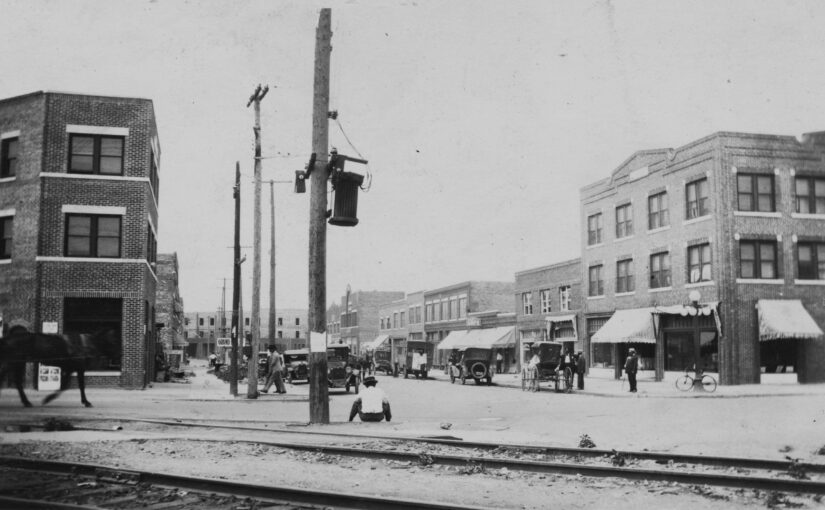
Brick and wood-frame homes peppered the landscape, nestled in between an abundance of Black-owned stores that lined the streets for blocks. It wasn’t unusual for residents to dress lavishly as they attended doctor appointments, got haircuts, stocked up on groceries, danced at nightclubs and sat down to a nice dinner.

This was Greenwood in the early 1900s: a bustling, vibrant and thriving Black neighborhood in Tulsa, Oklahoma. Built in a northern pocket of the city, this affluent commercial and residential neighborhood became a robust and self-sustaining community and a pinnacle of Black success. By 1921, Greenwood had become so promising for Black futures that American author, educator and orator Booker T. Washington affectionately called it America’s Black Wall Street. 

But the prosperous Black neighborhood that took years to build would be erased in less than 24 hours by acts of racial violence motivated by resentment toward Black prosperity. Between May 31 and June 1, 1921, as many as 300 Greenwood residents were brutally killed. Their homes and businesses were burned to the ground. All of them were casualties of an enraged mob of white Tulsa residents. 

Greenwood Avenue, once a thriving Black business district, was destroyed by racial violence in less than 24 hours. – Tulsa Historical Society and Museum

In the crisp morning air of June 1, 1921, a throng of white residents descended on Greenwood. The city’s law enforcement officers had deputized every able-bodied white man, providing them weapons from the city’s armory. The mob threw dynamite into homes and businesses, while planes flew low overhead, dropping bombs across the neighborhood.

“The neighborhood I fell asleep in that night was rich, not just in terms of wealth, but in culture…and heritage,” recounted 107-year-old Viola Fletcher in a 2021 testimony before Congress, 100 years after the massacre. “I still see Black men being shot, Black bodies lying in the street. I still smell smoke and see fire. I still see Black businesses being burned. I still hear airplanes flying overhead. I hear the screams.” 

Many of the 300 murdered Black Greenwood residents were buried in mass graves, while others who survived the attack fled the city. Property loss claims totaled $1.8 million  — the equivalent of $27 million today. 

Not a single individual was convicted of a crime. 

Black empowerment necessitates Black spaces

Before its demolition, Greenwood exemplified Black economic empowerment. It was a paradigm for how Black communities create their own opportunity and wealth — for the power and importance of Black self-determination.  

“If we are excluded from engaging in practices that allow us to flourish in different ways in the outside world, then we imagine that the space we create with one another is where we can begin to build the foundations of all of those things,” said Dr. kihana miraya ross, Assistant Professor of African American studies at Northwestern University. “What was happening [in Greenwood] was happening because that’s all we had. We had to make something for ourselves in order to survive.”

Dr. kihana miraya ross

Though Black folks have been dreaming up spaces in which they can thrive throughout history, their endeavors and experiences are continually questioned, attacked and made invisible as a product of anti-Black racism — the dehumanization and systemic marginalization of Black people. 

This has been highlighted by a slew of recent, highly publicized and flagrant incidents in which racial targeting of Black people has occurred as they live, work, celebrate and navigate the world around them: a couple is held at gunpoint for picnicking at a KOA campground in Mississippi; the police arrest two men enjoying coffee at a Starbucks in Philadelphia; a birder is harassed while strolling in Central Park; the police are called on a college student napping in a common area at Yale; three filmmakers are surrounded by police as they checked out of an Airbnb in California.

According to Dr. ross, this anti-Black racism is an inescapable facet of society, making it natural and essential for Black communities to seek a reclamation of spaces that “promote the myriad of ways in which Black people practice seeing one another, loving one another, and granting one another breathing room in a world where anti-Black racial violence is normalized and asphyxiating.”

Simply put, Black folks need their own spaces — their own settings and experiences created in solidarity, in opposition to, and as a refuge from the conventional stereotypes and marginalization that permeate the public spaces they are regularly forced to occupy. It is crucial to the resistance of anti-Black oppression that spaces exist where Black folks may gather as their authentic selves to relish in their culture and affirm their humanity, unencumbered by white peoples’ judgment and prejudice.   

We need spaces where we may simply be Black. 

Black fugitivity is a practice of resistance

As witnessed in Greenwood, it is crucial for us to unapologetically take up space — to escape and become fugitive from the racial apartheid and persecution of anti-Black racism. Our very future is contingent on this fugitivity and our creations of this reclaimed, stolen and fugitive space. 

This concept of fugitive space has been utilized by scholars, such as Dr. ross, to analyze a transformational struggle from oppression to freedom. In other words, fugitive space provides a meaningful pathway for us to recognize the possibilities of a just and equitable future as articulated by Black communities and their experiences.  

In this context, fugitive spaces are a practice of resistance that acknowledges the reality of the harsh, oppressive systems that marginalize Black communities while simultaneously recognizing the diverse ways in which Black people experience, perceive and find joy in the world.

“Really, this is our only way of being in relationship to this world that we’re in. Otherwise, we risk becoming a part of it. If we’re trying to develop a stance that demarcates the world that we’re in from the world that we want to see, then we have to get out in order to do that. There’s no way to imagine Black futurities in the context of anti-Blackness. Any way we move toward liberation is going to be a fugitive act.”

Dr. kihana ross

To understand fugitive space, it is crucial to explore the historical roots of the term “fugitive” — which is rooted in chattel and plantation-style slavery. When enslaved Africans escaped from the plantations that shackled them, they were cast as fugitives of the system — criminals of the plantation economy, soon to be known as capitalism. They were considered property, which meant they were considered simultaneously thieves as well as the stolen goods.

“That act is a criminal act, and so if we’re thinking through that lens, then we can think about it as something criminal,” Dr. ross said. “But if we think about the system of chattel slavery as criminal, then we can start to reframe how we think about what is criminal, who is criminal. What does it mean to steal or not in those contexts?” 

Today, “fugitive” is utilized in the same sense — to describe a journey toward freedom. In a society infested by anti-Black racism and white supremacy, this freedom is only achievable when we actively participate in acts of escape. We can undermine these oppressive systems when we fearlessly seek love, joy and rest in spite of them — when we seek creative methods of refusal and resistance.  

“I think that in this particular case, we are saying that we honor our ancestors who dared to become fugitive, and we think about what it must have taken,” Dr. ross said. “As much as we read these books, as much as we listen to these audio files, as much as we watch, [we will] never, ever, understand the experience of the enslaved. And so, for me, a part of honoring that experience is trying to imagine what it must have taken for a person to literally risk their lives, risk the lives of their families, in order to get free.”

Black fugitivity is always present

These spaces don’t only take form as the edifices we erect. Most fugitive space is easily overlooked as it is commonly unmarked by the protests, walk-outs and burning buildings often associated with the resistance of nation-state practices and violence. 

As seen and heard on plantations in the antebellum South, fugitive space also takes shape as the community, relationships and experiences that are built in spite of the anti-Black racism and immense oppression imposed on the lives of Black folks. Drawing on both African musical heritage and western European sources, enslaved Africans created a rich musical tradition of spirituals known as sorrow songs — a name given by American sociologist, writer and civil rights activist W.E.B Du Bois.  

These songs, while generally conveying an atmosphere of melancholy and mourning, transcended the constraints of chattel slavery through meaningful self-expression. They embodied a critique of the conditions of enslavement and the broader social systems that supported it while simultaneously articulating and preserving the communal values of enslaved people.

Enslaved folks continued to find joy through the oppression that sought to strip them of it. After the Stono Rebellion — a 1739 slave revolt — enslaved Africans were forbidden to use drums on plantations for fear that they were hiding secret codes in their drumming patterns. In lieu of drums, enslaved people began creating dances to accompany their songs. This fugitive space was known as Juba. 

“There is a term of shouting Juba, or singing Juba, which to white folks from plantations, seemed very chaotic and non-linear, and it didn’t make sense,” said Dr. Justin Coles, Assistant Professor for Social Justice Education at the University of Massachusetts Amherst and Director of  Arts, Culture, and Political Engagement for the Center of Racial Justice and Youth Engaged Research. “But for [the enslaved], it was a coded celebration of language. That sort of fugitivity is always present.”

Dr. Justin Coles

According to Dr. Coles, fugitive space is all around us. It exists where Black folks are afforded the grace to live a full and valued life. It exists as any moment of time or experience where Black folks are honored and celebrated in ways that are humanizing and beautiful and where Blackness is not seen as deficient or less than.

“It might simply be a [Black] person walking down the street, and they see another Black person, and they give a head nod,” Dr. Coles said. “What if we also look to just the everydayness of Black folks where they’re not fighting, like a white supremacist nation; where they might simply be relaxing or resting?” Dr. Coles said. 

This practice of peering into the ordinariness of Black life is illustrated by Black feminist writer bell hooks’ interpretation of the concept of “homeplace.” According to hooks, the homes that Black women create, however fragile and tenuous, provide a space where individuals and families can freely live within their Blackness. They can resist their subjugation and nourish the soul and self. Throughout history, homeplace has offered space to organize and unify Black communities toward the common goal of achieving Black liberation. 

hooks explores Black homes – or homeplace — as space that Black folks need to understand their humanity as it relates to themselves and the world around them. 

hooks says the mere existence of Black homes represents resistance against racial domination and oppression: “Black women resisted by making homes where all black people could strive to be subjects, not objects, where we could be affirmed in our minds and hearts despite poverty, hardship, and deprivation, where we could restore to ourselves the dignity denied us on the outside in the public world…Historically, black women have resisted white supremacist domination by working to establish homeplace.”

While wanting to avoid further entrenching normative gender roles that continue to alienate us in the Black community, hooks also wanted to display the political power of homeplace and Black women’s power to uplift their people and their voices. 

According to Dr. Coles, the voices of Black communities and the stories those voices carry can help shed light on the essential existence of fugitive spaces. Dr. Coles refers to these stories as “Black literacies” — the narratives that make Black identities and social practices the focal point and shamelessly proclaim Black aspirations, experiences, imaginations and artistic expressivities.

Here, Black literacies seek to explore the multiple ways Black folks live within and experience joy in the world.

“Black literacies, for me, are essentially the tool or the energy source that keeps us being able to continue these various cycles and fights toward liberation,” Dr. Coles said. “Allowing us to, on those journeys, celebrate and relish in the joys of it all, to carve out time to understand that our totality is not suffering from those structures. I see that as a tool or a pathway, rather, toward those liberatory futures.”

Fugitive space: separation vs. segregation

Some may feel that creating Black fugitive spaces is a regression to pre-Civil Rights-era segregation. That feeling, however, highlights a disconnection with the reality of anti-Black racism as it persists in America today. 

“Regression” would assume that we have achieved a certain level of equality and are now regressing from it. It would mean that we’ve successfully created spaces in which everyone can easily find jobs, housing, healthcare and justice in the legal system — where everyone has equitable access to being felt, seen and heard. This is simply not our reality today.

When Black folks create space to be with only each other, those spaces aren’t acts of oppression. They’re responses to it. They’re our opportunities to separate ourselves from the abuses of anti-Black racism and patterns of white dominance. 

When Black folks find themselves in community — whether it’s occupying a makeshift piece of land, singing songs in the plantation fields or gathering in the homes where we find refuge — there can be healing. We’re able to offer and find support in a way that allows us to reclaim the beautiful parts of ourselves that have been repressed by anti-Black racism and white supremacy. This togetherness offers us resiliency for bringing our full humanity into spaces where it will inevitably be challenged.

“When you have these fugitive spaces, particularly Black fugitive spaces, they are counter to racial capitalist logic, to settler colonial logic, and all these things that tell us to not — that tell people not to work together. In a way, [those spaces] foundationally and slowly disrupt those systems. Black fugitive spaces are a disturbance — a way to cultivate and sustain a counter power to this larger weight that is working to oppress folks.”

Dr. Justin Coles

‘I love my hair, I love my nose, I love my skin, I love myself’

Ember Charter School’s halls are lined with pictures of Colin Kaepernick, Harriet Tubman and scenes from marches of the Civil Rights Movement. From the auditorium, the predominantly Black student body can be heard in chorus: “I love my hair, I love my nose, I love my skin, I love myself!” A teacher raises her fist in a Black power salute. The students mirror her actions and then make their way to their classroom – or schoolhouse as they are called at Ember.

This message is recited every morning at the Bedford-Stuyvesant, Brooklyn school. Ember is Afrocentric with an aim to empower Black children in ways traditional public schools in America have historically and consistently failed to do. 

Although very few exist, Afrocentric schools like Ember provide educational spaces to Black children that mitigate the racialized harm they experience in the traditional school system. Ember’s approach to education is holistic, with a curriculum that focuses on love, mindfulness, community, and is trauma-informed and culturally responsive. Black life is not only honored at Ember, it is celebrated.

Ember is a school explicitly designed for Black children. It’s a reprieve from the New York City public schools, which are among the most racially segregated in the country.

Dr. ross and Dr. Coles’ academic work in fugitive spaces play a major role in the envisioning of Black educational spaces like Ember Charter School. Both scholars agree that Black educational spaces are crucial to the development and socialization of young Black people, as these spaces afford Black students the grace to navigate their own education, their identities and the broader anti-Black landscape.   

“It is absolutely, 100% necessary for Black students to have exclusively Black space because it is the only space that they are allowed to, encouraged to, and free to unpack what it means to exist as a Black student in an integrated school — what it means to exist as a Black person in an anti-Black world,” Dr. ross said. “It’s the place where they start to, from my experience, understand that the predicament that they’re in is not just a predicament that they’re in, it’s a predicament that all of us are in because of the way we’re racialized in society.”

Afrocentric schools and Black educational spaces engage in educational practices that provide healing and liberation — that allow Black youth to explore themselves and their history and arms them with a political analysis of the world and the tools to oppose anti-Blackness.

According to Dr. Coles, Black educational spaces encourage youth to learn who they are, who they are not, what they can achieve and what they can’t based on the way they are racialized in this society. 

“It’s all about, how do we get people to see the value of Blackness? And that’s what Black education spaces do. There is great intention in needing to be in built space that exclusively centers Black people.”

Dr. Justin Coles

Ember Charter School is just one of many examples of a modern-day Black fugitive space. They exist everywhere, all around us. They exist in every setting, every experience and every thought that allows us to relish, unapologetically, in the Blackness of our minds, our bodies and our souls. Every community standing in solidarity, every dap given, every act of self-care. The blossoms of Black liberation are rooted throughout the nation.

This isn’t to say that they can’t be difficult to find. Whether medical, agricultural or creative, it can be arduous to find yourself in a space that values and humanizes Black life. And for white folks, this doesn’t mean that those spaces want to be found. It is undeniable that for Black folks to move freely toward liberation, they must be able to exist within spaces that are unburdened by the white gaze and the anti-Black racism that comes with it. 

In the fugitive pieces that follow, explore with me several ways in which white supremacy has sowed its dangerous seed deep within different systems and institutions that compromise integral parts of society. The journey will expose to us Black fugitive spaces, Black refuge and a path toward an anti-racist future.  

Uncovering the Complex Relationships of Non-Human Animals

As scientists continue to deepen their studies of the natural world, we find ourselves increasingly at odds with the prevailing worldview that sees non-human animals as less-than-intelligent, unable to possess “culture” or meet various requirements that have been used to designate humans as the superior. A rapidly expanding collection of researchers around the world are unearthing the intricate intelligence and relationships that characterize the life of many other-than-human species. A number of animals have long been recognized for their adaptability, communication and social structures, but ongoing research is unveiling even deeper layers of complexity, proving that we’ve only scratched the surface of how animals perceive the world and relate to one another.

From sperm whale communication to the gender dynamics of apes, the evidence of animal culture is ever-growing. A number of animals, it is now clear, display unique behaviors, customs, and knowledge that are passed down through generations, shaping their societies and enabling them to thrive in their environments. In this newsletter, we will embark on a journey of discovery, exploring some of the latest advances and thought-provoking insights into animal culture and consciousness.


Want more news like this? Sign up for the Bioneers Pulse to receive the latest news from the Bioneers community straight to your inbox.


What Sperm Whale Communication Can Tell Us About Communities & Cultures Beneath the Ocean’s Surface

Until fairly recently, the dominant view among scientists was that non-human animals didn’t manifest real intelligence and certainly didn’t live in dynamic cultures. But those ideas have been entirely demolished in recent years. Several examples of sophisticated decision-making, tool usage, emotional richness, and complex social organization in species have come to light.

In this edited conversation led by journalist Kate Golden, we hear from two major figures in this burgeoning scientific and societal renaissance, Carl Safina and Shane Gero, about what we know and what we might be able to learn from studying sperm whales.

Read the Conversation


Busting the Myth of Primate Patriarchy: The Nature of Sex and Gender in Our Ape Relatives

In this podcast episode of Bioneers: Revolution From the Heart of Nature, world-renowned primatologist Professor Frans de Waal explores the nature of sex and gender among our cousins the apes, and how gender diversity is a common and pervasive potential on nature’s masculine-feminine continuum. In the quest to overcome human gender inequality, he suggests that our focus needs to be on the inequality.

Listen Here


Shane Gero | Preserving Animal Cultures: Lessons From Whale Wisdom

Shane Gero, Ph.D., is a Canadian whale biologist, Scientist-in-Residence at Ottawa’s Carleton University, Biology Lead for Project CETI, and a National Geographic Explorer. In this presentation, Shane shares what he has learned from the thousands of hours he has spent in the company of sperm whales, including how fundamentally similar their lives are to our own and how their cultures define their identity, just as ours do. Shane explains why we need new approaches to whale conservation that recognize the biologically important divisions between different communities of whales, so we can respect their identity and cultural diversity; and how this can be extrapolated to the larger struggle to conserve biodiversity.

Watch Shane Gero’s Presentation


Stories From the Field: Carl Safina

Carl Safina, Ph.D., is an ecologist and the inaugural holder of the Chair for Nature and Humanity at Stony Brook. He is President of The Safina Center and a world-renowned, award-winning author on oceans, animals, and the human relationship with the natural world. In the following stories, Carl shares his insights about animal culture and consciousness.

What Sperm Whale Communication Can Tell Us About Communities & Cultures Beneath the Ocean’s Surface

Until fairly recently, the dominant view among scientists was that non-human animals didn’t manifest real intelligence and certainly didn’t live in dynamic cultures. But those ideas have been entirely demolished in recent years. Several examples of sophisticated decision-making, tool usage, emotional richness, and complex social organization in species have come to light (something Indigenous traditions have long held to be self-evident). 

In this edited conversation led by science journalist and artist Kate Golden, we hear from two major figures in this burgeoning scientific and societal renaissance: Carl Safina, a longtime, world-renowned advocate for animal intelligence; and Shane Gero, a National Geographic explorer and daring, visionary young scientist on the frontlines of research on animal societies. Carl and Shane discuss what we know and what we might be able to learn from studying sperm whales, and if we can get beyond our species chauvinism. 

This conversation took place at Bioneers 2023.


KATE GOLDEN, SCIENCE JOURNALIST: Tell us what it is like studying sperm whales.

SHANE, SCIENTIST & NATIONAL GEOGRAPHIC EXPLORER: I’d love to tell you that the reason the sperm whale project has been so successful has been because of my amazing skill as a biologist, but there is the right place to study the right animal, and Dominica has this magical combination of ecology and the species and the oceanographer that means the sperm whales are there.

We went to Dominica, and it was like the promised land. Before that, we’d only spent maybe 14 days in a row with a family of whales. So to spend an entire month was unheard of. 

They’re there virtually year-round, and the families sort of take turns. There’s usually only one family of seven animals off the island on any day. The project leaves from shore in a small open boat, and then we go home every night and sleep onshore, and the whales go about their business. In other years, we’ve lived on a sailboat, spending 24 hours a day with the whale families. The project has built this family of people who are literally living above the surface of this family of whales that we care so much about. 

KATE: What kind of intuition do you get about whales from spending so many hours watching them?

CARL SAFINA, WRITER & ANIMAL RESEARCHER: I guess the overarching impression is that they really know who they are, and as Shane taught me, not only do they know who they are because of who they’re with, but we know who we are because of who we are with. Our companions create our identity, our relationship to other individuals is what creates our identity. It’s so completely universalizable that it changed my view of a lot of things.

SHANE GERO: I would agree. I often say that by spending a lot of time trying to learn how to be a whale, you actually learn to be a far better person. Their lives are about fundamentals that make a ton of sense.

CARL: They’re fundamentally the same as us. Shane may have a different impression after 20 years, but my impression is that they’re concerned about their families, and they’re concerned about staying together and who they’re with and how they do the things that they do, and that applies entirely to us. The details are very different, but I think fundamentally we’re very similar.

They don’t look like a typical mammal, and they have that incredibly unusual head, but when they’re swimming over to each other to meet after a dive, they’re greeting each other like dogs greet each other, or like dogs greet us. They’re greeting their family, and they like to rub, they like to touch. 

SHANE: The truth is that they’re individuals as much as we are. There are some that are super curious, especially when they’re young, about pretty much anything, whether it’s a sea turtle or ocean plastic pollution or our boat. 

KATE: Can you talk a little bit about their worlds — the pressures they’re dealing with, the decisions they have to make on a daily basis?

CARL: One thing about the sperm whale society that is surprising and interesting and cool is that their family structure is a lot like elephants. They live in female groups, and females stay in the group they were born into. So if you’re a mother, you’re with your daughters and your sisters and your mother, if she’s still alive. The males leave at adolescence, and they have a different kind of social life. That’s very similar to African elephants. 

The reason for it, with sperm whales, seems to be that because the food is really far down and the babies can’t go, babies always need babysitters. The adults have to leave the surface, and somebody has to stay with the babies. It can’t always be the mother because the mother also has to go and find food. 

Their physical world is obviously much more vertical than ours. They fly up and down in the ocean. They can’t breathe in most of their environment. They can go where there’s oxygen, but they have to take the oxygen with them, which connects them to the surface every hour or so. They’re not just holding their breath in their lungs like we do when we dive. They’re dissolving the oxygen into their blood. 

But the other thing is, they go into places with no light at all. We call that darkness. When humans see things, we have the impression that we are seeing out. But that’s literally an optical illusion. What’s really happening is that there’s a lot of light bouncing around in the entire room. Since it travels in straight lines, it comes into our eyes, and in certain patterns of reflection, our eyes code the patterns, and they send a code along a wire called a nerve, and that goes into our brain. Our brain decodes what’s come in on that nerve, and it creates a picture. So what we see actually only happens in our brain.

It may be that whales and other cetaceans and bats take the reflections of sound and make pictures out of it. There are blind people who claim that they see the sounds that are reflected; they hear and they make a visual picture in their brains. If blind humans can do that, it’s likely that cetaceans and bats can do that. Is that a possibility?

SHANE: Yeah, I love it. I don’t think it’s far-fetched at all. I think how they’re doing that and how much they need to do that is an amazing question. 

In dolphin groups, all of the dolphins click. You can have a thousand common dolphins flying around in the open ocean, all of them echolocating all of the time, whether there’s food around or not. Why is that? Couldn’t just the 10 in the front echolocate? 

One analogy is, imagine we’re all running through the forest with flashlights. You’re going to use mostly your flashlight to make sure you don’t trip, but everyone else with flashlights around you helps to create a 3D map of the world. 

So we know they make clicks and they get echoes back, and they use that information to navigate and find food. Recently, marine biologists have been able to put suction cup computer tags on smaller porpoises. With the echoes that the porpoise is making and then hearing, they can actually see the resolution enough that they could watch the tail beats of the fish that the porpoise trying to hunt. 

There is this amazing echoic scene in front of a sperm whale, which can sometimes have 600 or more targets. Who knows if it’s marine debris or a squid, but there’s a lot going on in front of a sperm whale, and we know now that they’re picking up squid over 120 meters away. That distance is really, really huge. 

There’s a war going on in the dark in the ocean. You have this amazing mammal that’s developed a sound system to see through the dark, and then you have this amazing squid whose eyes are getting bigger and bigger and bigger in order to see the whale before it gets hit. The idea has been that the squid is potentially looking for this bioluminescent bow wave as the whales come through those layers in the ocean, and they get out of the way. But if sperm whales are picking up a squid at 120 meters away, it seems like they have, hands down, won that arms race. 

CARL: I never thought about the fact that a sperm whale’s bow wave could be literally lighting up all of the phosphorescent organisms down there. But there are a lot of things in the ocean that make a tiny little bit of light when they’re disturbed. That’s pretty amazing to me. 

KATE: What do you know about what whales are saying to each other?

SHANE: I know what I believe they’re saying. It’s pretty clear based on how they interact that they have a need to label each other as individuals, as family groups, and as clans. Those patterns of differences emerged in such an obvious way. We figured out who spends time with who, mostly by building family albums. Once we figured out those social patterns, the sound overlapped perfectly. That explains how they might be able to not only label each other but also broadcast their own identity.

But it gets complicated in terms of a couple of problems, technologically. One is figuring out who’s saying what. The second problem comes with a bias in how we study the whales. I call that the dentist’s office problem. If your microphone happens to be in a dentist’s office, and you don’t know what a dentist’s office is, you’re going to think the term “root canal” is critically important to English-speaking society. But it’s only because you have such a narrow picture of all of the potential contexts and behaviors that humans do when they talk. 

Scaling up across contexts allows us to get the who and the what, but also the where and the when so we can answer that why question of what are the important things that whales talk about. 

KATE: Tell us how the tags that you’re using in machine learning might help you a bit with that problem.

SHANE: Project CETI is one of the big projects that we’ve launched over the last number of years with roboticists, computer scientists, cryptographers, and linguists. We’re working on being able to record on a much larger scale, to create technologies that allow us to record off Dominica across 30 kilometers or more. And then we’re working to create pieces of equipment that can add all of the behavioral context of what the whales are doing. That involves new suction cup tags that last longer. We’re working with Harvard microbiotics lab to create those. 

I feel like a kid in a candy shop because 20 years ago, I would sit there and record with one hydrophone and know that there was information being exchanged. You can’t watch siblings play and chat and not recognize what’s happening there, but we had absolutely no clue what they were saying. Now we have all of these amazing experts. 

CARL: I just want to add that there are some things that dolphins have done that appear to be impossible unless they were communicating really detailed information to each other, similar to what humans are capable of doing. For instance, you can train dolphins in captivity to understand a signal that means “Do something we never taught you to do.” Two dolphins will go swim around their enclosure for a few moments and then, in perfect synchrony, they will together do something they were never taught by people to do. It will be the exact same thing, like they’ll both jump out of the water spinning to the right. Nobody knows how they’re communicating that because they don’t appear, to us, to be talking to each other at that moment. 

In the period when the orcas in the Northwest were being captured for aquariums and amusement parks, a lot of those families were repeatedly chased and had babies taken from them. At one point, all of the males of one family split off and stayed at the surface, very obviously and very noisily, while all the females with babies went in a different direction, stayed underwater for as long as they could hold their breath, and traveled to the backside of an island. That seems impossible unless they were telling each other what to do based on knowing what was about to happen to them. 

But when I spent a bunch of time with Ken Balcomb, who had studied the orcas in that area for 40 years, he said to me, “I’ve never heard them say anything that made any sense. I’ve never heard a call repeated that sounded like something.” But it seems to me perplexing that they would spend so much energy, and evolution would give them these voices to make all these sounds if it meant nothing to them. But it meant nothing to the leading expert in the world. 

I have this question about whether our human brain is capable of actually learning the language of another kind of mind. I think it might be possible. That’s what Shane is working on. 

But I also think that coming up with nothing doesn’t mean nothing is there, necessarily. And I’m not saying that because I believe that they are definitely talking to each other. I don’t know. It certainly seems like dolphins or at least some dolphins are capable of saying some complex things that our brain might not be capable of understanding. And if it gets somehow coded into something that we can understand, maybe we wouldn’t understand it.

Since we know that in our Western culture for the last 5,000 years or so, we’ve continually sold every other living thing short of what it’s capable of, my little caveat is that if the machine-learning stuff doesn’t come with a transcription of what they’re saying, that doesn’t necessarily mean they’re not saying something. It may mean that the human mind cannot understand their language.

SHANE: I agree in so many ways. Where I find a lot of hope already with machine learning is that it’s blowing open the encoding space potential. What the machines have done, quite rapidly, is open up multiple new dimensions within an individual call, within a click for sperm whales, where there is the potential for variation. So while we used to identify a 1+1+3 pattern, there are now four different types of 1+1+3, and they seem to be used in different contexts. 

Computers are giving us the capacity to see a deeper phonetic alphabet of possibilities, and that’s going to be a big jump. It’s not going to be Google translate next week, but what it will do is give the whales a bit more credit in terms of literally defining the complexity of the information that they’re sharing with each other.

Keep Reading About Intelligence in Nature

  • Subscribe to Earthlings: a biweekly newsletter exploring the extraordinary intelligence of life inherent in animals, plants, and fungi.
  • Download our free Intelligence in Nature Reader: Bioneers thought leaders have shared research and observations about nature’s intelligence for decades. In this reader, we’re excited to share a small selection of the groundbreaking concepts buzzed about within our community.
  • Take a Deep Dive: Our Intelligence in Nature Deep Dive is a growing collection of incredible stories and conversations with researchers and leaders who are uncovering nature’s intelligence.

Can Storytellers Help Save the World: From Fictional Narrative to Real World Change 

In times of crisis, societies look to their storytellers to understand and process the challenges and to peek around corners to see pathways that purely rational analyses simply can’t fathom. Today, best-sellers in fiction and memoir are setting real-world information about the climate crisis, social justice movements, and migration realities within their narratives. Audiences are ready for these stories, but what about artists? Does the moment dictate the art? In our ancestral past it was the myth-makers who guided their communities through crisis. How do storytellers move in or move out of our current reality? 

Bioneers invited a world-class group of writers from around the world to explore these questions and more. Hosted by Laleh Khadivi, Iranian-born writer and filmmaker, the conversation featured Keenan Norris, novelist, essayist and scholar and Andri Snær Magnason, Icelandic novelist, poet, filmmaker and environmental activist. Their complete bios can be found below. 

Please enjoy this excerpt of their fascinating conversation on the Bioneers stage, as three writers coming from tremendously different backgrounds explore the overlapping themes of mythology, family history, and migration as they weave fictional narratives with real world movements for change.


LALEH KHADIVI: As I was researching the books and the writers we have here today, I realized something that was startling, and it made me want to begin with a quote from Jorge Luis Borges’ short story, The Library of Babel: 

“Methodical composition distracts me from the present condition of humanity. The certainty that everything has already been written annuls us, or renders us phantasmal. I know districts in which the young people pros­trate themselves before books and like savages kiss their pages, though they cannot read a letter. Epidemics, heretical discords, pilgrimages that inevita­bly degenerate into brigandage have decimated the population. I believe I mentioned the suicides, which are more and more frequent every year. I am perhaps misled by old age and fear, but I suspect that the human species –­ the only species – teeters at the verge of extinction, yet that the Library­ enlightened, solitary, infinite, perfectly unmoving, armed with precious volumes, pointless, incorruptible, and secret – will endure.”

I’m going to start with something rather uncanny. Both of you begin your most recent books in libraries. Not only that, but you both begin your books holding precious texts. Not only that but you both hold the texts with fear that they will evaporate in your hands. Not only that but you then go on to put the text down and begin interviewing your families, which is another archive unto itself. I’d like to begin the conversation by asking why, when you set out to write about our current moment and the future, do you begin by going backwards?

KEENAN NORRIS: That’s a wonderful question. Why go backwards first? I feel particularly, as a Black person, as a Black American, that the many material barriers to a fuller historical knowledge of my family members heritage and history – let alone my people’s heritage and history – creates really an exceptionally intense desire to go backward, to look backward. To somehow recapture a glimmer of this historical lifelong past that none of us can fully know, to understand that which has come before.

ANDRI SNÆR MAGNASON:  Thinking about a time in the future, like 2100, is strangely culturally meaningless for us. I found that it was easier to connect to the future by first connecting to the past and creating a ballast against that. I was recalling the oldest thing that I had handled. My first summer job was in the archives of the University of Iceland, which have the primal sources of Nordic mythology, like the Edda Manuscripts written around 1200 that contain memories from, well, who knows how old the memory is. We lost all the Viking ships, but we preserved almost all the stories that were in the people’s heads that came to Iceland.

If that single manuscript had been lost, we would know little about Thor, Valhalla, Ragnarök, all these concepts. I was handling this manuscript, this primal source of Nordic mythology, putting it on display every single day. I had nightmares every night where I was dumped down with the manuscript, and I lost it, and suddenly I was in my underwear, and I had lost the manuscript.  

The same summer, I had my first child. I was 23. In my hands I had this slimy little unwritten future and then this 800-year-old wisdom. I was thinking, wow, if he becomes 100, he will be alive in 2100. Meanwhile this manuscript has been around for 800 years. How do you decide to preserve something for 800 more years, to the year 2800? Will the language be here? The Earth has changed more in the past 100 years of the manuscript than it did in the previous 700 before that. I was using the past to understand the future.

LALEH: That’s kind of what I suspected, given the similarity of your books. Keenan was in the Yale archives, and he was holding Richard Wright’s notes, and the beginnings of the manuscripts. Both encounters are with stories that are reaching through time to get us. The stories that you both wrote reach through time to get the people in the future – and they lead you back to your families.

KEENAN: I understand history first through my family. The first histories that I was told were the histories that my father and mother told me about our family, about how we got to California, how on my father’s side they came through Chicago; how on my mother’s they came through Oklahoma via the Central Valley in California, both leaving the South, as part of the Great Migration. For me, history is rooted in the family.

When I went to the Beinecke Rare Book and Manuscript Library at Yale, where Richard Wright’s archives are kept, a realization that came upon me as I moved through the successive layers of surveillance in this kind of un-layering process – they literally make you disrobe and go through security to make sure you can’t record, take photographs, all that. As I spent time at Beinecke, I realized: Richard Wright isn’t really here. This is where his papers are; this is where his formal archive is, but the Richard Wright who lived and wrote in Memphis and in Chicago and in New York and in Paris isn’t here. I needed to go back to where he had actually written this work, to the extent that I could.

When I was 13 years old, my father gave me James Baldwin’s Go Tell It on a Mountain. He said, “Read this and you’ll know more about who I am.” When I was 14, he gave me Richard Wright’s Native Son and Black Boy, the real title of which is American Hunger, and said, “Read these books and you’ll know more about where I’m from.” Those books became a second way of understanding my own family history.

Again, history is mostly lost to us. It’s mostly lost to us, but I hoped to recover some fragments of these stories that Wright told, which my father had given to me as kind of a second layer of history, to help me understand our family and our family’s journey, that wasn’t to be found in this formal archive. Literature and stories are a way in which we try to make ourselves legible, understandable across generations.

ANDRI: The archives I worked in also contain thousands of hours of recordings that folklorists had been collecting. I was listening to these recordings and learning the stories of the folklorists themselves, the work they did to gather what remained from elders. For example, they heard that an old lady knew a fragment of some lullaby, and they rushed up north to catch her at the elderly home, asking her to sing, but then her voice was broken and she just had a stroke a week before. So they eternally lost this lullaby.

I was listening to thousands of hours of old ladies singing songs that they learned from their grandmothers, that they learned from their grandmothers, that they learned from their grandmothers, and they could trace it maybe 300 years back.

I was thinking about how something goes from being common to becoming rare to becoming precious and then just lost.

I still had two grandmothers and three grandfathers (my grandmother had two husbands – not at the same time). Here I had a direct connection to the Great Depression, to all these stories. I began to interview them, no real structure or goal, just randomly. How was it during the occupation during the war in Iceland? What about Christmas, 1930? I thought that anything I recorded would become precious for my children.

Years later I met this climate scientist in Potsdam, and he asked me why I didn’t write about climate change. I said, “I don’t have authority; I’m not a scientist. Scientists should write about the science.” But he said, “People don’t understand that; they understand stories.”

I started to think about my family’s stories and what stories I could bring to the table, what my contribution to the global understanding of climate change would be. My grandparents were glacial explorers at a time when women were not supposed to go out to glaciers. They went on a glacial honeymoon in 1956, and they were stuck in a tent on a glacier for three days as a storm raged over. I asked them, “Weren’t you cold?” And they said, “Cold? We were just married.” I asked that question first when I was 10 and I didn’t quite understand the answer.  

They were exploring the glaciers and actually naming this tabula rasa, this white infinite 10,000 square kilometer mass, which is the biggest glacier in Iceland, one-tenth of the country. It didn’t even have a name at the time. I knew the person that was exploring and naming the place, but I would also know the person that would be here to see that place lost.

Suddenly my family story started to make sense.

LALEH: I want to stay on family for just one more second. My own fiction is inspired by interviews that were a little more methodical, a little less random. The understanding that formed me as a writer that writes about migration is that it has been in the history of my family forever.

My Kurdish father’s family migrated around the Kurdish mountains for as long as he had record of or could remember. My mother’s family from Esfahan had come from different places to land in Esfahan when they could finally afford it. Then, of course, there is moving to the United States. But looking at the future and seeing the story of human movement in the inevitability of what’s going to come made me able to link that family inheritance with the narrative to come.

Andri, your glacier story is a very good example of how exploring your family story or inheritance gave you the authority to approach writing about science, climate and the future. Keenan, how do your family stories give you the confidence to write into the future?

KEENAN: As I learned more about my family, I saw how their stories, our stories, were really stories of Black American migration, this history of Black American migration in microcosm. When I talked to my great Uncle A.W., and he told me that he was born in Tulsa, Oklahoma in the spring of 1921, and I asked him, “Did your family leave because of the massacre?” he just nodded at me. I was able to place another brick in this wall of my understanding.

My father told me about growing up in Chicago, and his memories of living 13, 14, 15 people to a two-bedroom apartment. Landlords had taken a full-size apartment, thrown a partition between to create two apartments, and they were charging Black people as much as they had charged the former white residents for half the space. I learned something about our migration and how we became an urban people (and, in part, why our cities are so messed up).

You asked how that informs my writing about the future. I think that I’m really unable to conceive of a future that is not in some way actually bound to this American past. This compelled migration is the root of my writing about what is yet to come.

To learn more about these three incredible authors, please consider purchasing their books via the links below or at your local bookstore.

The Confession of Copeland Cane

Keenan Norris, an Associate Professor at San Jose State University, is a novelist and essayist whose latest novel, The Confession of Copeland Cane, won the 2022 Northern California Book Award. His essays have garnered a 2021-22 National Arts & Entertainment Journalism Award and 2021 Folio: Eddie Award, while his debut novel, Brother and the Dancer, won the 2012 James D. Houston Award. His most recent work is a “biblio-memoir,” Chi Boy: Native Sons and Chicago Reckonings

A Good Country

Laleh Khadivi, born in Esfahan, Iran, is a writer of fiction and nonfiction as well as a director, producer and cinematographer of documentary films. Her debut novel, The Age of Orphans, received multiple prestigious awards, and her documentary film, 900 WOMEN, aired on A&E and premiered at the Human Rights Watch Film Festival. Her fiction and non-fiction have been published widely, including in The Los Angeles Times, San Francisco Chronicle, VQR and The Sun. She was also the recipient of a National Endowment for the Arts Grant and a Pushcart Prize for her story, Wanderlust. Her most recent novel, A Good Country, was published by Bloomsbury Books. 

On Time and Water

Andri Snær Magnason is a leading Icelandic writer and documentary filmmaker. His latest book, On Time and Water, is a search for a new language to explain the climate crisis through science, family stories and mythology. His work ranges from poetry to non-fiction, children’s literature, science fiction, theater and documentary film. Andri has won multiple international awards, the Tiziano Terzani Award in Italy, the Philip K. Dick honorary mention in USA for LoveStar and the Icelandic literary Award in all categories. He ran for president of Iceland in 2016 with environmental issues on the agenda and came in third. 

Solutions Journalism within a Shaky Media Landscape: An Interview with Evette Dionne of YES! Media

To understand the astronomical shift in media consumption over the past several years, one needs only to look at the trends in local newspaper readership. From 2015 to 2020, weekday circulation of local newspapers in the U.S. dropped by 40% and Sunday circulation dropped by 45%. Many of these struggling publications have been bought up by private equity funds, hedge funds, and other newly formed investment partnerships, which generally lack journalistic backgrounds and interest in local enrichment. Their focus is on quick profit instead of quality journalism, and communities are suffering as a result.

Pull that focus back to a national level, and the picture is just as bleak. Audiences have a low level of trust in news media organizations, and Americans under 30 are almost as likely to trust information on social media as they are to trust information from national news outlets.

The great news is that independent nonprofit news organizations have gained steam on a local and national level. These organizations, largely supported by foundations and individual giving, aren’t obligated to consistently and rapidly grow their bottom lines. They’re perpetuating a model of journalism free from the trappings of market pressures, and they’re filling the void left behind by shuttered traditional newsrooms.

YES! Media has been traversing the media’s choppy waters for 27 years. As an independent nonprofit publisher, the organization has consistently prided itself on publishing high-quality, solutions-focused journalism. YES! seeks to be a constructive part of essential conversations, and while it has managed to stay afloat without sacrificing its values, its success hasn’t come easily.

We had the opportunity to sit down with Evette Dionne, YES! Media’s executive editor for nearly a year. Hired after a short stint at Netflix, Dionne’s experience is largely in journalism that tells the important stories from which other organizations shy away. She spent more than four years as the editor-in-chief at Bitch Media, a feminist storytelling organization focused on pop culture. Today, she’s ushering in YES! Media’s new wave of editorial direction and journalism that speaks to audiences ready to change the world.

What was it about working with YES! that appealed to you? 

The idea of doing solutions journalism. I’ve been a journalist for more than a decade, and journalism tends to focus on the problem. It’s rare that people, especially ordinary citizens, are empowered with the knowledge and the information to try to fix problems in their communities. What appealed most to me about YES! was moving to the other side. Instead of just saying, “Police violence is an issue,” it’s, “Here’s what we can do about police violence. Here’s how we can approach it. Here are different things that have worked. Here are things that are not working. Here are solutions that you can scale.” 

Has YES! always been dedicated to solutions-focused journalism? 

YES! began on Bainbridge Island, Washington, 27 years ago. Originally, their focus was mostly on how to bring people together in ways that allow communities to build toward solutions. 

The earlier iterations of YES! were focused a lot on the environment and climate change. Over time, it’s evolved to be more social-justice and racial-justice focused. It’s not just about whether it’s possible for us to come together to make things happen, but rather, what are the impediments to that? Often the impediments are around class and race and gender and gender identity. The newer iteration of YES! focuses a lot on if a solution will work for the most marginalized among us. If it works for the most marginalized among us, then we can scale it. 

How do you envision YES! as part of the broader media landscape?  

I think one of the things that YES! is trying to orient ourselves around is moving from taking a broad view of the issues. Even though the publication has been solutions-focused, it’s really been this broad view. We’re learning how to go from that to being embedded in movements and being an outlet for organizers and lobbyists and people who are on the ground involved in these issues. We want to allow them to speak their piece and explain the reasons why it’s important to become involved from that ground view. I would say that’s really the mission and the purpose now. Instead of being on the advocacy side, we want to move into the activist element of it. 

Could you tell us a little bit about your editorial process and how you determine which stories to tell? 

Actually, you’re asking me this question at the right time because we’re switching it up. In addition to becoming executive editor, I’m now responsible for our strategy, which means overseeing our content vision, overseeing our strategy and how we do what we do. A lot of it now is around intentionality.

We come together collectively to determine the stories we are going to pursue and the reasons why. Sometimes we want to reach a broader audience, and sometimes we want to deepen our relationship with an audience that we already have. Sometimes we want to start to build relationships with particular audiences, and it’s important to create and publish stories that appeal to them. 

We’re in a really unique place because we’ve been doing this a certain way for so long. Our editors have been on beats for a long time. This shift asks them to come out of their beats and asks us to come together collectively to decide what we want to do. Our test run of doing that was the magazine. We have shortened the number of stories that are in each issue, and we come together to decide which are the best stories around the theme that we can pursue. It requires us to do a lot more soliciting, which is also a change. Typically, we were a pitch-driven organization. Now, it’s all around this idea of being more intentional in the kinds of stories we’re pursuing.

YES! has never been and will never be a breaking-news organization. That’s not what it exists for. But that doesn’t mean that we can’t become a part of news cycles. Consider what happened to Jordan Neely on the subway. People may feel hopeless in that situation. We might tell the story of how to become a better bystander in that situation, for instance. We’re really infusing ourselves into those sorts of situations and being more timely by looking at the landscape and saying, “Okay, that’s important. What is the solutions angle?” 

Then we find the right writer for the story and the right sources, and then we present it to our audience as almost definitive: “This is our single story about this.”

I always say we’re building toward a quality rather than quantity model. There’s no need to keep producing, producing, producing. We can take our time and be the definitive story around a single issue. That’s worth our time. So that’s the way I’m trying to shift our team to think about it in our organization. 

Which recent stories are resonating with your audience the most? 

We did a story about the importance of ethnic grocery stores, and people loved it. I think that’s because one of the things that solutions journalism fills people up with is a sense of hope. I frequently quote the abolitionist Mariame Kaba: “Hope is a discipline.” Sometimes you just need something like a bright spot. Something to read that makes you feel warm and fuzzy. It’s a solutions story. But it’s not a solution to an evil problem that is keeping you up at night.

The story talks about the need for people from marginalized communities to go to a grocery store and feel like they’re at home. They have all the things they need to prepare their cultural cuisines. There is a problem there, clearly, but the solution is also fuzzy and warm. It makes people feel good, which is always good. 

Do you see any other trends within your audience?

I’m a big data person. I believe a lot in using data and analytics to tell a story about what audiences care about. Instead of just throwing spaghetti at the wall, we can use data to guide the decisions we make about what stories to pursue, especially when we have limited resources.

The thing that we found on the digital end, in particular, was that those audiences care a lot about racial-justice-focused stories, far more than anything else. I wish I could see that more around body politics, around reproductive justice, around gender identities and the attacks on trans people in our world. Audiences tend not to care as much about that, which is interesting to me. 

Does that data influence the types of stories you tell?

Yes and no. Data can inform, but it’s not definitive. There are times when all the metrics tell us that we shouldn’t do something, and we do it, and people love it. Data can inform a picture, but it’s not the entire picture. That’s where editorial instinct needs to come in. We might publish a story that only 10 people read, and then publish another story in that same realm, tweak an SEO headline or tweak a social headline, tweak a social image, and it can make the difference between a story performing well and not performing well. 

Sometimes a story’s success isn’t about the topic or the sources. It’s not the writers. Sometimes it’s completely out of your hands. Sometimes it’s algorithms. I think part of this is also figuring out distribution. How do you reach people? Being beholden to tech really sucks in that way, which is why YES! is really big on newsletters and direct-to-reader communication. 

Do you have a favorite type of story to tell or a favorite format to tell a story in? 

I love to tell stories in video format. I think that we’re in a time when we have to meet people where they are. I get asked quite a bit about combating disinformation. So often people are consuming things in video form, and they assume if they see it on TikTok or YouTube, that means it’s accurate. I think a solution to combat that is presenting things in video format that are fact checked, copy edited, and reviewed, and are taking on these big issues of the day in a format that is compatible with what people are looking for.

What’s your ideal future media landscape?

My ideal feature media landscape involves a lot of co-ops and a lot of worker-owned publications. Indie publications that are taking journalism back to its roots. One of the things that really gets my goat is everything being called “journalism” when it’s not. 

I think moving into those financial models where you’re not relying on advertising allows you to hold power to account. It also provides space for more people from marginalized communities to get into leadership roles because they don’t really have to play the same political games that you have to play at a legacy publication.

My future of media really takes seriously the purpose of informing and educating the public and doesn’t play footsie with fascists.

How can we take the steps to get to that future?

I think it’s really important to support your local news. They’re being bought by conglomerates. They’re being decimated. If there’s an alternative to a news source bought by a billionaire conglomerate in your local community, support them, because that’s where you’re going to get accurate, real information about what’s happening in your community.

We need to put pressure on legislators to start to control disinformation, whatever that could look like. We know that public television is owned and regulated by the federal government through the FCC. That should start to happen in digital media as well. 

And then support unions. Support the folks who are helping people secure jobs and build careers, especially in the digital media landscape. My biggest worry is how much brilliance journalism is going to lose because the financial models don’t allow people to have financial security and job security for long periods of time.

Bioneers readers have the opportunity to subscribe to YES! Magazine at a discounted rate. For just $5 (regularly priced at $24), you’ll receive four issues of their inspiring and solution-oriented magazine delivered straight to your door.

The Art of Storytelling: A Catalyst for Positive Transformation

What persuades us to take action in a world that desperately needs citizen involvement to solve some of its most pressing challenges?

Facts and statistics are available to us in abundance: Wildlife populations have decreased by 69% in the past 50 years. The wealth gap between America’s richest and poorer families more than doubled from 1989 to 2016. In 2021, women made up 47.4% of the workforce, but only 31.7% of top executive roles.

These data points are compelling, but research in many fields has long since concluded that humans are hard-wired for stories, regardless of the facts on the ground. As the author Margaret Atwood describes it, storytelling is, “built into the human plan. We come with it.”

Storytelling has the ability to succeed where facts often fail, creating an emotional connection to a cause or issue. There are real people and real lives connected to each of the data points above — the empathy created by their stories can spell the difference between action and indifference.

In this newsletter, we’ll dive into the transformative potential of storytelling and explore the ways in which stories can be used as tools for social and environmental justice. From personal narratives that inspire us to take action, to community-based storytelling initiatives that empower people to share their stories, we’ll examine the many ways in which storytelling can be a catalyst for change.


Want more news like this? Sign up for the Bioneers Pulse to receive the latest news from the Bioneers community straight to your inbox.


Rebecca Solnit | Not Too Late: Changing the Climate Story from Despair to Possibility

How do we imagine what’s possible, what matters? Who we are shapes what we do, and what we do in the present shapes the future. In addition to the many practical, scientific and material aspects, the climate crisis has cultural aspects with which we need to engage in order to meet this emergency. Drawing from the new anthology she co-edited, Not Too Late: Changing the Climate Story from Despair to Possibility, Rebecca Solnit talks about the stories emerging from what science, Indigenous leadership, good organizing, and visionary thinkers are giving us. These stories offer grounds for hope and the work hope does.

Watch Rebecca Solnit’s Presentation


Amara Ifeji | Storytelling for Social Change

Amara Ifeji mobilized a grassroots effort to address racism in her high school in Maine, at age 14. She also developed a love for the mountains and woods around her, but she saw her passions for the environment and racial justice as distinct until she heard youth of color like herself share their experiences working at this intersection and realized these struggles were completely intertwined. She shares how this awakening shaped her subsequent work as a remarkably effective organizer and advocate who centers storytelling to advance environmental justice, climate education, and outdoor learning for ALL youth.

Watch Amara Ifeji’s Presentation


Can Storytellers Help Change the World? From Fictional Narrative to Real World Change

In times of crisis, societies look to their storytellers to understand and process the challenges they face and to peek around corners to see pathways that purely rational analyses simply don’t reveal. Today, best-sellers in fiction and memoir are setting real-world information about the climate crisis, social justice movements, and migration realities within their narratives. Audiences are ready for these stories, but what about artists? Does the moment dictate the art? Join a conversation with leading writers about their creative process, how they consider the bigger local and global conversations as they craft their work, and the relationship between fictional narratives and real world movements for change.

Read the Conversation


Kim Stanley Robinson | What I’ve Learned since The Ministry for the Future Came Out in 2020

Kim Stanley Robinson is one of our greatest living science fiction writers. His more than 20 award-winning books over four decades, translated into some 26 languages, have included many highly influential, international bestselling tomes that brilliantly explore in a wide range of ways the great ecological, economic and socio-political crises facing our species, yet nothing had prepared him for the global explosion of interest in his visionary 2020 novel, The Ministry for the Future, which projects how a possible climate-disrupted future might unfold and how the world might respond meaningfully. It’s also chock full of brilliant science and wildly imaginative ways humanity steps up. Among other results, he was invited by the UN to speak at COP-26 in Glasgow. In this presentation, Stan offers us his overview of where we currently stand in relation to the climate crisis.

Watch Kim Stanley Robinson’s Presentation


Solutions Journalism within a Shaky Media Landscape: An Interview with Evette Dionne of YES! Media

We had the opportunity to sit down with Evette Dionne, YES! Media’s executive editor for nearly a year. YES! Media has been traversing the media’s choppy waters for 27 years. As an independent nonprofit publisher, the organization has consistently prided itself on publishing high-quality, solutions-focused journalism. YES! seeks to be a constructive part of essential conversations, and while it has managed to stay afloat without sacrificing its values, its success hasn’t come easily.

Read the article to see how you can subscribe to YES! Magazine at a discounted rate.

Read a Q&A with Evette Dionne of YES! Magazine


Bioneers Learning: Permaculture, Regenerative Design and Earth Repair for the Great Turning with Penny Livingston

Through engaging courses led by some of the world’s foremost movement leaders, the brand new Bioneers Learning platform equips engaged citizens and professionals like you with the knowledge, tools, resources and networks to initiate or deepen your engagement, leading to real change in your life and community.

Register now for a live course with Penny Livingston, “Permaculture, Regenerative Design and Earth Repair for the Great Turning,” to learn about the principles of permaculture, including how to work with natural systems, design for resilience, and create regenerative systems.

Register Now

Seasonality: Eating and Living in Rhythm with the Changing Seasons

Alice Waters started a culinary revolution based on local, organic food in season when she open the renown Chez Panisse restaurant in 1971. Her belief that “food is not just something to eat, but a way of life” lead her to found the Edible Schoolyard project in one school in Berkeley, CA. That project has spread to thousands of schools worldwide. In this excerpt from her latest book, We Are What We Eat: A Slow Food Manifesto, Waters explains how eating foods in season puts us in harmony with nature and awakens our innate attraction to ripeness and flavor.

Seasonality means eating and living in rhythm with the changing seasons. We are all aware of the seasons and their impact on our daily lives. But not many people understand what the seasons mean for our food supply. When we eat foods that are in season, we are connected with the local cycles of germination, growth, fruiting, death, decay, dormancy, and regeneration. Understanding the seasons teaches us patience and discernment and helps us determine where we are in time and space and how we can live in harmony with nature.

 In the very early days of Chez Panisse, I knew the importance of the flavor and freshness of our ingredients, but seasonality wasn’t uppermost in my mind. We’d have a chilled soup in the summer and a warm one in the winter, but we were more focused on following traditional recipes and figuring out what made a good menu. We had a different menu every day, but not strictly because of what was in season. It was more of an intellectual exercise: because we served only one fixed-­price menu in the early 1970s, we had to make sure it was interesting and different every evening so we could please the clientele. This was a big challenge. Back then, desserts were the arena where our cooking was more seasonally determined, though we weren’t consciously talking about it that way at first. It was more along the lines of “Oh, God, the fruits that came in aren’t good enough—we’d better make an almond tart instead.” The truth was, seasonality was an invisible force out there that we were grappling with every day, but we weren’t fully committed to understanding what it meant. At a certain point, instead of feeling limited by seasonality, we started to embrace it. We could focus on exactly what was ripe and perfect in that moment and surprise people with the taste of a fruit or a vegetable they didn’t expect. It invigorated our daily menu, which is now entirely inspired by the seasons. I can’t think of planning a menu any other way.

The shift to seasonal cooking at Chez Panisse came with our connection to the farmer Bob Cannard, and the aliveness of the food that came into the restaurant from his farm. In the late 1970s, my father and mother were tasked with the job of finding a local, sustainable farm to partner with the restaurant. We wanted a farm that we could rely on to provide a significant portion of the produce we needed every week. My parents visited at least twenty-­five farms in the area and ended up choosing one: Bob Cannard’s. When my dad first went out to Bob’s farm, he looked out onto the fields and couldn’t even see the lines of crops. What was Bob even growing? It looked like fields of weeds to my father, a man who had long prided himself on his immaculately mowed lawns and fastidiously weeded gardens. Then Bob took him on a walk through the fields, pushed the weeds aside, and unearthed a beautiful carrot that was unlike any other carrot my father had encountered. The taste of it was transcendent, and it changed my father’s entire outlook on business and agriculture.

When we started our work with Bob, we were disappointed that we couldn’t get things from his farm that we’d hoped to get all year round. We adapted quickly, because the ingredients we could get from him were so remarkable. Part of this was because of his semi-­coastal Sonoma microclimate; part was because he knew precisely which vegetables and fruits he could grow successfully at different times of the year. He would send us vegetables we didn’t even know were in season. Finding something in the winter like Bob’s carrots or chicories—which were so beautiful and flavorful—was an edible education. His ingredients made us realize that there were new and different flavors to be found, whatever season we were in.

Ripeness is the key to seasonality. There’s a subtlety to ripeness, and it takes discernment to know when something is ripe: the right amount of give to an avocado, the color of the shoulders of the Blenheim apricot, the scent of a passion fruit. You must look carefully, evaluate the flavors, and figure out the essence. I find that practice at the restaurant deeply stimulating, and I’ve gotten better and better at it over the years. It’s an exciting and educational process to understand different gradations of flavors. Discernment is not the same thing as judgment; it’s not merely This is good; this is bad. To understand ripeness, you have to learn through trial and error—you have to taste and taste again.

You really come to understand ripeness when you grow food yourself. People who farm or have fruit trees and vegetable gardens in their yards—or tomatoes or herbs on their fire escape—learn through experimentation, and after a few seasons they begin to figure it out. At the Edible Schoolyard, for example, the kids now know exactly when the raspberries and mulberries are ripe, because they’ve learned from exploration. Before they started school, they had no idea what a mulberry was! But when they come back to school in mid-August and go out for their first science class of the year in the garden, they go straight for the mulberries. Ripeness pulls them in every time.

People might think eating only what’s in season is unfeasible, or means denying ourselves foods we have grown accustomed to eating all year. We have been conditioned to expect the endless bounty of summer foods through every season, even though that’s simply not the way nature works. I say this all the time, but in truth, when all year long you eat those same second-­rate fruits and vegetables that have been flown in from the other side of the world or grown in industrial green‑houses, you can’t actually see them for what they are when they come into season, when they’re ripe and delicious. By that time, you’re already bored. You’re eating in a thoughtless way. Letting go of this constant availability doesn’t have to be restrictive. On the contrary. It’s about letting go of mediocrity. It is liberating.

Another argument I hear against seasonality is that we can’t possibly feed everyone on this planet if we have to survive on what’s locally grown. I don’t believe that. I’m convinced that using networks of small, local farms is the only way we actually can feed everyone sustainably. Yet I’m always told, “It’s all very well for you to talk about seasonality in Berkeley, but I live in Maine. We have a long winter. What am I supposed to eat?” I recognize the challenge. And it is true: in California, some fruits and vegetables do grow outside all winter long. Bob Cannard’s extraordinary farm is proof of that. We are lucky. But it is possible to eat seasonally in seemingly inhospitable climates. We are so unaccustomed to eating in season that we’ve forgotten the traditional ways people have preserved and cooked food. I am amazed by all the ways it is possible to capture seasonality: salting cod, curing ham, pickling cabbage or carrots or turnips, canning tomatoes or peaches—or cooking with all the heritage varieties of dried beans, lentils, pasta, rice, spices, nuts, and dried berries. As recently as sixty years ago, preserving was a skill that most families had. One of the few things I remember my mother did do in the kitchen while I was growing up was stock our New Jersey cellar for the winter with foods from our victory garden: winter squashes, canned rhubarb, applesauce. When you know how to cook and preserve foods, you can employ these ingredients in myriad ways. Freezing can also be used to capture a moment, as with stocks or fruit that can be made into smoothies and ice creams later in the year. Preserving food helps us all be less food insecure. And while I am completely devoted to seasonality and the primacy of localness, I do recognize the benefits of Carlo Petrini’s idea of “virtuous globalization”: buying coffee, tea, spices, chocolate, and other nonperishable goods from people in other countries who are using best farming and labor practices.

I am constantly inspired by other cultures and how they’ve eaten seasonally for centuries, whether in the mountains of Tibet or the deserts of Morocco. Living in the season is empowering—and there can be enough local food, even in the months when there are fewer fresh ingredients available. It’s possible to prepare yourself. You need to have cool places to store sweet potatoes and apples and nuts. You need to have the forethought to capture and preserve the bounty of the harvest when it’s at its peak.

Eating in season also challenges you to be inventive. I find I take much more care with ingredients when I’m eating seasonally. I’m more economical, too: I might candy the orange rinds instead of throwing them away, and I might make a broth using the green tops of vegetables and onion skins. I’m not as inclined to let things go to waste, because I know this is the one moment of the year to have that beautiful spring pea, or that September fig. I cherish it. The good news is there are also many ways to naturally extend the growing season. This is not the same thing as shipping food halfway around the world or building industrial greenhouses that rely on the use of pesticides. It’s a way of working creatively with our shifting seasons. We know from the farmer Eliot Coleman’s greenhouse operation in Maine, for example, that it’s possible to grow food organically all winter long. In Milwaukee, Will Allen is growing food on a massive scale right in the middle of the city, using green‑houses that are heated by the composted by‑products from local breweries. In cold climates, we absolutely need green‑houses where we can grow carrots and salad and herbs in a warm environment. One of the most extraordinary organic greenhouses I’ve ever encountered is at the Ballymaloe Cookery School, in Ireland; the sheer diversity of plants in it is staggering. It is an organic laboratory. They have taken the local agriculture around them and extended it through the winter. There are still limitations, of course—you cannot have a ripe cherry from a greenhouse in January—but your options can be expanded through skillful organic, regenerative growing practices. And it can happen all over the world

Changing the Way We Eat: Alice Waters’ Delicious Revolution

This is an edited version of the transcript of a conversation with and interview of the world-renowned visionary chef, restaurateur, author, educator and activist, Alice Waters, conducted by Nikki Silvestri, founder and CEO of Soil and Shadow, who has considered Alice a mentor since the time they collaborated on an edible education course at UC Berkeley. The session took place on April 7th, 2023, in front of a live audience as part of the Bioneers Conference in Berkeley.

While studying culinary arts there in the 1960s, Alice Waters’ creative passions were awakened by France’s food culture that elevated flavor, freshness and seasonality. She was enchanted by the slow food approach to meals, daily trips to farmers’ markets and the wealth of food literacy among the population.

After returning to the U.S., Alice launched a veritable food revolution. Her ongoing 50-year legacy is that she has radically changed the way many of us eat. Her zeal for good food inspired her to open the now world-famous Chez Panisse restaurant in Berkeley where local, organic, seasonal foods have delighted the palates of her patrons for decades and where a movement antithetical to the uniformity, commodification and hustle of fast food began.

Alice Waters has been a defining force of the local, slow food, farm-to-table and edible schoolyard movements. Her latest endeavor is The Alice Waters Institute for Edible Education dedicated to advancing “a transformative vision for the well-being of our communities, our food systems and our planet.” 

Nikki Silvestri

NIKKI SILVESTRI: Alice, in your latest book, We Are What We Eat, A Slow Food Manifesto you talk about culture change and how food is at the root of many culture shifts. I’m curious why you wrote this book now? What do you most want people to understand?

ALICE WATERS: I finished the book right at the beginning of the pandemic. It became urgent that I write down these thoughts because I think that we learned a lot during the pandemic about what was happening to our industrial food system. We learned a lot about what it is to ship food around the world. We learned about farmworkers that were brought across the border to work in meat factories when nobody else was allowed to come across the border. We learned a lot about hunger. I wanted to understand how we lost our human values in such a short period of time since the end of World War II.

With my co-authors, we decided that the reason was the introduction of fast food. It wasn’t just that the food became available everywhere, but it was the values that we sort of digested with the food – more is better; time is money; everything should be available 24/7; it’s okay to eat in your car; it takes too much time to sit at a table; kids don’t like to eat your kind of food. The most important one for me was that food should be fast, cheap and easy. But it has never been since the beginning of time. People cared about food. People shared food at the table. Now, we’re not doing that anymore.

My theory is that when you eat food, you eat the values that come with it, and it has an effect on your whole life. You become engaged in the world in a very different way. People weren’t gathering anymore, they were home; they were on a screen, and that screen was telling them this is what you need to buy.

Alice Waters

 Since the 1980s, there has been a one-size-fits-all, industrialized school food system. What has happened in those years in schools is shocking to me. It’s important that I talk about my Montessori education. I went to England in 1968, which was a good time to be in London, where I took the course for the international Montessori training. I didn’t realize how important it would be in my life.

 Dr. Maria Montessori, founder of the Montessori schools, believed in education of the senses and learning-by-doing. She had been the first woman doctor in Italy in the 1880s. She wanted to know why children who lived in the slums of Naples or in India couldn’t learn the way other children learned. She discovered that they were sensorially deprived. In other words, they were not using all of their senses. They were not smelling and tasting and looking carefully, listening carefully to what was going on in their world. Those senses are pathways into our minds. Maria Montessori believed that our hands are instruments of our minds. 

A very important part of the training was to go out into the park and pick leaves and come back and trace the leaves in my notebook. Then I learned how to calligraph the name of the tree. In that way, I really learned.

But I got fired from the Montessori school. Not because I bit a kid who was biting all the other kids, but because I was wearing a see-through blouse with flowers embroidered all over it, and some parents of 3 to 6-year-old kids objected.

NIKKI: It was the times.

ALICE:  I’m so grateful that that happened because it made me realize that when I returned to Berkeley, I should do what I really loved to do, which was cooking at home. We had all kinds of people coming and having dinner with us. Then I thought, if I open a little restaurant, they’ll be able to come and eat and pay for it.

NIKKI: Since that time, you have connected your passion for food to a passion for attending to values at the core of our culture, which is our children, with the Edible Schoolyard Project.

ALICE: Well, something else that was very important to me was that I went to France in 1965, and it was a real slow-food nation then. I’d never been out of the U.S. before then, and I was just entranced. I watched people stand in line to get a baguette, and I wondered why they would wait in line like that. Then I discovered the pleasure of a freshly-baked, hot baguette.

 There were farmers’ markets in every area of the city. That’s how people bought food. And it was very seasonal. It was the little “fraises des bois,” the wild strawberries, that woke me up. They were picked in the mountains and only available in the springtime. I thought, “Oh my goodness, it’s so wonderful.”

Kids at school, at that time, came home to eat lunch with their families and return in the afternoon. I was so affected by the beauty and by the deliciousness of the food and the comradery of students.

It was the way I wanted to live my life when I came back to the US, I wanted to live like the French.

I tried to do it at home with friends, but then I thought: “If I open a restaurant, I should be better able to find fresh locally grown food.” But I didn’t anticipate the difficulty of finding real food. It was really hard until I found the local organic farmers.

I found taste when I met Bob Cannard. He’s one of my heroes and was Chez Panisse’s first farmer. He said to us, “I want you to take whatever I grow.” There was no middleman. We took all the food scraps from Chez Panisse to Bob to compost and picked up his vegetables. We never knew what we were going to get. Bob said, “Use them. Figure it out.” Sometimes it was nettles, so we made nettles pizza.

We didn’t ask Bob to sell to us wholesale. We didn’t have a middleman who would pay the farmer wholesale prices and resell it to us at a higher price. Soon the word got out to farmers that we were paying the real cost of food. Then everybody wanted to sell to us. And we had about 70 farmers and ranchers and fishers that came to us, and we relied on them for the goodness of Chez Panisse, truly.

For example, Masumoto’s peaches. People would ask, “When are they coming?” I said, “Well, maybe for one month in September, if all goes right.”

It was the seasonal changes that inspired the food that we cooked, so we were never bored with trying to cook the same thing. We only did one menu meal downstairs. After 10 years we opened the café upstairs and served more foods for people to choose from, but at the beginning, you had to eat what we chose. And I guess people liked it, because here we are, 52 years later.

So, it led me to realize how the power of food engages people. Give them something that they’ve never tasted before, and they fall in love with it. It makes you aware of nature. When you are constantly looking to see what’s ripe, you’re in harmony with the seasons and more aware of nature. To think that we all ate that way before 1950. We canned food for the winter. We ate corn and tomatoes in New Jersey where I grew up, and I longed for them, but we never had anything that was from someplace else. Maybe an orange at Christmas from Florida, and maybe some dates from my father from California, but that was it. Otherwise, it was all from our local region.

That’s the way we’ve been eating since the beginning of civilization. I think we have the genes in us that connect us to that way of eating and thinking about nature. I know that from the experience of the Edible Schoolyard because there are a thousand sixth, seventh, and eighth-grade kids that speak 22 languages at home, and we made a kitchen classroom and a garden classroom; not to teach gardening or cooking per se, but to teach all the academic subjects, so when you’re having a geography class around the Middle East, you’re in the kitchen, you’re making pita bread, and you’re making greens, and hummus. Who knew kids like hummus and greens?

It’s partially the fact that they are empowered to cook food in season in the way that they like, but it’s also, as it is in Montessori schools, an education of the senses. Kids are empowered to learn-by-doing, by making those dishes. But they will never forget where the Middle East is and where that type of food is grown. It’s all part of their edible education.

NIKKI: There are a few themes I want to surface in what you were saying about shifting values. I heard talk about agency, and having the ability to lead: not just participate in, but lead. That seems to be one of the things the kids are learning. We live in a fast, efficiency-oriented culture, but it takes time to practice something and to do it repeatedly, so that you can gain the skills for it. It requires social patience, not just individual patience, and it’s a skill that we are collectively atrophying with our obsession with convenience, so that feels very much like something to lift up.

And you spoke of relationship skills, relationship with our own senses, relationship with nature, relationship with farmers, the relationship with the folks that come into the restaurant. 

When I was the Executive Director of the nonprofit, People’s Grocery, I didn’t have enough of the beauty that you talk about. I burned all the way out, because “damn the man” and all of that just led me to damn myself, frankly, so I founded Soil and Shadow, based on the thesis that relationships require skills. What does it mean to be in relationship, to honor relationships, whether it’s with the soil, whether it’s with farmers, or whether it’s with each other?

Some of the basic skills of being in relationship are: Are you good at giving and receiving feedback? Do you integrate feedback once it’s been received, or do folks feel like they’re banging their head against a wall because they keep giving you feedback but you don’t integrate it? Do you know how to work through the discomfort of changing an agreement that is no longer useful? Do you know how to navigate conflict and take personal responsibility? There are actual skills to being in relationship. Soil and Shadow supports folks doing the good work to gain those skills so that they don’t break themselves against the grindstone.

When talking about the Edible School yard you talked about children learning the skills to be in relationship. It’s so important to teach children the skills to be in relationship through problem solving. 

You talked about how the school kids at the edible school yard speak 22 different languages. The idea of reestablishing the grace and generosity of cultural exchange before using the word appropriation is really important. It has to be safe to ask questions. It has to be safe to exchange. It has to be safe to learn about one another in a field of positive intent and goodwill. And we actually can’t assume that anymore, unfortunately, because of the way the world has evolved.

Reminding our children that there’s a way to have cultural exchange that’s graceful and generous, is actually revolutionary work.

ALICE: There are two things that have given me the confidence to believe that education and food need to go together. From one school in Berkeley, edible schoolyards have spread around the world to 6200 schools.

I was so excited by how quickly this network happened. It’s been 27 years since we started it, and we didn’t start the network for at least five years after that. It just kind of grew because people believed in learning-by-doing and the education of the senses.

We started in six schools around the country just to have proof of concept. Can it be done in a hot place like New Orleans or in the culture of a big city like LA? So, we started in those places and in North Carolina, Brooklyn and upstate New York. They all have the same set of values, but they teach them differently.

When I was in New Orleans, the first thing that they did was to invite all the neighbors to come over to the school and see if they wanted to help in the planting of the garden, and when they came, they sang songs as they worked in the garden.

Then I came up with this idea of school-supported agriculture, like community-supported agriculture. You put farmers first and pay farmers the real cost of the food because they are doing the hard work of taking care of the land with regenerative, organic farming and ranching. I wanted to set up that relationship between the people who were buying the food and the people who were growing it.

It seemed that it would be too difficult to make it happen on a large-scale unless there was an edict from the U.S. Department of Agriculture, but we thought that maybe we could start with the University of California as a model for, and if it worked, it would send a message across the country and around the world. If UC decided that they were going to only buy food grown in the state of California, and serve it seasonally, just imagine what an economic stimulus it would be for the whole state.

So, I invited Janet Napolitano, the former President of the University of California, to come to my backyard during the pandemic to have lunch with me. I said, “Janet, could food be part of the carbon neutrality for 2025.” She paused and said, “Organic, yes, but maybe we have a few more years ‘til regenerative.” And I nearly fainted, so she introduced me to the new UC president, Michael Drake

who was familiar with regenerative agriculture through his work as Chancellor and President of Ohio State and Chancellor at UC Irvine. He made a number of visits to my backyard to eat and discus where we could make a model.

And at that point, UC Davis asked me if I would do an institute for edible education and regenerative ag at their Aggie Square campus in Sacramento. That stirred up all of my ideas about teaching people how to cook food affordably and in season, and using what has been grown in the state of California.

It’s going to be an amazing research project into what grows at different times of the year. We have a lot of history from people who lived here for hundreds of years. I want a regenerative design in which everybody in the kitchen has a role to play and is valued. The dishwasher is essential to a restaurant and to the work in the kitchen. So even that work should be done in a beautiful room, not in the basement. If students at the university are getting food from a nearby farm or ranch, they can have classes at the farm on science, etc. and of course regenerative ag classes. So that’s the master plan.

 There is no better place than public schools to teach that edible education and regenerative agriculture can be part of the solution to promoting health and reversing climate change and can provide meaningful work and build community. How could we not want to do that?

Beaver Believers: How to Restore Planet Water

In this age of global weirding where climate disruption has tumbled the Goldilocks effect into unruly surges of too much and too little water, the restoration of beavers offers ancient nature-based solutions to the tangle of challenges bedeviling human civilization. Droughts, floods, soil erosion, climate change, biodiversity loss – you name it, and beaver is on it.

In this episode, Kate Lundquist and Brock Dolman of the Occidental Arts and Ecology Center share their semi-aquatic journey to becoming Beaver Believers. They are part of a passionate global movement to bring back our rodent relatives who show us how to heal nature by working with nature.

This is an episode of Nature’s Genius, a Bioneers podcast series exploring how the sentient symphony of life holds the solutions we need to balance human civilization with living systems. Visit the series page to learn more.

Featuring

Kate Lundquist, co-director of the Occidental Arts & Ecology Center’s WATER Institute and the Bring Back the Beaver Campaign in Sonoma County, is a conservationist, educator and ecological artist who works with landowners, communities and resource agencies to uncover obstacles, identify strategic solutions, and generate restoration recommendations to assure healthy watersheds, water security, listed species recovery and climate change resiliency.

Brock Dolmanco-founded (in 1994) the Occidental Arts and Ecology Center where he co-directs the WATER Institute. A wildlife biologist and watershed ecologist, he has been actively promoting “Bringing Back Beaver in California” since the early 2000s. He was given the Salmonid Restoration Federation’s coveted Golden Pipe Award in 2012: “…for his leading role as a proponent of “working with beavers” to restore native habitat.

Credits

  • Executive Producer: Kenny Ausubel
  • Written by: Kenny Ausubel
  • Senior Producer and Station Relations: Stephanie Welch
  • Program Engineer and Music Supervisor: Emily Harris
  • Producer: Teo Grossman
  • Host and Consulting Producer: Neil Harvey
  • Production Assistance: Monica Lopez
  • Graphic Designer: Megan Howe

This limited series was produced as part of the Bioneers: Revolution from the Heart of Nature radio and podcast series. Visit the homepage to find out how to hear the program on your local station.

Subscribe to the Bioneers: Revolution from The Heart of Nature podcast


Transcript

Neil Harvey (Host): In this episode, Kate Lundquist and Brock Dolman of the Occidental Arts and Ecology Center share their semi-aquatic journey to becoming Beaver Believers. They are part of a passionate global movement to bring back our rodent relatives who show us how to heal nature by working with nature… I’m Neil Harvey. This is “Beaver Believers: How to Restore Planet Water”.

We live on Planet Water, where water is life. During the past 4.6 billion years or so of Earth history, we’ve had water for about 4 billion years. 70 percent of Earth’s surface is water. Water has carved and sculpted the landscape in a dance among geology, hydrology and biology. Our bodies are mostly water. Try living without it sometime.

As the iconic ecologist Aldo Leopold’s son Luna Leopold put it, the health of our waters is the principal measure of how we live on the land. You’d think that by now, we’d have learned to cherish water and think like a watershed.

To the contrary, as the species that is the greatest degenerative disturber of our surroundings, we’ve commodified, trashed and wasted water like there’s no tomorrow. Now that there may be no tomorrow unless we radically change our ways of living on Planet Water, we can turn for solutions to that other famously busy, regenerative disturber of its surroundings: cousin Beaver.

In this age of global weirding where climate disruption has tumbled the Goldilocks effect into unruly surges of too much and too little water, the restoration of beavers offers ancient nature-based solutions to the tangle of challenges bedeviling human civilization. Droughts, floods, soil erosion, climate change, biodiversity loss – you name it, and beaver is on it.

So let’s begin at the beginning. Who is cousin beaver anyway?

Brock Dolman (BD): So we’re really talking about the North American beaver, which is Castor canadensis. They are rodents. So a colony could be 5 to 12 individuals. Beavers slow water, irrigate the land to grow vegetation to grow themselves food, and make a pond deep enough that they can escape predation. Mountain lions, for instance, like to eat beavers.

They’re forest farmers. They’re going to have a main dam where they live in their house, whether that’s a stick house out in the middle like a little island, or burrowed into the bank. And that’s where they spend their day times mostly inside the lodge. They are protected in there. It’s cozy and warm in there. They get to hang out and groom and they might emerge out at sunset. They’re going to go work on the dams, patch things up, they’re managing water, they’re socializing, they’re marking territory. And then they may go harvest food. They’re just busy as beavers.

Host: Brock Dolman co-founded the Occidental Arts and Ecology Center in Sonoma County, California, where he co-directs its WATER Institute, Permaculture Design Program, and Wildlands Program. He has consulted on regenerative project design and implementation internationally.

Along with Brock, Kate Lundquist co-directs the Center’s WATER Institute as well as its Bring Back the Beaver campaign. She’s a conservationist, educator, ecological artist and wildland tender.

Kate Lundquist (KL): So they go as high up as the Taiga, and now with the melting of the Arctic, they are moving into the Arctic as well, and there’s been a lot of press about that: Beavers are ruining the Arctic! Actually, I don’t think it was beavers that burned all that carbon that is now melting the Arctic, so we’ve got to cut them a little slack. They’re just adaptable and taking advantage of that habitat that’s being freed up. And they go down as far as the Sonoran Desert.

They have these incredible adaptations that make them really, really capable of being in the water a lot. They have these paddled feet so they can swim. They have the tail that is also really good for helping propel themselves in the water. They regulate their body temperature through their tails as well. They have this really cool specialized toe. They need to groom themselves to keep their fur waterproof so that they can stay warm in the water and stay dry when they get out. And they have these incisors that are super key to their ability to cut down the trees and to peel the bark, and to do all of the incredible engineering work that they do.

And they’re unusual as a rodent. Beavers only have one set of kits every year. They keep the young around for up to three years, training them in all the skills of being a beaver, living together and doing this work collectively.

Host: Beaver is a keystone species. “Keystone” is the architectural term for the stone at the top of an arch that holds it in place. Remove it and the arch collapses. In other words, beavers disproportionately benefit many natural processes which in turn support countless other species, including us humans. It’s all about managing life-giving water, for which they are uniquely fitted.

Beavers are crucial for water conservation. Their dams slow water down and spread it out, creating lush wetlands while recharging ground water. They store water against droughts. They prevent violent flooding. They create firebreaks against the now common “firenados” that have beset California and the Western states. They create habitat for countless other species – from fish and turtles to birds. The list goes on.

KL: What those dams end up doing is they act like these sieves. So when you have these floods that are delivering nutrients or sediments, they’re trapping all of that. And the study that was done in 2007 demonstrated that the dams were trapping phosphorous, which is actually a contaminant and causes poor water quality.

They end up buffering many of the impacts that happen with the climate changes that we’re experiencing right now. And so multiple dams, they end up being like speed bumps, and so you get these high-flow events coming in, and it helps slow that water down, shunt it off onto the floodplain, and then basically distribute the energy and de-escalate that energy that comes in with those floodwaters.

But then similarly, in a drought situation, they’re holding that water and keeping it there longer on the landscape into the dry season.

Host: As environmental journalist Ben Goldfarb illustrates in his book, “Eager,” we need to reconfigure our historical conception of what a healthy riverscape looks like. Not every stream fits our English countryside inspired vision of an idyllic mountain brook, free-flowing, fast-moving, and gravel-bottomed. Instead, across the continent beavers created complex, multi-threaded webs of water, patched with swampy wetlands that also built soil and sequestered carbon. Goldfarb estimates that pre-contact North America beaver dams may have impounded an additional 230,000 square miles of water. That’s the size of Arizona and Nevada. Although wetlands comprise just 2 percent of land area, they support 80 percent of biodiversity.

KL: Beavers will dig entire canal systems out to their favorite food sources, especially if it’s like willow thicket. You’ll see this a lot in Sierra meadows where they’ve dammed up the stream in the meadow and that’s created a big wetted area behind the dam, but then there’s these aspen stands, and they love aspen. That’s one of their favorite foods. They will risk their lives for aspen.

And so for them, digging these canals to get to those aspen groves so that they can fell the trees and cut them up, get the bark, get the leaves, and then drag what they want back through these canal systems. But ideally you find these areas where beavers have been living there for generations, and so they just inherit the work of the former colony of their ancestors, and they get to build on it, and it creates these just amazing expanses of wetlands. And some areas will have younger trees because the beaver harvested those, and other areas will have more mature trees, and it just creates this beautiful mosaic.

Host: Think of it as a vast hospitality enterprise – an all-you-can-eat-and-drink buffet for the neighborhood. As Goldfarb puts it, “The list of organisms that benefit from beavers is basically a list of organisms in North America.”

In their relentless drive to change their surroundings, beavers are creating conditions conducive to a riotous diversity of life. Northern California’s Smith River, which is the last mighty undammed river of its size in California, is a case in point. Again, Brock Dolman.

BD: It’s a system too big for the beavers to dam across. It’s too deep and too wide, and the beavers are like, there’s plenty of water; we don’t need to dam up. Right? So what they do is they’ll dig a burrow into the bank, and folks got their snorkel gear on, and they would like snorkel up into these little like bank caves and stick their head up into the entrance of this bank burrow and look at all the critters in there, and then see all of this wood, like after the beavers chew off all the bark and—we call it corn on the cob, like you take a willow stick and you strip off that bark. That’s what they’re eating is the cambium layer. Then the stick is either just used there—and then they pile up outside of these. And these folks coined this idea that they were called river reefs.

So the bank lodge, inside the entrance to the bank burrow, they found all kind of coho salmon and steelhead hiding out in there, and then on all those sticks, they found all these types of native critters that were using this complexity like a coral reef. These are what they were calling river reefs. And it was the three-dimensional heterogeneity, the complexity that the beavers created in their refuse pile that increased the carrying capacity, creating conditions conducive for life, for Castor canadensis. Right? And so they’re super cool that way.

Host: Along the Feather River that originates in the Sierra Nevada mountains, a group doing water restoration work discovered sticks that beavers, dating back to around 580 AD, had chewed on. These aquatic creatures had created a landscape of lush mountain meadows over a twelve-hundred-year timeline.

Pre-contact in 1491, before European settlers arrived in North America, there were as many as 400 million beavers on the continent, compared to today’s 10 or 15 million. Lewis and Clark described beaver dams as far as the eye could see, up every tributary of the Missouri Basin.

This was well-known to the millions of First Peoples of North America. Beaver was a revered totem animal for numerous tribes across the continent.

However, as the Haudenosaunee put it, “What your people call resources, our people call relatives.” The European settlers saw this revered creature only as a valuable commodity.

BD: Beavers unfortunately made really good hats, and their castoreum gland has a scent to it that was used for perfumes and flavorings and all kinds of things. And really the arrival and the driver of settlement in North America starting way back in the Northeast in the 1500s and 1600s was the push for beaver fur.

But we also had the Russians working the coast of Sonoma County, and Mendocino and Marin County in the late 1700s– sea otters, fur seals, but also trading for beaver or any other fur they could get on the inland as well. And that process drove beavers to near extinction.

Host: After the fur rush came the devastating Gold Rush that resulted in another beaver massacre. Subsequently, settlers removed beavers to drain the wetlands for agriculture and cattle grazing. The beavers had created rich, carbon-laden soil for farmers to exploit. 

By the early 1900s, there were fewer than 1,000 beavers in California. The meadows dehydrated, dryland plants disappeared, lodgepole pines invaded, Then came the sheep who overgrazed what was left.

By 1911, the state of California tried to reverse the damage and passed a law to protect beavers. 

BD: And then the Government of the Division of Wildlife, it was called then – it’s now called California Department of Fish & Wildlife – actually engaged in a process of relocating beavers. And California relocated about twelve hundred beavers, more than any other Western state by a longshot.

In Idaho, in 1948, they started parachuting beavers out of planes, and they had “Geronimo”, the beaver who they dropped to figure out the mechanism on this parachute box when it landed so it would open up and beaver Geronimo could walk away. California, not to be outdone, we had our own beaver parachuting campaign in 1950, into the El Dorado National Forest up kind of eco summit, south of Tahoe, if people know that part of the world. And they did that, imagine, because beaver dams in the mountains save water for fish, wildlife and agriculture.

Host: But by the 1950s, the various agencies, fisheries, and biologists became less interested in restoring beaver populations. Some said beavers were bad for salmon, blocking their passage in rivers. Others claimed the beavers weren’t native to California and were put there only when states were moving beavers around. Perhaps most of all, they complained beavers were a major nuisance to human affairs.

Brock Dolman and Kate Lundquist co-published with a number of other authors two peer-reviewed papers in the California Fish & Game journal that looked at the historic range of beaver in both the Sierra Nevada and the coastal areas of California. They worked with colleagues to gather evidence that indicates beaver are native to much of California.

BD: And the result of those papers is, that was a shift in the perception, I think. The data shows beaver and salmon have coexisted forever. Beaver habitat, beaver dams, salmon, they’re symbiotic. And then all these other benefits. So I think we’ve systematically just been rigorously and as scientifically as possible organizing and addressing the misperceptions in societies, specifically in California, around beaver.

And then what is possible with respect to how to coexist with this very large rodent – 60, 70, 80-pound rodent with really big teeth that chews down trees and builds dams and floods things, and does amazing stuff. But if that’s your driveway or that was your favorite tree or your vineyard, you might not be so happy – or your culvert. So thankfully there’s a lot of affordable, accessible, non-lethal coexistence strategies to live with the beaver and get the benefits of the beaver.

Host: Although today’s beaver populations of about 10 to 15 million are a small fraction of their former glory, they are a relative success story in the restoration of an endangered species. However, there’s no doubt beavers can be a serious nuisance for human activities.

So the question becomes: How can we learn to live with beavers? Because we can’t live without them. More when we return…

Indeed, beavers can present serious disruptions to human endeavors. Consequently, Brock Dolman and Kate Lundquist are supporting farmers, landowners and others who are frustrated by busy beavers that mess with their waterways and agricultural lands. They say that human ingenuity combined with beaver mimicry is yielding a beaver peace treaty using non-lethal strategies to both peacefully coexist AND partner with beavers. Again Kate Lundquist.

KL: We really want to ideally keep the beaver where they are, if we can, because that’s going to be the easiest for the beaver, also the easiest for us. Trapping and killing beaver is actually economically not sustainable. They just keep coming back if you have the good habitat and the water.

KL: We work in a lot of different areas of California, so starting at the ridgeline and really focusing on our montane meadows in particular, because those places act as sponges, and in an era of decreasing snowpack, we really need to invest in restoring those meadows and making sure that they can retain as much water that falls on them later into the season. And so there’s already a huge movement of folks doing this restoration work in mountain meadows. And we really help bring the beaver to that conversation. 
A big part of this is beaver mimicry, as well, so putting in these structures in the stream that goes through these meadows that mimic beaver dams. We’re doing a lot of this work, especially in areas where fires have come through and there’s a lot of sediment now being delivered, and ash and whatnot.

We really want to ideally keep the beaver where they are, if we can, because that’s going to be the easiest for the beaver, also the easiest for us. Trapping and killing beaver is actually economically not sustainable. They just keep coming back if you have the good habitat and the water.

So figuring out ways to fence them out totally works. You can protect your levies and culverts so they aren’t going to dig into them. You can put a pipe through a beaver dam and you can set the water level that you want that pond to be at – high enough so the beaver sticks around and you get all the benefits, but low enough that it’s not going to flood your property. And we’ve been putting in these devices all over. We’ve been working with water agencies, community service districts, CalTrans, a bunch of different agencies and these are really cost-effective, simple ways, time tested, they’ve been utilized. There are certain states where you can’t trap beaver, and the departments of transportation there have to use these devices.

And so we’re working with the California Department of Fish & Wildlife to rethink their guidance on how they give their permits for landowners to kill beaver.

Host: In California, thanks to the work of the Occidental Arts and Ecology Center and others, Governor Newsom signed landmark legislation in late 2024 that helps landowners, NGOs, and Indigenous tribes promote habitat restoration and climate change resiliency.

The law codified the Beaver Restoration Program at the Department of Fish and Wildlife to encourage coexistence and relocation strategies. The agency works with landowners who seek permits to kill pesky beavers that are causing damage and ensures that they first exhaust coexistence strategies before resorting to lethal ones. Lundquist says all these efforts are helping to change perceptions of the beaver. 

KL: There are ranchers in Nevada who have been at beaver restoration longer than those in California, who are willing to go on record now saying, “20 years ago we used to shoot the beaver and now we wouldn’t have a cattle operation without them” and they’re having to save their neighbors who come and literally get water from them and truck it to their operation because they haven’t been able to retain the water in the same way as those who have these beaver complexes.

Host: Meanwhile, several California Native American tribes are working to bring back the beaver. Within sight of the spot where the Tule River tribe is preparing for this homecoming is a three-foot-long beaver pictograph. It’s estimated to be 500 to 1,000 years old.

Credit: Tule River tribe

KL: Because they’re a sovereign nation, the department had no legal standing to refuse their desire to restore beaver. And so they were saying, sure, we’ll help you find the beaver, test the beaver, quarantine, and deliver you the beaver, which is like, huh; that’s good. And so we’re, in the meantime, really trying to set the stage of making good habitat, and so we got to work with the Tribal Natural Resources Department, and just do this amazing collaboration of thinning fuel loads, so taking out a lot of these extra fuels, limbing and thinning, and then stuffing them in the creek and really trapping the sediment.

Host: Thanks to the work of the Bring Back the Beaver Campaign and other advocates across the state, beaver restoration is taking root in riparian rangelands… 

National Wildlife Refuges, and the Central Valley Duck Clubs and rice-growing fields. It’s also infiltrating urban areas. In downtown Napa, the mayor issued a formal beaver welcome proclamation. In San Luis Obispo, they formed a Beaver Brigade. The town of Martinez annually hosts a wildly popular beaver festival and parade.

BD: Those wetlands that the beaver habitat create then can sequester carbon, can create these peat bogs, creating a place for sequestering atmospheric CO2, greenhouse gas emissions, which is a big topic.

And so here we have an organism who works for free, who does it better than we can do it, who doesn’t require permits, who makes babies and trains their own young how to do this, and they slow the flow, they recharge the water, they clean the water, they create fire refugia, they improve the drought resilience, the flood resilience, the fire resilience and make habitat, and people love to go see them. And they’re watchable wildlife.

Host: Much of the momentum for bringing back beavers is coming from the grassroots – from regular folks. Beavers need all the help they can get from citizen scientists, says Kate Lundquist.

KL: We absolutely encourage citizen science, because right now, we don’t actually know how many beaver we have and where they all are. And so through the iNaturalist program, which is run by California Academy of Sciences, there’s a great way that people can make observations. And so you can do it on your Smartphone. And just upload observations of signs of beaver, chewed sticks, dams, the beaver themselves, if you’re lucky enough to find some. They do generally only come out at night or in the sunset and sunrise hours, the crepuscular times – I love that word. So that’s really helpful for us, knowing where the beaver are.

And then also just really getting the word out about these different strategies. So if you know of a neighbor or if you yourself are having problems, if you have a conflict with a beaver, then let us know and we want to connect you with the resources and information of how to implement these coexistence strategies.

Host: That grassroots impetus is also leading to actual state policy change and funding. The campaign has even gotten beavers their own lobbyist.

KL: So just want to remind everyone that we are all keystone species and we, too, have impacts on the ecosystems that we’re living in. And we can disturb them in a way that’s regenerative or we can disturb them in a way that’s destructive. And the more we can learn from our allies like beaver and all of our other allies out there, the more we can show up in a way that is, in fact, more regenerative.

Justice, Grief and Overcoming Fear: A Young Poet Finds his Voice

Fania Davis is redefining justice. Her bold vision is “a justice that seeks not to punish, but to heal. A justice that is not about getting even, but about getting well.” As the founder of Restorative Justice for Oakland Youth (RJOY), Davis has developed a practical methodology that requires all parties involved in conflict or crime to have the courage to enter into conversation, lean into discomfort and work toward personal healing and community peace.

A group of thoughtful, young leaders from RJOY recently conducted a restorative justice circle in the youth program at the Bioneers Conference. Khantane Jackson, a 23-year-old RJOY intern, was among them. As a young boy, Khantane was ridiculed for his speech impediment so he turned to writing as his preferred form of expression and to develop self-awareness. But his writings were, for the most part, kept private. Charged by an argument he had with his mother, he used the energy of that conflict to write a poem and in the safe, brave space of the Bioneers Open Mic, Khantane performed his first spoken word piece in public.   

I say they get mad when I express myself. They need help.

Mentally, Physically, Spiritually, Holistically.

That’s wrap-around support. Yeah that’s what I do.

In this work…it’s Heart work, so it’s hard work…I just speak my truth.

And they like how I move. Calming, healing, intentional. Aligned with the mission.

If alignment is not the assignment then something’s missing.

You see ever since I was a young, young, young, young kid I knew I was different.

 Or maybe I was tripping. It’s just no one around me could see my vision.

But I love my people. I mean more and more everywhere I go I see Black Joy on so many faces.

That’s hope.

The hope I’m glad I had as a kid because otherwise I’ll probably be addicted to that dope.

But I thank God because now I’m not alone on this lonely road.

From the streets of Oakland to RJOY. We are JOY.

I hope these words feed your soul. I want to thank each and every one of you.

May you stay blessed and highly favored.

And let us say Ase Ase Ase. We pray we pray we pray.

Not just for better days. Not just to elevate. Not just to find a way but for love and strength to enjoy all of the beautiful moments we have each and every day.

Because before you know it…they will all fade away.

After his performance, Brittiny Moore, Bioneers Young Leaders Fellow, conducted this interview with Jackson.

BRITTINY MOORE : We just got out of the Open Mic, and I had the pleasure of listening to your performance, which was absolutely amazing. You noted at the beginning that it was your first open mic. What inspired you to get up and share your poem?

KHANTANE JACKSON: Shout out to Gold Beams in Oakland. They have an open mic for Black creatives. Everyone always is like, hey, are you signed up? I’m like, “Do I look like I’m an artist? How do you know I write?” I’ve always been a writer. But It’s been hard for me to read my words aloud because of my speech impediment and people making fun of my voice and the way I talk. What really inspires me is my community. They kept pushing me to get up there. Everybody was telling me, “The only way to get up there is to face your fears.” Before I got on stage, my heart was really beating fast. I was like, I don’t know how I’m going to do this. But when I got on stage, feeling the energy from the people in the room really welcomed me in; so, I felt more comfortable. That’s why I wasn’t as nervous as I thought I was going to be when I actually got on stage.

BRITTINY: I’m glad that you were able to be in a warm and welcoming space to share your art. As a writer, where do you find inspiration?

KHANTANE: I find inspiration from my life experiences, my imagination. I always go very deep in my dreams. I’m a Pisces and so my imagination is very big. I get inspiration not just from my own imagination, but from the imagination of other people. I read many different books. So, I feel the inspiration and imagination from other people. I also just wanted to speak my truth and express myself. That gives me inspiration.

BRITTINY: I imagine that being able to have this medium to speak your truth and to amplify your voice has to be somewhat healing for you.

KHANTANE: It’s definitely healing. A lot of times, I write not for other people, but just for myself, and so it really has been a healing thing for me to write every day. I don’t have to say the words. When I write the words, they come out how they should come out. Sometimes when I talk out loud, the words don’t come out the way I want them to. I can’t articulate it how I want. But when I write, I can.

BRITTINY: You said this is your first Bioneers conference. It’s also my very first Bioneers conference. So we’re in that together. How has your first experience been?

KHANTANE: I would say the experience at the Bioneers Conference opened my heart to different people from different walks of life. To be honest with you, I’m not really surrounded by too many white people on a daily basis. Coming to this conference, I was told that it was going to be a lot of Indigenous cultures and learning about indigenous ways of life, and so I wasn’t really expecting to be in a population of so many white people. It made me more receptive to seeing the reflection of everyone and not just focusing on color. Some people expressed that they felt uncomfortable around so many white people, because growing up in our neighborhoods, the fear and hatred is so generationally ingrained in us. But I like to see the light in everything, so me coming to this conference, I smile at everyone, and I love the energy that everyone has.

I attended a ritual yesterday called Tending to Our Grief with Breath and Ritual with Ladybird Morgan and that was really powerful. It felt really good to release the grief I was holding. I cried a lot, but they were good tears, and just being able to talk to my friend who passed away, and to put a song into the water. I really do love water, so that really touched me as well.

Participating in the Youth Speaks spoken word workshop, Myra Estrada inspired me to do Open Mic today. Talking about activism, just knowing that people at Bioneers are here to make a change. They’re actively in a community. I feel blessed and honored to be at Bioneers.

BRITTINY: Well we are blessed and honored to have you here with us. Is there maybe one particular thing that you think has been most impactful that you can take with you after this conference and apply to your everyday life?

KHANTANE: I would have to go back to the grief circle that I was in, because Ladybird really taught me a different way to move through my grief. And I have to shout out to someone I met there who also told me different ways I can move through my grief. She was telling me that my friend who passed away is always here with me. The last time I saw him was on my birthday and he passed away two days later, so my recent birthday was very hard for me. She told me that he’s still here, that you can talk to him, you can do things that you did together. Make a plate of his favorite food and talk to him. He wouldn’t want you to be sad. That’s  going to stick with me because I’m always pouring into people, and I don’t have too many people pouring into me, so to hear those words really touched me.

And I have to say that I was talking to Jada Imani, the facilitator for the youth Open Mic and the orientation, and she was telling me because there’s not too many people of color, our presence is needed here. And so I definitely feel like I have to show up in these spaces where we’re not that seen. It’s important for us to come and have a voice.

So I did a poem at the Open Mic. I was arguing with my mom and it inspired a poem, and I just want to say that I love my mom to death. I talk about my mom so much, but we like to run away from the trauma in the house and bring it outside. But my intentions in this lifetime is to be a healer and to break generational curses. So, having an argument with my mom and turning it into something as powerful as that poem I did, I feel like it was a testament to show that even through the dark times, we can always find a light. Even if we may have some broken relationships with our friends and family, there’s always hope because they have to do their own inner work. So just realizing that and giving them grace is very important.