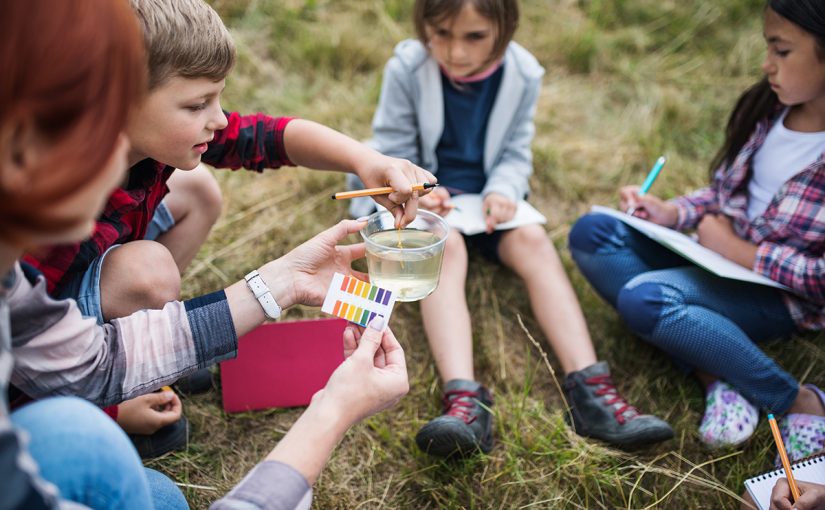
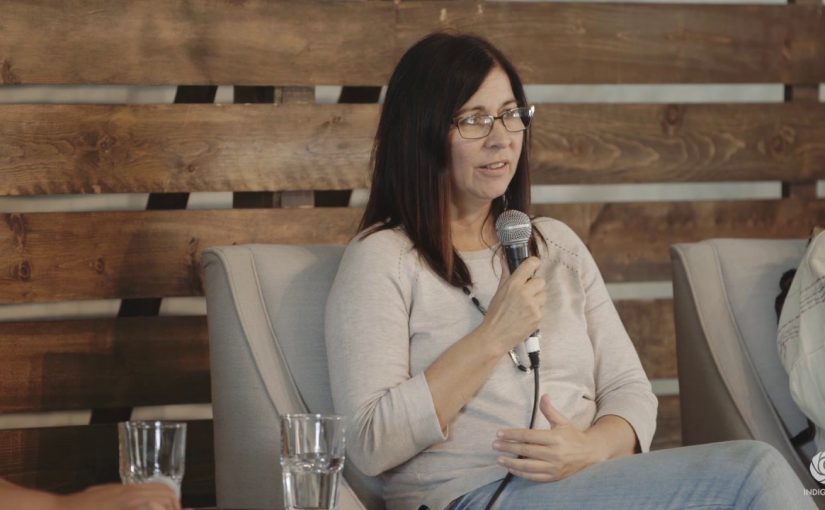
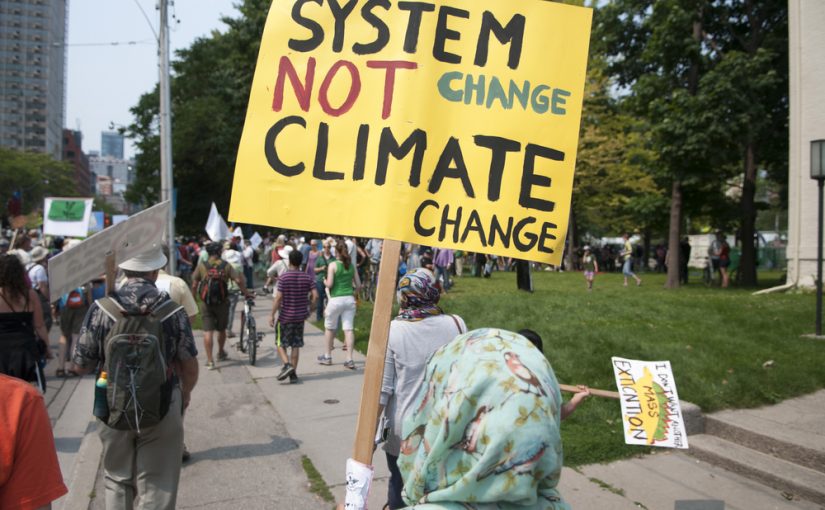
Environmental literacy and social justice are inextricably linked, and recent changes in California’s curricula fully encourage pedagogical exploration of this linkage. Three new academic content frameworks (in Science, History-Social Science, and Health) promote challenge-based learning, in which student inquiry leads to student action in local communities. Students are also discovering nature-inspired design, i.e. Biomimicry, as part of this process. In this session, a school district representative, a teacher, and a student, share their perspectives about this intersection of environmental literacy and social justice. The panel also leads hands-on immersion into the Biomimicry design process with a focus on ways to apply these methods in our own schools and communities.
With: Beth Rattner, Biomimicry Institute; Juanita Chan, Rialto Unified School District; Kavita Gupta, Freemont Union High School District. Moderated by Emily Schell, Executive Director, California Global Education Project; Caleb Jordan-McDaniels, Redwood High School.
This piece was originally published on the Food Tank website. Food Tank is a nonprofit organization focused on building a global community for safe, healthy, nourished eaters.
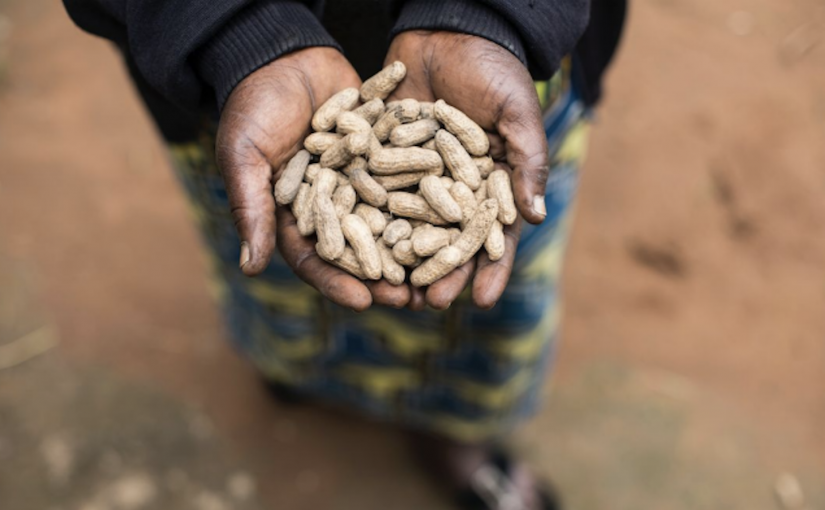
In northern Uganda, nestled in the Western Rift Valley homelands of the Acholi people, Immaculate Omona grows a local groundnut (peanut) variety called Acholi valencia. High yielding and drought tolerant, this variety reliably provides essential nutrients her family depends on. However, this plant provides more than just food, it also embodies her culture, telling a story of resilience and survival.
For many years the north of Uganda was plagued by a brutal warlord named Joseph Kony. Kony and his Lord’s Resistance Army (LRA) predated on the people of Uganda, abducting tens of thousands of children in his campaign of mutilation, torture, slavery, and rape. His horrific reign of terror led to millions being relocated to Internal Displacement Camps for over 20 years. It is at one of these camps that Omona’s aunt waited for the terror to stop. For these 20 years, she saved a single family heirloom, the Acholi valencia. Every year, she cultivated this plant on the side of the camp, growing enough to keep it alive, furthering the very essential characteristics that make it unique. Even during the war, she understood the significance of this variety and did everything she could to keep it alive.
Vicky Lokwiya
However, it is not just wars that threaten the world’s biodiversity. African governments are giving in to corporate pressure to adopt laws that deny farmers’ rights to save, plant, exchange and sell their own seeds. Well-funded promotion, subsidies, coercion, and advertising are being deployed in an attempt to roll out industrial seeds designed for monocultures and chemicals and to displace farmers’ varieties suited to organic farming. The end goal is clear: to prevent farmers from saving seeds so that they buy corporate hybrid seeds instead.
Today, Omona is committed to scaling up her production and is creating a local market for this variety. Supported by farmers’ organization, the Eastern and Southern African Small Scale Farmers Forum (ESAFF), she has already shared these seeds with many farmers in her community. Omana explained, “we have our seed bank; now we don’t wait for government or private seed companies to distribute seeds which often come too late in the season. We are now planting good indigenous seeds at the right time and getting good yields.” These seeds provide more than just good yields; they weave the cultural fabric of their indigenous community.
Across Africa, this story is echoed as seed saving resists the cultural erosion that industrial agriculture thrives on. Behind every seed is a story. Encoded in their DNA is a rich history of folklore and cultural tradition. With the onslaught of the so-called Green Revolution, these traditional varieties are being lost, forgotten and discouraged by governments and some development NGOs. This has resulted in a form of ecocide where for many crops up to 80% of these local varieties may be lost forever. Seed banks are paramount to protecting this vanishing biodiversity and are the foundation for local food sovereignty. Across the world, farmer organizations, like ESAFF, are critical to building and maintaining these vital seed banks.
A local seed variety is developed by the community for the community, in concert with the needs of the community. As seeds are selected each season to be planted the next year, they are chosen for a reason. That reason might be pest resistance, drought tolerance or high yield. These precious varieties were developed over millennia by unnamed scientists – the farmers – and they hold the answers to growing food with a changing climate and the inevitable extreme weather events that follow. Additionally, these varieties have been a crucial part of local culture, providing a diverse and healthy diet according to local tastes and traditions.
Okra variety: Otigo Tung Lacwar
There is an okra variety called Otigo Tung Lacwar—the horn of the antelope—a drought-tolerant seed that Vicky Lokwiya got from a friend and now cultivates and shares with other farmers. Lokwiya is the secretary of a seed saving group in St Mauritz parish. She has been with this group for 25 years now and is a mentor to many of the members. Watching her walk the farms of her fellow women farmers, she is a living library, remembering every detail about these seeds. She shares this knowledge freely as she walks the living seed banks, inspecting leaves and pointing out how the government seeds—the hybrids—fail to perform. “I think the hybrid seed is the one bringing us diseases we were not suffering from before,” Lokwiya explains. “We had been fooled for so long by private companies and some government officials that our indigenous seed system was backward. Now we have shown them that small-scale farmers can collect, multiply and store seed safely under good quality control.”
The seed savers are organized around village savings and loan groups, where members pay into the collective. To illustrate just how much the group has grown in size and value, she says when they started the members contributed 800 Uganda Shillings in dues for the first year. By the year 2000, the members contributed over 500,000 UGS; today it is close to a million. The money is used to create a collaborative support network for farmers in need, as well as take care of health services.
Group member Beatrice Akello explained how this made a difference, “I used to buy seeds very expensively, yet I didn’t always have money given the other social responsibilities that I have as a widow. Now I sometimes sell seeds. What a good feeling – I am independent!”
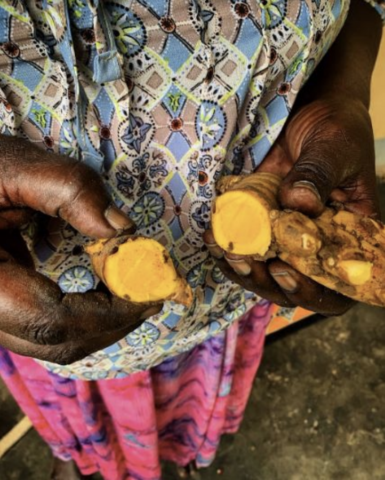
Vicky Lokwiya holding turmeric variety Bizali
Before the war, local turmeric was grown in the area called Bizali. It is rich in color and flavor but since the war had been removed completely from the local diet. However, Lokwiya found this variety alive in the bush, after 20 years of being left for nature to maintain. Amazed at how this variety continued to survive, she is now committed to not only growing this crop but educating her community on its various health and medicinal benefits.
After the war, many were given land around 4 kilometers away. Instead of waiting for assistance from the World Food Programme, the community wanted to grow their own, and especially cultivate the varieties that were developed by their ancestors. Unfortunately, unlike the Bizali, many crops were lost forever.
Lokwiya points to a cassava hybrid that the government was promoting and laughs as she compares it to a local variety called Oroo Ki Raa that towers over the hybrid even after a dry year. She notes this cassava variety disappeared during the war, but she has since found it again and is on a quest to promote it to her local communities. Oroo Ki Raa does not get spoiled after six months when the hybrid varieties are already rotten. Instead, it has a rich flavor and is drought tolerant. Lokwiya points out that even if animals eat the leaves, the cassava still produces a healthy crop. Seed saving groups empower women like Lokwiya to increase family food and nutrition security while boosting incomes. Here in northern Uganda, women are on the frontlines of climate change adaptation, working heroically together to meet the many challenges they face by affirming their rights to save, use, exchange and sell their traditional seeds.
Kerry Brady, the co-founder and Director of Ecology of Awakening, is a trauma-informed facilitator and deep ecologist who focuses on supporting the shift in consciousness needed to create a truly regenerative culture.
I find myself gathering resources that speak to themes such as letting go, vulnerability, radical care and staying close to the Earth. As I continue to take in unfathomable stories of burning landscapes, unexplained assassinations, political shams and the pain of those most invisiblized, such as our local homeless encampment here in Sonoma County, I fluctuate, like so many, between anger and despair, shock and the desire to distract. And yet, I return, over and over, to the underlying posture we are invited to adopt as we continue to show up for our world.
The posture is about turning in – tending to ourselves, turning towards our grief, healing our inner divisions and opening to the vulnerability that comes with uncertainty. It’s about moving from struggle and resistance to ‘opening to what is’, staying close to our hearts and each other in the process. I know for me there is a visceral shift that happens when I move from resisting the reality of these times to embracing the fact that we are not actually meant to get out of this mess. We are not meant to get back to where we were, with systems, ideologies and attitudes aimed solely at progress. Something new is being demanded.
We are in the midst of a collective rite of passage that, by default, means we are confronting our demise and cannot hold onto certainty (as if we ever could). As philosopher and teacher Bayo Akomolafe suggests, “Now the transience of nature is calling us into question. It’s like the red carpet is being stripped from under us and we’re being invited to fall like seed into the Earth….If we win at this, we’ve failed. The logic of mastery needs to be composted.“ We are invited to deconstruct – ourselves, our systems, our ways of being and belonging to the world – as we re-align and re-member our way forward.
Photo By Brock Dolman
And this, of course, takes courage, which as research professor Brené Brown reminds us, is inseparable from vulnerability. As she says, there is no act of courage that is “not completely defined by vulnerability.” This is echoed by civil rights activist and faith leader Valarie Kaur who eloquently suggests that “revolutionary love is the call of our time.” The greatest reforms in our history were rooted in love. “Not love as a rush of feeling, but love as sweet labor, fierce and demanding and imperfect and life-giving, love as a choice that we make over and over again.”
When we tend to our hearts, ground in the Earth and let the tears flow, we create more space within to show up for each other and the Earth in a new way. This is the invitation of Ecology of Awakening programs: to reconnect with ourselves, each other, the Earth and the deep time perspective that will carry us through to a new way of belonging, to ourselves and the world. By coming together, in community, and opening to the greater whole, listening and responding to the myriad ways that we are ‘acted upon’ and whispered to in any one moment, we renew ourselves, strengthening our ability to navigate change, building our capacity to be a compassionate and effective presence in these times.
In a Guardian article entitled Lab-grown food will soon destroy farming – and save the planet, George Monbiot expresses his wonderment inspired by a visit to a lab in Helsinki, Finland, where he witnessed a churning yellow froth of soil bacteria powered by hydrogen extracted from water to produce flour. Monbiot claims that, “We are on the cusp of the biggest economic transformation of any kind for 200 years.” The process, known as ferming, brews bacteria to produce proteins, starches and fats. Monbiot predicts that ferming will solve the ills of our industrial food system and “create astonishing possibilities to save both planet and people.”
When I worked with the late John Mohawk, a Seneca elder and professor at the State University of New York at Buffalo, he told me that Indigenous people work with magic while Western reductionist science produces miracles. He defined magic as the incredible workings and wisdom of Nature and miracles as the inventions of human ingenuity. Human ingenuity can be amazing, but at times, works against or discounts Nature. The costs of the kind of miracles that exploit instead of work with nature, increasingly outweigh the benefits in human and environmental terms. I’m skeptical of the promises that come with those technologies that manipulate Nature to perform like a machine.
Doniga Markegard of Markegard Grass Fed raises cattle on 10,000 acres on multiple ranches north and south of San Francisco using holistic management practices. She is healing ecosystems, restoring native plants, sequestering carbon and increasing biodiversity while producing healthy food. Markegard accomplishes all this by mimicking the natural patterns of the elk herds that created the fertility in the first place. Should she trade in her cowgirl hat for a lab coat and her coastal prairie for a collagen scaffold (used to engineer “meat” in the lab)?
A question rarely asked in the miracle worker’s quest for novelty is, “What are the unintended consequences?” In holistic management, in the design stage, one is compelled to explore what can go wrong and make sure that the system can accommodate course corrections.
Monbiot seems irrationally enthusiastic about the silver bullet fix that he assumes will result in “the greatest opportunity for environmental restoration in human history.” Frankly, I don’t see examples of reductionist science leading to such optimistic results. Quite the contrary, the technocratic vision of viewing life in mechanistic terms has led to many of the environmental crises that seem so intractable.
In fact, the very problems that Monbiot accurately denounces the current agricultural system as a contributor to – topsoil erosion, air pollution, water pollution, loss of biodiversity, inhumane treatment of animals and climate change – are a result of industrializing the way food is produced rather than designing the farm as a living organism embedded in and in concert with nature.
Regenerative agriculture, of which holistic management is one component, offers a real solution to addressing our climate and environmental crises while producing food by partnering with nature as opposed to lab-food, which is one more way to exploit nature. Cultivating food-producing bacteria in a lab is the same exploitive paradigm as factory farms and concentrated animal feeding operations, except in this case the life forms are microscopic.
No doubt, it takes an impressive amount of scientific ingenuity to harness microbes to produce food for humans. But the real brilliance lies in the wisdom and skill of the soil bacteria that have evolved over millennia in a community of biological cooperation with other microorganisms.
I wonder what Rudolf Steiner would think of the life force and vitality of food produced in a lab? Steiner developed biodynamic farming, which has at its essence the harmonizing of celestial and terrestrial forces that are carried through properly grown food in a healthy environment to nourish not only the body, but the spirit as well. In the book The Omnivore’s Dilemma, Michael Pollan wrote, “The way we eat represents our most profound engagement with the natural world. Daily, our eating turns nature into culture, transforming the body of the world into our bodies and minds.” How can food produced in a lab measure up to those standards?
I have no doubt that if there is money to be made, food produced in a lab will come to the marketplace whether it fixes a problem or not; perhaps there is an application for such stuff that serves humanity, but I’m not planning to make room for it on my plate. My optimism is based on the promise of soil microbes continuing to do their magic in the soil where their brilliance evolved rather than perform miracles isolated in the lab.
The real promise lies not in a technocratic vision of farm-free food, but in a transformation to an agricultural system that enhances life and produces nutrient-dense food. Regenerative agriculture starts with the idea that the soil is the basis for life and that rebalancing carbon – the building block of life – will create the platform for nature’s wisdom to continue to evolve in life enhancing ways.
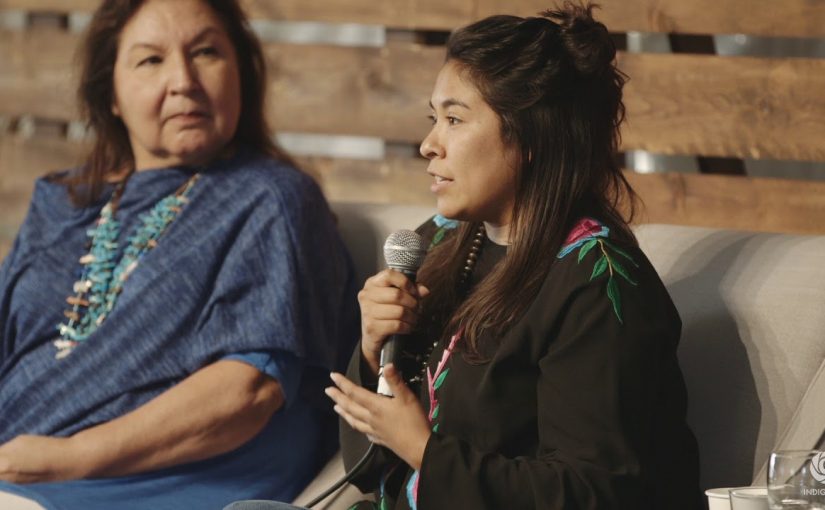
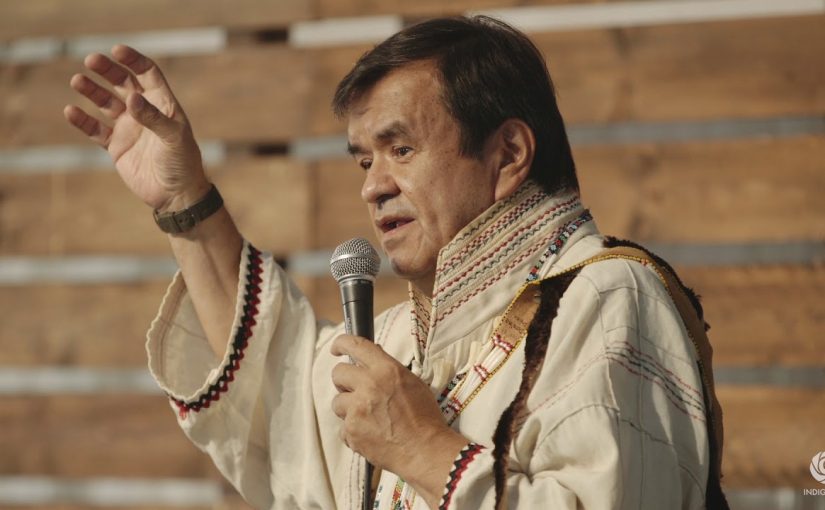
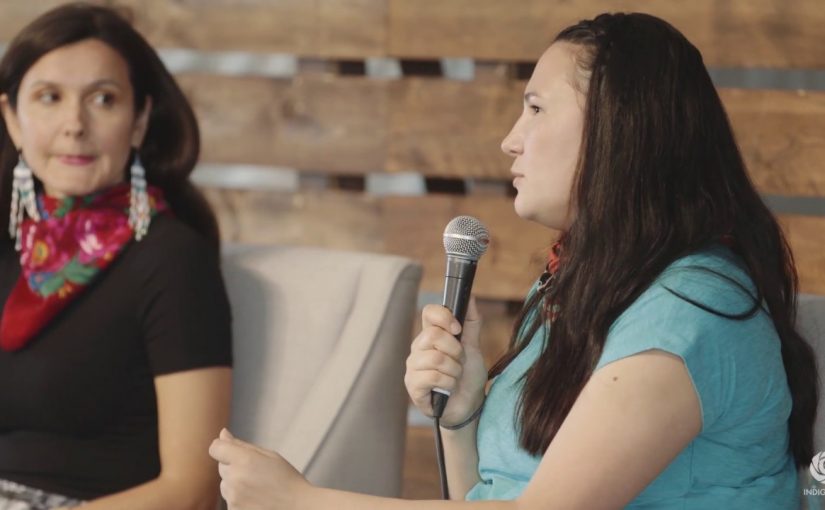
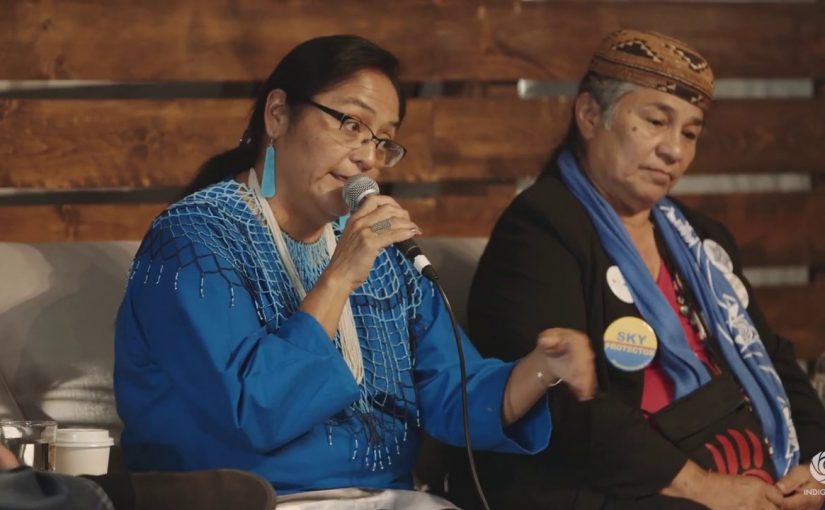
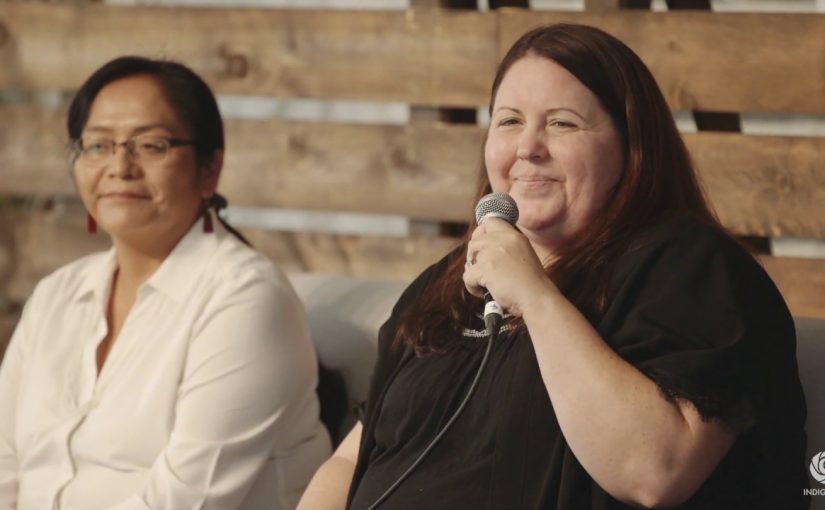
The ability to gather intertidal resources has been critically affected by ecosystem disruption. Indigenous leaders share their experiences on the frontlines of the battle to save our coasts while fighting to maintain their cultural connections to these resources.
Indigeneity is a Native-led Program within Bioneers/Collective Heritage Institute that promotes Indigenous knowledge and approaches to solve the earth’s most pressing environmental and social issues through respectful dialogue. Visit the Indigeneity Program homepage.
This presentation took place in the Indigeneity Forum at the 2018 National Bioneers Conference. Indigeneity is a Native-led Program within Bioneers/Collective Heritage Institute that promotes indigenous knowledge and approaches to solve the earth’s most pressing environmental and social issues through respectful dialogue.
Featuring Nicole Myers-Lim of the California Indian Museum and Cultural Center
This presentation took place in the Indigeneity Forum at the 2018 National Bioneers Conference. Indigeneity is a Native-led Program within Bioneers/Collective Heritage Institute that promotes indigenous knowledge and approaches to solve the earth’s most pressing environmental and social issues through respectful dialogue.
This presentation took place in the Indigeneity Forum at the 2018 National Bioneers Conference. Indigeneity is a Native-led Program within Bioneers/Collective Heritage Institute that promotes indigenous knowledge and approaches to solve the earth’s most pressing environmental and social issues through respectful dialogue.
A Just Transition affirms, restores and revitalize Indigenous lifeways of responsibility and respect to the sacred Creation Principles and Natural Laws of Mother Earth and Father Sky, to live in peace with each other and to ensure harmony with nature, the Circle of Life, and within all Creation.
Learn how Indigenous Peoples are leading the way in a just transition from Indigenous women leaders who are leading their communities away from fossil fuel dependence.
Moderated by Eriel Deranger (Athabasca Chipewyan First Nation) Executive Director of Indigenous Climate Action, and Featuring Alex Anna Salmon (Yup’ik) Village Council President Igiugig and Pebble Advisory Committee, Bristol Bay Native Corporation; and Melina Laboucan Massimo (Lubicon Cree First Nation) David Suzuki Foundation Research Fellow.
Indigeneity is a Native-led Program within Bioneers/Collective Heritage Institute that promotes indigenous knowledge and approaches to solve the earth’s most pressing environmental and social issues through respectful dialogue. Visit the Indigeneity Program homepage.
The Lakota phrase “Mní wičhóni,” or “Water is life,” was the protest anthem from Standing Rock heard around the world, but it also has a spiritual meaning rooted in indigenous worldviews and our connection to nature. For Native Americans, water does not only sustain life – it is sacred. As grassroots collectives fight all over the world to protect our rivers and watersheds, we must always remember to honor the spiritual foundations underlying these battles. Water is life.
Moderated by Clayton Thomas Muller (Mathias Colomb Cree), Activist, Writer and Public speaker ; and, featuring Caleen Sisk (Winnemem Wintu), Spiritual Leaders and Tribal Chief Carletta Tilousi (Havasupai), activist and Tribal Council Member; Carrie “CC” Curley (San Carlos Apache) Apache Stronghold Water Protector.
Indigeneity is a Native-led Program within Bioneers/Collective Heritage Institute that promotes indigenous knowledge and approaches to solve the earth’s most pressing environmental and social issues through respectful dialogue. Visit the Indigeneity Program homepage.
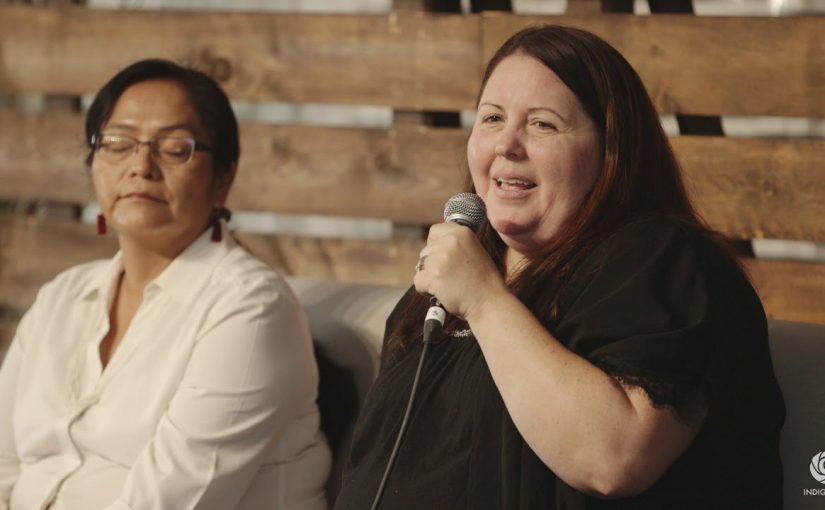
Despite its widespread use in Indian country, the concept of sovereignty is often misunderstood. In this provocative panel, Native American grassroots leaders explore the nature of inherent and tribal sovereignty for environmental protection, economic development and more.
Featuring: Michael Johnson (Arikara/Hidatsa/Ojibwe), Native American Rights Fund; Nicole Myers-Lim (Pomo), CIMCC Executive Director; Carletta Tilousi (Havasupai), Activist and Tribal Council Member; and, Cara Romero (Chemehuevi), Bioneers Indigeneity Program Director.
This presentation took place in the Indigeneity Forum at the 2018 National Bioneers Conference.
Indigeneity is a Native-led Program within Bioneers/Collective Heritage Institute that promotes indigenous knowledge and approaches to solve the earth’s most pressing environmental and social issues through respectful dialogue.
This article contains the content from the 2/06/2020 Bioneers Pulse newsletter. Sign up here to get the newsletter straight to your inbox!
“The scale of the problem is such that we need an equally sizable solution to make it work.” —Demond Drummer, co-founder and Executive Director of New Consensus, on the climate crisis and the Green New Deal.
The environment and economy are inextricably linked, and we cannot fight the climate crisis without reforming the systems that continue to profit from it.
Demond Drummer is one of the true intellectual architects of the Green New Deal. In his keynote speech at the 2019 Bioneers Conference, he draws from the history of FDR’s New Deal, the WWII mobilization, the moonshot of the 1960s, and the Civil Rights Movement to explain the critical importance of the Green New Deal as the next chapter of the American story.
We recently talked to Demond about what the success of the Green New Deal looks like, and how it could shape the future of our society.
“We live in a system that took many, many years to build, and it’s going to take some time to get back. We need a systemic solution. That comes from really examining, interrogating and changing the policy and economic regime that we live in.
I think the world is possible, and all we have to do is decide to go out there and do it, and not be limited by stale thinking and by systems that were not designed to get us where we want to go. We have to identify those things that need to be thrown out, restore what needs to be kept, bring back some things that we’ve forgotten, and continue to iterate and build a society that we want.”
The Green New Deal is an idea whose time has finally come. But what will it really take to build the enduring structures, institutions and global cooperation that actually reconcile the core contradictions between markets and the public good, between dignified work and robots, between the laws of nature and principles of social and justice and economic democracy?
Following is a conversation among visionaries in economics, systems change, policy and environmental planning: Greg Watson of the Shumacher Institute for New Economics; Paul Hawken of Project Drawdown; Vien Truong, former ED of Green For All; and David Orr of the State of American Democracy Project.
We have compiled this media collection from our 30-year history to feature some of the most innovative thought leaders working on the topics related to the Green New Deal. The videos, podcasts and articles included are presented within a loose framework based on the Green New Deal’s larger goals.
A Green New Deal: A Conversation with Vien Truong On How We Got Here and Where We’re Heading
Vien Truong, former President of the DreamCorps, has worked tirelessly to bring equity, social justice and climate justice to the frontlines of the environmental movement and public policy. Prior to her role at Green For All, Truong was a central force in the effort to put environmental justice at the center of California’s groundbreaking climate policy mechanisms and cap-and-trade funding.
Bioneers’ Teo Grossman spoke with Truong about the potential future of the Green New Deal proposal and how California’s climate action can serve as a template for national progress.
As the climate change movement leaps to the center of political, cultural and economic urgency, we’re confronted with two crucial questions: Who will we take with us? Who will we leave behind? This issue is now about more than just saving the planet as it is united with the goal of slashing poverty. Featuring Van Jones, activist and co-founder of Dream Corps.