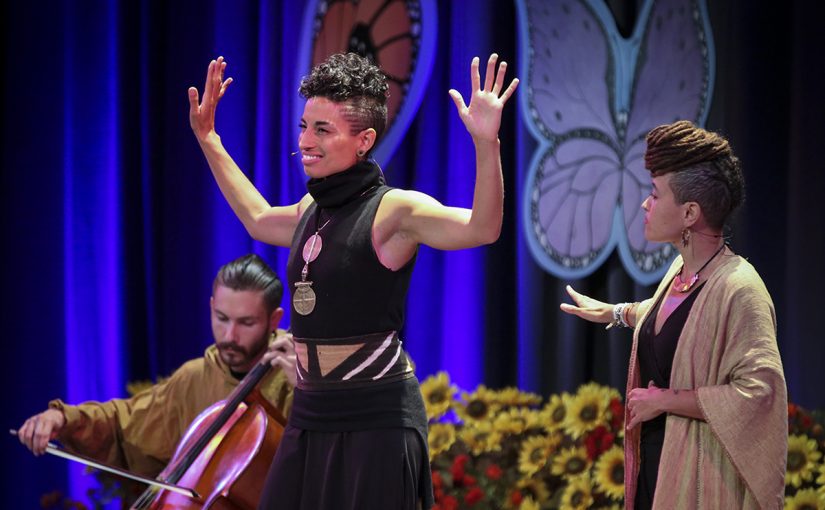
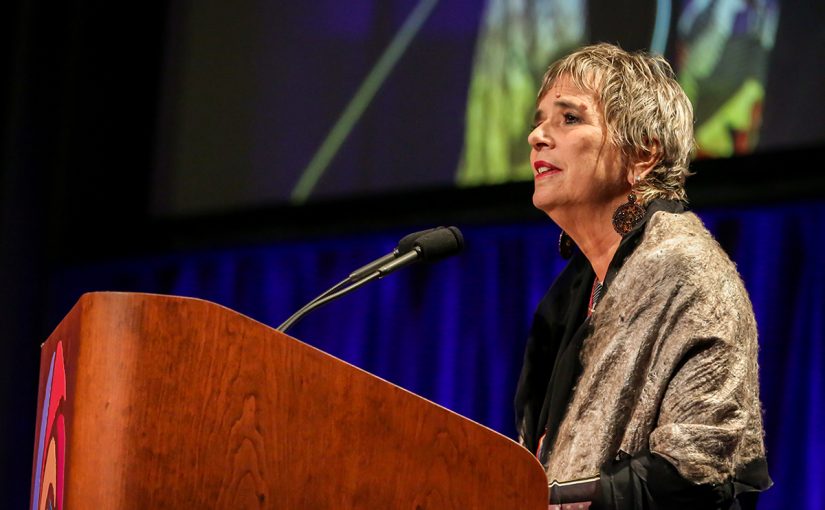
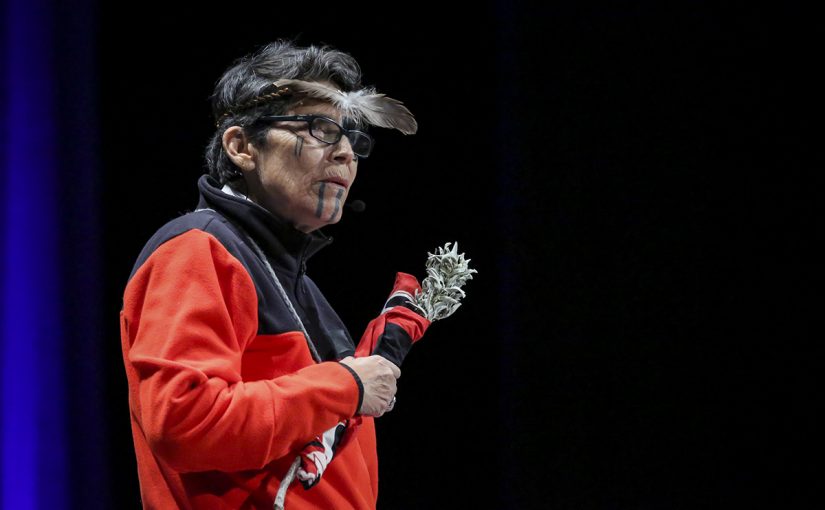
Tim Merry: Holding Up a Mirror to the Moment (Day 1)

Slam poet Tim Merry weaves highlights of Bioneers Day 1 into bardic verse.

This performance took place at the 2019 Bioneers Conference.


Tim Merry works with major businesses, government agencies, local communities, and regional collaboratives to help engender breakthrough systems change through coaching, training, keynote speaking, engagement, and facilitation designed to energize and shake up the status quo. Tim is also a traveling spoken word artist inspired by poets from the ancient Anglo Saxon oral tradition all the way through history to modern poets such as Kate Tempest.

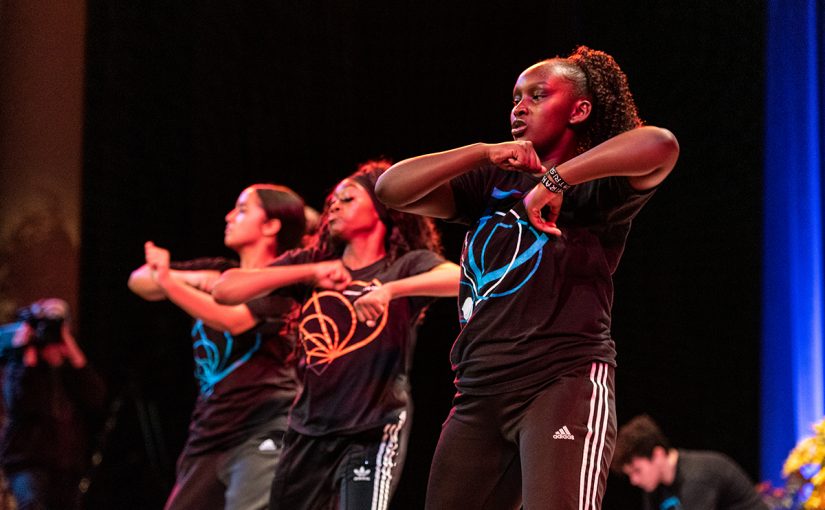
Destiny Arts Youth Performance Company | Bioneers 2019

A performance by Oakland’s own incomparably dynamic and uplifting Destiny Arts Youth Performance Company.

The Destiny Arts Youth Performance Company’s extraordinary energy, brilliant choreography and inspired lyrics have been rocking the house at Bioneers for many years. A program of Destiny Arts Center, an Oakland-based violence prevention/arts education nonprofit, the company is a multicultural group of teens that creates original performance art combining hip-hop, dance, theater, martial arts, song, and rap. It has performed locally and nationally since 1993 and has been the subject of two documentary films. DAYPC’s artistic directors are: Sarah Crowell & Rashidi Omari.

Learn more about Destiny Arts at https://destinyarts.org/

This performance took place at the 2019 Bioneers Conference.

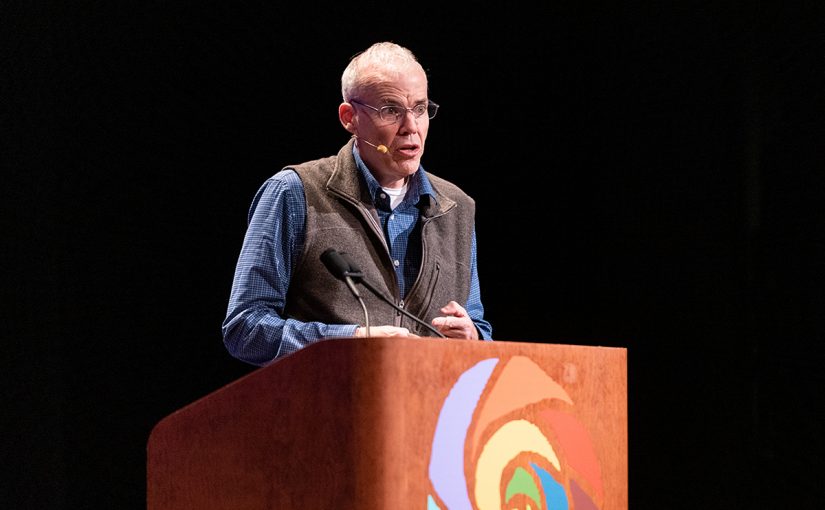
What We’ve Learned About Climate Change in the Last 30 Years | Bill McKibben

This keynote talk was given at the 2019 Bioneers Conference.

Bill McKibben explores: What lessons can we draw from three decades of struggles to address the existential threat of climate disruption? What do our failures reveal about the flaws of our political system and the economic nihilism of the fossil fuel industry? What strategies are most likely to lead to greater success to save our species from itself?


Bill McKibben, our nation’s most significant environmental activist, is also a leading journalist, author and academic. A Scholar in Environmental Studies at Middlebury College, Bill’s The End of Nature (1989) was the first book for a general audience about climate change. A founder of 350.org, the first planet-wide, grassroots climate change movement, he has won slews of prestigious awards, including the Right Livelihood Award and the Gandhi Prize and Thomas Merton prizes.

To learn more about Bill MicKibben, visit his website.

Read the full verbatim transcript of this keynote talk below.


Transcript

Introduction by Kenny Ausubel, Bioneers CEO and founder.

KENNY AUSUBEL:

1989 marked a hinge historical moment. Bill McKibben published The End of Nature, the landmark book that broke the ice on global warming by reaching a national popular audience. Just months earlier, NASA climatologist James Hansen had given his first urgent testimony before Congress as the Paul Revere of global warming. He implored the nation’s political leaders to seize the decade of the ‘90s to start winding down our fossil fuel accounts to avoid runaway climate change.

In 1989, instead of its usual person-of-the-year edition, Time magazine made endangered Earth its planet of the year. There was a national awakening to the escalating hotlist of global environmental crises – freshwater scarcity, toxics, biodiversity crash, public health threats, archaic infrastructures, environmental justice, wealth extremes, and on and on. A focus on solutions began to arise from every corner of the country. Civil society surged with a renaissance of burgeoning social movements, NGOs, and citizen action. Bioneers was born amidst that ferment in 1990.

Jim Hansen had hoped to provoke a national mobilization. He did, but it came from above all, from Exxon and the fossil fuel industry, which spent the next 30 years sowing doubt and delay. It was the biggest and most expensive disinformation campaign in history. It was a catastrophic success.

Simultaneously NAFTA unleashed corporate economic globalization, triggering the insatiable plunder of every corner of the planet. Then as now, it’s the same old song. It’s the corporations, stupid. Just 100 companies called carbon majors account for 71% of all greenhouse gas emissions since the beginning of the Industrial Revolution. And half those emissions have occurred since 1990, well after the industry knew full well what the consequences would be. Then as now, it’s social movements and civil society that have risen to challenge the destruction.

As a renowned and influential journalist and author, Bill McKibben dared to cross the bright red line separating journalism from activism. He understood that climate disruption is so existentially threatening that remaining a dispassionate observer was fundamentally immoral. While still penning a stream of influential books and articles, and managing an impressive academic career, in 2007, Bill launched Step It Up, a series of climate actions including calls for green jobs, which was a precursor to the Green New Deal.

The following year, he co-founded 350.org, the first planet-wide, grassroots climate movement. Its creative mobilization strategies have generated the most viral activist campaigns in history. It’s helped mobilize effective resistance to Keystone and many other oil pipelines. It helped launched the mushrooming fossil fuel divestment movement and produced the immense global Climate March.

Equally important, Bill has helped pave the way for the Gretas and the Xiuhtezcatl Martinezes, and the countless other young people who are the emerging global climate leaders who have come together as a generation in ways and at scales never seen before.

Bill is an improbable activist. His temperament is not that of a rabble rouser or an agitator. He’s the classically reasonable New England professor in the town square, a brilliant but rigorous restrained and acutely precise speaker and thinker, which is exactly why he’s so effective. He’s too honest, too earnest, too compassionate, too respectful, and way too knowledgeable to peddle simple ideologies or 50 simple ways to solve the climate crisis.

Bill first spoke here at Bioneers in 1996, and he’s returned many times since. It’s been an honor and joy to know him, and to witness and share his remarkable trajectory. He’s authentically modest, and probably uncomfortable with the attention and praise. A solitary stroll through his beloved Vermont woods is likely far more appealing, but Bill has a mission, and it’s our blessing that he does. Please join me in welcoming one of our living treasures who’s changing the political climate to create a very different kind of global warming, Bill McKibben. [APPLAUSE]

BILL MCKIBBEN:

Kenny, Nina, thank you for keeping this family going and growing for 30 years. This is the 30th birthday of Bioneers. That’s amazing.

And of course, as Kenny says, for me that’s a very resonant number because it was 30 years ago this month that I published The End of Nature, the first book about climate change. I was a young man at the time – 28. I’m an old man now. There are days when I feel old beyond my years.

One of the things that old people do is try and sort of keep a tally of how things went, try and sum up. I try not to do that. I try not to keep score. I try not to wake up in the morning and decide whether I’m optimistic or pessimistic, because I don’t see the point of it. It’s enough to get up in the morning and figure out how much trouble you can cause. [APPLAUSE] Still… Still, there are moments when some tallying is in order, and I’m going to do a little bit with you today, and it’ll be a little hard at first, and a little easier after that.

It’s hard not to keep score with climate change because the numbers are right there. We have a day-by-day account of how much carbon dioxide there is in the atmosphere from the monitors on the side of Mauna Loa. And we have a month-by-month account of how much the temperature is going up. The CO2 levels in the atmosphere are now higher than they’ve been for tens of millions of years. The temperature is higher than it’s ever been in human history. July was the hottest month ever recorded on planet Earth. Okay?

And the speed with which this has happened in remarkable. Thirty years ago, we were still issuing warnings about what was going to happen if we didn’t take action. Since we didn’t take action, we’re now issuing bulletins from the frontline every day. People here need no reminder of that. In Northern California, we literally shut down the power to millions of people last week in a kind of frantic effort to somehow keep large swathes of one of the richest places on Earth from catching fire.

Let me show you a couple pictures from a trip I organized last year up to Greenland, which of course is a stunningly beautiful place, the great storehouse of ice in our hemisphere, a place of just unmatched splendor. The ice sheet in many places is a couple of miles deep. It covers the biggest island on Earth. And of course it’s melting, and melting fast, and that’s hard to look at, hard to see. I don’t know whether you can make out that image or not. It’s a boat that sort of organized for the expedition, I’ll tell you about in a minute. As you can see out the front, there’s open water all around. I was standing behind the pilot and I was looking up at his electronic chart, and you perhaps can see the cursor that represents where the boat is is a couple of miles inland on solid land. I pointed this out with mild trepidation to the captain [LAUGHTER] and he laughed and said, “Oh, don’t worry, the chart’s five years old. Everything around here was frozen as far as you could see.” Five years ago. Okay? Not frozen anymore.

I was there because I had wanted to organize a way to get these two women up onto that ice sheet. The one on the left, Kathy Jetnil-Kijiner, I think has been here in the past, and is a remarkable poet. One of the great poets in the world. She hails from the Marshall Islands in the South Pacific, one of the places that is literally…I mean, the highest point in the Archipelago is a meter above sea level, which is not a good place to be on a rapidly warming planet. She recruited the woman in black, Aka Niviana, a Greenland native, and together they performed this poem up on the ice that’s been seen by lots of millions of people up on YouTube.

I wanted them there because I wanted Kathy standing on the ice that when it melted would drown her home. And I wanted to try and drive home that, and she did a beautiful job. The poem is full of rage, as one would expect, but also of generosity and of an understanding that all the rest of us are following along this same trajectory.

Even for me, who spent as long as I have thinking about all this, it’s hard sometimes to imagine how fast it’s happening. [VIDEO PLAYING] I’m going to just show you a picture that I shot with my cellphone from the front of a helicopter as we were…as we were changing the batteries on one of these instruments that science has used to record the rescission of the glacier. It’ll take a minute to get to the good part as we kind of go over the fjords. Let me just use that time to say what we need always to remember is that climate change is by far the biggest thing that humans have ever done. It is our single biggest achievement, if that’s the word you want to use, as a species, to have fundamentally altered the chemistry of the atmosphere and with it the temperature of the planet, and with that the…with that to have altered every square meter of the Earth’s surface.

We’ve now lost 50% of the summer sea ice in the Arctic, in the last 30 years, in the time that we’ve been coming to Bioneers. Okay? The world, if you look at it from a satellite, looks entirely different than it did 30 years ago. People are supposed to get old over 30 years, but planets are not supposed to get old over 30 years, to change in that kind of way.

That sheet of ice at the snout of this glacier is 120 feet high, so a 12-story building. And just keep an eye—Just as we happen to be going over, this 12-story building just started letting loose. And those waves are 50, 60, 70 feet high. The pilot was a little trepidatious, but I encouraged him to circle once just to kind of…I wanted to…I wanted to watch this because it has a sinister beauty to it, like all things that happen on our planet, and because it is a reminder of what is going on every second, of every minute, of every hour, of every day on planet Earth, and every time that happens, the height of the ocean rises some tiny fraction of a millimeter and we’re a little closer into the New World that we are building with such stunning speed.

The Earth’s temperature has gone up about one degree Celsius. That’s been enough to cause an almost amazing change, a set of consequences. The oceans are 30% more acidic than they used to be. The world’s hydrological cycles are completely akimbo already. We’re seeing record drought [VIDEO ENDS] evaporation and drought, and hence setting the conditions for massive fires. Once that water is evaporated up into the atmosphere, it comes down, and so we see record flood. All the time, every day now, some place we’re setting new records and all of them grim.

The last year we recorded the highest reliably recorded temperatures on planet Earth. It got to 129 degrees Fahrenheit in a series of cities across the Asian subcontinent and the Middle East – 129 degrees. You can survive for a few hours, but after that, your body just can’t cool itself off. We’ve raised the temperature one degree so far. We’re on a trajectory at the moment to raise the temperature three degrees Celsius, five, six degrees Fahrenheit. If we do that, the scientists are very clear, it’s not hard to calculate, that that 129-degree temperatures will be common for weeks a year, across vast swathes of this country, much of India, the North China plain, on and on and on. Billions of people will not be able to live where they live. The UN estimates that if we allow this to happen, we can expect a billion climate refugees in the course of this century.

Look, a million refugees was enough to utterly discombobulate the politics of our country. Multiply it by a thousand and try to imagine the planet on which we’re living. Our job, the only job, for our time is to make sure that that does not happen, that the temperature does not go up any more than it has to go up.

There are some things that let us think it might be possible. The engineers have done their job as well as the politicians have done theirs badly. In the last 10 years, we’ve watched the price of a solar panel and a wind turbine just plummet. They cost a tenth of what they did a decade ago. And thanks to that gift, if we wanted to go to work, if we wanted to move at speed, we could. We’re in a position now to really move.

And we have a movement to help make that happen. A lot of that movement’s been born here in this place with people who have—I’ve been—just arrived and I’ve only been here a half an hour but I already saw Eriel Deranger and Clayton Thomas-Muller and Tom Goldtooth, and all sorts of people who built so much of this movement at the beginning. [APPLAUSE] I saw great prophetic voices like Terry Tempest Williams and Brooke already this morning, just people who have allowed us to understand the world.

When that movement began, it was small. It was indigenous people, it was climate scientists, it was faith communities, it was the sort of hardcore Bioneers people like that, but it has grown fast. We’re at the 10th anniversary this month of the first big day of global climate action when 350.org organized 5200 simultaneous demonstrations in 181 countries. That was great [APPLAUSE] but those demonstrations were small. There were 500 people here, and a thousand people there, and 10,000 people here. Now the demonstrations that we all organize are big. September 20th, this climate strike, saw seven million people in the streets around the world. [APPLAUSE] And so much credit to the young people who are sparking it, who are making it happen. [APPLAUSE] There is—

It’s been great fun to hang out with Greta Thunberg in the last month, but I’ve got to tell you, there are a thousand, 10,000 Gretas all over the planet, and they’re doing amazing work. [APPLAUSE] So that’s good. That’s good, but there is something mildly undignified about taking the biggest problem the world ever faced and assigning it to junior high school students to solve. [LAUGHTER] [APPLAUSE] So time for everybody else to step up their game.

So we have a crisis. We have a solution of sorts. There are many solutions, all the things that—But let’s use wind and sun as a kind of stand-in for all the thousands. We have solution. We have a crisis, we have a solution, we have a movement, and we have a foe. And let’s be very clear about that. We’ve learned a lot about—over the last 30 years, about what happens in this world when money and greed keep us from moving as we need to move. As Kenny said, we’ve learned from great investigative reporting that the big fossil fuel companies knew everything that there was to know about climate change in the 1980s, before I did. They knew everything. Exxon was the biggest company on Earth. It had a great staff of scientists. Its product was carbon. Of course it knew. We found now the documents in archives that demonstrate with uncanny accuracy that its scientists were predicting exactly what the temperature would be in 2019, and what the atmospheric concentration of CO2 would be, and they were spot on. Not only that, they were believed by the executives at Exxon. Every drilling rig that the company built they built higher to compensate for the rise in sea level they knew was coming.

What they did not do was tell the rest of us. Instead they invested billions of dollars in building this architecture of deceit and denial and disinformation. So that’s why it’s good that so many people have stood up, that so many people have gotten in the way of pipelines and frack wells and coal mines. We don’t win all those battles, but we win a lot of them. And even when we lose them, we slow down this onslaught. And every month that we slow it down is a month that the engineers drop the price of a solar panel another percent or two.

It’s very good news that people have tried to get in the way of their finances. The divestment campaign that so many people helped with. [APPLAUSE] We celebrated last month the moment when we went past the $11 trillion mark in endowments and portfolios that have divested from fossil fuel. [APPLAUSE] That was a good moment, but the really good moment was reading Shell’s annual report this year where they said that divestment had become a material risk to their business. Okay? [APPLAUSE] So…

So let me just, in the couple of minutes I’ve got left, just give you the shortest preview of what comes next. Okay?

There are two big centers of power in the world of politics and money. People are doing a great job trying to take on Washington. The young people at the Sunrise movement, many of them veterans of that divestment campaign who have formed the Green New Deal platform and are pushing hard for it, are doing enormous good work, and they need all of us behind them in what’s obviously going to be an election…with…forget it. [LAUGHTER] We’ve got to do what we’ve got to do in the next year, and there is no question about it, so we will do what we can.

The other center of power in this world is the financial world. We started down that path with divestment, but we are broadening that path. There are people like Eriel and Clay and others who’ve been working on the big banks for decades. Okay? But we’re all going to start working on them I hope now.

I had a piece in the New Yorker six weeks ago about the way the money they provide is the oxygen on which the fires of global warming burn. Okay? Chase bank, the biggest of them all, has lent $196 billion to the fossil fuel industry – these good numbers from Rainforest Action Network – over the last three years. They’re lending went up after the Paris Climate Accords. Every bad project you’ve ever heard of, they and CitiBank and Bank of America and Wells Fargo, all deep involved in. So that’s bad.

The good is we can fight them. Not everybody’s got a pipeline or a coal mine in their backyard to go fight, but you know what? Chase has conveniently located 5,000 branches across America in the highest traffic locations imaginable. Keep your eyes open for the signal about the day that we need you to be there. [APPLAUSE] Chase…Chase has passed out tens of millions of credit cards around the country. Probably there’s lots of people in this room who have one in their wallet. Everybody who has a Chase card also somewhere in their home has a pair of scissors and [LAUGHTER] we’re going to ask you to use them. [APPLAUSE]

We’re going to go figure out the ways to go at the absolute heart of global capital. It’s going to be a hell of a tough fight. It may be one of the kind of ultimate fights in this ongoing effort to salvage the planet. Stay tuned. [APPLAUSE]

I’ve given you the setup. I’ve given you the setup. I’m not going to tell you what the outcome of all this fight’s going to be. And the reason I’m not going to tell you is I do not know. This is a fight different from the fights that humans have been in before because it is a time test. If we do not win soon, we do not win.

Dr. King used to close speeches by saying, The arc of the moral universe is long but it bends toward justice. The arc of the moral universe is long but it bends toward justice. This may take a while, but we’re going to win. The arc of the physical universe is short, and it bends toward heat, and if we do not win soon, then we do not win. And by soon, I mean soon. There’s not going to be another 30 years before we know whether we did what we needed to do or not. In a much shorter time than that, in a time when everybody in this room is—with any luck will still be alive, we’re going to know whether or not we did what we needed to do when faced with the greatest challenge that human beings have ever been faced with.

I’m not going to tell you how it comes out, because I don’t know. I am going to tell you, because I’ve seen it for 30 years now in every corner of the planet and no place more than this corner, I am going to tell you that there is going to be a fight, and that fight is our fight, and it is such a privilege to just get to do it shoulder to shoulder with y’all. Thank you very much. [APPLAUSE] Thank you. Thank you. [APPLAUSE]

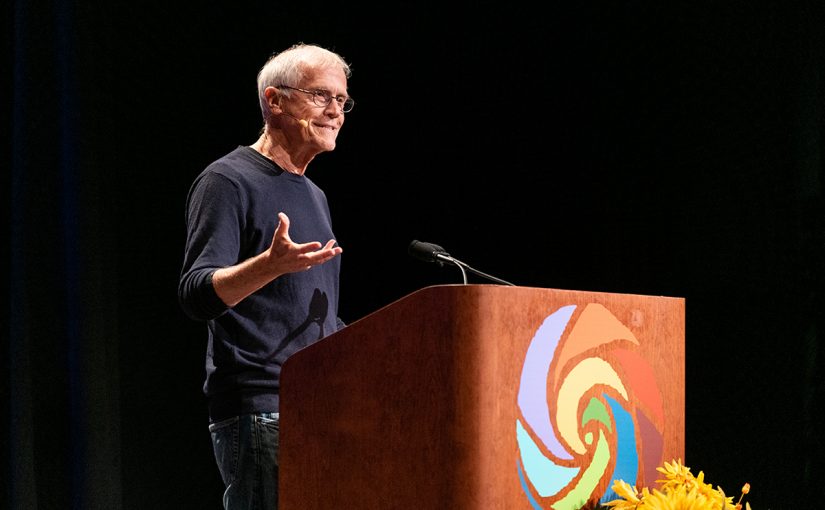
Drawdown: The Most Comprehensive Plan Ever Proposed to Reverse Global Warming | Paul Hawken

This keynote talk was given at the 2019 Bioneers Conference.

The visionary goal of Project Drawdown, founded by Paul Hawken, is to actually reverse global warming by drawing carbon out of the atmosphere back down to pre-industrial levels. All the practices and technologies documented in Paul’s best-selling Drawdown book are already commonly available, economically viable, and scientifically valid. The true power of Drawdown is its holistic nature. Doing what’s right for the climate means doing the right thing across the board and will also create abundant, meaningful jobs and a vibrant green economy. For over 30 years, Paul has been at the forefront of transformative solutions for people and planet.


Paul Hawken, one of the most important environmental authors, activists, thinkers and entrepreneurs of our era, has dedicated his life to sustainability and changing the relationship between business and the environment. His many bestselling books include such massively influential texts as: The Next Economy; The Ecology of Commerce; Blessed Unrest; and most recently, Drawdown, The Most Comprehensive Plan Ever Proposed to Reverse Global Warming.

To learn more about Paul Hawken, visit his website. Find more information about Project Drawdown at drawdown.org.

Read the full verbatim transcript of this keynote talk below.


Transcript

Introduction by Kenny Ausubel, Bioneers CEO and founder

KENNY AUSUBEL:

So Paul Hawken truly needs very little introduction, but I’m going to make this minimalist because Paul asked that we show a short three-minute video that we constructed from a talk he gave here 10 or 15 years ago that is more visionary than ever. So we’re going to intro with that.

Paul first spoke here in ’94, and he doesn’t just see around corners, he somehow manages to find the wormholes in the space-time continuum that open up parallel worlds of possibility, that somehow soon start to migrate here onto Earth One.

He’s written a string of incredibly influential, really transformative books, from Ecology of Commerce; and Natural Capitalism with Amory and Hunter Lovins about the transformation of business, which is an agenda yet to fulfill, but the map is there; to of course Blessed Unrest, which chronicles Bioneers world, the rise of social movements and civil society all over the world to become the biggest movement in the history of the world, helped us to see ourselves more clearly; and then most recently, of course, he’s done Project Drawdown, which to me is the absolute North Star of goals and possibilities, and exactly where we need to be heading here.

Paul’s intention is to actually change the climate in a much better way, that’s conducive to life. So thank you, Paul, for dreaming up these parallel worlds of possibility that can liberate this world and help us see ourselves so clearly.

So we’ll show the video and then Paul will come on. Thank you so much.

[VIDEO PLAYING] [APPLAUSE]

PAUL HAWKEN:

I want to ask you a couple of questions. The first question is: How many of you – just raise your hand – how many of you are freaked out about the climate crisis and climate change? Just raise your hand. Alright. Did anybody not raise their hand? I want to see. [LAUGHTER] Okay. Talk to me afterwards. I want to know what you know, because we obviously don’t, and that would be great. [LAUGHTER]

The other is: How many don’t believe in climate science or there’s anthropogenic climate science? Just raise your hand. [LAUGHTER] None this time. Actually it’s not meant to be a trick question, but it is. It’s like we all should have raised our hand because science is not a belief system. And it’s evidentiary. And that question or that dynamic was created by Frank Luntz and Karl Rove, and that—their intention was to make the people who were literate and understand the threat that climate change poses were believers, and that they were the rational people who don’t believe it. And it’s interesting because it’s the other way around. They are the true believers. They believe that the climatic stability of the Holocene period is going to persist for hundreds of years into the future, and there’s not one single shred of science to support that view. And so I’ll return to this in a minute later, but I mean, our languaging and how we talk to each other and about this is crucial and is critical.

The origin—I didn’t use slides today. If you come to the workshop this afternoon, lots of pretty pictures and things like that, so—And I’m also going to talk about my next book, which I won’t this morning. And I invite you to come to that. But this is really about Drawdown, the book and the project.

Its origin goes back to 2001, and it goes back to the same things that Valarie talked about. I mean, Bill talked about too, but 2001 was a strange year – 9/11 happened. And when 9/11 happened, I don’t know what happ—We all remember where we were, and after that, all’s I knew was that the world had completely changed. I didn’t know how it changed and where it was going to go and what was going to happen, but I had—was clueless. But I thought about what I was doing, and I realized that what am I going to do for the rest of my life. And I thought, I’m going to judge it by one question: Is it helpful? That’s all. I just wanted to be helpful.

There’s a definition of leadership which I love, which is leadership is actually the capacity and ability and desire to listen to all the voices, to hear and listen to all the voices. And I don’t know if I was or wasn’t then, or even I am now in some respects. I hope I am, but that is what I dedicated my life to do.

And at the same time in that year, the third assessment of the Intergovernmental Panel on Climate Change came out, and as every assessment has been before and since, each sequential assessment is more dire than the prior one. And that’s because it’s based on “consensus science.” There is no such thing as consensus science. Science is not a consensual process. You don’t watch your functional medicine guy talking to the allopathic guy, and saying let’s have a compromise here about your disease. I mean, you don’t compromise science. You may not agree. That’s different. But there’s no such thing. The consensus is being tamped down by the Saudis, by the Russians, by the Venezuelans, by the Chinese. We’re suppressing the science, and that was considered consensus science. Not at all.

And even then, though, it was dire enough, and I read the summary report, and I wanted to know a very simple thing, and I think all of us have that question, which is: Well, what to do. I get it. Science is fantastic. What to do?

And at that time, there came out that carbon mitigation initiative out of Princeton University with the stabilization wedges, the eight stabilization wedges that had 15 solutions. And everybody was sort of yeah! Good ole Princeton. Science. And I—Me too. I thought fantastic. Stabilization, wedges, whatever those are. But it sounded good. [LAUGHTER] And my grandmother made great pies. We thought of wedges too. [LAUGHTER] And apple, cherry, she—apricot pie was the best. But—And here are the stabilization pies, and… [LAUGHTER] and I looked at the solutions that basically infused them, and I couldn’t believe what I was seeing. And 11 of the 15 solutions could only be adopted by large multi-national corporations, eight of them being coal, gas and oil companies, nine being utility, 10 being a car company, and 11th being an appliance company. And there was only really one thing you could do, which was to drive less. And I thought, This is the solution?

And what was left out? What was left out was affordability. Every one of these things was deeply underwater financially, so these corporations were never going to do it. Second was left out was consumption, materialism, that was left out, not even discussed or addressed. Population was left out, completely. No one talked about population or how many or why. No discussion or the role of women, which [INAUDIBLE]. None. That’s been a hallmark of the climate movement is to pretend another gender doesn’t exist. And there was no discussion of agency, which is that, okay, this is what corporations can do, but what about individuals, what about cities, what about towns, what about farmers, what about community colleges, what about schools, what about buildings. I mean, you can go on and on, all the different levels of agency that we occupy as human beings.

There was no mention of a goal. What’s the goal? Stabilization at 550 ppm in 2050 is not stabilization. We already see at 415 ppm how unstable the climate is becoming, and we could stop right there and the instability is going to increase in the geometric not in a linear form.

And finally, there was no mention of indigenous people or people of color or diversity. I mean, it was so exclusive and occluding that I then went around and started to say to NGOs and institutions, Can we make a—understand what it is we need to do, because I don’t get what we need to do from this, and I don’t know what I can do from this thing from Princeton. And that’s—And I said, Can we also name the goal, because the goal—and to this day the goal is a verb. It’s like mitigation, fight, combat, tackle. Those aren’t goals. Those are verbs. I’m an English major. [LAUGHTER] I mean, you need a noun to have a goal. And so I wanted to–[LAUGHTER] to name it, and so that’s when I started asking for drawdown. Let’s figure out how we can stop where we’re going and go back the other way. In other words, how can we reverse global warming not stabilize it. Okay? [APPLAUSE]

And so what I did is just ask, as I said, institutions, NGOs. They all said, What a great idea. Not all of them said that actually. Some of them said, What are you talking about? But some of them said, We don’t do that, or why don’t you do that. I said, If I knew how to do it I wouldn’t be asking you. And—Or we don’t have funding for that, or that’s not on our program, or philanthropy…we don’t fund those kind of things. Okay?

And so I want to just acknowledge Bill McKibben because he really started Drawdown unknowingly when he published in 2013 in Rolling Stone his piece called “Global Warming’s Terrifying New Math.” I’m sure many of you read that. And what that was based on is Mark Campanale’s work at Carbon Tracker in London, who is a financial analyst who came over to our side, so to speak, and he analyzed the balance sheets of every coal, gas, and oil company whose balance sheet he could get a hold of, and basically coined the term unburnable carbon, which is that the oil and gas and coal companies were calling their in-the-ground assets assets, in other words, their reserves assets. And he said, I don’t think so because…And if you burn them, there is no life on this planet, so how come these are assets? You know? These are liabilities.

And what Bill did in his article is set a match to them. He burned them. And it was terrifying. The article was aptly named. And people came to me at that time and independently, not talking to each other, and said it was game over; I’m moving up to Burnaby in British Columbia, taking my kids, and, you know, whatever. I mean, it’s over. This is 2013.

And I thought of—although I’ve never been. I probably should be, but part of an AA or Al-Anon program—but I know enough about them from friends, and there is this thing where you admit—you surrender. You give up. You know you’re not in control. Very important. And I felt like people were surrendering. The idea that it’s game over is a surrender. And from my point of view I think that was an opening as opposed to closure. Saying game over was an opening. And that’s when a friend of mine, Amanda Joy Ravenhill and I decided, well, let’s just start this thing called Project Drawdown and map, measure, and model the hundred most substantive solutions to reversing global warming. And the reason I wanted to do that is because it had never been done.

So 40 years the—in the public sphere, we’ve known about climate, climate change, and the looming climate crisis, and nobody had ever done that. And that’s an anthro—Don’t ask me why, I cannot tell you why. I still puzzle on that. I did go to Google many times and say top 10, top 20, and looked. I Googled the whole world to try to find a list that made sense, and I couldn’t find one. I mean the Scientific American said eat smart and drive less, and use cold water in your washing machine. I thought, Cool. That’s Scientific American. Union of Concerned Scientists. Their number three solution was to put a power strip in your home entertainment center. [LAUGHTER] I’m not…I don’t have a home entertainment center, so [LAUGHTER]… I have to get that first. Right? [LAUGHTER]

And it’s just astonishing really that—Because IPCC is not about solutions, it’s about impact. It did a good job. It’s studying the impact of climate change. There wasn’t—And I think because science has done such an extraordinary job in describing the potential impact on what’s happening, I think what’s also happened is we tacitly have expected scientists to have a solution, like come on. And in a way they have, I just don’t agree with it.

And what they have and people have done is talk about energy, energy, energy. And my colleague and esteemed friend Bill McKibben did it today. It makes logical sense. Almost 70% of the emissions are coming from the combustion of coal, gas and oil. No question. It’s a crucial solution to replace our energy system, okay, with renewables. It’s even more crucial to stop using so much energy, but the two go together. Right? No question about that.

But somehow the idea was that if we did solar and wind, and recently Elon Musk, that we’d get a hall pass to the 22nd century, and that is just scientifically a howler. It is not true. We can turn off all the energy today and we’re going to go right over the cliff. Okay?

And furthermore, the reason is because we are already at very elevated levels of CO2 in the atmosphere and other greenhouse gases as well, which David Orr mentioned in the workshop yesterday, and I’ll show a slide this afternoon. But I mean, we’re at 495 ppm when you count in nitrous oxide, methane, HFCs, SF6. We’re not at 415, we’re at 495. That is from NOAA. That’s from our own government, in terms of CO2 equivalents. And this is the highest in over 20, 25 million years.

And so where we are as a people is in terra nova, a land that nobody’s ever occupied, the Earth as nobody ever occupied, a radar change that’s never occurred for as far as we know in geological history over three and a half billion years, since life started here. It’s never happened.

So this idea that we should just focus on energy didn’t appeal to me. I wanted to know what we could do to reserve global warming. Right? And so Drawdown started out with some very clear understandings, which is first of all it could not be hierarchical in the sense of hierarchies exist and that’s all very fine, but we needed to be a we to talk to the we. We needed to be a collaborative. It was a collaborative effort, and there were 60 Drawdown fellows from all over the world, almost half women, half PhDs, some meritocracy, post-docs, 21 countries, all major religions. Extraordinary. You can see them on our website, ProjectDrawdown.org. And then 128 advisors, poets, governors, activists, teachers, professors, religious scholars, very diverse. And then outside scientific advisors that really tested our models.

And what we did is we only modeled things that had extensive peer-reviewed science and extensive, robust economic data. That was the criteria and that we’re scaling. So it was very, very conservative in that sense, and we always chose a low median and we didn’t take the highest number. We took the median number. And that’s how we went about and did it.

Now—But there’s something more to it than that, which is the book itself. And how do we present this information? And the information needed to be presented to me in a different way. And I go back to what I said earlier about being an English major, which is that I had been not active in the climate movement. I’d been active in the sustainability so-called in the environmental movement for almost—virtually all my life, but climate, I felt like I ceded the high ground to Al Gore, to Bill McKibben, to Jim Hansen, to Katharine Hayhoe and other scientists and people, and I felt like they had this in hand, so to speak. But the more I looked at the language, and the more I looked at how we were talking to each other, and how the media is describing it, I became more concerned and more aware of the fact that the language we’re using to this day about it is guaranteed to disengage 99% of the people on Earth. [APPLAUSE] And that’s a fact.

Why—How could 99% of the world be disengaged about the most serious crisis civilization has ever faced? How in the heck did we do that? I don’t know. I mean, well I do know. And I think it’s the language. And first of all mitigation. I mean, mitigation. Who wakes up in the morning and says, God, I can’t wait to go mitigate today! [LAUGHTER] People don’t even know what it means. And then how about decarbonization, negative emissions, climate crusade. Yeah, that just lights me up too. [LAUGHTER] I mean, the climate crusade? Did you fall asleep during your history classes? That was a genocide. Come on.

And then war and sports metaphors and all that. Yeah. That shows you which gender was in charge of creating this movement. [APPLAUSE] Right? So… we’re going to tackle it. We’re going to fight it. We’re going to combat it. We’re going to slash emissions with our what, carbon machetes? I don’t know. [LAUGHTER]

And you may not want to do this, but if you just do this right now, I mean it feels dorky. Do it. What do you feel? What do you feel? The air, you say air. No, you’re feeling atmosphere. Everything you don’t see inside outside is the atmosphere. Now how can you fix it? That’s it. And what you don’t see…this idea that somehow we’re not influencing the atmosphere. We are right this second. I just exhaled CO2. Give me a break. It’s inextricably bound with this planet, with lives, and plants, invertebrates, and our society and our buildings in everything we do, every single moment and second. So the idea if we it it, we are othering it. If we make it other, that is the disease that caused the problem, that is the mindset that caused the problem. [APPLAUSE] Right?

We see othering, and we’ve spoken about it today and yesterday, I mean we other people. Okay? We other religions. Right? Racism is othering other people. They’re different, they must be other. Uh huh. Okay, other religions, Islamophobia, what Valarie talked about with her uncle in Arizona. Okay? Othered by a nationalist, by a white supremacist. Right? And killed. We’ve been othering women. Okay? Why is there Me Too movement? Because gendered has been othered for 2500 years, at least that we know of. Okay?

So if we use that language and that mindset to actually address the greatest crisis civilization has ever faced, we are right back at square one, do not collect 200. I mean, you’re right back where you started. It’s not helpful.

And so I wanted to change the language. And so in that book there was certain principles. I never published them. I never posted them even in the staff room, because I was the editor and I wrote most of it, I just did it. And—But the first thing was both the title of the book and the book itself, problems need to be spoken and understood in the context of solutions. Do not let–[APPLAUSE] Otherwise, we just keep hammering people with the problem, the problem, the problem. Good science, don’t deny it, but where does it leave us? It leaves us numb. It leaves us, like, Whoa, I got it. And then you’re basically a woman, your husband has left, you’ve got—you’re single, you have two children, you’re doing two jobs, and you’re[?] going to hammer you about the problem and the fate of the Earth and stuff like—What can she do? You know? Come on.

And so…That’s why the title and the book and so forth approaches that way. It’s not that the science isn’t impeccable, it’s that the communication about the science is inept. Both can be true. [APPLAUSE]

And the other thing, this surprised people, but there’s no advocacy in the book. It does not say should, must, need to at all. Ever. Why? Because we want to create the conditions in which people can make up their own mind. When’s the last time you wanted—you appreciated when somebody tried to change your mind? Somebody asked me once, What do you say to the Nascar people? He pointed like that, like [MIMICS BLAMING BY FINGER POINTING] This is at the Q&A and I was like, Whoa. I mean, that’s rude in every language in the world, to jab somebody with your index finger. At least it was the index. [LAUGHTER] And what I said was, Well, I would ask them who they favor for the championship, Chase Elliott or Kyle Busch. [LAUGHTER] I mean…what else would I say to them if they’re Nascar people, because I don’t know who I’m talking to. And it’s not my job to change somebody’s mind. My job is to change my mind, and that’s hard enough. Right? [APPLAUSE]

And so what we need to do and what we tried to do is create the conditions in which people can change their mind, the conditions for that, not knowing that we are right. And so another thing we didn’t do is say that we’re right. We said—Right in the introduction I wrote: This is not right. This book. We hope it’s approximately right. Hope. But we’re not sure. And so forth. That’s for you to decide, because as soon as you’re right, you make somebody wrong, and you’ve divided again. And this divisiveness we know is just killing us and so forth.

Another thing we didn’t do is no fear. No fear at all. Like I mean, fear, as Frank Herbert said years ago in Dune, is the mind killer. It kills the mind. It lights up the amygdala, it shuts down the prefrontal cortex, the weakest part of the brain, by the way, the prefrontal…the newest part too, and still kind of getting its sea legs there, and the amygdala is our old part, which is, Oh my God, what’s going on here. You know? So fear is really not the way to do it.

Science is important to talk about. What I loved about Ice on Fire, the latest movie by Leila Conners and Leonardo DiCaprio was that most of the scientists were women talking about the problem. And I don’t know how they did it, but they talked about it in a way that’s clean, clear, succinct, and you got it. Thank you. And that’s what we need to do. We need to know the science, but we don’t need to bash ourselves on the head with it…So we didn’t—We didn’t blame anybody. We didn’t shame. We didn’t demonize. We didn’t fingerpoint. Why? Because it goes right back to you, really.

And the thing is, we have to ask ourselves whether this is something happening to us or for us. Is this a blessing or a curse? And I say global warming is a blessing. It’s feedback from this extraordinary system we call planet Earth, and anytime you ignore feedback, basically, you—a system dies. Right? That’s what feedback is for, it’s how life sustains itself and grows and changes.

Everything had to be basically science-based for sure. No scientific gotchas ever happened on the book. No moonshots, no bs, no silver bullets, no like…We basically reflected back to the world what we know and what we’re doing. It wasn’t us telling the world what we think it should do. We didn’t do that. Very important. And that’s why there was a woman yesterday at the workshop who said that she was trying to get her county commissioners to get a climate plan, a climate action plan for a long time and getting nowhere, and then she just decided to give them Drawdown, and within two months they were working on a climate action plan.

And I’ve heard this again and again about the book, which is that, especially—it’s all women who have told me this—but they’ve given it to their fathers who are deniers or indifferent, and then said, Here, take a look, and they loved the book because it’s about stories, it’s about narratives. And it creates – and this is very important – about spaciousness. You want to create spaciousness, so that the revolutionary love that Valarie’s talking about can be engaged, so people can come in, so that we can actually listen to them, engage, and find out what they’re thinking, what their beliefs are based on. Again, when people ask me about what do you say to others. My brothers are deniers, what do you say to them? I said, Be curious, ask, inquire. How interesting. How could you be a denier at this point in time? It’s so interesting. I find that fascinating. And rather than being defensive or fearful or angry, that doesn’t work, and so forth. So the book tried to embody that.

And finally, many voices – Michael Pollan, Pope Francis, Andrea Wolf, Anne Bicklé, David Montgomery’s wife and David Montgomery. To have many voices participating. There was 60 Drawdown Fellows who wrote the basic text of all the solutions, and as you know, when it was published, it really surprised people. It took the climate establishment and rocked them back on their heels. In fact, a lot of them said they couldn’t criticize the methodology, because methodology was straight up vector analysis models, using inputs from the IEA and IPCC, etc. and science, but the fact that the number one one was refrigerator management, number three was reduce food waste, number four was plant-rich diet, number six was educating girls, number seven was family planning, six and seven together was the number one solution, was the empowerment of women and girls. Okay? [APPLAUSE]

But that wasn’t—That’s math. We just did the math. We weren’t trying to come out with any way of—We didn’t have something in mind, or if we did, it didn’t matter.

Anyway, thank you so much. [APPLAUSE] Thank you.
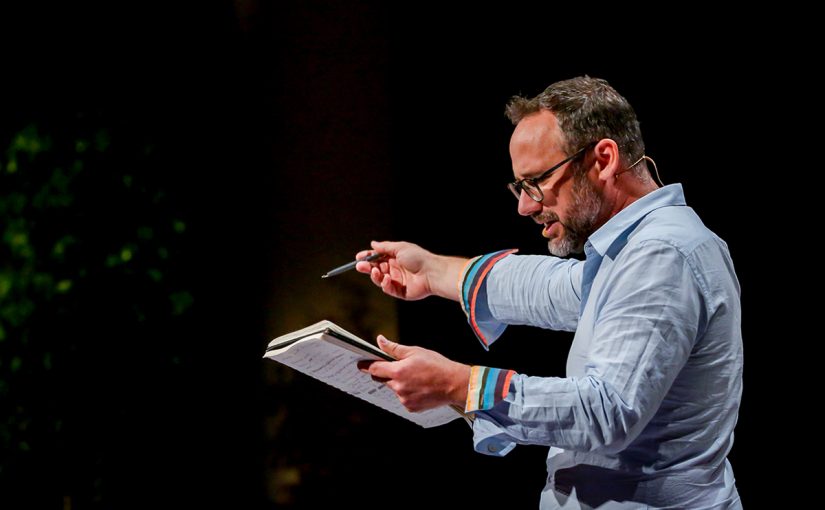
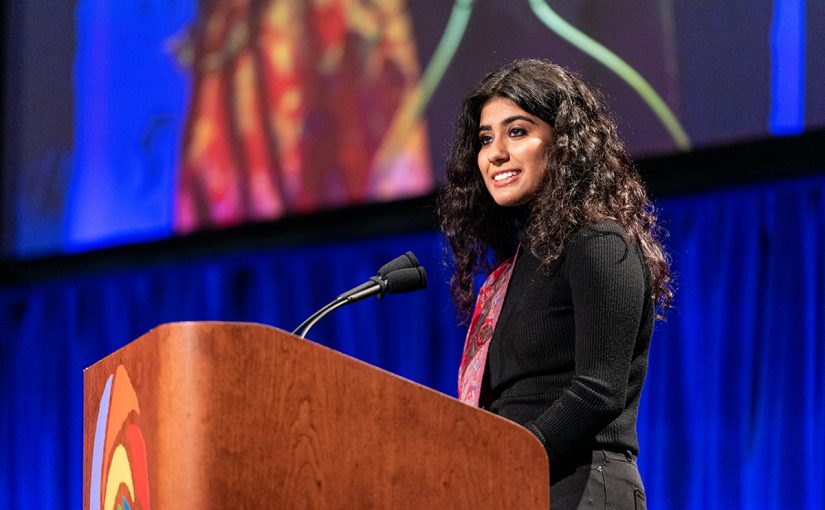
Mishka Banuri: A First Generation Immigrant’s Perspective on Youth Climate Justice

This keynote talk was given at the 2019 Bioneers Conference.

A first generation Pakistani immigrant, Mishka Banuri moved to Utah when she was 12 years old and fell in love with that state’s wondrous mountains, aspen trees and red rocks, but she saw many of those sacred lands despoiled by the greed of extractive industries. This awakened her to the global systems of resource exploitation ravaging ecosystems and poor communities around the world and has made her an extraordinarily passionate and effective youth climate justice activist in Utah.


Mishka Banuri is an 18-year-old organizer from Salt Lake City, Utah. She has been politically active since 7th grade, holding statewide organizations, institutions, and politicians accountable for their actions on climate and social issues.

Read the full verbatim transcript of this keynote talk below.


Transcript

My name is Mishka Banuri and I’m the daughter of Pakistani Muslim immigrants. And before I start, I need all of your help. Those who know me know that I am—I owe so much to my family, so I want all of your help in thanking my mother, who is here somewhere in this crowd, for everything that she’s done for me. [APPLAUSE] Thank you all so much. Yes, I don’t know who said that, but I love you, Mama, thank you.

The place that I call home and currently live in is Salt Lake City, Utah, [CHEERS] which is on occupied Eastern Shoshone and Goshute land. I moved there when I was 12 and completely fell in love. For almost 12 years of my life I was raised in a suburb of Chicago, in a cookie-cutter suburb of Chicago where I didn’t have much access to nature other than my front lawn. And when I came to Salt Lake City and I was suddenly surrounded by mountains that hugged the valley that my family now lives in, I could leave my house and hike to overlook the valley in a matter of minutes. And my favorite time in Utah is right now – fall – the mountains become ablaze with red and orange and auburn colors, and if you go into the canyon, the aspen trees are the most gorgeous golden-yellow color. They’ve brought me safety and regeneration in really tough times in my life. It’s my absolute favorite tree.

And one thing that I love about aspens is that in a forest of thousands of seemingly individual trees, they actually have a singular root system. They’re all connected and they have the same roots. It is an incredibly resilient and beautiful tree that reminds me to stay strong in the face of adversity.

I owe some of my connection to the natural world and Earth to my grandmother. She’s a botanist, and growing up, I remember going on long walks with her, and she taught me about the different plants around me, and the medicinal qualities of the plants in Pakistan that I still use today to nourish my body.

In Utah, I currently organize with an organization called Utah Youth Environmental Solutions, also known as UYES. I also work with Uplift, which is a youth-led climate justice organization based in the Colorado Plateau and greater Southwest. Utah and the Southwest have long been a sacrifice zone. The area is rife with fossil fuel extraction. Salt Lake City has some of the country’s worst air at times, and Utah has seen its public officials try and push a tar sands mine – what would have been the first in the United States. Nuclear waste and extraction devastate frontline communities, specifically indigenous communities whose water and health are impacted by uranium extraction, refining and transportation.

What I do is to help mobilize young people in Utah around climate justice issues because the impacts are so tangible for communities all over Utah. One main motivator for my work is my faith – Islam. I grew up as a Muslim in the United States post 9/11, and I’ve struggled growing up in a country that is loyal to the Islamophobia industry.

Muslims, like so many other people, have to constantly prove our humanity so that our sacred spaces are not vandalized, so that we can get jobs, and so that we can stay alive. I struggled with internalized Islamophobia until I came to the realization that if anyone is a threat to white supremacy, to the patriarchy in all systems that are the foundation for our soundings[?], we are all labeled as terrorists rather than the people who terrorize our communities every day.

To be clear, 9/11 is not the beginning of Islamophobia or anti-Muslim racism in this country, but it marks a significant shift that continues to justify the treatment of Muslims all over the world. It was also a huge motivator for the war on terror. And it wasn’t the only one. The other huge motivator for the war on terror was oil and resources that the United States believed it could take for its own benefit. And I’m specifically talking about the Iraq War.

Before the Iraq invasion, oil was nationalized and inaccessible to foreign companies like Exxon Mobile, the same company that also funds climate denial. After the war, oil in Iraq and other countries was privatized and continues to be commodified, and is now in the ownership of Exxon Mobile and other companies.

When people contribute to Islamophobic ideas that Muslims are not able to govern themselves, that they need some outside forces to bring democracy on them, it justifies intervention or the idea that the West needs to liberate Muslim women from these countries. We justify the intervention that causes a cycle of violence for oil and resources.

This colonial and imperialistic behavior of the United States is not new. Literature has shown that the military has adopted a metaphor of referring to places with resources ripe for intervention, like the Middle East as “Indian Country.” The behavior modeled is not new because it is how the US exists in the first place, stealing land, resources, and the lives of indigenous and black people. So while we continue to see privatization and extraction on indigenous land, we will also see privatization, militarization, extraction and thievery from ethnic minorities, Muslims, and the Global South.

Many of you know of Blackwater, a company that provided arms to the US military and massacred Iraqis in the invasion. Democracy Now! reporters say that Tiger Swan, the private security company that surveilled and infiltrated Standing Rock has connections and comes from Blackwater. There are wars being fought on this soil and abroad for the same greed.

As I think about the awful projects that are happening in the backyards of frontline communities in Utah and the Southwest, I also think about what’s happening abroad, because it is the same system. The Prophet, may peace be upon him, once said: Muslims are like a body of a person. If the eyes are afflicted, then the whole body is affected. If the head is afflicted, then the body is afflicted. We are all connected, and these same systems affect so many different communities.

To me, this realization is overwhelming and scary, and so I come back to think about the aspen trees in my home. Like the roots of the aspen, I recognize that I am connected to everyone here and all over the world. As a Muslim, it is so important for me to stand up for my Muslim siblings facing threats to their livelihood all over the world, and my siblings on the frontlines of white supremacy and ecological devastation.

I’m not liberated until everyone is liberated. By having strong, local climate justice movements that are in solidarity with each other, we are dismantling this global system. [APPLAUSE]

And I remind everyone to have hope, because I have hope. And I have hope in young people that are destroying the status quo and business as usual. [APPLAUSE] We are demanding justice, and we are right. And we’re seeing people change and mobilize every single day.

I’m going to end a quote from a song. I’m not going to sing, [LAUGHTER] but a quote from a song that was written by a local organizer in Utah, that says: The oceans are rising and so are we. Thank you so much. [APPLAUSE]

Valarie Kaur: Breathe! Push! The Labor of Revolutionary Love

This keynote talk was given at the 2019 Bioneers Conference.

“Is this the darkness of the tomb – or the darkness of the womb?” asks Valarie Kaur. Although we’ve mounted a powerful resistance to tyranny, injustice and violence during the Trump era, with 2020 in sight, we need more than resistance. We need to birth a new America. The extraordinarily passionate and effective civil rights attorney, faith leader and activist Valarie Kaur shares why she’s convinced that what our times demand is Revolutionary Love. It’s an orientation to life and our movements that harnesses all of the body’s emotions—grief, rage, and joy—and calls us to our highest bravery. We need to reclaim love as a form of sweet labor—fierce, demanding, and life-giving —and draw from the wisdom of the midwife: when in labor, breathe and push!


Valarie Kaur, born into a family of Sikh farmers who settled in California in 1913, is a seasoned civil rights activist, award-winning filmmaker, lawyer, faith leader, and founder of the Revolutionary Love Project, which seeks to champion love as a public ethic and wellspring for social action.

To learn more about Valarie Kaur, visit her website.

Read the full verbatim transcript of this keynote talk below.


Transcript

Introduction by Nina Simons, Bioneers co-founder and Chief Relationship Strategist.

NINA SIMONS:

I find our next speaker to be an astonishing woman. I have sought to bring her here for two years, and I am wowed by her for three reasons. The first is that for someone still relatively young, she has just about the most varied and extraordinary activist résumé I’ve ever seen. An attorney who, in her youth, clerked on the Senate Judiciary Committee, and served as a legal observer at Guantanamo Bay, she has worked as both a lawyer and an activist on complex civil rights cases, hate crimes, racial profiling, immigration detention, gun violence, solitary confinement, marriage equality, and Internet freedom. An award-winning scholar and educator with multiple degrees from such schools as Harvard, Stanford, and Yale, including in law, international relations, media, and religious studies, she has become one of the most important voices to emerge from the American Sikh community, and a highly influential faith leader on the national stage, including as the founder of the Groundswell movement, which is considered America’s largest multi-faith online organizing network.

A film and media maker with deep expertise in building story-based campaigns to advance human rights movements, she founded the Yale Visual Law Project, where she taught students how to make films for social change, and co-founded Faithful Internet to build the movement for net neutrality. Her many films include Divided We Fall; Stigma, about the impact of police stop-and-frisk policies; Alien Nation, about immigration raids; The Worst of the Worst, about solitary confinement in prison; and Oak Creek: In Memoriam, about an infamous mass shooting at a Sikh temple in Wisconsin.

Valarie’s personal story helps explain her drive to remedy wrongs. Born and raised in Clovis, California, where her family settled as Sikh farmers in 1913, she is someone with literally deep roots in the American earth, but when a close friend of hers was the first person killed in a hate crime after September 11th, 2001, she began to document hate crimes against Sikh and Muslim Americans, which resulted in her first film, the award-winning Divided We Fall, and helped launch her life of civic engagement.

The second thing that dazzles me about Valarie is that after spending much of her life combatting horrific injustice and intolerance, having been inside supermax prisons, at Guantanamo and at sites of hate crimes and mass shootings, she emerged not as an embittered cynic, but as an apostle of love as the ultimate source of social action. She founded the Revolution Love Project, a national initiative which uses a wide range of communication and mobilization tools to equip and inspire people to practice the ethic of love. I encourage you, if you are as moved by Valarie as I am, go visit RevolutionaryLove.net and sign up, because there’s a book coming.

Valarie had a revelation: to combat racism, nationalism and hate, we cannot succumb to rage ourselves or we have already lost. The greatest social reformers in history grounded entire movements in the ethic of love, and if we reclaim love through a feminist lens, she says, then love can be seen as a sort of birth labor – fierce, bloody, imperfect, but life giving.

The third thing that wows me about Valarie is as a woman I know how hard it is, and as a woman with all that education, to take a stand on behalf of love, which has been trivialized, feminized and sidelined in our—in conversations and strategy movements, strategic movements, for a long time. So the courage that Valarie embodies is incredibly inspiring to me.

Revolutionary Love is the choice to labor for others, for our opponents, for the Earth, and for ourselves. It’s a difficult path to walk in our highly polarized world, teetering on the edge of multiple existential tipping points, but if anyone can teach us how to make love the basis of our action in the world, it will be through the truly extraordinary dignity, eloquence, and strategic savvy of Valarie Kaur. Please join me in welcoming her. [APPLAUSE]

VALARIE KAUR:

So I want to begin by honoring the ancestors of this land, the Miwok people. And their descendants, and the indigenous elders, and the youth representing 99 different nations here today. I want to invoke your ancestors’ bravery and resilience. I want to imagine them filling up this room right now. In fact, I want to invite each of you to imagine an ancestor whose life makes you brave. Can you think of one? Yes. You can say them out loud. [AUDIENCE RESPONDS] Oh…I imagine all of these ancestors standing behind each of you. Imagine this room filling with our ancestors. I want to invite you to imagine my grandfather standing behind me, a tall man who wore a turban as part of his Sikh faith. He taught me how to be brave.

More than 100 years ago, he arrived from India to America sailing by steamship in the year 1913. He arrived in a port in San Francisco, not just a few miles away from here. His generation, his generation fought for the right to become citizens to earn equal protection under the law. It was my grandfather’s spirit, his ancestry behind me when I was growing up on the land that he farmed. And so I invite you to imagine him behind me now as I tell you my story, and share with you why I believe Revolutionary Love is the call of our times.

So my story begins in the aftermath of September 11th, in the wake of the horror of those attacks, when hate violence erupted on city streets across the country. Members of my community were killed. The first person killed in a hate crime after 9/11 was Balbir Singh Sodhi, a Sikh father who was killed in front of his store in Mesa, Arizona by a man who called himself a patriot. He was a family friend I called uncle.

And his murder—I mean, I was going to be an academic. His murder made me an activist. I joined a generation of Sikh and Muslim Americans fighting for our communities, fighting hate violence on the street, fighting policies by the state. And soon I realized that our liberation is bound up with one another, and so I found myself working with brown and black communities across the United States, sometimes when the blood was still fresh on the ground. And with every film, with every loss, with every campaign I thought we were making the nation safer for the next generation.

Fast forward to present day…White nationalists declare this presidency as their great awakening. Executive orders and policies rain down on us every day so that it becomes difficult to breathe. And hate crimes have skyrocketed once again.

But now, now I am a mother. Just a few weeks ago, my son was coming home with my father and my mother from a summer concert. My son was sitting on my father’s shoulders, on top of the world, and they were going to carry—they were going to grab a ride on a ferry to—across the marina to come back home. I mean, he was…Ahh, his childhood has been magical. Until they heard it. “Go back to the country you came from.” My father was hard of hearing, so my 4-year-old son had to tell my father what the mean lady said. When they came home, my parents were shaken. “Didn’t anyone say anything?” I asked them. And they said, “No. There were a crowd of people who watched, who saw, but no one said anything.” Just like last time when my father was walking on a beach with the baby carrier, with my son at his side, and someone called him a suicide bomber. There were no bystanders who spoke up then.

And I realized that I have been reckoning with the fact that my son is growing up in a nation more dangerous for him, a little boy with long hair, who may someday wear his hair in a turban as part of his faith, more dangerous for him than it was for me, more dangerous even than it was for my grandfather, that a generation of advocacy, that generations of advocacy have not made the nation safer for our children, for my son.

And I’ve had to reckon with the fact that there will be moments on the street or in the schoolyard when I will not be able to protect my son. For Sikh and Muslim Americans today are still seen as terrorists. Just as black people in American today are still seen as criminal. Just as brown people are still seen as illegal. Just as indigenous people are still seen as savage. Just as trans and moral—trans and queer people are still seen as immoral. Just as Jews are still seen as controlling. Just as women and girls are still seen as property. When they fail to see our bodies as some mother’s child, it becomes easier to ban us, to detain us, to incarcerate us, to concentrate us, to separate us from our families, to sacrifice us for the illusion of security. [APPLAUSE]

I realize that I am being inaugurated into the pain that black and brown mothers have long known on this soil, that we cannot protect our children from white supremacist violence, we can only make them resilient enough to face it. And to insist until our dying breath that there be no more bystanders. [APPLAUSE]

But does it have to be so painful. [LAUGHS] You know, I realized that the last time my body has been in this much pain was when I was on the birthing table. Some women are nodding. [LAUGHTER] You see, in birthing labor there is a stage that is the most painful stage. It is the final stage in labor. The body expands to 10 centimeters, the contractions come so fast there is barely time to breathe, it feels like dying. It is called transition. [LAUGHTER] I would not have given it this name. [LAUGHTER] During my transition, I remember the first time the midwife said that she could see the baby’s head, but all I could feel was a ring of fire. And I turned to my mother and I said, “I can’t!” My mother had her hand on my forehead. She was whispering in my ear, “You are brave. You are brave.” My grandfather’s prayer “Tati Vao Na Lagi, Par Brahm Sarnai”, “the hot winds cannot touch you. You are brave”. And just then I saw my grandmother standing behind my mother, and her mother behind her, and her mother behind her. A long line of women who had pushed through the fire before me. I took a breath. I pushed. My son was born.

You see, the stage called transition, it feels like dying, but it is the stage that precedes the birth of new life. And so birthing as a metaphor has begun to fill my imagination. You know how we say warrior on or soldier on. Only a subset of men for most of human history have had the experience of going to war, yet we all know what it means to be brave enough to fight the good fight. Right? So too only a subset of women have had the experience of birthing or birthing that way. It is not special. It is very specific. It is distinct. It requires a certain kind of courage to create something new. And so the metaphor of birthing, I began to wonder if it may have something to offer all of us.

And it has filled my mind and formed a question in me, a question that I have been asking every single day the last two years: What if? What if the darkness in our country right now, in the world right now, is not the darkness of the tomb, but the darkness of the womb? [APPLAUSE] What if our America is not dead but a country still waiting to be born? [APPLAUSE] What if all of our ancestors who pushed through the fire before us, who survived genocide and colonization, slavery and sexual assault, what if they are standing behind us now, whispering in our ear, “You are brave. You are brave.” What if this is our time of great transition? [APPLAUSE]

My sisters, my brothers, my family, I believe that we are convening right here, right now on this soil at a time when our nation and our world are in transition, for as we speak, in this very moment, we are seeing the rise of far rightwing supremacist movements in this nation and around the world, propping up demagogues, mainstreaming nativism, undermining democracies and politicizing the very notion of truth.

And we know that America right now is in the midst of a massive demographic transition, that within 25 years the number of people of color will exceed the number of white people for the first time since colonization. We are at a crossroads. [APPLAUSE] Will we—Will we birth a nation that has never been? A nation that is multi-racial, multi-faith, multi-gendered, multicultural, a nation where power is shared and we strive to protect the dignity of every person. [APPLAUSE]

Or will we continue to descend into a kind of civil war? A power struggle with those who want to return America to a past where a certain class of white people hold cultural, economic, and political dominion.

The stakes become global when we think of climate change. Right? So those same supremacist ideologies that justified colonization, the conquest and rape of black and brown people around the globe, those same supremacist ideologies have given rise to industries that accumulate wealth by pillaging the Earth, poisoning the waters and darkening the skies. Global temperatures are climbing. The seas are rising. The storms are coming. The fires are raging. And our current leadership is doing nothing to stop it. Humanity itself is in transition. Will we—Will we marshal the vision and the skill and the solidarity to solve this problem together? [CHEERS]

Yes! [APPLAUSE]

Is this—Is this the darkness of the tomb or the darkness of the womb? I hear your cheers and I feel your energy, and I want to say yes. I want to say yes. We will endure. But I don’t know. I don’t know. All I know is that the only way we will survive as a people is if we show up, is if we show up to the labor the way that you are showing up right now with your ancestors behind you, because this brings me to you. You are the community leaders. You are the peace builders. You are the faith leaders. You are the indigenous healers. You have at your hands thousands of years of scriptures and stories, and songs, inspiring us to show up to the labor of justice with love. I believe that you are the midwives in this time of great transition, tasked with birthing a new future for all of us. [APPLAUSE]

And so I’ve come to ask you how will you show up? How will you let bravery lead you? And how will you show up with love? Because love, the greatest social reformers in history have built and sustained entire non-violent movements to change the world that were rooted, that were grounded in love, love as a wellspring for courage, not love as a rush of feeling, but love as sweet labor, fierce and demanding and imperfect and life-giving, love as a choice that we make over and over again.

I believe—I’m a lawyer. For so long I couldn’t even use the word love. I was afraid that I’d be eaten alive until I finally came to the terms with the truth, that the only way we will survive, the only way that we will endure, the only way we will stay pushing into the fire, stay pushing into the fire is through love. Labor requires pain and love. That’s why I believe revolutionary love is the call of our times. [APPLAUSE]

And so, okay, so this is the offering that I have come to make for all of you today, because if love is labor, then love can be practiced, love can be modeled, love can be taught. So what does it mean to practice love when we are tired, when we grow numb? How do we keep showing up to the labor? I lead something called the Revolutionary Love Project. We produce tools that equip and inspire and mobilize people in the labor for love. And so I’ve come to give you an offering of three practices that have guided us today, three practices that I want to offer you right now. Are you ready? [AUDIENCE RESPONDS] Alright.

Revolutionary love is the choice to enter into labor, for others, for our opponents, and for ourselves. The first practice – See no stranger. All the great wisdom traditions of the world carry a vision of oneness, the idea that we are interconnected and interdependent, that we can look upon the face of anyone on any—on [INAUDIBLE] thing and say as a spiritual declaration and a biological fact, “You are a part of me I do not yet know.”

Yet brain imaging studies tell us that the mind see the world in terms of us and them. In an instant who we see as one of us determines who we feel empathy and compassion for, who we stand up for in the streets and at the polls. Authoritarians win when the rest of us let them dehumanize entire groups of people. But we can change how we see. We can expand the circle of who we see as one of us. Love begins with a conscious act of wonder, and wonder can be practiced. Drawing close to another person’s stories, listening to their stories turns them into us. And so I ask you whose stories have we not yet heard? Whose stories we hear determine whose grief we will let into our hearts. Who have you not yet grieved with? Because who you grieve with, who you sit with and weep with determines who you organize with and who you will fight for. How can you use your pen, your voice, your art to show up in places you haven’t yet been to fight in solidarity? Each of us has an offering.

And that brings me to the second practice: tend the wound. Now how do we fight even our opponents with love? It’s tempting, it’s tempting to see our opponents as evil, but I have learned that there are no such things as monsters in this world, only human beings who are wounded, people whose insecurities or anxieties or greed or blindness cause them to hurt us. Our opponents – the terrorist, the fanatic, the demagogue in office – are people who don’t know what else to do with their insecurity but to hurt us, to pull the trigger, or cast the vote, or pass the policy aimed at us. But if some of us being to listen to even their stories, we begin to hear beneath the slogans and sound bites. We begin to understand how to defeat the cultural norms and institutions that radicalize them. Loving our opponents is not just moral, it is pragmatic. It is strategic. It focuses us not just on removing bad actors, but birthing a new world for all of us.

So the first act in loving one’s opponents is to tend to our own wounds, to find safe containers to work through our own grief and rage so that our pain doesn’t turn into more violence directed outward or inward. Then in our healing, at some point, if and when we are ready, we may be ready to wonder about our opponents. Now I know this is hard. It took me 15 years to process my own grief and rage. When I was ready, I reached out to Balbir uncle’s murderer and listened to his story. It was painful, but I learned that forgiveness is not forgetting, forgiveness is freedom from hate. And white supremacists, they carry unresolved grief and rage themselves, radicalized by cultures and institutions that we together can change.

Now it took 15 years for me to make that call, and so this is what I say to you. You may not be ready to reach out to some of your opponents. In fact, if you are in harm’s way right now, your job is to tend to your own wounds to survive, to endure. Let others do the labor of understanding our opponents. That’s why we are a community, that’s why we are a movement. We all have different roles. [APPLAUSE]

This brings me to the third practice: breathe and push. [LAUGHTER] Our social justice leaders – Gandhi, King, Mandela – they tell us a lot about how to love others and our opponents, but not so much about how to love ourselves. This is a feminist intervention. [CHEERS] For too long have women and women of color specifically been told to suppress our rage and grief in the name of love and forgiveness. No more. The movement can no longer happen on our backs or over our dead bodies. The midwife tells us to breathe and then to push. Not to breathe once and then push the rest of the way. No. She says breathe and push and then breathe again. In all of our labors, the labor of raising a family, or making a movement, or birthing a new nation, we need people to help us breathe and push into the fires of our bodies and the fires in the world.

And so I ask you, How are you breathing right now? Who are you breathing with? Breathe with the earth and the sea and the sky. Breathe with music and movement and meditation every day. Breathe to summon the ancestors at our backs, for when we breathe we let joy in. These days, even on the darkest days, I come home and my son says, “Dance time, Mommy?” [LAUGHTER] I’m like, “Ohh…” We turn on the music, and I kind of sway like this, but pretty soon the music rises and my son says, “Pick me up, Mommy,” and I throw him in the air, and my little girl, now 11 months old, we twirl her up in the air and suddenly I’m smiling and suddenly I’m laughing, and suddenly joy is rushing through my body. When we breathe we let joy in. And joy, joy reminds us of everything that is good and beautiful and worth fighting for. How are you protecting your joy every day? [APPLAUSE]

Loving only ourselves is escapism. Loving only our opponents is self-loathing. Loving only others and forgetting to love our opponents or ourselves, that’s ineffective. Love must be practiced in all three forms to be revolutionary, and revolutionary love can only be practiced in community. And so this is my invitation to you all. The Revolutionary Love Project has built a powerful, formidable community in the last few years, a coalition of artists and activists, educators and faith leaders committed to showing up in our lives and in our movements, in 2020 and beyond, with revolutionary love. We are curating dialogues, hundreds across America. We are hosting convenings, we are building tools and curricula in a book that will come out next year. We are mobilizing the vote.

I ask you to join us. Are you in? [AUDIENCE RESPONDS] [APPLAUSE] So I ask you to go take out your phones. Take out your phones. Go to RevolutionaryLove.net, sign the declaration, be with us, stay with us as we build together, for here’s the truth. Here’s the truth: The labor for justice lasts a lifetime. There is no end to the labor. That’s what I’ve learned. But I’ve learned that if we labor in love – love for others, love for our opponents, and love for ourselves – then we will last. I want to last. Let us last.

For some day, we will be somebody’s ancestors. They will gather here in this room, and if we get this right, they will inherit not our fear but our bravery. “Waheguru Ji Ka Khalsa, Waheguru Ji Ki Fateh.” (Sikh prayer) Thank you. Thank you. [APPLAUSE]

Moving Past Stereotypes: Climate Action IS the Social Justice Issue of Our Time | Heather McTeer Toney

This keynote talk was delivered at the 2019 Bioneers Conference.

For years, “environmentalists” have been typecast as white, tree-hugging vegetarians who care more for whales than southside Chicago or rural Mississippi. But the fact is that not only are poor and vulnerable populations, especially communities of color, environmentally aware, they are the most at risk from the impacts of climate change. Heather McTeer Toney addresses how we must embrace climate action as the social justice issue of our time, and tear down old stereotypes so that we can build sustainable and resilient alliances to fight effectively together and affirm our common humanity.


Heather McTeer Toney, born and raised in Greenville, Mississippi, was elected that town’s first African-American, first female, and youngest ever Mayor at the age of 27. After her 2nd term, she became Regional Administrator for the EPA’s Southeast Region, appointed by President Obama. A nationally and internationally renowned, award-winning leader in Environmental and Climate Justice, she is currently Field Director for Moms Clean Air Force, an organization of over 1 million parents committed to fighting climate change and air pollution.

To learn more about Heather McTeer Toney, visit Moms Clean Air Force.

Read the full verbatim transcript of this keynote talk below.


Transcript

Introduction by Lisa Hoyos, Director of Climate Parents at the Sierra Club.

LISA HOYOS:

Hi, Everybody. Good morning. [AUDIENCE RESPONDS] It is my pleasure and honor this morning to get to introduce Heather McTeer Toney to you. Her keynote address is entitled Climate Action Is the Social Justice Issue of Our Time. [CHEERS]

Heather is the national organizing director of Moms Clean Air Force. How many people have heard of it. [CHEERS] Woo! It’s an organization of over a million moms and dad mobilizing to fight for air pollution and climate change in order to protect children’s health, our communities, and to fight for climate justice.

From 2004 to 2012, Heather served as – check this out – the first African American, the first woman, and the youngest mayor of Greenville, Mississippi. [CHEERS] She served two terms, and after that, a president, who we all wish were still our president, President Barack Obama, appointed Heather to serve as the EPA administrator in the fourth region. And it’s a big region. It’s the most diverse region. It’s the largest, most populous region of the ten EPA regions. And I just want to shout out the part of the country she represented and rooted herself in, it’s the part of the country she’s from, it included Alabama, Florida, Georgia, Kentucky, North Carolina, Mississippi, South Carolina, and Tennessee. And that’s where transformative climate justice and equity solutions are emerging. And she’s been a part of leading that. That EPA region also represented and collaborated with and built power with six federally recognized tribes.

So now I want to say a little bit about the space, and why I was asked to introduce Heather, is because I work in a space; I represent parents, work with Climate Parents, helped—I co-founded that. It’s part of the Sierra Club now, and there’s a whole space of parent and family groups that you’ve probably heard of. There’s Moms, there’s us, there’s Mother Out Front, there’s a local group here called Cool Moms.

There’s parents’ groups. There’s a climate dads group now, which is important, obviously. And Climate Parents has always worked with dads and grandparents.

But there’s four quick things about us I want to say as a movement. One is that we’re universally motivated across race lines, class lines, geography, zip codes, even political parties sometimes—we want to make that more—to protect our kids, because we all care about kids and future generations. And we have moral power we can translate into political power when we do that.

The second thing, and Kenny just talked about this, is we’re looking for bold solutions, 100% clean energy, getting off of fossil fuels. And like our campaign at Climate Parents, we’re working on moving school districts to 100% clean energy. As Heather will tell you, Moms Clean Air Force is working on many fronts at the state and national level to fight for 100% clean energy legislation and much more.

Another awareness we have in the parent and family space is prioritizing building equity, justice, and inclusion, and centering justice and equity in frontline communities. And Heather will also address that.

And finally, intergenerational justice. Some of us who started this work maybe 10 years ago, we’re seeing some of our kids on the frontlines of the youth leadership, youth movement that’s happening now on climate. And we’re also wanting to put our parent and family energy behind it to support them as they inspire the nation with 10 million people across the globe, students, leading us and calling for radical, urgent action. Shout out to the students. [APPLAUSE] It’s our goal to support climate justice leaders in the youth movement, and also to raise climate justice leaders in the youth movement.

And finally, one personal note about Heather, she’s a triathlete. We were talking on the phone before this intro and I was like: Is there one kind of more personal thing? And she ran and swam and biked a half Ironman – 70 miles of all that. And then she was honest and vulnerable in a way that makes leaders strong in our world. She said it took her four attempts to get there. One time she was almost done with the bike ride and fell. And I’m like, well do you just want me to say the part about that you completed it or that it took four attempts? And she’s like, Say the part that it took four attempts – because that’s tenacity, that’s courage, that’s what we need right now in our movement. And that’s the part I said – it’s tenacity and courage. [APPLAUSE]

And when she shared her favorite quote with me, I was like, yeah. Just the story about the triathlon underscores why this is her favorite quote. It’s her—It’s by Winston Churchill, and it’s: “When you’re going through hell, keep going.” [LAUGHTER]

And to bring things back to some of the realities we’ll be confronting all day, there’s so much of – to use the word hell. It’s hard right now and what we’re confronting in the climate crisis. It’s hard when our children are watching TV and learning about one more fire and why they have a smoke day in the Bay Area for the first time. I grew up here. We never had smoke days when I was a kid. It’s changing. But what face do we put on for our kids? What energy? What leadership? What vision for how we can make things better?

And so Heather, again, I’m just getting to know Heather, but this is a beautiful thing she said, and I want to end with this. She said, “If I could say one thing about myself, it’s that a life of politics and justice has taught me how to love and to laugh. I have far too much to be grateful for and we have far too little time to get things right on climate for me to do anything differently.” [APPLAUSE]

So Heather is about Si, se puede. She’s about justice. She’s about vision. She’s about power, and without further ado, let’s give a strong, resounding Bioneers welcome to Heather McTeer Toney. Woo! [CHEERS]

HEATHER MCTEER TONEY:

Thank you. And thank you, Lisa.

What is an environmentalist? Think about it for a moment. What is an environmentalist to you? I did a little Google search before I came, earlier this week, and if you put in the words into Google: What is an environmentalist? On the first page under images, this is what you come up with. And on this sheet you see [AUDIENCE RESPONDS] basically some images. I don’t see any color. You see trees, you see people hugging trees, you see whiteness.

Well, let’s go to the second page, because I’m like, Surely I can find something else if I keep scrolling. But no, no, no. When you go down a little further and just asking the question of an image of what does an environmentalist look like, this is what we see. And it’s important to note that, because when we think about what an environmentalist is and what we do each and every day, and the things that we see in the images that we see them in, if this is the general image and lens through which we see environmental engagement, and it’s colored in a lens of privilege, in a lens of singularity, lack of community, then there’s no wonder why it creates dissention when we say words like environmental justice or climate justice. It’s because the way that we are looking at it it’s pictured through a lens where we can see no difference. And this is why and where we are.

In 2009, The Washington Post ran a story on my city. I was mayor of Greenville, Mississippi and they’d been working with us for some time, and me, being young and energetic and ready to solve all the world’s problems, figured I was going to tackle water in my community, brown water in my community. So at the ripe old age of 27 I decided that running for mayor and focusing on this and one of many issues in my community would bring some attention. And it certainly did. It got the attention of The Washington Post.

And on a Monday morning, above the fold, here is my city, and this is what people saw. They saw the face of a child in a bathtub full of brown water. And right below that fold, you see a picture of me, looking seriously about what can we do to rectify this issue in our community. And what happened after that was a visit from Lisa Jackson. She was at the time the first African American administrator for the US, United—US EPA, and she came to my city to say and to talk about community and community visiting, and what were going to be the things that she wanted to work on.

And she pulled me to the side and she said, You know you’re working on environmental justice issues. Right? She said, You know the mission of the EPA, it’s actual mission statement is to protect human health and the environment. That’s what the organization is designed and supposed to do. And so after that, that actually was my advent into working for the EPA later on down the line. I ended up being the regional administrator for the Southeast region. And it came because we were trying to move to a place where you had community facing work for community problems on climate and the environment.

But herein lies the problem. Again, going back to that lens, because if the lens that people see the environmental work in is colored, then it doesn’t allow for solutions that people can come to because it’s not grounded in things like cultural competency and actual realistic outcomes. If there’s anything that being a mayor and being a regional administrator has taught me is that you had better have an answer for the people, because see, as a mayor, people find you anywhere. [LAUGHTER] They will stop you in Walmart, look into your basket, and say, “That’s toilet paper that’s there. Are your toilets flushing in your house, Mayor, because they’re not flushing in mine.” [LAUGHTER] You learn really quickly what matters to folks. [LAUGHTER]

And you also learn that you have to have solutions. You must be solution-minded, and there’s not a lot of time to sit around and to have meetings and to go back and forth when the people need a solution and an answer. And so that became the focus of what we were going to do. And it’s the same thing that we have an issue with right now.

So right now, everybody in this room, I don’t have to repeat for you, I know you know the results from the IPCC report, and you know what’s going to happen in terms of global climate change and crisis and emergency, and there are all of these solutions that are out there. But then we talk about the solutions in ways that people cannot grapple with and embrace.

Perfect example: The IPCC report has said that one of the things we should do to help reduce climate and reduce carbon emissions is to stop eating meat or not eat as much meat. It’s very well known. It is a solution that has been touted and that a lot of people have gotten behind. Let’s grow more, let’s put more food in the ground. I am a black woman from Mississippi, Southern Baptist. I cannot go into my church and say we are not going to have chicken and bacon. [LAUGHTER] It’s not going to work. I’m from Mississippi, you can’t tell me how to grow food. My ancestors did it. You can’t talk to me about what I should be doing with respect to the soil because I taught you. [LAUGHTER] [APPLAUSE] So it is critically important that we have these conversations through the lens of people who have lived these experiences, not that it’s a bad thing. And, yes, I’ve cut back on my bacon a little bit, for the environment. [LAUGHTER] But there are also excellent organizations that are doing things that are just having the same conversation just in the language that people understand. Privilege keeps us from doing that because it doesn’t allow us to listen to one another. And that’s what we must begin to do. We have to begin to listen to one another.

I was reading something this morning, Blacks in Green, which is a wonderful organization had a great flyer about a green living room. Now I understand that because, see, in my house, everybody comes to the living room, the living room and the kitchen. But a green living room, the first thing I thought of, that’s an outdoor park in a black community, because it said every black neighborhood should have a green living room. I understand that. It makes sense to me. It makes sense to my folks, my people, because now that is a gathering place that we can come to in our neighborhoods. That’s our living room. It’s where we can hang out at, where we can talk about those things, where we can trade back and forth the things that we need to do in our communities, from growing greens to having a conversation about getting Styrofoam out of the church picnic this year, to talk about the air pollution that’s taking place in and around our schools, and how do we reduce that. It’s building a conversation in the places that are comfortable to us. [APPLAUSE]

This was climate strikes that took place in the United States of America on September 20th, all across this country. [APPLAUSE] And you want to know where this was? This was at the University of Mississippi. [AUDIENCE RESPONDS] Places where people think that there’s no engagement on climate, places where people think that we are lost or we are forgotten and we are not engaging, places where people think we are not environmentalists. No. It was because, and is because, of our conversations with one another, our inclusiveness with one another, and beginning to realize the face of environmentalism doesn’t look like the Google search. It looks like the person who is sitting right next to you, and beginning to understand that, and encompass it in everything that we do, beginning to wrap all of our issues from all of our communities in the cloak of climate.

It’s one of the things that I love so much about Moms Clean Air Force, an organization that I’ve been blessed to now be a part of. It’s because mothers do what mamas do, that is we are going to protect our babies to no end. [APPLAUSE] And whether we are protecting them from the impacts of climate, or we are protecting them from gun violence, or we are protecting them from immigration and being stolen away, or we are protecting them like our indigenous mothers are from being taken from our lands, we are protecting all of our children and we recognize that climate has something to do with all of it. It’s called bringing people to the table. If you’re a mother, you know how to make children play together. You know what’s happening when they’re fighting. If you’re a mother, a grandmother, play cousin, auntie, you know how to do this. This is not rocket science.

We get into this big world of it being so difficult when realizing the natural things that we have within ourselves tell us what to do. It is the reason that we all come together and we’re here at these events. It’s the reason that we are finding that moms are becoming more engaged on a political level, where even they’re running for office or being appointed to office, or as I have said repeatedly, if you can be the secretary of the EPA, you can be the secretary of the Department of Interior. [APPLAUSE]

We’re realizing that our voices are required at this moment. It’s not an option. It’s a requirement. It’s like when you hear the kids in the back room and they’re making a whole lot of noise and you let them keep making noise and making noise. It’s alright. But when you hear something break, you hear it get eerily silent, you know you have to get up and go in that room. [LAUGHTER] What we’re saying as mothers is we are now getting up and going in the room. [APPLAUSE]

And that’s the room that we sit in. We go in the rooms where the policymakers are, where we are testifying before Congress, where we are saying this is what is happening in our communities. This is not an option. We shall be on record because we have something to say, and we recognize fully that if it is not said by us then it will not be said and shared. And so these are the rooms that we go in. These are the places where we feel strongly that all of our mothers and grandmothers and grandfathers and aunties and play cousins, anyone who has an interest in seeing the welfare of our children be protected from the impacts of climate change and air pollution, they must be in these places.

And we see an amazing impact. We see our children of all colors and all demographics marching when there is a debate that doesn’t talk about climate. And we’re there. We see our artists come and make beautiful depictions of what it is that it looks like, why we should be so involved. We see church mothers trying to make sure that they’re getting the Bible studies that we have and the information that’s needed to get back to their communities. Because it doesn’t make a difference where you come from or what you look like, sometimes you just need things to be done in the language that you understand. And we do that.

We make sure our children are given the microphone to say what they need to say. [APPLAUSE] Because that’s why this work is important. I do this work because I’ve been doing it for years, and I understand that there are a lot of places that we could be, but this is the social justice movement for our time. This is it. This is it. And it’s now.

My parents came to Mississippi as a part of the Voters Rights movement. My father is a retired civil rights attorney. My mother is a retired school teacher. There was no shortage of justice and education in my house. [LAUGHTER] But what I learned and understood is that there is always a movement. Where are you in it?

For me, climate justice is that movement. And it’s that movement because of these little people that are my pride and joy. [APPLAUSE] That little boy you see…[APPLAUSE] and that little girl…and just like these are my reasons, you have your reasons. Whatever it is, it’s what drives us to never give up on doing this work. It does not matter what this administration does, it does not matter what it looks like, this is what an environmentalist looks like. [APPLAUSE]

This is the Google images that we must change. These are the photos that must be uploaded, all of the ones that you took here today is what must be populated so that people see the lens of our work through our faces, so that they see who we are so that they understand that, no, everybody, we love trees, we plant trees, doesn’t mean we hug them – we hug them while we plant them – but we do a lot of other stuff too. [LAUGHTER] And that we are not going anywhere at all. [CHEERS]

As I close, I will leave you with this, and this is a thing a friend of mine sent me a little while back because I was having a rough day with this administration. [LAUGHTER] They did just a few things – 85 rollbacks to be specific, that just sort of rubbed me the wrong way. [LAUGHTER] Because I’d done a lot of work in the administration that President Obama led, that we were very, very proud of, and we worked hard. And I saw the faces of the people who were in those rooms changing all of the work that we did. In the Southeast region, eight states of the Southeast region, a quarter of the nation’s population, the most diverse landscape you could ever imagine, and where we manage half a billion dollar budget – kept the water clean, kept the land clean as much as we could, engaged with communities all across the states from Mississippi to the Carolinas, from Florida up to Kentucky, Tennessee, working to ensure that if you breathed it, you drank it, or you stood on it, it was safe, because that was our job. [APPLAUSE] And so my friend sent me a photo, and she said never forget who did the work. And this was my team of who did the work. That was the leadership team. [APPLAUSE]

This picture lifts my spirits every time I see it. It’s a selfie. It was at the end of the administration. You see a very pregnant me. But you also see three attorneys, you see a chief of staff, you see assistants, you see the deputy, you see the people who were in charge of state and local government affairs. Every woman in that room was in the leadership of the Environmental Protection Agency for our region, and I think we did a hell of a job. [APPLAUSE]

So to all of you, as I say to all of my sisters in that photo, and every last mother of Moms Clean Air Force, all of our friends, we have work to do. You are what an environmentalist looks like. Go and find your friends. Thank you. [APPLAUSE]

The Amazon at a Tipping Point: Can We Turn It Around? | Leila Salazar-López

This keynote talk was given at the 2019 Bioneers Conference.

Unprecedented fires, deliberately set to expand industrial agriculture and other extractive development, are burning across the Amazon, a dangerous escalation of the global climate emergency. Scientists warn that the Amazon is reaching “the tipping point” of ecological collapse, but Indigenous movements across the region are resisting and calling for international solidarity to help them defend their rights and territories. For thousands of years, Indigenous peoples have protected their sacred ancestral territories. Leila Salazar López, Executive Director of Amazon Watch, urges us to stand with them to protect and restore the bio-cultural integrity of the Amazon, because our collective future depends on it.


Leila Salazar-López, the Executive Director of Amazon Watch, has worked for 20+ years to defend the world’s rainforests, human rights, and the climate through grassroots organizing and international advocacy campaigns at Amazon Watch, Rainforest Action Network, Global Exchange, and Green Corps. She is also a Greenpeace Voting Member and a Global Fund for Women Advisor for Latin America.

To learn more about Leila Salazar-López and her work, visit Amazon Watch.

Read the full verbatim transcript of this keynote talk below.


Transcript

Introduction by Eriel Deranger, Executive Director, Indigenous Climate Action.

ERIEL DERANGER:

[Greeting] My name is Eriel Tchekwie Deranger, and in my native language my name means Thunder Woman. I’m so happy to be here, and I want to recognize the traditional territory of the Coast Miwok for allowing me to be here today, and it’s so good to be here. Bioneers’ 30th anniversary.

As a board member of Bioneers, I remember when I stood on this stage three years ago, as a keynote, and one of the things that helped ease my time up here was the introduction provided by Clayton Thomas-Muller, a friend. And today I so honored to have the privilege of introducing Leila Salazar-López, a friend and a comrade in the movement to protect and uphold the rights of Indigenous Peoples. [APPLAUSE]

Leila is a mother, a proud Chicana Latina woman and passionate defender of Mother Earth, the Amazon, indigenous rights, and climate justice. Since 2015, she has served as the executive director of Amazon Watch, leading the organization in its work to pretend—to protect and defend the biocultural and climate integrity of the Amazon rainforest by advancing Indigenous Peoples rights, territories and solutions, including solar for energy, communications, and transportation in the Amazon.

But for more than that, she has worked to defend the world’s rainforests, human rights, and climate through many grassroots organizations and international advocacy campaigns at Amazon Watch, Rainforest Action Network, Global Exchange and Green Corps. She is currently a Greenpeace voting member and a Global Fund for Women advisor for Latin America.

I first met Leila in the halls of the Rainforest Action Network in 2008 when we were both campaigners. And I looked to her. I immediately found comradery as another racialized woman working within the environmental movement. I looked to her for guidance and courage to continue to move forward in places that often didn’t accept us in those rooms, and at those board tables, and with our own thoughts.

Leila left the Rainforest Action Network in 2009, where she moved onto the Amazon Watch, just one floor away from RAN, and I continue to stay in touch with her, where I continue to look and see how she pushed the boundaries in the organization she moved through, that she pushed and advocated for the rights of communities, of the redistribution of power and privilege. As the executive director of Rainforest—or of Amazon Watch, she has continued to show tremendous leadership and demonstrating what it means to show up for community, and grounding her work in what it means to be a true ally.

I, in my own journey to become executive director of my own organization, I looked to Leila for leadership and for mentorship. Just this past month when we were together in New York City for the climate week, I said to her, “Leila, you’re one of my mentors. I look to you as a strong women of color leading an organization and showing what it means to have real demonstrated leadership of showing up for community and really putting your heart in your work.”

We have to ensure that we support women like Leila Salazar-López, like Atossa Soltani, like the many women of the Sarayaku and the Zapara people who are rising up and demonstrating what it means to be true leaders in the face of adversity.

Leila first traveled to the Amazon in 1995 as a student intern, and as she continued to move forward, she met so many people that taught her so much about what it means to be in the region, and what it means to stand up and protect the rights of those communities. Today she will share that story and journey with you. Please join me in welcoming Leila Salazar-López. [APPLAUSE]

LEILA SALAZAR-LÓPEZ:

Good morning, Everyone. [AUDIENCE RESPONDS] Thank you, Eriel. She already made me cry, and for those of you who know me, I will probably cry. Thank you, Bioneers. Thank you so much for holding this space for all of us during this very difficult and challenging, but inspiring time here on Mother Earth.

I first want to acknowledge the Coastal Miwok and all the California native peoples whose land we are on. I want to acknowledge our ancestors, all of our ancestors, my Yaqui and Aztec ancestors from what is now Northern Mexico, Sinaloa, Zacatecas, and also from Yucatan, where my great grandfather’s from. I want to acknowledge and thank our family who migrated from Baja, California, and then to Southern California to search for a better life, just like many migrants are doing today. And I want to give a special thanks to my family who’s out there somewhere, who always supports me, always loves me, even when it’s really difficult, especially over these last few months, which have been very, very intense since we heard about the fires burning across the Amazon. And I want to thank the Amazon Watch staff and family, who have been working tirelessly for 23 years to defend the Amazon. [APPLAUSE]

Woo, that’s what it looks like. So the Amazon rainforest is on fire. Let that sink in for a moment. How many of you have heard about this? Okay. Kind of preaching to the choir here, but here it goes. And how many of you were here yesterday during Bill McKibben’s talk? How many of you cried or were terrified? I was crying and terrified for the rest of the day yesterday, and I hope while you hear me speak, I won’t make you terrified – maybe a little – but I’ll also inspire you to join us, and to join Indigenous Peoples in resistance for existence and survival for all of us. [APPLAUSE]

So, you probably have heard about the fires in Brazil, and most of the fires have been in Brazil. And they are raging across the Amazon in Brazil, and in Bolivia, and across the entire Amazon, and they’re devastating, they’re catastrophic. And combined with the threats across the Amazon – oil and gas and agribusiness, and deforestation, and degradation, and mining, and megadams – this is what—these threats and the fires combined with climate change, this is what could lead the Amazon to a tipping point of ecological collapse.

But can we turn this around? That’s the question. That’s a question that we’re here to answer today.

First, the Amazon, and our beautiful, beautiful planet Earth. This is South America, and this is the Amazon Basin. And the Amazon Basin is as large as the continental United States. It’s massive. It’s the world’s largest tropical rainforest. It is a global treasure. It houses a third of the plant and animal species on Mother Earth. It produces 20% of the Earth’s oxygen. So we need the Amazon to breathe. We need the Amazon for global biodiversity. We need the Amazon for…protecting our climate.

The Amazon—You might have heard of the Amazon as the largest tropical rainforest. It also has one of the largest rivers on the planet, and above the river, the Amazon River, are the flying rivers, which are the atmospheric rivers which regulate our global weather system. Without the flying rivers, our entire global weather system is destabilized. And the reason why the flying rivers can be taken off course is because of increased deforestation caused by these fires and many other threats.

This is one of the many images that you’ll see if you’ve traveled to the rainforest. How many of you’ve actually been to the rainforest? A lot of you. And for those of you who have been, once you’ve been, just like once you know, you can’t go back, and that’s what happened to me when I went to the Amazon rainforest when I was 21 years old. I went to learn about plants. I wanted to study ethnobotany. And my life took a different course once I met Indigenous Peoples who were a living library, who are a living library. When you walk with Indigenous Peoples in the rainforest, and they can name every single plant and tell you every single property – for food, for medicine, for housing, for clothing, for shelter – then you know there is—they have a millennial knowledge that needs to be protected.

And in the Amazon, there are these. So I said that the Amazon houses a third of the plant and animal species on the planet. This is one of my favorites – the pygmy marmoset. It’s about this big. You can hold it in your hand, and you just want to take it home. It’s the cutest thing ever. But you can’t take it home. And they’re almost extinct. And so they are, like many of the plants and animals on this planet, under a lot of threat. So we’re working to protect them. We’re working to defend them. And the best way that we can do that is by standing with Indigenous Peoples. [APPLAUSE]

There are over 400 distinct indigenous nations, peoples throughout the Amazon rainforest, and they are the best protectors of the Amazon. They are the best protectors of biodiversity on our planet. The UN – you guys have probably heard this stat before – the United Nations says that 80% of the global biodiversity on this planet is on Indigenous Peoples’ lands. So that’s why we are working to stand with Indigenous Peoples to protect biodiversity, to protect the climate, and to protect life.

And when we see these images of these fires, and this destruction taking place all over the Amazon, this is—This is what it looks like. This is what industrial agribusiness does to the Amazon, and this is why the fires have been intentionally set. Let’s make no mistake. The fires in the Amazon are not wildfires. They’re not a mistake. They are intentional. They are malicious. They are set by government policies and economic policies and drivers to do this to the rainforest.

This is a map that we created in late August, right after the fires started, just to map out where some of the fires were happening, and also to show that, yes, a lot of the fires were happening in Brazil, but they were happening all over the Amazon. And we’re talking thousands of fires. In Brazil alone there’s been over 100,000 fires, just this year alone. In Brazil alone, there’s been over three million hectares burned. In Bolivia alone, there’s been over five million hectares burned. Just this year. Just this year. And that is forest that has been there for thousands and thousands of years. And we’re not going to get that back anytime soon.

What we have to do now is protect it and restore it as quick as possible. [APPLAUSE] Alright, I’m going to go back for a second.

A lot of people ask us, Well, who’s responsible? Who’s doing this? And it is the government. It is the Bolsonaro government. Let’s not make light of it. The Brazilian government has a policy, has not only the rhetoric, but the policies to destroy the Amazon to make way for economic development, to make way for agribusiness, to make way for soy and cattle, to make way for mining. It is their policy to destroy the Amazon for economic development. So it’s not a mistake. It’s not a wildfire. It’s intentional and malicious, and destructive. And not only are they intentionally setting fire to the forest, they’re intentionally rolling back rights of Indigenous Peoples. The moment Bolsonaro got in office, he rolled back the rights of Indigenous Peoples, merged environmental and agribusiness ministries to intentionally destroy the lands and the rights of Indigenous Peoples.

And so we have been standing strong with Indigenous Peoples, APIB, the indigenous movement of Brazil, to say no, to stand up for rights, to stand up for lives, to stand up for territories. And the indigenous movement of Brazil, actually just on Friday, embarked on a trip to Europe, a 20-city tour for six weeks, to go to Europe to go to companies, to go to banks, to go to European governments, to the EU parliament to say don’t trade with Brazil. Don’t trade in high-risk commodities with Brazil. [APPLAUSE] Because that is what’s destroying the forest. If you care about the forest, if you care about human rights, if you care about indigenous rights, if you care about the climate, then don’t trade in high-risk commodities. No government, no corporation, no retailer, and no bank should be doing this.

And that’s why we actually joined together with APIB to put out a report called Complicity In Destruction to highlight and expose these corporations, big agribusiness traders like ADM, and Bunge, and Cargill, and retailers like Costco and Walmart, and banks, financial institutions like Chase and Santander, and BNP Paribas. And asset managers, very, very big banks, like BlackRock, and—How many of you all have heard about BlackRock? So thank you for those of you who know about BlackRock’s big problem. The rest of you look up BlackRock’s big problem and you’ll know that they are the biggest investor in climate destruction, whether it be agribusiness or fossil fuel.

And speaking of fossil fuel, these are the fossil fuel reserves in the Amazon. You may have heard about Chevron in Ecuador or Occidental Petroleum in U’wa territory or in northern Peruvian Amazon. That’s in the Western Amazon, that’s in the most biodiverse part of the Amazon, an area that we call the sacred headwaters region. It is the most biodiverse, culturally diverse part of the Amazon, and it’s in the Western Amazon. And these are the fossil fuel reserves across the Amazon that these companies and these governments would like to get their hands on.

There are many protected areas throughout the Amazon and Indigenous Peoples’ territories that are protected in the Amazon. In Ecuador, for example, Indigenous Peoples have rights to their ancestral territories, but they don’t have rights to the subsurface minerals. So the government can still go in and drill, and concession off territories like this. These are Indigenous Peoples’ territories overlapped with oil concessions. And this has been the model for decades.

And as I mentioned, I was just in Ecuador last week with some of my colleagues, and standing with Indigenous Peoples in meetings, actually. We were in meetings to talk about the alternative—alternative solutions to oil development. And it was very hard to be there last week because we were in meetings but we were also standing with Indigenous Peoples as they were rising up, rising up against the continued policies that would cause this, that would cause the destruction of Indigenous Peoples lands and the rainforest to cause massive oil spills like this. This is what it looks like. This is just a very small picture of what it is. We’re talking billions and billions and billions of gallons of oil and toxic wastewaters that have been spilled into the Ecuadorian/Peruvian Amazon as a result of oil development.

And for what? For a few weeks’ worth of oil? This is why people like Sarayaku, who are very close allies, have said no. We’re not. We’re not going to ever allow fossil fuel companies onto our land. We want to be free from oil development. We want to keep fossil fuels in the ground. [APPLAUSE]

And it’s indigenous people, it’s Sarayaku, it’s women, Women Defenders of the Amazon Against Extraction, it’s indigenous movements that we’re working with to protect the Amazon, to restore the Amazon, to advance indigenous solutions, to advance and support climate justice. And we’re doing this together. We’re doing this as NGO allies, we’re doing this as movements in the climate justice movement and indigenous rights movement, in the women’s movement. We’re doing this together. And this is what we have to do at this time.

The youth have called upon us to stop talking and take action. How many of you were out in the climate march, climate strike? [APPLAUSE] I was out there with my kids in San Francisco marching for climate justice, and I have to say that it restored my hope. After the fires, it was pretty daunting and devastating to come to work, and just get up in the morning, but seeing the youth stand up for climate justice and demanding that we take action really restored my hope.

Being in Ecuador last week, seeing Indigenous Peoples stand up to the IMF and to their government who is imposing policies on them without their consent gave me hope and re-inspired me to really do everything possible to stand up to forces like BlackRock for our children, because like the sign says, we have to act as if our house is on fire, because it is. It’s the Amazon. It’s the Arctic. It’s the Congo. It’s Indonesia. All of these ecosystems have been on fire, and we have to put out the physical fires and we have to put out the political fires, and we have to come together like we did in this ceremony last week. We have to come together, all of us. We have to get out of our silos and we have to come together for our future, for our collective future.

So I want to ask you all to please come together, unify. That’s what we’re doing here at Bioneers. We come together. We share ideas. We inspire each other. We challenge each other. We cry together. And what I want to ask you all to do is to take action for the Amazon.

My time is up, but I want you to go to AmazonWatch.org and take a pledge to protect the Amazon, and stand with Indigenous Peoples. And just—If you remember anything of what I’ve said today, I want you to remember that the best way we can protect the Amazon is by standing with Indigenous Peoples. And if we protect the Amazon– [APPLAUSE] And if we protect the Amazon, we will protect our climate, and we will not reach that tipping point, and we will have hope for our future generations. So will you stand with me? [AUDIENCE RESPONDS] Then stand. [APPLAUSE]

And I’m going to just do this real quick. [CHEERS] Thank you!

Tim Merry: Holding Up a Mirror to the Moment (Day 2)

Slam poet Tim Merry weaves highlights of Bioneers Day 2 into bardic verse.

This performance took place at the 2019 Bioneers Conference.


Tim Merry works with major businesses, government agencies, local communities, and regional collaboratives to help engender breakthrough systems change through coaching, training, keynote speaking, engagement, and facilitation designed to energize and shake up the status quo. Tim is also a traveling spoken word artist inspired by poets from the ancient Anglo Saxon oral tradition all the way through history to modern poets such as Kate Tempest.

Intrinsic – A Performance by Climbing PoeTree (2019 Day 1)

This performance took place at the 2019 Bioneers Conference.

These two Brooklyn-based poets-artists-activists-educators-musicians-performers may be the most brilliant socially engaged spoken word duo in the known universe. They perform material from their recent kickass album, “Intrinsic”.

Climbing PoeTree (Alixa Garcia and Naima Penniman) are award-winning multimedia artists, organizers, educators and a spoken word duo who have independently organized 30 tours, taking their work from South Africa to Cuba, the UK to Mexico, and 11,000 miles around the U.S. on a bus running on recycled vegetable oil, presenting alongside powerhouses such as Vandana Shiva, Angela Davis, Alicia Keys, and Alice Walker, in venues ranging from the UN to Harvard to Riker’s Island Prison.

To learn more about Climbing PoeTree, visit http://www.climbingpoetree.com/

Eve Ensler: The Alchemy of the Apology

This keynote talk was delivered at the 2019 Bioneers Conference.

Eve Ensler, the brilliant playwright and tireless activist for women’s rights globally, founder of V-Day and One Billion Rising, was like so many other women, sexually abused, in her case by her father. In her new bestselling book, The Apology, Eve has attempted to transform, with unflinching truthfulness and compassion, the horrific betrayal she suffered into an expansive vision for the future. She shares her story and explores how other survivors of abuse might be able to mobilize their imagination and inner strength to move from humiliation to revelation to find healing and inner freedom. She has written her own apology which she offers on this occasion.


Eve Ensler, Tony Award-winning playwright, performer, and one of the world’s most important activists on behalf of women’s rights, is the author of many plays, including, most famously the extraordinarily influential and impactful The Vagina Monologues, which has been performed all over the globe in 50 or so languages.

To learn more about Eve Ensler, visit her website.

Read the full verbatim transcript of this keynote talk below.


Transcript

Introduction by Nina Simons, Bioneers co-founder and Chief Relationship Strategist.

NINA SIMONS:

This year, being a milestone for Bioneers, we did everything we could to bring back to this stage some of those visionary doers, artists, and activists who have had the greatest influence on us, whom we look up to the most, and whose work has continued to grow, adapt, and evolve over time. There is no one who inspires me, challenges me, and whose example strengthens my courage more than the incredible playwright, author, and women’s rights activist, Eve Ensler. [APPLAUSE]

As a social artist and activist, Eve has consistently grown her vision and her strategies to adapt to the lessons life’s brought her, and to respond to the global pandemic of violence against women. A strong argument can be made that no one in human history has more effectively used the arts to further human rights injustice. Her play, The Vagina Monologues, has been performed by countless women all over the planet, and is likely the most widely performed and impactful play ever written. Eve parlayed the unparalleled viral success of that play into building perhaps the biggest and most successful movements to eliminate violence against women and girls the world has ever seen – V-Day, followed by One Billion Rising. Being savvy, humble, and open-sourced in her approach, she made her play accessible to women and girls the world over, and then made One Billion Rising contagious by not trying to own, control, or brand it.

She helped raise over $100 million to fund thousands of projects around the world, including community-based anti-violence programs and safe houses in such widely disparate places as Afghanistan, Haiti, Kenya, Egypt, Iraq, South Dakota, and the City of Joy, the now world-renowned community for women survivors of violence that Eve co-founded in the war ravaged Democratic Republic of Congo.

Of course, Eve has done far more as an artist than create The Vagina Monologues. She’s written other remarkable plays, produced films, won countless awards, and written several great works of non-fiction and memoir, including her incredibly timely new book, The Apology, which she’s going to talk about today.

It’s often hard for socially engaged artists and writers to reconcile their aesthetic or literary lives with their activism, but Eve seems to do it more seamlessly than anyone I’ve ever seen. She channels her boundless creativity into both her art and her advocacy so organically that rather than awkwardly co-existing, they feed and strengthen each other, and the result is powerful but gracefully crafted, totally engaged, fully embodied, truly revolutionary art.

When she was stricken with life-threatening illness, she discovered the healing power of nature, and has been a devoted eco-feminist ever since. All of us have suffered to varying degrees from living in a world in which one out of three women are beaten or raped in their lifetimes, but I have watched her grow ever more confident, courageous, and bold in her vision, and effective in both her art and her activism. Even more impressively, over the years, and despite the global horrors she has tirelessly been combatting, she has become, without losing any of her edge or wonderfully caustic humor, an ever-more centered radiant, wise, and compassionate soul.

I’m so very grateful to call her friend, and to the universe for having provided us and all women and men everywhere at this time with the one and only Eve Ensler. [APPLAUSE]

EVE ENSLER:

Good morning, family. [APPLAUSE] Good morning, family. [AUDIENCE RESPONDS] That’s better. [LAUGHTER]

A couple of notes before I start. This is an offering, not a prescription. If it doesn’t work for you, release it. If it does, excellent. When I use the word woman, I mean to include women – straight, gay, bi, trans, non-binary, queer, gender queer, agender, and gender fluid.

I was sexually abused by my father from the time I was 5 until I was 10. Then physically battered regularly and almost murdered several times until I left home at 18. Some place deep inside, I believed my father would one day wake up out of his narcissistic, belligerent blindness, see me, feel me, understand what he had done, and he would step into his deepest truest self and finally apologize. Guess what? This didn’t happen. And yet the yearning for that apology never went away. I cannot tell you how many times I’ve rushed to the mailbox, believing that finally today there will be a letter waiting, an amends, an explanation, a closure to explain and set me free.

It’s 31 years since my father died. For over 22 of those years, I have spent and been a part of a glorious movement to end violence against women, struggling day in and day out to put an end to the scourge. I’ve watched as women break the silence, share their stories, face attack, doubt, humiliation, open and sustained shelters, start hotlines. I’ve been part of a movement that is 70 years old, began by African American women fighting off their rape of slave owners and white supremacists. I have witnessed the recent powerful iteration of #MeToo. I’ve seen a few men lose their jobs or standing, a few go to prison, a few faced public humiliation. But in all this time, I have never seen or heard any man make a thorough, sincere public apology for sexual or domestic abuse. In 16,000 years of patriarchy – and I have done a lot of research – I’ve never read or seen a public apology for a man for sexual or domestic abuse.

It occurred to me there must be something central and critical about that apology. So I decided I wasn’t going to wait anymore, that I was going to climb into my father and let my father come into me, and I was going to write his apology, to say the words, to speak the truth I needed to hear. This was a profound, excruciating, and ultimately liberating experience. And I have to tell you, I learned something very profound about the wound. I don’t imagine there’s anyone sitting here today that doesn’t have a wound that they carry, that has in some ways defined or guided or determined your life.

And what I learned writing this piece is that when we sit outside the wound, the radiation pours down on us, but when we go through the wound, it’s very, very painful, and it feels as if we might die, but as we keep going and going and going, we come to a point of ultimate freedom. I learned about what a true apology is.

We teach our children how to pray. We teach them the humility of prayer, the devotion of prayer, the attention required, the constancy, but we don’t teach our children how to apologize, or maybe they get to say an occasional meager, “I’m sorry if I hurt you,” or “I’m sorry if you feel bad,” but what I learned writing this book is that an apology is a process, a sacred commitment, a wrestling down of demons, a confrontation with our most concealed and controlling shadow.

I learned that an apology has four stages, and all of them must be honored. The first is a willingness to self-interrogate, to delve into the origins of your being, what made you a person who became capable of committing rape or harassment, or violence, to investigate what happened in your childhood, in your family, in this toxic, toxic culture.

In my father’s case, he was the last child, the accident who became the miracle, and he was adored. But I’m here to tell you, adoration is not love. Adoration is a projection of someone’s idealized self-image onto you, forcing you to live up to their image at the expense of your own humanity. My father, like many, many boys, was never allowed to be tender, vulnerable, full of wonder, doubt, curiosity and yearning. He was never allowed to cry. All of those feelings had to be stifled, pushed down, and in doing so they metastasized, and eventually became what he called the shadow man, this buried creature who later surfaced as a monster.

The second stage of an apology is a detailed accounting and admission of what you have actually done. Details are critical because liberation only comes through the details. Your accounting cannot be vague. “I hurt you,” or “I’m sorry,” or “I’m sorry if I sexually abused you” just doesn’t do it. Those words don’t mean anything. One must say what actually happened. “Then I grabbed you by your hair, and I beat your head over and over against the wall.” This investigation into details includes unmasking your real intentions and admitting them. “I belittled you because I was jealous of your power and your beauty, and I wanted you to be less.”

Survivors, and I know there are many here today, are often haunted for years by the why. Why would my father want to kill his own daughter? Why would my best friend drug and rape me? There is a difference between explanation and justification, and knowing the origin of a perpetrator’s behavior actually begins to create understanding, which ultimately leads to freedom.

One of the hardest things about writing this book was how deeply I didn’t want to feel my father’s pain. I didn’t believe he had earned the right from me to feel his pain. But to be honest with you, I have remained connected to my father since the time of the abuse through my rage. I was a permanent victim to his perpetrator. And I just want to say about my anger, you know, I was very able to be compassionate to so many people in my life, in all sorts of countries and places, I always had compassion. But I found the way I talked about white men very dis-compassionate. I found it in anger, and I listened to myself. There was a part of me that I just wasn’t happy with. I was stuck in a paradigm I realized that my father had designed. And as my father’s mother says to him in my book: anger is a potion you mix for a friend but you drink yourself. Feeling my father’s pain and suffering, ironically, released me from his paradigm.

The third stage of an apology is opening your heart and being, and allowing yourself to feel what your victim felt as you were abusing her, allowing your heart to break, allowing yourself to feel the nightmare that got created inside her, and the betrayal and the horror, and then allowing yourself to see and feel and know the long-term impact of your violation. What happened in her life because of it, who did she become or not become because of your actions?

And the fourth stage, of course, is taking responsibility for your actions, making amends and reparations where necessary, all of this indicating you’ve undergone a deep and profound experience that has changed you and made it impossible for you to ever repeat your behavior.

What and why should one want to undergo such a grueling and emotional process? The answer is simple: freedom. No one who commits violence or suffering upon another, or the Earth, is free of that action. It contaminates one’s spirit and being, and without amends often creates more darkness, depression, self-hatred and violence. The apology frees the victim, but it also frees the perpetrator, allowing them deep reflection and ability to finally change their ways and their life.

My father, in my book, wrote to me from limbo, and it was very strange. I have to tell you, he was present throughout the entire writing of the book. He had been stuck in limbo for 31 years. I truly believe that the dead need to be in dialogue with us, that they are around us, and they are often stuck, and they need our help in getting free.

With this exercise, I believe now that my father is free. And because he was willing to undergo this process, he’s moved on to a far more enlightened realm.

As for those of you who cannot get an apology from your perpetrator, I believe that writing an apology letter to yourself from them is one of the most powerful things I’ve ever done, and it can shift how the perpetrator actually lives inside you, for once someone has violated you, entered you, oppressed you, demeaned you, they actually occupy you. We often know our perpetrators better than ourselves, particularly if they are family. We learn to read their footsteps and the sounds of their voices in order to protect ourselves. By writing my father’s apology, I changed how my father actually lived inside me. I moved him from a monster to an apologist, a terrifying entity to a broken little boy. In doing so, he lost power and agency over me.

We cannot underestimate the power of the imagination. And I just have to say in these times that we are living in, our imagination is our greatest tool. It is shifting trauma and karma that has numbed our frozen life force, and in the deeper and more specific my imagining and conjuring in this book, the more liberation I experienced. When finally at the end of the book my father or me, or me or my father, or both of us as one – I’m so not clear who wrote this book – my father says to me, “Old man, be gone.” It was exactly like the end of Peter Pan. Do you remember when Tinkerbell says goodbye and goes [MAKES SHOO SOUND] into the ethers? My father was gone, and to be honest, he hasn’t come back.

And I want to talk a little bit about forgiveness, because I think often we are survivors of all kinds of things, whether it’s racial oppression, or physical oppression, or economic oppression, or sexual violence. We’re told that we have to forgive and get over it. I don’t really believe that the mandate is ever on the victim to forgive, ever. But I do believe that there is an alchemy that occurs with a true apology, where your rancor and your bitterness and your anger and your hate releases when someone truly, truly apologizes.

People have asked me throughout the tour of my book, “What will it take to get men to apologize?” This is the $25 million question. And I have to tell you, it’s a question that is underlying everything we are experiencing on this planet right now. At one point in the book, my father tells me that to be an apologist is to be a traitor to men, to be an apologist is to be a traitor to men. Once one man admits he knows what he did was wrong, the whole story of patriarchy will come tumbling down.

So I say to all the men here, what we need now is for men to become willing gender traitors, and stand with us, and apologize so we can all get free.

There are so many apologies that need to be made. Our entire country rests on unreckoned landfill. That’s why it so easily becomes unraveled. Think of the massive apology and reparations due the First Nations people for the stealing of their lands, the rapes, the genocide, the destruction of culture and ways.

Think of the apology and reparations due African Americans for 400 years of diabolical slavery, lynchings, rape, separations of family, Jim Crow and mass incarceration. I honestly believe that apologies, deep, sacred apologies are the pathway to healing and inviting in the New World.

So as I was preparing this talk, something miraculous and difficult happened. I realized there was an apology I needed to make, an apology that would force me to confront my deepest sorrow, my guilt and shame, an apology I had been avoiding since I moved out of the city to the woods where I now live with the oaks and the locusts and the weeping willows, Lydia, the snapping turtle, running spring water, foxes, deer, coyotes, bears, cardinals, and my precious dog Pablo. This is my offering to you this morning. It is my apology to the Earth herself.

Dear Mother, it began with the article about the birds, the 2.9 billion missing North American birds. The 2.9 billion birds that disappeared and no one noticed – the sparrows, the blackbirds, and the swallows who didn’t make it, who weren’t even born, who stopped flying or singing, making their most ingenious nests that didn’t perch or peck their gentle beaks into moist black earth. It began with the birds. Hadn’t we even commented in June, James and I, that they were hardly here? A kind of eerie quiet had descended. But later they came back, the swarms of barn swallows and the huge ravens landing on the gravel one by one.

I know it was after hearing about the birds that afternoon I crashed my bike, suddenly falling and falling, unable to prevent the catastrophe ahead, unable to find the brakes or make them work, unable to stop the falling. I fell and spun and realized I had already been falling, that we had been falling, all of us, and crows, and conifers, and icecaps, and expectations falling and falling, and I wanted to keep falling. I didn’t want to be here anymore, to witness everything falling and missing and bleaching and burning and drying, and disappearing and choking and never blooming. I wanted—I didn’t want to live without the birds or bees, or sparkling flies that light the summer nights. I didn’t want to live with hunger that turns us feral and desperation that gives us claws. I wanted to fall and fall into the deepest, darkest ground and be still finally, and buried there.

But Mother, you had other plans. The bike landed in grass and dirt, and bang, I was 10 years old, fallen in the road, my knees scraped and bloody, and I realized even then that earth was something foreign and cruel that could and would hurt me because everything I had ever known or loved that was grand and powerful and beautiful became foreign and cruel and eventually hurt me. Even then, I had already been exiled, or so I felt, forever cast out of the garden. I belonged with the broken, the contaminated, the dead. Maybe it was the sharp pain in my knee or elbow, or the dirt embedded in my new jacket, maybe it was the shock or the realization that death was preferable to the thick tar of grief coagulated in my chest, or maybe it was just the lonely rattling of the spokes of the bicycle wheel still spinning without me. Whatever it was, it broke, it broke inside me. I heard the howling.

Mother, I am the reason the birds are missing. I am the cause of salmon who cannot spawn, and the butterflies unable to take their journey home. I am the coral reef bleached death white and the sea boiling with methane poison. I am the millions running from lands that have dried, forests that are burning, or islands drowned in water. I didn’t see you, Mother. You were nothing to me. My trauma made arrogance, and ambition drove me to that cracking, pulsing city, chasing a dream, chasing the prize, the achievement that would finally prove I wasn’t bad or stupid or nothing or wrong.

My Mother, I had so much contempt for you. What did you have to offer that would give me status in the marketplace of ideas in achieving? What could your bare trees offer but the staggering aloneness of winter or a greenness I could not receive or bear. I reduced you to weather, an inconvenience, something that got in my way, dirty slush that ruined my overpriced city boots with salt. I refused your invitations, scorned your generosity, held suspicion for your love. I ignored all the ways we used and abused you. I pretended to believe the stories of the fathers who said you had to be tamed and controlled, that you were out to get us.

I press my bruised body down on your grassy belly, breathing me in and out, and I inhale your moisty scent. I have missed you, Mother. I have been away so long. I am sorry. I am so sorry. I know now that I am made of dirt and grit and stars and river, skin, bone, leaf, whiskers and claws. I am part of you, of this, nothing more or less. I am mycelium, petal, pistol, and stamen. I am branch, and hive, and trunk, and stone. I am what has been here and what is coming. I am energy and I am dust. I am wave and I am wonder. I am impulse and order. I am perfumed peonies and a single Parasol tree in the African savannah. I am lavender, dandelion, daisy, dahlia, cosmos, chrysanthemum, pansy, bleeding heart, and rose. I am all that has been named and unnamed, all that has been gathered, and all that has been left alone. I am all your missing creatures, all the sweet birds never born. I am daughter. I am caretaker. I am fierce defender. I am griever. I am bandit. I am baby. I am supplicant. I am here now, Mother, in your belly, on your uterus. I am yours. I am yours. I am yours.

L. Frank Manriquez – Opening Ceremony

This performance took place at the 2019 Bioneers Conference.

L. Frank Manriquez (Tongva/Ajachmem), an award-winning Native California Indian artist working in many media and a tribal scholar, community activist, and language advocate, has exhibited her artwork in museums and galleries nationally and internationally. She has served or serves on a number of boards, including that of the California Indian Basketweavers Association (for 15 years) and the Cultural Conservancy, and is a founding board member of the Advocates for Indigenous California Languages.