Will the U.S. Be a Dystopian Hellscape in 2100 if Emissions Keep Rising?


The US is on a path to an unrecognizably hot future. Here’s what that looks like and how to change course.


Guest Post by Dr. Kristina Dahl, Senior Climate Scientist, Union of Concerned Scientists.

This was originally published on July 22, 2019 on The Equation, the blog by the Union of Concerned Scientists.


Last week, UCS released Killer Heat, a report analyzing how the frequency of days with a dangerously hot heat index–the combination of temperature and humidity the National Weather Service calls the “feels like” temperature–will change in response to the global emissions choices we make in the coming decades.

When I’m deep in an analysis, like the one for Killer Heat and its companion peer-reviewed article, I often have trouble sleeping. I lie awake in the middle of the night trying to get bits of troublesome computer code to work in my head or thinking through all of the boxes that need to be checked before we start writing the report. The Killer Heat analysis kept me awake for an entirely different reason: the results terrified me.

An Unrecognizably Hot Future

To get a sense of why, project yourself, for a moment, into the future: It’s late in the century, sometime between 2070 and 2099. We’ve stayed on our current global carbon emissions path, and the rise in emissions has continued to outpace our efforts to cut them. Kids who were in elementary school in 2019 are retiring, and this is their United States:

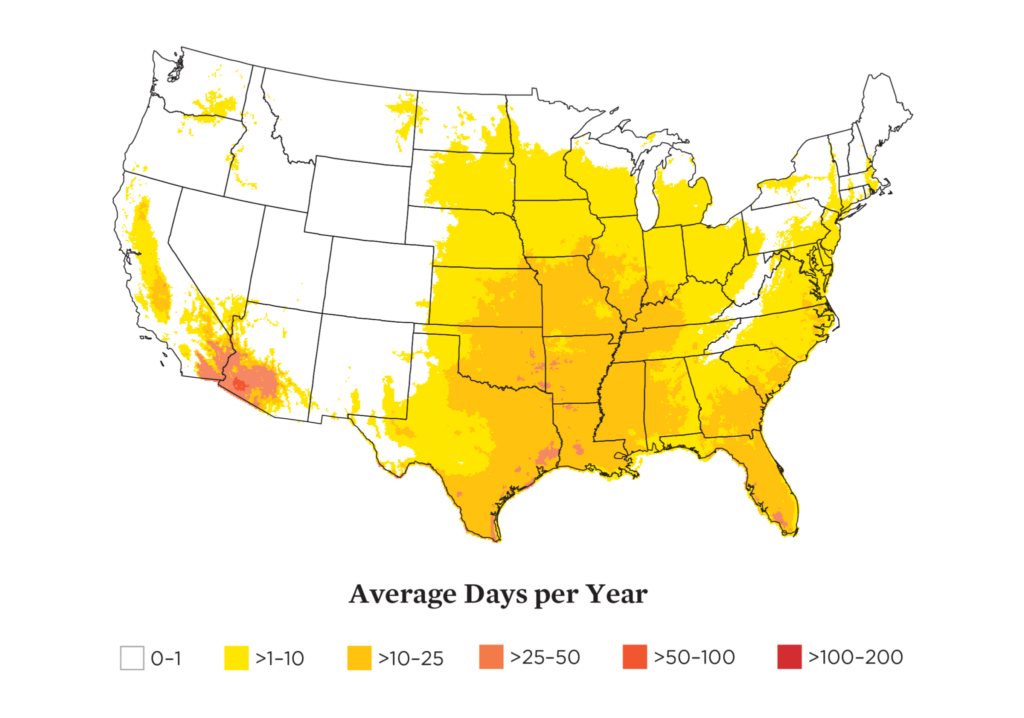
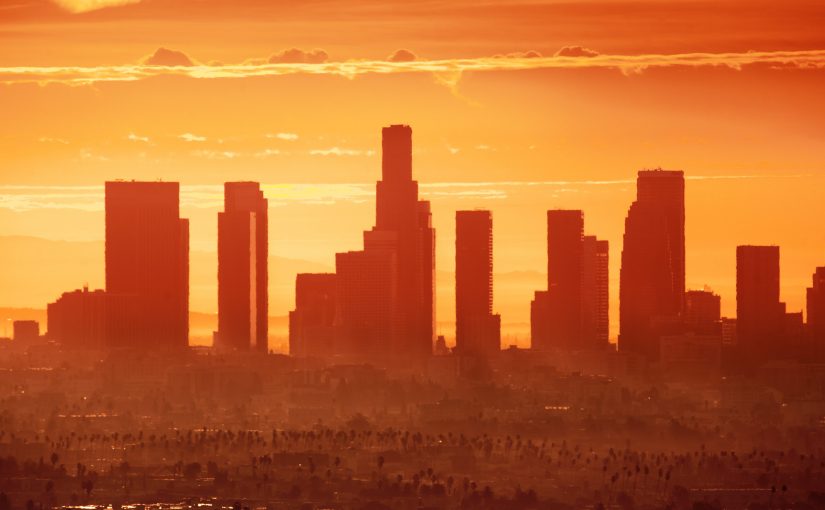
For the equivalent of a week or more each year, about 120 million people across the country are exposed to conditions so hot, the heat index (or “feels like” temperature) surpasses the limits of the National Weather Service’s heat index charts. The upper limit of the heat index scale falls at or above 127°F, depending on temperature and humidity. In other words, they step outside and are hit with a wall of heat that feels upwards of 130°F. How far upwards? That we don’t know.

In 47 of the lower 48 states, these “off-the-charts” conditions occur in at least one county at least once a year. When this happens, the National Weather Service cannot reliably calculate the heat index. Historically, “off-the-charts” conditions have only occurred in the Sonoran Desert region, along the California-Arizona border, and only for a few days each year.

By late century, with no action to reduce emissions, more than 60% of the US ( would experience at least one “off-the-charts” day in an average year. These conditions are so hot they exceed the National Weather Service’s heat index scale. They historically have affected less than 1% of the US in an average year.

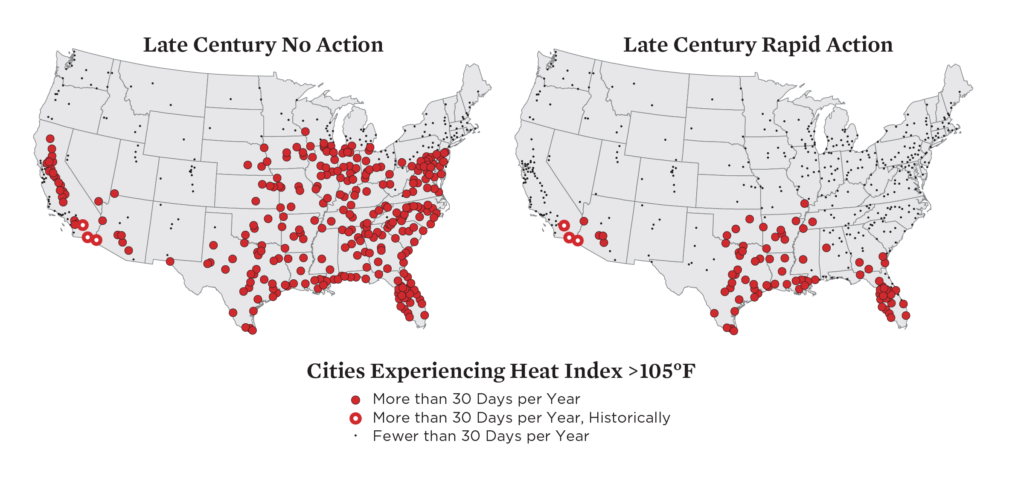
The number of days per year that feel like 105°F or hotter is eight times higher than it has been historically. Every major city in Indiana, Illinois, and Iowa — and a total of more than 290 populous US cities (greater than 50,000 people) — swelters for the equivalent of a month of such conditions in an average year.

By late century, with no action to reduce emissions, more than 60% of the US ( would experience at least one “off-the-charts” day in an average year. These conditions are so hot they exceed the National Weather Service’s heat index scale. They historically have affected less than 1% of the US in an average year.

Every major city in Michigan experiences 30 or more days per year with a heat index above 100°F, except Muskegon, which averages 29. (Cities in Wisconsin and Minnesota are no better off.)

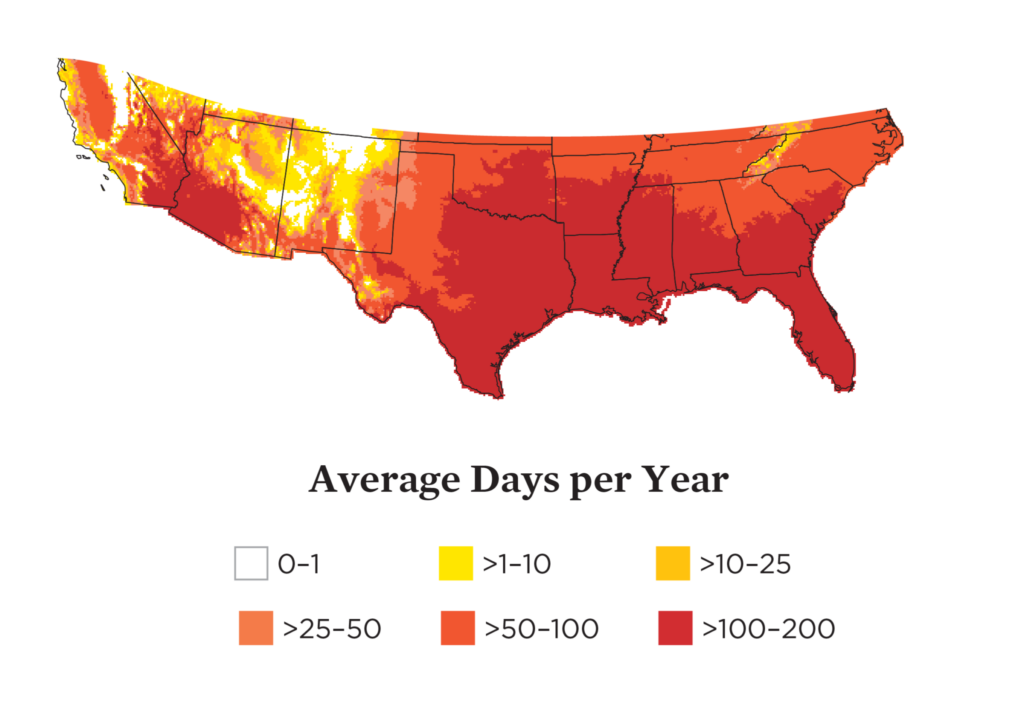
Residents of Tampa, Florida, Laredo, Texas, and 15 more large cities in Florida and Texas endure 150 days or more per year with a heat index above 100°F.With no action to reduce emissions, by late century large swaths of the Sunbelt would experience more than 100 days per year with a heat index above 100 degrees Fahrenheit.

With no action to reduce emissions, by late century large swaths of the Sunbelt would experience more than 100 days per year with a heat index above 100 degrees Fahrenheit.

Famously cool places average 30 days or more with a heat index above 90°F: Seattle, Washington (30); Portland, Maine (48); Portland, Oregon (53). (In Seattle, two-thirds of homes currently lack air-conditioning.)

In more than 80 counties across Texas and Florida, in an average year, the heat index is above 90°F for half the year (180 days). In broad strokes, that means that spring is very hot, fall is very hot, and summer can be downright deadly.

It’s an unfathomably hot future, and it’s the one we’re on track to hand off to our children and grandchildren. Where do we encourage our children to settle down in this world? Will it be safe for their children play outside in the summer? And what do we tell Gen Z today when they strike and march and plead with us to change course?

Choosing a Safer Future

As my coauthors and I began to dig more deeply into our results, a second potential future came into clearer focus: In this future, rapid, aggressive action to reduce global emissions has limited global warming to 2°C above pre-industrial temperatures. These ambitious actions still lead to a future in which the number of days with a dangerously high heat index above 105°F is nearly four times what it is today, and 85 of the bigger US cities would endure a month or more of such conditions.

Clearly, we need to be aiming for even greater, even faster cuts to our emissions. Yet limiting future warming to 2°C would yield a future far more recognizable to today’s children than the one we’re recklessly barreling toward, in which 290 cities suffer under such heat.

Rapidly and aggressively reducing emissions would limit the number of cities that would experience 30 days or more per year with a heat index above 105 degrees Fahrenheit.

That’s the future I have to focus on so I can sleep at night. Ensuring this safer future will require us to act on two major fronts: reducing emissions swiftly so that we can achieve net-zero carbon emissions by midcentury and limit future global warming; and building our resilience to extreme heat through a suite of common sense measures that include enacting a national heat safety standard for outdoor workers and ensuring that communities have heat warning systems in place that draw on the best available public health information.

This future may be the next-best thing to the one we’d ideally hand off to our children, but it’s a hell of a lot better than the one we’re currently heading toward. The best time to boldly begin pursuing this safer future was 20 years ago. The next-best time is now.

Radical Transparency: Mapping the Earth from the Ground to the Cloud

New, democratized access to powerful analytical and mapping tools is transforming our understanding of the natural world – and with it, our ability to meaningfully conserve, protect and restore our collective home – the biosphere.

In this program, we explore the boundless possibilities of digital maps and platforms with Rebecca Moore, visionary founder of Google Earth Outreach and Google Earth Engine.

To see visualizations of the mapping projects that Rebecca Moore describes in this podcast, watch her 2018 Bioneers Conference Keynote address below:

This Will All Be So Great If We Don’t Screw It Up


Cory Doctorow on Big Tech and Pathways Forward

As the power, influence and scale of the major firms that dominate Silicon Valley continues to grow, the collective response might be best described as befuddled. From our mental health to influence on elections to copyright and fair business practices, the impacts are wide reaching and complex. Joshua Fouts sat down with Cory Doctorow to discuss the overall state of Big Tech at the moment. Doctorow is a prolific journalist, blogger, creative commons advocate, Electronic Frontier Foundation Fellow, and award-winning science fiction author whose latest book, RADICALIZED, was published in March.

Doctorow last spoke at a Bioneers Conference in 2017 – watch his keynote talk on The Fight for a Free, Fair and Open Internet here.


JOSHUA FOUTS: Cory Doctorow, thank you so much for joining me. This is a real pleasure and a thrill.

In some ways, these Big Tech companies can be thought of as the robber barons of the 21st century. Their reach is enormous and what to do about them is becoming a political talking point. In your May 2019 column in The Locus, “Steering with the Windshield Wipers,” you focused on the history of monopolies and monopoly regulation in the US at it relates to technology companies today. Given the recent political posturing around this topic from Elizabeth Warren and others, I’d love to hear your thoughts on the issue. How big is too big? What is to be done about the increasing size and scope of today’s major technology problems?

CORY DOCTOROW: I’ve given some thought to what I would like written on my tombstone. And what I would like written on my tombstone is something like: “This will all be so great if we don’t screw it up.” The kind of technology that I want to see in our future is one that is resilient on a technological and on a policy level because it is distributed and pluralistic. Right? Rather than having five giant websites filled with screenshots from the other four, I would like there to be a lot of different places where people accomplish a wide variety of goals online – communication, fellowship, commerce, any of the other things we do, romance and so on. 

What I would like written on my tombstone is something like: “This will all be so great if we don’t screw it up. — Cory Doctorow on today’s technology problems.

The history of the Internet for most of its life is of a system that was very, very dynamic, where last year’s winners were overturned by new entrants so routinely that you could barely keep track of who it was. I remember a conference around 2002 or 2003 put on by Kevin Werbach featuring Sergey Brin from Google. He said that people didn’t need to worry about how big Google was getting because all it takes for someone to change search engines is to update their bookmarks, and when that happens, Google will go away. So the only way Google was going to remain on top was if their search engine was better than any other search engine a user might try. 

Over time we’ve had this massive concentration in tech, and that has happened at the same time as we’ve had massive concentration in virtually every other industry you care to name: automotive production, energy, shipping and logistics, pro-wrestling, etc… John Oliver did this infamous, wonderful episode about how there used to be 30 pro-wrestling leagues and now there is one, and it has all the problems that you would expect to have with monopoly. It squeezes its suppliers, in this case the wrestlers, who are now non-consensually reclassified as contractors, which means that they’re no longer entitled to medical benefits, which means that these people who do this very physically dangerous thing are using Go Fund Me to pay for their healthcare, and they’re dropping dead in their 50s. Every industry has been attended by mass concentrations – we have four movie studios, five publishers, four record labels. Finance has gone through this. Pharma has gone through this.

When people talk about Big Tech, they repeat the same tech exceptionalist lines that tech itself uses to describe why it got so concentrated. They say Big Tech avails itself of network effects and of first-mover advantage, and sometimes of a semi-mystical capacity to use machine learning to make people addicted to a product. For these reasons, they say, tech is a winner-take-all phenomenon. 

It’s a really interesting evolution in how we talk about tech because it wasn’t so long ago that we were talking about the long tail and we were saying that what tech enabled was this massively pluralistic marketplace where every conceivable idea could find its audience no matter how niche it was. Think about the initial shape of the blogosphere. I remember Technorati releasing an early report saying more than half of all blogs had three or fewer in-bound links from other blogs, which meant that more than half of all blogs were so niche that they were viable with an audience of three. Today, that is not the case. 

Today we have this massive concentration and Big Tech – and a lot of critics – want you to think that it is because of these network effects. The thing that I find very unconvincing about this narrative is that pro-wrestling doesn’t have network effects, but it has undergone the same concentration. As an example, take eyewear: one company – Luxottica, the Italian company – owns every eyewear brand you’ve ever heard of. They also own every eyewear retailer you’ve ever patronized. They own LensCrafters and Sears Optical, and Sunglass Hut. Anytime an eyewear brand won’t sell their company, Luxottica will boycott the company in their retailers until the company is driven to its knees, and Luxottica can buy it for pennies on the dollar. They own every major lab that makes lenses and contact lenses, they own every major insurer that insures optical, and they own every eyewear brand and every eyewear retailer. They don’t have network effects. They don’t have first-mover advantage. They don’t have globalism. They just have oligarchy. 

It behooves us, I think, to ask: Is there an alternate set of explanations that explains why Big Tech is giant, that also explains why big optical is giant? I think there is, and it’s that until the mid-‘80s, companies were not allowed to merge with their major competitors, called merger to monopoly. They also weren’t allowed to buy their small nascent competitors, the companies that might grow to challenge them. They had functional separation obligation. If you were a bank, you couldn’t own a company that competed with the companies you were lending money to because it would give you a huge advantage over them. If you were a rail company, you couldn’t own the freight companies that put the freight in your rail cars because you’re competing against the other freighters who wanted to put freight in your rail cars. 

Ronald Reagan was a great fan of Robert Bork, a hobbyist economist and lawyer (I call him an “alternate historian”). Bork believed that if you squinted really hard at the legislative history of antitrust laws, the Sherman Act in the US, that the congressmen who debated this (and it was congressmen in those days) were totally indifferent to the idea of monopoly, and that the only thing that the Sherman Act really prohibits is what’s called consumer harm. That is when you merge two companies and in the short term they raise prices on consumers. Not in the long term, because Luxottica has raised the price of eyewear a thousand percent relative to where it was before they started, but in the short term. If you could show that there wouldn’t be immediate price increases, then you could have any kind of merger, any kind of anti-competitive activity, any kind of acquisition. 

Tech companies grew by doing the things that Robert Bork fought to legalize, and that Reagan ultimately legalized (and that his successors – Bush I, Bush II, Clinton, and Obama – all enabled.) They bought their competitors, they merged with their biggest competitors, and they vertically or horizontally integrated so that they would have the rail cars and the freight, so that they could be the lender and the business that took the loan. 

Google has only ever had two successful products that they developed in-house – Gmail, which is a clone of Hotmail, and Search. Everything else Google does came from an outside acquisition. When you think through possible alternate explanations, you have to ask yourself: Is it possible that the reason we have monopolies is that we took away the rules that we used to have to prevent monopolies? You can look at those monopolies and realize that everything they did to become a monopoly is a thing that used to be banned under anti-monopoly rules. Maybe the rules were working. Maybe it wasn’t the mystical power of machine learning to turn us into addicts. Maybe it wasn’t network effects. Maybe it was just that we had rules that worked and then we stopped employing them. 

Ask yourself: Is it possible that the reason we have monopolies is that we took away the rules that we used to have to prevent monopolies? – Cory Doctorow

Listening to true believers in Borkian-Reaganite market capitalism explain why it must be machine learning or globalism or network effects is like listening to a lifelong smoker who’s finally got lung cancer who wants you to understand that the reason they have lung cancer is not because they unwisely kept jamming cigarettes in their face, it’s because of environmental toxins.

So this brings me to Liz Warren. Full disclosure: I am a great supporter of Elizabeth Warren and am a donor, both to this campaign and her previous campaigns. I’m Canadian (we’re like serial killers, we’re everywhere, we look like everyone) and I’m eligible to become a citizen during the next presidential administration. If I could walk into a federal office and put my hand over my heart and swear allegiance to the flag under the grinning face of President Elizabeth Warren, I would be a very, very, very happy man. 

That said, I think that we need to understand that we can try to fix Big Tech or we can try to fix the Internet, but we can’t do both. So fixing Big Tech would be like saying if you’re a rail company and you want to carry freight, this is the price schedule that you have to set forth. Everyone has to get those prices. Or you have to make sure that you don’t discriminate against these kinds of freight companies. Or you might say if you’re a banker and you want to lend money to businesses that you own, this is the way that you have to manage that separation, this is the wall you have to erect between your two business units. Those compliance costs are very expensive, and they’re very complicated, and they have a pretty low chance of working because in order to make them work, you have to be privy to things happening inside board rooms that are not necessarily visible even to an in-depth audit. They require constant and near-total scrutiny. 

A lot of what has been proposed for Big Tech amounts to a very complex regulatory regime to make them behave themselves as “good monopolies.” Take Facebook or Twitter and the issue of online harassment and violent or extremist content. We say to them, you have to have some kind of regime where you can detect and eliminate these activities on your platform. You need to build filters, you need to hire rooms full of people. Or we say that since the livestream of the mosque shootings in Christchurch on Facebook meant that 2.3 billion people can see it, that Facebook now have to have some mechanism to determine whether every livestream on Facebook is or isn’t a mosque shooting.

We say that because YouTube captures all of the videos in the world now means that they need to spend at least $100 million to filter everything that people upload to YouTube under a new European copyright rules. What these regulations do is they lock in the permanent advantage of the Big Tech companies because they say that you cannot launch a rival to YouTube unless you have $100 million to build a YouTube filter.

There are distinctions made where if you’re a small Facebook competitor, you have a different duty than if you’re a large Facebook competitor, but getting that right is really hard. What it tends to do is produce glass ceilings where, for example, during the copyright directive fight in Europe, at one point there was a rule that said you didn’t need filters until you turned over 10 million euros in one year. That means that the day you earn your 10 million and first euro is the day you have to have 100 million euros to build the filter to comply with the regime. 

You can try to come up with a gradient, but ultimately all of these things cut against the other possible remedy we have for Big Tech, which is breaking them up, which is what Warren also suggests. I’m very sympathetic to breaking up Big Tech. I’d like to see them broken up on functional lines, I’d like to see ad technology firms left out of the social media and search business, I’d like to see them broken up on merger-to-monopoly lines, I want to see Facebook divesting itself from Instagram.

If we say to be Facebook you need to be big enough to buy all these filters, then we also say we will never make Facebook so small that it can’t afford these filters. You can’t do both. We know how this works because the last company that ever faced meaningful antitrust remedies in this country was AT&T. AT&T had resisted breakup for generations because every time someone said let’s break them up, AT&T said, “Let us introduce you to the stack of public safety duties that Congress expects us to fulfill, that the FCC expects us to fulfill. Fulfilling these requires that we be as big as we are.” As soon as you give state-like duties to a firm, you effectively guarantee that you will never make that firm too small to serve as a de-facto arm of the state. 

I’m in favor of vigorous regulatory enforcement. I want the FCC and the FTC to regulate the Big Tech and telecom companies. I don’t want those companies to self-regulate because they suck at it, because they are permanently compromised, no matter how much they say, “We have this arm’s-length person in the firm who’s paid by us, who doesn’t answer to us, and they will act as the regulators proxy.” We know how that works because every one of the big four accounting firms has been embroiled in a series of horrific scandals, each worse than the last in the last two or three years, in which that whole mechanism has totally broken down because they get paid by the company whom they are responsible for keeping honest, and ultimately you cannot be paid by the company you’re responsible for keeping honest because your divided loyalty will screw you. 

When people hear, “Don’t regulate Big Tech because it will give them a permanent advantage,” they think that I’m saying, “Don’t regulate Big Tech at all.” What I’m saying is regulate Big Tech first by making them small enough that we can hold them to account, and second by making them small enough that we can make them pay their taxes so that we have the money to pay the regulators to hold them accountable. Anything less than that is just enshrining their permanent dominance. It’s effectively replacing the dream of a democratic tech with a constitutional monarchy where we say to these firms, King Zuck, King Sergey, King Larry, you guys get to rule the Internet forever, but there is an aristocratic parliament who will meet, a house of lords, and they will drape you with golden chains that you will suffer, and those golden chains will bind your behavior in ways that will reflect what the aristocracy thinks you should do, but you will never be answerable to the unwashed masses who will only have one social network, one search engine, where they go to conduct the democratic business of using the nervous system of the 21st century. I think that that is throwing in the towel.


FOUTS: Against the backdrop of all of this and the focus on the downside of Big Tech, are there things you’re excited about or that we should we excited about in the larger field at the moment?

DOCTOROW: That’s the “this will be so great” part (if we don’t screw it up.)

I can’t imagine a future where we survive the climate emergency, or find justice for people who’ve been historically discriminated against and suffered the worst of environmental problems and other forms of economic and coercive violence, that doesn’t involve using Big Tech or at least tech, but it requires that it be a democratic tech. 

If you are looking at Puerto Rico post-Hurricane Maria and saying we need to take power generation out of the hands of giant corporations that are looking for the fastest buck with the lowest cost, and return it to community control, we need to create sustainable, renewable micro-grids. These micro-grids would form federated agreements with one another to share across one community to the next, where the profits remaining in the community can be used to do maintenance, upgrading and so on. 

One of the reasons we have big centralized power generation is because it requires huge amounts of logistical oversight and coordination that you can only accomplish with computers, with really advanced embedded systems, and also systems that are in the hands of both the users and the technicians that can monitor the health of the system and tune it in real time.

I just read a great paper about how connected fields of wind-based power turbines can tune their wake, their backwash, so that as they turn the blades, they tune the whole turbine so that the turbulence that they create maximizes the speed of the turbine behind it through intense, real-time computation, looking at things like the fluid dynamics of wind in real time.

It’s not just that we’re able to do these things, it’s that we’re really going to have to. We are going to have to be able to do things like use computation to measure the outcomes of policing to determine whether or not our police are practicing racial discrimination, whether overt or intrinsic racial bias, and the only way we’re going to do that is with data. Take predictive policing which uses policing data and directs future police activity using a predictive algorithm.

If you gather data from racist policing practices and use it as your ground truth, the crime is only where you look for it. The only place where you find weed in people’s pockets is the neighborhood where you stop everyone and make them empty their pockets. By definition you don’t detect weed in people’s pockets in neighborhoods where no one has to empty their pockets. So if you only ever make brown people in brown neighborhoods empty their pockets, the algorithm will predict that that’s where all the weed is going to be. What this does as presently construed is reify and produce a veneer of objectivity to existing racist practices. 

The Human Rights Data Analysis Group did work analyzing police data and comparing it to other data and were able to validate or invalidate the predictions. Turns out you can use this same data set and algorithmic approach, with a few tweaks, to actually identify whether or not police are practicing discriminatory or non-discriminatory policing. It is literally the same technology, it just vests the locus of control in different hands.

I think the problem with Big Tech is where the locus of control is. It’s that in order to talk to all of your friends online, you have to commodify your relationship through Facebook advertising algorithms. That the search algorithms run by Google use secretive tools to do ranking that make it hard to discover when the search result that you’ve been served is or isn’t trustworthy. It’s not subjected to peer review the way other information that we want to trust in our world is. 

The “This will be so great” part is actually not so hard to distinguish from the “If we don’t screw it up” part. Because the difference is who has control over the system. Is it the people who use the systems? Or is it the people who are trying to extract value from people who use the system? That’s really the major difference.


FOUTS: My final question is: Is there anything you’ve read lately that you recommend others pick up in and around things that get you excited?

DOCTOROW: What’s good recently? I’ve nearly finished Naomi Klein’s next book, which is called On Fire, and it’s a collection of her essays from about the past decade or so. Watching the way that we think about the climate emergency changes over that decade is super instructive. In some ways it gives me hope because you can see the Overton window opening. Right? You can see the things that we’re allowed to say about climate without worrying that we’ll be laughed out of the room expanding. 

I really liked Karl Schroeder’s new book Stealing Worlds. It is a very, very good book about climate emergency, civil liberties, and the subversion of totalitarian computer networks to achieve anti-totalitarian, pro-egalitarian, anti-oligarchic ends. It’s a cracking adventure novel and really fun to read.

There’s a really good, very dark book that just came out from Richard Kadrey called The Grand Dark, and it’s a kind of Weimar, dieselpunk novel. It’s set in this inter-war period where there’s this hectic energy, the war has ended, they can hear the drums of war in the distance, and everyone is in this kind of frenetic sex-drugs-and-rock’n’roll period in this fictional town, but the town is full of the mamed soldiers from the last war, and then also the automata, the robots that were developed in the last war, which are creating this kind of army of disaffected, unemployed people who are clearly being teed up to be cannon fodder. The robots are also developing genetically engineered chimeras that they called eugenics, that are being sold as pets but are the descendants of the war dogs that were bred for the previous war. Clearly the same labs that are turning out these pets are also turning out the next generation of biological, synthetic-biological organisms to fight the next war. It resonates very beautifully with our current moment. Kadrey is so good at writing hard boiled. It’s like someone took like a Tom Waits album, some really peaty Scotch, and a really shitty cigar and put them in a nutribullet and you’re drinking it and it’s terrific. 

FOUTS:  What’s your latest writing?

DOCTOROW: I have three books now in the pipeline. The one that’s through production and now in the schedule for 2020 is a picture book for little kids called Poesy the Monster Slayer about a little girl who is obsessed with fighting monsters, and she takes apart the super girly toys in her room and repurposes them into monster-slaying weapons. So her Barbie Dreamhouse roof becomes a shield and her Barbie bubble gum perfume becomes mace that she uses, her tiara is the silver she uses to repel the werewolves and so on.

I’ve got a novel for adults coming – not on the production schedule yet but it will be soon. It’s the third Little Brother novel.

I’ve just finished a very short (25,000-word) nonfiction book. It’s a long essay about competition and surveillance capitalism, why machine learning is a problem, how to understand the debate about surveillance capitalism in the framework of monopoly capitalism, and how those two are interrelated. It’s called Working as Intended: Surveillance Capitalism Is Not a Rogue Capitalism. It is with my publisher now.

FOUTS: Fantastic. Cory Doctorow, thank you so much for your time. Thanks for all the work that you do. It’s really, really incredible and vital against the backdrop of 2019 Planet Earth.

DOCTOROW: Well thank you, and thanks for the work Bioneers is doing and you’re doing. You guys are amazing. 
From Artificial Intelligence to Data Collection: The Perils and Promise of Tech


We are living in an age of dizzying technological change, especially in the domains of electronic communications, artificial intelligence, robotics, data collection and genetics. The admittedly remarkable new capacities provided by tech were initially heralded with utopian predictions of their transformative effects, but we have increasingly been seeing their much darker aspects—their critical role in the erosion of individual privacy and democracy, the heightening of social atomization and alienation, and the vulnerability of all our major systems to cyberattack have become ever more glaringly obvious. Few people are better equipped to help us make sense of these rapidly evolving crises than Elizabeth Dwoskin, the Washington Post‘s Silicon Valley correspondent, and one of the nation’s premiere reporters on the world of tech. 

Bioneers sat down with Dwoskin at a recent Bioneers Conference to discuss some of the best and worst implications of our increasingly plugged-in lives. Watch Dwoskin’s Bioneers presentation on this topic here.

Elizabeth Dwoskin

“These companies right now, they just print money. But you can see a scenario where if Europe continues the way it’s going, and if the U.S. continues the way it’s going, companies won’t be able to buy their way out.”

BIONEERS: There’s a lot of fear in the marketplace about job losses and inequity around AI. What are your views are on the real threats or advantages of AI and robotics? 

ELIZABETH: The data show that there will be more jobs lost than gained. And of course that’s why you’re seeing the rise of movements toward basic income. How will people get money when there’s fewer jobs? 

This reminds me somewhat of a story in my past. I used to cover immigration before I covered tech. I remember there was this debate about whether NAFTA was going to cost American jobs. At the time there were a lot of economists saying, “Yes, a small portion of people are going to lose jobs to globalization, but overall, the consumers are going to benefit. The boat will be lifted.” But it turned out that those predictions were wrong. The number of people affected was much larger than anticipated, and those people became justifiably angry. And it had huge political consequences. 

Back to AI and robotics: People talk a lot about truckers. Truck driving is one of the biggest job categories for men with only a high school degree. With the self-driving movement, people are talking about long-haul trucks as being first to make the switch.

Another one is picking and packing. One of the holy grails of robotics is what we call the “dexterity challenge.” If I pick up this water glass, my hand has sensors that tell me how not to break it. But a robot doesn’t know not to break the glass. Teaching a robot dexterity, to pick up the glass and not break it, is considered a holy grail. There have been some big innovations in that area recently, including in Amazon’s warehouses. So if you think about the next layer of automation and jobs being lost, it’s people who pick things up in warehouses.


BIONEERS: You’ve done quite a bit of exploration into “tech bro” culture. As a female investigative journalist, what’s your take on that culture, especially in the #MeToo era? 

ELIZABETH: I think a lot of women in Silicon Valley are really angry. One thing that’s been sad for me as a reporter is when I go into interviews with people, I’m almost always interviewing white men or Indian men. Then there’s usually a woman in the room, because a lot of women work in PR and marketing in Silicon Valley—It’s like the feminized job of Silicon Valley. The women don’t speak, because I’m supposed to be interviewing the executives. It’s really uncomfortable for me. 

Venture capital firms can be uncomfortable too. You have a very attractive woman who’s an admin in the front, and all the partners are men. So it’s like walking into the 1950s. She’s great at her job. It’s no critique of her. It’s about these kind of like 1950s social structures.

I do think that if the culture is going to change, it will happen now because there’s so much anger. People are looking more and more at the workplace. I think papers like The Washington Post are still struggling with how to cover people’s personal conduct. There hasn’t always been a willingness to go forward with these kinds of stories. As journalists, we still have a long way to go.

I recently wrote a piece about this whole new crop of apps and businesses founded by women since #MeToo to improve reporting in the workplace. There are new channels for reporting and understanding your rights.


BIONEERS: I was recently reminded of a Tweet that you posted during the Brett Kavanaugh hearings. Facebook’s top lobbyist was actually seated behind Kavanaugh in the middle of his hearings. You posed the question: “Who thought that was a good idea?” What do you see as the ideology of Silicon Valley? 

ELIZABETH: Pro money. Stay off my back, government. 

About that Tweet: That was really interesting. I was watching the hearings and looking at who was in the row of Kavanaugh supporters right behind him. On the bench were his wife, his former law clerk, people very close to him. And then I saw this one face—actually, a source pointed out to me. I thought, could that be Joel Kaplan, Facebook’s head of policy? I confirmed it with a couple of sources. Those people were inside Facebook, and they were mortified. 

Most of the people who work at Facebook are what you would consider liberal. Joel Kaplan is probably the top conservative at Facebook. And there aren’t that many. So you have this company that is largely run by liberals trying to make a non-partisan platform, and it’s being attacked particularly in the last few years by conservatives who think they’re being censored.

When I posted that Tweet, a lot of people started asking questions. And then The New York Times did a story about it. Kaplan went on his own accord, but apparently he got in trouble when there was so much attention. They had to do a company town hall for all the employees. But e didn’t apologize. People who work there flipped out. Some of them took mental health days. Literally, people took mental health days because this executive so publicly supported Kavanaugh. 

These employees are so coddled. One of the biggest debates among management at these very rich tech companies is whether to serve dinner and how many people in their family employees should be allowed to bring home dinner to. They get breakfast and lunch already, fully catered and the fanciest buffets, but they also want dinner. And if you change the organic bananas, people complain. These are very, very entitled people. It’s completely divorced from reality. 

The companies always tells people to work within their principles. But then you have this one really high-up guy whose principles you don’t agree with. It raises a lot of interesting question about how neutral this platform should be.


BIONEERS: We’ve also seen workers in Google and Facebook pushing back against some of the company’s contracts. Google is taking a contract with the Defense Department, for example. Do you see the maturation of these organizations?

ELIZABETH: The organizations are maturing, and they’re becoming much more like regular big companies, which in corporate America play both sides. They want to curry favor with both sides of the aisle. They’re playing the game in Washington. One of the ways to do that is by getting government contracts. 

These companies also want to diversify their revenues. They want to have government contracts because that makes you politically safer if shit hits the fan. 


BIONEERS: Many people who are attracted to the tech world, traditionally, feel that they are going into technology to help make the world better. Is the improve-the-world-through-tech philosophy still the reigning ethos?

ELIZABETH: No. I think that’s what a lot of people are reckoning with. That’s why you see the worker insurrections. 

Forget the government contracts, let’s look at the other effects. I think there was always something really delusional about Silicon Valley’s dreams for the Internet and these profound tools that have changed the world in profoundly positive ways. Overall, I think there’s a net benefit to these tools. Like the fact that they’re becoming utilities, the fact that they’re as necessary as electricity,. 

When I talk to some of the people doing healthcare startups who came from Google or Facebook, they’ll say it’s because they were looking for more meaning.

One of the quotes that made me come out to Silicon Valley was a guy who was a Facebook executive early on. He developed a cancer institute at Mt. Sinai. When he talked about this institute, he said, “The greatest minds of my generation were trying to make people click on ads.” He didn’t want to do that anymore. So he did the science thing. 


BIONEERS: What do you think is the end game for the current U.S. administration in terms of the tech industry? A lot of what the Trump administration is doing seems to be making us less competitive players in terms of the global tech industry.

ELIZABETH: In this new Trump North American Free Trade Agreement, there’s actually an interesting clause. In the U.S., tech companies enjoy a very liability-free situation. If somebody puts something illegal on a tech platform, whether it’s selling a drug or anything illegal except for child pornography, they’re not legally responsible for it. It’s called Section 230, and it’s a 20-something-year-old law that frees internet companies from liability. They fight tooth-and-nail to keep it. 

What you’re seeing in these new trade agreements, the whole global trade scheme that’s being renegotiated right now under Trump, is the tech companies are trying very hard to get those liability freedoms, those exemptions, baked into international law as well. So if the Mexican government comes in and says, “Wait, people are openly selling illegal opiates on Facebook,” which happens all the time, actually, the companies aren’t liable for it. 


BIONEERS: Tell us about the European privacy law that passed in May 2018 and what it means for user data privacy.

ELIZABETH: The Europeans passed this sweeping new law that is changing the way tech companies do business. It requires tech companies to delete their records after a short period of time. But their business is mining and collecting data and making money off of it. Purging data is something that they’re not used to doing as part of their business model. 

The Europeans are going to have to enforce this. They passed this sprawling new law that they themselves may not even understand the ramifications of. No one can fully understand what this European law means, but they’re going to have to audit everybody. 

There’s also always a question about whether we should delete data or delete inferences made based on that data. Which is wrong—is it collecting data or is it profiling. That’s something that’s unresolved in European law and not even addressed in American law.


BIONEERS: And then there’s the argument in data forensics that data’s never fully deletable. Ultimately the way that the hardware is made, you can never fully remove data.

ELIZABETH: Yeah. There may be a lot of these cyber people sitting there smirking, “Ha, ha, deletion, yeah right.” 

I do know that a lot of law enforcement types are very upset about the deletion requirements in Europe. If they go to tech companies and say, “We need you to help us find terrorists,” the companies are like, “You told us to delete the data.” We don’t have the Gmail records of the terrorist anymore. 

I heard law enforcement in Europe was fighting for an exception. 


BIONEERS: I’d like to hear your perspective on who is responsible for the consumer education side of this conversation. How can people start to understand what they’re getting themselves into in the world of tech?

ELIZABETH: What we need is not these long privacy policies. I’ve done stories where we’ve counted up the words in privacy policies, and it’s ridiculous. Nobody understands what they’re signing. 

What happened in Europe was they passed this law. It went into effect in May, but the companies had two years to prepare for it, because it actually passed in 2015 or 2016. One of the central tenets of it was simplicity. They’d have to explain to people very clearly what they’re doing with the data. And in theory, they have to disclose to you every single time they come up with a new-fangled way to use your data. 

That’s not how it’s actually played out. A lot of the new policies were as complicated as the previous ones, in my eyes. And did anyone police or care about that? No one has come down on a company for that. 

Ninety percent of consumers keep the default setting, whatever it is. So if the default setting of a tech platform is data collection, that’s what you’re going to have. – Elizabeth Dwoskin on Tech Privacy

Something that is worth thinking about if the U.S. passes a privacy law is default settings in terms of consumer education. Ninety percent of consumers keep the default setting, whatever it is. So if the default setting of a tech platform is data collection, that’s what you’re going to have. Very few people actually go in and change their defaults. Something that I thought would be interesting for a privacy law in the United States is to pass one in which the default is actually no collection. 

The way the tech and publishing companies responded to that in Europe was by creating all these new sign-in screens that made it so hard for you to get to what you wanted. If you wanted to get to the news, you had go through all these new screens. And same if you were going to use Facebook in Europe. They made it so frustrating – this is my cynical read – for you to actually get to the product, that you ended up just signing the thing away. Technically you gave affirmative consent. 

But in the U.S., the default is just collection.


BIONEERS: Who’s job is it right now to police these types of things?

ELIZABETH: Well, the tech companies are doing a lot more policing than they ever did. They used to be very hands-off. But now, especially with the Russian interference, society’s saying that’s not good enough. And lawmakers are saying, “If you let this stuff continue to happen, then you might get regulated.” Facebook and Google claim to have hired over 20,000 moderators around the world in the last two years. 

Facebook let me sit in on a meeting where they debated their moderation practices. If a post goes up anywhere in the world, the first thing that might happen is somebody flags it as problematic—it was nudity, it was hate speech, it was violent, it was bullying. Let’s say the moderator can’t decide the answer. Then it goes to a manager in Austin, and then from Austin, the hardest questions go to this really high-level meeting that takes place in Menlo Park every week. There, Facebook’s top executives look at the three hardest issues that came up that week, and they decide whether they should make a new rule. That’s been happening for a few years, so you can imagine how many rules they have now and how complicated it is. 


BIONEERS: Are there cross-company conversations happening about data, policing and ethics?

ELIZABETH: They all know each other. It’s a small world. But I think what actually happens is that a lot of the smaller companies in Silicon Valley follow what the big companies do. 

These companies don’t fully publish their guidelines. So I know that Facebook prohibits hate speech. That’s what they say. I’ll ask them for a definition of hate speech, and they’ll give me a very simple definition. That’s not what the moderator gets. What the moderator working in a call center in the Philippines gets is a very, very long page of likely scenarios. “If you see this scenario, it’s hate speech. If you see this, it’s a beheading. If you see this, it’s news. If you see this, it’s ISIS. If you see this, it’s just a group expressing themselves.” I mean, every little thing. The guidelines that they get are very, very detailed, and those aren’t public.

I think that everyone follows the broader policies, but it’s a complete black box for how those policies are actually enforced. And that’s why we see a ton of mistakes.


BIONEERS: Have you learned much about facial recognition software and how it tends to have an inherent ethnic bias? Is there anybody who’s actually in charge of making sure those tools work ethically?

ELIZABETH: No. There’s no rule. We did a story a couple of months ago on Amazon was selling facial recognition services to local law enforcement departments in Orlando and Washington state. There was no public auditing of whether that facial recognition was accurate. If it’s accurate, that’s a problem in and of itself. If it’s inaccurate, you’re sweeping all these innocent people into a facial database. 

I don’t think there’s anything in our law that could prevent Facebook from building a facial recognition tool that doesn’t work as well on people with darker skin.

And then the question is: Well, do you want the tool to get good?

There are some civil-rights implications in other targeted data decision making. For example, there are lawsuits against Facebook over the issue of targeted, discriminatory ads, and the fact that you could target a job ad on Facebook to exclude women or to exclude older Americans. There’s a question over whether that should be allowed. Facebook has actually pulled back and said, “Okay, we’re going to remove that targeting category for certain types of ads — employment ads, lending ads, and housing ads.” 


BIONEERS: Younger people are trending away from Facebook. What do you think the future of Facebook looks like?

ELIZABETH: I think Facebook is really scared of the generational shift. But they’ve amassed so much market power that even if all the kids of the future stopped using Facebook, which most have these days, they still have all their data. They have the parents’ contact lists. And they’re going to have the market power to buy whatever hot new thing comes along that all the kids are using. 

They have an unbelievable visibility into what you use, because even if you’re not on Facebook anymore, they collect so much data about people in your social network that they can often find out about your behavior too. 

I guess one question is: Can what’s going on in the European laws affect these huge tech companies’ revenues? These companies right now, they just print money. Right now they make so much money that they can almost do whatever they want. But you can see a scenario where if Europe continues the way it’s going, and if the U.S. continues the way it’s going, companies won’t be able to buy their way out of their problems.

Bioneers, Native American Youth, and Google Earth Outreach Break the Silicone Wall

Native youth from San Francisco Unified School District’s Indian Education Program, the American Indian Child Resource Center in Oakland, and the California Indian Museum and Cultural Center at Google’s Mountain View Campus. 


On July 1, 2019, the Bioneers Indigeneity Program and Google co-sponsored an all-day workshop attended by 20 greater Bay Area Native youth and chaperones kicking off the second year of the flagship “Digital Natives” initiative. Digital Natives is a reciprocal partnership between Bioneers, Google Earth Outreach, and Native youth-serving organizations in the greater San Francisco Bay area including San Francisco Unified School District’s Indian Education Program, the American Indian Child Resource Center in Oakland, and the California Indian Museum and Cultural Center

This initiative supports Native youth to share their stories online, using advanced Google Earth mapping and storytelling tools. Bioneers has a long history with Google Earth Outreach as a collaborative partner via our Dreaming New Mexico project and numerous Bioneers Conference presentations. The Digital Natives initiative was launched as a result of this history of collaboration. In 2018, Google Earth Outreach founder Rebecca Moore spoke on the Bioneers main stage about the latest cutting edge work taking place combining the impact of digital geo-storytelling with the power of the newly launched Google Earth Engine. 

The Digital Natives Initiative supports Native youth to share their stories online, using advanced Google Earth mapping and storytelling tools.

Kris Easton, Co-Chair of the Google American Indian Network (GAIN), offers a land acknowledgement and welcome to Native students. 

Students attended a panel presentation featuring four Native American Google staff (Googlers) working in a range of tech positions from product leads to Hardware, Industry, Security and YouTube, followed by an HR presentation with an inside look to the internship and hiring process at Google and in tech in general. Native Googlers shared their personal journeys to careers at Google, with real-life stories and advice about how to reach your goals as a young Native person. After the “Careers in Tech” panel, five Native youth presented the maps that they created through the program in 2018 to each other and Googlers. 

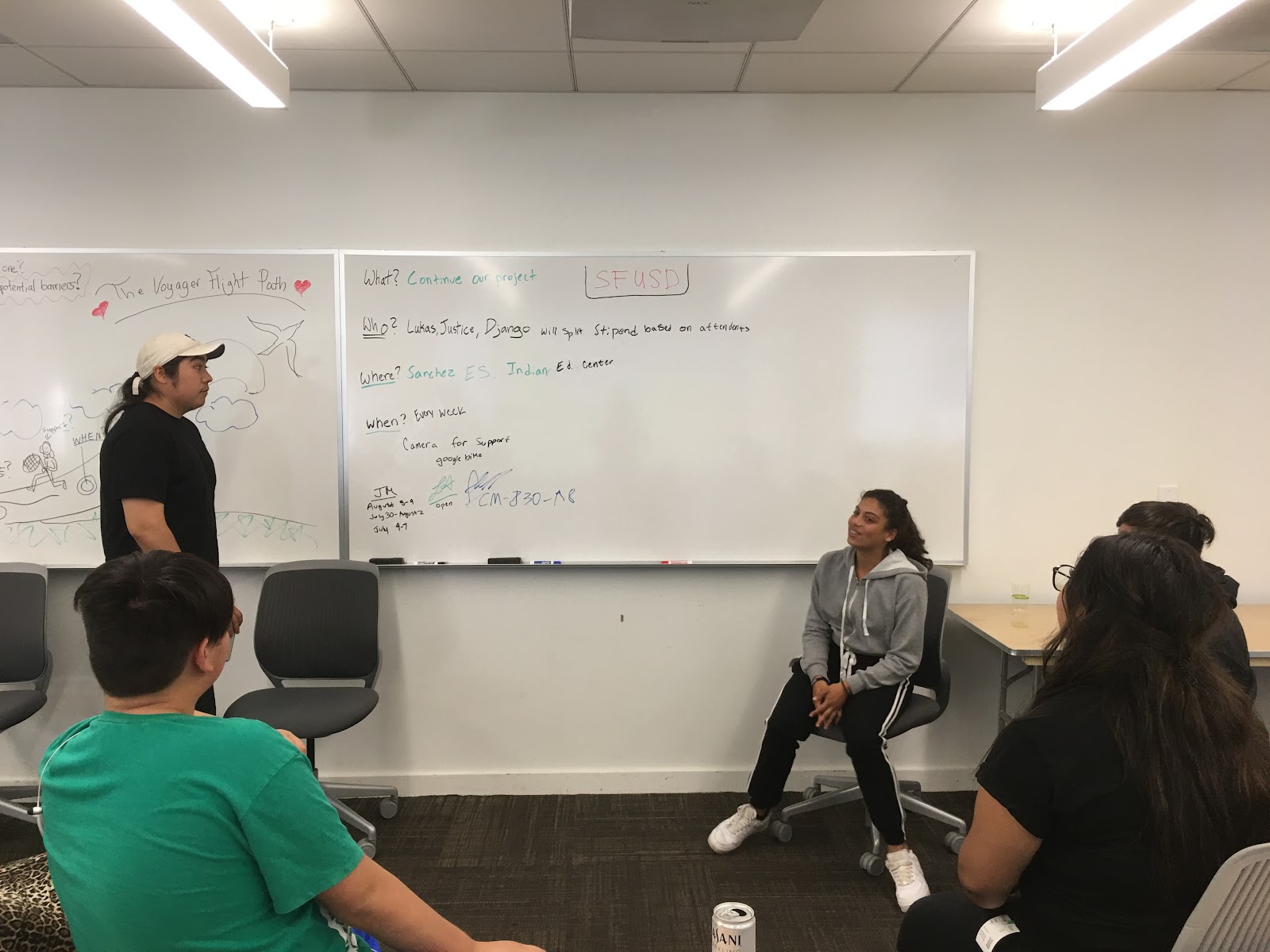
After lunch, Raleigh Seamster, Senior Program Manager at Google Earth Outreach, presented a training on Google Earth tools for digital storytelling and education. Students quickly integrated the software skills, and then broke into groups to plan how they would transform the maps they created in 2018 into dynamic Google Earth Stories, addressing the themes of “Indigenous San Francisco,” “California Indian Genocide,” and “The ongoing legacy of Indian removal, displacement and genocide in the East Bay.” 

Lukas Aguilar and Justice McHenry of San Francisco Unified School District’s Indian Education Program present their plan for a Google Earth story. 

Students will complete their projects — telling the stories that matter to them in their own words — using Google Earth tools, and culminating in an awards ceremony and presentation in the 2019 Bioneers Indigenous Forum.

Come join us to celebrate the gifted storytelling, and technical talents of our Native Youth Leaders at Bioneers 2019


Paul Hawken: ‘We Need to Be Fierce and Fearless’ to Reverse Climate Change


Social entrepreneur and author Paul Hawken is a leading voice in the environmental movement. His visionary ideas emphasize changing the relationship between business and the Earth. As humanity seeks to rise to the challenge of our time, Hawken provides a refreshingly positive and comprehensive approach to global warming solutions in many of his bestselling books, including the latest, Drawdown – The Most Comprehensive Plan Ever Proposed to Reverse Global Warming. Bioneers sat down with Paul Hawken to learn more about his work and his plan for helping build a more connected world.

Hawken will present a keynote address at the 2019 Bioneers Conference.
Buy your tickets to Bioneers 2019 here.


BIONEERS: In what ways have you seen the world change as a result of your work on Drawdown?

HAWKEN: My guess is that Drawdown moved the conversation away from despair to a sense of possibility for many people. We know that it is being taught here in the U.S. from 4th grade to MIT graduate school, and that it is in 14 languages now. All of this has surprised our publisher as, generally speaking, climate books don’t sell very well and Penguin was hesitant to publish it for that reason. The outcome is the opposite. It started out as a New York Times bestseller, and this latest printing, the eleventh, was its biggest printing ever. I can’t say what the results are so much as point to a hunger people have for enacting solutions. There are “drawdown”-named groups around the world who have come together to apply solutions that are applicable to their region, city, country.


BIONEERS: Drawdown, was published in 2017. Based on what’s happening in the world environmentally and politically right now, would you make any changes to the book if it were being published in 2019?

HAWKEN: The book was intended to have a sequel called Regeneration, which is what I am working on now with Lynne and Bill Twist at the Pachamama Alliance. Drawdown mapped, measured, and modeled the most substantive solutions to reversing global warming. However, models do not instruct us as to what to do, how to do it, how to prioritize, or the interrelationship among living systems, social justice and climate.

Regeneration is the social expression of Drawdown on a deeper systemic, biological, and human level. We have to be careful that we do not fall into a conceptual trap that we need to “fix” the climate. That is the same thinking that broke it, making the atmosphere something separate and “other.” What we need to transform is how we relate to life down here, both nature and each other. Social justice is at the heart of regeneration and our ability to reverse the climate crisis. Othering Indigenous people, races, religions, regions, and nature is the fundamental disease of our time.


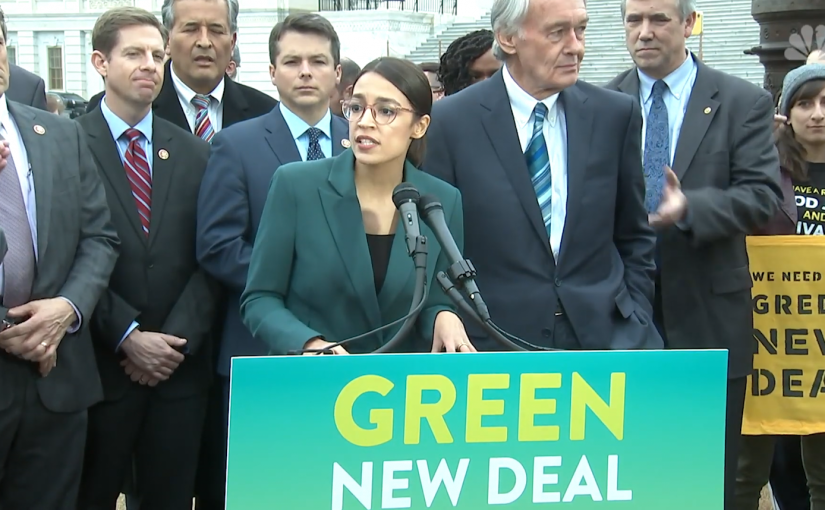
BIONEERS: The Green New Deal proposal got a lot of press coverage this year. What was your reaction to the proposal and the hype—both positive and negative—around it?

HAWKEN: I loved it. It is bold, spunky, and radical. There is so little truth-telling in Washington, D.C., and it was the Green New Truth. It approached the problem from a deeper systemic level, which I think makes it a difficult piece of legislation to pass. My pragmatist side would have done this in steps, making each piece of legislation shorter, more to the point, and easier to get supported.


BIONEERS: When many people and publications discuss environmental issues and climate change, we see words like “fight” and “battle” and “struggle” a lot. In your opinion, is there a way to discuss mitigating environmental issues that is empowering and unifying?

HAWKEN: The language used is very much about sports and war metaphors, verbs that males and the media use for just about everything. Any time there are two sides, we create a semantic coliseum. The term “climate change” itself is incorrect. You cannot fight change. Or if you try, it makes Don Quixote look like a pragmatist. Climate is supposed to change, and the evolving systems of weather are miracles to be grateful for.

The language we hear is about fight, combat, battle, crusade, slashing emissions, the Carbon War Room, negative emissions, decarbonization—all profoundly negative terms. The language and mindset of healing the Earth and atmosphere needs to employ these words: restore, renew, rejuvenate, regeneration, connect, purpose, meaning, respect. What we want to do is change the conditions down here on Earth that are causing global climatic volatility up there and extreme weather everywhere.


BIONEERS: Are there groups being left behind in the discussion about the environment? Why, and what can be done to solve that problem?

HAWKEN: I would say that nearly everyone has been left behind, either callously or unknowingly. Those with little or no resources endure the greatest suffering from climate disruption, and that will continue to increase unless we do something. My guess is that 99 percent of the world is disengaged from the climate crisis. This goes back to how we have communicated the science. To this day, the emphasis is on threat, fear, and potential doom. This is generally very good science; however, it is inept psychology.

We know that fear and threat light up the amygdala, the fight, flight or freeze response of the brain, a response that shuts down the prefrontal cortex, which is the problem-solving part of the brain. Problems need to be presented in the context of solutions that people see benefit in. The solutions that are heard and repeated are about solar, wind, and maybe electric cars. These are crucial solutions in that they focus on reducing fossil fuel combustion: the major source of greenhouse gases. But they are solutions people can do little about because they cannot erect solar and wind farms, or afford an electric car. Yes, people can put solar panels on their house but most people rent.

This creates a disempowered citizenry that hopes “they” fix it, whoever they are, that they get it right, change out the electrical grid, etc. This is a very limited view of what we need to do and it excludes agency, that what each of us can do is critically important. The media infantilizes the range and impact individuals can have and focuses too much on recycling and plastic straws. Thus, people feel disempowered and left behind. But there is another critical point. Even if we turned off every fossil fuel combustion source today, we will still move to climate chaos. We need to stop putting our greenhouse gases into the atmosphere to be sure. We also need to bring CO2 back home where it came from. That can’t be done with a Tesla.


BIONEERS: Who are some of the leaders in your field who you look at and think, “That person is doing it right”? Who gives you hope?

HAWKEN: Well, I am not a big fan of hope. Hope is the mask of fear. They are two sides of the same thing. You can’t have hope without fear. We need to be fierce and fearless, not hopeful.

People I admire are Alexandria Ocasio-Cortez, Greta Thunberg, Bill McKibben always, the children who are marching, Varshini Prakash of the Sunrise Movement, Gail Bradbrook of Extinction Rebellion, Michael Mann, Alexandra Rojas of Justice Democrats, May Boeve of 350.org … I could go on. There are many.


BIONEERS: The plant-based diet part of Project Drawdown seems to get really passionate, both positive and negative, reactions from readers. Do you see that section as being particularly irksome or emotional for your audience, and why do you think that might be?

HAWKEN: Plant-rich diet was the term I coined for Drawdown. It did not prescribe a diet, but rather outlines a shift in awareness about protein and its source. We eat too much protein in more affluent countries, almost twice the 50-55 grams needed for a healthy existence, and we source far too much from animal sources, sources that involve cruelty, degradation and extraordinary environmental impact. The choice of being vegan, vegetarian or omnivore is an individual choice. Drawdown showed that if people reduced their protein intake and moved to greater or total use of plant proteins, it would have a very significant impact on greenhouse gas reductions.


BIONEERS: What would you suggest as one action a regular person could take to mitigate climate catastrophe that would be impactful but also approachable?

HAWKEN: The most powerful action an individual can take is to educate their self. The second most powerful action would be to eliminate food waste in their life. We waste 40% of our food in the US. The third most powerful activity would be to change their diet. The last two are helpful in another way. They make you mindful and connected to the climate crisis every day, all day. 


BIONEERS: What are your plans to continue to use your research and influence to affect environmental action?

HAWKEN: My plan is to collaborate with some brilliant women and men to help create Regeneration, How to Reorganize Civilization in One Generation. It looks like it may come out as a documentary by the brilliant Leila Conners, and a one-day event on publication date at the Cathedral of St. John the Divine in New York City, organized by Diana Rose of the Garrison Institute. Collaborators include Haley Melin, Calla Rose Ostrander, John Wick, Charles Massy, Nirmal Kishnani, Cyril Kormos, Laurene Powell Jobs, Geoff Von Maltzahn, and many others.

Basically, we know more and learn faster as a “we,” and as with Drawdown, my hope is that Regeneration can model what the world has to do. The co-founder of Project Drawdown was Amanda Ravenhill and she had this wonderful phrase that I hope to use in another book I am writing called Carbon: “Carbon is the element that holds hands and collaborates.” Exactly what we need to do if want to reverse global warming.

Hidden Half of Nature: Intelligent, Invisible Life In Us and On Us

Microorganisms have always been an invisible part of life. But now that scientists are uncovering how they can help us address some of the world’s most pressing problems, a revolution for life and health is emerging. In The Hidden Half of Nature (W. W. Norton & Company, Inc., 2015), authors David R. Montgomery and Anne Biklé explore humanity’s relationship with microbes across science and nature by recognizing the essential roles they play in our lives.

This book recognizes the abundance and resilience of microbes, and by drawing on the specialized work of scientists, doctors, gardeners and more, it uncovers an unseen world that works for us, from inside of us. Read on to discover this new perspective on how embracing microbes could be the key to healing our world, from promoting soil fertility to fighting chronic disease.
Following is an excerpt from The Hidden Half of Nature.

See David Montgomery and Anne Biklé speak about their work at the 2021 Bioneers Conference.

The latest revelations about microorganisms show that we are not who we thought we were. This was brought into sharp relief a few years ago when a large consortium of scientists reported their findings in the journals Science and Nature. An unfathomably vast array of invisible life—bacteria, protists, archaea, and fungi—thrives on us and in us, as do innumerable viruses (which are not considered alive). Their cells outnumber our own cells by at least three to one, and many say ten to one, yet we are only beginning to learn what they do for us. And our planet—like the bodies of plants, animals, and people—is literally covered, inside and out, with microorganisms. Not only are they abundant, they’re robust, able to withstand the most extreme conditions the planet can offer.

The more we looked into these recent discoveries, the more we were intrigued by the parallel roles of microbes in maintaining the health of plants and people. And we learned the new name for microbes that live on us and in us—the human microbiome. We began to see how microbes could help restore soil fertility and counter the plague of modern chronic diseases. We had stumbled upon a whole new way of seeing nature.

In this book we tell the story of our journey uncovering and connecting ideas and insights about the emerging revolution swirling around nature’s hidden half. We lean on, draw from, and champion the work of dozens of scientists, farmers, gardeners, doctors, journalists, and authors. It is a story that explores humanity’s relationship with microbes. We are now realizing that microbes, long seen as invisible scourges, can help address some of the most pressing problems facing us today.

This new view of microbes is shocking—they are essential parts of us and plants, and always have been. Such a view points to an astounding potential for promising new practices in agriculture and medicine. Think animal husbandry or gardening on a microscopic scale. By cultivating beneficial soil microorganisms on farms and in gardens, we can ward off pests and boost harvests. And in medicine, research on the microbial ecology of the human body is driving new therapies and treatments. A few decades ago such ideas would have sounded as preposterous as invisible life itself did a few centuries before that. The emerging science of a microbial basis for health directly challenges the wisdom of indiscriminate campaigns against microbes in agricultural soils and our own bodies. Some are our secret silent partners.

There is no doubt that studying the natural world in neatly compartmentalized subjects lets us grasp the otherwise incomprehensible complexity of the whole. Specialization has allowed scientists to chalk up spectacular successes and discoveries. This is the standard approach in seeking cures and treatments for what ails crops and people. But this limited vantage point conceals broad connections fundamental to the microscopic world and our own.

It doesn’t help that profound changes have occurred in the way scientists write about and communicate their scientific discoveries. Pick up a copy of Science or Nature from a century ago, and the average reader can understand what the authors of pretty much any article are talking about. Not so today. Modern scientific jargon is, for the most part, dumbfoundingly mind-numbing. Not to pick on any particular research group or journal, but in researching this book, we often found ourselves wading through sentences like this: Recognition of peptidoglycan by NOD1 in IECs elicits production of CCL20 and b-defensin 3 that direct the recruitment of B cells to LTi-dendritic-cell clusters in cryptopatches to induce the expression of sIgA. 

Unintelligible to most, this is actually an example of succinct scientific writing—the kind that advisors and editors encourage, and sometimes insist on. It packs a page into a sentence. But who, other than technical specialists in that field, can comprehend its meaning? In simpler terms this phrase says that certain intestinal cells recognize particular types of bacteria, and that this bacterial recognition causes immune cells to release substances critical to health. Of course, it conveys more details, like the name of the particular molecules and immune cells involved. But sometimes clarity on the specifics can obscure larger messages. And the more we delved into microbiome science, the clearer it became that we all need to know far more about how microbial ecology affects our well-being and our environment.

Researchers in microbiology and medicine are uncovering the intricate symbiotic relationships that exist between people and the microbes living in and on our bodies. Bacterial cells live alongside the cells lining our gut, where, deep within our bowels, they teach and train immune cells to sort friend from foe. Likewise, soil ecologists have made strikingly similar discoveries about the effects of soil life on plant health. Bacterial communities inside of and around plant roots help sound the alarm and man the barricades when pathogens storm the botanical gates.

As it turns out, the vast majority of bacteria in the soil and in our bodies benefit us. And throughout the history of life on land, microbes repeatedly deconstructed every piece of organic matter on the planet—leaves, branches, and bones—fashioning new life from the dead. Yet our relationship with the hidden half of nature remains modeled on killing it, rather than understanding and fostering its beneficial aspects. In waging war against microbes for the last century, we’ve managed to unwittingly chisel away much of the foundation on which we stand.

And while impressive and transformative new products and microbial therapies are on the horizon for both agriculture and medicine, there is a profoundly simple reason we should care about the hidden half of nature. It is a part of us, not apart from us. Microbes drive our health from inside our bodies. Their metabolic by-products form essential cogs of our biology. And the tiniest creatures on Earth forged long-running partnerships with all multicellular life in the evolutionary fires of deep time. All around us they literally run the world, from extracting nutrients plants need from rocks, to catalyzing the global carbon and nitrogen cycles that keep the wheel of life turning.

It’s time to recognize the essential roles microbes play in our lives. They shaped our past and how we treat them will shape our future in ways we are only beginning to understand. For we will never escape our microbial cradle. Nature’s hidden half is as deeply embedded in us as we are in her.

Excerpted from The Hidden Half of Nature by David R. Montgomery and Anne Biklé. Copyright © 2016 by David R. Montgomery and Anne Biklé. Used with permission of the publisher, W. W. Norton & Company, Inc. All rights reserved.

David Montgomery and Anne Biklé will speak about their work at the 2021 Bioneers Conference.

The Apology: Eve Ensler’s Alternative to Waiting on What May Never Come

Like millions of women, Eve Ensler has been waiting much of her lifetime for an apology. Sexually and physically abused by her father, Ensler has struggled her whole life from this betrayal, longing for an honest reckoning from a man who is long dead. After years of work as an anti-violence activist, she decided she would wait no longer; an apology could be imagined, by her, for her, to her. The Apology (Bloomsbury Publishing, 2019), written by Ensler from her father’s point of view in the words she longed to hear, attempts to transform the abuse she suffered with unflinching truthfulness, compassion, and an expansive vision for the future.

As an award-winning playwright, best known for her play “The Vagina Monologues,” Ensler has used art as a vehicle for anti-violence activism. Her performances are threaded together by the common theme of reclaiming female identity. The Apology continues that legacy by pioneering an important perspective about accountability and apology in our contemporary, fourth wave of feminism.

Following is an excerpt from The Apology written in Ensler’s father’s voice.

Charm was my fortification. It served a dual purpose. It lured people in and it kept them excited and delighted long enough to come under my spell. Then, after, even when people felt demeaned or hurt or frightened by me, the charm confused them, but like a fly to honey, they clung to me in spite of their pain. My status among my peers transformed overnight from obscure to mysterious, from abhorred to imitated. I am not sure whether anyone, then or ever, really knew or liked me (and in full honesty what was there to like?), but they followed me, they were in awe of me; they wanted to be near me and have what ever I had.

Of course, it was shimmering illusion, a chimera, but who cared? Charm took the ugly off my grandiosity. It sweetened the arrogance. I was no less a snob, but now people admired me for it, as it seem justified. In those years before meeting your mother, I perfected my performance, and indeed it seemed my whole life was a grand act. Somehow this shining new rendition of myself seemed to ward off my father’s harsh criticisms and contempt. He was impressed by my commitment to this new attitude, attire, and manner and suddenly had faith that I would indeed rise to be the golden boy he and my mother had dreamed of, bringing the family wealth and status. My sisters and mother became even more deeply enamored and devoted. I was the new American king, the pathway to a glamorous and glittering future for all. Even Milton, my vicious brother, was thrown off balance and seemed almost inspired by the entire effect. He gradually started to imitate my way of dressing and would sometimes accompany me to the movies. 

The tortured and angry young man inside me was now firmly disguised, costumed in dashing handmade suits. He dressed in confidence and elegance and seemed, at least momentarily, to transform his enemies into admirers through style and charm. As you can imagine, this was a most synthetic remedy to what I can only identify now as soul sickness. I had been cast into the world as the exact opposite of the deep, reflective, philosophical man I had once dreamed of becoming. Instead I was becoming everything I secretly despised.

For I see now, after years of ceaseless self- obsession in the death realm, that there is no pain we can ever truly bury or avoid within ourselves. The tortured man I tried to leave behind would eventually surface. All the years of forcing him underground, all the sorrow and pain I ignored and did not care for, eventually metastasized into an entity and returned as a most terrifying fiend. He claimed my life then, and most regrettably, for the last thirty-one years he claimed my death in limbo. I realize I am speaking of him in the third person. I am by no means attempting to escape responsibility for his actions. It was more an indication of how profoundly detached I became from the person I shall call Shadow Man. 

In the same way my parents had not seen or paid attention to the little boy I truly was, in the same way they idealized me and turned me into a king, I learned in turn to do the same thing to myself.

I became God in my own mind. I became all powerful and perfect. Shadow Man had no place in that story. So I banished him the way I had been banished. If he was hurting, I became impatient with him and told him to snap out of it. If he was afraid or doubtful, I bullied him with merciless judgment. If the ragged edges of his low self- value surfaced, I dosed him with grandiose visions of my prowess and accomplishments. If he tried to remind me how far I had strayed from my spiritual longings, I shamed him into compliance by demeaning his impractical and nonsensical dreams and glorifying my rising fortune. I drank him away. I achieved him away. But all the while, Shadow Man plotted, seethed, and stewed. His sense of betrayal, his bitterness, his rage grew like volcanic lava bubbling beneath the surface of my skin. He would not emerge until much later. The ongoing friction caused by the growing disdain I had for myself combined with my arrogance and my utter inability and unwillingness to change my path assured a future in which I would become cruel and violent.

But Shadow Man would not emerge until much later. In those next years I built a life on charm, good looks, and snobbery. I moved in glamorous and fashionable crowds. I modeled for a time, and I was never seen in public without a bombshell actress or an elegant socialite on my arm. I was invited into the most exclusive clubs. I rose seemingly effortlessly to the top of society and the business world. The irony of course was that I despised those impostors and hypocrites who welcomed me and I had no interest in money. I found it beneath me and distasteful, merely a means to maintain my façade. But perhaps it was my very disdain for all of it that brought me fortune. 

I’ve noticed that people often seem desperate for the person who has no interest in them. They gravitate toward the most critical and judgmental because that person confirms their deepest suspicion of being a worthless faker. I exploited this weakness to raise and sustain my position. People were intimidated by me, as they could sense my underlying contempt for their pathetic preoccupations. But my charm and looks distracted and drew them in. My life was a game to be mastered, a persona and an image to be styled and perfected. I was what was becoming known as a modern American man.

From The Apology by Eve Ensler. Copyright © 2019. Reproduced by permission of Bloomsbury Publishing USA.

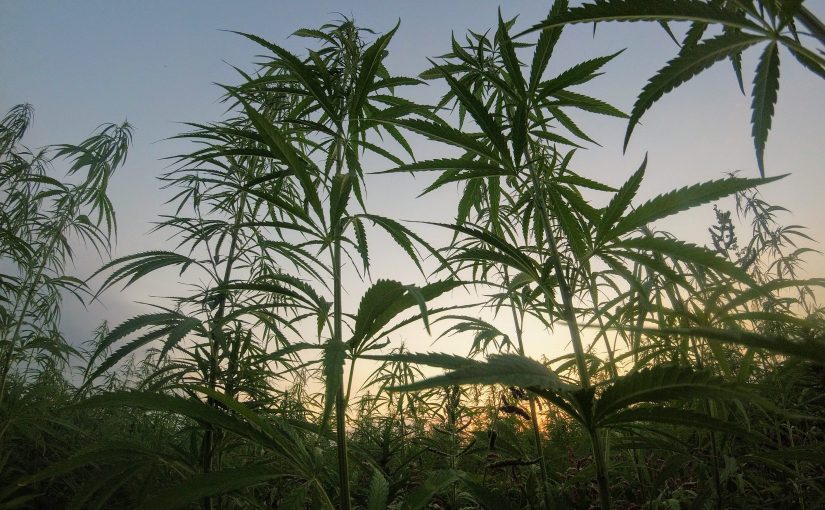
The Hemp Revival: An Ecological Alternative with Many Commercial Uses

Linda Delair is a LEED accredited green building consultant and the Northern California Regional Coordinator for the California Hemp Association. Bioneers Restorative Food Systems Director, Arty Mangan, interviewed Linda at the CalCAN Conference at UC Davis. 

ARTY: How is hemp different from or similar to marijuana?

LINDA: The difference federally is the quantity of THC [the principal psychoactive constituent in cannabis] in the plant. If it’s under three tenths of a percent of THC, then it’s hemp. Anything above 1% is considered to be cannabis. I don’t like to use the word marijuana because it’s a made-up name. It was part of the war on hemp, and they really didn’t care very much about cannabis at all. They made the name up, marijuana, calling it reefer madness back in the 1930’s. The hemp plant can grow to 18 feet tall, and it’s specifically grown for the fiber and for the woody core.

ARTY: But they’re both the genus cannabis, isn’t that correct?

LINDA: That’s correct. One would say the genus of hemp is cannabis sativa L. They’re both cannabis sativa.

ARTY: Hemp was instrumental in connecting you with the Native American poet John Trudell.

LINDA: Yes, our beloved John Trudell. In 2012, I was at the Green Festival in San Francisco, and I had just heard the brilliant Winona LaDuke, of the Anishinaabe tribe in Minnesota, speak about having a crop to grow to raise the tribes out of poverty and she mentioned hemp. That’s where I met John Trudell.

He said that he wanted to see the tribes work together with white ranchers and create a hemp industry that would benefit both. John and Willie Nelson had just started a project called Hempstead Project HEART. HEART stands for Hemp Energies Alternative Resource Technology. At that point it was just a concept. My friend Lea Walter and I started working with John to develop the project.

I organized events. I have a green building background, I wasn’t an event organizer, but this was very appealing to me. I knew about Hempcrete, made from hemp and water and lime, which can be used as a green building material.

Before John died, young Menominee tribal member from Wisconsin, Marcus Grignon came to see John, and they discussed having the tribe take over Hempstead Project HEART. After John died in 2015, we met with Marcus and handed the project over to the Menominee tribe, and they’re doing a great job legislatively, etc.  

ARTY:  You mentioned your background in green building and Hempcrete. How can hemp be used in building?

LINDA: Hemp has been around for thousands of years. It has been found in the pyramids. It is a wonderful, lightweight material. Hemp has many uses; hemp as a green building material is just one. When you remove the fiber from the outside of the stalk, there’s a woody inner core, and that is what you use to make Hempcrete. The woody core is ground up into half inch pieces, no larger. You mix that with water and lime – ­lime S or a hydraulic lime or a hydrated lime. The plant, in the growth phase, sequesters carbon, so the hempcrete locks that carbon up in the walls of the building.

It’s basically an insulation material. There’s a niche to be filled with insulation in order to lower energy requirements. The volume of insulation material we use today is going to rise dramatically in commercial and residential buildings. It makes ecological and financial sense to fill this volume with materials that are annually renewable, have a low ecological impact, and ideally are sourced from waste streams or byproducts from other processes. Hempcrete meets all of these important criteria and compares favorably with conventional insulation materials in many ways.

You don’t have to add drywall or insulation. Hempcrete is an insulating wall. It looks similar to concrete, but it’s about an eighth of the weight, and there is no Portland cement used, so there is no off-gassing from the wall at all. When you mix it together and you create this monolithic wall, all you really need to do is put a lime wash on the wall or something of that nature. Hempcrete is flame retardant and it’s mold and insect resistant. You don’t have to worry about termites, you don’t have to worry about mold, but you do have to let the material breathe.

ARTY: What are some other uses for hemp?

LINDA: The fiber from hemp can be used for clothing and plastics. It’s so amazing. The hemp plant has very long roots that break up and remediate the soil. It takes carbon out of the air and sequesters it into the soil.

ARTY: One of the other uses is as a food source. Can you talk about the nutritional value of hemp?

LINDA: Hemp seeds are very high in omega 3 and omega 6. Most hemp seeds on the market today come from Canada where it has been legal to grow for 20 years or so. Companies like Nutiva, a local California company, built their business on hemp seeds and coconut oil. You can sprinkle the hulled seeds on yogurt or in your salads or whatever you want. They are very very healthy for you because of those fatty acids, which the body loves.

As far as eating any other part of the plant, it’s pretty much the seeds that are edible. You can make oil from hemp seed, but you do not want high flame under the oil. Use the oil on salads and that sort of thing, but you don’t want to heat it up.

ARTY: What is the legal status of hemp? I know there’s been a change recently.

LINDA: At the federal level, it had been considered a Schedule 1 narcotic as of 1970 and prior to that the Marijuana Tax Act in 1937 made it too expensive to grow. But historically hemp was commonly grown. My goodness, in 1776 The Declaration of Independence was drafted on hemp paper. The word canvas comes from the word cannabis. All the ships, ropes and sails of the world were rigged with hemp from India to Pakistan to South America. The Chumash grew hemp in California for catching otters and for rope for their fishing lines. When the Spanish arrived in California, they wanted to grow hemp for their sails and ships, etc. and they discovered that the Chumash were already growing it.

The 2018 Farm Bill, introduced by Mitch McConnell and signed by President Trump, made it legal to grow hemp in the US. Mitch McConnell’s state of Kentucky lost tobacco subsidies. Historically they were big hemp growers. Hemp is no longer a Schedule 1 narcotic and it is considered a commodity crop.

However, all the states have rights, and some states can say no. They don’t care whether it’s legal, they don’t want it grown in their state. South Dakota is not allowing it, but Florida is. Every day there seems to be another state looking at what the other states are doing and how well they will profit from the hemp plant whether it’s for CBD or fiber or whatever it is, and are saying yes to growing it.

 The challenge is that processing plants doesn’t exist for hemp hurds – the small pieces of the woody core of the stalk used for hempcrete, paper, animal bedding, etc. – and hemp fibers. We haven’t had hemp processing infrastructure since 1958, when the last processing plant in the country, in Wisconsin, closed.  But CBD is processed in a laboratory, which is much easier to get established. CBD is the low hanging fruit in terms of getting a product to market. So, that’s an issue when investors are considering which states should they invest in.

ARTY In a place like California or Colorado where cannabis is legal and a farmer wants to grow hemp, do they still need permits?

LINDA: You have to register where you are growing because of the low threshold of THC in a hemp plant. And the farmer has to pay whatever the county fees are.

All food seeds, whether it’s a radish or a potato or anything else,have to be registered so that everybody knows, for example, that’s a Russet potato. That way when you’re planting Russet potato seeds, you’re not going to get a variety that’s not a Russet. If you’re going to grow hemp for CBD or for whatever, that seed also has to be registered. That way you know what you’re getting. There is testing of different parts of the field, and different parts of the plant. If the THC content is too high, that can ruin a thousand acres. That’s a large financial loss.

Hopefully, eventually, that will change, and the THC content in the hemp plant will be raised, because you’re not going to get a mouse high on under 1% THC. I promise you. The THC level for hemp is arbitrary.

Another obstacle exists at the county level in California. Neither the state nor the California Department of Food and Agriculture have come out with regulations for 2019. A lot of farmers are not able to grow the crop because something like 35 counties in California have moratoriums on the growing of hemp since there are no state regulations.

ARTY: Are they treating hemp the same way they’re treating cannabis? Or are they distinguishing between the two when it comes to these regulations and permits?

LINDA: It is distinguished, absolutely. Cannabis farmers pay a lot of money to grow their crops. They pay a lot in state taxes, etc. If there’s a hemp farm nearby that has both male and female plants, pollen from the male plant can cross pollinate the cannabis girls, and the cannabis crop will be ruined. So, it’s completely understandable why cannabis people are very concerned about hemp being grown next to them. But the state hasn’t come out with regulations, not even for how many miles there has to be between a field of hemp and a field of cannabis.

I’m part of the California Hemp Association, we have Memorandums of Understanding, we just signed one with Imperial Valley. With the MOU, we work closely with the farmers and the county on crop insurance and political regulation and we bring the police in to be part of the process.

ARTY: What are some of the other things that the California Hemp Association is focused on?

LINDA: We work with farmers in counties that don’t have moratoriums. We supply PhD scientists who work with the farmers on growing practices, insect problems, etc. because it’s been 81 years since hemp was grown here.

We work with UC Davis on identifying the best cultivar for your area, for the type of soil that you have. Hemp doesn’t like clay. If you have clay soil, you’re going to have to use a lot of amendments to your soil. It likes a nice loamy soil. What plant doesn’t?

We go around to different states and visit farms and learn from them. When Kentucky made hemp legal, they bought their seeds from Italy, because even though Canada is closer, why would you grow a cold-weather plant in Kentucky when Italy could supply you with seeds more appropriate for your climate. The University of Kentucky in Lexington studied the seeds for several years before they finally decided which seeds they wanted to grow for CBD. At first, they wanted to grow hemp for the fiber and the hurd for the automobile industry up and down the East Coast. BMW and Mercedes Benz and other car companies have been using hemp fiber in their dashboards and their car door panels and their car parts. They call it a bio-fiber for the American market, it’s like a plastic.

The fiber on the outside of the plant stalk is what you use for plastics and for clothing. There’s so many things you can use hemp for. Hemp is in Paul Hawken’s book Drawdown. He says that the area where hemp could make a difference is as a substitute for cotton because cotton uses an awful lot of water and the other plant parts of hemp can support the economics of fiber production. Cotton growers in Central California are very interested in growing hemp because of water issues.

ARTY: Hemp is more drought tolerant?

LINDA: Yes. It’s certainly not a cactus, but it’s far more drought tolerant than cotton. Levi’s is now working with the hemp and the cotton plant primarily because of the water that cotton takes to grow. They’re very aware of it. The first jeans that Levi’s made were hemp. It’s just like canvas. Levi’s is now saying by 2022, I think, that they’re going to be able to get the cotton and hemp blend to be fairly soft because it’s a very tough stalk. Ralph Lauren uses a hemp and silk blend. It’s like silk charmeuse. It’s absolutely beautiful. A lot of the fashion companies around the world are looking to use hemp because it’s such a strong fiber and it takes less of the more expensive fibers like silk. Hemp is the most useful plant on the planet.

ARTY: It is versatile.

LINDA: Farmers, especially cotton farmers, want to phyto-remediate their soil, because cotton has very much depleted the soil. Ethanol can be made out of hemp and not corn. These are really coming attractions with the hemp plant. Many states are welcoming the hemp plant. California is too, but we seem to be slow with our regulations. I would say that in 2020, that’s the year that you’ll see hemp really in the ground in California.

The Rights of Nature with Mari Margil and Thomas Linzey

Nature is not our property. Communities are now passing legislation to recognize the legally binding rights of nature. This spreading network is honoring and upholding the personhood of the environment, instead of the personhood of the corporations destroying it. Featuring Mari Margil, Associate Director of the Community Environmental Legal Defense Fund, and Thomas Linzey, co-founder of the Community Environmental Legal Defense Fund.

Learn more about The Rights of Nature here.
Explore more Bioneers media on the Rights of Nature here.


This video is part of a series called “Seeding the Field: 30 Years of Transformative Solutions,” which celebrates some of the best moments of the Bioneers Conference through the last 30 years.

Directed by: Maximilian DeArmon
Edited by: Abe Costanza
Sound Mix: Stephanie Welch
Consulting Producer: Kenny Ausubel for Bioneers
Produced by: Maximilian DeArmon and Theo Badashi for Cosmogenesis Media Group

Creative Commons Credits:
We the People 2.0 – The Documentary
PBS
iTV News

Green Economy with Van Jones

As the climate change movement leaps to the center of political, cultural and economic urgency, we’re confronted with two crucial questions: Who will we take with us? Who will we leave behind? This issue is now about more than just saving the planet as it is united with the goal of slashing poverty. Featuring Van Jones, activist and co-founder of Dream Corps.

Learn more from Van Jones here.
Explore more Bioneers content on Eco-nomics here.


This video is part of a series called “Seeding the Field: 30 Years of Transformative Solutions,” which celebrates some of the best moments of the Bioneers Conference through the last 30 years.

Directed by: Maximilian DeArmon
Edited by: Johwell St-Cilien
Sound Mix: Stephanie Welch
Consulting Producer: Kenny Ausubel for Bioneers
Produced by: Maximilian DeArmon and Theo Badashi for Cosmogenesis Media Group

Additional Footage:
Green For All
https://www.youtube.com/user/greenforall
Grid Alternatives
https://www.youtube.com/user/gridalternatives

New Paradigm Hiphop feat. Climbing Poetree, Dj Cavem, Lyla June, Xiuhtezcatl Martinez, Isa Roske

Hip-hop has been a movement not only based on music, but also on social justice. Explore the emerging paradigm of eco hip-hop: a growing sub-culture of artists speaking out on environmental issues. Featuring spoken word performers Climbing Poetree and hip hop artists DJ Cavem, Lyla June and Xiuhtezcatl Martinez.

Explore more about Art for Social Change here.


This video is part of a series called “Seeding the Field: 30 Years of Transformative Solutions,” which celebrates some of the best moments of the Bioneers Conference through the last 30 years.

Directed by: Maximilian DeArmon
Edited by: Johwell St-Cilien
Sound Mix: Stephanie Welch
Consulting Producer: Kenny Ausubel for Bioneers
Produced by: Maximilian DeArmon and Theo Badashi for Cosmogenesis Media Group

Additional Footage:
“Rubble Kings” – Documentary
https://www.youtube.com/watch?v=BxYGhrwsle0