Somatics, Trauma Healing and Social Change

Staci K. Haines, the founder of “Generative Somatics,” has integrated her extensive experience in both transforming individual and social trauma and in grassroots movements into uniquely powerful work that has proven to be incredibly helpful to a wide range of social justice activists, many of whom have been deeply hurt by oppression or violence. In this panel, leaders from a range of cutting-edge groups, including Prentis Hemphill of Black Organizing for Leadership and Dignity (BOLD), and Raquel Lavina from the National Domestic Workers Alliance, share how they have been able to successfully integrate embodied transformation into their social change work. Transcript below edited for easier reading.


STACI: Hi All. I’m Staci Haines with Generative Somatics. We’re really happy to be here. So I’m going to hand it to Raquel first. Can you kick us off?

RAQUEL: Hi All. I’m Raquel Lavina. I’m with the National Domestic Workers Alliance, and we are nannies, housecleaners, home-care workers, part of the biggest growing industry in the whole country, right, because of so many people aging, people with disabilities, and young people, and homes that need to be cleaned. Yet we’re some of the most exploited workforce in the country. So we’re a national alliance, and we have a goal of building a membership association of 250,000. We’re halfway there.

And we also help lead, in terms of building a broader progressive movement, because it doesn’t matter if we have better conditions if the rest of the world’s on fire. So we both do organizing with domestic workers and in the progressive movement.

STACI: Raquel, will you also tell us a little bit about you? 

RAQUEL: So I come to this work as someone who’s done organizing, who helped build a lot of youth organizing a long time ago in the Bay Area, and to me, bringing people together to build power was really important and powerful, and the ways in which we were organizing was not generative, it didn’t nourish us. So I have both a background in organizing, in domestic violence, in healing, and I think there’s probably some way to bring this all together.

I came to Generative Somatics with an idea of using the system of organizing in a way that helped us model what we want to build in the future and heal along the way, and that way our visions could be bigger and longer term, and our present could be a lot more healthy and powerful.

PRENTIS: Hey Y’all. I’m Prentis Hemphill. I use pronouns they, them, theirs, and I’m here today representing Black Organizing for Leadership and Dignity or BOLD, as you will hear me call it as we talk.

BOLD is a training program for black organizers, movement leaders, that is really focused on rebuilding infrastructure of black movement. And in that project we deeply integrate somatics, deeply integrate embodied leadership, as well as political education and transformative organizing.

I’ve been organizing for a while now, longer than my face reveals. And I mostly started working around prison abolition, and just understanding the impacts prisons had on my community, on black communities, on my family all my life, and really, as I got deeper into that work, so much of the pain and trauma that we’ve experienced for so many generations was really revealed to me, and I stopped that work for a while and became a therapist. And I was working—I didn’t really stop that work; that’s not true. But it kind of shifted how I did that work. And I focused on building my skills to support healing for my folks, for my communities. And I did that for a long time, and then felt really kind of stuck and siloed, and that too I was like, Oh, we’re not able to talk about how oppression is traumatizing in this context? We’re not able to really talk about how people can organize or act back or shift conditions, or how everything needs to be restructured actually to prevent the kind of trauma that we’re experiencing. My work has been about merging those back, and I’ve been doing that with these folks at Generative Somatics for many years too.

But really, how do we heal on a level that we need to heal? How do we shift structures? How do we build power on a level that we need to to actually feel freedom in our bodies and in our lives? So that’s what I do. [APPLAUSE]

STACI: So I’m Staci Haines, just to do a little bit more of an introduction on myself. I have been co-building Generative Somatics for the last…coming on a decade, with many folks, including Raquel and Prentis. I too, like them, have had a very deep passion around how do people transform, how do people change, and then how do social systems change. As many of you are probably familiar with, those end up being super different schools of thoughts and different schools of action, and that did not make any sense to me at all.

So I’ll say a little bit more when we are speaking, but I really followed both of those paths: What are the ways I can find to help people, including helping me, around healing trauma, and also just building more empowerment and skill and choice? And somatics really became the method that I was like, Wow, this is working really well with a lot of different people.

I also have been active for a long time. I started in campus activism, and then really focused on work around sexual violence, and then particularly around child sexual abuse. How do we end the sexual abuse of children? What would we need to change to do that? All of that integrates into more of stories we’ll tell.

I’d like to also share that I’m a new grandma! And that’s a trip. I’m like, When did that happen? I don’t look like my grandma did. All these next generations, that’s who we’re working for, fundamentally.

Because it’s somatics, we’re going to start with practice, play? Basically somatics is a methodology for transformation that leads to embodied transformation. And what we mean by that is that we’ve transformed when we can take new actions aligned with our vision and our values under the same old pressures. Right? So we do not hold new insights as transformation, we just hold new insights as new insights. That’s awesome, but most of the time we can’t take new actions consistently off of new insights, so “embodied transformation” means that we have put a new schema into our psychobiologies. We’ve actually put new memory into our musculature. We have let go of deep patterning and often wounding or patterning of privilege that has shaped us up to this point. So our vision, our values, our actions, how we build relationship can be aligned, even under the same pressures. even under the social systems that we live in. So that’s really what somatics serves. 

We define transformation as when our actions align with our vision and our values, even under the same old pressures. We can be and act and build relationship differently. We can organize differently. We can build movement differently, even under the same old pressures. So that’s what we’re looking at inside of somatic transformation or embodied transformation.

Soma just means the living organism in its wholeness. Basically there’s no good English word, so we’re stuck with soma. Okay? But it means all of us – mind, body, spirit, relationship, action. 

PRENTIS: Alright, y’all. So we are going to practice. And one of the foundational practices inside of somatics is this practice that we call centering, which is really about how do I get present with what is; how do I feel myself and notice what’s there; and then how do I intentionally shape myself or feel my shape so that I can take the action I want to in the world. So we’re going to do that practice together, and it can be done either seated or standing. You can choose. I’m going to be standing. I just want you to get into a position that allows your body to be both relaxed and alert. 

And before we center, we just want to take a minute here to just drop in and notice who you are, how you are right now. So with breath, we can notice: What kind of thoughts do I have right now? We can notice also: What kind of mood am I in? And none of this we need to change, we just want to be able to be that presence that notices.

And then we want to really feel and notice on the level of sensation. So what’s actually happening in this body, in this organism? And you can here look for temperature: heat, coolness. You might notice different regions have different temperatures. Just notice that… You might also notice tightness… You might notice pain… You may notice movement… Or you may even find places where there’s numbness, where you don’t feel anything at all… And with all of this, we want to increase our curiosity. Just what is? What is? Not trying to shift, not trying to tell a story about it…

And then from here we want to center intentionally. So I’m going to ask you to bring your feet about hip width apart, just make sure you’re there. And if you can even try to find it without looking, if you can just feel it. Bring your eyes open if you can, and in the room, because here we want to center, and also be a part of. We get really good at centering and being alone. We want to center and be with. So here, dropping in this place we call center, we locate it about one or two inches below your belly button, so you can put your hand there.

I really want to ask you to bring your breath, your attention, your presence to this place… letting yourself drop in. And so really imagining this place, it’s a 360 bowl. So if you want so you can feel it from the inside out, inside to your hand… So much energy that emanates from this place. And from here we want to intentionally use the energy here to center on purpose, so allowing ourselves to center first in the dimension that we call length. You might feel yourself kind of—let gravity have you. Like if there are muscles holding, let them surrender a bit more to gravity. Feel your connection to the floor, to the earth underneath you… And then simultaneously let yourself kind of naturally, easefully extend upwards. You can imagine there’s a string at the back top of your head that gets to extend upwards towards the sky, but here letting space be between your vertebrae, letting your chin come level… and letting breath be here the whole time as you feel this length. And this is where we say, in the somatics lineage, is where we express our dignity. This is the dimension through which it gets expressed. And it’s also the place that we can witness dignity in each other.

So I want you to just take a moment, bringing our eyes, making sure our eyes are here in the room, but take a minute and check out the dignity in this room. There’s inherent dignity in each person inside of this room that cannot be negotiated, taken away. It’s inherent.

And we also get to be an invitation to dignity. You can think of it as a competitive sport sometimes. I get to have my dignity, therefore, no one else can feel it in the room. We get to practice here: How can I be in my dignity and also be an invitation? I want you to have your dignity. How does that feel? It’s looking good on y’all. [LAUGHTER]

And then we get to center in our next dimension while holding onto this length. Right? We don’t need to lose this, we can kind of feel it out. We also want to center in the dimension that we call our width. So really just let yourself feel yourself side to side. So you might feel ear to ear, shoulder to shoulder, feel the width from the side of your hips, knee to knee, feet to feet, really let yourself feel: What’s my natural width? Can I relax into that width that allows me to just be open? See if I can breathe into, feel that width, and then also feel for the people around you. Just feel for them. Perceive them without looking, just feeling. And seeing if you can find that place where you can let yourself out, but you can also listen, connect.

And this is a dimension where a lot of us can express our boundaries. Right? We can shrink away, we can bring it in. We can also connect here. We can be vulnerable here. 

And let’s center here into the dimension of depth, and again, we get to hold onto our length, our width, and then also feeling into our depth, feeling for your back body. Western culture can be so front-body oriented – What are we doing? What comes next? What comes next? We get to feel some of that back body. Feel the back of your head, your neck, the clothes on your body. Feel your butt, the clothes on the back of your legs. Feel your heels. You might notice that your weight wasn’t on them. Can you bring some more weight to your heels?

And here with your breath, let your kind of back body open up, relax. And here we might bring in our lineages, our ancestors. Who has our back? And let that be some of the support that we get to rest into. You come from somewhere. Like it’s to be behind you, you get to resource what you need from there.

And then moving in and through our bodies, letting ourselves feel in and also soften along our front, so feeling forth. If you have glasses on your face, feel those for the tip of your nose. Feel the clothes on your chest and your torso, down your legs. And then kind of facing into now. Here you are, bringing yourself present.

And then the last dimension we want to center around is what we care about. So if can just, from your center, kind of listen into: What is it that I care about? What is it that I’m here to do? What am I up to? What am I really committed to? And let whatever that is organize you a bit more. So if that’s true, what about your length, your dignity? If that’s true, what about your width, your connection? If that’s true, how do you relate to your lineage or history? Let it shift something in you. Let it show up on you.

Take a moment to note to yourself: What’s my mood after that? What’s there? What’s showing up? And just let it be with you. Thank you.

Prentis Hemphill and Staci Haines

STACI: Inside of all the practices that we do there’s a principle. So we’re practicing embodying something, and with centering, like Prentis just shared, we’re practicing getting present, open, and connected, and on purpose. Right? And then somatics is very pragmatic. There’s like a how-to – How do we do that?

So we’re going to do one more practice before we kind of dive into chatting more, and this is a practice we call hand on heart or hand on chest. And this is about how do we center and invite—bring our center to someone else at the same time. Like how do we build connection and relationship from purpose, and from being present and connected.

Turn to someone near you, take a moment and introduce yourself, because this is—You’re going to need a partner for this practice.

 [AUDIENCE PARTICIPATING]

STACI: So Prentis and I are going to model this. A lot of our practices are based on standing, to give people more access to feeling our lower bodies. A lot of time we’re a little numb from the chest down or the eyebrows down, just depending. [LAUGHTER] 

Okay, so what we’re doing inside of hand on heart or hand on chest is if you’re standing you just go same foot forward, and then we ask permission: Is chest okay, or shoulder? And same hand and same foot. I’m going to just place my hand on Prentis’ chest. So you want to move at all?… Awesome. Okay. But what we’re basically doing is we’re connecting center to center. So I’m really bringing my center to this connection, and then inviting Prentis to do the same thing. And then we’re going to ask a question with each hand, and just let your body answer the question. Like you don’t have to figure it out, you don’t have to think about it, just let your body answer the question: How does oppression cause trauma? 

So that’ll be the first question. Then we’ll change hands, change feet. Center to center here. And then the second question is going to be: What does healing have to do with social change? Okay? You’re going to go both questions in one direction, then you’re going to switch roles, ask the same questions to your partner. Yes, question…[AUDIENCE ASKING Q] Oh, your mouth actually answers. [LAUGHTER] Your mouth is your body too, but good question. You will verbally answer the question, just don’t think about it. Like don’t figure out the answer, just let yourself answer. Right? So you might learn something in your answer too.

RAQUEL: Thank you all for jumping in. That was really beautiful, actually. So some of you knew each other and some of you didn’t, and that’s a practice in how am I really in myself, and how am I really connected to somebody else in themselves, and asking a genuine question, and hearing a genuine answer instead of the like, How are you, I’m fine, Bye, that we normally do. And we want to take time to do that.

So we actually just want to ask two people, tops, there’s a mic right here, and I just want to ask you how that was for you, and if you learned anything from connecting with somebody in this way. 

AUDIENCE MEMBER – Great to drop in and see if any trauma has affected me, or oppression has affected me. Needed a definition of oppression, and missed it. And was needing a definition of social change. If you could frame that.

AUDIENCE MEMBER – Found it incredible. The power of the touch is incredible. Was moment where they went so fast through it, couldn’t even remember what was said. Wanted to capture it for the more cognitive part of self. Answer was immediate.

RAQUEL: Awesome. Thank you. So we’re going to our next part of practice, which is us doing a bit of talk about how we incorporate this into our work. Definitions of oppression and social change will come up through that.

So how I want to do this is like actually the three of us know each other for a while, and so we could just sit here and talk for 45 minutes with each other. We’re not going to. [LAUGHS] So we’ll each say a little bit about how we do both social change and somatics and healing together in our different areas. Staci will start it off, she’ll talk a little bit, and then we’ll actually ask if you all have any questions or comments about what she has. We’ll move to me, and then to Prentis, just so we have a chance to dig a little deeper, because we’ll talk about fairly different things.

And then we’ll try to save some time at the end. So I just wanted to give you a little structure of how it will be. And then we’ll just figure this out. We already like figured out how to center in hand on heart in this big room, so I trust all of us.

All of us come from organizing or being in groups of people, collectives of people on this panel. I’m sure a lot of you do as well. And whether or not you talk about trauma, it’s there. Right? It’s in the room. It informs how people behave with each other. I always experienced it as like—I just felt like somebody just vomited on the room. Right? Because it’s just there.

And a lot of times, in organizing, we can say, Let’s ignore it; let’s just try to ignore it because we still have to take action. Or in healing, we can say, Let’s help this individual go deep into their trauma and try to heal from it. So what we’re trying to keep teasing out with each other is: How do you do healing in collectives? How do you deal with trauma so it becomes part of what is in the room, but it doesn’t define the room? And we can take action together.

How we define the somatics is you have a brain in your brain. Right? You have a brain in your head. You have a brain in your heart, and you have a brain in your body, or in your gut. And if you just use one of them, you’re not using the full amount of information or your full self. So the point of our somatics when we’re working with domestic workers is: How are we at all times using the intelligence we have here, the intelligence we have in our heart, and the intelligence we have in our body. 

STACI: So I walked into my first psych[?] somatic transformation/healing space in 1995. What was amazing, and I found this in a lot of spaces, as I was seeking my own healing – I was also healing from my experiences of trauma – as I was seeking my own healing, what I found was most of the healing spaces were primarily white, they were primarily upper middle class and owning class white folks, and I was always the one on scholarship. I’ll tell you I’ve cleaned a lot of people’s dishes to get my healing. Right? So I’d apply for scholarship and then I’d do a bunch of work before and after the day started.

Now what I also found in somatics is I was like: This is so powerful, like I transformed and I saw people transform in ways that I had never seen before. Again, very holistic, a deepening of their emotional confidence, a letting go of certain impacts of trauma that I didn’t even know were possible to let go of. So I knew something very powerful was happening in these rooms, but in the other time in my life, I was out doing activism. Right? So I was doing activism, I was working around sexual violence prevention, white anti-racist work, and it was like I—the bridge between the two seemed so far apart. Yeah?

But one of the things that I see in transformation work that does not have a social analysis is that we can do transformation that leads to the same social systems of oppression. 

Here’s what we mean by oppression, and I really appreciate people saying, like what are these words and what do you mean, because I’m sure we have a wide array of us in the room. Some folks that makes sense to them and some folks not. But oppression are systems, structures – right? – like economy, government, media, education – right – these big structures that have these big, long histories that basically say certain peoples, certain groups deserve safety, belonging, dignity, and resources more than other groups. And so the ones who deserve tend to think, Oh, I just earned that myself. Right? That’s part of how privilege works. It’s like, Oh, I earned that; that’s just mine. Instead of seeing that there’s systems that keep handing safety, belonging, dignity, and resources to certain groups, taking it away from other groups to do that. 

Oppression is all the people it gets taken away from and the land. Like no one is out there asking the land if we can exploit it. Right? Or fixing it once we do. Oppression are these systems that take away from certain peoples in a structured way, a predictable, ongoing way. Power gets concentrated. Power, resources, safety, belonging, dignity gets concentrated with certain peoples and taken from others on the land. Exactly. Yeah.

So white supremacy. We’ve all heard about white supremacy. Right? So that’s one way. It gets concentrated, especially in the US, with white folks, wealthy white folks, and taken away from and hurting communities of color. 

Male supremacy, sexism. Right? That’s another way it’s structured. Right? Did anyone get to watch the Kavanaugh hearings? I’m like, How is it 2018…Wow, here we are again. Still…exactly. Here we are still. Okay.

So, but here’s the thing. Y’all, some of you, might have been in those transformational rooms where what folks are transforming for is to get better at privilege and capitalism. Whoops! [AUDIENCE RESPONDS] Right? That is not what we want. But because oppression and privilege become unconsciously embodied – right? – here’s the link we’re looking for. Like I cannot agree with the social systems that I live inside of, but I still embodied white supremacy. How could I not? It’s been what I’m soaking in. I have to proactively do something about it to line myself up and line my embodiment up with my values. 

I can’t tell you how many totally awesome male activist folks where I’m just like, Can you please do a little bit deeper dive on your sexism? [LAUGHTER] Right? And I trust them and know their values, but if you don’t do the internal work . . .

Well, the same thing happens. Like I was in that somatic room, and these are—I mean, I have stuck with this lineage and this approach for 23 years because it works. But when I was there, there was no social analysis going on, and so many of those people were going, Great, I’m going to use my transformation to get richer; I’m going to use my transformation to be a better leader, but I’m going to be a better leader inside of Exxon. So this is what happens.

And, again, all love to all of the transformation that’s happening in the Bay Area. I live here too. And the transformation that has really grown much more in the last 25 years in this country. But it is a rare meditation teacher that says, Meditate, and then go get socially active; meditate and wake up about how you’ve been shaped by our social systems that’s not life-affirming. It’s the rare somatic teacher who does that. It’s the rare therapist who does it. It’s the rare transformational workshop leader that does it. Right? So really what we all are committed to and about is these cannot be separate. Our personal transformation has to be—have a social analysis and understand the social structures we live inside of, and serve to transform them toward equity and life. Yeah? [APPLAUSE]

Staci Haines

Personal transformation, social transformation, same thing. Let’s just have a super strong bridge between those two. One, we’ll get way better at being social change leaders when we’re more healed. Right? I’ll be more awake. I’ll be a more awake human being the more I heal and transform my own trauma and my own privilege. Right? I’m a better leader; I’m a more trustworthy leader that way. And because oppression causes so much trauma. Right?

I am working on a book that will hopefully be next fall if I get it done by my deadline. But I have two minutes…

Okay, I’ll just tell this story because here’s what’s coming. I don’t have a title yet, sorry, but it’s about this theme. It’s about the bridge. Maybe The Bridge will be the title. But I remember sitting in my younger activist days, and sadly this happened two months ago too, in rooms of people who deeply cared about social change, and the amount of trauma and the amount of acting out on each other that was happening broke my heart, about the world that I really long for for all of us. And I so appreciate—To me, social activists have chosen the hardest job in the world. The hardest thing to do is to change broad social structures toward equity and life. It’s a really big job. Right? Millions of us need to do it. But sitting in those rooms and seeing the impact of trauma and oppression without access to healing? It’s not actually creating the biggest visions and strategies that we want and need. Right? And sitting in rooms that have had a lot of access to healing, to healing trauma, to meditation, to transformative work.

What’s so hard is you bring up racism in that room and people flip out. [LAUGHTER] Or you say, Can we talk about actually the negative impacts of capitalism? And people get pissed. [LAUGHTER] Right? So it is, it is really that bridge of like can we wake up inside, and can we wake up outside, and then do something about it together. Yeah? [APPLAUSE]

RAQUEL: So we can take three people coming up, either a question or a comment, and just come to the mic because they are recording this session.

AUDIENCE MEMBER: They get pissed because they’ve already dealt with it?

STACI: Sorry. That was kind of a shorthand…No, what I’ve noticed—We just led a four-day training of a – I’ll just call it a very large funding community. [LAUGHTER] No, it’s all good. It’s like people with their hearts in the right places, and when we really said our economic system is exploiting a lot of people and the planet, there was a lot of discord and dissonance and upset in the room to question global capitalism. Yeah, and these are also people who have done a lot of transformation work. So that’s what I meant inside of that. Obviously you weren’t there. [LAUGHTER]

AUDIENCE MEMBER: What did you then do when they all got pissed off?

STACI: No, it was good. So this is also what’s so important, is by developing and growing ourselves – right – and, again, we do it through somatics – is our capacity to hold complexity increases. Our capacity to hold contradiction increases. Right? And we need that to get through what we have in front of us. Right? I needed that to love some of the people that I spend those four days with. Right? I really had to go, What is my purpose? What do I care about? And I can hold this complexity and we can keep engaging. But that all really came through practice. And also we invited them into practice. So we did four days of somatics with these 90 folks. And we had a lot more room. We needed a lot more room than we have in here. But really asking deep question about their purpose, about the purpose of the organization, about the world they wanted to leave behind, and what they actually wanted to invest in. And it was very important that that was answered from a place that allowed for their own complexity, that was felt instead of just thought.

It’s a lot easier to learn. This might sound weird, but it’s a lot easier to learn and to open to new things when we can tolerate feeling our own sensations. Like usually if we can’t stand what we feel, that’s when we shut ourselves down or shut someone else down. Does that make sense? Right. So somatics helps us open more and more capacity, and then it’s almost—like gives us more space to learn, change, grow. Thank you. Thanks for the question.

RAQUEL: Yeah, we can take these two, and then we’ll move to Prentis and myself.

AUDIENCE MEMBER: It seems like the model for helping people with individual trauma is to help them feel more comfortable, and that social change is about creating lack of comfort, to look at things that are distressing. How do you work with that window of tolerance of discomfort?

STACI: Great question. Great. I would not say healing is comfortable. I think healing is one of the most difficult things I’ve ever done. Like for reals. [LAUGHTER] I feel more comfortable now, but that was hard. [LAUGHTER] But what I appreciate about what you’re saying is to me both healing and social change work ask us to develop a competence, an ability to be with the unknown, and the unknown is uncomfortable. So healing you’re like, Ugh, facing the pain, letting that process move through, expanding. Right? Getting more connected and being like, Oh, this is what love is? Right? Like all that. And then social change, it’s like, Oh wow, this is what’s known, and we also have to go into a space of unknown, toward the possibilities we’re creating. So I think in some ways they require similar capacities, just one more internal and one more external. Yeah? I like your question, though, thank you.

AUDIENCE MEMBER: Why is it uncomfortable for white people to talk about racism?

STACI: Because we feel deeply ashamed. [AUDIENCE RESPONDS]

AUDIENCE MEMBER: You’re ashamed because the history of slavery and ancestors?

STACI: I love this conversation! [LAUGHTER] Yes, I think not only the history, like I think current time, current time racism, the history of slavery, the history of colonization of this country. When you start waking up as a white person, there’s a lot of shit to face. Right? But I think it’s also because we pretend we’re a post-racist society, and I think white people have very little tolerance – like this is a place we need to build somatic tolerance, as white folks, to be like, Okay, racism… Do you know what I mean? Like we have to build a tolerance to feel it, to talk about it, to face it, to feel horrible about it.

AUDIENCE MEMBER: But don’t you feel horrible about being privilege too sometimes?

STACI: For sure. I think that’s exactly right. Any place we have privilege, I think we have to open up our capacity for empathy and for accountability.

AUDIENCE MEMBER: Okay.

STACI: And I think both of those ask us to like really have to widen out and be able to feel more, more discomfort. Right? More discomfort, more like finding the path through to basically—

RAQUEL: Take different actions.

STACI: To take different actions and to be actually in solidarity with multiple other groupings of people to create change together.

AUDIENCE MEMBER: Privilege can be opportunity to do something about those who are oppressed.

STACI: I’m right there. [APPLAUSE] I am right with you. That’s what we’re doing here. [LAUGHTER]

RAQUEL: Good thing that was a segue into what’s coming next. [LAUGHTER]

So I’m going to talk a little bit about how to take – right – this methodology, this commitment that Staci saw. Right? How do we take this from individuals and apply it so that we can change both ourselves and the systems that govern our entire lives.

And so Prentis and I have both been in a practice of bringing somatics into different communities. So I work with low-wage workers. Right? So how does integrating an analysis of what’s happening, organizing as a main strategy to build power, and somatics as a healing methodology for individuals and collectives, how does integrating all of those bring us from being low-wage workers to people who can build a new kind of power in this society. Yeah? So that’s what we’re—I’ll talk about domestic workers, and then Prentis is going to be talking about building black organizers, leadership, infrastructure, movement, and liberation. So hopefully this helps answer this segue you set up for us.

What I do want to start to say is the reason why we felt like it was so powerful to bring, to integrate analysis, organizing as a main strategy, and transformation, somatic transformation into a domestic worker movement is because as domestic workers, people are in one household. Right? So it’s not like a factory floor. Right? You’re not all working in the same place. So it’s a really isolating industry. It’s also an industry that was created by slavery, by patriarchy, by white supremacy. Right? The fact that it’s like women’s work, domestic work is undervalued – we’re paid the least of almost any worker – is because it’s work in the home. And some of the legacy of slavery is that both domestic workers and agriculture workers were the two industries that are legally not able to collectively bargain on their behalf. So we can’t set up a union legally. Right? And those were the two industries that most people who were coming out of slavery ended up in. Right? So instead of having black people in this country be able to set their own wages, get their own benefits, have some hours – like an eight-hour day – we are not allowed to collectively bargain.

So our whole thing is: How do you bring people from individual households together into alliance so that we can make sure that all workers – right? – have fair standards, have fair wages, have benefits, have some structure to their life, and are treated with dignity? And if you do that with the lowest-wage workers, that means you’re doing that for everybody. Right?

So that’s where we came from. And everyone’s like, Domestic workers can’t be organized, how are you going to find them? Well, we found them in the parks, on the buses. You see somebody with a broom, you’re like, Hey! Right? So we grew from like maybe a few hundred to now we’re at 120,000. [APPLAUSE]

And so our whole thing, as a movement, we’ve actually had to be super experimental, really creative. Right? And that goes against the idea of a domestic worker as somebody who is not their full self, who is super exploited, who is super isolated. We actually had to encourage connection, creativity, resourcefulness, experimentation. So bringing this methodology into the domestic worker movement was actually really powerful because we were already set up to say, You know, we are not defined by the job we do in somebody’s house and the job we do in somebody’s house is valuable. Right? All work is valuable.

So what I’ll say—I want to share a little bit about how that went the first few years. And Staci and I worked on a program together with a bunch of the other leadership, and I think we’ve done three cycles and have trained about 300 leaders in the alliance. And our—We had multiple retreats throughout the year, where we focused on analysis, we focused on organizing, we focused on healing. And I’ll say some of the most powerful moments were our trauma weekend. [LAUGHS] The healing in trauma weekend where we had a room of 100 domestic workers learning how to do body work with each other. Right? Something that you have to pay $150 for an hour to a body work therapist. Actually we were trying to do this with each other in a way that was building connection and intimacy, and also creating the situation where people were experiencing trauma and either acting out with it or trying to stuff it down, but through healing each other, that experience of trauma was something that was able to come up, work through them, come out, and just become part of their lives, not the thing that defined their lives, not the thing that defined their value, not the thing that defined their dignity. And that created so much more openness and confidence. You could see from the beginning of the year, somebody came in and was like—Came in with the attitude that you might expect a domestic worker to have, like subservient, I’m here, just please, thank you for teaching me something, to the end where they were like, This is mine; I helped create it. This is what we want to build. These are the things that we want to have in the world. And there was so much confidence and openness, and you could see that happening over the course of the year.

And that wasn’t enough. Right? Healing is not enough. Then we have to move to taking action. So the last thing I’m going to share…

So everyone remembers when MeToo burst on the scene? Yeah, last year. So Alianza de Campesinas the farm worker women, sent this incredible letter to Time’s Up, the Hollywood actresses, that wasn’t like, What about us? You’re not looking at us? You have all this privilege. But was, We’ve experienced sexual assault in the field. No one ever sees it, and we’re so glad you’ve shown a light onto this, and let’s work together. Let’s both be full human beings going for our dignity, and try to change the whole thing. [APPLAUSE]

So what we learned, because domestic workers and farm workers, we have a natural alliance, right, since we’re both not allowed to bargain on our own behalf, we got together and we realized that actually the laws of the country – right, so sexual harassment laws that govern workplaces – only apply to workplaces that have 15 or more people, and they don’t apply to independent contractors. So almost no domestic worker is covered by federal law, and almost no farm worker is covered by federal law. Not to mention like once you actually do file a report, whether or not it gets investigated, whether or not any reparations happen is a whole other thing. But from the beginning, domestic workers and farm workers were not covered by federal law.

So we said, Okay, let’s do something about this. Again, if you help all workplaces or the people who are most exploited, then all workplaces change. So it’s not a competition with Hollywood actresses, it’s a let’s-actually-take-care-of-the-whole.

So a lot of domestic workers started to come out and talk about their stories of sexual harassment on the job that happened inside of homes, and nobody ever sees. And that was hard. We were asking them to tell their stories over and over and over again in order to match the kind of publicity that was surrounding this long-standing—this moment of MeToo.

And so we said, Well we have to go and try to change this federal law, and we know we’re like hurting inside. Right? All these stories are hard to tell over and over again, and you’re getting a lot of incoming. So the last thing that we did was we brought everyone together in DC for three days, and we did a day and a half on building resilience and healing from trauma in order for them to feel like, I can tell my story and instead of that re-hurting me or taking away from my leadership, it actually builds my leadership because I’m doing it with other women in this room. And we practiced resilience and we practiced building this muscle of resilience together. And then we went on the Hill and we met with every senator and congressperson we could. And to the point where there will be over the next couple of years some expansion of that federal law.

So this is [APPLAUSE]—Their actions were made more powerful by their ability to say their stories out loud, and their resilience building enabled them to continue to tell their stories out loud, so that telling their stories out loud leads to more action. So that’s ultimately why we were like, You have to integrate these two; you can’t ignore either. [APPLAUSE]

We can take a couple of people. You want to line up? Ask questions or comments of me or domestic workers…

AUDIENCE MEMBER: Have you worked establishing any kind of group medical?

RAQUEL: So the Domestic Workers Alliance, one thing we focus on is not just the standards but also can we create our own products. So we’re launching, in a couple of weeks, something called Alia, in which your employers can each donate or like pay a dollar, or however much they want a month, to a fund that’s attached to a worker, and that worker can decide what to do with that money. So we’re pooling money for them, like making a pool of money for each individual worker, and they can decide if they want to get healthcare or if they want to take a day off and get it paid because they have the account. So we’re setting up accounts for every worker, and employers can pay into that. So that’s one way we’re trying to create benefits.

AUDIENCE MEMBER: What about getting rights for sex workers?

RAQUEL: You might have answered your own question. [LAUGHTER] I mean, I just think that is. Right? There actually is some organizations that are working on that. I mean, they’re already there, and that can be amplified.

STACI: COYOTE. Do you know COYOTE? Anyway, there’s a lot of sex worker organizing, where sex workers are doing their own organizing and setting the vision and standards there about value. So COYOTE’s one you could check out.

AUDIENCE MEMBER: Women in agricultural positions have stopped reporting worker violence due to ICE. How to help people in those conditions?

RAQUEL: I mean, we just have to keep building power and organizing. There’s just no way around it. We’re actually going to move to Prentis as soon as I answer this question. I just want to make sure we have time.

But I will say that a lot of—When we engage—When we started working on sexual harassment and sexual abuse, we were really clear that this is one more exploitation on top of a bunch of others. Right? Like immigration, like low wages, like all of that. So we are not in the business of only fighting one at a time. We are in the business of fighting them all. And the only answer to that is that we have to keep building power and a different kind of power than the one’s that’s been placed on us.

STACI: Can you just—Just to help—Will you say what building power is? Will you just translate that real quick?

RAQUEL: Yeah. So…There’s—Alright. So there’s different kinds of power. [LAUGHTER] There’s economic power. Right? The power to own systems. So most people who have privilege in this country are able to possess wealth and set the market, set the prices, and get their own profit. So there’s economic power.

There’s political power – who’s in office, who sets the laws, how the system is set up to define who gets into office, all of that. Those are also the political power that sets up the criminal justice system or the labor system.

There is narrative power, which we actually have a lot of. Right? The ability to tell our stories to define a new future.

And then there is the ability to disrupt, disruptive power, to stop the systems as they’re functioning so that they can’t function as they do, as they have been.

So when we’re talking about building power, we’re saying, How can we amass the most amount of people to disrupt, to create our own narratives and our vision of a future, to create our own kind of systems that we want to set up, and also to shift the economy, the economic power, the market power, and the political power, the democracy? How do we shift the economy and the democracy so it works for the good of the whole as opposed to the few?

STACI: Wasn’t that well done? That was well done. [APPLAUSE]

PRENTIS: Hey y’all. So I’m going to talk a little bit about my work with Black Organizing for Leadership and Dignity. I’m on the training team there, and I’ve been there for the last three years I’ve been a part of that training team. And what’s interesting about BOLD – and I’ll just kind of break down what we do in a little bit – is that all of us who are on the training team are also folks that are doing either working as somatic practitioners or also organizing in our own realms and capacities. So we’re a training team that is like bringing the information that we have and the learnings that we have right back into our fellow organizers so there’s not that kind of separation between us.

One thing I want to say, someone was talking about what is oppression, or that question came up, and I just wanted to clarify that systemic oppression—not clarify, but add—systemic oppression gets enforced in many ways through trauma. It gets enforced that way, so there’s not actually much—When Staci was talking about individual healing and collective healing and systems change, there’s a direct correlation because in many ways, how oppression gets enforced and how it lands on our bodies is through trauma. So the trauma of systems. Right? And that can look like a whole lot of things, but you can just imagine all the ways that these systems kind of land on families, bodies, communities.

I was talking earlier about the impact of prisons on communities, right, the impact of prisons on my own family, the impact of prisons on my own community. You can see how it is enforced by trauma. So there’s trauma that communities are dealing with present time, and then there’s trauma over time that becomes cumulative – however you say that word – and also just kind of gets embodied in our relationships when we haven’t had a chance to process or heal from the trauma on the scale at which we need to. And those…When that became clear to me, that’s part of what we’re up to, that’s when I became drawn to the project of BOLD and found it to be a really important space for me to kind of ask and interrogate those questions.

So black movement historically has been really criminalized, to say the least. Black movement in the US, maybe some of us are familiar, has been deeply criminalized. Folks involved have been punished in a lot of ways, including death, for organizing and engaging in black movement. And because of that, black movement in the US had been in a period – I’m not saying folks weren’t organizing, but there had been a period of fraction, been a period of a non-cohesion around how we were going to sort of make the change that we needed in our lives. And I think that had a lot to do with the trauma and the pain, and the oppression, and the repression that actually came down really hard on black movement.

So BOLD has been committed to for the last seven years – and a lot has happened in that seven years, hasn’t it? BOLD has been committed to rebuilding the infrastructure of black movement, which might sound like a pretty straightforward task, but there’s a lot of complexities in there. And one of the things that I appreciate about BOLD is that BOLD has been committed to doing that with somatics as one of the foundational elements of that.

So how do we actually feel what’s here? How do we actually build relationships? How do our organizations be in relationship so that the actual fabric of our movement is knitted back together? Right? Or even stronger than before? Right? There’s just much more possibility.

So it has been that meeting place. A lot of times I think about BOLD as being one of the heartbeats of black movement in this moment. We train hundreds of black organizers, movement leaders who come through the program. We have a directors and leads program, so obviously for organizational directors or folks in lead positions will come through the program and do—

There’s three pillars of our work no matter what program, and that’s political education – And I will say for all of the work that we do, none of it is like we’re just going to feed you information. It’s about agitating. It’s about interrogating what it is you’ve learned, and all of these domains. So our political education isn’t like, This is the political ideology of BOLD. It’s like, Hey, we all draw from black feminism, black Marxism. Right? Let’s get all of these ideologies in together and figure it out, wrestle together. Right? Have something show up and emerge from us being in deep relationship in deep honor of each other’s lineages. So it’s a meeting place. So we do political education.

We do transformative organizing. Right? Because a lot of folks are organizing and we can kind of forget why we’re doing it, and what it’s supposed to do. What? I’m an organizer. It’s like let’s really talk about what does organizing mean, and what are some of the lineages and traditions inside of organizing, and what works for what you’re up to, and then there’s embodied leadership piece. It’s like how do I feel myself. Self-determination, I think, starts on a cellular level. Right? Can I feel what’s here for me? Right? Can I self-determine? Can I show up for my own commitment, and can I do that for my people? Can we show up collectively? Can we be in relationship? So this embodied leadership piece is how we unlock, transform, bring our fullest creativity and potential as black organizers. So we do that for directors and leads. And then our AMANDLA program is new organizers get to come in and drop deep into all of that.

One story I wanted to share with all of you is that I just got through four weeks ago, maybe, teaching the PRAXIS program, and that’s where we really—it’s not just talking to each other, we’re going to hit the streets. So BOLD has been in relationship with Ohio Organizing Collaborative for about four years now, and they’ve been organizing statewide, black-led organization in Ohio. And this year they’ve been working on getting this initiative on the ballot for the elections coming up. It’s going to reduce non-violent drug offenses to misdemeanors, which means hell-a folks, thousands of folks are going to get out of prison, [APPLAUSE] $100 million is going to be saved, and these folks have generated a plan through community organizing for what they can do with that $100 million. It’s actually going to support their communities.

So we have one of the lead organizers is on the teaching team. We’ve trained probably six of their staff, and we just did a program where we actually were embedded in their organization. We went to one of their chapters in Akron. And we—During the day we do some political education, some embodied leadership with somatics practices, and then we’d go out into the street and do door-knocking in the community. So folks would know what the initiative was about so we’d get folks out to vote.

And I have to tell you what a difference it made to actually center together before—I was actually driving a van taking folks out door-knocking, and before we would go out in the street, we would center together, length with depth: What are we committed to? What’s our purpose? And we’d take that to each door, and we’d take that to each interaction. So the interactions got so—There was so much connectivity between people again. Right?

The first day we didn’t do centring practice just to witness what people did. And no shade, people are getting the numbers, right? But they were like, Okay, can you sign this; Okay, will you get out? Okay, thank you. When we introduced somatic practices, the level of connection, the level of commitment, folks feeling heard, seen, felt, was so significant. And we also noticed that our numbers went up. So we had a goal for like getting – I think it was like in our three days, we had to get…I don’t know. We had like—We met like 2,000 people. We got like 500 commits to voting. But it was just like the numbers skyrocketed with the capacity to really connect with each other.

So I just wanted to share. There’s so much I could share with you about BOLD, and I know time is… So maybe I’ll share a couple other things then.

I guess I will say that one of the gifts and challenges of this space is really how do we feel what’s there for black people. Like as black people, how do we actually feel the depth of what is and use that to kind of energize and propel our action? And I just want to say kind of connective to what Raquel was sharing about, sharing resilience, building resilience together, it’s so very—it’s been so very key for us to have a space. We go out to the country to train, most of the time, on acres of land. And we feel. And we feel things that are big, old, deep, hard. And we build so much resilience together. Right? We practice together. We have so much wide, joyous celebration together too. And I will say that the kinds of strategies that have come out of the organizers there because of what they’ve been able to experience, the kind of relationships that organizations have been able to have, when there’s pressures of like funding. Like there’s only so much money out here. Right? But people have a lot of big work to do. And those are hard. A lot of fractures can happen around there’s not enough resources. But the way that we’ve been able to weather that or help support each other in that because we’ve had that space together has been so incredible. And it’s been amazing to be a part of, just doing that rebuilding work. How do we get back into relationship with each other so that we can build power?

And to me, healing is one of the ways in which we build power. We heal, we unlock, and we act. We have things to do, we need to organize. And healing is—It’s a capacity builder. And I see that happen all the time in the BOLD space. So I just wanted to share that. [APPLAUSE]

RAQUEL: So a couple of questions for Prentis.

AUDIENCE MEMBER: Talking about stereotyping the black population, but something happening to white population as well. Keeps hearing white supremacy. Major divide between masculine and the feminine white. The masculine are oppressing women. Rape with police, white women are being raped too. Masculine and feminine are holding together because both oppressed. Same with immigration. Is there an organization for white women being oppressed in ways you can’t imagine.

STACI: There’s so many things in there. What I want to say is really…Prentis said this, Raquel said this, we cannot transform to equity and a balanced relationship with the Earth unless we have an intersectional analysis. Right? White supremacy, male supremacy, Christian hegemony. Sorry to use big words. Economic exploitation. Those are all interdependent. They’re all interdependent. So when we look at liberation, we’re looking at liberation for all peoples, and we sit in different social locations. Right?

So as white people, whatever our gender is, we have to deeply take on racism. Yeah? Because second wave feminism. Everybody knows second wave feminism? Okay? Second wave feminism was forwarding primarily white women, and then left a whole bunch of allies and transformation out of the equation because it wasn’t intersectional.

What’s awesome is our era is intersectional, and our era can go as liberation for everyone, and we all have different roles based on our social location. Yeah? So I’m going to pause there.

AUDIENCE MEMBER: Talking about domestic abuse. What happens when trauma explodes all over your agenda?

PRENTIS: That’s one of the real-est questions I’ve ever heard in a while. [LAUGHTER] That was very real. I will just say briefly to that, and other folks can add, is that one is that this is great because we’re acknowledging that it’s there. And first we have to do that. Most of the time we’re building agendas and we’re having meetings, and we’re touching on things, and we’re pretending like it’s not there. And therefore, we’ve factored nothing in, we have no other programs, we have no resources, we have nothing, and it’s just like, Oh my God, this is overwhelming. Right?

So I think first it’s like acknowledging, yeah, we’re asking people to open up. Any space we’re asking people to be vulnerable, to think about—to have choice even, is going to kick it up. So how do we factor that in on the front end so that it’s not just our overwhelm that gets… Do you know what I’m saying? But there’s actually a space for people to do what it is they need to do.

Trauma is real and it’s out here, and it’s in every single meeting you have. Right? And most of the time the people who get to participate are the ones that just know how to stuff things down. So how do we shift it so that people get to show up increasingly more whole and more full? [APPLAUSE] [Staci noting time]

STACI: One thing we want to say too, first of all, thank you. You all have been super engaged and fabulous, and this, I just really appreciate it. I do want to give a shout out to do the amazing social change work that is happening through the National Domestic Workers Alliance, through BOLD – Black Organizing for Leadership and Dignity, another one of Generative Somatics partners is the Racial Justice Action Center, another is the Asian Pacific Environmental Network. Right? We’re all partnering out there, but folks need support and resources. So as you’re looking at where to give your resources and your time, your time and your money, please check out Generative Somatics, BOLD, National Domestic Workers Alliance. And we’re all online, so you can find us. So thank you for your support. [APPLAUSE]
 

The National Heirloom Expo – Sept 10-12, 2019

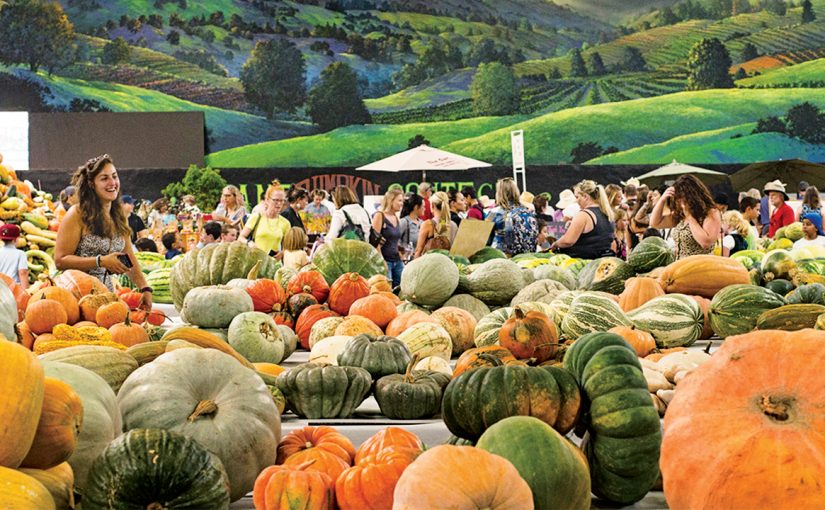
The National Heirloom Expo will be held September 10, 11, & 12 at the Sonoma County fairgrounds in Santa Rosa, California. The Expo will feature over 300 vendors with thousands of heirloom varieties from across America, as well as workshops, speakers, a contest, art show, music, and much more.

Bioneers spoke to the organizers to find out more details about what attendees can expect this year.

Click here for more information about the National Heirloom Expo.


How did the Heirloom Expo begin and grow to be the largest gathering of its kind in the world?

The Heirloom Expo began when Baker Creek owner Jere Gettle and Petaluma Seedbank manager Paul Wallace conceived the idea to bring Heirloom enthusiasts from around the world together for collaboration, education, and sharing. It grew to be the largest of its kind in the world because it offers something new every year, in addition to keeping within its original goals to focus on heirlooms, sustainable living, pure food, homesteading, organic growing, and other related topics.  The Expo and is an open, welcoming, joyful, celebration of 20,000 plus attendees, organizations coming together, becoming motivated, inspired, catalysts empowered for saving themselves, the world and supporting the world in what it can be through global acceptance and implementation of the UN 17 Sustainable Development Goals.

You always have very prominent speakers at the Expo. Who’ll be there this year? 

We’ll have more than 100 nationally and internationally acclaimed speakers. Dr. Vandana Shiva is the most prominent this year. A pure food and seed advocate from India, her audiences are always filled to capacity when she participates.

Also speaking are: Robert Kennedy, Jr.; Ocean Robbins, host of The Food Revolution Network; David Johnson, creator of the Bioreactor, Bring Soil Back to Life; Taylor Herron from Kiss the Ground, Regenerative Agriculture; Lars Howlett Howlett, Labyrinth Builder, as well as anti-GMO activists Jeffrey Smith, Ronnie Cummings and many others. We have other people traveling from Jamaica, India, Palestine, and South Africa, as well as Guatemalan farmers who are returning this year. 

The event lasts for 3 days and there are so many activities and educational opportunities that you offer attendees. What are some of the highlights this year?

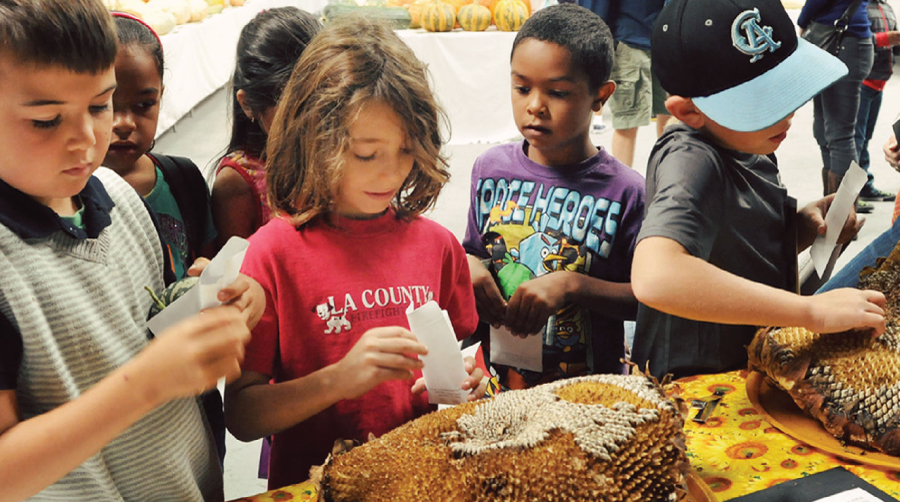
We have a lot of activities during the Expo, including: 4,000 varieties display of Heirloom Produce; 30 kitchens of globally inspired cuisine, Giant Free Food Tasting, Giant Free Seed Swap; International Vegetable and Seed Artists; 300 vendors; 150 exhibitors; Colossal Dahlia Exhibit; Hundreds of Heirloom Birds/Chickens; Great Pumpkin Contest; Labyrinth Walks. We also offer classes where you can learn from best known gardeners and farmers, many who are very popular on YouTube. We also have a fiddle contest, giant vegetable contests, dahlia contests, and others.

The Expo is very child friendly. What can they look forward to at the event?

Children really enjoy the Expo where they can participate in the Kids Heirloom Festival, as well as classes, games and contests. We also have special play areas for children.  

David Johnson, a molecular biologist and research scientist from New Mexico State University and an Adjunct Professor at CSU Chico, will be demonstrating how to create a composting bioreactor. Tell us all about that.

The Johnson-Su bioreactor is a system that creates an inocula to bring lifeless soils back to life by reintroducing beneficial microorganisms to the soil with biologically enhanced compost. The bioreactor can be built in a day by one person using simple tools and about $40 of readily available materials. The design is scalable for home, farm, or commercial settings.

David and Hui-Chun Su Johnson’s research has observed that the regeneration of the soil microbial community’s population, structure, diversity and biological functionality allows us to imitate natural biological processes for securing all needed nutrients for growing crops. This process mimics what we are seeing in the human microbiome with regards to how our own microbiome is intimately related to our health and well-being. Soils are no different, and regeneration of the soil microbiome restores soil health, fertility, productivity and farmer and rancher profitability. The end product of the Johnson-Su bioreactor offers an inexpensive, easy-to-make, microbially-diverse inocula that helps kickstart this soil microbiome restoration process, speeding up the rebuilding of soils in agroecosystems

Tell us more about Baker Creek Heirloom Seeds, the organizer of the Expo?

To achieve a healthy planet, Baker Creek gives globally free seed and financial assistance for acceptance/implementation of the 17 UN Sustainable Development Goals (SDGs). They distribute free seed to schools, community and urban gardens. They ship free seeds to encourage individual and community food sustainability.

The most active participation and collaboration is with individuals and organizations focused on SDGs of Zero Hunger (Food), Good Health and Well Being, and Climate Action, which is directly and indirectly related to achieving Healthy Soil, Seed, Food, Living, and A Healthy Planet. Regenerative agriculture is an umbrella that addresses many of the SDGs.

Baker Creek is establishing its center in Baker Creek, MO and Glore Mill, County Mayo, Ireland as Regenerative Agricultural Hubs and Regenerative Training Centers for global acceptance/implementation of Regenerative Agriculture. It has David Johnson Bioreactors at Baker Creek and the Glore Mill and Expo in Santa Rosa.  It is collaborating  with a number of national/international organizations including: www.planetarycare.orgbiodiversityireland.ie/pollinator-plan, www.soilhealthconsultants.comwww.kisstheground.comwww.organicconsumers.com,bio4climate.org

How can our readers participate, where do they go for information? 

Expo organizers are still scheduling volunteers to assist at the expo. There is also still plenty of time to sign up to be an exhibitor or a vendor. They can also participate in any of the contests, or just come and enjoy all the activities. An overview of speakers, events, activities and other information can be found at www.heirloomexpo.com or email info@theheirloomexpo.com.

Why the Future of the Planet Is Brighter Than You Think: the Regenerative Economy

By Harry Doull and Stephen Tracy, founders of Keap Candles

This article was originally published in B the Change, which exists to inform and inspire people who have a passion for using business as a force for good in the world.

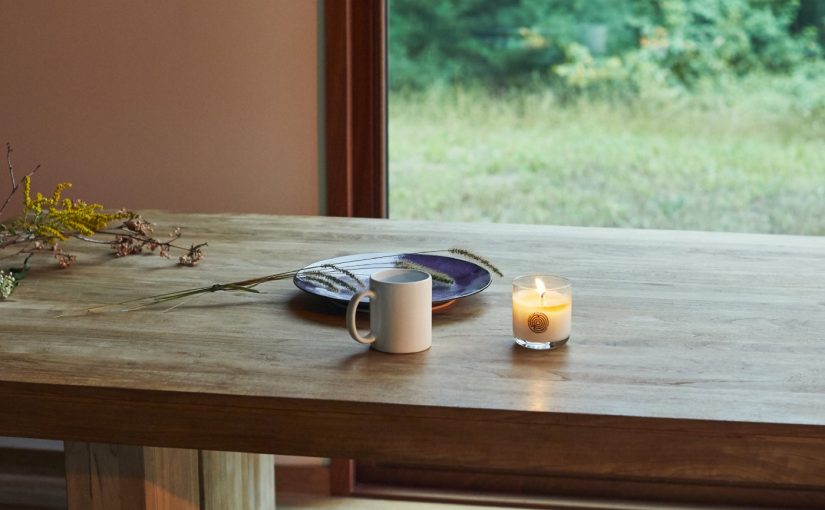
Four years ago we started a candle company. We had seen a lot in the business world that felt wrong to us, and we set out with a lofty idea to find a better way. In doing so, we discovered rich reasons for hope and optimism about the future that you may not read about in the news: a blueprint for a new way of doing business and saving our planet.

First, the bad news

It’s impossible to sugarcoat it: The climate crisis is now the issue of our times. Glaciers are meltingcoral reefs are dying, and we’re losing our carbon-sinking woodlands, all with wide-ranging ecosystem consequences. Natural disasters are happening with higher frequency and magnitude. We face unprecedented levels of species extinction.

We have now added our own society to the endangered listIt’s clear that climate change isn’t only an issue for future generations: It’s ours to face today.

Over the last decade, as we investigated how to build our company, we met many people stepping up to the challenge. Through them, we discovered a cornucopia of solutions that share a simple idea and collectively pave the way toward a new economy. The technical solutions are plentiful—what we need is a mindset shift to unleash this new power of business.

A Natural Equation

In a thriving natural system, a simple equation exists: The benefit each individual provides must outweigh the costs they bear on the environment. By doing this, the system replenishes itself and so sustains.

This is true across species and ecosystems, with the exception of us — so far. Some might argue that our exceptionalism stems from population growth. There are just too many of us!

Exponential-thinker Tom Chi elegantly debunks this idea through a comparison with ants. While ants are smaller than humans, there are many more of them. It works out that the combined biomass of all ants on Earth is coincidentally roughly the same as that of all humans on Earth. Ants, however, eat 10 times more food than us!

(Credit: Tom Chi)

Despite their epic consumption levels, no one is talking about “ant-caused climate change.” That’s because ants are positive contributors to their ecosystems. They turn and aerate the soil, allowing water and oxygen to reach plant roots. They help disperse seeds for new plants. They act as the vacuum cleaner of nature by feeding on all sorts of organic matter—and they themselves are a source of food for all sorts of animals.

Ants are ultimately net contributors to their world rather than extractors. They are proof that with a different approach to our environment, we can thrive in numbers without making the planet pay for it.

If a new mantra “Be More Ant” wasn’t what you were expecting to get from this article, then we’re happy to have upped the ant-e (#DadJokes4Life).

A Regenerative Solution

Through this natural lens of thinking about business, we were introduced to the concept of “the regenerative economy.” The central idea of the regenerative economy is that nature already has identified how to create sustainable systems.

“Natural systems, from living beings to whole ecosystems, are sustainable because they are regenerative. The transition to a regenerative economy is about seeing the world in a different way—a shift to an ecological world view in which nature is the model. The regenerative process that defines thriving, living systems must define the economic system itself.” 

— Hunter Lovins

So simply put, a regenerative economy must act as a natural system — with participants creating net benefit — to achieve sustainable balance with the planet.

This idea goes beyond our previous concepts of sustainability — which were about reducing harm and thinking of ways to lessen impact — and instead challenges each of us to ask whether we leave the unique systems we impact, from plants and water sources to soil and people, in a better place.

This idea of regeneration has established a foothold in pockets of our economy: Regenerative agriculture is arguably where the term originated, and the philosophy of cradle-to-cradle (which goes beyond mere circularity and embraces the idea of regeneration) has found a passionate following in design and architecture.

For humanity to reach net benefit, we need these forward-thinking movements to take hold across the economy and permeate every aspect of our daily lives. It’s a challenge, but it’s achievable, and the outcome is unquestionably worth fighting for.

Imagine a world where every time we produced or consumed something, it turned into a positive ripple effect for people and the planet. 
Where each piece of clothing we buy creates richness rather than misery. 
Where traveling creates new energy rather than depleting it. 
Where every object we choose to buy makes the world better, not worse: from our orange juice to our toothpaste, from our watches to our bicycles, from our jewelry to our candles.

That’s the potential of a regenerative economy, and it exists today if we embrace it.

Reaching Regeneration

This simple switch in our economic mindset will provide a long-term solution to our planet’s ills. Even more exciting is the fact that so many businesses and individuals are already challenging themselves and each other to behave regeneratively.

How then do businesses use this mindset switch to become “regenerative”?

Here are some key ideas gleaned from the many folks we’ve met.

Deliver products and services with a negative footprint.

Beyond negative carbon emissions, that means producing raw materials in a way that improves the soil and the livelihoods of workers and their communities.

Behind Dr. Bronner’s soaps is an impressive supply chain fostering regenerative agriculture, equitable livelihoods for farming communities, and the protection of forests and other ecosystems.

From what we’ve seen, few companies have gone further than Dr. Bronner’s Soaps, a multi-generation family-owned business that decided at the turn of the century to move its ingredients toward regenerative sources. At the time, many of those ingredients weren’t farmed regeneratively anywhere (or at least not at the scale they needed). Dr. Bronner’s holds the under-publicized honor of creating from scratch the first Fair for Life and organic-certified coconut oil and palm oil projects in the world.

Other businesses, like AlterEco and Patagonia Provisions, are taking a similar approach of bearing full responsibility for all the people and natural resources that their business touches.

Eliminate waste or turn it into a benefit.

Across the natural world, by-products of one species are the nutrients of another. We are the first species to invent the concept of waste — but many companies are working on new solutions to make it a thing of the past.

Lighthouse restaurant donates its “used” oyster shells to Oyster Recovery. The shells get mixed with concrete to form oyster castles that can host the next generation of oysters. (Credit: New Food Economy)

Lighthouse restaurant in Brooklyn looked for ways to eliminate waste sent to the landfill by carefully analyzing what was going in the bin — and finding uses for all the components, from food scraps to oyster shells and corks.

Ecovative is using waste from hemp agriculture to grow home-compostable plastic packaging alternatives that can return to the soil as nutrients instead of ending up in the Pacific garbage patch.

Package Free Shop in Brooklyn curates a selection of consumer products that use smart design to eliminate packaging. By tackling the issue of post-use in the design phase, we can create systems that move beyond the concept of persistent, poisonous trash.

Rethink company ownership.

A regenerative mindset by definition needs to account for the long-term, and our current model of shareholder-centric capitalism has proven its incapacity to do so.

Across our joint careers ranging from mom-and-pop businesses to publicly listed multinationals, we’ve seen a clear pattern: Companies whose ownership interest is short-term financial profit (less than 10 years) do not exhibit regenerative behaviors, sustained over a meaningful period of time.

Unfortunately, “shareholder-first” businesses (whether backed by venture capital, the public markets or private equity) structurally have short-term financial profit motives.

“Steward Ownership,” as defined by the Purpose Foundation.

It’s no coincidence that the companies that are farthest along on the journey toward regeneration are family-owned (e.g. Dr. Bronner’s, Patagonia), cooperatives (e.g. Organic Valley), worker-owned (e.g. Bob’s Red Mill, Equal Exchange Coffee), or some other kind of steward ownership.

As I wrote previously, how we structure financing and business ownership is a topic that should have a more prominent place in the national conversation.

Addressing the issue of ownership of our economy, and therefore who it serves, is the greatest lever to address the issue of climate justice—the idea that those who are least responsible for climate change suffer its gravest consequences.

If companies are agents of purpose rather than simply vehicles for extracting financial value from the world’s resources, the switch to regeneration will be dramatic, durable and at scale.

Support others on their journey to becoming regenerative.

Getting to “regenerative” is going to be a journey for all of us, and it won’t be done in isolation. Regeneration by definition acknowledges the interconnectedness of the nodes in the system; unsurprisingly, the leaders of the regenerative wave have adopted an open, collaborative approach. There are so many great resources, experts, publications and support networks that now exist to help others on their journey.

The Regeneration Magazine is a great young publication showcasing the heroes and success stories in the fight against climate change. Carol Sanford, one of the architects of the movement, runs a series of events and workshops, helping businesses on this journey. The Regenerative Organic Alliance is working to ensure that standards are associated with the term in the context of agriculture, and the Climate Collaborative is bringing together businesses who can help each other on the journey. Zebras Unite is a group of startup founders calling “for a more ethical and inclusive movement to counter existing startup and venture capital culture” built on regenerative principles. And to help turn the energy of the Green New Deal into sound policy, a worldwide team of hundreds of experts, scientists and researchers have already catalogued the top 100 solutions to climate change in Drawdown.

Consumer-facing businesses also have the incredible power of the “bully pulpit” to educate their audience and turn them into a rippling force for regeneration across their interactions with other people and organizations. Look no further than Patagonia to see what a cultural force a strong brand with a regenerative mindset can be.

So Are We Optimistic About the Future?

One more for the summer reading list.

There is a false sense created by climate deniers that we somehow still need to invent some “disruptive” panacea technology that will magically make the issue go away (or worse, that we should resign ourselves to total environmental collapse and abandon our home planet for a hostile, freezing, unbreathable one). Yet, while many of us were ignoring the impending threat of climate change over the past decades, many others were hard at work researching or (re-)discovering the solutions for us to restore our balance with the natural world.

We now have those solutions, and now it’s the time to switch our collective focus to bringing these forward-thinking ideas across our economy and mainstreaming them from the pioneers to the everyday businesses—from construction companies to candles.

It’s going to take bold policy initiatives like the Green New Deal and a new mindset from journalists, entrepreneurs investors and every citizen, consumer and advocate within us to achieve this.

And if paving the way for a new, regenerative economy that works for our planet and all its people sounds lofty, let’s take a second to remember that we put a man on the moon and invented smart toilets.

So are we optimistic about the future? Damn right we are.

“Never doubt that a small group of thoughtful, committed, citizens can change the world. Indeed, it is the only thing that ever has.” 
— Margaret Mead


Harry Doull and Stephen Tracy are the founders of Keap Candles, a Brooklyn-based Certified B Corporation making master perfumer candles with a regenerative approach. In the comments, let them know of any unsung regenerative heroes you’ve come across.

B the Change gathers and shares the voices from within the movement of people using business as a force for good and the community of Certified B Corporations. The opinions expressed do not necessarily reflect those of the nonprofit B Lab.

Film Screening: Wilder than Wild

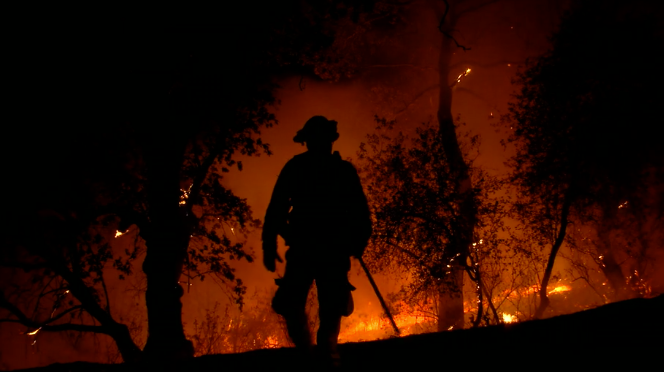
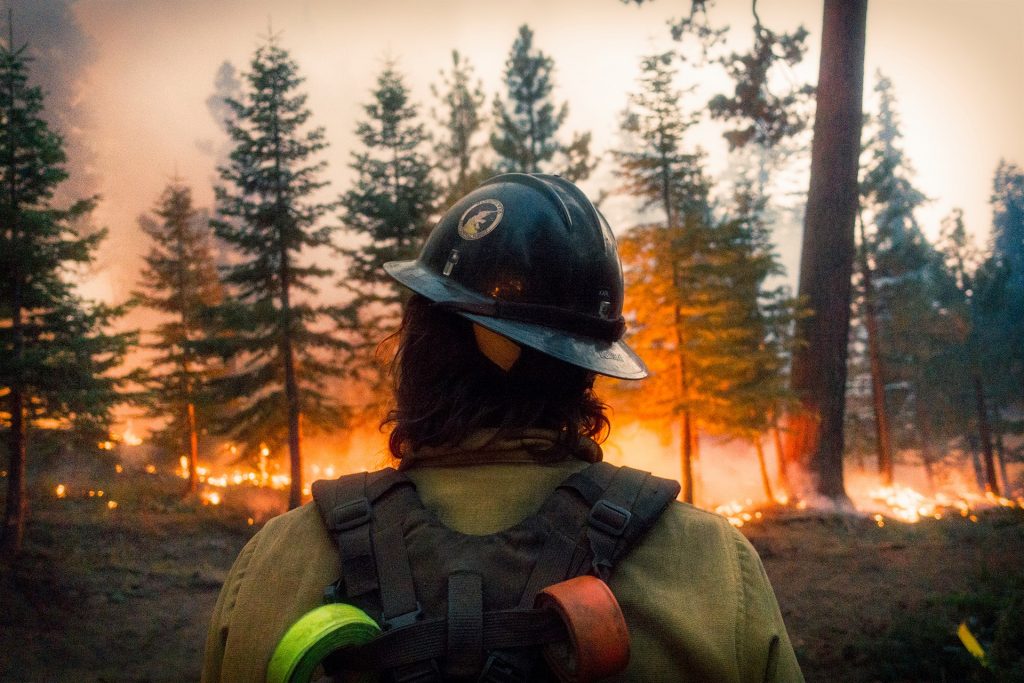
Bioneers is honored host a screening of Wilder than Wild: Fire, Forests, and the Future. This compelling one-hour documentary reveals how fire suppression and climate change have exposed our forests and wildland-urban landscapes to large, high intensity wildfires – and explores strategies to mitigate the impact of these fires.

Thursday, September 12 at 7 pm, at the Smith Rafael Film Center (1118 Fourth St., San Rafael).

The screening will be followed by a panel with guests:

Elizabeth Azzuz, member of the Yurok Tribe’s Cultural Fire Management Council

Quinn Gardner, Emergency Manager for the City of San Rafael

Tamra Peters, Executive Director of Resilient Neighborhoods

Mike Shuken, Firefighter Paramedic for the City of Berkeley Fire Department

Hugh Safford, Regional Ecologist for the USDA-Forest Service’s Pacific Southwest Region

Kay White, FireWise coordinator

Kevin White and Stephen Most, Filmmakers

Purchase tickets here.


About Wilder than Wild

“The new wave of environmental documentaries, epitomized by local filmmakers Kevin White and Stephen Most’s smartly focused Wilder Than Wild: Fire, Forests and the Future, recognizes that it’s no longer necessary to galvanize public attention about an urgent problem. The relevant conversation is about solutions and strategies.” – KQED

According to Cal Fire Chief Ken Pimlott, “We are experiencing now the fires of the future.” The documentary Wilder than Wild reveals how fuel build-up and climate change have exposed Western wildlands to large, high intensity wildfires, while greenhouse gases released from these fires accelerate climate change. This vicious cycle jeopardizes our forests and affects us all with extreme weather and more wildfires, some of which are now entering highly populated wildland-urban areas.

Filmmaker Kevin White takes us on a journey from the Rim Fire of 2013, which burned 257,000 acres in the central Sierra, to the wine country wildfires of 2017, which destroyed 9,000 buildings and killed 44 people. Along the way, we learn how the proactive use of prescribed fire can reduce reliance on reactive fire suppression, and we meet stakeholder groups working with scientists and innovative resource managers to build consensus on how to restore and manage the lands we love and depend on.

The “fires of the future” include urban wildfires, as Wilder than Wild shows in a sequence on the destruction of thousands of homes in Santa Rosa in October, 2017. “Things are changing,” says Berkeley firefighter Mike Shuken, “and if we don’t change as well, we’re going to see more subdivisions become annihilated in these types of fires.”

Elizabeth Azzuz says, “If you look anywhere around you, the earth is smothered out, suffocating. So if we cannot clear that and help the earth breathe, we’re all going to suffer.”

Learn more about the film at the Wilder than Wild website.

Filmmakers

Kevin Smith is an Emmy Award winning producer, director, and writer who has worked in media since 1982. In 1984 he founded Full Frame Productions, and in 1988 he created the non-profit Filmmakers Collaborative SF with Michal Aviad. Kevin has produced and directed dozens of films including Not All Parents Are Straight, We Bring a Quilt, Speaking Up, A Land Between Rivers, Restoring Balance, Returning Home, Return Flight, From the Ground Up, Freedom’s Desert, A Simple Question, and Return Flight. His films have been screened at the Berlin Film Festival, San Francisco Film Festival, Hot Springs Film Festival, Wild & Scenic Film Festival, the International Wildlife Film Festival, and many others. His work has received multiple awards including Emmys, CINE Golden Eagles, ACE Awards, while also being broadcast on PBS, National Geographic, Discovery, Bravo, BBC, ZDF, and Arte. In 2010, Kevin and his colleague David Donnenfield received the Harold Gilliam Award for Environmental Reporting from the Bay Institute for their How On Earth video series.  Kevin and Stephen Most have collaborated on multiple projects, including From the Ground Up and A Land Between Rivers, both airing extensively on PBS.

Stephen Most is an author, playwright, and award-winning documentary filmmaker. His book Stories Make the World, Reflections on Storytelling and the Art of the Documentary, which Berghahn Books published in 2017, includes a chapter about the making of Wilder than Wild. He is the writer/producer of the documentary River of Renewal, which won the “best documentary feature” award at the American Indian Film Festival, and the author of River of Renewal, Myth and History in the Klamath Basin, published by the University of Washington Press in 2006. Documentary films Stephen has scripted include Oil On Ice, which is about the controversy over drilling in the Arctic National Wildlife Refuge; A Land Between Rivers, a history of central California; and Green Fire: Aldo Leopold and a Land Ethic for Our Time. Wonders of Nature, which he wrote for the Great Wonders of the World series, won an Emmy for best special non-fiction program. The Bridge So Far: A Suspense Story, won a best documentary Emmy. Promises, on which he worked as Consulting Writer and Researcher, won Emmys for best documentary and outstanding background analysis and research. It was nominated for an Academy Award in 2002. Berkeley in the Sixties, which Stephen co-wrote, also received an Academy Award nomination for best documentary. He is writer/producer of Nature’s Orchestra, which is about Bernie Krause’s soundscape ecology expedition in the Arctic National Wildlife Refuge. It was broadcast in the KRCB/PBS series Natural Heroes.

For more information, visit wilderthanwildfilm.org
Facebook | Twitter

How Ecology Informs Documentary Storytelling and Conservation Politics: Understanding the Rim Fire

According to Cal Fire Chief Ken Pimlott, “We are experiencing now the fires of the future.” The documentary Wilder than Wild: Fire, Forests, and the Future reveals how fuel build-up and climate change have exposed Western wildlands to large, high intensity wildfires, while greenhouse gases released from these fires accelerate climate change. This vicious cycle jeopardizes our forests and affects us all with extreme weather and more wildfires, some of which are now entering highly populated wildland-urban areas.

This award-winning documentary will screen at the Rafael Theatre in San Rafael on September 12th at 7 pm, hosted by the 2019 Bioneers Conference.

Filmmaker Stephen Most examines the making of Wilder than Wild in the following excerpt from Stories make the World, Reflections on Storytelling and the Art of the Documentary, published here courtesy of the author and Berghahn Books. If you enjoyed the excerpt, consider purchasing the book via your local bookstore, IndieBound, or Amazon.


Both documentary storytelling and a politics aimed at restoring the common ground have insights to gain from ecological understanding. An ecosystem is comprised of the interrelationships of living organisms and their environments. Mutualisms are connective tissue between different forms of life, as when truffles evolve with aromas that appeal to the small mammals that eat and spread them around, or when a fungal network colonizes tree roots, receiving carbohydrates as it transports water and nutrients from plant to plant. When one thinks like a mountain, as Aldo Leopold learned to do, it becomes clear that predators and their prey are interdependent. Without wolves to limit their numbers, deer populations destroy so much vegetation that they starve and cannot reproduce. Realizing that human beings live and work within the web of ecological relationships, Leopold, while managing forests for the sake of the forest and wild habitats for the sake of wildlife, formed alliances between groups that had been adversaries—ranchers and rangers in New Mexico, farmers and hunters in Wisconsin; for he knew they had mutual interests, namely the vitality of the lands they relied on.

A political ecosystem of this kind formed in the central Sierra five years before the Rim Fire. And although it is difficult to represent an organization in a documentary, Yosemite Stanislaus Solutions had to be part of the picture.

YSS is a stakeholders’ collaborative. It “brought together the local folks that live here who have an interest in how this part of the forest is managed,” explained Susan Skalski. “We had environmental groups, we had farm bureau, we have local loggers, we have local industry, we have elected officials, we have county participation.” The co-chairs of YSS are a logger, Mike Albrecht, whose company is Sierra Resource Management, and John Buckley, who heads the Central Sierra Environmental Resource Center. Member organizations include the Central Sierra Audubon Society, the California Forestry Association, the Tuolumne County Farm Bureau, the Tuolumne Mi-Wuk Tribal Council, Tuolumne River Trust, Hetch Hetchy Water and Power, and Dambacher Construction. The US Forest Service and Yosemite National Park are liaison members.

Forest Supervisor Skalski convened YSS in 2008 because she anticipated a megafire. “We needed to bring folks together and help us figure out how are we going to thin these forests, help make them more fire resilient, as well as enhance other values within the forest, and yet there isn’t enough federal funding to do that.”

Skalski had reason to expect a catastrophic fire. A generation had passed since the last one. In 1987, the Stanislaus Complex Fire burned 147,000 acres. Some of its burn area overlaps the footprint of the Rim Fire. Unlike the virtuous cycle of ecologically beneficial wildfires, the vicious cycle of megafires is due to human errors of omission and commission. Fire suppression is one error of commission. Another is planting within the burn area rows of seedlings that grow into dense stands of trees to facilitate logging. The errors of omission include the failure to use prescribed fire and thinning on extensive portions of the replanted forest.

An irony that I hoped my film could capture is that almost everything that those who cared about the forest did after the 1987 Complex Fire was wrong. The dramatic question the full-length megafire documentary might raise is whether history will repeat itself. Will obstructionist lawsuits, lack of funding for prescribed burns, and industry-favored silvicultural replanting build up kindling for future megafires and increase deforestation over the long run?

The Rim Fire gave YSS a renewed sense of purpose. The collaborative worked with the Forest Service on its post-fire restoration and replanting plans. In contrast to the adversarial tactics of the John Muir Project, their work was consensual, using scientific evidence and reasoned arguments to resolve conflicts and reach agreement without reliance on litigation. They took economic concerns as well as ecological values into account, recognizing that the Sierra economy depends upon the health and resilience of the land. If preservationist politics is binary, ecological politics is multivalent, considering information, interests and impacts from all points of the compass.

The YSS stakeholders had an example of a resilient forest to work toward due to a study by research ecologist Eric Knapp that was actualized in the Stanislaus-Tuolumne Experimental Forest. They invited media to tour the experimental forest to publicize its back-to-the-future approach to forest management.

The last major fire occurred there in 1889. Until the Gold Rush, this forest just north of the Stanislaus Complex Fire and Rim Fire burn areas had wildfires every six years on average. Back then it was low in density, with a mix of individual trees, clumps of trees, and open spaces. The experimental forest left an unmanaged high-density area intact for comparison with the managed plots that were shaped by combinations of thinning and prescribed fires to resemble the pre-Gold Rush forest. The core idea, explained by Knapp and Malcolm North, is that low-density mixed conifer forests of this kind are resilient to major wildfires, sequester the most carbon, have the lowest CO 2 emissions, and store precipitation efficiently, while providing abundant habitat for at-risk wildlife, particularly fishers, goshawks and spotted owls. This could be the objective for the restoration of central Sierra forests. Progress toward that goal could, I thought, give the last act of the megafire film a promising sequence.

Every drama, be it comedy or tragedy, depends on things going wrong. Over the objections of YSS, the Forest Service initiated a replanting program that would restore the kind of dense, easily harvestable forest that the Rim Fire destroyed, though with fewer trees per acre than were planted after the Complex Fire. My production filmed a lovely replanting scene by 250 volunteers including war veterans, girl scouts, and members of Americorps’ National Civilian Community Corps. Separated into two groups, adults and children guided by adults, they worked upon a bulldozed mountainside. The Complex Fire had consumed trees that forested that land until 1987. Many of the trees planted after that fire perished 26 years later in the Rim Fire. I wondered whether the thousands of pine seedlings placed ten feet apart in holes dug into the ground above Buck Meadows in 2016 would reach maturity. Were those volunteers planting trees for a future forest or fuel for the next megafire?

Another mistake the Forest Service seemed intent on perpetuating was its fire suppression policy. An article in Science, whose lead author is Malcolm North, states a truth that is almost universally acknowledged: “Changing climate and decades of fuel accumulation make efforts to suppress every fire dangerous, expensive, and ill advised.” Yet the agency, unwilling to let its scientists weigh in publicly on policy decisions, tried to stop Science from publishing the piece. When that failed, the Forest Service asked for North’s name, or at least his affiliation, to be removed. When Science published the article unchanged, the Forest Service barred North from speaking to the media.

Blowing in the wind right after the Rim Fire was the possibility that in response, the Forest Service would change direction as significantly as after the Big Blowup of 1910. Instead, feeling the prevailing winds several years later, I expected history to repeat itself, as Karl Marx said, “the first time as tragedy, the second as farce.” If the Rim Fire was the tragedy that followed the 1987 Complex Fire, the genre of the next megafire could be tragic farce—tragic in its effects, farcical due to its cause—characters persisting in fixed behaviors regardless of bad results. It would dramatize another maxim by Marx, “The traditions of all the dead generations burden, like a nightmare, the minds of the living.”

8 Reasons The Landmark Ruling In Ecuador Signals Hope In The Struggle To Save Amazon Rainforest

This article was originally published on the Amazon Frontlines website. Amazon Frontlines is defending Indigenous rights to land, life and cultural survival in the Amazon rainforest.

This summer, a court in Ecuador issued a ruling with profound implications for the urgent fight to save the imperiled Amazon rainforest. The decision effectively blocked a planned government oil-auction that threatened half-a-million acres of some of the world’s most biodiverse primary rainforest. The broad outlines of the situation are sadly familiar to similar cases found throughout the Amazon region: In pursuit of foreign investment, the government sought to partner with foreign firms to develop large swaths of ecologically fragile rainforest. As is often the case, these forests were the ancestral lands of indigenous inhabitants who were not informed about — and did not approve — the arrival of industry on their territory.

The Waorani villagers-turned-plaintiffs have millennia deep roots in the region. They have seen the effects of oil blocks in other parts of the Ecuadorian Amazon, and knew that the planned auction threatened their survival and way of life. They also knew their rights: Like all indigenous peoples, they hold an internationally recognized right to informed consent when it comes to the “development” of their ancestral lands. When indigenous people fight to defend and enforce these rights, they are protecting their future and ours. The fate of the global climate hinges on empowering the indigenous peoples who help preserve nearly a quarter of the Amazon across seven nations, and who represent a powerful buffer against the destruction of a biosphere that regulates our planet’s flows of oxygen, carbon and freshwater.

Below are eight important lessons of this historic victory.

1) Healthy Cultures, Healthy Forests

The Waorani people are legendary hunter-harvesters of the southcentral Ecuadorian Amazon. For unknown centuries before their contact by missionaries in the 1960s, they lived in harmony with and preserved their rainforest home. They developed a rich culture marked by high craftsmanship and artistry, profound spirituality and a sophisticated understanding of the natural world and its complex systems of plant and animal life.

The Waorani and hundreds of other Amazonian indigenous cultures have been under enormous strain since the arrival of industry in the last century. Indeed, it is impossible to separate the physical pollution of the rainforest from the cultural disruption experienced by the people who live there. The relation between them is not causal, but cyclical: The growth of oil roads, mono-crops and mining jeopardizes indigenous peoples’ ability to survive off the land sustainably and in balance with the forest. It creates a dynamic that forces indigenous youth to abandon tradition and find work in the very industries that threaten their forest homes. The Waorani victory is important not only because it protects trees, but because it protects the culture that can continue to protect trees for centuries to come.


2) Defining the Narrative: Maps, Technology, Stories

The fate of the rainforest will be determined by how the world chooses to see it and conceive of its riches. Is the Amazon basin merely a green mass of undifferentiated land, crisscrossed by hundreds of unremarkable rivers? Is it a grid of resource concessions, notable for what’s under the ground, and convertible into currencies and value on international commodity markets? Or is the Amazon a tapestry of delicate and overlapping systems containing immeasurable biological, ecological and cultural treasures?

At their most basic level, these are competing stories, conflicting narratives, that begin with the maps that we use to represent the land. One of the ways the Waorani “won the narrative” was by using their own maps and telling their own stories. A territorial mapping project showed what the state and company maps left out — the turtle nesting grounds, the sacred sites, the ways the rivers fed the forest and each other. Through this and other tools — drone videos, testimonies, camera-trap images, even selfies — they illustrated the many ways that their culture, and everything it protected, is more precious than oil and greed. They also showed how a hunter-harvester people can leverage technology and social media on their own terms to challenge a mighty industry and capture the imagination of global civil society.

3) The Power of Legal Precedent

The Waorani people sing after a long hearing as they await a three-judge panel ruling at a Provincial Court in Pastaza, Ecuadorian Amazon

Rights enshrined in international laws and national constitutions are not worth their ink without enforcement. As with any laws, they are more likely to be enforced when they rest on firm precedent, locally and around the world. For too many years, the Waorani have seen the Ecuadorean government ignore their constitutional and international obligations to inform and acquire consent, and allow companies to pollute indigenous lands.

“We are Waorani and we have always lived in the Amazon rainforest. For thousands of years we have defended our territory from trespassers. Now we are fighting with our words and papers. We never knew the government wanted to extract oil from our lands. We, Pikenanis, are never going to sell our territory to the oil companies. We want to live well in our territory.”
– Memo Yahuiga Ahua Api, Pekinani (traditional leader)
Because the Waorani demanded the government respect the law and the constitution, indigenous peoples across the Amazon can now draw inspiration and tactical lessons from Waorani legal success in linking the right to self-determination to the right to free, prior, and informed consultation. Its example puts the country and the region one step further towards redefining the legal framework for indigenous rights.

Although the first battle has been won, the struggle is ongoing. The Ecuadorian government is still seeking to auction seven million acres in the country’s central rainforest to oil companies.

4) Climate Change & Interconnectedness

The Waorani victory is a victory for the climate: it keeps 500,000 acres of trees working as carbon vacuums, and prevents the pumping of millions of gallons of crude oil that would have been shipped to California for refining and distribution to gas stations across the United States. In aggregate, it is estimated that over the next ten years the Waorani victory will have avoided approximately 19.0 million metric tons of CO₂ emissions – or the equivalent of the greenhouse gases emitted from roughly 4 million passenger cars in one year.

After the oceans, the rainforests are the world’s most important carbon sinks, a sprawling continent’s worth of vegetation that absorbs and keeps carbon out of the atmosphere for hundreds of years. As the traditional inhabitants and defenders of this carbon sink, indigenous communities are the “secret weapon” in its defense, according to a growing body of research. A report by a group of leading research centers estimates that indigenous lands cover around a quarter of the world’s above-ground tropical carbon sinks.

The importance of the Amazon system extends beyond carbon. Its hydrological cycle involves more than one-fifth of the planet’s freshwater supply, and any decline in rainfall and evapotranspiration in the Amazon — the consequence of deforestation and contamination — has far-reaching effects, including drought in breadbaskets throughout the hemisphere and less river-feeding snowpack in the mountains of the pacific northwest.

5) Women in Front

One of the lead plaintiffs in the case is Nemonte Nenquimo, a Waorani mother and president of the Waorani communities on the Pastaza river. “We are the caretakers of the forest and we will continue defending it as our ancestors have done for thousands of years,” Nenquimo told reporters outside the courtroom during this summer’s hearing. “As women, we are fighting for our children, for our families, for our communities and for our Mother Earth. We will never allow the oil companies to enter our territory. Our forest is not for sale and this is our decision”.

6) Protecting Rivers and Water

Life in the Amazon is lived on rivers. From fishing to bathing to providing drinking water, the rivers are the central arteries of everyday life. Because all of the rivers in the Amazon flow from or into other rivers — and are often located in floodplains — it is all but impossible to isolate or contain contamination. This is made tragically clear in the legacy of the U.S. oil company Texaco (now Chevron) which in the 1960s won a government contract to develop the region’s oil deposits. Disregarding the health of the forests and the local indigenous people, the company dumped waste and spilled oil wantonly throughout the forest and into its rivers. Many local indigenous people fell ill and died from consuming toxic material that sometimes appeared as thick sludge on the river, and other times was invisible, but no less dangerous to those who consumed it through the water, produce grown on contaminated soils, and the wider food chain. Today, many communities in eastern Ecuador cannot drink from rivers their ancestors used for countless generations. The contamination of the region is not historical, but ongoing. Though Chevron no longer operates in the region, regional and Chinese firms continue to engage in oil production at the invitation of the Ecuadorean government.

This is the crucial, local context for the Waorani victory, and explains why the villagers refused to allow further destruction of the area’s fresh water sources. Their refusal reflects a global movement — seen throughout Latin America, Africa, and Asia, all the way to Standing Rock in the U.S. — to both defend indigenous rights and lead by example toward a broader and deeper respect for nature as the sacred source of all life.

7) Wildlife and Biodiversity

It is said that the Amazon invites cliché and resists hyperbole. Indeed, it is difficult to overstate the bounty of the Amazon’s plant and animal life. Accounting for a tenth of all known species on the planet, the Amazon is an ecosystem without equal. It is also an ecosystem full of mysteries yet to be discovered. Much of the modern pharmacopeia derives from Amazonian plants, and longstanding medical mysteries may yet be solved by researching the flora of a healthy forest.

The northern Ecuadorian Amazon is a tragic example of how the delicate web of life in the rainforest can be ruined within a generation by the arrival of extractive industry. In 1970, the area around Lago Agrio, the region’s biggest city, was one of healthy rivers and forests, full of animal and aquatic life. Now, in villages along the Putamayo and Aguarico, the water is undrinkable and many ancestral hunting grounds are bare, polluted, and bisected by roads. Fragmentation is a major threat to biodversity and wildlife, and the government’s proposed oil blocks would pollute an important biological corridor running across the wider region.

The species-level stakes of Amazon protection were highlighted this May with the release of a landmark United Nations’ report on biodiversity. The report warned that unless critical ecosystems are protected, as many as one million species are threatened with near-term extinction. The Waorani have won a battle for themselves, their children and the planet, but also for the jaguars, the monkeys, the birds, and the ants.

8) Union of Indigenous Nations

The Waorani people mobilize and unite with other indigenous nations including the Kichwa, Sapara, Andoa, Shiwiar, Achuar and Shuar, whose lives and lands are also threatened by oil drilling in the Ecuadorian Amazon

The indigenous nations of the Ecuadorian Amazon understand themselves to share a common struggle. Collectively they are the guardians of 70% of the entire Ecuadorian Amazon rainforest. Many of these peoples joined the Waorani in solidarity outside the courtroom, traveling from distant communities in the country’s north and south. They marched with the Waorani in the streets; they submitted amicus briefs; and they returned to their communities to share what they had learned to better organize for the future. “We have united with our Waorani brothers and sisters because we share the same struggle and dream: to protect our forest and to continue being who we are, as indigenous peoples,” said Alex Lucitante, a Kofan leader. “We will continue to unite forces and build strength between our peoples to resist the threats to our territories. Without unity, there can be no triumph.”

This model of multi-nation mobilization and solidarity — across Ecuador and the entire Amazon — will be crucial to defeating the extraction at-all-costs paradigm that threatens the region. The Waorani alliance was a powerful demonstration of this. Now the challenge is to scale up the precedent and further empower those defending the seven million acres of indigenous land still targeted by the government and the oil industry.

Will you stand with the Amazon’s oldest guardians to protect a forest we all depend upon at this critical moment? JOIN THE MOVEMENT


Whose Got Next: Cultivating Feminine-Centered Leadership in a Post Hip-Hop Era

Can young women and women of all ages act – personally and politically – with strength, courage and dignity from a place of internalized self-loathing? Entrepreneur, musician and performance artist Rha Goddess offers an alternative: the celebration, empowerment, healing and transformation of humanity through the uplifting of the hearts, minds and souls of young women.

Green-Collar Justice: Another World Is Possible | Omar Freilla and Justin Green

One person’s trash is another person’s treasure, as the saying goes. Entrepreneur and activist Omar Freilla and “deconstruction” business owner Justin Green are solving for pattern: By working to eliminate waste, they are creating green collar jobs and improving the environment in some of the nation’s most underserved communities.

Lateefah Simon: Girl Power for Social Justice

Describing her profoundly effective work with the Center for Young Women’s development (CYWD), a group run by and for previously incarcerated young women, Lateefah Simon traces the justice system’s impacts on communities, children, and young women. She also shares CYWD’s strategies to address these inequities.

How Indian Mascots Dehumanize

Dahkota Brown (Wilton-Miwok) Founder of NERDS, Native Education Raising Dedicated Students, and appointee to the National Advisory Council on Indian Education talks about the impact that Indian mascots have on Native youth in school.

This presentation took place in the Indigeneity Forum at the 2017 National Bioneers Conference.

Indigeneity is a Native-led Program within Bioneers that promotes Indigenous knowledge and approaches to solve the earth’s most pressing environmental and social issues through respectful dialogue.

Mní Wičhóni: Water is Life – a 2018 Bioneers Indigenous Forum Presentation


The Lakota phrase “Mní wičhóni” (“Water is life”) was the protest anthem from Standing Rock heard around the world, but it also has a spiritual meaning rooted in Indigenous world views. For Native Americans, water does not only sustain life, it is sacred. How can Native Americans create cross-cultural understanding for a river’s rights to protection? How do we help guarantee such “rights of nature” in mainstream jurisprudence? As we take leadership roles in restoring our rivers, how do we blend our Traditional Ecological Knowledge with contemporary science? Tribal leaders working to restore riparian ecosystems explore cutting-edge Indigenous approaches to watershed management and restoration.

This panel was moderated by Clayton Thomas-Muller (Pukatawagan), author and campaigner with 350.org; and featured Caleen Sisk (Wintu), Carletta Tilousi (Havasupai), and Carrie “CC” Curley (San Carlos Apache).


CLAYTON: Standing Rock touched so many of us in so many ways. The world really looked at that moment, and it was a global teaching moment.

In our culture back home, the thunder beings are the ones that bring the rain in the spring,  in our cosmology. What I was told in that moment of Standing Rock, when the whole world learned about mní wičhóni, they learned about connection to the sacred elements, the connection to the sacredness of place, and it moved people because they got connected, and got understanding in their most simplistic form. So that teaching,“water is life,” moved people to actually give a dang and to put their bodies on the line, Native and non-Native alike. 

CALEEN: I’m the fifth chief of my tribe. We don’t really call ourselves chiefs, but we borrowed that word, because more of you know what that means. Because if I said, I’m a [Wintu word], a Winnemen Wintu [Wintu word], would you know what I was talking about? No, you wouldn’t. So I’m following a line of only five leaders who have been in charge since the taking of California. The last leader before me, my Grams, was a woman chief too, and then myself. We’re not elected; we’re born into it. We are trained. We grow up with our constituents and we already know who the next chief is.

My grams brought us through that Shasta Dam when she took leadership. Her dad, who was the chief before, died in 1938. I think he died because he had a heartache about the Shasta Dam. Nobody could believe they were going to put all those mountains under water, all of those sacred things going underwater. He couldn’t do a thing about it. So she took over in the1938 as the chief, and she brought us through that time of heartache and post-traumatic stress – from the killings to the flooding of our land – trying to hang onto everything that we have.

So then I come along and take over in 2000. She’s with me for three more years. I think the next chief is also a woman, and I think there’s a reason that we are all women chiefs right now in a row, because we have to get through this water system. We have to get through the water problems of the world, and of our state, and of our home villages. We have to do that.

Caleen Sisk

It’s not an easy thing to do, and we’re calling on everybody. As the chief, I have a lot of things to do. Now I’m reaching out to the world, asking, are there other Indigenous People and leaders around the world who are working on the same thing? Are you singing to the water? Are you walking around the lakes? And what are we doing all together for the water around the world?

We are Salmon People – most California Indians are Salmon People – and we’re Pacific Coast Salmon People, meaning that these fish are so miraculously in connection with the Creator that they only do things one time. When they swim back upriver and they lay their eggs, and they all die before the eggs are hatched. Then it’s repeated. The little ones swim out and  down to this estuary, and they change into saltwater fish. They don’t say, “I’m a freshwater fish, I made a mistake. Here I am down here in the salt water, I better swim right back up there where I come from.” But they stay, and they change.

We did a war dance on Shasta Dam to oppose raising the level of the Shasta Dam, and New Zealand responded. Our effort was to tell the world what’s happening here to this small tribe, to this water system, and 87 papers around the world picked up the story. New Zealand was one of them. They asked us, Do you want your salmon back? It’s like, What, you have our salmon? Okay, where is New Zealand? [LAUGHTER] And we had to go there and we had to dance for those salmon.

But when we got there, the Maori people were so family like, and they made it totally possible for us to do this atonement, to do this dance for our salmon with them. There’s a film out there called Dancing Salmon Home. If you haven’t seen it yet, that’s the whole story about it.

When I looked at New Zealand, I thought, Oh, that’s an island. But even on that island, they have a mountain, Mt. Aoraki, Mt. Cook, the destroyer of the island, named that mountain, but Mt. Aoraki has ice waterfalls. It is the only place in the world that our salmon survived. Everywhere they were sent, they died, except for New Zealand.

Now New Zealand has one of the biggest economies based on salmon. That should be California. We should have an economy based on salmon, because if we did, our waterways would be beautiful. Our waterways would be clean. We wouldn’t be struggling and fighting over the kinds of things that we are right now.

CARLETTA: The Havasupai people, we’re about 776 people left in Northern Arizona in the bottom of the canyon. We were also pushed in there. We were originally on the Colorado Plateaus. We roamed that whole area from the San Francisco peaks to Bill Williams mountain, to the Seligman area. We had a lot of territory. At one point in time, we have a really bad, sad history that was told to me when I was a child. I think that’s when it really began in my mind that I cannot just live this life without speaking up about what happened to my people. 

As I learned more from my family, my parents, my community, and my elders about what was really going on, it just got me really, really angry.

The Havasupai people are called Havsuw’ Baaja, means “supai”. Havsuw’ Baaja means “people of the blue-green water”. That’s why I’m dressed like this today in a big blue outfit. And I was teasing one of my friends. I said, you can’t miss me walking across, I’m really blue today. [LAUGHTER]

Carletta Tilousi

My elders really taught me if you’re going to go out there and speak, you have to dress it, you have to walk it, you have to talk it. You have to sacrifice some of your life and your family, and that’s what we’ve been doing – sacrificing our time for the water.

But you also have to listen. You have to listen to your surroundings. You have to listen to the water. Go sit over there, see if you’ll hear something, feel something. So we have songs for these waters that flow through, and sometimes it could sing to you and you could feel it. If you don’t hear it, you’ll feel it, and that’s what we feel, and that’s what we’re carrying here today as a message to all of you that are here today, caring. You’re asking about what should we do, what can I do.

Then there’s a whole deeper purpose in why we’re here. And I think the whole connection that we have today, right here, is the water, right here. We cannot go without a couple of hours without drinking water.

I think that’s what really brings us together, is the saying, “No More”. No more contamination of the fish. No more contamination of our springs for our Apache people. No more contamination of the Havasupai waters from the international mining companies coming onto federal lands. We’re allowing that to happen as United States citizens. As you citizens, you’re allowing that to happen. Your congresspeople need to hear your voice.

The internationally funded uranium mines live right above one of the largest groundwater aquifers in Northern Arizona, called the Redwall-Muav Aquifer. It’s a huge lake underneath the earth, and a lot of the springs drain right into the Colorado River. These international mining companies come onto federal lands, our aboriginal territories, and stake uranium claims. The United States is allowing that to happen. There goes your water, it just gets drained out.

You all know how much water is used for any type of mining. They’re just going to strip that place apart. So for the Havasupai, we’re not just thinking about our 700 people, we’re thinking about the future, and we’re thinking about all the people who are downstream and are going to be consuming all this water.

As Havasupai, we’re one of the last tribes in Arizona to declare our water rights for many reasons. One is that we don’t want the federal government to tell us “this is how much money/water that you’re going to get.” We didn’t want to be a part of that. The Havasupai Tribe is a very close, closed kind of a community. But 2018 was the first time we took steps to claim our water, and it’s going to be a long legal process. I don’t know how long that’s going to take. Some tribes have taken 30, 40 years just to declare their rights to water in Arizona.

There are 21 tribes in Arizona that have claimed their legal rights to water. This affects the Havasupai, because we’re at the headwaters of all the water that goes down the Colorado River. So the Havasu springs drains into the Colorado, and the Colorado goes down, services Nevada, California, all the way down to Southern Arizona, even into Mexico. Well, it used to go into Mexico, now it’s dry there.

Then the developments that are happening in the Phoenix Valley and the Las Vegas area, they’re just sucking up the water like there’s no tomorrow. They don’t even think about conserving or anything. That’s pretty scary when you really think about it. What are they leaving? At least leave a little bit behind, but they don’t think about it that way.

I see that most of the folks in America now just live in the moment. We don’t look at 50 years or 100 years from now. 

CC CARRIE: For us, mní wičhóni water is life. I tell people, young people, older people – if you don’t understand that basic concept, I don’t know what to tell you. Every day we use water. Give thanks for it, for every drop.  

We went up to Standing Rock with our leader, Wendsler Nosie, former chairman and councilman in San Carlos. We went up there with gifts. When you’re on this right path of sacrificing yourself, and feeding your spirit, and you’re away from home in your own community, because Oak Flat is 44 miles off our reservation. And it’s hard, the battle to wake up your own community, to tell people water is life.

Carrie “CC” Curley

When you fight for the water, and you find that you’re on the right path, the water will always bring you back to that circle, it will always make an impact on you. So with the mní wičhóni, it was an awful thing to see what was happening to brothers and sisters out there. It was awful to see what was going on in the media. It could break your heart. And I know the sacrifice of it, too, in my own community.

The greatest thing that I know as Oak Flat spiritual fight is I can pray, because right now our springs, our aquifers, they are at risk. A copper mine, they want to get that little amount of copper, when water is so valuable, you can never repair that damage. Just like my sister was saying here, it’s your veins. You have to look at it like that, what you put in your own bodies and what we’re doing to the Earth. You put something in your body that’s not meant to be, it will destroy that vein, and it’s the same for the rivers and the streams and the oceans and the lakes here. If you understand that, you’ll see the damage that we’re doing to the Mother Earth.

When you find that yourself, to step out of being selfish, you’ll realize that there’s just so much to pray for and so much to be grateful for, and to continue to pray.

CLAYTON: Let’s continue to support each other in a good way, and let’s continue to build that reverence collectively about our sacred elements that keep all life going. We’ve got to protect water. Enjoy the rest of the conference. Thank you.