Preview Screening: Changing of the Gods

Dear Bioneers!

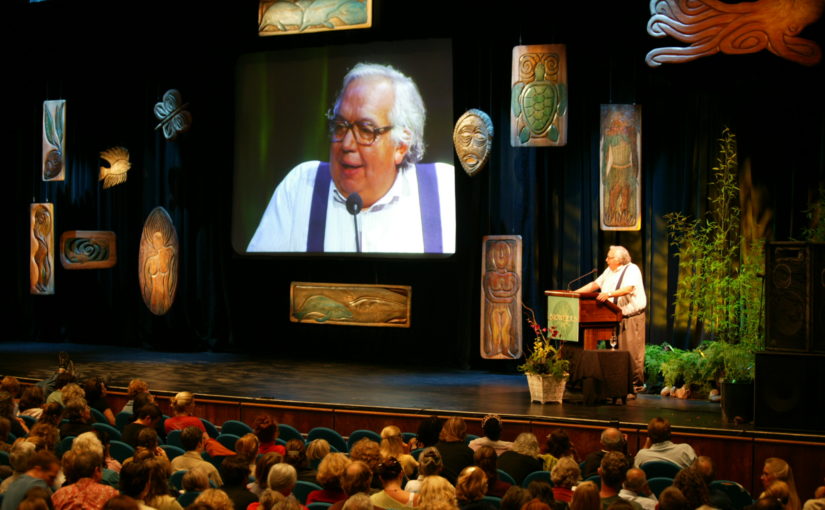
I want to personally invite you to a one-time-only private screening of two episodes-in-progress from my forthcoming dynamic 10-part film series, “Changing of the Gods: Planetary and Human Revolutions.” The film screening will take place on Friday, Oct 19 at 7:00 in the Showcase Theater as part of the Bioneers Conference. Because we will be doing one final edit, your feedback will be invaluable to us. The Bioneers audience is famous for being among the sophisticated and smart in the world! The series features numerous Bioneers.

“Changing of the Gods” uses the framework of archetypal astrology to explore the arc of revolutionary cycles across history and how they correlate with planetary alignments. History doesn’t repeat itself, but it does seem to rhyme.

The series unfolds as a provocative mystery story, exploring today’s earthshaking global upheavals by focusing on the current “world transit” of Uranus and Pluto (2007-2020). Each time this planetary configuration recurs, a zeitgeist of paradigm-shifting revolutions, disruptions, breakdowns, and breakthroughs manifest in the collective psyche and behavior on titanic scales.

What is the revolution today? What is the transformation? Inspired by the book “Cosmos and Psyche” by acclaimed scholar Richard Tarnas, and featuring comedian John Cleese, we explore the current arenas of human activity where these revolutions and transformations consistently arise: political revolutions, women’s rights, Black liberation and civil rights movements, technological innovations, scientific paradigm shifts, and cultural revolutions involving “sex, drugs and rock ‘n roll.”

“Changing of the Gods” illuminates a new emergent understanding of the cosmos and our place in it. If these planetary alignments coincide with archetypally predictable shifts in human affairs, it may suggest that we live in a cosmos pervaded with consciousness and saturated with meaning.

We’ll screen two episodes-in-progress: the opening, “World Transits,” which sets up the mysterious premise of the correlation between planetary movements and entire historical and cultural epochs; and Women’s Rights Movements, which looks at the trajectory of social movements for women’s rights and feminism across history, and climaxes in this transformational #metoo moment.

I will introduce the episodes, and we’ll invite you to fill out an evaluation form, if you’re up for that. I hope to see you there!

With Love and Gratitude –

Kenny Ausubel
CEO and Co-Founder, Bioneers

Naropa University Leads the Shift from Earth Day to Earth Justice Day

The oppression of people and the oppression of Earth go hand in hand. This is an understanding shared by the students, faculty, and staff of the BA Environmental Studies, MA Resilient Leadership, Center for Inclusive Community, and Office Sustainability at Naropa University in Boulder, Colorado. In 2016, representatives from these areas came together and changed the April 20 tradition of Earth Day to Earth Justice Day. The intent of this action was multiple. First, it was a way to honor the one-year anniversary of Decolonize the Commons where in April and May of 2015, a group of diverse students, allies, and community members, camped on the Naropa green in order to raise awareness and take action against systemic white oppression at Naropa. Second, it rooted into the core values of interconnectedness and understanding that ecological and social issues are not separate concerns; rather they are part of interlocked systems of oppression. Finally, Earth Justice Day serves to honor Naropa’s commitment to take action on these values.

Naropa University is a small private institution that is Buddhist-inspired and a leader in mindfulness awareness and contemplative education. Founded in 1974, it has a legacy of activism for both ecological and social concerns rooted in mindful awareness and compassionate action. The students at Naropa have been leaders in making positive changes on and off campus, participating in community service and activism. These include helping Naropa: switch to wind power, divest from fossil fuel, offering a more diverse and ecologically centered curriculum, offering permaculture courses, creating a greenhouse and food forest, having a bike share program, becoming zero waste, creating a Center for Inclusive Community, hiring a Director of Sustainability, and engaging in socially responsible investing. The small size of the institution affords more participatory democratic decision- making and inclusive community. The creation of Earth Justice Day in 2016 followed along this tradition.

In rooting in the awareness that the oppression of people and the oppression of earth go hand in hand, there is a recognition that ecological and social issues arise from the same roots. Both are results of systems of exploitation. When addressing issues of racism, it is essential to trace these forms of oppression to their roots. In order to adopt an approach that is embedded in social action and supports human rights on the largest scale, it is necessary to understand the link between social and ecological injustice.

People of color and other diverse groups have always been involved with environmental issues. Since the advent of the ecological crisis, this has been most clearly visible through the Environmental Justice Movement. The Environmental Justice Movement specifically looks at the environmental issues facing marginalized communities such as communities of color both urban and rural, indigenous (Native Americans and Global Indigenous groups), working class and poor, women, and children. Environmental Justice recognizes that these communities are disproportionately affected by environmental issues than mainstream communities because they have less power to prevent and fight these conditions. The Movement critiques the mainstream Environmental Movement for not including the issues facing them, for often letting bad environmental companies move into their communities (Not in My Back Yard aka NIMBY) and for allowing the Global South to be exploited. It is important to recognize that Environmental Justice did not develop after the mainstream Environmental Movement. Marginalized peoples have been facing and fighting these issues since the onset of environmental issues but they have been framed as social issues (colonization, farm workers, genocide, toxic health, human rights, poor housing, etc. etc,). The Civil Rights Movement was extremely instrumental in bringing a voice to these concerns. The terms Environmental Racism and Environmental Justice were formalized in the 1980s and became commonly known in the 1990s.

While it is wonderful that Environmental Justice is becoming more and more recognized as important to the Environmental Movement, often it is viewed as a side dish to the larger movement.

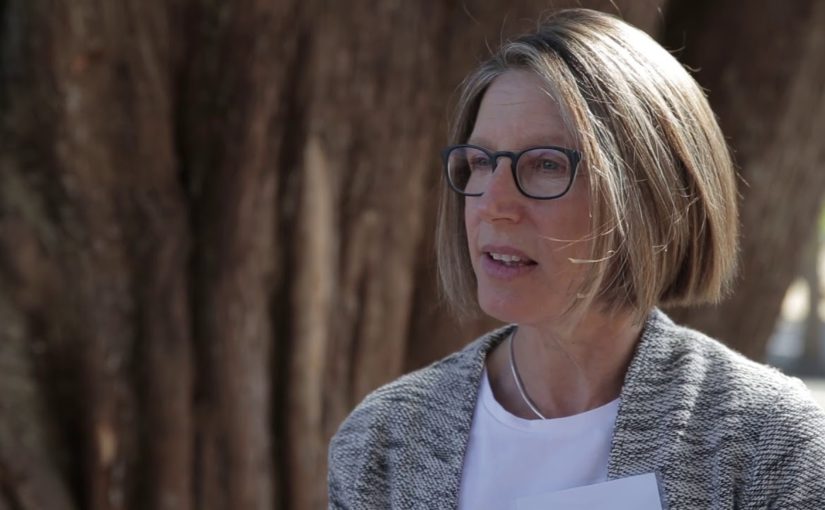
In essence, it is the main dish because the oppression of the earth has always gone hand in hand with the oppression of people – these are not separate occurrences. We see this when we trace the history of the founding of this country where specific cultural groups – Native Americans, African Americans, Europeans, Latino Americans, Asian Americans, where exploited for cheap labor that directed coincided with exploiting the land. Professor of Environmental Studies and MA Resilient Leadership, Dr. Jeanine Canty speaks to this directly in a recent podcast.

The first few Earth Justice Days have been filled with both educational and community centered events that include speakers, experiential workshops, art, dancing, food, planting food, clothing swaps, music, and all around fun. By embracing the seriousness of these issues and allowing the heavy emotions surface, the community is able to also ground in positive emotions and actions to alleviate suffering. While Naropa University is proud to be the first university to replace Earth Day with Earth Justice Day, it hopes that others will follow suit and this will become and common value for all.

Solutions From Indian Country: What The World Needs to Know

October 8 is Indigenous Peoples Day and while it might sound corny, here at Bioneers every day is Indigenous Peoples Day! Since our founding nearly three decades ago, Bioneers has celebrated and honored Indigenous knowledge and solutions to the world’s most pressing social and environmental issues. We work tirelessly every day of the year to get the word out about Indigenous issues and cultures, and to share ways that Indigenous knowledge can help solve our most pressing environmental and social concerns.

The 2018 Bioneers Conference will be bringing together more than fifty Indigenous changemakers from around the world to share their experiences working to protect water, reclaim land, and practice their religions through the annual Traditional Ecological Knowledge Workshop, the Bioneers Indigenous Forum, panelists, Keynote speakers and our partner tables and booths.  

Indigenous Forum speakers include Leah Mata (Northern Chumash), who is fighting to protect traditional seaweed harvests to re-balance the coastal ecosystems for all Californians; Hernan Payaguaje (Seikopai) who is battling oil extraction corporations to protect his Ecuadorian forest homeland; and, Susan Harjo (Cheyenne/Hodulgee Muscogee), whose tireless work for several White House administrations has shaped U.S. Federal Indian policy to protect sacred sites, secure religious freedom, revitalize Native languages and establish the National Museum of the American Indian.

When we organize the Indigenous Forum each year, we ask ourselves: “What kinds of solutions are coming out of Indian Country that the world needs to know about?” And, “How can we build cultural bridges so that these game-changing efforts can be supported and sustained?” The result is groundbreaking programming that can’t be found anywhere else.

On Friday, October 19, we are focusing on “Water is Life!”– the battle cry that encapsulated Standing Rock. Our first panel, Abalone Wars: Indigenous Voices from the Coastal Frontlines, showcases Indigenous leaders sharing their experiences on the frontlines of the battle to save our coasts while fighting to maintain their cultural connections to these resources, and our second panel, Mní Wičhóni: We Are Here To Protect Our Rivers, features women water carriers sharing what “water is life” truly means from a cultural and spiritual understanding.

On Saturday, October 20, Indigenous Forum panels are all about Indigenous Solutions for our most difficult environmental challenges. For the first time ever, we are hosting “Lunch with an Elder,” a powerful session with Tom Goldtooth of the Indigenous Environmental Network. This will be followed by Native People’s “Just Transition” to Clean Energy, an incredible conversation with two Indigenous women who have successfully transitioned their Native communities off fossil fuels. Our final panel, Beyond Sovereignty: New Solutions for Self-Determination, features a Native lawyer, a tribal government official, an artist, and a policy-maker exploring how tribes might begin to go beyond conventional applications of sovereignty to include food sovereignty beyond farming, economic sovereignty beyond gaming, and environmental sovereignty beyond current legal systems.

Sunday, October 21, is all about re-indigenization, or honoring ways that all people can acknowledge their roots and responsibilities. For the first time ever, we are bringing pairs of Native/non-Native allies together for a groundbreaking conversation about How To Be A Good Ally. Last but not least, our final panel explores “Blood Memory.” What is it? How do you tap into yours? And, how do you respectfully acknowledge the blood memory of others?  

The Bioneers Indigeneity Program warmly welcomes all people from different backgrounds, ages and walks of life to join our Indigeneity programming as relatives, friends, and allies. We can’t wait to see you at Bioneers 2018.

Yours Truly,

Cara Romero and Alexis Bunten


Bioneers Indigeneity Program Staff Alexis Bunten (Aleut/Yup’ik) left, and Cara Romero (Chemehuevi) right, take a break to visit the MOMA while campaigning for the Rights of Nature in New York City this past July.

Indigenous Visionary Plant Traditions

First Peoples have long used key sacred plants as powerful healing tools and to communicate with the “mind of nature.” In this truly unique session Bioneers associate producer and editor of Visionary Plant Consciousness J.P. Harpignies and ethnobotanist/artist Kat Harrison hosted deeply experienced practitioners of sacred plant traditions from the International Council of 13 Indigenous Grandmothers, including Mazatec Elder Julieta Casimiro; Maria Alice Campos Freire, a Madrinha in Brazil’s Santo Daime Church; traditional Cheyenne dance leader, sculptress and writer Margaret Behan Red Spider Woman; and Bernadette Rebienot, Omyene healer and master of the lboga Bwiti Rite.

Explore our Visionary Plant Consciousness & Psychedelics media collection >>

Managing the Soil for Carbon is Good for the Climate – Whendee Silver

Dr. Whendee Silver of UC Berkeley is researching the bio-geochemical effects of climate change and human impacts on the environment, and the potential for mitigating these effects. Dr. Silver is working with the Marin Carbon Project to establish a scientific basis for carbon farming practices that, if implemented globally, could have a significant impact on mitigating climate change.

Explore the Bioneers Carbon Farming series >>

Jayden Lim Conference Preview: Beyond the Headdress

Award-winning young Pomo activist Jayden Lim of the California Indian Museum and Cultural Center’s Tribal Youth Ambassadors program will be delivering a keynote speech Friday, Oct 19 at the 2018 Bioneers Conference. She will illuminate the hidden history of California and how she has had to grapple with stereotypes and historical trauma to find her identity as a Native youth.

Jaydem Lim (Pomo), a high school senior skilled in GIS software, business planning, and Pomo language documentation (and also a DJ since age 11!), serves as a Tribal Youth Ambassador (TYA) for the California Indian Museum and Cultural Center. Jayden spoke at the Obama White House ceremony honoring the TYA program and is currently working to make California switch Columbus Day to Indigenous Peoples Day.

Learn more at conference.bioneers.org

Fibershed: Building Local Economy and Healing the Climate

Rebecca Burgess and the Fibershed project are building a regional economy that connects ranches producing wool with artisan clothing manufactures. Fibershed’s local economy network is based on carbon farming practices that capture atmospheric carbon and store in the soil. Soil carbon supports a regenerative fertility cycle and is the building block for a climate-friendly life-promoting economy.

Learn more at http://www.fibershed.com/

Join us at the 2018 Bioneers Conference

We’re living in a thriller that only reality could write. Breakdown and breakthrough – death and rebirth – creative destruction writ large.

As this year’s Bioneers Conference will exemplify, there’s as much cause for hope as for horror, and the ground truth is that how this story turns out is up to us. Nothing less than a step change in human evolution will do. Never has it been more important for us to exercise our vision, our agency, our solidarity and our voices.

That’s what we’ll all be doing together at Bioneers 2018. The theme is “Pathways Forward,” and we’re excited to explore the paths with you.

Learn more at http://conference.bioneers.org

Bioneers 2018 Presenter Preview: Author & Social Justice Expert Edgar Villanueva

A nationally recognized expert on social justice philanthropy, Edgar Villanueva (Lumbee) is about to release is his first book, Decolonizing Wealth. In it, Villanueva, Chair of Native Americans in Philanthropy and as Vice President of the Schott Foundation for Public Education in New York City, draws from Indigenous wisdom to offer ways to dismantle colonial dynamics in the philanthropic and social finance sectors. It’s a persuasive look at how Americans must work together to identify and destroy the systems that oppress not only with zeal and purpose, but also with compassion. The book will be available everywhere on October 16.

Edgar Villanueva

In less than a month, Villanueva will take the stage at the 2018 Bioneers Conference, along with other accomplished social justice advocates, at the Indigenous Forum for the discussion, How to Be A Good Ally. During the workshop Villanueva, along with fellow speakers like Mitch Anderson, founder and Executive Director of Amazon Frontlines, and Hernan Payaguaje (Seikopai) Executive Director of the Ceibo Alliance, will have a candid discussion about what white “ally-ship” means and how to build successful cross-cultural collaborations. Villanueva will also take part in a Bioneers authors book signing, where you’ll be able to snag your own copy of his newly released book.

Ahead of the conference, Villanueva shares some of his thoughts on the challenges our country is currently facing, why he has reason to hope, and the books he recommends reading.

What he’s most excited for within the next year: “How my new book, Decolonizing Wealth, can bring conversations of truth and reconciliation into the philanthropy and finance sectors.”

His biggest reason to have hope right now: “We’ve transcended beyond the superficial relationships to deep connectedness and belonging — and this is what it will take to restore balance.”

Our biggest challenge to overcome right now: “We must name and dismantle white supremacy.”

The number one thing individuals can do to have a big impact on the world in a positive way: “Hold up the mirror and take a long gaze. Ask yourself what you are doing to reinforce the status quo or what are you doing to disrupt the ordinary.”

The Bioneers 2018 talk he’s most excited to see: Hilary Giovale, who will also be speaking in the Indigenous Forum’s How to Be a Good Ally.

The books he recommends to our audience:

Dawn Again: Tracking the Wisdom of the Wild | Doniga Markegard

The following is an excerpt from Chapter 8 of Dawn Again: Tracking the Wisdom of the Wild (Propriometrics Press, 2017) by Doniga Markegard. Dawn Again takes readers along on Markegard’s journey of exploration and survival: the wilderness immersion school where Indigenous elders and wildlife trackers were among her teachers, hitchhiking across the pacific northwest, the moment she first connected with a deer using owl eyes and fox walking techniques, and to Alaska where she fell in love with tracking white wolves and the rigor of wilderness survival.

Doniga Markegard will join us at Bioneers 2018, where she’ll speak on regenerative agriculture.

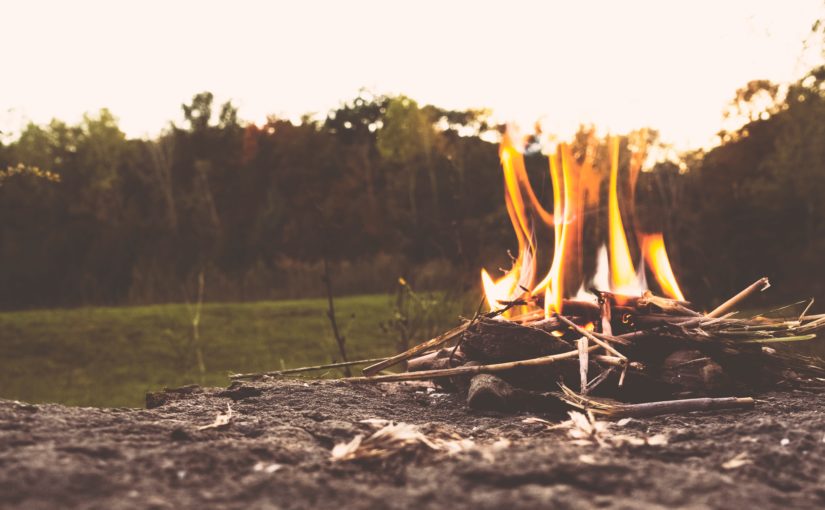
I gathered more wood to get me through the night. I also gathered bark to set up as a heat reflector, and to pull over me when I took my wet clothes off to keep drafts from chilling my naked skin. Walking past the stream at the base of the waterfall, I paused to look into the clear water. Reflected back at me were smooth pebbles of browns and greys. I remembered a story that a Haida wood carver, Ralph Bennett, once told me of his people, who lived in the Pacific Northwest. The story recounts a time when the rivers were so thick with salmon that you could walk across their backs to cross the river and never touch the stones below. I imagined salmon so thick in the streams you could just reach down and throw one up on the bank, feasting on the richness they had brought from the ocean to the fresh waters.

Back at my fire, I said the prayers Gilbert had taught me. I prepared for sleep that night warm in the womb of the grandmother cedar tree, knowing I could live here forever, surviving on food I gathered and staying warm with the shelters and fires I built. I could build traps for squirrels and rabbits. I could find cattail swamps and dig up the roots, extracting the starch and feasting on the young shoots that emerge early in the spring. I could make jerky, tan hides for clothes, and make a bow and arrow for hunting. The possibilities were endless. I stoked the fire until I was warm enough to fall asleep, peaceful in the knowledge I had the skills to survive here as long as I needed.

That night I was in and out of a dream state. I awoke shivering. The fire had died down, so once more I stoked it. My clothes hung propped up on sticks around the fire to dry. I went to sleep again, dreaming of the salmon coming back to the rivers and of the wolf packs that once flourished in this wilderness. Waking up tired, I stoked the fire hot and fell into a deep sleep.

I awoke a final time to the faint light of dawn. A foul smell had shaken me out of my dream state. It wasn’t the smell of the gunk that was causing deer to lose their hair and a meadow ecosystem to perish. This was the smell of…burning clothes. My clothes had caught on fire! I jolted up, looking at the fragments of Carhartt jeans. The waist had survived, but the legs were burnt up to the seam. My shirt too was a fragment of thread, useless for anything but wiping up a mess. I was naked and alone in the wilderness, far from any road or house and surrounded by a blanket of snow.

I put the remains of my fire out, that fire that I’d worked so hard for and that had taken it upon itself to teach me a lesson. It had taken away the possessions I’d brought with me, rendering me as helpless as the deer in the poisoned meadow. The lesson showed me the struggle to survive in the wilderness was a struggle that humans have brought upon themselves by going away from the natural patterns and law of the earth. We have forgotten not only how to survive, but also how to care-take the elements necessary for our survival.

During my time alone at Cedar Falls, I heard the creatures crying out to me for help. The salmon wanted the obstructions to be cleared so they could run again in great numbers. The deer wanted their forests to be lush again so they could thrive on the purity of plants. The waters cried out to flow clean of chemicals and sediment that ran off from the clear-cut. The clear-cuts had been sprayed with herbicide to prevent the weedy vegetation from coming back and covering the earth. Those weeds that were being stopped would have rebuilt the soil to allow the natural succession back to forests. I too was stripped of my covering like the forest, and it was now time for me to rebirth.

I walked out of the woods naked. It was a symbolic walk for me as I moved down logging roads and wildlife trails without the need or want of a single material item. I had, after all, long since placed the health of the earth above the want for any material possession. I did not feel defeated; I felt galvanized by this unplanned rite of passage. I needed to leave the wilderness now, but I resolved that I would return to the wild and flourish. I would learn to live in a way that created abundance, instead of merely surviving for my life, living alone in the wilderness, away from my friends and family. I would find a way to love the earth and be part of its regeneration. The fire I had lit with the bowdrill was inside me now, and it would continue to burn throughout my life.

Excerpted from Chapter 8 of Dawn Again: Tracking the Wisdom of the Wild (Propriometrics Press, 2017) by Doniga Markegard.

Joanna Macy – The Hidden Promise of Our Dark Age

The Hidden Promise of Our Dark Age: Discovering Our Wisdom, Strength and Beauty in the Midst of Crisis

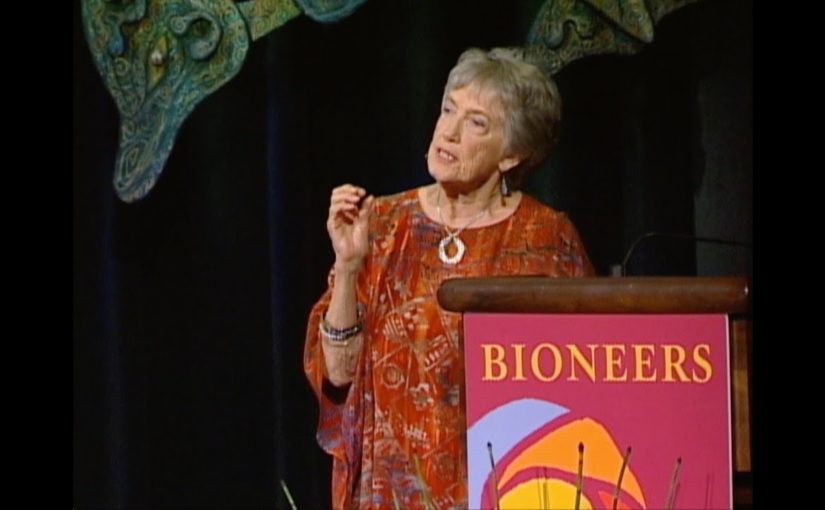
One of the great activists and spiritual teachers of our era, Joanna Macy, brings a hopeful message: If we can free ourselves from the delusions and dependencies bred by the “industrial growth society,” something wonderful can happen. If we manage to steer clear of panic, we may well find, at last, the wild power of our creativity and solidarity.

Introduction by Nina Simons, Co-Founder of Bioneers.

This speech was given at the 2009 National Bioneers Conference.