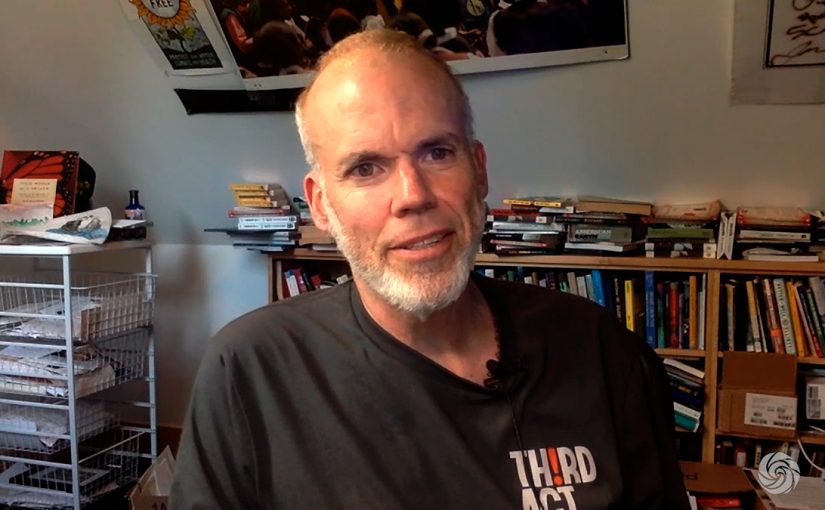
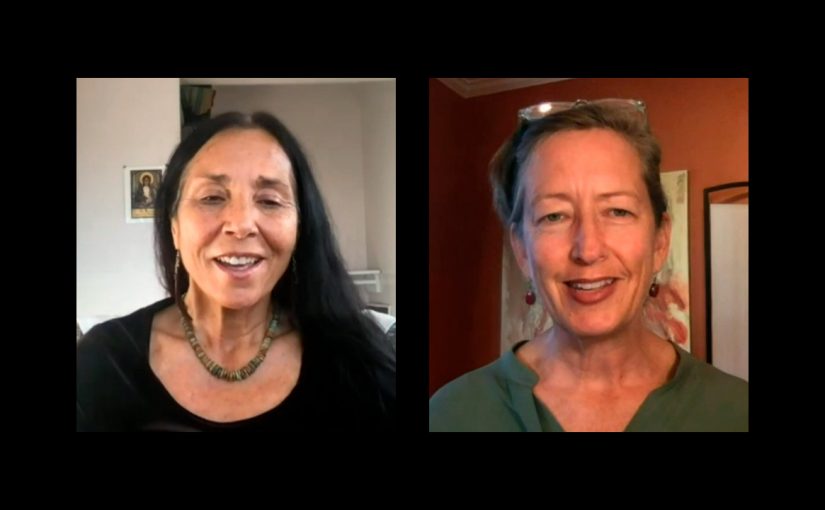
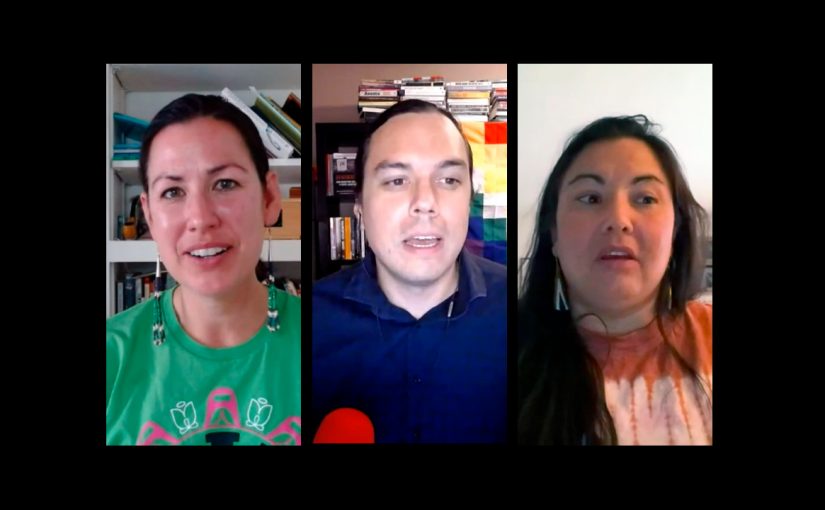
Alongside Indigenous and frontline communities, young people have been at the forefront of the global climate fight. In this talk, Bill McKibben explains why older activists not only need to have their backs, but how we can harness the power of the fastest-growing population on earth—people over the age of 60—and move them towards progressive political involvement, foster intergenerational collaboration, and deepen the fight for a fairer, more stable planet.
This talk was delivered at the 2021 Bioneers Conference.
Bill McKibben, one of the most important thinkers on environmental issues and climate activists of our era, is a contributing writer to The New Yorker, a founder of the remarkable influential grassroots climate campaign 350.org and the Schumann Distinguished Professor in Residence at Middlebury College in Vermont. A recipient of the Right Livelihood Prize (sometimes called the ‘alternative Nobel’) in 2014, and the Gandhi Peace Award, he has written over a dozen books about the environment, including his first, the seminal, groundbreaking text, The End of Nature, published 30 years ago; and his most recent, Falter: Has the Human Game Begun to Play Itself Out?
In his New York Times best-selling book Falter (Henry Holt and Company, 2019) Bill McKibben warns us that climate change is unraveling this very human game. Our rapid degradation of the environment is moving faster than ever as humans have used more resources in the last 35 years than in all of human history before. Read an excerpt from Falter.
In her keynote address to the 2018 Bioneers conference, May Boeve shares her eagle’s-eye perspectives on the current state of the climate struggle. She illustrates 350.org’s learnings and strategies moving forward, including ways of learning about and incorporating justice and equity.
The way in which we diagnose problems in our bodies, in society and in our ecosystems is hampered by legacies of overly reductionist thinking, racist world-views and misguided desires to subdue nature, all conceived in a time of colonial conquest. These continue to persist, to our great detriment. What results is an inability to see how “whole systems” interact and how to effectively address the challenges we face, from pandemics to climate change, which are systems-level derangements.
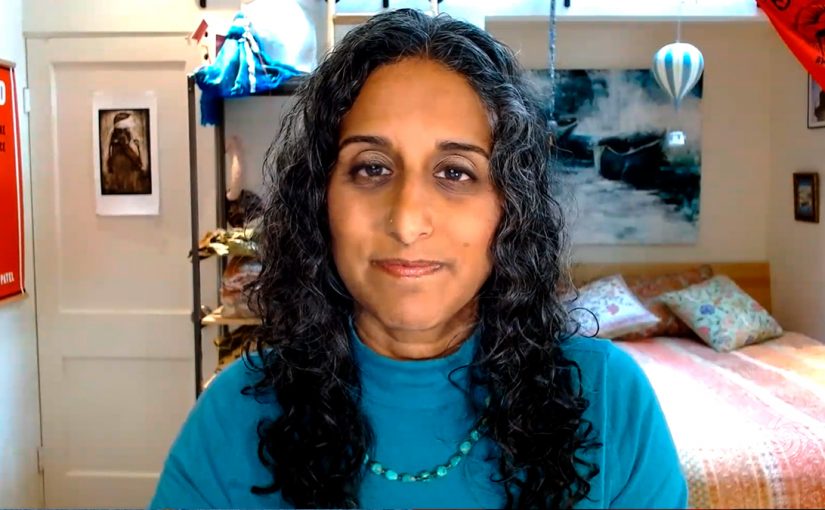
Physician, musician, activist and writer Rupa Marya describes what “Deep Medicine” is and how the new level of diagnosis it offers can address the suffering of our planet, our societies and our own bodies. Drawing from insights in science, medicine, ecology, and story detailed in the book she co-authored with Raj Patel—Inflamed: Deep Medicine and the Anatomy of Injustice—Dr. Marya outlines why it is time for us all to join the Care Revolution.
Associate Professor of Medicine at UCSF and Faculty Director of the Do No Harm Coalition, Dr. Rupa Marya is one of the nation’s leading figures working at the intersection of medicine and social justice (including in investigating the health effects of police violence on communities and helping set up a free clinic under Lakota leadership at Standing Rock). She is also singer and musician who leads the internationally touring band Rupa and the April Fishes and the co-author (with Raj Patel) of the brand new book: Inflamed: Deep Medicine and the Anatomy of Injustice.
“You are about to read a collection of thoughtful essays on medicine and health—not just personal health but planetary health, and not just medicine in the ordinary sense but medicine as an enterprise that encompasses the totality of human experience.” – Andrew Weil M.D.
Ecological medicine is an idea whose time has come. This free ebook is an anthology of visionary voices surveying the principles and practices of this critical shift in paradigms, practices and societal design.
In this podcast, Dr. Rupa Marya describes how “social medicine” works to dismantle harmful social structures that directly lead to poor health outcomes, and building new structures that promote health and healing.
Read an excerpt from Ecological Medicine, Healing the Earth, Healing Ourselves, a collection of writings from the world’s leading health visionaries, showing how human health is inescapably dependent on the health of our environment.
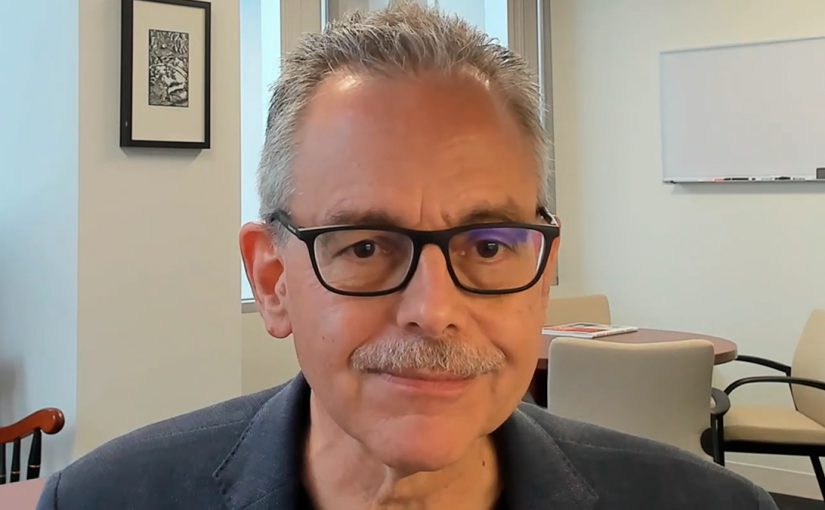
In a world wracked by income inequality, social divisions, and ecological destruction, can we build an alternative economics based on mutual cooperation and respect for our environmental commons? Among the nation’s most influential progressive thought leaders, activists and scholars, Manuel Pastor taps his new book, written with his long-time colleague Chris Benner, to propose that drawing on our instincts for connection and community can actually help create a more robust, sustainable, and equitable economy. But while most of us would benefit from centering mutuality and equity, some people do benefit from the current stark inequalities. As a result, seizing this moment for change will require brave conversations about racism and social fragmentation, a deep commitment to intersectional social movements, and a clear strategic vision for building people power.
This talk was delivered at the 2021 Bioneers Conference.
Manuel Pastor, Ph.D., Distinguished Professor of Sociology and American Studies & Ethnicity at USC and Director of its Equity Research Institute, has long been one of the most important scholars and activists working on the economic, environmental and social conditions facing low-income urban communities and the social movements seeking to change those realities. He has held many prominent academic posts, won countless prestigious awards and fellowships for his activism and scholarship, and is the author and co-author of many important, highly influential tomes, including most recently, State of Resistance: What California’s Dizzying Descent and Remarkable Resurgence Means for America’s Future (2018) and the just-about-to-be-released Solidarity Economics: Why Mutuality and Movements Matter.
This Bioneers Reader is a collection of pieces presenting wisdom from leading figures in progressive economic thought and action, all dealing with strategies to radically restructure our ever more inequitable, racist and environmentally devastating economic system.
How do we change the story of corrosive racial inequity? First, we have to understand the stories we tell ourselves. In this podcast, racial justice innovators john a. powell and Heather McGhee show how empathy, honesty and the recognition of our common humanity can change the story to bridge the racial divides tearing humanity and the Earth apart.
A special performance of “Waking Time” by musical duo MaMuse.
This performance took place at the 2021 Bioneers Conference.
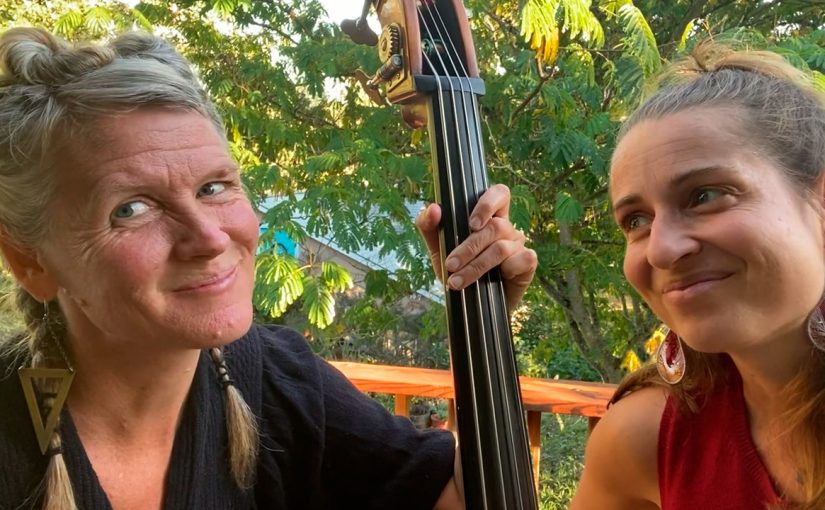
MaMuse, a musical duo (Sarah Nutting and Karisha Longaker) fed by folk and gospel traditions that has been together 13 years and produced five albums, uses a wide variety of acoustic instruments (upright bass, guitar, mandolins, ukulele, and flutes) with the goal of creating uplifting music that opens hearts, nurtures a love of life and “inspires the world into thriving.”
For millennia Indigenous communities have been guardians of their environments, protecting flora and fauna, using their traditional knowledge and wisdom passed down over generations to live in balance within their ecosystems. Today Indigenous peoples safeguard 80% of the biodiversity left in the world, and protecting those lands and waters is crucial to mitigating the climate crisis, because those biodiverse areas are among the planet’s major carbon sinks. Indigenous peoples are the ancestral owners of nearly half of the intact forest left across the entire Amazon Basin.
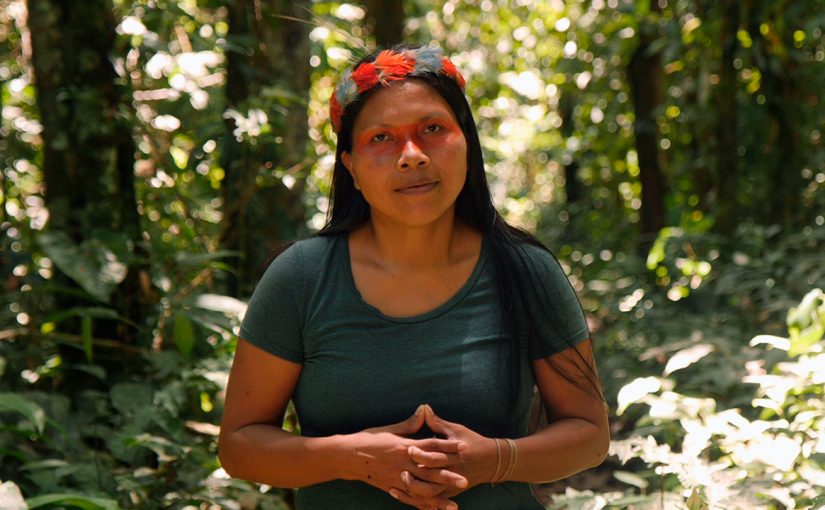
Nemonte Nenquimo, a leader from the Waorani community in Ecuador and a founding member of Indigenous-led nonprofit organization Ceibo Alliance and its partner, Amazon Frontlines, discusses why respecting Indigenous people’s internationally recognized rights to decide the future of their territories, cultures and lives is critically urgent for the protection of our world’s most important rainforest, our climate, and life on our planet.
This talk was delivered at the 2021 Bioneers Conference.
Image courtesy of Amazon Frontlines
Nemonte Nenquimo, an Indigenous activist from the Ecuadorian Amazon, first female president of her tribe (the Waorani of Pastaza Province) and co-founder of the Indigenous-led Ceibo Alliance and its sister organization Amazon Frontlines, was named one of Time’s 100 most influential people on Earth in 2020 (the only Indigenous woman on the list) and won the prestigious Goldman Environmental Prize among other major awards, for her struggles against the ravages of oil drilling in her people’s ancestral lands.
For thousands of years, Indigenous peoples have protected their sacred ancestral territories in the Amazon. In this keynote address to the 2019 Bioneers Conference, Leila Salazar López, Executive Director of Amazon Watch, urges us to stand with them to protect and restore the bio-cultural integrity of the Amazon, because our collective future depends on it.
In response to catastrophic assaults on their lands and cultures by corporate industrial civilization, the First Peoples of the Amazon have formed unprecedented alliances to protect lands and peoples. In this address to the 2018 Bioneers Conference, four extraordinary Indigenous leaders offer guiding wisdom from their elders to show what’s at stake for their rainforest territories, what it means to the future of our planet, the amazing successes that Ceibo Alliance has found in their efforts to defend their land, and what we can all do as allies to protect the Amazon, its First Peoples and life on Earth.
Trauma has perhaps never been more widely prevalent than it is now, nor more varied in its causes: personal stress, familial history, racial discrimination, poverty, oppression, climate disaster, etc. These times are really stretching our capacity to endure, so they require ever more effective healing and self-care modalities that include the taking of our personal inventory and adjusting our beliefs and lifestyles. In this panel, two master Somatics practitioners and teachers share insights and explain their methods. With: Dr. Ruby Gibson (Lakota, Ojibwe, Mediterranean), author, educator and healer, co-founder and Executive Director of Freedom Lodge; and Staci K. Haines, educator, advocate, healer, co-founder of Generative Somatics and author of The Politics of Trauma.
This discussion took place at the 2021 Bioneers Conference.
Staci K. Haines, a leader in the field of Somatics, is the co-founder of Generative Somatics, a multiracial social justice organization bringing somatics to social and climate justice leaders and organizations. She specializes in somatics and trauma and leads programs for healers, therapists and social change leaders to transform the impact of individual and social trauma and violence. Her most recent book, The Politics of Trauma: Somatics, Healing and Social Justice is based on that work. Staci is also the author of Healing Sex: A Mind Body Approach to Healing Sexual Trauma and the founder of GenerationFIVE, a community-based organization working to end the sexual abuse of children within five generations.
The Brower Youth Awards, named after the late, legendary environmental giant, David Brower, are one of the most prestigious prizes for youth activists, and we at Bioneers are delighted to be able to highlight the work of this year’s cohort of winners, an exceptional array of young mobilizers, organizers and paradigm-shifting leaders, who discuss their activist trajectories, the challenges they face, and their aspirations for the future.
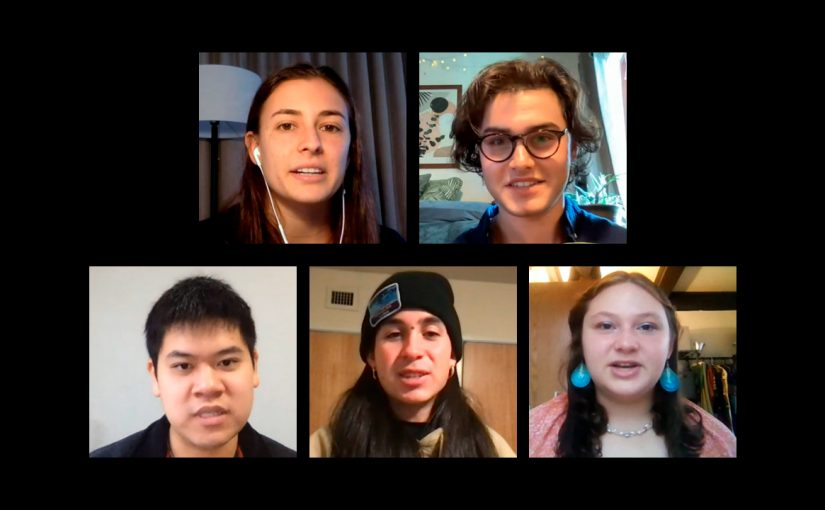
Hosted/moderated by: Mackenzie Feldman, founder/Executive Director, Herbicide Free Campus. With: Sonja Michaluk, 18-year old NJ-based young scientist and citizen science activist, founder of the Conservation Communities Initiative, which encourages people to monitor and protect their local aquatic habitats; Peter Pham, 22, San Jose, CA-based environmental and transit justice activist with Turnout4Transit; David Baldwin, 18, Fort Lauderdale-based invasive plant researcher and activist with Everglades Restoration Ambassadors; Artemisio Romero y Carver, an 18-year old, Santa-Fe, NM-based artist, poet and organizer, co-founder of Youth United for Climate Crisis Action (YUCCA) (who was also Santa Fe’s 2020 Youth Poet Laureate!).
This discussion took place at the 2021 Bioneers Conference.
Panelists
Mackenzie Feldman
Mackenzie Feldman is the founder and Executive Director of Herbicide-Free Campus, an organization that works with students and groundskeepers around the country to advocate for an end to the spraying of synthetic herbicides at schools and a transition to organic land management. Her campaign resulted in the entire University of California system going glyphosate-free, and Mackenzie worked with a coalition to get herbicides banned from every public school in the state of Hawaii. Mackenzie is also a Food Research Fellow for Data For Progress and was a winner of the prestigious Brower Youth Award in 2019 for her work with Herbicide-Free Campus.
David Baldwin
David Baldwin, a Fort Lauderdale, FL-based 18-year old, who has done research alongside members of the Max Planck Florida Institute for Neuroscience and interned in a biogeochemistry lab at Florida Atlantic University, has been doing groundbreaking work on finding innovative land-management solutions to invasive weeds in his region. A member (since he was 14) of Everglades Restoration Ambassadors, a nonprofit that removes nonnative plants, he educates elementary school students about nonnative species using educational modules he developed. Baldwin was also just recently announced as a 2021 Brower Youth Award winner.
Sonja Michaluk
Sonja Michaluk, a Princeton, NJ-based 18-year old young scientist and citizen science activist who participated in her first freshwater bio-assessment as an eager six-year-old, founded the Conservation Communities Initiative, which encourages people to monitor and protect their local aquatic habitats and advocate for data-driven environmental decision making. The initiative runs a microbiology and genetics lab that facilitates use of a genetics-based bio-assessment method that Michaluk developed, which can identify the presence of threatened, endangered, and nonnative species from trace water samples. Michaluk has recently helped secure several big wins for aquatic environments, including the modification of a natural gas pipeline to protect ecologically critical land in Central New Jersey.
Peter Pham
Peter Pham, a San Jose, CA-based 22-year old environmental and transit justice activist with Turnout4Transit, a coalition of environmental advocacy groups, labor unions, and social justice organizations, has been fighting for better public transit throughout the San Jose metropolitan region and beyond with the goals of slashing regional emissions, decreasing traffic congestion, and increasing local residents access to opportunities. This past year Pham and his colleagues helped pass a ballot measure to generate $100 million for rail services in San Francisco, San Mateo, and Santa Clara counties, and he is a just recently announced 2021 Brower Youth Award winner.
Artemisio Romero y Carver
Artemisio Romero y Carver is an 18-year old, Santa-Fe, NM-based artist, poet and organizer who helped found Youth United for Climate Crisis Action (YUCCA), a youth-led nonprofit working to hold elected officials accountable for the health of the planet, future generations, and BIPOC communities by leading protests, lobbying for federal and state legislation, endorsing candidates, and educating voters. Romero y Carver, currently a steering committee member and spokesperson for YUCCA, served as its Policy Director during New Mexico’s 2021 legislative session during which three of the organization’s priority bills were passed, and was also Santa Fe’s 2020 Youth Poet Laureate.
Indigenous Peoples already do “green jobs”—they integrate cultural values into business activities and protect 80% of the world’s biodiversity. In order to transform our economies through Indigenous-led solutions, we need to uplift movements and stories inspired by Indigenous resistance. To do this, we must change the culture of philanthropy and impact investing, which still largely circulates in privileged circles. In this panel, we explore how to transition from colonial-capitalism using Indigenous-led strategies that offer us pathways towards an equitable and regenerative future.
With: Sikowis (Plains Cree/Saulteaux), founder, Great Plains Action Society, speaker/writer/artist; Nick Estes, Ph.D. (Lower Brule Sioux Tribe), historian, author, Professor at the University of New Mexico, co-founder, The Red Nation. Hosted by Alexis Bunten (Unangan/ Yup’ik), Co-Director of the Bioneers Indigeneity Program.
This discussion took place at the 2021 Bioneers Conference.
Panelists
Sikowis
Sikowis (aka Christine Nobiss) (Plains Cree/Saulteaux, George Gordon First Nation) grew up in Winnipeg but has been living in Iowa City for 15 years. She is the founder of the Great Plains Action Society, “a collective of Indigenous organizers of the Great Plains working to resist and Indigenize colonial institutions, ideologies, and behaviors.” She speaks, writes and organizes extensively on Indigenous rights, the climate crisis, environmental collapse and colonial capitalism.
Nick Estes
Nick Estes, Ph.D. (Kul Wicasa/Lower Brule Sioux), is Assistant Professor of American Studies at the University of New Mexico and a member of the Oak Lake Writers Society, a group of Dakota, Nakota and Lakota writers. In 2014, he was a co-founder of The Red Nation in Albuquerque, NM, an organization dedicated to the liberation of Native people from capitalism and colonialism. He serves on its editorial collective and writes its bi-weekly newsletter. Nick Estes is also the author of: Our History Is the Future: Standing Rock Versus the Dakota Access Pipeline, and the Long Tradition of Indigenous Resistance.
Alexis Bunten
Alexis Bunten, Ph.D., (Unangan/Yup’ik), Co-Director of the Bioneers’ Indigeneity Program, has been a researcher, media-maker, manager, consultant, and curriculum developer for organizations including the Sealaska Heritage Institute, Alaska Native Heritage Center, and the FrameWorks Institute. She has published widely about Indigenous and environmental issues, and is the author of So, how long have you been Native?: Life as an Alaska Native Tour Guide.
As you surely know by now, the annual Bioneers Conference is right around the corner. In the curation of each year’s event we strive to find and feature leaders poised to make a big difference moving forward. Slouching toward sustainability will not turn the tide. Only immediate, bold and transformative action will enable us to leap over the abyss. The speakers we invite present projects, campaigns, and ideas that can change our future reality – with your help.
This week we’re excited to share stories and interviews from some of the brilliant leaders speaking at #Bioneers2021. We hope you’ll attend the conference if you aren’t already registered. Remember, the event will be available on-demand for three weeks after the fact.
If you can’t make it, please stay tuned to your inbox and follow us on social media next weekend as we share action items and campaigns that you can support.
Rupa Marya | As The World Burns
From a surge in mass uprisings in response to systemic racism, a rise in inflammatory illnesses like gastrointestinal disorders, and an increasing number of climate refugees –– our bodies, society, and the planet are inflamed. In this excerpt from their latest book, INFLAMED: Deep Medicine and the Anatomy of Injustice, Marya calls for a diagnosis of the inflammation of our planet and collective health.
See Rupa Marya at the 2021 Bioneers Conference, where she will present on “Deep Medicine and the Care Revolution,” perform with Rupa & the April Fishes, and take part in the panel “Designing Futures for Health and Justice.” Learn more here.
Indigeneity Programming at the 2021 Bioneers Conference
Bioneers has honored Indigenous knowledge and lifeways since its inception, and this year is no different. We are so honored to share with you the keynotes, panels, and interactives with Indigenous leaders across many fields and cultural traditions.
Manuel Pastor | Solidarity Economics: Why Mutuality and Movements Matter
Economists often argue that narrow self-interest is “human nature” to justify our current economy, incentivizing narrow self-interest over community. The pandemic has shown humanity capable of uniting and showing compassion for our neighbors. In this excerpt from his latest book, Solidarity Economics: Why Mutuality and Movements Matter, Manuel Pastor defines the possibility and urgency of solidarity economics guided by principles of mutuality and solidarity.
Join Manuel Pastor at the 2021 Bioneers Conference, where he will deliver the keynote address, “Solidarity Economics: Mutuality, Movements and Momentum” and take part in a panel on “Solidarity Economics: Our Economy, Our Planet, Our Movements.” Learn more here.
Suzanne Simard | Finding the Mother Tree
In nature, trees are linked by a single tree that acts as a central hub. Suzanne Simard refers to this tree as “The Mother Tree.” In her new book, Finding the Mother Tree: Discovering the Wisdom of the Forest, Suzanne explores the communal nature of trees and their shared network of interdependency. Check out this excerpt from the introduction to her book!
See Suzanne Simard at the 2021 Bioneers Conference, where she will deliver the keynote address, “Dispatches From the Mother Trees” and participate in the panel “Lessons from the Underground.” Learn more here.
Karla McLaren | Creating Intentional Communities in our Workplaces
All workers deserve to be treated as valued equals and work in safe, humane, and emotionally well-regulated workplaces. In this article, Karla McLaren provides a lens through which we can build an emotionally well-regulated social structure to lead to a healthy social and emotional workplace where people and projects can finally thrive.
Join Karla McLaren at the 2021 Bioneers Conference for the interaction session, “The Power of Emotions at Work: Accessing their Genius for the Good of All” where Karla will guide us to understand how to collaborate with the power of emotions to create respectful and emotionally well-regulated environments where people and projects can thrive. Learn more here.
Ben Goldfarb | Beaver Believer: How Massive Rodents Could Restore Landscapes and Ecosystems At Scale
The consequences of losing beavers were profound: streams eroded, wetlands dried up, and species from salmon to swans lost vital habitat. In his book, Eager: The Surprising, Secret Life of Beavers and Why They Matter, journalist Ben Goldfarb reveals how our idea of a healthy landscape is distorted by the fur trade that once trapped out millions of beavers from North America’s lakes and rivers.
Join Ben Goldfarb at the 2021 Bioneers Conference for the panel, “Biophilic Infrastructure: Letting Nature Lead the Way” with Teo Grossman, Ariel Whitson and Crystal Kolden! Learn more here.
David Montgomery & Anne Biklé | Hidden Half of Nature: Intelligent, Invisible Life In Us and On Us
The latest revelations about microorganisms show that we are not who we thought we were. Scientists are uncovering how microorganisms can help us address some of the world’s most pressing problems. In The Hidden Half of Nature: The Microbial Roots of Life and Health, authors David R. Montgomery and Anne Biklé explore humanity’s relationship with microbes across science and nature by recognizing the essential roles they play in our lives.
See David R. Montgomery & Anne Biklé at the 2021 Bioneers Conference, where they will present the keynote address, “You Are What Your Food Ate,” and take part in the panel “Lesson From The Underground” with Suzanne Simard and Arty Mangan. Learn more about David & Anne.
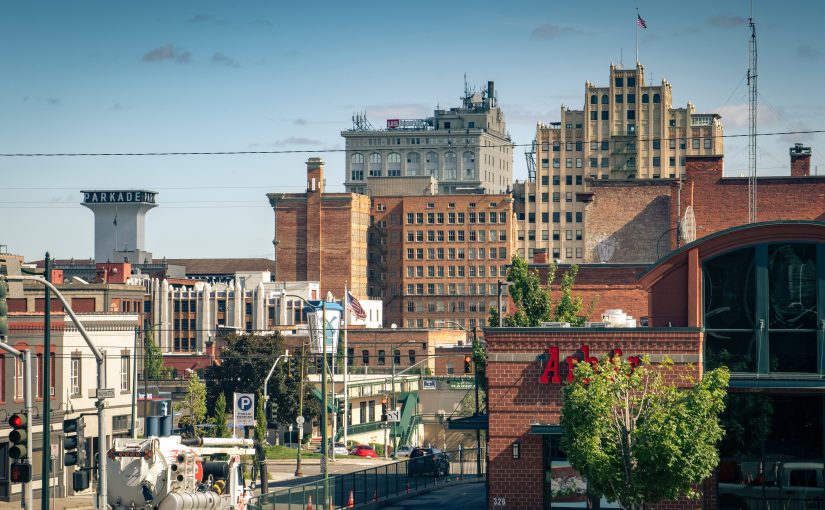
After working as a public defender for more than 20 years, Jim Sheehan received an unexpected inheritance from a family member. Jim purchased and renovated six buildings in a run down corner of downtown Spokane, Washington and repurposed them for the collective good. For more than 20 years these buildings, now known as the Community Building Campus, have served as a community hub for grassroots campaigns, coalitions, and activists. In the new book, One Block Revolution: 20 Years of Community Building, leaders who have worked from this hub share their stories that highlight the legacy of this collective.
In this excerpt from the introduction by the editor of the book, author and social impact advisor with Measure Meant, Summer Hess recounts her work with Jim beginning as an executive assistant and how it catalyzed her work to build a sustainable future.
Soon after starting my job in 2013 as executive assistant to Jim Sheehan, founder of the Center for Justice and the Community Building Campus in Spokane, Washington, I returned to our office after lunch to a voice message from a Coca-Cola representative. He was calling about an old advertisement painted directly on the southwest corner of the Community Building and offered to have it restored, free of charge.
It seemed like a great idea to me. I was a newly minted MFA in nonfiction writing who felt a strong connection to the Spokane region and Eastern Washington University, where I had earned my degree. I felt the faded advertisements on early 20th-century brick evoked nostalgia for the early days of the Inland Empire. They spoke to a classic Spokane era, when industry boomed, when timber and minerals were trucked out by train and money flowed in, when buildings were so finely crafted each of them had a name. They also brightened and textured a city still creeping back from the shift out of downtown and into the suburbs. These advertisements, along with Art Deco flourishes on historic theaters and wide avenues planned during a period of abundance, made it easier to look past street-level parking garages and sparsely populated storefronts.
Like many mid-sized American cities, Spokane is also experiencing a reversal of this trend. Businesses are repopulating downtown, and people like me—born and raised thousands of miles away—are moving to the region for its high quality of life and education. If rapidly increasing property values are any indication, the city is changing quickly—at a slower pace than some residents would like, but at a rate that seems too sudden for others. As the density in downtown increases, Spokane has become more politically diverse. The Northwest Progressive Institute reports that the Clinton-Kaine ticket won the City of Spokane by eleven points in 2016, while Trump-Pence won Spokane County by nine. In 2020, Biden-Harris carried the city by seventeen points, while the county went Trump-Pence by four. Although this was an unusual election year, Spokane is representative of the national urban-rural divide, where higher population densities are shifting cities to be more progressive than their surroundings. The Community Building Campus (CBC) has served as the nerve center for planning, organizing, campaigning for, and accelerating this kind of progressive social change in the Spokane region.
But in 2013 I wasn’t tuned into the political landscape of Spokane; I was just excited to share a mural restoration project with my boss. I had been hired part-time as his executive assistant, and all that I knew about my job was that I was supposed to answer his mail and manage his calendar, which took about two hours a week. I knew that his previous assistant had helped him with unique and seemingly unrelated projects, from staging a theatrical reading of Love Letters with his life partner, Mary, to serving as non-voting secretary for the Center for Justice board, to organizing an annual pop-up soccer camp for kids at a nearby park. I had no experience in theater, but I could participate in this small piece of historic preservation. Jim and his team had gutted and, wherever possible, restored six buildings on the same block of Main Avenue, and I perceived them as testaments to his commitment to historic architecture. Surely, he would be excited about the mural project, too.
Jim returned to his office after enjoying a cup of soup from the Saranac Pub on the first floor of the building next door, said hello, and sat behind the credenza for his afternoon scroll through The Huffington Post.
“I had an interesting voicemail come through,” I said from my desk that peered out over Main Avenue, watching the lunch rush at the Main Market Co-op and Boots Bakery.
“Oh?” he asked, without looking up. He was dressed in his usual sweatshirt and track pants, which he had worn to a personal training session earlier that day. I told him about the Coca-Cola rep and his offer.
Still scrolling, his immediate response was, “Tell them they can restore the advertisement when they stop using love and happiness to sell a f—ing product.”
His tone was not angry, but it was clear. So was the fact that I was not working for your average developer or philanthropist. This guy saw a lot more at stake in the world than his profit margins or the public visibility of his family’s foundation. Even in something as benign as peeling paint, he saw the manipulative clutches of capitalism clashing with a higher good. I realized how complex my position as an executive assistant was going to be. Should I deliver his opinion verbatim? Should I spare the rep who was obviously a cog in the structure of a global corporation? Should I temper the language and communicate the message?
In that particular moment, I took no action. Telling the Coca-Cola rep about Jim’s stance on capitalism did not seem necessary. It was around that time I printed off the Community Building’s mission statement and taped it to my computer: “To host, inspire, and catalyze social change in the Spokane region.” I had no idea how an executive assistant could be an agent for change, but I kept the mantra in mind as I sorted out my place among the staff who managed the buildings that hosted more than forty nonprofits, small businesses, and state politicians. I did not know what my role was yet, but I knew the CBC was a place I wanted to be.
This was the most dynamic block in the city, and not just for social enterprises and nonprofits. Several other committed business owners operated eateries and unique shops. There was a constant refresh of energy on the block as students flowed in and out of bars and cafés, and activists trotted back and forth from public meetings or one-on-one brainstorming sessions. The CBC also included a two-screen independent movie theater, an art gallery, a food co-op, and a large multi-vendor space called the Saranac Commons. People who knew nothing of social justice movements happening above the ground floor came to eat, drink, and participate in diverse aspects of public life together.
Over time, I began to experience what Jim and the people he worked with were after. I learned that, as a career public defender, Jim understood how inequality threatens the livelihoods—and at times, the lives—of people in our communities, but there was little he could do from within the system to effect change. Then his aunt left him an unexpected windfall inheritance, giving him the chance to make the difference he had always dreamed of. That’s when he began to buy, restore, and repurpose historic buildings on Main Avenue as living, sustainable monuments to social justice. He invited local citizens and community leaders to leverage his personal wealth as a collective resource and
invested in the conditions for social innovation. Most importantly, I believe, he took advantage of a rare opportunity to stop treading water in the current system and to start asking, what’s possible?
Eight years after the Coca-Cola incident, and after several evolutions of my role and responsibilities, I am still the messenger, attempting to name and outline what can happen when resources and space are dedicated not just to a specific project, but a higher purpose. In the process of curating and editing this anthology, I find myself working anew toward that mission I had taped to my computer: to host, inspire, and catalyze social change, this time through the voices and stories of people who built and shaped this vision.
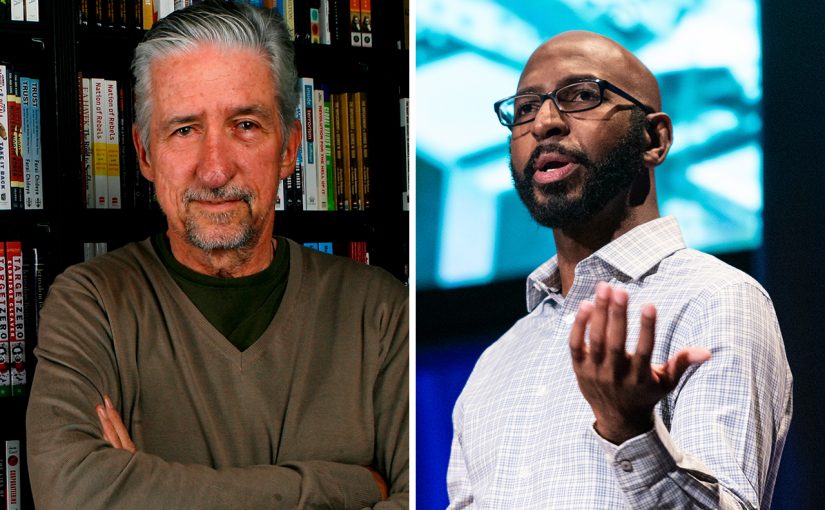
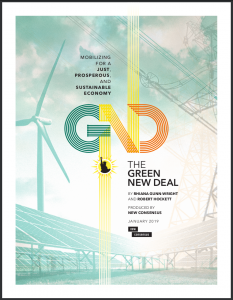
As climate chaos and obscene inequality ravage people and planet, a new generation of visionaries is emerging to demand a bold solution: a Green New Deal. Is it a remedy that can actually meet the magnitude and urgency of this turning point in the human enterprise? With lifelong activist and politician Tom Hayden, and Demond Drummer of Policy Link.
Featuring
Tom Hayden (1939-2016) was one of the leading figures of the student, civil rights, anti-war and environmental movements of the 1960s, and went on to serve 18 years in the California legislature. Following his legislative career, he directed the Peace and Justice Resource Center.
Demond Drummer is Managing Director for Equitable Economy at Policy Link, and a Fellow at New Consensus, a nonprofit working to develop and promote the Green New Deal that has advised many progressive leaders and organizations, including Representative Alexandria Ocasio-Cortez and the Sunrise Movement.
Credits
Executive Producer: Kenny Ausubel
Written by: Kenny Ausubel
Senior Producer and Station Relations: Stephanie Welch
Editorial and Production Assistance: Monica Lopez
Host and Consulting Producer: Neil Harvey
Producer: Teo Grossman
Program Engineer and Music Supervisor: Emily Harris
This is an episode of the Bioneers: Revolution from the Heart of Nature series. Visit the radio and podcast homepage to find out how to hear the program on your local station and how to subscribe to the podcast.
This program was made possible in part by Guayakí Yerba Mate, working with Indigneous farmers in South America to grow shade grown, organic yerba mate. To inspire us all to come to life. Learn more about Guayakí’s products and regenerative mission at guayaki.com.
Subscribe to the Bioneers: Revolution from The Heart of Nature podcast
Transcript
NEIL HARVEY, HOST: As Yogi Berra once quipped, “The future ain’t what it used to be.”
The climate crisis is here now with a vengeance. It will be a long emergency that demands systemic solutions to prevent ecological ruin and the collapse of human civilization as we know it.
At the same time, extreme economic inequality has overshadowed even the infamous extremes of the runaway plutocracy of the Gilded Age.
The two crises are closely connected. Any real solution must address both.
The confounding factor is that there’s enough spin today to knock Earth off its axis. Several polls suggest that majorities of the public find it easier to imagine the end of the world than the end of capitalism. The challenge is that failing to imagine the end of capitalism may mean the end of the world.
Ever since the creation of the New Deal in the 1930s, powerful sectors of big business set out to dismantle its reforms, and subsequently the 1960s reforms of Lyndon Baines’ Johnson’s Great Society programs, such as the War on Poverty and Medicare.
By 2020, the corporate class had made great strides in rolling back and defunding those kinds of reforms – that is, until the Green New Deal began to emerge with real force and popularity.
As in the 1930s, the only force big enough to challenge this titanic corporate power is the federal government. That’s where the real money is, as well as the power to make the rules that govern society.
President Franklin Delano Roosevelt summed it up in 1936 at Madison Square Garden: “We know now that Government by organized money is just as dangerous as Government by organized mob.”
But what really is the Green New Deal? And what exactly was the New Deal, and how did it come about?
TOM HAYDEN: I was born at a moment that the New Deal saved my family. It was before and during my birth and my first two or three years that this happened, so I can only go back and listen to people and ask what happened.
Tom Hayden
HOST: The late Tom Hayden first emerged on the national scene in 1962 as an author of the famed Port Huron Statement. It became the rallying cry of a generation, stating “If we seek the unattainable, it is to avoid the unimaginable.”
He went on to become a lifelong activist, working from both outside and inside the system – from the civil rights, anti-war and student movements of the 1960s to decades serving as a California State Senator and political force.
Born just at the cusp of the emergent New Deal, Tom Hayden first heard the stories from his mother about the life-saving difference it made in his family’s lives. He spoke about it at a Bioneers conference.
TH: What happened is that my grandfather died in a cannery accident, the fault of the Carnation Milk Company in Milwaukee, Wisconsin. He fell in a vat and was chopped up. He left my grandma with 11 kids. And this was during the Depression, and she survived during the Depression and took care of those kids, and…during that time she was sustained by a $5,000 check from the company with regret for the death of her husband. There was no pension, there was no Social Security, there were no rights of organized labor. Her world fell apart in the late ’20s, early ’30s, and I don’t remember all that much about her, but I remember her as being sort of the quintessential Nani, you know, the grandmother, and all these kids.
And what they were doing in the Depression was huddling up together like students do today, five to an apartment who don’t know each other, but living through a semester at NYU or wherever. And they were selling apples, and they were doing odd jobs together and pooling what little they made every day in order to buy food and pay the bills to get to the next day.
They’re survivors, and they know a lot. I learned that too after leaving the university and going to Mississippi and Georgia and Newark that poor people know a lot that middle class people do not know unless they come from that background.
But anyway, in the middle of this process of the collapse of capitalism, the collapse of what government we had, there were the stirrings of the New Deal. There were social movements, Communist-party led organizing drives in manufacturing plants. Got nowhere. People got fired, got clubbed down, beat up, shot. Farmers—I don’t remember if they picked up pitchforks—but they went to work against the banks and the grange.
And they started a period of turbulent working-class expression and middle-class expression at having been sold out by somebody. And it started with finding ways to make enough food to eat, and it ended up with doing everything possible to obstruct the business as usual of the times unless they were fed, unless their children were fed, unless they could go to school, unless there was somebody to say that there was hope on the horizon.
And I remember my mom went through this, you know, the orphan of a father she hardly knew. And when I was growing up at the end of the ’30s and the beginning of the Great War, I remember sitting on her lap a lot and she’d always talk to me about how she loved Roosevelt. And I didn’t know who Roosevelt was, I just thought, Roosevelt, that’s God. [LAUGHTER] My mother loves God and God is—Roosevelt is taking care of us. She would keep saying that, because by that time, after these revolutionary inciting of working people and average everyday people, they had achieved Social Security, and I can’t tell you what that would mean for my mother when she’s thinking about Grandpa.
They achieved bargaining rights for organized labor. Unheard of. Seemingly impossible. They achieved pensions and all the rest of it, and they had achieved what was known as the New Deal, but at the time it was being built, they did not call it the New Deal, they called it “the movement”. It didn’t have a name. They didn’t announce, “Now we are starting a movement for a New Deal.”
What happened was this strange mix of a revolutionary impulse on the one hand; a liberal impulse from do-gooders who wanted a better government, second; people in the center who were very frightened at the possibility of social disorder and were timid about raising their head; and then people on the right like my priest, Father Charles Coughlin, who was busy organizing an anti-Semitic response to the very same conditions. And working closely with Henry Ford on the idea of a new Nazi party based in my hometown of Royal Oak or Hamtramck.
HOST: As President Roosevelt said in the face of the rising American Fascism:
“The liberty of a democracy is not safe if the people tolerate the growth of private power to a point where it becomes stronger than the democratic state itself. That in its essence is fascism: ownership of government by an individual, by a group, or any controlling private power.”
Again, Tom Hayden…
TH: The people on the far right thought Roosevelt was a Communist. Most people that I would identify with were organizers. They were selfless people who didn’t work for much money, didn’t think far ahead, to the careers that they would hold as future labor bureaucrats or Democratic Party administrators [LAUGHTER], they wanted to know if they’d have their heads crushed by a policeman’s baton, and they were willing to do that. There’s sort of a lost generation there in history.
And there was another group, they were known as the brain trust of the New Deal, and they were a very eclectic group of people who were brainy, intellectuals. They were probably in the most important American tradition that I’ve ever studied, and I consider myself part of, the American pragmatic tradition. And I know that pragmatism is now a dirty word, but if you look under it, it means listen first, see how far people are willing to go, and improvise a step forward, a program that will take you a little bit towards survival or a little bit towards a better life as rapidly as you can.
The New Deal brain trust invented all these amazing programs. One parallel today would be like if somebody said, “We need a renewables work administration. We need to put every person in this country and on this planet who’s out of a job or underemployed into a great employment project, publicly funded, privately funded, but it has to happen because there’s a great work to be done.” The great work is to save us from the Depression in those days. No one had that idea in 1929. They were gripped with that idea by 1937.
The whole idea of industrial workers being organized, of old age pensions, delivering people Social Security, having to sit at a table and argue about whether we can also do healthcare, being told by the president we don’t have the votes, we can’t do that, some future generation will fight for healthcare, that’s how the New Deal was pounded out. It was just an unlivable situation. And out of that pragmatic determination they decided the government has got to hire people, the government has got to protect people, the government is what saved my mother, and why she loved Franklin Roosevelt.
It was a close call, you know. We could have gone to the right. We could have gone into chaos. And the answer to what might have happened we’ll never know ’cause then came World War II, and everybody thought, “Problem solved.” Everybody’s working down the street in the empty plant. They’re building planes and tanks and trucks and jeeps and cars. The car industry was formed out of that experience.
My father went to work as an accountant for a car company. Detroit was booming. My mother loved Roosevelt for those reasons, not ideological.
And when we come to that point when people are unable to be trapped in ideology but are willing to do what works, that’s the time when I think we’ll have the equivalent of a New Deal for the climate catastrophe.
HOST: The fork in the road that Tom Hayden foresaw has arrived sooner than even the alarmists projected. Climate disruption is already driving humanity to its knees, and it’s just getting going.
As climate chaos and obscene inequality ravage people and planet, indeed, ideology is starting to give way to pragmatism.
A new generation of visionaries is emerging to ensure that the Green New Deal that Hayden called for is poised to become a reality.
Demond Drummer
DEMOND DRUMMER: We see the Green New Deal as a World War II scale mobilization of all the resources of our country, our industrial capacity, our ingenuity, our financial capital, everything, all of the resources of our country to transition to a clean and just energy economy. We believe that we need to set out bold solutions that meet the scale and scope of the problem, and not let our politics define the type of solutions that we can implement. [APPLAUSE]
HOST: Demond Drummer is Managing Director for Equitable Economy at Policy Link, and a Fellow at New Consensus, a leading-edge non-profit policy “think-and-do tank” working with diverse partners to develop and promote a Green New Deal.
DD: So what are we proposing? We propose that we upgrade every single building in this country to the highest levels of energy efficiency, air quality, water efficiency, and water quality; upgrade our country’s infrastructure to be more resilient; accelerate, massively accelerate the adoption of renewable energy; restore our natural ecosystems; research, develop, deploy technologies to decarbonize heavy industry; and position our country to be a leader in clean manufacturing. Why can’t we do that?
We must also transform our food system and invest directly in farmers to adopt regenerative and sustainable agricultural methods. [APPLAUSE] Let’s take the subsidies away from Conagra and Monsanto [APPLAUSE] and give that money directly to farmers whose rural areas are being literally gutted of all their wealth. So we have a lot of work to do. The money is there. Don’t let nobody fool you.
So we also want to invest in America’s productive capacity to produce the stuff that we need to have a clean economy – electric vehicles, not too many, right, electric vehicles; the energy efficiency parts and components, pipes; all the stuff that we need to see the economy and have a society that we want. We have to build and produce more things here. About 25% of emissions comes from trade alone. So the economic mobilization will renew our economy and give rise to sustainable businesses and industries, and create millions of good, quality, high-paying jobs.
And because of the sheer size and scale of this great effort, the Green New Deal will leave no worker and no community behind. So the greatest generation mobilized our country to beat fascism abroad.
It is our task and our day and our time to beat fascism right here at home, and mobilize our country to meet the imminent and existential threat of climate breakdown. [APPLAUSE] And this is what the Green New Deal is all about.
HOST: At a deeper level, what’s also in question is the very economic paradigm that’s driving the destruction.
When we return, more on the comprehensive vision of a Green New Deal that Demond Drummer and a broad coalition of allies are working toward.
This is “The Green New Deal: Launching the Great Transformation”. I’m Neil Harvey. You’re listening to the Bioneers: Revolution from the Heart of Nature.
HOST: When Demond Drummer was Executive Director at New Consensus, he worked closely with Congresswoman Alexandria Ocasio-Cortez and Senator Ed Markey to draft the original 2018 resolution outlining potential elements of a Green New Deal.
Only 14 pages long, it rapidly gained nearly 200 Congressional co-sponsors. It was designed to be the beginning of a larger creative process, with the details to be determined along the way – American pragmatism for the 21st century.
DD: You have to follow the rabbits down all of the rabbit holes. There is no piecemeal way to do this. And we do live in a system that took many, many years to get here, and it’s going to take some time to get back. And so we have to have a systemic solution.
Climate breakdown is a consequence, a symptom of very flawed economic thinking, flawed economic theory, bad economic models that exclude and extract.
It’s impossible not to tackle all aspects of our society, and by tackle I mean really examine, interrogate, and change the policy regime and economic regime that we live in. And what role can a government play? They invented stuff in ways the government can improve the material lives of people in this country – regulating banks, labor standards, all of this stuff that did not exist prior. And all within, like, a few years.
And it wasn’t one bill. Everybody’s like it’s going to be one bill. No. It was like a series of executive orders and court rulings, everything, legislation, all of the above.
So we believe that the Green New Deal should be at least as comprehensive as that, everything from decarceration to decarbonization. We have just a few years to right the ship, and there is no way to do that without being bold and visionary and aggressive.
HOST: Drummer says there’s a precedent for what a fast-forward mass mobilization can look like – and how impossible it can look until you do it.
When the US entered World War II, the productive capacity of the country simply did not exist to wage war on that scale.
The financial capital came from the government as both purchaser of the end product and as lead investor. A country that could only produce 3,000 airplanes before the war had produced 300,000 by the war’s end.
In reality, says Drummer, examples abound where massive government resources act as the seed investor to develop new technologies, industries and products. 80% of the technology in the iPhone was directly developed through government-funded research. Not to mention numerous life-saving drugs and vaccines.
Big business had no problem with the government’s response to the Great Recession of 2008. The Fed printed money to buy out the banks’ bad mortgages, and the banks continued evicting millions of people from their houses.
DD: And we didn’t extract a demand. We didn’t say keep the families in the homes. We just bailed out the banks. So we got real creative when it came to bailing out Wall Street.
What we’re saying is we can be as creative, not just from a fiscal policy standpoint, but from a monetary policy standpoint, right, to bail people out of this climate crisis that we have created, that mostly has been created by corporations that we’ve allowed to control our society.
So money is a tool, administrative law is a tool. So we believe the federal government has a role. Right? By statute, the federal government can override any state. By statute, it’s Constitutional. Federal government should have a high standard that’s a floor. You cannot go below that floor. Any state can go higher. Done.
There’s nothing sacred here. We have to really interrogate how we got here, and be very clear that from systems of government to money, to law and policy, everything is on the table, because life itself is in the balance.
HOST: A non-negotiable goal that Green New Deal proponents have set is to ensure that equity is built into any legislation.
Many critics of the original New Deal characterize it as an intrinsically racist program, and even a failure as a model. They point to the fact that on average, black Americans received less in terms of benefits than white Americans, which is true. In order to get New Deal programs through Congress, FDR made a deal with the Southern Senators whose votes he had to have.
There’s a reason, he says, that so many older black Americans speak fondly of the New Deal and enthusiastically supported the Roosevelt Administration.
For example, the Works Progress Administration employed 350,000 African Americans a year, about 15% of its total workforce. The same number were employed by the Civilian Conservation Corps, and there are other examples.
Critics often cite the design of the Social Security Act to deliberately leave out Black Americans, which is also accurate. Many targeted job sectors were excluded from the Act, and two thirds of African American workers were in those categories. Yet, Reed points out, out of the total 20 million workers excluded from social security, 75% were white.
In other words, it’s complicated. It’s about class as well as race, and how financial elites use racial divisions for their fiscal and political benefit.
In practice, universal policies such as a living wage and Medicare for All will make a transformative difference in the lives of Black Americans, other people of color, and white Americans as well.
As Tom Hayden projected, when ideology gives way to pragmatism – to doing what works – Demond Drummer’s comprehensive vision of a Green New Deal puts politics aside to implement the functional solutions that will address the crises facing us.
DD: The Green New Deal is a capacious framework that is designed to address the interlocking systems of oppression that affect us all. Some see this as a weakness, but I argue that the comprehensiveness of the Green New Deal is actually its true strength, because there is no way to truly transition to a zero-carbon economy without interrogating and challenging the logic of an economy that exploits people and extracts from the earth. [APPLAUSE]
And what we require in this moment is a new political consensus and a new economic consensus, a consensus that says that we will no longer be duped by the mythic invisible hand of the market–[APPLAUSE] a consensus that recognizes that the public sector has a fundamental role to play in shaping markets – energy markets, financial markets, labor markets – to serve the interests of society.
HOST: Coalition building is key to successfully crafting legislation that avoids perpetuating systemic inequalities. A diversity of voices is brimming with creative solutions on how to make that happen.
DD: So the Green New Deal is a movement of movements. It will be brought forth and sustained by an enduring alignment of our youth, who are leading the way and know that we all deserve clean air, clean water, and good food, workers who deserve pay on which a family can thrive. It’s being brought forth by scientists and researchers who can lead us into the light, and even by entrepreneurs of all types, investors even, who are looking for good returns that can renew this economy—they do exist—grassroots leaders and organizations who continue to lead change, mobilizations, moon shots, movements, that’s the story of our country. That’s the story of America. And we in this room and in communities all across the country are writing the next chapter of the American story. [CHEERS]
There is a direct correlation between wages that can’t sustain a family and an economy that can’t sustain human life on this planet. [APPLAUSE] So this morning, we, the people, we have an economic mandate. We have the ingenuity, we have the existential imperative, and the power to give ourselves a Green New Deal. And I know deep in my heart and in my soul that we can, and even more that we will. Thank you so much, Bioneers! [APPLAUSE]
This recipe is from Sandor Katz’s Fermentation Journeys by Sandor Ellix Katz (Chelsea Green Publishing, October 2021) and is reprinted with permission from the publisher.
James Beard Award winner and New York Times bestselling author of “The Artof Fermentation,” Sandor Katz combines his love of travel and passion for fermented foods in his latest book “Sandor Katz’s Fermentation Journeys,” he shares the stories of how fermented foods are often a unique aspect of a culture. The book is his personal culinary travelogue with recipes from his travels.
Tepache is a wonderful, effervescent, lightly fermented pineapple beverage popular in Mexico. It is made from the skins and core of pineapple; you can enjoy the fresh pineapple flesh and also make use of the parts typically discarded in order to enjoy it over a longer period of time.
Timeframe
2 to 5 days
Vessel
Wide-mouth vessel of at least ¹/2-gallon/2-liter capacity with lid or cloth to cover
Ingredients
for about 1 quart/1 liter
¹/2 cup/100 grams sugar (or more, to taste)*
Peel and core of 1 pineapple (eat the rest of the fruit!), cut into 1- to 2-inch/3- to 5-centimeter pieces
1 cinnamon stick and/or a few whole cloves and/or other spices (optional)
Process
Dissolve the sugar in about 1 cup/250 milliliters of water.
Place the pineapple skin and core pieces and the optional spices into the vessel.
Pour the sugar water over the pineapple, then add additional water as needed to cover the pineapple.
Cover with a loose lid or cloth, and stir daily.
Ferment for 2 to 5 days, depending upon temperature and desired level of fermentation. It will get fizzy, and then develop a pronounced sourness after a few days.
Taste each day after the first two to evaluate developing flavor.
Once you are happy with the flavor, strain out the solids.
Enjoy fresh or refrigerate for up to a couple of weeks.
If it gets too sour, do not despair! After straining out the solids, leave it with its surface exposed to airflow and it will become pineapple vinegar after a week or two.
* ideally piloncillo, panela, or another unrefined sugar, but any type of sugar will work
Sandor Ellix Katz, is a self-taught fermentation experimentalist who lives in rural Tennessee. He is the author of two best-selling books: Wild Fermentationand The Art of Fermentation(winner of a James Beard Award in 2013). Through hundreds of fermentation workshops, he has taught around the world, he has helped catalyze a broad revival of the fermentation arts. Sandor and his work have appeared on NPR’s “Fresh Air with Terry Gross,” The New Yorker, The New York Times, The Guardian, PBS, The Washington Post, The Financial Times, and numerous other national and international media.
In this Bioneers interview, Sandor dives deep into the fascinating world of fermentation.
Keep Your Finger on the Pulse
Our bi-weekly newsletter provides insights into the people, projects, and organizations creating lasting change in the world.