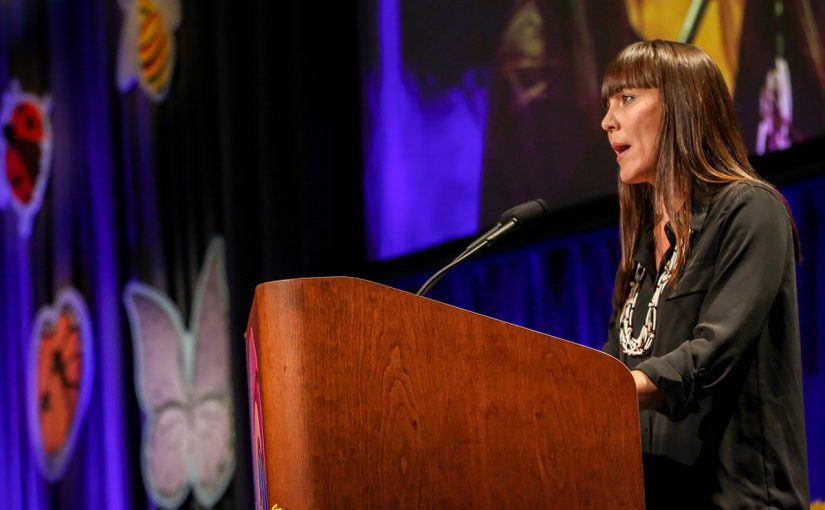
Terry Tempest Williams, Nina Simons and Eve Ensler on Grief, Anger and Reconciliation

In a time when it’s easier to hate than to empathize, it’s an act of revolutionary love to have sympathy for those who seem different or who have hurt you. Emotions like grief and anger — despite their negative connotation — are necessary to living fully and embracing the full spectrum of human emotion. After all, our world is full of dualities. Without anger, there is no love. And without pain, there is no healing.

Following, Bioneers Terry Tempest Williams, Nina Simons and Eve Ensler explore the process of balancing these emotions.


Terry Tempest Williams

Author-activist Terry Tempest Williams is revered as a “citizen writer” for her work emphasizing environmental ethics and conservation, especially in the “Red Rock” region of her native Utah and in Alaska. Read our recent Q&A with Williams here.

We are eroding, we are evolving together. This is the place we create from, with love, with courage, in grief, and with anger. What do we do with our anger? With a name like Tempest, I can tell you I don’t have a lot of hope. But I have sought wisdom from my elders, the elders that we live near – Willie Grayeyes, a community organizer who now is a county commissioner in a Navajo majority in San Juan County Utah. When he was told that he was not a resident of the state of Utah, that it was an illegitimate election from an illegitimate candidate, whose family have lived in Navajo mountain for generations, when they asked what right he has to the state of Utah, he simply said, “My umbilical cord is buried here.” When I asked Willy what do we with do with our anger, he said, “Terry, it can no longer be about anger. It has to be about healing.” Going to the source of our pain, and recognizing it, owning it, apologizing for it, embracing it with a commitment to change.

And when I asked Jonah Yellowman, a medicine person among the Diné what he was seeing, he said, “Terry, we have to go deeper.” And so I ask us today, together, what does that look like for each of us, each of us in our own places with our own gifts, in the places we call home. 

And Evangeline Gray, a medicine woman, who’s been fighting for water rights for her people in San Juan County for 30 years, still no water, she says to dwell is to see things as they are. And then you stay and fight for those things that you see for your community. It is a privilege, she said. 

We are eroding and evolving at once. Perhaps Jonah’s call to go deeper is a call to acknowledge the power that resides in the Earth itself. The organic intelligence inherent in deserts and forests, rivers and oceans, and all manner of species beyond our own, even within our own bodies. We cannot create wild nature, we can only destroy it, and in the end, in breathtaking acts of repentance and renewal, try to restore what we have thoughtlessly removed at our own expense, be it wolves in the Yellowstone or willow flycatchers along the Colorado River. We are eroding and evolving at once. 

How do we find the strength to not look away at all that is breaking our hearts? Hands on the earth, we remember where the source of our authentic power comes from. We have to go deeper. What has been weathered and whittled away is as beautiful as what remains – erosion, essence. We are eroding and evolving at once.

Nina Simons

Bioneers co-founder Nina Simons is an award winning social entrepreneur and visionary thinker. Her current work is informed by years of experience writing and teaching about women, leadership and diversity.

As I sat at my mother’s bedside, single focused on her passage, my sense of self-worth as linked to work peeled away. I knew in a deeper way that we all have varying parts to play, in bridging worlds, in hospicing the old system and bringing forth the new, And that I was just where I needed to be. At her bedside, during her last week, I felt the ‘reality’ of this physical world meet the invisible world, the energetic realm, the place where hunches are born. I walked each day in a dreamlike state, filled with sorrow and aliveness, feeling myself an eavesdropper to another world. I had imagined that hospicing her through her illness for months might prepare me for her death, but it didn’t.

As the weeks pass, I miss her closeness, her voice and there’s a hole in my heart where the reliability of her love used to live. But I remember she’s still alive in me, now. And in the many invisible worlds that hold me.

The mystery of what happens after death preoccupies me. After she died, I could sense her presence, strongly and near at hand, for weeks. There’s a new curiosity being born in me, for how her essence might show up around me in others, or in dreams, for how I know she’ll be with me forever, or at least to the milky way and back.

I’m wide awake to the fragility of health in this toxic world. The impermanence of life is much realer to me now. Death’s nearness makes living shinier, more crystalline, full moons are fuller, foxes more breathtaking, laughter and wildness and freedom more precious. But the changes in my inner world are deep and foundational. I’m so aware now of how we remake ourselves every day, with every choice. Cultivating ourselves, to grow into our soul’s seed assignment, before we die.

A friend who knows the Mayan cosmology suggested I need to befriend the Death Mother, who lives in the South. While the Life Mother in the North is nurturing, fertile and generous, the Death Mother rules boundaries, limits and appropriate endings. I realize that throughout my devotion to Mother Life, I’ve focused largely on the fertility, the pollination, the wondrous and hopeful regeneration of seasons, perennials, cycles and systems.

Now, to better prepare myself for bridging the worlds, I’m focusing more on the beauty of a snag that stays standing, becoming habitat for crows, eagles and woodpeckers, and the insects and mycelium who return it to become nourishment for the next cycle of the soil’s creation. I’ve long believed that our collective focus on beginnings – while avoiding endings, and on progress, at the expense of history, lineage and tradition Is a relic of the patriarchal, colonial and capitalist systems we were all raised with. Finding that same bias in myself is humbling.

To bring all of our selves to this moment of pivotal change, isn’t facing the true danger of this time, the realities of all that’s dying, a necessary balance, medicine and motivator?

Eve Ensler

As an award-winning playwright, performer, activist and author, Eve Ensler is well-known for her work promoting women’s rights and fighting gendered violence. Read an excerpt from her latest book, The Apology, here.

What and why should one want to undergo such a grueling and emotional process? The answer is simple: freedom. No one who commits violence or suffering upon another, or the Earth, is free of that action. It contaminates one’s spirit and being, and without amends often creates more darkness, depression, self-hatred and violence. The apology frees the victim, but it also frees the perpetrator, allowing them deep reflection and ability to finally change their ways and their life.

My father, in my book, wrote to me from limbo, and it was very strange. I have to tell you, he was present throughout the entire writing of the book. He had been stuck in limbo for 31 years. I truly believe that the dead need to be in dialogue with us, that they are around us, and they are often stuck, and they need our help in getting free. 

With this exercise, I believe now that my father is free. And because he was willing to undergo this process, he’s moved on to a far more enlightened realm. 

As for those of you who cannot get an apology from your perpetrator, I believe that writing an apology letter to yourself from them is one of the most powerful things I’ve ever done, and it can shift how the perpetrator actually lives inside you, for once someone has violated you, entered you, oppressed you, demeaned you, they actually occupy you. We often know our perpetrators better than ourselves, particularly if they are family. We learn to read their footsteps and the sounds of their voices in order to protect ourselves. By writing my father’s apology, I changed how my father actually lived inside me. I moved him from a monster to an apologist, a terrifying entity to a broken little boy. In doing so, he lost power and agency over me.

We cannot underestimate the power of the imagination. And I just have to say in these times that we are living in, our imagination is our greatest tool. It is shifting trauma and karma that has numbed our frozen life force, and in the deeper and more specific my imagining and conjuring in this book, the more liberation I experienced. When finally at the end of the book my father or me, or me or my father, or both of us as one – I’m so not clear who wrote this book – my father says to me, “Old man, be gone.” It was exactly like the end of Peter Pan. Do you remember when Tinkerbell says goodbye and goes *poof* into the ethers? My father was gone, and to be honest, he hasn’t come back.

And I want to talk a little bit about forgiveness because I think often we are survivors of all kinds of things, whether it’s racial oppression, or physical oppression, or economic oppression, or sexual violence. We’re told that we have to forgive and get over it. I don’t really believe that the mandate is ever on the victim to forgive, ever. But I do believe that there is an alchemy that occurs with a true apology, where your rancor and your bitterness and your anger and your hate releases when someone truly, truly apologizes.

People have asked me throughout the tour of my book, “What will it take to get men to apologize?” This is the $25 million question. And I have to tell you, it’s a question that is underlying everything that we are experiencing on this planet right now. At one point in the book, my father tells me that to be an apologist is to be a traitor to men, to be an apologist is to be a traitor to men. Once one man admits he knows what he did was wrong, the whole story of patriarchy will come tumbling down.

So I say to all the men here, what we need now is for men to become willing gender traitors, and stand with us, and apologize so we can all get free.

What Follows Our Erosion: A Conversation with Terry Tempest Williams

Terry Tempest Williams is known for her work as an author (her most recent book is Erosion, Essays of Undoing) and activist, particularly in relationship to the natural world. In our current puzzling and frustrating social and political environment, Williams has become a leader in putting words to the deep unrest many have felt since 2016.

Bioneers was fortunate to sit down with Terry Tempest Williams to discuss the “erosion” of the United States – and the world at large – and what might follow.

TERRY: I’m going to read a piece that I wrote the morning after the election in 2016. I was on the banks of the Colorado River, and this is from my journal.

This moment, erosion of democracy, November 9th, 2016.

It is morning. I am mourning. And the river is before me. I am a writer without words who is struggling to find them. I am holding the balm of beauty, this river, this desert, so vulnerable, all of us. I am trying to shape my despair into some form of action, but for now I am standing on the cold edge of grief.

We are staring at a belligerent rejection of change by our fellow Americans who believe they have voted for change. The seismic shock of a new political landscape is settling. For now, I do not feel like unity is what is called for. Resistance is our courage. Love will become us. The land holds us still.

Let us pause and listen and gather our strength with grace, and move forward like water in all of its manifestations – flat water, white water, rapids and eddies – and flood this country with an integrity of purpose and patience and persistence capable of cracking stone.

I am a writer without words, who continues to believe in the vitality of the struggle. Let us hold each other close and be kind. Let us gather together and break bread. Let us trust that what is required of us next will become clear in time. What has been hidden is now exposed. This river, this morning, this moment. May we be brave enough to feel it deeply and then act.

Terry Tempest Williams

BIONEERS: How are you feeling now, since you wrote that?

TERRY: My throat closes, so that says something. I remember when I wrote it. I stayed up all night to hear Hillary’s concession speech, and it didn’t come, as you remember, until the morning. And then I walked out to the edge of the river and just sat there. I don’t even remember writing this. It just came out of the moment. I wasn’t surprised. I think living in Utah, I thought this would be the outcome.

How do I feel now? I’m terrified that Donald Trump will win again. And I don’t know what the outcome will be. I think we’re all going to have to work really, really hard. I think we’re watching madness before us on so many levels. I certainly see it in Utah, evidenced on the ground by a rapidity of oil and gas development and the bringing back of uranium mining, which is insanity. With the legacy that the atomic West has experienced with Navajo communities, and certainly my family – nine women in my family are dead from nuclear testing. Half my family’s gone from the result of uranium mining predicated on the development of the atomic bomb. So it’s unthinkable to me. That’s how I’m feeling now.

We cannot look away. We’re watching cruelty become normalized, whether it’s at the Southern border or with the Endangered Species Act, or Charlottesville. On every front, it’s a grand assault.

So how do I feel now? I feel like we have to really, really work hard to make sure that this administration is voted out, mightily.

BIONEERS: Do you feel inspired by what you’re seeing in response?

TERRY: I certainly think that what had been hidden has been exposed. Trump is a symptom as well as a manifestation of our shadow side of this country that’s always been there, that is now being revealed. Certainly, the youth climate justice movement, the activism that we are seeing in terms of gun violence, I think we’re seeing deep engagement. But I don’t think that makes up for what is being lost, and the kind of cruelties that are being exacted, whether it’s on the border, or the gutting of Bears Ears National Monument in Utah, or cutting Grand Staircase National Monument in half.

In our community in Castle Valley, there is a Japanese tea master. After the election, she offered to have a tea ceremony, and that’s what we did that night. It was so powerful to just sit as a community in silence and contemplate what had just happened, how we wanted to sit with this, and what we were going to do in these next four years, both as a community as well as citizens. That really set the tone for me.

BIONEERS: This divisiveness and the “shadow side” coming to light seems to have created a disintegration of the public conversation, of public dialogue. “Dialogue” may not even be the right word, because people are just sort of yelling at each other.

TERRY: I don’t even know what we do when the rule of law is not respected, when you realize that the open space of democracy has remained open out of decency and a respect of one’s word and integrity, and that is no longer. If you are sent a subpoena, it doesn’t matter. That’s what worries me, is that there is no democracy if there is no respect for the law. And I don’t know what that outcome will be, if that’s taken to its limit. We’ve never been here before.

That’s one of the things I’ve been thinking about these past few years: the idea of erosion. We live in an erosional landscape. We have four directions that are deeply marked to the south, the LaSalle Mountains; to the north, the Colorado River running red, carrying the sediments of sandstone to the ocean; to the west, Porcupine Rim holding the last light of day; and to the east, Castleton Tower, this wonderful monolith of free-standing wingate sandstone that has a pulse. We live in an erosional landscape. It’s not unusual at night to hear what sounds like a bomb, and you realize one of the cliffs has fallen or a boulder has rolled.

Then I started thinking: How does erosion play out in our own lives? The erosion of democracy? The erosion of decency? The erosion of compassion? The erosion of belief, of the body, of time? And I really believe that we are eroding and evolving at once, and that’s not a bad thing. That erosion takes stone to its essence. We see the stratigraphy of deep time in the Grand Canyon through all of the different layers, even the Vishnu shifts three billion years of time. It’s hard for us to even comprehend that.

We, too, are eroding as a nation. And I hope that we will be weathered to our essence of what it means to be human at this moment in the climate crisis.

BIONEERS: What role do you feel that love – all of the different kinds of love – can play in bringing that about?

TERRY: I think everything I do has to do with love. If you talk to any activist or if we get to the heart of what it means to be a citizen engaged, it is about love – a love of justice, a love of equity, a love of fairness. And certainly the work that I’ve been doing regarding public lands is deeply about love – a love of place, a love of wildness, a love of other species. We’re not the only species that lives and breathes and grieves and loves on this planet.

We are all experiencing so much grief in terms of what is being lost, and the suffering that is occurring in real time, in real places. And grief is love.

I think about anger as also a sibling to grief. I’m constantly asking myself: How do I take my anger and transform it into sacred rage? What does that look like? Where do you take it? And if I’m honest, I think I write out of my anger often. But if you go deeper, I write out of my love and questions.

BIONEERS: Stepping back, how do you feel at this moment about the trajectory of your work, and writing and speaking? How have you grown through the process?

TERRY: I think it is an evolution. And certainly, with this last book, Erosion: Essays of Undoing, there’s no embroidery here. It’s raw. In many ways it’s dark. It’s an erosion of my own person, whether it was the loss of my job at the University of Utah based on a political act of purchasing oil and gas leases, or whether it was my brother’s death by suicide. He hung himself in 2018. Those are deeply, deeply erosional moments in my life.

I write to make sense of what I don’t understand. So this book, as I say, it’s raw, it’s real, it’s…I don’t remember ever writing so truly as I have here. In other books, I think I’ve been saved by the structure. I have a wild mind, and the structure holds that mind. But what you see is what you get in this latest collection, and I think that’s where we all are. We don’t have time to mess around, or to be clever, or to be metaphorical. Or at least I don’t. I just wanted to tell it straight and to tell it true, through story.

BIONEERS: You’ve talked about how you try to embrace paradox. What’s important to you about being able to do that? And could you share an example of when the need to do that became evident to you.

TERRY: Well, I know the tensions in my own life. What instantly came to my mind was a sentence I’d written years ago. It haunts me still: “The most radical act we can commit is to stay home.” I miss home. Right now, six months out of the year I’m teaching at the Harvard Divinity School in Cambridge, which is an absolute privilege. I love it, and I love my students, and I love my colleagues, and I feel free, and I’m learning so much, especially how much I don’t know. But I’m away. And I’m 64 years old. I have never been away from home, meaning Utah, for more than four months at a time. I don’t know how to relate to New England, but I’m learning to embrace trees. I’m learning the names of black oak, red oak, white oak, and the different kinds of maples. I love the Mt. Auburn cemetery because it’s the wildest place in Cambridge, and there’s fox, and there’s birds. So you adapt.

But I have to wear those Lucy Carmichael glasses, those sleeping goggles or whatever they’re called, just to be able to have some darkness. There is no darkness in Boston or Cambridge. Where we live in Castle Valley, Utah, we have a writing studio that Brook and I share. It gets so dark at night there have been times where we’ve missed the studio altogether and walked a half mile to the road. It’s those kinds of paradoxes that my work brings.

The obvious paradox for me in my life is Great Salt Lake, a body of water in the desert that no one can drink, and yet it is such a life-giving source to millions of birds that circumnavigate the planet during spring and fall migrations. I think the paradoxes abound. Colorado River running red, that is dammed every inch of the way, and doesn’t even make its source by the time it gets to Mexico. Is that a paradox? I view it that way, that a free-flowing river should have its say at the end, the mouth, and it doesn’t. It’s silenced by development, by water rights, by dams.

BIONEERS: What would you say about the fact that we have this “erosion” of democracy, and at the same time, it is bringing forward such an enormous response?

TERRY: It’s interesting. And I do think that’s a great point: that we can hold contradictory emotions at once. We can hold a contradictory country at once. This is a time where rather than constricting ourselves and going inward, it’s actually a time to expand. We have to become larger as our country seems to be getting smaller in terms of its … I want to use the word “virtue.” We’re watching democracy collapse, and I think we, as citizens, have to be more expansive and responsive as a result.

BIONEERS: A lot of people are wanting to help, especially to end the detainment of asylum seekers who are crossing the borders. They’re asking, “Why is this still happening?” There’s a helplessness there.

TERRY: First of all, I think we have to vote. We need to make sure that we have fair elections, and I think that’s under real question right now.

I also feel that there’s a lot we can do around our own dinner tables with our families. I don’t know about you, but our family is all over the place politically. There are those that are rabid Democrats and progressives, there are those that are waiting for the revolution with their guns locked and loaded, who are Trump diehards, and then there are those that are moderates that are just waiting to see – won’t someone stand up to Trump? I think we have to have those hard conversations within our own families, within our own neighborhoods, within our own communities, and I think we can begin there to take down those walls that Fox News and MSNBC have set up.

BIONEERS: How do you feel that our undoing can be our emergence together?

TERRY: When I lost my job at the University of Utah, I was crushed. I was brokenhearted. I felt exiled, and I really participated in a real soul-searching time. Was it my fault? What didn’t I do? Was I irresponsible? I think as women, we always take that blame.

That was a time of undoing. And because Brook and I had saved enough money, I could take that time off for six months and just contemplate what had happened. I wanted to grieve. I wanted to reflect. And I wanted to think about: Where do I belong if I’m not in my own home?

What I realize now, looking back, is I thought I would be there forever, but my soul had other plans. Looking back at that moment, my undoing, it has now become part of my becoming. I could never have imagined the kind of expansion of mind and soul that I’m able to participate in now at the Divinity School. And I’m grateful. I think that’s a common story; when we lose a job, when our marriage dissolves, perhaps an illness, my brother’s suicide. When these things occur, I think about Shinran, the Japanese poet, who said: This happened. Now something else can occur. This happened in America. Now something else can occur. And that something else is up to us.

We have more power than we know.

Seeing the Forest for the Trees: An Ecology of the Heart | Gloria Flora

Nine out of ten Americans strongly favor wilderness protection, but federal policy actually threatens such preservation. In her decades of work at the U.S. Forest Service, Gloria Flora faced threats and harassment as she tried to protect the forest commons. She tells us that in order to sustain landscapes, we need to sustain ourselves, and in order to sustain ourselves we need to sustain landscapes.

Bioneers 2019 Day 3: Regeneration (+ Photos to Share!)

As we wrap up another incredible Bioneers Conference, we’re filled with gratitude for the Bioneers community; from the speakers who taught us, to the performers who invigorated us, to each and every person who brought their open heart and mind to this experience, you – the Bioneers – are leading us into the coming year with determination.

As Bioneers Co-Founder Kenny Ausubel said this weekend:

In this Time of No Time, they say, we can go in any direction we want—by dreaming it. Our dreaming can shift the course of the world.

It’s going to be a long and winding trek across generations.

We’re already making some of the pathways others can walk toward our many dreams. Countless more dreamers will blaze luminous new trails.

The dreams are already within us. One day, may we awaken to find ourselves living in our wildest dreams.

Keep reading for access to the full text of Kenny’s Bioneers speech.

Following are some of the ideas and takeaways Bioneers introduced today, plus some exclusive photos from this weekend.

(We need you this year! Bioneers exists as a movement of movements – do you know of stories we should be telling? If so, let us know by emailing stories@bioneers.org or calling 877.BIONEER.)

ACTION ITEMS

Campaigns to Follow and Support:

Amazon Watch – Pledge to Protect the Amazon Rainforest (introduced by Leila Salazar-Lopez)

Mission: “Amazon Watch is a nonprofit organization founded in 1996 to protect the rainforest and advance the rights of indigenous peoples in the Amazon Basin. We partner with indigenous and environmental organizations in campaigns for human rights, corporate accountability and the preservation of the Amazon’s ecological systems.”

A Global Deal for Nature – Petition (introduced by Carly Vynne, PhD)•A Global Deal for Nature – Petition (introduced by Carly Vynne, PhD)

Mission: “Sign the petition calling on world leaders to support a Global Deal for Nature that protects and restores half of the Earth’s lands and oceans.”

Drawdown Learn

Mission: “Drawdown Learn is a broad initiative to encourage education and learning about climate solutions based on Project Drawdown’s research, analysis, and insights. Through our programs and partnerships, we are helping educators and students of all ages to understand the solutions available to address the climate crisis and create new ways of teaching and learning about Drawdown solutions.”

Cooperation Jackson (introduced by brandon king)

Mission: “The broad mission of Cooperation Jackson is to advance the development of economic democracy in Jackson, Mississippi by building a solidarity economy anchored by a network of cooperatives and other types of worker-owned and democratically self-managed enterprises.”

New Consensus (introduced by Demond Drummer)

Mission: “We are a global, distributed network of academics, creators, activists, leaders and entrepreneurs working to make the new consensus the standard operating system for national economies around the world.”

Youth Vs. Apocalypse (introduced by Isha Clarke)

Mission: “Youth Vs. Apocalypse is a diverse group of young climate justice activists working together to lift the voices of youth, in particular youth of color, and fight for a livable climate and an equitable, sustainable, and just world.”

Schumacher Center for a New Economics (introduced by Greg Watson)

Mission: “To envision a just and sustainable global economy; apply the concepts locally; then share the results for broad replication.”

Democracy Collaborative (introduced by Ted Howard)

Mission: “Through our cutting edge research and our many diverse programs, The Democracy Collaborative works to carry out a vision of a new economic system where shared ownership and control creates more equitable and inclusive outcomes, fosters ecological sustainability, and promotes flourishing democratic and community life.”

Seed Sovereignty (introduced by Christine Nobiss)

Mission: “Seed Sovereignty reclaims seeds and Biodiversity as commons and public good. The farmer’s rights to breed and exchange diverse Open Source Seeds which can be saved and which are not patented, genetically modified, owned or controlled by emerging seed giants.”

Coral Reef Alliance (introduced by Madhavi Colton)

Mission: “We work collaboratively with communities to reduce direct threats to reefs in ways that provide long-term benefits to people and wildlife.”

TELL YOUR FRIENDS

Keep the Bioneers momentum going! We’ve uploaded lots of highlight photos for you to save and share on social media. You can find them here under “Conference Photos to Share.” Don’t forget to use #Bioneers2019 so we can see what you’re sharing!

Kenny Ausubel: The End of Prehistory

The full text of Bioneers Co-Founder Kenny Ausubel’s Saturday speech is now online! Revisit it here.

Invest In Change!

By supporting Bioneers, you’re supporting an entire community of diverse leadership who are realizing breakthrough solutions. Every gift – large and small – really counts. Multi-year gifts and bequests assure our long-term impact. Future generations are counting on us.

Give Now

Kenny Ausubel: The End of Prehistory

The following speech was delivered by Kenny Ausubel at the 2019 Bioneers Conference.

As we gather for Bioneers’ 30th anniversary conference, we stand at the end of prehistory. Nature is deregulating human affairs faster than a lobbyist can buy a politician. Global weirding is upon us.

We’re in the endgame of the Dim Ages: the collision between the state of nature and the nature of the state. Our civilization is a failed state.

The big wheels are turning. We face a reckoning: transform or perish. It’s emergence in an emergency.

There’s as much cause for hope as for horror. The good news is that we’ve done it before, and as Bioneers has shown for 30 years, in great measure the solutions are present, or we know what directions to head in. The solutions residing in nature consistently surpass our conception of what’s even possible.

We’re entering the Age of Nature. It’s high time to learn the ground rules and play by them to design a regenerative and equitable civilization.

The formula is simple: Taking care of nature means taking care of people, and taking care of people means taking care of nature. Regeneration is the byword. Building resilience is the grail – both ecological and social.

The imperative is to fast-forward the transition to 100% clean energy, keep the oil in the ground, and, as Project Drawdown is showing, sequester carbon back where it belongs in a drawdown to 350 ppm, which is do-able with what we already know and have.

Doing what’s right for the climate means doing what’s right for everything else. It’s the reimagination of civilization in the age of nature.

Yet the thing we need most is what we have the least of: time. Slouching toward sustainability will not turn the tide. Only immediate, bold and transformative action will enable us to make the leap across the abyss. That’s what we’re here to do.

Looking back over these past three decades of Bioneers, what’s perhaps most salient is the extraordinary rise and influence of social movements and civil society. We’ve acted as the countervailing force holding back complete catastrophe, while developing and modeling real solutions for very different ways of living on Earth and with each other.

The Mayan people describe this movement of movements as “one ‘no’ and many ‘yeses.’” The “no” is to the concentration of wealth and distribution of poverty. The “yes” is to “a world where many worlds fit,” a global society devoted to health, justice, dignity, diversity, and democracy—to human rights and the rights of nature.

So, I want to honor so many of you in this room who’ve been among the visionary leaders of these movements – the tireless frontline activists – the organizers – the creators – the pathfinders – the healers – the dreamers.

As a community, we’ve shown that clean energy works. Ecological agriculture and carbon farming work. Biomimicry and Indigenous Traditional Ecological knowledge work. Restorative justice works.

Local economies – decentralized infrastructures – living buildings – permaculture – green chemistry – 3-D ocean farming – they all work.

And as Paul Stamets first showed us here in 1997, we know that mushrooms really can save the world.

Meanwhile, communities are reclaiming democracy by revoking corporate rights. Nations are instituting legally enforceable rights for nature. Beloved community and gender reconciliation are alive and growing. Reparations are on the table.

The forefront of leadership is coming from women, First Peoples, communities of color, citizens, and now from the swell of amazing young people demanding that society wake the fuck up and start acting like grownups.

Over these decades, we’ve seen these movements grow from the margins to the mainstream. Our job now is to bring them to scale.

We first began advocating for a Green New Deal here at Bioneers in 1995. What may have seemed impossible is now suddenly within reach. The questions are what it’s going to look like, how fast we can make it happen – and how we will overcome the retrograde forces pushing business as usual – and they do mean business.

One thing is for sure: The twin crises of climate chaos and extreme inequality will keep getting worse fast — and people will keep rising up in ever bigger numbers demanding and making change. That’s what happened in the 1930s and it’s happening again.

As Tom Hayden pointed out here three years ago, at the time the New Deal was gestating, it was not called the New Deal. It was called “the movement.” It crystallized from a spray of initiatives often incubated in the “laboratories of democracy” – cities and states. In a few short years, the impossible became reality.

Social security and pensions – bargaining rights for organized labor – jobs by the millions doing meaningful work that needed to be done – and a cultural renaissance that changed the mindscape and politics.

Above all, the New Deal was about redirecting government away from serving the rich to protecting the vast majority of people and the common good.

As Kevin Baker recounts in his brilliant article Where Our New World Begins, “The Great Depression was an environmental collapse every bit as much as it was an economic collapse.”

By the 1930s, five-sixths of the original indigenous animal populations that thrived when the Europeans arrived had been extinguished.

Seven-eighths of the original woodlands had been cleared. One sixth of the topsoil in the US would soon blow away in the cataclysm of the Dust Bowl.

35 million acres of previously arable land had been decimated, with another 225 million acres soon to follow. Plagues of locusts, rabbits and green worms overran the land. The topsoil of Oklahoma and Wyoming blackened the skies of New York and Chicago. Like climate disruption today, millions fled as ecological refugees.

As Baker points out, the devastation resulted from “a desperate capitalist battle, with every man for himself. If producing more crops drove down farm prices and wrecked the land, well, that was just how the market economy worked.”

The private sector offered no plan, except more of the same. The Populist Party surged, and the plutocracy attacked them as “socialists.” FDR stepped in with transformative government action guided by the remarkable understanding that the crisis had to be addressed as a whole system – the care of both people and nature.

The new Soil Conservation Service launched over 500 soil project stations, experimenting with farmers with novel practices such as terrace and contour farming. The government paid them to participate and save their farms.

The Civilian Conservation Corps employed 3 million men to plant thousands of acres of experimental drought-resistant grasses. They constructed more than eight hundred state parks and planted nearly three billion trees, including shelterbelts to secure the soil. In time, they restored more than half of the damaged land.

The programs also acknowledged nature’s limits. They resettled farmers and refugees who became the unprecedented American middle class that emerged after World War II.

And that was just a piece of the New Deal. Massive public works programs. Public health campaigns. Pre-natal and birth care for women. Libraries. Public arts.

Although the New Deal made bad mistakes and odious compromises, it got a lot right. It had been a close call. The nation could just as easily have plunged to the right. And plunging to the right is exactly what the plutocrats have been doing ever since to roll back the New Deal to get back to a government serving the rich.

The great work today of the Green New Deal is to avert climate chaos, build resilience to adapt, and lift the burdens of history once and for all. We need to overturn the New Deal’s grievous old deal with the Southern Dixiecrats to keep the racial caste system in place and build an inclusive society of jobs with justice and self-determination.

And ultimately in the ‘30s, big business coopted the economics to assure its ongoing hegemony. It was only World War II that finally lifted the nation out of the Depression.

Today the world war is to save human civilization as we know it. In the ‘30s, it boiled down to saving capitalism from itself. But this time around, capitalism may not be salvageable at all.

Beginning in the ‘90’s, corporate globalization triggered a tectonic shift of wealth and political power to a super-elite of billionaires. They launched a full-frontal corporate takeover of government.

According to Jeffrey Winters, the author of Oligarchy, wealth in the U.S. today is over “two times as concentrated as imperial Rome, which was a slave-and-farmer society.” If billionaires were a nation, they’d be the world’s 3rd largest country. Call it bottom down and top up – breadcrumbs and circuses.

As Fortune magazine CEO Alan Murray recently commented: “More and more CEOs worry that public support for the system in which they’ve operated is in danger of disappearing.”

As Farhad Manjoo wrote, “They’re worried that when the next recession breaks, revolution might, too. The coming Recession might finally prompt the masses to sharpen their pitchforks and demand a reckoning. But the CEOs now have a plan to head off revolution. They want you to know: Actually, they really do care about the world. Like, a lot. If I sound cynical, it’s only because I’m not a complete idiot. It’s all a game to the moguls in charge. Their greatest fear is that we’ll stop playing.”

So much for “the end of history” that political scientist Francis Fukuyama pronounced in 1992 following the fall of the Soviet Union. Capitalism seemed triumphant, unopposed, unassailable.

Author Mark Fisher calls it “capitalist realism.” It’s easier for most people to imagine the end of the world than the end of capitalism.

Three decades later, it’s Boom and Doom — the terminal convulsions of an oligarchic economic system bedeviled by $100 trillion dollars of stranded oil assets and the impossibility of unlimited material growth on a finite planet.

Petrostates and fossil fuel corporations are growing desperate. The frenzy of deregulation is the distress signal of a failing business model. Market trauma is in store.

Trump is just the hood ornament on the Hummer of plutocracy gone off road. Monopolies smother the economy. The roster of Fortune 500 companies reads like a rap sheet of mass crimes. It’s gangsters and warlords making feudalism great again.

Meanwhile, what Oliver Bullough calls “Moneyland” has emerged as the “dark twin of globalization.” As much as $36 trillion dollars of dark money is stashed in offshore black holes. $1 trillion dollars a year exits the world’s developing countries in laundered money and tax avoidance. By 2015, 52% of Russia’s wealth resided outside the country.

Untraceable shell companies are behind the majority of investment linked to Amazon deforestation, illegal fishing, and other crimes against nature and humanity.

Most of “Moneyland” is entirely legal. The system is the crime.

As writer Franklin Foer commented, “Thievery tramples the possibilities of workable markets and credible democracy. It fuels suspicions that the whole idea of liberal capitalism is a hypocritical sham.”

The predicament is double-barreled: Failing to imagine the end of capitalism may mean the end of the world. On the other hand, state socialism has equally failed. The ground truth is that there’s no precedent or grand model for a next economy – one that’s grounded in equity and the limits and principles of nature.

The first question is: “What’s the economy for?”

If building resilience is the goal, the priority shifts from growth and expansion to sufficiency and sustainable prosperity. Real wealth creation is based on replenishing natural systems and restoring the built environment, especially our infrastructure and cities. It’s based on investing in our communities and workforce. It works best when done all at once.

Economic re-localization creates three times as many jobs, earnings, and tax collections—as well as far greater security.

Like the New Deal era, today waves of smaller-scale models and policies are percolating from the bottom up. Gar Alperowitz and the Democracy Collaborative call it the “Pluralist Commonwealth.”

A core principle is shifting ownership of the nation’s wealth institutionally to benefit the vast majority. Ownership becomes diversified, including public, private, cooperative and worker-owned enterprises. Too-big-to-fail giants are broken up or restructured as publicly owned utilities.

Nor is there a model for what true democratic governance looks like at modern scales. We need to reclaim democracy and decentralize political and economic power to local and bioregional levels. It begins and ends with community and with building stable transgenerational community wealth and job creation.

But paradigms die hard and empires die harder.

As Charles Blow wrote, “This is a game of power, pure and simple, and it’s about whether the people who have long held power will be able to retain it…

“The Founders, a bunch of rich, powerful white men, didn’t want true democracy in this country, and in fact they were terribly afraid of it.

Now a bunch of rich, powerful white men want to return us to that sensibility.”

Naomi Klein warns against “climate barbarism,” saying “This is how the wealthy world is going to ‘adapt’ to more climate disruption: by fully unleashing toxic ideologies that rank the relative value of human lives in order to justify the monstrous discarding of huge swaths of humanity.”

It’s the last-ditch play by Billionaire Nation to make heaven a gated community – even if it’s in hell on Earth.

Instead what’s rising up is the return of the repressed. Everyone who has been othered, marginalized and deleted. The poor. Working people. Women. People of color. Indigenous Peoples. Immigrants. LGBTQ people. Young people. The last shall be first after all.

The word “crisis” comes from the Greek word krino. It means “to decide.” We need to decide what kind of future we want – and act like our lives depend on it.

It’s now o’clock.

The Mayan people call this the “Time of No Time.” Ohki Siminé Forest, a Canadian wisdom keeper of Mohawk descent who lives and works with the Mayan people in Chiapas, describes the Mayan vision in this way.

From here on, we’re on Earth time. Mother Earth is shaking to her core. It’s a time of madness, disconnection, and hyper-individualism.

It’s also a time when new energies are coming into the world, when people are growing a new skin.

The Mayan vision says that we in the West will find safe harbor only if we can journey past a wall of mirrors. The mirrors will surely drive us mad—unless we have a strong heart. Some mirrors delude us with an infinity of reflections of our vanity and shadows. Others paralyze us with our terror and rage, feeding an empire that manufactures our fear into resignation.

But the empire has no roots and it’s toppling all around us. In this time everyone is called to take a stand. Everyone is called to be a leader.

To get beyond the wall of mirrors, the final challenge is to pass through a tiny door. To do this, we must make ourselves very, very small. To be very humble. Then we must burrow down into the Earth, where indigenous consciousness lives. On the other side is a clear pond. There, for the first time, we’ll be able to see our true reflection.

In this Time of No Time, they say, we can go in any direction we want—by dreaming it. Our dreaming can shift the course of the world.

It’s going to be a long and winding trek across generations.

We’re already making some of the pathways others can walk toward our many dreams. Countless more dreamers will blaze luminous new trails.

The dreams are already within us. One day, may we awaken to find ourselves living in our wildest dreams.

Watch Kenny’s full talk here.

Bioneers 2019 Day 2: Climate Justice and Resilience

The second day of the 2019 Bioneers Conference, was dually concentrated on climate solutions and justifiable climate despair (among many, many other ideas discussed throughout the day). Bioneers reminded us that we live in a moment of great unknowing as we face a climate future that’s unlike anything humanity has previously faced. But now is the time to harness our bravery, as Valarie Kaur observed by poignantly comparing the future we face to giving birth:

“What if the darkness in our world right now is not the darkness of the tomb but the darkness of the womb? What if our America is not dead but a country still waiting to be born? What if all of our ancestors who pushed through the fire before us, who survived genocide and colonization and slavery and assault, are standing behind us now whispering in our ears ‘You are brave’? What if this is our time of great transition?”

Following are some of the ideas and takeaways Bioneers introduced today.

ACTION ITEMS

Lessons and Takeaways:

Women and mothers – step up to lead: Moms Clean Air Force‘s Heather McTeer Toney reminded us, “Mothers are realizing that our voices are required at this moment. It’s not an option, it’s a requirement. We belong in these rooms. Anyone who has an interest in seeing the welfare of our children through the impact of climate change belongs in these places.”

Empower young people and get them outside: Many speakers today mentioned a perceived hopelessness among young people in the face of existential crises. Proposed solutions included fostering closer relationships with the Earth and inviting them into the fold as we work toward climate solutions. We’re going to need everybody in this effort, said Brett KenCairn.

Get your money out of investments that fund pollution and destruction (divest): “Shell announced this past year that divestment had become a material risk to its business,” said author and 350.org Co-Founder Bill McKibben. Examine your investments and urge institutions to do the same. (And cut up your Chase Bank credit card.)

Love with these three practices: From Valarie Kaur, we must “see no stranger, tend the wound, and breathe & push.”

Learn about climate solutions, then share them in ways that resonate with real people: The Project Drawdown website has published its list of solutions. Heather McTeer Toney and Paul Hawken reminded us to speak in a language that your audience will absorb. “Mitigation?” Hawken said in reference to how the media covers the climate change. “Who wakes up in the morning and thinks ‘I can’t wait to go mitigate today’?” (Read an excerpt from Drawdown here.)

In conversations about climate resiliency, don’t just invite Indigenous People to the table: Put them at the head of the table. Panelists in this afternoon’s “Building Resilience in a Climate-Changed World” noted that Indigenous leaders have inherited ancestral knowledge that makes them especially valuable in these conversations. Listen up.

Tell us your stories: Are there stories Bioneers should be telling? Do you have feedback for us? Reach out! Email stories@bioneers.org or call 877.BIONEER.

Campaigns to Follow and Support:

Moms Clean Air Force (introduced by Heather McTeer Toney).

Mission: “Our mission is to protect children from air pollution and climate change. We envision a safe, stable future where all children breathe clean air.”

The Revolutionary Love Project (introduced by Valarie Kaur).

Mission: “We produce stories, tools, curricula, conferences, films, TV moments, and mass mobilizations that equip and inspire people to practice the ethic of love. Our current projects focus on racism, nationalism, and hate against Sikh, Muslim, Arab, and South Asian American communities.”

350.org (introduced by Bill McKibben).

Mission: “We’re an international movement of ordinary people working to end the age of fossil fuels and build a world of community-led renewable energy for all.”

Project Drawdown (introduced by Paul Hawken).

Mission: “Project Drawdown is helping the world stop global warming by achieving Drawdown — as quickly, safely, and equitably as possible.”

SFEI Aquatic Science Center (introduced by Felicia Marcus).

Mission: “As sea levels continue to rise, communities will need to adapt the San Francisco Bay shoreline to create greater social, economic, and ecological resilience. A critical tool for this process is a science-based framework for developing adaptation strategies that are appropriate for the diverse shoreline of the Bay and that take advantage of natural processes. This project proposes such a framework.”

American Indian Child Resource Center (introduced by Erica Persons).

Mission: “The American Indian Child Resource Center is a non-profit social services and educational community-based organization serving American Indian community members from across the greater Oakland/San Francisco Bay Area and surrounding counties.”

Women’s Earth and Climate Action Network (introduced by Osprey Orielle Lake).

Mission: “The Women’s Earth and Climate Action Network (WECAN) International is a solutions-based, multi-faceted organization established to engage women worldwide in policy advocacy, on-the-ground projects, direct action, trainings, and movement building for global climate justice.”

ANNOUNCEMENTS

For Conference Attendees:

Events like Bioneers often have changes up to the last minute. It’s a dynamic process and we’ll keep this page updated throughout the weekend. Most of these changes are reflected in the online program but we are presenting them here for reference.

Invest In Change!

By supporting Bioneers, you’re supporting an entire community of diverse leadership who are realizing breakthrough solutions. Every gift – large and small – really counts. Multi-year gifts and bequests assure our long-term impact. Future generations are counting on us.

Give Now

Read about our day 1 takeaways here.

Bioneers 2019 Day 1: Grief, Love, and the Power of Independent Media

Action Items: Turn Inspiration Into Real Change

The first day of the 2019 Bioneers Conference was immediately transformative. The morning’s powerful, emotional keynote addresses carried us into an afternoon filled with ideas and solutions that can guide us into the coming year.

“We are eroding together. We are evolving together,” said author Terry Tempest Williams in her keynote address. “This is the place we create from. With love, with courage, in grief, and with anger.”

Following are some of the ideas and takeaways Bioneers introduced.


ACTION ITEMS

Lessons and Takeaways:

Allow your grief to teach you: Nina Simons told us the story of her mother’s passing, saying, “The impermanence of life is much realer to me now. Death’s nearness makes living shinier, more crystalline, full moons are fuller, foxes more breathtaking, laughter and wildness and freedom more precious. Read the full text of Nina’s speech here.

Take a pass on the labels that polarize us: Professor of Environmental Studies & Politics at Oberlin College David Orr pointed out how the labels we adopt (democrat, republican) have a tendency to make us blind to collaborative opportunities.

Listen to the Earth: Writer Terry Tempest Williams told us how Utah’s Castletown Tower vibrates like a heartbeat. “How do we find the strength to not look away from all that is breaking our hearts? Hands on the Earth, we remember the source of where our power comes from.” (Find an excerpt from Terry’s latest book, Erosion, here.)

Acknowledge your sacredness and the sacredness of those around you: “Remember anyone you deal with has a lineage,” said co-founder and director of the Sacred Circles Center Jerry Tello. “We must call to our lineage, recognize that when you hurt, I hurt, and when you heal, I heal. We must take the opportunity to bless each other.”

Write an apology letter to yourself, from your abusers: Writer Eve Ensler described the relief she felt in writing The Apology (read an excerpt here), which was an imagined letter to her from her abusive father. “I don’t believe that the mandate is ever on the victim to forgive,” she said. “But I do believe there is an alchemy that is achieved with a true apology. That your hate and your anger release when somebody truly apologizes.”

If you have a platform that can benefit somebody else, give it away: The incredible panelists in the “Grief, Sacred Rage, Reckoning & Revolutionary Love” afternoon session discussed the importance of uplifting others as a tool to combat rage and hopelessness.

Tell stories focused on actual human need: In the Green New Deal afternoon roundtable, Paul Hawken shared how stories about existential threats, such as climate change, don’t mobilize people; stories about concrete needs and actions do. (More on that here.)

Support initiatives and candidates trying to get big money out of politics: Several speakers point to this step as one of the biggest moves we can make to carry out several important initiatives.


Campaigns to Follow or Support:

Bears Ears Inter-Tribal Coalition (supporting a need raised by Terry Tempest Williams).

Mission: “To assure that the Bears Ears area will be managed forever with the greatest environmental sensitivity…where we can be among our ancestors…where we can connect with the land and be healed.”

Sacred Circles Center (introduced by Jerry Tello).

Mission: “The Sacred Circles Center is a place for people to gather to find and affirm their ‘purpose in life,’ ​to release their baggage, and to heal their wounds.”

Institute for Nonprofit News (introduced by Monika Bauerlein).

Mission: “To provide education and business support services to our nonprofit member organizations and promote the value and benefit of public-service and investigative journalism.”

News Match (introduced by Marcia Parker).

Mission: “NewsMatch is a national campaign to encourage grassroots support for nonprofit news organizations.”

The Revolutionary Love Project (introduced by Valarie Kaur).

Mission: “We produce stories, tools, curricula, conferences, films, TV moments, and mass mobilizations that equip and inspire people to practice the ethic of love. Our current projects focus on racism, nationalism, and hate against Sikh, Muslim, Arab, and South Asian American communities.”


ANNOUNCEMENTS

For Conference Attendees:

Events like Bioneers often have changes up to the last minute. It’s a dynamic process and we’ll keep this page updated throughout the weekend. Most of these changes are reflected in the online program but we are presenting them here for reference.


Invest In Change!

By supporting Bioneers, you’re supporting an entire community of diverse leadership who are realizing breakthrough solutions. Every gift – large and small – really counts. Multi-year gifts and bequests assure our long-term impact. Future generations are counting on us.

Give Now

Read about our day 2 takeaways here.

Nina Simons: Bridging the Worlds

The following speech was delivered by Nina Simons at the 2019 Bioneers Conference.

View the full keynote video here.

There are fewer and fewer things I know for certain anymore, but one of them is this: We are living through ‘tween times. Times when we are navigating between worlds – bridging paradigms, generations, belief systems and stories that are dying.

From a culture built upon fear, greed, manipulation and hate – toward ways of living and being together based upon love, mutuality, sufficiency, regeneration, respect and valuing differences.

Bioneers’ Nina Simons

Within the context of Mother Earth, we and all our kin are traversing between the grief of mass extinctions, toxicity, warming oceans and climate conditions that threaten everything – and an abundance of rapidly emergent innovations and collaborations – urban and localized food sheds, biomimicry, restored cultures and lifeways, clean watersheds, solar power, social healing and a world that works for all.

We are straddling the old world – the civilization that’s dying – and the one that we’re all midwifing toward a healthy, regenerative and diversified birth. Sometimes it can feel awkward and scary, but it’s also a super exciting place to be.That’s what Bioneers is all about, for me – making the new world that’s being born visible and palpable, in all its glorious pluralism, in community.

What’s needed in order to bridge worlds? I thought I’d share with you some of my learning this year.

My beloved mother, Rhea Selma Cantor Simons Goodman, died just 7 weeks ago, after several months of declining health and hospice. While I gave her the best end of life possible, It was my closest direct encounter with death to date. As a result, I am feeling suspended between worlds myself now.

She was a very vibrant, creative and joyful spirit, and perhaps like many mothers – was also challenging in some ways. Over time, she had also become one of my closest friends. As this loss is so central to my inner world right now, both breaking my heart and somehow enlarging it, I cannot not talk about it.

In the last dozen years of her life, I saw her change, reshaping the texture of her life by becoming more of who she aspired to be. Her radio show “Living Juicy” was a gift to her community, and over 20 years of practice, she became really good at it. She danced and sang, and developed lasting friendships, and as she died, she savored a resulting abundance of intimacy and love – as much as she could possibly receive.

She showed me how we can remake ourselves at any age; by choosing consciously and repeatedly, by practicing and holding ourselves accountable, we can create new neural pathways that help us become who we most yearn to be.

When I first learned of her life-threatening illness, my complex and busy life suddenly distilled into single-focus, and became crystal clear. There was nothing more important to me than to offer my mother the best, most loving and physically supportive end of life possible. For me, it seemed like an opportunity to walk my talk, to put my devotional love into action. When I showed up prepared for the deep, end-of-life reviews I’d imagined – and found her intently focused on living another eight years, I learned that I had to throw away my plans – and surrender to her own sovereignty, choices and time frame. This was about serving her best transition, and not my own ego – or even my desire for healing, resolution and a graceful death.

So I had to practice a deep level of acceptance in each moment, staying present with the truth of wherever she was, whatever she chose, in her own true time. When she insisted on shopping for clothes, I accompanied her, releasing my misgivings and surrendering creatively. With music blasting, we swing-danced down the center aisle of Forever 21, two old broads, giggling all the way. That evening, as we named our WILMAT (a ritual that’s short for What I Loved Most About Today), that dancing was a star-kissed moment. I realized there was less and less she could control in her life, she who had savored her own autonomy for so long.

Nina Simons and her mother, Rhea Selma Cantor Simons Goodman (Credit: Rhea Goodman)

Whether loving someone toward dying, letting go of life, or living through a dying civilization, I learned it’s essential to honor our dignity and sovereignty, since we’re losing so much else. Acts of kindness, respect and mutuality must become our currency. Watching the nightly news, serial disasters spawn panic – with fear, outrage, loss and tensions mounting – speed and reactivity are on the rise.

As her dying neared, time became distorted, disorienting and elastic. Waiting for death to find her, for her to reach her own right moment to let go felt interminably long, and then I felt guilty for wishing it might come sooner. That impatience is so familiar, as it’s haunted my experience of the snail’s pace of change in the ecological, political and cultural worlds.

As I sat at my mother’s bedside, single focused on her passage, my sense of self-worth as linked to work peeled away. I knew in a deeper way that we all have varying parts to play, in bridging worlds, in hospicing the old system and bringing forth the new, And that I was just where I needed to be. At her bedside, during her last week, I felt the ‘reality’ of this physical world meet the invisible world, the energetic realm, the place where hunches are born. I walked each day in a dreamlike state, filled with sorrow and aliveness, feeling myself an eavesdropper to another world. I had imagined that hospicing her through her illness for months might prepare me for her death, but it didn’t.

As the weeks pass, I miss her closeness, her voice and there’s a hole in my heart where the reliability of her love used to live. But I remember she’s still alive in me, now. And in the many invisible worlds that hold me.

The mystery of what happens after death preoccupies me. After she died, I could sense her presence, strongly and near at hand, for weeks. There’s a new curiosity being born in me, for how her essence might show up around me in others, or in dreams, for how I know she’ll be with me forever, or at least to the milky way and back.

I’m wide awake to the fragility of health in this toxic world. The impermanence of life is much realer to me now. Death’s nearness makes living shinier, more crystalline, full moons are fuller, foxes more breathtaking, laughter and wildness and freedom more precious. But the changes in my inner world are deep and foundational. I’m so aware now of how we remake ourselves every day, with every choice. Cultivating ourselves, to grow into our soul’s seed assignment, before we die.

A friend who knows the Mayan cosmology suggested I need to befriend the Death Mother, who lives in the South. While the Life Mother in the North is nurturing, fertile and generous, the Death Mother rules boundaries, limits and appropriate endings. I realize that throughout my devotion to Mother Life, I’ve focused largely on the fertility, the pollination, the wondrous and hopeful regeneration of seasons, perennials, cycles and systems.

Now, to better prepare myself for bridging the worlds, I’m focusing more on the beauty of a snag that stays standing, becoming habitat for crows, eagles and woodpeckers, and the insects and mycelium who return it to become nourishment for the next cycle of the soil’s creation. I’ve long believed that our collective focus on beginnings – while avoiding endings, and on progress, at the expense of history, lineage and tradition Is a relic of the patriarchal, colonial and capitalist systems we were all raised with. Finding that same bias in myself is humbling.

To bring all of our selves to this moment of pivotal change, isn’t facing the true danger of this time, the realities of all that’s dying, a necessary balance, medicine and motivator?

My grief arises often, and it’s close to the surface. When it comes in waves, I encourage myself to feel it fully. For the loss of my mother, for the loss of our mother, for the children and people of all colors in cages, for the missing and murdered Indigenous women, for the whales and dolphins, coral reefs and elephants,

For the rivers and for the wildlands.

I am both mourning and outraged by – the mangling of truth and pummeling of justice, the rapacious devastation of lands and peoples and of our young experiment in democracy. I am thankful to remember that grief is coupled with joy – that the deeper we can feel our sadness, the more fire and joy we’ll kindle in our hearts, and the greater our capacity to act on behalf of what the Earth and our love are calling us toward.

What I believe we need most to bridge the worlds, and survive this tween time in a good way, is leading from the heart. And remembering our connections to the invisible world, our devotion to Earth, to embodied truth, to all our kin, to ancestors, to dreamtime and to intuition.

I close with excerpts from a poem by Joy Harjo, this country’s first Indigenous Poet Laureate, who belongs to the Muscogee tribal nation. I read it as a prayer.

It’s called: For Calling the Spirit Back from Wandering the Earth in Its Human Feet

Put down that bag of potato chips,

that white bread, that bottle of pop.

Turn off that cellphone, computer, and remote control.

Open the door, then close it behind you.

Take a breath offered by friendly winds.

They travel the earth gathering essences of plants to clean.

Give it back with gratitude.

If you sing it will give your spirit lift

to fly to the stars’ ears and back.

Acknowledge this earth who has cared for you

since you were a dream planting itself

precisely within your parents’ desire.

Be respectful of the small insects, birds

and animal people who accompany you.

Ask their forgiveness for the harm we humans

have brought down upon them.

Don’t worry.

The heart knows the way though there may be

high-rises, interstates, checkpoints, armed soldiers,

massacres, wars, and those who will despise you

because they despise themselves.

Watch your mind. Without training, it might run away

and leave your heart for the immense human feast

set by the thieves of time.

Do not hold regrets.

When you find your way to the circle,

to the fire kept burning by the

keepers of your soul, you will be welcomed.

You must clean yourself with cedar, sage, or other healing plant.

Cut the ties you have to failure and shame.

Let go the pain you are holding in your mind,

your shoulders, your heart, all the way to your feet.

Ask for forgiveness.

Call upon the help of those who love you.

These helpers take many forms:

animal, element, bird, angel, saint, stone, or ancestor.

Call your spirit back.

It may be caught in corners and creases

of shame, judgment, and human abuse.

You must call in a way that your spirit will want to return.

Speak to it as you would to a beloved child.

Welcome your spirit back from its wandering.

It may return in pieces, in tatters.

Gather them together.

They will be happy to be found after being lost for so long.

Then, you must do this:

help the next person find their way through the dark. 

May it be so. Thank you.

The Council of Pronghorn: Terry Tempest Williams Honors the Silent Witnesses to Fracking

Author-activist Terry Tempest Williams is known as a “citizen writer” for the work she’s done to emphasize environmental ethics and conservation, especially in the “Red Rock” region of her native Utah and in Alaska.

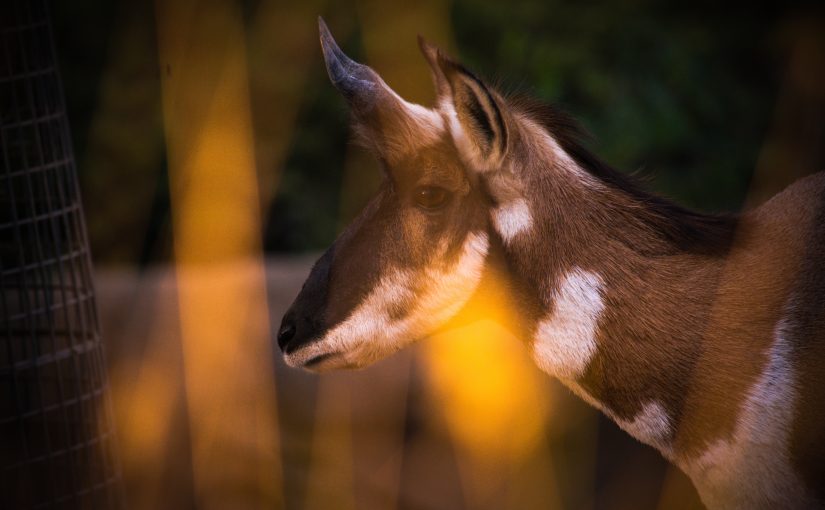
The following writing, titled “The Council of Pronghorn,” is one of Williams’ many jarring statements on environmental degradation in her book, Erosion: Essays of Undoing. This thought-provoking essay uses Wyoming as an example of how the petroleum industry has devastated areas in our country. The pronghorn antelope serve as the silent and seemingly omnipresent witnesses to these impacts, and Williams posits that their fate may resemble our own.


I strongly suspect a big part of real art-fiction’s job is to aggravate this sense of entrapment and loneliness and death in people, to move people to countenance it, since any possible human redemption requires us first to face what’s dreadful, what we want to deny. —David Foster Wallace, Review of Contemporary Fiction, 1993

What I want to deny is that fossil fuels are killing us. What I want to deny is that living in the state of Wyoming is living in the heart of denial. And if we want to see “entrapment and loneliness and death,” all we have to do is go out and visit the  oil patch in Sublette County or Sweetwater County or Gillette, more commonly known as “Razor City,” in Campbell County, Wyoming.

The “dreadful” truth is that if Wyoming were a nation, it would be among the largest coal-producing countries in the world. Since 1996, more than 7.7 billion tons of coal have been produced, most of it coming from the Powder River Basin. Trains leave Gillette twenty-four hours a day carrying coal from our state to yours. We live in a rectangle that borders Utah, Idaho, Montana, South Dakota, Nebraska, and Colorado, all part of the fossil fuel boom in the Interior West. This is a ravaged landscape and few see it, even those who live here.

In 2007, I accepted an invitation to become the first “writer in residence” at the University of Wyoming’s creative writing department. The students I worked with were extraordinary. Many of them were local, but others were not. The students—poets and nonfiction and fiction writers—decided they wanted to do more than examine themselves on the page, they wanted to go outside. They wanted to get a glimpse into the state of the state of Wyoming and believed storytelling could open a door to what a sense of place really means, a gauge and a guide to what folks in Wyoming were thinking. Together, we created a program called “Weather Reports.” It would be simple, direct, and nonthreatening: “What’s the weather like in your town?” Students created a road map. We  would visit seven communities in the state that were being impacted by oil and gas and coal-bed methane gas development  from Pinedale to the Powder River Basin to Rawlins, Riverton, and the Wind River Reservation.

The “Weather Reports” took place on Friday evenings, when we would gather at a library or arts center, a politically neutral zone, and invite the community to gather in the name of storytelling. On Saturday, we would offer a writing workshop to those in attendance who were interested in developing their stories on the page. The format was always the same: A student would read a story they had written, then invite those in attendance to tell  their own. We would form a circle and begin with one question:

“What keeps you up at night?” No one was prepared for  the emotion or depth of sharing that followed. Our first “Weather Report” took place in the town of Pinedale, elevation 7,182 feet, located at the base of the Wind River Range; population 1,865. It is also a boomtown, 32 miles north of the Jonah Oil Field, which is estimated to contain 10.5 trillion cubic feet of natural gas.

It was standing room only in the public library. Residents  talked about poisoned water, the elevated benzene levels re- lated to the oil and gas development, the ozone alert that was  posted for the first time in their history on that very day. 

We listened to senior people, primarily women, talk about “Project Wagon Wheel.” In the 1960s, during the Cold War, the  Atomic Energy Commission planned to extract Wyoming natural gas with five underground nuclear explosions. The women who protested that action rose to tell their history and it was personal. “I’ll be damned if they were going to blow up our backyard, sage or no sage,” one of the women said. They recounted a straw poll in Sublette County on the presidential election day in 1972 that showed 970 people were opposed to  Project Wagon Wheel, 279 were in favor, and 105 were undecided. This was a revelation to the hundred-plus residents  in the room. A young man stood up and said: “If you could stop five nuclear bombs, we can hold these gas companies accountable.”

One story of courage followed another until well after midnight. The librarian stood in the back of the room. Her words closed the evening: “One day, I think I’m going to wake up and Wyoming will just be one giant hole in the ground with everything we love, gone.” 

In the town of Gillette, elevation 4,556 feet, population 30,560, a mother stood up and said, “What keeps me up at night is the health of my children. My five-year-old son has a rash on his legs and our well water is red.” She paused to control her emotions. “Is anyone else experiencing this?” One by one, other mothers stood in solidarity and shared similar stories, and then two nurses took the floor: “Can anyone tell us why we can’t keep enough chemotherapy in this town to treat all the cancers in Campbell County?” 

When we arrived in Casper, the financial hub of the state, elevation 5,118 feet, population 57,814, it was a different story. The state senator Kit Jennings showed up in his shiny black cowboy boots, wearing his sport coat, a bolo tie, and Levi’s held up by a belt with a silver buckle shaped like an oil rig. Everyone knew who he was and everyone knew he was in the pocket of the coal-bed methane industry now following our every move. They didn’t like people talking. Wyoming is a state of big distances with few occasions to assemble. People were isolated and the oil and gas companies liked it that way. The industry had gotten to Jennings, and Jennings was going to get to us. 

The senator might as well have entered the room with a loaded shotgun, so violent was his rhetoric and so personal—but a circle had been created and a space of respect had been established. The woman seated next to him handed him the microphone. “What keeps me up at night is thinking I have to show up to a hippie-dippie circle like this . . . You say there is a direct correlation between the rise of crystal meth and rise of rigs in our towns, well that’s bullshit, what do you know”—he was addressing his remarks to me—“you’re an outsider from Utah.” We listened. It was his turn to tell his story. When he finally realized there would be no confrontation, no conflict, no  heated exchange of words, he simply paused and said: “I was raised on the oil patch as a kid—people looked down on us, called us white trash.” And with that the combative senator began to tell the truth of his life. 

We witnessed the art of storytelling and story receiving. 

Senator Jennings had tried to shut down the students’ “Weather Reports” and pressure the president of the University of Wyoming to fire me. But President Buchanan defended  our program. Freedom of speech. What’s wrong with telling  stories and listening to one another? What’s wrong with gathering as a community to consider where we live, what we love,  and what is at stake in the twenty-first century? 

What lawmakers fear most, especially those financed by the energy industry, is the art of independent thinking, the arc of creative thinking. What power tries to control is the story, especially the story that sees the world as a complicated whole. What the oil and gas companies know is that if they can keep people isolated and the story fragmented, keep as little known as possible, and in some cases lie, then they can go about their business without protest or accountability. 

But the most revelatory of all our “Weather Reports” took place in the bars in Riverton, elevation 4,951 feet, population 11,058, adjacent to the Wind River Reservation, home to the Northern Arapaho and Eastern Shoshone tribes. 

Riverton, Wyoming, is famous for having sixteen drinking holes in a two-mile stretch. The bars are segregated. We went to a roughneck bar and an Indian bar. The roughnecks were making big money at big risk with long days, where a little meth went a long way to carry them through what is known as “a tower”—twelve-hour days for fourteen days straight and  then a week off to rest. We learned Wyoming has the highest worker fatality rate in the nation, three times the national  average. The men know this. And one young oil worker after another told stories of death by “trippin’ pipe” or “throwing chain” accidents, or incidents where the drilling mud caught fire or the actual rigs blew up. But their stories always had the same tagline: “It was the guy next to me.” At age twenty-one, many of them saw themselves as invincible. “The sick thing is the family whose boy got chewed up on the rig received a check for ten thousand dollars from the worker compensation fund. And what’s really fucked up is that the company only got fined six hundred and twenty-five dollars for the chain tong mess-up.” 

The stories told in the Indian bar where the Arapahos and Shoshone hang were not about jobs on the rigs at all, they were about no jobs. 

Their stories were about poverty, missing women, and bison being killed once they crossed the boundary of Yellowstone National Park. Some of the men were blunt enough to ask why we were hanging out in the “wrong bar.” Then it got real. The students came to understand that story engages the whole person. People lean forward. Words matter and cut through race, class, and politics. Stories move us and move through us, become the conscience of a community.

It is difficult to get a man to understand something when his salary depends upon his not understanding it. —Upton Sinclair, Oil! 

A year after the “Weather Reports,” I set out on a road trip with two artists, Felicia Resor and Ben Roth, to witness the oil and gas development in Wyoming. We wanted to go deeper than we were able to go with our “Weather Reports.” We wanted to see for ourselves how the fossil fuel economy was impacting the state physically, something that was largely invisible to its citizens, because of either lack of interest or lack of access. Felicia was born in Teton County and raised on a ranch. She was a recent graduate of Yale, with a major in the humanities. Ben was native to Colorado, a metal artist, now living in Jackson. We had received funding from a foundation called Invoking the Pause, by an anonymous donor who asked that we reflect on some aspect of climate change through an art project and how this work might enter into the public conversation. The grant was designed as a two-year project. The first year, we were to investigate what a climate change art project might look like, do some ground truthing, then “pause” to reflect as a team on the information we had gleaned. During the second year, we would begin to collaborate and create something out of that pause.

We formulated our project with the knowledge that Wyoming was the largest coal producer in the country, responsible  for more than 90 percent of U.S. coal. Our road trip would bring us into proximity with the sources of Wyoming’s coal, oil, and gas. We wanted the abstract to become real. We were  aware of our complicity behind the wheel, the gas we were using (Wyoming is not a small state), but short of riding horses,  this was our means of traversing the “Cowboy State,” visiting such far-flung towns as Spotted Horse, Buffalo, and Ten  Sleep. We were committed to thinking about what we might do as artists to “move people to countenance it,” the “it” that was not yet known to us.

We made visits to the Jonah Oil Field, to the man-camps in Sweetwater County, to the Halliburton Hilton in Pinedale, to the coal mines in Gillette, to the ranches in the Powder River Basin suffering from the “split-estate agreement” that says residents might own the surface rights to the land, but the federal government owns the natural resources below the land. We witnessed coal-bed methane pumps in the front yards of ranch houses; water-quality issues associated with hydraulic fracking; boomtowns where locals are few and roughnecks are many. We became acutely aware of our nation’s thirst for oil and the hidden costs that remain invisible to most of us. When we asked our guide at the Jonah patch about the decline in air quality in Sublette and Sweetwater Counties, he said it was a result of the geysers in Yellowstone National Park spewing “god knows what” into the atmosphere. There was no discussion to be had. He was the industry’s public relations man. “Those who say the ozone is up don’t have any baseline studies to support their claims.”

That night, we stayed at a friend’s cabin beneath a sky of  stars now noticeably obscured by the lights of a twenty-four- hour workforce on rigs lit up like Christmas trees. A decade  ago, this was a night sky of only stars, not construction lights and gas flares dotting the sage flats from one horizon to the next. We talked about how these same lights fuel our economy, pave our roads, and pay for free in-state college tuition for any graduating high school senior in Wyoming who wants to go to  the University of Wyoming in Laramie, the state’s only university. Residents benefit from its natural gas, oil, coal, and coal-bed methane in tangible ways. Wyoming is a rich state because  of its rich resources—and a well-educated one.

We drove from Pinedale to Cora and traveled across Union Pass in the Wind Rivers through a forest of lodgepole pines, once green, now red. It was a long, dry, and dusty road, eerie, even, for those of us who had lived in the American West all our lives. The expanse was so vast, we almost got used to the red forests, a result of local warming that has created a double life span for pine bark beetles, who cut through the bark of the trees to the cambium layer and kill the pines. We saw ghost forests of white bark pines and we imagined hungry grizzlies searching for their autumn food source of pine nuts and not finding them—at risk of entering hibernation in a state of starvation. We witnessed more split estates of mineral rights, above ground and below, that have torn up the hearts of  ranches and ranchers in the Powder River Basin, where coal- bed methane operations have ravaged what ranching families  believed was their rightful land passed down through the generations. And we witnessed the enormity of the black open-pit  coal mines in Gillette, a town where there is so much money, local kids have learned to stand in front of the open doors of bars to catch twenty-dollar bills as they fly out of the saloons or pick them up in the desert snatched by the fingers of sage.

Throughout our wanderings, there was one constant: pronghorn. They were present wherever we went, four-legged witnesses to the environmental stresses in the sagebrush plains. We  would see the antelopes watching, not running, as they sat on  the edges of the Jonah Oil Field between the rigs and the man-camps, between the roads and the burning slag ponds. Their  legs would be hung up in barbed-wire fences as they tried to escape the oil reservations. Many of them, defeated, just sat directly on the oil patches, lethargic, emaciated, fenced in and trapped, their ancestral sage flats now crisscrossed with roads looking like black asphalt scribbles on the whiteboard of winter.

As we drove the long distances, we saw pronghorn antelope standing behind the barbed wire, frozen in fear. And then, in the Big Horn Basin, we saw them running with the wind. And  then they would stop and turn, as if looking over their shoulders for what was chasing them. They haunted us. And their  large black protruding eyes never left us, as we wondered what they were seeing that we could not.

Pronghorn antelope are uniquely American, found nowhere else on Earth, part of an ancient family, Antilocapridae, that has been roaming North America since the Pliocene era, with fossil records dating back five million years. It is one of the only mammals to have survived the Ice Age. For almost two million years, the pronghorn’s primary predator was the cheetah. They still run with a memory of this Pleistocene cat with speeds of up to eighty miles per hour. The  Arapaho and Shoshone call the pronghorn antelope “Windhorse.” With their remarkable peripheral vision, the pronghorn can see in a radius of 360 degrees and spot intruders for  up to three to four miles.

The herds we saw in Sublette County around the Jonah Oil Field migrate from Grand Teton National Park in the fall back to Pinedale in the winter, in a hundred-mile seasonal journey  returning to the Tetons in the spring. This path of the pronghorn is the longest ungulate migration in the lower forty-eight  and has been intact for more than eight thousand years. Now, with the intrusion of development, it is more difficult for them to manage their ancestral trek.

No matter where we seemed to go in the state, the pronghorn were present. Their white geometric markings on tan fur  and their black hooked horns create the most stunning of animals. Averaging three feet tall at the shoulder and seventy-five  to a hundred pounds, pronghorn are barrel-chested animals with a huge heart and expansive lungs, perfectly adapted with their short buoyant legs to fly across the high plains.  As we drove through the miles of open range, another pronghorn would appear on the side of the barbed-wire fence, white  fanny flared as danger was noted. I remembered a Polaroid of my three brothers, Steve, Bob, and Dan, each holding up by the horns the pronghorn they had shot as a rite of passage in the 1970s—their boyhood pride exhibited.

We returned home from our road trip with a sobering perspective. The oil and gas companies had created a wide and gaping wound across Wyoming. As U.S. citizens, it can be said, we are all the beneficiaries of America’s oil independence, but  there are social and environmental costs and the price is being paid by small rural communities. In Pavillion, Wyoming, with a population of roughly 250, the EPA warned residents in 2011 that they could no longer drink, bathe in, cook with, or farm with their water. Why? No one was saying exactly, but everyone suspected it was contaminated by fracking, by the chemical soup injected into the substrate to release the natural gas. The very company that had fouled their water, Encana, the Canadian company responsible for drilling more than two hundred natural gas wells in the area, donated $1 million to provide water cisterns “to impacted residents” and fund a state study, all the while repeating to the community, “We are not responsible for the problem.”

When we sat with these images over the next year, reflected on them, and digested all the information we had gleaned from our summer of witness, we discussed how our ideas as artists might contribute to the conversation surrounding climate change.  What emerged from the “pause” was the overriding presence of the pronghorn.

The pronghorn as witness. What were they seeing? What were they saying to one another? What would they say to us from the vantage point of the Pliocene?

The three of us imagined “A Council of Pronghorn,” a  circle of witnesses: twenty-three pronghorn antelope standing in a circle representative of the twenty-three counties in  Wyoming. We imagined their skulls floating above weathered  fence posts—an homage to the ranching culture—each secured to an iron base repurposed from the gas fields.

We saw each skull not only representing a county in the state, but a voice heard, a story told, a perspective felt. We gathered antelope skulls from hunters, from local collectors, and many from roadkills left behind on the shoulders of lonely straightaways, cleaned meticulously by Felicia and her sister, Avery. The posts were made of lodgepole pine and spoke to the obstacles the animals face, whether fences, roads, or oil rigs. Most of these posts came directly from the Resor ranch. The metal bases made of discarded machinery disks were salvaged from the oil patches, addressing our industrial footprint. We believed these various elements could tell a story:

Animals bear witness to a changing world, a changing climate. The fate of the pronghorn is our own, holding us accountable for what has been taken and for the beauty that remains.

Over the next six months, Ben created the twenty-three Pronghorn Witnesses. Their skulls did float above the spines of weathered ranch posts, each one secured in an iron base. The Council appeared. My task as the writer was to create a poem that would animate them. We imagined lines, words, written in black calligraphy across their skulls.

But once we saw “The Council of Pronghorn” fully articulated in their circle, it became clear to us that they did not  need the imposition of our words. A secret language was held within their presence. Their power was gleaned from place. The poem would simply appear as a bookmark, located on a stand to the side of the circle. 

Here’s how the words came to me: I lived with one of the skulls. Wherever I was sitting in our house, the skull sat with me. If I was writing in my study, the skull was on my desk watching me. If I was cooking a meal, the skull was by my side preparing the food. If I sat on the porch, the pronghorn skull accompanied me.  

After a month, I felt comfortable with our relationship. I slept with the skull.

Brooke was away—and that night, I placed the pronghorn skull on the pillow next to me. I cannot tell you where my dreams took me that night, only that when I awoke, the words were fully formed. 

We, The Council 

of Pronghorn 

have convened 

as witnesses 

to this moment 

in time 

when our eyes 

wish to peer 

into the hearts 

of humans 

and ask 

what kind 

of world 

are you creating 

when we can 

no longer 

run as Windhorses 

but are relegated 

to watching 

behind fences 

dreaming, dreaming 

of Spirit 

Migrations?  

The Council of Pronghorn made its first appearance in the courtyard of the Center for the Arts in Jackson, Wyoming. They circled the square as a disturbance. Visitors had the  choice of standing next to pronghorns as part of the circle; inside the circle enduring the horned witnesses’ gaze; or outside  the circle as observers. Most people stood outside the circle. The children, however, wanted to build a fire in the center and dance.

And then, The Council of Pronghorn received an invitation to participate in an international exhibit on water at the Cathedral of St. John the Divine in New York City. Ben Roth agreed to drive the pronghorn across the country in his van. What he couldn’t have known at the start of his journey was that the day he arrived in Manhattan, August 27, 2011, would be the day Hurricane Irene made landfall in New York. It took  him approximately six and a half minutes to get the twenty- three pronghorns from one end of the island to the other, to  get to the cathedral. The city had been evacuated—there were no cars, no buses or taxis or people on the streets. Since this was Ben’s first trip to New York, he didn’t realize the rarity of this moment. 

The Council of Pronghorn arrived at the Cathedral of St. John the Divine just as the Arapaho describe them, “Windhorses.” One by one, Ben brought The Council of Pronghorn into the cathedral, which was now a pop-up shelter for the homeless where people could weather the storm. 

The pronghorn were placed stoically in a spacious circle inside the nave of the cathedral as the wind roared outside. They told the story of fracking in the American West, of a boom-and-bust economy and contaminated water in towns like Pavillion, Wyoming. They stood as witnesses to the costs of a fossil fuel economy. They haunted, frightened, instructed, and inspired each visitor with their dignity and stark beauty—many who came to see them had never encountered a pronghorn antelope before.  

The Council of Pronghorn came to be known as “The Eighth Chapel” and remained in the Cathedral of St. John the Divine for almost a year, so compelling was its aura. It is still there,  now a semipermanent installation on the grounds of the cathedral on 114th Street in Manhattan, bearing witness to a city and state that continue to face and to fight against their own fracking future.

Excerpted from EROSION: Essays of Undoing by Terry Tempest Williams. Published by Sarah Crichton Books an imprint of Farrar, Straus and Giroux October 8, 2019. Copyright 2019 by Terry Tempest Williams. All rights reserved.
Artist Christi Belcourt on Kindness and Sacred Earth

Christi Belcourt is a Michif (Métis) visual artist who generously donated the 2019 Bioneers Conference artwork, Prayers and Offerings for Genebek Ziibiing (Serpent River). Belcourt is an esteemed artist and activist whose deeply moving work celebrates the beauty of the natural world and traditional Indigenous world-views. Her artwork spans a range of mediums and is collected privately and publicly around the world. Among her most iconic works are the Water Is Life images that she and artist Isaac Murdock collaborated on for the protest banners at Standing Rock. In 2016 her collaboration and resulting transformative piece with Italian designer Valentino, made global news and established best practices for countering the appropriation of Indigenous art.

Cara Romero, Director of the Indigeneity Program at Bioneers and a renowned photographer in her own right, spoke with Christi Belcourt recently about her art and activism.


CARA ROMERO:  Would you share with us where you’re from, about your community, and a little bit about what it’s like?

Christi Belcourt

CHRISTI BELCOURT: I’m Michif from the Métis Nation. My people come from a place called Lac Ste Anne but before it was renamed Lac Ste Anne the original name was Manitou Sahkahigan, which means spirit lake. It’s a very spiritual place where people go to pilgrimage every year. It is a community that is around a lake and a shared space with the Métis people, First Nations people, and non-native people who live around that lake. It’s a place where, unfortunately, I don’t have any land because through the years of colonization and the stealing of Indigenous land, Métis people like my community were left without a land base. There are only eight small Métis settlements in the province of Alberta, and you have to be a member of those settlements to be able to live on them. So by and large, the Métis Nation has become a landless people, in the sense that we have no legal lands left because the government has managed to take them all.

As we’ve seen throughout history, Indigenous lands are being swindled even today through land claim settlements which offer money instead of land. Every single year there is less and less Indigenous land. I believe that the government’s ultimate goal is to remove all Indigenous People from their lands completely, to remove their rights over their territories, and to get every last inch of land absorbed into Canada in a way that gives Indigenous Peoples no rights to say yes or no to development on their lands.

CARA: One thing that your art does is demonstrate Indigenous resilience in the face of this oppression, and your ways of being demonstrate cultural resilience. Can you talk about where the Michif of Métis Nation is in the face of all this, while keeping together cultural transmission?

CHRISTI: I think that within all Indigenous Nations, we have amazing people who do the work of the grassroots at the grassroots level, who continue to maintain the traditional knowledge and maintain their connections to the land. Because our governance structures have been usurped by foreign governing structures – such as Band Council elections, our Métis Nation organization elections. These structures are are not really leading at the grassroots level in terms of transmitting traditional knowledge.

There is this amazing movement of people all across North America who are working really hard, without notice, without acknowledgement, to maintain their traditions and their languages, and they’re doing this through small groups, through one-on-one apprenticeships, and through just simply being on the land and picking the medicines, and learning their language, and tanning a hide. All of these are acts of resilience in the face of what we’re facing. I see this great movement, a silent movement, where there is this massive resurgence to reclaim and restore those things that we hold dear to us in terms of our nation and our culture and our values, which are all connected to the land.

Our Lives are in the Land by Christi Belcourt

CARA: You’re known for what I call “artivism,” bringing positive impacts to our Indigenous communities through increased visibility, that beautiful thing that art can bring. You obviously do more than that as an artist, but can you talk a little bit about how you found your way to becoming an artivist, and your philosophy behind making art that gives back to your community?

CHRISTI: That’s such a big question. I don’t know if I have a philosophy. [LAUGHS]. I like the word artivism, by the way, I think that’s really cool.

What I really believe is that the thing that’s going to move us and raise up the level of consciousness as human beings is that we really have to be able to see our connection to the Earth, and see this Earth as a living, breathing, sacred being, which is connected to us and us to her, both on a physical and cellular level, as well as a spiritual level. Human beings have been led to believe that we’re at the top of this pyramid, that we are dominant over the Earth, that the Earth is here for our taking, and we’ve commodified everything. When we switch our thinking into believing that the water is alive, that the trees have their own life and their own territories, that the animals have their own territories, and when we start to walk really gently and softly on the Earth because we see this Earth as a sacred living being, then it changes and raises up the consciousness of how we need to be on this Earth. So less is truly more.

I also believe that kindness is the most important of all actions. It’s really difficult in this world, where we’re inundated with a level of violence seems to be permeating everything. It’s causing a lot of us to feel traumatized through the images that we’re seeing. There’s a lot of stress and fear. Somehow, we have to switch that around. What is the antidote to greed? Generosity. What is the antidote to being mean? Kindness. Kindness is an action that people can take in their daily life. I feel like taking that action can really change this world around, because when you’re kind to even the plants, let’s say, then you walk really softly on this Earth. When you’re kind to the waters, you don’t pollute. When you’re kind to the Earth, you don’t throw things out your window and pollute. You don’t buy plastics as much. You really try to change things around for yourself and for your community.

There’s great work that can be done at the community level. I believe that trying to do things at a huge level, trying to change masses of people won’t come about from the top down, it has to come from the bottom up. We have to do the work with our community at the grassroots level to cultivate this consciousness and awareness. I think as Indigenous People we have that and it’s something that we can share with non-Indigenous people. The level of consciousness of the human species has to be raised up to see the Earth as a living, sacred being, and that’s going to make a really big difference.

I guess that’s my philosophy: Kindness and Sacred Earth.

Thunderbird Woman by Isaac Murdoch and Christi Belcourt

CARA : I like that. Everything has a ripple-out effect from there. That’s a beautiful starting place.

When we asked if we could pay for the usage rights for your image, you made a special request, that instead of paying you usage rights, that we, Bioneers, donate those funds to a language project in your community, the Onaman Collective. Can you tell us about that language camp?

CHRISTI: Onaman Collective is the language camp we started two-and-a-half years ago, within the territory where I live, which is Anishinaabek territory (I’m not living currently within my own territory.) But this is an Anishinabek camp that is a year-round, land-based language and traditional teaching camp. It’s for youth and elders, and we haven’t received or accepted any government funds, so all of our fundraising has been done at the grassroots level. So far we’ve got six cabins and a couple other buildings and some lodges for ceremonial purposes, and a beautiful garden that we started this year.

What we’re trying to do is create a safe space for people to come and learn the language, to create art, and to learn traditional skills on the land, and traditional arts in a very relaxed, non-programmed format. We’re trying to get away from the idea of doing weekend workshops, and really trying to encourage a longer-term experience with regaining some of the traditional knowledge and reconnecting with the land for people. A longer term experience means that rather than just making a basket where somebody harvested the materials for you on a weekend, we’re saying let’s go harvest the materials year round. Let’s learn what that is really like. Let’s learn the language around that. Let’s learn all of the Ojibwe language around that activity. Let’s learn from the elders what they did when they were children. Let’s learn this on a deeper level so that we can really, truly pass these skills and knowledge on to our next generation so that the youth become the language bundle carriers, they become the traditional knowledge carriers, that they can really carry this forward.

I’m old enough that I’m lucky enough to have had elders when I was younger that had grown up and lived in the bush and understood all of these things. We need to be able to give these skills – the language, the ceremonial knowledge, the spiritual knowledge of the land, and the philosophy – we need to be able to give the worldview to the youth in a way that it becomes a sacred bundle that they carry forward so that when they become elders, they’re able to then pass that on to the next generation after them.

CARA: That is so powerful. I’m just in awe of that philosophy, and wish that we had something like that in my own community, a year-round process for gathering the materials and knowing when to get out there, knowing the words, and then realizing that the language is deeply rooted in our cultural landscapes. That’s a really powerful thing for the youth to be able to garner from a camp. It’s a really whole and healing approach to what I call cultural transmission.

CHRISTI: Start it up. Start it up.

CARA: Like you, I grew up at a time it was different. There was less TV, there was less distraction from just sitting around. Right? [LAUGHS] We were learning some of these things just by osmosis, being near people that had grown up in a different time period, and more attached to the landscape. Just honoring that whole story is amazing.

Can you tell us what you’re up to now and what you’re doing next?

Honouring My Spirit Helpers by Christi Belcourt

CHRISTI: We have a dream of building an art studio/language learning space at the camp. Right now we have cabins, but we have no large space where people can gather and work on large projects, like building a canoe or put a quilting frame up. The youth have asked for a dedicated space for the language where they can have a little library and a classroom. We’re working on fundraising for that. That’s probably our last big push for the camp in terms of building.

We have a number of gatherings that we’re planning. We have storytelling in the wintertime. We’re going to be hunting and trapping, and we’re going to be having a hide-tanning camp. The youth want to do some more skills around traditional weaving, cedar mat weaving and bulrush weaving, making baskets and mats. We have another youth that wants to do ash baskets, so she’s going to be bringing in an elder to teach that. We have a number of language lessons planned.  There’s always something in the works there, which is exciting.

In terms of my own art, I’ve just started painting again because I found some time to do that, which feels great. I’m starting to ruminate some things in my mind about artistic images that I might want to put out there according to what’s going on right now. You know, there’s the actions that are happening in Hawaii. A thing I’m spending a lot of time thinking about these days is the people that are trying to cross the southern border in the States and are being separated from their children, and the injustices and crimes against humanity that are happening right here on this continent, committed by the US government to the people who are Latinx people. It’s really hard being so far away, but I believe in prayers, and I believe in making our offerings. I believe that when we ask, there is a grand spirit world and a greater design here at work. I also believe that continuing the path of traditions is following our traditional knowledge in terms of our spirituality and ceremonies as well. It’s really important to use all the tools within our bundle — and that means our prayers and our offerings to the lands and the spirits of these lands as well, to ask them for help. I’m trying to think along those lines, what we can do to join with others to help the people that are being caged and to stop this genocide from happening.

Bring Our Children Home by Christi Belcourt

CARA: We’re going to be doing a panel on that in the Indigenous Forum at the Bioneers Conference this year. It’s an intergenerational panel with Indigenous folks from North and South, including some of the tribes right there on the border. We’ll talk about what it feels like as Indigenous Peoples to have that colonial divide between us causing an irreparable wound amongst our people. Hopefully, we can garner insight for how we can talk about that amongst ourselves. It’s always good to be able to articulate those issues, and then hopefully that resonates with the audience, that they’re able to think about those borderlands from an Indigenous perspective and realize how violent it is, and how it violates Indigenous sensibilities about that space. I think about that particular issue a lot too. It’s very painful, not only being far away, but it’s also very painful being so close to it.

I’m from Southern California, Mojave Desert. We have a lot of people who descend from both sides of the border, and are living proof of that we’re connected and humans are part of the ecosystem. You were talking earlier about being kind to the land. It’s just a painful ordeal that’s going on down there.

CARA: Finally, if people wanted to find out more about the camp and are moved to donate, how can they do that?

CHRISTI: It’s the Onaman Collective, and that’s the work that I do with Isaac Murdoch.

And we have a Facebook auction that runs for Onaman Collective Auction for Action which runs about four times a year. There’s just a whole bunch of ways. But the email is probably the easiest to contact us just to ask us questions or to donate: OnamanCollective@gmail.com.

CARA: Perfect, Christi. I feel really blessed to have had the opportunity to talk to you today, and I wish you the very best in all of your endeavors. Thank you for your generosity and your ways of being. You’re very inspirational to many artists. And just keep on keeping on.

CHRISTI: Oh, thank you so much. It’s been a real pleasure to speak with you. I hope one day we can meet in person. Thank you for using my art work for this initiative. I saw the poster. It was beautiful.

Of course, I wish you and everybody there all the best.

Cara Romero & Paloma Flores: Recognizing Indigenous Delegations & Native Youth Attendees

This keynote talk was given at the 2019 Bioneers Conference.

Bioneers Indigeneity Program Director Cara Romero recognizes Indigenous Delegations. Paloma Flores, Program Coordinator for the SFUSD Indian Education Program, Title VII, recognizes the Indigenous Youth Delegation.

Visit the Bioneers Indigeneity Program.

Learn more about Cara Romero and her work at the SFUSD Indian Education Program, Title VII website.

Read the full verbatim transcript of this keynote talk below.


Transcript

CARA ROMERO:

It is such an honor to be here with all of you. I’m the director of the Bioneers Indigeneity Program. I’m from the Chemehuevi Valley Indian Reservation in Southern California. I’m also an artist and a mother.

I have the privilege of working alongside Alexis Bunten, she’s Aleut and Yupik. She’s a badass writer, a PhD, and also a mother. Together Alexis and I, and many Native advisors, lead and guide the larger organization in all matters related to our indigenous programming, helping to make sure that all of our work to engage indigenous community locally and globally is native-led, culturally respectful, and elevates indigenous voice as central in our shared mission of protecting Mother Earth.

In my nine years with the organization, I have observed a unique dynamic within our organization, a dynamic that has helped us grow our attendance, engagement, and trust with our indigenous community. Our success is largely due to what Alexis and I call institutional decolonization.

Bioneers created an indigenous-led initiative that has grown from approximately 20 attendees to over 250 indigenous peoples joining us this weekend. [APPLAUSE] There are so many indigenous people here today, natives from North America, Latin America, South America, the Hawaiian Islands, Alaska, Siberia, representing over 99 different nations, that we know of. [APPLAUSE] And there are over 127 native youth, over 250 natives here celebrating this gathering that is Bioneers, celebrating this gathering of humans that care about the Earth and each other.

Kenny and Nina, the founders of Bioneers, did what many organizations that attempt to work with Indigenous Peoples do not – they gave us the power to create an autonomous Native-led program that we envisioned and developed. When you hand over the power, we can create what we need, not what other people think we need. We can also make sure that we practice respect and honor intertribal protocols intrinsic to cross-cultural trust.

Our staff checks in with us on everything related to indigeneity, making sure there’s no cultural appropriation or disrespectful behavior happening on the grounds. Our organization created a first-of-its-kind policy document called Inclusivity Guidelines. And we train everyone on staff on how to be respectful while engaging our indigenous community. It is incredible. [APPLAUSE] Thank you.

The Indigenous Forum and the Native Youth Leadership Program were small when I came on in 2011. We had only about 20 indigenous presenters, and the indigenous youth program only had four kids in attendance. I wanted to increase our indigenous presence in this cross-cultural space, but I knew it would take time. It involved creating trust with our indigenous community and creating an intergenerational outreach effort that includes native youth.

In just about every metropolitan in the US, there is a Native American Student Services Program, sometimes called Indian Education Title 7 programs. These are special programs built on original treaties with Native American tribes. You see, during the forced and rapid loss of our lands and genocide taking place in North America, we attempted to negotiate our land loss in these treaties, largely for education and healthcare. But today these programs are sadly underfunded. These Indian education programs are one of the ways Native American find each other in urban settings, grounding each other and staying close to each other, so our kids can grow together in this globalized world but stay in touch with each other and our cultures.

Today, I would like to honor and acknowledge one very special woman – Paloma Flores from the California Pit River Tribe, and the program coordinator of the Indian Education Title 7 Program in San Francisco Unified School District. [APPLAUSE] With a tremendous sponsorship of our native kids by the San Manuel Band of Mission Indians, Paloma and other tribal youth leaders in the community have helped us over the last seven years grow our Native Youth Leadership Program from that original cohort of four into the program that now hosts over 125 native youth from all over the country. She is a warrior woman fighting for our native youth in the public school systems. Bioneers, please join me in welcoming Paloma Flores. [APPLAUSE]

PALOMA FLORES:

[Speaker’s language] I am of the Pit River Nation, Madesi band. We are of Medicine Lake on my mother’s side. [speaker’s language] Good-hearted ones. You are meant to be here.

When we invest in the truth, we bring it back to the beginning. If we talk about the future, the future is living now. From four to 127, efforts made collective. To decolonize is truly to indigenize. As we sit, we take it in, but when we stand, we’re rooted. You all are [Speaker’s language] good-hearted ones.

To the youth – [speaker’s language] our people are still here. Our people are still here. [APPLAUSE] So with me, indigenous youth delegation, stand, because we honor you. Stand. [APPLAUSE] Give it up for these young people, Bay Area! [APPLAUSE]

We invest today and we’re able to see tomorrow. When I say Bio, you say warrior. Bio [AUDIENCE RESPONDS “warrior”] Bio [AUDIENCE RESPONDS] [SINGING] When I say Bio, you say warrior, Bio [AUDIENCE RESPONDS] Bio [AUDIENCE RESPONDS] Thank you. [APPLAUSE]

Humanizing our End of Life Experiences: Q&A with Shoshana Ungerleider

Physician and activist Dr. Shoshana Ungerleider founded the End Well Project as a way to make end of life experiences more human-centered. This media platform and annual symposium elevates the voices of diverse professionals, sparking a cultural shift in the way we approach end of life care.

Read on for our conversation with Ungerleider about the innovations she is pioneering in her field.


How do the negative connotations around death stymie conversation and, consequently, more innovative end of life care?

For the vast majority of human history we have actually been familiar with death. We cared for our family members at home, when they died – they were laid out in the parlor and we knew what rituals to perform. Throughout history, death was an expected occurrence; it was accepted and planned. Our cultural understanding began to wither about a century ago when death became more medicalized due to advances in science and technology. Through this overarching medicalization of death, the end of life has moved out of our collective consciousness and into the shadows. Effectively, we’ve lost our cultural understanding of how to think about it, prepare for it, but most importantly, how to talk about it. The result is that critical conversations aren’t taking place along the way in order to make sure that the care people receive is care they really understand and want. 

What are some of the best conversations or ideas that have come out of End Well’s interdisciplinary approach to end of life care?

From death education for high school students, to creating a lasting digital legacy after you die, to recording the last sound you want to hear before you die…there have been so many great ideas and collaborations, created and discussed at End Well.  

How do you go about prioritizing human-centrism in your work? Is human-centrism an approach that we can apply to every field?

I believe death is not a medical issue, but a human one. In order to move the needle on improving the end of life experience for everyone, we need to use the basic principles of human-centered design thinking to create lasting solutions. We need to bring the technical experts and life experts into dialogue, which is exactly what we do at End Well. We invite healthcare professionals, designers, lawyers, entrepreneurs, funders, artists, educators, journalists, students, venture capitalists, patients, advocates, payers, policy makers and more to the table to address the many facets of end of life. Human-centered design is all about keeping the end user at the center of the conversation and building a deep empathy with the people you’re designing for. I believe the world would be a much better place if all fields were built with this approach!

In what ways does End Well promote people’s agency in their end of life decision-making process?

At End Well, we believe all people should experience the end of life in a way that matches their values and goals. End Well’s goal is to create a cultural shift to normalize conversations about our mortality throughout life. Through End Well’s online platform and media resource, the creation of new collaborations, systems, protocols, products and networks are coming together to support making the end of life more human-centered for all of us.

What overlap is there between end of life practices and sustainability practices, and are there any initiatives to strengthen it?

Absolutely! For example, it turns out modern funeral and burial practices are quite problematic for the environment. From large amounts of formaldehyde-based embalming fluid being used to acres of land for cemeteries full of steel caskets, concrete burial vaults, and wood coffins to particulate emissions from crematoriums. There are many newer alternatives to traditional options and a growing movement around eco-friendly burial to mitigate the environmental impact of death. On May 21, 2019, Washington State’s Governor Jay Inslee signed SB 5001 which legalizes natural organic reduction, or “the contained, accelerated conversion of human remains to soil.” The law will go into effect on May 1, 2020 and was advocated for by End Well partner Recompose, a Seattle-based company founded by Katrina Spade which offers “natural organic reduction,” a process which gently converts human remains into soil.

Are there innovative practices emerging in the field of end of life that we should keep our eyes on right now?

The death doula movement is picking up lots of momentum, which is fantastic! By complementing the care provided to patients by hospitals, senior-care facilities and hospices, death doulas are well suited to support families and fill in the gaps that occur during the dying process.