Hope Is an Imperative: Sparking an Ecological Design Revolution

While society prepares for the future of a world ravaged by climate change, environmental educator David Orr has spent years writing about how to reverse it. Orr advocates for an ecological design revolution to change how we build homes, grow food and model society, so that future generations can thrive. We can build a more resilient world by simply asking ourselves: “How would nature do it?”

In his book, Hope Is an Imperative: The Essential David Orr, Orr frames our devotion to fossil fuels as a moral lapse best judged from the perspective of our descendants. Young people are set to bear the brunt of these climate consequences, so to put power back in their hands, we must engage them in building a more sustainable world.

Orr will present a keynote address at the 2019 Bioneers Conference. Buy your tickets to Bioneers 2019 here.

Following is an excerpt from Hope Is an Imperative: The Essential David Orr.


To see our situation more clearly, we need a perspective that transcends the minutiae of science, economics, and current politics. Since the effects, whatever they may be, will fall most heavily on future generations, understanding their likely perspective on our present decisions would be useful to us now. And how are future generations likely to regard various positions in the debate about climatic change? Will they applaud the precision of our economic calculations that discounted their prospects to the vanishing point? Will they think us prudent for delaying action until the last-minute scientific doubts were quenched? Will they admire our heroic devotion to inefficient cars and sport utility vehicles, urban sprawl, and consumption? Hardly. They are more likely, I think, to judge us much as we now judge the parties in the debate on slavery prior to the Civil War.

Stripped to its essentials, defenders of the idea that humans can hold other humans in bondage developed four lines of argument. First, citing Greek and Roman civilization, some justified slavery by arguing that the advance of human culture and freedom had always depended on slavery. “It was an inevitable law of society,” according to John C. Calhoun, “that one portion of the community depended upon the labor of another portion over which it must unavoidably exercise control” (Miller, W. L., 1998, 132). And “freedom,” the editor of the Richmond Inquirer once declared, “is not possible without slavery” (Oakes 1998, 141). This line of thought, discordant when appraised against other self-evident doctrines that “all men are created equal,” is a tribute to the capacity of the human mind to simultaneously accommodate antithetical principles. Nonetheless, it was used by some of the most ardent defenders of “freedom” right up to the Civil War.

A second line of argument was that slaves were really better off living here in servitude than they would have been in Africa. Slaves, according to Calhoun, “had never existed in so comfortable, so respectable, or so civilized a condition as that which [they] enjoyed in the Southern States” (Miller, W. L., 1998, 132). The “happy slave” argument fared badly with the brute facts of slavery that became vivid for the American public only when dramatized by Harriet Beecher Stowe in Uncle Tom’s Cabin published in 1852.

A third argument for slavery was cast in cost-benefit terms. The South, it was said, could not afford to free its slaves without causing widespread economic and financial ruin. This argument put none too fine a point on the issue; slavery was simply a matter of economic survival for the ruling race.

A fourth argument, developed most forcefully by Calhoun, held that slavery, whatever its liabilities, was up to the various states, and the federal government had no right to interfere with it because the Constitution was a compact between independent political units. Beneath all such arguments, of course, lay bedrock contempt for human equality, dignity, and freedom. Most of us, in a more enlightened age, find such views repugnant.

While the parallels are not exact between arguments for slavery and those used to justify inaction in the face of prospective climatic change, they are, perhaps, sufficiently close to be instructive. First, those saying that we do not know enough yet to limit our emission of greenhouse gases argue that human civilization, by which they mean mostly economic growth for the already wealthy, depends on the consumption of fossil fuels. We, in other words, must take substantial risks with our children’s future for a purportedly higher cause: the material progress of civilization now dependent on the combustion of fossil fuels. Doing so, it is argued, will add to the stock of human wealth that will enable subsequent generations to better cope with the messes that we will leave behind.

Second, proponents of procrastination now frequently admit the possibility of climatic change but argue that it will lead to a better world. Carbon enrichment of the atmosphere will speed plant growth, enabling agriculture to flourish, increasing yields, lowering food prices, and so forth. Further, while some parts of the world may suffer, a warmer world will, on balance, be a nicer and more productive place for succeeding generations.

Third, some, arguing from a cost-benefit perspective, assert that energy conservation and solar energy are simply too expensive now. We must wait for technological breakthroughs to reduce the cost of energy efficiency and a solar-powered world. Meanwhile we continue to expand our dependence on fossil fuels, thereby making any subsequent transition still more expensive and difficult.

Finally, arguments for procrastination are grounded in a modern-day version of states’ rights and extreme libertarianism, which makes squandering fossil fuels a matter of individual rights, devil take the hindmost.

The fit between slavery and our present use of fossil fuels is by no means perfect, but it is close enough to be suggestive. Of course we do not intend to enslave subsequent generations, but we will leave them in bondage to degraded climatic and ecological conditions that we will have created. Further, they will know that we failed to act on their behalf with alacrity even after it became clear that our failure to use energy efficiently and develop alternative sources of energy would severely damage their prospects. In fact, I am inclined to think that our dereliction will be judged as a more egregious moral lapse than that which we now attribute to slave owners. For reasons that one day will be regarded as no more substantial than those supporting slavery, we knowingly bequeathed the risks and results of climatic change to all subsequent generations, everywhere.

If not checked soon, that legacy will include severe droughts, heat waves, famine, changing disease patterns, rising sea levels, and political and economic instability. It will also mean degraded political, economic, and social institutions burdened by bitter conflicts over declining supplies of fossil fuels, water, and food. It is not far-fetched to think that human institutions, including democratic governments, will break under such conditions.

Other similarities exist. Both the use of humans as slaves and the use of fossil fuels allow those in control to command more work than would otherwise be possible. Both inflate wealth of some by robbing others. Both systems work only so long as something is underpriced: the devalued lives and labor of a bondsman or fossil fuels priced below their replacement costs. Both require that some costs be ignored: those to human beings stripped of choice, dignity, and freedom or the cost of environmental “externalities,” which cast a long shadow on the prospects of our descendants. In the case of slavery, the effects were egregious, brutal, and immediate. But massive use of fossil fuels simply defers the costs, different but no less burdensome, onto our descendants, who will suffer the consequences with no prospect of manumission. Slavery warped the politics and cultural evolution of the South. But our dependence on fossil fuels has also warped and corrupted our politics and culture in ways too numerous to count. Slaves could be manumitted, but the growing numbers of victims of global warming have no reprieve. We leave behind steadily worsening conditions that cannot be altered in any time span meaningful to humans.

Both slavery and fossil fuel–powered industrial societies require a mass denial of responsibility. Slave owners were caught in a moral quandary. Their predicament, in James Oakes’s words, was “the product of a deeply rooted psychological ambivalence that impels the individual to behave in ways that violate fundamental norms even as they fulfill basic desires” (Oakes 1998, 120). Regarding slavery, George Washington confessed, “I shall frankly declare to you that I do not like even to think, much less talk, of it.” As one Louisiana slave owner put it, “a gloomy cloud is hanging over our whole land.” Many wished for some way out of a profoundly troubling reality. Instead of finding a decent way out, however, the South created a culture of denial around the institutions of bondage. They were enslaved by their own system until it came crashing down around them in the Civil War.

We, too, find ourselves in a quandary. A poll conducted for the American Geophysical Union revealed that most Americans believe that global warming is real and that its consequences will be tragic and irreversible. But the response of Congress and much of the business community has been to deny that the problem exists and continue with business as usual. Proposals for higher gasoline taxes, increasing fuel efficiency, or limits on use of automobiles, for example, are regarded as politically impossible as the abolition of slavery in the 1830s. Unless we take appropriate steps soon, our system, too, will end badly.

We now know that heated arguments made for the enslavement of human beings were both morally wrong and self-defeating. The more alert knew this early on. Benjamin Franklin noted that slaves “pejorate the families that use them; the white children become proud, disgusted with labor, and being educated in idleness, are rendered unfit to get a living by industry” (Finley 1980, 100). Thomas Jefferson knew all too well that slavery degraded slaves and slave owners alike, while providing no sustainable basis for prosperity in an emerging capitalist economy. In a rough parallel, it is possible that the extravagant use of fossil fuels has become a substitute for intelligence, exertion, design skill, and foresight. On the other hand, we have every reason to believe that vastly improved energy efficiency and an expeditious transition to a solar-powered society would be to our advantage, morally and economically. Energy efficiency could lower our energy bill in the U.S. alone by as much as $200 billion per year (Hawken et al. 1999). It would reduce environmental impacts associated with mining, processing, transportation, and combustion of fossil fuels and promote better technology. Elimination of subsidies for fossil fuels, nuclear power, and automobiles would save tens of billions each year (Myers 1998). In other words, the “no regrets” steps necessary to avert the possibility of severe climatic change, taken for sound ethical reasons, are the same steps we ought to take for reasons of economic self-interest. History rarely offers such a clear convergence of ethics and self-interest.

If we are to take this opportunity, however, we must be clear that the issue of climatic change is not, first and foremost, a matter of economics, technology, or science but, rather, a matter of principle that is best seen from the vantage point of our descendants. The same historical period that gave us slavery also gave us the principles necessary to abolish it. What Thomas Jefferson called “remote tyranny” was not merely tyranny remote in space but in time as well—what Bill McDonough has termed “intergenerational remote tyranny.” In a letter to James Madison written in 1789, Jefferson argued that no generation had the right to impose debt on its descendants, for were it to do so, the future would be ruled by the dead, not the living.

A similar principle applies in this instance. Drawing from Jefferson, Aldo Leopold, and others, such a principle might be stated thusly:

No person, institution, or nation has the right to participate in activities that contribute to large-scale, irreversible changes of the Earth’s biogeochemical cycles or undermine the integrity, stability, and beauty of the Earth’s ecologies—the consequences of which would fall on succeeding generations as an irrevocable form of remote tyranny.

That principle will likely fall on uncomprehending ears in Congress and in most corporate boardrooms. Who, then, will act on it? Who ought to act? Who can lead? What institutions represent the interests of our children and succeeding generations on whom the cost of present inaction will fall? At the top of my list are those that purport to educate and thereby to equip the young for useful and decent lives. Education is done in many ways, the most powerful of which is by example. The example the present generation needs most from those who propose to prepare them for responsible adulthood is a clear signal that their teachers and mentors are themselves responsible and will not, for any reason, encumber their future with risk or debt—ecological or economic. And they need to know that our commitment is more than just talk. This principle can be stated in these words:

The institutions that purport to induct the young into responsible adulthood ought themselves to operate responsibly, which is to say that they should not act in ways that might plausibly undermine the world their students will inherit.

Accordingly, I propose that every school, college, and university stand up and be counted on the issue of climatic change by beginning now to develop plans to reduce and eventually eliminate or offset the emission of heat-trapping gases by the year 2020. Opposition to such a proposal will, predictably, follow along three lines. The first line of objection will arise from those who argue that we do not yet know enough to act. In other words, until the threat of climatic change is clear beyond any possible doubt (and also less easily reversed), we cannot act. Presumably, these same people do not wait until they smell smoke in the house at 2 am to purchase fire insurance. A “no regrets” strategy relative to the far-from remote possibility of climatic change is, by the same logic, a way to insure our descendants against the possibility of disaster otherwise caused by our carelessness.

A second line of objection will come from those who will argue that even so, educational institutions on their own cannot afford to act. To be certain, there will be initial expenses, but there are also quick savings from reducing energy use. In fact, done smartly, implementation of energy efficiency and solar technology can save money. Moreover, it is now possible to use energy service companies that will finance the work and pay themselves from the stream of savings, making the transition budget neutral. The real problem here has less to do with costs than with moral energy and the failure to imagine possibilities in places where imagination and creativity are reportedly much valued.

A third kind of objection will come from those who agree with the overall goal of stabilizing climate but will argue that our business is education, not social change. This position is premised on the quaint belief that what occurs in educational institutions must be uncontaminated by contact with the affairs of the world and that we have no business objecting to how that world does its business. It is further assumed that education occurs only in classrooms and must be remote from anything having practical consequences. Were the effort to eliminate the use of fossil fuels, however, done as a 20-year effort in which students worked with faculty, staff, administration, energy engineers, and technical experts, the educational and institutional benefits would be substantial.

How might the abolition of fossil fuels occur? In outline, the basic steps are straightforward, requiring:

  • thorough audit of current institutional energy use;
  • preparation of detailed engineering plans to upgrade energy efficiency and eliminate waste;
  • development of plans to harness renewable energy sources sufficient to meet campus energy needs by 2020;
  • competent implementation.

These steps ought to engage students, faculty, administration, staff, and representatives of the surrounding community. They ought to be taken publicly as a way to educate a broad constituency about the consequences of our present course and the possibilities and opportunities for change.

The longer-term goal of this effort is to begin, from the grassroots, the long-delayed transition to energy efficiency and solar power. Perhaps our leaders will follow one day when they are wise enough to distinguish the public interest from narrow short-run private interests. Someday, too, all of us will come to understand that true prosperity neither permits nor requires bondage of any human being, in any form, for any reason, now or ever.

From Hope Is an Imperative: The Essential David Orr by David W. Orr. Copyright © 2011 Island Press.
Restoring the Oaks and Our Connection to the Earth: An Interview with Jolie Elan

Jolie Elan, founding Director of the Go Wild Institute, has spent years drawing from her rich background in ecology and ethnobotany to transform people’s connections to the Earth. The Go Wild Institute weaves modern science with ancient wisdom in the programs it offers, from wild birthday adventures to medicinal plant walks, to reinvigorate an innate sense of belonging to the natural world.

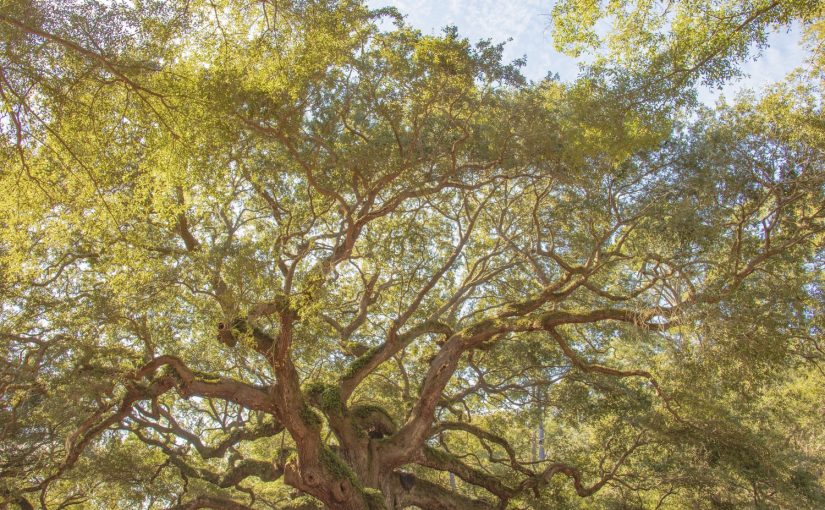
Elan is especially channeling her efforts into conserving the ancient Oak life system. While Oak trees are a global and fundamental fixture of the natural world, they’re facing disease and other threats precipitated by climate change. This year, the Go Wild Institute is holding its sixth annual Mount Tam Oak ceremony to celebrate the Oaks’ abundant gifts and wisdom. The event, from 1-4 p.m. on Oct. 27, is free to the public with limited space.

Read on for our conversation with Elan about the importance of honoring the biodiversity and wonder of the Oak life system. This excerpt has been edited for clarity and length.

Explore more Bioneers media on Intelligence in Nature.


As an ecologist, what drew you to the Oak life system? What significance does it hold in the bigger web of interconnectedness?

One late summer day in Napa County, I stood underneath a Valley Oak tree dropping acorns by the barrel load. As an ecologist, I was fascinated by the sheer abundance of acorns; just one large Valley Oak tree can produce over 500 pounds of nutritious acorns in a year. If the oaks were solely interested in reproduction, they would be more frugal. As I stood under that tree, I remembered that the majority of Native Californian tribes ate acorns as a staple food. Having tasted nutty acorn porridge at a permaculture workshop, I wondered, can acorns make a comeback?

In California, oak woodlands have higher levels of biodiversity than virtually any other terrestrial ecosystem in the state. Sadly, oak woodlands and savannas in California and Oregon are some of the most endangered ecosystems in the United States. Oak ecosystems around the world have been destroyed to make way for agricultural crops that rely heavily on irrigation and chemical inputs.

Oaks have extremely deep roots that reach into the water table, so once established, they require no irrigation. Oak roots hold soils in place, keeping rivers clear for fish. Oaks provide many other ecosystem services like carbon sequestration, climate cooling, clean air, wildlife habitat, and drought resiliency.

As we move through the bottleneck of the Anthropocene, humanity would be wise to realign with the mighty oaks for sustenance and resiliency. Why not plant acorns, restore our oak lands, and enjoy a viable, sustainable, abundant food source? I am certain, nuttier ideas have taken root in California.

What activities will be included in the Oak Ceremony, and how have you crafted them to serve your goal of celebrating the Oaks?

In addition to song, dance, and prayer, we will convene a Council of All Oak Beings. This is a ritual practice of the Work that Reconnects, which has a central purpose of bringing us back into relationship with each other and with the self-healing powers in the web of life, motivating and empowering us to reclaim our lives, our communities, and our planet from corporate and colonial rule.

During this ritual, people go out onto the land in silence and find an Oak Being that wants to talk through them at the Council. This Being could be any part of the oak web of life, like a tadpole, oak, squirrel, or even a river. As we sit with our Beings, we hold open the possibility that communication with the more-than-human world is possible. After 20 minutes, participants return to the group where they embody their Being, often by creating a mask, or just changing the way they move and talk. All the Oak Beings then come together in sacred council to share their experiences, concerns, and wisdom for the healing of our oaks and our planet in general.

I am always blown away by the power of this ritual to increase empathy for our living Earth. It helps us remember that we all belong to something much bigger than our human-centric world.

How are plants intelligent in their own right? What can we learn from them?

Most Earth-based cultures hold that our Earth is alive, sentient and intelligent. Now our best science is saying the same thing. The exciting new field of plant intelligence, also known as plant neurobiology, is showing that plants sense their environment, process these sensory inputs, and make decisions on how to best respond. Many say that the definition of intelligence is just that: sensing, processing these sensations, and responding appropriately to the stimulus in the environment.

Plants can see without eyes, hear without ears, smell without noses, feel without nervous systems, and communicate without talking. Plants have discerning palates that can taste where nutrients are most abundant, and grow their roots towards the nutrients.

The social lives of plants are fascinating, too. Since they invest tremendous resources into their roots, they can’t relocate when conditions turn unfavorable or someone else tries to squeeze them out. Plants occupy their soil, vehemently defending their territory with allelopathic chemicals. However, plants can recognize their kin, and rather than defend against close relatives, they opt to share resources.

Plants also warn others of danger. There are numerous studies that show when plants are injured by browsing animals, they emit airborne chemicals that warn other plants of danger. Once warned some plants will increase root mass to strengthen defenses, or increase levels of chemicals, like tannins, that are toxic to browsers. As an herbalist, I wonder about how relationship with a plant might affect its medicine. After all, if plants can bump up their toxic compounds in response to stress, can they bump up healing constituents in response to gratitude, love, and stewardship? 

I could go on for a long time with examples of plants acting intelligently because it really lights me up. I am grateful to Bioneers for raising the consciousness of our intelligent, sentient nature by bringing some amazing thinkers in this field to the stage, including Monica Gagliano, one of the top researchers on plant intelligence.

I can say without a doubt it is possible to tap into the wisdom of plants.  In my experience plants are always trying to make contact; they are waiting for us to come back to them. Communicating with plants requires some practice. Most importantly, we have to set aside our false cultural beliefs that this type of communication is impossible.

Often the first few instances when we get downloads from plants, we don’t believe it. That’s why it is useful to start in a group. At Go Wild Institute, I lead a good number of plant spirit journeys. After a primer on how to journey, we ingest a small amount of the plant and sit quietly for 20 minutes, allowing for the possibility that the plant can communicate with us. Afterwards we share our experiences. I have never led a group journey where people did not share profound and similar messages from the plant. When we know that plants have wisdom and can communicate with us, it transforms how we relate to all of life. Our world gets less lonely and infinitely richer and more interesting. We understand viscerally that it is possible to source directly from nature for wisdom, healing, and guidance.

Your website says the “Go Wild Institute weaves science, myth, and spirit to awaken our nature and foster wonder and balance within the great web of life.” Can you explain why your organization takes a holistic approach (including science, myth, and spirit) to ethnobotany?

For the most part, just understanding the science of nature, doesn’t change how we treat our Earth. We can learn the latest science about climate change, GMOs, or trash vortexes, but many people are motivated by their hearts, not their heads.  Science engages our logical mind, which we absolutely need, but most science is based on the premise that we can be detached, objective observers of our world.

To know our rightful place within the family of life we must also engage our imaginal mind, our subconscious, and our dreamworld. Myths do just this. Myths are encoded earth wisdom that help us understand nature’s symbolic language and the interconnectedness of all things. Myth supports us as we navigate the mysterious terrain of being an Earthling, helping us find answers to important questions: What is my purpose? What does real power look like? What is my medicine? When we know in our cells that we are part of a deeply intelligent, living earth, we understand that what we do to our planet, we do to ourselves. That’s when we begin to act on behalf of all life.

What spiritual and healing benefits can people receive from connecting with plants?

Plants have immense power to heal us physically, emotionally, and spiritually. Each plant offers unique medicine for repair of our world.  I want to share a story my teacher Native Healer Bobby Lake-Thom (Karuk and Seneca) who got it from his teacher Rolling Thunder (Cherokee): The Origin of Human Sickness and Medicine.

In the olden days, the animal and plant people could all talk.  They lived together in balance, peace, and good will. They all depended upon each other and helped each other in their relationship with the human people.  But as time went on the human beings began to increase so fast that their settlements spread over the whole Earth. As a result, all the other “relations” on Mother Earth found themselves beginning to be cramped for room to live.  To make matters worse, the human people made weapons. They began to slaughter the larger animals for their flesh or their skins, while the smaller creatures, such as the frogs and worms, were trodden upon without thought; no longer respected as equal relations.

So, the animals decided to have a special council meeting and discuss what they could do for their safety. One by one the “relations” in Nature complained of the way in which the Human people had killed their friends and family; how the Human relations ate their flesh, used their skins, made religious regalia out of their teeth and claws, or just took their feathers without even asking permission.

Thus, it was decided to begin a war against the Human beings for their lack of respect and constant cruel and selfish behavior. One of the animal people asked what weapons did people use to destroy them.

“Bows and arrows,” cried out one of the red Bears. “And what are they made of?”

“The bow of wood, and the string made from our entrails,” replied one of the Bears.  It was then proposed that they would make some bows and arrows and fight the human beings with their own weapons.  

One of the bears sacrificed himself for the string of the bow and they made a weapon. The bears discovered that their long claws caught on the string and spoiled their aim.  One bear suggested that the bears cut their claws, but the chief objected saying that it was better to trust the teeth and claws that the Creator had given them for survival in Nature, rather than sacrificing themselves for human’s weapons. The bears went back to the woods without coming up with a way to stop humans from treating the earth with disrespect. 

Then, the deer people held a council and after some serious discussion decided to send rheumatism and arthritis to every human hunter who should kill a deer, unless he took special care to ask for permission for their life, and offer tobacco as payment; in this way show respect to the powers of Creation.

Next came the Fish and Reptiles and Snakes, who had their own complaints against the human beings. They decided to send tormenting dreams so the Human people would go crazy, lose their appetite, get sick, or die. That is why Human people today have such bad dreams and illness.
The birds, insects and smaller creatures came together for the same purpose. Thus, one after another they denounced Human cruelty and injustice toward the other relations in Nature, and voiced their support for sending diseases and death to Humans. They all began to devise and name so many new diseases, one after another, that had it not been for some failures in the plot, the entire Human race would not be able to survive.  

The Plant People, who have always been friendly to Human beings heard what had been decided and done by their other relations in Nature, so they too held council. The Plant People with their herbal power, made a pledge to continue to help the Human people; it is their power, medicine, and gifts that can defeat the evilness and sicknesses now bestowed upon humans.  Hence each and every plant can furnish a cure for the various human diseases and sicknesses, if only we learn to respect and learn to listen to the Plant People. Thus, came medicine, and secrets from Nature.

What are some ways that people can honor nature and connect with its sacred meaning in their everyday lives?

Honoring and connecting with our nature begins by remembering our true nature; we are part of a living, sentient planet. Our bones are made from minerals that came from rock. Our cells are filled with water that has been part of glaciers, rivers, and oceans. Trees take in our exhales and exhausts of carbon dioxide and mix it with water to make sugar from sunshine, which is the currency of our world – everything wants that sweetness. Every breath we take weaves us into this web of life that is spun in sweetness from sunshine. 

One easy and profound way to connect to nature is to take thirty seconds and quietly breathe within the web of life. Imagine your breath swirling in the tree canopies. Feel how you don’t actually have to effort to breathe. Life just breathes you, just like life breathes the whales in the ocean and the geese flying south. Even in a jail cell or a coma, you are still conspiring (con- means “with,” spirae- means “breath”) with our generous, collaborative, and democratic Mother Earth. If just for one second, while doing this exercise, your feel a sense of belonging to something much bigger than your human world then keep up the practice. Maybe next time you can go for five seconds.

After this exercise, ask yourself this: Where do I draw the lines between myself and nature?

Social Medicine: Restoring Public Health by Changing Society | Dr. Rupa Marya

We are told that our personal health is our individual responsibility based on our own choices. Yet, the biological truth is that human health is dependent upon the health of nature’s ecosystems and our social structures. Decisions that negatively affect these larger systems and eventually affect us are made without our consent as citizens and, often, without our knowledge. Dr. Rupa Marya, Associate Professor of Medicine at UC San Francisco, and Faculty Director of the Do No Harm Coalition, says “social medicine” means dismantling harmful social structures that directly lead to poor health outcomes, and building new structures that promote health and healing.

Learn more about Rupa Marya and her work here.

The Radical Acts of Growing Diversity and Saving Seeds: An Interview with Doug Gosling


Doug Gosling, the Director of The Mother Garden Biodiversity Program at The Occidental Arts and Ecology Center (OAEC), is a master seed saver and biodiversity steward. He also manages the gardens at Food for Thought, the Sonoma County AIDS Food Bank, and is Chair of the Food Bank’s Project Africa, a program that supports AIDS relief work in Africa. Doug was interviewed by Arty Mangan, Bioneers Restorative Food Systems Director.


ARTY MANGAN, BIONEERS: You wrote that “Growing plants and saving seeds are some of the most provocative, democratic, and radical acts one can take towards reconciling the modern world’s alienation from the earth and the miracle of life.” How has that influenced your life and the life of folks that you’ve worked with?

DOUG GOSLING, OAEC: We all have ideas about why we’re in such dire straits right now as a species. I think that certainly one of the primary reasons is that we have, as modern people and maybe particularly as Westerners, but not necessarily only as Westerners, become so alienated from the earth from which we rise. In fact, there’s an effort to alienate us from everything that is true. I think why things are so demented, is that people consider themselves outside of everything around us. People, for millennia, have always had a relationship with the land and the water and the air, and understood fully where their food came from. Being in this place that has had a very similar mission over the years, from Farallones to Center for Seven Generations to OAEC, I get to stand here and receive people, thousands of them, and discover over and over again that people feel the alienation even if they don’t know what it is. People are  starving for being in relationship, both with the earth and with each other.

I’ve seen amazing things happen. I think the most profound things are the simplest things. When people have an opportunity on our volunteer day to put their hands in healthy living soil, it changes them. It absolutely changes them. No matter what we’re doing in this garden whether it’s digging Bermuda grass or digging blackberries, people thank us at the end of the day to be working on their knees, getting dirty, and having great conversations with a lot of people trying to accomplish the same thing. Working together is a profound experience and it’s something that people don’t get to have.

Freshly harvested Silver Line

It is a democratic thing, and it also is a radical act to be a farmer because we’re saying, “This is what’s important, we need to be in relationship to the earth; we need to understand the earth; we need to collaborate and co-create with the earth to be productive and create beauty.” We can do that. I think gardening and farming, especially organics and the small-scale sustainable agriculture movement, are keyholes through which people can re-perceive the earth and the truths of life.

It’s radical, because as we know, the forces are dark and great against taking us off the land and getting hold of our genetics and our food and our varieties. All of that belongs in the hands of the people. The importance of seed saving or gardening, or understanding what makes a healthy relationship and healthy systems, is information that we’ve always had, but it’s been taken away from us. So, it is a way to empower people in a really profound way. It gives people something to stand on and to have perspective from.

ARTY: Speaking of seed saving, can you give me a couple of examples of plants of the seeds that you saved and how they’ve adapted in your region, garden, and soil, and what kind of changes you’ve observed?

Shinshu Runner Beans against background of mixed Runner Bean varieties from market in Mexico City

DOUG: I remember really early on, in the first few years of being here, Michael Presley used to garden here, he then went to Ocean Song. I remember comparing with him. We both started growing different varieties of orach or mountain spinach. The most striking one is fuchsia colored. He took seeds to Ocean Song from here. Over a couple of years we noticed that they had differentiated from each other. They had a different cast to their color. It’s a little difficult to notice actual changes in plants, but what I do notice is that plants throw off sports that are interesting.

I noticed, for example, that dinosaur kale rarely, but occasionally, throws off a version of itself that is a dark green color and shiny as opposed to being blue-green and having a sort of dusty look to it. I’ve been selecting that over the years and created a new variety, which is the way it’s done. In some ways, I believe that plants indigenate very quickly. We know that can be true in a matter of a few generations.

One of the reasons why our nursery is actually a powerful and significant operation is because we offer plants that have been grown here. I think we can assume that they are more comfortable now than when they first arrived, because that’s what happens. It happens to all creatures. We offer things that from seed stock that have been, in some cases, tended and replanted since the early 1980s. I think we’re offering plants that we can safely say are comfortable in Northern California, in the kind of climate that we represent.

Because the process is slow and gradual, it’s hard for me to actually say that I’ve witnessed major changes, but I definitely notice some unusual things that happen. For example, we have a motherwort, which is a medicinal herb, that has come up frilly. It has a frilly edge to the leaves. I’ve selected that out, so now we offer OAEC’s curly motherwort. I don’t know if it has different medicinal properties, but it certainly is beautiful. It’s a beautiful variation on what I have seen motherwort to look like over the years.

ARTY: The UN Food & Agriculture Organization (FAO) said that “Diversity of cultivated crops declined 75% during the 20th century, and a third of today’s diversity could disappear by 2050.” Why is preserving food crop biodiversity important?

DOUG: I think it’s important on all kinds of levels. It’s about preserving culture. Cultivated and wild plants represent stories of relationship with humankind for millennia. Many, if not most, of the stories are lost, but there are stories that are extant that we can share. Having diversity in a garden is one of the foundations of creating a system that mimics the natural world around us. No matter how simple a system might look superficially, it’s immensely complex because it relies on relationship and interrelationship.

San Pedro Cactus ready for propagation

While we don’t necessarily know exactly what’s going to happen in our gardens when we bring in the diversity, nature figures it out. In setting the stage for the opportunity and the potentiality of relationship that creates a web of life that is more resilient to stress on the system. It is essential for a successful garden or farming operation to set the stage for relationship among a diversity of players.

We’ve seen that monocultures fail. They’re failing everywhere we look. Diversity in nature has succeeded for millennia. It’s not even mimicking nature, it’s being nature. On some level understanding that we can’t survive alone nor can any system that we create. It has to be populated with members that can be in relationship with each other.

What that does is it welcomes more diversity that exists around us to have a habitat or opportunities for pollination to happen. You can look to the soil as the ultimate teacher. A healthy, productive, harmonious soil is one that is made of millions if not billions of players that have a part that we barely understand. If you work on making a living soil, then your plants are an expression of that. It’s about always looking to nature as a teacher.

Hergonas Fava from the High Andes, ILanto Evans’ Yellow Fava, OAEC Purple Fava

­­­­­­­­ARTY: You grow thousands of varieties of medicinal, edible and ornamental plants in the Mother Garden and make many of them available to the public through your nursery. How is that going?

DOUG: In 1995, we started with one plant sale a year, and we discovered resonance immediately and thought this is something we should keep doing because we already had so much diversity in the Mother Garden and a lot of unusual crops as far back as the early 1980s that people weren’t familiar with, especially the Andean crops. We were probably some of the first people to be saving mashua and oca, and quinoa, and crops like that. We were one of the few people who offered certified organic, heirloom, non-hybrid, exclusive varieties. We offered a ridiculous diversity of varieties. I am kind of obsessive compulsive and I’m just so excited and passionate about diversity and finding it, and reveling in it, and wanting to share it, that we offered plant varieties that I think no one else did.

That continued to grow through the years, until the drought hit and had an impact, as it should have, on people’s gardening habits. With water restrictions in Santa Rosa and other cities a third of our business dropped when the drought hit, that was 10 years ago or so.

OAEC Plant Nursery

The other thing we discovered, even after we slowly started recovering from the drought and people did begin to return to growing annual vegetables, we realized that there was a lot of competition. Literally you could go to the hardware store in Occidental and get heirloom tomatoes. And while our plant starts have not been more expensive than any other nurseries, they’re not the least expensive. People were opting to buy things elsewhere, and we’re sort of seeing our income slowly going down alarmingly. At that point, it felt like the right time to change our mission to focusing on perennials – perennial food crops, perennial culinary and medicinal herbs, habitat, and pollinator plants. We focus on several genera to give people an idea of the diversity that exists within several of those, like abutilons and especially salvias. We have a pretty huge collection of salvias.

We never have really been a business first, even though we need to think about that. It’s always been a mission-driven program. We’re unlike most other nurseries, if not all other nurseries, in that really what drives me and the people who work here is a celebration of plants and diversity, and a desire to share that wealth with everybody.

We do things here that are not necessarily wise in terms of business. The diversity is over the top, and we tend things intensively, and it has made me realize that we are not just a nursery, but also a conservation project that is mission driven and not necessarily bottom-line driven, although we have to respect that because all programs at OAEC need to not lose money. We realize that this is the sort of effort that should have supporters, and that should have some financial foundation beyond us trying to sell enough plants to balance the budget.

Chilacayote Squash from Mexico

I think that some of the decisions that you might make in a business where you’re trying to be as economically sustainable as possible are not decisions that I want to make, like limiting the number of varieties or selling thousands of one particular thing that happens to be the greatest money maker.

We’re looking at creating a structure that includes the nursery being subsidized as a program. The nursery is unique because it is part of the story the Mother Garden, which has been around since 1974, and has been continuously hand-tended and organic. It is one of the oldest certified organic farms in the state. We have, for years and years, been pursuing, researching, and demonstrating the importance of diversity in natural systems and gardens, and have done seed saving since the late 1980s. The nursery is the outward public face of the garden where we literally disperse what we know and love and are tending with the belief that we need to do this. With so much uncertainty in the future, what better thing to do than to share the wealth of the allies who have helped us make it through so far in the face of who knows what? Our systems are collapsing, and the more people who understand how plants can contribute to our health and well-being, the better. So, that’s a big part of what motivates us to find allies who want to support this work financially.

If you are interested in finding out more about the OAEC Mother Garden and nursery contact: doug@oaec.org

Flair Fans: Mimicking Nature to Improve Efficiency

Long-time members of the Bioneers Community may recall hearing from Biomimetic inventor and scientist Jay Harman over the years at Bioneers Conferences. Jay and his company Pax Scientific have just announced a new product, poised to transform a key component of the industrial world that we all interact with daily, whether we realize it or not: the fan.


Jay Harman fell in love with skin-diving and fishing when he was 10 years old.  As he says, “When I saw the efficiency and power of how fish swim, compared to my clumsy efforts, I was captivated and knew I’d learn from nature the rest of my life.”

And learn he has. Jay recognized that nature always uses whirlpool shapes, or vortices, to swim and fly and move liquids and gases – and nature sips energy, while humans guzzle it. His self-admitted obsession led to years figuring out how to reverse-engineer a whirlpool so he could recreate nature’s efficiencies. That led to the founding of PAX Scientific, an engineering firm that applies natural geometries to improve industrial equipment.  Jay has spoken about his developments and inventions at PAX Scientific in several appearances at the Bioneers Conference.

For over 20 years PAX has worked behind the scenes to help change the industrial world to more efficient design. For example, with the power of just three light bulbs, a four-inch by six-inch PAX mixer can circulate 10 million gallons of stagnant drinking water (like a football field, 30-feet deep). It’s now the number-one specified product in North America for maintaining drinking water quality in the municipal distribution system, with thousands of installations.  

But Jay and his team are impatient to make change happen faster, especially with the news that July 2019 was the hottest month in recorded history. 

When it gets hot, people turn on fans. But fans are running around us all the time – using 22% of the world’s electricity. That’s a staggering number. Generating the electricity to run fans dumps as much CO2 emissions into the atmosphere as all of the world’s cars, and fan design hasn’t fundamentally changed in 100 years.

PAX’s calculations showed that it’s possible to save a billion tons of CO2 emissions every year from more efficient fans. They got to work and designed Flair, a new fan that uses up to 85% less electricity and quietly circulates air to increase comfort and reduce heating and air-conditioning costs year-round. That’s important, because air-conditioners and heaters are heavy users of power, consuming nearly 50% of household energy.  The problem is that in the winter, expensive heated air accumulates near the ceiling while you sit in colder air, and in the summer, cooler air sinks to the floor while you sit in warmer air. Flair’s ring-vortex circulation destratifies the air, so you can change your thermostat and save more than 25% of your heating and cooling costs per room. 

Rather than selling the Flair design to a big manufacturer, PAX decided to take it to the people. As Jay says, “The world needs urgent action, but it’s hard for big corporations to change quickly enough to mitigate climate change. No matter how well-meaning the CEO or VP of Sales is, or how much he or she loves their grandchildren or nature, climate isn’t in their companies’ mandate, objectives, or priorities. By launching Flair through a crowd-funding campaign, we can show big manufacturers that people want high-quality, super-efficient products. Our campaign runs through the end of October, and it’s a great chance to make a real and practical step to combat climate change.”


Learn more about Biomimicry and Jay Harman’s work in this episode of the Bioneers Podcast: Sharkskin, Hippo Sweat and the Wood-Wide Web: From Flat Earth to Whole Earth Thinking.

Interview with Louie Schwartzberg

Bioneers Senior Producer Stephanie Welch spoke with director Louie Schwartzberg about his documentary film, Fantastic Fungi: The Magic Beneath Us. The film features mycologist and author Paul Stamets, and an all-star team of professional and amateur mycologists, artists, foodies, ecologists, doctors, and explorers joined forces with time-lapse master Louie Schwartzberg to create this mind-bending film about mushrooms and their mysterious interwoven rootlike filaments called mycelium.


STEPHANIE: You have a long history with Bioneers and I’ve seen your work for years. It’s really beautiful and moving. What drew you into working in time-lapse photography?

Louie Schwartzberg

LOUIE: When I graduated from UCLA, I moved up to Northern California. I wanted to shoot high-quality resolution film, but didn’t have the money. So I retrofitted old Mitchell cameras that were built in the ‘30s and figured out how to adapt a still-camera lens to the front of it. A friend of mine who made electric guitars for the Grateful Dead helped me build a motor that ran on batteries, so I was able to take a camera outdoors.

I started to chase the light, shooting time-lapse clouds, sunsets, and fog rolling in and out. It took me a month to shoot a roll of film. But most importantly it fed my sense of wonder. It’s hard to imagine what a flower looks like as it opens and closes, or for clouds to morph in front of your eyes. Those rhythms and patterns touched the deepest part of my soul, and I just wanted to keep broadening my horizons and perspective by seeing things through different scales of time. How does a redwood tree look in life? How does a hummingbird look in life, which is the opposite scale of shooting in slow motion?

Then you realize how looking at things through a human point of view is really limiting. Looking at things at “24 frames per second” is a narrow window of reality. There are all kinds of reality based on, in a sense, different metabolic rates of different animals and critters, because we all move at different frame rates. Being able to see that light move at different scales of time. One extreme would be geological time, millions of years, billions of years. Then you look at the time span of a fruit fly, which might be a day or two. It’s all valid.

STEPHANIE: Is it true that you are currently filming 24 hours a day?

LOUIE: Yes. I’ve had cameras rolling in my studio 24 hours a day, seven days a week, nonstop for 40 years. Every day I shoot about a second worth of screen time in a 24-hour period. There are computers triggering the camera to frame a film. For the last 10 years, I’ve been shooting in 3D. There are grow lights that go on and off, photo lights come on during the exposure. I’m shooting plants, flowers, mushrooms, things decomposing. It’s just a way to see things that humans really can’t see. The most precious thing in life is time. So now that I’m shooting digitally and money isn’t a constraint of shooting film, time is the most precious commodity. I just love making the invisible visible. It still fills me with wonder. I think when they asked Albert Einstein his definition of God, it’s a sense of wonder.

STEPHANIE: What were the visual aspects of the world of mycelium and fungi that inspired you to embark on this film?

LOUIE: Visually what inspired me to shoot the mycelium is because it’s a network. The underground mycelium network is a network, and we see that pattern in the circulatory system and nervous system of our bodies. It looks like the branches in a tree. It looks like the neurological pathways in your brain. It looks like the Internet. It looks like the galaxies in the cosmos. This networking pattern is an archetype that exists throughout the universe, and the fact that it lives underground in the shared, gorgeous, communal internet that enables trees to communicate with each other, to share nutrients, to foster ecosystems to flourish, for me that’s like nature’s operating instructions.

STEPHANIE: How long have you known Paul Stamets and how did you meet him?

LOUIE: I met Paul 13 years ago at Bioneers at one of his earliest talks. At that time, I was working on my film Wings of Life, which is about pollination. It’s a film that Disney Nature released, with Meryl Streep telling the story from the POV of a flower making love with bees, bats, hummingbirds, butterflies. I call it ‘a love story that feeds the earth’.

Then when I heard Paul’s talk. I realized if plants are critical for our survival, the only solar collectors that can turn light energy into food and fuel and medicine, what do they need? They need soil. Where does soil come from? It comes from the largest organism on the planet. It’s only one-cell thick. It’s inside my body and on every continent. It’s the fungal network, the fungal kingdom. It blew my mind.

I invited Paul to my room and I showed him some of my time-lapse mushrooms on my laptop. That was the beginning of a really beautiful, budding relationship that is a great example of how science and art can work together with the intersection being wonder to help people understand nature’s intelligence.

Paul Stamets & Louie Schwartzberg

STEPHANIE: What is your favorite thing about mushrooms after working on this and learning so much about them?

LOUIE: There are lots, I never knew that it could be the greatest natural solution for climate change. The reason why there’s carbon under the ground is that we have decomposed organic matter called coal and oil. We’ve dug it up and we’ve burned it and put it into the atmosphere. There’s a way to clean that mess by plants and trees absorbing CO2, storing the carbon underground and giving us the oxygen we need to breathe.

In the film we see a CO2 molecule going into a leaf, oxygen being released, and the carbon traveling down the trunk of a tree into the roots, into to the tip of the root, into the mycelium network, where the carbon is sequestered for thousands of years, and to be used as a building block for a new plant to grow. Many scientists believe that if we stop putting fossil fuel pollution into the atmosphere, that the Earth could actually clean the atmosphere on its own in five years, in that symbiotic relationship – photosynthesis with plants and trees, and the mycelium network under the ground. That’s what they do, they sequester carbon.

STEPHANIE: You talk a lot about the intelligence of nature in your work. What is it about the intelligence of nature that you’re hoping people will understand from this and other films that you’ve made?

LOUIE: Learning about nature’s intelligence opens you up to the idea that everything is interconnected. The fact that it’s all one and all connected is no longer a ‘new age hippie’ idea. In my movie, we talk about the science that proves it. Mycelium network under the ground is a shared economy that brings trees together into one real, giant, symbiotic, shared economy– one not based on greed, but based on the idea that when things are shared, everybody flourishes, and communities survive better than individuals.

That is such an important message to understand how nature works, and maybe more importantly, to understand how we could organize our social structure and our politics. Communities connecting is the way for things to be successful. That’s why I’m embarking on a self-distribution platform. Instead of being seen on a streaming platform alone on your digital device, we want people to gather in real time and make those connections. If you’re interested in permaculture, the environmental movement, foraging foods, psychedelics, let’s all interconnect. It’s really the model of Bioneers. You have all these different pillars, from social justice to biology to environmental consciousness to politics. It all overlaps. Having everyone connect, network, and enable each other to be successful is I think nature’s operating instructions, a term that I think Kenny Ausubel coined.

STEPHANIE: In your film, you mention how many ancient cultures and Indigenous Peoples have cultivated deep relationships with mushrooms and plant allies with deep healing properties. Western culture is catching up to a certain extent, learning about the benefits. But as we face so much environmental destruction and climate chaos, talk about conservation and efforts to save the habitats where all these species flourish.

LOUIE: Exactly. The worst thing that’s happening I think with the degradation of the environment is we’re losing species at a frightening rate. Maybe by 2040 or 2050, we might lose half the species on our planet. The sad thing is it took billions of years for these incredible, complex DNA molecules to be created and evolve through the process of evolution. What’s scary is that we know we’re losing certain species, but we don’t even know all the species we’re losing because we haven’t identified them all yet, especially in the world of bacteria, the fungi, insects. This is a critical concern, and I think that’s why we have to work as hard as we can to bring harmony and balance back into nature to slow down this degradation of the environment.

Anything that is a living thing, now that we can kind of understand the idea, that in reality everything is connected. If it’s all connected, then it’s part of me, it’s part of the link that supports my life. And I support other life. The loss of any species is a loss to everybody. So it’s critical.

A lot of these plants and sacred medicines have been a spiritual gateway for man to be able to expand consciousness. You have to ask yourself the question: Why did that happen? Why is it there’s a molecule in psilocybin that can fit a receptor in the brain that triggers serotonin to go through your body and to be able to open up pathways and neurological journeys that don’t exist any other way? Perhaps it could with some deep form of meditation that takes 30, 40 years to achieve, but what a miracle it is if you can perhaps experience something similar in one day.

STEPHANIE: I recall seeing many of your images projected onto the Vatican, and you show some of that event in the film.

LOUIE: Yes, it was a giant event organized by Louie Psihoyos, who enlisted a number of filmmakers to project their content on the Vatican in support of the Pope’s encyclical supporting the environment. We projected on the Vatican the day before the vote for the Paris Accords for climate change.

That was an extremely emotional experience for me, because my parents were both Holocaust survivors. I thought about the fact that the Vatican was silent during World War II and the round up of Jews in Europe, as well as Rome and Italy. Then I looked over my shoulder and I saw 50 giant projectors with a million lumens of light ready to shine on the Vatican, to shine light into the darkness, and that filled me with hope – that change is possible. You’ll see the reaction shots of people in the film, and nuns who are praying to the mushrooms on the Vatican. I thought that was a brilliant judo move.

STEPHANIE: Is there anything you wanted to add about the film that you want people to know?

LOUIE: I love making the invisible visible, and I think that my own mushroom journey has taught me that. You want to turn people on to what you’ve learned and what you’ve experienced, and the film itself I think is an immersive experience, because people say it’s gorgeous, it’s beautiful, but it’s more than that. Beauty is nature’s tool for survival because you protect what you love. So by appealing to the heart, I think the film will help people make the right choices to create a sustainable, healthy, living planet, not only the planet but also a healthy, living, sustainable human structure or social fabric.

There’s a shift of consciousness happening right now that makes it right for this film to emerge, because the film is also about hope. It speaks to the critical time in history we’re facing right now, but at the same time it’s inspirational, it’s hopeful, and in the face of the dark political times we’re going through, we need that.

A giant shout out to Bioneers for fostering this communal effort for 30 years, building community, creating the network, taking the mycelial network that’s below the ground and bringing it above ground. That is nature’s operating instructions.


Explore more Bioneers media on Intelligence in Nature here.

To learn more about Fantastic Fungi, visit fantasticfungi.com.

Kenny Ausubel: The End of Prehistory

These were Kenny Ausubel’s opening remarks at the 2019 National Bioneers Conference. Read the edited transcript here.

With a wide scope and penetrating lens, Bioneers Co-Founder Kenny Ausubel grapples with the existential crisis now facing human civilization. He shares both his deep faith in the power of human creativity and grassroots movements and honest appraisals of the enormous challenges we face and the short time we have to address them. With his usual inimitable style that seamlessly juxtaposes heartfelt passion, scathing humor and moments of ecstatic inspiration, Kenny tackles climate, inequality, the imperative of the Green New Deal, and Mayan wisdom, to mention only a few topics, ultimately exhorting us to rise to the occasion and trust that we have the capacity and vision to birth a new world.


Kenny Ausubel, CEO and founder (in 1990) of Bioneers, is an award-winning social entrepreneur, journalist, author and filmmaker. Co-founder and first CEO of the organic seed company, Seeds of Change, his film (and companion book) Hoxsey: When Healing Becomes a Crime helped influence national alternative medicine policy. He has edited several books and written four, including, most recently, Dreaming the Future: Reimagining Civilization in the Age of Nature.

View Kenny Ausubel’s full bio at https://bioneers.org/peoples/kenny-ausubel/.

Reduce, Reuse, Rethink Plastic: Transforming Markets to Cut Pollution

More than half of all plastic in existence was produced in the last 15 years, and this accumulation is only getting worse as plastic pollution threatens the health of the planet. Highly-durable plastic litters everywhere – from the bottoms of oceans to the tops of mountains – and won’t degrade for another 400 years. This problem will be with us for a while, but so will the growing movement for a systemic shift in how we think about packaging and waste in for sustainable future. 5 Gyres, an ocean conservation nonprofit, is one of the movement’s leading organizations.

Read on for a conversation between Anna Cummins, Co-Founder of 5 Gyres, and Teo Grossman, Senior Director of Programs at Bioneers, about leveraging the problem of plastic pollution with solutions that could lead us to a cleaner world.


TEO GROSSMAN, BIONEERS: As consumers and individuals, we’ve all been learning more and more in recent years about the scale of plastic pollution in the environment. When coverage first started to spike, I  thought initially that this was great news, the result of the heroic efforts to get the word out about plastic pollution by entities like 5 Gyres and other groups. Unfortunately, it also turns out that there’s simply vastly more plastic than ever before. I’ve read reports suggesting that half of all plastic ever produced has been manufactured in the past decade or so. Scientists are now including plastic pollution as one of the geological markers for describing “The Anthropocene” along with nuclear fallout measurements. It’s a bleak way to start here but what is the scale and extent of the problem we’re facing?

Anna Cummins, 5 Gyres

ANNA CUMMINS, 5 GYRES: Yes, awareness has exploded in the last couple of years, which is good news, and there are also some dangers associated with that growth. But the increases in production are terrifying. What you’re referring to with regard to manufacturing is true. It gets even worse if we look towards the future, which brings up a whole other issue in terms of the connections between plastics, fossil fuels and climate change.

Right now there are predictions coming from the Center for International Environmental Law that the industry is investing upwards of $200 billion in ramping up the production of plastic by 40% in the next decade through building 300 new petrochemical facilities in the US alone, or expanding some of the existing facilities. Plastic is really what’s driving that increase. If we don’t get a handle on stopping the production of plastic, then no bag ban, no straw ban, no amount of single-product bans are going to make a dent.

It is a little bleak in that respect, but I would say on the flip side there is now a movement that is really paying careful attention to this. We’re seeing the movement becoming much more organized and starting to engage in more intersectional collaboration, connecting with the anti-fracking movement, connecting with the justice movement, really looking at how plastic is not just about downstream impacts – plastics getting into fish and us eating fish – but it is an entire pipeline and there are potential human health impacts along that whole pipeline.

TEO: Much has been reported lately on the “end of recycling.” Are we really at risk of consumer recycling going away or being much less effective?

ANNA: There’s been this myth for a long time that the ultimate solution to plastic and our consumption is recycling. It is a myth that we have bought hook, line and sinker. It’s a very convenient narrative for industry to really push consumers as responsible for what to do with their waste, while abdicating themselves as producers from the responsibility from making products that have some value at the end of their life cycle. The problems with recycling have just really heightened lately with China’s recent decision to stop taking our dirty plastic. For a long time, we just shipped all of our plastic to China and to other countries, to Vietnam, to India. China recently said, Enough! We’ve had it with your low-value plastics. That is creating a ripple effect across the whole industry, and there isn’t a clear solution to what’s going to happen to our infrastructure in this country.

The truth of the matter though is that we’ve created products, especially plastic bottles and beverage containers, that had no design in mind for recycling. We’ve gotten really, really good at making tons and tons of cheap plastic water bottles, but we have not gotten good at how we recover and how we “recycle” those products. And I say “recycle” because most of those products are, in reality, downcycled, if at all. The vast majority go to landfill or escape in the environment.

For example, of the one billion or so beverage containers that are produced every single day, we recycle/recover around 30% of that. That means the vast majority, about 700 million, are going to landfill and out into the environment.

What we really need is not just innovation in packaging to make it perform better and to make it more resistant and flexible, but we need radical innovation in how we design materials, how we recover, and how we truly recycle them so that we can create a closed loop, which we’re nowhere close to.

Another approach to this glut in this increase in plastic production would be to actually mandate recycled content thresholds. If we demand that companies by 2025 or by 2050 incorporate 75% or even up to 100% of post-consumer recycled content in their packaging, then they’re going to have to get much better at getting their products back. That’s an example of producer responsibility where you’re really mandating that companies innovate. 

TEO: Tell us about some of the specific projects, campaigns, collaborations that are progressing forward, giving you reason to think that we’re going to be able to make a dent here.

ANNA: We’re seeing some really encouraging results from some of our partners in Southeast Asia working on community participation in zero waste. We have a partnership with some groups like the Global Alliance of Incinerator Alternatives. They’re scaling up zero waste techniques in cities, and getting huge reductions in the amount of plastic that is either going to landfill or escaping out into the environment. I think that’s really good news. 

We’re working on a project in Los Angeles called Trash Blitz. The idea is looking at cities as centers for waste. We’re really trying to get a handle on understanding where and what the hotspots of plastic pollution are in a city like Los Angeles. We’re not just looking at shorelines and the sea surface, but inland and airborne and rivers. The goal is to get a sense of the location and source of the priority problems in a city — and then translate that data into a policy response.

We’ve been doing something like that in San Francisco through a two-year project called the San Francisco Microplastics Project, looking at sediment, sea surface, biota, fish stomachs, etc., to find out what all the primary problems with microplastics are in the San Francisco Bay. Again, the intention is to determine how can we use that data to inform solutions at the city level. We’re hoping that we can create models for protocols that we can spread to other cities, since we’re not seeing a whole lot of federal action these days. We need to look at cities as the center for solutions. 

TEO: It sounds like you’re working to develop solutions on all sides of the issue. Working with cities on zero waste policies while pressuring producers on the other side to stand down production.

ANNA: It really depends on what we find. So say, for example, in the San Francisco Bay we find that microfibers are the most prevalent contaminant. That’s really useful information we can provide to the city to say we need to get a handle on microfibers are getting into our waterways. When I’m talking about microfibers, I’m talking about microplastics that come from synthetic clothing in the washing machine.

There’s no one single solution to this issue. We’re going to need to change textiles. We’re going to need to change our washing machine infrastructure to actually filter out these microfibers. But that’s just one example of how we can use data to drive upstream solutions and figure out where the policy approaches are going to be most effective.

TEO: How much impact has the Ban the Bag legislation and straw phase-out efforts had? Given the scale of the pollution, are these symbolic victories (meaningful in their own right) or will they really have an impact?

ANNA: That’s a great question and one we’re really grappling with as we look at the predicted production increases that I mentioned before. If plastic production really does ramp up by 40% in the next 10 years, is it going to matter if we ban bags and straws and forks, not just in California but in the entire country? 

I do think it matters. I think it sends a signal to the industry in general that consumers, citizens, are starting to take note of plastic, and they’re starting to demand action. Is it going to make a dent in that kind of production? Probably not, but coupled with more collaboration with the fracking movement, with climate activism, we’re really on the cusp of making an impact.

Here’s another example. In my city of Los Angeles, we have the largest urban oil field in the country. There are some amazing activists that are working on pushing for a 2500-foot buffer zone between oil drilling activities and residences. That’s a great example of something that you wouldn’t necessarily think of as a plastic pollution solution. It’s not banning bags or straws, but if that succeeds, it’ll shut down about 80% of the oil activity in Los Angeles, and because plastics are made from fossil fuels, there is a direct correlation there.

I think these product bans are important, but if we don’t start reaching across the movement aisle and engaging with new partners, then we’re not going to make a dent.

TEO: You’re seeing this movement evolve into a truly intersectional effort by partnering with groups that are working on eliminating fossil fuel extraction and burning, partnering with social justice and public health movements. Are you seeing success in terms of that concept being picked up, understanding that global plastics pollution and global carbon pollution are basically driven by the same 50 or so global companies?

ANNA: This is an exciting new development, seeing some of those intersectional connections starting to align. I think we have a long way to go still. Where I’ve seen that be most effective is through partnership with Break Free from Plastic.

I went to a meeting last March in Houston with a number of plastic pollution groups who work on more consumer facing issues and environmental justice groups that work on toxics and fracking issues. It was an incredible coming together where we realized that there are all these connections, all these synergies, and that we’re ultimately all fighting for a just transition off of fossil fuels. The only way we’re going to be successful against such a huge and well resourced industry is if we are able to strengthen this movement. 

TEO: What does success look like in 15-20 years, if everything goes right?

ANNA: First, we shut down the expansion and the building of new petrochemical plants in the US and stop making so much plastic. If we could figure out a way to use the plastic already out in the world, there’s no reason we should be drilling for new sources of materials to make more plastic. That would be a huge success, getting away from fossil fuel-based materials period. Obviously we need to do this not just for packaging, but for our transportation and for so many of the things that we do. We need to move to renewable sources of energy.

Second, if we can curb or stem the flow of plastic pollution from land to sea, we could actually see a huge dent in ocean impacts, because plastics don’t stay in the ocean. There’s a lot of talk of going out to the ocean to clean up plastics. My husband Markus Erikson has been working on a lot of research with ocean modelers, and showing that it gets kicked back out. It’s not staying in the ocean. It washes back up on shorelines, it sinks to the sea floor, it gets eaten by fish and sequestered in fecal pellets. So it doesn’t stay in the ocean. If we could actually stop the amount of plastic flowing out to sea, we could see a huge difference in our ocean environment.

Creating A Future Less Disposable Than Our Plastics

Plastic has become one of the most large-scale pollutants around the world, littering everywhere from the bottoms of oceans to the tops of mountains and threatening the health of wildlife, people and planet. Not only has plastic become ubiquitous because of its durability – taking more than 400 years to break down – but it’s manufactured using fossil fuels. And with half of all plastics in existence manufactured in the last 15 years, the accumulation of plastic pollution continues to worsen.

The plastic-free movement is booming worldwide as people search for ways to reduce their carbon footprint. Although the market is growing for reusable, sustainable alternatives to single-use plastics, a comprehensive overhaul of the plastic supply chain is the most direct way to affect meaningful change.

At the 2018 Bioneers Conference Anna Cummins, the co-founder and Global Strategy Director of 5 Gyres, hosted a conversation with Shilpi Chhotray of Break Free from Plastic and Conrad MacKerron of As You Sow on our worldwide plastic problem and some ways in which we could make progress toward solutions. This conversation is excerpted below, beginning with introductions from Shilpi and Conrad.

SHILPI: I am the senior communications officer for Break Free from Plastic, and I’m embedded at the Story of Stuff project in Berkeley. Break Free from Plastic is a movement of 1,300 groups working around the world at all points in the plastic pollution supply chain. This is the first time colleagues in the United States and Europe are working with colleagues in China and Southeast Asia to truly understand and listen to what’s happening on a peer-to-peer level. 

There is still a lot of blame in the mainstream media blaming Southeast Asia for the plastic pollution problem. The issue with this narrative is that companies headquartered in the Global North are the corporations creating this problematic plastic packaging in the first place, knowing very well that waste management infrastructure looks quite differently in that part of the world than it does here. And actually, we’re not doing a great job with our own waste management, given only 9% has been recycled since the 1950s.

Break Free from Plastic is in the general mindset that just figuring out what is out there is not enough. We also need to figure out who is creating what ends up clogging our storm drains and tainting our oceans. This allows us to understand where plastic begins and where it ends. Sometimes plastic pollution can seem very heavy, convoluted and complex, but our message is very simple: To stop plastic pollution, stop making plastic. 

CONRAD: I’m a senior vice president at As You Sow. We’ve been around for 25 years. We’re a nonprofit based in Oakland, California, and we use shareholder advocacy to promote corporate social responsibility in a variety of social and environmental areas. That work includes engaging companies directly as shareholders, starting dialogues on a variety of issues, sometimes filing shareholder proposals and having those voted on at the annual meetings of large companies, and encouraging our peers to vote their proxies. 

I’ve started a waste program at As You Sow. We have what I consider to be really embarrassing recycling rates in the United States. Why can’t we even recycle half of our aluminum or glass? In a country so technologically advanced and sophisticated, we still cannot recycle. These materials are all recyclable, and yet we can’t do it because of poor infrastructure, lack of will, and lack of funding.

A few years ago, we decided to find out how much all of this material that is going into the landfill is worth, and we couldn’t find any numbers. The EPA didn’t have it. We couldn’t find any states that did. So we decided to find out ourselves. We found that there’s $11 billion of value in the packaging that’s landfilled routinely in the United States, and about $8 billion of that is plastics. 

Part of the problem is a lack of resources. Even the corporate groups say that you probably need a billion and a half of investment just to fix what’s wrong with curbside recycling. We have outmoded material recoveries facilities, which is where they take your curbside recycling. And a lot of cities are just underfunded.

On the more positive side, because of the work that’s been done in the last three or four years by great groups like the Break Free from Plastic and 5 Gyres, you do have a real critical mass building. We had 200 nations pledge to eliminate plastic pollution at a UN environment assembly. 50 countries have banned some form of plastic bags. Nine countries have banned some form of Styrofoam packaging.

Folks often say, “Well, plastic’s so cheap.” It’s really hard to think about how to replace it because the alternatives like glass and aluminum and fiber, they’re all more expensive and they produce more carbon emissions. But when you talk about the price of plastic, it does not factor in things like the enormous subsidies to the oil and gas industry. Even the chemical industry now admits that plastic every year does $139 billion of ecosystem damage, and about $13 billion of that is estimated to be in the marine area.

When we talk about plastic being cheap, we don’t think about the externalities. Once those are factored in, and companies are forced to pay more of that, which we hope will happen, plastic won’t be such a cheap option.

So what do we do? We engage. The first thing to ask companies to do is pretty simple: Make all your packaging recyclable so that at least if you want to, you can put it in the recycling bin.

We also think polystyrene foam has proven itself to be a bad actor. It’s very hard to recycle. It does an outsized portion of damage with the ocean because it crumbles so much and fish see it as food. We don’t need it. Let’s just get rid of it.

We need to redesign non-recyclable pouches and sachets that Shilpi mentioned to be recyclable. Then of course, the harder, bigger job: transition to reusables and renewables, refillables, and then have some transparency around how much plastic companies are actually using. 

I’m very proud that in the last year, the interests within our investor/shareholder community has really exploded. We now have 30 investors with a trillion dollars of collective assets under management who are excited, and we are going to be starting dialogues this fall with four huge companies: Proctor & Gamble and Pepsi-Co here in the U.S., and Nestlé and Unilever in the UK. 

Harmful Waste: To Ban or Not to Ban?

ANNA: We’re struggling with this right now in Southern California, where a lot of us are working on banning polystyrene and Styrofoam. We all know it’s a problem, but the question is: What do we replace it with? It’s really unsatisfying to go from something that’s bad to something that’s a little less bad. And unfortunately, that’s what we’re looking at right now.

Ultimately, what we want is systems change, where instead of everything being available to us in a disposable takeaway, we look at different delivery systems. For example, in the UK, there’s a company called Cup Club that’s just starting to try to scale. Instead of walking around with your paper or disposable cup, you can basically rent or lease a reusable cup from one place, get your coffee, and drop it off at the next place.

We struggle with the alternative for water bottles, too. There’s just water and boxed water, and better boxes and all these other alternatives. I grew up without plastic water bottles, and we drank out of the drinking fountain, and no one passed out from dehydration because they didn’t have their little bottle with them.

It’s going to take us time, though, to transition from where we are – this culture of convenience – to a more reasonable system. So in the meantime, we absolutely need alternative materials.

That being said, there’s a ton of greenwashing with the bioplastics that are on the market right now. Most of them fall woefully short of what they’re advertising. Ideally, we go to fiber-based compostable materials and we can create more of a closed loop. And then we can create compost, regenerative agriculture, fix the soil, carbon sequestration, and all that good stuff. 

CONRAD: Here in the U.S. we’re very spoiled. We have a developed, mature recycling system, even if it doesn’t work well. In developing countries, there are literally millions of people who are living on the edge who collect bottles for a living. We need to respect what’s going on there, and if you suddenly ban certain products because they’re not perfect, you’d be taking away those livelihoods. They actually thrive on an admittedly flawed system. That’s one of the complexities I just wanted to point out that makes it hard to make a sweeping ban.

How Effective Is Our Recycling System?

ANNA: It’s really hard after decades of being told that recycling is an environmentally friendly thing to do to—for us to say “don’t recycle.” But it does bring up a really important question: We’ve gotten really, really, really good over the last 30, 40 years at making super efficient processes. Beverage containers, for instance: We’ve gotten better at making trillions of them. We haven’t invested to the same extent in innovation around our infrastructure for recycling. We haven’t paired designers together with recyclers to talk about how can we create a closed loop. So the system is broken. 

CONRAD: The plastics recycling industry estimates that 30% of materials that are collected for recycling have to be rejected because the industry has chosen to put these fancy shrink-wrap labels on them. You’ve seen this, like on Gatorade. Those make the recycling process very difficult. You can imagine the competing powers within a company of wanting to advertise the heck out of their stuff and put fancy labels on it versus doing what the environmental people in the company may say.

SHILPI: China has decided not to take the world’s waste anymore in an effort to protect their own environment and their people, which is really great, because it’s focused the rest of the world—it forced us to figure out what to do domestically. We really need to face the facts about what’s going on in our own country. One thing I do want to say about recycling is that it still comes from fossil fuels. Even if we figure out the recycling issue, there’s a whole other piece to this, which is human health and climate change.


Alternative Materials and Solutions: The Good and the Bad

SHILPI: In looking at bioplastics, we asked a lot of sectors what they think about it, and there is a concern about using natural resources that can also be harmed or depleted if we go that route, especially if you’re talking about mass scale. 

In my other life, I work a lot in seaweed and regenerative seaweed systems, and there is a big push for marine algae to be used as bioplastics. I am not about that if it’s going to be ravaging the ocean ecosystem. Not all aquaculture systems work in this arena, so we need to be looking a little bit more holistically when we talk about alternatives.

ANNA: There’s a big push to “leash the lid” right now. But that water bottle, once the lid is off, is made from a kind of plastic that’s going to sink. If you talk to Sylvia Earle or James Cameron or other people who’ve gone down to the ocean floor, they will tell you that, especially in the Mediterranean, the floor is littered with those bottles. 

CONRAD: Because of all the concerns about straws in the last six months, wheat straws have become one of the alternatives being tested and publicized, but a lot of other materials are as well. Wheat seems like it’s pretty benign, so that’s great. A lot of it has to do with supply, though. When you think about it, if Starbucks wanted that alternative material, they’d need several billion of those straws suddenly. Then it goes back to the land issues. So it’s complicated.

ANNA: What if all of us – plastics people, climate change people, food sovereignty people – dedicated 1% of our time and resources to campaign finance reform? How else are we going to wrest ourselves from corporate control in order to be able to get rid of subsidies, make products their real cost, and make companies pay for the externalities. I don’t see that happening unless we shift the way corporations control our policymakers.

CONRAD: These companies pay much more attention to their customers than to groups like us. Let’s be honest. Go into Starbucks and say, “I’m tired of seeing all this crap,” or “Why don’t you offer me a mug?” That needs to happen. We need to organize as consumers.

ANNA: There are some great case studies showing that restaurants, when they switch from disposables for dine-in to reusables, can save anywhere from $1,000 to $20,000 a year. For small restaurants, that’s considerable, just by making that switch and not investing in disposables.

Also, if we create policy that mandates a significant mandatory threshold content for recyclable material, that can start to even the playing field so that virgin plastic isn’t as artificially cheap as recycled material. If we enforce that, then companies are going to have to get a hell of a lot better at getting their materials back. So that’s a policy tool that we’re looking at in Los Angeles, and hopefully in San Francisco.

The US Recycling System Is Garbage

This article was originally published by SIERRA Magazine.

FOR NEARLY THREE DECADES your recycling bin contained a dirty secret: Half the plastic and much of the paper you put into it did not go to your local recycling center. Instead, it was stuffed onto giant container ships and sold to China.

Around 1992, US cities and trash companies started offshoring their most contaminated, least valuable “recyclables” to a China that was desperate for raw materials. There, the dirty bales of mixed paper and plastic were processed under the laxest of environmental controls. Much of it was simply dumped, washing down rivers to feed the crisis of ocean plastic pollution. Meanwhile, America’s once-robust capability to sort, clean, and recycle its own waste deteriorated. Why invest in expensive technology and labor when the mess could easily be bundled off to China?

Then in 2018, as part of a domestic crackdown on pollution, China banned imports of dirty foreign garbage. In the United States, the move was depicted almost as an act of aggression. (It didn’t help that the Chinese name for the crackdown translated as National Sword.) Massive amounts of poor-quality recyclables began piling up at US ports and warehouses. Cities and towns started hiking trash-collection fees or curtailing recycling programs, and headlines asserted the “death of recycling” and a “recycling crisis.”

But a funny thing happened on recycling’s road to the graveyard. China’s decision to stop serving as the world’s trash compactor forced a long-overdue day of reckoning—and sparked a movement to fix a dysfunctional industry. “The whole crisis narrative has been wrong,” says Steve Alexander, president of the Association of Plastic Recyclers. “China didn’t break recycling. It has given us the opportunity to begin investing in the infrastructure we need in order to do it better.”

“That’s the silver lining in National Sword,” adds David Allaway, a senior policy analyst for Oregon’s Department of Environmental Quality and the coauthor of a surprising new study that demonstrates the ecological downsides of pursuing recycling at any cost (see “When Recycling Isn’t Worth It“). “China finally is doing the responsible thing, forcing the recycling industry to rebuild its ability to sort properly and to focus on quality as much as it previously focused on quantity.”

Paradoxically, Allaway says, part of America’s trash problem arose from people trying to recycle too much. Well-meaning “aspirational” recyclers routinely confuse theoretical recyclability with actual recycling. While plastic straws, grocery bags, eating utensils, yogurt containers, and takeout food clamshells are all theoretically recyclable, they are almost never recycled. Instead, they jam machinery and lower the value of the profitably recyclable materials they are mixed with, like aluminum cans and clean paper. In addition, Americans are notorious for putting pretty much anything into recycling bins, from dirty diapers to lawn furniture, partly out of ignorance and partly because China gave us a decades-long pass on making distinctions.

“We need to recycle better and recycle smarter,” Allaway says, “which means recycling only when the positive environmental impacts outweigh the negative.”


MARTIN BOURQUE is the executive director of the Ecology Center, the nonprofit that handles curbside recycling for Berkeley, California. During the early days of recycling, in the 1970s and ’80s, he says, US consumers routinely cleaned their recyclables of food residues and separated materials. Berkeley residents originally sorted recyclables into seven categories, including by color of glass.Plastic objects without a recycling symbol are not recyclable.

That system changed in the 1990s, when a rapidly industrializing China started to aggressively import mixed paper and plastics from western countries to get feedstock for the products that it was manufacturing and exporting back to those same countries. This coincided with a consolidation of the US trash business into the current dominance of a few large corporations, which were happy to let China do all the work. US trash collectors and recycling facilities found that they could elevate quantity above quality and make more than $20 a ton doing so.

Offshoring cut labor and transportation costs and reduced the need to update sorting and cleaning machinery. Cities and waste companies abandoned methodical curbside sorting in favor of the far cheaper and now predominant single-stream method, in which all recyclables go into one bin that’s picked up by one trash truck. Only minimal sorting by the collectors was required, as different kinds of plastic (including types that can’t be recycled) could be packaged into giant, stinky bales. People felt virtuous throwing most everything into the recycling bin—never suspecting that the system was guaranteed to contaminate and render useless much of it.

Mixed paper could be bundled in the same way, much of it contaminated from mingling in the bin with dirty dog food cans and worse. These bales would be taken to the nearest port and loaded onto container ships bound for China—4,000 containers a day prior to 2018. Other countries did the same, and by 2016, China was importing more than half of the world’s plastic and paper trash.

As much as 30 percent of those single-stream recyclables was contaminated by nonrecyclable materials, Bourque says. Many of the bales of plastic sent to China were worthless and were never even recycled. Instead, they ended up polluting land and ocean outside China’s impoverished, unhealthy “recycling villages,” the shantytowns full of mom-and-pop recycling businesses that lined the edges of China’s big port cities, reeking from caustic chemicals and burning garbage.

Jenna Jambeck, a University of Georgia scientist and a leading researcher on the extent and origins of ocean plastic pollution, has visited these villages and seen their dire conditions. “They were given no infrastructure to work in or to manage discards from the recycling,” she says. A 2015 study coauthored by Jambeck found that 1.3 million to 3.5 million metric tons of plastic flowed into the ocean from Chinese coastal sources each year.

Don’t try to recycle anything smaller than a credit card.

But now China has a burgeoning middle class and its own growing consumer economy with its own waste and recyclables, leaving little appetite for trash from other countries. Jambeck is among those who believe that National Sword’s import ban, along with China’s efforts to clean up the recycling villages and construct clean, state-of-the-art sorting and recycling facilities, is helping to stem a crisis more than it is causing one. “China’s regulatory action exposed a sore that was already there,” she says. “People weren’t noticing since it had a bandage on it.”

As early as 2013, China began warning US recyclers that it intended to address its own environmental problems and would limit contamination of recycling imports to 0.5 percent. (The mixed bales of paper and plastic the United States was shipping to China typically had 30 to 50 times that level.) But few believed that China would carry out its threat, so when the new rules came, US recyclers were caught with their polyester pants down, incapable of cleaning their recyclables enough to meet China’s new standards, let alone those of US manufacturers seeking recycled feedstock.

The lack of preparation for China’s import ban created pain and chaos in communities across America. Some recyclers, predictably, began searching for countries desperate enough to fill in for China. Vietnam, Malaysia, and others did so for a time, only to be overwhelmed by the stinking tide. (Vietnam and Malaysia have since shut the imports down.) Prices for recyclables dropped to a fraction of what China once paid, often far below the cost of gathering and shipping the material. Bales of mixed paper that previously sold for $155 a ton could barely fetch $10. “What this crisis is really about,” says Vinod Singh, outreach manager for Far West Recycling in Portland, Oregon, “is shifting from the artificial situation China created, in which recycling more than paid for itself as a commodity, to the new reality of recycling as a cost.”

The economics were shocking. Stamford, Connecticut, went from earning $95,000 from its recyclables in 2017 to paying $700,000 in 2018 to get rid of them. Prince George’s County, Maryland, went from earning $750,000 to losing $2.7 million. And Bakersfield, California, swung from earning $65 a ton for its combined recyclables (glass, plastic, paper, metal) to paying $25 a ton. “Recycling facilities seemed to be spinning gold with China dominating the market,” Singh says, “but it was an illusion that could not last.” Remove contents, such as food waste, from containers before recycling.

Some communities started sending their overflowing recyclables to the landfill, as happened in Portland and elsewhere in Oregon, or to be incinerated at waste-to-energy plants, as in Philadelphia. Many localities were forced into a combination of rate increases for collection (most ranging from $2 to $3 a month for homeowners) and limiting curbside recycling of plastics to two or three types instead of all seven—a route taken by Hannibal, Missouri, among others. Some towns stopped recycling glass and shredded paper as well; no one wants to pay for used glass, it seems, and shredded paper confounds sorting machinery. Columbia County, New York, will charge residents $50 a year to be able to bring their recyclables to a drop-off depot. And some communities that had curbside programs have ended them altogether, including Deltona, Florida; Enterprise, Alabama; and Gouldsboro, Maine.

Kerry Getter, CEO of Balcones Resources in Austin, Texas, lays much of the blame on the big public companies, such as Waste Management and Republic Services, that do both landfilling and recycling for many communities. Those companies sold cities and towns, he says, on a recycling strategy that focused heavily on two commodities—contaminated mixed paper and mixed plastic—that only China wanted. Today those same companies are demanding rate increases to continue curbside recycling.

“There was a lack of investment in infrastructure,” says Alexander of the Association of Plastic Recyclers. “Now we’re trying to deal with a 21st-century packaging stream based on 20th-century infrastructure. There’s a strong market out there still for recycling, but we need the capability to produce good, clean material.”


SINGH HAS SEEN the recycling-in-crisis narrative repeatedly in his career. “We were dead in 2008 too,” he recalls. “We’ve reincarnated many times.”

Far West has weathered the recent turmoil fairly well, Singh says. At the plant, materials are separated, cleaned, and baled for sale to manufacturers: newsprint to paper mills, cardboard to box makers, aluminum to beverage-can makers, polyethylene terephthalate (PET) plastic to makers of water and soda bottles, and—until last year—bales of every other kind of plastic, unsorted, to China. Retaining its ability to sort materials enabled Far West to survive.China’s decision to stop serving as the world’s trash compactor forced a long-overdue day of reckoning—and sparked a movement to fix a dysfunctional industry.

Berkeley’s recycling program has survived as well, Bourque says, because it resisted the easy path of single-stream collection. Instead, Berkeley residents continued to sort, albeit more simply than in the past. Its curbside bins have two compartments: one for paper, one for everything else. This minimizes the contamination from food residue and liquids from bottles and cans that makes recycling paper difficult if not impossible. Berkeley’s solution is elegant and simple—the Ecology Center’s recycled materials are among the cleanest and most sought-after in the business, Bourque says.

“Our focus is keeping material clean and separated, and asking residents to do just a little bit more,” he says. “It saves a lot of money for everyone.”

The recycling operations that have thrived and remained profitable are those that have catered all along to domestic markets wanting clean, high-quality plastics and paper. Balcones Resources—which serves Austin, Dallas, and Little Rock, Arkansas—diversified and broadened its services. It also bought updated optical scanners that help separate plastics and reduce contamination as well as enable the plant to market over 15 grades of recycled paper instead of the usual two. Most of them, Getter notes, have maintained their price since the National Sword regulations kicked in.

The Closed Loop Fund, a $100 million effort by a number of large companies to boost recycling, is providing no-interest loans and investments to municipalities seeking to upgrade their facilities, as Balcones did. So far the fund has invested $43 million in upgrades in Colorado, Connecticut, Illinois, Minnesota, and Pennsylvania. A similar effort, Circulate Capital, funds projects in Asia, with the intention of stemming the tide of ocean plastic pollution.

Improved facilities won’t mean a thing, of course, unless US consumers improve their recycling hygiene. Portland, Oregon, is one of many communities focusing on educating residents on how to recycle properly. Cleveland; Reno, Nevada; Newton, Massachusetts; and California’s Marin County are now warning or fining homeowners and businesses for putting dirty or incorrect items in recycling bins. The goal is to avoid contaminating valuable materials in recycling bins with unrecyclable junk—plastic bags, plastic wrap, soda straws, and bottle caps being among the worst offenders. Clearer, standardized messaging on bins is a proven method of reducing contamination, but many cities and towns persist in using their own complex and confusing labels.Plastic bottles are the only dependably recycled plastic items.

Contamination isn’t only about carelessness. It’s also driven by the constantly changing packaging done for marketing purposes by major consumer brands—changes that are often done with little regard for whether the new packaging can be recycled. The Association of Plastic Recyclers called on manufacturers to voluntarily ensure that new packages and containers can be recycled, but a lack of progress on that front has led to legislative proposals in several states. Washington is considering a product-stewardship bill that would require manufacturers to oversee end-of-life management for all sorts of plastics, recyclable or not, and California is pondering a similar measure. The European Union has had an Extended Producer Responsibility program in place since 1994, which encourages the use of low-impact and highly recyclable packaging by making manufacturers financially responsible for packaging waste. The program is funded by $3.5 billion in annual fees from manufacturers and has resulted in a 65 percent packaging-recycling rate in the EU.

A reborn US recycling industry will need domestic markets for clean, sorted recyclables. CarbonLite Industries, a leading US recycler of plastic beverage bottles, turns 4 billion plastic bottles a year into pellets that are turned back into drink bottles. (The more common process is to turn plastic bottles into carpet or clothing.) CarbonLite is a principal supplier for Nestlé’s US operations, which use the pellets to produce bottles that are either 50 percent or 100 percent recycled and can continue to be recycled many times with little degradation. “We are truly closing the loop,” says Jason Farahnik, director of brand partnerships and resin sales at CarbonLite.Bottle bills are the single most effective means of boosting recycling; it’s no coincidence that the states that have them also lead the nation in recycling rates.

Demand is so high that CarbonLite’s two current plants can’t keep up. A third plant is due to open in late 2019, and a fourth one on the drawing board will bring the company’s recycling capability to 10 billion bottles a year. That’s still a pittance compared with the 140 billion bottles produced every year for US consumption, but the demand for recycled content for those bottles means there’s a lot of room for growth. One factor hampering that growth is that too many beverage bottles are ending up in landfills rather than in the recycling stream.

We already know the solution to that one. Today Arkansas, Florida, Illinois, New Jersey, Tennessee, and West Virginia are considering joining the 10 states that already have container deposit laws, a.k.a. bottle bills, which require refundable deposits on all single-use beverage containers (plastic, glass, or metal). Bottle bills are the single most effective means of boosting recycling; it’s no coincidence that the states that have them also lead the nation in recycling rates. The beverage industry has historically opposed such legislation, including attempts to adopt a national bottle bill.

“RECYCLING IS SUPPOSED to be the last resort after reduction and reuse,” says Bourque, and Berkeley’s Ecology Center continues to find innovative ways to push the issue, most recently in a new city ordinance to take effect in January 2020 that will impose a 25-cent charge on all disposable cups sold in the city, including coffee cups. “Why are people sitting around for hours in coffee shops drinking out of paper cups?” Bourque asks. “It’s absurd when reusable ceramic cups are such a better option.” In addition, disposable utensils, straws, and napkins in eating establishments and coffee shops will be available only upon request or at self-serve stations; takeout food must come with compostable containers and utensils; dine-in food must be served on reusable dinnerware.

“This ordinance is focused on upstream impacts,” Bourque says. “It brings reuse back in a big way. If you reuse more, then what’s left really is recyclable and gets recycled.”

This article was originally published by SIERRA Magazine, in the July/August 2019 edition with the headline “You Can’t Recycle Garbage.” This article was funded by the Sierra Club’s Outdoors for All campaign.

Zeroing Out Zero Waste: A Conversation with David Allaway

This article was originally published by SIERRA Magazine.

David Allaway is a senior policy analyst for the Oregon Department of Environmental Quality and the coauthor of a controversial report that challenges many long-held assumptions about recycling and environmental impacts. (For more, see “Stop Obsessing About Recycling.”) To help us further unpack its findings, he agreed to answer some questions.

Edward Humes: Your study has surprised the world by showing that for single-use packaging containers and foodware, the recyclable choice is not always the environmentally superior choice—that, in fact, about half the time it is worse for the planet. It didn’t occur to most of us to question the assumption that recycling was always the greenest option. What led you down this path?

David Allaway: Back in 2004, we commissioned our first life-cycle assessment to evaluate methods of using less packaging. We asked, “Is it better to ship in a recyclable cardboard box or a lightweight shipping bag?” The shipping bags might be paper, might be plastic, or might be a plastic-paper blend—typically difficult to recycle. The cardboard boxes are easy to recycle. We had no idea what the answer would be.  

We found that the shipping bags almost always resulted in lower environmental burdens than the cardboard boxes, simply because they used so little material. This is the first time we had seen some analysis, some quantitative evidence, that maybe recyclability was not a universal good. In 2008, we commissioned two more studies that also showed that popular attributes such as recyclability and compostability weren’t always the lowest-impact options. And then we just sat with this discomfort for about 10 years. But this inconvenient evidence just ate at me. 

Then in 2016, I was at a conference of the Sustainable Packaging Coalition and heard a number of executives from Fortune 500 companies take to the stage and say that they were no longer doing these sorts of life-cycle assessments for packaging. Their marketing departments didn’t appreciate the complexities, and their customers were demanding that the packaging just be recyclable. So that’s what they were going to do—just make all packaging recyclable and no longer fuss with understanding the carbon footprint or the amount of water consumed or the toxicity impacts. Just make it all recyclable, placate the customers, and all would be good.  

That really didn’t sit well with me. I started thinking of these studies we had done 10 years earlier, and I got to wondering: Has anyone ever gone through the hundreds of life-cycle assessments (LCAs) out there systematically and asked, “Do these popular attributes of recyclability and compostability consistently and reliably point in the direction of low-impact materials?” That was the start. 

How did you go about answering that question?

Think of it this way: What if you are a packaging designer or a brand owner or a customer and you’re choosing between two different materials? What if you could get your wine in a glass bottle or an aseptic carton—similar to a juice box. The glass bottle typically contains recycled content. The aseptic carton rarely contains any recycled content. When you compare dissimilar materials, is recycled content a meaningful indicator—a proxy—for low environmental impact? Almost everybody uses such attributes as proxies. We assume, we intuit, that if you buy a material that contains recycled content or is recyclable or compostable or bio-based, then it’s inherently eco-groovy, it’s an ecofriendly choice. That’s what this study is evaluating. Is that assumption valid? Are these attributes reasonable proxies?

What the data tells us is that if you are comparing different packaging materials that perform the same function, the one that has more recycled material does not necessarily have the lowest environmental impact. Sometimes it does have the lowest impact overall, sometimes it doesn’t. In slightly more than half the comparisons, it doesn’t. And that’s what runs contrary to popular wisdom.

Can you give an example?

So you are a reader of Sierra magazine and you’re standing in an aisle at Whole Foods, choosing between tuna in a plastic pouch versus tuna in a can. The can is steel and highly recyclable. The pouch is a plastic laminate that is difficult to recycle and likely will be disposed of in a landfill. And you say to yourself, “I’m going to buy the item that is easier to recycle, because recycling is good and garbage is bad.” You’re making decisions based on one piece of the life cycle.  

But in almost every measure of environmental impact, from climate and eco-toxicity and pollution and so forth, the pouch has lower impacts. As long as it ends up in the landfill and not the ocean, the pouch is the better choice. What our study tells us is that if you base your choice solely on the attribute of recyclability, half the time you will choose the higher environmental impact. This tells us recyclability is not a very useful indicator if we are trying to avoid environmental harm.

Are you saying we should start recycling less and landfilling more as a green strategy, or that we should continue recycling but be more selective about it?

Recycling done well is a good thing. Nationwide we’re at about a 30 percent recycling rate. There have been studies that have shown that if we can get to 50 or 60 percent, there are more environmental benefits to be had. There are lots or recyclable, high-quality, recoverable materials currently being burned or buried that we should be recycling. So we need more recycling. We need better recycling. The problem begins when some cities or states or the advocates and industry take a leap of faith and say, “We should make everything recyclable. And then we would recycle more and achieve the benefits of recycling more materials. Because that would be entirely eco-groovy.” 

This is intuitively entirely reasonable. But it fails to look at the big picture. It’s simply taking solid-waste avoidance and putting it on a pedestal, saying, “That’s the problem we have to solve, the problem of garbage.” But the problem of garbage is this country is very small when you compare it to the environmental impact of producing all the stuff that becomes garbage. If our higher-order goal is to conserve resources and reduce pollution, then always, always, always trying to keep stuff out of the landfill isn’t always the best way to achieve those goals.

You have said we need to stop thinking about maximizing recycling and start thinking about optimizing recycling. How do we do that?

What’s driving this at the city and county and state levels are landfill-avoidance goals. These are really powerful. They motivate and inform a lot of policy, consumer education, and programs. They assume anything that goes into the landfill is bad and anything we can do to keep stuff out of the landfill is good. 

We need a more refined evaluation framework. We should set goals around conserving resources and reducing pollution and then design solid-waste programs to achieve those goals. If I could do one thing, it would be to move away from weight-based goals that say we need to keep everything out of landfills.

I can understand that this causes some discomfort. But at the end of the day, to quote Jerry Brown, being on the wrong side of science is rarely a winning proposition. The environment doesn’t care what we think. It cares what we do.

You have suggested that the emphasis on recycling materials, rather than reducing their impact while they are being produced, is a form of greenwashing. Can you explain that? 

There are some folks in industry who know that our priorities are the opposite of where they need to be to reduce environmental impacts, but they like it the way it is, because it’s a whole lot easier for them to manage this way. We’ve externalized responsibility for waste collection to government in this country: So as long as the public’s attention remains focused on the end of a product’s life, then that’s not industry’s problem, it’s government’s problem. But the moment we start saying, “Hmmm, most of the impacts are on the production end and industry needs to reduce those,” then industry’s on the hook. So it encourages people to obsess on recyclability and compostability. It’s a convenient red herring. It’s greenwashing.

What about the problem of marine plastic pollution? Isn’t more recycling a potential solution, a way of keeping plastic out of the water?

Recycling doesn’t keep plastic out of the ocean. Landfills do. We don’t dump garbage in the ocean; we dump garbage in landfills. And though we love to hate them, landfills serve the function they were created and designed for, which is to contain garbage and keep it out of the environment. Very little garbage in the US ends up in the ocean.

What can be done to address the problems with recycling policies highlighted by your study?

There is no way average consumers can sort this out on their own. Industry and government need to use environmental metrics to identify and favor materials that are bio-based and recyclable and low impact. But let’s start with low impact, not recyclability. Because right now we’ve turned everything on its head and are making decisions around recyclability and compostability and not considering the actual impacts of reduction. 

The largest source of greenhouse gas emissions from consumption—41 percent—is associated with the purchase of materials, including food, packaging, and durable goods. Of that 41 percent, 1 percent is from landfilling. The other 99 percent of those greenhouse gas emissions is upstream of the consumer, primarily in manufacturing. That’s what the science tells us. We need to explore meaningful solutions to those production impacts.

For example?

Concrete is a very pollutant- and greenhouse-gas-intensive material. There are easy ways to reduce it by swapping out cement for other materials when you make concrete. You could significantly reduce emissions by 20, 30, 40, 50 percent. It’s a really easy win, a low-hanging fruit. Yet hardly any cities are working on it—they’re too busy banning straws.

I’m sorry, I’m sharing some frustration. I see an environmental crisis unfolding and I see a lot of really good intentions and they are focusing on really small solutions. Who wants to talk about concrete? There are no videos that tug at your heart strings, like the one of that straw up a sea turtle’s nose or the albatross full of plastics. No turtles are dying of concrete. Except they are. Because of the impact on climate change. But you can’t see it. 

It seems you are playing the Socratic role of gadfly to environmental conventional wisdom here. What do you hope will come of this study?

Everyone talks about reduce, reuse, recycle. But they give lip service to reduce and reuse. My whole career has been about demonstrating the viability and importance of moving up the hierarchy—doing recycling but also prevention and reuse. That led to this new frontier of getting out of the solid-waste box altogether so we can start looking at the full impact of materials across their entire life cycles. We’re the pioneers here, but there are some other states that are thinking about it. It’s a pretty significant change, to consider the full life-cycle as opposed to just garbage. That’s the outcome I want to see. At the end of the day, I want to know that I moved the needle on reducing environmental impacts.

This article was originally published by SIERRA Magazine.

Youth Rally Against Climate Inaction with a Focus on Immigration and Farmworkers

 September 20th, the global morning started in Australia where more than 300,000 people marched in what is said to have been the largest climate action in Australia’s history.

 Despite the derisive but justified attitude by some youth that the older generations have left the world in an unmitigated mess, young people are unquestionably taking an aggressive lead in the Climate Justice movement. The New York Times wrote, “Rarely, if ever, has the modern world witnessed a youth movement so large and wide, spanning across societies rich and poor, tied together by a common if inchoate sense of rage.”

 With a mix of encouragement and concern, I traveled an hour south to Watsonville, CA to participate in a student climate rally. Watsonville is an immigrant farmworker community with an 81% Hispanic population. The center of Main Street, which is lined with stately old buildings, is the City Plaza, a classic Mexican Zocalo style park surrounded by palm trees. Around the edges of the park a farmer’s market was in full swing. Climate activists, mostly adults, standing along Main Street held signs as cars passed and honked in support.

 The mood was festive, but the news, on a variety of fronts, is oppressive. An article on Extreme Heat in Rolling Stone reports that the US Department of Defense has warned that climate change “will affect the Department of Defense’s ability to defend the nation and poses immediate risks to US national security.”

MIT researchers say that rising temperatures combined with humidity could eventually make much of South Asia uninhabitable. This could hold true for significant parts of the American Southwest due to extreme heat. In 2003, 70,000 people died in a heat wave in Europe. July 2019 was the hottest month on record. 

In the Monterey Bay Marine Sanctuary, just a short drive from the City Plaza, 5 years ago a record warming of the Pacific Ocean caused the fisheries and the marine food chain to crash, and starving sea lions showed up on beaches. The same kind of warming is developing again.  

 In 2017, when Hurricane Harvey dumped over 40 inches of rain turning much of Houston into a lake, water rose in the home of friends of our family. They retreated to the second floor and when the waters kept rising they fled to the balcony. Then the waters rose to the level of the balcony, but fortunately a boat came by and rescued them. We are already living in a world hotter than any time in human history.

For all of this and much more, New York City gave one million students permission to skip school and join the world-wide strike. 100,000 people gathered around the Brandenburg Gate in Berlin. Millions worldwide joined the strike in places like Indonesia, Johannesburg, Manila, Germany, Poland, Australia, Nairobi, Kenya, just to name a few. Marchers in 150 countries, led by youth, protested government inaction on climate change.

 In the Watsonville City Plaza, the crowds were more modest, perhaps 200 people, but nevertheless the concerns ran deep.

Watsonville mayor, Francisco Estrada, said,“Our leaders in Washington and around the world have mortgaged your future for profits, they have done everything in their power to kill the earth all in the name of greed, all in the name of capitalism….We need to take back our planet.”

Watsonville Mayor, Francisco Estrada

 At the end of his talk, Pajaro Valley High School (PVHS) students, who made a carbon neutral trip to the rally by walking the 2.4 miles from campus, marched into the park chanting “Another world is possible, the youth are unstoppable.”  

They then took the stage, some spoke in Spanish. There was some gleeful Trump bashing, real concern about how climate change is driving refugees to the US southern border and how capitalism is destroying the earth. They also criticized the media for covering frivolous topics like the Kardashians instead of climate change.

Many of these youth are the first generation of their families born in the US whose parents migrated and worked low-paying hard-labor farmworker jobs and who struggled and sacrificed to make a better life for their kids.  

The youth raised concerns about the threat to farmworker’s health from heat exposure and the potential for lost wages if work is not possible in extreme heat. 

Miguel Orejel, faculty advisor for the Dream Club at PVHS who works with undocumented students said, “The people who are affected and will be affected are working class people of color. Capitalism is killing us.”

James Raygoza, who noted that unlike in New York City, he and his fellow students were not given the day off from school, said, “Our collective future is being jeopardized and it is in our best interest to fight against those who sacrifice our future for the sake of profits.” 

13-year-old Luke Zamora of PVHS staged a die-in on campus to highlight the threat to life by climate change. He asked everyone to, “Look around you. Look at the trees and all the buildings, think of all the memories you have made in this beautiful city and realize that all of this may be under water if we don’t do anything about it.…We are literally killing ourselves slowly and since the adults aren’t doing anything, lets us, the youth, do something about it.”