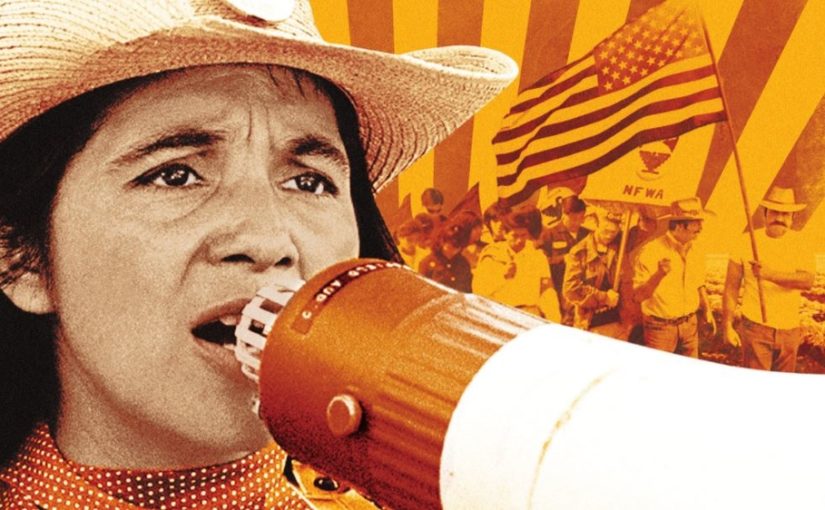
We live at an age where personality cult is rife, yet there are fewer heroes. At the age of 87, the legendary organizer and United Farm Workers (UFW) co-founder Dolores Huerta is an American hero whose life’s work, amazingly, is still not done. Peter Bratt (Director) and Carlos Santana (Producer) tell her story in the new documentary Dolores, finally giving her the rightful place in history she deserves.
Why isn’t Huerta a household name outside of California?
Dolores sets out to answer this question while chronicling her relentless organizing and advocacy work spanning over six decades. Though she was an equal partner in co-founding the UFW alongside Cesar Chavez, she barely got credit. Oftentimes, she was the subject of blatant sexism and discrimination. Fortunately, Huerta never paid much attention to the naysayers and kept working day and night for farmworker justice.
Here’s what we learned from watching Dolores:
1. Huerta is closely connected to the rise of the environmental justice movement.
As the documentary points out, American farmworkers were amongst the first to question our deepening reliance on pesticides and industrial agriculture. Chronic exposure to toxic synthetic chemicals brought about a surge in birth defects and mystery illnesses in rural communities, mostly impacting people of color. As Gloria Steinem notes in the documentary: “To talk about grapes and lettuce produced in poverty and suffering felt like the first step. An additional step was to talk about grapes and lettuce produced in poisons.”
The documentary features archival footage of Huerta raising awareness on the impacts of pesticide poisoning during the Vietnam War era. In comparison, Rachel Carson’s Silent Spring was published in 1962. A recent article by Martin Lukacs in The Guardian explains how neoliberalism has conned us into fighting climate change as individuals. With the challenges that lie ahead for the environmental movement and mankind in general, we must revisit Huerta’s notion of “people power” and solidarity amongst groups.
2. Huerta and Chavez’s professional relationship falls into the “It’s complicated” category.
In an interview featured in the documentary, the reporter asked Chavez why he picked Huerta, a woman, to work alongside him. He admitted that he preferred surrounding himself with women because they “do the work.” Despite that, sexism was rife within the UFW and for many years, Huerta was the only female Board member. Huerta called Chavez out over these issues in the media, which didn’t go down well with the UFW leadership. In the public eye, Huerta’s romantic relationship with Chavez’s brother added fuel to the fire. To this day Huerta is often referred to as Chavez’s ex-girlfriend.
3. After leaving the UFW, Huerta reinvented herself as an all-around activist.
Huerta co-founded UFW but wasn’t elected president of the union upon Chavez’s death in 1993. This part of the documentary will make you cringe, but Dolores Huerta wasn’t done quite yet. She went on to create the Dolores Huerta Foundation and continues to work as an educator, organizer, and activist.
CFS has been lucky to work with Dolores Huerta on food and environmental issues. Here’s Huerta at the Climate Rally in Washington, DC in November 2015, discussing the DARK Act and the urgent need to label genetically engineered foods in the United States:
In California, state offices and schools are closed on Cesar Chavez Day on March 31st. In Los Angeles, the famous Sunset Boulevard turns into Cesar Chavez Avenue. It’s about time for Dolores Huerta to receive similar recognition for her work. She clearly deserves it.
This article was published in B the Change, which exists to inform and inspire people who have a passion for using business as a force for good in the world.
Every business has the potential to create shared prosperity among diverse groups of people, which brings us closer together and creates mutual benefit. We find friends, mentors, sometimes life partners. Business can be a powerful builder of community.
Our business friendships form a human panorama of diverse ages, cultures, nationalities, beliefs and orientations. Most of my friendships came to me through business. Our work gave us something to collaborate on, and in the process we grew close. I think that’s beautiful.
That is likely not the sentiment you’ll gather from reading the news. Politicians and much of the news media are dividing communities to create power. Even conscientious politicians. Even the most prestigious news outlets. They are driving us apart by defining us as separate and appealing to us as partisans. They define an audience, then they attempt to build loyalty by adopting that audience’s perspective, even when the perspective is prejudiced.
A case in point was The New York Times’ December story headlined “An Oklahoma Newspaper Endorsed Clinton. It Hasn’t Been Forgiven.” The story was synopsized in a tagline: “An editorial in Enid opposing Donald J. Trump brought a spate of canceled subscriptions and pulled ads, showing the raw power of partisanship in small-town America.”
Then, in the sixth paragraph, the reporter describes the extent of the damage: 162 subscribers, out of 10,000, canceled their subscriptions. Eleven advertisers pulled ads. Someone pasted a “Crooked Hillary” sticker on the newspaper’s doors.
The Enid News & Eagle in Enid, Oklahoma, is a resolutely conservative newspaper serving a conservative city in a deeply conservative state in the heart of one of the nation’s most conservative regions. It apparently had never endorsed a Democrat until this year. When it endorsed Hillary Clinton, only 1.62 percent of its readers canceled subscriptions. Only one of the 11 disgruntled advertisers was apparently of any significance to the paper’s revenue.
The “raw power of partisanship?” Hardly. The more significant and accurate story might have been headlined, “Citizens of Conservative Stronghold Reveal Tolerance and Broad-Mindedness.” But tolerance and broad-mindedness are not virtues promoted by today’s news media.
Could that be because those media hope to benefit from “the raw power of partisanship?”
Politicians began working to divide us long ago, using broad and bizarre misinterpretations of current events to reinforce cultural prejudices. McCarthyism provides the textbook example:
Convince people that they are threatened by powerful and devious forces (screenwriters, homosexuals, longshoremen). Mark those sinister forces as fundamentally different. Then pursue your own agenda by pitching it against the dangerous “Other.”
Diverse and powerful news media — from Fox News to The New York Times — have adopted essentially the same approach for securing attention and loyalty. Stories focus on conflict, which generates interest but divides society. Expert opinions come from politicians and pundits who build power bases by sowing suspicion and alienation.
The Enid story spent days on the “Trending” list, probably because it reinforced a typical Times reader’s stereotype of small-town America as ruled by angry reactionaries. And, of course, the pundits of Fox News hammer away at the “liberal elites” and “illegal immigrants” who are destroying our culture, denunciations that make their way into coffee klatches and dinner parties across rural America where few undocumented workers, liberals or elites are likely to be present to defend themselves. The news media are winding us up by appealing to our tribal prejudices.
There are more wholesome ways to build an audience, and a business. Mother Earth News (which I previously ran) is the world’s largest media brand focused on sustainability. Our readers, according to independent research, were twice as likely as the average American to say they were politically “very liberal.” And they were also twice as likely to say they were “very conservative.”
About 9 percent of the readers were “very liberal” and almost 21 percent were “very conservative.”
Evidently, conscientiousness appeals to people at both ends of the political spectrum. Clean air and clean water are, it turns out, not divisive concepts.
We examined the ways we had reacted to our own research data over the previous decade. We had eliminated cultural buzzwords, like “green,” from our coverage because they seemed to depress engagement. We learned that we could draw people to explore almost any environmental or social problem if we included a solution near the top of the story — specifically a personal solution like driving a hybrid car or installing home solar panels.
The realization that we had grown a pretty big media audience by unifying, rather than dividing, diverse people was, well, thrilling. Even more thrilling was the fact that they were brought together by their desire to do the right thing.
The local paper, in Enid, Oklahoma, or wherever, serves an audience that shares a large set of basic concerns — economic prosperity, physical security, social harmony, the weather. So it’s not surprising that 98.4 percent of Enid’s newspaper subscribers are loyal to the News & Eagle. Many of them surely disagree, but disagreement doesn’t automatically constitute disrespect. Nor does it negate mutual interest. On the local scale, that’s obvious.
Businesses that intentionally focus on building healthy communities, creating shared prosperity and protecting shared assets like a clean environment create what is possibly the most profoundly unifying force in our society. Like clean air and clean water, good business is not controversial. And every day billions of people all over the world come together to do business.
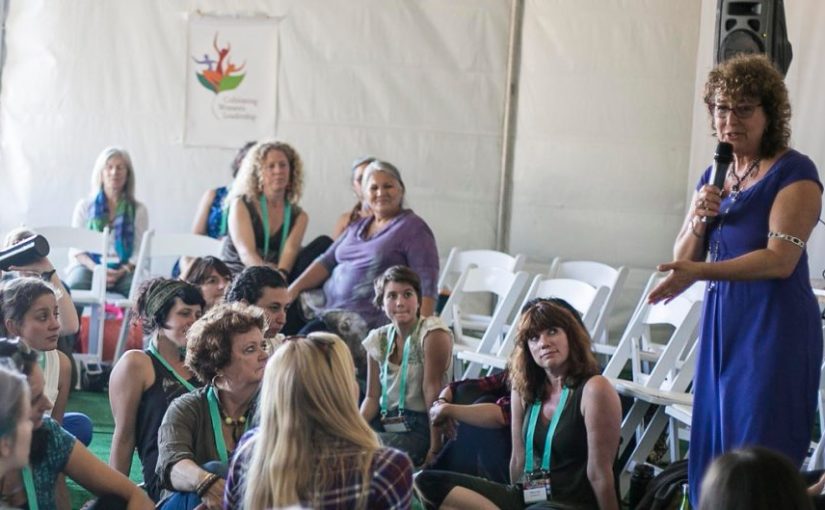
I am preparing to fly to CA to offer a keynote at the Central Coast Women’s Symposium in San Luis Obispo for their annual convening and celebration of International Women’s Day.
I’m grateful for this invitation from host Laura Grace, Ph.D, (who is also a Jungian therapist), as it signifies to me that I may speak not only about women and leadership for change, but about reclaiming a balance between feminine and masculine archetypes within our selves as well as our institutions, cultures and societies.
In my view, those two topics hold the greatest hope for our world, right now. For me, they clarify what the Dalai Llama’s might have meant when he said that “the world will be saved by Western women.” We who still have greater freedoms and stronger voices than many others around the world, are being called to step up our games, now.
I’m also thankful for the persevering work of Stacey Hunt and her fellow educator in Ecologiistic, who’ve been hosting Central Coast Bioneers in SLO for so many years, to help people in that region who yearn to be engaged to transform our systems to become equitable and resilient, and to find each other in this transformative time.
As I reflect, I notice within myself a braiding of the past, present and future. The future currently looks both bright and challenging, requiring both the perseverance and adaptability that the women upon whose shoulders we stand – those who fought for the rights we now enjoy – had to employ to succeed.
It feels hopeful, as so many are speaking out, protesting and being woke through the Women’s March, the #metoo movement, and Frances McDormand’s elegant modeling of shared leadership in her inclusionary honoring of all women who’d been nominated, in any category, when she accepted her best actress Oscar. Hopeful, as a need has clearly emerged to include ALL women in this massive movement, to educate ourselves about intersectionality and white privilege, and to reach out to those who’ve been marginalized by unjust systems to value their wisdom and power in the mix.
I am also heartened by how more people are looking to find ways to welcome and integrate men and boys into this massive movement toward equity. By how gender fluidity and nonconformity have become so much more accepted and appreciated. I’m hopeful to see young parents are sharing parenting and workloads without predestined gender definitions. I’m deeply grateful that so many more of us are thinking about this stuff, and doing our own work to decolonize our minds and to shed the self-limiting stories and assumptions we often carry.
What we face is also daunting and will ask much of us to co-create the changes that are needed. I’ll be difficult, because the Handmaid’s Tale feels closer than ever, and the president is an admitted sexual predator. Difficult, because the 45th administration is ramping up its War on Women, with policies already altered and rescinded to limit women’s reproductive freedoms worldwide and the judiciary stacked with anti-abortion judges. Difficult over a long haul, as I remind myself that global studies have revealed gender bias as the deepest in the human psyche, creating deeper divides among people than faith, race or class.
Thankfully, as the Dalai Llama suggested, it’s not a question of whether or not rebalancing the feminine and masculine, and transforming our worlds into places of equity, peace and regeneration will happen. It must. It’s a question of when, and how, which will be determined by how many of us rise to the occasion how soon, and with what levels of commitment, love and endurance. May we rise soon, and ongoingly, and stand with those frontline women who’ve endured the most, as they understand essential lessons about resilience, lessons we all need to learn.
“All good farmers become connoisseurs of dirt and dust”- farmer, author Mas Massamoto
At first it seemed like an elaborate joke–hundreds of wine glasses filled with soil from five different farms elegantly displayed on white linen tablecloths. It must have taken hours to set up.
“They don’t really expect us to eat dirt, do they?” I said out loud to no one in particular.
Initially, a soil tasting had no appeal to me, but then I remembered a scene in the film, The Real Dirt on Farmer John, the outrageous documentary about how John Peterson resurrected his Midwest family farm amidst a failing rural economy by starting an organic CSA.
The scene shows Peterson on his knees in his field licking a handful of soil. I interviewed John and asked him if he could actually taste fertility in the soil. He said, “There was a time when people were trained in that, but I’m not. It’s just a daily routine of mine. It’s an old custom that preceded soil testing and apparently was a way that people evaluated their soil. I couldn’t taste the soil and say that it’s a little short on phosphorus, for example. The aroma that makes fertile soil really distinctive is a result of bacteria. It must go way beyond what happens in a bottle of wine.”
When my mother was pregnant, she told me that she had a craving to eat dirt. Geophagy, eating soil, has a tribal and rural tradition outside of agriculture and is still practiced today among children and pregnant women.
So, with all of that in mind my reluctance to participate in the Taste of Place, which was part of the Regenerative Agricultural Field Day at Paicines Ranch produced by Eco Farm, began to erode.
Artist Laura Parker designed the tasting around the question “How does soil touch our lives and affect our food?” She encouraged people to develop impressions of the soil based on its smell and taste. The earthy smell of soil that is apparent after a rain is known as geosmin, which is a protein produced by bacteria and fungi that indicates healthy soil life. Geosmin is what gives beets an earthy flavor.
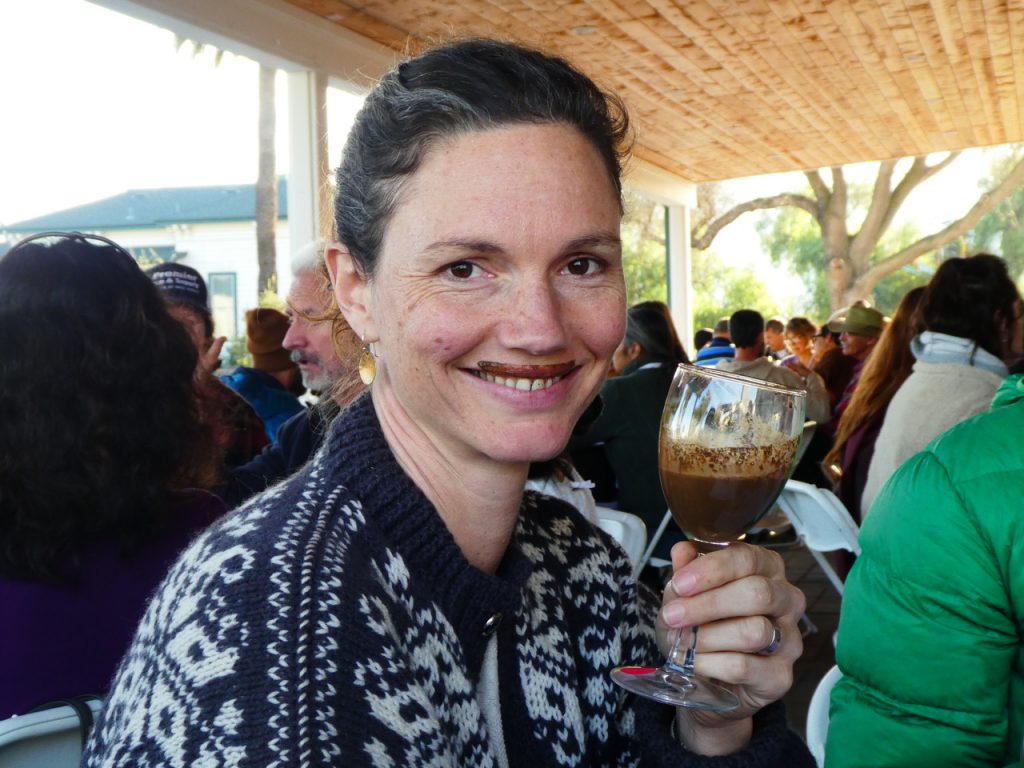
To simulate rain and bring out the geosmin to the fullest, we added a small amount of water and stirred the soil in our wine glasses and, like a wine tasting, stuck our noses into the glass for the full effect. From there it became a small step to take a sip and put a morsel of the moist soil in my mouth and roll it around my tongue. Katy Mamen, an environmental consultant, enjoyed the samples with gusto and claimed that one tasted like “a storm or thunder.”
Environmental consultant, Katy Mamen, at the Eco Farm soil tasting.
The soil samples, whose colors ranged from dark brown to reddish brown to gray, had distinct aromas and flavors. A silty clay loam had a rich chocolate flavor while a sandy loam was rather bland tasting. After each taste of soil, we sampled food from the California farms where the soil came from- Niseko White Turnip from Phil Foster’s Ranch in Hollister, Rainbow Chard from Fifth Row Farm in Pescadero, Red Cabbage from the Chico State University Farm, grass from Paicines Ranch pasture, and milk from the Burroughs Family Farm in Balico.
Soil structure and type, fertility, climate, cultural practices and of course geosmin are significant contributing elements of terroir, that distinct flavor characteristic imparted to wine by a specific environment. Crunching on Chico State’s Red Cabbage, I realized that terroir was palpable in these organic vegetables as well.
By some accounts, the concept of terroir originated in Burgundy with the Benedictine and Cistercian monks who, while stewarding the vineyards, observed regional characteristics in the wine and even tasted the soil to help fill out their understanding of terroir.
Earthy aromas and distinct flavors are their own rewards, but their underlying cause, healthy soil, has implications far greater when it comes to our relationship with working landscapes. The health of the soil has profound beneficial effects on the carbon cycle and climate change mitigation, erosion of topsoil, elimination of chemical fertilizers and herbicides, and the health of surrounding ecosystems. And that’s what the Regenerative Agricultural Field Day was all about.
Throughout the day, Ray Archuleta, a soil expert formerly with USDA, and Midwest farmer extraordinaire Gabe Brown shared their brilliant understanding of soil and cultural practices that could revolutionize farming.
They started with the premise that soil health (or lack of it) is a reflection of the farmer’s understanding of their ecosystem and implored farmers to mimic nature with multispecies cover crops whose diverse leaf size and shapes capture sunlight from all angles to maximize photosynthetic carbohydrate production.
The plant kingdom is generous and builds community by sharing some of that food through its root system with symbiotic soil microorganisms that provide ecosystem services to the plant like solubilizing minerals for the plant to uptake in a natural system of nutrient cycling that creates plant pest resistant and a wonderful tasting crop. Why then, Ray and Gabe asked, would you want to plough or add chemicals to destroy all of that life-supporting activity?
“Land,” Aldo Leopold wrote in A Sand County Almanac, “is not merely soil; it is a fountain of energy flowing through a circuit of soils, plants, and animals.” Industrial agriculture has lost all sense of that magical ecological reality. There are more living organisms in the soil than all other life forms above ground. And they are constantly busy cleaning, decomposing, recycling nutrients and functioning in ways that science has yet to understand. They are the dynamic edge of life, the keystone species of evolution and our relationship with soil life is more intimate and essential than we realize.
Cara Romero (Chemehuevi), has been directing the Bioneers Indigeneity Program for seven years. During this time, she has formalized the Indigeneity Program. She has strengthened the Indigenous Forum Panels that feature some of the most urgent and fascinating voices from Native America today, and she has also developed go-to resources for Native change makers and our allies.
However, a lot of our Bioneers Community doesn’t know that she is ALSO a world-class, award-winning photographer.
Cara’s photos have received multiple awards. Her photograph, Ty, won the Best of Classification in Class III: Painting, Drawing, Graphics & Photograph, and Kaa won First place in Division F (Computer Graphics) at the 2017 Santa Fe Indian Market. In addition, Cara is a recipient of the Distinguished IAIA Alumni Award.
I interviewed Cara in the current issue of First American Art Magazine, which features one of her haunting images on the cover.
Here’s an excerpt of the article introduction:
Cara Romero’s work has matured and seasoned over the past 5 years, as her imagery –which has ranged from Indianized pop culture satire to otherworldly Pueblo figures— continues to push the boundaries of “Native American photography” to convey the complex and sometimes messy lived realities of contemporary Native women.
I recently had a series of conversations with Cara about her art. I know her backstory –that she was conceived on the Chemehuevi reservation, but born in LA, only to return and grow up on the reservation, free to roam the deserts and play endless hours in the waters of Lake Havasu, under her Chemehuevi grandmother’s care. Her parents’ eventual split forced Cara to Houston as an adolescent, where she weathered her time taking anthropology and art classes, moving from Texas to Santa Fe, Oklahoma and back again, until she found herself back in the womb of her reservation. But, Cara’s need to make art forced her to face her own demons and called her back to finish her degree at the Institute of American Indian Arts…
In the article, we talked about things that are interesting to us, like how to learn how to “make it” by investing in yourself despite living through intergenerational trauma and drug abuse.
In recent years, she has begun to become known for her figurative portraits of strong Native women.
Here’s what Cara had to say when I asked her about what her art elicits in diverse audiences;
“I found the response in Indian Country, and particularly among women, has been overwhelmingly loving. Women have told me, ‘This is how I feel about my body too.’ And even other women of color have come up to me and said, “When are you going to do this for black women?”
But this is only my story to tell [and] I will continue because there’s a truth that has to be told. We need to find a way to push the envelope and to reclaim figurative art in the Native art world because we have been abused, and we have been put in a box, and I don’t believe in staying silent on that matter.”
You can get to know Cara more by purchasing a digital copy of First American Art Magazine, and supporting Native American art, here. And, if you happen to be in Phoenix March 3-4, you can also see her at the 2018 Heard Museum Guild Indian Fair and Market, where she will be showing her latest work in booth A-03.
Otherwise, we’ll see you at Bioneers 2018, at the Indigenous Forum, which will feature an incredible line up (TBD) of our heroes across Native North America sharing stories, new ideas, and innovative solutions to our toughest social and environmental problems.
Since 2000, the Brower Youth Award has recognized outstanding youth leaders who are making strides in the environmental movement. Each year, six young people based in North America are awarded the Brower Youth Award prize, joining a growing movement of youth leaders who are publicly recognized for their sustainable projects, innovative ideas, and informed analyses. This profile was originally published on the Brower Youth Awards website.
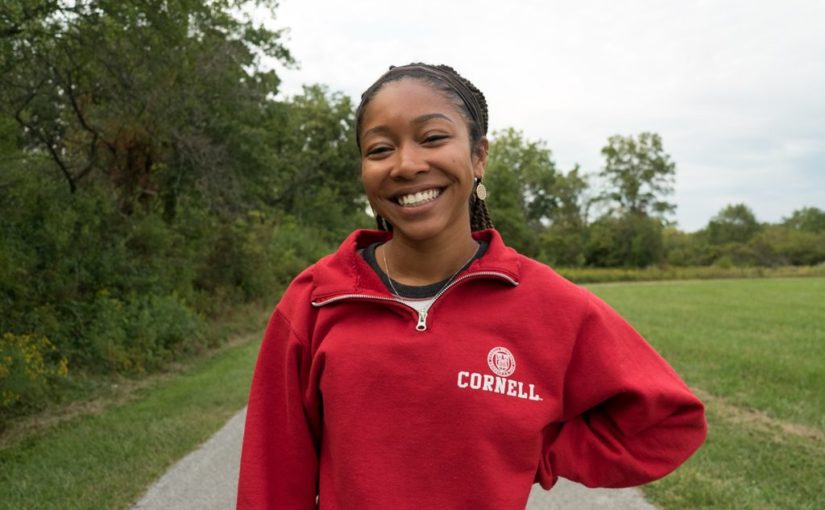
Dejah Powell CHICAGO, IL
Last year, Dejah Powell founded Get Them to the Green (G2G), an organization that aims to foster love for the environment among Chicago youth, particularly youth of color. Powell’s first project with G2G was to organize a summer camp, through which she engaged 14 young people from across the city on issues like environmental justice, sustainability, and food and agriculture. G2G has since partnered with the non-profit Gardenneers to build a school garden at Powell’s elementary school to provide hands-on, outdoor environmental education opportunities for students, and has organized environmental education workshops throughout the city.
Powell believes people can not solve a problem that they do not know exists. Now a senior at Cornell University, she hopes that environmental education in cities like Chicago will improve eco-literacy and help under-resourced communities access both local and global conversations.
This piece was originally published on the Food Tank website. Food Tank is a nonprofit organization focused on building a global community for safe, healthy, nourished eaters.
According to the United States Department of Agriculture, Americans throw away more than 60 million tons of food each year, much of it ending up in a landfill. The Environmental Protection Agency estimates that about 20% of U.S. methane emission is traceable to landfills, which, in turn, contributes to hastening climate change. Recognizing this problem, many restaurants have committed to limiting their food waste, turning otherwise wasted food scraps into great tasting meals for their customers to enjoy.
The Root Café in downtown Little Rock, Arkansas, is one such restaurant. Located in the South on Main (SoMa) district of Arkansas’ capital city, The Root Café has served locally sourced breakfast, lunch, and dinner to an often-packed house since 2011. The Café also hosts community events, including a hot-pepper eating contest, and movie nights for city residents. Whenever possible, the restaurant maximizes their cabinet contents by incorporating food scraps, and what would otherwise be considered food waste, into their dishes. Much of the rest goes to a local farmer who uses the scraps to feed the farm’s pigs.
The Café’s efforts have found support from both residents of Little Rock and granting organizations. A few years ago, The Root Café received a US $25,000 grant from the viewers of the HLN TV network’s “Growing America: A Journey to Success,” a documentary series. And, more recently, The Root Café received US $150,000 from the Chase Bank Mission Main Street Project, allowing them to add a dining room onto their existing structure and begin serving dinner.
Food Tank had the opportunity to talk with the owners of The Root Café, Jack and Corri Sundell, about their restaurant, the local food movement in Arkansas, and turning food waste into delicious meals.
Food Tank (FT): Why did you start The Root Café?
The Root Café (RC): I had always dreamed of opening a cafe, and then later got interested in agriculture and local food systems during my time in the Peace Corps in Morocco. When I returned to the United States, I interned in the livestock program at the Heifer Ranch in Perryville, Arkansas, (a Heifer International Learning Center) and also started cooking a lot. When I moved to Little Rock after my time at Heifer, I saw a burgeoning interest in local foods, and it felt like the right time to bring all of these interests together under one roof. After a three-year startup period that we spent raising capital and getting to know farmers in the area, we finally opened The Root Café in the South Main neighborhood of downtown Little Rock.
FT: How have you seen the local food movement in Arkansas grow?
RC: The concept of local foods has grown exponentially since I’ve been paying attention to it, starting around 2006. I read recently in an article that in the 10 years between 2005 and 2015, the number of farmer’s markets in Arkansas tripled, from somewhere in the 30s to almost 100. Local foods have become a lot more mainstream, and I find that I don’t need to explain our reasons for sourcing locally nearly as much as I used to when we first opened. I think this isbecause of better access to local foods through farmers’ markets and other direct sales, more restaurants, retail outlets offering locally sourced products, and better education on the part of consumers who are asking questions about where their food comes from. I don’t think this is a trend that will pass in a few years, but a new lifestyle choice that a lot of people are embracing.
FT: What is The Root Café most excited for this year?
RC: We recently started serving dinner at the Root, so that’s a new thing for us and very exciting. I’m also really excited to work on improving our customer service and our engagement with the community. We have spent the last two years undergoing a major expansion project that was funded through a grant we received from Chase Bank called Mission Main Street. It’s all been really exciting, but I’m ready to go from a period of growth and transition to a period of honing our craft, learning to utilize our new space fully, and getting feedback from the community about what next steps they would like to see in the evolution of the Root.
FT: What are some recipes and tips that you can give to people wanting to turn their ‘food waste’ into meals?
RC: Stock is really the classic example of this in my mind, and we do a lot of this at the cafe. We make a curry chicken salad that we serve during lunch, and that leaves us with the whole carcasses of about 12 chickens a week. We break these into smaller pieces, cracking some of the larger bones with a cleaver, and then put them into a large pot with one onion cut in half, a couple of carrots cut into pieces, bay leaves, whole peppercorns, whole allspice, and just one or two whole cloves.
We cover this with water by a couple of inches and then bring to a boil, skimming any foam or scum that forms on the top. We let it simmer for anywhere from three to five hours, then strain it through a colander and then through a fine-mesh sieve. If we’re not using the stock in a soup that week, we put it in quart jars and pressure can it so that our customers can take it home and use it.
A couple of important stock-making tips:
Don’t add salt to your stock—stock has a tendency to cook down over time which intensifies the saltiness. Also, you may use the stock for a sauce that needs to be reduced, and if you’ve already salted your stock your sauce will end up too salty.
It’s better to simmer your stock gently rather than cooking it at a rolling boil. A rolling boil can emulsify the fat into the liquid, leading to a cloudy and greasy stock.
FT: Any others recipes or tips for Food Tank readers?
RC: Another easy way to reuse ingredients is to turn last night’s dinner into a casserole or a pasta bake. For example, if you have leftover spaghetti from last night, some roasted vegetables from two nights ago, and a ripe tomato sitting on your counter, just chop up the tomato, grate a little cheese, throw that all into a casserole dish with the pasta and veggies. Then pop it in the oven until it’s heated through and the cheese is nicely melted. Voilà—you’ve got a delicious new meal for the whole family!
Likewise, you can use previous nights’ leftovers to make soup. Just think about what things need to cook before the soup is done versus what things are already cooked and just need to be heated, through. Some things might need to be chopped differently to make sense in a soup, or you might want to chop the spaghetti to make it easier to eat in casserole form, but you just play with it and figure out what makes sense for whatever you’re doing.
FT: As families consider how to integrate your top tips for turning ‘food waste’ into meals, what challenges do you think people might face? What advice can you offer them so they can overcome those challenges?
RC: The biggest challenge might be fear of failure, or actually making something that doesn’t taste good, and that’s something that’s bound to happen when you experiment with food or play around in the kitchen. But it’s worth it! Because knowing how to cook—and learning enough about food to be able to be creative in the kitchen—those are both very rewarding things. And it’s a thing you get to share with your friends and family, a thing that brings people together, helps provide a sense of place and community, and adds joy and pleasure to your life and the lives of those around you!
Marvel’s Black Panther is coming to theaters across the world on February 16th and it’s already breaking records. Black communities, fans of Black Panther, fans of the Avengers and others are in full blown Panther fever at this point. The excitement is palpable. We can hardly wait!
Because of its setting in a wealthy African nation that was never colonized and enjoys indigenous sovereignty, we can look at Black Panther as a blueprint for Black Liberation, which begets liberation for all. Wakandans are a free black people, never colonized, never enslaved, wealth intact etc. As actor John Kani (T’Chaka) said, ‘it is what life for black people might have looked like if black people had never been oppressed’. And that is a big deal! Most Western made movies that depict blackness shed light on black people’s oppression, or black people succeeding in the face of oppression, or black people succumbing to oppression. Our movies are about black people escaping slavery, escaping poverty, shifting narratives, defying stereotypes. Essentially we are depicted as a people who are inherently in struggle. The world of the Black Panther is so intriguing because it invites us to imagine a normal where Black People have NEVER BEEN OPPRESSED. And, it shows that had that been the case we would not only be on par with other peoples, the innovation and knowledge or our peoples would not be stolen and trademarked or unrecognized, and we would be shining beacons of technology and brilliance.
Seeing Wakanda brought to life on the screen can help our communities to see and then further imagine what our own communities might look like when we are free.
This viewing guide is intended to support you in using the concepts, imagery and principles of Black Panther to imagine and engage your communities in creating a blueprint for #FreedomCities, cities and communities in which communities of color, queer, trans, immigrants and Muslims are free and thriving.
We’re creating this guide based on the canon derived in the comic book series and cartoons. It doesn’t contain any spoilers for the film itself. If you haven’t read the comics before there are some key concepts referred to here that you may only discover for the first time when watching the film. That MIGHT feel like a spoiler. We’re not sure what to do about that (lol). It is actually really helpful to read the comics to prepare for watching the film anyway.
Imagine you are a citizen of or becoming a citizen of Wakanda…you are invited to continue to shape this country…
Governance
by Scot Eaton
In the comic storyline Wakanda is currently a constitutional monarchy in transition. Within the old governance structure there was a Council of Elders, made up of elected representatives from the 18 self-governing tribes of Wakanda, that was presided over by the ruling Black Panther.
Things to think about while watching or to discuss after:
How does this approach to governance jive with our ideas of democracy? What does governance look like that allows for the thriving of our people? What types and levels of participation in decision-making would there be in your ideal Wakanda? Consider who would participate in decision-making accounting for age, gender, etc.
Natural Resources, Economics, & Finance
by Marvel/Disney Studios
Vibranium as a natural resource. Owned by the state and distributed to the people of Wakanda making it one of the richest nations on Earth. Wakandans do not over exploit their vast natural resources. They have developed a sustainable relationship to resource extraction and the Earth. And, all Wakandans have what they need to live to their full potential.
Things to think about while watching or discuss after:
How do we ensure that everyone has what they need to survive and live healthy lives? How do we ensure that resources are equitably distributed in Wakanda? What is the relationship we want between our labor and our income and access to the resources we need for our well-being? What can we do to ensure healthy environments in which we live, work, and play and maintain harmony with nature?
Gender
by Marvel/Disney Studios
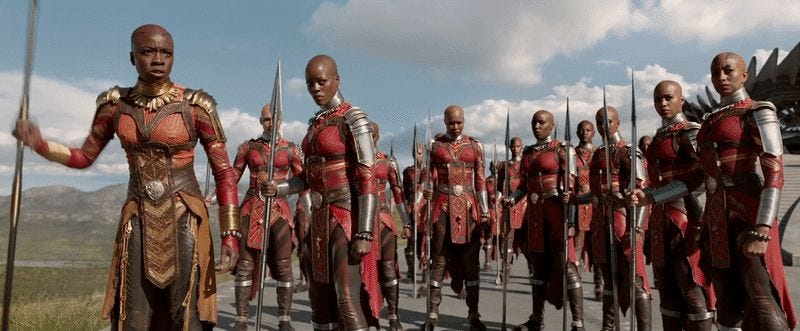
The Black Panther can be a woman. When T’Challa is joining the Avengers during Civil War, Shuri is the Black Panther. In addition Shuri, T’Challa’s sister is the most brilliant scientist on earth…well at least she is smarter than Tony Stark lol. Other powerful roles played by women include the Dora Milaje — an all women team of warriors who protect the king and nation.
Things to think about while watching or discuss after:
What is the role of gender in Wakanda? How do we ensure that no one is limited by arbitrarily defined gender identities or roles in service of community? How do we create cities and communities where people of all genders are equally respected and valued, and thrive?
Sexuality
by Alitha Martinez
In World of Wakanda (series that focused on the Dora Milaje) Ayo and Akaye, fall in love and create a women’s protection movement known as the Midnight Angels. We’re not sure if or how the movie will deal with this but now it is part of the general canon.
Things to think about while watching or discuss after:
How can Wakanda be a place that celebrates and protects the diverse sexual expressions of all Wakandans?
Culture
by Scot Eaton
Wakanda possesses a rich and complex culture which cherishes technological progress alongside arcane traditions. Innovation and heritage side by side. It’s Birnins (Cities) are the most advanced on Earth, but many people prefer the rural countryside, attuned to ancestral spirituality. For every Birnin technician, numerous farmers and artisans thrive in suburban regions.
Things to think about while watching or to discuss after:
Why would Wakandans root their lives in both spirituality AND technological progress?
Education
by Steven Sanders
Wakanda deploys the most sophisticated learning tools on earth to ensure they secure the best possible education.
Things to think about while watching or to discuss after:
Why does Wakanda ensure all Wakandans have a formal education? How do all Wakandans benefit from education taking into account different individual learning needs and styles?
Technology
by Brian Stelfreeze
From birth all Wakandans are joined in a nation wide intranet system through Kimoyo (‘of the spirit’) beads. Linked up through a Vibranium-based supercomputer, Wakandans can access holographic links to the national database, connect to their healthcare system, telecommunications and entertainment system. Mad high tech but balanced with deep commitment to tradition. Wakandans’ connection to technology doesn’t seem to take away from people interacting with each other.
Things to think about while watching or to discuss after:
What inspires Wakandans’ trust for their leaders that they unquestioningly join the nationwide intranet? How do Wakandans balance being connected to and through technology, with having person to person relationships?
Imperialism/Globalization/Colonialism
by Marvel
Wakanda is mysterious on the global scale. Keeps itself secret for self-preservation while still participating in global diplomatic conversations.
Things to think about while watching or to discuss after:
The world is increasingly interconnected such that crises in one place typically have a ripple effect and reach other far flung places. What could it look like for Wakanda to welcome and be a home for both African and non-African people seeking refuge from war, natural and human-made disasters, persecution, and other hardships in their nations? What does Wakanda potentially gain or lose by opening up to outsiders?
Law Enforcement/Security
Dora Milaje by Marvel/Disney studios
Hatut Zeraze by Mark Texeria
The Dora Milaje & The Hatut Zeraze (Dogs of War) operate as the security for the Kingdom and the security police respectively. The Hatut Zeraze grew out of former King Azzuri the Wise’s spy ring to keep track of foreign governments and their level of threat to Wakanda during World War 2. They were later taken over by Hunter (T’Challa’s step brother) and turned into a deadly secret police force that commited crimes against political dissidents. T’challa disbanded them upon learning of the crimes. Shuri; during her reign; reformed them into a elite fighting force “that posses the latest technology in weapon, combat training and surveillance to protect the nation”.
Things to think about while watching or to discuss after:
What are the safeguards in place to ensure that Hatut Zeraze are there to protect all Wakandans? What does it look like for leaders of Wakanda to hold space for political dissent/disagreement with outcomes that uphold the humanity of all? What does restorative justice look like in Wakanda?
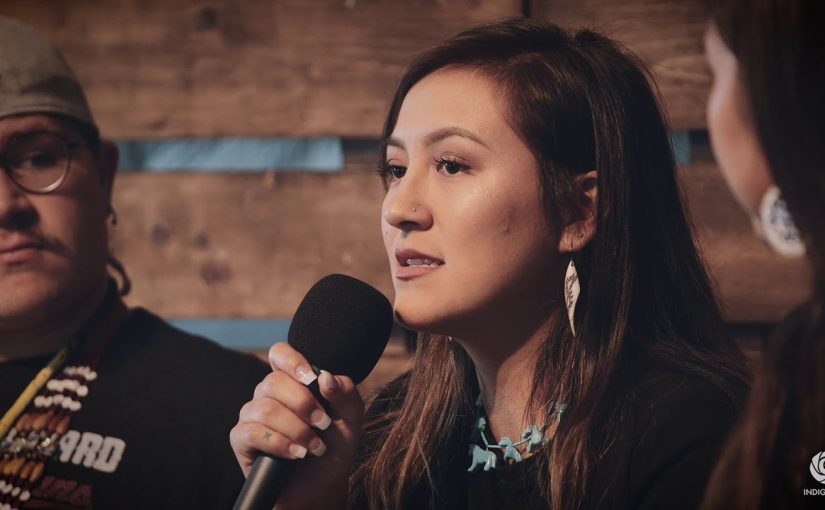
From Thanksgiving stereotypes to Indian mascots, Native American students face racism from kindergarten through college. In this inspirational panel, four Native youth share personal stories and advice about how to abolish racism in school. Featuring:
-Dahkota Brown (Wilton-Miwok) Founder of NERDS, Native Education Raising Dedicated Students, and appointee to the National Advisory Council on Indian Education
-Chiitaanibah Johnson (Diné/Maidu) Indigenous Rights Activist
-Jayden Lim (Pomo) Native Youth Ambassador, California Indian Museum and Cultural Center
-Naelyn Pike (Chiricahua Apache) Organizer and Native Rights Activist, Oak Flat
This presentation took place in the Indigeneity Forum at the 2017 National Bioneers Conference.
Indigeneity is a Native-led Program within Bioneers/Collective Heritage Institute that promotes indigenous knowledge and approaches to solve the earth’s most pressing environmental and social issues through respectful dialogue.
In today’s America, what does it take to build a successful social movement? Manuel Pastor, professor of Sociology and American Studies & Ethnicity at the University of Southern California, outlined 10 elements of movement building for today’s leaders—and potential leaders—at Bioneers 2014. Pastor spoke in a pre-President Trump era, but in our modern U.S. political and economic climate, his message is more important and applicable than ever.
Check out Manuel Pastor’s Bioneers keynote and excerpted transcript below.
Manuel Pastor:
America is changing, and it’s now projected that by the year 2042 or 2043, the United States will be a so-called majority minority, or as I like to think of it: an all-minority-all-the-time country. California crossed that threshold some time ago. And when people see that demographic change going on, they tend to think that what must be driving it is immigration. That’s certainly what drove it in the past. But that is no longer the case.
Immigration in the country has slowed down dramatically. In fact, net migration from Mexico over the last three years has been zero. What’s actually driving the change now is the change in the youth population. For the last 10 years, the number of young whites in the country fell by 4.3 million.
Now, that does not mean that 4.3 million young white people died. We would have noticed that. It would have been reported on Fox News. It would have been blamed on Obamacare. What it means is that more people are moving into ages 19 and 20 than are moving into ages 1 and 2. At the same time, the number of young African Americans fell slightly. Some of that’s re-identification into the multi-racial category. The number of young Latinos in the country grew by 4.8 million. The number of Asian Pacific Islanders by 800,000.
That’s the next America.
The next America is facing a significant crisis in terms of growing inequality. We’ve got a changing demography, and we’ve got growing inequality. We need to be able to address that issue. The way to address it is by combining projects, policy and power. The only thing that really moves public policy into being is power. And power, in fact, comes from social movements.
Social movements are sustained groupings that develop a frame, a narrative, a story about where we need to head in the future, and begin to build a broad base that helps to create long-term transformations in power.
For example, one dramatically important movement in the last couple of years has been the dreamers. Imagine that: a rag-tag group of young people, who “have no right to be in the country,” somehow standing up for their rights as human beings, and being able to force the president into deferred action for childhood adjustment, and essentially force the president into administrative relief. How did they do it?
They developed a story about them being dreamers and wanting to contribute to the United States. They rooted themselves deeply in the values that appeal to many different people. But they also had a strategy to shift the balance of power. They challenged not only Republicans in Congress but the president himself by threatening to occupy his campaign offices in 2012. That’s how change happens.
We’ve been researching this for years. We’ve been looking at how to make social movements; how to build alliances; how to measure movements; and then how to transform that into electoral power. And in doing that, we realized that we could come up with a bunch of research and literature, or we could borrow a page from David Letterman and come out with a Top Ten list.
So these are the top 10 elements that we think contribute to movement building.
On the fundamental side, movements are all about a vision and a frame. Van Jones, an early attendee at Bioneers, reminds us that Martin Luther King did not go to the steps of the Lincoln monument and declare, “I have an issue,” which too many of us do. Instead he declared, “I have a dream.”
Movements are about a dream, about a vision, about a narrative that’s deeply rooted in values, but helps to frame people’s understanding. Movements have to have an authentic base in key organizing and real constituencies that face challenges and issues. A lot of times, people will say they’ve got a movement, when really all they have is a Twitter handle. What we need to look for is movements that are actually engaging an authentic base and that are developing leaders at that base.
A third element of movements is a commitment to the long haul. You cannot change things in an episodic way. You have to really root yourselves in for a very long struggle, and that means having a perspective about the long haul.
The fourth thing that we think is really clear for movements to be able to be successful is they have to have an underlying theory of the economy. Now, I’m not just saying that because I’m an economist, although I’m sure that influences my thinking. Social movements are fundamentally about redistributing opportunities. They’re about creating a path for the undocumented. They’re about taking care of a next generation by protecting the planet now. They’re about redistributing resources. And unless we are able to also show that in the process of that redistribution everyone gets to be, at least in some sense, better off—the planet gets protected, immigration reform helps the economy—it becomes difficult to move things forward. So it’s important to have an underlying and viable economic model.
You need to have a theory of government and governance, and a real strategy about how to play an inside and outside game. Too often we’re simply outside protesting; we’re not inside working with the political folks who can help to make change. Will they make change all on their own? Of course not.
The sixth thing, and I say this not only because I’m a nerd, is that we need a scaffold of solid research. It is increasingly important to have research backing up what we’re talking about. One of the things that led the Living Wage campaigns to be so successful in the United States is that each one did a significant amount of research in the municipality first to show why a living wage would be good for low-income people, why it wouldn’t bust the budget of the local municipality, and why it wouldn’t cause unemployment. A similar thing is going on with the research being produced about the minimum wage and a number of other things. Research is incredibly important.
The seventh thing is that we need a pragmatic policy package. Many of us wind up having a big vision but no first steps, and no way to actually figure out how we’re going to deliver on the things that we promised. It can become very useful to call for justice in terms of policing, but what does that mean in terms of strategies to do community policing, and how do you build relationships between police and community? We are deeply concerned about the over-incarceration of young men of color, but what does that mean in terms of re-alignment? What does that mean in terms of gang intervention? What does that mean in terms of pragmatic policy package? This is important because Americans are a particularly pragmatic group of people, and unless you can demonstrate that you can make things better with your own point of view, it’s often very difficult to get people to support you.
Number eight is that we need to recognize the need for scale to change things. We have big problems, and sometimes when people look at those big problems, they look at the smallest groups and they say, “Oh that group, it’s small; it must be very authentic.” It might just be small.
In Los Angeles, we’ve got big anchor organizations. These are big, sizable organizations that can actually move people, move dialogue, move policy. We need to figure out how to scale while retaining authenticity by staying in touch with the grassroots. That means that we need to scale organizationally.
Number nine, if we’re going to do that, we need to have a strategy for scaling up that is geographic in part. How many of you know that book about the right wing in Kansas called What’s the Matter With Kansas? The right wing made sure that there was something wrong in Kansas so they could infect the rest of the country. And it is from Kansas, for example, that all the anti-immigrant legislation has been spreading out through Kris Kobach, their secretary of state. The geography of change means taking root in some particular locations, building power in those locations, and then winding up and creating change. One important way in which people are doing that is by doing metropolitan work, trying to organize the Bay Area, trying to organize Los Angeles, trying to organize the Central Valley, and then trying to connect all those big metro areas into one strategy for scaling up, particularly in California.
The last thing, which I think is very important, and this is really what’s distinctive about movements, is their willingness to network with other organizations. My friend Anthony says that some organizations are about building empires and others are about building movements. Are you trying to build your own organization or are you trying to network in and build the ecosystem that can support change? If we want to have a river of change, we need to make sure that we’re flowing together; we need to make sure that what we’re trying to do is to support one another.
So, what does this mean moving ahead? I think it’s important to do a couple of different things. One is to make sure that as we gauge the success of movements, we measure what matters. Now, many of you know that Albert Einstein said some important things, and anything that sounds important and intelligent gets attributed to Albert Einstein. So I’m not sure he said this, but he should have: “Not everything that counts can be counted, and not everything that can be counted counts.” We too often focus on transactions, deals, the number of people we bring to a meeting, rather than transformations, how we’re developing leaders, how we’re developing empathy for one another, how we’re building movements that link together.
…
We need to understand that when we’re doing this movement work, it’s not simply about changing the world, but about changing ourselves at the same time. Changing yourself is not enough, though, right?
We need to link together, changing the world, and changing ourselves. Because what happens in the process of being part of a movement is that you develop a very different concept of who you are, empathy for others, your concern for the planet, and you begin to develop a different kind of leadership as well.
Searching for the perfect news round-up? Look no further! We’ll keep you savvy with all the Bioneers creativity and inspiration you need in your life. Follow the Bioneers Blog for our bi-weekly news roundup:
“Today’s wicked problems are far too big and complex for any one person to solve. In this time, leadership arises in and from community. As it is in nature, there may be dazzling soloists, but in the end, it’s all about the symphony.” Bioneers co-founders, Kenny Ausubel and Nina Simons, in The Santa Fe New Mexican upon receiving the 2017 Goi Peace Award.
“I can’t tell you the number of people in Hollywood and outside of Hollywood who said that this was the most important moment of their careers, that so many people in Hollywood told me that the #GoldenGlobes never meant as much, or anything at all, until last night. And I think, for women outside of Hollywood, the women in the restaurant industry, domestic workers, farmworkers, women in Puerto Rico, women all over, last night was also incredible because it was women standing together to say, ‘Enough is enough.'” Saru Jayaraman on Democracy Now!
Looking for Momentum and Political Hope in 2018? Chloe Maxmin finds inspiration in her work for the Maine People’s Alliance
“We are going to have to show up and make real connections, listen for understanding without trying to persuade, assume best intent, and be able to live with the tension of having differences with people we care about.” Joan Blades for USA TODAY
Erik Ohlsen spoke in Civil Eats about the North Bay fires being a wake-up call, a “chance to proactively address the way the plants and animals of Northern California have co-evolved with fire — and to rebuild these communities with fire in mind.”
“The thorough-going divestment Andrew Cuomo promised today is precisely what we need state and local leaders to do in the age of Trump: go above and beyond, with actions that not only protect the physical and financial futures of their own domains but also offer true global leadership in the climate fight.” Bill McKibben wrote for 350.org and the New York Daily News on Divestment Victories.
“To address societal ills like sexism, discrimination and violence against women, feminist work must not only come to the aid of those who are affected and victimized, but also focus on prevention by addressing harmful societal and cultural norms that are often the root cause.” Tony Porter’s A CALL TO MEN in HuffPost Women
Climbing PoeTree celebrated their highlights of 2017, and there’s much beauty to witness.
“As we close out 2017, we are acutely aware that it is not only essential to excavate and understand the processes of Othering, but we must spend equal energy illuminating possibilities for belonging. Bridging across difference is a crucial response to help mitigate the extreme political polarization of our society.” john a. powell reflecting on the New Year for the Haas Institute for a Fair and Inclusive Society
“Opposition to GMOs only makes sense as part of a larger social critique and critique of institutional science. If you believe that society’s main institutions are basically sound, then it is indeed irrational to oppose GMOs.” Charles Eisenstein in the HuffPost
Follow us on Facebook and Twitter to stay up to date on the latest Bioneers news in real time.
There are countless ways to create positive, lasting experiences that nurture an empathetic relationship with the environment. Getting students outdoors is just one way; some common examples are investigating solutions to combat campus pollution or harmful air quality, growing school plants to observe their unfolding natural processes, or inviting a fun, interactive presentation conducted by a visiting nature leader. All of these experiences promote positive human impact on natural systems, mastery of scientific concepts, and an enhanced understanding of a healthy community as one that sustains a healthy environment. The more consistently students experience this, the easier it becomes to question policies or activities that are harmful to our planet’s ecosystems later in life.
A crucial outcome of teaching environmental literacy is to grow a sustainable way of thinking about the human relationship with the environment for our students. Environmental literacy is a way of investing in future leaders who will grow up learning that robust ecosystems are necessary for healthy communities, and that technology can evolve symbiotically with nature at all levels of society. As we develop statewide systems for teaching environmental literacy, our actions must reflect California’s diverse range of economic and educational opportunities, and the lived experiences of different communities. This includes addressing the inequitable distribution of access to nature that is caused by urban planning, which is an unseen yet important factor in how students develop their relationship with nature.
Carl Anthony and Dr. Paloma Pavel, co-founders of Breakthrough Communities and members of the Environmental Literacy Steering Committee’s equity work team, have worked for four decades to ensure the rights of low-income communities and people of color to a healthy environment in urban areas. In the following interview, I asked them how their expertise in advocating for social justice can inform the equitable implementation of environmental literacy in California. Below is a lightly edited version of that interview.
ALISON CAGLE (AC), TEN STRANDS: How can your past work in environmental and social justice help inform the Steering Committee’s goals?
CARL ANTHONY (CA): We have worked at the intersection of environmental and social justice for over 40 years. We have helped to evolve the field of environmental justice from its beginning in the U.S. and internationally, and developed leadership tools and strategies for its implementation on the ground. We have also built statewide and national coalitions in response to policy opportunities that promote environmental justice.
I was educated as an architect and urban planner at Columbia University. That education provided me with a framework for addressing social environmental issues, in that architectural education is a project-based approach to problem-solving. The inspiration for that education began with a third grade teacher whose commitment to environmental literacy was transformative for me, and included field trips that ignited my imagination to envision the built environment as well. The idea of “sustainability” is to emphasize the kind of growth that is good and useful for communities, and eliminate the kind of growth that is bad. They call this kind of growth “smart growth.”
Sustainability involves shifting the focus away from maximizing the profit that comes from economic opportunity to a focus that actually includes both protecting and restoring the environment, and creating opportunities for people to live sustainably. It also involves addressing social justice, which means putting a priority on those communities that have been isolated and left out of the conversation about environmental protection and economic development.
PALOMA PAVEL (PP): Our work with frontline communities has demonstrated that the places people live in inform how they live with the environment. For example, inner city asthma rates that affect students is an integral aspect of environmental literacy. Environmental literacy begins with re-inhabiting and loving our bodies, finding and locating ourselves in a world where we belong. Growing up as a second-generation immigrant child at the border in “La Frontera,” California, I was exposed to the educational and health inequities that border communities endure. It inspired in me a lifelong dedication to building bridges across racial divides. I co-founded the first deep ecology leadership training center in the United States, hand-built on the coast of Maine. The center operated from the principles of living systems, and offered an interdisciplinary curriculum of environmentally informed place-based courses. I also trained as a wilderness guide, living for seven years without electricity or running water. This inspired me to pursue doctoral training as an ecopsychologist, with an emphasis on both leadership development and large systems change. Both Carl and my experiences formed the roots of how we advocate for community organizing to build environmentally sustainable cities.
AC: Why do you believe that teaching environmental literacy in public schools is important?
CA: The measure of environmental literacy is really based upon the capacity of the individual to understand, survive, and adapt to various conditions of the environment. As students grow into leaders over the next decade, they’ll find themselves challenged by new environmental conditions, and need to have an understanding of environmental systems in order to be prepared to adapt to them. If you look at the effects of climate change, the fact is that the poorest people shoulder a disproportionate burden of environmental disasters, while often being the least responsible. It becomes a responsibility of our educational institutions to help bridge that divide between lack of understanding of environmental processes and adapting to their effects.
PP: As we are breathing out, the trees are breathing in. It’s important for all of us to understand that the life-support ecosystem of the planet is essential to any human development or activities that we undertake throughout our lifetimes. The challenge of the current climate crisis is to educate and foster the restoration and regeneration of our planet’s life-support system. This will be one of the most important agendas for our youth in public schools. They are our emerging leaders, who will not only be directing the effects of our current crisis, but innovating solutions as well. It’s a biological necessity for our communities to educate our youth in environmental literacy. They are also the emerging life support system of the planet.
AC: What does your vision of equitable environmental literacy in California schools look like?
CA: We have 1,000 school districts in California. One severe challenge is that the people who are in the wealthiest communities or have easy access to nature are the only ones who learn about these issues in their schools. They learn not only about what to do in their own neighborhoods to create positive environmental impact, they also learn about what happens to the polar bears in Antarctica when their habitat is no longer sustaining them due to human activity. Those students get well-informed from many different sources about what to do as temperatures rise, and how to protect their environment.
In poor communities, people have no way to track the dislocation that is accompanying climate change. For example, rising food prices, rising energy costs, the problem of public transportation accessibility, and the availability of environmental transportation choices—all of these impacts are happening, but poor communities don’t get the kind of education that helps them understand how to change their lives to protect nature. They also don’t get enough information about how they can change the priorities of their whole society to become more sustainable.
So I would say a vision of successful environmental literacy involves tracking the most vulnerable communities, and educating about the environmental conditions of the most disadvantaged communities in our society. Success evolves out of collaboration between vulnerable communities and those who are already successful at establishing environmental innovation.
PP: What I love about environmental literacy is that it really has the capacity to bring transformative learning into the heart of our communities through public education. The current unsustainable world we live in is the end-product of a fragmented educational model we have created, fueling an exploitative economy. So to create a different world, we need a different model of education. A new story is needed that builds on what Marshall Ganz called the “public narrative,” but one that is updated for our current time: the story of me, the story of we, the story of the world we share. We must educate about the environment through a new narrative that locates students in their own capacities to say no to processes that are destructive to the continuation of life and health in our communities, that instead cultivate a capacity to innovate and say yes. Successful environmental literacy starts with social equity and nurtures in every person an ability to invent affirmative solutions that are project-based, promote principles of the interdependence of living systems, and build links between students and community resources. We as educators must enable our youth to become citizen-scientists and life-artists, and teach them to come home to an intimate and mutually enhancing relationship with the planet we live on.
Carl Anthony and Dr. Paloma Pavel have authored a number of studies and resources for community organizing around sustainable development, including Breakthrough Communities (MIT Press, 2009), which presents twelve case studies of community mobilization that achieved sustainability, economic viability, and social justice in urban regions of the United States. Carl Anthony’s new book, The Earth, the City, and the Hidden Narrative of Race (New Village Press, 2017) contextualizes the experiences of African American and low-income communities in the spatial apartheid of unsustainable urban planning, community disinvestment, and environmental exploitation. You can learn more about Carl Anthony and Dr. Pavel’s work in environmental justice at BreakthroughCommunities.Info and EarthCityRace.net.
Carl Anthony is the founder of Urban Habitat. He directed and scaled the Ford Foundation’s Sustainable Metropolitan Communities Initiative and the Regional Equity Demonstration in the United States, and published the first journal to focus on environmental justice in the United States, Race, Poverty and the Environment. Dr. Pavel is the President and founder of Earth House, a center for multicultural leadership development based in Oakland, California. Her graduate study includes Harvard and the London School of Economics. She is co-author of Random Kindness and Senseless Acts of Beauty (foreword by Archbishop Desmond Tutu), which received a gold medal as “Peacemaker of the Year” book. She is the recipient of a Fulbright Grant, and is visiting faculty at the UC Davis Center for Regional Change, as well as the graduate degree program in Organizational Development at the California Institute for Integral Studies.
This article was originally published on theTen Strands website. Ten Strands weaves stakeholders and strategies together into strong, focused education partnerships, with the goal of raising environmental literacy by providing high-quality environment-based learning and hands-on education to all California K–12 students.
Keep Your Finger on the Pulse
Our bi-weekly newsletter provides insights into the people, projects, and organizations creating lasting change in the world.