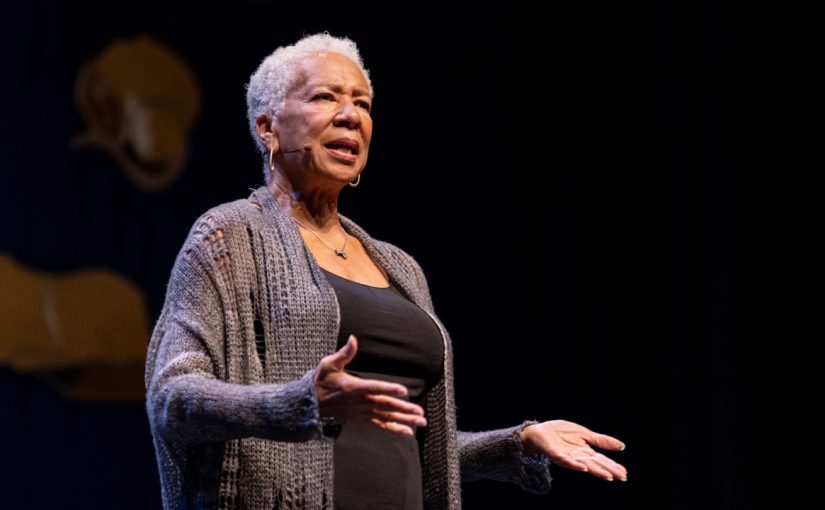
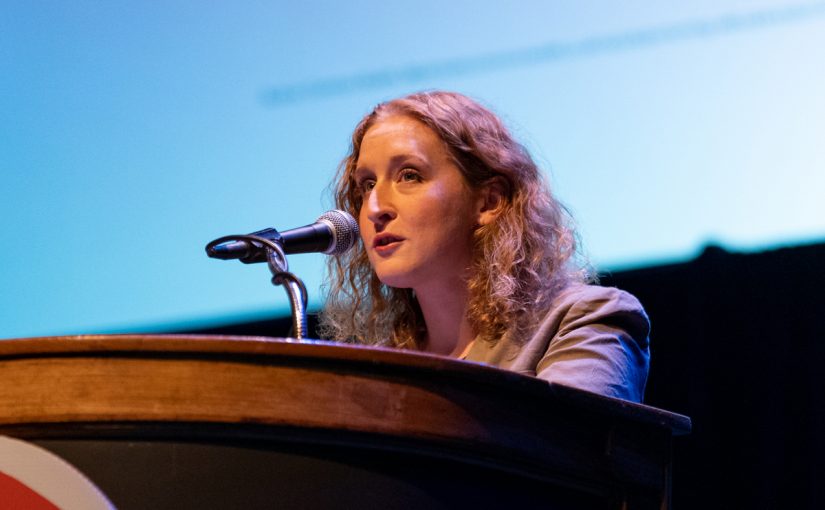
True solidarity requires stitching together what appears separate into a powerful, magnificent whole. The honed, deliberate, transformative practice of solidarity produces an exhilarating recognition of our interconnectedness and interdependence—essentials for thriving democracy. Angela Glover Blackwell, a renowned civil rights and public interest attorney, longtime leading racial equity advocate, and founder (in 1999) of the extraordinarily effective and influential national research and action institute that advances racial and economic equity by “Lifting Up What Works,” PolicyLink, discusses transformative solidarity and why it’s necessary for a thriving multiracial democracy.
This talk was delivered at the 2022 Bioneers Conference.
Angela Glover Blackwell, one of the nation’s most prominent, award-winning social justice advocates, is “Founder-in-Residence” at PolicyLink, the organization she started in 1999 to advance racial and economic equity that has long been a leading force in improving access and opportunity in such areas as health, housing, transportation, and infrastructure. The host of the Radical Imagination podcast and a professor at the Goldman School of Public Policy at UC Berkeley, Angela, before PolicyLInk, served as Senior Vice President at The Rockefeller Foundation and founded the Urban Strategies Council. She serves on numerous boards and advisory councils, including the inaugural Community Advisory Council of the Federal Reserve and California’s Task Force on Business and Jobs Recovery.
Learn more about Angela Glover Blackwell at PolicyLink.
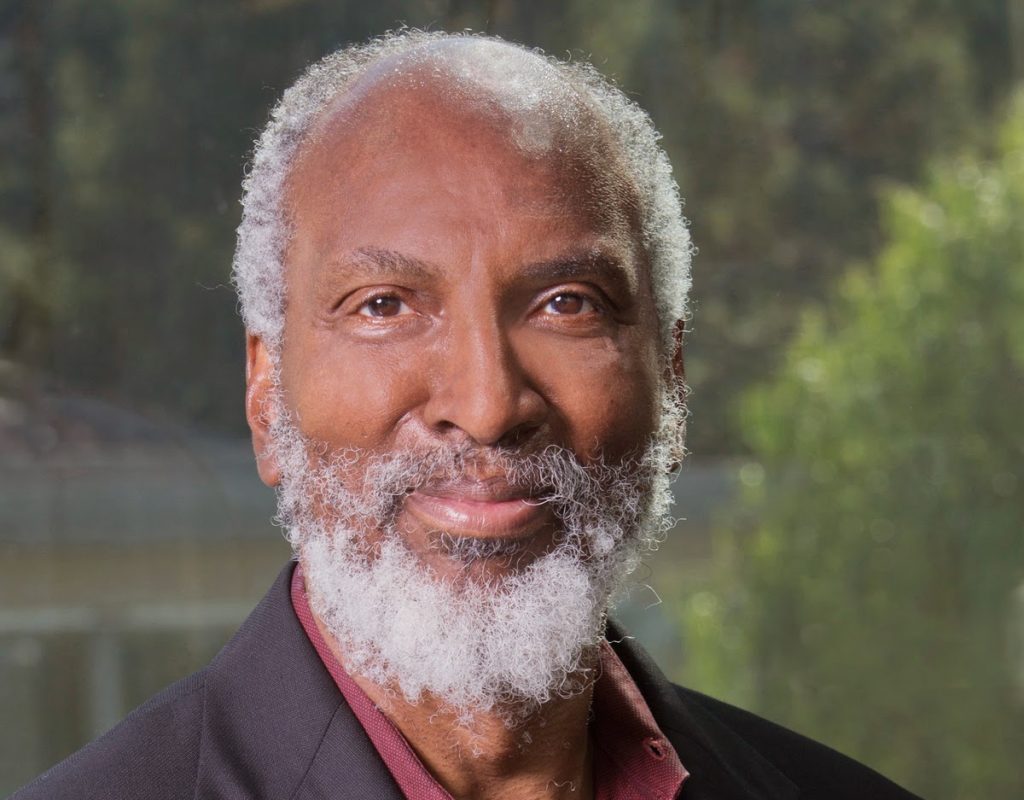
In this 2020 keynote address, john a. powell describes how collective healing will take more than proclaiming individual stances against systems of oppression. The current moment demands we unite and actively work to dismantle those systems — not merely disapprove of them.
Welcome to Planet Water, where 70% of its surface area is water and where all the white vapor, crystalline liquid and the greenery of the plants are significantly made up of water. Planet Water is the only place in the known universe where life is endemic.
I love this quote by the late Luna Leopold, emeritus professor at the University of California, Berkeley and son of Aldo Leopold: “The health of the waters is the principle measure of how we live on the land.”
Basically, the water cycle and the life cycle are the same cycle. People are carbon based life forms; it’s our central atom, but by volume we’re mostly water. The carbon cycle and the water cycle are the fundamental cycles needed to sustain life. The inputs to the photosynthetic cycle are CO2 and H2O. Sunlight enters into chlorophyll and produces oxygen and sugar. The photosynthetic cycle creates the energy that the planet runs on.
There is a global water cycle, but in the permaculture community, we talk a lot about restoring small water cycles. By thinking like a watershed, we’re trying to understand the relationship from the headwaters to the middle reaches down to the delta. How are we living within our basins of relations? Where are tillage and rangeland agriculture happening? Where is forestry happening? Where are urbanization and human settlement happening in the watershed? And how is all of that in right relationship with the process of the small water cycle?
The following is a transcript from Bioneers Co-Founder & CEO Kenny Ausubel’s presentation at Bioneers 2022.
“What exactly does Jeff Bezos want? What’s his endgame?”
Reporter Franklin Foer spent months canvassing a wide swathe, and he concluded that the ultimate goal of this master of the universe is not “dominion over the planet.”
In 1982, Bezos had unveiled his grand vision in his high school valedictorian speech: One day, millions of earthlings would migrate to space colonies. Franklin Foer concludes this: “What worries Bezos is that, in the coming generations, the planet’s growing energy demands will outstrip its limited supply.” Bezos says the danger “is not necessarily extinction. We will have to stop growing, which I think is a very bad future.”
In other words, the space cowboy plutocrat’s highest value is unlimited growth. Given that nature is built on limits, it’s both a fool’s errand and a pathology. There’s an analog in the physical-biological world. It’s called cancer. It’s the same design as the pathological economic system that now threatens to make Earth a homeless planet.
Kenny Ausubel
When engineers prototype a machine, they run it at high speed and high stress to see what blows out – to find the flaws. These days, as Bob Dylan put it, “everything is broken.” What feels like a permanent five-alarm emergency is a civilizational stress test. Our institutions are woefully not built to manage the scale, scope, and complexity of the wicked problems that bedevil us. In most cases, they’re causing the crises. The flaw is the design itself.
As the renowned green architect William McDonough said here at Bioneers 30 years ago, it’s not surprising that we’re surrounded by tragedy because today’s societal design is a “strategy of tragedy.” McDonough asked this: If design is the signal of human intention, then what is our intention? It’s not a matter of growth versus no growth. The question is: What do we want to grow?
So what are we growing now? It’s sort of an all-of-the-above menu. Climate collapse. Mass extinction. Plague. Obscene wealth for the few and immiseration for the many. Authoritarianism. War. Civil War. Neo-Fascism. White supremacy. Misogyny. Othering. Young people bereft of a future on an increasingly uninhabitable Earth. And what’s the intention? The Seneca historian John Mohawk summed it up: “Stripped to essentials, the story of civilizations is a record of organized violence in pursuit of plunder, and for the purpose of defense against aggression by rival powers. Commerce and warfare, or the threat of armed violence, would become the founding partnership in the production of modernity.”
Over the past 3,400 years, human beings have been entirely at peace for an estimated 268 years, about 8 percent of recorded history. Since July 4, 1776, the US has been at war for over 93% of its existence. Clearly, for starters, we want to grow peace. That requires that we also grow justice. But the burdens of history are heavy indeed.
The seminal 17th-century Enlightenment political philosopher John Locke developed the theory of “possessive individualism.” It centered on the acquisition of money and the self-interest of the individual. The acquisition of money to make more money was to power the engine of capitalism. Author Kurt Andersen sums up the contemporary endgame of possessive individualism: “Everybody for themselves, everything’s for sale, greed is good, the rich get richer, buyer beware, unfairness can’t be helped, nothing but thoughts and prayers for the losers.”
The intention is profit and power. The design is the objectification, commodification, and financialization of everything. It’s all about the Benjamins. It’s hard to say if it’s the banality of evil, or the evil of banality. Either way, the consequence is kakistocracy – rule by the worst. We could be here doom-scrolling the rap sheet of corporate crimes against nature and humanity for weeks, but it’s the system that’s the crime.
This is the moment of radical transformation. As our misbegotten, archaic institutions and structures continue to crumble, it opens up the space for authentic metamorphosis. To paraphrase Carl Jung, there’s a “changing of the gods,” a reset of civilization’s basic values, principles, and symbols. Something is dying, and something is being born. The outcome is deeply uncertain. This is the vortex moment to imprint new intentions and new designs. In many cases, solutions abound, and they’re making headway even against daunting odds.
For example, in reality, only about 90 corporations known as the carbon majors have been responsible for two-thirds of carbon emissions since 1751. Over half of those emissions have occurred since 1988 – after they already knew that burning carbon would poach the planet. They’re doubling down again in the wake of the most catastrophically successful disinformation campaign in history.
An axis of autocratic petrostates holds the world hostage. Petrodollars fuel Putin’s monstrous war in Ukraine. Under cover of war, the carbon majors are hustling to lock in more fossil infrastructure for decades to come. Or, the world does a 180 onto a regenerative path. We know true energy independence means getting off fossil fuels – in fast forward. That’s the fork in the road we’re at. It’s practically screaming at us.
As Bill McKibben brilliantly observed, “The sun burns, so we don’t need to.”
In December 2021, a landmark Stanford report found that we have 95% of the technology required to produce 100% of America’s power needs from renewable energy by 2035, while keeping the electric grid secure and reliable. Solar and wind are now the cheapest bulk power sources in 91% of the world, and they will generate 90% of new power in coming years.
A recent study from Oxford University finds that a “decisive transition” to renewable energy would save $26 trillion in energy costs in coming years.
If we move quickly, we could still meet the goal to keep warming to 1.5 degrees celsius. But that’s a big gnarly “if.” Climate change represents the worst failure of political leadership in history. In reality, the energy sector has shriveled to the smallest component of the S&P 500 Index. Each of the five largest tech companies is bigger than the 76 top energy companies combined. If we had free markets, the industry would be in hospice.
But as the fossil fuel regime is dying, a bright shiny new profitable future shimmers in a new asset class called NACs, or Natural Asset Companies. It’s the spawn of the New York Stock Exchange, along with a new outfit called the Intrinsic Exchange Group, and Blackrock – the world’s biggest asset manager at $9.5 trillion dollars. That’s more than the GDP of every nation except the US and China.
They propose to “transform our economy to one that is more equitable, resilient and sustainable.” Guess how? By claiming rights of ownership and management of nature’s ecoservices – the very foundation of life. Truthfully though, ecoservices are priceless, and they own us. That’s exactly why the Rights of Nature movement is growing so rapidly. It flips the paradigm from nature as property to nature as rights-bearing, on whose behalf people can stand.
By 2021, rights of nature laws were on the books in 17 countries, from the local to the national, including over three dozen communities in the US. Rights of nature governance are spreading steadily among US tribes and global Indigenous populations, where an estimated 80% of remaining biodiversity resides. May we grow Rights for Nature, and enforce them, NAC’s be damned.
Big Tech is the third kakistocracy golem under siege after Big Oil and Big Bucks. The advent of surveillance capitalism and social media has coincided with the full-blown atomization of societies and the shredding of community. Numerous studies show that social media amplify political polarization, foment populism – especially right-wing populism, and metastasize misinformation. Steve Bannon’s famed media strategy says it all: “Flood the zone with shit.” World War III is here. It’s a disinformation war, and it’s making Big Tech gobs of dough.
Which is why the European Union is poised to do what has seemed almost unimaginable in these Disunited States of America: Rein in Big Tech for real. After first passing truly landmark laws to protect data and privacy, the EU is now going after the algorithmic ghosts in the machine. It will directly challenge Big Tech’s anti-competitive monopolistic practices. It will audit the companies for systemic risks, including divisive, hate-spewing virality, and corrosive effects on elections.
The legislation has teeth, namely penalties ranging from six to twenty percent of the companies’ global revenues. That’s real money. Apple, Google, Amazon, and Meta have combined annual revenues of $6.4 trillion dollars. And what Europe does often becomes the global standard. May it grow, here, there and everywhere.
But in this traumatic passage we’re making through the valley of the shadows, it can be hard not to despair. The disorienting blur of collapse and strife can make it hard to remember the epic tide of progressive change of the past 15 or so years. Social movements have surged to challenge the Death Star and lay down new intentions and new designs.
We’ve seen young people rise up all over the world and drive almost every major progressive movement. For a vast majority of young people, climate action is the defining issue. Their resistance will only grow more fierce and non-negotiable. We’ve seen Black Lives Matter become the biggest grassroots movement in American history. It has sparked a national awakening that went global. In 2015, there were four times as many protests as during the height of the civil rights movement in 1965.
Despite the raging pandemic, protests occurred for months on end in every state in the country, including in many predominantly white communities. Racist statues have been taken down all over the nation. NASCAR banned the Confederate flag. Famous sports figures have bravely hacked the spectacle. Teams have been forced to retire their racist mascots. In 2020, six of the top 10 best-selling books were on the topic of race. Interracial marriage is at an all-time high. We’ve seen the largest surge in Indigenous activism in a hundred years, from Standing Rock to “land back” and treaty rights movements. In Oklahoma, the Supreme Court ruled that half the state belongs to the Muskogee Creek Nation. We’ve seen massive protests in favor of immigration rights. DACA became settled law.
As the author Isabel Wilkerson said, “This is a wakeup call. This is a karmic moment. It’s as if the universe is calling upon us to wake up from our amnesia in order to figure out a way to reconcile our history.”
We’ve seen an extraordinary revival of the women’s rights movement. The 2017 Women’s March in DC was the biggest demonstration in the Capital in US history. We’ve seen the birth and global spread of the #MeToo movement. Record numbers of women have run and won office, though still far too few. As the Supremes prepare to abort Roe v. Wade, buckle up for the backlash of all time. We’ve seen the legalization of same-sex marriage in 30 countries, and major advances in gay and transgender rights. In 2020, over 574 LGBTQ political candidates ran for office in the US. We’ve seen the Occupy movement catalyze a global awakening to the outrage of plutocracy. We’re witnessing the Great Resignation as workers reject lousy jobs and conditions. There’s a renaissance of unions.
Since 2012, there have been 92 strikes by 672,000 teachers in 21 states – with almost half the strikes illegal in those states. The Fight For $15 became the largest-ever US strike of underpaid workers. India was rocked by the biggest strike in world history, with 200 million workers and farmers rising up.
These movements will only grow in size and intensity as system crash keeps degrading our lives and the biosphere. We live with a gaping democracy deficit – a seismic rift between what majorities want and what elected officials and governments do. Why? Studies show that policymakers respond almost exclusively to the irreconcilable preferences of the one percent, which are lower taxes for the rich, deregulation, abolishing the estate tax, and privatizing or abolishing Social Security and Medicare. That’s why the current reactionary backlash is so virulent. Leading the US counter-revolution is the Republican Party. It’s now a straight-up authoritarian movement, to the right of even Germany’s extreme white nationalist, neo-fascist AFD party.
As flawed as it already is, US democracy is on the line against the ongoing coup d’état by an extreme minority party. Its policies are so wildly unpopular that it won’t even admit what they are. It can only win elections by suppressing the vote, rigging election systems, packing courts, and mainlining poison into the national bloodstream.
It’s Jim Crow for everyone, and it’s Jane Crow for women as the GOP – the Grand Old Patriarchy – slouches toward Gilead. As Peter Beinart points out: “Besides their hostility to liberal democracy, the right-wing autocrats taking power across the world share one big thing: They all want to subordinate women.”
This is the crucible. This ain’t no foolin’ around.
Cultural historian Richard Tarnas sees it this way: “It’s exactly such times that can bring forth the moral courage and deep insight with which we can confront great dangers and powerful forces to transform a world in crisis.” In this head-spinning churn of radical uncertainty, we’re playing with a deck of jokers. We can’t know which way things may break at any moment or what windows may suddenly open or close.
Professor john a. powell sees it this way: “It’s always important to realize that we’re living in several stories at once. We’re living in an unsettled time. Things don’t happen linearly. Sometimes you’re going along, and then it just leaps. We can’t always know when it’s going to pop open, but we can keep doing the work. We can be smart about it. We can be compassionate about it. Then if we’re lucky, things will pop open.” It’s now about building power. It’s about recognizing that all the authentic movements for a livable planet and justice are one movement at heart – a revolution from the heart of nature and the human heart. We can prevail, but only by standing in solidarity with one another.
In 1520, the Spanish Conquistador Hernan Cortes was hastily preparing to flee the Aztec capital city of Tenochtitlan to escape the bloody Indigenous rebellion. The island city in the middle of Lake Texcoco was connected to the mainland by only four causeways. He ordered his troops to hoist as much gold as they could carry away. Many fleeing Spanish soldiers drowned under the weight of gold.
That is the question today. As a civilization, will we drown under the weight of gold? Or will we choose the living treasure of life itself and make peace with our home and each other?
The speakers who presented on the final day of Bioneers 2022 poignantly reminded us that we must join forces in order to realize a better future — the struggles of our relatives are our own, and our pathways to justice intersect. As we gathered this weekend with so many Bioneers throughout the world, we couldn’t help but feel the strength of our unity.
While attendees will be able to access Bioneers 2022 recordings on-demand immediately, non-attendees can look forward to the release of conference recordings in the weeks ahead. Stay tuned. We’re humbled by your willingness to spread these important presentations throughout your communities.
Enjoy the work and words of today’s presenters below, and thank you for your support of Bioneers.
In Their Own Words
Inspiration from Bioneers 2022 Speakers
“We don’t own anything. Nature owns. We have to start taking that word out and say what we are: stewards of the land. We’re working WITH nature instead of AGAINST nature.” -Karen Washington, Rise & Root Farm
“In this era of growing, intensifying organized militancy, we have to understand that indigenous lifeways, protection of water, air, land, and sustenance, should also be considered a form of labor that is valued and protected.” –Nick Estes
“There’s a very significant impact of rising C02 on crop nutrients that are extremely important for human health. The direct effect of C02 on crops we consume is likely to push 150-200 million people around the world into new risk of nutrient deficiency.” -Samuel Myers, Harvard T.H. Chan School of Public Health
“As a society, we understand the concentration of wealth and power is not good for people or the planet. The best way to build power and solidarity is to make space and amplify all of our different voices of being affected by the climate crisis. We build relationships by listening, supporting, and honoring each other, not erasing each other.” -Alexandria Villaseñor, Earth Uprising International
“Many politicians have adopted the idea that young people are the leaders of tomorrow, but why not the leaders of today?” -Kevin J. Patel, OneUpAction International
“The only way you’re going to take down capitalism is by taking it down. You have to boycott capitalism.” -Sikowis Nobiss, Great Plains Action Society
Share This!
The power of the ideas shared at Bioneers can be even greater with your help getting the word out. Download the graphic below and share it on social media, via email … everywhere and anywhere! On social, don’t forget to include the #Bioneers2022 hashtag.
Campaigns to Support
Hundreds of water protectors are currently facing criminal charges in Minnesota for standing in defense of the water, the climate, and the treaty rights of the Anishinaabeg people. Call on officials to drop the charges. (Mentioned by Nick Estes)
Join the Planetary Health Alliance online community, a free and inclusive virtual coordination space where Alliance Members can connect, sustain collaborations, and share “who’s doing what, where” in planetary health around the world. (Mentioned by Samuel Myers)
Support Rise & Root farm by buying or donating plants, donating groceries, or providing financial support. (Mentioned by Karen Washington)
Join Earth Uprising in supporting and hastening the youth climate movement. (Mentioned by Alexandria Villaseñor)
Support gender equity and reconciliation alongside Gender Equity & Reconciliation International. (Mentioned by “Healing the Divide: from MeToo to WeTogether” panelists)
Volunteer with Daily Acts, which connects people and builds community through education, action, and policy change that address the climate crisis to create a livable future for all. (Mentioned by Trathen Heckman)
Nina Simons at Bioneers 2022: Navigating the Nexus – Nature, Culture & the Sacred
“I invite you to join me in imagining and working toward a people’s civil resistance movement that can help to form connective tissue and some shared vision among the many siloed – yet deeply related – networks, movements and issues that we face. May enough of us bring our determined and impassioned selves into creative collaborative action, holding each other with fierce compassion in community, across divides – while turning towards each other through the bumps, triggers and ruptures we encounter.”
Thank you to our partners and in-kind sponsors Bark Media for their support of Bioneers 2022. Bark Media tells the stories that connect hearts and minds to action and purpose, helping beneficial businesses and nonprofits amplify their mission, engage their communities, and elevate the impact of their work.
The following is a transcript from Bioneers Co-Founder Nina Simons’ presentation at Bioneers 2022.
As we left Northern New Mexico this week, a wildfire was (and still is) burning – over 260,000 acres of rural forested land about 20 miles from our beloved home. My animal body has been tensed to flee, perhaps also sensing the panic of elk and deer, antelope and fox in the region.
If you’re at all like me, you may be having trouble finding your way through the challenging confluence of crises we are facing these days. I keep trying to figure out how, where and when to show up, attempting to find a window through this maze of ever more broken, corrupt and increasingly destructive systems and institutions that currently govern our society.
Nina Simons
It has felt sudden to some of us, but it’s apparent now that it’s been building steadily for a long time. It feels to me like being assaulted from all directions, at once. And, as I’ve heard it said “If you find yourself in hell, keep going.”
To try to find some footing amidst all this instability, I’ve had to dig deep within my heart, body, mind and intuition to identify some anchors, some practices that can stabilize and help me to stay centered to move forward in a good way.
As I considered my life’s trajectory, I realized that the first anchor I have turned to again and again is the natural world. As early as I can remember, green, outdoor spaces were where I went to soothe and comfort myself. When my parents fought, or I was feeling uncertain or frightened Central Park, where I lived in New York City, was the place I felt held, secure and stable.
Another area of life that has always enlivened me is the arts, in the realm of culture. In college, I saw that so much of our dominant cultural conditioning was a source of everything that I sensed was wrong in the world. But I found forms of theater there – by playwrights like Harold Pinter and Sam Shepard – that challenged those social norms. I loved how these collaborative artforms created an embodied, felt experience of some of the twisted aspects of mainstream beliefs and behaviors. I relished how theater could expose otherwise unexamined social patterns that result in isolation instead of connection.
Creative purposeful efforts in many media that aim to help reshape our culture have claimed my focus and my heart ever since.
Although much of what our mainstream media creates is banal, toxic or perpetuates harm, those visionary artists who delve below the surface to reveal the truths emergent beyond the noise are among my most regenerative sources of hope.
The other wellspring of renewal I consistently draw upon to see me through challenging times is the domain of the sacred or the spiritual. It’s the most difficult aspect of life to talk about for me. I hesitate to even go there, but it’s become so central to my well-being that it would be dishonest of me not to name it in this context.
I realize that it’s a cliché to say that spiritual experiences are the hardest to put into words, because they aren’t born from my rational mind. As they say, they’re “ineffable,” and no one knows where they come from.
But I’ve found that trying to bring my own personal sense of the sacred into some sort of daily, embodied, ritual forms has offered me essential ballast. Terry Tempest Williams’ words resonate deeply for me: “I trust what I see, and I believe what I feel. Trusting direct experience is the open door to revelation. This was my foundation for faith. It still is.”
In my view, dictionary definitions of the sacred, like ‘worthy of veneration,’ or ‘entitled to reverence and respect’ are missing the physical and emotional realities of experiencing the sacred. To me it feels more like a tangible experience of a generative and boundless love. The love of the mother. It’s a nectar that all my senses perceive, and one that nourishes and renews my heart.
And this returns me to my first anchor, because immersing myself in the natural world has provided me with a most reliable doorway into the sacred. My daily walks in the woods around our home revitalize me. I smell juniper and pinon, hear the wind rustling ponderosas, sense the crusty soil crunching beneath my feet.
I am awed by the resilience of moss that can still grow in the sandy arroyos, amidst a hundred-year drought. My eyes savor the brilliant green of new growth, my heart greets a flurry of bees feasting on apple blossoms, as friends of fertility.
I used to be afraid that if I told anyone how transported, lifted and embedded I felt in nature – how devoted I am to her creatures, places and mysteries – they’d think I was crazy, so I kept it under wraps. But now, as we face imminent threats to all of life, I find myself asking for help from all possible allies, including the invisible ones I sense as ancestors, elements, energies and nature spirits.
Doing this helps me remember that I don’t need to carry the pain or grief of the world’s losses alone. It reminds me that I’m part of the entire web of life, of the whole Earth community, and that all of it is imbued with sacredness.
But I really want to avoid what’s sometimes called “spiritual bypassing”- using supposed spiritual attitudes to ignore the world’s problems and deny the strength and value of our emotions.
Let’s be real: It’s really hard not to get knocked off-center by so much that is happening.
I am outraged at the brutality and repression of so many in power around the world, Furious at a Supreme Court Justice quoting the words of a 17th Century witch burner as justification for stripping women of our right to decide about our own bodies and lives. I’m enraged at fossil fuel corporations knowingly destroying the climate while corrupting our political system, Horrified by the murders of so many courageous Indigenous and other activists and journalists around the world, And my heart breaks for all the species we’re annihilating.
I do feel angry frequently, and often deeply sad and mourning, and the anchors I’ve mentioned are helping me to express what I feel and find my center as often as possible.
As humans, emotions are the psychic ocean we swim in. Some say they are nature’s way of informing us of what we need to know.
We’ve got to avoid and shift mainstream culture’s program of insidiously repressing emotions, especially grief and legitimate rage. I believe that pattern hobbles our capacity to act effectively and collaboratively on behalf of what we love and want to protect or defend. Our lack of brave spaces to respect, listen for and express what our hearts feel throughout life’s changes undermines our leadership and engaged action.
From Unangan elder Ilarion Merculieff, or Kuulux, I’m reminded that we must learn to lead from our hearts first, and no longer mainly from our minds.
Another source of strength I’ve found is learning about the worldviews and ways of being of some traditional Indigenous cultures. Many of them offer remarkable models for how we can live as good human beings, in right relationship to each other, nature and the sacred.
We are so fortunate that even with the horrific ongoing genocide and oppression inflicted on so many First Peoples, there are still those who are generously willing to communicate some of what they know, if we can approach them humbly, with curiosity, deep respect and true allyship.
For many years, in partnership with great co-facilitators, I’ve gathered groups of women change-agents who were diverse in every way, for weeklong retreats. There, we practiced ways of shedding our toxic cultural habits – the impulses to compare and judge each other and ourselves in ways that kept us small.
We tried in those gatherings to work toward greater collaboration, mutual aid and lifting each other up. We practiced in co-creative spaces where intimacy, vulnerability and the first tender shoots of trust could emerge.
When painful eruptions occurred, we tried to turn toward them to heal, instead of away.
These women have taught me how much healing can happen when we choose to cultivate ourselves in community. We made purposeful art, danced together, exchanged root stories and unearthed core archetypal shadow material to offer it to the flames of change.
Once I experienced that kind of kinship, I saw women in a different light. I witnessed their profound and unflagging dedication to life and I could encounter them as potential allies, and not as competitors.
And after all these years I remain devoted to Bioneers, because it’s still a dynamic living system. We try to create spaces where different cultures and perspectives can meet, listen and connect in mutuality, appreciation and respect.
Of course, there are some disagreements among us, and we make mistakes like everyone else, but we seek to co-create a field that celebrates pluralism. A community that intends to be guided by inquiry, courage, love, respect and compassion, all rooted in a deep devotion to our home and mother, the natural world herself and our entire Earth web of kinship.
In the hope that some of it may be useful for you, I’ll share a few things that I’ve found helpful in arriving at decisions about where to focus, how to take my next clear step, and how best to live.
More and more I try to focus on what’s small, close and dear to me. On caring for the land, plants, creatures and loved ones who surround me in my daily life. I tend to the hungry birds that remain near our home daily, praying for their wellness while ensuring they have food and fresh water. When I walk in the woods, I practice pouring love, gratitude and healing into the natural world through the soles of my feet.
I devote more and more energy to cultivating a community of chosen family, an inner circle who I feel I can count on, no matter what.
I’ve begun giving more attention to life support systems in my community, trying to invest some of my time, skills and resources to help develop greater self-reliance for things like food, energy, water, shelter, and the local economy. And I’m beyond grateful now for the valor, dedication and skill of firefighters and health care workers.
I practice listening for what my body and heart want and need to stay healthy, and try to act upon what I sense, hear or feel.
But doing this kind of inner work doesn’t replace my need for action in the wider world – instead, I hope that it can inform what I do from a more considered, reflective and self-aware place.
And, while tending to the local is deeply healing and important, we all need to urgently keep finding ways to respond to the climate justice emergency for all of life, to stand strongly in allyship with the leadership of Indigenous and BIPOC activists, women and young people.
I learned recently about a group I found especially inspiring called Scientist Rebellion, over a thousand scientists from around the world who are frustrated, angry and fearful about the lack of effective responses to the climate crisis. They translate those emotions into effective forms of civil disobedience, including chaining themselves to the White House fence and covering the Spanish Parliament building with blood-red paint.
In the NY Times, the founder of the Climate Emergency Fund wrote this: “Testimony from these scientists shows people who are radiantly alive, meeting the challenges of the moment.
Peter Kalmus, a scientist at NASA’s Jet Propulsion Laboratory, described chaining himself to a Chase Bank building in Los Angeles last month as “a profoundly spiritual experience – in some way, incredibly satisfying and empowering and hope-giving and life-affirming.”
I invite you to join me in imagining and working toward a people’s civil resistance movement that can help to form connective tissue and some shared vision among the many siloed – yet deeply related – networks, movements and issues that we face.
May enough of us bring our determined and impassioned selves into creative collaborative action, holding each other with fierce compassion in community, across divides – while turning towards each other through the bumps, triggers and ruptures we encounter.
May we trust in the power of the natural world that speaks through us, remembering to ask for help from all of our relatives, and also from our invisible allies, ancestors and the Earth herself.
May we move forward only as each step becomes clear, paying exquisite attention, listening with our hearts, remaining focused and resolute, so that when a window through appears, we may be ready to open and step through it.
Here’s to the regenerative power of life herself, and to the healing that’s so urgently needed.
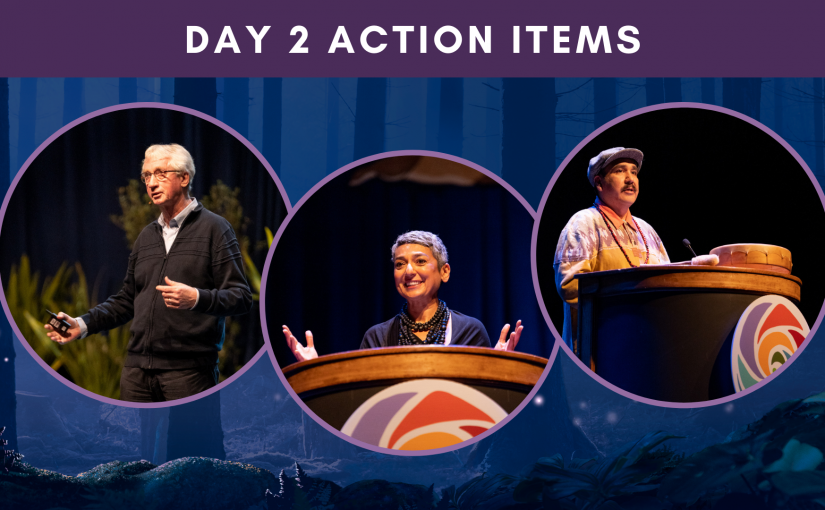
The second day of Bioneers 2022 introduced exciting wisdom rooted in nature’s brilliance. We are once again reminded that to understand our world — and, in fact, to understand ourselves — we must shift our focus to the natural world. Following, we share just a small portion of the powerful words and campaigns introduced.
In Their Own Words
Inspiration from Bioneers 2022 Speakers
“It’s the system that’s the crime. This is the moment of radical transformation.” -Kenny Ausubel, Bioneers
“Of the term gender inequality that we often use, which is a problem in society, we have focused on the wrong part of the equation. We’ve focused on gender. I think the problem is really on the word inequality.” -Frans De Waal, primatologist & author
“If nature was a lover, she would have broken down with us humans a long time ago for being the most self-centered, narcissistic lover ever. She would walk out the door. She would kick us out. But she hasn’t.” -Zainab Salbi, Daughters for Earth
“We must finally embrace floods as an ecologically beneficial force. The sponge city concept takes a nature-based, light-touch approach. It offers a far gentler way to deal with floods.” -Kongjian Yu, Turenscape
“Colonization is not over, no matter what they’re telling you. It’s the same story, it’s just different players.” –Clayton Thomas-Müller
“Rights of nature work is not a spectator sport. It can happen anywhere. It can happen in any community. In the U.S., about half the states have ballot initiative processes, so you can write and propose laws.” -Thomas Linzey, Center for Democratic and Environmental Rights
“Beaver dams help buffer climate extremes. Multiple dams end up being like speed bumps, slowing water down, shunting it off into the flood plain, and deescalating the energy.” -Kate Lundquist, OAEC’s WATER Institute
Share This!
The power of the ideas shared at Bioneers can be even greater with your help getting the word out. Download the graphic below and share it on social media, via email … everywhere and anywhere! On social, don’t forget to include the #Bioneers2022 hashtag.
Join Daughters for Earth, and get updates about how you can get involved with the movement of women around the world who are rising up to solve climate change and protect our one and only home. (Mentioned by Zainab Salbi)
Support Native Movement, which is dedicated to building people power, rooted in an Indigenized worldview, toward healthy, sustainable, & just communities for all. (Mentioned by Enei Begaye)
Support the Bring Back the Beaver campaign along with the OAEC’s WATER Institute to educate citizens about the importance of beaver. (Mentioned by Brock Dolman & Kate Lundquist)
Get involved with the People Power Solar Cooperative, which is fostering a culture of cooperation to activate the people power that dismantles PG&E and other private utilities by building the future beyond them.
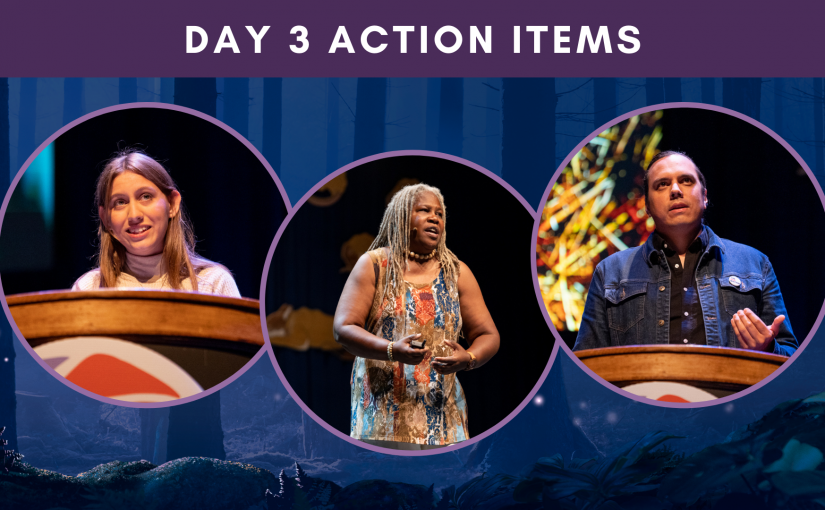
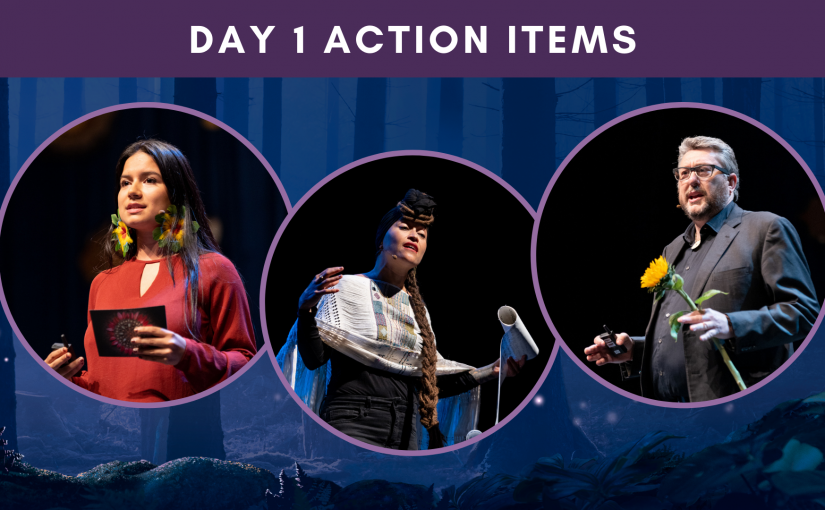
Kicking off Bioneers 2022 felt brand new and deeply familiar at the same time. Being so close to our community at the in-person event brings a sense of closeness and healing we’ve been yearning for, while we’re blown away by the ability connect with hundreds of you from more than 26 countries on our virtual platform. This weekend brings us a wealth of love and happiness.
Speaking of love and happiness, our Day 1 speakers beautifully connected their work and all the grit it entails to that which brings them joy. They reminded us that authentic leadership comes from the heart. We’re excited to share with you some of their words and campaigns.
In Their Own Words
Inspiration from Bioneers 2022 Speakers
“We’ve got to avoid and shift the mainstream culture’s program of suppressing emotions. I believe that hobbles our capacity to act on behalf of what we love and what we want to protect or defend.” -Nina Simons, Bioneers
“What is fundamental is we actually have to focus on love. My belief is that only through the sustained awakening of the human heart are we going to have a future. Only love can save us.” -Jason McLennon, McLennon Design
“We’re the heirs to something that is very special, and the work is very hard. Now we really can create a democracy that works for all. We’re going to have to create a story that captures the imagination of people all around the world.” -Angela Glover Blackwell, PolicyLink
“We can protect the rainforest. But we can only do it if we permit and support the custodianship that Indigenous people already have over our own territories.” -Helena Gualinga, Indigenous and Youth Climate Justice Advocate
“We face old problems with old solutions that no one got around to implementing. If young people allow the tides to turn the wrong way, we’ll leave the next generation even worse off.” -Maxx Fenning, PRISM
“We need to preserve half of the planet in its natural state if we want nature to help us avert this global disaster.” -Enric Sala, Pristine Seas – National Geographic
“A lot of the low-hanging fruit of climate action has happened. So we’re left with big actions that require people working together. We’re at the messy implementation phase. We need to develop some comfort with that.” -May Boeve, 350.org
Share This!
The power of the ideas shared at Bioneers can be even greater with your help getting the word out. Download the graphic below and share it on social media, via email … everywhere and anywhere! On social, don’t forget to include the #Bioneers2022 hashtag.
Prism United, which offers programming for LGBTQ youth and the people who care for them. (Mentioned by Maxx Fenning)
Get updates from Pristine Seas, so you can follow along with missions to explore and protect the ocean’s last wild places. (Mentioned by Enric Sala)
Browse PolicyLink’s resources, which will assist you with advocating for public investments to create economic opportunity and healthy communities. (Mentioned by Angela Blackwell)
Get involved with 350.org by staying in the loop and meeting like-minded activists to tackle climate-related issues. (Mentioned by May Boeve)
Between the Ukrainian crisis and the resulting fossil fuel shortages and price surges in Europe, compounded by the intensification of climate change terrifyingly visible all around us, the U.S. seems stuck in an impossible conundrum: More domestically produced oil and gas is needed in the short term, but the science couldn’t be clearer that production needs to rapidly wind down in order to avoid catastrophe. Drillers claim that over time new technology will allow them to decarbonize hydrocarbons, but there’s absolutely no reason or evidence to believe them. Fossil fuel companies have long sought to confuse and mislead the public and have intensely lobbied against any meaningful climate action. They need to be stopped, but business-as-usual climate policy offers few good options.
As one of the nation’s greatest investigative journalists and experts on climate politics, Kate Aronoff explores how policymakers’ toolbox will have to be expanded so that we can carry out a managed, orderly decline and ultimate end of the fossil fuel era, while giving us all a stake in our energy future.
This talk was delivered at the 2022 Bioneers Conference.
The drumbeats demanding that the fossil fuel giants be held accountable for sparking the climate crisis are getting louder. In this discussion from the 2021 Bioneers Conference, Antonia Juhasz, Michelle Jonker-Argueta, Carroll Muffettt, and moderator Jason Mark discuss the latest twists and turns in the global effort to hold the oil companies accountable for their deception and delay.
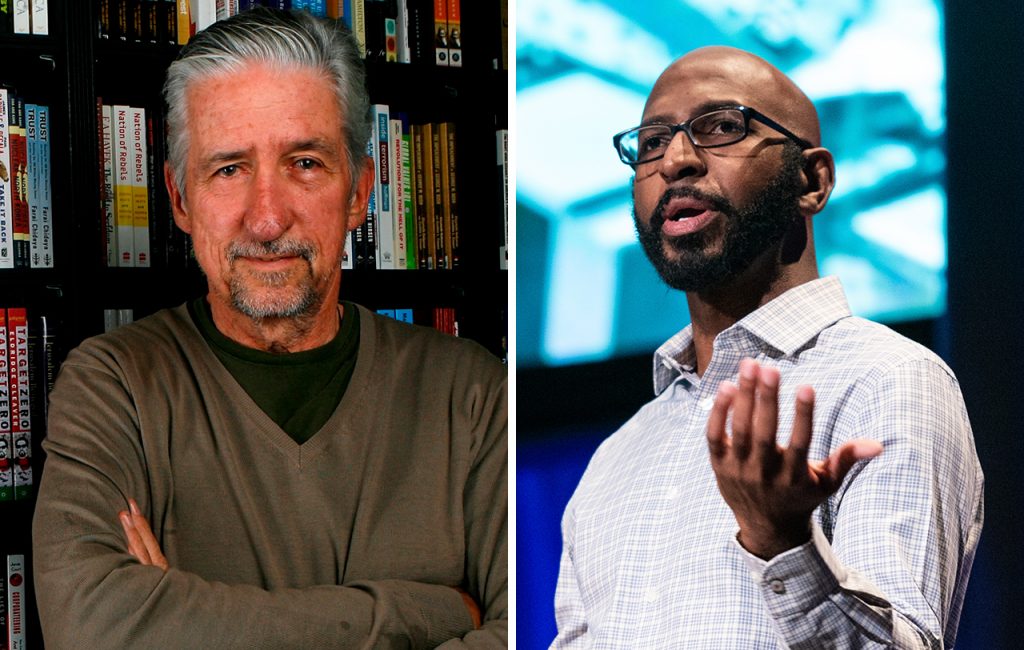
This podcast features lifelong activist and politician Tom Hayden, and Demond Drummer of Policy Link. As climate chaos and obscene inequality ravage people and planet, a new generation of visionaries is emerging to demand a bold solution: a Green New Deal. Is it a remedy that can actually meet the magnitude and urgency of this turning point in the human enterprise?
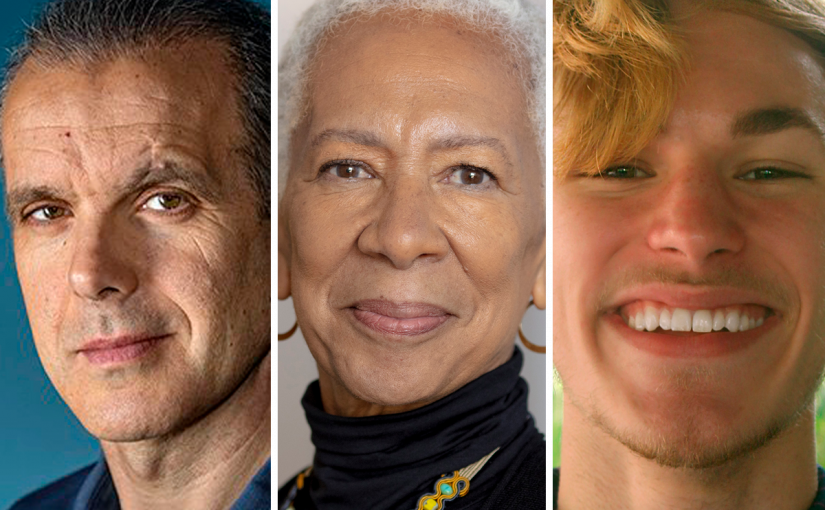
In times of turmoil, women often provide the essential backbone that holds societies together and opens paths of renewal. Today, around the world, women in vulnerable frontline communities are the ones who most bear the brunt of climate change and also frequently lead the struggle to create a livable world without pollution and systemic violence. This week, we share some exemplary women leaders’ visions for a more equitable climate movement, including: Zainab Salbi, Naelyn Pike, Amisha Ghadiali, and Nina Simons.
Nature + Justice + Women’s Leadership: A Strategic Trio for Effective Change
Ecological destruction, climate destabilization, the global pandemic, and many forms of historical and current injustice are converging to initiate a near-death experience for our species. In this inspiring session, some exemplary activists and leaders—Naelyn Pike, Amisha Ghadiali, Nina Simons, and Osprey Orielle Lake—explore why the combination of honoring and learning from nature, a deep quest for justice, and cultivating the leadership of women can provide a potent, three-pronged strategic path for getting us to a world we want.
Globally, women experience some of the harshest challenges in wartime and on the frontlines of the climate crisis while simultaneously remaining natural caretakers to their families, communities, and the Earth. 2022 Bioneers speaker Zainab Salbi has dedicated her life to empowering these women and acknowledging their work and leadership. Zainab is the co-founder of Daughters For Earth, a new campaign to mobilize women worldwide to support and scale up women-led efforts to protect and restore the Earth.
All significant movements for positive change are accompanied by outpourings of artistic expression that help open our eyes to injustice and convey powerful new visions and possibilities. For this year’s conference, we are excited for art to play a vital, celebratory, and transformational role. From Amazonian artists to large-scale climate movement murals, a plethora of visual art, and incredible sculptures, we are excited for you to see the work of so many extraordinary artivists.
Bioneers 2022 Highlight Daughters for Earth: Women and the Climate Change Movement
Women all over the globe, especially in the “developing world,” are the ones who most often bear the brunt of having to contend with the radical disruptions visited upon their families and communities by climate change and environmental degradation, yet women’s voices are far too often ignored. Register now for Bioneers 2022 and join Zainab Salbi, Nina Simons, and Justin Winters as they discuss how these struggles relate to the personal search for healing, and what it will take to create authentic global change.
Daughters for Earth: Women and the Climate Change Movement
Women all over the globe, especially in the “developing world,” bear the brunt of climate change but are ignored the most in conversations about climate justice. Register now for Bioneers 2022 and join Zainab Salbi, Nina Simons, and Justin Winters as they discuss how these struggles relate to the personal search for healing, and what it will take to create authentic global change.
Nina Simons – From Discipline to Discipleship: Cultivating Love, Collaboration, & Imagination
By reframing and re-imagining discipline as disciple-ship, Bioneers co-founder Nina Simons draws from a wide range of cultural touchstones – from Indigenous wisdom to Biblical storytelling to pop icon Patti Smith and intellectual heavyweight Cornel West – to share her journey towards uncovering and embracing the role of discipline in service of cultivating the heart’s capacity to love.
Nature, Culture and the Sacred: A Woman Listens for Leadership, 2nd Ed. – Launching June 7th!
We are excited to announce that the second edition of Nina Simons’ book, Nature, Culture and the Sacred: A Woman Listens for Leadership, is launching on June 7 and is now available for pre-order on Amazon! Nature, Culture and the Sacred offers practical guidance and inspiration for anyone who aspires to grow into their own unique form of leadership on behalf of positive change. Join Nina on an inspiring journey to shed self-limiting beliefs, lead from the heart and discover beloved community as you cultivate your own flourishing and liberation.
From the air we breathe to the food we eat, research shows that plastic is everywhere and is wreaking havoc on our health and planet. With hope on the horizon as new laws banning single-use plastic take effect, what fundamentally must change is to get at the root of our throwaway culture. In Thicker Than Water: The Quest for Solutions to the Plastic Crisis, journalist Erica Cirino brings readers on a journey around the world, highlighting the scientists and activists telling the real story of the plastic crisis.
We are no better protected from plasticized air outdoors than we are indoors. Plastic fibers, fragments, foam, and films are perpetually floating into and free-falling down on us from the atmosphere. Rain flushes micro- and nanoplastics out of the sky back to Earth. Plastic-filled snow is accumulating in urban areas like Bremen, Germany, and remote regions like the Arctic and Swiss Alps alike.
Wind and storms carry particles shed from plastic items and debris through the air for dozens, even hundreds, of miles before depositing them back on Earth. Dongguan, China; Paris, France; London, England; and other metropolises teeming with people are enveloped in air perpetually permeated by tiny plastic particles small enough to lodge themselves in human lungs.
Urban regions are especially replete with what scientists believe could be one of the most hazardous varieties of particulate pollution: plastic fragments, metals, and other materials that have shed off synthetic tires as a result of the normal friction caused by brake pads and asphalt roads, and from enduring weather and time. Like the plastic used to manufacture consumer items and packaging, synthetic tires may contain any number of a manufacturer’s proprietary blend of poisons meant to improve a plastic product’s appearance and performance.
Tire particles from the world’s billions of cars, trucks, bikes, tractors, and other vehicles escape into air, soil, and water bodies. Scientists are just beginning to understand the grave danger: In 2020, Washington State researchers determined that the presence of 6PPD-quinone, a byproduct of rubber-stabilizing chemical 6PPD, is playing a major factor in a mysterious long-term die-off of coho salmon in the US Pacific Northwest. When Washington’s fall rains herald spawning salmon’s return from sea to stream, the precipitation also washes car tire fragments and other plastic particles into these freshwater ecosystems. In recent years, up to 90 percent of all salmon returning to spawn in this region have died—a number much greater than is considered natural, according to local researchers from the University of Washington, Tacoma. As University of Washington environmental chemist Zhenyu Tian explained in an interview with Oregon Public Broadcasting, 6PPD-quinone appears to be a key culprit: “You put this chemical, this transformation product, into a fish tank, and coho die really fast.” While other researchers have previously searched for, and detected, microplastic dispersed in indoor and outdoor air, Vianello’s study was the first to do so using a mannequin emulating human breathing via mechanical lungs. Despite the evidence his research provides—that plastic is getting inside of human bodies and could be harming us—modern health researchers have yet to systematically search for it in people and comprehensively study how having plastic particles around us and in us at all times might be affecting human health.
Vianello and Vollertsen explained that they’ve brought their findings to researchers at their university’s hospital for future collaborative research, perhaps searching for plastic inside human cadavers. “We now have enough evidence that we should start looking for microplastic inside human airways,” Vollertsen said. “Until then, it’s unclear whether or not we should be worried that we are breathing in plastic.” He speculated that some of the microplastic we breathe in could be expelled when we exhale. Yet even if that’s true, our lungs may hold onto much of the plastic that enters, resulting in damage.
Other researchers, like Joana Correia Prata, a PhD student at the University of Aveiro in Portugal, have highlighted the need for systematic research on the human health effects of breathing in microplastic. “Microplastic particles and fibers, depending on their density, size, and shape, can reach the deep lung causing chronic inflammation,” she said. People working in environments with high levels of airborne microplastics, such as those employed in the textile industry, often suffer respiratory problems, Prata has noted. The perpetual presence of a comparatively lower amount of microplastics in our homes has not yet been linked to specific ailments.
While they’ve dissected the bodies of countless nonhuman animals for decades, it’s only been a few years since scientists began exploring human tissues for signs of nano- and microplastic. This, despite strong evidence suggesting plastic particles—and the toxins that adhere to them—permeate our environment and are widespread in our diets. In the past decade, scientists have detected microplastic in the bodies of fish and shellfish; in packaged meats, processed foods, beer, sea salt, soft drinks, tap water, and bottled water. There are tiny plastic particles embedded in conventionally grown fruits and vegetables sold in supermarkets and food stalls.
As the world rapidly ramped up its production of plastic in the 1950s and ’60s, two other booms occurred simultaneously: that of the world’s human population and the continued development of industrial agriculture. The latter would feed the former and was made possible thanks to the development of petrochemical-based plastics, fertilizers, and pesticides. By the late 1950s, farmers struggling to keep up with feeding the world’s growing population welcomed new research papers and bulletins published by agricultural scientists extolling the benefits of using plastic, specifically dark-colored, low-density polyethylene sheets, to boost yields of growing crops. Scientists laid out step-by-step instructions on how the plastic sheets should be rolled out over crops to retain water, reducing the need for irrigation, and to control weeds and insects, which couldn’t as easily penetrate plastic-wrapped soil.
This “plasticulture” has become a standard farming practice, transforming the soils humans have long sown from something familiar to something unknown. Crops grown with plastic seem to offer higher yields in the short term, while in the long term, use of plastic in agriculture could create toxic soils that repel water instead of absorbing it, a potentially catastrophic problem. This causes soil erosion and dust—the dissolution of ancient symbiotic relationships between soil microbes, insects, and fungi that help keep plants alive.
From the polluted soils we’ve created, plants pull in tiny nanoplastic particles through their roots along with the water they need to survive, with serious consequences: An accumulation of nanoplastic particles in a plant’s roots diminishes its ability to absorb water, impairing growth and development. Scientists have also found early evidence that nanoplastic may alter a plant’s genetic makeup in a manner increasing its susceptibility to disease.
Based on the levels of micro- and nanoplastics detected in human diets, it’s estimated that most people unwittingly ingest anywhere from thirty-nine thousand to fifty-two thousand bits of microplastic in their diets each year. That number increases by ninety thousand microplastic particles for people who regularly consume bottled water, and by four thousand particles for those who drink water from municipal taps.
In 2018, scientists in Austria detected microplastic in human stool samples collected from eight volunteers from eight different countries across Europe and Asia. Clearly, microplastic is getting into us, with at least some of it escaping through our digestive tracts. We seem to be drinking, eating, and breathing it in.
A few scientists, including Kristian Syberg, have recently uncovered another potential consequence of plastic exposure, one particularly relevant to our modern human society freshly struck by a devastating pandemic: Harmful viruses and bacteria have a tendency to colonize plastic particles and objects, which are not easily cleaned like other materials such as glass and metal. The same spongelike surfaces that make plastic attractive to toxic chemicals also attract microbes. This could mean plastic and its particles may be capable of spreading disease. In Zanzibar, an archipelago off the coast of Tanzania, in East Africa, Kristian and several of his colleagues from Roskilde University detected cholera, salmonella, and E. coli on plastic debris found littered in communities where these illnesses are known to circulate. While doing their research, Kristian and his team noticed Zanzibar’s street vendors sold hand-pressed sugarcane juice from plastic bottles. When asked, the juice sellers told the researchers they’d simply collected, rinsed, and refilled plastic bottles pulled from the piles of waste all around, the same contaminated trash the team had tested.
We don’t know yet exactly what those plastic particles do while inside us, if they are a significant contributor to the spread of diseases that might be hiding invisibly on their surfaces, or which chemicals may linger in our bodies long after plastic has passed through. But we can make an educated guess: In a world completely permeated with plastic and toxic chemicals of our creation, we have a fate akin to that of all Earth’s other creatures.
Each piece of plastic possesses a proprietary chemical composition; each carries with it, and carries on, plastic’s toxic legacy. Scientists have demonstrated that when wild and laboratory animals like fish ingest microplastic, they also get a dose of the toxic chemicals microplastic carries. And these chemicals are linked to cancers, reproductive problems, metabolic disorders, autoimmune diseases, malnutrition, and other health issues—in both people and other animals. Yet we humans rarely stop to consider our vulnerability to plastic, a substance that is sickening and killing albatrosses and whales, dolphins, fish, and countless other creatures right before our eyes. Perhaps we have hesitated to search inside ourselves because we are afraid of what we might find.
Scientists are just beginning this search in earnest. In August 2020, a group of Arizona State University researchers, led by Rolf Halden, director of the university’s Center for Environmental Health, announced at a virtual meeting of the American Chemical Society that his research team had discovered both plasticizer chemicals and basic plastic compounds, called monomers, in dozens of samples of donated human lungs, livers, spleens, and kidneys. BPA, a chemical known to harm the developing brains and bodies of children and widely added to plastic since the 1960s, was found in all of the human tissues sampled. But they stopped short of identifying actual pieces of nano- and microplastic in the tissues. In separate experiments, Halden and his team spiked human tissue samples with plastic particles to test if a tool, called a flow cytometer—which scans individual cells using a light beam, revealing physical and chemical properties—could help locate them. Other researchers have applied flow cytometry to plastic pollution research, specifically to detect plastic particles suspended in freshwater and seawater samples. According to Halden, the logical next step is to apply flow cytometry to find microplastic in the landscape of our bodies.
“It would be naive to believe there is plastic everywhere but just not in us,” Halden told the Guardian in August 2020. “We are now providing a research platform that will allow us and others to look for what is invisible—these particles too small for the naked eye to see. The risk [to health] really resides in the small particles.”
Through two successful elections in rural red districts that surprised many, Chloe Maxmin (D-District 13) and campaign manager Canyon Woodard defied the odds. By understanding how rural Americans were being left behind, Chloe and Canyon learned how to empower overlooked communities. Politicians have focused for too long on the interests of elite leaders and big donors, forcing the party to abandon the concerns of rural America—jeopardizing climate justice, racial equity, economic justice, and more.
In the new book, Dirt Road Revival: How to Rebuild Rural Politics and Why Our Future Depends on It, Chloe Maxmin and Canyon Woodward look at how we got here and lays out a road map for progressive campaigns in rural America to build inclusive, robust, grassroots politics that fights for equity and justice across our country.
Canyon Woodward
Canyon Woodward was born, raised, and homeschooled in the Appalachian Mountains of rural North Carolina and the North Cascades of Washington. He was the campaign manager for Chloe Maxmin’s successful 2018 and 2020 campaigns. He earned an honors degree in social studies from Harvard College, where the bulk of his education took place outside of the classroom organizing to get Harvard to divest from fossil fuels. Canyon is also an avid trail runner and potter.
Chloe Maxmin
Chloe Maxmin, hailing from rural Maine, is the youngest woman ever to serve in the Maine State Senate. She was elected in 2020 after unseating a two-term Republican incumbent and (former) Senate Minority Leader. In 2018, she served in the Maine House of Representatives after becoming the first Democrat to win a rural conservative district.
Raised in the beautiful backwoods of Southern Appalachia in a small town where political activity was mostly confined to local issues, I was largely a stranger to public protest. Attending Harvard on need-based financial aid, I certainly didn’t anticipate confronting the institution that made my continued education possible. Yet I could not in good conscience study climate change without confronting the fact that Harvard was investing its billions in companies driving climate catastrophe.
My understanding of the climate crisis began at the age of sixteen, after I lived for a short time with a family in Phyang, a small village in a deep green valley of northern India surrounded by the barren mountains of the Himalayan highland. Life in Phyang, and for the more than one billion people who inhabit the Himalayan river basins, is sustained by meltwater harnessed by the intricately designed irrigation systems that conserve this precious resource. As the glaciers melt and dry up due to global warming, the whole region will likely be forced to grapple with severe water insecurity. Much as day-to-day life in rural America is affected by decisions made in faraway Washington, DC, climate change is driven by industrial superpowers far removed from hamlets like Phyang. Still, the decisions of those with power affect the water supply of the Himalayas and much of the world.
I began to wrap my head around the injustice of human-caused climate change and reflected on what actions I could take personally. I took steps to reduce my own carbon footprint and water use. I organized 5K races in my town to raise money for clean water projects in developing countries. At Harvard, courses in environmental science and public policy furthered my understanding of climate change as a systemic crisis requiring systemic solutions. I came to understand that individual behavioral change—becoming vegetarian, recycling, efficient lightbulbs, and so on—would not be enough to prevent climate catastrophe. I joined protests on campus against the Keystone XL pipeline proposal and bused to Washington, DC, to surround the White House with thousands of others calling for President Obama to reject the pipeline.
I fell in love with organizing and soon joined Divest Harvard, a budding campaign on campus that Chloe had created with a handful of other students. As students before us had done in the face of Big Tobacco, apartheid in South Africa, and genocide in Darfur, we built a divestment campaign on campus to get Harvard to sell its fossil fuel stocks and reinvest in affected communities. The Harvard Corporation—the university’s governing body—is the oldest corporation in the Western Hemisphere. Harvard and its culture epitomize the status quo. Activism was not popular on campus.
Despite this culture, our campaign grew quickly. We organized the first student vote on fossil fuel divestment in the world: 72 percent of students voted in favor, landing Divest Harvard on the front page of almost every major newspaper. Then 67 percent of Harvard Law School students voted for divestment. Over four thousand alumni and one thousand faculty were also on board. We sued Harvard University for failing to divest, organized an international fast, and launched a twenty-four-hour sit-in inside Massachusetts Hall, the location of the president’s office. We then organized “Harvard Heat Week” to shut down Massachusetts Hall for six days and six nights. So many people were trained for this action that, when administrators moved their operations to University Hall, we were able to shut down that building too. Dozens of famous alumni, including Desmond Tutu, Natalie Portman, Cornel West, and Al Gore, voiced their support. Divest Harvard has continued through the years. It even became a litmus test for 2020 presidential candidates on the left, garnering endorsements from Bernie Sanders, Elizabeth Warren, Julian Castro, and Tom Steyer.
It was while doing climate justice organizing that I met Chloe. A highkey visionary, she radiated contagious confidence and had an endearing habit of correcting people who called her a freshman—she was actually a freshwoman. We bonded one day in 2011 as we traveled across Boston to gather supplies for an anti–Keystone XL pipeline art installation. Growing up in small towns, Chloe and I had never ridden a public bus before. We knew that our stop was next, and we were ready to get off. But the bus kept going. We looked at each other, confused as heck. As it turns out, you need to press the button to alert the driver that you need to get off at the next stop. We had no idea. From there, we developed a deep and enduring friendship.
Our campaign at Harvard grew to over seventy thousand people, and the divestment movement exploded across the world. But, as time went on, we worried that divestment wasn’t enough. The purpose was to weaken the fossil fuel industry’s political influence by making it toxic for politicians to associate with them. In turn, the people could reclaim politicians’ attention to usher in climate policy. The problem was that, while the divestment movement created incredible grassroots momentum, we had no effective game plan to bring that energy to bear on electoral politics. We weren’t running candidates, supporting electoral campaigns, pushing legislation forward, or getting students out to vote. The path to electoral politics remained blocked.
At Harvard, Chloe and I puzzled over the climate movement’s lack of political power. But during visits home over breaks and holidays, we connected with the people in our rural communities whose struggles had been ignored by politics. We witnessed the degradation: rural hospitals bought out by private companies and services cut; slashed local budgets that forced schools to lay off teachers; Republicans refusing to expand Medicaid; small-town banks bought out by big financial institutions only to close branches and tighten credit; Main Street businesses that had defined our towns for decades forced to close, unable to compete with Amazon; small farmers struggling to compete with Big Agriculture; drug epidemics; lack of basic services, including high-speed internet and reliable cell phone reception. The examples are endless.
Even amid these systemic challenges, the rural America that Chloe and I grew up in is beautiful, resilient, and rooted in strong values. It called both of us home. Home, where we were raised to appreciate the benefits of living in community and looking out for one another in times of need. Home, where we learned the necessity of self-sufficiency and resourcefulness. Home, where we developed strong connections to the land and to each other. Home, where we gained faith in the basic goodness of our neighbors and learned to respect and listen to them, even when we didn’t agree.
At Harvard and at home, it became clear to us: the left needed to radically rethink how we build political power in rural America. Our rural communities needed a voice. The years of organizing at Harvard had given us the tools not only for analysis but also for action. The foundation for our life work in politics together began to take shape. We imagined working on campaigns at home that could empower overlooked rural communities to define a new political era. We bucked the tide of our peers heading off to big cities and work on Wall Street or in Silicon Valley, opting instead to return to our rural roots and invest in our home communities. Chloe returned to Maine, and I returned to the Carolinas.
I moved back to the rural South and brought my Divest Harvard organizing skills with me. I worked as a regional field director for Bernie Sanders’s 2016 campaign in South Carolina, opening a campaign office and managing four full-time field organizers and three paid interns in the most rural corner of the state. Together, we built a high-performing team. While we didn’t win, our rural South Carolina region garnered a higher percentage of votes for Bernie than any of the other six regions in the state.
I learned an enormous amount about campaigning. I was lit on fire by the potential of the powerful marriage of movement politics and electoral politics that Bernie’s campaign cultivated. I also had my first glimpse of the toxic campaign culture that was nearly ubiquitous across the Democratic campaign world. We worked at a breakneck pace every single day of every week with the exception of Thanksgiving, Christmas, and New Year’s Day. The only days I took off the entire campaign were a few days to visit Chloe when she was going through a hard time. My boss told me that it would be best for me to lie about where I was going and say that it was an immediate family member in crisis. I told her she could tell the state director what she wanted, but I wasn’t going to lie. If our campaign wasn’t able to make space for us to show up for one another as full human beings and practice community care, then how could it be expected to actualize the broader vision of collective humanity that we were fighting for?
After the campaign, I returned to North Carolina’s southern Appalachians to organize in my rural home district for the rest of the 2016 cycle as a field director for State Senate candidate Jane Hipps. Similar to my work on the Bernie campaign, we applied the organizing frameworks that I learned at Harvard to organize local Democratic Party bodies and progressive organizations. We mobilized over a hundred volunteers to contact over forty-five thousand rural voters. Our campaign could not overcome the Koch-funded incumbent in our very conservative district, but we built communities of volunteers at the county level and planted the seeds of hope for a political shift in the mountains.
Through these campaign experiences, I began to see firsthand how rural communities were being left behind by the Democratic Party. Democrats invested disproportionate resources on statewide races and urban turnout, often siphoning resources from rural races. Funding that was promised to our campaign in rural North Carolina by the state caucus in 2016 was shifted at the last minute to pay for TV spots in metropolitan markets. In another election, rural volunteers in the North Carolina Eleventh Congressional District were redirected from local efforts to make phone calls to boost urban turnout in Charlotte. This singular focus on metropolitan politics weakened the party in rural areas.
Following the 2016 election, I devoted months to reflecting on the campaigns and organizing locally in the North Carolina Democratic Party to pass platform resolutions and elect progressive Democratic leaders at the precinct, county, and district levels. I was elected as the second vice chair for my home congressional district and coordinated trainings and organizing resources for county leaders and volunteers. Investing in hometown Democratic politics felt meaningful and rewarding on many levels. Yet, with unconstitutionally gerrymandered districts still in place in the mountains heading into the 2018 election, I struggled with the question of where to focus my energy. Then came Chloe.
When Chloe told me that she was running for state representative in 2018, I thought it was a little absurd. She was a twenty-five-year-old progressive candidate in a staunchly conservative district that had voted Republican by an average of 16 percentage points over the preceding three elections. It is also the most rural county in Maine and the oldest (by age) in the country. I had a strong enough grasp on basic math to know that electing a Democrat in District 88 was improbable at best. Plus, neither of us had ever run our own campaign before. Yet I could tell that she had made up her mind, and I knew that there is no turning back once Chloe commits to something.
At the same moment, I had received an offer to manage a high-profile State Senate campaign in North Carolina with much higher odds of success—and get paid well to do so. I struggled with which path to take: the leap of faith in Chloe’s town of Nobleboro, Maine, or the more straightforward path in North Carolina. I agonized for days over the decision but finally decided to land in Nobleboro. I kept coming back to the immortal words of Maimonides so often quoted by our Harvard mentor, Marshall Ganz: “Hope is belief in the plausibility of the possible, as opposed to the necessity of the probable.” I told Chloe that I believed it was possible. By March, I had uprooted from the mountains of my North Carolina home and moved to Lincoln County, Maine, to build the campaign with her.
Zainab Salbi, a celebrated humanitarian, author, and journalist, co-founder of DaughtersforEarth.org, “Chief Awareness Officer” at FindCenter.com, and host of the Redefined podcast, founded Women for Women International, an organization to help women survivors of conflicts, when she was 23, and built the group from helping 30 women to reaching nearly half a million and raising tens of millions of dollars to help them and their families rebuild their lives.
Zainab will be delivering her keynote address, “Daughters for the Earth” at Bioneers 2022.
Globally, women experience some of the harshest challenges in wartime and the climate crisis while simultaneously remaining natural caretakers to their families, communities, and the Earth. Zainab Salbi has dedicated her life to empowering these women, acknowledging their work and leadership.
Born in Baghdad, Iraq, Salbi’s early life was on the frontlines of conflict. Her father was the head of the Iraqi civil aviation and former personal pilot of the Iraqi president. As the Iran-Iraq war raged on, her family experienced psychological abuse from Saddam Hussein.
Her family managed to get Salbi out of the Middle East through an arranged marriage to an older Iraqi American living in the US. Yet, Salbi was forced to escape again as the marriage was abusive.
When the Bosnia and Herzegovina war broke out a few years later, Salbi had to act. At 23, she founded Women for Women International with her second husband, Amjad Atallah, to serve women survivors of wars.
The organization began by assisting 33 Croatian and Bosnian women. It grew to reach nearly half a million women, raising 146 million dollars in aids and microloans to help them and their families rebuild their lives.
Salbi developed the philosophy that access to education plus access to resources leads to lasting change in women’s lives. She graduated from George Mason University with a degree in Sociology and Women’s Studies. From the London School of Economics, she earned a master’s degree in Development Studies.
President Bill Clinton honored Salbi at the White House for her humanitarian work in Bosnia. She was also featured several times on The Oprah Winfrey Show and named one of the 100 most influential women in various media outlets such as Time Magazine, People Magazine, and The Guardian.
After nearly 20 years of working with women survivors of conflict, Salbi felt compelled to inspire women further. She resigned as CEO from Women for Women International to explore the media sector.
The Nidaa Show, created by Salbi, was a groundbreaking talk show which aired across 22 countries in the Arab World. It recognized Arab and Muslim women, their narratives, challenges, and accomplishments.
Salbi also launched The Zainab Salbi Project with Huffington Post, #MeToo, Now What? with PBS, and Through Her Eyes with Zainab Salbi with Yahoo! News. Each program addresses women’s issues worldwide.
She has written several books, including the national bestseller Between Two Worlds, Escape from Tyranny: Growing Up in the Shadow of Saddam. Salbi is also the host of the Redefined Podcast, exploring what matters most in life with guest speakers.
Again, Salbi had a revelation that women are also at the forefront of the climate crisis, making strides in preserving and regenerating the Earth. Yet, this work and leadership are often not seen, heard, appreciated, or funded.
Salbi then co-founded Daughters For Earth along with One Earth’s Justin Winters and Wild Lives Foundation’s Jody Allen and Rachel Rivera. It is a new campaign to mobilize women worldwide to support and scale women-led efforts to protect and restore the Earth.
From her experience, Salbi is a staunch supporter of bringing the conversation of climate action to everyday people, as often the climate crisis is conveyed in a scientific manner that can be overwhelming or difficult to understand. Salbi advocates that anyone can make a difference and participate in solutions to help heal our planet.
A champion of women and girls, Zainab Salbi is a leader in making the environment and world a better place to live.
Keep Your Finger on the Pulse
Our bi-weekly newsletter provides insights into the people, projects, and organizations creating lasting change in the world.