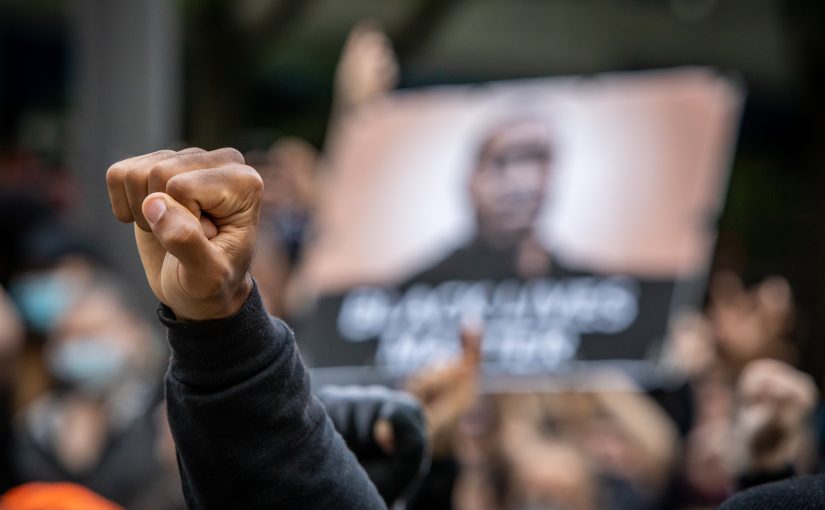
“When you think about Black Lives Matter, when you think about the movement that has been created over the last five years, remember that our movement is about imagining a world where black folks are actually free. Imagining a world where the word poverty is a past tense, imagining a world where we don’t need handcuffs or shackles any longer, imagining a world that we all deserve to live in.” —Patrisse Cullors, co-founders of #BlackLivesMatter
In this week’s The Pulse newsletter, just days ahead of Juneteenth, we share voices from the Bioneers community — Angela Glover Blackwell, john a. powell, Kimberlé Crenshaw, Patrisse Cullors and Heather McGhee — discussing the movement for racial justice, how it has progressed, and its potential powerful future.
Angela Glover Blackwell – Transformative Solidarity for a Thriving Multiracial Democracy
True solidarity requires stitching together what appears separate into a powerful, magnificent whole. The honed, deliberate, transformative practice of solidarity produces an exhilarating recognition of our interconnectedness and interdependence—essentials for thriving democracy. Angela Glover Blackwell is a renowned civil rights and public interest attorney, longtime leading racial equity advocate, and founder of PolicyLink, the extraordinarily effective and influential national research and action institute that advances racial and economic equity by “Lifting Up What Works.” In this talk, Angela Glover Blackwell discusses transformative solidarity and why it’s necessary for a thriving multiracial democracy.
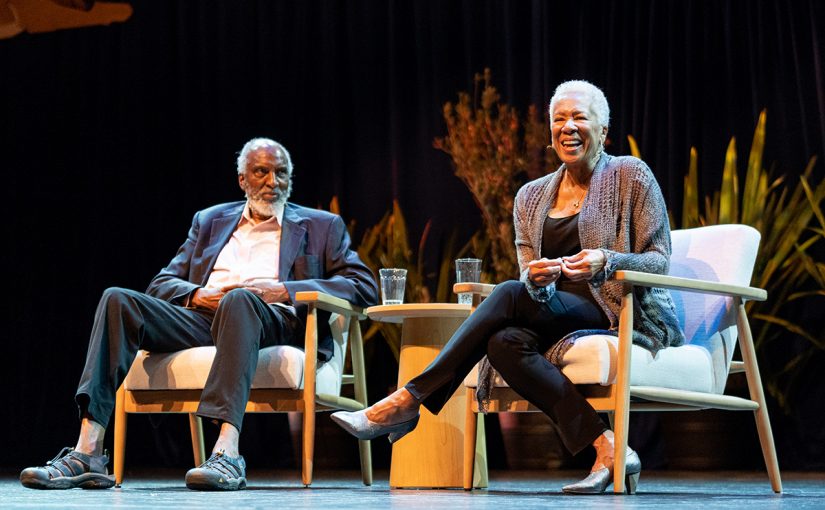
How can we, as a society, move from “othering” to belonging? What and whom does othering actually benefit? How can we expand the circle of human concern and concern for nature? How can we live into our innate interconnection to create true inclusivity and wholeness? How do we build the structures, institutions, policies, cultures and stories that will support that inclusivity? Angela Glover Blackwell and john a. powell, renowned law professor, activist, and founder of the Othering and Belonging Institute at UC Berkeley discuss these critically important, existential questions.
Kimberlé Crenshaw, Patrisse Cullors and Heather McGhee: In Conversation with 3 Racial Justice Movement Leaders
We continue to witness a national and international uprising, demanding an end to the systemic racism that has enabled the unforgivable police murder of countless black men and women. In support of this movement for change, we’re sharing a trio of short podcast episodes that address racial injustice, intersectionality, #BlackLivesMatter and more.
This week, the Othering & Belonging Institute launched its first-ever transatlantic initiative, the Democracy and Belonging Forum, a space for civic leaders in Europe and the U.S. who are committed to countering pernicious polarization by bridging across lines of difference while centering the needs and concerns of marginalized groups.
NOW AVAILABLE! Nature, Culture & the Sacred: A Woman Listens for Leadership, 2nd Ed.
We are excited to announce that the second edition of Nina Simons’ book, Nature, Culture & the Sacred: A Woman Listens for Leadership, is now on sale! Nature, Culture & the Sacred offers practical guidance and inspiration for anyone who aspires to grow into their own unique form of leadership on behalf of positive change. Join Nina on an inspiring journey to shed self-limiting beliefs, lead from the heart and discover beloved community as you cultivate your own flourishing and liberation.
How can we, as a society, move from “othering” to belonging. What and whom does othering actually benefit? How can we expand the circle of human concern and concern for nature? How can we live into our innate interconnection to create true inclusivity and wholeness? How do we build the structures, institutions, policies, cultures and stories that will support that inclusivity? Angela Glover Blackwell, Founder-in Residence at PolicyLink, which works to improve access and opportunity for all low-income people and communities of color, and john a. powell, renowned law professor, activist, and founder of the Othering and Belonging Institute at UC Berkeley, delve deep into these critically important, existential questions.
This discussion took place at the 2022 Bioneers Conference.
PANELISTS
Angela Glover Blackwell, one of the nation’s most prominent, award-winning social justice advocates, is “Founder-in-Residence” at PolicyLink, the organization she started in 1999 to advance racial and economic equity that has long been a leading force in improving access and opportunity in such areas as health, housing, transportation, and infrastructure. The host of the Radical Imagination podcast and a professor at the Goldman School of Public Policy at UC Berkeley, Angela, before PolicyLInk, served as Senior Vice President at The Rockefeller Foundation and founded the Urban Strategies Council. She serves on numerous boards and advisory councils, including the inaugural Community Advisory Council of the Federal Reserve and California’s Task Force on Business and Jobs Recovery.
Learn more about Angela Glover Blackwell at PolicyLink.
john a. powell, Director of the Othering and Belonging Institute and Professor of Law, African American, and Ethnic Studies at UC Berkeley; previously Executive Director at the Kirwan Institute for the Study of Race and Ethnicity at Ohio State, and prior to that, founder/Director of the Institute for Race and Poverty at the University of Minnesota, has also taught at numerous law schools, including Harvard and Columbia. A former National Legal Director of the ACLU, he co-founded the Poverty & Race Research Action Council and serves on the boards of several national and international organizations. His latest book is: Racing to Justice: Transforming our Concepts of Self and Other to Build an Inclusive Society.
Judy Baca, one of the most renowned “engaged” artists of the last half-century, will be presenting a keynote speech at the Bioneers 2023 Conference. Click here to register for the conference or to learn more about the conference speakers.
In 2007, artist Judy Baca joined Bioneers for a conversation centered on her inspiration:
“That’s how I came to be a muralist. It came out of my desire to work across differences, to work with young people, and to create something that had meaning in the midst of a social revolution. I saw these young people fighting with each other at a time when they needed to join and work for the betterment of their communities.”
Judy Baca
An artist best known for her murals speaking to social justice issues, leaders, and solutions, Baca has been bridging divides and bringing communities together for half a century, but her work hasn’t seen widespread exposure until recently — a story told in a New York Times article titled “A Judy Baca Moment: ‘My Work Has Been Good for a Long Time.’”
In the article, Baca points to the rise in social justice activism and the art community’s desire to keep up with the times as reasons for her recent soaring popularity. “They are going, ‘Oh my God: We don’t have a Latina. Oh my God: We don’t have very many women. Oh my God — and then you know there’s like, ‘Get her — we click off these five things,’” she says in the article. “I mean that’s not to say that my work isn’t good. I mean no — my work has been good for a long time. And it’s been better and better.”
Baca is perfectly on-point when she says she’s been good for a long time — not just “good” as an artist, but “good” as a social-justice warrior. Working against the grain and without any expectation of praise from the art establishment, Baca has served as a sort of artistic conduit for neighborhoods and community members with something important to say. Her murals are generally the result of close collaboration — both in ideation and execution — with the people who live, play, or work near a mural site. As a result, Baca’s completed works often speak to important justice issues, but the shared creation of the works can be just as moving.
In celebration of Judy Baca’s recent, much-deserved acclaim, we’re happy to share two inspirational keynotes presented by Baca at Bioneers Conferences, alongside a handful of media further telling her story.
While working with at-risk youth to create The Great Wall of Los Angeles, the world’s longest mural, Baca realized that restoring a disappeared river also meant restoring disappeared cultures.
Caveat: Before reading this article, it is important to first acknowledge that many people living in the U.S. are not lucky enough to have a yard. For many Americans, home ownership or even renting a home with access to a yard is not possible due to race-based, intergenerational, structural inequalities.
Americans love to manicure their lawns. It is a sign of pride in homeownership deeply steeped in the “American Dream” to buy a house in the suburbs and raise a family. This “dream,” however, belies deeper, nefarious roots in settler colonization and white supremacy.
The earliest American lawns were modeled after the elaborate gardens of English and French aristocracy in an attempt to legitimize their status in the newly formed U.S. But it wasn’t until well into the 20th century that the lawn became a status symbol of escaping poverty. Americans (overwhelmingly white Americans) were able to move from crowded cities and rural landscapes to the newly formed suburbs designed to look like one continuous lawn space from house to house. Conformity to lawn care standards was, and still is, a sign that one is a “good neighbor.”
This suburban vision of America erases the ongoing structures of power, domination, and extraction that made homeownership and the accumulation of intergenerational wealth possible for (predominantly) white settler descendants. All of America began as Native land. As these lands were extracted from Indigenous stewardship, settlers drastically changed landscapes through the destruction and replacement of Native biodiversity to accommodate new economies. These new economies, including the lawn care industry, are only possible with the removal of Indigenous peoples, the enslavement of African descendants, and the ongoing exploitation of labor, typically from Latin America, and other nations that have asymmetrical economies due to the extractive practices of wealthy Northern nations. Moreover, the majority of American suburbs have a history of racist redlining to keep out people of color.
What does it mean to “Decolonize” Your Yard?
To “colonize” means to take control of land outside of state borders. Settler colonization involves displacing the original inhabitants through force and replacing them with a new population that upholds the invading state’s power. Applying this concept as a metaphor, to colonize a yard means to remove Indigenous plants and replace them with something foreign, disrupting and often destroying the original ecosystem in the process. On the other hand, “decolonizing” — or rather, “Indigenizing” — a yard means replacing invasives with Native plants local to the area. You can still decide on what plants you want and the design of your yard, which is the most fun part of gardening, in my opinion.
I also believe that a “decolonized” yard should fight back against extractive capitalism, which has led to our biggest social and environmental problems, by growing food that can be eaten year-round using organic, preferably permaculture practices. Not only is home-grown produce fresher, tastier, healthier, and more fun, but growing it yourself reduces the carbon footprint and waste associated with purchasing food at the supermarket.
I have been experimenting with decolonizing my yard for the past several years. I started by replacing water-guzzling shrubs with Native bushes along the side fence. The dirt patch in my backyard now includes a Native garden with several medicinal plants. When I was gifted heirloom corn, beans, and squash seeds last year, I tried to grow a “Three Sisters” garden, but the gophers ate the beans and squash. And, my daughter has cultivated a wildflower patch ever since she could walk.
The author’s yard before she began the process of Indigenizing it.
I am not perfect. My front yard, which I only begrudgingly mow during the wet season, has a Native oak in it surrounded by wild and invasive grasses. Someday, I hope to establish a xeriscape perennial garden there. My Native plant garden in the back contains a couple of non-Native fruit trees and plants that existed before I moved in. I also planted non-local but water-tolerant plants, shrubs, and flowers that I like for their aesthetics along another border.
While my “decolonized yard” experiments are nowhere near complete (and will probably never end), I have observed several benefits over the years.
The Benefits of Decolonizing Your Yard
Conserves Water. Ignore this point if you live in a part of the country where it rains often and consistently. According to the EPA, landscape irrigation accounts for nearly one-third of all residential water use, totaling nearly 9 billion gallons per day. And, as much as 50% of this water is wasted due to environmental conditions and inefficient irrigation methods and systems. I live in a place with some of the most expensive water in the country, where summer water bills for people who water their grass easily tops $500 a month! Why would you waste water in a place where it is scarce?
Reduces Fossil Fuel Pollution. My neighbors love to leaf blow. One neighbor of mine leaf blows several times a week (and often, multiple times a day). My other neighbor has a “lawn person” come every other Saturday morning, at which time he blows three houses around me, subjecting the neighborhood to his extremely loud gas blower for hours. One study shows that the hydrocarbon emissions from a half-hour of yard work with the two-stroke leaf blower are about the same as a 3,900-mile drive from Texas to Alaska in a Ford F 150. Gas lawn mowers are just as bad.
Reduces Chemical Pollution. As you can imagine, my neighbors also chemically poison their trees. When they ask if they can “courtesy spray” mine once or twice a year, I always say “no thanks.” (And, my trees are doing just fine without poison treatments!) Pollutants in the form of pesticides and fertilizers harm the environment and web of life as these chemicals make their way into the groundwater. My neighborhood has a serious problem with peoples’ pets dying of poisoning (vet confirmed) from eating small mammals that have ingested concentrated amounts of “yard maintenance” poison from their food sources. If peoples’ dogs and cats are dying of this, so likely are the wild animals that we share our community with. If that’s not convincing enough, Americans have an average of 43 different pesticides in their bloodstreams according to the U.S. Centers for Disease Control and Prevention.
The author’s yard today.
Reduces Noise Pollution. The noise pollution emitted by leaf blowers and lawn mowers also deeply disturbs ecosystems. I observed that my neighbor who blows every day has practically no birds in his yard, while my yard hosts several species. Decolonizing your yard involves a responsibility to make a habitat that is welcoming to insects and animals who rely on audio cues to find food, avoid danger, mate and eat. Loud noises from garden tools drown out natural sounds and stress wildlife, threatening their survival and the stability of animal populations. On a broader scale, a meta-study in the Royal Society suggests that human-caused noise pollution negatively affects every kind of animal, and even plants, across the planet, contributing to the human-caused 6th mass extinction.
Invites Animals. If you want to attract certain species, your yard needs to have the plants that they eat (or that provide the food for their prey). I have carefully selected plants to optimize the variety of types of birds that come to my yard as well as insects. I was thrilled last summer when I saw a California Mantis for the first time in the wild, in my garden! In addition to planting flowers that attract endangered bees and other pollinators, I love watching the annual ladybug hatching season.
Controls Animals You Don’t Want. My neighborhood has a huge gopher problem. When I planted a Native garden in my backyard, I noticed that the gophers stopped coming up there, yet they persisted in digging up holes throughout my front yard, which still has the grass they like to eat. My theory is that the Native plants have evolved alongside the gophers in a kind of an arms race to adopt traits that make themselves not tasty for gophers. Remember those ladybugs I mentioned? They love to eat the pests that go for my food garden. It’s a win-win situation.
Educates About Indigenous Peoples. As I began my journey to replace invasives with Native plants, I had to learn what these plants are, and in what kind of conditions they grow. I found it fun to plan the textures, shapes and colors that would be side-by-side in the backyard. As I was researching, I also took note of how each plant might be useful to insects and animals, including humans. Whenever possible, I tried to learn about the plants from Indigenous knowledge systems, the more local the better. In the process, I learned more about whose ancestral territory I inhabit, how this tribe cultivated the wild, and also about knowledge that was lost throughout the brutal California genocide.
Provides Food and Medicine. I have been playing around with different kinds of vegetable gardens over the years. I am admittedly not very good at it, but each year I have some kinds of fresh veggies that can be picked to add to our meals. Last year, my cherry tomato bush went perennial. So, in addition to my tomatoes tasting far better than store-bought, I didn’t have to buy tomatoes at the store anymore. I also deliberately grew several plants that can be used to treat various ailments used in dried forms in tea. (I also learned that it takes a lot of time and effort to harvest and dry these!)
Offers a Way to Be In Harmony With Nature. Having a yard with Native plants has been so fulfilling. As someone who started with a “black thumb,” I have learned so much about plants and how they interact with insects and animals. But perhaps the biggest benefit that I have gleaned from this process is time spent outdoors observing nature and the joy of watching the plants grow. Better yet, I included my daughter in all these activities, and now she has a deep and abiding love for nature.
Join the Movement to Decolonize Your Yard! Will you join the movement to decolonize YOUR yard? Like me, you don’t have to be good at it. You don’t have to do it all at once. And, you don’t need to virtue signal or take the moral high ground over people with conventional yards. All you need to do is start with one of the following suggestions:
Get a water catchment system
Make your irrigation system more efficient
Replace invasive plants with Native plants.
Make a garden for yourself.
Make a garden for neighbors in your own yard or community space.
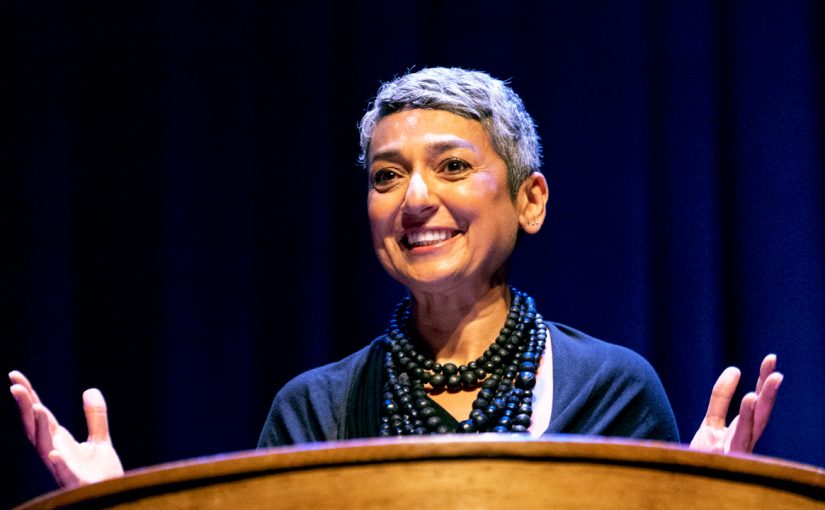
The desperately needed radical change in humanity’s environmental and socio-political behaviors requires a transformation of our core attitudes toward the “feminine” (in all its forms) at the deepest levels of our psyches. Women on the frontlines are often both the main victims of climate impacts and leaders in the struggle for climate justice. Zainab Salbi has dedicated her life to empowering women around the globe, and she has now co-founded Daughters for Earth, a dynamic new campaign to mobilize women worldwide to support and scale up women-led efforts to protect and restore the Earth.
This week, we explore how women’s leadership is transforming the movement for climate justice, balancing action in the world with individual healing, and creating more resilient networks and communities.
Zainab Salbi – Daughters for Earth
As climate change and the destruction of Earth’s lands, waters and wildlife accelerate, women around the world are the most impacted, but they are also the frontline warriors fighting to protect our future. Unfortunately, their work and leadership are often not seen, appreciated, or funded. In order to address that marginalization, female leaders in the women’s rights, environmental and philanthropic sectors came together to found Daughters for Earth (under the auspices of the visionary philanthropic organization, One Earth). A co-founder and leader of this new initiative is Zainab Salbi, a widely celebrated humanitarian, author, thought leader, and journalist. In this presentation, Zainab explores the interconnection between our personal search for healing and how we face the challenges of climate change.
Daughters for Earth: Women and the Climate Change Movement
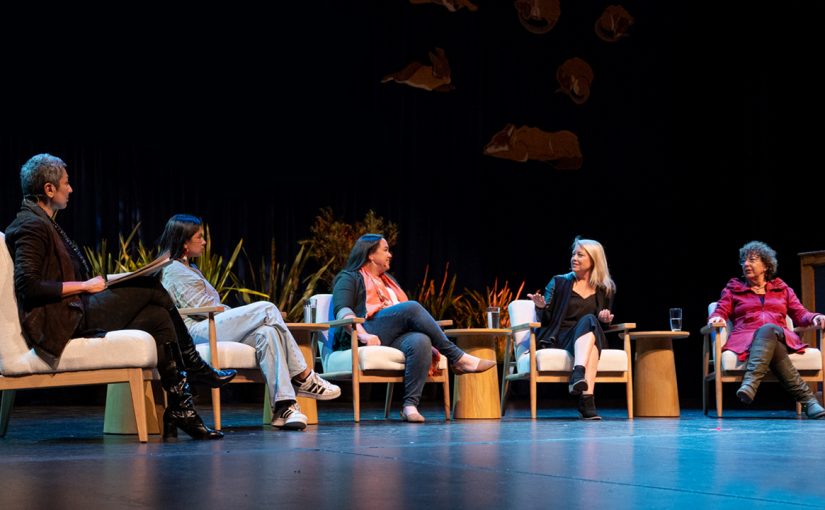
Women all over the globe, especially in the “developing world,” are the ones who most often bear the brunt of having to contend with the radical disruptions visited upon their families and communities by climate change and environmental degradation, yet women’s voices are far too often ignored. Furthermore, climate change and physical and psycho-spiritual health are almost always discussed as separate issues, but the personal and the political, the heart and the mind are not just interconnected, they are all one. In this discussion, Justin Winters, Zainab Salbi, Helena Gualinga, Kahea Pacheco, and Nina Simons explore the impact of climate change on women and how to assure their full inclusion in all climate solutions, how these struggles relate to the personal search for healing, and what it will take to create authentic global change.
Daughters for Earth | A women-led campaign that is bringing together women’s rights, environmental and philanthropic sectors to address the marginalization of women in climate change action.
Women’s Earth Alliance | An organization that identifies grassroots women leaders fighting for climate justice and invests in their long-term leadership through training, funding, and connecting them to a network of support.
Amazon Watch | An organization that works to protect the Amazon’s ecological systems by partnering with Indigenous leadership and environmental organizations in campaigns for human rights, and corporate accountability.
One Earth | A nonprofit organization working to accelerate collective action to solve the climate crisis through groundbreaking science, inspiring media, and an innovative approach to climate philanthropy.
Nature, Culture & the Sacred: A Woman Listens for Leadership, 2nd Ed. – Launching June 7th!
We are excited to announce that the second edition of Nina Simons’ book, Nature, Culture & the Sacred: A Woman Listens for Leadership, is launching on June 7 and is now available for pre-order! Nature, Culture & the Sacred offers practical guidance and inspiration for anyone who aspires to grow into their own unique form of leadership on behalf of positive change. Join Nina on an inspiring journey to shed self-limiting beliefs, lead from the heart and discover beloved community as you cultivate your own flourishing and liberation.
Women all over the globe, especially in the “developing world,” are the ones who most often bear the brunt of having to contend with the radical disruptions visited upon their families and communities by climate change and environmental degradation, yet women’s voices are far too often ignored. Furthermore, climate change and physical and psycho-spiritual health are almost always discussed as separate issues, but the personal and the political, the heart and the mind are not just interconnected, they are all one. In this session, a panel of leading women activists explores the impact of climate change on women and how to assure their full inclusion in all climate solutions, how these struggles relate to the personal search for healing, and what it will take to create authentic global change.
With: Zainab Salbi, co-founder, Daughters for Earth; Nina Simons, co-founder, Bioneers; Justin Winters, co-founder and Executive Director, One Earth; Kahea Pacheco, Co-Director, Women’s Earth Alliance (WEA); Helena Gualinga, co-founder of Polluters Out.
This discussion took place at the 2022 Bioneers Conference.
PANELISTS
Zainab Salbi, a celebrated humanitarian, author, and journalist, co-founder of DaughtersforEarth.org, “Chief Awareness Officer” at FindCenter.com, and host of the Redefined podcast, founded Women for Women International, an organization to help women survivors of conflicts, when she was 23, and built the group from helping 30 women to reaching nearly half a million and raising tens of millions of dollars to help them and their families rebuild their lives. The author of several books, including the bestseller, Between Two Worlds and, most recently, Freedom Is an Inside Job, she is also the creator and host of several TV shows, including #MeToo, Now What? on PBS.
Kahea Pacheco (Kanaka ‘Ōiwi), an advocate for Indigenous people’s rights, intersectional environmentalism and climate justice, is Co-Director of the Women’s Earth Alliance (WEA), which she joined in 2011 as a Legal Research Intern after graduating from law school. At WEA, Kahea has over the years, among other achievements, facilitated legal advocacy partnerships for Indigenous women-led environmental campaigns and co-led a partnership with the Native Youth Sexual Health Network to develop the “Violence on the Land, Violence on our Bodies” report and toolkit.” Kahea, who has lived and traveled around the world, currently serves on the Advisory Council for 1t.org (the trillion trees platform of the World Economic Forum) and on the board of Planet Women, and is a Program Advisor to Jane Goodall’s Trees for Jane campaign.
Helena Gualinga is an Indigenous youth environmental and climate justice advocate from the Kichwa community of Sarayaku. She is a co-founder of Polluters Out and is a Young Women Project Lead with WECAN. Her work and story is featured in the recently released documentary, “Helena from Sarayaku,” which premiered at the DC Environmental Film Festival.
Justin Winters, the co-founder and Executive Director of One Earth, a philanthropic organization working to galvanize science, advocacy and philanthropy to drive collective action on climate change, is focused on creating a vision for the world in which humanity and nature coexist and thrive together, based on three pillars: 100% renewable energy; protection and restoration of 50% of the world’s lands and oceans; and a transition to regenerative, carbon-negative agriculture. Prior to One Earth, Justin served as Executive Director of the Leonardo DiCaprio Foundation for 13 years, where she awarded over $100 million in grants across 60 countries.
Nina Simons, co-founder of Bioneers and its Chief Relationship Strategist is also co-founder of Women Bridging Worlds and Connecting Women Leading Change. She co-edited the anthology book, Moonrise: The Power of Women Leading from the Heart, and most recently wrote Nature, Culture & The Sacred: A Woman Listens for Leadership. An award-winning social entrepreneur, Nina teaches and speaks internationally, and previously served as President of Seeds of Change and Director of Strategic Marketing for Odwalla. (ninasimons.com)
As climate change and the destruction of Earth’s lands, waters and wildlife accelerate, women around the world are the most impacted, but they are also very often the frontline warriors fighting to protect our future. Unfortunately, their work and leadership are often not seen, appreciated, or funded. In order to address that marginalization, female leaders in the women’s rights, environmental and philanthropic sectors came together to found Daughters for Earth (under the auspices of the visionary philanthropic organization, One Earth).
A co-founder and leader of this new initiative is Zainab Salbi, a widely celebrated humanitarian, author, thought leader and journalist. When she was 23, she began her trajectory by founding Women for Women International, a groundbreaking organization that helped hundreds of thousands of women survivors of conflicts. Now she has gone on to an illustrious career in media and activism, including Daughters for Earth. Zainab explores the interconnection between our personal search for healing and how we face the challenges of climate change.
This talk was delivered at the 2022 Bioneers Conference.
Zainab Salbi, a celebrated humanitarian, author, and journalist, co-founder of DaughtersforEarth.org, “Chief Awareness Officer” at FindCenter.com, and host of the Redefined podcast, founded Women for Women International, an organization to help women survivors of conflicts, when she was 23, and built the group from helping 30 women to reaching nearly half a million and raising tens of millions of dollars to help them and their families rebuild their lives. The author of several books, including the bestseller, Between Two Worlds and, most recently, Freedom Is an Inside Job, she is also the creator and host of several TV shows, including #MeToo, Now What? on PBS.
In this panel, Zainab Salbi, Nina Simons, Justin Winters, Kahea Pacheco, and Helena Gualinga explore the impact of climate change on women and how to assure their full inclusion in all climate solutions, how these struggles relate to the personal search for healing, and what it will take to create authentic global change.
In this panel from the 2021 Bioneers Conference, Osprey Orielle Lake, Amisha Ghadiali, Naelyn Pike, and host Nina Simons discuss why the combination of honoring, respecting and learning from nature, being motivated by a deep quest for justice, and cultivating the leadership of women can provide a potent, three-pronged strategic path for getting us to a world we want.
A Feminist Climate Renaissance is emerging in the movement for climate justice as women––specifically women of color––are transforming how we approach a life-giving future for all. In this keynote address, Ayana Elizabeth Johnson talks about the emerging Feminist Climate Renaissance and draws on wisdom from an anthology by women climate leaders she co-edited with Katharine Wilkinson, All We Can Save: Truth, Courage, and Solutions for the Climate Crisis.
Although there is still a long way to go, representation for people of color and other marginalized communities in media and our government is an important leap toward dismantling systemic violence. However, as the US becomes more diverse, growing resentment among some White people is feeding a narrative that the White community stands to lose their entitlement to power and privilege. This anger is thriving in a surging White nationalist movement.
In his new book, Empire of Resentment: Populism’s Toxic Embrace of Nationalism, UC Berkeley scholar Lawrence Rosenthal takes us behind the headlines to the realm of human emotion to understand the resentment underpinning the growing White nationalist movement. In these three excerpts, Rosenthal explores the anger and resentment that has coalesced among members of the White community who feel deprived of their birthright.
Lawrence Rosenthal is the Founder and Director of the UC Berkeley Center for Right-Wing Studies, a research unit founded in 2009 and dedicated to studying right-wing movements in the 20th and 21st centuries.
At the international level, too, the current synthesis of ideological nationalism and anti-immigrant populism of which Trumpism is a part differs from twentieth-century fascism. Unlike Communism which developed a Communist International, and unlike Socialism which developed a Socialist International, there was never a viable Fascist International. There are several reasons for this, but one reason, given the nature of identity formation, stands out from the others. Nationalism based purely on the nation-state breeds identities that necessarily come into conflict with similarly defined nationalisms. This is especially true when those nationalisms are bellicose and assert the superiority of one’s own nation….
But today’s version of populist nationalism has overcome this problem. How? The nationalists in country after country share a Common Other. And through their “othering,” the Nationalist International has forged a Common Identity. This is the crucial difference in identity formation that distinguishes current populist nationalism from the fascist nationalisms of the interwar years of the twentieth century. With a Common Other you get a Common Identity. With a Common Identity you have the makings of a Nationalist International.
The shared Other of the Nationalist International are immigrants and refugees. Almost always dark skinned. Often of different religions. And largely hailing from places like the Middle East and Africa. The USA has an othering specialization in refugees and immigrants from Latin America. The Nationalist International’s political opposition are the “politically correct” multiculturalists and feminists, whom the nationalists often call Cultural Marxists, or the global liberal elite, or simply the globalists, whose power and international organizations—like the European Union—are in the nationalists’ crosshairs.
The shared identity of the Nationalist International, what its various branches see themselves standing for, goes by many names. Sometimes they are the defenders of Western civilization. Or of Western culture. Or European civilization. One American alt-right group called itself Identity Europa. In Europe, as well as in the United States, some simply call themselves Identitarians. Or Generation Identity.
In the same vein, branches of the Nationalist International see themselves as the defenders of Christian civilization. Or the defenders of traditional values. These are the movements that breed a special animus for gays and feminists. In Poland, the ruling party, Law and Justice, grounds its populist nationalism in its Catholic culture. At its party’s convention in March 2019, the party’s leader, Jarosław Kaczyński, declared war on the “gay threat.”
At the top of this food chain is Putin’s Russia. More than any other populist leader in Europe, Putin is operating with a geopolitical strategy in mind. He loosely follows the theories of his “brain,” the eccentric political philosopher Alexander Dugin, who is something of a cross between Steve Bannon and Rasputin…
The Road to the Tiki Torches
One acute observer of this propensity was Steve Bannon. According to Joshua Green:
Back in 2007, when he’d taken over Internet Gaming Entertainment, the Hong Kong company that systemized gold farming in World of Warcraft and other massively multiplayer online games, Bannon had become fascinated by the size and agency of the audiences . . .
It was an observation that would stay with Bannon through his Breitbart days and into the Trump campaign. In 2016, “He wanted to attract the online legions of mostly young men he’d run up against several years earlier, believing that internet masses could be harnessed to strike a political revolution.” He would find a way to leverage the subculture into the alt-lite.
The prequel to the transformation of the alienated into the alt-lite was Gamergate. With Gamergate the subculture morphed, turning into the kind of identity group that has come to the fore with the right-wing populism of the Tea Party and Trump eras. Unlike identity groups like women or gays, which organized on the basis of deprivation (of justice, equality, etc.), this was an identity group organized on the more acid basis of dispossession, of the feeling of having had something taken away. Identity followed from the furious sense of what was taken away. Unlike the alt-right, whose identity was based on whiteness, for this subculture the identity was based on maleness. For the alt-right the Other were immigrants and people of color. For the alienated young men, the Other was women. This is the identity, and the Other, that would follow them into becoming the alt-lite.
The Gamergate spark was a boyfriend spurned. The ex-girlfriend was a game developer who came out with a game called Depression Quest that dealt with the psychological condition of depression. This aroused displeasure in the subculture; gaming was supposed to be about simulated violence and Depression Quest seemed to introduce a strain of political correctness into a hostile environment. Gamergate broke when the ex-boyfriend reacted to a gaming reporter’s mention of Depression Quest and this reporter subsequently became the developer’s new boyfriend. The incensed ex published a 9,500-word screed about their breakup; his inclusion of her emails, texts, and other communications foreshadowed the tsunami of trolling and doxxing that made Gamergate infamous and frightening. Above all, the ex accused her of sleeping with the reporter to obtain a good review of the game. The scale and the viciousness of Gamergate was astonishing. Not merely the developer, but female journalists who covered the case, were subject not only to months of trolling and doxxing, but to rape and death threats. Beyond simply having to alter or abandon their online identities, in some cases these women, whose addresses were made public, were forced out of their homes.
For Steve Bannon, Gamergate was a confirmation of his ideas about the political potential of alienated young men. Gamergate could be a gateway drug to political mobilization.
(Grayed Out) Illiberalism
At its heart, paleoconservative and anti-immigrant nationalism dissented from the liberal point of view in seeing the underpinning of democracy as traditional, rather than as propositional. It was not the words that were contained in America’s founding documents that defined the nature of American democracy; but it was the culture, religion, and ethnicity of the authors of those words that formed the enduring and immutable basis of that democracy. Propositional national feeling in this view is spiritually unsatisfying and leaves the body politic vulnerable to political correctness. Trumpism represents a radicalization of this point of view: It suggests not merely that liberalism has misunderstood and distorted the essential premise of the American nation, but that in its globalist hegemony since 1945, encompassing both Democratic and orthodox Republican thinking and policy—and in particular with its current multiculturalism, gay and feminist political correctness, and, above all, its openness to immigration—liberalism has brought the country to the point of an existential crisis.
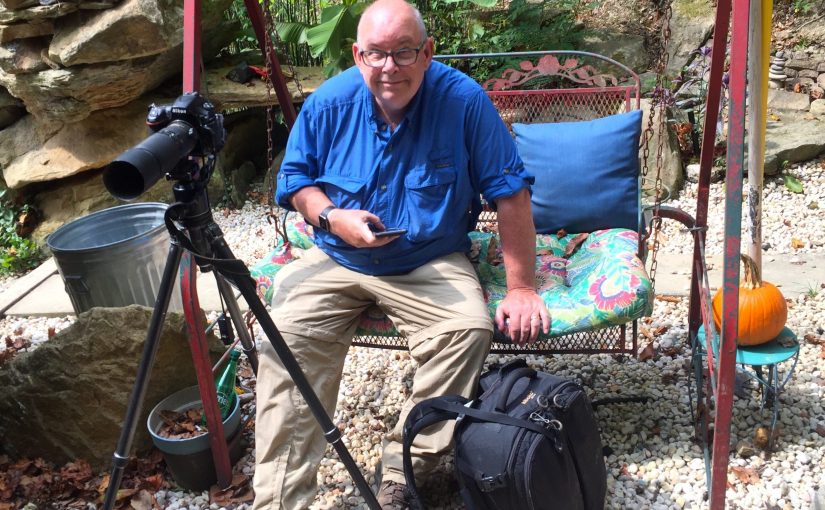
By Ann Armbrecht, Director of the Sustainable Herbs Program
Like many, I was always struck by the many different sides of the late Steven Foster, especially by both his incredibly rigorous intellect and his deep appreciation for the beauty of plants and how his photographs so powerfully bring their spirit of the plants to life.
And so, several years ago, I asked him how he did it and what, especially, the spirit of the plants meant to him. I forgot I had the file until searching his name in my computer to write something after his death. I came across these reflections that he shared in an email in 2019, lightly edited by me, as he so lightly edited so many of the things I have shared on this website. –AA
Dear Ann,
Thanks for your kind words. A walk in the woods, or going out to look at plants, has been a conundrum, often a struggle, in the sense that my left brain lights-up and I’m experiencing plants in “thinking terms”; therefore, a walk in the woods can be anything but relaxing. I’m analyzing, looking at morphological detail, conjuring-up scientific names, processing whatever information comes up in association. Then in looking for something specific to photograph, I’m analyzing the light, calculating dimensional distance and angles, rubbing my chin to think about all of these things at once.
After that processing, though, I can switch to my right brain. When it comes time to actually photograph an individual plant, plant part, or habitat, when all that thinking and computing is done, I’m there with the plant, experiencing it as one being to another.
I don’t have to think about the camera or the photography at that point, because I have enough experience that that equipment simply becomes an extension of myself. I don’t have to think about it.
I can turn off my mind and just see beauty as revealed by the plant. My purpose is to share that moment with the world. It is not unusual to be with a single plant for an hour or more in that context.
I was just thinking about this a couple of days ago, being in the forest and realizing that just experience — no books, no Google — had given me an acute sense of familiarity (i.d.) of woody plants without leaves at this time of year. Hence, I can easily pick out the endemic new species Ozark leatherwood (Dirca decipiens), for example, by just glancing at it through the understory. That’s where knowledge has morphed into awareness. There’s no teaching that.
Part two of the first question, is that I now go on hikes with the intention of just being in wild places with the herbalist/scientist/photographer/writer mind turned off within me, practicing “no mind” with a focus centered on the third eye to see without seeing. To see without thinking. Just be. Camera, equipment, field guides, extraneous stuff left at home (except for my iPhone, of course).
Approaching the World with Awe
On the second question, to quote Will LaPage (once the director of NH State Parks, and an author of many books on parks policy), “Without knowledge there is no appreciation. Without appreciation there is no conservation.” Being aware, I suppose, is simply approaching the world with awe. Rather than just using the “five senses” one has to ask questions to gain knowledge, then develop experience from the appreciation that knowledge garners. It means experiencing the world with more than an open mind, but an open heart and believing in one’s own intuition, listening within, in order to move beyond the ordinary experience of the world. Of course, all easier said than done…especially in a man’s body and social condition.
In Memoriam: Kongjian Yu (1963–2025) was a visionary leader in ecological urbanism whose work reshaped cities around the world. This 2022 Bioneers talk captures his enduring vision for nature-based design.
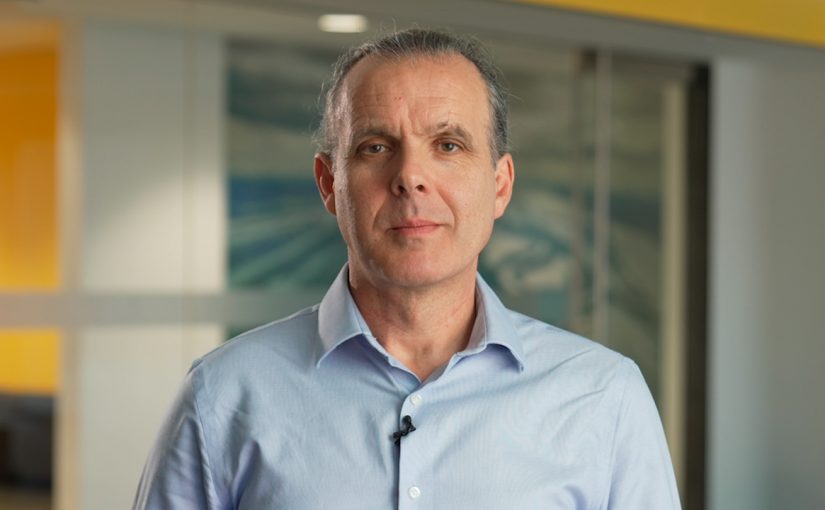
What if cities were designed so that they could absorb excess rainfall, neutralize floods, and turn their streets green and beautiful in the process? In this 2022 talk, Kongjian Yu shares how cities can be designed to absorb excess rainfall, neutralize floods, and transform urban spaces into living green infrastructure. This award-winning leader in ecological urbanism and landscape architecture, and founder of Turenscape in Beijing, became world-renowned for his “sponge cities” and other revolutionary nature-based solutions. These approaches are being implemented in well over 200 cities in China and beyond. Yu’s extraordinary city-wide systems of stormwater-retaining ponds, wetlands, and parks draw from both ancient Chinese hydrological wisdom and cutting-edge design to offer the whole world a model of inspired climate adaptation in an era of rising seas and extreme rainfall events.
This talk was delivered at the 2022 Bioneers Conference.
Kongjian Yu (1963-2025) was a world-renowned, award-winning leader in ecological urbanism and landscape architecture and the founder of the planning and design firm, Turenscape, in Beijing. Yu, who received a doctorate at The Harvard School of Design, founded the Graduate School of Landscape Architecture and the College of Architecture and Landscape Architecture at Peking University. Especially known for his “sponge cities” and other revolutionary nature-based solutions for climate adaptation, his approach to urban planning and design has been implemented in over 200 cities in China and beyond, and has significantly impacted national policies for improving the environment in China.
What will it take to turn our attention towards the rebuilding of our natural infrastructure, for the benefit of all life and human society? How can built infrastructure elegantly and respectfully engage with and support nature? The answers are not easy, but unsurprisingly, it often begins with letting nature lead. This panel discussion from the 2021 Bioneers conference features Ben Goldfarb, Dr. Crystal Kolden, Ariel Whitson, and Teo Grossman.
In this podcast, two winners of the 2012 Buckminster Fuller Challenge Award-visionary architect Jason McLennan of the acclaimed Living Building Challenge and entrepreneur Cheryl Dahle of The Future of Fish-demonstrate breakthrough systems designs that can transform major industries, create a healthy sustainable environment and make life beautiful and fun.
The world-renowned National Geographic Explorer in Residence Enric Sala launched the National Geographic Pristine Seas project in 2008 to explore and help inspire the protection of the last wild places in the ocean, an absolutely critical last-ditch effort to prevent the complete unraveling of global marine ecosystems. Made up of an extraordinary team of scientists, conservationists, filmmakers and policy experts, Pristine Seas has helped protect 6 million square kilometers of ocean habitat (more than twice the size of India!). Partnering with 122 different organizations and agencies across 23 countries, its work has inspired the establishment of some of the largest marine reserves in the world. Enric discusses the vital importance of healthy oceans to humanity’s future and what Pristine Seas hopes to accomplish in the years ahead.
This talk was delivered at the 2022 Bioneers Conference.
Enric Sala, Ph.D., a former professor who quit academia to become a full-time conservationist as a National Geographic Explorer-in-Residence, founded and leads Pristine Seas, a project that combines exploration, research, and media to inspire leaders to protect the last wild places in the ocean. To date, Pristine Seas has helped create 25 of the largest marine reserves on the planet, covering an area of more than 6.5 million square kilometers. Sala, a Fellow of the Royal Geographical Society, has, in the past 15 years, earned numerous prestigious awards and honors for his conservation work.
The cognitive and emotional benefits of healthy oceans and waterways have been celebrated through art, song, romance and poetry throughout human history. In this 2014 keynote address, marine biologist, activist, community organizer and author Wallace J. Nichols dives deeper and explore our blue minds through the dual lenses of evolutionary biology and cognitive science, reminding us that we are water.
Rod Fujita is the co-founder and Director of Research & Development for the Environmental Defense Funds Oceans Program. As the lead senior scientist, Rod has spent over 30 years leading a team of scientists and policy experts to identify marine conservation problems and design solutions to protect the planet’s oceans. In this article, he speaks about the importance of aligning the value of conservation with the value of people who make a living on fishing.
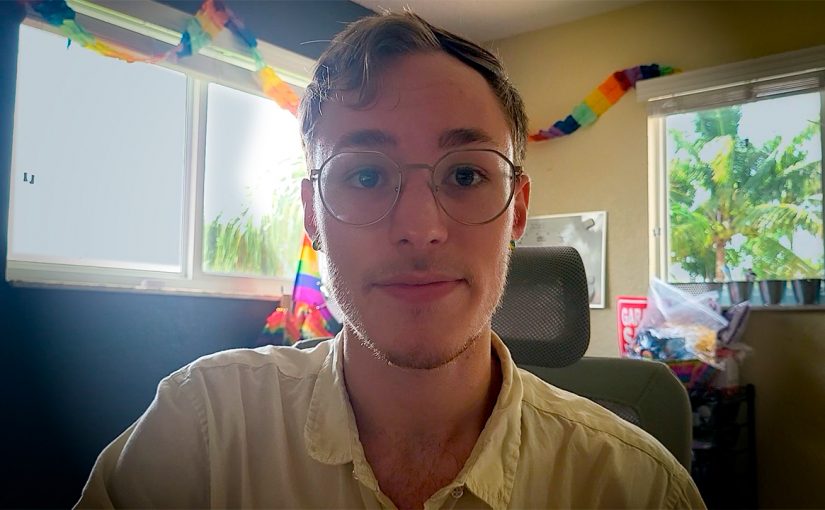
Gen Z has come of age in a world fraught with systemic injustice, a looming climate emergency, and constant attacks on democracy itself. With a generational psyche bred online, young people are able to communicate, learn, organize, and take action in ways never seen before. Maxx Fenning, founder and President of PRISM, a nonprofit organization that works to expand access to LGBT-inclusive education and sexual health resources for young people in South Florida, discusses his experiences standing on the shoulders of a decades-long fight for LGBT rights and how to help pass on the torch to this new wave of young activists.
This talk was delivered at the 2022 Bioneers Conference.
Maxx Fenning founded PRISM, an LGBT nonprofit in South Florida, at 17 years old. Now 19 and studying at the University of Florida Online, Maxx serves as PRISM’s President, where he works to expand access to LGBT-inclusive education and sexual health resources. In addition to his advocacy work, Maxx is active on TikTok, where he discusses hard-hitting topics on gender and sexuality, sexual health, mental health, and LGBT History, all in an effort to prove that safe sex is sexy.
Over the last 20 years, the Bioneers Youth Leadership and Education Program has served as an incubator for thousands of youth and educators to deepen their passion and power through self-expression, skills development, mentorship and deep relationship building within the broader community of Bioneers. The program has produced some of the most dynamic, engaging, and cutting edge programming within the Bioneers kaleidoscope and it continues to shape the work of youth movements, activism and education.
Vanessa Raditz (they/them) is one of the guiding voices of Queer Ecojustice Project and the producer of the film Fire and Flood. In this conversation with Maya Carlson of Bioneers, they offer insights into the many forms of queer resilience as well as the importance of visibilizing the vulnerabilities queer and trans folks face while also uplifting the resistance, regeneration and power of LGBTQ+ people in movements for justice, care and liberation.
Keep Your Finger on the Pulse
Our bi-weekly newsletter provides insights into the people, projects, and organizations creating lasting change in the world.