Panel Discussion – Dreaming Transformative Justice

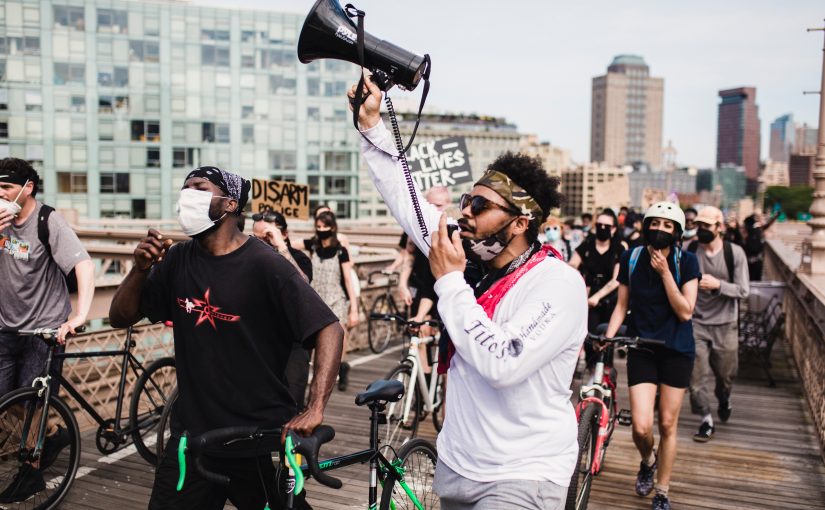
Movements for transformative justice and abolition have much to teach us about how to heal from harm and violence and rebuild communities grounded in liberation, justice, care and accountability. These movements have long-held visions of a world where each person and community have the basic rights of health, dignity, safety and belonging, without relying on oppressive state systems and punitive justice. They invite us to imagine what is possible when people can self-determine what justice feels like in their own communities, and practice how to build care, accountability, healing and repair on the individual, interpersonal and collective level. In our current moment, people of all ages are lifting up these movements as we all continue to reckon with some of the broken and violent systems of our society. The work to heal these wounds is not new. There is a rich and deep-rooted social ecosystem upon which new life is growing and iterating.      

How can the emerging visions and lessons learned support intergenerational collaborations and young movement leaders in their work today? How can the dreams and lived practices of these movements orient all of us towards more agency and healing in our own lives and the work that we do? What insights can these movements offer us in meeting the current moment of reckoning and rebuilding as well as guide us through uncertain futures?

Hosted by Liz Kennedy, Communications Director and Research Fellow at Lead to Life. With: Cory Greene, Co-Founder and Healing Justice Coordinator for How Our Lives Link Altogether (H.O.L.L.A.); Jadyn Fauconier-Herry, a recent graduate of New York University, where she earned her BA in Social and Cultural Analysis; Olka Baldeh, Communications Manager for the Essie Justice Group.


Panelists

Jadyn Fauconier-Herry, a recent graduate of New York University, where she earned her BA in Social and Cultural Analysis with a concentration in theories of Race, Class, and Punishment, aims to honor in her writing and research the work of radical Black thinkers who have come before her and those participating in current struggles and organizing efforts.

Cory Greene, Ph.D., formerly incarcerated himself, is: an organizer with the Formerly Incarcerated Convicted People and Family Movement (a national movement to change the public policy landscape of criminal justice); co-founder and Healing Justice Organizer with How Our Lives link Altogether (H.O.L.L.A.); a national organizer with the Education Liberation Project; as well as a research associate on numerous participatory action research projects. A former National Science Foundation, Ford Foundation, Echoing Green and Camelback Fellow, Cory’s organizing work has been featured in several documentaries, including: Ava Duvernay’s 13th, From Prison to NYU, and most recently, We Came to Heal.

Olka Baldeh, a Fulani storyteller, poet and nomad, and an environmental justice advocate and anti-police brutality activist for nearly a decade, currently works as the Communications Manager for the Essie Justice Group, a California-based nonprofit that serves women with incarcerated loved ones, and is also the founder of the Black Moon Podcast.

Liz Kennedy, a Detroit-based storyteller and organizer, is Program Coordinator for the Allied Media Conference, where she works to create spaces for artists and organizers to strategize, celebrate, and cross-pollinate across movements and mediums. Liz also works with Lead to Life, a collective of queer artists dedicated to “bridging racial and environmental justice through ceremony and art practice…to decompose systems of oppression.”

Panel Discussion – One Earth: Integrating Climate Action and Biodiversity Conservation into a Blueprint for a Livable Planet

The vast biodiversity of our planet is the underlying fabric supporting all life on Earth, but the prognosis is grim: biodiversity rates are continuing to plummet as extinctions of species accelerate. Fortunately, the evidence suggests that there are in fact viable pathways for successful action at a global scale, but only if we mobilize and act decisively and rapidly. In this session, we learn how we can protect and restore 50% of global landscapes while staying below 1.5°C temperature rise in the next few decades. Projects such as the newly launched Global Safety Net provide a roadmap: a bioregional approach combining world-class science, a clear focus on Indigenous rights and stewardship, support for grassroots action, and a vision for transformative philanthropy.

Hosted by Justin Winters, Co-Founder and Executive Director of One Earth, with: Carly Vynne, Strategic Partner at RESOLVE; Oscar Soria, Campaign Director at AVAAZ; Karl Burkart, Managing Director of One Earth; and Angela Amanakwa Kaxuyana, part of the senior leadership of the Brazilian Coordination of Indigenous peoples in the Amazon (COIAB).

This discussion took place at the 2020 Bioneers Conference. Watch more panels, keynote addresses, and performances from the conference.


Panelists

Justin Winters, formerly Executive Director of the Leonardo DiCaprio Foundation, is the co-founder and Executive Director of One Earth, an organization working to galvanize science, advocacy and philanthropy to drive collective action on climate change to forge a path forward to a 2050 in which 100% renewable energy; protection and restoration of 50% of the world’s lands and oceans; and a transition to regenerative, carbon-negative agriculture create a world in which humanity and nature coexist and thrive together.

Carly Vynne, Ph.D, is an ecologist and conservation strategist who seeks out creative solutions for how we can leave more room for nature in a rapidly changing world. She recently co-authored The Global Deal for Nature, which calls for an ambitious, time-bound set of nature-based targets that must be achieved if we are to solve the climate and extinction crises.

Oscar Soria, Campaign Director at the renowned, highly effective, international civic movement Avaaz, is an Argentine human rights and environmental campaigner who has received widespread recognition for his innovative work at the intersection of technology, organizing, and advocacy on social, political, and environmental issues. He previously held senior global roles in Greenpeace and WWF and served in non-executive or advisory roles for the boards of several prominent organizations, including: Oxfam, Amnesty International, and the Global Alliance of Territorial Communities.

Karl Burkart is the Managing Director of One Earth, which supports academic institutions and NGOs working on the cutting edges of climate and energy science, biodiversity mapping, and sustainable agriculture. Formerly Director of Media, Science and Technology at the Leonardo DiCaprio Foundation, Karl’s past projects include: creating the blog, Greendig; producing and writing Planet 100, the Discovery Network’s first online video news show; and leading digital advocacy for the TckTckTck campaign, a global network of more than 450 NGOs working to secure a strong international climate agreement. Karl’s publications include co-authoring the groundbreaking paper “A Global Deal for Nature: Guiding Principles, Milestones, and Targets” in 2019.

Angela Amanakwa Kaxuyana is part of the senior leadership of the Brazilian Coordination of Indigenous peoples in the Amazon (COIAB). At a very young age, in the late 90’s she played a critical role in the struggle of the Kaxuyana, Kahyana and Tunayana peoples that led the demarcation of their lands in 2003. Angela led several indigenous led conservation initiatives and has a degree in Business Administration with specialization in environmental management.

Panel Discussion – Sacred Medicines, Creativity, Evolution & the Paradigm Shift

Societal attitudes toward consciousness-expanding substances are changing as the research supporting the pharmaceutical use of psychedelics to treat ailments such as PTSD and anxiety grows. With the impending commercialization of sacred plant medicines come several problems that risk separating this gift from the Indigenous communities that maintain and cultivate a respectful relationship. How do we approach the future of plant medicine to preserve good relations with Indigenous peoples and our planet?

With: Paul Stamets, one of the world’s leading mycologists and the foremost expert on psilocybin mushrooms; Katsi Cook, a groundbreaking figure in the revitalization of Indigenous midwifery and a longtime participant in peyote ceremonies; Françoise Bourzat, a leading expert on psychedelics as healing agents who did 35+ years’ field work with the Mazatec in Mexico. Moderated by J.P. Harpignies, Bioneers Senior Producer.

Below is an edited transcript of a panel session at the Bioneers 2020 Conference. Watch more panels, keynote addresses, and performances from the conference.


J.P. HARPIGNIES: Before we start, I feel compelled to say that it’s imperative to always put out some caveats when dealing with conscious-altering substances: these are very potent molecules; they need to be treated with great respect; they are not for everyone; they are contraindicated for certain people; and they are best done in a safe and supportive environment with experienced guides on hand. And they are still illegal nationally and internationally, despite wonderful decriminalization efforts in a number of localities.

We are really in a sea change moment regarding how mainstream society is viewing drugs in general and psychedelics specifically. There are many aspects to this transformative moment, but I want to quickly mention three of them. The first is that it’s become painfully obvious to nearly everyone what a catastrophe the war on drugs has been, what an enormous waste of resources and of human lives. It’s been incredibly structurally racist, hitting black and brown communities particularly hard. And as symbolized by the historic vote in Congress to decriminalize cannabis that occurred yesterday, this is obviously beginning to change. We still have a long way to go, but, mercifully, these attitudes are changing, vis-à-vis drugs in general, and we’re starting to get away from punitive attitudes.

The second factor, which is a very different but a fascinating socio-cultural development, is that we are seeing an enormous growth of new forms of sacred plant subcultures in undergrounds around the world, especially the ayahuasca subculture, which has just taken off to an incredible extent globally. Some people feel that that’s a really positive thing, that it’s giving people access to healing methodologies and to self-exploration tools they didn’t have before. There are issues, though, in these subcultures. One is the thorny question of the appropriation of Indigenous traditions by non-indigenous people, something we’ll get into a little bit later on. There’s also the issue of the over-harvesting of some sacred plants, and there’s the fact that because this movement has grown so much, many of the ceremony leaders are inexperienced, and unfortunately there have also been instances of abuse, especially sexual abuse by some ceremony leaders in these milieus, and that’s a big discussion. It’s not the one we’re going to focus on today, but I did feel the need to not sweep these things under the rug.

The third thing is the one that we’re going to focus most on today: after a hiatus of many decades, there’s been a dynamic resuscitation of scientific research on psychedelics in several countries, and that research is getting really tantalizing results about the potential curative properties of some psychedelics to address really difficult ailments such as PTSD and depression, end of life anxiety, and other conditions. That’s really exciting because so many people suffer from these very hard-to-treat conditions, and I hate to be dialectically Marxist about this, but with any new big development, problems also emerge. One of the issues raised is the risk of the de-sacralization of hitherto exalted spiritual practices. Because psychedelics were developed, discovered, and nurtured by Indigenous traditions for hundreds, sometimes thousands, of years, in a context of reverence for the natural world in a cohesive cultural matrix, going from that reverent model to a sort of sanitized medical model can be jarring. If a medicalized model of psychedelic use becomes the only socially acceptable one, that will be deeply tragic for many of us with a long-standing interest in these traditions. And even more problematic is the fact that venture capitalists are now pouring into this new field hoping to cash in on what they view as a potential growth industry within the pharmaceutical industry, so the risk of going from reverence to hyper-capitalist commodification is very real and something that we have to be aware of.

But the reality is that the genie’s out of the bottle. We’re not going to be able to turn back the clock. This could be a very good thing because a lot of people could be helped, but it does raise these thorny issues, and there is no better group of people that I can think of on planet Earth to tackle some of these questions than the three folks we have with us today. They come from very different places, but I don’t know three more experienced, more knowledgeable, and more ethical people in this entire domain than the three interlocutors we have with us today, whom I will now introduce.

Most of you know Paul Stamets, one of our greatest mycologists, a brilliant myco-entrepreneur and myco-technologist who has created novel medicinal compounds, discovered hitherto unknown fungal species, created promising technologies to remediate toxins in the environment using fungi, and is also probably the most knowledgeable person on the planet as regards psilocybin. This panel was his idea. It was convened by Paul, so we have him to thank for this opportunity to be in conversation today.

Katsi Cook, a dear old friend and ally of Bioneers going back decades, is a Mohawk from Akwesasne, the Mohawk lands in northern New York State, southern Ontario and southern Quebec along the St. Lawrence River. Katsi is a legendary figure in the revitalization of Indigenous midwifery traditions and has been a great fighter for Indigenous women’s health for decades and decades, and an important researcher in that area. I can’t do justice to the full scope of her work here, but the reason we really wanted Katsi here in this discussion is that she also has long-standing experience with the use of peyote, which will be part of our discussion.

Last but definitely not least is Françoise Bourzat, who also has decades of experience in researching, studying, and teaching about sacred plants. She’s done decades of field work with the Mazatec in Mexico and is a somatic therapist in the Bay Area in California. She’s also written a very interesting book I recommend highly, Consciousness Medicine.

We’re going to begin with Paul because it was his idea to get us here together. And then we’ll follow with Katsi and then Françoise, and then, ideally, we’ll engage in some lively conversation.

PAUL STAMETS: There is, in my opinion, a worldwide revolution, a paradigm shift in consciousness going on. Many of us have been engaged in long struggles in environmental, civil rights and Indigenous people’s movements, and one commonality we have all shared is a recognition of the importance of our ecosystems, of protecting the Earth, the mother that has given us birth, and of thinking downstream for the health of future generations. The Indigenous idea that we must think ahead to the effects of all we do today on the next seven generations is one we have to take to heart with new intensity as we now tackle climate change, biodiversity loss, plant and animal extinctions, and the zoonotic diseases resulting from our deforestation and factory farming methods. The planet is calling out right now, asking us to co-create solutions. We are no longer separated by borders. A virus in China, Africa or Wisconsin can rapidly spread all over the world. That underscores the importance of understanding our commonality of being.

I think the intense rebirth of interest in psychedelics is part of that new consciousness and can play an important part in awakening and spreading it, and this movement is spreading all over the world, fast. And there is, concurrently, a pharmaceutical-ization of psychedelics underway, especially of psilocybin, and this is something that we must come to grips with. No matter what happens with the pharmaceutical interests producing synthetic psilocybin as prescription medicines, 99 percent of the people are still going to use the actual mushrooms. That’s just the way it is. Psilocybin mushrooms can be easily grown at home or in your backyard. They’re grown all over the world. People have been honing their skills at it for decades and growing them for themselves, their families and friends, and frankly, going into a physician’s office and meeting an austere looking professional that’s a stranger to you to get dosed is a pretty steep emotional hurdle to overcome for a lot of people.

That being said, the therapeutic use of psilocybin necessitates having therapists and being very careful and making sure that these substances are used in a responsible way, and that can be good because sacred mushrooms should never be party drugs. I understand the coming-of-age process and the fact that young people want to experiment and change their consciousness. Andrew Weil’s book The Natural Mind was a huge influence on me when I was young, so I get that, but these are very powerful substances that need to be treated reverently.

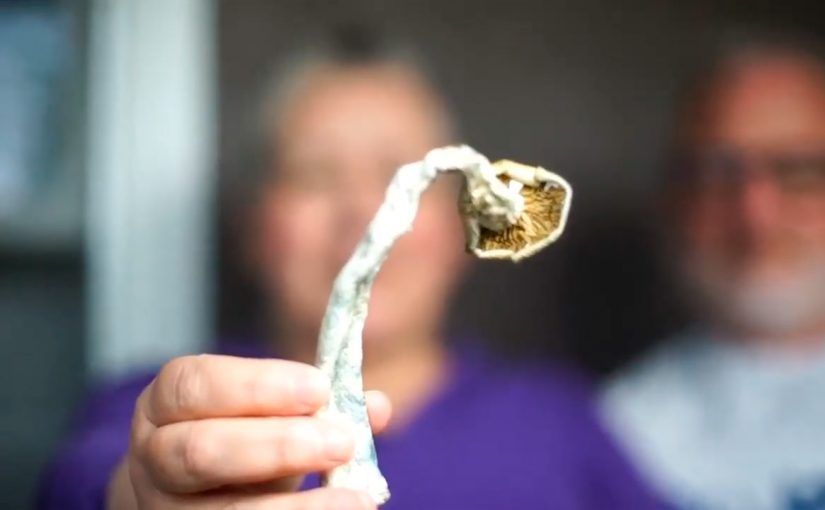
I have done a lot of research on psilocybin (I had a D.E.A. license for many years). I’ve even discovered a new psilocybin-active species of mushroom. There are, globally, some 216 species we know about in the genus, the taxonomic group Psilocybe, and some 116 of those species are known to have actively available psilocybin. About 25 species grow here in North America, anywhere from Texas to Northern British Columbia, different species in those different ecosystems. Psilocybin mushrooms also contain a number of other active compounds—other tryptamines, baeocystin, norbaeocystin, norpsilocin, etc., but we have found that, while some of these substances might have curative properties one by one (and companies are tempted to isolate those “psilocybin analogues” and use them because they don’t get you high and they’re legal in that form), when they’re stacked together in their natural form, i.e. in dried mushrooms, you get an “entourage effect,” a synergistic reaction that seems to boost neural growth far more than when you try to isolate and separate the chemical components.

We have been doing some very promising research on neurogenesis with Harvard Medical School and with a company that specializes in anti-Alzheimer drugs. We have been growing pluripotent stem cells in our laboratories, using well-established protocols for measuring neurons and their growth, and we have found the entourage effect to be potent. Using the whole mushroom leads to far more neural growth. I personally think psilocybin, used intelligently, will be shown to lead to increased intelligence, creativity, and happiness. People who were in studies using psilocybin mushrooms to help them address such conditions as PTSD and depression often reported that it not only helped them with those ailments, but that it changed their lives more profoundly.

When I told Michael Pollan that psilocybin mushrooms changed my mind, I meant that literally: I think they built new neural pathways in my brain that allowed me to articulate my thoughts more clearly and to become a more creative and more peaceful person. I believe that psilocybin can contribute to creating the paradigm shift we need, can help increase the intelligence of our population, help reduce crime and disease, and help us to face the inevitability of our own death with less anxiety.

Mushrooms and other psychedelics, when used in the right way, can give us a glimpse of the immensity of the universe and can open doors to vast dimensions of consciousness, to the voices of all species and beings asking us to become responsible stewards of life on the planet. In my experience mushrooms tend to increase kindness, empathy, courage, and the desire to serve the greater good, so it is time for a paradigm shift, and I think these sacred medicines can help us. All of us are on this planet together. We are all Indigenous to this planet, though of course First Peoples in many regions of the world are the ones with the longest ancestral knowledge, which we so desperately need to rekindle and propagate if we’re going to get through the crises we face. Now that our society has such a glorious plurality and biodiversity of ethnicities, it’s even more important that we protect these threads of ancient knowledge that were almost cut by invasions, enslavement, disease, wars, religious persecution. When we lose one of the Indigenous elders who carry living links to ancient wisdom, we lose encyclopedias of knowledge. The fact that there are still vibrant Indigenous cultures and peoples and knowledge traditions is a tribute to their extraordinary resilience in resisting centuries of attempted genocide, including weaponized pandemics.

But we can be thankful that some of that ancestral knowledge, including the use of these sacred medicines, has survived and is being passed on, and we have to give something back for those incredible gifts. We have to make sure that these peoples, cultures and plants are protected and treated with respect, and we have to use these plants responsibly. I’m not against the development of pharmaceuticals drawn from psychedelics that can be used in a medical context to treat some diseases, if those can be developed and used responsibly, but psilocybin mushrooms offer within them more components than just one molecule, and my own belief is that they, in their whole, natural forms, will still be the most widely used and most significant way these molecules help our species.

KATSI COOK: Thank you, Paul, brother, for the power of your voice, your intellect, and your sensitivity, and thank you for inviting my comments in support of the fundamental principle that the endangered sacred medicine peyote should be reserved for Indigenous use, especially given the concerns regarding sustainability in this time of climate change and decreasing biological diversity.

In one telling of our Mohawk creation story, when the pregnant Sky Woman pulled on a beautiful yellow flower that grew at the base of the withering celestial tree that stood at the base of the sky world, her action uprooted the tree, and the pregnant Sky Woman fell into the hole left by the uprooted tree and fell to earth to fulfill her destiny to recreate the world. In 1974, on a journey to learn Indigenous midwifery, I followed Beatrice Holy Dance Long Visitor, who later became one of the leading 13 grandmothers, and my well-known sister-in-law, Loretta Afraid of Bear Cook, Beatrice’s daughter, both beloved Oglala Lakota water women in the Native American Church in South Dakota into my first peyote ceremony. I was 23 years old and had recently completed the women’s health training programs at the University of New Mexico in Albuquerque. I was hesitant, but if you want to learn midwifery, you have to go into that teepee, Beatrice told me.

For those of you who want to know more about my relationship with the medicine, I have documented my experiences with and learnings from pejuta wakan (“sacred medicine” in the Lakota language) in the 2007 Bioneers book Visionary Plant Consciousness (edited by JP Harpignies). And if you want to learn about the historic legal struggle undertaken by the Native American Church of North America to support the religious freedoms of Native Americans, I strongly recommend the film, The Peyote Road (Kifaru Productions), which features important spiritual leaders such as Reuben Snake, Loretta Afraid of Bear Cook, my brother, Thomas Kanawaienton Cook, and others who worked to establish the American Indian Freedom of Religion Act of 1978. This act protects the freedom of Native Americans to exercise traditional religions and sacred ceremonial practices, ensuring access to sacred sites and the peyote gardens, possession and use of sacred objects, and the freedom to pray in our customed manner.

We ritualize our life cycle, and maintain cycles of sacred ceremonies necessary to support and maintain life in relationship with pejuta wakan. Almost 50 years ago, I came out of the teepee door in the morning thinking that if my Mohawk people had this medicine, we could heal. Its use is of course very old among certain peoples in North America (Huichols, Tarahumara), but it has become a central sacred plant of many other family fireplaces in North American first nations communities starting more than a century ago, and its use has spread through the North American Indigenous world, especially strongly riding upon the wave of historic Indigenous activist movements such as the Indian Unity Caravan of the 1960s, the White Roots of Peace Communications Group out of the Six Nations Confederacy, the International Indian Treaty Councils and other initiatives.

This “grandfather medicine” continues to connect Indigenous communities across the hemisphere, and the proper holding environment of grandfather peyote is within the cultural context of Indigenous families and medicine societies. There are many protocols and responsibilities for carrying a prayer that first is bundled in a sacred tobacco tie and a kernel of white corn. It’s up to the sponsor of the healing ceremony, held in specific family fireplaces such as the Half Moon fireplace of my Lakota relatives, to determine who will sit among the circle in support of a prayer for a life. Every detail, from the gathering of the firewood to the protocols of the cedar used to the prayers being offered to the preparation of the sacred foods presented by the water woman to people in the morning, has to be done correctly, impeccably. The proper words, songs, instruments, procedures, have to be followed. There are so many essential elements that belong to the ceremonial commitment of the sacrament peyote. It takes generations of knowledge and commitment for it to be used in the right way.

These traditions are our responsibility to carry as Indigenous people because they contribute to our resilience and healing. The prayer ceremonies resemble the process of birth, as the grandmother medicine opens our minds, bodies and spirits to cope with the pains of life. Beatrice Holy Dance Long Visitor explained to me how the medicine first came to the people. A pregnant woman was alone and lost in the desert, separated from her people. Tired, she lay on the earth, and suffered in labor by herself until she heard a voice nearby. Take and eat of me, a small cactus with no thorns spoke to her. The medicine helped the woman birth her child, and the sacred medicine continues to teach and guide us from the fireplaces of those who take care of these ways. Our elders help us to understand these traditions in a wider context. The late Ernest Kaientaronkwen Benedict, a revered Seneca longhouse elder, described the sacred tree of Indigenous cultures: its roots are our ancestral teachings; its trunk our history; its branches the many struggles for the continuity of our lands, jurisdiction, spirituality, languages, and the reproduction of bodies and lifeways. At the top of the tree sits one little yellow flower that represents the light and the life of the tree. It was long withering under the weight of colonization, but our sacred ceremonies have helped keep it alive, and that tree and that yellow flower are once again beginning to shine.

JP: Thank you so much, Katsi, and we’ll get back to some of the themes you raised, because it’s important to drive home just how endangered peyote is as a plant, and why it’s imperative that it be preserved for the use of Indigenous peoples, and what some alternatives might be for non-indigenous folks. I think a lot of people will want to hear about that, but now Françoise,

FRANCOISE BOURZAT: Thank you for inviting me, Paul and Bioneers, including my friend Nina Simons and the whole team there. It’s wonderful being here finally. I’ve been wanting to participate in Bioneers for a long time.

I’m going to talk about sacred mushroom use in the context of the traditional Mazatec healing ceremonies, which I’ve been involved with for over 30 years now. The traditional Mazatec use of psilocybin mushrooms involves an entire cosmology and a set of practices that go way beyond the use of the plant medicines themselves. When I go to Huautla de Jimenez, where the tradition continues and we immerse ourselves in that Mazatec land, what we are really communing with is not so much the mushroom or not only the mushroom, but with the whole life of the village and of the mountains—the entire landscape and its ecology. The practices include the offering of cacao beans, cacao cleansing rituals, the placing of very specific flowers on the altar. When we are invited to respectfully participate in the ceremonies that happen to be, of course, with different kinds (depending on the season) of psilocybin mushrooms, we are participating in a much more expansive cultural and spiritual worldview.

I want to say is that in my dialogue with the Mazatec, they are not so worried about cultural appropriation. What they tell me is that what they are concerned about is that they hope that if we non-indigenous people use mushrooms, that we’re going to use them with respect, with offerings, with an understanding and a learning from their tradition, from the way they talk to the mushroom, from the way they pray and sing, and the way they let themselves be spoken through by the mushroom. They want us to understand that it’s not just about mushrooms. The mushrooms help the Earth and all life speak to and through us. My teacher, who by the way was very close to Beatrice Holy Dance Long Visitor mentioned earlier by Katsi and to several other wonderful Lakota traditional teachers (and they all participated in each other’s ceremonies), often said, and all these other teachers agreed, that it doesn’t really matter what’s in the plate: what’s important is using what’s in the plate to commune with the Earth, to hear her wisdom and to be healed by her.

In the Mazatec and in the larger Mexican culture, communing with ancestors, with the dead ones on the other side of the veil, the other side of this reality of incarnation, is a central practice, and mushrooms can aid in letting us visit that realm of the ancestors where time and space are irrelevant, the eternal space of the soul, and it’s interesting that we are now in this psychedelic renaissance, and one of the main therapeutic uses that is being talked about in the mainstream and that research has been done on is using psilocybin as an ally to help reduce the anxiety of people at the end of their lives, and we can obviously learn a lot about that from those Indigenous cultures who have been exploring this territory for so long.

I just finished an interview with my teacher’s daughter (my teacher passed away a couple of years ago). It’s really important for us to hear the voices of these cultures; in this case for Mazatec healers who have so much experience and wisdom about these states of consciousness to speak to us during this psychedelic renaissance, so that we stay on the right path. For myself, I’ve long tried to be a humble servant of this mushroom and to be a bridge, to try to weave together the traditional practices I have learned from my Mazatec teachers with my Western training in Psychology and other therapies, so that we can bring this incredible tool and create safe spaces to heal people in our own culture. A major part of my work for many years has been trying to create conditions in which we can train psychedelic guides who really deeply understand both the traditional aspects and the modern psychological dimensions of working with such a powerful healing modality here in our own society, now.

And one thing that could get lost with the commercialization and medicalization of psilocybin that’s starting to happen is the principle of reciprocity. What do we give back? How do we thank and acknowledge the Indigenous people who have held these traditions for thousands of years, and how do we include them in this renaissance and make sure they benefit from it as well? I’ve been in conversation with Kat Harrison (who has been very involved in the Mazatec tradition for even longer than I have) and other people in the field to see how we can help support them and help them preserve their cultures. Kat said that she felt the most important thing we needed to help them preserve was their language, for many reasons but also because Mazatec is the language of the mushroom. If it disappears, an enormous amount of wisdom and the key tool to communicate with the spirit of the medicine will be lost. My daughter and I are talking about creating a fund with various Mazatec people who will decide how to utilize the resources to preserve their tradition and improve their access to healthcare and education. So reciprocity has to be a really big part of our use of these plants, and we have to keep it in mind more and more as these commercialization efforts move forward.

We have to be creative to bridge Indigenous practices and the realities of the modern, industrialized Western world. I don’t think we can stop some commercialization of psilocybin because big pharma is coming, and they’re too powerful to stop. And I don’t think originally the intention to create some modern pharmaceutical medicines for people who are suffering intensely was bad. I understand that our society’s medical system is based on a model in which synthesized psilocybin would be the logical product. And I am myself part of a research study in Los Angeles on COVID-related grief right now that is, in fact, using synthetic psilocybin. I’m also involved in a retreat for parental grief in Jamaica in which we are working with whole mushrooms that grow there. I’m going there next week, in fact, to meet the Jamaican physicians we’ll be working with, so I work in different ways, and I don’t condemn the use of modern methods. I think we can work in all sorts of ways to try to make positive change, whether it’s supporting the initiatives to change laws (both Paul and I have been active in Oregon and Canada on that front), or helping formulate modern medical protocols to help treat people with PTSD, anxiety, depression, etc., but we should never forget that mushroom use is above all a vehicle for the expansion of consciousness, and we must never forget the debt we have to the traditions that gave us this medicine.

We also have to make sure that the profit motive doesn’t create more inequality, that it doesn’t deny access to these medicines to those communities who might need them the most but have historically not been sufficiently included in the psychedelic movement, especially communities of color. This is really important.

I think mushrooms can’t be “de-souled,” and many positive things can happen going forward, but we have to work to make sure that even as the world changes quickly in its attitude toward psychedelics, that this healing tool doesn’t lose its connections to Indigenous traditions, and that in the spirit of solidarity and conservation, preservation and support, we communicate with Indigenous people and help them find their way of articulating their own powerful voices, so they can create a solid presence in the world of sacred medicine, even in the face of this new era of commercialization. We have to continue to speak our voice, not to go to war or create conflict but to express loudly and clearly how sacred these plants have been for us and what we have to do so that they’ll be here and sacred in seven generations.

JP: One of the things that comes to mind immediately from hearing you all talk is that it seems to me that what we’re trying to do is find our way to the most ethical and productive relationships that human beings can have with these substances during this time of radical transformation, and it’s pretty clear that we have to view these things case-by-case, situation by situation, plant by plant, and I would immediately put peyote in a separate category, because it’s so endangered and hard to grow and so important to the Native American Church, so that’s one plant whose use should in most instances be limited to Indigenous peoples.

In general, if there is now going to be large-scale use of psychedelics in all sorts of new forms, what are the most ethical forms that can take? And I think it’s going to be a case-by-case, company by company, initiative by initiative, research project by research project, and we’re all going to have to be very vigilant. Paul, do you have any thoughts about what the most ethical and constructive approaches can be?

PAUL: I think there are three clear and different paths here with three of the main psychedelic plants, and they’re quite different. I personally want to advocate that all wild peyote be preserved and held sacred and protected for Indigenous people. I just think at this time, with ecosystems being so stressed and the peyote hunt being so important for First Nations that that resource needs to be protected. I call out to all people who are not in this Indigenous tradition to help protect peyote in the wild. It is indeed very, very difficult to grow, and the wild harvest is so central to the First Nations long-standing traditions, so it should be reserved for them.

With psilocybin mushrooms, though, it’s really different. They’re circumpolar. They grow all over the world. They’ve been used by dozens of cultures that we know of, and probably many more that we don’t know of. I think they can be kind of the bridge that unifies everyone together. We can rejuvenate them. We can grow them. Because they’re saprophytes, they grow in decomposing material. Once you get them in the culture, you can protect them. That’s not saying that myco-diversity isn’t important; it’s very important, but the most commonly used psilocybin in the world is Psilocybe cubensis, which is not remotely in any danger of extinction. It’s very easy to cultivate, so I think that psilocybin is unambiguously the one psychedelic that joins all of us together.

Now ayahuasca is more complicated. I went to Cusco recently, and I saw neon signs flashing for ayahuasca ceremonies—massive commercialization, hordes of tour groups coming to take ayahuasca. Now, on the other side of that equation, a lot of people have benefited from ayahuasca and say it’s changed their lives. I’m not discounting that, but I have great reservations about the commercialization of ayahuasca, and cultural appropriation is also part of that narrative. Psilocybin mushrooms don’t have that problem. They’re much less controversial and much more appropriate for multi-cultural use.

FRANCOISE: I agree with Paul. Mushrooms are easy to grow. They come and go. They’re fast. They’re potent. They’re unifying, but it is true that some people who do peyote or San Pedro do not necessarily find themselves inclined to use mushrooms, because it’s a different experience. Mescaline-containing cactuses are very different in nature as an experience than the mushroom is, so some people might prefer the mescaline-containing cactus experience, so I can see that as a point of discussion.

JP: Katsi, if we all agree that the peyote in the wild should absolutely be protected and reserved for Indigenous use, what do you think about non-indigenous people using synthetic mescaline or huachuma (aka San Pedro, a much faster growing cactus that some Indigenous people in the Andes seem happy to share) instead?

KATSI: There are other medicines throughout the hemispheres that get shared across alliances built in reciprocity at a nation-to nation level, and I think that people are essentially free to explore, but if you take these medicines outside of the safe cultural contexts in which these plant energies made themselves known and built relationships with human beings, you can scare yourself. But I understand that we’re in a time in which we need to restore and build bridges back to Mother Earth, in which the Earth Mother is crying for her children to understand the nature of reality in our umbilical cords to the cosmos, so I encourage people to strengthen their experience at this time.

JP: I want to turn to a few audience questions. Several people have asked how mushrooms might specifically aid in end-of-life anxiety.

FRANCOISE: Clearly there’s so much involved in end-of-life. The mushroom experience connects us with a bigger dimension, with a bigger space, with eternity, with soul, with what remains alive after we die, what continues to exist on the level of essence. It also brings us in the moment, to what is present here and now, to the love that surrounds us and the love that we feel within us. That can be really profoundly soothing and healing and can liberate us from the anxiety, sadness and grief that can be present at the end of life. I took people who were dying and eventually passed away to Mexico, to try to help them release the stress and the anxiety that they were experiencing. They experienced a sense of beauty and oneness, love and light, and freedom from their fear of leaving this earthly plane. It was a very potent and beautiful experience. I think people should have that freedom of choice, to be able to have access to this tool at that last stage of life.

JP: Paul, there’s a question about how to ethically grow mushrooms.

PAUL: Well, first, I think we need to address whether the mushrooms are cultivating us or we’re cultivating them. So many of these psilocybin mushrooms grow on debris fields, and humans are the greatest walking catastrophe I know in creating debris fields on the planet, so it might seem as though psilocybin mushrooms are chasing after us. One particular species, here in the Northwest, in Oregon, Washington, and British Columbia, I guesstimate about every fourth truckload of wood chips from alder will naturally have psilocybin mushrooms in them, specifically this species, Psilocybe cyanescens, a very potent psilocybin mushroom. Even though we’ve never found it out in the wild, when those wood chips are scattered for landscaping, they come up in profusion. What sparked the psilocybin mushroom movement in the West Coast of North America is that when they started using wood chips for landscaping, these psilocybin mushrooms literally came out of the woodwork, so to speak, and mycologists were blindsided. Mycologists who’d studied them for 40, 50 years had never seen these things before.

But, as to the question of ethical cultivation, it depends. First, how much do you really need for your own personal use? Not that much, and everyone can grow a small amount in the landscape using natural weather cycles if you’re in the right region, or you can do it at home safely and cleanly if you can follow instructions carefully. But when you talk about growing them commercially or supplying a commercial market, there are really big concerns. Many times, there’s not enough air exchange, so molds and bacteria can grow on them. Some people have had adverse reactions as they would eating spoiled seafood. The growers dry them down so the bacteria are still there, and they can produce endotoxins, which can be very, very dangerous, so if we are going to have psilocybin mushrooms available, clinically or by prescription, or for therapeutic use, they have to follow basically GAP (“good agriculture practices”) specifically designed to prevent contamination.

My biggest concern about cultivation is of course the use of synthetic chemicals. It has to be certified organic. It’s antithetical to the entire mushroom spirit to grow them in a non-organic fashion. It’s really important that we have standards to make sure that the mushrooms being consumed are safe, and that by far is the biggest problem with “underground” commercial growers: there aren’t any quality controls; it’s somewhat self-policing because you’re not going to buy mushrooms from somebody who gave you something that made you sick, but nevertheless, you don’t want to be the first person in that experience. So, I think there are some quality control issues that need to be addressed. Growing enough for your personal use in your own backyard or at home, that should be no problem, but growing large amounts for commercial and/or therapeutic purposes has to be under controlled circumstances where there are checks and controls.

JP: Katsi, some people are asking an allyship question, i.e.: what non-indigenous people can do to help protect Indigenous practices, such as the peyote tradition. What is the best way that people can help, if help is needed?

KATSI: Help support Indigenous Rights political movements in general, and specifically support the efforts to protect the ecosystems where the peyote grows in Texas, but also be part of the movements to maintain life and heal Mother Earth and protect all our relatives, plant, animal and human. The kind of consciousness that’s engendered at Bioneers is one example of what’s necessary.

JP: Another question that’s come up is where people can get psychedelic therapy. Where is it available? Obviously this is quite a borderline area because places like CIIS have created psychedelic therapist training programs, but it’s still illegal nationally, so we’re in a very gray area.

FRANCOISE: As of now, the only places where the consumption of mushrooms is actually legal and accessible is the Netherlands and Jamaica, and in Mexico a little bit, in certain limited environments.

JP: What about Portugal?

FRANCOISE: Portugal and the Czech Republic have decriminalized use, but not legalized it. As of now, it’s only legal in Jamaica and the Netherlands on a national level. The legalization of mushrooms in Oregon has opened a door. Two years from now it’s likely people will have access to facilitation of mushroom experiences with guides trained and licensed by the State of Oregon. Part of my goal is to train really good psychedelic guides, and although it can be very much oriented towards healing certain conditions (such as depression or PTSD, etc.), it can also be designed as an experience to explore consciousness. In Oregon, all these different avenues should be available in a couple of years. I imagine that other states will be following the situation Oregon, to see how this initiative works and what the pros and cons turn out to be. If it goes well, I think other states may follow its lead. And there should soon be some exemptions in Canada that will permit some people to be granted access to psychedelic experiences. A lot is happening there. TheraPsil is one very active organization working in Canada to get that right for end-of-life patients.  

JP: Paul, we had some more questions about growing mushrooms. What your best advice is for them to get information?

PAUL: Well, there are lots of books out there that have good information about how to cultivate, but law enforcement really looks at intention. If you are intending to make a lot of money by dosing people with psilocybin, without the guard-rails of a therapist or medical community, I think you’re really pushing the envelope and could get in trouble, so people should be very careful about that. If you’re trying to monetize this for personal gain, to make money, then I think it becomes a difficult argument to convince others that you’re actually just doing it for the good of the people.

The training of therapists and physicians to use this medicine is a very legally defensible path that would most likely not be high up on law enforcement’s priority list compared to somebody who’s selling a bunch of psilocybin mushrooms at raves and trying to make money hand-over-fist. I think the intention of the individual participating at this new stage will greatly influence whether the government or law enforcement is going to crack down. They don’t want to have a case in the courts that makes them look bad, so if you’re involved in truly helping veterans and other people with PTSD, etc., that’s a much safer route, but, still, please, be careful. Consult with medical professionals. Create records of correspondence of what your intentions are, create data-sets that clearly indicate your true intentions. And if you know people going into this in a big commercial way in the underground, I pay a lot of taxes, and I resent people making a lot of money and not paying their fair share. We all have to pay taxes to help the poor and unemployed and to have post offices and highways, all that stuff. We all have to step up to the plate and help the commons.

JP: I’m glad to see that psychedelics and civic responsibility go hand in hand. One of the other questions people have is what the advantages of micro-dosing versus “heroic” doses might be.

PAUL: Well, we’re navigating based on the science. We’re trying to do fact-based medicine, and there are both meta studies and clinical studies starting to examine these questions. Some of us are beginning to subscribe to the theory (not yet a hypothesis) that after a major dose, a heroic experience, or at least a solid therapeutic dose, then micro-dosing subsequently may reactivate the same neurological pathways. You may have a neurological memory, and micro-dosing could re-stimulate those pathways. So we think that micro-dosing may, in the long term, have really great benefits. For one thing, you don’t need to be in a clinical hospital environment with the need for medical support. Micro-dosing might be “liberation mycology” that helps you to go beyond working with a therapist, because in a sense your brain and nervous system have already been trained; you’ve been there, done that, but if that theory proves to be true, it would still require that one would have done a bigger dose earlier. I don’t think we know enough yet to know if micro-dosing alone would be as effective.

JP: I’ve heard of “Liberation Theology” and “Radical Mycology,” but Liberation Mycology is a new one on me…


Panelists

Paul Stamets, speaker, author, award-winning mycologist, medical researcher, groundbreaking mycological entrepreneur, and a visionary thought leader in the study of fungi and their uses in promoting human health, ecological restoration, and detoxification of the environment, is the author of six books, including: Mycelium Running: How Mushrooms Can Help Save The World, Growing Gourmet and Medicinal Mushrooms, and Psilocybin Mushrooms of the World. Paul has discovered and named numerous new species of psilocybin mushrooms and is the founder and owner of Fungi Perfecti, LLC, makers of the Host Defense Mushrooms (www.hostdefense.com) supplement line. And Paul’s work has now entered mainstream popular culture. The new Star Trek: Discovery series features a Lt. Paul Stamets, Science Officer and Astromycologist(!).

Katsi Cook (Mohawk/Haudenosaunee), from Akwesasne along the St. Lawrence River, a groundbreaking, revered figure in the revitalization of Indigenous midwifery and of advocacy for Indigenous women’s health, is Director of The Spirit Aligned Leadership Program, which works with Indigenous elder women to heal, strengthen, and restore Indigenous communities. A founding member of the National Aboriginal Council of Midwives and the Konon:kwe (“all women”) Council, Katsi has decades of experience as a researcher and a lecturer on Indigenous environmental reproductive health, and she and her husband of 40 years, Jose Barreiro, have 6 children and 11 grandchildren.

Françoise Bourzat, a San Francisco Bay Area-based somatic counselor, teaches at the California Institute of Integral Studies (CIIS) in San Francisco, runs online courses, lectures in various institutions, collaborates with physicians on a variety of treatment projects, and trains psychedelic guides internationally. She has guided ceremonies with sacred mushrooms in collaboration with Indigenous healers in Huautla de Jimenez, Mexico, for the last 30 years and is the author of: Consciousness Medicine: Indigenous Wisdom, Entheogens, and Expanded States of Consciousness for Healing and Growth.

J.P. Harpignies, Bioneers Senior Producer, affiliated with Bioneers since 1990, is a Brooklyn, NYC-based consultant, conference producer, copy-editor and writer. A former Program Director at the New York Open Center and a senior review team member for the Buckminster Fuller Challenge from 2010 to 2017, he has authored or edited several books, including Political Ecosystems, Delusions of Normality, Visionary Plant Consciousness, and, most recently, Animal Encounters.
Panel Discussion – Frontline Leadership to Transform the World

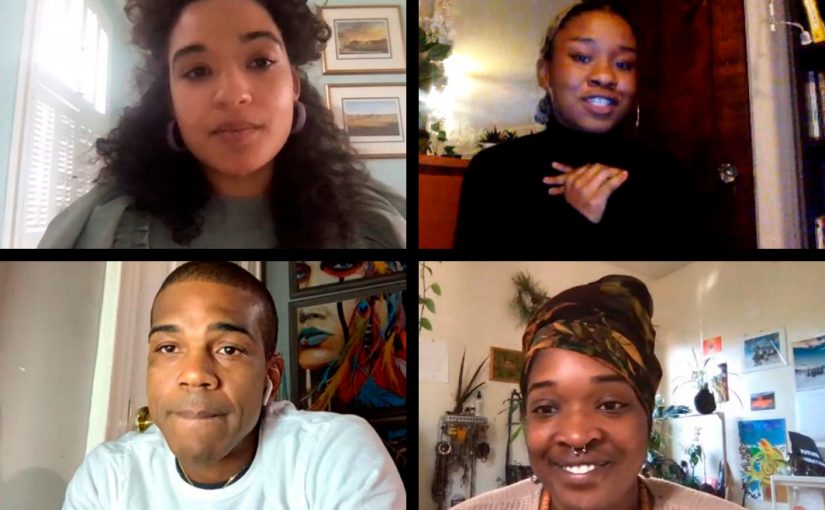
In this moment of unraveling, a new generation of Black, Indigenous, Latinx and other people of color leaders are generating creative strategic innovations and interventions to combat extractive economic systems and usher in a Just Transition to a new civilization. In this panel, key figures from some of the most dynamic frontline organizations at the forefront of this movement—Climate Justice Alliance, Movement Generation, and New Economy Coalition—share stories and practices. They discuss how they are working to: cultivate local, loving, living, linked communities; democratize the economy (#WealthBack); restore sovereignty (#LandBack); localize control of wealth (#Reinvest); and restore social and ecological well-being ( #JustTransition). A regenerative economy that restores sovereignty and democratizes our economy is crucial to the future of our planet.

Hosted by Natalia Linares, New Economy Coalition. With: Michelle Mascarenhas-Swan, Movement Generation; Doria Robinson, Cooperation Richmond & Urban TilthNajari Smith, Cooperation Richmond & Rich City Rides.

This is an excerpted and edited version of the session’s transcript.


NATALIA LINARES: Today we will discuss how a new generation of Black, Indigenous, Latinx, and other people of color leaders are generating creative, strategic innovations and interventions to combat extractive economic systems and usher in a just transition to a new economy. We will be hearing from folks who are working to cultivate local, loving, living, linked communities, trying to democratize our economy, restore sovereignty, localize control of wealth, and restore social and ecological well-being. 

I am a communications organizer at the New Economy Coalition, a member-based network representing the solidarity economy movement in the United States. We exist to organize our members into a more united and robust force to accelerate the transition of our economic system from capitalism to a regenerative solidarity economy. 

As we “meet” today, we live in a very challenging time: yesterday, a national single-day record of new COVID cases was set. Hospitalizations topped 100,000, more than double the number at the beginning of November, and while 42 million Americans have filed for unemployment benefits during this pandemic, American billionaires have seen their wealth go up by over $931 billion. In my hometown of New York City, we are projected to lose one of every three small businesses to this pandemic, and over the next ten years, the most significant transfer of wealth in the history of this world will happen here in America. Baby boomers, mostly white, wealth-owning households, will pass down $68 trillion to their millennial heirs. This is a moment during which we will either course-correct and bring fairness to our economic system or fall further into oligarchy and plutocracy.

But we are here to vision together, to consider what an economy that took care of our communities and our planet and that repaired the ills of colonialism and enslavement would look like. 

We at the New Economy Coalition believe that a “solidarity economy” is the means to get to a regenerative economy. There are people worldwide working on building this more sustainable, fair, and just economy. Though unfortunately, we are part of an international movement, the U.S. is right now far behind many other countries in building that new economy. Still, we do have a vibrant history to draw upon: there were many vibrant mutual aid societies after enslavement ended and a big black cooperative movement in the 1930s, and many other collective and democratic ownership initiatives in our history. 

In many ways, the solidarity economy involves going back to forms of communal life that our ancestors practiced before colonialism and enslavement. The New Economy Coalition includes a broad spectrum of members: worker cooperatives, community land trusts, affordable housing experiments such as housing cooperatives, participatory budgeting projects, revolving loan funds, etc. I urge everyone to check out what we do at neweconomy.net and on Instagram and to get involved if you can. We host an annual conference called Common Bound, and we release a newsletter every two weeks to keep our members and allies informed about all the exciting projects and experiments happening all over the country. 

Today we’re going to hear about some inspiring, very local examples of the sort of work of organizing, community building, and seeding of a regenerative economy happening all around the country. We’re going to start with Michelle from Movement Generation, who will kick us off with an overview of how we get to this regenerative economy via the Just Transition framework. 

Movement Generation is a highly influential collective; they are founding members of the Climate Justice Alliance and the Our Power campaign. They have been at the forefront of many significant struggles. 

MICHELLE MASCARENHAS-SWAN: Thanks, Nati. So good to be with you all this morning, and a shout out to Bioneers. As Nati mentioned, I’m with Movement Generation, with our Justice and Ecology Project. We are also members of the New Economy Coalition as are the other folks presenting today, and we’re all members as well of the Climate Justice Alliance. I want to start by saying that it’s really the struggles and organizing and experimenting done by frontline communities all across this continent that created this movement and this “Just Transition” framework. We at Movement Generation have just had the honor of being able to help to support and curate and provide frameworks that can be shared across communities.
I want to start out by reminding us that the root of the word “economy” is the same as that of “ecology.” “Eco” derives from oikos, the Greek word for “home,” and just like an ecosystem, which is defined by the relationships between all the species of plants and animals and natural forces (water, wind, climate, etc.) in a place, an economy is really just about the management of our larger home, our society, and the way we organize our relationships in a place, ideally to take good care of the place and each other. But that management of home can be healthy and sustainable, or, as it mostly has been and is currently, it can be extractive, destructive, and profoundly imbalanced and unfair.

Our struggles for ecological justice are about the reintegration of human communities into the web of life, into healthy, thriving ecosystems rooted in mutuality and mutually beneficial relationships. Any economy has basic pillars without which it can’t exist: air, clean water, sunlight, fertile soil, combined with human labor and ingenuity. In the extractive economy, the current dominant system, the purpose of the economy, whatever the mainstream discourse about it says, is in fact the enclosure of wealth and power for the few. This extractive economy is literally powered by burning things up and extracting resources from the earth and waters and from people. Exploitation of people’s labor is obviously the dominant form of extraction, forcing people to act against their best judgment just to keep a roof over their heads, and even getting the masses of people to buy into a system that promises prosperity but is rooted in unjust hierarchy, white supremacy, patriarchy and consumerism, all myths that are completely anathema to achieving a healthy, living world. 

Governance in such a system is heavily influenced by the power of wealth. The richer you are, the more decisions you tend to get to make about other people’s lives, and when people resist this oppressive arrangement, they are often met by force, by police or military repression. But this system is inherently unstable, and it’s pretty obvious it’s teetering, so how do we transition to a system that gives us control over our own lives and communities? By creating local, loving, linked participatory economies based on sacredness and caring, rooted in all of our relations and the complexity of life. We have to realign the economy with the powers of Mother Earth and protect and restore biological and cultural diversity. Work in such a system is not about jobs or production but about the constructive social roles we can all play to take care of ourselves and each other.

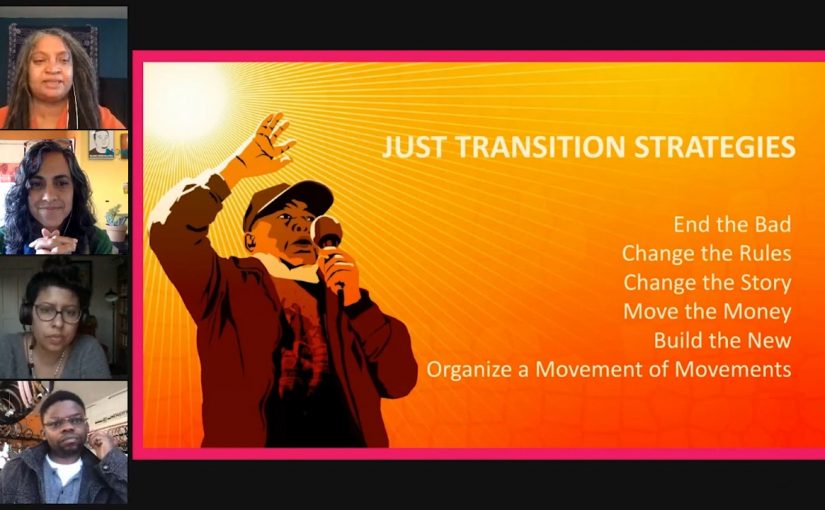
In this moment we have to expand our roles as regenerative disturbers of this extractive economy, so we can transform it into something different. We have to build soil as we tear up concrete and liberate our collective imaginations. Decision-making needs to happen at the smallest scale at which it makes sense—at the workplace, the watershed, the “trade-shed” and foodshed. Governance has to become about authentic collective self-determination. There are several different strategies the Climate Justice Alliance uses to organize around. One of them is trying to build a visionary and oppositional economy, to seek to change the rules, change the story, move resources to where they are needed and build a movement of movements. The frontline struggle is about democratizing wealth and workplaces, shifting economic control to communities, advancing ecological restoration and driving racial justice and social equity. One of our initiatives is called Reinvest in Our Power, which aims to reclaim stolen wealth and slow and spread it through community-controlled loan funds and other mechanisms to be able to apply that capital towards regenerative community needs.

NATALIA: Thank you, Michelle. Next up is Najari Smith, founder and Executive Director of Richmond, California’s Rich City Rides and former chair of the Richmond Bicycle Pedestrian Advisory Committee. He has worked tirelessly to improve bike infrastructure and to use bicycles to unite neighborhoods and communities throughout the Bay Area, including by creating the biggest bicycle celebration in Richmond’s history. He’s also involved in work around Cooperation Richmond, which we’re going to hear more about from Doria later on. Najari.

NAJARI SMITH: So Rich City Rides started as this crazy idea of a young man who thought that he could reach out and connect with community members by offering bicycle repair outdoors, in a park, as a way of getting to know people and sharing with them his love for bicycles. Bicycles weren’t as popular then, and this small initiative was a part of a larger cultural change, a move in many cities towards regenerative transportation, a different way of engaging with one of our most used assets, our streets and sidewalks. 

As those bicycle repair workshops in the park became more popular, more people joined in, and some of them started organizing days during which they would care for the park, and big group bicycle rides also grew out of it. They became a weekly activity that we collectively call “Self-care Sunday” or “Community Care Rides.” And from these rides more ideas emerged: they encouraged a different way of looking at the streets. The rides are great outreach. They’re a form of civic celebration that include music and that draw people in. A lot of people wanted to participate but didn’t have bikes, and we wanted everybody to be able to join in, so we found old bikes and refurbished them, and we’ve been able to provide over 2,000 bikes to community members that way. 

One young participant in all this came up with the idea that a vital piece of bicycle infrastructure on top of bike lanes and bike racks, was a bike shop, and Richmond didn’t have a bike shop, so we took this idea and worked with this youth to start the first bike shop in Richmond, but we didn’t just want a standard small business bike shop; it had to embody the larger cultural change toward community and cooperation that the bike rides had. 

A number of people who had joined in the rides became advocates for alternative transportation and participated in bicycle and pedestrian advisory committee meetings in the city in Richmond. We took this idea of starting this bike shop cooperative to them, but getting the necessary resources and jumping through all the bureaucratic hoops, especially in a fairly low-income city, was a daunting challenge. We turned to the folks at Cooperation Richmond who provide coaching, capital, and connections to cooperative businesses in Richmond, and thanks to their support, the bike shop in Richmond has been going and growing for the past three years, now with a total staff of six. 

This experience of working as part of a co-op has generated ideas among our members for other types of cooperative enterprises that would be valuable assets to the community that could emerge, things such as delivery services, local food trucks, etc. Once people work as part owners of their business, they see the advantages of working with each other to build something that’s good for the whole community. They see firsthand that our powers are magnified and manifested when we do things together. 

Cooperation Richmond is one of the many local organizations within the framework of a national financial cooperative called Seed Commons (https://seedcommons.org/) that provides capital through loan funds to reinvest locally. It’s a vehicle to reclaim wealth to meet community needs, pulling from the extractive economy to redirect capital into the regenerative economy, to help shift economic control to local communities, democratize wealth in the workplace, advance ecological restoration, drive racial justice and social equity, re-localize more production and consumption, and retain and restore our culture, because cooperative economics is in fact rooted in our ancestral traditions. 

At the Seed Commons, we offer really different terms to borrowers than you find in the extractive economy: you make payments when you’re able; you’re not expected to start repaying until you’re making a profit, and we work with you to help develop and nurture the business in all kinds of ways beyond just providing capital. We don’t ask for these businesses to put up any collateral. Also, within the Seed Commons, everything is community governed. It’s the grassroots member organizations that govern the national fund. It’s bottom up, not top down. Every one of the peer organizations, such as Cooperation Richmond, govern the national fund based on shared principles that include productive sustainability, maximizing community benefit, radical inclusion, non-extraction of course, and building cooperative democratic ownership within the member communities.

Back to the bike shop: thanks to hard work and to Cooperation Richmond’s investments, the bike shop has grown and become more profitable over these past six years. I’m one of the founding members of the Rich City Rides bike shop and our commitment is that this is will be a long-term community asset. We’re committed to having this shop here after we are no longer around, not just thinking about ourselves now, but trying to think many generations into the future.
Another important player in this movement is the Climate Justice Alliance’s Just Transition Loan Fund and Incubator, which supports Just Transition projects through technical assistance, non-extractive loans, political education and financial management skills training. And there is constant communication not just about loans and raising capital but also about sharing services, skills and information across these sets of regenerative economic networks. For example, if some people on the other side of the country wanted to open a bike shop cooperative, we would share everything we could about our experience and what we’ve learned with them. Those sorts of cross connections happen all the time. It’s a great model to ensure that community wealth stays and circulates in a community, and the network has been growing steadily.

NATI: Thank you, Najari. Next is Doria Robinson, a third-generation resident of Richmond, California, Executive Director of Urban Tilth and co-founder of Cooperation Richmond. Doria previously worked on organic farms in Massachusetts and then at Veritable Vegetable, a very big woman-owned organic produce distribution company, so she has a lot of experience in the worlds of organics and of food cooperatives. She’s also a certified Permaculture designer who led the development of Urban Tilth’s three-acre farm in Richmond and a Farm-to-Table CSA social entrepreneur venture that now serves 440 West County families each week.

DORIA ROBINSON: I can’t tell you just how exciting it is to be here at Bioneers. You know, we’re right across the bridge from where Bioneers usually takes place, and for so many years kids like me who grew up in Richmond just would never have had access to the kind of knowledge that gets shared through Bioneers. And for the last 10 years, we’ve been able to bring youth from here to Bioneers, and it really turned many of them on and got them really excited about many different ideas they aren’t usually exposed to, so it’s pretty exciting for me to be on this side of a panel for the first time. I’m feeling really proud right now just to be able to share some of the positive side of our story here in Richmond, because I think so often, if you have heard anything about Richmond, California, you have heard about our troubles, our struggles. You would have heard about the refinery, the biggest point-source pollution of greenhouse gases in the state of California, five blocks from where I grew up. You would have heard about the huge fire at the refinery in 2012 that actually spurred the development of Richmond’s Our Power Coalition and the work that I’m about to share with you today.

For over 100 years, Richmond has been reacting to the impacts of the extractive economy, in our case the petroleum industry, literally stationed right in our front or back yards, in the very air that we have to breathe. We’ve had very little real control over that impact on our lives, and, as in so many other frontline communities, the extractive industries aren’t actually the only stressors. We’re also dealing with a whole slew of injustices: in economics, healthcare, the legal and prison systems, etc.—a whole collection of injustices that all compound each other, so if we want to be able to solve any of the problems we face, we have to adopt a “whole systems” approach.

When the big explosion and fire at the Chevron refinery occurred in 2012, a collection of organizations that had been organized for many years to fight the refinery, to try to keep it accountable, realized that we needed something more than just reaction and resistance: we needed to actually start to articulate an attractive vision of what we wanted to see in our community, not just what we didn’t want to see, so from a group that had originally formed in response to Chevron to try to make them accountable, including of course for the massive impacts of the fire, we formed the Richmond Our Power Coalition. It brought together a whole disparate group of organizations that weren’t all necessarily Environmental Justice-focused and that had different visions for how our community should grow and develop, how our economy should work, how we should take care of our homes, etc. 

We rapidly realized that we not only had to keep pushing to change the rules of local politics, we had to also change the story. For so many years our story has been the story of us as victims rather than us as leaders. Of course, we have to focus on moving the money and getting our fair share of resources, because we’re a very low-income community made up of transplants from the South, black folks who moved up here looking for work, trying to escape the Jim Crow South in the ‘40s and the ‘50s, and immigrants from Southeast Asia and other places, so mostly low-income people of color, and we don’t have resources to invest in the changes that we dream of and need. We have been extracted from for sometimes hundreds of years, so we don’t have the capital we need because it’s been taken from us, but that doesn’t mean we can’t start with what we have.

So this collection of organizations here in Richmond got together and asked: “OK. How can we not only fight and vision but also start to actually create the economy that we need right here right now?” We had been doing so much work already to fight what was bad in Richmond, even moving forward to start talking about decommissioning the refinery. We know that petrochemicals are reaching the end of their life journey here on Earth, and what will that mean for us being the home of one of the biggest refineries in the state of California? What is that toxic legacy that we should start thinking about now so that when there’s a transition, we can transition in a just way, not just in terms of the direct extractive economy and of resources and energy, but also transitioning away from all those other forms of extraction, such as the way we’ve been treated by the criminal justice system?

And, also of course, we have to do a lot of things at once. We have to keep struggling to change the rules so that we can lift our communities up. We have to fight for healthcare for all, for the rights of nature, to fully enfranchise the vote, for participatory budgeting, for creating a public land policy which allows for unlanded people, like most renters, low-income people in urban centers to gain access to public land and to be able to actually transform their situations and build the infrastructure that they need to thrive.

Changing the story requires action on many fronts, including using communication tools such as podcasts to speak first to ourselves to tell our own story differently, to take back our story from the kind of dominant media that tells us we’re victims, that we’re not capable, that we don’t have good ideas, that our ideas can’t scale, and to retell our own story from a place of power, from a place where we know our own capacity and history and what we could be capable of if some of the systemic, institutional barriers were moved aside.

And we have a large list of concrete solutions that this community is either in the process of putting into place or planning to put into place, from Cooperation Richmond to Rich City Rides (which you just heard about) to a new Richmond land trust that will permit us to create housing that isn’t subject to the commercial housing market, so we can address gentrification and houselessness in an equitable, just, fair and loving way. 

And at my home organization, Urban Tilth, because Richmond has so many food deserts, we are working to create a local, just food system that reconnects the urban core with a whole hub of small family sustainable farms that actually need access to markets and are themselves under threat from urban sprawl and development. We’re having a lot of success reconnecting the rural to the urban, creating far more sustainable nodes of local food systems and food exchanges. We’re creating a hub in North Richmond, one of the worst food deserts in our town, where people can access fresh, healthy whole food that has been grown in a sustainable way locally, and bring it straight into their homes to help reduce the incidence of so many preventable chronic diseases that afflict our communities because of poor nutrition and unhealthy air and environments. We are mobilizing the physical tools we have so we can be more resilient.

We’re also talking about creating an energy commission, so we can have more control over our energy sources and build a local distribution network, actually governed by a local commission made up of community members. Another big vision of Cooperation Richmond is to take our main street that has mostly been boarded up for many years. The coming of malls and big box stores destroyed the small businesses there, so we’d like to take back those boarded-up buildings and create more cooperative enterprises that, like Rich City Rides, can be places of inspiration and connection. We are ready to re-imagine our public squares, grocery stores and laundromats, and use public land to create community-based housing initiatives that we need so that the people we grew up with, our elders, some of whom are now living in a ditch in our parks, have a roof over their heads. 

We also know we need to work on creating resilience hubs, which is something the Asian Pacific Environmental Network has been spearheading here in Richmond. We know climate change is already here and some of its effects are not reversible, so we need to create plans to be more prepared and resilient when crises hit, since, as a frontline community, the impacts hit us first and worst.

Another really important component of local control has to be a public bank. So often in progressive arenas, people don’t want to talk about money, but money is at this point in history a fuel we need to make and sustain the changes we desire. It’s imperative that our community consciously, pro-actively interacts with the granular details of the economy and finance, of banking and lending and resource and capital redistribution, so public banking has to be a part of what we build.

Of course, this last year has been so challenging. The pandemic has been transformative. For Urban Tilth it has meant that we had to shut down our education and outreach and community engagement programs, but it has also meant that we could hyper-focus on what we could do, which is grow and distribute food. Throughout this whole crisis, we were able to triple our distribution of produce and get it to families that most needed it, keeping them out of long lines at food banks so they could stay home and be safe. We served our seniors and our disabled, bringing food right to their doors, and we were able to keep some of our young people employed doing this work. We were also able to nurture the relationships we had already started to create with our local farmers. We never stopped. We never went down. We never had to pause. Our networks for food were never empty. We had abundance and we had a model that we had been creating for the last 10 years that we were able to scale up pretty rapidly in response to the pandemic. 

The biggest lesson we learned was that we need to keep scaling it up. We need to keep growing this model because having these flexible local systems in place can permit us to serve our community during a crisis and keep people employed during that crisis. These are exactly the kind of solutions we need—resilient systems rooted in right relationships and right practices on the land, which includes supporting farmers who already are committed to sustainable agriculture. Land is a big part of our focus at Urban Tilth, and we are not alone. There are a number of different organizations, collectives, networks that are looking at the need to move land back into the hands of the people. There’s a great quote that I ran across recently when I was reading Monica White’s fabulous book Freedom Farmers, about the role that black farmers play and have played over the years in the United States in justice movements. Black farmers and black-landed peoples have played critical roles for movement support. Land is ultimately the basis of all independence, and of freedom, justice, and equality.

There’s only so much you can do to change the conditions of your life if you have no land to call home, if you have no home base. If you’re just moved from place to place to place, you don’t have a place to create that store or business or cooperative. Land is central to transformative change, so in Richmond we’ve been working on this farm for years, but we’re in the process of buying this land from Contra Costa County. It’s currently county-owned land. We’ve made it a community-run hub of healthy food, healthy activity and movement building. It’s a place for people to gather, a place for young people to come and transform their minds and get introduced to all different kinds of ideas and practices, from composting toilets to organic farming to healing herbs, but we need for the community to own that land to have the security of knowing we can’t be driven off it.

And that North Richmond Farm Project is one of many land acquisition and asset-building initiatives that the Richmond Our Power Coalition is taking on. We’re also thinking about our transportation systems. We need to create safer places and safer ways for people to get around. A lot of our people have limited access to what they need. If you don’t have a car (and a lot of our people don’t) and it’s really unsafe to walk because there’s no sidewalk, your quality of life really suffers, so we’re doing working with our local government agencies to create greenways, green transportation infrastructure. And we don’t just want to come up with projects that we get some outside agency to come in and build. This project is based on having a training program that trains local young people from North Richmond and San Pablo who aren’t on a college track to do green infrastructure installation and maintenance as a just transition job. We need to be designing projects that create the opportunities that our young people, adults and families need to thrive. We need to be directly employing them in their own liberation, in the improvement of their own lives and communities.

But I have to return to the truth that none of these visions can become real unless we move the money. Since the inception of the United States resources and capital have been extracted from the hands of the Native people and out of the labor of the bodies of stolen African peoples and out of the bodies of other low-income folks who came over as indentured servants and later immigrants and into the hands of the few. We need that capital moved back into our communities, communities such as Richmond, impoverished coal country communities in Kentucky, Native communities in Alaska and across the whole continental United States, so that we can actually create the change that we need. You cannot create change from goodwill alone. It’s just not real. It’s not what happens. It’s not possible. You can do a lot, but you can’t create the depth of change we desperately need. 

And you have to have sufficient resources so that you don’t set yourself up for a self-fulfilling prophecy of funding something just enough to fail. That happens far too often, so in Richmond we’ve created a Just Transition Fund that’s housed by one of our local community foundations to encourage people to support this ongoing work and put money into this fund so that we can build that bank, so we can transform our downtown, so that we can create community solar projects and solarize our seniors’ homes, so we can do the things that we need to do to transition our local economy in a just and equitable way. 

And I have to say that I’m just so thankful for visionaries like Kat Taylor, who are in a privileged position of finding themselves with great wealth but also absolutely want to do what’s right. Kat Taylor has this amazing initiative called the Good Life Giving Pledge. She has pledged to give back one-third of her wealth before the end of her lifetime, and she’s started by donating a million dollars to Richmond Our Power Coalition as well as a collection of other projects across the United States. And she’s looking for others to do the same, in our case to find four other people to do what she’s done, so we can have a seed fund of five million dollars to begin this transformative work in Richmond. That is the scale and the type of moving the money that we need, even on a larger scale, to make the impacts at the pace that we need to answer the call of this moment, the call of climate change and climate justice, to begin to address the depth of the need of transformation that we have. 

But how do we capture people’s attention? How do we do this work? How do we get people to start to work locally everywhere and then connect our movements so that we’re not working in silos, so that we’re not so hyper-focused on our place that we’re not also seeing the larger global picture? That is the last part of the Just Transition framework—organizing a movement of movements, so that we’re not just working in our silos but connecting initiatives across sectors and communities and regions so that we can reinforce and multiply the power of our work. We need to convene community and regional and national and international people’s assemblies so we can keep activating our communities and sharing our best ideas and strategies. Low-income people of color who have been disempowered for so long are a sleeping giant. If enough of them come together in an organized way, their voices, energy and life-force can transform the world. 

That’s why we created the Just Transition Institute, where people can go deeper and learn the truth about our economic and political systems. We have to do a lot of unlearning. Our educational systems are mostly abysmal, especially the public education system, and this is from someone who deeply believes in the principle of public education. Our system has for the most part done a massive disservice to low-income people by not equipping them with the tools they need to thrive, so we have to create our own institutes where we can start to provide an accurate political education, the deeper understanding that our people will need, if we are going to be able to take back our power. Part of that is obviously voter engagement. We need to vote consciously at all levels, but especially locally, because a lot of the decisions that affect our daily lives are made there. We need to get more folks and more communities and collectives and groups to become members of frontline organizations and networks such as the Climate Justice Alliance, The New Economy Coalition, Movement Generation, Communities for a Better Environment, Asian Pacific Environmental Network, the It Takes Roots “alliance of alliances,” the Indigenous Environmental Network, the Right to the City Alliance, the Grassroots Global Justice Alliance, etc. The more the most savvy and progressive organizations can coordinate and cooperate, working locally but strategizing nationally and internationally, the better chances we will have of achieving genuine transformation. 

This is, I believe, the recipe to make the changes that we need to keep life going on Earth. Thank you.

NATI: Yes. Thank you so much, Doria, and Najari and Michelle. We now have time for a few audience questions. The first one is: “With so many small businesses going under now because of COVID, how much are you seeing and leading a regenerative response that could bring many of them back as cooperatives?”

In New York City, where I’m based, an initiative called Owners to Owners was launched this past week. The city government will directly be supporting the transition of some aging baby boomer businesses into worker cooperatives. In our world, it’s a very exciting development that New York City is taking that on. It’s being led by some of the groups you heard about today, such as Seed Commons, and other groups such as the Working World and the U.S. Federation of Worker Co-ops. By the way, if you’re interested in that, go to the U.S. Federation of Worker Co-ops website: you can plug in your zip code and see what worker co-ops exist in your area right now. 

DORIA: In terms of Cooperation Richmond, what we saw with Rich City Rides, for example, is that during the pandemic our cooperatives saw more business than normal, and I think it’s because people look at them as more than businesses. They look at those cooperatives as community connection points. Rich City Rides was giving out food. It was one of the places where the school district was giving out meals during the beginning of the COVID crisis. Worker-owned cooperatives can play a really different radical role in a community, and I think that our community members recognized that, and they supported those businesses even more through the crisis.

NATI: Another question is: “What are important key strategies in moving the money?”

MICHELLE: The number one thing is to organize. Wherever you are, organize there. We had a success this year in which the Universalist Unitarian Assembly made a big investment in the Seed Commons. Folks in the higher echelons of leadership of that congregation organized and got a result, and we hope that it will help create momentum, so active Unitarians in many places will in turn organize within their local congregations and their families and make other socially positive investments and get active in other ways. So, wherever you are, organize, that’s really important, but ideally you want to do it in such a way that you are creating what we call “permanently organized communities,” not just responding to shocks that come our way, but building the resilient, long-haul systems and institutions that can help us make the kind of deep shifts we need.

NATI: One last question: “What is your relationship to local government? What do you need from city and county governments to do to help?” 

I will plug the New Economy Coalition’s publication, Pathways to a People’s Economy, which offers to any interested city or county or state government officials a policy vision of what they can do to help us get to more worker-owned businesses, more community-owned power, etc.

DORIA: One thing I think people and communities really need from their local governments is for local governments to believe in the power and capacity of local people. Much too often local governments look outside of their communities for places to invest, for contractors, for experts. They’re not used to thinking about investing in local residents and in the vision of local people. Their ideas of economic development are to try to attract national chains, big box stores, corporate offices, etc. Too often they look at local residents who’ve been organizing for change as a nuisance. That that has got to change, and to make it change, we have to organize and elect responsive leaders. 

NATI: I wish we had more time, but we hope that you will all plug in with us on our social media and websites, and get down with your folks wherever you are. I want to thank Michelle, Doria, Najari and Bioneers and the Bioneers community for having us. Frontlines to the Future is where it’s at.


Panelists

Doria Robinson, a 3rd-generation resident of Richmond, California and Executive Director of Urban Tilth, is a co-founder of Cooperation Richmond, a worker-owned cooperative developer and local loan fund. Doria previously worked: on organic farms in Massachusetts; at Veritable Vegetable, a women-owned organic produce distribution company; at Real Food Company; and at Mixed Nuts Food Co-op. A Certified Permaculture Designer, she also led the development of Urban Tilth’s 3-acre urban farm in Richmond and the Farm-to-Table CSA social entrepreneurial venture that now serves 440 West County families each week.

Najari Smith, Richmond, CA-based founder and Executive Director of Rich City Rides, former chair and still member of the Richmond Bicycle Pedestrian Advisory Committee, has worked tirelessly to improve bike infrastructure and to use bicycles to unite neighborhoods and communities throughout the Bay Area, including by creating the biggest bicycle celebrations in Richmond’s history.

Michelle Mascarenhas-Swan, a member of the Movement Generation (MG) staff collective who has been on its planning committee since 2008, has worked for the last 25 years building movement vehicles for frontline communities. Prior to her work at MG, she co-led the Center for Food and Justice, the National Farm to School Initiative, Rooted in Community, and the School of Unity and Liberation. Michelle was also a founding co-chair of the Climate Justice Alliance and the Our Power Campaign and was recently named an Ashoka Fellow (2017-2020).

Natalia Linares, Communications Organizer at the New Economy Coalition, has over a decade of experience as a cultural organizer, artist advocate, and publicist working to amplify voices from traditionally underrepresented communities. In 2010 Natalia founded Conrazón, an agency for artists and creators invested in new paradigms of heart-centered economic justice in the performing arts and media.

Coming to Bioneers Weekend 1: Artivism, Indigenous Wisdom, & More!

This article contains the content from the 12/3/2020 Bioneers Pulse newsletter. Sign up here to get the newsletter straight to your inbox!


Weekend One of the Bioneers Conference is just a few days away!

As we prepare for this virtual gathering, we want to highlight the wisdom you can expect to hear from leaders of the world’s most pressing social and environmental movements — not just the campaigns making front-page headlines, but also the revolutionary ones you may not know about yet.

Our digital platform makes the Bioneers Conference easier to join now than ever before, but “Beyond the Great Unraveling: Weaving the World Anew” isn’t just an online event. It’s an experience to enlighten, inspire and interact. Join us! Click here to register now.

This week, we feature some of the best programming that Weekend One of the Bioneers 2020 Conference will have to offer.


20% Off Flash Sale Ends Tonight!

Are you quick enough to catch this flash sale? Register before midnight to get 20% off your order! But that’s not all…

Every session at this year’s Conference will be immediately available on-demand for Bioneers Conference attendees for the month of December. So if the Conference schedule doesn’t align perfectly with yours, we’ve got you covered — watch a keynote talk again or catch that panel you wished you could have attended. Listen to the entire Conference in the background while you work for the next couple of weeks. Experience Bioneers as it works for you.

Register now!


Art That Responds to the Times: Wisdom from Rising Appalachia

Rising Appalachia is an American musical group rooted in storytelling and passionate grassroots activism. The band provides a platform for local causes wherever it plays and frequently incites its fans to gather with it in converting vacant or underused lots into verdant urban orchards and gardens.

In this Q&A with one-half of the duo, Chloe Smith, she discusses the role of art and music in social justice movements.

Read more here.

Join Rising Appalachia for a live performance at the Bioneers 2020 Conference this Sunday, Dec. 6! They’re also leading the “Come To Life: Inspiring the Regenerative Movement Through Arts and Activism” panel discussion on Dec. 12. Register now!


New Keynote Speaker: Chloe Maxmin

At Bioneers 2020, Maine State Senator Chloe Maxmin is delivering a keynote address and joining a panel conversation on rebuilding democracy. Register now to watch her speak!


How Indigenous Wisdom Can Help Us Address Today’s Challenges, with Anita Sanchez

Dr. Anita Sanchez is an author whose visionary work bridges Indigenous wisdom and modern life. Inspired by the rich culture of her Mexican and Aztec heritage, Sanchez is helping individuals and organizations achieve transformational, positive change around diversity.

In this interview, Sanchez shares how Indigenous wisdom can help us honor the interconnectedness of life and sustain a more fulfilling human presence on Earth.

Read more here.

Join Anita Sanchez at the Council and Talking Circle Sessions at the Bioneers 2020 Conference. Register now!


Community Conversations at Bioneers 2020

At Bioneers, we have an amazing community – discerning, engaged, committed and reflective. That’s why we’re offering Community Conversations at our 2020 Conference, as an opportunity for us to come together around key topics to talk about what has real meaning and value to us.

Stimulated by a brief ‘keynote’, or “conversation starter”, and captured by a creative ’synthesis’ from talented young spoken word artists, these community conversations offer a place to bring your best thinking forward in creative and innovative ways. Join us, and weave your heart, mind, and voice into the collective braid!  

Browse our Community Conversation programing now!


“Unraveling” by Terry Tempest Williams

In this essay for Emergence Magazine, Terry Tempest Williams searches for what is revealed when worlds unravel, tracing the entangled nature of undoing and becoming.

In line with the theme of the Bioneers 2020 Conference, she reflects on the state of “permanent emergency” we’re entering, as the intersection of ecological, social and political crises demands the emergence of solutions. She asks: How can we hold the uncertainty at this time of transition and transformation? How can we not be paralyzed in the great unraveling and each play a part in weaving the world anew?

Read more here.

The second annual print edition of Emergence Magazine is available for pre-order now! Order your copy and use discount code BIONEERS15 at checkout to receive 15% off.


The Benefits and Risks of the Mainstreaming of Sacred Plants and Psychedelics

While the Bioneers Conference is above all focused on ecological and social justice domains, the event has always included a strong interest in sacred plant and psychedelic use and its apparent links to enhanced eco-consciousness.

This year’s Conference is no different, featuring two keynote addresses and two panels with luminaries in the exploration and research of visionary plant use. You won’t want to miss this range of programs — including Paul Stamets on magic mushrooms and Katsi Cook on Native American Church peyote ceremonies.

Read more here.


One Earth: Integrating Climate Action and Biodiversity Conservation into a Blueprint for a Livable Planet

In this Dec. 5 panel discussion, climate activists explore how we can protect and restore 50% of global landscapes while staying below a 1.5°C temperature rise in the next few decades. By following the roadmap of new projects like the Global Safety Net, we’ll learn how to make change through a combination of world-class science, Indigenous rights and stewardship, grassroots action and transformative philanthropy.

Register now to join!


This article contains the content from the 12/3/2020 Bioneers Pulse newsletter. Sign up here to get the newsletter straight to your inbox!

Chloe Maxmin – Building Progressive Power in Rural Red America

The deep divisions between urban and rural America are becoming a defining force in American politics at the state and national levels. It is clear that we cannot achieve bold, long-lasting legislation without support from rural America. Hear from Chloe Maxmin, a young progressive from rural Maine who in 2018 flipped a Maine House Seat with a 16% Republican advantage, and in 2020 challenged the highest ranking Republican in Maine (and a two-term incumbent) for the Maine State Senate…and won!

Chloe delivered this talk at the Bioneers 2020 Conference, introduced by Nina Simons.

LEARN MORE

Chloe Maxmin, hailing from rural Maine, is a Maine State Senator just elected in 2020 after unseating a two-term Republican incumbent and (former) Senate Minority Leader. In 2018, she served in the Maine House of Representatives after becoming the first Democrat to win her rural conservative district. Chloe is seeking to develop a new politics for rural America, and she and her campaign manager, Canyon Woodward, are currently writing a book for Beacon Press about their electoral success and political goals.

Divesting from Fossil Fuels – Youth Leadership Lessons

In this Bioneers 2014 keynote address, Chloe Maxmin describes her history as a young climate activist. An activist since age 12, she co-founded Divest Harvard to pressure her college to disinvest from fossil fuel holdings, gaining international recognition for her effective activism.

Youth Solutionaries: Future Present

This Bioneers podcast features Chloe Maxmin as well as De’Anthony Jones, a former President of the Environmental Students Organization at Sacramento State, and Xiuhtezcatl Martinez, hip-hop artist and Youth Director of Earth Guardians. They say there’s no better time to be born than now because this generation gets to rewrite history. It could be known as the generation that brought forth a healthy, just, sustainable world for every generation to come.

Performance of “I Love America” by Alfred Howard

This remarkable performance of “I Love America” by Alfred Howard took place at the 2020 Bioneers Conference.

Alfred is an accomplished spoken-word artist, writer, and co-founder of The Redwoods Music, a San Diego record label and collective. He currently pens lyrics for 8 bands, and performs homemade percussion with six. He has written lyrics for over 30 released albums.

As the son of a prolific black female artist, his unique experience of being a black man in a mostly white city, and of suffering from the mysterious illness of Lyme’s Disease, have given him the perspective to write from a place of paradox, humor and humanity. 

Alfred grew up a self-proclaimed birdwatching nerd and outsider. In his early 20s he caravanned with musicians across the county before setting roots in San Diego, where he is a leading figure in that city’s musical community. He is the author of 2 books, including The Autobiography of No One.

Special thanks to our friends and Bioneers sponsor Guayaki Tea, whose “Come to Life” artists series produced this video.

Destiny Arts Youth Performance Company | Bioneers 2020

This special video by the Destiny Arts Youth Performance Company was created for the 2020 Bioneers Conference.

The Destiny Arts Youth Performance Company’s extraordinary energy, brilliant choreography and inspired lyrics have been rocking the house at Bioneers for many years. A program of Destiny Arts Center, an Oakland-based violence prevention/arts education nonprofit, the company is a multicultural group of teens that creates original performance art combining hip-hop, dance, theater, martial arts, song, and rap. It has performed locally and nationally since 1993 and has been the subject of two documentary films. DAYPC’s artistic directors are: Sarah Crowell & Rashidi Omari.

Performance of “We Shall Be Known” by The Thrive Choir and MaMuse

For several years, we’ve closed out Bioneers’ keynotes with beauty and grace with performances by The Thrive Choir, an Oakland-based singing group affiliated with Thrive East Bay, a purpose-driven community focused on personal and social transformation. They are composed of a diverse group of vocalists, artists, activists, educators, healers, and community organizers directed by musicians Austin Willacy and Kyle Lemle. 

“We Shall Be Known” was written by MaMuse (Sarah Nutting and Karisha Longaker), a 12-year old musical duo rooted in folk and gospel traditions who have released 5 albums. The women of MaMuse play a wide range of acoustic instruments and are known for their social engagement, uplifting spirit, haunting harmonies, and deeply resonant, life-affirming lyrics.

The Thrive Choir joined MaMuse for this special performance of “We Shall Be Known” at the 2020 Bioneers conference.

“Folktivism” for the Earth: an Interview with Musician Luke Wallace

An Interview with Luke Wallace, politically engaged Canadian singer/songwriter; conducted by Bioneers Arts Coordinator, Polina Smith.

Luke Wallace embodies a new wave of politically charged folk music, writing the soundtrack for a movement of people rising up to meet the social and environmental challenges of our times. His most recent album, “What on Earth,” is his 5th. He has played at folk festivals all over the West Coast, led many sing-a-longs at Canada’s biggest youth climate marches and performed at climate change events internationally. Known for his catchy songwriting and inspiring musical delivery, Luke sees his role as using his music to amp up and inspire the folks fighting for a better world and as a platform to amplify the voices of communities threatened by unjust resource extraction.

Luke will be a panelist on a session with fellow engaged musicians affiliated with Guayaki Tea’s “Come to Life” music venture at the upcoming Bioneers online conference 

POLINA SMITH: How did your musical career begin?

LUKE WALLACE: I’ve been writing songs for as long as I can remember. For me, folk music was a beautiful antidote to the more structured music I was performing in choir and jazz bands in my teen years. I loved, and still love, the freedom that comes with just singing; however, writing and singing about the things most important to me is even more fulfilling. 

POLINA SMITH: How has the pandemic changed your trajectory? What have been the challenges and the gifts?

LUKE WALLACE: Like most touring artists, my spring tour plans collapsed in a matter of days. It was a shock, and it took me a while to get out of the depression that followed losing a tour that had taken 6 months of unpaid planning to put together. As with all things, this was a lesson in acceptance, and underneath the frustration I was feeling were deep lessons that I now consider some of the most valuable of my life. Control is something that I often get caught in, and being forced to let go of that control was challenging at first, but is now something that I embrace as best I can.

POLINA SMITH: What are your ultimate dreams and vision for your art?

LUKE WALLACE: I write music to be understood and to heal. I find a real sense of being ‘heard’ when I get to perform and record music. If I’m lucky, this translates into being understood on a human level. When I’m understood on a human level, healing is inevitable, for myself and for the listener. On the larger than personal level, I’d hope that my art could play a small part in humanity’s global awakening to its right place within the beautiful harmony and limits of planet Earth. 

POLINA SMITH: What is your perspective on the times we are living in?

LUKE WALLACE: Our dearest mother Earth is giving us a shake. She’s reminding us that when we travel too far from the source of our life and wellbeing, we will experience suffering and disconnection. We are being asked to reconnect, reintegrate and remember where we are from

POLINA SMITH: What do you believe is the role of art and music in social justice movements and in this time specifically?

LUKE WALLACE: I used to think that music was fuel for the movement, but now I see it a little differently. I see amazing human beings (those on the frontlines fighting to protect the planet) organizing for change and justice, and I see music as an important contribution to those folks’ sanity. To be understood is a gift, and I think music can offer those who are deep in the trenches of justice a moment of rest and reassurance. 

POLINA SMITH: What are you most excited about in the Bioneers Conference you are going to be participating in?

LUKE WALLACE: Imagining a new world is exactly what we need to do right now, and the Bioneers Conference consistently brings the newest ideas and ways of being to collective consciousness. I am very excited to hear what everyone has been dreaming up. 

POLINA SMITH: Thank you Luke, for sharing your wisdom and music with us, we can’t wait to see you at the conference!

Join Luke at the Virtual Bioneers Conference on Guayaki Tea’s Panel: Come To Life: Inspiring the Regenerative Movement Through Arts and Activism

Learn more about Luke’s Work: www.lukewallacemusic.com

How Emotions Can Guide Antiracist Work

Society is not as far removed from the painful legacy of racism as some believe. After the police killing of George Floyd this summer, the imperative of racial justice has entered mainstream consciousness and made evident the need to actively dismantle systems of white supremacy.

The work of antiracism is necessary, but those who assume it often find themselves feeling overwhelmed by the struggle against deeply entrenched institutions. It’s no secret that the United States is a country with origins grounded in violence and exploitation — demanding deep emotional labor from those who seek to uproot the old system and plant new seeds.

Sheila Diggs

Karla McLaren and Sheila Diggs are colleagues in the study of emotion. Karla is an award-winning author, researcher and innovator in the field of effective communication and empathy. Sheila is an organizational development professional who engages organizations in self-awareness and builds awareness around systems of racial inequality in teams.

In this interview, Karla and Sheila discuss their work, what it means to honor our emotions, and leverage self-awareness for change.

Karla and Sheila are leading an interactive session at the Bioneers 2020 Conference! Register now to attend their Dec. 6 session, “The Emotional Work of Antiracism: How Our Feelings Can Help Us Create A More Just World.”

At the Bioneers Conference, you’ll be speaking on the emotional work of antiracism. How can we transform the feelings that can sometimes intimidate us from this kind of work into the very motivators that drive us to create change?

Karla McLaren

In our work, which is called Dynamic Emotional Integration®, we see emotions as the central motivators for everything we do – all thought, action, choice, and behavior. We trust that the emotions, which are older than human language, carry an ancient form of wisdom that can help us live more grounded and purposeful lives. Each emotion brings us a specific kind of intelligence and awareness, and when we understand our emotions, we can learn to work directly with them.

The emotional work of antiracism requires that we gain more awareness of the white supremacy programming in our culture. This culture has us caught in an insidious dynamic of racist beliefs about superiority and inferiority that many can’t even see. Our emotions are attempting to help us see and address these everyday injustices, but because our emotional training tends to be very poor, these emotions can lead to overwhelm. 

Historically, we’ve been discouraged from having conversations about or addressing racism. This avoidance reaches back to the hardened social structures of slavery and Jim Crow. In order to dismantle this programming, we have to come together to talk about and explore our beliefs, assumptions, and biases. These interactions and conversations about racism often evoke powerful emotions that can lead to real change, but instead they mostly stop people from staying in conversations with one another.  

These emotions are not to blame, and they’re not the problem; they arise to help us face the problem, and they bring us the precise energy and intelligence we need to deal with the problem. Therefore, we focus on helping people understand emotions, learn their unique language, and develop the skills they need to work with their emotions with competence and brilliance. Our emotions are what will help us become more skilled in our conversations with one another as we work toward antiracism, equality, inclusion, and justice.  

The COVID-19 pandemic has caused a lot of uncertainty and anxiety. As the author of “Embracing Anxiety: How to Access the Genius of this Vital Emotion,” what advice can you give to people for handling this emotion? How can they use their anxiety as a source of intuition and energy, while still making space for grief?

This pandemic has brought a great number of emotions forward to help us, but because most people haven’t learned to see their emotions as important forms of intelligence, many people are feeling this emotional richness as confusion or even overwhelm. It may help to understand the purpose and intelligence in anxiety.

Anxiety arises to help us organize ourselves, gather our supplies, and prepare to complete our tasks and meet our deadlines. In this pandemic, we need the support of our anxiety pretty much every day. However, another important emotion, panic, is also necessary. Panic arises when our lives are endangered, and it helps us make the most intelligent actions to protect our lives. Both emotions are necessary in a pandemic, but most people don’t understand the difference between them or what they do alone or together, so the activation these emotions contribute can destabilize people. In Embracing Anxiety, I help people work with these emotions alone and together so that they can be prepared and protect their lives in ways that work for them and for their emotions.

Grief, as you know, is the emotion that helps us deal with death and loss, and grief is necessary in a pandemic, of course. In emergency situations, which this pandemic has been allowed to become here in the United States, grief may need to take a back seat for a while. The needs of survival should take precedence over grieving our losses, yet it’s also important to make time for grief until this emergency is over. We’ve been offering regular online grief rituals to help people come together to mourn our losses as we continue to protect our lives and the lives of others.

Grief often requires ritual, and a community ritual at that, so we’re doing what we can. 

Our country is deeply divided, with political partisanship becoming a statement on identity and morals. What role does empathy play in helping us unify and navigate through these difficult times?

Empathy has been treated as a cure-all, but we don’t see that most approaches to empathy are very robust. For instance, people think that a lack of empathy is what’s wrong with the United States (and other countries), when in fact, we’ve got a ton of empathy happening – it’s just not directed with much skill or maturity. Too much empathy of the wrong kind can be just as much of a problem as too little empathy is.

We have a tremendous amount of in-group empathy that has been weaponized against the other, and here in the U.S., entire political parties have become the other. In-group empathy inside the parties is very strong, but if you try to display empathy for the out-group, you may be attacked by your group. This type of empathy is an immature form, but it is empathy.

Isabel Wilkerson, the African American author of the book Caste: The Origins of Our Discontents, speaks to the necessity of “radical empathy” in dismantling the programming of our white supremacy caste system. Radical empathy requires us to empathize with those who are different from us so that we can re-humanize one another. Wilkerson defines radical empathy as “putting in the work to educate oneself and listen with a humble heart to understand another’s experience from their perspective, not as we imagine we would feel.” 

Navigating through this time means learning how empathy works, and most importantly, that empathy is first and foremost an emotional skill. If people don’t have skills or practices for all of their emotions – especially the powerful ones – their empathy will not be robust, and they’ll lose their capacity to empathize across lines of difference.  We seek a more muscular empathy than that – one that can peer into the heart of the other and see the world from within their lives. Only then can we truly address the chasms that have been dug between us, and only then can we address the pain, inequality, and injustice our supposed enemy has brought into the world.  

Technology has allowed us to become hyper-connected, on a global scale. But with all this outside stimulus — from social media to the 24-hour news cycle — some people have become disconnected from themselves. How does emotional work help us rekindle our capacity for intuition and a stronger mind-body relationship?

Learning how to work with emotions is everything; it can help people in every conceivable area of their lives, but because our emotional education has tended to be so poor, many people experience their emotions as problems that need to be solved or escaped from. Social media can help us escape, but if we’re connected to our emotions, it doesn’t have to. We can be whole and functional people and use social media intelligently; it doesn’t have to be an escape from our lives.

In your book The Art of Empathy, you refer to emotions as “action-requiring neurological programs.” How can people identify their deepest, most primal emotions, and leverage them with critical thinking and decision-making for a more fulfilled life?

Current neuroscience is showing us that emotions and rationality aren’t separated in the brain or in behavior, which is a wonderfully freeing idea. It means that we don’t have to segregate the contents of our souls or treat parts of ourselves as better or worse. That “action-requiring” concept has been upended a bit since I wrote that book, but we can say that emotions help us create meaning, make decisions, act, and behave. Learning their language means learning how to access our most powerful motivators and the most powerful aspects of human behavior. 

Every emotion we have contains a unique form of genius that doesn’t exist anyplace else. Knowing that, we can welcome all of our emotions, as the poet Rumi wrote more than 800 years ago, “as guides from beyond.”

Deborah Eden Tull: Using Mindfulness to Find Balance in a Divided World

In a time of political upheaval, national unrest, and accelerating climate change, it is important for everyone to find balance in navigating the complexity of our lives today. An increasing number of people are using mindfulness as a way to find peace in the midst of these global and personal crises.

One of the people leading this turn toward mindfulness is Deborah Eden Tull, founder of Mindful Living Revolution, an organization that teaches the practice of conscious compassionate awareness in order to cultivate ecological consciousness toward a sustainable future. Tull is a Zen meditation and engaged mindfulness teacher, public speaker, author, activist, and sustainability educator. 

In this interview Tull shares how mindfulness can inform how we find balance during these troubling times, and talks about their upcoming panel session at the Annual Bioneers 2020 Conference. (Register for the Conference here.)

Your teachings focus on “engaged awareness practice.” How can people stay engaged with the world around them during difficult times like these without becoming overwhelmed? Are there times when it’s OK to disengage with the world around us?

Deborah Eden Tull

The purpose of engaged practice is to bring presence, courage, and compassion to every aspect of our lives. There is no island of peace outside of We Consciousness. Rather, meditation helps us to remember the interconnection that is our natural state. The Buddha was a social reformer and taught meditation as a pathway for transformation. Practice reveals unconscious and systemic biases that have confused humanity for generation upon generation… and engaging in practice allows us to release these biases and remember who we really are. It also allows us to cultivate a steadfast compassionate relationship with ourselves and with life.

That said, our collective nervous system has experienced an unusually potent onslaught of trauma this past year. It’s easy to get overwhelmed by all that’s going on in our world. When we are present and listening within, we can bring care and compassion to how we take information in and integrate it. We can allow our inner compass or natural intelligence to guide us as we navigate difficulty. When we are not present, it’s easy to get triggered into reactivity, divisiveness, paralysis, overwhelm, anxiety, drama, or disconnect. 

It’s a discipline to be conscious of our feelings, emotions, and nervous system as we navigate a disorienting global landscape. Sometimes we need to rest and retreat in order to re-engage from a more centered place. Sometimes we need to set conscious boundaries with the news in order to regenerate or affirm our connection with source. 

I’ve witnessed so many people this year deepen their capacity to stay centered and open-hearted in the face of adversity, I’ve also witnessed the collective divisiveness, reactivity, fear, and othering that has been so pervasive in the US. This is a vital time to remember and make the choice in every moment for how we respond to life.

My encouragement is to pause as often as possible, to turn your attention within, and become more aware of and compassionate towards the internal landscape. We can grow our discomfort resilience or ability to stay present through challenge when we bring our hearts to it. We can access a boundless courage that lives just beyond the habit of fear. Rather than get tangled in the drama of the news, we can stay present to the deeper undercurrents of our experience and allow for conscious response to emerge. There has been a lot of toxic information circulating this past year, so It’s important to practice energetic hygiene. This means taking responsibility for cultivating a clear heart and clear mind. Making the changes we need to make as a collective is going to take everything we’ve got and we want to be as centered as we can collectively. 

Do you think there are benefits to humans experiencing dark times like these? If so, what might those be? 

Here is one of my favorite quotes of all time, which speaks to your question:

“For a seed to achieve its greatest expression, it must come completely undone. The shell cracks, its insides come out and everything changes. To someone who doesn’t understand growth, it would look like complete destruction.” —Cynthia Occelli

Maybe instead of the word “benefits” we can acknowledge the spiritual opportunity and invitation for systemic change, in this time. It can be easy to remain asleep when life is comfortable. We’re experiencing tremendous disruption, and this is opening many people’s minds and hearts to new ways of being and perceiving. There is an opportunity to learn how to navigate global uncertainty from consciousness rather than through the mind of separation and limitation. There is an opportunity to strengthen our resiliency and turn towards, rather than away from, the unmetabolized grief that has been passed down for so many generations. This grief is the result of colonialism, racism, patriarchy, capitalism, and a disconnect with the natural world. There is an opportunity right now for creative resourcefulness and collaboration. There is an opportunity to release limiting beliefs and open up to fresh possibilities beyond what we could have previously imagined for our world. There is an opportunity to learn to love one another across lines.

One of the only things I trust to be certain in my lifetime is that we’ll be navigating global uncertainty. My prayer is that we do so from center, with fierce compassion and consciousness guiding us rather than divisiveness.

Mindfulness asks us to focus our attention on the present, but so many of humanity’s threats require looking ahead. How do we find a balance between those two needs?

Mindfulness teaches us to rest in presence while we do whatever the task at hand is. Sometimes the task at hand is to look ahead, to vision, dream, or make plans for the future. From presence, we can cast our gaze on the future and see possibility rather than seeing through the mind of limitation and conditioned expectation. 

When we go beyond the conditioned mind, we can imagine, create, and receive fresh vision, beyond what we have ever seen or known before. When we are not anchored in presence and the wisdom of our body, we perceive through the limiting lens of the conditioned mind. We are often not even aware of the limiting stories that govern us. From embodied presence, even as we consider the dire circumstances we face today, such as global racial injustice, climate change, species extinction, and the continuing pandemic, we can access the qualities of clear seeing and compassionate action. 

Theologian Martin Buber coined the term moral imagination, which means that it is our moral responsibility to access our creative imagination on behalf of the greater good, to create a kinder, more equitable future. In my experience, presence really puts us in touch with our moral responsibility to all beings. It puts us in touch with a much larger and more vast experience of who we actually are, beyond our ego, beyond the limited bubble of separate self. It puts us in touch with a different relationship with time. Beyond the confines of linear time, there is access to our felt connection with our ancestors, and the beings of the future, and the intelligence of the living systems on planet earth. 

At the Bioneers Conference, you’ll take part in a panel about leading from the feminine. Why do you think this concept is particularly important right now?

The wisdom of the deep feminine has been rejected and discounted for a long, long time. With the roots of patriarchy stemming back to the inception of agriculture and land ownership, exacerbated by the Cartesian Era, the Burning Times, and the 18th century Age of Enlightenment (which affirmed a bias towards rationalization and further rejected the wisdom of the feminine). Our contemporary systems have all been impacted by this bias. People of every gender, and our relationships with one another, suffer from this often unconscious bias. We cannot access wholeness – individually or as a species – if we continually cut off one half of who we are. We cannot evolve to our full wisdom as a species without the partnership of deep feminine and sacred masculine leadership.

To clarify, by deep feminine, I’m not talking about gender-based cultural archetypes. I am pointing to essential elemental energies of nature, which we all carry. The qualities of receptivity, deep listening, conscious allowing, restoration, and other forms of knowing beyond the rational mind are some examples of what I’m speaking of.  We might speak about it as the wisdom of darkness, stillness, and of lunar energy in nature as opposed to the wisdom of light, activity and solar energy.

Today, the dominant paradigm assumes that force is more important than receptivity, productivity more important than attunement, opinion more important than inquiry and deep listening, rationalization better than the intuition of the body, speed more valuable than slowness, competition more valuable than collaboration, to name a few examples of how this bias of yang over yin plays out.

The balance of feminine and masculine, yin and yang, is relevant to all of life. The seed does not remain resting in darkness forever. It eventually reaches out towards the sunlight and begins the process of photosynthesis. There is an opportunity today to move beyond unconscious biases and reclaim the wisdom of deep feminine ways of leadership, so that we can operate in partnership of feminine and masculine. 

Nina Simons and I look forward to offering an experiential teaching about deep feminine leadership at Bioneers, and we want to emphasize that we are all called to be leaders in this time, whether we are in professional positions of leadership or whether our leadership is expressed in how we parent or how we relate. As a teacher of dharma and regenerative leadership, I witness people of all genders, reclaiming the wisdom of deep feminine leadership every day, and I feel enlivened to be part of this reclamation.