Farming While Black with Leah Penniman

In 1920, 14 percent of all land-owning U.S. farmers were black. Today less than 2 percent of farms are controlled by black people: a loss of over 14 million acres and the result of discrimination and dispossession. While farm management is among the whitest of professions, farm labor is predominantly brown and exploited, and people of color disproportionately live in “food apartheid” neighborhoods and suffer from diet-related illness. The system is built on stolen land and stolen labor and needs a redesign.

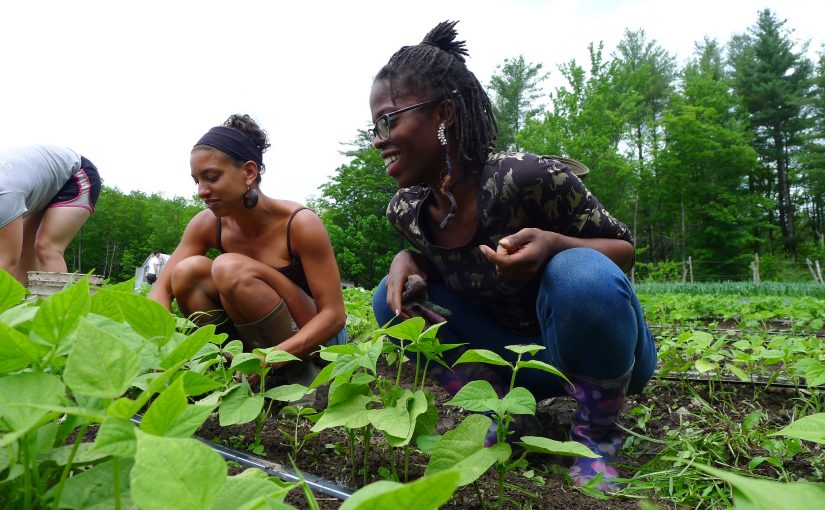
Farming While Black is the first comprehensive “how to” guide for aspiring African-heritage growers to reclaim their dignity as agriculturists and for all farmers to understand the distinct, technical contributions of African-heritage people to sustainable agriculture. At Soul Fire Farm, author Leah Penniman co-created the Black and Latinx Farmers Immersion (BLFI) program as a container for new farmers to share growing skills in a culturally relevant and supportive environment led by people of color. Farming While Black organizes and expands upon the curriculum of the BLFI to provide readers with a concise guide to all aspects of small-scale farming, from business planning to preserving the harvest.

The following excerpt is adapted from the introduction of Leah Penniman’s book Farming While Black: Soul Fire Farm’s Practical Guide to Liberation on the Land (Chelsea Green Publishing, November 2018) and is reprinted with permission from the publisher.

Thanks to our friends at Chelsea Green, you can purchase Leah Penniman’s book Farming While Black (and others!) at a 35% discount. Simply visit the Chelsea Green website and check out using code PWEB35. 

As a young person, and one of three mixed-race Black children raised in the rural North mostly by our white father, I found it very difficult to understand who I was. Some of the children in our conservative, almost all-white public school taunted, bullied, and assaulted us, and I was confused and terrified by their malice. But while school was often terrifying, I found solace in the forest. When human beings were too much to bear, the earth consistently held firm under my feet and the solid, sticky trunk of the majestic white pine offered me something stable to grasp. I imagined that I was alone in identifying with Earth as Sacred Mother, having no idea that my African ancestors were transmitting their cosmology to me, whispering across time, “Hold on daughter—we won’t let you fall.”

I never imagined that I would become a farmer. In my teenage years, as my race consciousness evolved, I got the message loud and clear that Black activists were concerned with gun violence, housing discrimination, and education reform, while white folks were concerned with organic farming and environmental conservation. I felt that I had to choose between “my people” and the Earth, that my dual loyalties were pulling me apart and negating my inherent right to belong. Fortunately, my ancestors had other plans. I passed by a flyer advertising a summer job at The Food Project, in Boston, Massachusetts, that promised applicants the opportunity to grow food and serve the urban community. I was blessed to be accepted into the program, and from the first day, when the scent of freshly harvested cilantro nestled into my finger creases and dirty sweat stung my eyes, I was hooked on farming. Something profound and magical happened to me as I learned to plant, tend, and harvest, and later to prepare and serve that produce in Boston’s toughest neighborhoods. I found an anchor in the elegant simplicity of working the earth and sharing her bounty. What I was doing was good, right, and unconfused. Shoulder-to-shoulder with my peers of all hues, feet planted firmly in the earth, stewarding life-giving crops for Black community—I was home.

As it turned out, The Food Project was relatively unique in terms of integrating a land ethic and a social justice mission. From there I went on to learn and work at several other rural farms across the Northeast. While I cherished the agricultural expertise imparted by my mentors, I was also keenly aware that I was immersed in a white-dominated landscape. At organic agriculture conferences, all of the speakers were white, all of the technical books sold were authored by white people, and conversations about equity were considered irrelevant. I thought that organic farming was invented by white people and worried that my ancestors who fought and died to break away from the land would roll over in their graves to see me stooping. I struggled with the feeling that a life on land would be a betrayal of my people. I could not have been more wrong.

At the annual gathering of the Northeast Organic Farming Association, I decided to ask the handful of people of color at the event to gather for a conversation, known as a caucus. In that conversation I learned that my struggles as a Black farmer in a white-dominated agricultural community were not unique, and we decided to create another conference to bring together Black and Brown farmers and urban gardeners. In 2010 the National Black Farmers and Urban Gardeners Conference (BUGS), which continues to meet annually, was convened by Karen Washington. Over 500 aspiring and veteran Black farmers gathered for knowledge exchange and for affirmation of our belonging to the sustainable food movement.

Through BUGS and my growing network of Black farmers, I began to see how miseducated I had been regarding sustainable agriculture. I learned that “organic farming” was an African-indigenous system developed over millennia and first revived in the United States by a Black farmer, Dr. George Washington Carver, of Tuskegee University in the early 1900s. Dr. Booker T. Whatley, another Tuskegee professor, was one of the inventors of community-supported agriculture (CSA), and that community land trusts were first started in 1969 by Black farmers, with the New Communities movement leading the way in Georgia.

Learning this, I realized that during all those years of seeing images of only white people as the stewards of the land, only white people as organic farmers, only white people in conversations about sustainability, the only consistent story I’d seen or been told about Black people and the land was about slavery and sharecropping, about coercion and brutality and misery and sorrow. And yet here was an entire history, blooming into our present, in which Black people’s expertise and love of the land and one another was evident. When we as Black people are bombarded with messages that our only place of belonging on land is as slaves, performing dangerous and backbreaking menial labor, to learn of our true and noble history as farmers and ecological stewards is deeply healing.

Fortified by a more accurate picture of my people’s belonging on land, I knew I was ready to create a mission-driven farm centering on the needs of the Black community. At the time, I was living with my Jewish husband, Jonah, and our two young children, Neshima and Emet, in the South End of Albany, New York, a neighborhood classified as a “food desert” by the federal government. On a personal level this meant that despite our deep commitment to feeding our young children fresh food and despite our extensive farming skills, structural barriers to accessing good food stood in our way. The corner store specialized in Doritos and Coke. We would have needed a car or taxi to get to the nearest grocery store, which served up artificially inflated prices and wrinkled vegetables. There were no available lots where we could garden. Desperate, we signed up for a CSA share, and walked 2.2 miles to the pickup point with the newborn in the backpack and the toddler in the stroller. We paid more than we could afford for these vegetables and literally had to pile them on top of the resting toddler for the long walk back to our apartment.

When our South End neighbors learned that Jonah and I both had many years of experience working on farms, from Many Hands Organic Farm, in Barre, Massachusetts, to Live Power Farm, in Covelo, California, they began to ask whether we planned to start a farm to feed this community. At first we hesitated. I was a full-time public school science teacher, Jonah had his natural building business, and we were parenting two young children. But we were firmly rooted in our love for our people and for the land, and this passion for justice won out. We cobbled together our modest savings, loans from friends and family, and 40 percent of my teaching salary every year in order to capitalize the project. The land that chose us was relatively affordable, just over $2,000 an acre, but the necessary investments in electricity, septic, water, and dwelling spaces tripled that cost. With the tireless support of hundreds of volunteers, and after four years of building infrastructure and soil, we opened Soul Fire Farm, a project committed to ending racism and injustice in the food system, providing life-giving food to people living in food deserts, and transferring skills and knowledge to the next generation of farmer-activists.
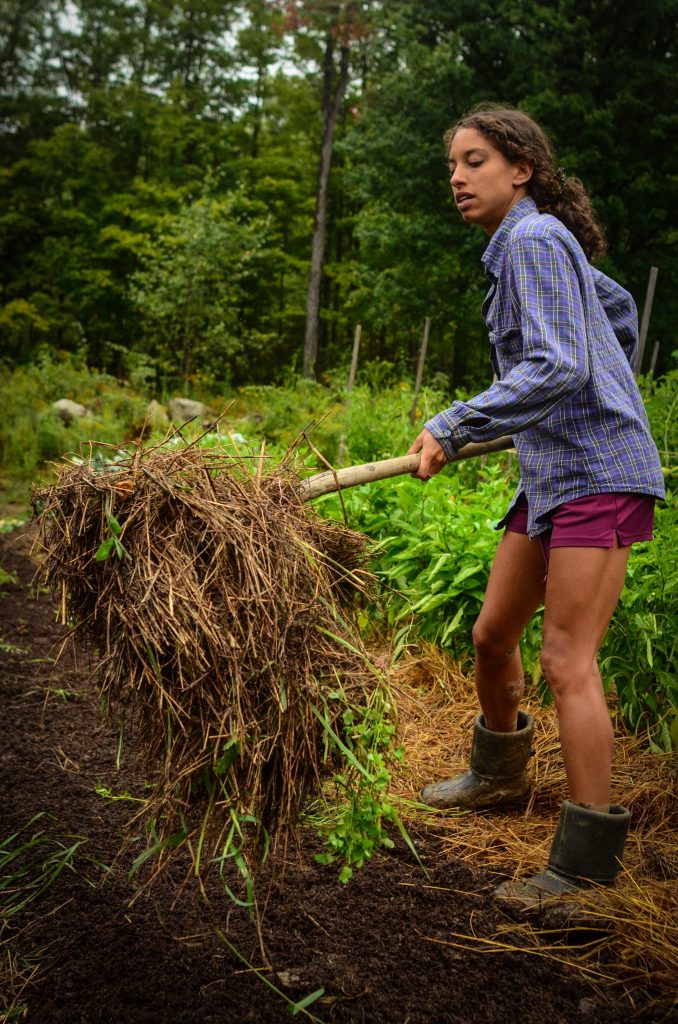
Leah Penniman

Our first order of business was feeding our community back in the South End of Albany. While the government labels this neighborhood a food desert, I prefer the term food apartheid, because it makes clear that we have a human-created system of segregation that relegates certain groups to food opulence and prevents others from accessing life-giving nourishment. About 24 million Americans live under food apartheid, in which it’s difficult to impossible to access affordable, healthy food. This trend is not race-neutral. White neighborhoods have an average of four times as many supermarkets as predominantly Black communities. This lack of access to nutritious food has dire consequences for our communities. Incidences of diabetes, obesity, and heart disease are on the rise in all populations, but the greatest increases have occurred among people of color, especially African Americans and Native Americans.

Farming While Black is a reverently compiled manual for African-heritage people ready to reclaim our rightful place of dignified agency in the food system. To farm while Black is an act of defiance against white supremacy and a means to honor the agricultural ingenuity of our ancestors. As Toni Morrison is reported to have said, “If there’s a book you really want to read, but it hasn’t been written yet, then you must write it.” Farming While Black is the book I needed someone to write for me when I was a teen who incorrectly believed that choosing a life on land would be a betrayal of my ancestors and of my Black community.


Leah Penniman is a Black Kreyol farmer and the2019 recipient of the James Beard Foundation Leadership Award. She currently serves as founding co-executive director of Soul Fire Farm in Grafton, New York, a people-of-color led project that works to dismantle racism in the food system. She is the author of Farming While Black (Chelsea Green Publishing, November 2018). Find out more about Leah’s work at www.soulfirefarm.org and follow her @soulfirefarm on Facebook, Twitter and Instagram. Want more? Buy the book and check out Leah’s powerful Bioneers Conference Keynote Address: Farming While Black: Uprooting Racism and Seeding Sovereignty
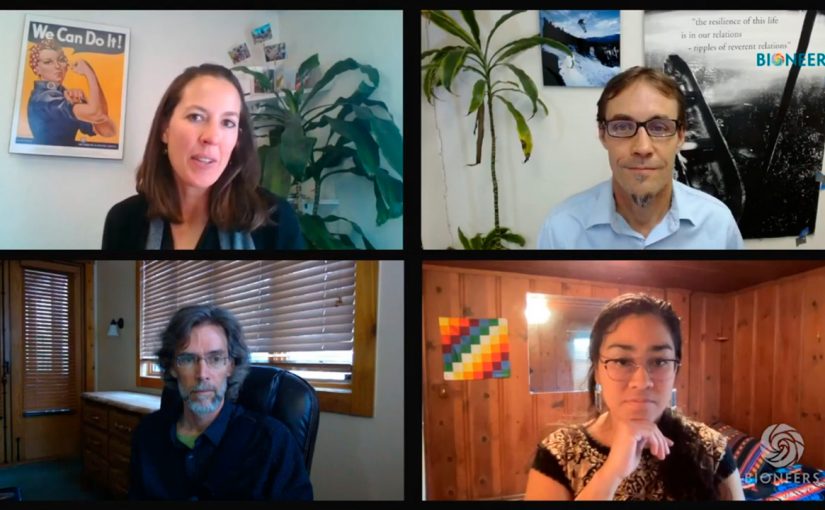
Panel Discussion – The Power of Community: Aligning Governments and Grassroots for Urgent Climate Action

The climate change ship has left the harbor, and what confronts us is the urgent need to accomplish multiple goals simultaneously: reducing and then eliminating greenhouse gas pollution; rapidly scaling up drawdown efforts by returning carbon to the soil; and building the resilience and adaptive capacity in our societal systems to face the multi-pronged crises coming our way. And we must do it all with an equity lens at the center. It’s a tall order, but it’s non-optional. Luckily, there are people and projects all over the country and the world providing effective pathways forward for integrated climate action, using “whole problem” approaches. By leveraging collaboration across multiple sectors, these visionary leaders are outlining revolutionary blueprints for the next wave of essential work we need to do.

Moderated by Kerry Fugett, Leadership Institute Manager of Daily Acts.  With:  Trathen Heckman, founder and Director of Daily Acts; Lil Milagro Henriquez, founder and Executive Director of Mycelium Youth Network; Brett KenCairn, Boulder, Colorado’s Senior Policy Advisor for Climate and Resilience.


Panelists

Trathen Heckman is the founder/Director of Daily Acts Organization, a non-profit dedicated to “transformative action that creates connected, equitable, climate resilient communities.” He also serves on the convening committee for Localizing California Waters and the advisory board of Norcal Resilience Network, and he has helped initiate and lead numerous coalitions and networks including Climate Action Petaluma. Trathen lives in the Petaluma River Watershed where he grows food, medicine and wonder while composting apathy and lack.

Lil Milagro Henriquez, founder (in 2017) and Executive Director of Mycelium Youth Network, an organization dedicated to empowering young people of color around climate change issues, is a veteran of social justice organizing with 18+ years’ experience working on a range of issues, including: access to higher education for low-income people and communities of color; food sovereignty; environmental racism; and labor organizing; among others. She is a current recipient of a Women’s Earth Alliance fellowship.

Brett KenCairn, Boulder, Colorado’s Senior Policy Advisor for Climate and Resilience, coordinates the city’s climate action and climate resilience strategies and leads development of its carbon drawdown focus area. He initiated and now leads a multi-city collaboration called the Urban Drawdown Initiative co-launched with the Urban Sustainability Director’s Network and Carbon Neutral Cities Alliance. Previously, Brett founded or co-founded several organizations, including the Rogue River Institute for Ecology and Economy, Veterans Green Jobs, and Community Energy Systems, and he has worked across the western U.S. in community-based initiatives in rural, Native American and other marginalized communities.

Kerry Fugett facilitates and co-creates the Leadership Institute for Just and Resilient Communities at the non-profit, Daily Acts. She previously served as Executive Director of Sonoma County Conservation Action, leading grassroots campaigns to eliminate synthetic pesticides, facilitating coalition building, canvassing to elect environmental leaders, and organizing mutual support during record-breaking fires in Northern CA. One of her main areas of focus is the weaving of antiracism into community-led climate justice movements.
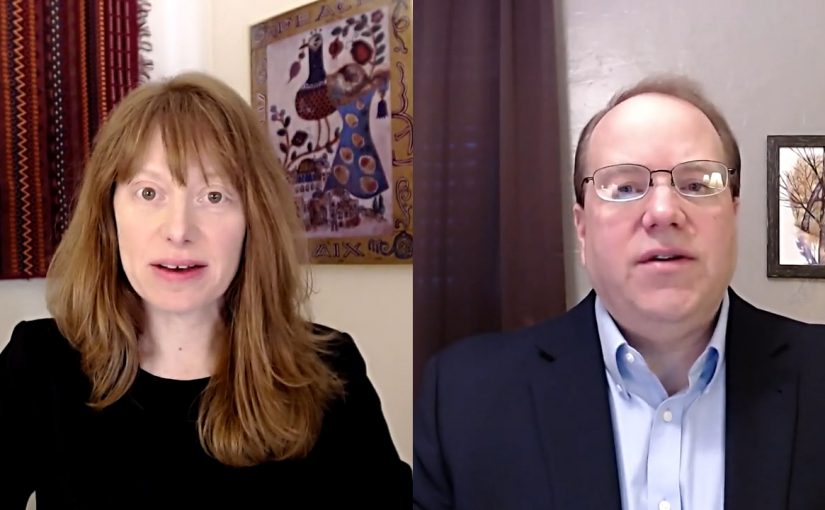
The Benefits and Risks of the Mainstreaming of Sacred Plants and Psychedelics

The benefits and risk of the mainstreaming of sacred plants and psychedelics will be a featured topic at the upcoming Bioneers Conference.

Social attitudes and the regulatory landscape regarding drugs in general and psychedelics specifically are in dramatic and radical flux in the U.S. The obvious failure, structural racism and generally horrific social harms of the “War on Drugs” and a growing body of highly credible scientific data on the healing potential of some previously demonized consciousness-altering substances for a range of otherwise hard-to-treat conditions (e.g. depression, addictions, PTSD, end-of-life anxiety, etc.) have led to much greater interest from mainstream media and the broad public, ever more instances of local legalization and decriminalization in cities and states, and now major investments by venture capitalists eager to cash in on the trend.

While the Bioneers Conference is above all focused on ecological and social justice domains, the event has always included a strong interest in sacred plant and psychedelic use and its apparent links to enhanced eco-consciousness. The upcoming online 4-day conference is no exception. Two keynote addresses and two panels featuring leading luminaries with long histories of exploration and research in visionary plant use will delve into both the exciting possibilities of the enhanced availability of these potentially deeply healing molecules in safe contexts, as well as the risks of commercialization and desacralization during this transformative societal period.

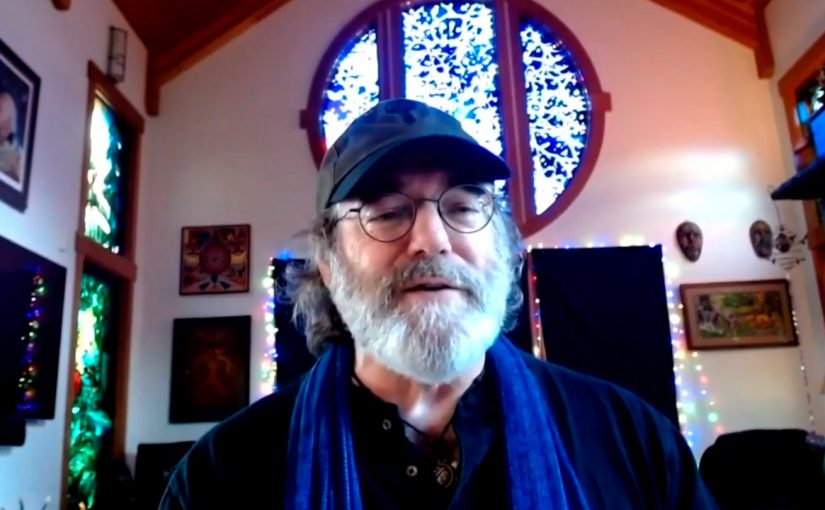
Mycologist Paul Stamets

Paul Stamets, one of the world’s leading mycologists and foremost expert on psilocybin mushrooms, will be delivering a Dec. 5 keynote address titled, “Psilocybin Mushroom Medicines: A Paradigm Shift in Global Consciousness.”

Katsi Cook (Mohawk/Haudenosaunee)

Paul will be joined by Katsi Cook, a groundbreaking figure in the revitalization of Indigenous midwifery and a longtime participant in Native American Church peyote ceremonies; and Françoise Bourzat, a leading expert on psychedelics as healing agents who has done 35+ years’ field work with the Mazatec in Mexico in a panel discussion on “Sacred Medicines, Creativity, Evolution and Paradigm Shifts” on Saturday, December 5th.        

Renowned ethnobotanist, activist, Co-Founder of the Amazon Conservation Team and best-selling author Mark Plotkin will be delivering a keynote talk on the second weekend of the conference, focusing on the status of the fires and the battle against COVID-19 in Amazonia, as well as present new strategies and approaches to halting the processes threatening these crucially important ecosystems and the well-being and cultural survival of their inhabitants.

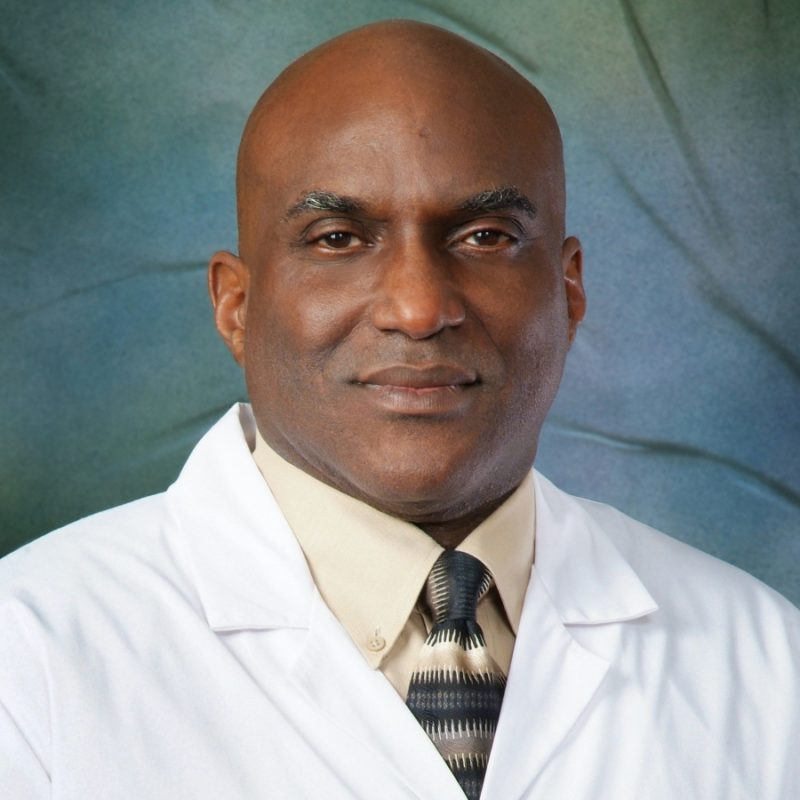
Karyemaitre Aliffe, MD

Sunday December 13th Mark Plotkin will engage in conversation on “Human-Plant Relationships in the Anthropocene” with: Kathleen Harrison, a revered ethnobotanist renowned for her unique explorations of often hidden aspects of plant-human relationships; and Karyemaitre Aliffe, MD, physician-scientist, leading expert on the healing properties of cannabis, who has taught at Harvard and Stanford and has 35+ years’ experience in natural products research.        

These should be highly stimulating, thought-provoking additions to the great debates now under way surrounding the fascinating and rapidly changing relationship of our species to “mind manifesting” substances.   

How Indigenous Wisdom Can Help Us Address Today’s Challenges, with Anita Sanchez

Dr. Anita L. Sanchez is an Indigenous consultant and author whose visionary work bridges Indigenous wisdom and modern life. Inspired by the rich culture of her Mexican and Aztec heritage, Sanchez is helping organizations achieve transformational, positive change around diversity, inclusion and engagement. As the author of the internationally bestselling book, The Four Sacred Gifts: Indigenous Wisdom for Modern Times, she hopes to support individual wholeness and a collective conscious evolution in partnership with People, Spirit and the Earth.

Bioneers is honored to have Sanchez serve as one of our board members and participate in the Talking Circle Sessions at the Bioneers 2020 Conference. Register now! 

In this interview, Sanchez shares how Indigenous wisdom can help us honor the interconnectedness of life, sustain a more just and fulfilling human presence on Earth, and lead a better future together.

In your book, The Four Sacred Gifts: Indigenous Wisdom for Modern Times, you detail the gifts of forgiveness, healing, unity, and hope. How do these gifts help create great leaders?

“The leadership systems currently in place too often look at us as our doing, and they say do differently in order to change.  But the Indian way says we’re not human doings, we’re human beings.  If we want to change the doing in leadership, I need to change my being. And the way to change my being is to change my intent.” —Don Coyhis, Mohican, founder of White Bison, 1993

Look around you. Look at your community, your town, your city, state and country. Look at the world itself. Look at our media, our politics, our businesses, our culture. You will see people acting as if they are separate, alone. You will experience people thinking and behaving in ways that cause needless suffering, further division, and reckless destruction to themselves, each other, and to our Mother Earth.  It is time for all of us, particularly leaders, to open our hearts and remember who we are: We are part of One Hoop of Life. Whether you are a leader of your life and a leader in your community, business, and family, these divisive times require decisive action.  In The Four Sacred Gifts, 27 Indigenous Elders from the Americas, Asia, Europe, and Africa share a call to action that asks all of humanity to receive the gifts that have been offered, and to embody them. The re-emergence of a vibrant community and the experience of belonging requires us to remember how to be in right relationship with people and the Earth. The promise is that when you embody these four gifts, you will create harmony, remembering how “to be” and how “to do.” 

The first gift is the power to forgive the unforgivable.
The second gift is the power to heal.
The third gift is the power of unity.
The fourth gift is the power of hope.

For more on the Eagle Hoop Prophecy and Gifts go to www.FourSacredGifts.com

Your work with Pachamama Alliance and Bioneers has focused on amplifying Indigenous wisdom to inform leadership in tackling today’s most pressing challenges. How do these organizations align with your values, and what other orgs do you invest your time & energy into?

I am honored to serve as a Board member of Bioneers and the Pachamama Alliance, who align with my values and my commitment to contribute to movements that are life-giving for all my relatives. My why is to inspire people to discover and trust their gifts so that they become a life-giving force for all, people and the earth. This starts with me. My values and my commitment are to being a “whole human being” who understands that I am part of, not separate from, this beautiful planet and all its creatures.

For more than 30 years, Bioneers has provided breakthrough solutions for people and planet. I love our value of “It’s all alive. It’s all connected. It’s all intelligent. It’s all relatives.” For 25 years, the Pachamama Alliance, empowered by our partnership with indigenous people, dedicated itself to bringing forth an environmentally sustainable, spiritually fulfilling, socially just human presence on this planet. Both organizations use insight from their work in partnership with indigenous people to educate and inspire individuals everywhere to be in right relationship with all our relatives in this One Hoop of Life. 

I ask to work with conscious business and community leaders who are committed to creating harmony and balance in the world. In addition to my clients, I share my energy with the Evolutionary Business Council, the Transformational Leadership Council and the Association of Transformational Leaders. I sit in circle and support the work of the World Indigenous Science Network, the Tipping Point System – EarthWise Centre, Wisdom Weavers, AISES – American Indian Science and Engineering Society, One Degree Network and others.

Dr. Anita L. Sanchez

What teachings do you lean on as you navigate and adapt to life during the COVID-19 pandemic?  

Every day, I am grateful for my indigenous and Mexican roots that support me to remember I am part of the earth, intimately interconnected to people and nature, not separate. My daily practices help me remember that, even in the darkness, there is light, there is much to be grateful for, while staying present to the suffering, too. Each day, it is very painful to see relatives pass to the other camp, no longer physically available to us, and to see the racial and class inequities clearer than ever in terms of access to food, health, education, legal rights, housing, and jobs, to see fear and lies embraced, to see our forests on fire, animals killed, oceans and life destroyed.   

I am an extreme extrovert, so I miss the time with my family, friends, and in being in ceremony together. I miss working with my clients to create diverse, equitable, inclusive and life-giving workplaces in different parts of the country and world. However, in our physical separation, we can choose to slow down, rediscover the power of silence – listening to what is going on in our hearts and spirit, which can include deep sorrow, gratitude, and renewed empathy and appreciation for all life around us – two-legged and all our relatives. Conscious, individual and collective, actions are necessary.

How does your unique experience as an Indigenous woman inform the way you approach leadership?

Being an indigenous female-identified person, a woman, impacts everything in how I approach leadership. This includes my world view of everything being intimately interconnected, not separate. As an indigenous woman, I see the reality of the larger society that lives in a world that is linear, separate, Time is not linear – it is circular, and what we are doing in the present impacts the future seven generations. Being a whole human being is to draw not only on the physical, but also the mental – when something shows up at one level, I know to look at all the levels to get better understanding of healing and wholeness. 

Rather than looking at everything as disparate parts, I come in and look at the wholeness. I look at the connections. They might be messy connections, but nonetheless, where do they overlap? How are they connected and how are we separating them? I also talk about ‘good medicine.’ The ‘medicine’ is anything we do or say. Good medicine in the community, and in the corporate world, is anything that’s aligning our spiritual, mental, emotional, psychological and physical selves. Bad medicine is where we are tearing that apart. I’m about bridging it, showing another way of looking at things where we are all connected. For each of us, our roles, our actions are a kind of medicine.

People look to you for wisdom, guidance, and consultation. What are some things that you are still learning to explore? Where are you still growing in your thinking? Where do you look to?    

“You have noticed that everything an Indian does is in a circle, and that is because the Power of the World always works in circles, and everything tries to be round. Everything The Power of the World does is done in a circle. The sky is round… and so are all the stars. The wind, in its greatest power whirls. Birds make their nests in circles, for theirs is the same religion as ours. The sun comes forth and goes down again in a circle. The moon does the same, and both are round. Even the seasons form a great circle in their changing, and always come back again to where they were. The life of a man is a circle from childhood to childhood and so it is in everything where power moves.” —Black Elk, Oglala Lakota, 1930 

No matter how educated we become, how many books one writes, how many seek your presence, it is an honor and a deep responsibility to be a human being in this time.

It is easy to say I’m a great listener, and many come to me for this quality. However, I continue to learn about the power of silence. My uncle always started his talks about the People and how to be a whole Human Being by saying to us children to “listen with the softest part of your ears and with an expanding heart.” He would follow with, “the toughest and most rewarding journeys in life is the journey from the heart to head and back again. I wish you many journeys from the heart to the head and back again in your life.”  

Where do I go to seek support in becoming a loving, life-giving force to myself, other people and nature? I turn to my heart, to nature, particularly eagles, mountains, and the rainforest, to my ancestors, to the indigenous wisdom keepers from the Four Directions, and to Spirit – the Great Mystery. I pause to listen and to act from my heart, listening to my spirit and to the earth. I give gratitude for being a human being and I say out loud, “I choose to learn and grow every day.” Every day, I ask for help to grow in my trust in the Great Mystery. 

Conscious Music is the Soundtrack of the Movement: An Interview with Alfred Howard

Alfred Howard, a prolific spoken-word artist, writer, and co-founder of The Redwoods Music, a San Diego record label and collective, was, pre-pandemic, pening lyrics for 8 bands and performing homemade percussion with six. In his early 20s he caravanned with musicians all across the county before finally setting roots in San Diego, where he has become a leading figure in that city’s musical community. He is the author of 2 books, including The Autobiography of No One; writes articles for several leading San Diego newspapers and magazines; and has written lyrics for over 30 released albums.

His piece “I Love America” will be highlighted at the upcoming online Bioneers Conference (register now!) , and he will also be a panelist on a session with fellow engaged musicians affiliated with Guayaki Tea’s “Come to Life” music project.

Polina Smith, Bioneers’ arts coordinator, interviewed Alfred about his work and the role of art during these times.

POLINA SMITH: How did your musical Odyssey originally begin? 

ALFRED HOWARD: I’ve been playing music for the latter half of my life. When the pandemic hit, I was writing lyrics for 8 bands and performing in 6. That outlet was suddenly gone. Shows and rehearsals were quickly a thing of the past. To be completely honest, I was exhausted at that moment: I’ve been dealing with chronic Lyme Disease for 26 years and that was the first time in almost as long that my life allotted me a break, and after a month away from music, I was excited again to get creative. My newest project was me figuring out how to do that in this new paradigm.

POLINA: How has the pandemic changed your trajectory? What have been the challenges and the gifts? 

ALFRED: The pandemic has been a huge motivator for me. This year has been historical in even its most subdued moments. It had a relentless feel to it, as if each headline were in competition with the preceding one. At its best, music is a documentary of a moment. I decided to write and record 100 songs with different voices and musicians from all around the country to encapsulate a unique moment in our history, and I invited my mom, a brilliant watercolor artist, to add a visual element to each song. I thought it would be great to try to add something positive to a year filled with such dire reflections. It’s been difficult to wrangle so many musicians and record with distance as an obstacle. We’re all accustomed to creating in a room together, but art is all about evolution, and “necessity is the mother of invention,” so it’s been a great and benevolent challenge to overcome those obstacles.

POLINA: What are your ultimate dreams and vision for your art? 

ALFRED: I just want to be heard. I want my music to offer relief and reflection. Music is medicine and we’re in need of healing.

POLINA: What is your perspective on the times we are living in? 

ALFRED: We’re in a moment of change. We’ve had the pendulum swing so far into the darkness that the light feels like an inevitable next direction. This year we’ve been forced to acknowledge some tragedies and inequalities in our nation. We have the chance to not merely acknowledge them, but to address them.

POLINA: What do you believe is the role of art and music in social justice movements and in this time specifically? 

ALFRED: Music is the soundtrack to the movement. The two are inseparable. They both motivate the other to push forward.

POLINA: What would your message to young artists be right now? 

ALFRED: My message is to create constantly. Hold your creativity up as a mirror to society and paint what you see with whatever medium is at your disposal.

POLINA: Thank you for sharing your words and wisdom with us, Alfred, we can’t wait to see you at the Bioneers Conference!

Learn more about Alfred Howard’s Work

Join Alfred at Guayaki’s Panel: Come To Life: Inspiring the Regenerative Movement Through Arts and Activism at the Virtual Bioneers Conference

Re-Indigenize Your Thanksgiving

This article contains the content from the 11/20/2020 Bioneers Pulse newsletter. Sign up here to get the newsletter straight to your inbox!


For many Native American families, Thanksgiving is a very complicated day, given the real history behind the holiday and the false narrative around early encounters between colonizers and Native Peoples. This year, obviously, Thanksgiving is complicated for everyone as we transform our plans in order to reduce the spread of disease. Opting not to visit someone’s home in order to limit the spread of disease is, in fact, a useful allegory as we re-learn the real history of Thanksgiving.

Bioneers annually uses this pre-Thanksgiving newsletter to help educate and inform our community around the erasure of contemporary Native peoples and to provide avenues for allyship in support of Indigenous Peoples.

This week, we highlight a Bioneers-produced Indigenous Thanksgiving Comedy Hour, explore how to Decolonize Regenerative Agriculture, share pathways for COVID-19 Relief for Native Communities and more. Read on!


Indigenize Thanksgiving with Bioneers  

Join us for a special Thanksgiving LIVE event November 26 at 5:30 pm PST featuring Native comedians Jackie Keliiaa, Dallas Goldtooth and special guests. Whether you are by yourself or with family this year, we invite all of you to join us for some laughter and fun.

You can join in two ways: watch the live feed on our Facebook page, or log in to the webinar here.

And if you love our programming, we also invite you to make a donation to help support our collective work to make the world a better place. All proceeds will be split between the comedians and the Bioneers Indigeneity Program.


Decolonizing Regenerative Agriculture: An Indigenous Perspective

The First Nations Development Institute provides grants and technical assistance to strengthen Native communities and economies. As their Director of Agriculture and Food Systems Programs, A-dae Romero-Briones (Cochiti/Kiowa) is a compelling voice against the injustices of colonization inflicted on Native People and for the acknowledgment of Indigenous People’s land stewardship as a basis for regenerative agriculture. In this interview with Arty Mangan, Director of Bioneers’ Restorative Food Systems Program, A-dae discusses indigenous perspectives to agriculture.

Read more here.


What do Native Americans REALLY think of Thanksgiving?

Alexis Bunten, PhD., (Aleut/Yup’ik) is an expert in Indigenous, social and environmental programming, and serves as the Co-Director of the Bioneers Indigeneity Program. In this new essay, Alexis explains how to Indigenize Thanksgiving and sheds light on the complex relationships that Native Peoples have with the holiday.

Read more here.


3 Ways to Indigenize Thanksgiving

Thanksgiving is a collective opportunity to show gratitude, share food, and make meaning together through storytelling. But Thanksgiving is a problematic holiday built on deliberate lies and the ongoing genocide of millions of Native American peoples.

Here are some ideas from the Bioneers Indigeneity Program for how we can all transform and “Indigenize” Thanksgiving in ways that are culturally respectful to Native Americans.

  • Acknowledge First Peoples: Learn the name of the Native Peoples of the place you live, and acknowledge that you are in their ancestral territory. In your opening words to the Thanksgiving meal, you might make it a new tradition to say something like the following: “We are thankful to live on the Monterey Peninsula, the ancestral territory of the Rumsen Ohlone peoples.” Start your research with this app, which provides an interactive map so you can find out whose land you live on.
  • Eat Indigenous Foods: Serving foods indigenous to where you live can be a daunting research task. However, there are some foods that are indigenous to North America, such as turkey and “the 3 sisters” that you will probably be serving anyway. You can learn about the significance of the 3 sisters to Native Americans in this presentation by Kiowa chef, Lois Ellen Frank, given at the Bioneers Conference. Knowing the cultural significance and meaning of these foods to place will increase your enjoyment, fulfillment and well-being connected to the Thanksgiving meal.
  • Learn Local History: Learn the real story of the place that you live. If you live in America, this inevitably means learning about the histoory of genocide and colonization. This information can be painful to learn, but it is critically important to know true history so that it cannot be repeated.

Read more here about Bioneers’ Alexis Bunten’s own journey to “Indigenize” Thanksgiving.


Help Fund COVID-19 Relief in Indian Country

Since our inception, Bioneers has been profoundly shaped and guided by the knowledge and worldviews of Indigenous peoples, for which we are unspeakably grateful. Our work with First Peoples has been foundational and central, growing into our Native-led Indigeneity Program co-directed by Cara Romero and Alexis Bunten.

That’s why our Indigeneity Program took early action to support Native communities disproportionately impacted by COVID-19. Since we began this endeavor, we’ve been blessed to be able to regrant over $165,000 from generous donors, who have helped us support the lives and health of hundreds of individuals, prioritizing elders and children. But the struggles of the pandemic are far from over.

To contribute to Bioneers’ work to strengthen the leadership of First Peoples, women, youth and diverse leaders, and to shift our course to an Earth-honoring and just future.

Learn more and donate now.


The Latest from Bioneers.org:


What We’re Tracking

  • From Transition US: “From What Is to What If” | Have a good story about something you’ve done to make the world a better place? You’re invited to share your stories of community, resilience, and regeneration now with a national network of activists and advocates just like you. Those who act by December 15th will be eligible to receive one of four $500 stipends to present a webinar and lead an action learning cohort next year through Transition US.
  • From CIIS Public Programs: The California Institute of Integral Studies, a nonprofit dedicated to personal and social transformation, is hosting their 2020 Winter season of virtual discussions and workshops around compassion, psychedelics, spirituality and more. Reserve your spot by registering today!
  • From Science magazine: “COVID-19 data on Native Americans is ‘a national disgrace.’ This scientist is fighting to be counted” | “If you eliminate us in the data, we no longer exist,” says Abigail Echo-Hawk, a citizen of the Pawnee Nation of Oklahoma and director of the Urban Indian Health Institute.
  • From Yes! Magazine: “The Most Effective Conservation Is Indigenous Land Management” | American conservationists have said and done terribly racist things over the years. Now is the opportunity to center justice.
  • From NPR: “How Native American Voters Have Affected Election Results” | NPR’s Mary Louise Kelly talks with Tara Benally, field director for Rural Utah Project, about how the Indigenous vote in Arizona has played a role in flipping the key swing state.

This article contains the content from the 11/20/2020 Bioneers Pulse newsletter. Sign up here to get the newsletter straight to your inbox!

What do Native Americans REALLY think of Thanksgiving?

By Alexis Bunten 

Alexis Bunten, PhD., (Aleut/Yup’ik) has served as a manager, consultant and applied researcher for Indigenous, social and environmental programming for 20 years and is the Co-Director of the Indigeneity Program at Bioneers. 

Disclaimer from the Author: This blog only reflects my personal observations and experiences, and I write on behalf of myself. 


Thanksgiving is many things to Native Americans. Since I began decolonizing and Indigenizing Thanksgiving with my Bioneers family, I have shared the true history of Thanksgiving, and provided guidance for how and where to show up in solidarity with Native Peoples in my annual Thanksgiving blog

But this year, nobody is traveling for Thanksgiving. We are not getting together with extended family and friends. So, how do we continue to Indigenize Thanksgiving together, while staying socially distanced? 

This reflection has me thinking about how Native Peoples really feel about Thanksgiving. 

There is no such thing as a unified “Native American perspective” on Thanksgiving. We are diverse, and we have complex relationships with the holiday. That’s why I strive to “Indigenize Thanksgiving.” 

Many of us do not celebrate Thanksgiving. It is a time to think about stolen land, and genocide. We pray for millions of our ancestors who have been killed or died as part of the ongoing American colonization (some say occupation). We have also developed new traditions that take place on Thanksgiving, like the National Day of Mourning, which has taken place on Cole’s Hill, in Plymouth, Massachusetts, since 1970. 

But, many of us still do celebrate Thanksgiving. I grew up with it, as did nearly all my Native friends and family. But, I always felt bad about being bombarded with negative stereotypes throughout the holiday season. Most of us address the psychological pain through humor. 

So for this year, we are going to take our conflicted feelings about Thanksgiving and Indigenize them with some Native humor. We are going to stay home with the same people we see way too much all-day, everyday, and laugh with Native comedians, Jackie Keliiaa and Dallas Goldtooth. And we want to invite our entire Bioneers family to join us, to have a great, big, funny, and fun Thanksgiving together, from coast to coast. (I promise it will be much more fun than sitting around with too much food, or no holiday meal at all, reflecting on what you are grateful for in 2020.) 

There are two ways to join in the fun for Thanksgiving. You can watch the comedy show live stream on our Facebook Page starting at 5:30 pm PST, November 26, Thanksgiving Day. We’re only going to keep it up for 24 hours, so mark your calendars! 

OR, you can join the webinar live by registering here

Oh, and pssst. We have a little favor to ask you. If you can afford to, and want to be an awesome ally, please consider donating to this event

The proceeds will be split between our Native Youth Leadership Program and the comedians. Native artists have been especially struggling this year for obvious reasons (but in case it’s not obvious, read this). Let’s show Jackie and Dallas just how much we appreciate the good medicine they give to the world through their special talent. 

On behalf of the Bioneers Indigeneity Team, take good care of yourselves and we hope to see you this Thanksgiving! 

Yours, 

Alexis Celeste Bunten 

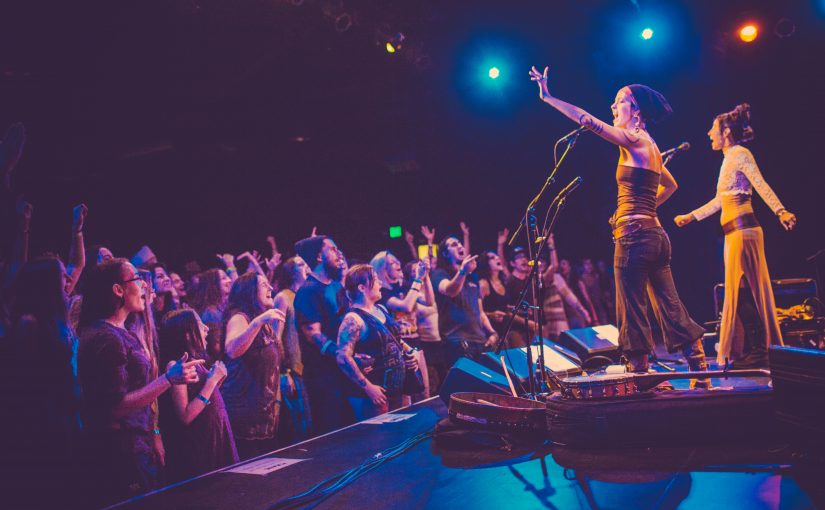
Art That Responds to the Times: Wisdom from Rising Appalachia

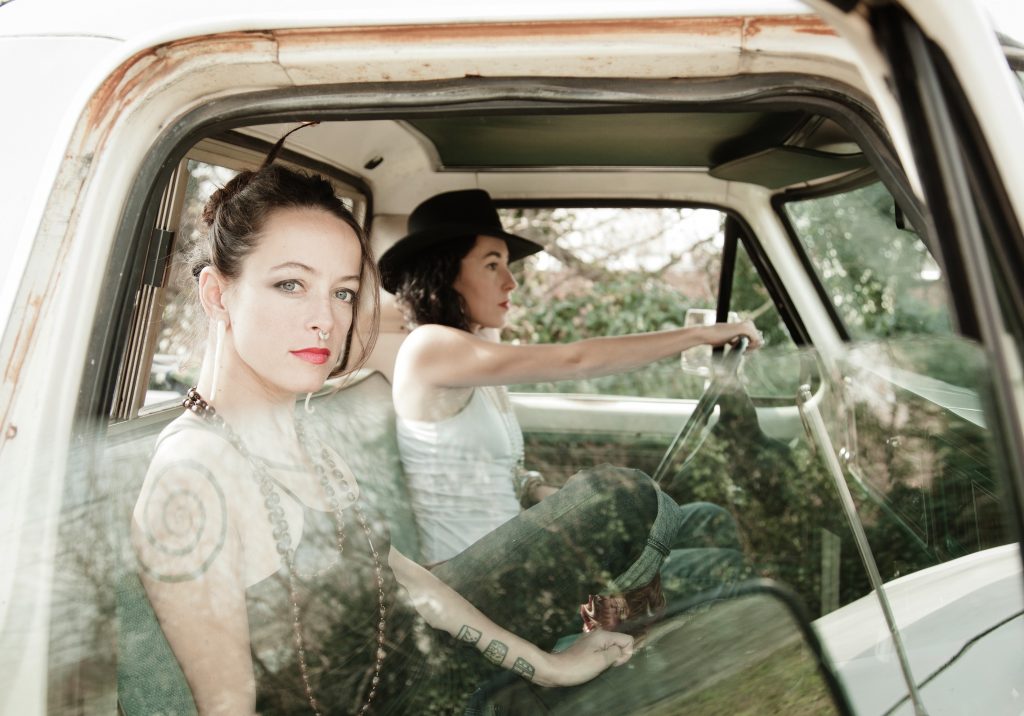
An interview with Chloe Smith, multi-instrumental musician, co-leader (with her sister, Leah Song) of the American musical group, Rising Appalachia, conducted by Bioneers Arts Coordinator, Polina Smith.

About Rising Appalachia: Rooted in various folk traditions, storytelling, and passionate grassroots activism, the band routinely provides a platform for local causes wherever it plays and frequently incites its fans to gather with it in converting vacant or underused lots into verdant urban orchards and gardens. In a time of social unraveling, Rising Appalachia’s unique interweaving of music and social mission and old traditions with new interpretations exudes contagious hope and deep integrity.   

POLINA SMITH: What was the genesis of Rising Appalachia? 

CHLOE SMITH: The group arose out of a combination of what our family passed to us musically and culturally, our rootedness in community, our burning impulse to self-expression, and the bridge between sibling brains.  

POLINA:  How has the pandemic changed your trajectory? What have been the challenges and the gifts this crisis has brought you? 

CHLOE: We had been aiming to take a sabbatical in 2021 anyway, so we are taking this year as an early sabbatical and mostly using this time to rest our bodies from the rigors of touring (which we had been doing a lot of for years) as well as to write new material. Leah and I have been in a songwriting class since March with a few other women in our music circle, and that has proved to be immensely nourishing in these times. It’s given us an incentive to write but not to rush to perform. Artists need that cave from time to time.  

I believe we all know the challenges of the times, especially for those parts of the entertainment industries that rely almost completely on live shows for revenue streams. Leah and I have also been apart this whole time, which has been challenging.  Still, we try hard to be optimistic for the sake of moving the needle upwards when so many people are down. It’s an ebb and flow for all of us, with good days and bad days. The silver lining is that we are each forced to rethink how we were working in this world and whether or not it was sustainable for our bodies, our resources, our families, and the world. I believe there will be some poignant innovation coming out of this time.  

POLINA:  What are your ultimate dreams and vision for Rising Appalachia?  

CHLOE: We don’t have any ultimate goals or visions, to be quite honest. We make art to respond to the times, to reflect our inner and outer world, to be an extension of our souls and spirits. There has never been an endgame or final place we were reaching towards, simply a following of a golden thread along life’s many routes.  

POLINA: What do you believe is the role of art and music in social justice movements in general, and in this time specifically?  

CHLOE: To add umph and spark to movements, to bring people together, to try to make sense of the times as well as to continue the conversation that has been happening through art for millennia. In the time of the pandemic, art is still finding its way to come through and make us laugh, cry, and remember our place in the grand scheme of things. There is so much noise and news and chatter, some of it really important but it’s wildly distracting as well. Perhaps music can bring us to our center throughout these hard times and strengthen our missions with a little bit of magic and a sprinkle of soul. 

POLINA: What are you most excited about your participation in the upcoming online Bioneers Conference? 

CHLOE: The cross pollination: it’s always been fascinating for us to collaborate with people outside the art sphere, to see how creativity can lend a hand to design and science and education and justice and all the things Bioneers works towards. Rising Appalachia has always thrived in diverse spaces where music is not the main focus but an accent to a larger conversation.  

POLINA: What would your message to young artists be right now?  

CHLOE: Stay in charge of your art, stay ahead of it. Don’t pass it up or pawn it off for money before you can really comprehend what it is that you want to do or say. True art is quite radical and untethered. Make sure you have learned some ropes of the world, some business skills and some honing of craft. Then, if you want to build a team, you can do it with backbone and experience. 

POLINA: Thank you so much Chloe, for taking the time to speak with us, we can’t wait to see you at the Bioneers Conference and to continue to follow your extraordinary journey!

Learn more about Rising Appalachia

Follow on Instagram

Follow on Spotify

Follow on FaceBook

Follow on Patreon


Paul Stamets – Psilocybin Mushroom Medicines: A Paradigm Shift in Global Consciousness

Psilocybin mushrooms have been used for millennia by several cultures from Europe to Mesoamerica. More than 116 species have been identified thus far in the genus Psilocybe alone. New scientific evidence is pointing to the fact that, not only can they be psycho-spiritually transformative, but they are capable of stimulating neurogenesis, i.e. the growth of nervous system tissue. These recent discoveries show psilocybin’s potential for helping address such conditions as depression and anxiety, but perhaps as well to help prevent dementia, Alzheimer’s and other neuropathies. In fact, they may increase intelligence. But these exciting new findings have generated a rush of investors seeking to corner medicalized psilocybin, which raises the question: Should psilocybin mushrooms come to market as People’s Medicine or Profit Medicine? Paul Stamets, one of the world’s leading authors, inventors, educators and entrepreneurs in the field of mycology, and very possibly the planet’s foremost expert on psilocybin mushrooms, shares his thoughts on the latest research and the rapidly evolving landscape of psychedelic medicine.

Paul Stamets delivered this talk at the 2020 Bioneers Conference, introduced by Kenny Ausubel.

LEARN MORE

Paul Stamets, speaker, author, award-winning mycologist, medical researcher, groundbreaking mycological entrepreneur, and a visionary thought leader in the study of fungi and their uses in promoting human health, ecological restoration, and detoxification of the environment, is the author of six books, including: Mycelium Running: How Mushrooms Can Help Save The World, Growing Gourmet and Medicinal Mushrooms, and Psilocybin Mushrooms of the World. Paul has discovered and named numerous new species of psilocybin mushrooms and is the founder and owner of Fungi Perfecti, LLC, makers of the Host Defense Mushrooms supplement line. And Paul’s work has now entered mainstream popular culture. The new Star Trek: Discovery series features a Lt. Paul Stamets, Science Officer and Astromycologist(!). Learn more about Paul Stamets at his website.

Can Mushrooms Save the Bees?

In this Bioneers video, Paul Stamets shares how fungus extract can be used as medicine for bees to help save their dying colonies in a way that connects us back to the Earth.

Solutions from the Underground: Using Fungi to Help Save the World

In this episode of The Bioneers: Revolution from the Heart of Nature podcast, Paul Stamets reveals astonishing evidence of how nature’s solutions surpass our conception of what’s possible to radically restore ecosystems and human health.

Bioneers Visionary Plant Consciousness & Psychedelics Media Collection

Explore more from Paul Stamets and other experts. These remarkable video and audio presentations, essays and interviews cover a wide spectrum, including: emerging scientific research, the history of psychedelics, their use as healing agents, and their socio-cultural impacts.

Vanessa Daniel on Funding Black and Indigenous Leadership

Underrepresented populations, including BIPOC and gender non-conforming people, are often on the frontlines of justice movements. Existing at the compounding intersections of state violence, these groups have developed an adaptive ability to see the world with astonishing moral and political clarity. They are illuminating new ways toward liberation in which everyone benefits, and yet they remain the least funded. What does it mean when the majority of philanthropic funds go toward white-led organizations? How can philanthropy pivot to support initiatives from more diverse groups?

Vanessa Daniel is the founder and Executive Director of Groundswell Fund and Groundswell Action Fund, two organizations that support grassroots organizing led by gender non-conforming people and women of color. In the following keynote address, edited for length and clarity, Daniel forces us to reckon with the urgency of the current moment. Her call to action is simple. We can no longer afford to wait — the time for change is now.

Vanessa Daniel

We are in an important time in history for donors and foundations to give boldly to support social justice movements, and to heed the call of grassroots leaders like Ash-Lee Henderson of the Highlander Center and the Movement for Black Lives, who says to us: “Fund us like you want us to win.”

The clock is running down on our planet, so winning is not some theoretical political scorecard, it’s about whether humanity survives or not. And as someone who leads a foundation that’s trying to heed that call, I’m really excited to dig into thinking about how we can all do that in philanthropy. 

I truly believe that humanity has every single thing that we need to build a better world. We have all the resources we need to ensure that every single person has enough food, housing, education, medical care, a planet to inherit, and opportunity. We have an embarrassment of riches in our social justice movements, and grassroots leaders who are so clear on how we get there.

One of the most stunning gifts that humanity has been given and that we must turn toward in order to survive is the leadership of women of color and transgender and gender non-conforming people of color. These are the people who have lived their lives at the sharpest cross sections of oppression and, as a result, have developed an adaptive ability to see the world with 360-degree vision.

360-degree vision is about the ability to see and to tackle any issue with an intersectional lens, that dismantles white supremacy, patriarchy, extractive capitalism and colonialism simultaneously. 360 vision reveals the solution to any issue that it examines. For example, take the issue of gun control: Through an intersectional lens, we are able to see that banning assault rifles is good, but it’s not enough when the majority of mass shootings are carried out by white men with a history of battering women, and white nationalism. We have to dismantle white supremacy and toxic masculinity in this country; for youth of color who are living in this pressure cooker of poverty, police brutality and deportations, we have to demilitarize our communities in order to see the violence abate.

We can look at the issue of climate change through that lens and understand that strategies of parts per billion carbon reduction are insufficient, that we really need a just transition that’s grounded in the wisdom of Native environmental protectors, grounded in the health and well-being of jobs for people who are in frontline communities, that that’s what’s needed to save and to come back into right relationship with our planet. 

When we turn to reproductive freedom in this country, we understand that the legal right to access for abortion is critically important. But it’s not enough when millions of people can’t access that right because they’re poor, an immigrant or transgender. We have to expand access and public funding for abortion, but that alone is not enough. We also have to end the violence happening to communities that’s preventing people from having kids, environmental pollution that’s causing poor reproductive health outcomes, mass incarceration, and discrimination in our medical systems.

In every single social justice movement, there is a set of organizations with this kind of lens, and overwhelmingly they’re led by women of color, and transgender, and gender non-conforming people of color, and they’re like bright flashlights. They’re shining a light on the way to freedom for all of us. We all benefit when they’re able to shine the light brighter. And funders and donors have a role to play in supporting them to do that. 

I lead two public foundations. One is Groundswell Fund, which is a 501(c)3, and the other is Groundswell Action Fund, which is a 501(c)4. They are both grand experiments in building community across race, class, and gender. We have 500 mostly white women, individual donors, and 40 private foundations, who are giving us resources that we will distribute to the grassroots. But the people who decide where the resources go, the people who created and run Groundswell, are women of color and transgender people of color who come out of grassroots organizing. 

Because we decide, we have created an irrigation system for movement over the last 10 years that now moves those resources to 150 organizations that are doing intersectional organizing, and that are mostly led by women of color, with a particular focus on folks who are Black, Indigenous, and transgender. We’ve been able to accomplish some things we’re proud of, moving over $65 million to the field, including early support for many of the organizations that were so critical in states like Georgia, Arizona, and Pennsylvania in this election.

What unites us as a community is one thing: We believe that the full truth is important and human beings will neither realize freedom or survive if we tell half truths. If we tell the truth about climate change, we must also name the existence of patriarchy; if we tell the truth about capitalism, we must also name the impact of white supremacy; if we tell the truth about LGBTQ+ rights we must also name the caustic effects of xenophobia. We must tell the whole truth, and that work begins by lifting up the truth tellers, the people who are brave enough to break the spell of denial that so many progressive movements have been under and are keeping us from winning.

Lesson number one that we learned at Groundswell is this: The way all people get to freedom is by following the people who know the way. It was Latinx and Native people who flipped Arizona when other people thought it was impossible. One of our grantees, Luca, together with their coalition partners, knocked on 1.5 million doors. They registered 200,000 people to vote. Their executive director shared with us through tears after the election what it was like to see people coming back day after day to canvass voters, after burying loved ones to COVID. After losing jobs in this economic environment and being crammed multiple families in single apartments.

The Navajo Nation, which was most impacted by COVID, turned out at an incredible 89% to vote. API people in Pennsylvania made 1.3 million calls to people in 10 languages, voters who’ve been ignored by so many other electoral operations. And Black women, the backbone of our democracy and the vanguard of social justice movements who, even after the theft of the governorship of Stacy Abrams through horrendous voter suppression two years ago, picked themselves back up and through sheer grit and determination, fighting for their lives and the lives of their children, made a way for their state and for our country.

Here is something philanthropists must reckon with: What does it mean when the political and moral clarity of Black women is unparalleled by any other group in this country, and yet they are one of the least funded groups? What does it mean when Native people, who were responsible for the margin of victory in so many states, remain largely invisible to electoral donors? The margin of victory that people of color created in this election with women of color at the helm is not identity politics, it’s math. 

What does it mean for the hope of freedom for all of us when the majority of philanthropic dollars continue to go to white people and organizations led by white people, when white women voted in even larger proportion for Trump after four years of seeing what he was capable of? What does it mean when white men, who are responsible for leading us into pretty much every disaster we are in as a country and as a planet, supported putting Trump back in the White House more than any other group and supported more than any other group putting a rapist on our Supreme Court? What does it mean when that is the group that receives the vast majority of philanthropic resources? 

What does it mean when donors think the electoral playbook that most white liberal organizations use is the one that works? This election was a total repudiation of a conventional voter engagement playbook, and by extension, most of the philanthropic dollars that support it. The victory against Trump occurred in spite of, not because of, dollars wasted on targeting white swing voters. It occurred in spite of dollars wasted on parachuting GOTV infrastructure into states six weeks before an election with a plan to pull it right out the day after, in spite of millions of dollars spent on ads to project messages that were polled and tested and found to be safe with voters. It was a victory won by organizers of color, particularly black women who had the good sense to throw that playbook out and organize in the way that they know works: building relationships with voters year round, year after year, on the issues that their communities care about, using bold messages that really resonate with their people. And most of all, they’re tackling problems in an intersectional way. 

So lesson number one is to support, fund, follow the people who know the way. Lesson number two is to open the flood gates. Maurice Mitchell of the Working Families Party and the Movement for Black Lives says it so beautifully. He says “Biden is a doorway, not a destination.” 

When Obama won, progressives took our foot off the gas. We mistook access for power. We mistook representation for power. We made a mistake, we missed an opportunity, and we can’t afford to do that again. 

There’s no more time that’s been added to the clock of the planet, to reproductive freedom of women, trans and gender non-conforming people in this country, to the possibility of our democracy. Time is running out. Movements cannot downshift; they have to floor it with bold public pressure for decisive action on climate change, and racial, gender and economic justice. And funders and donors have to show up and open full throttle with the scale of resources that’s required to allow them to do that. Our imagination and our giving cannot be calibrated to what’s possible and seems radical to the very low bar that we’ve been at. It must be calibrated to the bar that we have to reach to save our planet.

We need to ditch the payout. We need to spend down. We need to cut the red tape to make it easier for grantees to apply for funding. We need to stretch beyond 501(c)3 voices to support people of color-led 501(c)4s and political PACs that are rooted and organizing year round in their communities. We need to be prepared to ignore financial advisors when they tell us that it’s time to pull back because there’s a recession coming. We need to understand that they may have a myopic fixation on the stock market, but that we see a bigger picture about saving our planet and the window in time in which we have to do it. We need to be prepared to tell them they’re no such thing as a rainy day fund because the rainy day is now. 

In closing, I want to remind us that it’s an opportunity that we have now. Fund the people who know the way to freedom. Open the flood gates for flexible, general support and ongoing funding to deep organizing led by people of color, and particularly women of color, transgender and gender non-conforming people of color. 

There’s no one coming to save us. Every one of us who’s alive now, who’s able to take action, we are the team on the field. There’s no guarantee that in 30 years some future generation is going to have the time left on the clock of the planet to do what we were too afraid to do, to be bold where we were timid, to act where we hesitated. This is our moment. This is it. This is our shot. Let’s be brave and make it count. 

LEARN MORE

Vanessa Daniel, a former union organizer and longtime social justice activist, is an award-winning innovator in the field of philanthropy. She founded and is Executive Director of Groundswell Fund, the largest funder of the U.S. reproductive justice movement, and of Groundswell Action Fund, the largest U.S. institution helping fund women of color-led 501c4 organizations. Groundswell, among other achievements, is the country’s only fund dedicated to supporting access to midwifery and doula care for women of color, low-income women and transgender people; and funds a women-of-color-led Integrated Voter Engagement training program as well. Vanessa also serves on the board of the Common Counsel Foundation.

Learn more about Vanessa Daniel at groundswellfund.org.

Women Changing the Story: Mother Bears, Polar Bears and Women’s Leadership

This Bioneers podcast features courageous and eloquent women environmental and social justice leaders – journalist Rose Aguilar, biologist Sandra Steingraber, and reproductive justice advocates Vanessa Daniel and Eveline Shen – sharing their stories of how the leadership of women is changing the story and the world.

Groundswell Fund’s 2020-2025 Blueprint

Read Groundswell Fund’s blueprint for removing barriers that reproductive justice organizations face, enabling these organizations to strengthen and scale their work.

Mari Margil and Thomas Linzey – Changing Everything: The Global Movement for the Rights of Nature

Mari Margil and Thomas Linzey of the Center for Democratic and Environmental Rights, leading figures in the global movement to recognize the legal rights of ecosystems and nature, share exciting recent developments in that effort. They highlight breakthroughs in tribal nations, communities, and countries around the world. They explain how advancing the rights of nature in legal codes and constitutions can lead to a radical transformation in humankind’s relationship with the natural world.

Thomas Linzey and Mari Margil delivered this talk at the 2020 Bioneers Conference, introduced by Kenny Ausubel.

LEARN MORE

Mari Margil, Executive Director of the Center for Democratic and Environmental Rights, leads its International Center for the Rights of Nature. Previously Associate Director of the Community Environmental Legal Defense Fund, she assisted the first places in the world to secure the Rights of Nature in law, including Ecuador. She works internationally as well as with Indigenous peoples and tribal nations to advance Rights of Nature legal and policy frameworks. Mari is a co-author of: The Bottom Line or Public Health and Exploring Wild Law: The Philosophy of Earth Jurisprudence. Learn more about Mari Margil.

Thomas Linzey, Senior Counsel for the Center for Democratic and Environmental Rights (CDER), co-founded the Community Environmental Legal Defense Fund and the Daniel Pennock Democracy School (which has graduated over 5,000 lawyers, activists, and municipal officials nationally to fight to elevate the rights of their communities over corporate rights). He is the author of several books, including: Be The Change: How to Get What You Want in Your Community; On Community Civil Disobedience in the Name of Sustainability; and co-author of: We the People: Stories from the Community Rights Movement in the United States. Learn more about Thomas Linzey.

The Rights of Nature with Mari Margil and Thomas Linzey

Nature is not our property. Communities are now passing legislation to recognize the legally binding rights of nature. In this Bioneers video, we show how this spreading network is honoring and upholding the personhood of the environment, instead of the personhood of the corporations destroying it.

Earth Justice: Corporate Rights vs. The Rights of Nature

Life, liberty, and the pursuit of happiness have long been held as the inalienable rights of the American people. Then why is it that corporate personhood consistently overrides the legal rights of citizens? And what about the rights of nature? Do rivers, mountains, whales or ecosystems – have inalienable rights that guarantee their interests? In this Bioneers podcast, Thomas Linzey and Mari Margil describe breakthroughs on the ground that are redefining democracy. In the 21st century, is it time to move from a Declaration of Independence to a Declaration of Interdependence?

The Center for Democratic and Environmental Rights offers trainings on democratic rights and community rights, and the rights of nature. The workshops are available for communities, NGOs, lawyers, academics, activists, and government officials around the world. Learn more.

Explore more Rights of Nature media from Bioneers, including videos, articles, and podcasts from leaders in the movement.

Trathen Heckman – The Power of Small for Big Transformations

In a world on fire with multiple, epochal crises, how do we nurture hope, build power and contribute meaningfully? How do we catalyze and sustain the personal and collective transformations this immense planetary challenge calls for? Though the problems seem larger than life, our greatest power may in fact lie in our closest communities, in small daily acts of courage and conviction, in small groups of unstoppable world-changers, and small gardens that revitalize communities and reconnect us to nature’s operating instructions.

Trathen Heckman delivered this talk at the 2020 Bioneers Conference, introduced by Kenny Ausubel.


Good morning, Bioneers!

It’s easy to get overtaken by the power of Big these days. With so much that feels crushing in this time, we lose sight of the power of our small daily actions. But can small make a big enough difference in this time?

Around 25 years ago, I began to wake up to the painful state of people and the planet we share. The people i’ve met who felt the hurt the most were somehow more alive than just tapped into that pain. They were developing regenerative farms, protecting forests, and establishing gardens. When I attended my first Bioneers conference I got my heart, mind, and paradigm cracked open being with thousands of world-changers. 

It was a tragedy that transformed my experience in meeting these people into my own initiative when I lost my mother after 9/11. These painful experiences and their innovative power inspired me to start Daily Acts. I started Daily Acts around the idea that we could change the world in a garden by reclaiming the power of our daily actions. Despite a large amount of hurt in our lives and our world, there are amazing spaces all around us where things we nourish will grow.

Daily Acts started with sustainability tours to expose people to the many facets of a better world being born. These tours led us to do skill-building workshops with greywater, where we installed the first permitted household greywater system in our community. This greywater project paved the way for California’s state graywater policy.

Next, we partnered with the City of Petaluma to plant a garden. At that time, the best practice for municipal water conservation was to tear up thousands of years of topsoil and take it to a landfill where it emits greenhouse gases. Instead of doing that, we suggested we plant a food forest.

A food forest is an edible ecosystem that saves water, harvests rain, builds soil, sequesters carbon, grows food, and has many other benefits. We got the approval to move forward with the project and it led to planting another public food forest in a different city. We started working on civic incentive programs to spread these landscapes through numerous communities. Within a couple of months, 350.org had its first day of global climate action, and Daily Acts helped mobilize hundreds of volunteers. We transformed the city hall landscape in a day, moving mountains of mulch, and saved a million gallons of water.

As the climate crisis continued to grow, we realized that we use our gardening initiative to call attention to climate change and community-based solutions. In partnership with dozens of agencies, businesses and organizations, the community we were organizing rose to the challenge and planted 628 gardens in a single day.

The power of our small community scale efforts began to culminate into institutional change that began when we got the water department thinking about food and community engagement and the health department thinking about climate, water, and the local economy.

At this point, Daily Acts had been an organization for about a decade. As a result of the power of community, we are primarily volunteer-powered with two-three staff. When small groups think and act like a garden, or an ecosystem, they can engage a wide range of stakeholders towards a larger goal.

Daily Acts keep evolving our efforts in education, collaborative action, community mobilizations all through tapping into nature’s most common pattern that Bioneers knows so well: nurturing community through networks. We started getting engaged in coalitions and utilizing another systems change strategy of working at a range of scales, and we were working from local to international with grassroots groups. 

Daily Acts leadership institute was brought into existence through fostering collaborative partnerships with local, grassroots, national, and international groups. We refused to lose sight of leadership in our community and led a 500-persons fellows’ network.

In 2017, my wife and I woke up to the news of the North Bay fires which devastated Northern California. We jumped into action, and we immediately started convening and connecting with dozens of organizations, businesses, and agency partners. Within a couple of weeks, we’d helped launch three new initiatives: protect watersheds, bring community voice and equity to the forefront of the recovery conversation, and launch a grassroots fund with half a dozen partner organization to raise and distribute over $300,000 to undocumented workers, family farms, and grassroots organizations. The government is often siloed and unprepared for such devastation. Our job was to connect community members, agencies, and departments as part of our philosophy of thinking and acting like a garden ecosystem.

On the one-year anniversary of the North Bay fires, the Intergovernmental Panel on Climate Change dropped its most alarming report yet as the global youth climate movement rapidly emerges and demonstrates the power of small. Locally, Daily Acts helped launch Climate Action Petaluma to work with our city and our community to prioritize equitable climate action. In working with the city, Petaluma became the first city in Sonoma county to declare a climate emergency. The declarations of climate emergencies spread rapidly through most of the other cities in the county. Within six months, we helped create the first county climate action policy commission at the city scale. A third of the commission came to be led by women of color  including our vice-chair/ friend/ ally, Black First Nations Climate Justice organizer, Kailea Frederick.

Daily Acts, along with dozens of volunteers, worked with our climate action commission in Petaluma and created a bold draft climate emergency framework. We are lucky to have climate champions on the council, including our vice mayor who is a former Daily Acts staff. This work is about understanding the urgency of climate truth, the needs of the current moment––especially those on the frontlines. We must get better at pulling our levers together to affect more significant change because this is the most significant decade that humanity has faced.

We come together to nourish, connect, and uplevel. Early next year, Daily Acts is launching a funding campaign to finish a book we are writing on these solutions. We will be expanding our leadership institute to partner with groups like Bioneers to support and train more leaders, organizations, and communities. We need to help them be as transformative as possible to partner widely and push for more bold climate action and policy. 

It’s vital to know that nonprofits play an essential role in the transformation required because significant social change happens through collaborative action. I have two calls to action for you all: to take this Bioneers moment and spread this inspiration with others. Secondly, join us and help spread and support significant transformations through small solutions by going to Daily Acts website and staying in contact with us. 

In a dark and stormy world, we need good companions and a good compass. These are the incredible Daily Actors I feel blessed to work with the most amazing women. Our compass starts with our heart because this is how we find the bright beacons to guide us. In reclaiming the only power we have––that of our daily actions––we nurture community because these are nature’s operating instructions. 

When we do these things consistently, we can build the resilience of remaking our lives and the world through an infinite procession of small actions and efforts because the power of small is much more immense than you think. However, we have to believe, and we have to invest, and we have to keep leaning in. Daily Acts exists in part because of the Bioneers’ community of changemakers’. 

The last thing I want to say is thank you all so much, Bioneers, for inspiring us to continue to step into the moment. Take heart, take part, and take action!

LEARN MORE

Trathen Heckman is the founder/Director of Daily Acts Organization, a non-profit dedicated to “transformative action that creates connected, equitable, climate resilient communities.” He also serves on the convening committee for Localizing California Waters and the advisory board of Norcal Resilience Network, and he has helped initiate and lead numerous coalitions and networks including Climate Action Petaluma. Trathen lives in the Petaluma River Watershed where he grows food, medicine and wonder while composting apathy and lack.

Community Resilience: When the Love in the Air Is Thicker than the Smoke

With climate-driven disasters becoming the new normal, building resilience is the grail. Communities around the world are developing models created out of practical necessity. In this Bioneers pocast, we hear on-the-ground stories from two different communities building resilience in the wake of serial disasters.

Daily Acts inspires individuals to reclaim the power of their every daily action to create a regenerative, resilient and just world. Visit dailyacts.org to access DIY resources, webinars, and more.