Mimicking Nature, Managing for Carbon

By Mark Shepard

Mark Shepard is the CEO of Forest Agriculture Enterprises who has developed a 106-acre polyculture farm by combining Permaculture, agroforestry and biomimicry principles. He is the author of Restoration Agriculture, a book that shares his experience on how to create an agricultural system that imitates the form and function of nature. Shepard gave this talk, transcribed and edited below, as part of the Bioneers Carbon Farming Series.

Twenty-five years ago, I decided to settle in southwestern Wisconsin and convert the land to a mimic of the natural plant community type that was originally there. I was 100% debt financed. I lived on the land and had nothing when I first arrived. About 60% of the land had been farmed in annual crops with only stubble left over from the previous year’s crop. The other 30% was incredibly over-grazed pasture where the grass was no taller than a golf course green with roots that didn’t penetrate the soil more than an inch. If it rained at all, you’d slip and the sod would tear, underneath was red-brick clay.

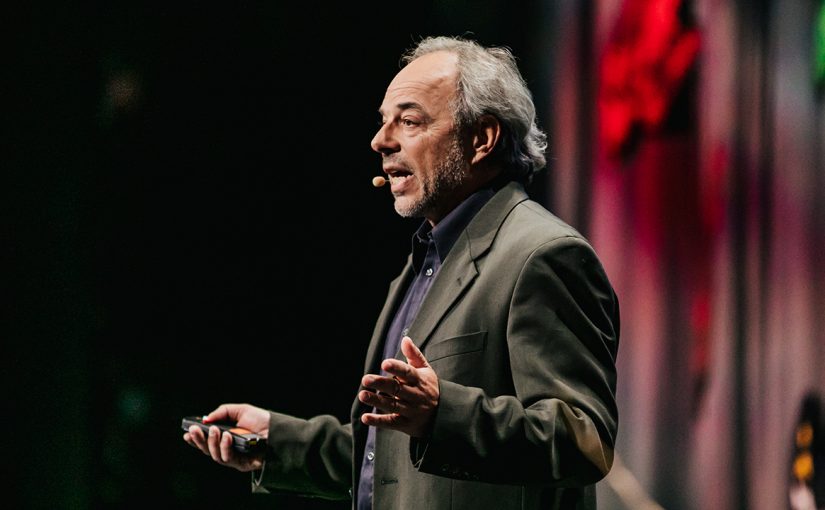
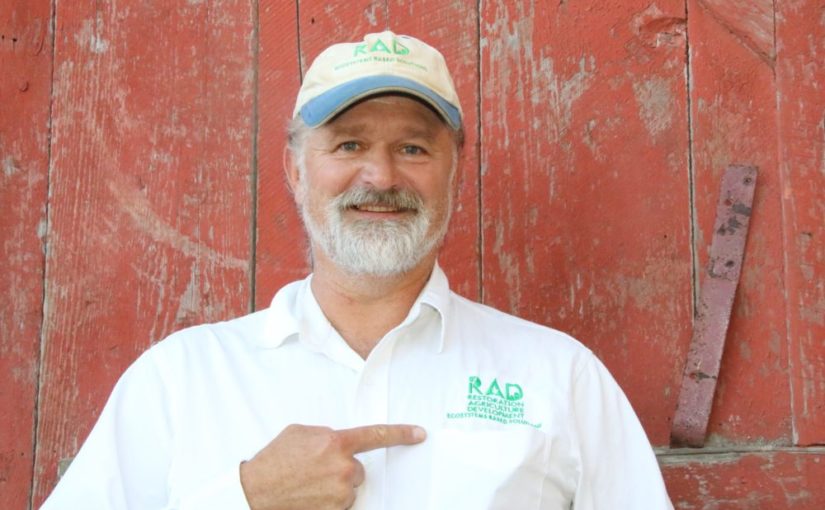
Mark Shepard (photo by Jan Mangan)

Using library references, I identified the biome and the dominant plant communities of that ecosystem that were in existence prior to the arrival of European settlers. Out of that list, I picked the species of the woody perennials that produce food, fuels, medicines, fibers, etc. Once I had chosen the perennial plants that I would use, I did a little bit of earthwork construction. The next step was to establish perennial polycultures using agroforestry techniques. The number one plant nutrient that we cannot do without is water, so everything is patterned after the water harvesting earthworks and the flow of rainfall on the land.

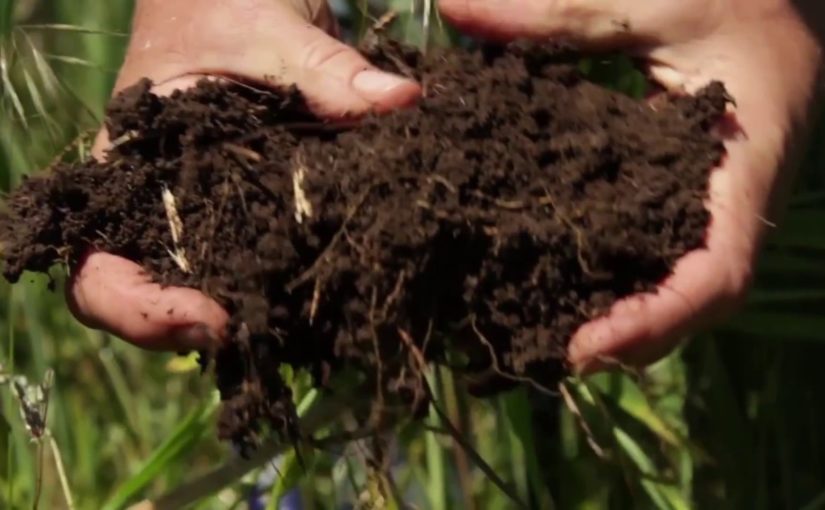
If you abandon a piece of land for millennia, it will naturally accumulate more top soil. Nature builds soil. The problem is how we do agriculture. If we mimic our natural plant community types, mimic the processes of our place, we’ll be able to build soil. A lot of people say it’s all about the soil life. Some people say it’s all about the soil minerals, or all about organic matter or compost. Actually, it’s about all of those combined. All of those work together to turn the solid planet Earth into bioavailable nutrients that plants can use in a cycle. All of it is important.

The decomposition cycle is key. We need to get stuff to rot because carbon is energy. It’s the fuel of the system. The more fuel you have on your site, the more the biological activity can burn that fuel to liberate more nutrients from the atmosphere, water and bedrock to the plants.

Trees that live the longest period of time in any place will chemically “color” the soil and transform it with their organic matter and also transform the biology that associates with them. Those trees will drive the soil chemistry. If a plant can’t tolerate the conditions that pine creates, it won’t live with pine. The same is true for walnut and other species.

Tree crops take time to mature, but we’re growing trees that are adapted to the area and we take a hands-off approach so we don’t have any expense in taking care of them – no inputs whatsoever. We’re going to continue to graze cattle and pigs, which are going to control weeds and provide fertilizer for our woody crops. Over time we’ll have additional crops coming off of the land.

If we’re going to take carbon out of the atmosphere, we need green to do that. The largest photosynthetic organisms are trees. They exude sugars into the soil. Sugars are carbohydrates – compounds made up of atmospheric carbon. Trees make leaf litter. They make bark flakes. They’re alive. Even if your grasses are dormant, trees can still photosynthesize. Even trees that have lost their leaves photosynthesize. Atmospheric gasses are exchanged through tiny holes in their stems called lenticels and the layer of green cambium just beneath the bark in young branches photosynthesizes, albeit a lot less than leaves.

We plant natural plant communities with a hands-off approach, and let them grow. If we don’t plant things to fill a particular niche in space, other things are going to come in and plant themselves that we may not necessarily want. Let’s occupy the site with the species that we do want and farm them.

On my farm in southwest Wisconsin, we selected the oak savannah as the plant community type. The plant community that has adapted with the oak savannah includes apples, hazelnut, the prunus species (cherries, plums, peaches, nectarines, almonds), raspberries, blackberries, grapes, currants, and gooseberries, which provide a variety of edible market crops as well as animal feed. We planted the trees first. As the trees are maturing, we grow hay, pasture, small grains, produce and cover in between the trees.

Our design consists of an alley, a swale, a berm and trees. That pattern is repeated so the water, instead of going downhill into the valley and flowing away, gets caught in the swale and spreads out to the ridge. This is done by just slightly changing the orientation of the fields.

In alleys where we raise row crops or produce, we lightly till the soil, maybe only two, three inches deep at the most, with a rotovator or a disc harrow depending on what crop we’re going to plant. We use yellow sweet clover, red clover, white clover and hairy vetch as a cover crop to take atmospheric nitrogen out of the air and put it in the soil where it becomes fertilizer for the next crop. In the area where we tilled there’s going to be a collapse of soil life, that’s where we plant cucumbers or squash or green peppers for wholesale markets. But not all of the soil is disturbed by tillage. The undisturbed area is the refuge for soil life that can come back out and colonize where we tilled and planted.

Yellow clover is also a source of nectar for honeybees. We get about a hundred pounds of honey per acre of yellow sweet clover. That’s an additional yield. Then it is it all goes to seed. What’s my biggest weed problem? Clover. That’s not really a problem. We’re not afraid of weeds in the crop. I didn’t want to spend an inordinate amount of time, or heaven forbid have to hire somebody, to pull weeds, I’m not going to do that. I’m just going to let the plants duke it out. I’ll take reduced yields, but by saving on labor costs, I’ll come out ahead.

After the crop is harvested, we lightly disk it up. Once again, just a shallow disking that incorporates all those different weeds back into the soil, keeping the fungal process, the decay process, going. Then we’ll broadcast a winter rye, winter wheat, or winter triticale, some sort of winter cover crop that’ll quickly turn green.

The rye, wheat or barley cover crop that we put down in the fall grows the next spring. If we need it for cash, we’ll hire a neighbor to come in with a combine and harvest it. If we want it for feeding and bedding, we’ll bale it in small dairy square bales. There’s grain and straw in it, and pigs and chickens like to nest in it.

In our wheat fields, we’ve got at least three different kinds of clover mix, plus all kinds of wild and crazy weeds. I’m not necessarily growing acorn squash, I’m growing carbon. Winter rye puts down about 6,000 pounds per acre of hard woody carbon below ground, about 5,000 pounds in the straw above ground, that’s 11,000 pounds. Yellow sweet clover will do about 4,000 or 5000 pounds total between the roots and the tops, so I’m getting anywhere between 17,000 and 20,000 pounds of hard, difficult-to-decompose organic matter under the ground. It feeds the fungal food web, and maybe it takes a little nitrogen away, but after that first year the decomposer populations are built up. It’s amazing how fast the decomposer organism population amps up.

One of the most destructive things on the land is a drop of water landing on the bare soil because it splashes into the soil, and it takes the particles with it and then it settles out. It gives you a clay layer on the surface, which seals the soil surface. Your soil can’t breathe anymore. So, by utilizing the cropping system described above, I’m putting 6 inches of straw mulch on a hundred acres of land. If you were to do this by hand or even by machine, it’s not very easy and a heck of a lot of work, but if you grow it in place and manage it, as I’ve described, you’ll get a kind of compost and mulch happening, with clover coming through it. The clover is helping to supply the nitrogen.

Once the clover starts to recover, I’ll move a little portable fence and I’ll bring in anywhere between a half dozen and 30 animals. I’ll buy small stocker cattle in the spring, graze them through the summer when I’ve got green grass. They can gain 300 pounds in 6 months. I pay $500 for a cow. It gains 300 pounds, if I buy it for a dollar a pound it’s now worth $800. I take it to the conventional sale barn. I’m buying cheap animals and I’m selling them on the cheap market where they’re going to go to a feedlot and get fattened. If it now weighs 800 pounds and I sell it for the same dollar a pound, I just turned $500 into $800. It’s a 60% return on my investment over six months. Why would I need barns and hay bales and all that kind of baloney? Just put the animals out there when the grass is green. They’re my labor force.

The key distinction is we’re using the livestock as the ecosystem management tool. Animals help manage the land. They recycle nutrients. They take carbon, chew it up, mix it with other materials, ferment it, and poop it out. They’re mowing the grass, they’re trampling. If I get a 50% trample and a 50% graze, I’m happy. Seventy-two cow patties per animal, and about thirty-five gallons of urine per animal per day. That’s a lot of fertilizer.

Then I bring in the mop-up crew after them, pigs. We put rings in their noses because I don’t want them plowing up the ground. On my farm, it’s all about the grass. We don’t want pigs rooting up all the grass, but they are perfectly good at picking up chestnuts that have bugs in them and have fallen off the tree, or apples from trees that abort fruit, or whatever is falling to the ground from your tree crops. Pigs can pick raspberries, they’ll pick currants, they pick grapes, and they eat a lot of grass.

We do not use deworming medications in our animals. As a result, we have good populations of dung beetles. They lay their eggs in the manure and bury it at the root zone of all of the plants. Dung beetles are an amazing creature and if we were using any sprays, we wouldn’t have those benefits. Cow patties just totally disappear, as does pig poop.

After a while, our tree crops start to yield. We’re getting yields in addition to what was going on underneath it with the animals and annual crops. Once you start generating branches, you have extra carbon. We cut and chip the branches. It’s fuel that feeds soil life, starting with fungi, which releases nutrients that feeds the crop, which in this case is grass for the cows.

What I do is first to go through an alley and remove any branches that are overhanging the alley, or the ones that want to scrape me off my tractor. I’m not pruning like a typical orchardist would. I cut the branches and then drop them to the ground in the alley. Next, I take Wine Cap Stropharia mushroom spawn and just scatter it. Throw it all over the place. Then I go through with my flail chopper and then I chip it up. Just grind it on the spot. The ramial wood chips are made from the small stems where most of the nutrients are stored in trees and woody plants. It is an amazing fertilizer that breaks down really fast, even in an arid environment.

You want to do it in the fall before the winter season comes on so you’ll get an optimal breakdown of the chips and the nutrients don’t just oxidize into the atmosphere. In chestnuts, I chop and drop just after blossom set so that nutrients will be released to fill and ripen a nut crop. In apples and pears, I chop and drop in late summer to mow the alleys before harvest and to give the hard-working trees a little shot of fresh nutrient before harvest.

Within three to six months, there’s hundreds of dollars worth of Stropharia mushrooms coming up. What does fungus do to wood? It helps to break it down and turns it into soil. That’s the way I turn wood into $300 and fertilizer. It’s a cool way to grow fertilizer.

With these practices, we’ve changed the land from a bare dirt desert with red clay subsoil into a nice rich black topsoil with the natural native plant community.

Protecting What Remains and Reconnecting with the Ground Beneath Our Feet

When the latest environmental devastation—a clearcut forest, a mountaintop mining site—breaks your heart, it’s easy to sink into despair. Author Trebbe Johnson, who founded Radical Joy for Hard Times, hopes to inspire others to find joy, make art, and experience ritual, through her book Radical Joy for Hard Times: Finding Meaning and Making Beauty in Earth’s Broken Places (North Atlantic Books, 2018).

Join Johnson at the 2018 Bioneers Conference, where she’ll speak about leading with nature’s guidance, and read more from Trebbe Johnson here: Make Guerrilla Beauty by Meeting With Friends at Wounded Places.

The following excerpt is from Radical Joy for Hard Times: Finding Meaning and Making Beauty in Earth’s Broken Places.

When Charlotte Regennas returned to her home on Little Torch Key after Hurricane Irma’s rampage through Florida, she found the whole area so radically changed that she hardly knew where she was. Only part of the roof still clung to one room of her house. Most of the walls had collapsed, and her belongings were broken and scattered, most beyond recovery. She couldn’t even approach what remained of the house to poke through the upturned contents, because debris blocked any passage. The whole neighborhood was almost unrecognizable. Charlotte had been back for only a week, however, when she spotted something that filled her with joy. “Already there are tiny buds on the trees. It’s coming back already. What you thought was dead turns out not to be. That eases my pain a little bit, seeing those buds. What’s happening to the trees is true of everyone. We’re in a budding phase here.”

In the midst of despair and grief there sometimes arises a startling perception: a flash of something fleeting and luminous. It shoots out of all that is entrenched, dark, and numbing, and it penetrates your whole being. It does not make you forget everything else that is happening to you, not at all, but it blasts the negative into bits and disperses it through your sudden and undeniable realization that everything you’re dragged through, even this, is part of life. Surely, as Charlotte Regennas’s exultant discov­ery of Florida trees asserting themselves after a devastating hurricane also makes clear, joy is just as likely—perhaps more likely—to land in times of hardship as in times of ease and comfort, for it is in such circumstances that we least expect and most need it.

This joy has to do with a sudden full-bodied epiphany that you are part of the murky, marvelous, ceaseless surge of life, and that life is going to keep surprising you, no matter how down in the dumps you are. In this flow all things sweep past: death, falling in love, losing your phone, holding a baby, hating your job, immersing yourself in a book, getting a dreaded medical diagnosis, diving into a cool pool on a hot day. There is nothing wrong, then, with opening up fully to that joy when it grabs you, for you have not chosen it; you have simply passed under its stream and found yourself momentarily rained upon. Saying yes to joy—accepting it with as full a measure of consciousness as you have accepted grief—doesn’t mean that you are ignoring the reality of calamity; it simply means that you surrender to the full range of life. Besides, those moments don’t last long. All too soon, the burst of joy dissipates, abandoning you again to the real­ity of your sorrow. And yet, when joy descends upon you, you just can’t help but offer yourself up.

Yeats wrote, “Now that my ladder’s gone / I must lie down where all the ladders start, / In the foul rag-and-bone shop of the heart.” To find and practice radical joy in hard times is to confront our grief about the state of loved places but refuse to fixate on misery. This is an important distinction. Living with the diminishment of wild animals and wild places and the unpredictability of seasons is—and will continue to be in our lifetimes and the lives of our children and grandchildren—a challenge unlike even that of the death of a loved person, for the demise of loved places is ongoing. If your community shudders at the foot of a mountain that is being blasted daily by the coal industry, you are permitted no respite for recovering and rebuilding. Over and over you must concede to fear, worry, grief, and anger until it feels like there is nothing left to feel. And then, once again, you set your foot upon your ladder and start climbing back up: you determine to find beauty, generosity, compassion, and community, and you determine to offer it. There is no other way to survive. When things go wrong, I must accept the invitation to meet them with inner ferocity and inner receptivity greater than I had assumed I was capable of. As Zorba the Greek blusters, “It just can’t go on like this, boss; either the world will have to get smaller or I shall have to get bigger.” Making ourselves bigger, we open up to being pierced by these odd, illogical darts of joy.

The future will require heroes and heroines who are not just brave but joyful as well, not just productive but relentlessly creative, not just capable of organizing effective actions but of acting spontaneously to comfort, give compassion, act generously, make beauty, and share joy. We are those heroes. Planet Earth is spinning in its old orbit, yet everything humans have taken for granted about the airs, waters, weathers, and living crea­tures participating in that wild ride is being challenged. We citizens of the planet, lovers of our own homelands, will have to engage a culture that is losing what it knows and has always taken for granted. How will we live with increased mining and drilling in an age where the planet is burning up? How will we absorb the reality that Bengal tigers and the frogs in our own woodland ponds have gone extinct? How can we possibly prepare for the next devastating storm when it could land anywhere at all and do incalculable damage? What choice do we have but to make our work—and our lives—as creative, meaningful, mutually supportive, and joyful as possible?

Implicit in all of our responses must be the recognition of the reality that exists, even as we acknowledge that it’s a reality we do not want. We must live, as revolutionaries have always lived, with the knowledge that our actions may produce few results—and that the effort itself is worth everything. We must strive for the impossible—and continue to strive. Protecting what remains is vital. Fighting further depredation is essential. And there must, at the basis of all of it, be attention to living meaningfully where we are right now. To acknowledge the places among us that are wounded, make time to visit them with curiosity and compassion, share the stories of what they mean to us, spend time getting to know them, and making gifts of beauty for them, we come back to Earth, to the place where we exist in all our human fallibility and nobility in the moment. Then we reconnect, as people for millennia have known it is essential to do, not only with the ground beneath our feet, but with the ground beneath our hearts.

This excerpt has been reprinted with permission from Radical Joy for Hard Times: Finding Meaning and Making Beauty in Earth’s Broken Places by Trebbe Johnson, published by North Atlantic Books, 2018.

Read more from Trebbe Johnson here: Make Guerrilla Beauty by Meeting With Friends at Wounded Places.

Intelligence in Nature: Jeremy Narby interviewed by J.P. Harpignies

Anthropologist Jeremy Narby’s life’s work has involved reconciling Western scientific views and assumptions with those of Indigenous cultures around the world. In this interview excerpt, Bioneers Senior Producer and author J.P. Harpignies talks to Narby about intelligence in nature, the limitations of language and more.

Explore our Intelligence in Nature media collection >>

We’re a Culture, Not a Costume: Fighting Racism In Schools

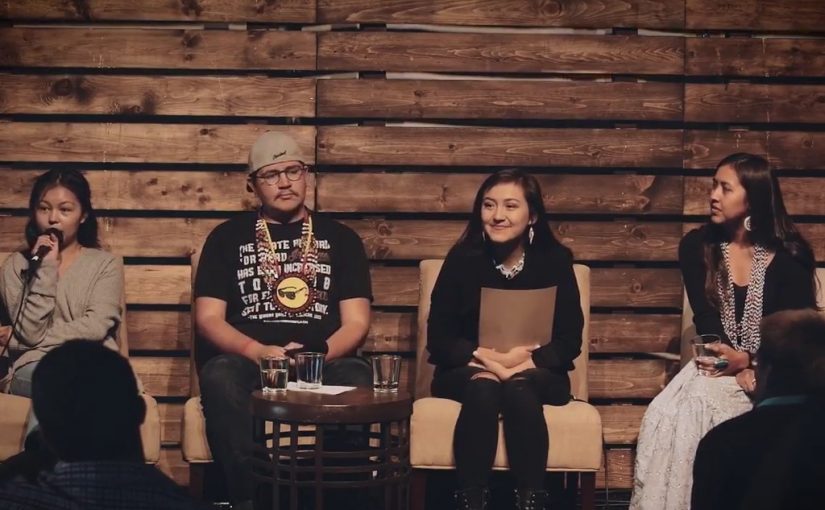
Native American students face racism throughout their education, from racist mascots to the historical erasure of the American genocide from textbooks. In this passionate conversation, Indigenous Rights Activists Dahkota Brown, Chiitaanibah Johnson, Jayden Lim, and Naelyn Pike share stories of their own experiences and how they are working to abolish racism in schools.

Fibershed: Building Local Economy and Healing the Climate

Rebecca Burgess and Fibershed are building a regional economy that connects ranches producing wool with artisan clothing manufactures. Fibershed’s local economy network is based on carbon farming practices that capture atmospheric carbon and store in the soil. Soil carbon supports a regenerative fertility cycle and is the building block for a climate-friendly life-promoting economy. For more information go to the Fibershed website: https://www.fibershed.com/

Healthy Soil and Environmental Justice in California’s San Joaquin Valley

By Janaki Jagannath

Janaki Jagannath is an advocate for farmworkers who, as the former Coordinator of the Community Alliance for Agroecology, works to advance environmental justice in California’s San Joaquin Valley where chemical farming continues to impact the health of rural communities. She gave this talk, transcribed and edited below, as part of the Bioneers Carbon Farming series. Jagannath is currently in law school at the University of California at Davis. 

Protecting the health and diversity of soil microbial communities is the first step to protecting the health and diversity of the human communities.

In California’s San Joaquin Valley — home to many of the nation’s largest fruit, nut and vegetable operations — agricultural soils have been sterilized and depleted of natural fertility. This trend in agricultural soil management is standard practice for industrial farming, and while it’s still possible to turn the trend around and begin managing soils to improve the health of the region, doing so will require us to examine the history of environmental justice (and injustice) in California.

Environmental Justice & Injustice in California

In the 1990s, President Clinton signed Executive Order 12898, Federal Actions to Address Environmental Justice in Minority Populations and Low-Income Populations, a set of policies that required federal agencies to ensure the fair treatment and meaningful involvement of all people regardless of race, color, national origin or income with respect to the environmental impacts of the development, implementation, and enforcement of federal programs and policies.

Among other state programs and policies that have been advocated for and created by environmentally burdened communities of color, the California Environmental Protection Agency has released CalEnviro Screen, a mapping tool depicting communities that are impacted by cumulative environmental impacts such as groundwater pollution, ozone, particulate matter, pesticide exposure, and other toxic pollution. Under Senate Bill 535, California directs 25% of the proceeds from its Cap and Trade program to climate investment funding in those zones which are most impacted.*

These communities suffer the problems that arise from historic land-use policy in California, which has essentially been created by and for large agribusiness, and rarely prioritizes soil health or community health. Rather than building carbon and organic matter, the soil has been stripped of most of its life, and nutrients such as phosphorus and nitrogen get added back in through synthetic fertilizers.

As a result, over one million California residents are exposed every year to water that is unsafe to drink by state standards. In addition, many communities lack adequate wastewater infrastructure, housing, and perhaps most importantly, effective governance. Many environmental justice communities are places that were settled during the migration that took place when the agriculture of the Midwest was pushed to its limit resulting in the Dust Bowl. A period of dramatic expansion of the fruit and specialty crop economy in California led thousands of migrants from across the country to move to California as field workers and packers.

During World War II and with the implementation of the Bracero program, Mexican farmworkers and other communities of color moved into and continued to build these small California communities. Wells were dug by hand and when electrification took place it was often done without proper oversight. Land-use policies were historically discriminatory. Since then, larger municipalities haven’t annexed these places and provided them with basic protections for their drinking water and air quality. These rural unincorporated communities face a lack of local governance and some of the most acute environmental and climate impacts in the state.

Today’s Reality

In unincorporated farm worker communities, residents deal directly with harmful impacts of agriculture. Parents send their kids to school knowing they’re going to get exposed to pesticide drift. They are dealing with chronic disease, asthma and valley fever— a deadly infection caused by a fungus found in soil — on a regular basis.

Drinking water in the San Joaquin Valley primarily comes from groundwater wells. The area’s ground water is often contaminated with nitrates, selenium, arsenic, and 123-TCP – a heavy carcinogenic chemical that was recently regulated for the first time. These water contaminants are pesticide and chemical fertilizer byproducts, or simply the products themselves, washed away into the aquifer. This is a direct result of the way that the soil in the area has been treated over time by chemical-heavy farming practices.

The crops are mainly irrigated with surface water. There is a constant lobbying effort by the agriculture industry for access to more surface water because ground water is expensive to pump and often contains large quantities of salt, which is the primary concern for farmers. Meanwhile, ninety-five percent of the water going to people’s homes is groundwater.

There has also been an enormous loss of native vegetation in the Valley because the agricultural industry has removed most of what was left of the native plants, animals and people. We have lost nearly all ecological memory of the area to privatized industrial-scale agricultural landholding.

Moving Forward

A few important examples of alternative agriculture stand out. In Tulare County, an area known for its conservative approach to large-scale agriculture, Steven Lee of Quaker Oaks Farm is working to educate the local community on the importance of building soil carbon as a foundation to achieve environmental justice priorities. A recent recipient of funding through the Healthy Soils Initiative, Steven is planning to pilot a number of soil improvement practices on his land and gauge their ecological benefits. Quaker Oaks Farm shares historic ground with the Wukchumni Indian tribe of the region, and also with farm working families of Oaxacan origin who utilize a portion of the land for subsistence farming.

Community Alliance for Agroecology has built a framework based on ecology that prioritizes the protection of the water and air and other environmental media in addition to building political power because we believe historically underserved communities who have built our agricultural economy should have a say in how agriculture moves forward in our state. Healthy soil protects our waterways, our local air quality and displaces chemical fertilizers and pesticides if built as a part of a natural soil fertility regimen. This has both short and long-term benefits.

We are at a point in California history where we need to be linking arms around the protection of our soil. We have a State Water Board, and a pesticide department, but we don’t have any direct oversight of our soils at the state government level. The health of our soil has been largely left to the discretion of private land owners. Soil is the basis of our food system and we need to be protecting it—especially in the areas like the San Joaquin Valley. To do that right, we must also include the voices of rural people of color and others who have been historically left out of the decision-making process around farming and land ownership.


To learn more about Janaki Jagannath and her work, read this in-depth profile from Civil Eats.

* To learn more about SB 535 and the 25% of California’s Cap & Trade revenue going to disadvantaged communities, please watch Vien Truong of Green for All on Creating an Equitable Environmental Movement.

5 Videos to Watch This Weekend

If you’re anything like us, you need an occasional break from the steady grind of political news to focus on solutions and to find inspiration. As Bioneers, we’re fortunate to be able to connect with a nearly endless list of innovators and thought leaders — people who have identified major world challenges and heeded the call to do something about them.

Year after year, we bring a sampling of these amazing changemakers to the Bioneers stage, where they share their ideas with people like you who are seeking answers and ideas. And we always discover that, while the challenges we face are significant, the power we have as a collective is stronger.

Below, we’ve collected five Bioneers presentations that our audience returns to time and time again. Watch them this weekend, and share the ones that move you with others who seek inspiration.

1. Paul Stamets – Mushroom Magic

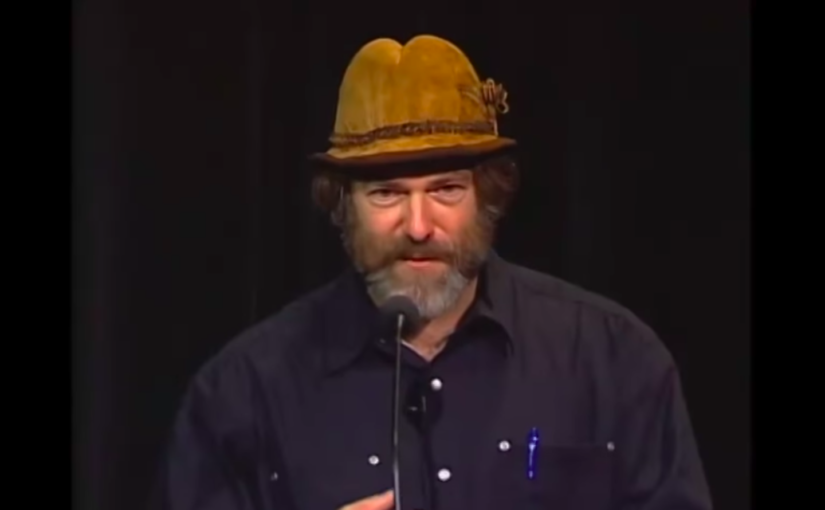
Paul Stamets, visionary mycologist extraordinaire, has discovered several new species of mushrooms and pioneers countless techniques in the field of edible and medicinal mushroom cultivation. He has achieved remarkable results cleaning up dangerous toxins using “fungal bioremediation” and radically improving soil fertility with mushrooms.

2. Dr. Gabor Maté – Toxic Culture

The Canadian physician and best-selling author of In the Realm of Hungry Ghosts is a brilliantly original thinker on addiction, trauma, parenting and the social context of human diseases and imbalances. Contrary to the assumptions of mainstream medicine, he asserts that most human ailments are not individual problems, but reflections of a person’s relationship with the physical, emotional and social environment, from conception to death. Mind and body are not separate in real life, and thus health and illness in a person reflect social and economic realities more than personal predispositions. In other words, personal responsibility cannot be separated from societal responsibility and changing the world.

3. Severn Cullis-Suzuki – Remember the Future

Severn Cullis-Suzuki, daughter of David Suzuki, graduated from Yale with a B.S. in ecology and evolutionary biology, and is on track to outpace her father as an activist. She founded a children’s environmental group at age 9, addressed the Rio Summit at age 12, and hasn’t stopped since, starting several groups and projects and becoming a dynamic, luminous light in a new generation of eco-leaders. Severn discusses our responsibilities toward future generation; how to heal our disconnect from nature and each other; and how to draw from the best of ancient traditions and modern innovation to build a sustainable future.

4. Naomi Klein – This Changes Everything

The award-winning Canadian journalist, international activist and best-selling author (The Shock Doctrine, No Logo) depicts climate change as more than an “issue.” It’s a civilizational wake-up call delivered in the language of fires, floods, storms and droughts. It demands that we challenge the dominant economic policies of deregulated capitalism and endless resource extraction. Climate change is also the most powerful weapon in the fight for equality and social justice, and real solutions are emerging from the rubble of our failing systems.

5. Jeremy Narby – Intelligence In Nature

In this mesmerizing talk, Jeremy Narby shares the findings from his groundbreaking book Intelligence in Nature. He describes his quest around the globe to chronicle how leading-edge scientists are studying intelligence in nature and how nature learns. He uncovers a universal thread of highly intelligent behavior within the natural world, and asks the question: What can humanity learn from nature’s economy and knowingness? Weaving together issues of animal cognition, evolutionary biology and psychology, he challenges contemporary scientific concepts and reveals a much deeper view of the nature of intelligence and of our kinship with all life.

Under The Skin, We’re All Kin: Reading the Minds of Animals

Calling someone an “animal” means they’re less than human – not worthy of respect, rights, or even of life itself. But in truth — and in biological fact — human beings ARE animals. Scientists continue to find that intelligence and what we call “consciousness” appear to saturate all of nature. Clearly it’s high time to think differently about just what it means to be an animal. Can we know what it’s like to be other-than-human? How can we see into the minds of animals? Visionary naturalist, author and conservationist Carl Safina says that the first step is paying attention and observing. And, he suggests, if we had humility, we’d have everything.

Explore our Intelligence in Nature media collection >>

Artist Lisa Ericson on Surrealism and Nature

Terrarium II by Lisa Ericson

Painter Lisa Ericson has been described as “a multi-hyphenate, utilizing her visual talents as an artist, illustrator, and designer to craft meaningful images.” Based in Portland, OR, Ericson’s enthralling artwork manages to be simultaneously hyper-realistic and wildly imaginative. In many ways, this perspective exemplifies precisely what is needed to surmount many of the most pressing issues facing us today: a combination of pragmatism and creativity. Her clear love and admiration for nature’s intricate genius is immediately apparent when faced with her work. Bioneers has annually chosen an artist and piece of artwork to provide the look, feel and visual inspiration for our annual conference. We were overjoyed when Lisa was willing to donate an image of her painting, Terrarium II, to Bioneers as the featured image for the 2018 annual Bioneers Conference. Terrarium II is part of a series of paintings displaying different species of turtles carrying collections of ecosystems on their backs. The images evoke beauty, bounty and fragility and one can’t help but recall creation stories of many Native American tribes that refer to our collective home as Turtle Island.

Bioneers caught up with Lisa following the conclusion of her recent show at Antler PDX to talk about her art and her life as an artist.


BIONEERS: How long have you been an artist? Where did you go to school or get your formal training?

LISA ERICSON: I got serious about art in high school and went on to major in painting at Yale. I struggled to find the time and energy after I left school to pursue art outside of my regular non-art related job and ended up not doing much painting for about ten years. I took classes in graphic design and spent time doing freelance graphic design and website design work, but eventually, after that lost decade, I found my way back to painting. This time around, older, hopefully wiser, when I had a chance to get back into painting, I didn’t look back. That was five years ago now and I’ve been working steadily ever since.

BIONEERS: Where does the magical realism come from?

LISA: I like to take the wonder of the natural world and tweak it just a bit. I enjoy the play of the hyper-realistic way I paint and the surrealistic subject matter.

BIONEERS: Can you talk a little bit about your process, praxis and theory?

LISA: Well, I paint from photographs and I have a rather lengthy and intense process of putting together a composite image to I work from. I work out my ideas, as well as composition, light, and color during that time. When I’m happy, I print out the composite image, transfer the sketch on to a panel and start painting. I work in acrylics and I always start by painting the black background, leaving the white under the image so it has a much light and glow as possible when it’s fully painted. I usually do an under-layer, getting the basic color/values down. Then I do an intensely detailed final layer.


BIONEERS: Are your images meant to bring awareness to “environmental” issues?

LISA: Yes. Although my pieces are far from scientific – I take whatever liberties I feel a piece needs – they often have their roots in current environmental issues. The whole series of mini mobile coral reefs connected to fish began after I read about the massive bleaching incidents happening on the Great Coral Reef a few years ago. The series of mobile habitats on the backs of turtles started with ideas of animals being displaced from their habitats due to climate change or other human-related factors.

BIONEERS: What is your favorite accomplishment as an artist?

LISA: Maybe it’s because of my history, but I feel a sense of accomplishment and deep satisfaction whenever I finish a piece. My favorite time with my work is when they’re all hanging up in my studio before a show.

BIONEERS: Who are some of the artists that you’re excited about at the moment?

LISA: I think Jeremy Geddes is pretty phenomenal. I love Tiffany Bozic’s work. And I admire the work of a lot of the artists in my own Portland art community – Josh Keyes, Zoe Keller, David Rice – as well as some of talented people I’ve shown with – Josie Morway, Lindsey Carr, Vanessa Foley.

BIONEERS: Why did you decide to donate to Bioneers?

LISA: I don’t think there are many issues more important right now than taking better care of our planet, and I love the idea of using nature’s own systems as inspiration for human ingenuity.


Thanks to Lisa for the interview and use of her images. Be sure to check out her website and Instagram.

A post shared by Lisa Ericson (@aqualisa) on


Young Climate Activist Dissed By Gubernatorial Candidate: An Interview with Rose Strauss

On July 18th, Rose Strauss, an 18 year-old college sophomore, attended a Town Hall meeting near Philadelphia hosted by Pennsylvania gubernatorial candidate Scott Wagner (R). Strauss asked Wagner a question about campaign donations from fossil fuel companies. His response, calling her young and naïve, made national news.

Rose Strauss and her colleagues responded rapidly, leveraging Wagner’s remarks into action to support the vital effort to get fossil fuel money out of politics. Al Gore recently tweeted,If being ‘young and naive’ is holding our leaders accountable and demanding a sustainable future, call me #YoungAndNaive.” Recent numbers show a boom in youth voter registration, with registered voters under 35 outnumbering those over 64 in Pennsylvania.

Bioneers first met Rose Strauss when she was awarded a Bioneers Youth Leadership Scholarship to attend the Bioneers Conference as part of a cohort from the Marin County Youth Commission. Arty Mangan, Director of the Bioneers Youth Leadership Program, spoke with Rose recently.


ARTY: Pennsylvania gubernatorial candidate Scott Wagner said “You are young and naïve” when you called him out in public about the $200,000 in political donations that he received from the fossil fuel industry, and his statement that climate change was a result of people’s body heat. How can you cut through the corruption of politicians and the cynicism of the people who think like that?

Rose Strauss

ROSE: Politicians say these kinds of things because they’re being funded by people with fossil fuel objectives. It’s good for them when the public is uneducated. Mr. Wagner is perpetuating these lies because he’s being funded by fossil fuel executives.

I am part of the Sunrise Movement. We think a great way to stop that from happening is by making sure politicians are not taking contributions from the fossil fuel industry. At Sunrise, we have a No Fossil Fuel Money Pledge to get politicians to commit to not taking money from fossil fuel executives or front groups.

ARTY: During this incident, there was laughter and applause when Wagner condescendingly called you “young and naïve.” Yet in a Teen Vogue article you wrote that the incident left you feeling empowered. How do you explain that?

ROSE: It left me feeling empowered because I spoke up to someone who has power and was talking down to me. His response was so demeaning and so patronizing, but at the same time so ridiculous that I was excited that we could turn that response and his perspective and his words into something that a lot of people would see. They’d know that this politician has these beliefs. It was empowering, knowing we could take what he said and turn it into a call to action.

ARTY: You’ve really done that. In the Teen Vogue article, you also wrote, “Fossil fuel executives and lobbyists get away with their pay-to-play politics because they corrupt our democracy in the shadows, and it’s our role to bring their actions to light.” Speaking truth to Scott Wagner is an example of that. How do you plan to do more of that in the future?

ROSE: A big thing that we do at Sunrise is canvassing and talking to people. I think that’s one of the most impactful things you can do. Politicians and fossil fuel executives have millions of dollars, but what we have is people power. We can counteract the power of money by talking to people, educating them, making sure that we’re standing up for what we believe in, and making sure that climate change is a central issue that’s being solved. Canvassing is a really great way to do that, as well as registering people to vote. Ultimately, we choose our politicians. Educating the general public about climate change and the political system is so important.

ARTY: What is the Sunrise Movement? What are its goals?

ROSE: Sunrise Movement is a movement of young people fighting to solve climate change. We do this by ending the corrupting influence of fossil fuel executives on our politics. This includes things like confronting politicians at Town Halls, like I did, or at public events to challenge them to take a better stance on climate change.

We also get politicians to sign a No Fossil Fuel Money Pledge, as I said before, which over 800 candidates and other politicians have already signed.

We also are working to make climate change an urgent political priority. Another way that we do this is by electing leaders who we think will fight for our generation’s future. I’m in Downingtown, Pennsylvania, where we’re working to get Katie Muth and Danielle Otten elected. They take really strong stances against climate change and also have signed a No Fossil Fuel Money pledge. We’re canvassing to get them into office. That effort is youth led.

ARTY: How did you become a climate activist?

ROSE: Ever since I was young growing up in the Bay Area, I have always had a really intense love for marine biology and the ocean. Climate activism was a natural segue for me, going from loving animals to seeing them disappear faster than I could study them. My focus shifted from studying the biology aspect of it to focusing more on conservation; that eventually led me to this climate change fight.

The first time that I was exposed to climate change was looking at the impact on marine systems. I started Bay Area Youth for Climate Action. We focused on educating youth about politics and how they can make a change, and we worked hard on the campaign to get coal out of Oakland by hosting conferences and doing outreach and education to youth around the Bay Area.

Going away to college, I was looking for something where I could be politically engaged in fighting for climate change, and Sunrise was just the perfect opportunity for me. When I saw the ad on Facebook for Sunrise, I was like, “I can’t not do this. I have to go.” So here I am. Sunrise has seventy Fellows who are working on the midterm elections. There are also different hubs all around the country that are working with Sunrise. It’s a pretty big movement.

ARTY: There’s no doubt that the world is a challenging place. There seems to be a new crisis on a daily basis, and the climate issue is certainly one of, if not the largest, crises that we’re facing. As a young person, how do you maintain a positive view of the future? What’s your advice to other young people?

ROSE: I think it’s really easy to get a nihilistic attitude toward the future. If you look at the science closely, climate change has pretty dire impacts on the Earth, if we don’t do something about it relatively soon. But I think that it’s important to look at all of the technology that we have and imagine a world in the future that’s run on renewable energy and exists in conjunction with nature. I think that’s something that’s possible, and it’s something we need to continue to work towards. Envisioning that future is really inspiring to me.

Also, keep with the movement, stay with a group of people who also are working on this issue, because it’s really easy to feel super alone when you’re working on climate activism, especially if you’re not around people who care. Finding a group of people who also care will inspire you and keep you going. Join the Sunrise movement or a similar movement in your community.

ARTY: How can more young people be activated in the fight for climate justice?

ROSE: I would say look at community. A lot of people don’t realize that there are environmental justice and climate justice issues happening right in front of them. I find it’s a lot easier to organize people around intersectional issues, not just climate change. People who are into feminism or are into LGBTQ issues or immigration, you can take that group of people and take that passion and connect it to climate change, and work on it in a super intersectional way.

For more people wanting to get involved, find issues in your community, and start something. You can start a campaign and get involved with local politics. Make sure your voice is being heard, because living in a democracy is a privilege and you have to take advantage of that. That’s a super important thing to do. Vote.

ARTY: When you talk about intersectionality, I think about the comments by Wagner. He disrespected you on multiple levels: as a young person, as a woman, as a knowledgeable activist. When you stood up to him, It uncovered multiple biases of his. Was that a strategic move planned by Sunrise or was that your individual action?

ROSE: We planned on going to the Town Hall, and I was planning on asking the question. That part was definitely planned. We did not plan for the response he gave, but as demeaning and shocking as it was, it was also a really great way to get people involved with what we’re doing.

ARTY: What do you see as the best solutions for climate change?

ROSE: I think the best solutions are getting fossil fuel money out of politics. That’s a really important one because once that happens all of the other options that we have for climate change will start being turned into policy and legislation. We can see that happen because we have the technology. We have renewable energy that works, but the big issue is that we have these political barriers. We need people power to push it forward over fossil fuels. That’s a super important step.

ARTY: You were a Bioneers youth scholar a few years ago, did that experience have any influence on your activism?

ROSE: It definitely does. I was super inspired by everything I heard at Bioneers. It taught me more about climate change, and one thing that really struck me—I’m not sure exactly who was speaking—but the person was talking about the power of story. That really changed the way that I talk to people about climate change. That’s a big value that Sunrise holds, using stories to change people’s minds instead of just facts. That’s something I really got from being at Bioneers, which was awesome.

ARTY: What is your message to your generation?

ROSE: To all the young people out there, keep fighting, keep getting involved, we’re creating a movement, I feel the energy right now, and I feel like there’s a shift in energy. I feel like we’re actually making some real progress. So many young people are starting to become engaged with climate change activism. We need to keep this momentum going.

Hope Where It Counts: How a 25 Year-Old Activist Moved Into Local Politics

Coming on the heels of the 2016 Presidential election and the Women’s March, 2018 has seen a record number of women running for political office at local, county, state and federal levels. Recent primary victories by Stacey Adams in the Georgia gubernatorial race and Alexandria Ocasio-Cortez in the 14th District in NYC have made headlines. These are national races but the same movement is taking place down-ticket at the local and state level, where policy decisions that often impact people the most on a day-to-day basis are frequently made. In June, Chloe Maxmin won the Democratic primary race for state representative in her home district in Maine. Maxmin is all of 25, a young woman running for office while many of her peers are beginning graduate school or trying to sort out a career. For Maxmin, however, who began organizing at 12, this is simply the next logical step in her mission to build a social movement that speaks for her generation.

Bioneers was honored to host Chloe Maxmin as a Youth Keynote Speaker in 2014, fresh off receiving a Brower Youth Award. She discussed her leadership of the Divest Harvard campaign, a complex effort that marked a major turning point in the overall Divest/Invest movement, which now counts nearly $6 trillion in assets divested, thanks in many ways to passionate organizers like Maxmin who pioneered the movement on college campuses.

Bioneers caught up with Chloe earlier this spring to discuss this latest step in her powerful journey to change the world by empowering youth to lead the way.


CHLOE: My name is Chloe Maxmin. I’m 25 years old, and I’m from a small town in Maine. I have been a climate justice organizer for 13 years, since I was 12 years old, and that journey has brought me to a lot of different places. Where it’s brought me right now is to an understanding that we need profoundly effective and powerful social movements to influence our political system, and we need really strong politicians in office to respond to those movements and enact the kinds of policy changes that we need.

BIONEERS: Can you give us a little insight about how that path led you to where you are now?

CHLOE: It’s been a long, winding road. This has been in the back of my mind for a while, but only in the front of my mind very recently.

When I first started out with youth activism and organizing, my focus was very local and it was based in my hometown. I did a lot of work in my high school to get my peers involved with climate justice work and talking about climate change and environmental issues in our community. I started the Climate Action Club at my high school. We did very individual-based work, looking at questions like, “How can you as an individual change your habits and how can we as a school and as a community change our habits so that we’re reducing our impact on the environment?” I learned a lot. It was my first foray into organizing.

But when I got to college, I went through the traditional radicalization process and began to understand that this is a system problem and it’s hard to blame an individual for a system problem or for an individual to confront a system problem. The way that we do confront system problems are with mass movements that build collective power around an issue, and calling on our politicians to respond to that political energy.

I worked on the fossil fuel divestment movement for a long time. I started Divest Harvard, which began with three people and grew into 70,000 strong by the time I had graduated. Divestment was very formative for me because I see it as a more systemic form of organizing. The theory of change behind divestment is that you’re divesting from the fossil fuel industry because you want to increase the stigma so that politicians are less likely to interact with that industry to take money. Divestment is trying to create a new political space and then the idea is that people will then infiltrate that new political space and push forward climate policy. [Editor’s Note: see Bill McKibben’s recent article in Rolling Stone for a deeper dive into the current state of divestment.]

One of the things I noticed as the divestment movement progressed is that the movement was really strong, but we weren’t really pivoting to take advantage of that new political space that we were creating. I wrote my thesis on why the climate movement wasn’t being effective politically in the way that we wanted and the way that we needed, because whether we like it or not, we need politics to solve this crisis.

I learned a lot about how social movements are structured, and how we don’t really like to engage with political systems or with electoral politics. This is a big discontinuity to me because, as I just said, we really do need politics to catalyze the systemic change that we see and need.

I moved back to Maine after I graduated from college to build political power for climate justice because I really think that Maine can be a powerful, bold climate leader. We’re the most rural state in the country. The county that I live in (and is part of my district) is the most rural county and oldest by age in the nation. We have a lot of really unique challenges here which means we can also be a leader in developing really unique solutions for rural places that are confronting climate change and being impacted by climate change.

I still organize and I’m still a grassroots organizer as I campaign. But there’s a really big part of me that is just really tired of begging people in power to listen to me, to listen to my generation, to listen to everybody in my community who are struggling to heat their homes, to feed their families, to ensure that their farms will survive as the weather gets more and more chaotic. I think that we need a new kind of politics that is responsive to the people and always stands in solidarity with the community that politicians come from. And I think that young people are perfectly poised to lead that new wave of political energy.

BIONEERS: What is the dialogue that you use to move your community and help them shift themselves on a personal level?

CHLOE: Organizing in Maine is a very unique experience because it is such a rural place. Organizing is built on connecting the people and building relationships and it’s just a lot harder to do that when you have to drive every place or you don’t have access to transportation. A big part of what I try to focus on here is developing new models for rural organizing in a place like Maine.

I think one of the key messages that I talk about, which I truly believe in, is that this is about our shared love for our home and our community, the land and our way of life, and the people that live here. It’s not about believing in climate change or not. It’s about, “Do you care about where you live?” People do because they live here. How can we use that as a shared foundation to move forward and build your work together?

BIONEERS: It’s so important to connect with the community. I think a lot of times politicians and policy makers don’t take the time to connect with community, and they don’t recognize that each community is unique, has its own culture and own approach, and its own way of getting in touch with the people.

CHLOE: If I could add one addendum to that, based on the conversations I’ve had with people in Maine and in my community. There’s so much disillusionment around what we can do at the federal level to stop all of this destruction that we’re seeing. In Maine right now, our governor is a very right-wing Republican who has also championed a lot of destructive policies in our state. For us there is also little hope at the state level.

For example, Governor LePage has almost completely decimated the solar industry in Maine through his policies. Luckily we’re getting a new governor this year, so we can right that ship and not all hope is lost.

But there is hope at the local level and I have found that to be a constant source of inspiration for me and folks that I’ve been organizing with because we can tangibly see the difference that we’re making, the movements that we’re building. We can interact with the people who are in positions of making decisions, build really meaningful relationships with them and really change the way that our community operates and thinks about different issues. So it’s all about the local.

BIONEERS: Among other past achievements, you spoke at Bioneers and won a Brower Youth Award. What did you gain from those accomplishments?

CHLOE: The biggest thing that I gained from those experiences were meeting incredible young people who are doing incredible work in their communities. Their vision and their energy, it’s just so inspiring.

One of the things that I really admire about so many of the young people in the Brower and the Bioneers networks — and so many of the young people doing change-making work right now — is that we’re growing up in an age where everyone who we’ve been told are our traditional authority figures, whether governors or presidents, are failing us. They’re not doing what’s right and they’re not fighting for the people. As young people, we could say, “Oh, but they’re the people in authority, we should defer to them because they know what’s best.” But instead this entire generation of youth is saying, “No, what you’re doing is wrong, and we know what’s right. And, yes, we’re young, and, yes, we’ve lived less years than you have, but we have our own type of expertise, and the foundation of our expertise is a moral clarity that cannot be shaken by anybody.” I think getting into spaces where you can experience that kind of passion and purpose is incredible, and I definitely experience that with Brower and with Bioneers.

BIONEERS: Along those lines, how has being a young woman, aspiring to get into local politics, shaped you on a personal level and have you encountered any resistance?

CHLOE: I think what really grounds me in the work that I do and has been the constant throughout my whole life is that I so deeply love and care about my home and my community. That is my core motivation. No matter what happens or who doesn’t want to vote for me or who doesn’t agree with my tactics, that’s okay. It takes all kinds to make the world go ‘round and we need all different kinds of perspectives. But I know in my core what my purpose is and that can’t be shaken.

I feel really lucky to know that about myself. All of us have things, people, places, ideas, causes, pets that we love and care about and are willing to fight for as well. This is something that I talked about when I was at Bioneers. If this is the core motivation of our work, then it’s hard to get sidetracked because we know what we’re fighting for and what our purpose is and it’s coming from a place of love, not from a place of anger or fear.

It’s still early in the campaign, and there’s been some resistance and skepticism, and that’s okay, but I know what I stand for, and I know what I care about, and I know that I will devote my life to this community no matter what happens. That’s all that really matters to me. I’ve been really lucky to have so much support from my friends and family, and from people who hopefully will be my constituents one day. It’s going to be okay.

BIONEERS: I would love to hear about your thoughts on youth voices, the power of that approach, and how you bringing in youth voices to your own campaign.

CHLOE: My entire life I’ve been represented by people who aren’t my age and while those people have been really good politicians, why can’t there be someone my age in office? I think the people who represent Mainers, Americans in any representative political system, should reflect the people who live there.

It’s not just about young people though, it’s about fighting for everyone who lives here right now but youth can be a platform to unite people and create really inclusive platforms. Because it is about everybody, and I think it’s time that we get some young folks in office.

It’s happening all over the country. It’s happening all over Maine. I’m just excited to be part of that movement in my little district.

BIONEERS: Do you have any advice for young people or activists of any background or any age on how to take that first step, how to move past fear, and how to align themselves in a way that’s most authentic for them, how to get started in this journey?

CHLOE: It’s so different for everybody. For me, the foundation of everything is coming from my core motivation and my place of passion. I think finding that place and using that as the rock that you stand on gives you the power to really do anything that you want to do.

I also think it’s really important to have people around you who support you. I couldn’t do this without so many people in my life, in this campaign. The movement of young people running for office is not just about us as individuals but about this generation and about everything that we care about today and the future.

If anyone ever wants to reach out to me to talk about this stuff, just Google me. You’ll find my website and you can just email me.

Biophilic Cities: Embracing the Optimistic Future of Natureful Cities

By JD Brown, Biophilic Cities Program Director

At Biophilic Cities we are nurturing a growing network of partner cities that are working collectively to pursue the vision of a natureful city within their unique and diverse environments and cultures. Applying E.O. Wilson’s biophilia hypothesis to the scale of planning and designing cities, biophilic cities recognize that humans have co-evolved with nature and require a daily connection to nature for our overall health and happiness. This is a vision that embraces the understanding that humans are not separate and apart from natural living systems. The world has entered into what has been termed the “urban century” as increasing global populations congregate in cities. While this growth presents obvious challenges, it also presents an opportunity to provide meaningful access to nature for populations that traditionally have had the least access to nature and where such access can have an exponential positive impact on health, well-being and quality of life.

Ciudad Dulce Pollinator.
Credit: Curridabat

There is no single model for a natureful, biophilic city. The Biophilic Cities Network is a diverse set of partner cities that draw solutions from their varied experiences, cultures and landscapes. The vision of Phoenix, Arizona as an arid city rich in nature is one that embraces its native, xeric landscape. This vision is very different from that of Singapore, a “city in a garden”, that is lush in green vegetation.

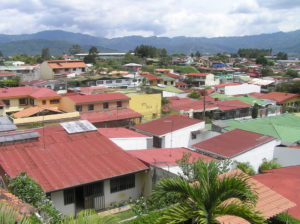
In Curridabat, Costa Rica, the city is transforming itself into “Ciudad Dulce” (Sweet City) by cultivating pollinator habitat across the urban landscape. This initiative, under the leadership of Mayor Edgar Mora and with the support of broad public and private partners, has received international recognition. It embraces the health benefits that result with the creation of nature-based infrastructure. In particular, the initiative aims to create new opportunities for access to nature in economically marginalized communities and to engage these communities in the co-design of public “sweetness spaces”.

Curridabat. Credit: Curridabat

In Wellington, New Zealand, a coalition of partners that includes local government is undertaking an ambitious effort to increase the biodiversity of native song birds across the city through a campaign entitled Predator Free Wellington. Through the control of invasive predators, the effort seeks to reclaim the city’s pre-human biodiverse origins. Two decades ago, a 500-plus acre predator free sanctuary on the outskirts of the city called Zealandia was established with dramatic resulting increases in native biodiversity. From this early success story, communities across the city have embraced new found opportunities to experience seemingly lost biodiversity and the result is an unprecedented level of civic ecoliterarcy and engagement in conservation efforts.

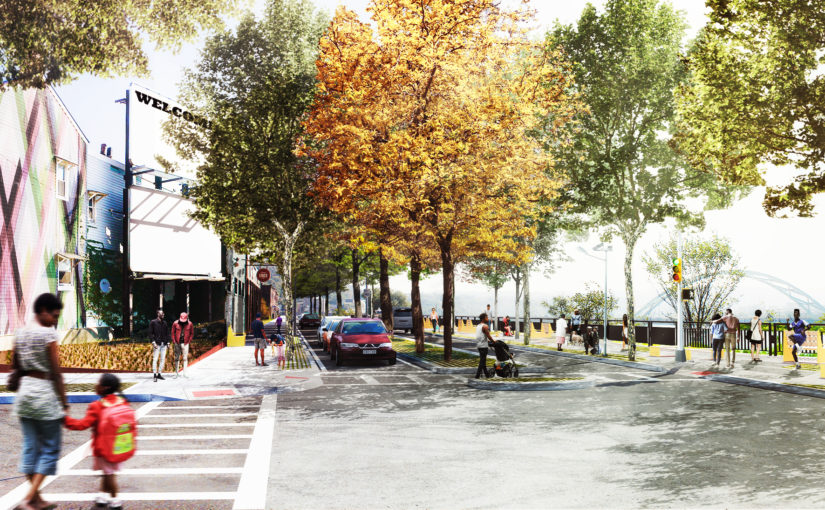
In Pittsburgh, the city has established an EcoInnovation District, the first of its kind, which seeks to invigorate underutilized commercial districts by planning and designing a neighborhood that is rich in opportunities to access nature. Biophilic include the reuse of vacant lots, improved access to fresh food through community gardens, and the planting of new trees and green infrastructure to capture stormwater and reduce the heat island effect. The project was recognized by C40 Cities in its report Cities100 for creating local solutions for climate change. The EcoInnovation District is one project among many that the city is pursuing to address the impact of its industrial history.

Waitangi Wetlands Park in Wellington. Credit: Tim Beatley

This is a small sample of how our partner cities are designing and implementing initiatives that bring nature into their cities as a source of healing and source of inspiration. Important lessons are learned and shared as the partner cities convey their experiences and collaborate in an effort to broaden the scope of how and where human-nature initiatives are implemented.

The Strength of the Network

There is tremendous value in the Biophilic Cities Network as a central organizing structure to address complex societal challenges. A resilient network includes engaged, yet dispersed connections across organizations and individuals pursuing solutions through a diversity of ideas and approaches. The result is the ability to tackle complex challenges that do not fit neatly into a single subject category and require multidisciplinary solutions.

Zealandia Predator-Proof Fence. Credit: Tim Beatley

Planning and designing cities with abundant opportunities for human-nature interactions is more complex than it might appear. For example, how to do we create wonderful parks and trails in communities that lack these amenities, and would benefit the most from their creation, without raising property values and driving existing community members away? How do we create greenspaces that are open to the public but not fully occupied by growing populations in need of places to live? These are complex problems impacting cities that require addressing fundamental societal concepts like public access, sustainable economic development and affordable housing. These challenges require drawing ideas from varied expertise and experiences.

Building the Scholarship Behind Biophilic Cities

Located within the University of Virginia, Biophilic Cities brings a multidisciplinary approach to facilitating the network’s collaboration and developing the scholarship underlying the vision of biophilic cities. This includes engagement with organizational partners whose work, in areas such as public health, community resiliency and sustainability, is complemented by applying a lens of biophilia.

Boulevard of Allies Rendering. Source: EcoInnovation District Implementation Plan

Our scholarship includes an investigation of forward thinking legal codes and mechanisms that exemplify successful, innovative legal tools and policies adopted by global cities to promote abundant and accessible nature. These Biophilic Codes are varied in their focus and approach but from which we draw consistent themes; themes that can be applied more broadly.

For example, in San Francisco, a homeowner concerned with stormwater flooding in her basement, as a result of run-off from paved surfaces, petitioned the city to convert some of the double-wide sidewalk outside her home into a vegetated landscape and natural stormwater buffer. The city granted the request and the result was a successful pilot project. The petition became the foundation for a sidewalk landscaping permit program administered by the city through which residents can apply to similarly convert paved areas into biophilic features that augment the street landscape and control and treat urban stormwater.

San Francisco Sidewalk Garden. Credit: Tim Beatley

Washington, DC has adopted landscape and design standards for new development with the goal of increasing new green infrastructure to improve air quality, reduce the heat island effect, and to control urban stormwater flows contributing pollution to its rivers and ultimately the Chesapeake Bay. Along with these standards, the city adopted a stormwater rule requiring new development to capture a majority of stormwater onsite through the use of nature-based tools like green roofs, rain gardens, constructed wetlands and improved tree canopies. To provide an incentive to exceed the minimum requirement of capturing 50% of stormwater onsite, the city created a Stormwater Retention Credit trading system, which allows landowners that exceed requirements to capture the value of the biophilic benefits by trading the exceedance as a credit to other landowners that are struggling to meet requirements. In this manner, the city is promoting a market that incentivizes nature-based solutions and increases the abundance of nature across the city’s landscape.

These legal mechanisms illustrate a flexible, adaptable approach. One that permits the planning and design of cities to evolve over time to embrace ecological solutions, which have utilitarian merit but also bring wonder to cities through the introduction of new nature-based amenities.

Another area of scholarship is the development of a growing library of biophilic indicators to help cities assess their progress towards their biophilic aspirations. The indicators are varied in focus and attempt to measure elements that are at the center of what it means to be a biophilic city. As a requisite of joining the Biophilic Cities Network as a partner city, we ask cities to develop a set of indicators that can be assessed and evaluated over time. Partner cities are asked to consider indicators in several broad categories that include the condition and abundance of nature in the city, the engagement of the city’s residents with nature, the pursuit of biophilic policies and governance, and human health/well-being indicators. In adherence to this network requirement, the partner cities are tracking an array of different parameters. Currently diverse, tracked indicators include progress toward overcoming inequitable or unfair distributions of urban nature, wildlife passage creation to enhance or restore connectivity, extent of biodiversity found within the city, and productive reuse of vacant land.

Mindful of Hopeful Urgency

The vision of biophilic cities represents a hopeful future for cities as places where the growing populations that call cities home have the opportunity to connect with and explore nature in the communities where they live and work on an everyday basis. We are mindful of the incredible challenges to this optimistic mindset, including the urgent need for solutions that address climate change and the expanding inequities for life’s most basic needs. We believe that access to nature is one such basic need because of the myriad of positive benefits that result. In natureful cities, we see the opportunity to create places where all residents have housing on streets with abundant access to healthy food and lifestyles, where children are safe and free to learn in the world around them, and where diverse economic opportunities exist that give back more than they take. This is an optimistic vision that we are pursuing at Biophilic Cities that we hope can be shared and can inspire.