This essay was originally published by the Garrison Institute whose mission is to demonstrate and disseminate the importance of contemplative practices and spiritually grounded values in building sustainable movements for a healthier, safer, and more compassionate world.
By John McIlwain
“Only the contemplative mind has the ability to hold the reality of what is and the possibility of what could be.” -Richard Rohr
Reading the headlines these days is a sure way to experience fear and despair. This is especially true about climate change and the environment. After all, what good news is there when Scott Pruitt is finally forced out of the EPA only to be replaced by a coal lobbyist! Headline news like that offers little in the way of hope or optimism. So do we just give up, shrink back in despair, ignore what we read, and just go on with our lives?
The headlines, however, are not all the news. Dig behind them and you will find much that is positive. Here are a few recent examples:
Thanks to rapidly dropping costs for solar and wind power, REN21-The Renewable Energy Policy Network reports that in 2017, globally, “Solar photovoltaic (PV) capacity installations … add[ed] more net capacity than coal, natural gas and nuclear power combined.”
“The average retail price of electricity in the United States is little changed from 2007, and, adjusted for inflation, prices are actually lower today. This comes as the power sector has reduced carbon dioxide emissions during that same period by 28 percent, according to the Energy Information Administration [E.I.A.].
Wind turbines supplied nearly 15 percent of [Texas’s] electricity last year, up from 2.2 percent in 2007, according to the E.I.A. … Over that time period, the state’s retail electric prices fell to 55 cents per kilowatt-hour, from 10.11 cents, before adjusting for broader inflation.”
“The Trump administration wants to…streamlin[e] permitting [for off-shore wind turbines] and carv[e] out vast areas off the coast for leasing – part of its ‘America First’ policy to boost domestic energy production and jobs.”
“On April 21, 2018, the lowest demand for electricity from the New England grid occurred in the middle of the day, not the middle of the night as is usual, due to the growth in solar PV panels tied to the grid.This was an historic first for New England. Meanwhile, California has been adding 2,000 megawatts of solar capacity in each of the past three years, and at one point in April 2017, 64 percent of all electric power on the California grid was solar or wind generated. Its grid is now struggling with how to manage periods of oversupply from solar and wind.”
Behind the grim headlines, the world is shifting. Yes, the process of weaning ourselves from carbon is imperfect, and too slow. That said, the shift is happening around the planet, driven by industry, national governments (except for the U.S.), and in the U.S. by state and local governments. Individual choices are driving it as well; from the cars we buy to the solar panels on our roofs, and even in what we consume each day.
So is the glass half full or half empty? The answer is “yes,” it’s both. That leaves it up to us to choose how we see the world.
We do need to honor our sense of fear and despair, and face them with courage and mindfulness in order not to be driven by them. Remember that underneath is the deep love we have for our planet, and our natural, heartfelt desire for the wellbeing of all life.
As Rohr says, it takes a contemplative mind to hold both “the reality of what is” and “the possibility of what could be,” namely a sustainable, renewable future. The future is not predetermined; it lies in our hands. It is a more powerful choice to see the glass half full despite the headlines, to chose to focus on the broader reality of the changes occurring around us. Optimism is often a choice that requires courage, but living with a sense of possibility for the future brings aliveness and can propel us into positive action, something despair never can.
John McIlwain is anadvisor to the Garrison Institute’s Climate, Mind and Behavior program.
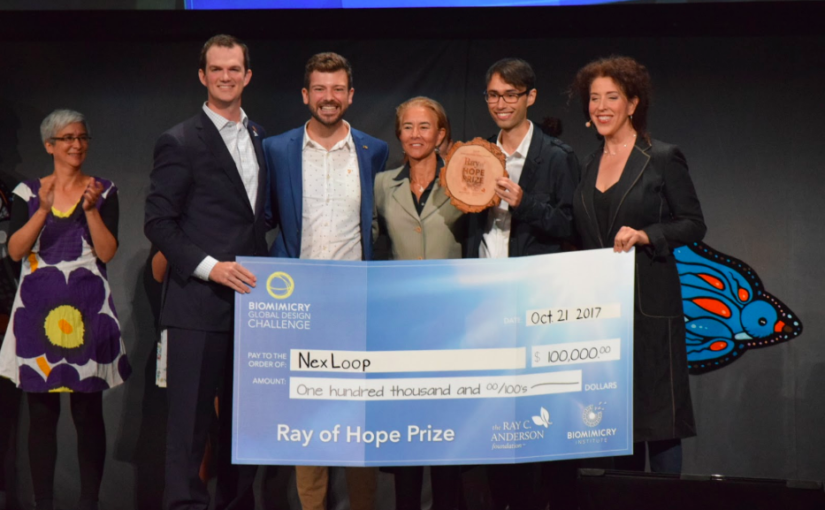
Photo: Team Nexloop accepts the 2017 Ray of Hope Prize at Bioneers, presented by the Ray C. Anderson Foundation. Left to right: John Lanier, Executive Director, Ray C. Anderson Foundation; C. Mike Lindsey, Anamarija Frankic, Jacob Russo, all from NexLoop; Beth Rattner, Executive Director, Biomimicry Institute.
These aren’t your everyday entrepreneurs. They understand that truly groundbreaking climate change solutions won’t come from the same take, make, and waste mindsets that have gotten us into our current environmental messes. Instead, they seek to emulate the natural world to create solutions that are regenerative, circular, and generous to all species on this planet.
The Biomimicry Launchpad supports this new kind of entrepreneur. Created by the Biomimicry Institute and sponsored by the Ray C. Anderson Foundation, it’s the world’s only accelerator program that focuses on helping early-stage entrepreneurs bring biomimetic, or nature-inspired, innovations to market. Each year, Launchpad teams are eligible to compete for the Ray C. Anderson Foundation’s $100,000 Ray of Hope Prize®. Teams are invited to join the Launchpad either by applying directly, or by participating in the Biomimicry Global Design Challenge, a global competition for university students and professionals to create nature-inspired climate change solutions.
Bioneers celebrates these bold thinkers by presenting the Ray of Hope Prize each year on the mainstage. Sure, it’s a competition, but year after year, these teams form deep bonds, and many go on to collaborate on whole-systems solutions. It’s a great example of how Bioneers fosters connection, collaboration, and community.
Launchpad teams have gone on to win awards and additional funding, appear at conferences all over the world, and participate in other accelerator and incubator programs. Read on to learn more about these teams and what they’ve accomplished in their post-Bioneers journeys:
Photo: Alessandro Zecca from Planet with the Mangrove Still design.Photo: An illustration of the BIOcultivator design.
Collaborating to showcase nature-inspired, closed-loop water systems
Two Biomimicry Launchpad alumni teams are part of a consortium that has won a €10 million grant from the European Union to that aims to demonstrate and test innovations that close water loops, feed the soil, and promote local economies.
As part of the HYDROUSA grant, the Mangrove Still design, a desalinating still inspired by mangrove ecosystems, and the BIOCultivator, a growing/composting system inspired by lizards, will be included in a pilot project on Greek islands. This wide-scale grant project will incorporate different nature-inspired solutions to create a regenerative system that will produce fresh water for agricultural and household use, plus create jobs in the region. The Mangrove Still system will be used to produce freshwater for a greenhouse, and the BIOCultivator design will be adapted into a compost cultivator that will be used to fertilize and irrigate soil.
Alchemia Nova CEO Johannes Kisser is leading up the development of the biomimicry applications in the grant, along with Regina Rowland and the team at Bioversum, a new NGO that develops projects that apply the principles of biomimicry and circular economy and design.
Photo: The entrepreneurial teams behind LifePatch and the Mangrove Still pose by their joint prototype.
Teaming up to collaborate on food system solutions
The 2016 Ray of Hope Prize-winning team, LifePatch (formerly BioNurse) is collaborating with the Mangrove Still team (described above) to develop a joint project that utilizes both of their designs to address both water and soil issues resulting from climate change. By combining the Mangrove Still’s affordable and efficient desalination design with LifePatch’s biodegradable, low-cost way to restore degraded soil, they aim to create a whole-systems approach to helping agricultural communities suffering from water scarcity and desiccated soil. The Mangrove Still team was previously awarded a grant from Dubai Expo 2020 and used those funds to test their system in Egypt, India, Namibia, Cape Verde, and Cyprus. Both of these teams are jointly applying for funds to test their combined technologies.
Photo: Team NexLoop’s Aquaweb design won the 2017 Ray of Hope Prize, presented at Bioneers.
Prototyping a resilient water management system, inspired by nature
Team NexLoop won the 2017 Ray of Hope Prize for their water management system for urban food producers, inspired by the way living systems capture, store, and distribute water. Since their win, they have spoken at conferences around the world, including the National Science Festival in Croatia, and are focusing on developing a field-ready prototype. They have identified four international pilot sites and have been actively applying for additional funding to carry out these pilots.
Photo: A prototype of Hexagro’s Living Farming Tree design.
Accelerating an indoor farming system
Team Hexagro created a modular growing system that enables people to grow fresh food in indoor settings. Since their Launchpad experience, they’ve displayed their designs at conferences all over the world, including at a technology display in Lyon, Milan Design Week, Seeds and Chips in Milan, Tech Open Air in Berlin, and at universities in Costa Rica and Slovenia. They’ve also participated in multiple startup pitch events, bootcamps and incubators, including the Katana Bootcamp in Stuttgart, Germany, where they were selected as the #1 pitch out of 100 teams participating in the bootcamp, the Kickstart Accelerator program in Switzerland, and the Lee Kuan Yew Global Business Plan competition in Singapore. Most recently, the Hexagro team was accepted to Singularity University’s SU Ventures accelerator program.
Don’t miss out! Six new international Biomimicry Launchpad teams will be coming to Bioneers this year to showcase their nature-inspired climate change solutions. You can find out who the next 2018 Ray of Hope Prize winner is and meet all of the 2017-18 teams on Saturday, October 20th. Learn more about the Biomimicry Global Design Challenge here and the Biomimicry Launchpad here.
As I walked toward the meeting hall crowded with farmers, I could hear a buzz of joyful collegiality. I opened the swinging door and took a step inside and instantly the room fell silent. As the only white person in a group of about 200 Black farmers in Alabama, I got a small fleeting taste of what it means to be other. Uncomfortable and self-conscious, I froze in awkward pause.
Ralph Paige, a man of sizable physical stature, lifted his head, looked around and with a smile on his face said, “Who let the white folks in?” Everyone, including me, cracked up. The laughter pushed the silence aside and the tension dissipated. The group fell back into jovial conversation and I entered feeling relieved by the unconventional welcome.
That was Ralph. He knew full well the realities of racial distrust, but it didn’t prevent him from bringing people together to work for justice and to improve people’s lives.
When I first met Ralph, about 20 years ago, he was the Executive Director of the Federation of Southern Cooperatives (FSC) and was a Bioneers board member at the time. As the Project Manager for the Bioneers Restorative Development Initiative, I was organizing some of the first organic farming and medicinal herb trainings in the Deep South for FSC farmers.
The FSC grew out of the civil rights movement in the 1960’s to support Black farmers and help them retain land ownership. According to the 1910 Census of Agriculture, Black farmers numbered over 200,000. By the year 2001, those numbers were estimated to have shrunk to 19,000.
In a 1992 New York times article, Douglas Bachtel of the University of Georgia said, “Farm declines seemed to have plateaued for whites in the last decade or so, but black farmers are on their way to extinction.”
As a testament to the work of the FSC under Ralph Paige’s leadership, the population of Black farmer’s rose to 33,371 in 2012.
Hard fought victories came despite the fact that the FSC was the target of institutional discrimination. In the early days of the FSC as Black voter registrations increased in counties where they organized farmer co-ops, the FBI inexplicably raided their office and confiscated all their files. After a lengthy delay, they were returned without any explanation.
In 1992, Ralph and the FSC led a caravan of Black farmers to Washington DC to protest the discriminatory practices of the USDA. In 1997, the FSC helped provide legal assistance to Black farmers to join the class action suit, Pigford v. Glickman, against the USDA. The successful lawsuit awarded $2 billion to 15,000 claimants–the largest civil right judgment in the history of the United States. Lead attorney for the class action suit, J.L Chestnut, said, in a Bioneers keynote presentation, that up to that point, no one had ever heard the words Black farmer and billions of dollars in the same sentence.
A life-long civil rights warrior, Ralph Paige died of congestive heart failure on June 28. He worked tirelessly, at the expense of his own health, to help Black farmers be accorded the same opportunities as anyone else. His work invigorated rural southern communities culturally and economically. Ralph was a politically savvy operator with a big heart.
His legacy is apparent in the 200 units of low income housing, the 18 community credit unions, the 75 farmer cooperatives and the award-winning rural training center that the FSC built under Ralph Paige’s 30-year leadership, despite the roadblocks of discrimination and the racially rigged system that he helped break a few holes in.
Excerpted from an Interview with Calla Rose Ostrander
Calla Rose Ostrander is an environmental consultant to the Marin Carbon Project, and formerly Climate Change Coordinator for the city of Aspen and Climate Change Project Manager for San Francisco.
When I was the Climate Change Project Manager for the City of San Francisco, John Wick gave a presentation in the Office of the Department of Environment on how the Marin Carbon Project (which John co-founded) was working to promote farming practices that draw carbon from the atmosphere and capture it in the soil. He shared his rigorous peer-reviewed published papers and a carbon-offset protocol that he had created around the concept of soil carbon sequestration. It included a whole methodology for farming that fit into the existing USDA infrastructure. I had never seen anybody do their homework quite like that. He had designed the pieces to transition the entire agricultural system. The research and trials had been done and he had found the framework in which to embed it into the agricultural system: the USDA’s Natural Resources Conservation Service and California’s Resource Conservation Districts.
That meeting led to an invitation to work with the Carbon Cycle Institute. They had a system, they did the science, they involved the right government institutions and the right stakeholders, and were supporting the farmers. There was an ecosystem of organizations and individuals to help scale it up. I was able to come in and help take all of that out to the broader landscape.
Levers of Power: Economy, Infrastructure, Funding and Storytelling
My background is international political economy, which is how you understand the levers of modern Western society, how politics intersect with economics, and how culture, religion or science – or whatever your basis is – shapes politics. As a political economist, my job is to assess things like the need for a market policy to drive organic materials out of landfills and out of dairy ponds and into compost.
When we burn carbon, we create energy. When we eat carbon, we get energy. When we put carbon in compost and spread it on the soil, it gives energy to the system. Carbon is the physicalized way that we share energy on the planet.
The challenge is that the current economic framework doesn’t recognize the exchange of energy as inherently valuable. When exchanged in a positive way, there is an abundance of carbon within the terrestrial system. It challenges the idea that the scarcity of carbon is what creates its value. Carbon is one of the most abundant elements on the planet and is what life is built on–that is the basis of its value.
We’re not going to change the economic paradigm tomorrow, but we are trying to look at all the ways in which our socio-political and market-based culture creates value, and then help shape it so we can begin to move that energy exchange in a positive abundant direction instead of in a single direction–into the atmosphere. Carbon is an untapped resource that can be actively harnessed if humans take a responsible role in the carbon cycle.
To affect policy change, consistency is needed across the scientific models between the State of California and the USDA, which requires additional research. Once we get consistency, the state and the feds are going to accept the models and then programs can be brought online.
In order to get funding passed, we need legislators from Southern California because the leaders of our California government are primarily based in Los Angeles. I moved there to understand who the constituency is, what they care about, how we engage them, how the idea of Carbon Farming and carbon sequestration brings value to them, and then how to mobilize them to tell their representatives that it is important.
How we, as a movement, communicate to the outside world needs to be cohesive. Kiss the Ground wanted to make a movie about soil and climate change. We needed to make sure that that first story animation said the things that everybody in the movement agreed on, that we got the science right, that we didn’t overstep it, that we said things that everybody from my scientist to my advocates and my politicians could agree with. Once we’re all saying the same thing, we then have shared values and the language needs to communicate that. Working with Kiss the Ground to write the movie created vocabulary cohesion, and therefore helped to align political and social will, which is crucial to take the body of work to scale.
The Framework: Carbon Farm Plans
The model that the Marin Carbon Project developed is to build Carbon Farming into Conservation Agriculture. USDA Conservation Agriculture Programs have been around since the post-Dust Bowl era within the Natural Resources Conservation Service, which created Conservation Districts across the country.
The Marin Carbon Project and The Carbon Cycle Institute looked at all the practices currently in Conservation Agriculture that focus on carbon and enhancing terrestrial or soil carbon. Instead of a Conservation Plan they created a Carbon Farm Plan that puts carbon at the center, because when you manage for carbon, you manage for water, you manage for nutrients, you manage for productivity and energy. That’s why it is a replicable model.
There are approximately 33 Resource Conservation Districts (RCD) in the State of California that have Carbon Farm Planning programs, meaning a rancher or farmer could go to their RCD and get assistance designing a carbon farming plan. Having a Carbon Farm Plan makes farmers and ranchers eligible for existing subsidies through the USDA Resource Conservation Service as well as California’s Healthy Soils Initiative.
Most agricultural soil systems are highly degraded and impacted and are facing challenges from extreme weather. Ranchers or rangeland managers don’t have a lot of capital. These are systems that operate on very small margins and they’re challenged by increasing land prices. They stay on the land by working it.
Even though a one-time application of compost is like magical medicine for the soil, compost is expensive and we’re going to need a lot more of it. The price needs to come down on one side for the rancher, but probably needs to go up for the producer to be profitable. Subsidies and more ways of farmers producing their compost on farm are needed.
To be successful means getting enough carbon back in that soil system so that it can be highly productive, and that’s not just compost. There are 34 practices “officially” approved by USDA and there are hundreds of other conservation practices for natural resource conservation and improving soil health. Those that specifically increase soil carbon sequestration are the ones that we put together into the Carbon Farming Plan. Colorado State University (a key partner in the development of the EPA’s Greenhouse Gas Inventory protocols) and the USDA are using the tool that we created for California, the COMET-Planner, which evaluates potential carbon sequestration and greenhouse gas reductions by adopting NRCS conservation practices. It’s also being applied internationally.
Next Steps: What’s Needed?
A lot of farmers and ranchers are already doing many of these practices. They need monetary and technical support to manage for carbon on their properties.
In addition to government subsidies, private sector investment is needed. Local infrastructure is really important for supply chain development and keeping the value closer to the farmer. Right now, most of the wool that’s produced in California–even though it’s some of the highest-grade quality–gets thrown away because there’s no way to bring it to market. You have to send it to Texas or China to get washed and then there is the problem of where to send it once it’s washed to get spun or milled, and how to make the fabric. What we’re doing now is looking at how we can support a manufacturing infrastructure around local fiber systems that are climate beneficial, because that’s going to bring a value back to the farmer or rancher and value to the soil by building organic matter.
Fibershed founder, Rebecca Burgess, has built a community in California of over 140 small to mid-scale producers and is working with North Face by producing value-added products with wool that was produced in a climate-beneficial manner using Carbon Farming practices. We’re looking at what is it that those local producers need in order to successfully make these practices happen on their operations.
There are wonderful organizations that we’ve partnered with – CAFF, CalCAN, Californians Against Waste – who are doing advocacy. What was missing was the smaller, mid-scale producer voice at the table. We are helping those types of producers organize and have their own lobbyists because in order to get government money, you have to show up at every meeting and every hearing, and go to the offices and talk to all the people. That’s how policy gets made, that’s how money gets distributed. You’ve have to know who your legislators are and talk to them. John Wick is currently funding a project to connect the small-scale Northern California climate beneficial producers to a lobbying group that can represent them so that they can have a voice at the table.
There’s a framework, there are funding streams, and now it’s a question of listening to people who are already doing this work as well as those who are interested. What do they need to continue or what they need to do more of it? A model is in place that can live on its own within existing infrastructure. New resources like education and more funding can be funneled towards that infrastructure. There are structural things that still need to be changed, but the model is active, right now, on the agriculture landscape in California.
Paul Muller, a partner at Full Belly Farm in California’s Capay Valley,has been farming organically for 33 years. Full Belly Farm is designed to maximize the layers of life per acre–plant, soil microbes, insects, and animals–while harvesting as much sunlight as possible and growing over 70 different fruit and vegetable crops. Paul explains how Full Belly Farm is working to sequester soil carbon as part of Bioneers Carbon Farming series.
California’s environment is incredibly complex, with a great variety of agricultural expressions. When thinking about carbon, there’s a set of solutions that may have a common feel in grasslands. However, in irrigated agricultural or orchard systems, or growing corn and soy in the Midwest, your approach to carbon ends up being very different. We know from the work of the permaculturists that rainfall, temperature, everything that influences the soil all determine how you manage your environment to sequester more carbon.
I’ve been practicing organic farming for 33 years and some of the knowledge that we now know about soil systems–how plants take in CO2 through photosynthesis to build their own plant tissue, as well as how they deliver carbohydrate exudates into the soil to feed micro life– are all new ways to look at what we are doing during our tenure on this planet and how we manage the vegetation on it. I think the arc of the universe is moving, inevitably, toward the understanding that we can not violate nature for very much longer
Most landscapes have been degraded by human use. We must now try to keep as much energy in the system as possible. In the last 150 years in this country, the knowledge of managing systems in a way that is scale appropriate to human beings who were intimately tied to a place has been diminished, and that has destroyed rural America. Who is going to manage carbon on the farm? The human component of that kind of management system has to be regenerated.
In the changing landscape of California agriculture, increasingly there are people who don’t actually farm the land, who are landlords and who hire someone else to farm. Oprah Winfrey owns a good deal of land in the Dixon area where she’s farming almonds. It’s doubtful that she does a lot of almond farming herself. TIAA-CREF is a large institutional retirement fund who is growing 25-30,000 acres of almonds. People like that need to develop the tools and the consciousness of stewardship. But they only see it as an investment. There are hundreds of thousands of acres being farmed by people who are only trying to maximize their return. Carbon doesn’t fit in that equation. What fits in that equation is how many nuts or how many tons of hay or whatever crop you are harvesting off of that piece of ground.
Modern farming systems are based on the plough. All the science and tools came from the notion that to turn the soil was the way you made agriculture productive, and that the best way to manage land is to keep it bare. The opportunity being missed is that bare land does not harvest sunlight. The bare field is not taking CO2 out of the air, the soil micro life is not being fed, life is not being supported in the soil. We have a lot of work to do to convince farmers that they’re losing money if the rainfall that hits bare ground doesn’t infiltrate because of poor soil structure due to lack of microbial life. Agriculture is a fairly violent form of livelihood, if you don’t think about all the life in the farming environment. We have to think about solving for a different pattern. We have to think about how we value carbon, how we measure it, how we begin to put that into the economic equation.
Agriculture can come to the rescue and be part of solving the problem of how we deal with carbon in the atmosphere. How we structure that in terms of policy is very important, because the food system contributes approximately 30% of the annual greenhouse gas emissions.
We’re going to need new thinking about how we create and defend the biological depth and richness with farmers who are dedicated to place; people who are noble. As a farmer for 33 years, I am tied intimately to my land even in a physiological way. My very gut bacteria are tied to the processes that I’m doing on my soil, and everything that I eat from it. That’s true for every person who is eating product from my farm. They are tied to me in an intimate way. We continually give customers the information about how they’re helping us defend the biological richness of our farm, how they too are responsible for the activities on the farm.
At Full Belly Farm, our primary goal is to is grow soil. I’m not a scientist, but I see a lot of life in the soil, there’s flocculation of the system. Through observation, I find that soil fungus and bacteria have a certain smell. So in a very visceral way, I understand what soil looks like when my farming practices are are treating the land well.
We look at our farm in terms of layers, we always try to have something blooming. When thinking about the complexity of the farm, we keep in mind the carbon accumulators that serve other forms of life. Carbon accumulators can be mustards and arugula plants growing to seed. All the bee life and the avian life and other living things need pollen and nectar to thrive. We design our system so that carbon sequestration feeds other life forms on the farm.
The place I learn the most from is the bench below our farm where you can look at native soils. We live in oak woodland. Underneath that oak woodland is an understory of all the duff and leaves and things that accumulate under those trees. If you scrape that away, there are layers of decomposition occurring. There are macro-digester, earthworms, beetles, and other things in one layer. There are different levels of microbes all the way through. By understanding a little bit about how nature organizes itself, we can begin to manage our farm and our cultivation to grow crops where we’re going to do some tillage, but do the least amount of damage.
We know why we should till soil less. Tillage releases CO2, so soil structure is generally improved when you don’t till. You have better water-holding capacity, better rain infiltration and a steady release of water in the soil, especially important when we get climate fluxes. Soil organic matter is more stable, fungal populations and other micro life in the soil can be managed and they can be less disrupted. There will be less evaporation, greater soil stability and less erosion. There are lots of benefits to not tilling, but it’s hard to grow carrots without tilling. It’s hard to grow radishes without tilling. We’re still trying to figure that out.
We grow cover crops as a primary piece of our rotation. Every bit of ground will have at least one cover crop, sometimes two cover crops a year, along with the food crop. A winter cover crop of vetch, oats, barley and different cultivars that have different root systems. A summer cover of Sudan grass with cowpeas and buckwheat. The buckwheat flowers attract pollinators and beneficial insects, the cowpeas for nitrogen, the Sudan Grass for carbon. We experiment with different forms of cover crops to see what will work with our roll-down no till system.
We mow down some cover crops to get in that field earlier. We till lightly, and then have a seedbed that has had the benefit of nitrogen fixation, carbon accumulation, and all the pieces that we need for building fertility with what’s indigenous to the farm.
We can also flail mow, but when you flail mow you’re chopping things up pretty fine that digests really quickly in our environment. So flail mowing is not the best tool for keeping carbon in the ground.
If we mowed flowers in bloom, all the beneficial insects would disappear. So we use sheep to browse and move them around gently. They are defecating and peeing, which helps accumulate carbon.
At Full Belly Farm, we grow some tree crops and a wide variety of vegetables year-round. We plant for insect diversity. We’re trying to create a rich ecology on the farm by having as many forms of life and as many layers of life as we can, and still pay the bills and have a farm that’s productive and grows high-quality food.
We think about more layers of life per acre. What we’re trying to do in those layers is grow understory plants for harvest, while harvesting as much sunlight as possible. We’re working to have insect life and soil micro life all thriving in the system.
As part of our multiple-layered systems, we have livestock on the farm, which is a biodynamic concept. They inoculate the soil with their defecation, and they move themselves. You don’t have to get a spreader out, they spread themselves. They work without any workman’s comp and they eat 24 hours a day and they provide inputs just about as often. They are wonderful components in our system. They become part of the farm soil’s digestion process, and they’re creating a stable form of carbon, as opposed to carbon that’s a nutrient that may move more quickly through the system. They’re probably doing a little bit of both depending on how we manage them.
Every day we want to harvest the maximum amount of sunlight. We do that by growing more layers on the farm. In the springtime, there’ll be flowers blooming that will be an incredible hive of insect activity that can exist in an understory of an orchard, provide nutrients for the orchard, and allow rain to infiltrate.
In the end, we want to create more vibrant places where people are inoculated with the very nature of the farm, and that includes our customers. We want to grow places that are beautiful. That’s part of the solution in thinking about carbon, that we’re going to rethink beauty. And we’re going to seduce the next generation with good food.
It’s getting warmer and we know why. It’s warming because carbon dioxide and the other greenhouse gases that we emit through our everyday activities are collecting in the atmosphere and re-radiating heat down to the planet. They’re trapping heat and creating the greenhouse effect.
The Intergovernmental Panel on Climate Change (IPCC) in their 2014 report stated that we need to figure out a way to pull CO2 out of the atmosphere in addition to reducing emissions. You have to do both.
The IPCC 2014 report said that a large fraction of anthropogenic climate change resulting from CO2 emissions is irreversible on a multi-century to millennial time scale. We’ve already passed a threshold, except in the case of a large net removal of CO2 from the atmosphere over a sustained period. So emissions reduction isn’t enough. We have to couple it with carbon uptake from the atmosphere.
Soil carbon holds tremendous potential to take some of that excess carbon out of the atmosphere and put it in a place where it could be stored, not just stored, but also do some good because when we manage soils for increased carbon content, we’re also increasing soil organic matter.
Organic matter is the vehicle to move carbon from plants into soils. Carbon is part of that organic material. When we increase the carbon and organic content of soils, we increase the fertility, the water-holding capacity, and the stability, because organic matter is sticky and keeps soils from eroding. All of these things contribute to sustainability and productivity, so increasing soil organic matter is good management.
Our research is trying to understand the potential of increased organic matter. We want to understand whether or not it is an activity that is not only good management of ranches, but also good for climate change mitigation. Our goal was to answer the question, “Can soil carbon sequestration actually affect global temperatures?”
We found that theoretically and technically, current management could sequester enough carbon to reduce temperatures by .3 degrees Celsius, which was three times more than the baseline target that we were aiming for by 2100. Using all of the possible management practices that exist, the maximum we could reach is almost 2 petagrams of carbon that we could get into the soil per year [1 petagram = 1 billion tonnes].
The analysis we looked at included grazing, changing from tillage to no till, ands some irrigation practices. It didn’t include soil amendments, because there was no global scale assessment of that. I actually hope to do such an assessment over the next year, because it’s really needed.
What lands are available for this? We picked grasslands because they hold a lot of potential. The majority of grasslands are heavily degraded and are very widely distributed. They cover a third of the U.S. land area, a third of the global land surface, and 23 million hectares of grasslands in California make up almost 40% of the state’s land area. It was locally relevant for me, being at U.C. Berkeley, and it was nationally and globally relevant. These ecosystems have tremendous potential to sequester carbon because grasses are looking for water.
All grasslands occur in places where there’s a drought during some part of the year. The plants are pre-programmed via evolution to put a lot of carbon down into roots, and any time there is root growth, you increase the potential to store carbon in that soil.
We found that amendments of livestock manure, which is a very common practice in California, increase carbon dramatically–50 metric tons of carbon per hectare.
This sounds exciting except that cattle manure is a really big source of greenhouse gas, especially when it’s stored in piles or in slurry ponds. In fact, EPA data shows that manure management is equivalent to coal mining in terms of methane emissions. Methane is a very potent greenhouse gas, and manure greenhouse gas emissions are equivalent to mobile combustion emissions of nitrous oxide out of your tail pipes. Nitrous oxide is 300 times more potent per molecule as CO2 over 100 years.
We did additional field sampling on dairies and used computer simulation models to assess whether or not future emissions from livestock management would be balanced by soil carbon sequestration.
Grazing alone and the manure that’s deposited via grazing produce some nitrous oxide emissions. That’s just background condition. Cows emit methane. These are things that we can’t avoid in a grazing system. But when you apply manure, you actually get a lot more emissions of nitrous oxide, a super potent greenhouse gas. Over time, the soil carbon sequestration begins to stabilize, and the net effect is really high emissions, primarily nitrous oxide emissions from the manured system.
That’s why we turned to compost, because composting that material actually decreases emissions. Now we’re measuring greenhouse gas emissions from the composting process, and it appears that it leads to relatively low emissions if done well.
If you were to let manure decay normally it might decay to CO2, but you might also increase methane emissions, so if you can put it in a compost pile and turn that compost pile weekly, it results in relatively low methane emissions and very low, undetectable nitrous oxide. Leaving that material in place would produce nitrous oxide, but putting manure in a well-managed compost system decreases the nitrous oxide emissions.
When we apply the compost on the field, we find very low greenhouse gas emissions. That was a surprise. Compost is hard for microbes to break down, but it does leak a little bit out over time, and increases plant growth. In fact, from a one-time application, it increased plant growth for many years.
With a one-time compost application in 2008, right after the rains came, we saw that the compost sites were greening up faster than the other sites. That compost appears to be staying in the soil.
We see an increase in soil carbon, which is not a big surprise until you realize that we sorted the compost fragments out of the soil samples before we analyzed them. So most of this is likely to be new carbon from plant photosynthesis. We see the increase in growth that leads to an increase in soil carbon, and when we add it all up, we get about 3 metric tons of carbon per hectare over 3 years, or about a metric ton of carbon per hectare per year.
Through collaboration and funding from the State of California, we have now added another component to look at how stable this carbon will be and what the impacts will be with future climate change predictions. We’re using climate models now with our biogeochemical model.
The first sites that we’ve modeled are in Mendocino and Santa Barbara. Mendocino is a wetter site and Santa Barbara is the drier site. What we found is a one-time application of compost in both the optimistic emissions-reduction scenario and the realistic emissions-reduction scenario shows that by 2100 we are still sequestering carbon in those grasslands, in the dry site and in the wet site.
All carbon sequestration has the potential to contribute to climate change mitigation at a global scale. Compost application holds considerable promise as a carbon sequestration approach with many co-benefits. This is good management. This approach is scalable and increases resilience of ecosystems in the face of climate change. This is what our ranchers and farmers really need, so we should be doing it for that reason alone.
We’re finishing the sample analysis and modeling for the NRCS [National Resource Conservation Service] field trials, and I hope to come up with a snapshot of the State of California that other states and maybe even other countries can use to start promoting these practices. We’re really interested in food waste composting and land application, because this is a free carbon source that’s not being fully utilized, and right now is a high-emitting source. If we can get food waste out of the landfills and into compost, we could potentially do even better.
We’re doing life cycle assessment modeling, which may answer the questions: What about alternative uses of that waste? How does anaerobic biodigestion compare with aerobic composting?
We’re also looking into what happens if that waste goes into energy production.
This article was originally published by the Biomimicry Institute. Bioneers 2018 will host the presentation of the $100,000 Ray of Hope Prize to one of these innovators in October.
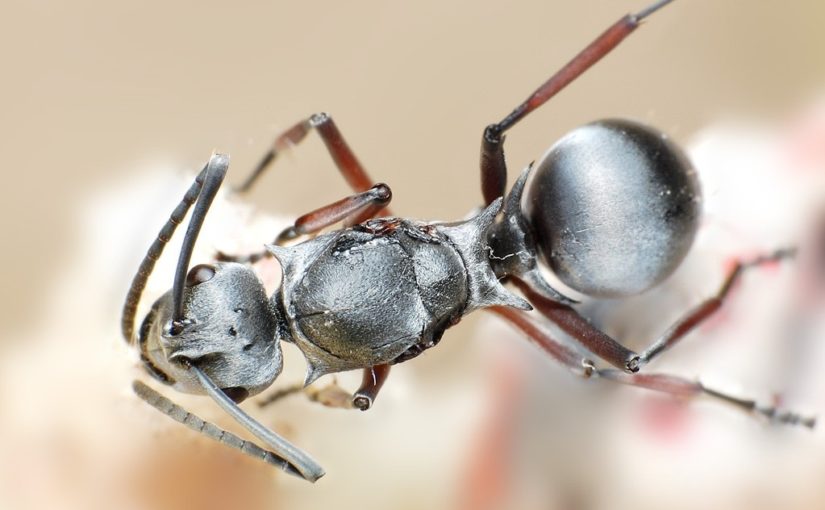
Not everyone looks at a jellyfish and sees a renewable energy solution. But for a team of Georgia Tech students, the jellyfish’s bell-shaped body gave them insight for how to make their tidal energy harvesting design more efficient and effective. Farther north, a team from Cornell University found clues for how to prevent mosquito-borne diseases in the structure of carnivorous plants. For a team from China, the kingfisher’s eyelid provided a whole new way to think about preventing soil erosion. In Taiwan, a team is ensuring that their community can breathe easier by mimicking the Saharan silver ant.
Game-changing ideas begin by seeing the possibilities for a sustainable world reflected in the living systems that surround us. That’s what we celebrate each year in the Biomimicry Global Design Challenge—a competition that asks innovators to create radically sustainable human designs inspired by the natural world.
There are a lot of solutions to celebrate. Eight teams from around the world have been chosen as winners in the 2018 Biomimicry Global Design Challenge. In addition to cash prizes, these teams will be invited to join the Biomimicry Launchpad, an accelerator program for early-stage biomimetic start-ups, to work to bring their innovations to market. At the end of the Launchpad program, one team will win the $100,000 Ray of Hope Prize®, sponsored by the Ray C. Anderson Foundation.
Read on to learn more about how each winning team is working to develop a more sustainable world, using nature as a guide:
FULL CIRCLE
Atlanta, Georgia, U.S.
This team from Georgia Tech wanted to find a more resilient way to harvest renewable energy, so they created a nature-inspired energy generator that produces clean renewable electricity from underwater sea currents. The design was informed by the bell-shaped body of jellyfish, how schools of fish position themselves, how heart valves move liquid, and how kelp blades are adapted to rapidly flowing water and maximize photosynthesis. Their goal is to create a more efficient way to generate power, decreasing cost, and making this approach available to areas vulnerable to electricity shortage.
HABARI
Utrecht, The Netherlands
This University of Utrecht-based team created an automated, open-source design to protect tea plants from frost damage. Climate change has resulted in more unpredictable night frosts in Kenya, which damages tea plantations and leads to economic losses and unstable incomes for farmers. Inspired by the giant groundsel (Dendrosenecio kilimanjari) and giant lobelia (Lobelia deckenii) plants, both native to Kenya, the team developed HABARI to automatically deploy a mesh where frost deposits, covering the plants and preventing the frost from settling on the leaves. HABARI increases farmers’ resilience to weather conditions, and connects the farms with the local community by using local and sustainable products.
MIST GENERATION + PACE
Taichung City, Taiwan
Graduate students at the Tung Hai University developed the Psephurus Air Cleaner Equipment (PACE) to improve air quality in urban environments. Residents of densely populated cities are at greater risk for health issues due to fine particulate matter in the air. In order to make the air quality in outdoor public spaces better, this team created an air-cleaning device that is incorporated into signage on city buildings. These solar-powered signs have filtering mechanisms inspired by marine creatures like salpidae, paddlefish, and peacock worms, and derived their energy strategy from prairie dog burrows, the Saharan silver ant’s light-reflecting capabilities and more.
ECONCRETE
Tel-Aviv, Israel
This team of marine biologists, engineers, designers, and geologists wanted to develop a better way to create resilience in coastal zones most at risk for climate change-related issues. Current coastal defense systems such as breakwaters, seawalls and revetments, replace natural habitats, creating tremendous pressure on the fragile marine and coastal ecosystems. This team studied natural tide pools, rocky shores and oyster beds to develop a fully functional and constructive coastal defense unit which encourages growth of diverse plants and animals native to the project’s environment.
SOIL EROSION BY NATURE
Chonquing, China
This team worked to develop a way to combat soil erosion problems resulting from the Three Gorges Dam in China—the world’s largest hydropower station. Yearly water fluctuation means that there is a constant erosion problem. The SSE team developed an approach inspired by the kingfisher’s “third eyelid”—a protective, retractable layer that covers the bird’s eyes while it plunges into water. Their device is a mesh structure that covers soil while it is submerged and flushed with water. The device can be retracted after the water level is lowered, ensuring that it will not affect plant growth and damage the ecosystem.
GEN-RAIL
Long Beach, California, U.S.
This California State University at Long Beach team developed Genrail to harness wind generated on urban freeways and convert it into energy, essentially creating a wind farm in an urban environment. This system was developed with Los Angeles in mind but is adaptable to all high-speed roadways. The team replicated the compressible elasticity of the cockroach to create safe impact zones, mimicked the California condor’s wing shape to help create energy harnessing fans, and gathered inspiration from the structure of the desert snail shell to create a system of vacuums aided by the venturi effect propelling the wind forward and providing extra power for the city. Genrail is designed to have a small footprint, be highly efficient, and be easy to produce and implement in cities worldwide.
UPOD
Ithaca, New York, U.S.
This Cornell University team created the UPod, a mosquito-control device inspired by the mechanism of the carnivorous Utricularia vulgaris plant. Higher average temperatures and increased precipitation events due to climate change are contributing to the expanding threat of mosquito-borne diseases like dengue, malaria, and chikungunya. Current mosquito-control strategies can be harmful to people and the environment, so this team developed the UPod to be an environmentally friendly, self-sustaining, reusable and affordable solution. Similar to how the Utricularia vulgaris plant traps prey, the UPod is a solar-powered device that pulls water and larvae into a tightly-sealed water chamber by means of a trap door that functions through a smart sensor mechanism. Larvae are suffocated in the water chamber, and then pumped out as new water and larvae are pulled in. UPod can help individuals, communities and nations take control of larvae populations and prevent the spread of mosquito-borne diseases.
PHALANX INSULATION
Long Beach, California, U.S.
This team, also from California State University at Long Beach, developed a biomimicry-inspired insulation grid meant to be applied to exterior walls of existing buildings. Intended to be used in urban coastal regions like Southern California, this system is designed to reduce interior temperatures of buildings passively without the need for electricity. The system includes three layers. The shade-grid layer has a wavy patterns and reflective surface inspired by the cactus and Saharan silver ant. The air channel layer, inspired by cathedral termites, directs hot air up and out of the system. The capillary layer was inspired by the Saharan camel and wheat, and can collect the morning dew from the air or pull up gray water from an underlying trough. Phalanx requires no electricity, has no moving parts, can be assembled on existing architecture, makes use of otherwise wasted water, and ultimately saves money while it cools.
This article was originally published by the Biomimicry Institute. Bioneers 2018 will host the presentation of the $100,000 Ray of Hope Prize to one of these innovators in October.
As a boy, he threw rocks at babies. He’s doing it again.
After the other parents all finally barred the boy from playing with their kids, Daddy Trump, the abuser-in-chief, shipped Donald the Menace off to military boarding school. He never went home again.
Tony Schwartz, who actually wrote The Art of the Deal because Trump had such extreme ADHD that he literally could not focus for more than 3-4 minutes, has said flatly: “He’s mentally ill. Inside the man is a black hole.”
Now from the mighty White House, he’s jailing babies and savaging desperate families, the casualties washing back on the shores of the American policy and corporate globalization that have driven them here. And make no mistake: These are already the first waves of climate refugees in many cases, and it’s going to get a whole lot worse as the people of the South flee the mayhem that the North’s fossil economy has caused.
I don’t know how to put a primal scream into words. This is not a policy – it’s a psychosis. No, I really don’t think the Founding Fathers envisioned a psychopath in the White House illegitimately elected through election meddling by a hostile foreign authoritarian regime and partisan exploitation of an archaic system rotting from the inside out.
In 2017 Noam Chomsky floated a hypothesis: The Republican Party is the most dangerous organization in human history. Check. We also know Putin’s a Republican and the Russian hackathon of the upcoming election is the Republicans’ best shot of holding on to power and perhaps avoiding impeachment, disgrace and lengthy jail terms.
This is the moment of truth in this Age of Disinformation. All people of good will and good heart need to break through the political pavement and grow a new politics. We need to do a lot more than change elected officials, although that will help at this fateful time when holding the center is a life-and-death issue for countless people. We also need to change the system, and we need a change of heart.
We forget that the Nazis arose from the nation considered the most advanced and cultured in the world. It’s easy to see right now how the “good Germans” came to be. Indeed, silence is complicity, but complicity is also complicity.
Are we really going to accept an illegitimate regime that’s carrying out a coup d’etat in slow motion? Are we really going to give this gangster cartel any other name? Are we really going to let him throw enough rocks at babies to make a wall?
Please help kids and their families reunite and survive while we change these systems once and for all – yes, for all.
We asked around the Bioneers community for some of the very best people and groups working on the front lines of crisis with asylum seekers, refugees and related issues. Please help however you can.
An update from the event’s website: “A federal judge ruled against Trump’s family separation policy—but we know the administration will fight back. We have momentum and we cannot slow down now since the the court ruling along isn’t enough and could be overturned. Our mobilization, in over 600 locations around the country and still growing, is critical to showing the widespread public demand for just immigration policies—because families belong together … and free!”
Provides legal services to the asylum-seeking parents separated from their families. The organization needs donations as well as volunteer attorneys. For the latter, contact Linda Rivas
Helps pay immigration bonds to get detained people free, thus calling them to reunite with family, avoid bail bond lenders and improve their chances in immigration court.
The Fianza Fund works with families to assist them in coming up with the bond amount and going through the long and sometimes confusing processes for bonding someone out.
The largest immigration legal services provider in Texas. RAICES directly funds bonds to allow parents to unite with their detained children. They will ensure legal representation for every separated family and every unaccompanied child in Texas’ immigration courts and work to get these children and parents the psychological care they will need after this experience.
The Trump administration’s policy of separating parents and children who cross the border illegally has roots in slave and Native American families being ripped apart.
From ‘spygate’ to ‘fake news’, Trump is using language to frame – and win – debates. And the press operate like his marketing agency.
Special thanks to the Latino Community Foundation, Haas Center, Sachi Yoshii from East Bay Community Foundation who is working at the border, and Dan Skaff at Radical Impact Partners for helping us create this collection.
The use of psychedelics as therapeutic agents is a topic that had been garnering public interest and press coverage in recent years as more and more credible research is beginning to unveil their potential curative properties for a number of major psychological ailments. Michael Pollan’s brand new book about the subject (How to Change Your Mind: What the New Science of Psychedelics Teaches Us About Consciousness, Dying, Addiction, Depression, and Transcendence) has now propelled the subject even further into prominence. This represents a major shift as these substances were demonized and viewed as dangerous drugs with no possible redeeming features by the authorities and mainstream cultural gatekeepers for many decades until quite recently (and they are of course still mostly illegal outside of a few officially sanctioned studies.)
Bioneers has included the use of psychedelics as a topic worthy of discussion at our conference since its inception some 30 years ago. While it was just one subject among many we paid attention to, we got quite a bit of pushback from some members of our audience and outside observers. Given the severity of the environmental crisis, of social injustices and geopolitical conundrums, why include such a controversial and tangential topic, bound to alienate everyone but the most countercultural members of our potential audience?
This is a question we pondered seriously because, while we are unapologetically “eco” and “progressive” in our overarching worldview, we have always wanted to have a big tent that welcomed a very diverse, wide range of groups, often with differing perspectives: green entrepreneurs and anti-capitalists; vegans and organic cattle-ranchers; people of faith and secular rationalists; communitarians and libertarians; etc. Why take the risk of losing credibility by delving into this contentious domain and perhaps driving away potential allies for more important causes? After serious consideration, we decided that we would not be being true to ourselves if we failed to include the subject. Here’s why:
First, while it is not often discussed, it is an undeniable fact that quite a few of the most dedicated environmental activists of our era were deeply affected by their experiences with psychoactive substances. In many cases these often urban or suburban young people’s encounters in their formative years with psychedelics in natural settings either triggered or enhanced powerful “biophilic” feelings, spiritual bonds with the natural world that set a tone for the rest of their lives, often helping shape both their political and spiritual perspectives. And, of course, though no one in the mainstream likes to acknowledge it very much, the influence of these substances on our culture’s music, literature, art, fashions, mores and even technology (the cyber revolution’s origins are awash in LSD…), while far from uniformly positive or free of silly excess, was and is powerful and long-lasting. To ignore these vision-inducing substances, whatever our ultimate view of them, is to ignore and distort our own recent history.
And it’s not just our recent history in which these substances played a noteworthy role: vision-inducing plants seem to have played significant functions in some of humanity’s greatest foundational civilizations. The mystery teachings at Eleusis in ancient Greece, among the most important spiritual institutions of that era which lasted nearly a millennium and were a rite of passage for nearly every major Greek intellectual figure, included the ingestion of a mysterious vision-inducing drink, a variant of the ancient Kykeon, a barley-based beverage, as a central sacrament (which Gordon Wasson, Albert Hoffman and others speculated may have included ergot mold, from whence sprung LSD). The equally mysterious use of a vision-inducing substance called “soma” is mentioned very frequently in the planet’s oldest spiritual texts, ancient India’s Vedas.
More immediately relevant, some of the Indigenous groups in the Americas who are most known for the depth of their botanical knowledge and the sophistication of their ecological awareness have long used sacred visionary plants as central tools in understanding their environments. We modern industrialized folks, who have failed so dramatically in finding a sustainable, harmonious balance with our environments and other species, have a great deal to learn from the practices and worldviews of these long-lived (and now often highly threatened) cultures. This doesn’t mean it’s necessarily appropriate for us to emulate their practices or adopt their beliefs, but it would certainly behoove us to forgo our long-standing cultural arrogance and to try to open our minds to their ways of seeing the world. Learning from Indigenous worldviews has been one of the core components of our approach to the environmental crisis since Bioneers was launched three decades ago.
Finally, we felt that to ignore the incredible socio-economic and personal damage and the underlying racism of the “War on Drugs” would be inexcusable, so we felt that as part of our exploration of the larger topic of the use of consciousness-modulating substances, we had to include confronting and exposing our society’s full range of responses to these substances, and to advocate for far more compassionate and open-minded approaches.
All that said, let us be crystal clear: our interest in the use of these fascinating substances is by no means an exhortation to their mass consumption. These are potent medicines that are, at best, not made for casual use by the unprepared. The widespread use of vision-inducing molecules, while nowhere as cumulatively socially harmful and costly as the use of tobacco or alcohol or hard drugs, has definitely posed real problems at times, and on occasion individuals using them without proper guidance have come to serious harm, even death in a handful of cases. Some people with certain types of underlying medical and psychiatric conditions should never take them, and even those who could benefit from them should only do them in the ideal “set and setting.” It is to be hoped the growing acceptance of their potential benefits might lead in the future to a world in which expert guidance and proper screening and preparation would be provided to those wishing to explore the inner dimensions these molecules seem to help provide access to.
It is in that spirit that we have gone through our three decades of archives of the most interesting presentations and discussions held on these topics at Bioneers and polished and re-mixed their sound and video, so that a new generation can now have access to this remarkable material, some of it totally unique and not to be found anywhere else. An impressive array of very diverse, highly accomplished experts from a wide range of backgrounds and fields, from ethno-botany to medical research to anthropology to spiritual leadership to drug reform advocacy, most of them years in advance of their time, devoted their lives with great courage and passion to exploring many aspects of these tricky plants and substances and came to Bioneers and presented their stories and wisdom over the years. We certainly don’t all need to imbibe psychedelics, but it’s at least worth it for many of us to listen to those who have tried to explore what the use of these plants and molecules might be able to contribute to lessening human suffering and perhaps even to helping a bit in awakening our own civilization from its current ecocidal trajectory.
This blog post and all media within were re-posted with permission from Mark Schapiro. For the original article Visit: Pacific Standard
Stories arising from reporting by Mark Schapiro for his new book, SEEDS OF RESISTANCE: The Fight for our Food Supply, to be published by Skyhorse Publishing/Hotbooks in September 2018.
Break open a seed and you unravel a genetic story.
Inside every seed is a narrative told by chromosomes, a tale that reveals how the plant absorbs nutrients and responds to threats from pests and weeds and to changes in climate and weather.
Inside every seed library — and there are more than 400 of them now — is another tale. Here are seeds that have been locally cultivated, saved, and passed along from farmer to farmer. They are repositories of genetic information that have been quietly spreading across America during the last decade. They tell the story of how, at a time of unprecedented climatic stress on our food supply, people are fighting to expand their range of crop choices to respond to changing climate conditions.
As one company after another is purchased by the giants that now dominate the seed trade — most notably Bayer-Monsanto, Syngenta, and DuPont-Pioneer, which together have purchased hundreds of locally based seed companies over the past 20 years — the libraries are defying efforts to homogenize the seeds.
The United States Department of Agriculture points to climate change as a significantly disruptive force on America’s capacity to grow food, and recommends a more diverse array of crops as a major step toward developing greater resilience. At the same time, numerous studies (including a major 30-year side-by-side comparison of the yields from organic versus conventional agriculture) suggest that farm fields with greater diversity are just as productive as the mono-cropped farms that rely on heavy applications of agricultural chemicals, and they come with far less collateral damage to the environment and public health.
Today, most of America’s seed is produced by multinational chemical companies with a seed division. The companies have been steadily eliminating local varieties that are genetically adapted to the specific ecosystems of American farm country — differences that are reflected in their performance in environments ranging from mountain valleys to the flat plains, wetlands to low desert. Instead, they mass-produce seeds bred to be planted over vast swaths of farmland, augmented with chemical boosters to compensate for what’s lacking from generations of local adaptation.
The variety of seed available to farmers is dwindling: 80 percent of the corn and 70 percent of the soybeans grown in the U.S., for example, come from just four companies. In 2015, a team of USDA-funded researchers from Kansas State University and North Dakota State University reported the first county-by-county assessment of crop diversity. They reviewed 34 years of USDA census data on every recorded crop species grown in every contiguous U.S. county and found that, from 1978 to 2012, there’s been a steady decline in diversity in almost every food-growing part of the country. They expressed concern that the narrower genetic base has increased vulnerability to “the highly variable weather resulting from climate change,” as well as to pests or diseases that can spread rapidly through fields of identical plants.
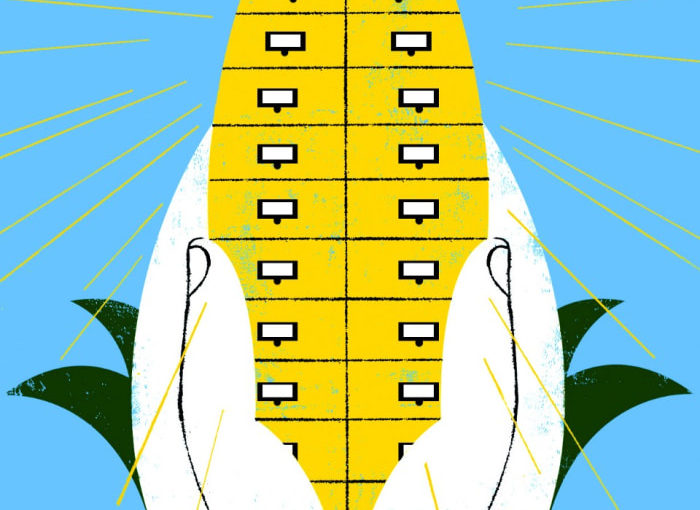
As the industry consolidates, seed libraries are emerging like a parallel universe, offering local varieties for farmers and gardeners to test out, replant, and evaluate for other local users. Many are hosted by public lending libraries — adding a new sort of story to the many already on the shelves. The seeds are often housed in small packets inside old-fashioned card catalogs rescued from storage bins when libraries went digital. These small-scale seed sanctuaries are at the forefront of efforts to sustain and nourish a diverse seed supply. The libraries operate according to basic farmer principles, almost nostalgic by now: Those who test the seeds out in their fields are expected to return the following season with a sampling of the results and notes on their performance that might be helpful to the next user.
The average age of American farmers is rising, and now stands at 58 years, while the number of farms is falling — from 2.2 million in 2007, according to the USDA, to 2.07 million in 2015.
While there are abundant studies about the importance of diversity to a thriving agriculture, there are few about the relatively recent role of seed libraries. One of those, in the Journal of Environmental Studies and Sciences by Nurcan Helicke, an assistant professor of environmental studies and sciences at Skidmore College, suggests that the libraries and other forms of open seed-sharing enhance farmers’ knowledge of seeds’ performance in local conditions and provide a hedge against the loss of precious genetic information to a homogenizing industry.
This double-pronged approach comes at a time when the pool of experienced farmers in the U.S. is contracting: The average age of American farmers is rising, and now stands at 58 years, while the number of farms is falling — from 2.2 million in 2007, according to the USDA, to 2.07 million in 2015.
The seed libraries provide an important store of knowledge that might otherwise be lost, Helicke writes, documenting and protecting such information from disappearing. Farmers’ ability to exchange and distribute saved seeds, she concludes, helps to minimize their dependence on commercial suppliers. Seed libraries are becoming repositories for our increasingly endangered genetic resources — publicly accessible and independent from the agriculture conglomerates that are becoming ever more detached from the fields where farmers plant their crops.
Open a drawer, as I did last spring at the seed library in Richmond, California, and instead of an indexed listing of books, you may find seeds for chili peppers, chard, bok choy, kale, fava beans, and locally bred peas, each accompanied by scrawled notationsof their performance in the local conditions (for example: morning fog; often indirect sun; limited water over the last three years). “We see this as a positive response to our growing knowledge of what we need to hold onto for climate resilience,” says Rebecca Newburn, an ardent gardener, middle-school science teacher, and co-founder of the Richmond Grows Seed Lending Library, housed in a corner near the magazine racks in the Richmond Public Library. “In a world in which more than half of the seeds for major crops are controlled by three companies, we’re trying to relocalize our resources.”
Even at this small scale, asserting independence from the commercial industry has put the libraries on a collision course with the powerful regimes that govern the seed trade: On June 12th, 2014, the two clashed when the Simpson Public Library in Mechanicsburg, Pennsylvania, received a notice from the Bureau of Plant Industry in the state Department of Agriculture. “It has come to my attention … that you plan to offer your patrons the option to participate in a Seed Library,” wrote the state’s seed control official. “My understanding is that patrons will be able to ‘check out’ seeds, take them home and plant them, harvest any resulting fruits, collect seeds, and return the collected seed to the ‘Seed Library’ for planting in the following season…. I believe there are some issues of seed distribution that you may not be aware of….” The letter then went on to list several statutes that the library could be violating, including the dissemination of unregistered and untested seeds and seeds that had not been officially assessed for their germination capacities.
Neil Thapar, a staff attorney at the center, said that the Pennsylvania threat was a wake-up call for them too. The seed libraries were indeed in a legal gray zone: They were disseminating seeds not authorized or tested by the states, which do so to protect consumers from seeds that might deliver a different plant than promised. But they were also not quite illegal, since they were not distributing patented seed varieties, which had gotten farmers in trouble in the past. A public pressure campaign convinced the newly elected Democratic governor of Pennsylvania, Tom Wolf, to change course in Mechanicsburg. Thapar and his colleagues went on to work with local groups to get laws passed in the Minnesota and Nebraska legislatures exempting the libraries from seed-registration laws, essentially affirming their legal status.
Seed libraries and seed exchanges may be the most important thing we’re doing for agriculture in the 21st century.
In February of 2016, the action came to a head when the Seed Exchange Democracy Act was introduced into the state legislature in California, which is home to roughly 60 seed libraries of varying size. This was the big battle, with national implications. It drew in the California Seed Association, the industry trade group, which made a vigorous effort to cripple the legislation and limit its power. But the association met resistance from a coalition of sustainable-farming advocates and farmers, including the California Climate and Agriculture Network and the Occidental Arts and Ecology Center, a hub of organic-farming experimentation.
After multiple hearings, and a last-minute standoff when the seed industry tried to narrow the bill’s scope by requiring that libraries state publicly that they would not share patented seeds — which librarians feared could scare off users, without protecting the libraries from legal liability — the bill was signed by Governor Jerry Brown last September. It took effect in January of 2017, and promises to provide a model for similar initiatives in other states. The act affirms the legal status of seed libraries and exchanges, and exempts them from registration and labeling rules governing the commercial seed trade.
According to Thapar, the bill not only gets farmers and gardeners off the hook for exchanging seeds, but, at its core, affirms an expanded definition of farmers’ relationship with their seeds. “We’re trying to redefine farmers using seed libraries. They’re not ‘consumers’ requiring consumer protection. They’re active and engaged participants in giving and using and testing the seeds.” In other words, they’re not just passive recipients of seeds from the seed companies, but are intertwined with the very process of nurturance and evolution that has been at the core of seed breeding since humans invented agriculture.
This shift in sensibility has become especially important in the face of disruptions in farm country caused by climate change — increasing temperatures; rain coming at unusual times, or not at all; diminishing fog; earlier springs; later winters. “The hottest topic among farmers now is how to position yourself knowing that you could have any kind of thing happening in any season — too wet, too dry, too hot, too cold, all in one season,” says Michael Sligh, a program director at the Rural Advancement Foundation International, which has been promoting seed diversity as a way to strengthen local farm economies.
This blog post and all media within were re-posted with permission from Mark Schapiro. For the original article Visit: Mother Jones
Stories arising from reporting by Mark Schapiro for his new book, SEEDS OF RESISTANCE: The Fight for our Food Supply, to be published by Skyhorse Publishing/Hotbooks in September 2018.
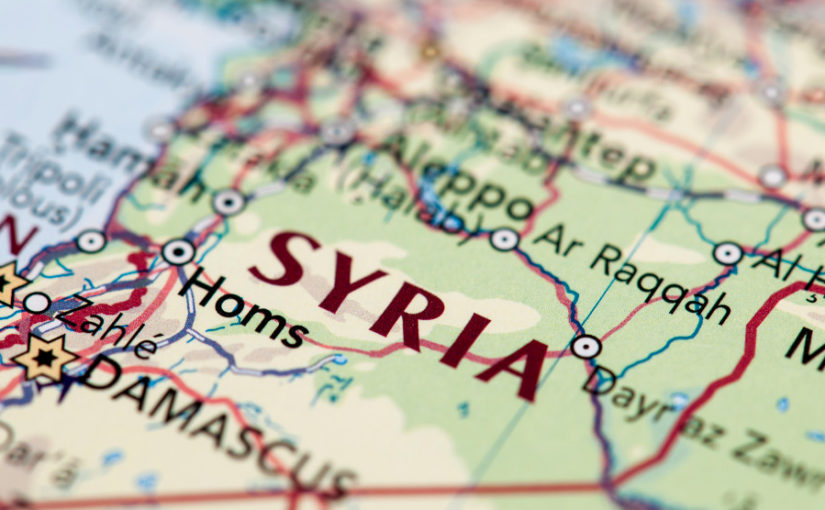
Salvatore Ceccarelli knew he was engaging in a subversive act when, in 2010, he took two 20 kilo sacks of bread and durum wheat seeds from a seed bank outside of Aleppo, Syria and brought them to Italy during a visit back to his home country. Now, seven years later, those seeds from the Fertile Crescent, the birthplace of domesticated agriculture, with thousands of years of evolution behind them, are poised to challenge the system of plant patenting in Europe, and, soon enough perhaps, the United States.
eccarelli, one of the world’s foremost seed scholars and practitioners and an honorary research fellow at Bioversity International, has consulted with governments on policies to encourage biodiversity. He has also been a leading advocate of participatory plant breeding—which, as he describes it, means engaging farmers in the process of breeding new crop varieties, rather than leaving that to the rapidly consolidating group of global seed companies.
Ceccarelli arrived in Syria in 1984 and stayed for the next quarter-century as a senior breeder and researcher at the International Center for Agricultural Research in Dry Areas (ICARDA), one of nine UN specialized agencies founded to protect regionally evolved seeds. His specialty is wheat, barley and other cereals, bred for dry and hot climates—precisely the conditions that many of the earth’s food-growing lands now face as climate change raises the temperature and disrupts precipitation patterns.
ICARDA was based in Tal Hadya, a town about 20 miles outside of Aleppo, until it was finally abandoned last year when the city became a focus of the Assad government’s brutal counter-offensive against Syrian rebels, including the Islamic State. Ceccarelli was gone by the time the last Syrian scientists were forced to evacuate, but he had ensured that at least a part of the seed bank’s legacy lives on in Italy. (ICARDA’s work continues in Morocco and Lebanon and a collection of its seeds is stored at the Svalbard Global Seed Vault in Norway).
“Within four growing seasons, the two populations growing in different parts of Italy showed significantly different characteristics, a live illustration of the adaptation process.”
n each one of those sacks Ceccarelli took from Syria were dozens of different wheat varieties. Working with a Tuscany-based NGO, the Rural Seed Network (Reto Semali Rurali, RSR) Ceccarelli arranged to have the seeds planted with a farmer in Sicily and another in Tuscany.
The RSR and a coalition of environmental NGOs from the UK, Germany, Austria, Denmark, and France went to work lobbying in Brussels, to convince the European Council of Ministers – the EU’s executive body—to amend a key provision which requires that all seeds sold in Europe be registered as single seeds with uniform, distinct and stable characteristics. In other words, each seed remains uniform and distinct from other varieties year after year, a registration requirement that is also a key precursor to what is often the next step—patenting. But this uniformity, the coalition argued, makes them uniquely unsuited to the extreme volatility in growing conditions being wrought by climate change—a hot-button question in Italy and throughout much of Europe, which has been facing record-breaking temperatures and, in some regions including Italy, a multi-year drought.
In 2014, the coalition succeeded. The EU agreed to waive those registration requirements on four crops for what it described as “a temporary experiment … for the marketing of populations of the plant species wheat, barley, maize and oats.” For the first time, populations of seeds, evolving and changing and sharing genes in the ways that plants do naturally, could be registered for sale.
The Syrian seeds have already provided a lesson in ‘Evolution 101′ on the Italian farms. Within four growing seasons, the two populations growing in different parts of Italy showed significantly different characteristics, a live illustration of the adaptation process, Ceccarelli said.
In Sicily, which receives a fraction of the rainfall of Tuscany, the wheat is maturing several weeks earlier, and is as many as two to four inches shorter than the Tuscan varieties, which, in the more moderate and moist climate, mature later and deliver more protein per plant.
“Compare the two in the same environment,” says Ceccarelli, “and it’s day and night.” Ceccarelli argues that its their diversity which gives the fields the ability to adapt to new conditions. “Explain to me how a crop that is uniform and stable responds to climate change?” he says. “Today if you are a dynamic seed company you are working on varieties for 2025. For which sort of climate? How many more degrees hotter will it be? Do they know what pests and diseases will come with the new conditions? These population mixtures are extremely dynamic, the cheapest and most dynamic way to cope with climate change.”
The experience of field inspecting a diverse population was a first for the seed inspectors in from Rome, recalled Riccardo Franciolini of the RSR. “It was interesting to see their response,” he said from the group’s headquarters near Florence. “We asked them to do the opposite of what they’re used to doing. They’re used to seeing a single variety, all the same in a field. But the idea of a ‘population’ changes the vision in a profound way.”
In June, the Italian Agriculture Ministry authorized the farmer in Sicily, Giuseppe li Rosi to sell up to two tons per year of the seeds cultivated there; the Tuscan farmer, Rosario Floriddia, could sell up to three tons per year of the seeds he had grown. The difference reflects the different yields of each of the two distinct populations, which of course had been just one single population back in Tel Hadya, Syria. At least 100 farmers are now growing the wheat from those seeds in Italy, according to Ceccarelli. The yields may not match bushel for bushel the yields of neighboring farms — many of which require intensive synthetic chemical inputs. But, he says, they’re showing “high rates of yield stability, year in and year out, which is what farmers care about.” And the bread and pastas made with their wheat are finding a budding market.
The movement is now bigger than the fields Ceccarelli seeded. The EU directive gives each member-state the right to authorize seed populations in the four designated crops. At least 20 such ‘cross-composite populations’—the technical term for them—have also received authorization from national seed authorities in the UK, Germany, Denmark and France, representing a total of about 300 to 400 tons of seed, according to Klaus Rapf, a Board Member and Adviser to Arche Noah (Noah’s Ark), a seed-saving and research institution in Austria that was part of the coalition fighting for the change. More exact totals won’t be known until next year, said Rapf, when the EU compiles all the registrations held by national authorities, in their respective languages, and releases the Europe-wide figures to the public. The registrations come after years of research throughout Europe comparing the performance and resilience of diverse versus single seed populations, including by Ceccarelli and other scientists.
The fields are now a long-running fuse that could present the first major challenge to the plant-patenting system in either Europe or the U.S., proponents believe. When the first phase of the experiment is completed, at the end of 2018, there will be an assessment of its success. The program could be expanded to other crops, sustained, or stopped.
If it continues beyond 2018, the global dimensions of the seed business suggest it would not take long for the principles to make their way into the United States, where similar research is underway. The experiment could force a reassessment of existing rules, which prioritize individual varieties. You can’t ‘patent’ a population, or at least in ways that patents are currently defined. Populations are dynamic, changing in response to changing conditions—unlike hybrids or genetically engineered seeds, the patenting of which has been the foundation for the companies that now dominate the global seed trade, and which rely on standardized regulations to export their seeds.
“What’s at stake is the very concept of ‘variety’,” said Klaus Rupf of Arche Noah. “Defining something as a ‘variety’ is an abstract concept created to defend turning a seed into a protected intellectual property, based on the notion of very high uniformity.”
Or, as Ceccarelli puts it, “We are registering and certifying something that is evolving—next year will be different. You start with one thing and you end up with another thing totally different … Yes, it is a little radical,” he said.
Keep Your Finger on the Pulse
Our bi-weekly newsletter provides insights into the people, projects, and organizations creating lasting change in the world.