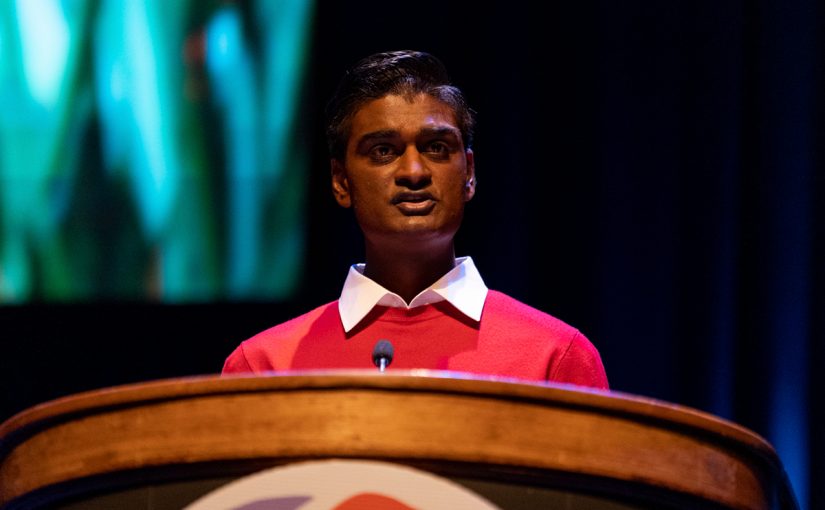
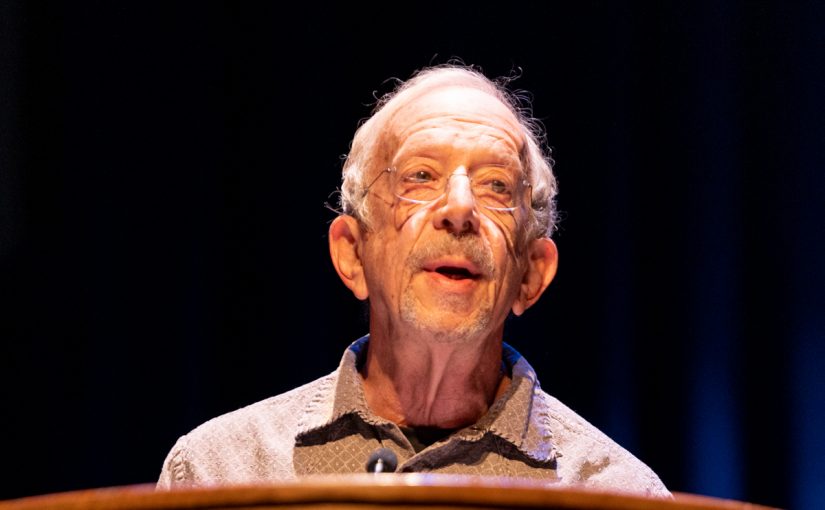
Kevin Patel, a 21-year old LA-based Climate Justice activist extraordinaire who passionately demands that youth be listened to right now, not marginalized as “leaders of tomorrow,” recounts his own health challenges growing up in heavily polluted South Central Los Angeles and insists that climate action and ending racial and class disparities have to be inseparably linked in our movements.
This talk was delivered at the 2022 Bioneers Conference.
Kevin J. Patel is a social entrepreneur from Los Angeles, CA. He founded OneUpAction International, an organization that supports and empowers youth to implement climate solutions. Kevin has created the first-of-its-kind Youth Climate Commission in LA County to amplify youth voices on the climate crisis. Kevin is a UN Togetherband Ambassador for Goal 7, 13, & 14. He is a National Geographic Young Explorer. He also serves on the Youthtopia_World : Circle of Youth Council, the Ikea Ingka Young Leaders Forum, ClimatePower Creative Advisory Board and the Environmental Media Association’s Activist Board. Kevin is currently pursuing his undergraduate degree in Political Science at Loyola Marymount University.
In this Bioneers 2021 keynote address, Nalleli Cobo, an extraordinarily effective Environmental Justice activist since she was 9, shares the story of her trajectory and challenges in fighting an oil drilling site in her neighborhood, and how local struggles relate to the larger global fight for Climate Justice.
Over the last 20 years, the Bioneers Youth Leadership and Education Program has served as an incubator for thousands of youth and educators to deepen their passion and power through self-expression, skills development, mentorship and deep relationship building within the broader community of Bioneers. The program has produced some of the most dynamic, engaging, and cutting edge programming within the Bioneers kaleidoscope and it continues to shape the work of youth movements, activism and education.
Samuel Myers, a leading figure in the study of the impacts on human health of the accelerating disruptions to Earth’s natural systems, shares the guiding principles and implications of this newly emergent, rapidly growing field, recently dubbed “Planetary Health.” Every dimension of human health and wellbeing is under threat from our ongoing degradation of Earth’s life-support systems. Planetary Health research is providing rigorous evidence that urgently stabilizing our planet’s natural systems is essential if we are going to have any chance of safeguarding a livable future for humanity. Dr. Myers explains the goals and work of the broad global coalitions around The Planetary Health Alliance (of which he is the founding director) coming together to drive home the inextricable links between human and environmental health and to develop policies and actions to protect our biosphere.
This talk was delivered at the 2022 Bioneers Conference.
Read an excerpt from Ecological Medicine, Healing the Earth, Healing Ourselves (2004, Sierra Club Books), a collection of writings from the world’s leading health visionaries, showing how human health is inescapably dependent on the health of our environment.
Whether we call it “Ecological” or “Planetary” or “Holistic” medicine, or “One Health,” the effort to expand our understanding of health and to bring into being a new form of far more effective and equitable healthcare is more critical than ever. In this collection of Bioneers media, we feature some of the leading lights of this movement, both early visionaries and contemporary luminaries, approaching this imperative from a wide range of perspectives.
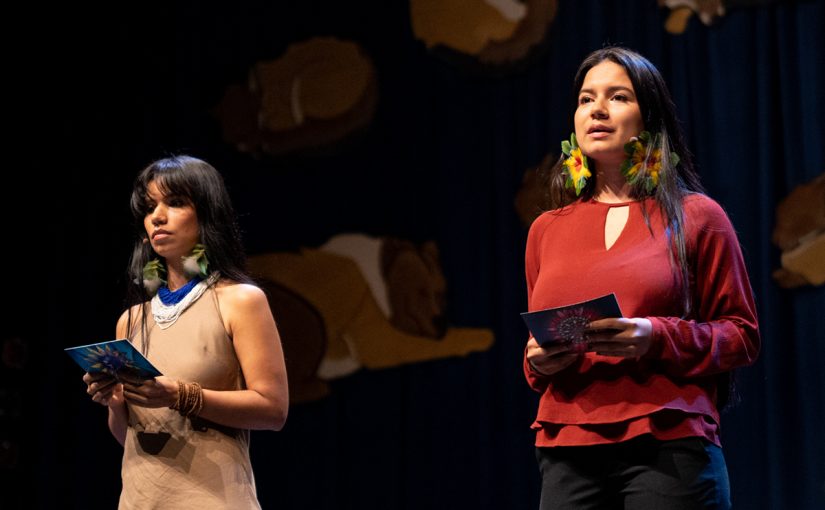
California is the world’s largest consumer of oil from the Amazon rainforest. This extraction contributes to climate change, causes deforestation, pollutes the oceans, displaces Indigenous peoples stewarding the Amazon Forest’s last remaining biodiversity, and harms people at every end of the supply chain, including the marginalized communities living in the shadow of toxic refineries right here. We honored to be able to offer our main stage to two leading Indigenous Amazonian forest-protectors, sisters Nina Gualinga and Helena Gualinga, who work closely with our friends at Amazon Watch as they appeal to Californians (and all of us) to #EndAmazonCrude and demand corporate responsibility for people and planet.
This talk was delivered at the 2022 Bioneers Conference.
Nina Gualinga is an Indigenous woman defender of the Amazon from the Kichwa community of Sarayaku in the Ecuadorian Amazon who advocates for women’s rights and climate justice. She is an international spokeswoman for Mujeres Amazonicas and the Women Defenders Program Coordinator at Amazon Watch.
Helena Gualinga is an Indigenous youth environmental and climate justice advocate from the Kichwa community of Sarayaku. She is a co-founder of Polluters Out and is a Young Women Project Lead with WECAN. Her work and story is featured in the recently released documentary, “Helena from Sarayaku,” which premiered at the DC Environmental Film Festival.
In this address to the 2021 Bioneers Conference, Nemonte Nenquimo, a leader from the Waorani community in Ecuador and a founding member of Indigenous-led nonprofit organization Ceibo Alliance and its partner, Amazon Frontlines, discusses why respecting Indigenous people’s internationally recognized rights to decide the future of their territories, cultures and lives is critically urgent for the protection of our world’s most important rainforest, our climate, and life on our planet.
For thousands of years, Indigenous peoples have protected their sacred ancestral territories in the Amazon. In this keynote address to the 2019 Bioneers Conference, Leila Salazar López, Executive Director of Amazon Watch, urges us to stand with them to protect and restore the bio-cultural integrity of the Amazon, because our collective future depends on it.
In this talk delivered at Bioneers 2022, Bioneers Co-Founder & CEO Kenny Ausubel outlines some of the issues we face and the movements growing from marginalized communities opening spaces for authentic metamorphosis.
Kenny Ausubel, CEO and founder (in 1990) of Bioneers, is an award-winning social entrepreneur, journalist, author and filmmaker. Co-founder and first CEO of the organic seed company, Seeds of Change, his film (and companion book) Hoxsey: When Healing Becomes a Crime helped influence national alternative medicine policy. He has edited several books and written four, including, most recently, Dreaming the Future: Reimagining Civilization in the Age of Nature.
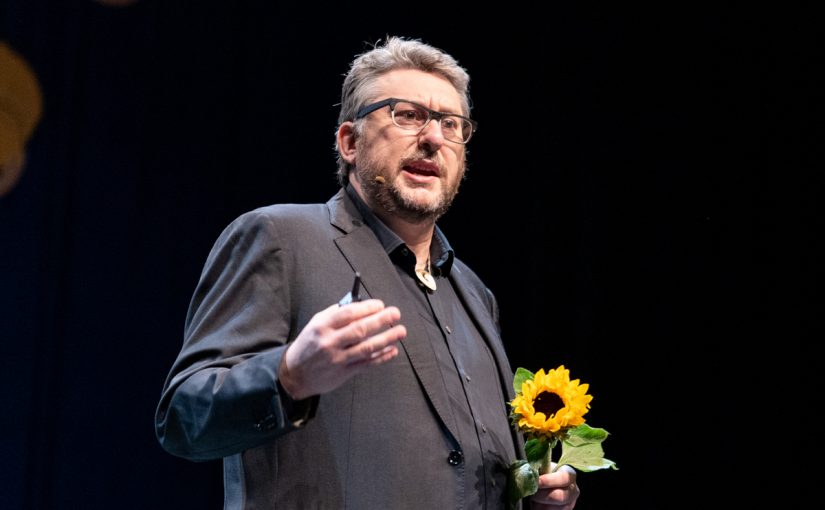
Sixteen years ago Jason F. McLennan launched the Living Building Challenge, the world’s most progressive and advanced green building program, to show that our buildings could serve as one of the key paths toward a regenerative future. Since then, numerous Living Buildings that demonstrate a better, more inspiring way of living and working have been built around the world. Although these projects create ripples of change and are living proof of regeneration in action, and in spite of these and other great models, we continue to build and live in ways that degrade the planet. Why? Jason McLennan explores why physical demonstrations of better solutions are not enough to create change when society has not grappled with its deeper systemic trauma. If we are to participate fully in regenerating the conditions for life on the planet, a deeper process of reconciliation is necessary. To heal the planet, Jason argues, we must fundamentally heal our culture.
This talk was delivered at the 2022 Bioneers Conference.
Jason McLennan, one of the world’s most influential visionaries in contemporary architecture and green building, is a highly sought-out designer, consultant and thought leader. A winner of Engineering News Record’s National Award of Excellence and of the prestigious Buckminster Fuller Prize (which was, during its 10-year trajectory, known as “the planet’s top prize for socially responsible design”), Jason has been showered with such accolades as “the ‘Wayne Gretzky’ of the green building industry and a “World Changer” (by GreenBiz magazine).
Learn more about Jason McLennan and his work at McLennan Design.
In this podcast, visionary architect Jason McLennan describes nature’s blueprint for building a better world. He designed the Living Building Challenge 2.0 to raise the bar on green building: meet or exceed what nature provides. While the standards seem impossibly high, it may be simpler than we imagined.
In this panel from the 2021 Bioneers Conference, Ben Goldfarb, Dr. Crystal Kolden, Ariel Whitson, and moderator Teo Grossman dive into what a more enlightened, effective, biophilic and biomimetic infrastructure conversation needs to look like. What will it take to turn our attention towards the rebuilding of our natural infrastructure, for the benefit of all life and human society? How can built infrastructure elegantly and respectfully engage with and support nature? The answers are not easy, but we know enough to get started – and, unsurprisingly, it often begins with letting nature lead.
This performance took place at the 2022 Bioneers Conference.
Jason Nious, a performing artist and creative director whose background with high school step teams and NCAA gymnastics launched his career, has traveled extensively with Cirque du Soleil, Usher, Stomp, Step Afrika, and numerous theatre and film productions. As founder and Director of the Las Vegas, NV-based, award-winning body percussion ensemble, Molodi, Jason designs new touring productions and facilitates Molodi’s arts education program, reaching over 20,000 students per year. He also serves as an arts integration consultant with Focus 5, Cirque du Soleil, Cleveland Playhouse, and The Smith Center; and is an Artist-In-Residence with the Museum of Dance, Education Chair of the LAB LV Theatre Company, and regularly conducts in-school residencies through the Nevada Arts Council.
The Thrive Choir, the musical voice of Thrive East Bay and the global Thrive Network (a community and movement devoted to love in action by building equitable social systems), is an Oakland, California-based highly diverse group of vocalists, artists, activists, educators, healers, and community organizers who seek to celebrate the confluence of their many cultures and identities through their music. They have shared the stage with many nationally-acclaimed “engaged” artists and leading progressive figures and inspired thousands at marches, conferences and festivals. The Choir lifts up the house at Thrive Sundays in downtown Oakland.
This performance took place at the 2022 Bioneers Conference.
This performance took place at the 2022 Bioneers Conference.
Jason Nious, a performing artist and creative director whose background with high school step teams and NCAA gymnastics launched his career, has traveled extensively with Cirque du Soleil, Usher, Stomp, Step Afrika, and numerous theatre and film productions. As founder and Director of the Las Vegas, NV-based, award-winning body percussion ensemble, Molodi, Jason designs new touring productions and facilitates Molodi’s arts education program, reaching over 20,000 students per year. He also serves as an arts integration consultant with Focus 5, Cirque du Soleil, Cleveland Playhouse, and The Smith Center; and is an Artist-In-Residence with the Museum of Dance, Education Chair of the LAB LV Theatre Company, and regularly conducts in-school residencies through the Nevada Arts Council.
Antwan Davis, a multi-percussionist specializing in body-percussion, improv actor and stand-up comedian, co-founded the Las Vegas based performance arts company, Molodi, and has performed with the Las Vegas and North American productions of Stomp and toured nationally with Step Afrika. Antwan has been performing and teaching workshops in the U.S. and internationally for 14 years.
“When you think about Black Lives Matter, when you think about the movement that has been created over the last five years, remember that our movement is about imagining a world where black folks are actually free. Imagining a world where the word poverty is a past tense, imagining a world where we don’t need handcuffs or shackles any longer, imagining a world that we all deserve to live in.” —Patrisse Cullors, co-founders of #BlackLivesMatter
In this week’s The Pulse newsletter, just days ahead of Juneteenth, we share voices from the Bioneers community — Angela Glover Blackwell, john a. powell, Kimberlé Crenshaw, Patrisse Cullors and Heather McGhee — discussing the movement for racial justice, how it has progressed, and its potential powerful future.
Angela Glover Blackwell – Transformative Solidarity for a Thriving Multiracial Democracy
True solidarity requires stitching together what appears separate into a powerful, magnificent whole. The honed, deliberate, transformative practice of solidarity produces an exhilarating recognition of our interconnectedness and interdependence—essentials for thriving democracy. Angela Glover Blackwell is a renowned civil rights and public interest attorney, longtime leading racial equity advocate, and founder of PolicyLink, the extraordinarily effective and influential national research and action institute that advances racial and economic equity by “Lifting Up What Works.” In this talk, Angela Glover Blackwell discusses transformative solidarity and why it’s necessary for a thriving multiracial democracy.
How can we, as a society, move from “othering” to belonging? What and whom does othering actually benefit? How can we expand the circle of human concern and concern for nature? How can we live into our innate interconnection to create true inclusivity and wholeness? How do we build the structures, institutions, policies, cultures and stories that will support that inclusivity? Angela Glover Blackwell and john a. powell, renowned law professor, activist, and founder of the Othering and Belonging Institute at UC Berkeley discuss these critically important, existential questions.
Kimberlé Crenshaw, Patrisse Cullors and Heather McGhee: In Conversation with 3 Racial Justice Movement Leaders
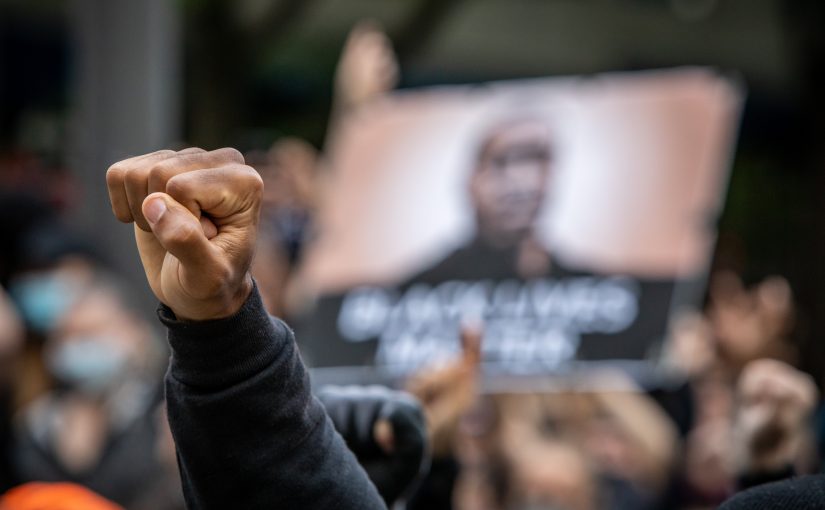
We continue to witness a national and international uprising, demanding an end to the systemic racism that has enabled the unforgivable police murder of countless black men and women. In support of this movement for change, we’re sharing a trio of short podcast episodes that address racial injustice, intersectionality, #BlackLivesMatter and more.
This week, the Othering & Belonging Institute launched its first-ever transatlantic initiative, the Democracy and Belonging Forum, a space for civic leaders in Europe and the U.S. who are committed to countering pernicious polarization by bridging across lines of difference while centering the needs and concerns of marginalized groups.
NOW AVAILABLE! Nature, Culture & the Sacred: A Woman Listens for Leadership, 2nd Ed.
We are excited to announce that the second edition of Nina Simons’ book, Nature, Culture & the Sacred: A Woman Listens for Leadership, is now on sale! Nature, Culture & the Sacred offers practical guidance and inspiration for anyone who aspires to grow into their own unique form of leadership on behalf of positive change. Join Nina on an inspiring journey to shed self-limiting beliefs, lead from the heart and discover beloved community as you cultivate your own flourishing and liberation.
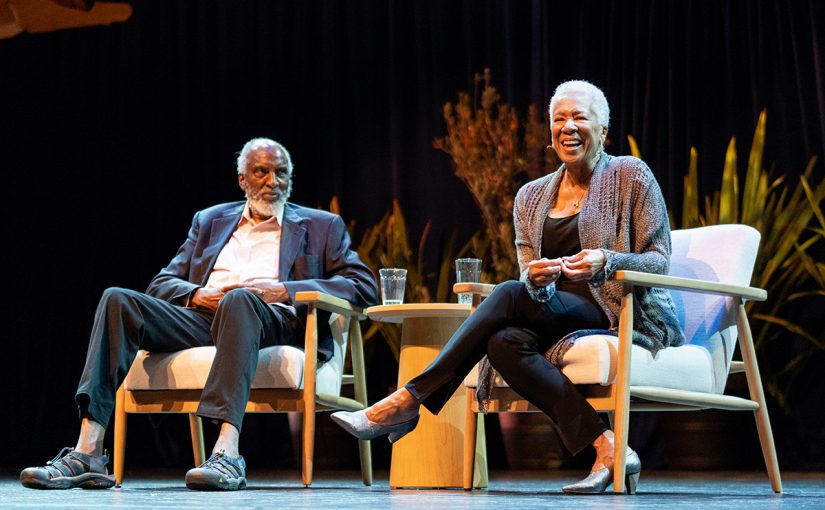
How can we, as a society, move from “othering” to belonging. What and whom does othering actually benefit? How can we expand the circle of human concern and concern for nature? How can we live into our innate interconnection to create true inclusivity and wholeness? How do we build the structures, institutions, policies, cultures and stories that will support that inclusivity? Angela Glover Blackwell, Founder-in Residence at PolicyLink, which works to improve access and opportunity for all low-income people and communities of color, and john a. powell, renowned law professor, activist, and founder of the Othering and Belonging Institute at UC Berkeley, delve deep into these critically important, existential questions.
This discussion took place at the 2022 Bioneers Conference.
PANELISTS
Angela Glover Blackwell, one of the nation’s most prominent, award-winning social justice advocates, is “Founder-in-Residence” at PolicyLink, the organization she started in 1999 to advance racial and economic equity that has long been a leading force in improving access and opportunity in such areas as health, housing, transportation, and infrastructure. The host of the Radical Imagination podcast and a professor at the Goldman School of Public Policy at UC Berkeley, Angela, before PolicyLInk, served as Senior Vice President at The Rockefeller Foundation and founded the Urban Strategies Council. She serves on numerous boards and advisory councils, including the inaugural Community Advisory Council of the Federal Reserve and California’s Task Force on Business and Jobs Recovery.
Learn more about Angela Glover Blackwell at PolicyLink.
john a. powell, Director of the Othering and Belonging Institute and Professor of Law, African American, and Ethnic Studies at UC Berkeley; previously Executive Director at the Kirwan Institute for the Study of Race and Ethnicity at Ohio State, and prior to that, founder/Director of the Institute for Race and Poverty at the University of Minnesota, has also taught at numerous law schools, including Harvard and Columbia. A former National Legal Director of the ACLU, he co-founded the Poverty & Race Research Action Council and serves on the boards of several national and international organizations. His latest book is: Racing to Justice: Transforming our Concepts of Self and Other to Build an Inclusive Society.
Judy Baca, one of the most renowned “engaged” artists of the last half-century, will be presenting a keynote speech at the Bioneers 2023 Conference. Click here to register for the conference or to learn more about the conference speakers.
In 2007, artist Judy Baca joined Bioneers for a conversation centered on her inspiration:
“That’s how I came to be a muralist. It came out of my desire to work across differences, to work with young people, and to create something that had meaning in the midst of a social revolution. I saw these young people fighting with each other at a time when they needed to join and work for the betterment of their communities.”
Judy Baca
An artist best known for her murals speaking to social justice issues, leaders, and solutions, Baca has been bridging divides and bringing communities together for half a century, but her work hasn’t seen widespread exposure until recently — a story told in a New York Times article titled “A Judy Baca Moment: ‘My Work Has Been Good for a Long Time.’”
In the article, Baca points to the rise in social justice activism and the art community’s desire to keep up with the times as reasons for her recent soaring popularity. “They are going, ‘Oh my God: We don’t have a Latina. Oh my God: We don’t have very many women. Oh my God — and then you know there’s like, ‘Get her — we click off these five things,’” she says in the article. “I mean that’s not to say that my work isn’t good. I mean no — my work has been good for a long time. And it’s been better and better.”
Baca is perfectly on-point when she says she’s been good for a long time — not just “good” as an artist, but “good” as a social-justice warrior. Working against the grain and without any expectation of praise from the art establishment, Baca has served as a sort of artistic conduit for neighborhoods and community members with something important to say. Her murals are generally the result of close collaboration — both in ideation and execution — with the people who live, play, or work near a mural site. As a result, Baca’s completed works often speak to important justice issues, but the shared creation of the works can be just as moving.
In celebration of Judy Baca’s recent, much-deserved acclaim, we’re happy to share two inspirational keynotes presented by Baca at Bioneers Conferences, alongside a handful of media further telling her story.
While working with at-risk youth to create The Great Wall of Los Angeles, the world’s longest mural, Baca realized that restoring a disappeared river also meant restoring disappeared cultures.
Caveat: Before reading this article, it is important to first acknowledge that many people living in the U.S. are not lucky enough to have a yard. For many Americans, home ownership or even renting a home with access to a yard is not possible due to race-based, intergenerational, structural inequalities.
Americans love to manicure their lawns. It is a sign of pride in homeownership deeply steeped in the “American Dream” to buy a house in the suburbs and raise a family. This “dream,” however, belies deeper, nefarious roots in settler colonization and white supremacy.
The earliest American lawns were modeled after the elaborate gardens of English and French aristocracy in an attempt to legitimize their status in the newly formed U.S. But it wasn’t until well into the 20th century that the lawn became a status symbol of escaping poverty. Americans (overwhelmingly white Americans) were able to move from crowded cities and rural landscapes to the newly formed suburbs designed to look like one continuous lawn space from house to house. Conformity to lawn care standards was, and still is, a sign that one is a “good neighbor.”
This suburban vision of America erases the ongoing structures of power, domination, and extraction that made homeownership and the accumulation of intergenerational wealth possible for (predominantly) white settler descendants. All of America began as Native land. As these lands were extracted from Indigenous stewardship, settlers drastically changed landscapes through the destruction and replacement of Native biodiversity to accommodate new economies. These new economies, including the lawn care industry, are only possible with the removal of Indigenous peoples, the enslavement of African descendants, and the ongoing exploitation of labor, typically from Latin America, and other nations that have asymmetrical economies due to the extractive practices of wealthy Northern nations. Moreover, the majority of American suburbs have a history of racist redlining to keep out people of color.
What does it mean to “Decolonize” Your Yard?
To “colonize” means to take control of land outside of state borders. Settler colonization involves displacing the original inhabitants through force and replacing them with a new population that upholds the invading state’s power. Applying this concept as a metaphor, to colonize a yard means to remove Indigenous plants and replace them with something foreign, disrupting and often destroying the original ecosystem in the process. On the other hand, “decolonizing” — or rather, “Indigenizing” — a yard means replacing invasives with Native plants local to the area. You can still decide on what plants you want and the design of your yard, which is the most fun part of gardening, in my opinion.
I also believe that a “decolonized” yard should fight back against extractive capitalism, which has led to our biggest social and environmental problems, by growing food that can be eaten year-round using organic, preferably permaculture practices. Not only is home-grown produce fresher, tastier, healthier, and more fun, but growing it yourself reduces the carbon footprint and waste associated with purchasing food at the supermarket.
I have been experimenting with decolonizing my yard for the past several years. I started by replacing water-guzzling shrubs with Native bushes along the side fence. The dirt patch in my backyard now includes a Native garden with several medicinal plants. When I was gifted heirloom corn, beans, and squash seeds last year, I tried to grow a “Three Sisters” garden, but the gophers ate the beans and squash. And, my daughter has cultivated a wildflower patch ever since she could walk.
The author’s yard before she began the process of Indigenizing it.
I am not perfect. My front yard, which I only begrudgingly mow during the wet season, has a Native oak in it surrounded by wild and invasive grasses. Someday, I hope to establish a xeriscape perennial garden there. My Native plant garden in the back contains a couple of non-Native fruit trees and plants that existed before I moved in. I also planted non-local but water-tolerant plants, shrubs, and flowers that I like for their aesthetics along another border.
While my “decolonized yard” experiments are nowhere near complete (and will probably never end), I have observed several benefits over the years.
The Benefits of Decolonizing Your Yard
Conserves Water. Ignore this point if you live in a part of the country where it rains often and consistently. According to the EPA, landscape irrigation accounts for nearly one-third of all residential water use, totaling nearly 9 billion gallons per day. And, as much as 50% of this water is wasted due to environmental conditions and inefficient irrigation methods and systems. I live in a place with some of the most expensive water in the country, where summer water bills for people who water their grass easily tops $500 a month! Why would you waste water in a place where it is scarce?
Reduces Fossil Fuel Pollution. My neighbors love to leaf blow. One neighbor of mine leaf blows several times a week (and often, multiple times a day). My other neighbor has a “lawn person” come every other Saturday morning, at which time he blows three houses around me, subjecting the neighborhood to his extremely loud gas blower for hours. One study shows that the hydrocarbon emissions from a half-hour of yard work with the two-stroke leaf blower are about the same as a 3,900-mile drive from Texas to Alaska in a Ford F 150. Gas lawn mowers are just as bad.
Reduces Chemical Pollution. As you can imagine, my neighbors also chemically poison their trees. When they ask if they can “courtesy spray” mine once or twice a year, I always say “no thanks.” (And, my trees are doing just fine without poison treatments!) Pollutants in the form of pesticides and fertilizers harm the environment and web of life as these chemicals make their way into the groundwater. My neighborhood has a serious problem with peoples’ pets dying of poisoning (vet confirmed) from eating small mammals that have ingested concentrated amounts of “yard maintenance” poison from their food sources. If peoples’ dogs and cats are dying of this, so likely are the wild animals that we share our community with. If that’s not convincing enough, Americans have an average of 43 different pesticides in their bloodstreams according to the U.S. Centers for Disease Control and Prevention.
The author’s yard today.
Reduces Noise Pollution. The noise pollution emitted by leaf blowers and lawn mowers also deeply disturbs ecosystems. I observed that my neighbor who blows every day has practically no birds in his yard, while my yard hosts several species. Decolonizing your yard involves a responsibility to make a habitat that is welcoming to insects and animals who rely on audio cues to find food, avoid danger, mate and eat. Loud noises from garden tools drown out natural sounds and stress wildlife, threatening their survival and the stability of animal populations. On a broader scale, a meta-study in the Royal Society suggests that human-caused noise pollution negatively affects every kind of animal, and even plants, across the planet, contributing to the human-caused 6th mass extinction.
Invites Animals. If you want to attract certain species, your yard needs to have the plants that they eat (or that provide the food for their prey). I have carefully selected plants to optimize the variety of types of birds that come to my yard as well as insects. I was thrilled last summer when I saw a California Mantis for the first time in the wild, in my garden! In addition to planting flowers that attract endangered bees and other pollinators, I love watching the annual ladybug hatching season.
Controls Animals You Don’t Want. My neighborhood has a huge gopher problem. When I planted a Native garden in my backyard, I noticed that the gophers stopped coming up there, yet they persisted in digging up holes throughout my front yard, which still has the grass they like to eat. My theory is that the Native plants have evolved alongside the gophers in a kind of an arms race to adopt traits that make themselves not tasty for gophers. Remember those ladybugs I mentioned? They love to eat the pests that go for my food garden. It’s a win-win situation.
Educates About Indigenous Peoples. As I began my journey to replace invasives with Native plants, I had to learn what these plants are, and in what kind of conditions they grow. I found it fun to plan the textures, shapes and colors that would be side-by-side in the backyard. As I was researching, I also took note of how each plant might be useful to insects and animals, including humans. Whenever possible, I tried to learn about the plants from Indigenous knowledge systems, the more local the better. In the process, I learned more about whose ancestral territory I inhabit, how this tribe cultivated the wild, and also about knowledge that was lost throughout the brutal California genocide.
Provides Food and Medicine. I have been playing around with different kinds of vegetable gardens over the years. I am admittedly not very good at it, but each year I have some kinds of fresh veggies that can be picked to add to our meals. Last year, my cherry tomato bush went perennial. So, in addition to my tomatoes tasting far better than store-bought, I didn’t have to buy tomatoes at the store anymore. I also deliberately grew several plants that can be used to treat various ailments used in dried forms in tea. (I also learned that it takes a lot of time and effort to harvest and dry these!)
Offers a Way to Be In Harmony With Nature. Having a yard with Native plants has been so fulfilling. As someone who started with a “black thumb,” I have learned so much about plants and how they interact with insects and animals. But perhaps the biggest benefit that I have gleaned from this process is time spent outdoors observing nature and the joy of watching the plants grow. Better yet, I included my daughter in all these activities, and now she has a deep and abiding love for nature.
Join the Movement to Decolonize Your Yard! Will you join the movement to decolonize YOUR yard? Like me, you don’t have to be good at it. You don’t have to do it all at once. And, you don’t need to virtue signal or take the moral high ground over people with conventional yards. All you need to do is start with one of the following suggestions:
Get a water catchment system
Make your irrigation system more efficient
Replace invasive plants with Native plants.
Make a garden for yourself.
Make a garden for neighbors in your own yard or community space.