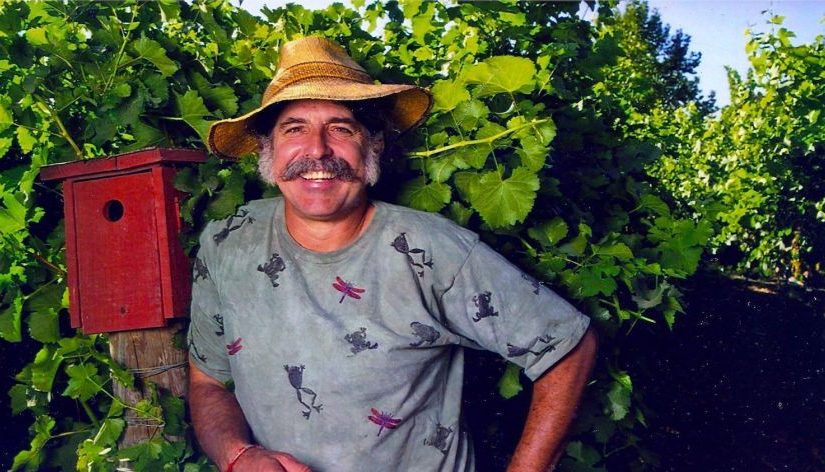
The last time I saw Amigo Bob Cantisano was January 2019 at the Eco Farm Conference. His once imposing physical presence had grown frail from a 7-year battle with cancer, but his spirit remained big and bright. He talked about a drought resistant strawberry variety and how Kate Wolf, the iconic folk singer of the 1970’s and 80s, showed him the inspiration for her song the Lilac and the Apple Tree.
The old abandoned apple tree of the song led Bob to discover the lost botanical treasure of the Sierra foothills. 151 years ago, Felix Gillet emigrated from France to Nevada City, CA and imported agricultural and ornamental plants from 40 countries. He operated a nursery and bred and propagated hundreds of varieties of plants and became known as the Godfather of West Coast perennial agriculture. Most of the nuts, fruits, grapes, and berries that are commonly grown in the US today can be traced back to Gillet’s efforts. But the remains of his work were almost lost. Over the years, Bob and his cohort discovered unknown varieties of hundred-year-old fruit and nut trees in wooded areas and abandoned orchards–some 200 sites–took cuttings and have made them available through the Felix Gillet Institute founded by Amigo Bob and his wife Jennifer Bliss.
As I was leaving Bob, I kissed his hand and he said, “I hope to see you again.” Not a casual comment from someone who knew his days were running short. He died on December 26, 2020.
Amigo’s life was a series of firsts that were not only personal breakthroughs, but also widened the field of learning and opportunity for anyone interested in organic agriculture.
In 1970, as a 19-year neophyte organic gardener attending the First Earth Day Celebration, Amigo heard a talk about the hazards of pesticides, which sparked a deep interest in food. He started a food buying club with his friends in Truckee, CA that evolved into the first natural foods coop in the area. Seeking out and buying from the small number of organic growers in his region and beyond made him realize that he wanted to be a farmer. The coop eventually developed into a distribution company which, after Bob left, was the forerunner to United Natural Foods, today a $20 billion distribution company.
At one point, Amigo rented a 15-acre walnut orchard and went to the local ag extension agent for advice. The agent “brainwashed” Amigo into believing that it was impossible to grow walnuts commercially without using harsh chemical sprays. The advice went against Amigo’s organic instincts, but he wasn’t sure what to do. One day, unannounced–in what Bob described as a “miracle”–Bill Barnett from the University of California showed up at the orchard. Bill was in the process of writing an Integrated Pest Management Manual and needed an orchard that wasn’t sprayed. They found a number of beneficial insects in Amigo’s orchard and began a trial. The trial was a success resulting in an abundant walnut harvest without using any chemical sprays. Amigo’s orchard became a university biological pest control test site where they introduced a wasp from Iran that preyed on aphids, a serious pest problem for walnut growers. Introduction of the wasp effectively controlled the aphid problem without chemical sprays and as result UC researchers spread the wasp in other areas and in four years it eliminated the walnut aphid problem.
Amigo Bob was a founding member of CCOF (California Certified Organic Farmers) in 1973. Prior to national organic standards when each state had a different standard (and some states had no standard), CCOF was the gold standard for organic certification.
Frustrated with the lack of availability of organic inputs, he ordered a boxcar of rock phosphate with borrowed money. 1600 50-pound bags had to be unloaded by hand. With the hundreds of extra bags of rock phosphate that he didn’t need for his farm, he started Peaceful Valley Farm Supply.
More and more, his time was taken up answering questions from desperate new organic farmers about problems they were having in the field. He ultimately sold the supply business and went into consulting. Initially he was the only organic farming consultant in California, perhaps in the country. His influence grew; his clients farm 90,000 acres or organic and transitioning to organic crops.
Perhaps his biggest legacy is as founder of the EcoFarm Conference. Started in 1980 as a meeting of 60 organic farmer comrades, it has grown to a gathering of celebration and education of over 1800 farmers, gardeners, food producers, consumers and aspiring farmers–the largest organic farming conference in the western states.
Bob continued farming on his 11-acre farm, Heaven and Earth on the San Juan Ridge of the Sierra Nevada growing a diverse mix of fruits and vegetables and teaching apprentices how to farm organically.
As an example of how farming organically changes a farmer’s perspective, Amigo once told me about a time when he was standing in a field of a farmer who was transitioning to organic. The farmer, who once thought only of what life-destroying chemical he would spray next, had awakened to life, excited about the eagle circling above his land.
Aldo Leopold wrote in A Sand County Almanac, “Land, then, is not merely soil; it is the fountain of energy flowing through a circuit of soils, plants, and animals. Food chains are the living channels which conduct energy upward; death and decay return it to the soil.”
Amigo Bob Cantisano understood those truths and worked towards an agrarian system that embodied them in the consciousness and the footprints of farmers.
Even in his death, Amigo continues to be a pioneer. His body will be composted in one of the world’s first human composting facilities, reminding us that, ultimately, we all will become compost. As Amigo Bob Cantisano returns back to the earth, his DNA will carry the fertile stories of hundreds of farms whose land was better cared for, more respected and more alive thanks to his tireless dedication to and his depth of empirical knowledge of organic farming.
To the almost lost fruit trees of the Sierra foothills and their descendants scattered around the country, he is a heroic ancestor who rescued their noble lineage from oblivion.
To the tens of thousands of organic farmers who once worked in lonely fields, he was the leader who gathered kindred spirits from all directions and started a movement that made them smarter, more enriched, and more skilled.
His leadership filled in the gaps in a fledgling organic movement and he remained committed and vital to that movement for 50 years. He touched many lives and healed the land.
Special thanks to Kate Sabiston, Mackenzie Feldman, Bridget Gustafson, Arianna Maysonave, Aliza McHugh, Asha Culhane Husain, Lila Cooper and Katelyn Mann
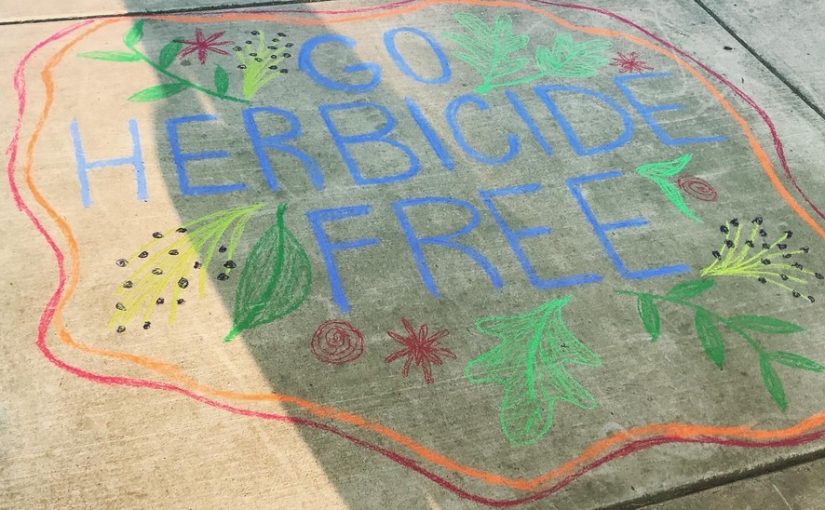
Recall the early days of quarantine. As everything changed around us, society began to shift drastically. Activists, including the team at Herbicide-Free Campus (HFC), watched the crumbling of our regulatory bodies intensify and public spaces shut down. HFC’s student fellows left campuses across the country to return home, uncertain about when they would return. In spite of the chaos, communities united to fight for change and explore new ways of adapting. COVID-19 has spotlighted many issues, including social inequities, environmental racism, public health concerns, and feelings of isolation and immobility. The mental and physical safety of our community members have come into the collective conscience in an unprecedented way. With an impending transfer of political power, space has opened for us to push for inclusive and progressive action.
As society begins to prioritize health, Herbicide-Free Campus’ mission of stopping the use of herbicides on school grounds and advocating for a transition to organic land care maintenance is increasingly relevant. We ask ourselves: “How can we as an organization utilize this moment to challenge our conventional public health and aesthetic values for the sake of our groundskeepers, students, and all those who walk and use school campuses?”
Schools are supposed to be safe havens, charged with creating healthy environments for their students, staff, and faculty. In the wake of COVID-19, moving online to protect the health of campus communities has become the priority. However, the administrations of these institutions have historically failed to address the harm of spraying toxic chemicals, which calls into question the very notion of safety. By continuing to spray synthetic herbicides, which are linked to dire human and ecological health consequences, schools undermine their efforts to protect the people who have access to campus this semester. Exposure to glyphosate alone has been linked to such health conditions as severe kidney damage, lung cancer, reproductive harm, neurological diseases, non-Hodgkin’s lymphoma and asthma. The CDC reports that people who are immunocompromised have serious heart conditions, liver disease, lung disease, asthma, and chronic kidney disease are at higher risk for COVID-19 – a tragic parallel.
Public health and safety have risen as paramount issues during the pandemic, but what will happen when students return to school? Will safety still be of the utmost importance? The pandemic teaches us that human health is precious; thus, in the post-COVID era, we must uphold even more stringent standards for public and environmental health. Herbicide-Free Campus is committed to upholding a new caliber of safety, and only through ending the use of toxic pesticides in public green spaces can we truly achieve that goal.
In addition to inquiring about the true definition of safety, we ask: “Who has the privilege to be safe?” At Herbicide-Free Campus, a primary focus is to illuminate the work of on-campus groundskeepers. This was in large part inspired by our HFC advisor, Dewayne “Lee” Johnson, a former groundskeeper who developed cancer following undue occupational exposure to a glyphosate-based herbicide. We highlight groundskeepers, uplifting their health and wellbeing through reducing the occupational risks they face by going into work each day. This is done, perhaps most obviously, by reducing their use of and exposure to herbicides. Johnson states, “There are several different ways to handle this problem without the use of any chemicals at all… My job as a pest controller was to educate and to make the grounds safe for the kids, parents, and staff. I still feel that responsibility to share what I’ve learned to protect people from harm so nobody else has to suffer as I have, especially a child who’s just trying to go to school, play, and learn.”
Groundskeepers, landscapers, and farmworkers, who are predominantly workers of color, are asked to mix, handle, and apply herbicides to kill weeds. This highlights the disproportionate risks assumed by these racial minorities while on the job. Consequently, the carefully manicured grass that is a cornerstone of many campuses comes at the expense of groundskeepers taxed with undue chemical exposure on the job, begging the questions: Why are their lives considered less valuable than the lives of the students and faculty schools are trying to protect? Why do institutions of higher education prioritize campus aesthetics over the health and safety of their workers?
HFC strives to engage with and support groundskeepers as individuals through on-campus weeding work days, during which students and community members work hand-in-hand (or more accurately, weed-in-hand) with campus grounds crews. This has implications beyond just protecting groundskeepers’ physical safety. When reflecting on work days, one of UC Berkeley’s groundskeepers shared that he hoped that as students met the folks caring for and maintaining their campus, they would be less likely to throw trash on the ground, thus developing a deeper respect and appreciation for both the land they learn on and the people tending to this land.
We stand at a great juncture of potential change. This unprecedented moment in which most students remain off campus in virtual learning, or are leaving campus for long holiday quarantine periods, is an opportune time to rethink campus green spaces. Schools are often concerned with perfectly manicured grounds, yet with the ‘aesthetic bar’ no longer of utmost importance due to pandemic-induced empty campuses, it simultaneously mitigates the need to spray while also creating the space to gain a new perspective on weeds. Weeds are traditionally seen as blights; however, if communities established a culture that instead embraced biodiversity and strengthened the existence of native plants, there would be no need to apply toxic chemicals. The pandemic provides the opportunity to start the long-term transition from conventional to organic grounds management.
This time of radical changemaking creates the ability to shift the status quo and influence collective mindsets. The transition to organic land management is more feasible at a time where students are not on campus, as the process of transitioning prohibits students from traversing the lawns so that groundskeepers could conduct aeration, compost tea application, and overseeding. Herbicide-Free Campus offers resources to facilitate this transition by connecting schools with experts like Chip Osborne, who can offer remote guidance in initiating the organic land care transition process.
Through our transition to remote activism, HFC has turned to new avenues to support at-risk workers. Our focus has shifted from in-person organizing to building awareness online. Although we are unable to collaborate face to face, online spaces have become communities of their own that enable us to rally student and public support. Operating remotely has also facilitated students in more effectively communicating with school administrators; Online meetings have become the new normal, with staff more equipped and willing to connect with students via Zoom. Similarly, Board of Regents meetings are held online as opposed to in person, making student participation more accessible. These opportunities expand our ability to discuss the critical problems we seek to reform. The coronavirus has disrupted the conventional way we advocate, but it has neither dulled our motivation nor our ability to do so.
Now is the optimal moment for schools to prioritize health and social justice. Students have the responsibility and privilege to enact a cultural shift around land care, in addition to advocating for workers’ rights. While students have the choice to remain home, groundskeepers do not. Ultimately, amidst the chaos and uncertainty, COVID-19 is a catalyst for positive change, providing the room to establish a new standard in the protection of human and environmental health.
Join us in this movement today; find or start a campus campaign, sign up for our newsletter to receive action updates, and donate to support our work.
There are periods when history comes to a boil – when powerful forces of both destruction and creation result in massive social change. In 2020, the Black Lives Matter Movement emerged as the biggest protest movement in American history, and resounded worldwide.
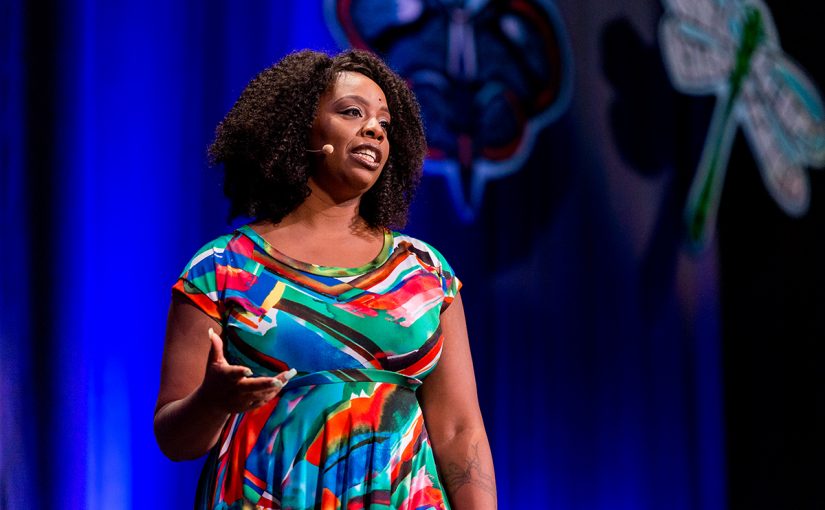
Patrisse Cullors, one of the co-founders of Black Lives Matter, tells the story of the birth of this powerful movement for racial justice, and shares her vision of a world where black people are actually free, a world that we all deserve to live in.
Patrisse Cullors, a performance artist and award-winning organizer from Los Angeles, is one of the most effective and influential movement builders of our era. She was a key figure in the fight to force the creation of the first civilian oversight commission of LA’s Sheriff’s Department, but is most widely known as one of the three original co-founders of Black Lives Matter and for her recent, best-selling book, When They Call You a Terrorist: A Black Lives Matter Memoir.
Credits
Executive Producer: Kenny Ausubel
Written by: Kenny Ausubel
Senior Producer and Station Relations: Stephanie Welch
Host and Consulting Producer: Neil Harvey
Program Engineer and Music Supervisor: Emily Harris
This is an episode of the Bioneers: Revolution from the Heart of Nature series. Visit the radio and podcast homepage to find out how to hear the program on your local station and how to subscribe to the podcast.
Subscribe to the Bioneers: Revolution from The Heart of Nature podcast
Transcript
NEIL HARVEY, HOST: No one can say exactly why, but there are periods when history comes to a boil – when powerful forces of both destruction and creation result in massive social change – a historic time of revolution and evolution.
PROTESTORS CHANTING: No Justice, No Peace, No racist Police!
HOST: 2020 marked a high tide of serial events since 2012 that crystallized for all to see the systemic racism ravaging Black communities and tearing the US apart.
It was certainly not news for Black communities and communities of color, who have long endured, resisted and fought to overcome the daily injustices and routine state violence. But for White America, this consciousness of the African American experience reached a historic tipping point.
Perhaps it was the ubiquity of cell phone cameras that graphically showed the staggering volume of chronic police violence against Black communities.
Perhaps so many people sheltering in place against COVID-19 now had the time and space to actually pay attention.
Or perhaps it was the public’s radicalization at this head-spinning political backlash against the nation’s first Black President and the change that so many Americans hoped had finally come to a nation that within a generation would have a majority minority population.
Whatever forces of history may have converged, the Black Lives Matter Movement had emerged as the biggest protest movement in American history, and it was resounding worldwide.
Patrisse Cullors spoke at the 2018 Bioneers conference…
PATRISSE CULLORS: In 2013, Alicia Garza, Opal Tometi and I co-created and gave birth to Black Lives Matter. [APPLAUSE] We were super clear on a few things. One, this movement wasn’t a movement about black Americans only. This movement was a global movement, and that was incredibly important that we connected ourselves to a larger diaspora, because anti-black racism isn’t a US phenomenon, it is a global phenomenon. The second thing is we were super clear that Black Lives Matter was about all black lives. It was about black women, black queer folks, black trans folks, black people with convictions, black people who were incarcerated, black people with disabilities. We were not building a movement just for heterosexual cis black men. [APPLAUSE] We were building a movement that could combat patriarchy and homophobia and transphobia. We are building a movement that can have an honest conversation about climate change. We’re building a movement that can have an honest conversation about what justice really looks like to our communities. We were building a movement that was unapologetic about being abolitionist.
And when we created Black Lives Matter, we weren’t on a conference call. We weren’t at an organizing strategy meeting. Each of us were in separate places, watching the verdict of George Zimmerman. We all remember that day – July 13th, 2013 – waiting to hear for some sort of justice for Trayvon Martin, and really some sort of justice for black people, here in the US but also around the world. And instead, what we received was not guilty verdicts. Over and over again I read on my social media feed, not guilty, not guilty, and eventually not guilty of all charges.
HOST: Patrisse Cullors had long been working as an organizer to end mass incarceration and state violence against Black Americans. She founded the group Dignity and Power Now to bring forth a truly Restorative Justice to create both justice and healing for incarcerated African Americans, their families and communities – and to change the structural inequality baked into the system itself.
A year into that work, the murder of Trayvon Martin shocked the nation. Just 17, the Black boy was killed because he looked “suspicious” to an armed neighborhood watchman, George Zimmerman, even though Martin had nothing on him except a pack of Skittles and an iced tea from a walk to his local store.
PC: And I was sitting in Susanville, a small prison town, 11 hours north from Los Angeles, visiting one of my mentees, who actually just received 10 years, 85% time, for never harming a human being. And I’m watching this verdict of someone that we know killed this little boy. There was no question about that. And then also sitting in this prison town, knowing that my mentee deserved to be free.
And I had this moment of first shock, second rage, third despair, and then fourth: What are we going to do about it? [APPLAUSE] And as I was scrolling through my social media feed to figure out who I was going to talk to, how we were going to show up, what was the next step, I came across Alicia Garza’s post. And she had written a love note to black folks, and in that love note, she had closed it off with Black Lives Matter. And I remember looking at those three words and saying, That’s it. That’s it. That’s what we’re going to do.
And I put a hashtag in front of it. And Alicia said, Well, what’s that? [LAUGHTER] And I said, We’re going to make this thing go viral. And within that year, it wasn’t social media that made Black Lives Matter go viral, it was three black women. [APPLAUSE] It was black women and the community of black women and queer folks and trans folks that believed in those three letters, believed it so deeply and so profoundly, and we organized around it. We showed up for it. We talked to people about it. We talked to our own family members about it.
And I remember that first year. Right? That was the year that Obama was in office, and many folks said, Well, we don’t need Black Lives Matter. Why would you say that? You have your black president. It’s all over, guys. [AUDIENCE RESPONDS] And our response was we need Black Lives Matter more than ever.
HOST: The ground truth was that the US was not remotely a post-racial society. Instead, the election of Barack Obama had ignited a brutal racist backlash.
In 2014 during Obama’s second term, in Ferguson, Missouri a White police officer named Darren Wilson fatally shot Michael Brown Jr., another young Black man who like Trayvon Martin was unarmed.
The massive spontaneous protests that erupted in the St. Louis suburb were met by overwhelming militarized force by police and the Missouri State Highway Patrol. Many observers compared it to an occupying army.
NEWS ANCHOR: Police departments in the St. Louis area like those across the country are arming their officers with equipment once on the battlefields of Iraq and Afghanistan.
ST. LOUIS PD: This is the Police Department, you must continue to disperse peacefully, or you will be subject to arrest and/or other actions.
CHANTS: Hands up, don’t shoot!
HOST: A St. Louis grand jury declined to indict Wilson, and four months later, the US Department of Justice acquitted him, claiming he acted in self-defense.
Once again, cell phone cameras showed otherwise, as they would keep doing in what seemed like an unending national nightmare of serial police murders of Black citizens.
CHANTS: Justice for Michael Brown!
HOST: Time after time, there was little or no accountability for the officers, who were either not charged, charged with lesser offenses, or acquitted.
Ferguson became another tipping point – both in the national consciousness and for the Black Lives Matter movement.
PC: And there was this moment for many of us, in those two to three days that Mike Brown is not just murdered, he’s also left on the concrete for four and a half hours, humiliated in front of his family and his community. And then when the family and community decided to grieve, the way we know how to grieve, right, for black folks protest is grieving. And so folks go out, they hold a vigil, they hold a protest, and instead of receiving care, instead of receiving dignity, instead of receiving love, they’re met with rubber bullets, they’re met with tear gas. And I’m watching, again, on social media, another tragedy.
And I called a few friends up. I said, What are we going to do? This can’t keep happening in this way without a public response, without public outrage. And so, Darnell Moore and I organized 600 black folks to travel from across the country, including Canada, to St. Louis for three days. We called it the Black Lives Matter ride.
And we had two specific goals. The first goal was to show up and just be present, just let folks know that we’re here, we’re here for you, whatever you need. And the second was that we were going to go home and organize. We weren’t going to allow the media to make it seem that Ferguson was an anomaly. We believe that Ferguson was Oakland, Ferguson was Los Angeles, Ferguson was Detroit, Ferguson was Baltimore, Ferguson was every single city where black people existed and were under the lynchpin of state violence and law enforcement violence.
And this became an incredibly important moment for Black Lives Matter, because it’s the rise of what is now a global network of 40 chapters across the globe. We’ve seen Black Lives Matter be used across Latin America. We’ve seen it used at – Yes, shout out! – we’ve seen it used in South Africa. We’ve seen it used in Amsterdam and Australia.
And so as we continued to develop and get stronger and bolder, 2016 happened. And I remember 45, because I don’t say his name, being told that he was the next president of the United States, and I had a similar reaction that I did in July 2013, a reaction of shock, grief, despair. And I remember sort of holding my body and crying, and a good friend of mine leaning over and rubbing my back and saying, We’re going to be okay. And I remember saying to him, No, we’re not. We’re not going to be okay.
And I started to plot my escape from the US. [LAUGHTER] No lie, y’all. [APPLAUSE] Really and truly started to look up other places, where I’m going to take me and my 2 ½ year old, what are we—It’s a wrap. And I’m an organizer, born and raised an organizer, so that was like a couple weeks of me going down a rabbit hole of trying to escape, and rather quickly pulled myself back up and said, Alright, it’s time to fight. It’s time to fight. [APPLAUSE]
HOST: Patrisse Cullors spent the next two years exploring how to move forward with the growing Black Lives Matter global network, and with other organizations and community members.
In 2018, she published her bestselling book: When They Call You a Terrorist: A Black Lives Matter Memoir where she described the impact state violence has had on her life.
the federal government and police departments sought to brand the growing movement as a terrorist organization, conducting widespread surveillance on the overwhelmingly peaceful protesters and organizers exercising their civil rights.
It was a well-worn playbook reminiscent of the 1960s when FBI Director J. Edgar Hoover labeled the Black Panthers a terrorist organization and brought the full force of militarized federal repression against Black activists as well as their White allies, planting provocateurs, and carrying out political murders.
CHANTS: I can’t breathe, I can’t breathe!
HOST: When we return, the head-spinning cascade of events that would propel Black Lives Matter to become the biggest protest movement in American history, and Patrisse Cullors’ vision for what Black Lives Matter is fighting for…
This is “Bending Toward Justice”, on The Bioneers: Revolution From the Heart of Nature.
In the years leading up to 2020, there was a rising national movement to remove Confederate monuments and flags that, to many people, glorified white supremacy. The momentum radically accelerated following the Charleston AME church racist mass murder of Black parishioners in 2015, and the Unite the Right rally in Charlottesville, Virginia that led to the killing of the peaceful protester, Heather Heyer [pronounced HIGHER], by a White Supremacist.
Then came the killing of George Floyd.
PROTESTORS CHANTING: Take your knee off our necks…
HOST: On Memorial Day 2020, the gruesome on-camera police murder of George Floyd convulsed the nation and world. Witnesses filmed officer Derek Chauvin pressing his knee on Floyd’s neck for an agonizing 8 minutes and 46 seconds while calling for him to stop. Within minutes, the world was able to see the policeman’s casual cruelty and cold arrogance of power. All for Floyd’s allegedly passing a counterfeit $20 bill.
Peaceful, cooperative and unarmed, Floyd cried out more than 20 times that he couldn’t breathe.
George Floyd’s murder ignited people worldwide to protest and demand justice.
PROTESTORS CHANTING: Black lives matter, Black Lives matter…
HOST: Patrisse Cullors spoke at a rally in Los Angeles.
PC: We’re living in the middle of an uprising…35 cities yesterday and counting are uprising. We’re uprising not just for black death, let’s be real clear. We are uprising for black life!
Somewhere between 15 to 26 million people took to the streets in the US. Polls estimated 104 million Americans now voiced their support for Black Lives Matter. They came from all walks of life and generations.
NASCAR’s only Black driver Bubba Wallace raced in his car emblazoned with Black Lives Matter. Astoundingly, NASCAR banned the display of Confederate flags, as did the US Navy.
Small predominantly White towns that had never before had protests marched to proclaim that Black Lives Matter.
As Martin Luther King Jr. III commented:
MARTIN LUTHER KING JR, III: I’ve never seen anything quite like this in my life. We’ve never seen a large number of white people who are taking a knee and apologizing for 400 years of mistreatment of black people. So there’s a different energy this time than ever before.
HOST: The demands were no longer only for police accountability, or getting rid of so-called “bad apples.” Where just a few years earlier, the term “systemic racism” had been confined to activists and academics, now it was center stage everywhere.
Patrisse Cullors and others called on cities to shift a proportion of funds away from law enforcement and toward essential social services that are often underfunded.
She discussed the issue with NBC’s Late Night host, Seth Meyers.
PC: If anybody has time, they should look up their city budget, it’s public. And what they will come to realize across every major city and I argue small cities as well, the majority of the budgets are made up as a law enforcement budget. And what we start to realize so much in our communities that are divested from, that have little access to health care, educational opportunities, access to jobs and healthy food, is that our city governments are using our tax dollars to primarily pay for an economy of punishment over an economy of care.
HOST: The city of Los Angeles reallocated $150 million of the LAPD’s 2 billion dollar budget to provide services and programs for communities of color, including a youth summer jobs program. Other cities followed suit. The new trajectory was toward addressing grave economic injustice and to create jobs, businesses, housing, social services, education, health care and mental health care.
When Patrisse Cullors spoke at the Bioneers conference in 2018, she could not have known all this was about to unfold. But that did not matter – she did know she had to bend the arc toward justice in the centuries-long lineage of the fierce struggle by Black people and their allies for freedom, equal rights and equal justice all over the world.
She had a vision not only that this kind of transformation was possible – but that so much more was possible…
PC: How do we – yes – respond to the terrible, terrible crimes against humanity? And yet also how do we build a vision, a vision where we can imagine black people living, black people thriving, where part of the work that we’re doing is not just responding to our death, not just responding to the harm against us, but actually developing something that has the ability to raise my child, to raise my child’s child, and his children’s children. And what does that vision actually look like? What does it feel like? What does it smell like? What does it sound like?
Part of our work, all of us in this room, is not just about tearing things down. We know that. But what are we building and what are we building towards?
And so I just want to ask the audience for a couple of minutes to humor me.
Close your eyes. Put your hands on your legs or beside you, and take a moment to imagine that we are living in a different time, to imagine we are living in a moment where all of our needs are met. Every single human being that we interact with is not suffering. Instead we are led with joy. And take it a step further, and imagine what you would want your community to look like, what it would sound like. Listen to those sounds. Honor them. And take it a step further and imagine what would be built around your community. Imagine that every single jail and prison no longer has a place there. And instead there are homes for everyone, community for everyone. Good, healthy food for everyone. And take it a step further, and imagine that healthcare is no longer a big business. That we have now entered a world where we get our physical and emotional and spiritual needs met, that we, yes, can go to professionals, but we also have access – the parts of us that know how to heal ourselves.
And take it a step further, where women no longer have to fight for autonomy of our bodies, where folks who are trans survive past 35. And just hold that right now, in this moment. Hold that feeling. Hold how special that vision is. And as you slowly open your eyes, take the time, every single day, to remember that vision, to remember why we fight so hard. We’re not fighting so hard because we want to fight so hard. We’re fighting so hard because we have a vision. We have a vision for what we deserve, for what every single human being, animal being, plant being deserves.
And when you think about Black Lives Matter, when you think about the movement that has been created over the last five years, remember that our movement is about imagining, imagining a world where black folks are actually free. [APPLAUSE] Imagining a world where the word poverty is a past tense, imagining a world where we don’t need handcuffs or shackles any longer, imagining a world that we all deserve to live in. Thank you so much, Bioneers. [APPLAUSE]
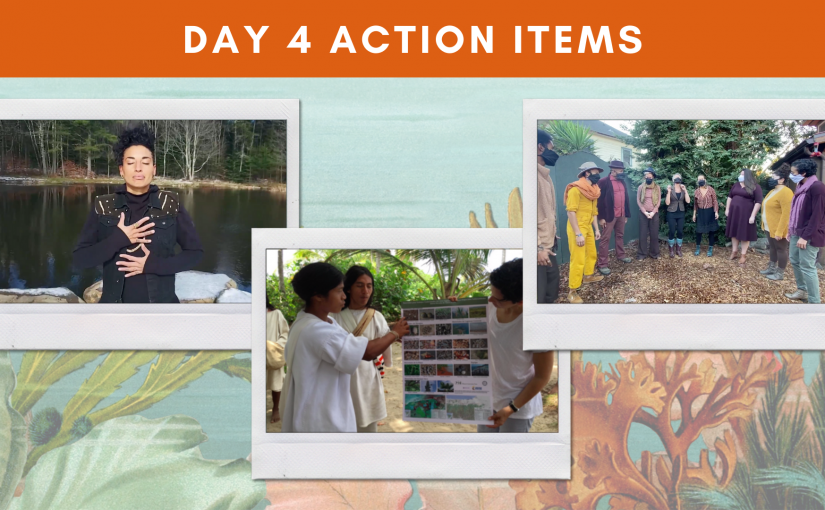
The fourth and final day of the Bioneers 2020 Conference was a reminder of the ways in which humanity interacts with the natural world, to its benefit as well as to its detriment.
“By elevating ourselves above her, separating and isolating ourselves from nature, by refusing to understand nature as a living entity, we bring our own ruin,” said Mari Margil of the Center for Democratic and Environmental Rights. “And in taking ourselves down, we seem intent on taking everything else down with us.”
Following are some of the ideas and takeaways Bioneers introduced at Conference Day 4.
ACTION ITEMS
Lessons, in Their Own Words:
“We need to make a fundamental shift in how we govern ourselves toward nature, transforming nature from being considered other, incapable of possessing rights and protections, to nature being recognized as a living entity with legal rights, finally afforded even the most basic rights to exist, to thrive, to regenerate, to evolve, and to be restored.” –Mari Margil; Executive Director | Center for Democratic and Environmental Rights
“Something is yearning to be born and worth fighting for. We need to breathe deeper. …Become lightning striking its ‘yes’ into the atmosphere.” -Naima Penniman; Program Director | Soul Fire Farm
“Society is waking up to the fact that we cannot have a healthy food system if we ignore racial justice and if we ignore the health of the land. We are in an uprising and a portal to something ancient and new. …My belief is that the work of this moment is to return maize, both literally and metaphorically, to her sisters, to restore the polyculture, the carbon sequestration, the agroecology, and the honoring of our ancient and powerful ways.” -Leah Penniman; Co-Executive Director | Soul Fire Farm
“When you have the honor and privilege of partnering with and learning from Indigenous colleagues, you understand that yes, indeed, the world can be woven anew.” -Mark Plotkin; Co-Founder and President | Amazon Conservation Team
“The question of ‘What’s wrong with the food system?’ feels huge in my mind. It’s difficult for me to answer what’s right with it, when I think about the exploitation, excessive profit over people, when I think about control over others instead of relationship in solidarity with others. I think about its impact on the earth, the soil, communities’ health. I think about the way that this system has been used as a tool of racism and white supremacy. What’s right with our food system?” -Heber Brown; Founding Director | Orita’s Cross Freedom School
“What we conspire with comes to life, now more so than ever before because the veils are so thin. How do we sound in unison with the great loss we are all experiencing right now so that it knows that we are here honoring it as it transitions into something new? …We need to normalize discomfort as a great teacher.” -Alixa Garcia; Artist
Campaigns to Follow & Support:
Learn more about the Native American Food Sovereignty Alliance, including its Indigenous Seed Keepers Network project, which promotes Indigenous cultural diversity for future generations by collecting, growing, and sharing heirloom seeds and plants. (Mentioned in the panel BIPOC Leaders Share Food Sovereignty Strategies)
Fight for the legal rights of nature with the Center for Democratic and Environmental Rights, which works with governments, tribal nations, Indigenous communities, civil society, and grassroots activists to protect the human right to a healthy environment and establish the rights of the environment itself – the rights of nature. (Mentioned in Mari Margil and Thomas Linzey’s keynote address, Changing Everything: The Global Movement for the Rights of Nature)
Read Leah Penniman’s Farming While Black, the first comprehensive “how to” guide for aspiring African-heritage growers to reclaim their dignity as agriculturists and for all farmers to understand the distinct, technical contributions of African-heritage people to sustainable agriculture. (Mentioned in Leah Penniman’s keynote address, Farming While Black: Uprooting Racism and Seeding Sovereignty)
Support the conservation of the Amazon with the Amazon Conservation Team, which works hand-in-hand with Indigenous and other local people to apply the power of innovation and time-tested traditional practices to protect the forests and watersheds of tropical America. (Mentioned in Mark Plotkin’s keynote address, The Healing Forest Inferno: Conservation of the Amazon in the Face of Fires and COVID-19)
Learn more about how banks are supporting the fossil fuel industry and how you can support efforts to hold them accountable with the Rainforest Action Network. (Mentioned in the panel Turning off the Toxic Tap: Innovative Approaches to Stopping Big Oil)
ACTION ITEMS FROM ALL 4 CONFERENCE DAYS
Take Action with Speakers from the 2020 Conference
We’ve collected all of our roundups and action items from each day of the Bioneers 2020 Conference into one spot for you to review and share.
In the third day of the Bioneers 2020 Conference, speakers and panelists discussed the power of individuals to create widespread change, and the intensification of that power through bridging divides.
“What I advocate for is that we begin with short bridges, and at the same time we pay attention to structure and culture,” said Director of the Othering and Belonging Institute john a. powell. “We engage in a practice that centers our body, centers our mind, centers our heart. But we also recognize that we’re a part of the world. It’s an iterative process. It’s not one before the other. We do both at the same time.”
Following are some of the ideas and takeaways Bioneers introduced at Conference Day 3.
ACTION ITEMS
Lessons, in Their Own Words:
“Make no mistake, above all, what COVID is unveiling is a sneak preview of what climate chaos is going to unleash. Climate resilience is about to become the central organizing principle of everyone’s lives.” -Kenny Ausubel; CEO & Co-Founder | Bioneers
“We can build the resilience to stay awake and engaged in the great work of remaking our lives and world through an infinite procession of itsy, bitsy small actions and efforts, because the power of small is much bigger than you think. But we have to believe, and we have to invest, and we have to keep leaning in.” -Trathen Heckman; Founder and Director | Daily Acts Organization
“When we say a feminist climate renaissance, it doesn’t mean get out of the way, women are in charge of everything now; it means that we need to embrace these stereotypically feminine characteristics as part of how we lead ourselves out of this absolute morass that we’re currently in.” -Ayana Elizabeth Johnson; CEO and Founder | Ocean Collectiv
“Paying an undocumented person half the value of their work, extracting all you can get from them to take care of your homes and families, and then deporting them is an American math story gone wrong.” -Alejandro Fuentes-Mena; Motus Theater
“It’s not enough to just say ‘I’m a good person. I don’t see hierarchy. I don’t see differences.’ Those differences are real. We can’t just sit in ourselves. We can’t just engage in internal work to fix these problems. These problems are inside and outside. …Bridging doesn’t mean we agree with someone. It’s predicated on seeing each other. It’s predicated on being present. It’s predicated on listening. It’s predicated on compassion, which means to suffer together.” -john a. Powell; Director | Othering and Belonging Institute
“I think that if we neglect the mental health aspects of organizing and activism and climate anxiety, and all of the stuff that comes with trying to fight against the end of the world, then we’re going to have an entire generation of very burnt out, very cynical people.” -Jamie Margolin; Founder | Zero Hour
“We have to get much more adept at understanding how policy works and how it shapes the systems we’re in. To do that, we’ll have to build a system of support across views in our society. There are places of common ground in this.” -Brett KenCairn; Senior Policy Advisor for Climate and Resilience | Boulder, Colorado
“American consciousness has been holding on to this ideal of the mystical Indian, and that’s been very convenient. They aren’t looking at all the things that make us complex because that requires questioning a lot of the story of the foundation of this country.” -Tommy Orange; Author | There There
Campaigns to Follow & Support:
Reclaim the power of your every daily action to create a regenerative, resilient and just world. Daily Acts is a holistic education nonprofit that takes a heart-centered approach to inspiring transformative actions that create connected, equitable, and climate resilient communities. (Mentioned by Trathen Heckman in his keynote presentation, The Power of Small for Big Transformations)
Historically, popular literature written by non-Natives has misrepresented the stories and lives of Indigenous Peoples. Decolonize your bookshelf by reading and sharing the literary works of Indigenous authors. Here’s a good place to start. (Mentioned in the panel The Power of Words: Indigenous Writers Workshop)
Support data that makes a difference. Data for Progress is a multidisciplinary group of experts using state-of-the-art techniques in data science to support progressive activists and causes. (Mentioned by Julian Brave NoiseCat in the panel The New Deals We Need Now: Green, Red and Blue)
Uplift organizations making a difference in the lives of Indigenous young people. The American Indian Child Resource Center is an American Indian led, American Indian serving community service organization focusing on American Indian foster care, mental health, education & cultural protective factors. (Mentioned by Manny Lieras in the panel The Power of Words: Indigenous Writers Workshop)
Center the voices of diverse youth in the conversation around climate and environmental justice with Zero Hour. (Mentioned by Jamie Margolin in her keynote address, Burnout and Balance: Finding an Identity Outside Of Your Activism)
READ KENNY AUSUBEL’S DAY 3 OPENING REMARKS
The Upside of the Downside
“The best way to predict the future is to create it. That’s what we’re here to do. All power to the imagination.”
In this address from the Bioneers 2020 Conference, Bioneers CEO & Co-Founder Kenny Ausubel discusses the converging awakenings that took place in 2020 and how we can use what we’ve learned to move forward.
I’d like to talk with you about the upside of the downside.
There’s a supreme poetic justice in a virus hacking a rogue civilization on a collision course with nature and the human experiment. You can’t gaslight a virus. The ground truth of our biological interdependence with the natural world has disrupted the delusion of our separation from the web of life and each other. It has exposed the hungry ghost of insatiable greed devouring people and planet.
Kenny Ausubel
The only way to solve a pandemic and the concatenation of crises we face is through massive cooperation. As a society and civilization, we’re being compelled to change our pronoun from “me, me, me” to “we.”
Nature is deregulating human affairs faster than a lobbyist can buy a politician. We’re in the endgame of the Dim Ages: the clash between the state of nature and the nature of the state. Our civilization is a failed state. The big wheels of transformation are turning. It’s emergence in an emergency.
The contagion is apocalyptic in the original meaning of the Greek word: “A revelation, an unveiling or unfolding of things not previously known, and which could not be known apart from the unveiling.”
It’s unveiling the truth that our human health is dependent on the health and integrity of our ecosystems. The contagion originated from relentless human incursion into shrinking wildlife habitats, where unfamiliarity breeds contempt. It was driven by a voracious market economy channeled through a misconceived food system.
It’s unveiling the misbegotten paradigm that exalts the growth economy over the wellbeing of people and the natural systems on which all life depends. As Hazel Henderson said, modern economics is “a form of brain damage. It’s nothing more than politics in disguise.”
The contagion is revealing the wisdom of the Precautionary Principle: “Better safe than sorry” — “an ounce of prevention is worth a pound of cure.” We know that $1 spent on disaster prevention will save $7 in later damages.
It’s unmasking the fatal logic of a for-profit health care system. Tying Wall Street profits to human health is a prescription for disaster.
It’s exposing how huge the “precariat” is — the vast masses of humanity who live on the precarious edge — one step away from freefall. It’s revealing the extraordinary kindness and compassion of most people, and the expanding circle of heartfelt concern for the most vulnerable.
It’s showing a world where “I Can’t Breathe” became a meme for everything from Black Lives mattering to raging climate-induced mega-fires and COVID masks.
It’s unveiling how the temporary reduction of human activity allowed nature to begin to regenerate. Blue skies brightened Beijing, and for the first time in memory the Himalayas were visible from New Delhi. It’s a glimmer of what a restored world could look like when we change our way of living. Yes, when.
It has accelerated the decline of the fossil fuel industry and its political power, and sped the hegemony of clean energy.
It has spotlighted the democracy theme park, exposing the sharp teeth of raw power that talks democracy, until it gets into the hands of the wrong people – in other words, the people.
It unveiled the banality of evil, a full-blown kakistocracy — rule by the worst. They set up a roach motel in the White House.
When Jared Diamond examined the ecologically-driven demise of Mexico’s Mayan civilization, he identified the final unraveling thread: political leadership. He wrote: “Their attention was evidently focused on the short-term concerns of enriching themselves, waging wars, erecting monuments, competing with one another, and extracting enough food from the peasants to support all these activities.” Sound familiar?
It’s laying bare disaster capitalism’s Shock Doctrine: Never let a crisis go to waste. Corona capitalism is engineering the biggest heist in history, with corporate concierge service from the Fed already amounting to between $4 to $10 trillion.
Simultaneously, Corona capitalism is precipitating a deliberate extinction-level event of small and medium-size businesses – with cascading dis-employment that will exceed the Great Depression. When it’s safe to go out again, we will find a world of giants and dwarves.
Wealth in the U.S. was already over two times as concentrated as imperial Rome, which was a slave-and-farmer society. If billionaires were a nation, they’d be the world’s 3rd largest country. They want to have their cake and eat yours too.
It’s “make feudalism great again.” Talk about a marketing challenge.
It’s Boom and Doom — the terminal convulsions of an oligarchic economic system bedeviled by $100 trillion dollars of stranded oil assets and the impossibility of unlimited material growth on a finite planet. The Hummer of plutocracy has gone off road. The system is the crime.
But make no mistake. Above all what COVID is unveiling is a sneak preview of what climate chaos is going to unleash. Climate resilience is about to become the central organizing principle of everyone’s lives. One thing is for sure: The twin crises of climate chaos and extreme inequality will keep getting worse fast — and people will keep rising up in ever bigger numbers, demanding and making change.
With breakdown comes breakthrough. The Great Unraveling is clearing the space for renaissance and regeneration. The game now is to grow the upside of the downside. The stone age didn’t end because people ran out of stones. Initiatives that may have seemed radical or impossible not so long ago now appear within reach.
As Naomi Klein wrote, “The real solutions to the climate crisis are also our best hope of building a much more enlightened economic system — one that closes deep inequalities, strengthens and transforms the public sphere, generates plentiful, dignified work, and radically reins in corporate power.”
Our movements are starting to prevail, which is why the corporate class has resorted to a hostile takeover of government. Its broker is the Republican Party. Its platform is so extreme that the closest analog in the West is Germany’s fringe AfD, a proudly white nationalist, xenophobic party with neo-Fascist ties. But even the AfD aren’t climate deniers, and the biggest difference is that the GOP is a mainstream party. Our political duopoly now consists of a democratic party and an anti-democratic party.
This reactionary whiplash is trying to misdirect our attention from the head-spinning ravages of corporate economic globalization by serving up the noxious cocktail of racism, xenophobia and othering in order to divide and conquer. One fear has been that the regime would start a war. It did: a civil war than had never actually ended.
It’s an ideology that W.E.B. DuBois described in 1910 as ‘the new religion of whiteness — the ownership of the earth forever and ever.’ As Pankaj Mishra wrote, “The religion of whiteness increasingly represents a suicide cult.”
So what’s the upside of the downside?
COVID has hammered the already failing business model of the fossil fuel industry into survival mode. It would tank even faster if not for federal subsidies. At the same time, its political power is waning, and it faces mounting legal liabilities for knowingly poaching the planet and lying about it. Perhaps it’s time for corporate capital punishment for the crimes of capital.
COVID is simultaneously quickening the transition to the inevitable clean energy revolution. But that is not enough — because we’re already in sudden-death overtime. The movement for drawdown is gaining traction to actually reverse climate disruption by bringing carbon levels back down to pre-industrial levels.
All the top practices and technologies are already commonly available, economically viable, and scientifically valid, including such cornerstones as regenerative carbon farming and food systems, ecological land management practices, and the empowerment of women and girls.
Because this is the last stand for many landscapes, standing for the land before it’s too late is paramount. Inspired by E.O. Wilson’s “Nature Needs Half” initiative, the One Earth project has mapped global, regional and local ecosystems to identify and prioritize key bioregions to support carbon sequestration and biodiversity conservation. Our One Earth friends presented a panel last weekend on this work, including a globalocal app.
It’s no accident that 80% of the world’s biodiversity is on Indigenous lands. Indigenous leadership is both lighting the way and may be the key to the survival of our species.
It’s objectifying and commodifying of nature that have led us to this climate emergency and Age of Extinctions. It’s high time to expand our view of personhood to the natural world — not to corporations. We need to institute legally enforceable Rights for Nature.
The global movement for Rights of Nature is rapidly beginning to take hold in numerous countries. It flips the paradigm from nature as property to nature as rights-bearing. Over three dozen US communities and five US tribes have now enacted such laws, with many more moving to get involved.
In this past election in Florida’s conservative Orange County, home to Orlando and Disney World, a citizen-driven rights of nature ballot initiative passed with a jaw-dropping 89% of the vote. (Much of this success is thanks to Thomas Linzey and Mari Margil who will speak on Sunday.)
The climate emergency is the biggest political failure in history. It’s fundamentally a crisis of democracy and leadership. 2020 has seen democracy both under siege and surging.
Black Lives Matter became the biggest movement in US history, with unprecedented numbers of white allies stepping up, while a swarm of diverse social movements is converging to reclaim the many facets of the jewel of democracy. The forefront of this leadership won the 2020 US presidential election. It came from women of color and communities of color, First Peoples, and the swell of young people demanding that society wake the frack up and start acting like grownups.
At a historic threshold when the country is projected to become majority-minority in about 15 years, multi-cultural society is here to stay. The last gasp of the current political regime is like the Japanese soldiers in World War II still fighting on an island who didn’t yet know the war was over.
Millennials are the most diverse and largest generation in American history, and also the most progressive. By 60-80%, young people want climate action, support same-sex marriage, recognize racial discrimination as the main barrier to African Americans’ progress, and believe immigrants strengthen the country.These are the frontline leaders who are showing us how to make America grateful again.
Ecological healing and social justice are one notion, indivisible. A Green New Deal can and must coalesce all these priorities. It can put everyone in the country and around the world into a great green employment project that achieves meaningful living wage jobs, and environmental and social justice. This time around, a truly new deal will lift the burdens of history. We’re living through the re-birth of a nation.
And breaking news: The IMF concluded that saving the planet would be cheap or might even be free. Such a deal!
If building resilience is the goal, the priority shifts from growth and expansion to sufficiency and sustainable prosperity. We know that real wealth creation is based on replenishing natural systems and restoring the built environment, especially our infrastructure and cities. It’s based on investing in our communities and workforce.
In the face of the unraveling of economic globalization spurred in part by COVID, and a federal government that’s now a smoking ruin, the upside of the downside is greater decentralization against the inevitable failure of centralized systems. Think distributed power grids and more localized foodsheds and economies, which are the kryptonite of global markets. Economic re-localization creates three times as many jobs, earnings, and tax collections — as well as far greater security.
We can supersede the false binary of capitalism and socialism, and instead create a mixed economy in service to the common good, climate action and equity. It’s an economy that prioritizes security, intergenerational community wealth creation, and much more widely distributed ownership. There’s actually no precedent or grand model for this next economy. Nor has anyone figured out how to create genuine democracy at large scales. That’s up to us, and from here on, it’s jazz.
In closing, as my friend David Orr recently said to me, he’d be quite optimistic — IF we had another 50 years. The crucible is whether we can fast-forward this transformation in record time, and Beat the Reaper.
The word “crisis” comes from the Greek word krino. It means “to decide.” We need to decide what kind of future we want – and act like our lives depend on it – because they do. Slouching toward sustainability will not turn the tide. Only immediate, bold and transformative action will enable us to make the leap across the abyss. It’s now o’clock.
“If we appear to seek the unattainable, then let it be known that we do so to avoid the unimaginable.” So wrote Tom Hayden in the Port Huron Statement in 1962. Now more than ever, we need to imagine our way out of the unimaginable.
As mythologist Michael Meade reminds us, “The deepest power of the human soul is imagination. When human beings bring imagination to the situation, we join the agents of creation.”
As the deep ecologist and Buddhist scholar Joanna Macy puts it, “We are part of a vast, global movement: the epochal transition from empire to Earth community.”
The best way to predict the future is to create it. That’s what we’re here to do. All power to the imagination.
We’re headed for the greatest, noblest, messiest, most meaningful AHA! of all time. To get there, we need to navigate anew our relationship with money, financial markets and the limits of economic growth. Which would be scary, if it weren’t for all the beauty and community we can find on a parallel path.
What will a full-fledged nurture capital sector look like a generation or two from now? What role do local food systems and small organic farms in reshaping society? And who was Nicholas Georgescu-Roegen, anyway?
In his latest book, “AHA! Fake Trillions, Real Billions, Beetcoin and the Great American Do-Over,” Woody Tasch outlines a roadmap of systemic change through reimagining the role of capital and philanthropy in our society. The tangible impacts of investing capital into local agriculture can guide us toward affecting profound changes in our world. Below is from the prologue to Tasch’s book.
In 1970, Alvin Toffler wrote the bestseller Future Shock, heralding an era of unprecedented innovation and acceleration. We couldn’t quite know how right he was, although the resonance of his message was ineluctable. Now, on the back end of 50 years of just that—unprecedented innovation and acceleration, in every sphere of life—we are trying to find our way from the Age of Ones and Zeros to whatever comes next.
What comes after future shock? Shock of pandemic. Shock of supply chain. Climate shock. Cyber shock. Actual shock and virtual shock. Shock of billions and trillions. Shock of Us and shock of Them. Shock that after all that future shock, fear, hatred and vilification are shockingly stubborn.
We are called to a new era of pragmatism, at the level of household, community and bioregion, pushed by the immediacy of crisis and pulled by the long-term need for systemic change.
We are called to a new era of peacemaking, at the level of. . .well, that’s where poetic possibility and lively seriousness come in, the place where sapiens flirts not only with disaster, but also with philios.
The urgency of the current moment is overwhelming. Our ability to respond effectively depends on our understanding of the words the current moment. What do they mean? The moment the number of COVID-19 cases spike? The moment the Dow Jones Industrial Average crashes? The moment fish are spotted swimming back up commerce-free canals in Venice? The moment before protest erupts? The moment global population peaks? Or, as Gregg Easterbrook wrote in A Moment on the Earth, “the juncture at which a profound positive development of history began: the moment when people, machines, and nature began negotiating terms of truce”?
Fish are back in the canals. On March 19, 2020, BBC talk show host Stephen Sackur had the following exchange with Laurence Boone, chief economist of the Organisation for Economic Co-Operation and Development:
Sackur: When the coronavirus crisis is over, what will we have learned about globalization? Globalization as we’ve known it in the ’70s, ’80s, ’90s and into the 2000s—it doesn’t look sustainable going forward.
Boone: When we get out of this, there will definitely be a large amount of thinking and revision about the way the world has been functioning economically over the past decades. . .
Sackur: There is an extraordinary thing that has happened since the coronavirus crisis really hit the world economy. We have seen a phenomenal improvement in the air quality that has been recorded in China. We’ve even seen fish coming back into the canals in Venice. . .
Boone: I think the shock is so big that we will learn a lot of lessons. . .You are very right to point at climate. Reduced biodiversity with climate change may also be responsible for how fast the virus may have spread. . .This will lead us to rethink some of our economic model.
Woody Tasch
Suggestions of systemic change are not infrequent these days. Inboxes are full of messages about the opportunities and learning that lurk within the current crisis. There is talk from political leaders of economic transformation. The Secretary General of the United Nations calls for “a new economic paradigm.” Bloggers write of “imaginal cells” beginning to hatch a new cultural vision. The poetry of an Italian priest is recited during a CNN Coronavirus Town Hall. The words sacred and songs have been spotted swimming in schools towards the tributaries of hope.
**
Something else happened in 1970.
Americans in hundreds of communities took to the streets on the occasion of the first Earth Day. Estimates put the national number at around 20 million. Systemic change was what we were after, then, too. It remained elusive in many of the ways that count.
The arcs of population, consumerism, militarism, industrialism, urbanism, technological adventurism, racism and economic growth are exceedingly difficult to bend. At the level of institutions and systems—the daily spectacle, “move fast and break things” and change elections notwithstanding—almost impossible to bend.
What if, in addition to efforts to bend the practically unbendable at the level of institutions and systems, we were to put more effort into mending the eminently mendable at the level of foodshed and watershed?
What if—because I believe Thoreau said, “It’s better to move a pile of stones than solve a moral problem,” although I cannot retrieve that citation—we were to decide that local investing could be as powerful as global protesting?
What if we discovered ways to navigate back and forth between the trillions of dollars coursing through the global economy every day and the trillions of micro-organisms in each handful of fertile soil?
It’s comforting to think that economists and financiers and CEOs and shareholders and politicians may change their stripes in the wake of the current pandemic. But we mustn’t kid ourselves. Turn that stripe-changing intention inward.
When fear is compounded by fear, financial crisis by biological crisis, biological crisis by racial crisis, does the same law of human nature apply? Or is this “this time” really different? Are we on the cusp of systemic economic change and millions of life-altering changes of heart, when the pandemic passes and the stock market goes back up? Or, as the bard so sagely put it, is the past prologue, even in the age of black swans, rogue algorithms and rampaging viruses?
Woody Tasch is the author of Inquiries into the Nature of Slow Money: Investing as if Food, Farms, and Fertility Mattered (Chelsea Green). Since that book was published in 2009, more than $75 million has been invested in over 750 small organic farms and local food enterprises via volunteer-led groups in dozens of communities in the U.S., Canada, Australia and France. He is former treasurer of the Jessie Smith Noyes Foundation and Chairman and CEO of Investors’ Circle. Utne Reader named him “One Of 25 Visionaries Who Are Changing Your World.” Tasch is also author of SOIL: Notes Towards the Theory and Practice of Nurture Capital (Slow Money Institute, 2017). The full text of AHA!: Fake Trillions, Real Billions, Beetcoin and the Great American Do-Over is available free at beetcoin.org/publications.
This article contains the content from the 12/09/2020 Bioneers Pulse newsletter. Sign up here to get the newsletter straight to your inbox!
Weekend Two of the Bioneers Conference is just a couple days away, and we’re profoundly grateful to be able to come together in community and shine a light on pathways forward.
We invite you to this virtual gathering, where innovative thought leaders will uplift solutions on embracing Indigenous allyships, finding balance between identity and activism, building political peace through conversation, and more.
If you’re not already signed up, click here to register now — or grab yourself 20% off by telling your friends first. Attendees will have on-demand access to recordings for their registered sessions throughout the month of December!
This week, we feature some of the exciting programming that Weekend Two of the Bioneers 2020 Conference will have to offer.
If you can’t attend live, we’ve got you covered: Attendees will have on-demand access to recordings from the sessions for which they register throughout the month of December.
While farm management is among the whitest of professions, farm labor is predominantly brown and exploited, and people of color disproportionately live in “food apartheid” neighborhoods and suffer from diet-related illness. The system is built on stolen land and stolen labor and needs a redesign.
The book Farming While Black is the first comprehensive “how-to” guide for aspiring African-heritage growers to reclaim their dignity as agriculturists and for all farmers to understand the distinct contributions of African-heritage people to sustainable agriculture. At Soul Fire Farm, author Leah Penniman co-created the Black and Latinx Farmers Immersion (BLFI) program as a container for new farmers to share growing skills in a culturally relevant and supportive environment led by people of color.
Read more here. Leah Penniman is delivering a keynote address and participating in a panel discussion at the Bioneers 2020 Conference this weekend. Register now with code LEAH20 to receive a FREE copy of her book “Farming While Black,” while supplies last!
Speaker Spotlight: Mark Plotkin
Mark Plotkin, Ph.D., a renowned ethnobotanist who has studied traditional Indigenous plant use with elder healers in Central and South America for 30+ years, is also an award-winning author and activist who’s worked with global conservation organizations, including the World Wildlife Fund and Conservation International. He is the co-founder and President of the Amazon Conservation Team, a nonprofit dedicated to protecting the biological and cultural diversity of the Amazon.
Mark Plotkin is delivering a keynote address and participating in a panel discussion at the Bioneers 2020 Conference this Sunday, Dec. 13. Register now!
New Pathways for Old Wisdom: Mari Margil on the Rights of Nature
The inherent autonomy and agency of the natural world is an old wisdom being threatened by humanity’s disconnection from nature, as well as an extractive economy and the laws that protect it.
Mari Margil, Executive Director of the Center for Democratic and Environmental Rights (CDER), is leading the movement to gain legal recognition of the rights of nature. In this interview, Mari speaks on the challenges to her work and how anyone can get involved.
Mari is delivering a keynote address with her colleague Thomas Linzey and participating in two panel discussions on the rights of nature. Join her on Dec. 13 at the Bioneers 2020 Conference. Register now!
Conscious Music is the Soundtrack of the Movement: An Interview with Alfred Howard
Alfred Howard is a prolific spoken-word artist, writer, and co-founder of The Redwoods Music, a San Diego record label and collective. In his early 20s, he caravanned with musicians all across the county before finally setting roots in San Diego, where he has become a leading figure in the local musical community. He is the author of 2 books, including The Autobiography of No One; writes articles for several leading San Diego newspapers and magazines; and has written lyrics for over 30 released albums.
In this Q&A, Howard discusses his work, how he’s pivoted in the face of COVID-19, and the role of art in overcoming difficult times.
This Saturday, Dec. 12, join Howard for the panel discussion, “Come To Life: Inspiring the Regenerative Movement Through Arts and Activism” at the Bioneers 2020 Conference. Register now!
Reweaving Our Relationship with Women, Native Peoples and Nature
Living in the global urgency of a pandemic, climate change, and political corruption can make it hard for people to imagine a bright future. However, there are those who dare to envision more beyond our current state of affairs.
In this address from day two of the Bioneers 2020 Conference, Bioneers co-founder Nina Simons talks about the importance of women and Native leadership to illuminate a bold and ambitious vision we can share together.
In this Dec. 12 workshop, award-winning Indigenous writers will tackle topics about changing non-Native narratives and taking control of their representation, including: what makes writing “Indigenous;” how they honed their craft; and ways that they try to make their writing speak truth to power. For allies, there is no better time to learn about the Native literary explosion and how important it is to support Indigenous artists.
“Folktivism” for the Earth: an Interview with Musician Luke Wallace
Luke Wallace embodies a new wave of politically charged folk music, writing the soundtrack for a movement of people rising up to meet the social and environmental challenges of our times. In this interview, Luke explores his music as a platform to amplify the voices of communities threatened by unjust resource extraction.
Luke will be joining the panel discussion, “Come To Life: Inspiring the Regenerative Movement Through Arts and Activism,” on Dec. 12 at the Bioneers 2020 Conference. Register now to join him and fellow engaged musicians in this session, produced in partnership with Guayakí Tea and their “Come to Life” music venture.
This article contains the content from the 12/09/2020 Bioneers Pulse newsletter. Sign up here to get the newsletter straight to your inbox!
The inherent autonomy of the natural world is old wisdom — an unspoken truth that Indigenous communities have held for millennia — but it’s now being threatened by an extractive economy and the laws that condone it. As global society accelerates toward irreversible damage to our climate, people are fighting for the legal recognition of the rights of nature.
Mari Margil, Executive Director of the Center for Democratic and Environmental Rights (CDER), is one of the leaders guiding the movement and codifying a new pathway for how humans relate to the natural world. In this interview, Mari speaks on the challenges to her work and how anyone can get involved.
Watch Mari’s keynote address with her colleague Thomas Linzey at the Bioneers 2020 Conference here.
You often refer to Ecuador, the first country to codify the rights of nature into their constitution, as leading by example. How have you seen this struggle evolve since then?
In addition, we have submitted proposals for reform of existing environmental laws to have them protect the rights of nature, which the Biodiversity Commission of Ecuador’s National Assembly included in its new report. The report is the first draft of legislation being provided to the full Assembly for its consideration.
How does the rights of nature movement relate to the current climate crisis? What gives you hope as we move forward?
The rights of nature movement is very important with climate – and we are building a right to a healthy climate provisions into new rights of nature laws. In places like Nepal, for instance, we are working to advance a right of the Himalayas to a healthy climate – the Himalayas are the fastest warming mountain range on earth. This is shifting the understanding of climate change from simply a human problem to a problem that all of nature faces. And with that, that this is a human and nature’s rights crisis.
What are some of the biggest obstacles you’ve encountered in the legal struggle to recognize rights of the natural world?
There are many that seek to continue with business as usual, in terms of how humans have treated nature – which has been one of use and exploitation, with environmental laws legalizing harm of nature. The consequences are many, including the destruction of ecosystems, accelerating species extinction, and of course, climate change. The status quo cannot hold. The struggle for change comes up against the powers that be that don’t want change, because they profit and grow powerful off of the current system.
How can the individuals reading this article contribute to the rights of nature movement, in the context of their own communities?
It’s really just about helping ourselves understand how the existing system works. It treats nature as existing for human use. Our environmental laws are protecting our use of nature. That’s led to profound impacts globally.
People who aren’t lawyers, academics, or scientists have moved initiatives forward in their own communities and on a national level. We share those stories, do workshops, and meet with people one-on-one to talk through these concepts and what’s happening. We discuss how others are moving for a change, developing strategies and learning how to answer tough questions.
Everybody starts in that same place of the fundamental sense that something is wrong and something needs to shift. I take great hope and inspiration from that because people are doing something that’s really difficult. People are willing to step outside their comfort zone because they know something terrible is happening to the planet, and we need to do something really dramatic to make change.
I think people should take hope knowing that other regular Joes just like them are doing something, that they can do it too, and that they don’t need to be any kind of professor, expert, or lawyer. Anybody can do this.
The recent two-day global forum that CDER presented brought together leading experts and communities around the rights of nature movement. What were your takeaways?
We are so pleased that Bioneers was a co-sponsor of the Global Forum. All panel sessions can be found here. Each speaker illuminated the fact that there is such an amazing amount of work being done to advance both the human right to a healthy environment and the right of nature to be healthy. These rights are related and support each other.
As we saw in the different campaigns presented at the Global Forum, we have a collective, growing understanding that fulfilling the human right to a healthy environment depends on the environment being healthy. That sounds like a simple idea, but is essential.
Living in the global urgency of a pandemic, climate change, and political corruption can make it hard for people to imagine a bright future. However, there are those who dare to envision more beyond our current state of affairs.
In this address from day two of the Bioneers 2020 Conference, Bioneers co-founder Nina Simons talks about the importance of women and Native leadership to illuminate a bold and ambitious vision we can share in together.
Bioneers Co-Founder Nina Simons
This spring, as the multiple systems that supposedly held us unraveled – and the full scope of the uncertainties we face sank in, the webs of connection to the people and places who I hold dear were what held me.
To tend to my heart, I’ve tried to accept and express waves of emotion as they arose, and paused inwardly to celebrate moments of progress, joy and breakthrough. Like the embodied moments of overwhelming relief as the results of our last presidential election emerged. I was awash with humility and gratitude for the women of color – the leaders, organizers, and their communities – whose skill, perseverance, leadership and drive deserve credit and our thankfulness for that outcome.
I’ve felt elated to see the immense global protests after George Floyd’s murder, and outraged by the bald-faced greed, criminality and accelerated destruction of immigrants and wildlands, incarcerated peoples, birds and waterways. I’ve savored the space at home to nourish Kenny and my personal partnership. To enjoy the stillness of no travel, and the beauty of the land that holds us.
To nourish my mind, I’ve deepened my learning about social healing, about historical cycles of disruptive change and pandemics. I’ve oriented myself towards a longer time perspective, recognizing that the scope of change we face will require a marathon from us all.
I’ve tried to understand the apparent insanity of our twisted remains of a culture, while cultivating an eagle’s eye long view. To care for my spirit, I’ve invited connection with ritual, nature and ancestors. My mother left this life last year, and when I ask her, she reminds me to live juicy, stay soft, create beauty and dance.
This year, what’s emerged most strongly for me is a profound and deepening commitment to the health, sovereignty, world-views, traditional ecological knowledge, healing and ally-ship with Indigenous peoples.
I’ve long appreciated that Native peoples are incredibly strong, resilient and innovative. From historical genocide, theft of ancestral lands, forced relocation, and Indian residential schools to present day unequal access to health care, education, missing and murdered women, and voting access, they have survived and thrived.
From Bioneers’ beginnings in 1990 in the Southwestern US, (and thanks to Kenny’s vision), our organization has been informed and guided by the voices, experience and wisdom of Native peoples.
In 1992, I heard Petuuche Gilbert, who was then a Governor at Acoma Pueblo, say in a panel of Indigenous elders about the anniversary of Columbus arriving at this land: “500 years ago you came, and we welcomed you with open arms. If you came again today, we would do the same.”
I was gobsmacked, as I felt the authenticity and truth of his words, though they seemed to contradict the history of violence I knew his people had endured. I began to understand then how much I might learn from Native peoples about how to be a human being.
Over these thirty years, I’m grateful to have learned from many Native mentors, board members and friends. Living in the land of the Pueblo peoples, I’ve experienced tribal ceremonies, feast days and the wealth of creative expression that emerges from the hearts, cultures and hands of so many First Peoples.
I’ve also begun learning about the serial and ongoing efforts at genocide, culture and language demolition, and forced sterilization and relocation that our government has inflicted on Indigenous peoples. I’ve learned how systematically and globally extractive industries have targeted Native lands and reservations for mining and drilling, and how destructive that’s been to their waterways and the man-camps to their women, damaging all the peoples’ health, cultural traditions, pillaging sacred sites and attempting to uproot languages.
I’ve witnessed the systemic sub-standard and inadequate health care, lack of fresh food and water, jobs and schools that plague many Native communities and create pre-existing conditions, all of which have rendered the COVID virus more deadly and destructive for them.
When the pandemic first hit, I was thankful to be a bridge for generosity and caring for some whose suffering from extremes of poverty, rural distance, poor health and intergenerational trauma was worsened by the virus.
Academics call it ‘pro-social’ behavior, acting to benefit another or others. I call it heart-centered leadership, and practicing right relations. When COVID19 began, an opportunity emerged to provide tangible support where it was greatly needed. A friend asked me where to give resources to support Native peoples (and especially elders) through the pandemic.
I met with my colleagues Cara Romero and Alexis Bunten, the gifted and committed leaders who co-direct Bioneers’ Indigeneity program, and we came up with a list of trusted allies and friends, focusing on the places we knew best and that we knew were hardest hit.
Then, our list attracted caring donors who gifted us some funds to distribute. Because of our abundant relationships, throughout Turtle Island and even globally, we were able to send checks – mostly directly, person-to-person, to support families in rural areas to access food and water, and to help protect elders and culture-bearers.
Alexis also attracted a grant from Google to gift tablets and ipads to some of the Native youth she works with, to aid in their home schooling. (Do you know that 40% of Native kids in this country don’t have access to technology or wifi for school or connecting?)
All of this adds up to a reality that few are aware of that we’ve got what’s sometimes been referred to as ‘third world conditions’ widely prevalent among Native communities throughout Turtle Island.
At the same time, I’ve seen that within this country are hundreds of sovereign nations that are immensely wealthy in cultural resources and traditional knowledge. Some of their languages, traditions and knowledge systems are held precariously by a scant few esteemed culture-bearers and elders. I’ve explored the wisdom of Traditional Ecological Knowledge or TEK, which are Indigenous ways of being in right and sacred relationship to the elements of life – to fire, land, air and water. For example, witnessing the skills of dryland agriculture, and of adapting seeds to survive through droughts, I’ve understood how vital they will be for all of us in the years ahead as the climate crisis worsens and Earth becomes hotter and dryer.
I know that any quest to learn to live in a regenerative way ecologically has to begin by learning respectfully from what our Native relatives have known for millennia.
I’m acutely aware of the need to remain culturally humble about how much I don’t know. Please understand – I’m mindful of the dangers of cultural appropriation, and I’m not aspiring to ‘nativism’ or any kind of white savior stuff or copy-cat environmentalism. My intent is to share my heart’s commitment in hopes that you may be sparked to join me in it. Thankfully, all of my previous callings coexist well with this one. As I’ve worked with diverse women visionaries and changemakers over these many years, it’s been the perseverance, truth-telling and unshakable stands of women from many of our most marginalized communities that have often inspired me the most.
And, as we turn toward rebalancing the deep feminine and masculine within ourselves, and in our organizations and our institutions, prioritizing connection over task or goal, leading from the heart, listening more than speaking, honoring the need for healthy cycles, and integrating our full humanity into our collaborations, we’ll be so much better able to sustain our efforts joyfully for the long work ahead.
To many Native peoples, nature is sacred and nothing is harvested without first receiving permission, and offering gratitude and reciprocity, or giving back. Mother Earth is seen as female, and there’s an understanding that what we’re doing to the Earth, we’re also doing to women, and vice versa. When I looked for an example of a society where women are honored and treated with equality, I found it in the Haudenosaunee, or Iroquois Six Nations. Seeing how respectfully women were treated in their confederacy inspired the US women’s suffrage movement which was launched in Seneca Falls, NY, in the early 1900s.
As Chief Oren Lyons, Faithkeeper for the Iroquois Six Nations, tells it: the Haudenosaunee were instructed by the peacemaker hundreds of years ago that – “since the Earth is female, the women will be in charge of the Earth, land, life and water. The men would be responsible for fire and energy, and the balance. The combination of male and female necessary to bring forth life was seen as fundamental, so great care was taken to maintain that balance.”
In their matrilineal culture, since the women are in charge of life, they raise the leaders and govern the families. The women select the chief, after observing the boy children from a very early age to see which of them has the qualities needed to lead the people. And the women of their longhouse have the authority to rescind the chief’s leadership, if he’s not doing a good job. Imagine if this country worked like that?
Thankfully, this year, with leadership from the Indigenous and Black women, young people and communities of color, perhaps we finally are beginning to head in that direction.
May we be bold, resolute, forthright and strategic,
Integrating the power of prayer, ceremony and ritual,
In demanding the systemic change and cultural repair
Our future vision, the climate and the health of the whole requires.
May we advocate for the voiceless among us,
For the finned, feathered and furred,
For the plant people and fruitful funghi
And for the many – like the whales –
Whose voices we have yet to understand,
That their habitats and wildlands
May regenerate to shelter and renew them.
May we practice fierce compassion,
Cultural humility, forgiveness and kindness,
Connecting locally, inwardly and more deeply
To strengthen ourselves,
And help to heal our relationships with mother Earth,
Since the founding of the U.S., a core battle has raged between two irreconcilable forces—democracy and plutocracy. Wealth in the U.S. today is over “two times as concentrated as in imperial Rome, which was a slave-and-farmer society.” If billionaires were a nation, they’d be the world’s 3rd largest economy. Today, mammoth monopolies have once again captured the government and rewritten the law to amass the greatest concentrations of wealth and power in American history, but strong anti-trust movements are rising to break up monopolies, change the law, democratize the economy, and institute democratic governance. Along with efforts afoot in Congress, some of the most important and successful initiatives are now happening at local and state levels. Learn about the deeper history of this clash that has led us to today’s plutocracy and about the movements and political strategies now gaining momentum to reclaim democracy and distribute power and wealth building.
With: Thom Hartmann, author, broadcaster and scholar; Stacy Mitchell, Co-Director of the Institute for Local Self-Reliance, author, and formidable campaigner to break up Amazon; Maurice BP-Weeks, Co-Executive Director of ACRE (Action Center for Race and the Economy) who works with community organizations and labor unions to create equitable communities by dismantling systems of wealth extraction that target Black and Brown communities. Hosted by Kenny Ausubel, Bioneers CEO and co-founder.
Panelists
Thom Hartmann, the top progressive talk show host in America for over a decade and a four-time Project Censored Award-winning journalist, is the author of some 30 books, including the international bestseller, The Last Hours of Ancient Sunlight (about the end of the age of oil), used as a textbook in many schools and colleges. Thom, a former psychotherapist and entrepreneur, has also co-written and been featured in 6 documentaries with Leonardo DiCaprio.
Kenny Ausubel, CEO and founder (in 1990) of Bioneers, is an award-winning social entrepreneur, journalist, author and filmmaker. Co-founder and first CEO of the organic seed company, Seeds of Change, his film (and companion book) Hoxsey: When Healing Becomes a Crime helped influence national alternative medicine policy. He has edited several books and written four, including, most recently, Dreaming the Future: Reimagining Civilization in the Age of Nature.
Maurice BP-Weeks, based in Detroit, has many years’ community organizing experience in such areas as housing, policing, incarceration, corporate accountability and education justice. Co-Executive Director of ACRE (Action Center on Race and the Economy) where he works with community organizations and labor unions on campaigns to create equitable communities by dismantling systems of wealth extraction in Black and Brown communities, he also serves on many boards, including those of: Black Organizing for Leadership and Dignity, National Institute for Money in Politics, Investors Advocates for Social Justice and the National Black Workers Center.
Stacy Mitchell, the Portland, Maine-based Co-Director of the Institute for Local Self-Reliance, which produces research and develops policy to counter corporate control and build thriving, equitable communities, has written extensively about the dangers of monopoly power, including for The Atlantic, Bloomberg,The Nation, and The New York Times. She’s the author of a book, Big-Box Swindle, and several influential reports, including “Amazon’s Stranglehold” and “Monopoly Power and the Decline of Small Business.”
The second day of the Bioneers 2020 Conference delivered essential calls to action for a brighter future paired with beautiful performances and a healthy dose of democracy.
Following are some of the ideas and takeaways Bioneers introduced at Conference Day 2.
ACTION ITEMS
Lessons, in Their Own Words:
“At the heart of this decolonization has to be land return. We don’t need to think about that as the last step, like after we’ve decolonized our minds, our curriculums, our statues, our books, our movies, our TV shows, our clothing, then maybe we’ll finally get to the return of land. I say let’s start with the return of land and know that it’s possible, and it’s powerful, and that it’s going to be the thing that changes the world.” -Cutcha Risling Baldy; Co-Founder | Native Women’s Collective
“This idea we share with all life on Earth is a tendency toward democracy – a tendency toward fairness. Still the story we’ve been telling ourselves for thousands of years is ‘people are bad, and democracy is abnormal.'” -Thom Hartmann; Progressive Talk Show Host
“Fund the people who know the way to freedom. Open the floodgates for flexible, general support, ongoing funding to deep organizing led by people of color, and particularly women of color, transgender and gender non-conforming people of color. …There’s no one coming to save us. Every one of us who’s alive now, we are the team on the field. There’s no guarantee that in 30 years some future generation is going to have the time left on the clock to do what we were too afraid to do, to be bold where we were timid, to act where we hesitated. This is our moment. This is it. This is our shot.” -Vanessa Daniel; Executive Director | Groundswell Fund
“For a long time we’ve assumed that huge conglomerates and monopolies are the price of business. But what we’ve done in reality is create policies that benefit these businesses enormously. It’s not just about calling these companies out for their bad behavior, it’s about recognizing that this is our government. We have to think about, what does a democracy look like that actually serves the people?” -Stacy Mitchell; Co-Director | Institute for Local Self-Reliance
“Transformative justice means replacing a gun with an ecosystem; with our friend groups, partnerships, and neighbors.” -Liz Kennedy; Communications Director and Research Fellow | Lead to Life
“May we advocate for the voiceless among us, for the finned, feathered and furred, for the plant people and fruitful funghi and for the many – like the whales – whose voices we have yet to understand, that their habitats and wildlands may regenerate to shelter and renew them.” -Nina Simons; Co-Founder | Bioneers
Campaigns to Follow & Support:
Join the movement to return stolen land to Indigenous Peoples. LANDBACK seeks to defund and dismantle white supremacy and to return all public lands back into Indigenous hands. (Mentioned by Cutcha Risling Baldy in her keynote presentation, Indigenous Voices for Decolonized Futures)
Support the U.S. movements for reproductive and social justice with Groundswell Fund, which resources intersectional grassroots organizing and centers the leadership of women of color – particularly those who are Black, Indigenous, and Transgender. (Mentioned by Vanessa Daniel in her keynote address, How Does Humanity Get to Freedom? By Following the People Who Know the Way)
Learn more about the rampant injustices created by mass incarceration by supporting Essie Justice Group, a nonprofit organization of women with incarcerated loved ones. (Mentioned in the panel Dreaming Transformative Justice: An Intergenerational Dialogue)
Help seed the solidarity economy by getting involved with the New Economy Coalition, which exists to organize its member organizations into a more powerful and united force, in order to accelerate the transition of our economic system from capitalism to a solidarity economy. (Mentioned in the panel Frontline Leadership to Transform the World)
Support the EcoHealth Alliance during a year when the need couldn’t be clearer. EcoHealth Alliance is a global environmental health nonprofit organization dedicated to protecting wildlife and public health from the emergence of disease. (Mentioned in the panel Public Health/Planetary Health/One Health)
Pledge to fight Native erasure and illuminate the vibrancy of Native voices, knowledge and the importance of the issues Natives face. Sign the IllumiNative pledge. (Mentioned in the panel The Power of Matriarchy: Intergenerational Indigenous Women’s Leadership)
READ NINA & KENNY’S DAY 1 OPENING REMARKS
Holding It Together by Holding It—Together
“It’s all alive—it’s all connected—it’s all intelligent—it’s all relatives.”